

A round-trip Paris-New York flight? 2.5 tonnes of CO2 per passenger. That’s more than the sustainable annual carbon budget per person (2 tonnes). In 2026, eco-friendly travel is no longer optional—it’s essential. The good news? There are tools to precisely calculate your impact and spectacular destinations accessible without flying. This guide gives you the keys to travel better, not less.
1. What is the Carbon Footprint of a Trip?
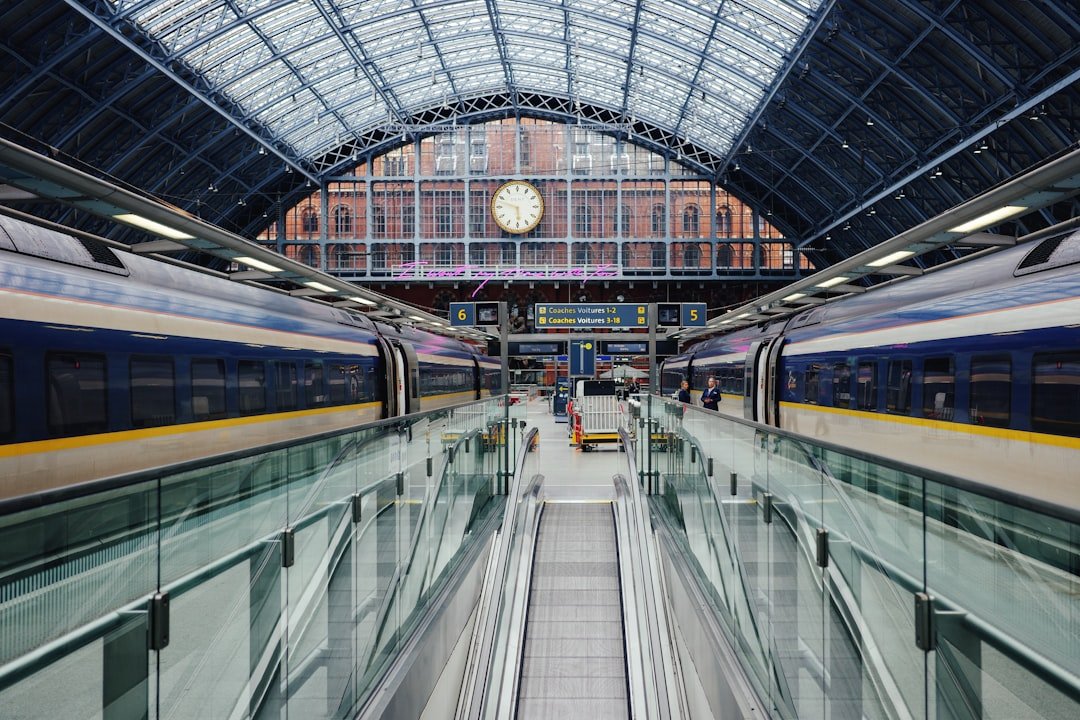
Transport: 75% of the Impact
A trip’s carbon footprint measures greenhouse gases emitted throughout your stay. According to ADEME, the typical breakdown is clear:
The choice of transport mode is therefore the most powerful lever to reduce your impact. The average French person emits 10 tonnes of CO2 per year, while the target to limit warming to 2°C is 2 tonnes per person.
2. Train vs Plane: The Game-Changing Comparison
CO2 Data per Kilometer (2024-2026)
According to data from SNCF and ADEME, the differences are considerable:
TGV (France): 2.4g CO2e/km
The absolute champion thanks to France’s decarbonized electricity
Intercity Train: 5 to 8g CO2e/km
Excellent choice for regional connections
Petrol Car (1 passenger): 190 to 210g CO2e/km
Carpool it: 4 passengers = ~50g/km/person
Plane (short/medium haul): 230 to 280g CO2e/km
Including contrails
The Ratio That Makes You Think
- Paris-Lyon: 90kg CO2 by plane vs 0.69kg by TGV = 130 times less
- Paris-Marseille: 3h TGV emits 100 times less than a plane
- Paris-London: Eurostar emits 6 times less than a plane
3. How to Calculate Your Footprint: The Best Tools
Reliable Calculators in 2026
ADEME – Impact CO2
The French institutional reference. Visually compare emissions for all transport modes at impactco2.fr. Official data updated regularly.
Bon Pote – Flight Calculator
This climate communication site offers a simplified simulator to quickly understand a flight’s impact. Ideal for orders of magnitude.
SNCF Connect
Automatically displays CO2 emissions for each journey during booking. Lets you visualize savings compared to flying.
Lowtrip / Greentripper
For planning complete low-carbon itineraries. Compare different options from A to Z.
4. Spectacular Destinations Accessible by Train from France
No need to fly for extraordinary adventures. Here are our favorite eco-friendly itineraries, all accessible by train or ferry from France.
Norway: Fjords by Train and Green Accommodations

Paris → Oslo → Bergen by Train
Norway is preparing a revolution: from 2026, only zero-emission vessels will be allowed in UNESCO fjords (Geirangerfjord, Nærøyfjord), according to the Norwegian government.
Highlights
- Bergen-Oslo line: one of the world’s most beautiful railway lines
- « Eco-Lighthouse » certified accommodations everywhere
- Electric shuttles between fjord villages
Lithuania: Vilnius, Green Capital and Curonian Dunes

Paris → Berlin → Warsaw → Vilnius
Lithuania remains an overlooked destination at the gateway to Eastern Europe. Vilnius, its baroque capital, is one of the greenest cities in the region. The UNESCO-listed Curonian Spit offers unique landscapes of sand and forests.
Highlights
- Very affordable cost of living
- Curonian Spit: hiking between dunes and the Baltic Sea
- Free bikes in Vilnius city center
Morocco: Atlas and Oases by Night Train

Sète Ferry → Tangier + ONCF Train
Morocco is accessible without flying thanks to ferries from Sète or Genoa. On-site, the ONCF network connects major cities (Tangier, Marrakech, Fez) by air-conditioned train. Night trains offer an authentic and economical experience.
Highlights
- Sète-Tangier ferry: 36h crossing, cabins available
- Al Boraq train (Moroccan TGV): Tangier-Casablanca in 2h10
- Traditional eco-renovated riad accommodations
5. If You Must Fly: How to Limit the Impact
Long-Haul Slow Travel Rules
Some destinations are only accessible by plane. In this case, apply these principles to « offset » the carbon cost:
- Stay longer: minimum 3-4 weeks to dilute the flight’s impact
- Direct flight: layovers multiply takeoffs (the most carbon-intensive phase)
- Economy class: less space = fewer emissions per passenger
- Offset with certified projects (see next section)
Our Eco-Friendly Long-Haul Itineraries
These destinations justify a long-haul flight thanks to their exemplary ecological commitment:
6. Choosing a Truly Eco-Friendly Accommodation
Trusted Labels in 2026
Greenwashing is everywhere. To choose a genuinely ecological accommodation, look for third-party audited labels:
EU Ecolabel
The only official EU label, recognized by the European Commission. Strict criteria on energy, water, and waste.
Green Key
The leading international label, very present in campsites and hotels. Over 3,200 establishments in France according to La Clef Verte.
Green Globe
Rigorous international certification that includes social aspects (working conditions, community impact).
Gîtes Panda (WWF)
Specific to France, for accommodations in preserved natural areas protecting biodiversity.
7. Carbon Offsetting: What Really Works
Offsetting: Only as a Last Resort
Carbon offsetting should only happen after maximally reducing your footprint. In 2026, the scientific consensus is clear: planting a tree doesn’t instantly « wash away » a flight. It takes decades for a tree to absorb the emitted CO2.
Preferred Labels
- Label Bas Carbone (France): thermal renovation, forest preservation, regenerative agriculture projects. Reference from the French Ministry of Ecological Transition.
- Gold Standard: international certification guaranteeing project additionality. Recognized by WWF and UN.
What Price to Offset?
The price of CO2 per tonne is volatile but undervalued by the market. For « honest » offsetting, experts recommend around €100 per tonne (shadow price of carbon). A Paris-New York round trip = about €250 real offset.
Frequently Asked Questions About Travel Carbon Footprint
How much CO2 does a Paris-New York flight emit?
A round-trip Paris-New York flight emits about 2.5 tonnes of CO2 equivalent per passenger (including the effect of contrails). That’s more than the sustainable annual carbon budget per person (2 tonnes) to limit warming to 2°C. Source: ADEME Impact CO2.
Is the train really 100 times less polluting than a plane?
In France, yes. The TGV emits about 2.4g of CO2 per km compared to 230-280g for planes (a ratio of 100). This is thanks to France’s largely decarbonized electricity (nuclear and renewables). In Germany or Poland, where electricity contains more coal, the ratio is less favorable but remains around 10 to 20.
How do I calculate my trip’s carbon footprint?
Use official calculators: ADEME Impact CO2 to compare transport, Bon Pote for orders of magnitude, or directly on SNCF Connect which displays emissions for each journey. For a complete calculation including accommodation and activities, try GoodPlanet’s calculator.
What is the « 4-hour rule » for flying?
This rule states that for any journey doable by train in under 4 hours, flying is never justified. Counting airport access time, security checks, and boarding, the train is often as fast as flying for these distances, while emitting 10 to 100 times less CO2.
Is carbon offsetting effective?
Offsetting should only be a last resort after maximum emission reduction. Studies show many offsetting projects are ineffective. For real effectiveness, choose only projects labeled Label Bas Carbone (France) or Gold Standard (international), and budget around €100/tonne for honest offsetting.
Which European destinations are accessible by train from Paris?
Many spectacular destinations are train-accessible: London (2h15, Eurostar), Brussels (1h22), Amsterdam (3h20), Barcelona (6h30), Milan (7h), Zurich (4h), Freiburg (3h). Night trains can take you to Vienna, Berlin, or Venice. Sites like Trainline make booking easy.
How can I spot hotel greenwashing?
Beware of vague phrases like « Nature-friendly » without details. Look for concrete quantified actions (solar panels, zero plastic, composting) and especially third-party audited labels: EU Ecolabel, Green Key, Green Globe. The logo should be visible on the establishment’s official website, not just on booking platforms.
Sources
- ADEME – Impact CO2 — Official emission comparator by transport mode
- SNCF Connect — CO2 emission calculation methodology
- Bon Pote — Climate communication and simulators
- Norwegian Government — Zero-emission fjord requirements 2026
- French Ministry of Ecological Transition — Label Bas Carbone
- Gold Standard — Carbon offset certification
- European Commission — EU Ecolabel
- La Clef Verte — Sustainable accommodation label
- Trainline — European train booking
- Slovenia Green — Slovenian sustainable tourism program
Research conducted on February 2, 2026. CO2 data based on ADEME publications 2024-2026.
Ready to Travel Differently?
Discover eco-friendly itineraries created by our community of committed travelers. Filter by « eco-traveler » profile to find low-carbon trips that match your values.
Explore eco-friendly itineraries