

16.37 million international visitors in 2024, a 30% increase compared to 2023. South Korea has never been more attractive, and the Hallyu wave is largely responsible. According to the Korea Tourism Organization, more than one in three tourists now cites K-dramas as the main motivation for their trip. The Korean entertainment industry generates a considerable multiplier effect: the Korean Film Council (KOFIC) estimates that each global hit like Squid Game or Crash Landing on You injects billions of won into the local tourism economy. Forgotten fishing villages become sought-after destinations overnight, medieval fortresses turn into Instagram backdrops, and university campuses become pilgrimage sites for fans. This phenomenon has a name: K-drama tourism. We traveled across the country — from Seoul to the remote mountains of Taebaek, from the volcanic island of Jeju to the trendy streets of Itaewon — to select the 15 most iconic filming locations, with all the practical tips you need to visit them in 2026.
1. Hwaseong Fortress and Haenggung-dong (Suwon)
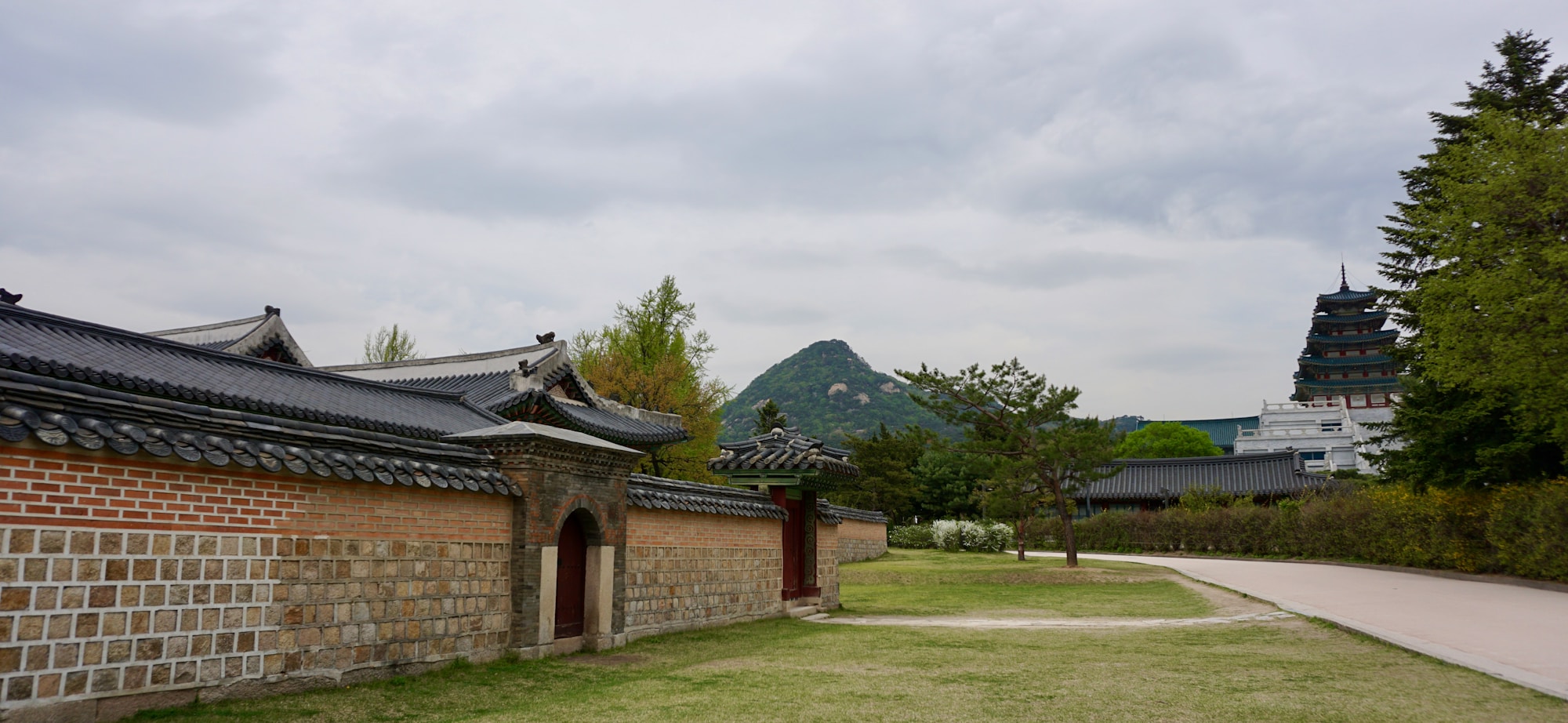
Where royal history meets the hipster quarter
Listed as a UNESCO World Heritage Site since 1997, Hwaseong Fortress is an 18th-century masterpiece of military architecture stretching 5.7 kilometers around Suwon’s historic center. But what draws K-drama fans today is as much the crenellated walls as the bohemian Haenggung-dong neighborhood that has developed at its feet. This maze of pastel-colored alleyways is home to independent cafes, vintage shops, and art galleries — an atmosphere that screenwriters have skillfully exploited in hit series like Lovely Runner (2024), Twenty-Five Twenty-One, and Our Beloved Summer. The vibe is radically different from Seoul: calmer, more authentic, and much less chaotic.
The Mongted cafe, immortalized as Sol’s house in Lovely Runner, has become a pilgrimage site. But Haenggung-dong offers much more than a single photo spot. The walk along the fortress wall, especially at sunset when the stones turn orange and the lanterns light up, is one of the most beautiful urban walks in South Korea. The Suwon district also houses the Hwaseong Haenggung (temporary palace), where historical reenactments in traditional costume take place. For just 3,000 KRW (~$2) in transport from Seoul Station, it’s the most cost-effective half-day excursion in the country.
- Walk along the ramparts at sunset (spectacular nighttime illumination)
- Rent a hanbok for free entry and memorable photos
- Enjoy a coffee at Mongted (Sol’s house in Lovely Runner)
- Watch the traditional archery show at Hwaseong Haenggung
2. Cheongha Market and Sabang Memorial Park (Pohang)
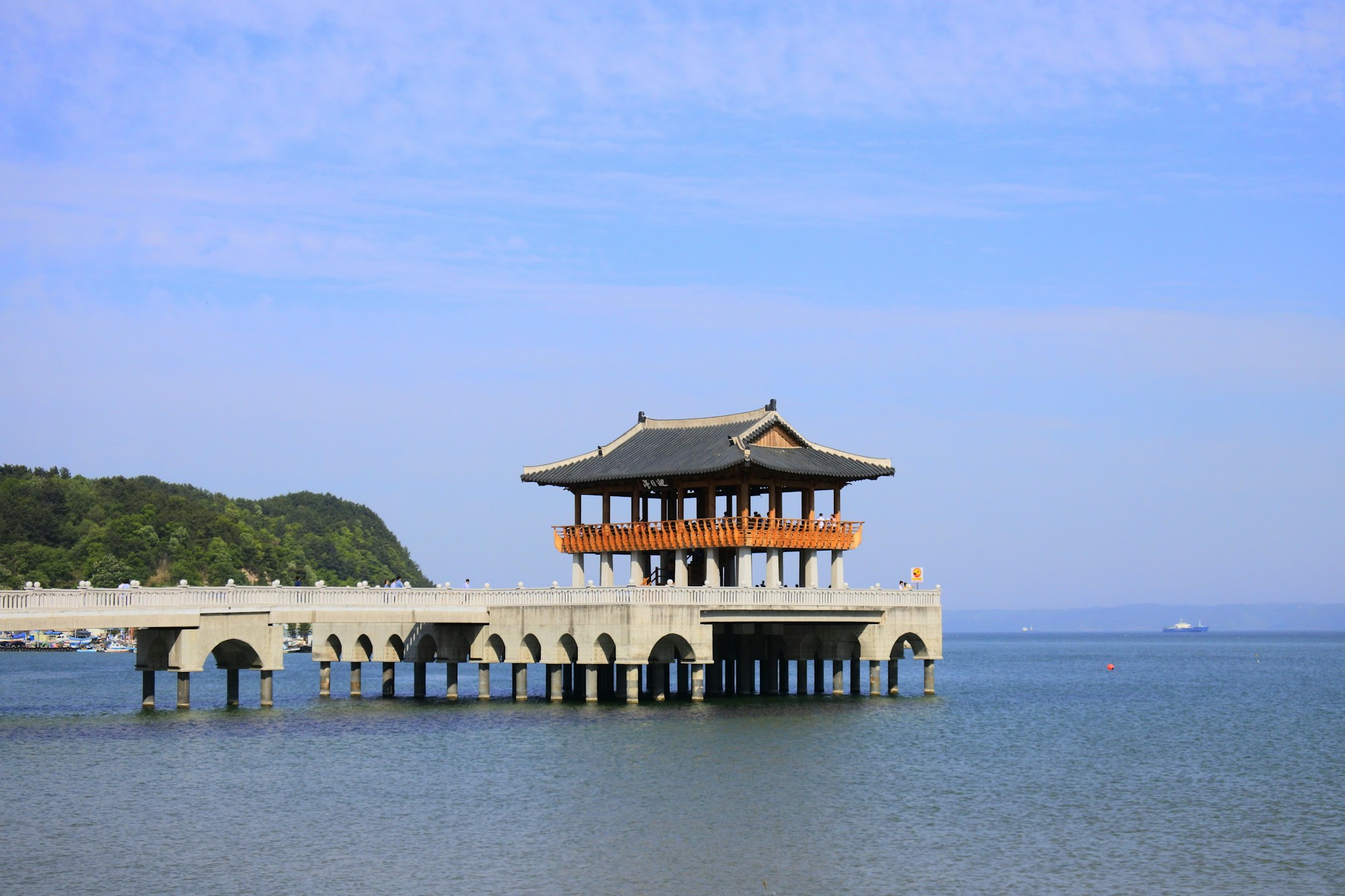
Korea’s most charming fishing village
This is where fans of Hometown Cha-Cha-Cha will find the fictional village of Gongjin. Cheongha Market and the surrounding alleyways served as the backdrop for this romantic comedy turned cult classic, depicting the gentle and supportive life of a coastal community. The immersion is total: the same stalls of fresh fish, the same awnings weathered by the sea breeze, the same grandmothers crouched down sorting seaweed. Pohang is a dive into authentic rural Korea, far from Seoul’s neon lights — and that’s precisely what makes it so appealing. The city is accessible in 2.5 hours via the KTX from Seoul Station.
Sabang Memorial Park, perched on a hill overlooking the sea, is home to the famous abandoned boat that became one of the most iconic shots of the series. Be warned: the climb is steep and takes about 20 minutes, but the coastal view rewards every effort. For foodies, Pohang is the capital of snow crab (daege) — port restaurants offer full platters for around 40,000 KRW (~$27). It’s also an opportunity to try gwamegi, herring dried in the sea breeze, a local specialty that few tourists know about.
- Explore Cheongha Market early in the morning (authentic atmosphere)
- Climb to the boat at Sabang Park (20 min, panoramic view)
- Try snow crab at a port restaurant
3. Sunshine Studio (Nonsan)
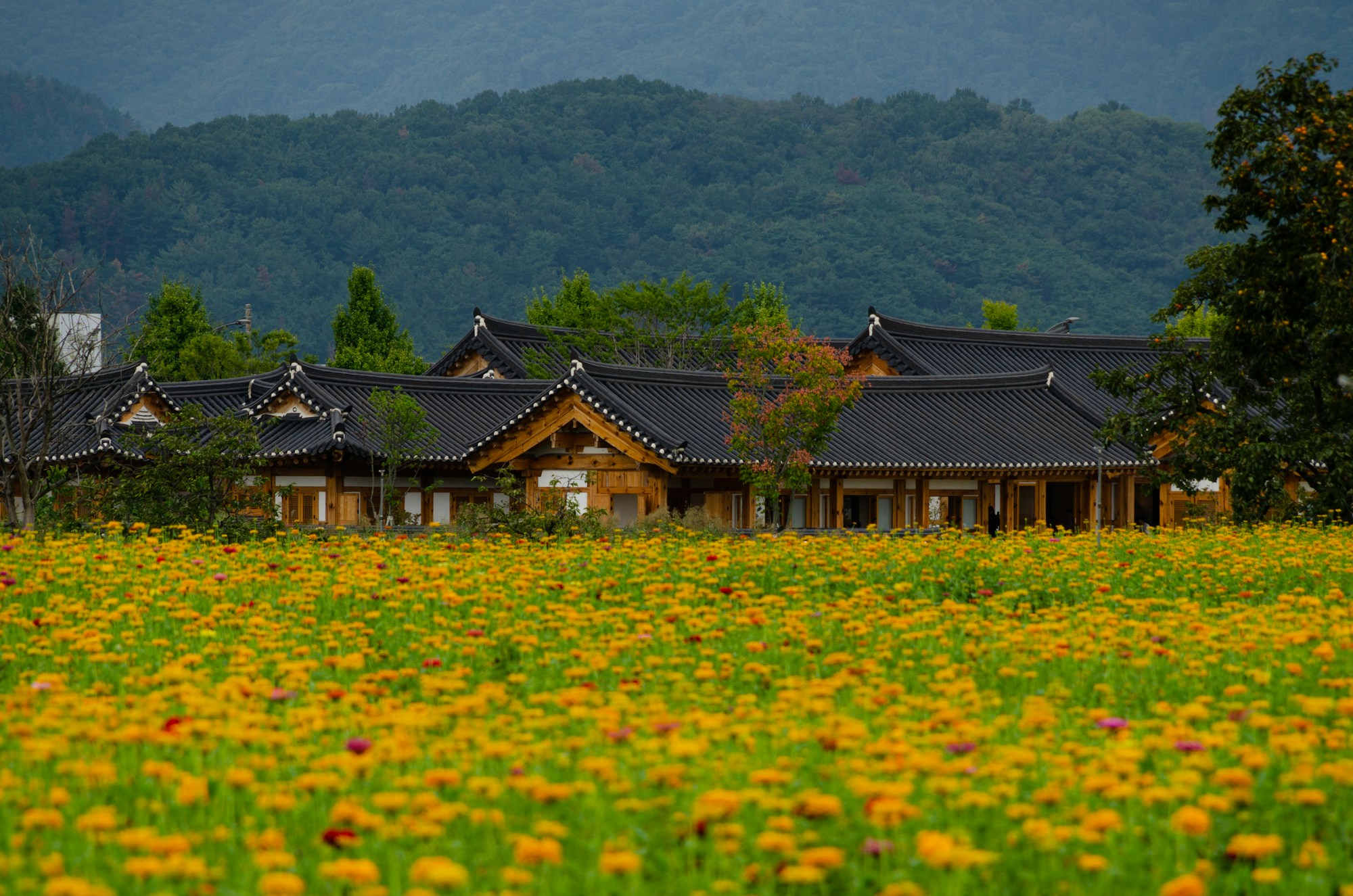
A journey into early 20th-century Seoul
Sunshine Studio is one of the most impressive filming sets in South Korea. Originally built for the series Mr. Sunshine (2018), this 40,000 m² complex faithfully recreates early 20th-century Seoul — the Japanese colonial era blended with early Western influences. You’ll find brick buildings, gas streetlamps, a railway station, and even a tramway. Since then, the site has hosted the filming of Pachinko (Apple TV+) and Gyeongseong Creature (Netflix), solidifying its reputation as Korea’s « historical Hollywood. »
What sets Sunshine Studio apart from other publicly accessible filming sets is the exceptional architectural quality of its recreations. Every detail — from the Japanese signs to the wooden shutters of colonial houses — is historically accurate. Visitors can rent period costumes (25,000 KRW) to blend into the scenery and take photos worthy of a series poster. The site is large enough to spend a full half-day exploring. Don’t forget to go up to the second floor of the Glory Hotel: it’s the exact viewpoint from the iconic Mr. Sunshine scene where the character surveys the city.
- Rent a period costume for immersive photos
- Go up to the 2nd floor of the Glory Hotel (iconic Mr. Sunshine view)
- Explore the recreated alleyways of old colonial Seoul
4. Byeolmaro Observatory (Yeongwol)
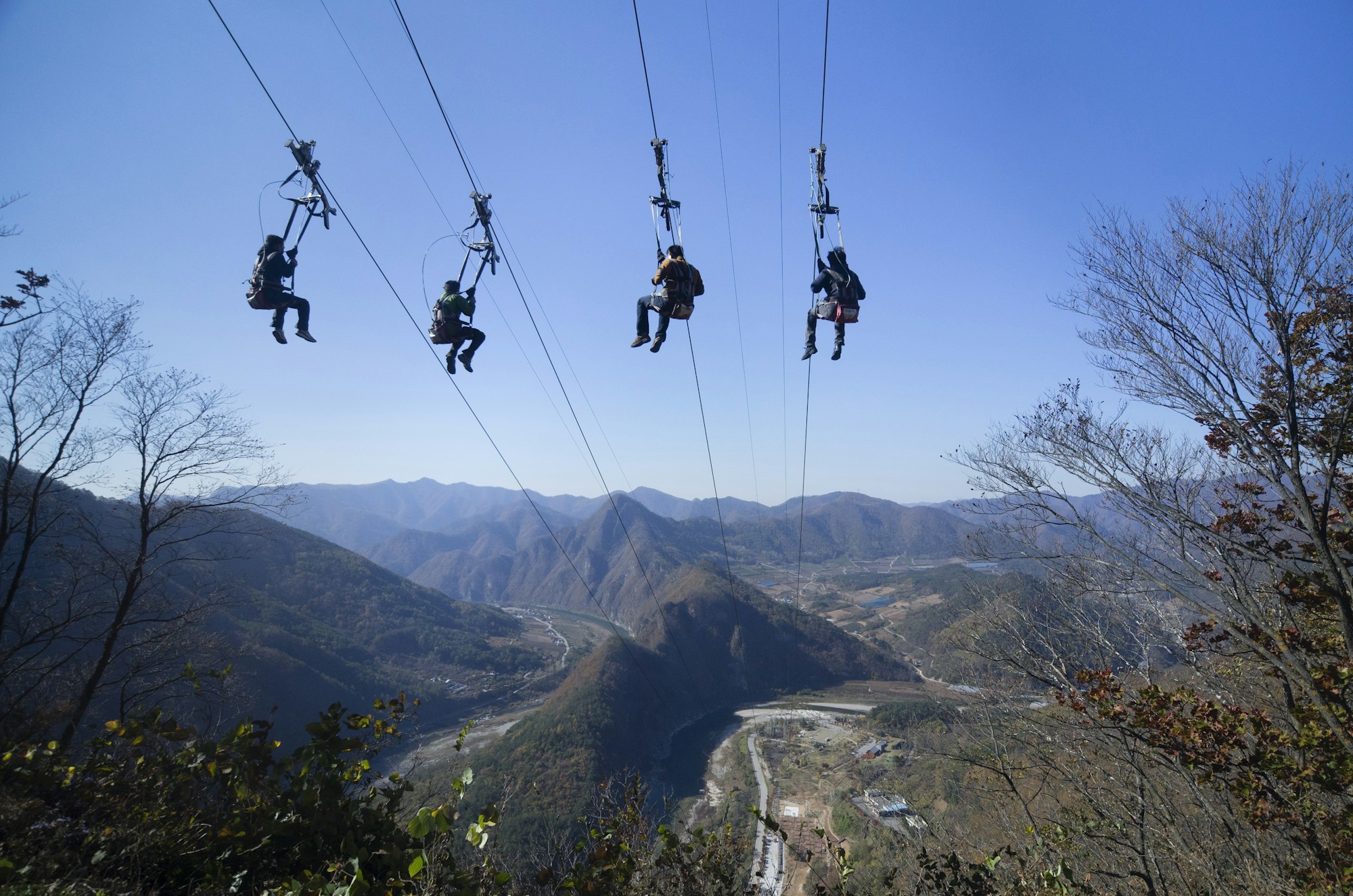
The stargazing observatory where Se-ri landed
This is where, atop Mount Bongrae (799 m), Yoon Se-ri lands by paraglider in the legendary opening scene of Crash Landing on You — the series that made the entire world cry in 2019. Byeolmaro Astronomical Observatory is the highest public observatory in South Korea, and on a clear day offers a breathtaking view of the mountains of Gangwon Province. On winter nights, far from any light pollution, the sky reveals thousands of stars visible to the naked eye — a rare experience in such an urbanized country.
Yeongwol is an off-the-beaten-path destination, about 3 hours’ drive from Seoul, that international tourists largely overlook. That’s precisely what makes it so charming. Beyond the observatory, the region offers exceptional outdoor activities: paragliding above the valleys (100,000 to 150,000 KRW depending on duration), rafting on the Donggang River, and hiking through spectacular limestone gorges. The village below retains a preserved rural atmosphere, with its five-day markets and family restaurants serving memilguksu (cold buckwheat noodles).
- Stargaze from the observatory (book the nighttime session)
- Try paragliding above the Gangwon mountains
- Hike through the Donggang River gorges
5. Jumunjin Breakwater (Gangneung)
The ultimate pilgrimage for Goblin fans
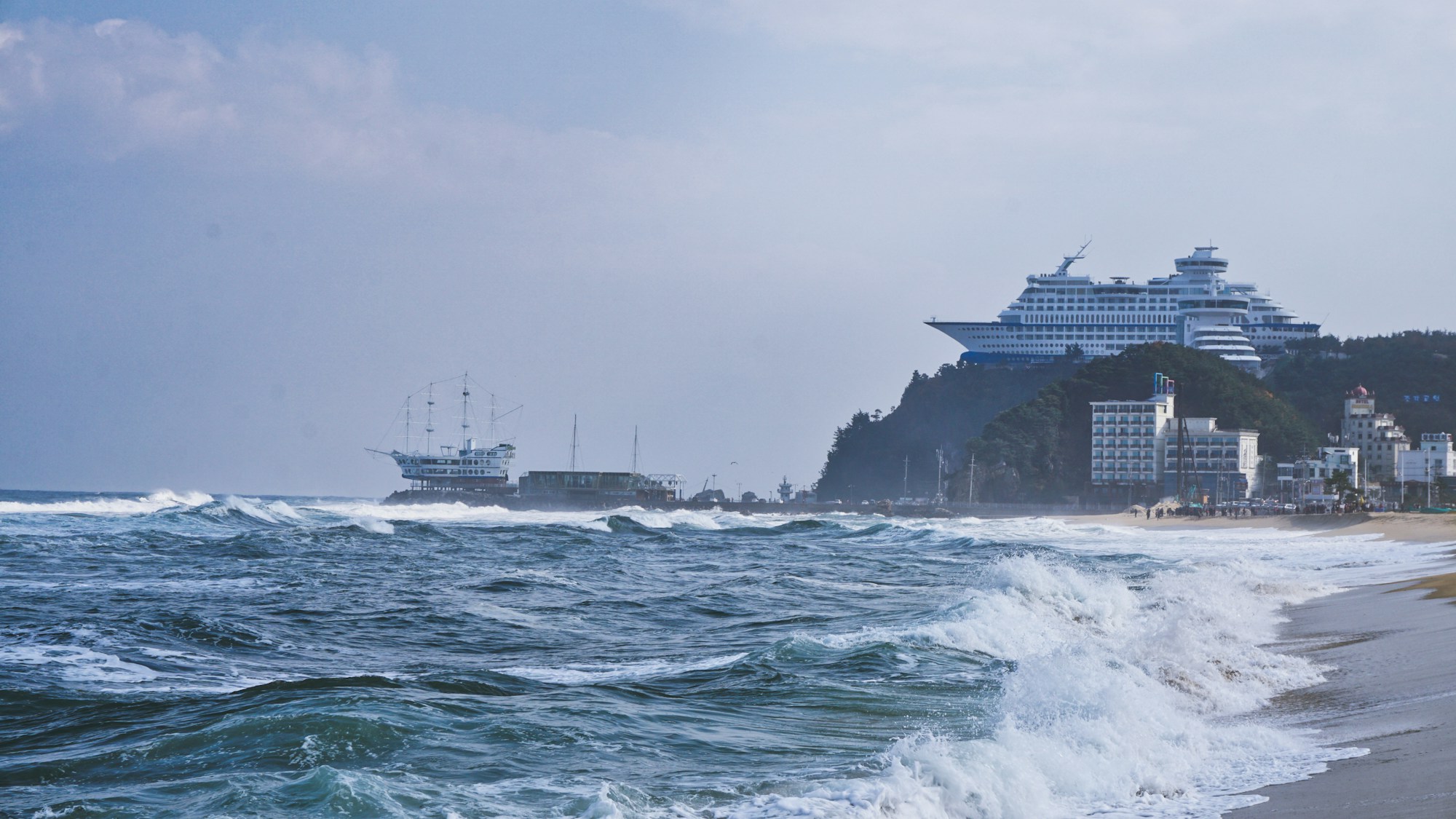
The Jumunjin Breakwater is probably the most photographed K-drama filming location in the world. This is where Kim Shin (Gong Yoo) and Ji Eun-tak (Kim Go-eun) meet in the iconic scene from Goblin (2016) — that seaside sequence with the red scarf blowing in the wind and a bouquet of buckwheat flowers in hand is engraved in the collective memory of millions of fans worldwide. Since the series aired, the municipality of Gangneung has installed a commemorative statue and explanatory panels on the breakwater, transforming this simple seawall into a major tourist attraction.
Access is made easy by the KTX, which connects Seoul to Gangneung in under 2 hours for just 27,000 KRW (~$19) — a journey through magnificent mountain scenery. On site, local vendors offer to rent red scarves and buckwheat bouquets for 1,000 KRW to recreate the scene. Be prepared to queue for the exact photo spot, especially on weekends. Take the opportunity to explore the rest of Gangneung: Gyeongpo Beach, the trendy cafes of « Coffee Street » (the city is Korea’s coffee capital), and the stunning Buddhist temple of Ojukheon.
- Recreate the iconic scene on the breakwater (red scarf and buckwheat bouquet)
- Explore Gangneung’s « Coffee Street »
- Visit Ojukheon Temple and Gyeongpo Beach
6. Stone Art Museum and Aston House (Seoul)
A deep dive into the world of chaebols
Queen of Tears (2024) was the K-drama phenomenon of the year, breaking viewership records on tvN. Several of its most memorable scenes were filmed in the ultra-exclusive residential neighborhood of Seongbuk-dong, nestled in the hills of northern Seoul. The Stone Art Museum, with its sculpted gardens and minimalist architecture, served as the exterior set for the family residences. The location offers a surprising panorama of the Seoul skyline, peaceful and green despite being just 20 minutes from the city center by taxi.
Aston House, the imposing mansion used as the main residence of the Hong family in the series, embodies the opulent world of chaebols (Korean family conglomerates). While access to the property itself is restricted, the surrounding neighborhood is well worth a stroll. Seongbuk-dong is dotted with hanoks (traditional houses) converted into upscale cafes, discreet art galleries, and small zen gardens. This is elegant and quiet South Korea, a world away from the frenzy of Gangnam. Combine this visit with the northern Seoul fortress wall trail (Bugaksan) for an unforgettable urban hike.
- Visit the Stone Art Museum and its sculpted gardens
- Stroll through the quiet alleyways of Seongbuk-dong
- Have a coffee in a converted hanok in the neighborhood
7. Wolmi Theme Park (Incheon)
Korean 90s nostalgia
Before becoming world-famous through Squid Game, the Wolmi amusement park was already a classic for Koreans. This old-fashioned funfair, perched on Wolmi Island in Incheon’s harbor, exudes a totally unique 1990s-2000s nostalgic atmosphere. The Ferris wheel offers a panoramic view of the port and the Incheon Bridge, while the aging rides — roller coasters, pirate ships, bumper cars — create a setting that is both joyful and slightly melancholic. It’s exactly this atmosphere that the directors of Weightlifting Fairy Kim Bok-joo captured for their romantic date scenes.
Access is surprisingly easy: the subway from Seoul (Line 1 then transfer) takes you directly to Wolmi Island in about an hour. Park entry is free — you only pay for individual rides (~5,000 KRW each). The island also features a pleasant boardwalk along the sea, seafood restaurants, and Wolmisan Park with a viewpoint over the entire port. For a complete experience, combine with Incheon’s Chinatown (the oldest in Korea), just a few subway stations away, where you can try the famous jajangmyeon (noodles in black bean sauce).
- Ride the Ferris wheel for the view over Incheon port
- Stroll along the island’s boardwalk in the late afternoon
- Combine with Incheon’s Chinatown and its jajangmyeon
8. Mungyeong Saejae Open Set (Mungyeong)
Korea’s largest sageuk filming set
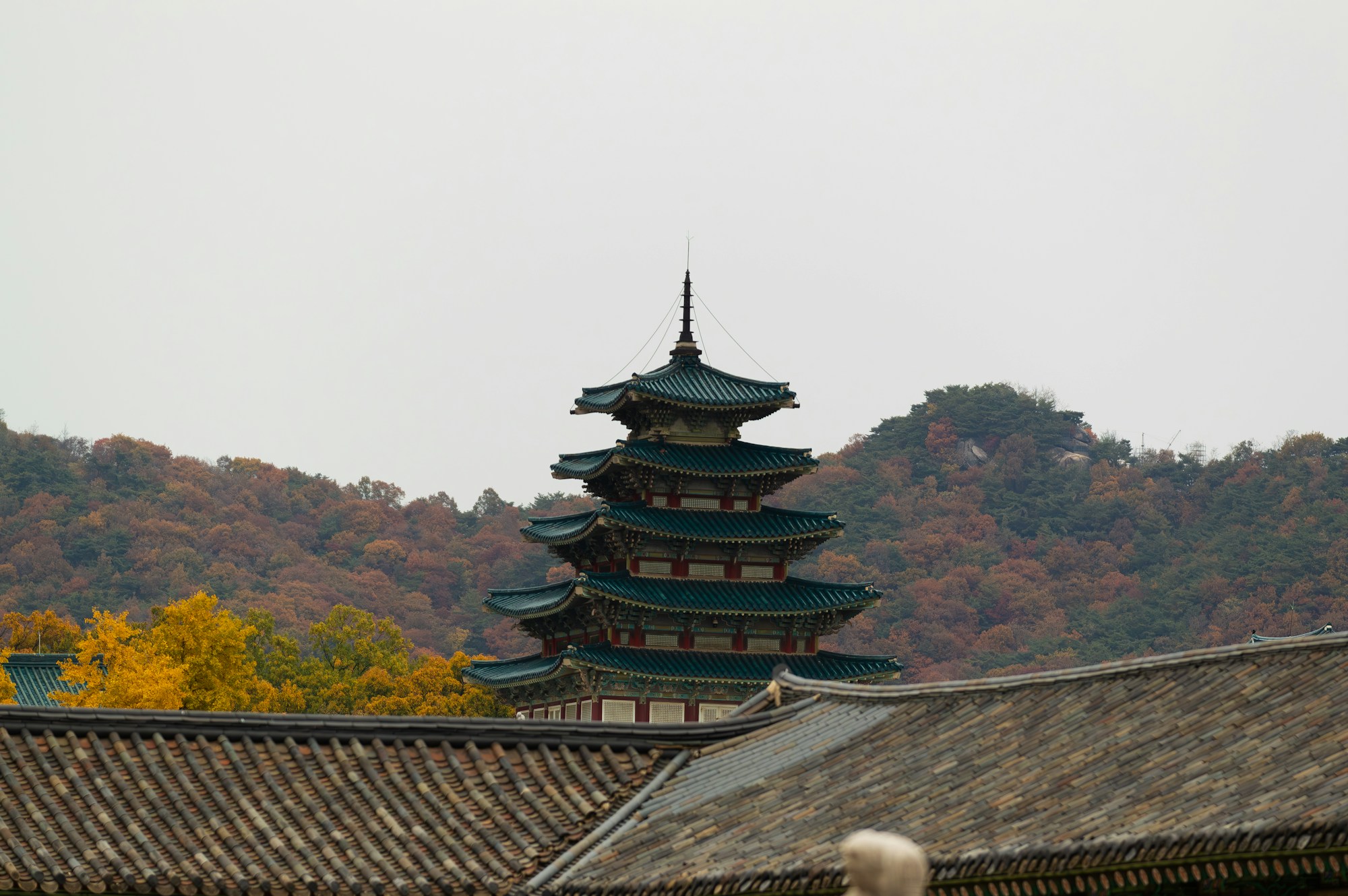
Nestled in the mountains of Mungyeong Saejae Pass — once the main route between Seoul and Busan during the Joseon Dynasty — this open-air filming set is a hidden gem largely unknown to international tourists. The site recreates a complete village from the Joseon period (1392-1897) with palaces, markets, yangban (aristocrat) houses, and even an underground dungeon. This is where some of the most acclaimed historical series (sageuk) in Korean television were filmed: Alchemy of Souls, the zombie thriller Kingdom (Netflix), and the romantic drama The Red Sleeve.
What makes Mungyeong special is its relative isolation. Very few foreign tourists venture here, which means you’ll often have the sets to yourself — a rare luxury in tourist-heavy Korea. The mountain setting is spectacular, especially in autumn when maples and ginkgo trees set the surrounding hills ablaze. The site is part of a provincial park crossed by a hiking trail leading to the three historic fortified gates of the pass, allowing you to combine culture and nature in a single day. Entry is a bargain: just 2,000 KRW (~$1.40).
- Explore the Joseon-era filming set (palaces, markets, dungeons)
- Hike to the three fortified gates of the historic pass
- Enjoy the absence of crowds for unobstructed photos
9. Noksapyeong Bridge and G Guesthouse (Itaewon, Seoul)
Park Saeroyi’s rebel neighborhood
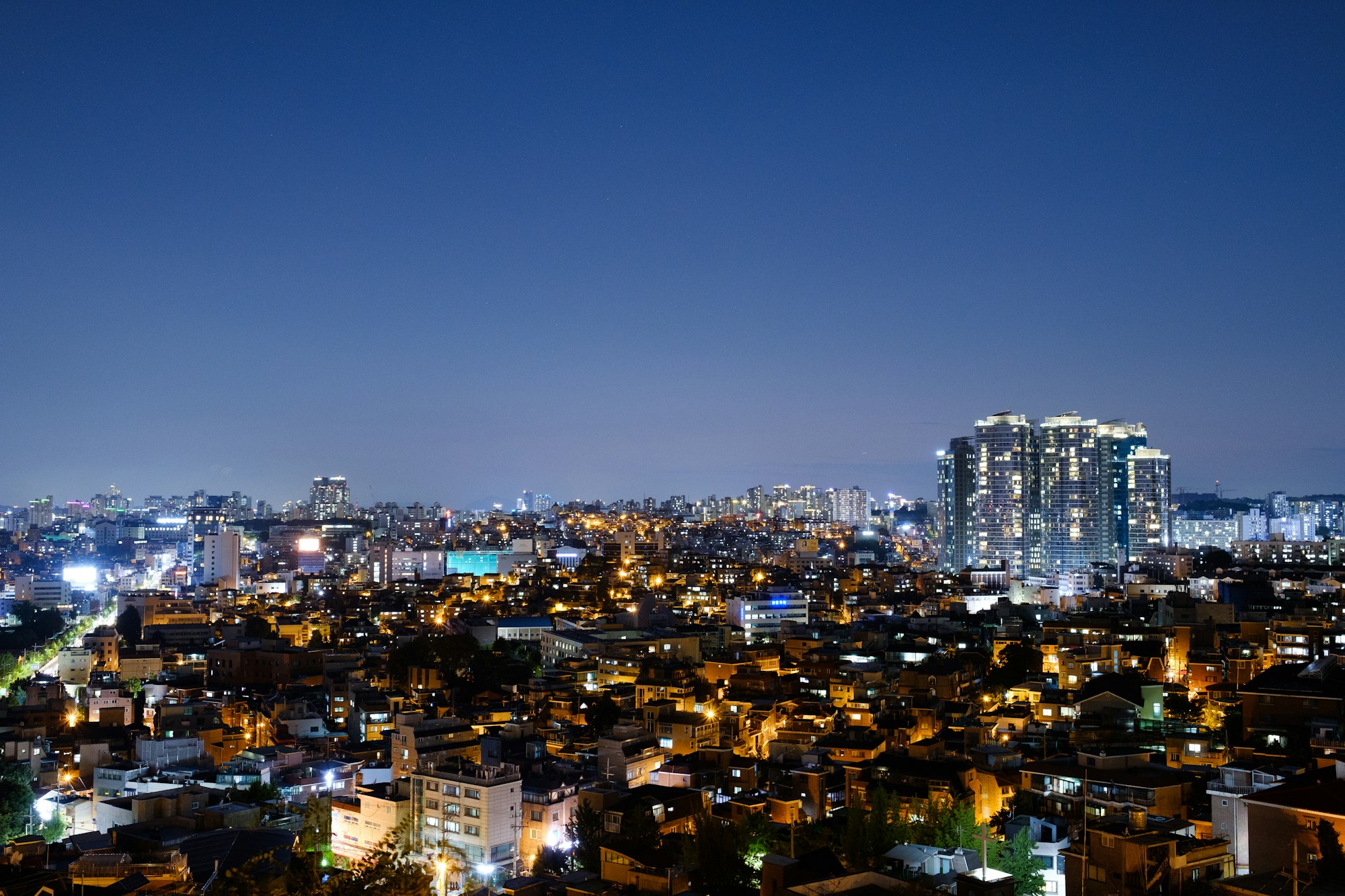
Itaewon Class (2020) transformed this multicultural neighborhood into a symbol of resilience and entrepreneurship. The story of Park Saeroyi, an ex-convict who opens a bar-restaurant in Itaewon to challenge the food empire that destroyed his family, resonates far beyond fiction. Noksapyeong Bridge, overlooking the subway line, is the exact spot where the character contemplates the neighborhood in the now-iconic opening scene. The « G Guesthouse, » which served as the set for the famous DanBam (the series’ restaurant), is identifiable by its dark brick facade.
Itaewon is the most cosmopolitan neighborhood in Seoul — historically linked to the nearby American military base, it has transformed into a gastronomic and cultural melting pot. You’ll find Lebanese shawarma alongside Ethiopian cuisine, sophisticated cocktail bars, and underground clubs. The walk from Noksapyeong Bridge, heading down the main street, then climbing up towards Naksan Park along Seoul’s fortress wall, offers a spectacular nighttime view of the city — it’s exactly the route the characters take in the final episodes of the series.
- Photograph Noksapyeong Bridge at sunset
- Dine at one of the neighborhood’s multicultural restaurants
- Climb to Naksan Park for the nighttime view over Seoul
10. Forest of Wisdom (Paju)
The cathedral of books that captivates screenwriters
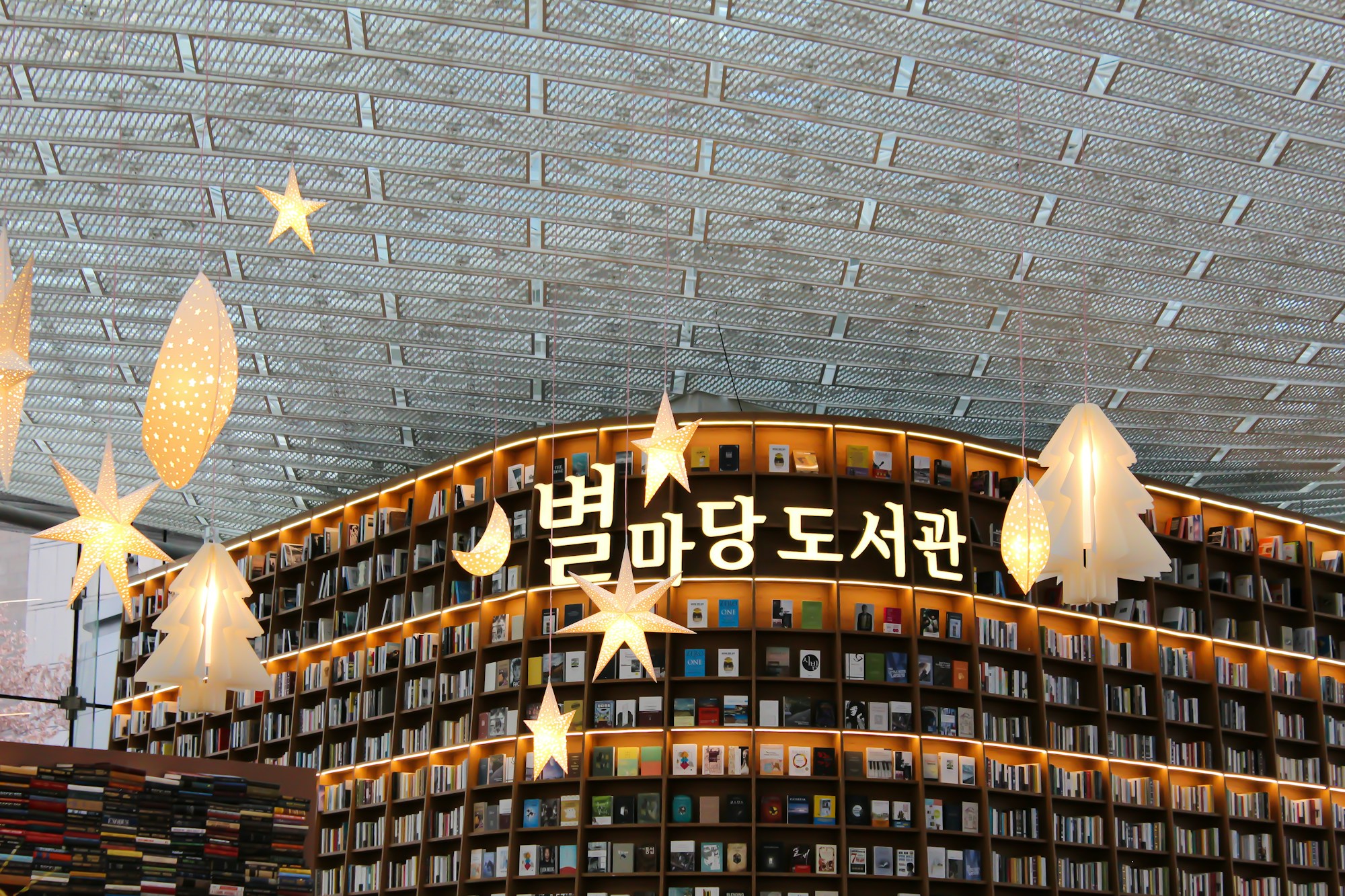
The Forest of Wisdom (Jihye-ui Sup) is a monumental library-cafe at the heart of Paju Book City, a city entirely dedicated to publishing and book culture. Walls of 50,000 books rise to the ceiling across multiple floors, creating an atmosphere that is both grand and intimate. The modernist architecture of the building — raw concrete, zenithal light, suspended walkways between the shelves — has made it an irresistible set for K-dramas. What’s Wrong with Secretary Kim, The King: Eternal Monarch, and Chicago Typewriter all filmed iconic scenes here.
Paju Book City is accessible in 45 minutes from central Seoul by the red bus (2,800 KRW from Hapjeong station). Entry to the Forest of Wisdom is free, and the attached cafe serves excellent lattes in an unbeatable setting. But the real treasure lies nearby: Heyri Art Village, an artists’ village housing more than 40 museums, galleries, and workshops in architecturally unique buildings. It’s the perfect cultural excursion for anyone interested in Korean design and contemporary art — all within an hour of the capital.
- Browse among the 50,000 books of the Forest of Wisdom
- Have a coffee amid the towering bookshelves
- Explore Heyri Art Village and its unique museums
11. Cheongju Central Park
The secret city of The Glory
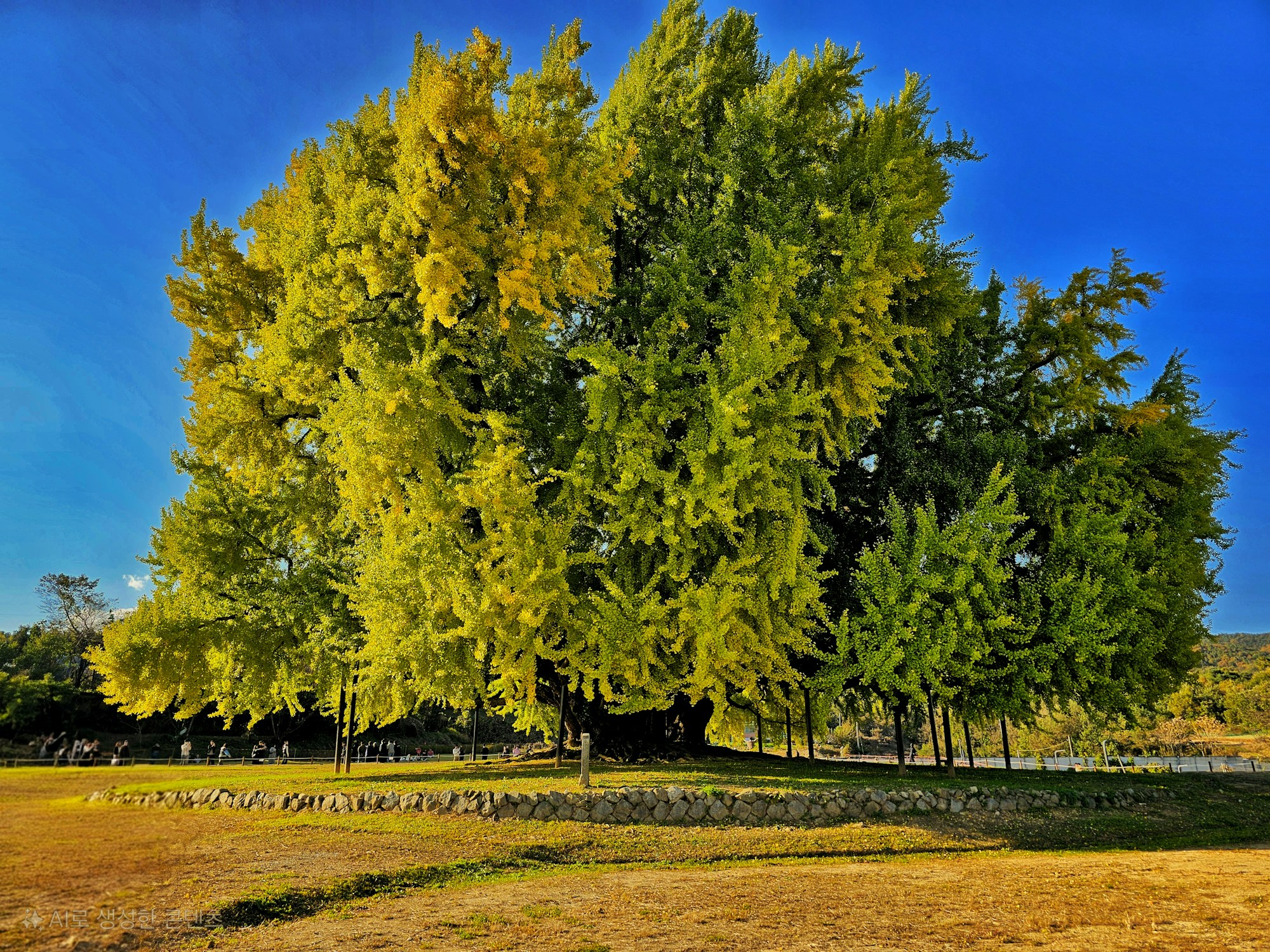
The Glory (2022-2023), the revenge thriller that captivated 100 million households on Netflix, was largely filmed in Cheongju — a city of 850,000 inhabitants that international tourists completely overlook. The central park, with its gigantic century-old ginkgo tree, appears in several key scenes of the series. In autumn, when the tree dons a brilliant yellow, the spectacle is striking and attracts photographers from across the country. The park is surrounded by lively shopping streets and small local restaurants serving sundae (Korean blood sausage) and homemade tteokbokki.
Cheongju is also a city of history: it is home to the Cheongju Early Printing Museum, dedicated to the Jikji, the world’s oldest book printed with movable metal type (1377), predating Gutenberg by 78 years. It’s one of Korea’s best-kept cultural secrets. For hikers, Sangdangsanseong fortress, perched on the surrounding hills, offers a 4-kilometer trail with panoramic views of the city and mountains — one of the finest fortress wall trails in the entire country.
- Admire the giant ginkgo tree in central park in autumn
- Visit the Early Printing Museum (Jikji)
- Hike along Sangdangsanseong fortress
12. Hanbo Coal Mine Site (Taebaek)
In the footsteps of Captain Yoo Si-jin
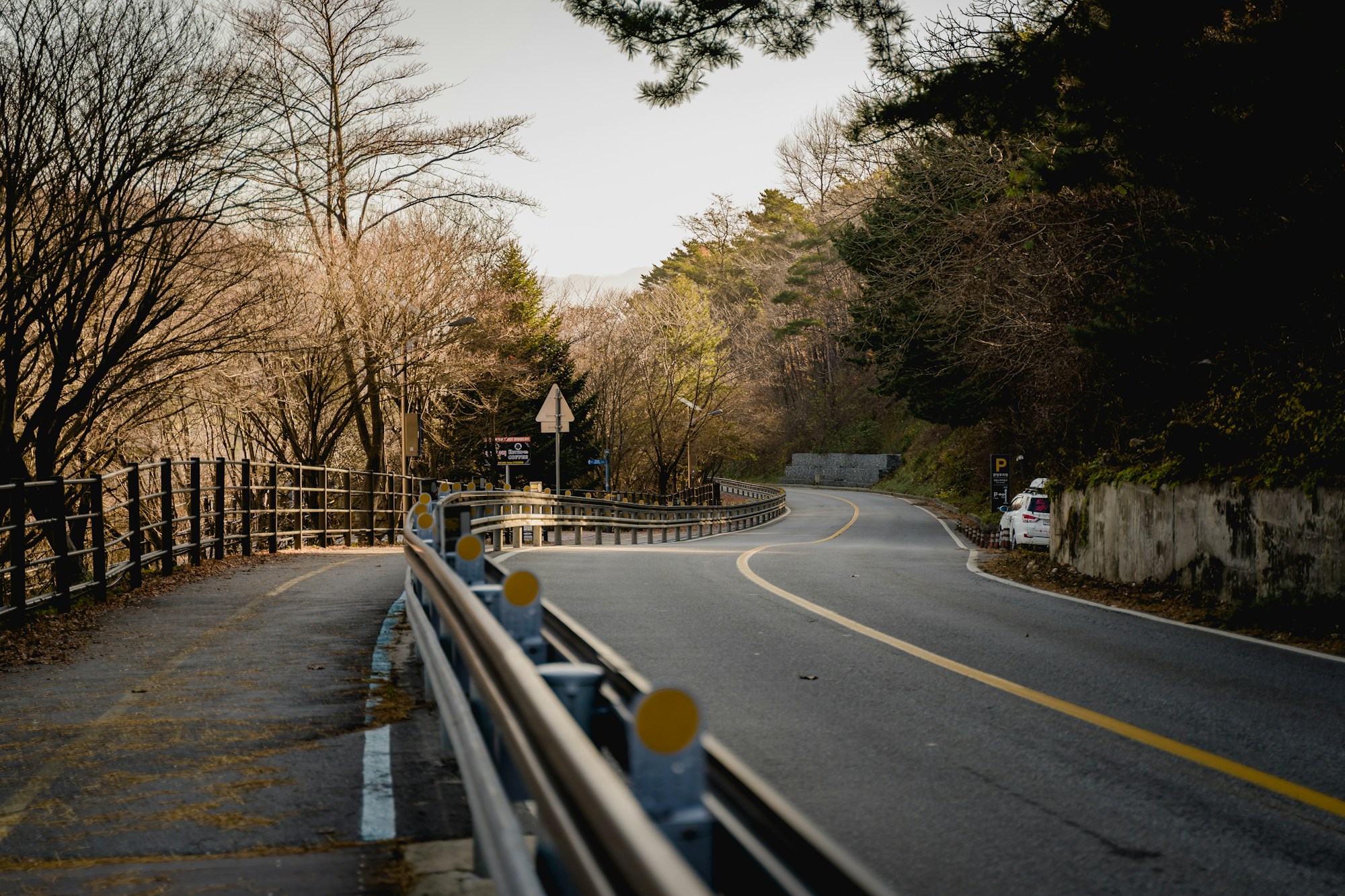
Descendants of the Sun (2016), the mega-hit that catapulted Song Joong-ki to international stardom, used the former Hanbo coal mine site in Taebaek as the set for the fictional country of Uruk. This raw post-industrial landscape — abandoned buildings, rusted rails, slag heaps covered in vegetation — provided the perfect backdrop for the series’ military and humanitarian scenes. Taebaek is a former mining town perched at 700 meters altitude in the Gangwon mountains, which experienced its golden age in the 1980s before the decline of coal.
Today, the town is slowly reinventing itself through tourism and its surrounding nature. The Coal Museum traces the poignant history of Korean miners. In summer, Taebaek is a welcome refuge from the crushing heat of the plains — temperatures rarely exceed 25 degrees Celsius (77 degrees Fahrenheit). The annual snow festival (January) transforms the town into a fairy-tale village. It’s a destination for travelers seeking an authentic and rugged Korea, far from tourist cliches. The most dedicated fans rent military uniforms on site to recreate the iconic Song Joong-ki photos from the series.
- Explore the Hanbo mine site and its post-industrial sets
- Visit the Taebaek Coal Museum
- Rent a military uniform for the « Song Joong-ki style » photo
13. Jeju Island — Samdal-ri and the Secret Forest
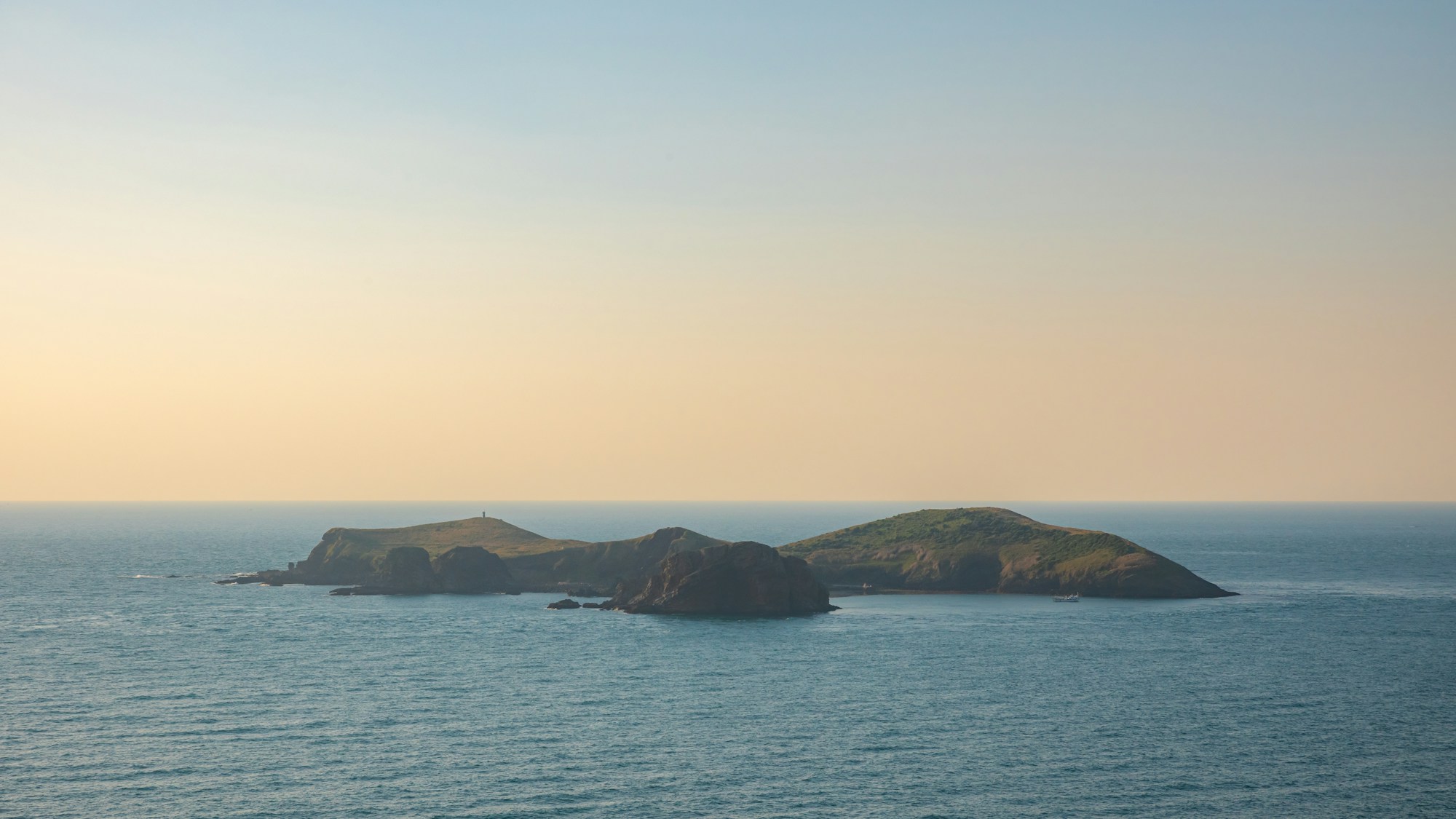
The volcanic island with a thousand backdrops
Jeju Island is South Korea’s volcanic jewel and a natural backdrop that K-drama producers exploit relentlessly. Welcome to Samdal-ri (2024) spotlighted the fishing village of Ojo-ri, on the island’s east coast, where time seems to stand still: low volcanic stone houses, black basalt walls, haenyeo (traditional female divers) bringing up abalone and sea urchins. King the Land and Our Blues showcased the pristine beaches and tangerine orchards that make Jeju famous. The entire island is a UNESCO World Heritage Site for its unique volcanic formations.
The Secret Forest (Bijarim or « Secret Forest » depending on the series) is another must-visit. This grove of centuries-old cypresses, bathed in filtered light and morning mist, creates a fantastical atmosphere that appears in numerous series. Note: it’s a private property with variable hours — check on Instagram before making the trip. The famous mint truck that appears in some series is not always present. To explore Jeju efficiently, renting a car is practically essential ($40 to $60 per day). The island is 73 km long and its sites are spread out.
- Discover the fishing village of Ojo-ri (set of Samdal-ri)
- Explore the Secret Forest (check hours in advance)
- Watch the haenyeo, traditional divers recognized by UNESCO
- Hike Hallasan, South Korea’s highest peak (1,950 m)
14. Yonsei University (Seoul)
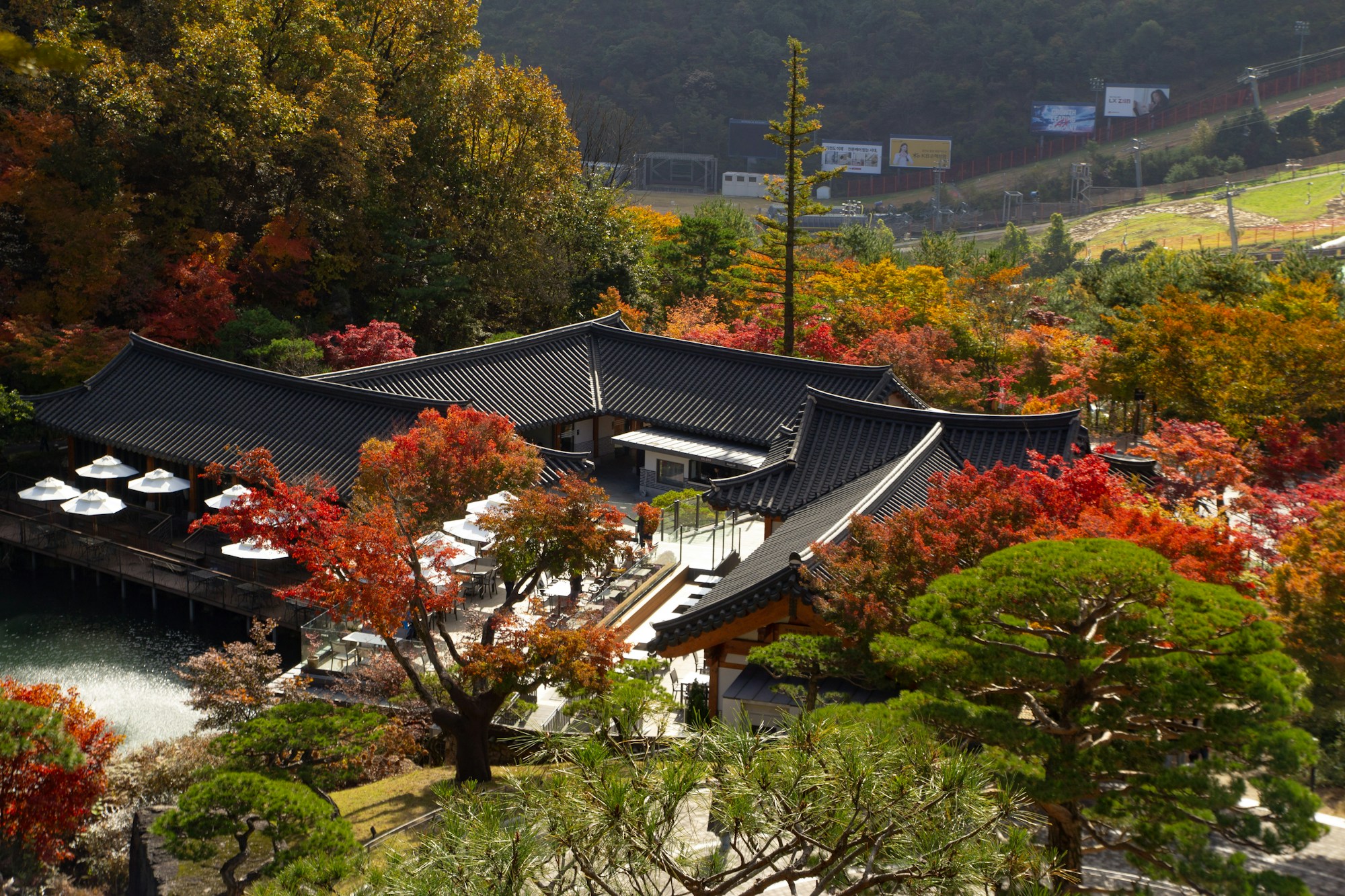
Korea’s Ivy League with Gothic architecture
Yonsei University is one of the three « SKY » universities (Seoul National, Korea, Yonsei) — the Korean equivalent of the American Ivy League. But beyond its academic prestige, it’s the campus’s Western neo-Gothic architecture that makes it a dream setting for K-dramas. The red brick buildings, stone arches, and tree-lined avenues create a romantic and timeless atmosphere. True Beauty, Reply 1994, and Snowdrop all filmed campus scenes here that have made millions of fans worldwide dream.
The campus is freely open to the public and is one of the most beautiful free walks in Seoul. The main avenue (Baekyang-ro), lined with ginkgo trees, is a breathtaking spectacle in autumn when the leaves turn golden yellow. In winter, snow covering the red brick roofs creates a fairy-tale setting. For total immersion, have lunch at the student cafeteria — open to the public and surprisingly affordable (~5,000 KRW for a full meal, about $3.50). The Sinchon neighborhood, just outside the campus, is a student paradise with its affordable restaurants, bars, and shops.
- Stroll down the ginkgo-lined Baekyang-ro avenue
- Photograph the neo-Gothic red brick buildings
- Have lunch at the student cafeteria (~5,000 KRW per meal)
15. Paradise City Hotel (Incheon)
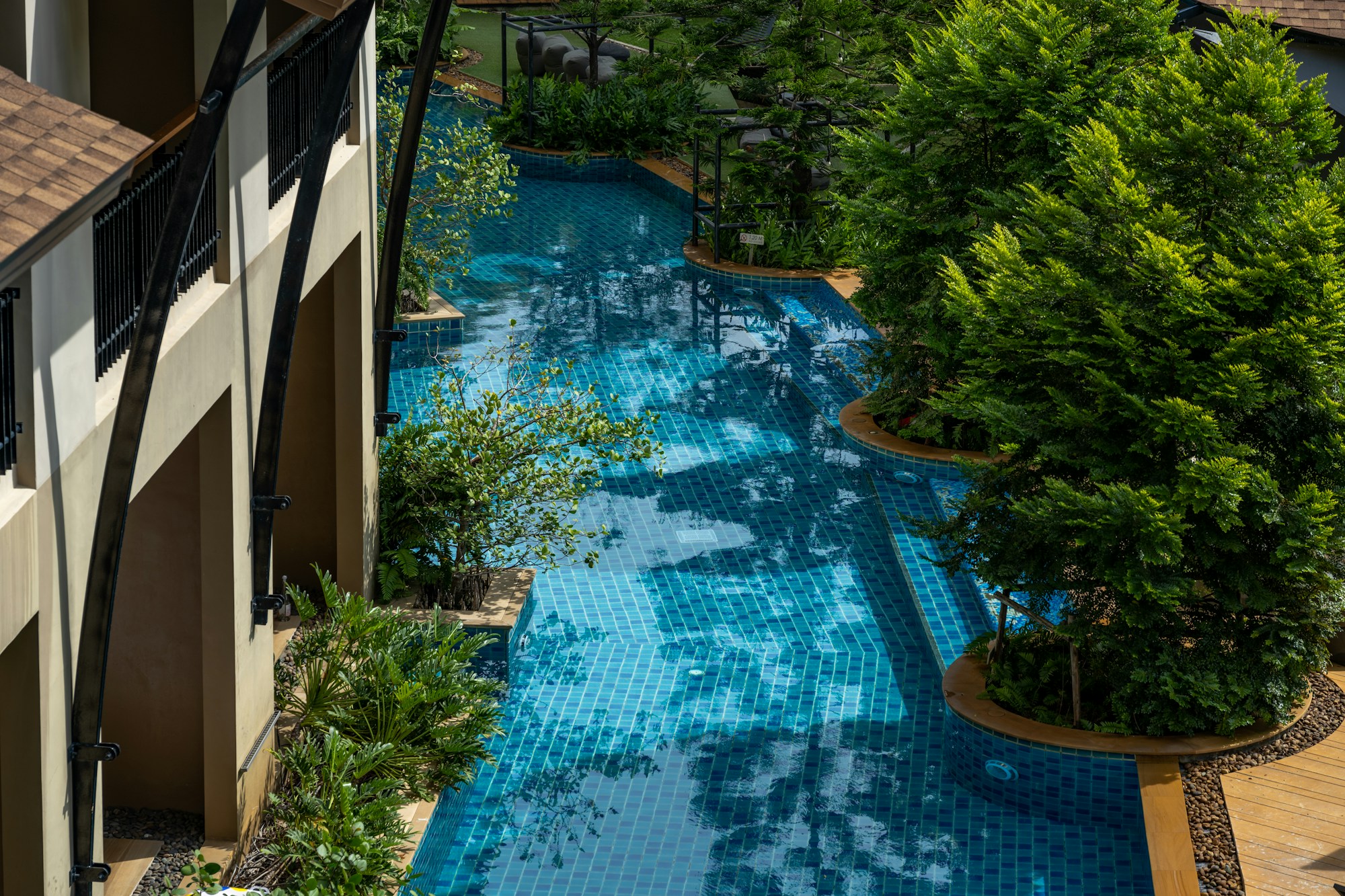
Korean luxury as a living art gallery
Paradise City is much more than a luxury hotel — it’s a livable contemporary art gallery. Located just minutes from Incheon International Airport, this 330,000 m² complex houses works by Yayoi Kusama (the pumpkin room), Damien Hirst, and other major artists in its common areas. It’s this blend of opulence and art that won over the producers of Hotel del Luna (2019) — the fantasy-romance series starring IU, whose main hall served as the lobby for the series’ supernatural hotel. The King: Eternal Monarch and Single’s Inferno also filmed sequences here.
The good news is that you don’t need to be a guest to enjoy it. The Wonderbox (indoor theme park), the Plaza (commercial and artistic space), and the lobby are open to the public for free. Contemporary art enthusiasts will find immersive installations worthy of the best museums. For those seeking a more in-depth experience, the Cimer spa (~$40) offers thermal baths, saunas, and pools in an ultra-design setting. It’s the perfect stop to include on your first or last day of travel, thanks to its proximity to the airport.
- Admire the Kusama and Hirst works in the lobby (free access)
- Explore the Wonderbox and Plaza (open to the public)
- Relax at the Cimer spa before or after a long-haul flight
Frequently Asked Questions About K-Drama Tourism in South Korea
What is the best app for finding K-drama filming locations?
Use Naver Map or KakaoMap, the two Korean mapping applications. Google Maps is very limited in South Korea — the data is often incomplete or incorrect, especially for public transport and small addresses. Naver Map lets you search directly for place names in Korean and displays bus, subway, and even taxi routes with far greater accuracy. Search for the Korean name of the filming location (available on fan sites like Korean Dramaland) for the best results.
What budget should I plan for a week-long K-Drama Tour in South Korea?
Budget between $100 and $150 per day excluding international flights for a comfortable trip, including accommodation in a 3-star hotel or guesthouse, transport (KTX, bus, subway), meals, and entry fees. On a backpacker budget (hostels, local restaurants), you can get by on $60-80/day. The main expenses are long-distance transport (KTX, express buses) and accommodation in Seoul. Meals remain very affordable: a bibimbap costs 7,000-9,000 KRW ($5-6) and a specialty coffee 5,000-6,000 KRW ($3.50-4).
Is the language barrier a problem outside Seoul?
Yes, it can be. In Seoul and highly touristic areas, many young Koreans speak basic English. But in secondary cities (Mungyeong, Taebaek, Cheongju, Pohang) and rural areas, English is rarely spoken. Download Papago (Naver’s translation app), which is much more accurate than Google Translate for Korean. The camera translation feature is particularly useful for reading restaurant menus and road signs. Learning the Korean alphabet (hangeul) in a few hours is also a very worthwhile investment.
Can I visit K-drama characters’ houses?
Many filming locations are private residences, restaurants, or operating businesses. It’s essential to respect the residents’ privacy. Take your photos from the street, don’t ring doorbells, and don’t block entrances. Publicly accessible filming sets (Sunshine Studio, Mungyeong Saejae) and public locations (Jumunjin Breakwater, universities, parks) are freely accessible. For cafes and restaurants that serve as sets, order something on site — it’s the best way to support local businesses.
How do I get to remote filming locations without a car?
South Korea has an excellent express bus network connecting all cities in the country. The KTX (Korea’s high-speed rail) serves the main routes (Seoul-Gangneung, Seoul-Busan). For the last miles to isolated sites (Yeongwol, Taebaek), a day taxi is a popular option: expect to pay around 150,000 KRW (~$100) to hire a driver for 8 hours, negotiable through your accommodation. The Kakao T and Tmap apps allow you to book taxis even in rural areas.
Do I need a visa for South Korea?
Most Western nationals (including US, UK, EU, Canadian, and Australian citizens) enjoy visa-free entry for tourist stays of up to 90 days. The K-ETA (Korea Electronic Travel Authorization), previously required, is currently suspended until late 2025 (likely to be extended into 2026 — check the official K-ETA website before your departure). A passport valid for the duration of your stay and a return ticket are sufficient.
What is the rainy season to avoid in South Korea?
The monsoon (jangma) hits South Korea from late June to mid-August, with torrential rains, stifling humidity, and risks of flooding and landslides, especially in the mountains. July is the wettest month. The best seasons for a K-Drama Tour are spring (April-May: cherry blossoms, mild temperatures) and autumn (October-November: red and golden foliage, clear blue skies). Winter (December-February) is cold but bright, perfect for recapturing the atmosphere of winter series like Goblin.
Are K-drama filming locations well signposted on site?
Major sites — Jumunjin Breakwater (Goblin), Sunshine Studio, Paradise City — have explanatory panels, sometimes even statues or dedicated photo installations. The Korea Tourism Organization offers official Hallyu circuits with signage. However, more discreet locations (cafes, streets, residences) are not signposted. Use Naver Map to search for the Korean name of the location and consult fan sites like Korean Dramaland or Visit Korea’s Hallyu pages for precise locations with reference photos.
Sources and References
- Korea Tourism Organization (KTO) — 2024 tourist attendance statistics and official Hallyu circuits
- VisitKorea — Hallyu Tourism Courses — K-drama themed itineraries recommended by the Korean government
- Korean Film Council (KOFIC) — Economic impact of the Korean entertainment industry on tourism
- UNESCO — Hwaseong Fortress — World Heritage listing
- Visit Suwon — Official tourism information for the city of Suwon
- Gangneung Tourism — Gangneung Tourism Office
- Cheongju City — Cheongju tourism information
- Visit Jeju — Official tourism office for Jeju Island
- Incheon Tourism — Information on Wolmi and Paradise City
- Sunshine Studio Official — Official website of the Nonsan filming set
- The Korea Herald — Statistics on K-drama tourism and the Hallyu Wave impact
- Korail (KTX) — Korean high-speed rail network
- K-ETA — Electronic Travel Authorization for South Korea
Research conducted on February 7, 2026. Prices, schedules, and access conditions may change — verify information before your departure.
Plan Your K-Drama Trip with Pixidia
Want to walk in the footsteps of your favorite characters? Create your custom K-drama itinerary in just a few clicks — from Suwon Fortress to the beaches of Jeju, through the alleyways of Itaewon.
Discover our South Korea itineraries