
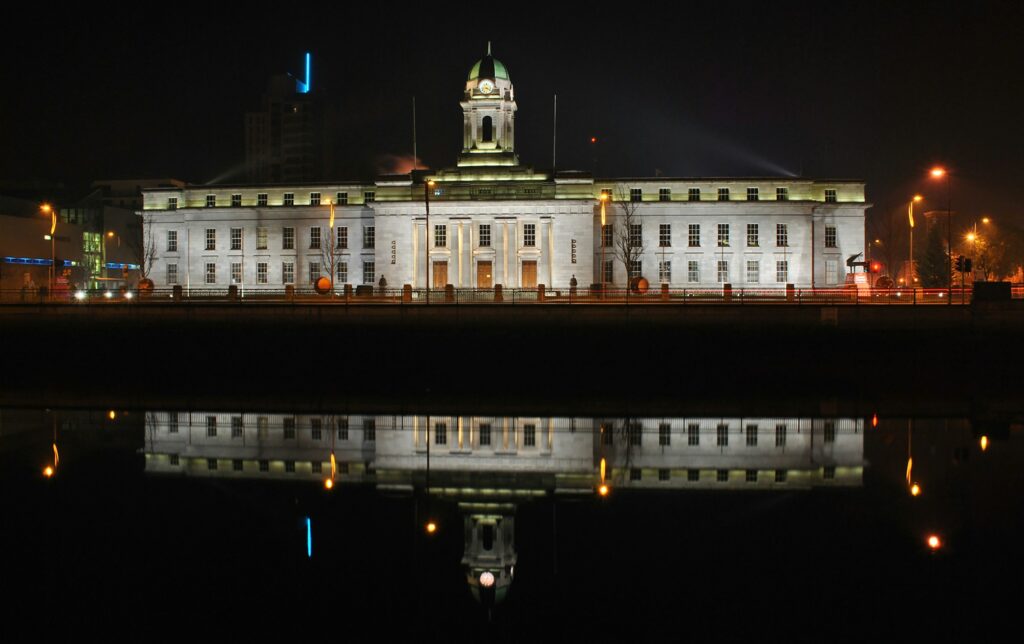
Cork, the #1 emerging destination of 2026. Don’t take our word for it: that’s according to the KAYAK « What the Future » report, based on data from millions of travelers. And National Geographic confirmed it by featuring Cork in its « Best of the World 2025, » praising an unprecedented urban renaissance. Ireland’s third-largest city, self-proclaimed « real capital » by its residents, Cork offers what Dublin has largely lost: untouched authenticity, world-class gastronomy recognized by the Michelin Guide, and a wild coastline that rivals the most beautiful landscapes in Europe. This complete guide gives you everything you need to discover Cork before the secret gets out.
Cork is the top emerging destination for 2026 according to KAYAK. Its English Market, Shandon and Cork City Gaol fill a city break, while Kinsale, Cobh and the Wild Atlantic Way reward a few extra days. The city counts eight Michelin Guide restaurants, four of them starred.
1. Why Cork is THE destination of 2026
Unprecedented international recognition
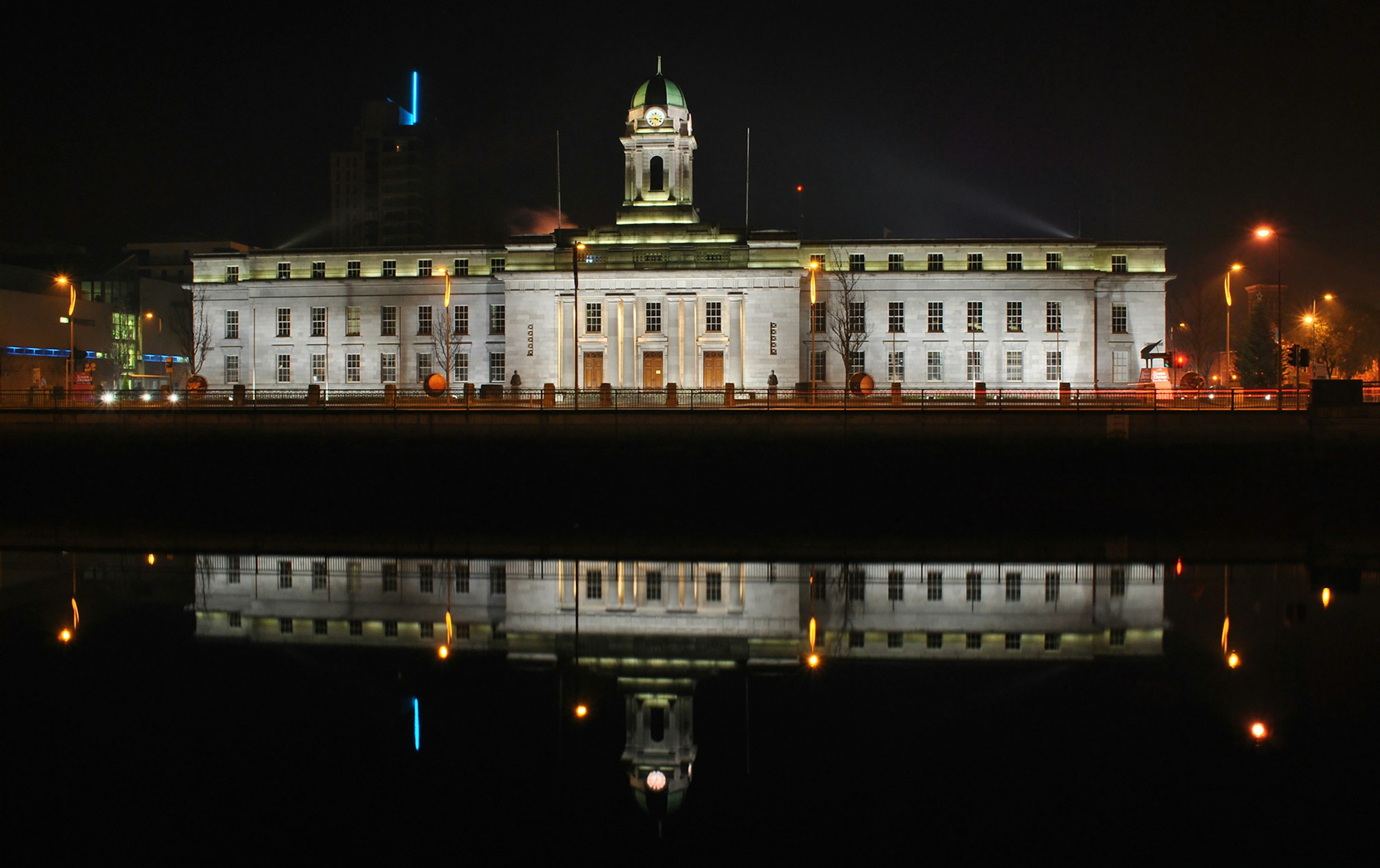
In 2026, Cork benefits from an exceptional confluence of factors. The KAYAK report reveals that 71% of Gen Z and 75% of Millennials are seeking undiscovered destinations — and Cork checks every box. Visit Cork is targeting 8 to 10% growth in visitor numbers, with a strategy focused on international expansion and sustainability.
The city ranks 20th globally in the Global Destination Sustainability Index and 2nd among cities of similar size, demonstrating a genuine commitment to responsible tourism. Meanwhile, Marina Park (32 hectares) in the Docklands is complete, the Crawford Art Gallery is undergoing a major €93 million renovation project, and new airline routes are boosting accessibility from across Europe.
2. The historic center: the island between two arms of the Lee
From Viking origins to urban renaissance
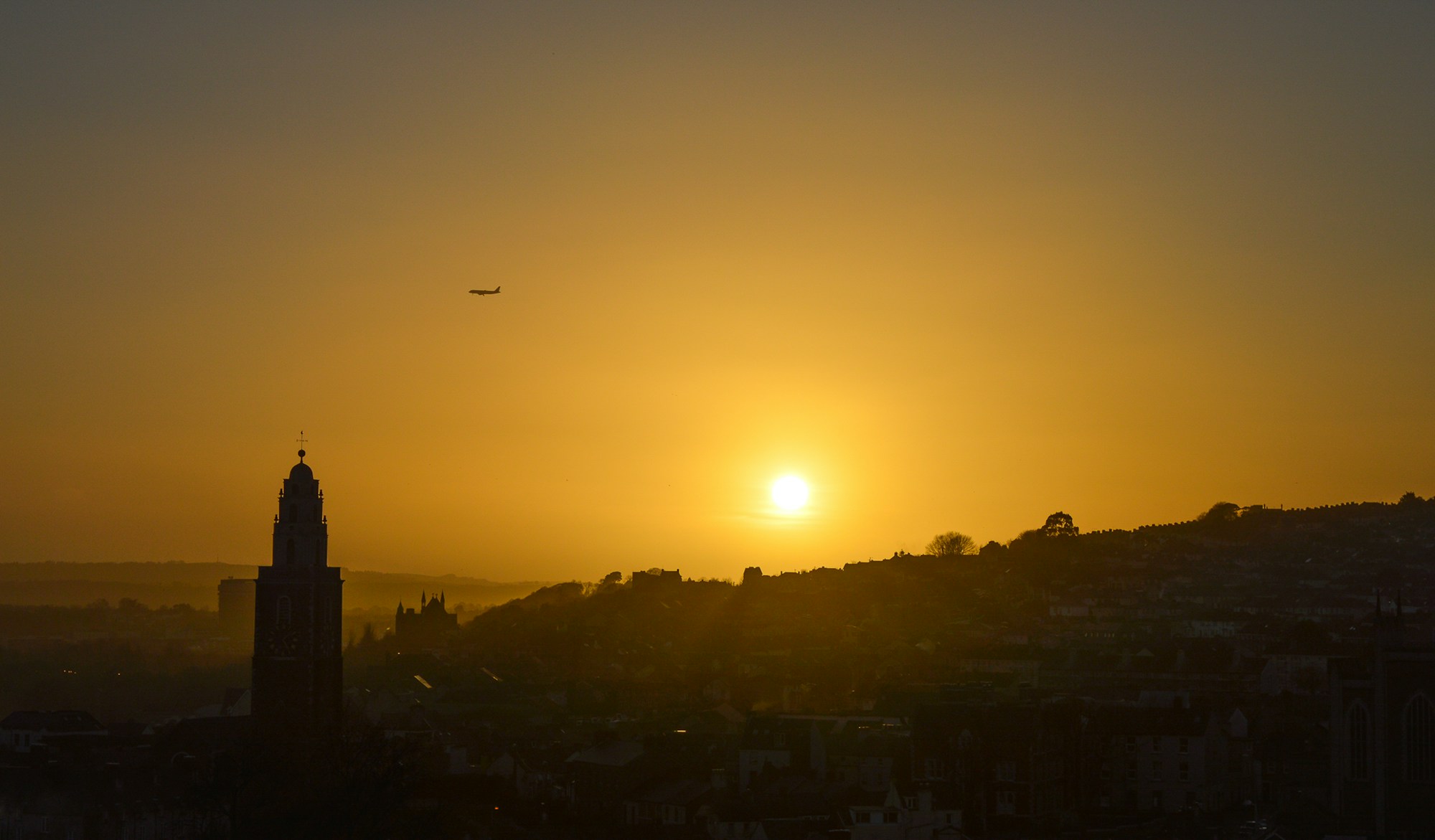
Cork began as an island and now extends across both banks of the River Lee, with underground channels running beneath its main streets. The word « Cork » derives from the Gaelic corcach, meaning « marsh » — a fascinating reminder of its origins. The original Viking settlement dates back to 915 AD, and this thousand-year history is felt in every alleyway.
The best way to explore Cork is on foot, following a route that passes by St. Finn Barre’s Cathedral (spectacular neo-Gothic architecture), the quadrangle of University College Cork, then heading up to the Shandon district and its famous St Anne’s Church. From the top of its tower (132 steps, €6), you can even ring the bells while enjoying one of the finest panoramic views in the city.
City center highlights
- Elizabeth Fort — Free entry, panoramic views of the entire city from the ramparts
- Butter Museum — Charming little museum dedicated to the history of Irish butter (€5)
- Cork City Gaol — Victorian prison turned immersive museum (€12)
- Marina Park — 32 hectares of waterfront promenade in the Docklands, completed late 2025
3. The English Market and Ireland’s culinary capital
From the historic market to Michelin stars
At the heart of Cork’s culinary scene lies the legendary English Market, cherished since 1788. Passing through its grand arches on Grand Parade is like stepping into a living celebration of Irish cuisine. One of the oldest covered markets in Europe, celebrated for its Victorian-inspired architecture, stained glass windows, and arcades, it overflows with extraordinary produce — from artisan cheese to beautifully prepared smoked fish.
National Geographic confirmed what locals have known for years: Cork is the culinary capital of Ireland and one of the most exciting emerging food destinations in Europe. The city boasts eight Michelin Guide-recognized restaurants, including four with stars. Ballymaloe House, 30 minutes from the city, launched Ireland’s farm-to-table revolution long before it became a trend — Myrtle Allen was the first female chef in Ireland to earn a Michelin star there.
Essential food experiences
- Farmgate Cafe — Overlooking the market stalls, dishes from €12-18
- Cafe Paradiso — One of the finest vegetarian restaurants in Europe
- Marina Market — International street food, far less touristy than the English Market
- A Taste of West Cork — Food festival every September
4. Kinsale: the colorful gem of the south coast
Historic harbor and gourmet paradise
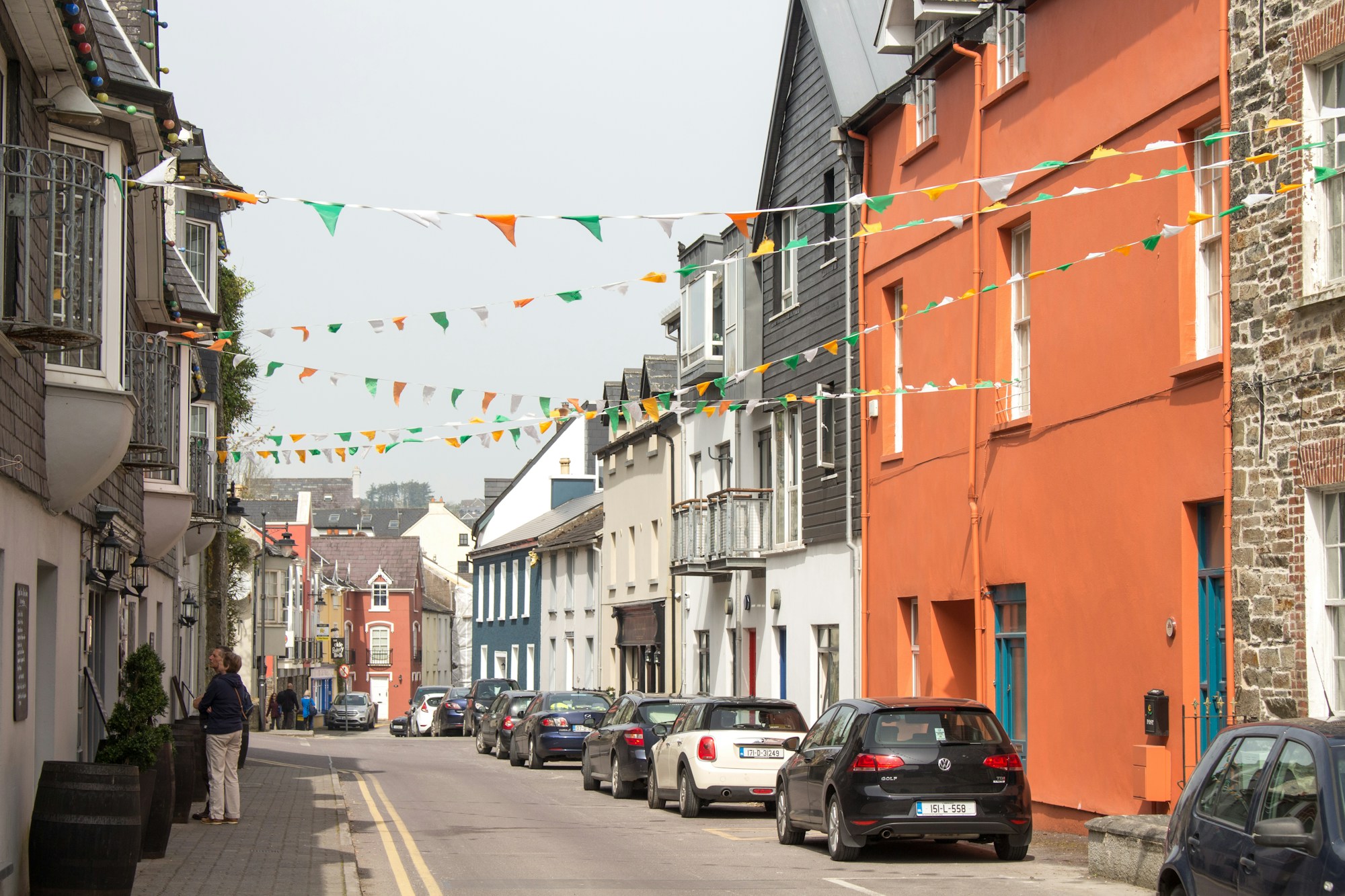
Kinsale is arguably the most photographed town in County Cork — a famous historic port, battlefield, and the site of the Lusitania shipwreck. It is also the southern terminus of the 2,750 km Wild Atlantic Way. Strolling through its narrow streets lined with boldly painted facades is an unforgettable experience.
Charles Fort, a star-shaped fortress dating from the late 17th century, offers a spectacular walk via the Scilly Walk along the waterfront. Linked to the Williamite War and the Irish Civil War, it is one of the most evocative historic sites in the region. Kinsale also ranks among the best dining towns in Ireland — its compact size packs a remarkable density of quality restaurants.
5. Cobh: the Titanic’s port with rainbow-colored houses
The Titanic’s last port of call
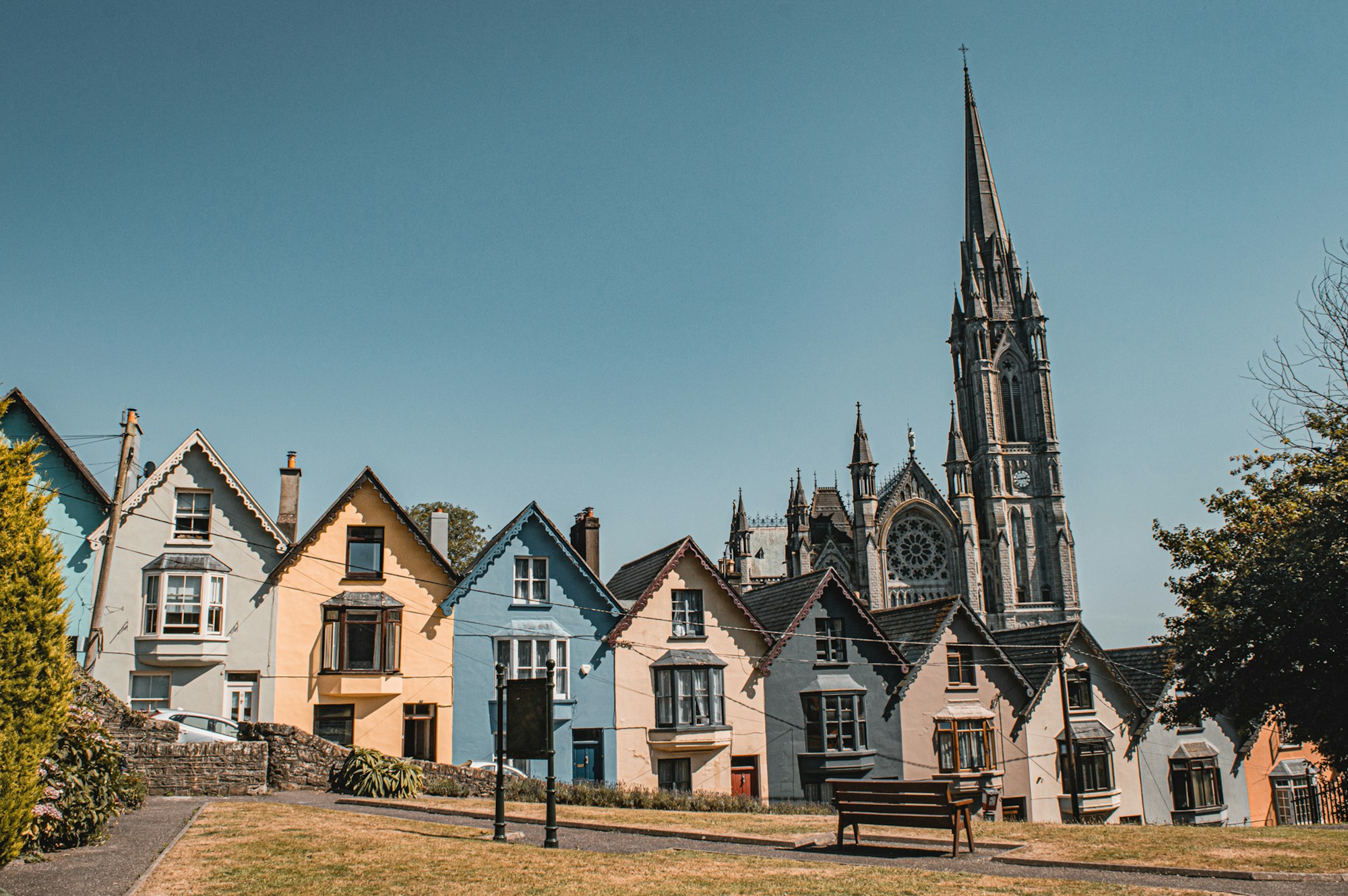
Cobh was the Titanic’s last port of call in 1912 and the departure point for millions of Irish emigrants heading to America. The sense of history here is palpable, far removed from mass tourism. The colorful « Deck of Cards » houses — cascading down the hillside beneath the majestic St Colman’s Cathedral — offer one of the most iconic views in Ireland.
The Port of Cork will welcome 103 cruise ships in 2026, between April and October — the largest cruise schedule in the Republic, with a 14% increase over 2025. Cruise tourism is expected to inject approximately €17 million into the local economy.
Don’t miss in Cobh
- Titanic Experience — Immersive tour in the former White Star Line building (~€15)
- Spike Island — « Ireland’s Alcatraz, » voted best European tourist attraction (~€28)
- St Colman’s Cathedral — 47 carillon bells, free entry
- Fota Wildlife Park — Family-friendly wildlife park (~€20 online)
6. Blarney Castle and the Stone of Eloquence
Cork’s most iconic castle
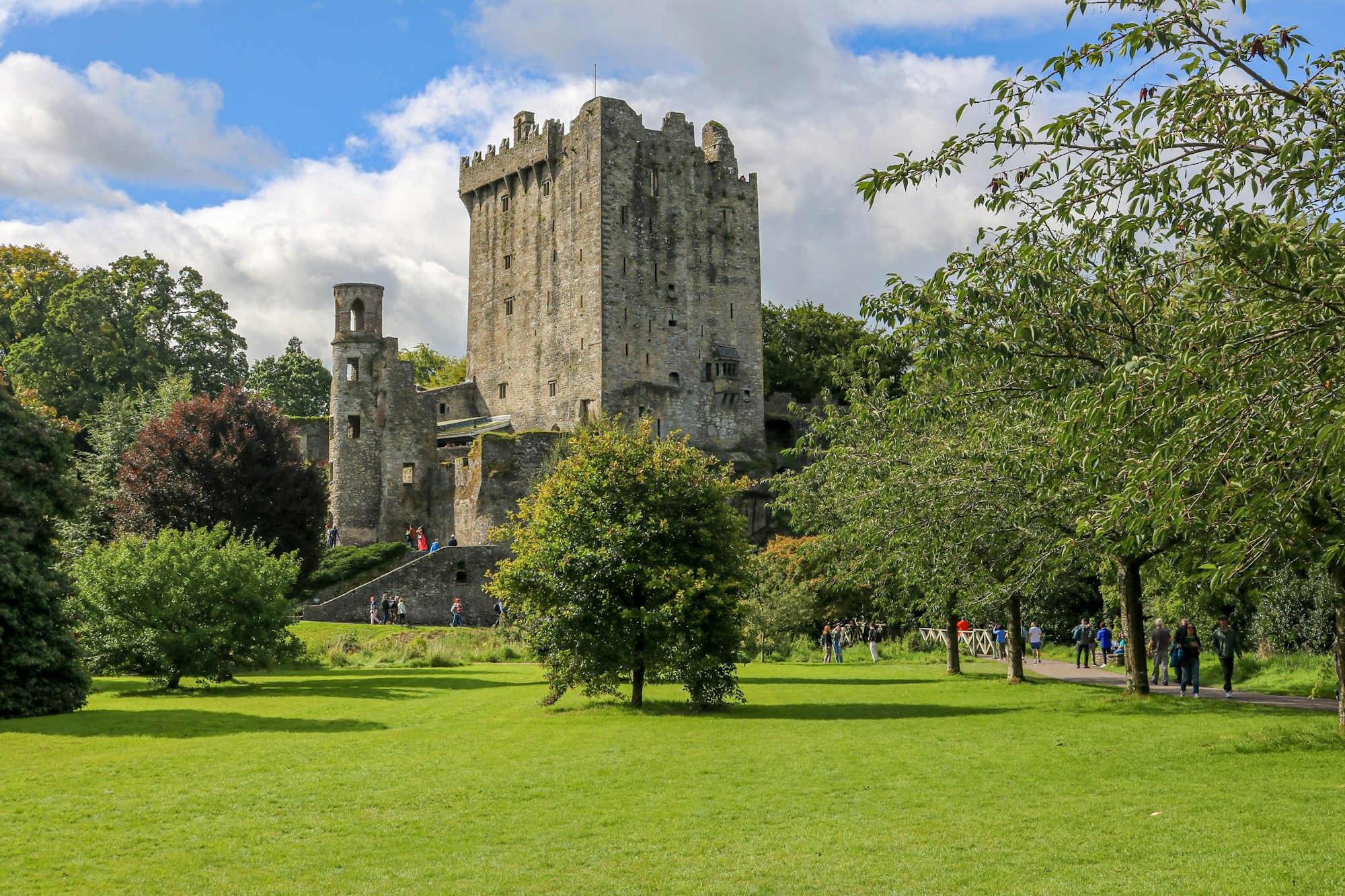
Built in the 15th century, Blarney Castle is world-famous for the Blarney Stone (Stone of Eloquence), made of carboniferous limestone and set into the castle’s battlements. Legend has it that anyone who kisses it receives the « gift of the gab. » Famous visitors who have taken part in the ritual include Mick Jagger, Winston Churchill, and Sir Walter Scott.
But Blarney Castle is much more than the stone. The varied gardens surrounding the castle are spectacular — notably the fascinating Poison Garden, a secret often overlooked by hurried visitors. The walk around the lake and through the enchanted woods is worth the trip on its own.
7. Wild Atlantic Way and West Cork: the wild coast
Three peninsulas, zero mass tourism
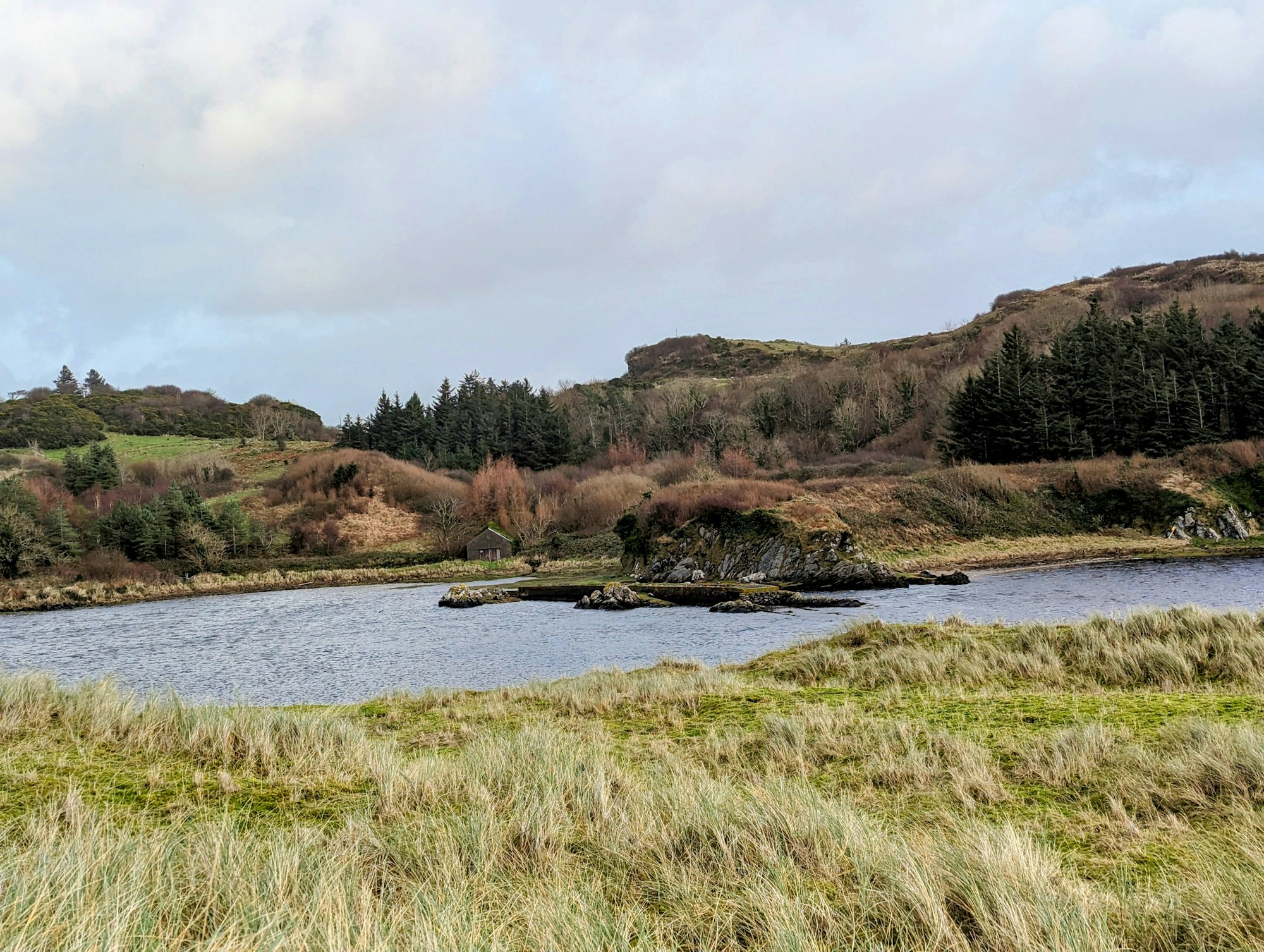
West Cork is home to three spectacular peninsulas: Mizen Head (Ireland’s most southerly point), Sheep’s Head (a hidden gem of breathtaking beauty), and Beara (one of the least visited areas in the southwest). At Mizen Head, climb the 99 steps and cross the suspension bridge to watch the Atlantic crashing against the cliffs.
West Cork’s marine wildlife is exceptional: humpback whales, fin whales, and basking sharks in early summer. Dursey Island, accessible via Ireland’s only cable car, offers a unique experience. The villages of Schull (sailing, diving, planetarium), Eyeries (colorful houses, Europe’s tallest ogham stone), and Union Hall (ultra-fresh seafood) are treasures waiting to be discovered.
8. Culture, pubs, and whiskey: Cork’s rebel soul
Festivals, trad sessions, and distilleries
Often dubbed the « real capital of Ireland » by its 220,000 residents, Cork pulses with a unique cultural energy. The Cork Jazz Festival in October is one of Europe’s largest jazz festivals. The Cork Fringe Festival (May 8-10, 2026) features theater and comedy across the entire city. And the Cork Midsummer Festival in June blends visual arts, music, and contemporary performance.
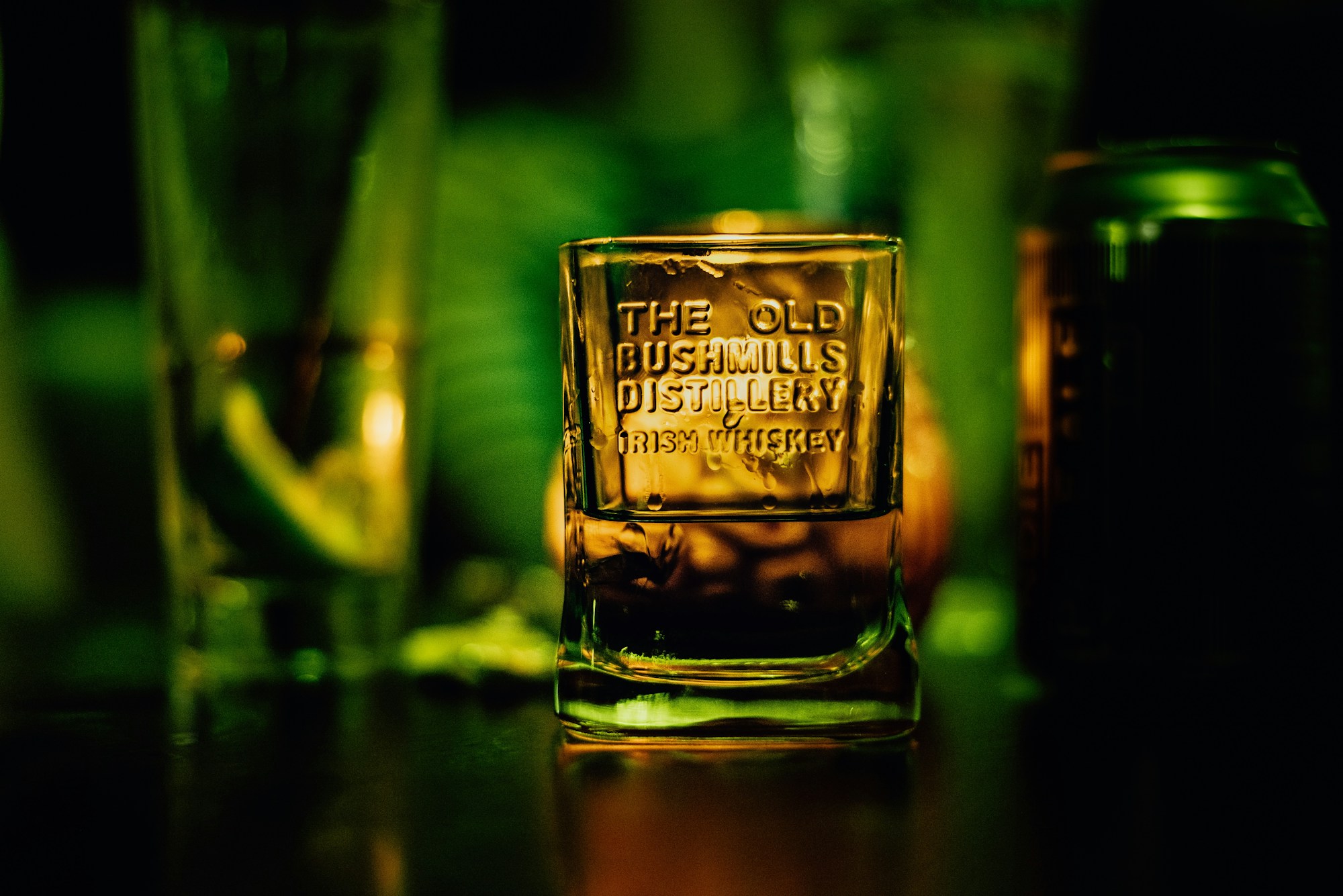
For whiskey, the Jameson Distillery Experience in Midleton (25 km east) is the original site where the whiskey is actually produced — a far more authentic experience than the tourist-oriented Dublin distillery. The 75-minute tour with tasting costs €26. Combine it with the Midleton Farmers’ Market on Saturday morning and Ballymaloe Cookery School just 10 minutes by car for an unforgettable food-and-whiskey day.
Must-visit pubs
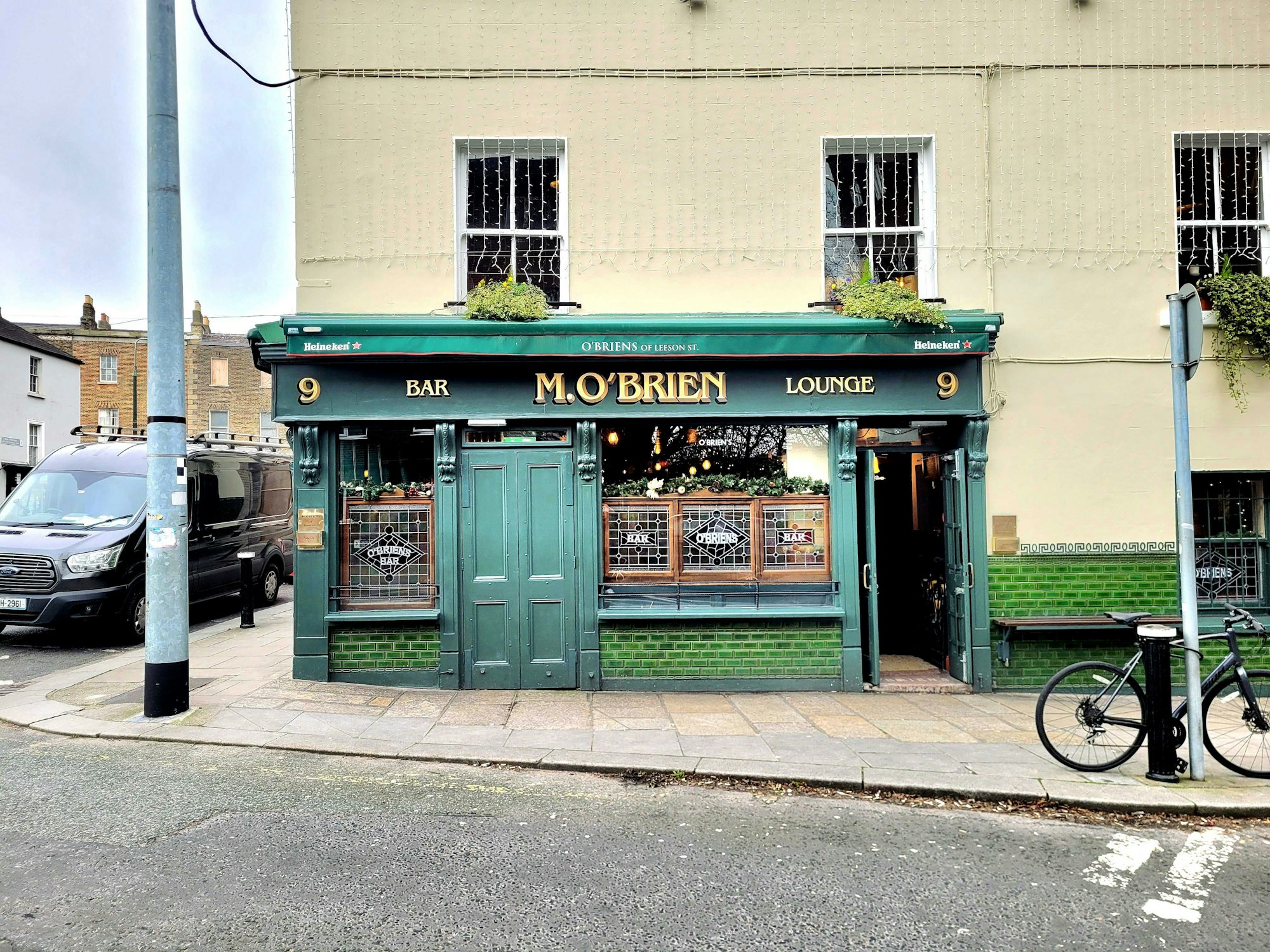
- Sin E (8 Coburg Street) — THE pub for traditional music sessions, frequented by locals
- The Mutton Lane Inn — Hidden in an alleyway, a timeless atmosphere
- Coughlan’s — Live music and authentic vibes on Douglas Street
9. The secret islands: Cape Clear, Sherkin, and Dursey
Ireland off every beaten path
The excursion from Baltimore to Cape Clear Island is one of the least touristy activities in Cork. Fastnet Rock, nicknamed « Ireland’s Teardrop, » was the last piece of Ireland that 19th-century emigrants saw as they sailed for North America. The island is home to prehistoric archaeological sites and a raw beauty that takes your breath away.
Sherkin Island is a place where time stands still. The crossing takes just fifteen minutes, and the crowds quickly disperse along a network of peaceful country lanes. Silver Strand and Tra Ban beaches are among the most beautiful in West Cork. On tiny Heir Island, the Island Cottage Restaurant is accessible only by boat — one of the most unique restaurants in Ireland.
10. Budget and best time to visit Cork
How much does a trip to Cork cost?
Cork offers excellent value for money compared to Dublin. Budget travelers spend around €55-90 per day (hostel, street food, walking), mid-range travelers €120-180 (hotel, restaurants, tours), and luxury travelers approximately €200-260+ per day.
Detailed daily budget
| Category | Budget | Mid-range | Luxury |
|---|---|---|---|
| Accommodation | €20-50 | €80-140 | €200+ |
| Meals | €20-30 | €40-60 | €80-150+ |
| Transport | €5-15 | €20-35 | €50+ |
| Activities | €0-10 | €15-30 | €60+ |
| Total/day | €55-90 | €120-180 | €260+ |
When to go?
| Period | Temperature | Advantages |
|---|---|---|
| May-June | 13-17°C | Longest days (up to 18 hours of daylight), festivals, moderate prices |
| Jul-Aug | 16-19°C | Best weather, bright evenings until 10pm |
| September | 15-17°C | Fewer crowds, food festivals, reasonable prices |
| October | 10-14°C | Cork Jazz Festival, autumn colors, low prices |
Budget tips
- Local bus #226 airport-center: €1.90 with Leap card (€2.80 cash)
- Dublin-Cork train: €32 when booked in advance (€22 by bus)
- Elizabeth Fort and Marina Park: free
- Buy a Leap card (transit pass) at the airport to save 30% on all buses
Frequently Asked Questions
Is Cork really worth visiting over Dublin?
Absolutely. Cork is more laid-back, more authentic, and significantly cheaper than Dublin. Unofficially known as Ireland’s culinary capital with 8 Michelin Guide restaurants, Cork offers a deep cultural experience without the mass tourism. The city is wonderfully walkable and lets you experience Ireland « from the inside. »
How many days should I plan for Cork?
Allow 2-3 days for Cork City (historic center, English Market, pubs, Blarney Castle) and 3-4 additional days for West Cork (Kinsale, Cobh, Wild Atlantic Way, islands). A full week is ideal to thoroughly enjoy the region without rushing.
Do I need a car to visit Cork?
For Cork City, Kinsale, and Cobh, no — the bus and train network is sufficient. However, to explore the West Cork peninsulas (Mizen Head, Sheep’s Head, Beara) and remote villages, a car is strongly recommended. Rentals start at around €25/day.
What is the nearest airport to Cork?
Cork Airport (ORK) is just 8 km from the city center. Direct flights are available from Paris, London, Amsterdam, Frankfurt, and other European cities. Bus #226 connects the airport to the center for €1.90 with a Leap card. By train from Dublin, it takes about 2.5 hours for approximately €32.
Is the rain really a problem in Cork?
The Irish talk about « four seasons in one day »: be prepared to put on a sweater in the morning, reach for sunscreen at noon, and grab a rain jacket in the afternoon. The rain is rarely constant and passes quickly. From May to September, you’ll enjoy up to 18 hours of daily light and spectacular sunsets after 10pm.
Is Cork suitable for families?
Yes, Cork is very family-friendly. Fota Wildlife Park (€19.50 online), the Shandon bells, Blackrock Castle Observatory (science and space center), and West Cork’s beaches offer varied activities for all ages. The covered markets are also an excellent playground of discovery for children.
What daily budget should I plan for Cork?
On a budget (hostel, markets, walking), expect €55-90 per day per person. For mid-range comfort (3-star hotel, restaurants, tours), plan for €120-180. Dublin is notoriously expensive, but Cork lets you stretch your budget much further while enjoying superior culinary quality.
What is the best time to visit Cork?
May-June and early September offer the best balance of pleasant weather (13-17°C), long daylight hours, and reasonable prices. July-August is peak season (pricier accommodation). October attracts jazz enthusiasts (Cork Jazz Festival) and autumn color seekers, with lower prices.
What are the latest travel tips for exploring Cork city centre?
Cork city centre is best explored on foot. Start at the English Market, then visit Marina Market and Marina Park, and see Elizabeth Fort, whose walls offer views over the city. Sin É hosts traditional music sessions, but check the venue for its current schedule.
Sources
- Travel and Tour World — Cork, the unexpected rising star of 2026
- National Geographic — Cork in the « Best of the World 2025 »
- TimeOut — Emerging destinations of 2026 according to KAYAK
- All About Cork — Cork, Ireland’s culinary capital
- Ireland.com — Gastronomy in Cork
- TheCork.ie — 103 cruise ships expected in 2026
- Budget Your Trip — Travel costs in Cork
- Nomadic Matt — Cork travel guide 2026
- The Irish Road Trip — Best towns in County Cork
- Three Rock Books — Hidden gems of the Wild Atlantic Way in Cork
- Pure Cork — Cork weather and climate
- Spike Island Cork — Spike Island visitor information
Research conducted on February 7, 2026
Plan your trip to Cork
Discover hundreds of detailed itineraries created by our community of travelers. From the English Market to the secret islands of West Cork, find inspiration for your next trip to Ireland.
Explore all itineraries