
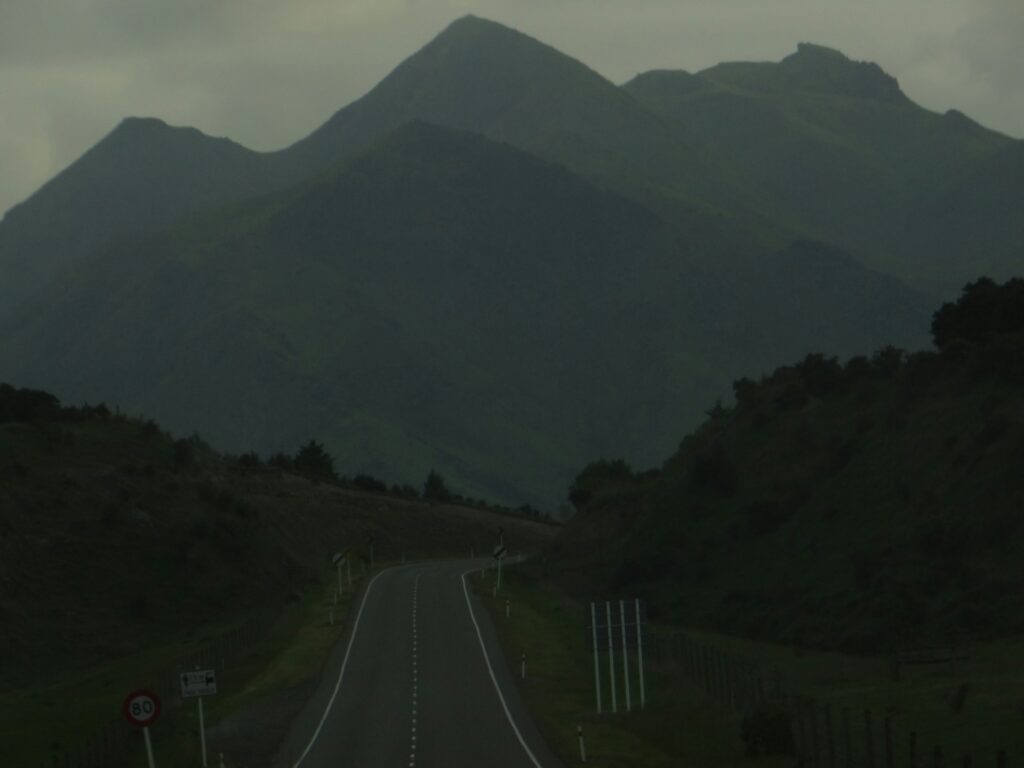
New Zealand is the country that has most profoundly shaped the world of fantasy cinema. Since Peter Jackson transformed its landscapes into Middle-earth for The Lord of the Rings (2001-2003), the country has hosted the filming of The Hobbit, The Chronicles of Narnia, Mission Impossible: Fallout, Wolverine, and serves as the permanent production base for James Cameron’s Avatar franchise. With over 100 international productions filmed on its soil, New Zealand is the ultimate destination for set-jetting, the trend that drives millions of travelers to visit the real-world locations of their favorite films. According to Expedia, this practice is accelerating rapidly in 2025-2026, driven by millennials and Gen Z. We have mapped every iconic filming location — from Hobbiton to Mordor, from Rivendell to Pandora — with updated budgets, optimized itineraries, and insider tips for a complete cinematic road trip in 2026.
1. Hobbiton — The Shire Comes to Life
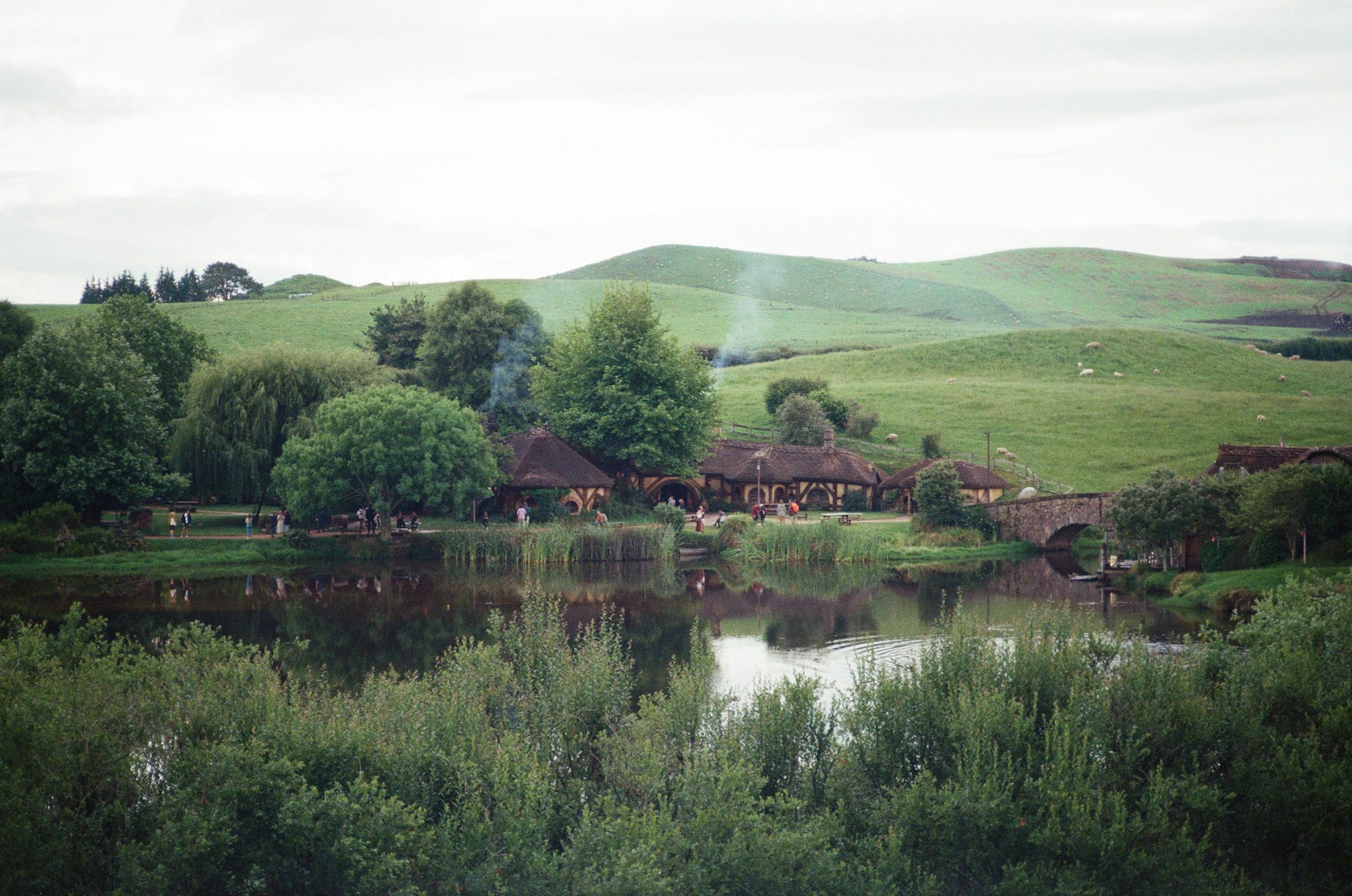
New Zealand’s most visited permanent film set
This is the iconic New Zealand filming location. The Hobbiton Movie Set features 44 hobbit holes nestled into the lush green hills of a 1,250-acre family farm in Matamata. Originally built for the Lord of the Rings trilogy and then permanently rebuilt for The Hobbit, the set is so meticulously maintained that a dedicated team of gardeners tends every garden daily — flowers change with the seasons to maintain the illusion of a lived-in village.
The 2-hour guided tour culminates at the Green Dragon Inn, the Shire’s tavern recreated with astonishing attention to detail. You can sample an exclusive beer brewed specially for the site — the Southfarthing Ginger Beer and the Ambrosial Ale are visitor favorites. According to TripAdvisor, it is the country’s most visited attraction with over 700,000 visitors annually. Departure times are available 10 months in advance — during peak season (December-February), be sure to book 3 to 6 months ahead.
- Opt for the Evening Banquet Tour for a magical lantern-lit atmosphere
- Try the craft beer at the Green Dragon Inn (included in the tour)
- Photograph Bag End (Bilbo’s hole) with its iconic round green door
- Arrive 15 minutes before your tour departure (latecomers are not admitted)
2. Tongariro — Mordor and Mount Doom
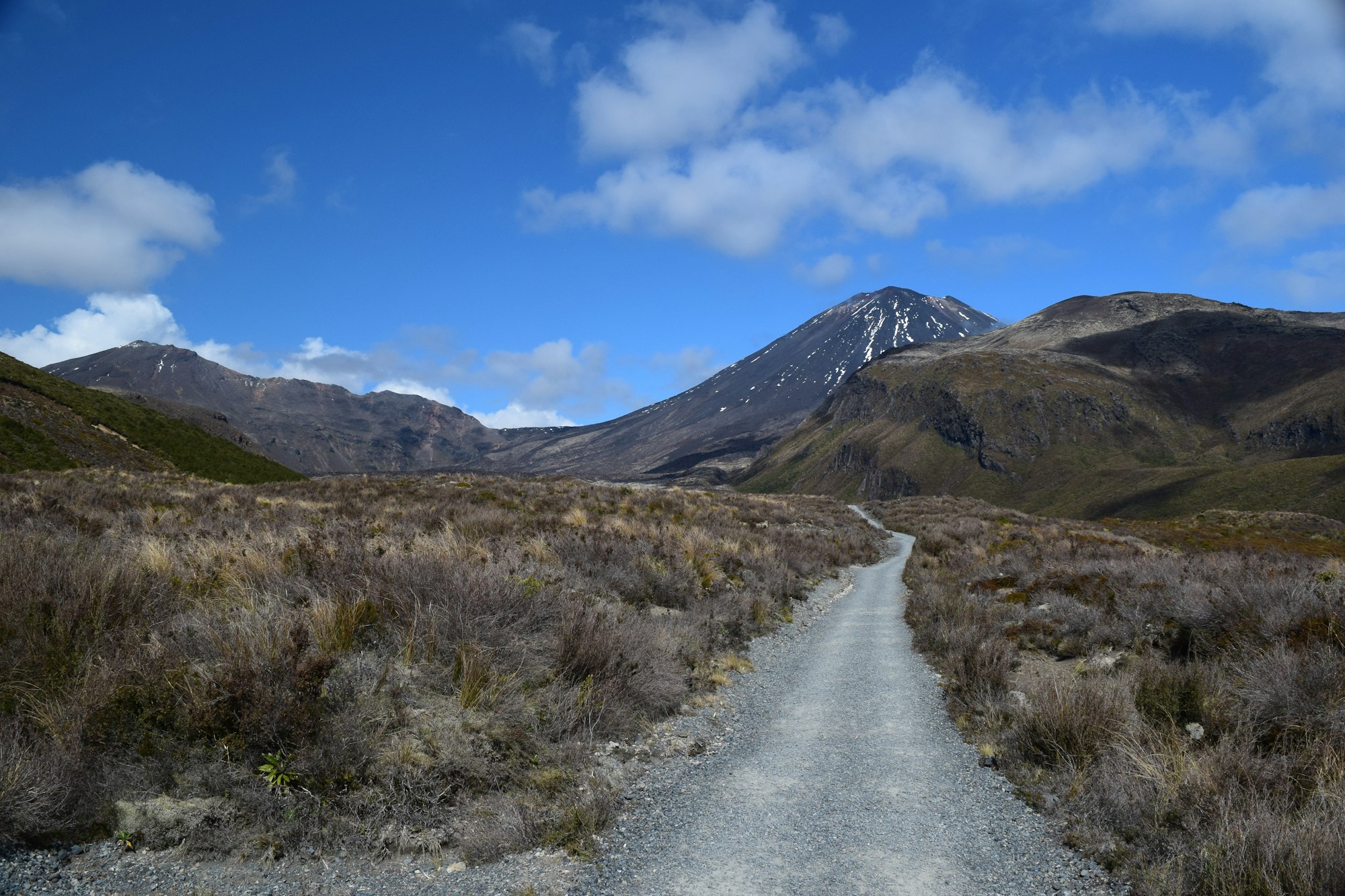
New Zealand’s most spectacular day hike
Mount Ngauruhoe (2,287 m), a volcano with a perfectly symmetrical cone, became world-famous as Mount Doom — the mountain where Frodo destroys the One Ring. The Tongariro Alpine Crossing (19.4 km, 7-8 hours) traverses lunar landscapes of steaming craters, emerald lakes, and lava fields that served as the backdrop for Mordor in the trilogy. It is regularly ranked among the world’s 10 best day hikes.
The Emerald Lakes, an otherworldly green color caused by volcanic minerals, and the Red Crater offer panoramas that look straight out of a movie — because they were. Tongariro National Park also holds dual UNESCO World Heritage status: for both its natural and cultural value (a sacred place for the Maori). The trail is demanding but does not require technical gear — good hiking boots and layered clothing are all you need.
- Book the shuttle the day before (mandatory, parking is not available at the end)
- Start early (6-7 AM) to avoid crowds on the narrow sections
- Bring SPF 50 sunscreen and a windbreaker even in summer
- Do not attempt to climb Ngauruhoe — it is a tapu (sacred) zone for the Maori
3. Queenstown & Glenorchy — From Isengard to Mission Impossible
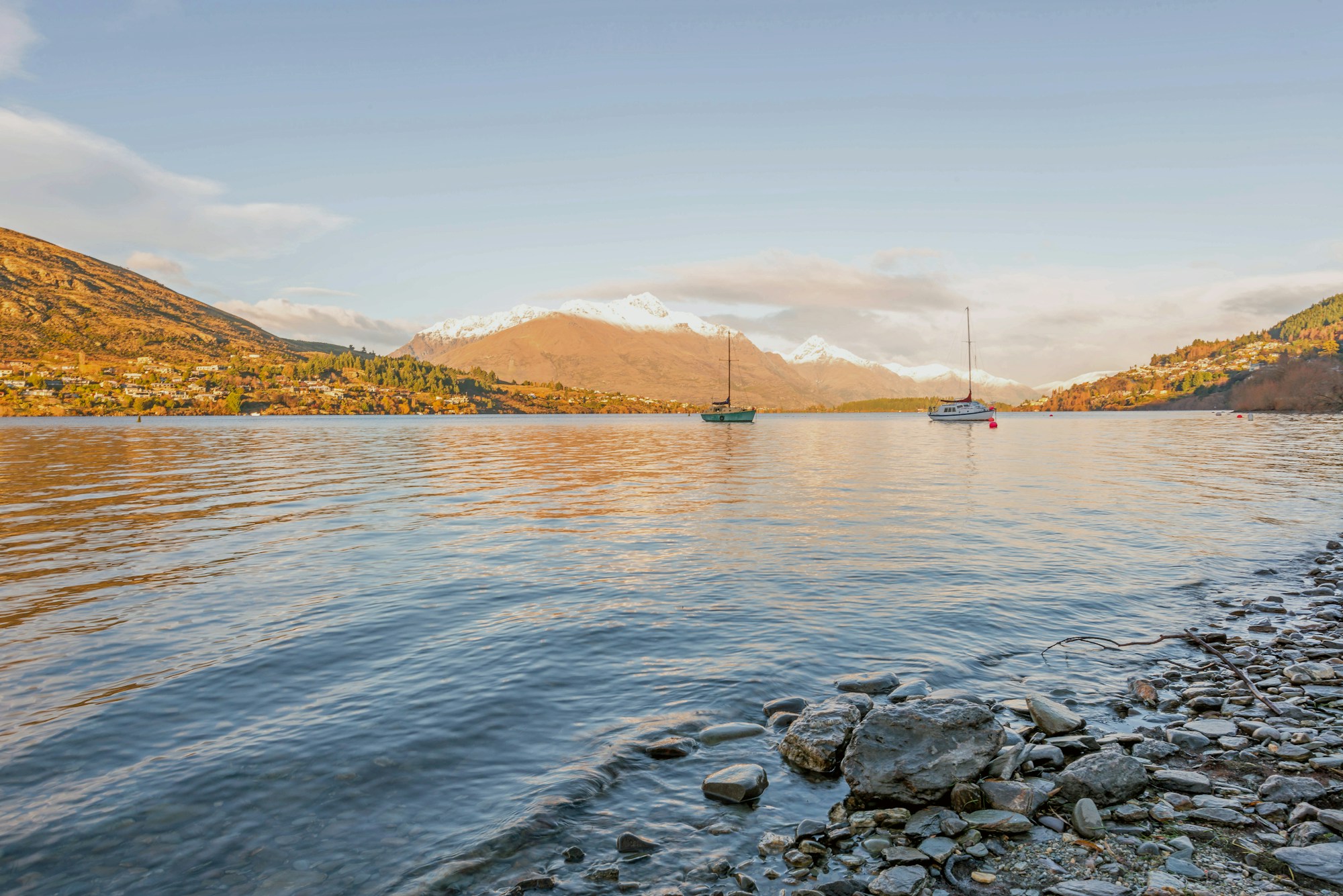
The adventure and cinema capital of the world
The Queenstown-Glenorchy region is New Zealand’s most filmed natural backdrop. Just 45 minutes from Queenstown along one of the country’s most scenic drives, the small town of Glenorchy and the Paradise valley served as the setting for Isengard (Saruman’s tower), Lothlorien (the Elven forest), and the Fields of Ithilien. The moss-draped beech forests and crystal-clear rivers create a landscape of almost surreal beauty.
More recently, Mission Impossible: Fallout (2018) filmed its most spectacular stunts above Milford Sound and throughout the Queenstown region. Tom Cruise flew over the mountains by helicopter in sequences that have become legendary. Lake Wakatipu and Mount Aspiring National Park also hosted Wolverine and the filming of Paramount’s Heart of the Beast with Brad Pitt in 2024. The Dart River Jet Safari takes you deep into LotR filming locations by jet boat through spectacular gorges — a pure adrenaline rush blended with cinema.
- Take the Dart River Jet Safari to traverse the Isengard filming locations
- Hike the Routeburn Track (1-3 days) for the Lothlorien landscapes
- Drive the scenic Queenstown-Glenorchy road (45 min, frequent photo stops)
- Book a horseback riding excursion through the Paradise valley
4. Milford Sound — The World’s Most Cinematic Fjord
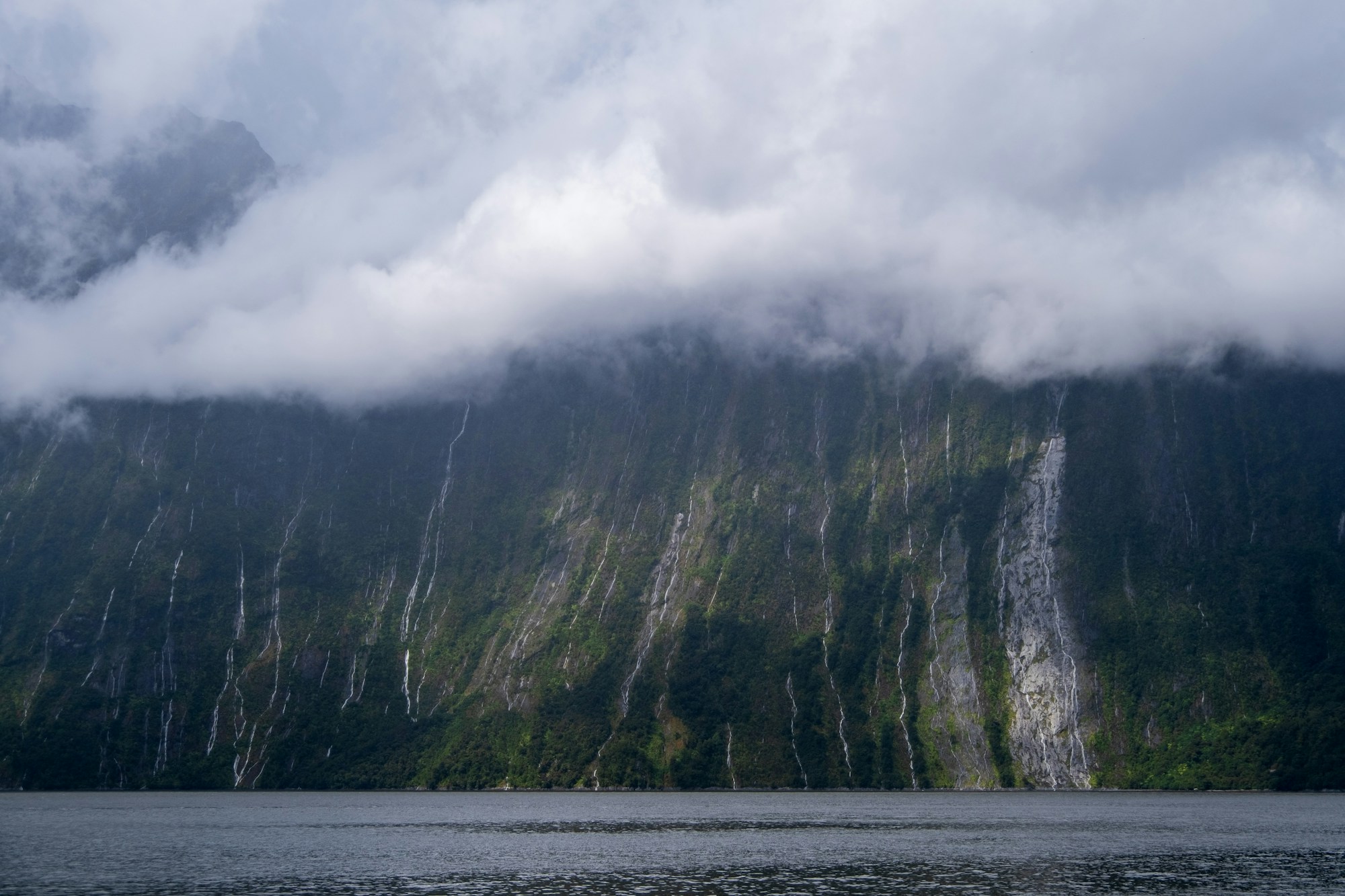
Rudyard Kipling called it « the eighth wonder of the world »
Milford Sound (Piopiotahi in Maori) is a 15 km fjord carved by glaciers, flanked by towering cliffs reaching 1,692 m (Mitre Peak) and dotted with permanent waterfalls. Rudyard Kipling called it « the eighth wonder of the world » — and he was not exaggerating. This grand setting has served as the backdrop for Mission Impossible: Fallout, Wolverine, and Alien: Covenant. The dark waters and sheer rock walls create an atmosphere that is both majestic and haunting.
The classic cruise (2 hours) passes beneath Stirling and Bowen Falls and approaches the entrance to the Tasman Sea, where you can spot dolphins, seals, and occasionally penguins. For an even more immersive experience, the overnight cruise lets you fall asleep at anchor in the fjord — absolute silence broken only by the sound of waterfalls. The drive from Te Anau (2 hours) itself passes through spectacular scenery, including the Homer Tunnel carved through raw rock.
- Book the overnight cruise for a fully immersive fjord experience
- Stop at the Mirror Lakes on the drive from Te Anau (perfect mountain reflections)
- Bring a raincoat — Milford Sound receives 7 meters of rain per year
- Try a guided kayak tour for a water-level perspective
5. Wellington — World Capital of Fantasy Cinema & Avatar
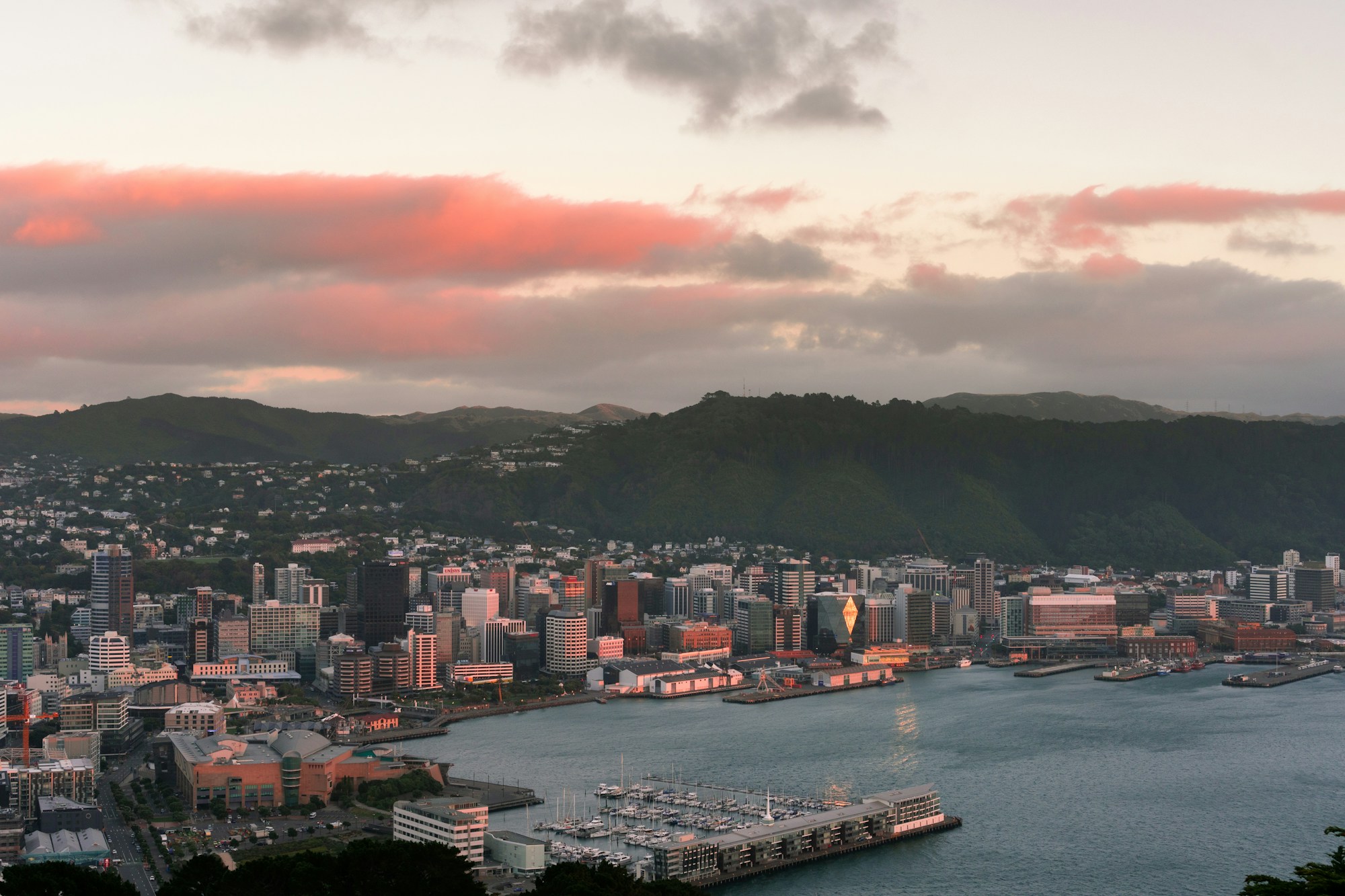
Weta Workshop, Avatar, and behind the scenes of Middle-earth
Wellington is not just the capital of New Zealand — it is the world capital of fantasy cinema, recognized as a UNESCO City of Film. This is where Weta Workshop and Weta FX (formerly Weta Digital) created the special effects, prosthetics, armor, and creatures of Middle-earth and Pandora. The Stone Street Studios in Miramar are the primary production facility for the Avatar franchise — James Cameron established his permanent studio here following a 500-million-dollar deal with the New Zealand government.
The guided Weta Workshop Unleashed tour (90 minutes, 59 NZD) is a must: you discover the workshops where artisans crafted Aragorn’s swords, the elven ears, and the Na’vi costumes. Beyond the studios, Wellington is packed with freely accessible filming locations: Mount Victoria, whose wooded areas served as the Hobbiton Woods where the hobbits flee from the Black Riders, Kaitoke Regional Park transformed into Rivendell, and Dry Creek Quarry where the Battle of Helm’s Deep was filmed.
- Visit the Weta Workshop Unleashed (book online, limited time slots)
- Hike Mount Victoria to find the Hobbiton Woods filming spot
- Visit Kaitoke Regional Park (Rivendell), 45 minutes north
- Dine in the Cuba Street neighborhood, the vibrant heart of Wellington
6. Mount Sunday — Edoras, City of the Rohirrim

The hilltop where King Theoden once ruled
Mount Sunday is an isolated hill in the middle of a valley surrounded by snow-capped mountains — a location so perfect that Peter Jackson chose it to build Edoras, the fortress-city of the people of Rohan. In The Two Towers, this is where Theoden rules from Meduseld, his golden hall. The set was completely dismantled after filming, but the hill itself — with its flattened summit overlooking a grassy plain and a winding river — remains instantly recognizable to any fan of the films.
Access is via a 30 km gravel track from the main road (SH72), followed by an easy 1.5-hour return hike to the summit. The 360-degree panorama from the top is breathtaking: the Southern Alps as a backdrop, the Rangitata River below, and not a single building on the horizon. It is one of the few filming locations where you can truly feel the isolation and grandeur of the film. The site is about 2 hours from Christchurch, easily combined with a road trip to other South Island locations.
- Picnic at the summit with panoramic views of the Southern Alps
- Photograph the hill from the access track for the « wide-angle movie shot » perspective
- Combine with Flock Hill and Elephant Rocks (Narnia filming locations, 1.5 hours drive)
- Bring water and snacks — there are no shops on site
7. Cathedral Cove — The Secret Passage to Narnia
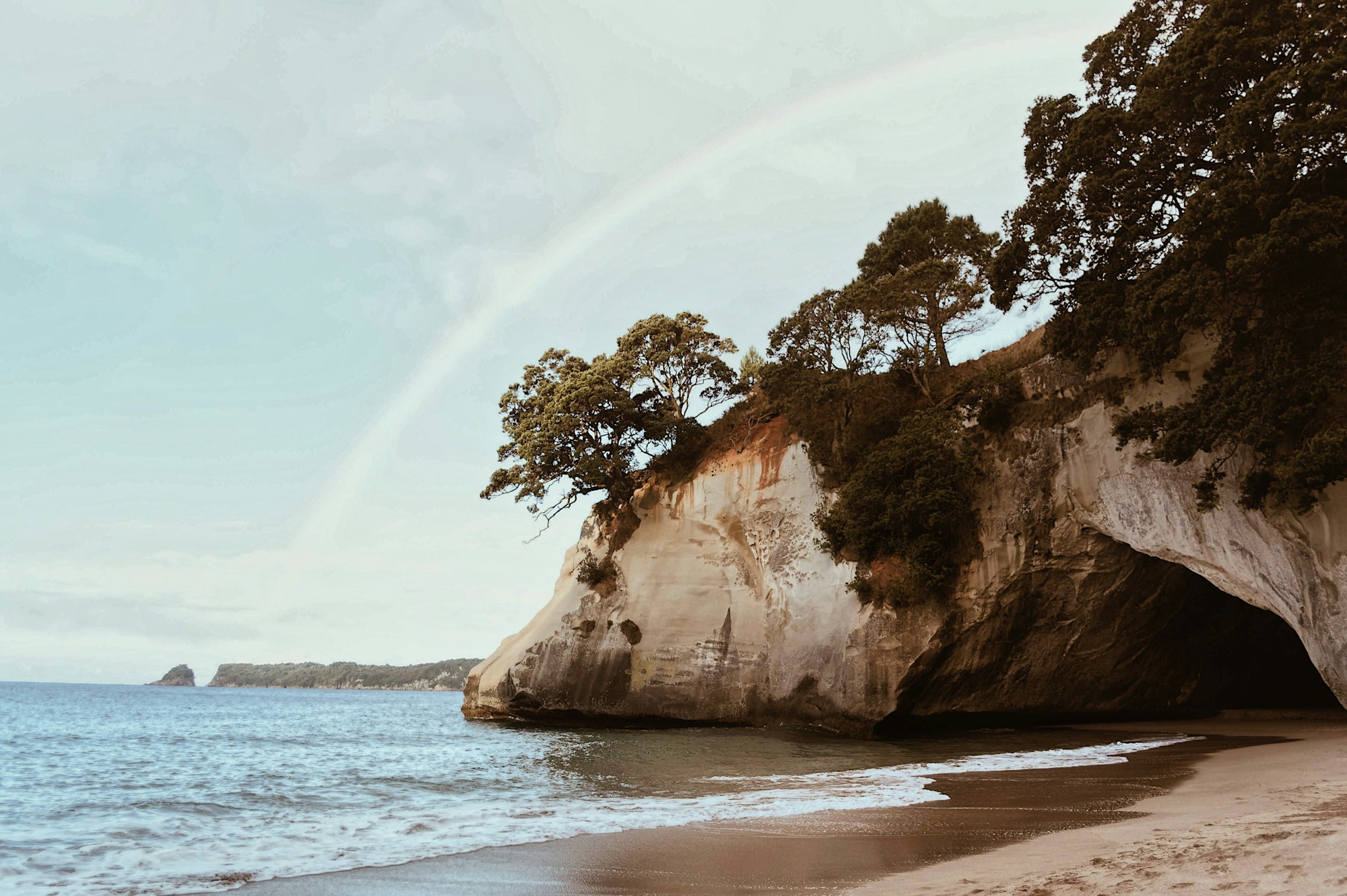
The natural arch from The Chronicles of Narnia
Te Whanganui-A-Hei (Cathedral Cove) is one of the most photogenic spots in New Zealand. This spectacular natural rock arch, carved by the sea, served as a filming location in The Chronicles of Narnia: Prince Caspian — it is the passage through which the Pevensie children discover the ruins of Cair Paravel. In the film, the arch transforms into a subway tunnel, creating one of the most memorable gateways to Narnia.
The site is a protected marine reserve accessible after approximately a 1-hour walk from the Hahei car park. The white sand beach, turquoise water, and cathedral arch form a setting so photogenic it looks like a special effect in itself. The ideal alternative to walking is to arrive by sea kayak from Hahei — you approach the arch from the sea just like the characters in the film, and it is the only way to have the beach to yourself by arriving at dawn.
- Arrive at dawn by kayak from Hahei to beat the crowds
- Explore the natural rock pools at low tide (marine reserve, no collecting)
- Visit Hot Water Beach (30-minute drive) — dig your own natural spa in the sand
- Bring walking shoes and water for the trail
9. Complete Itinerary: 14 Days of Cinema in New Zealand
The ultimate cinematic road trip
Here is our optimized itinerary covering all the major filming locations, organized logistically to minimize transfers and maximize the experience:
Phase 1 — North Island (7 days)
- Days 1-2: Auckland, Hobbiton Movie Set, Waitomo Caves (glowworms + Hairy Feet)
- Day 3: Drive to the Coromandel Peninsula, Cathedral Cove (Narnia), Hot Water Beach
- Days 4-5: Drive to Tongariro, Tongariro Alpine Crossing (Mount Doom)
- Days 6-7: Wellington (Mount Victoria, Kaitoke/Rivendell, Weta Workshop, Embassy Theatre)
Phase 2 — South Island (7 days)
- Day 8: Fly Wellington to Christchurch, drive to Mount Sunday (Edoras)
- Day 9: Flock Hill & Elephant Rocks (Narnia), drive to Wanaka
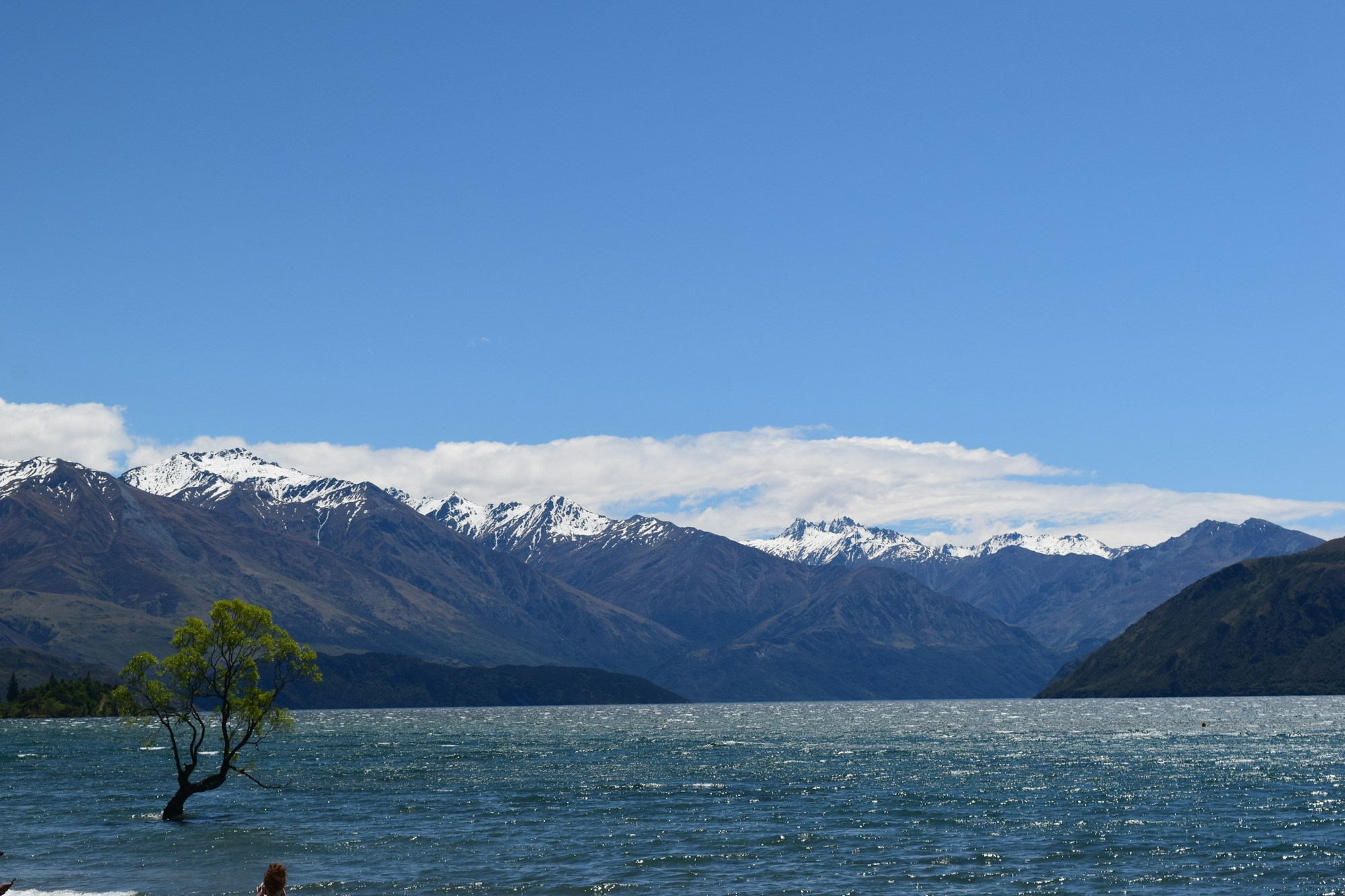
- Days 10-11: Wanaka (lone tree), Queenstown, Glenorchy & Paradise (Isengard, Lothlorien)
- Days 12-13: Drive to Te Anau, Milford Sound (cruise + overnight on the fjord)
- Day 14: Return to Queenstown, departure flight
- Backpacker (hostels, buses, simple meals): 2,000-3,000 NZD (~1,100-1,700 EUR)
- Mid-range (3-4* hotels, rental car, restaurants): 4,400-7,300 NZD (~2,500-4,100 EUR)
- Comfort (boutique lodges, private tours, fine dining): 8,100-13,600 NZD (~4,500-7,600 EUR)
Frequently Asked Questions
Can you visit Avatar filming locations in New Zealand?
The Avatar franchise was not « filmed » in New Zealand in the traditional sense: the movies are created using motion capture and CGI. However, all the special effects, props, concept design, and costumes are the work of Weta Workshop and Weta FX in Miramar, Wellington. You can visit the workshops during the Weta Workshop Unleashed Tour (59 NZD). For an « Avatar-inspired » experience, the Waitomo Caves and their bioluminescence are reminiscent of Pandora’s forests.
Do you need a 4×4 vehicle to access the filming locations?
Most sites are accessible by standard car. However, some locations require gravel roads (Mount Sunday, Mavora Lakes). For Mount Sunday, a standard car is fine if you drive carefully. For the Mavora Lakes, an SUV is strongly recommended. Always check your rental agreement regarding driving on unsealed roads — some agencies prohibit it over long distances.
Can you still climb Mount Ngauruhoe (Mount Doom)?
The signs to the side trail have been removed from the Tongariro Alpine Crossing to discourage hikers from climbing into this tapu (sacred) zone for the local Maori people. While the ascent is not technically prohibited, it is strongly discouraged out of respect for local customs and for safety reasons (steep slope, unstable rocks). The Tongariro Alpine Crossing offers excellent views of the volcano without needing to climb it.
How far in advance should you book Hobbiton and other key activities?
Hobbiton time slots are available 10 months in advance. For peak season (December-February), book 3 to 6 months ahead. For the shoulder season, 4 to 6 weeks may be sufficient. For the Weta Workshop, book 1 to 2 weeks ahead. For the overnight cruise at Milford Sound, book at least 1 month in advance during peak season. Tongariro Crossing shuttles can be booked the evening before or on the morning of your hike.
What is the best season for a complete cinematic road trip?
New Zealand autumn (March-May) offers the best balance: spectacular colors in the beech forests, pleasant temperatures (15-20 C), fewer crowds than summer, and all sites are accessible. Spring (September-November) is also excellent but some mountain passes may still be snow-covered. Avoid the Southern Hemisphere winter (June-August) if you plan to do the Tongariro Crossing or the mountain roads of the South Island.
What budget should you plan for a 14-day cinematic road trip?
At mid-range level (3-4 star hotels, rental car, local restaurants), expect to spend approximately 4,400 to 7,300 NZD per person (2,500 to 4,100 EUR) excluding international flights, or 310 to 520 NZD per day. This budget includes accommodation (120-200 NZD/night), meals (60-90 NZD/day), activities (Hobbiton, Weta, cruises), and vehicle rental. On a backpacker budget, costs drop to 140-210 NZD per day. The most variable expense is car rental: expect 50 to 120 NZD/day depending on the vehicle category.
Are there new films being planned in New Zealand?
Yes, several major productions are in the works. « The Hunt for Gollum », a new installment in the LotR universe, is scheduled for December 2027 and will likely be filmed in New Zealand. The Avatar sequels continue to be produced primarily at the Stone Street Studios in Wellington. In 2024, Paramount’s Heart of the Beast with Brad Pitt was filmed at Lake Wakatipu and in Mount Aspiring National Park. These productions may cause temporary closures of some sites but will create new locations to visit.
What essential gear should you pack for visiting the filming locations?
New Zealand weather can change within minutes, especially in the mountains. Essential items include: sturdy hiking boots (essential for the Tongariro Crossing and Mount Sunday), a waterproof windbreaker, layered clothing, SPF 50 sunscreen (UV rays are particularly intense due to the ozone hole), a water bottle, a camera, and a Type I power adapter. For Milford Sound, a raincoat is essential regardless of the forecast.
Sources
- Hobbiton Movie Set Tours — Official Hobbiton site: prices, bookings, and practical information
- 100% Pure New Zealand — Official guide to Lord of the Rings filming locations
- 100% Pure New Zealand — The Hobbit trilogy filming locations
- Weta Workshop Experiences — Guided tours of the special effects workshops in Wellington
- 4filming.com — Avatar: Fire and Ash filming locations
- NZ Herald — James Cameron and the Avatar world premiere in Wellington
- Wanderlust Magazine — Lesser-known films shot in New Zealand including Narnia
- Screen Global Production — Film production guide for New Zealand
- ChristchurchNZ — Mount Sunday / Edoras visitor guide
- Dart River Adventures — Isengard filming locations at Glenorchy
- Jana Meerman — Narnia filming locations in New Zealand
- Finding the Universe — Guide to Lord of the Rings filming locations
Research conducted in February 2026. Prices in New Zealand dollars (NZD), 1 NZD ~ 0.56 EUR. Please check official websites for up-to-date prices and availability.
Ready to plan your cinematic journey through New Zealand?
Create your personalized itinerary from the Shire to Mordor. From Hobbiton to Milford Sound via Wellington, plan every stop on your cinematic road trip with Pixidia.
Explore all New Zealand itineraries