
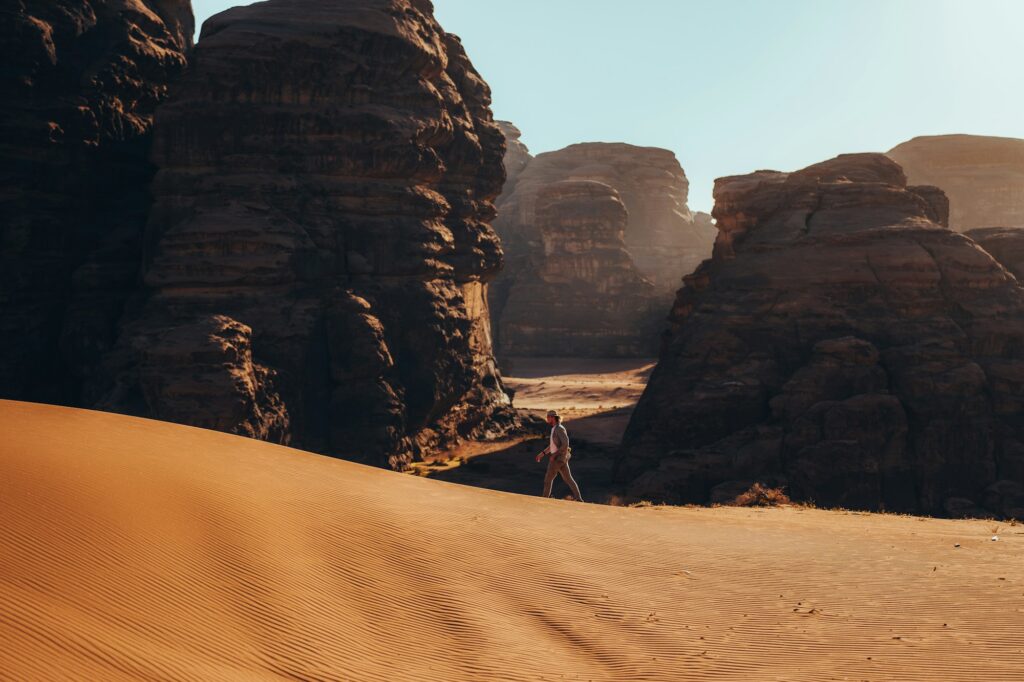
Neither country is objectively better: Oman suits road trips, wadis and wild camping, Saudi Arabia suits monumental sites such as AlUla. As of 16 October 2026, France’s Foreign Ministry advises against several areas of both countries, so check its advisory before you travel.
Verified on against the French Foreign Ministry advisories (Oman: 10 September 2026; Saudi Arabia: 12 October 2026).
The Middle East is reinventing itself. As overtourism hits classic European destinations hard, two countries on the Arabian Peninsula are emerging as fascinating alternatives for travelers seeking authenticity: Oman and Saudi Arabia. On one side, a discreet sultanate with emerald wadis and spectacular fjords. On the other, a kingdom in the midst of a tourism revolution opening its doors to the entire world. But which one should you choose for your next adventure in 2026?
After thorough research cross-referencing official sources, on-the-ground feedback, and up-to-date practical data, here is our complete comparison to help you decide.
Express Comparison: Oman vs Saudi Arabia
| Criteria | Oman | Saudi Arabia |
|---|---|---|
| Visa (French citizens) | Free on arrival ≤ 14 days | eVisa online (1 year, multiple entry) |
| Budget/day | $140–300 (mid-range) | $40–70 (mid-range) |
| Best time to visit | November → March (+ Khareef June–Sept) | October → March |
| Safety level | Caution (Salalah, Duqm, Musandam and Yemen border discouraged unless essential) | Caution (Najran formally discouraged; Riyadh, Jeddah and Dammam discouraged unless essential) |
| Travel style | Road trip, nature, adventure | Culture, modernity, wide open spaces |
| Ideal duration | 7 to 12 days | 7 to 14 days |
Oman: the Authentic Adventure
The Sultanate of Oman captivates with its preserved authenticity. Here, there are no mega-projects or towering skyscrapers: nature reigns supreme, from the Hajar mountain range to the turquoise shores of Musandam. According to the French Ministry of Foreign Affairs, the visa is free on arrival for French citizens (stays ≤ 14 days), making access particularly straightforward.
1. Muscat & the Sultan Qaboos Grand Mosque
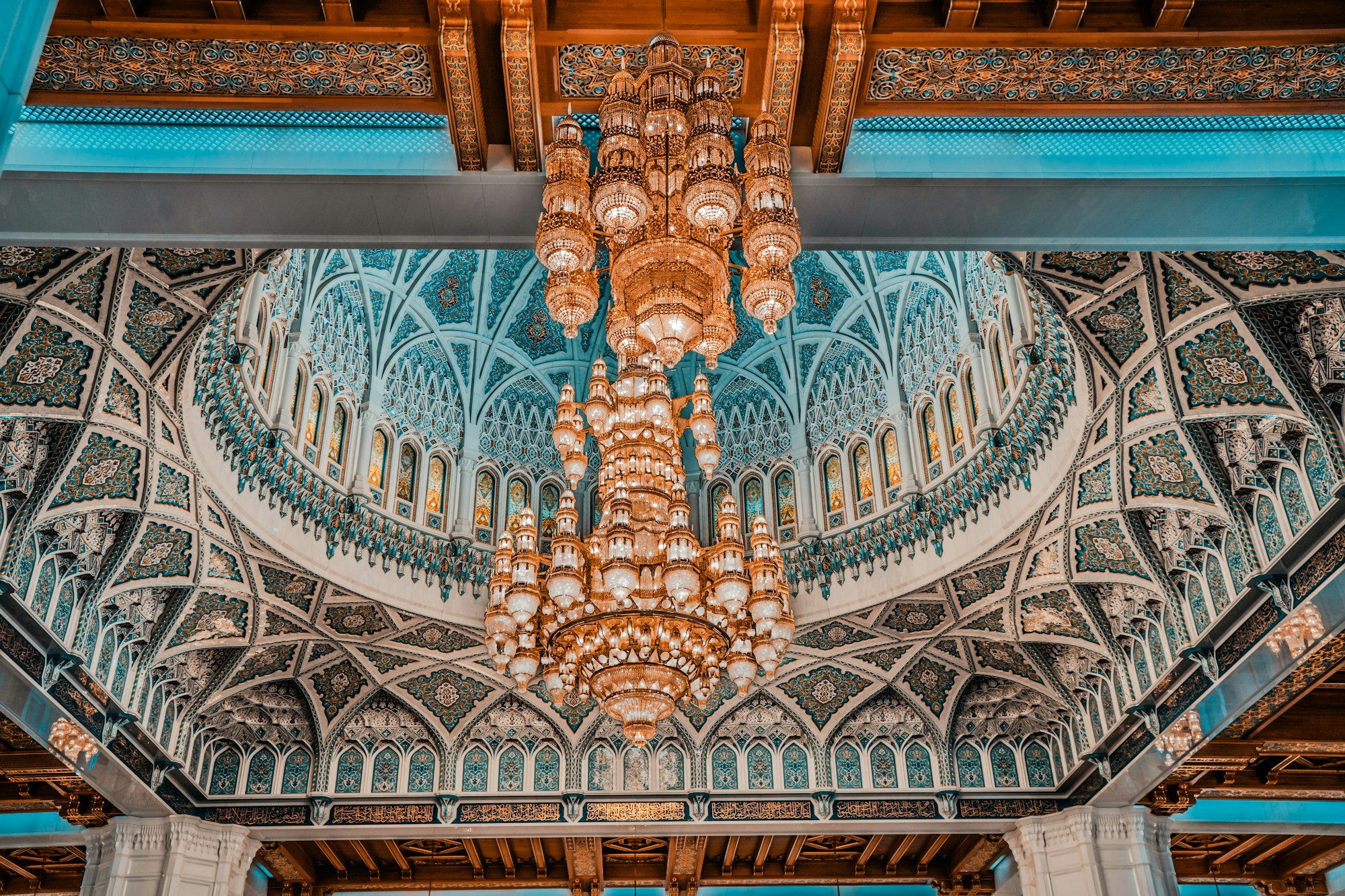
Muscat, the pearl of the Gulf of Oman
Muscat is the ideal gateway to discover Oman. The Sultan Qaboos Grand Mosque, inaugurated in 2001, impresses with its sheer scale: an 8-ton Swarovski chandelier, a 4,300 m² Persian carpet, and a capacity of 20,000 worshippers. The official Experience Oman portal ranks it among the country’s must-see visits.
Beyond the mosque, the old quarter of Muttrah with its labyrinthine souk and corniche offers an immersion into traditional Oman. The Royal Opera House and the National Museum round out a rich cultural day.
Highlights
- Exceptional Islamic architecture (Grand Mosque)
- Muttrah Souk, one of the oldest on the peninsula
- Ideal base for exploring the country’s interior
2. Jebel Shams & the Hajar Mountains
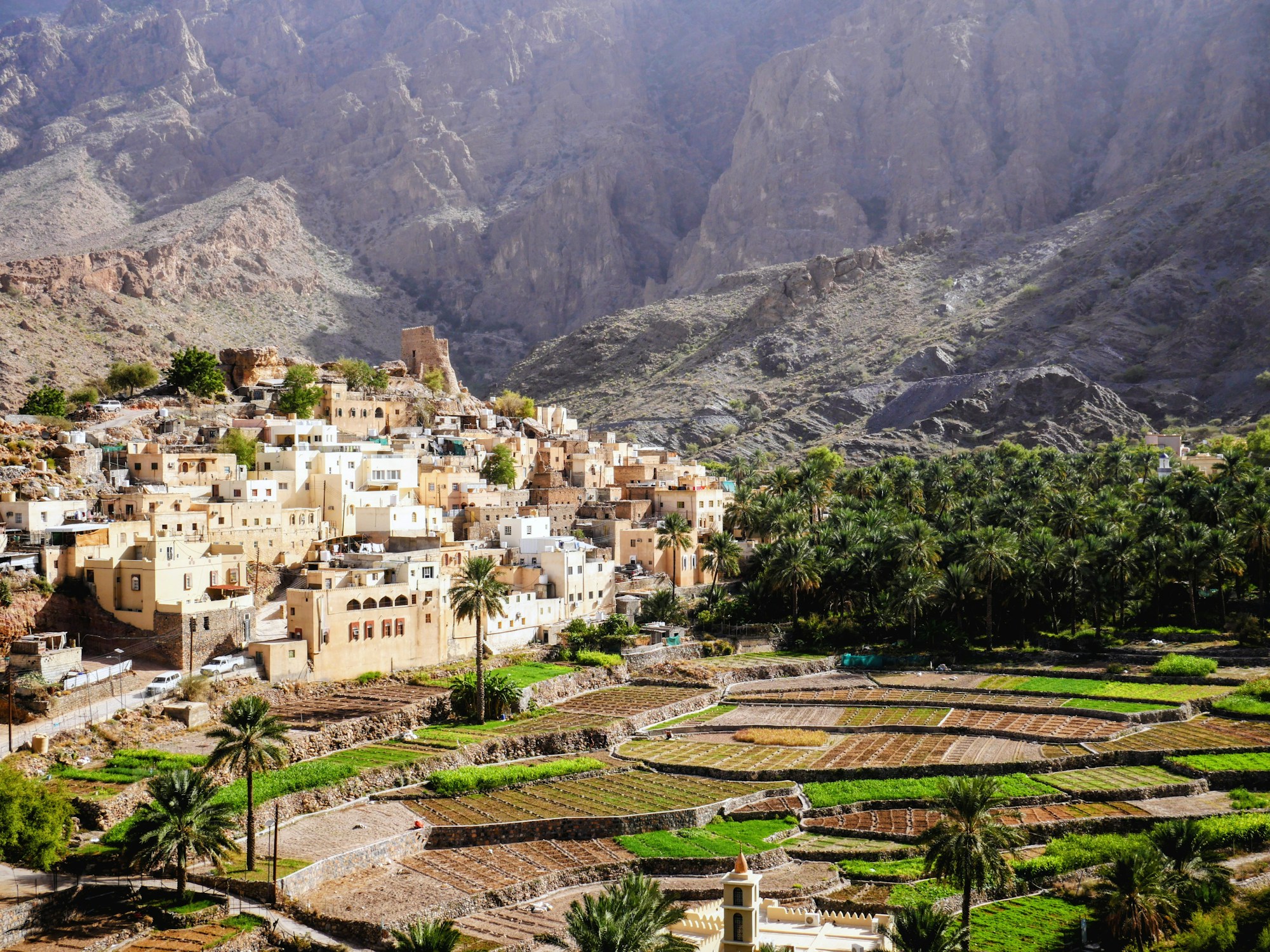
The Grand Canyon of Arabia
Rising to 3,009 meters, Jebel Shams is the highest point in Oman. Wadi Ghul, nicknamed the « Grand Canyon of Arabia, » offers breathtaking panoramas over 1,000-meter-deep cliffs. According to Experience Oman, temperatures at altitude can be up to 15°C cooler than on the plains, making it an ideal refuge even in the shoulder season.
The village of Balad Sayt, nestled in a lush valley at 2,000 m altitude, is one of the hidden gems of the Hajar range. Its agricultural terraces and stone houses offer a timeless escape. The French Foreign Ministry recommends thorough preparation for mountain excursions: a 4×4 vehicle, plenty of water, and informing a third party of your planned route.
Highlights
- Spectacular hiking on the Balcony Walk (Wadi Ghul)
- Authentic villages like Balad Sayt and Wakan
- Exceptional starry skies at altitude
3. Wahiba Sands & the Enchanting Wadis
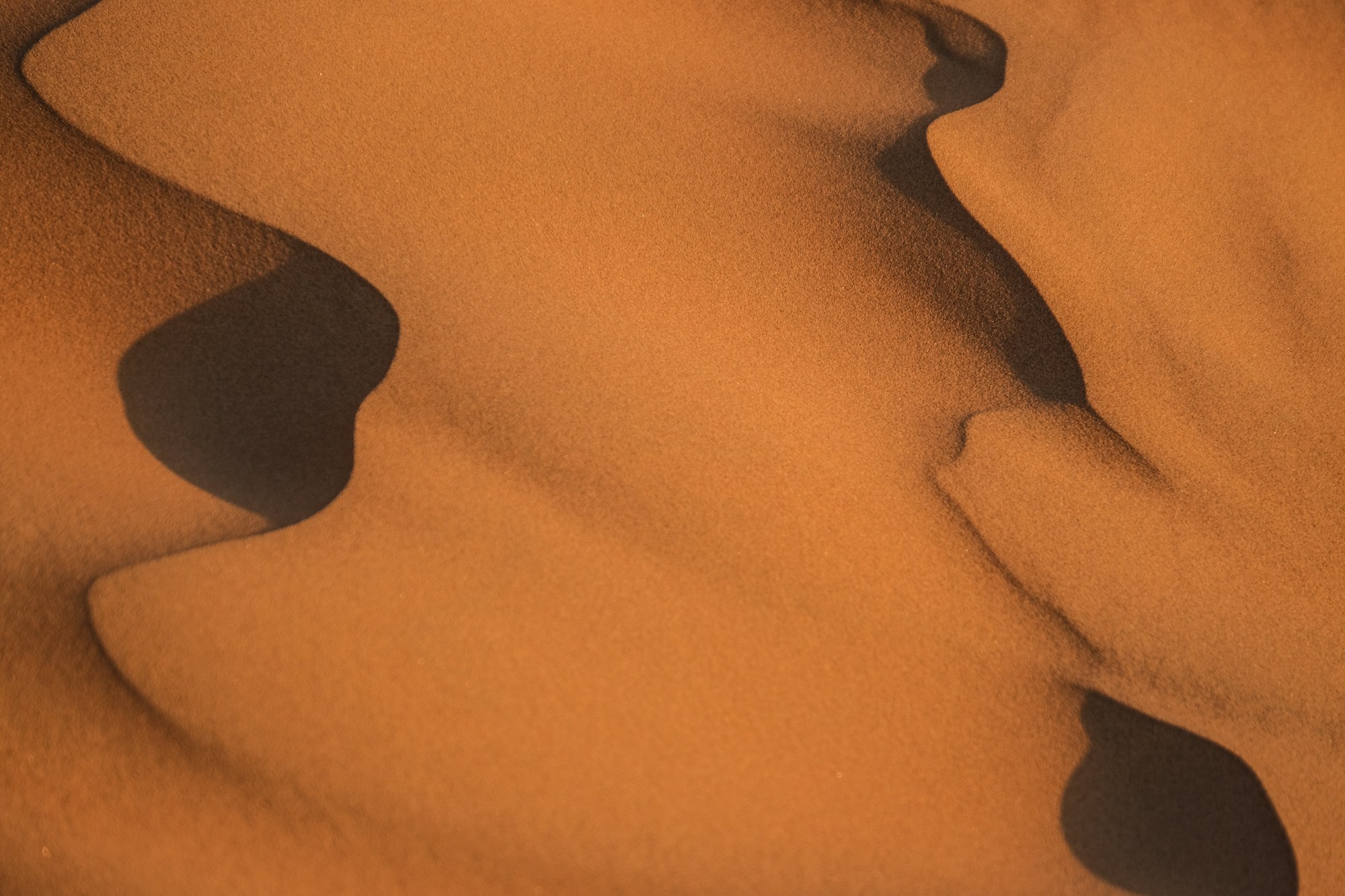
Endless dunes and secret oases
The Wahiba Sands (Sharqiya Sands) spread an ocean of golden dunes across more than 12,000 km². This is where Bedouin culture remains alive: desert camps offer nights under the stars, camel rides, and sandboarding along the crests.
Nearby, the wadis are Oman’s great surprise. Wadi Shab, accessible after a short boat crossing, leads to surreally turquoise natural pools nestled between rock walls. Wadi Bani Khalid, more easily accessible, features permanent pools surrounded by palm trees. The UK government warns about flash floods in the wadis — always check the local weather forecast before venturing in.
Highlights
- Night in a Bedouin camp among the dunes
- Turquoise natural pools of Wadi Shab and Wadi Bani Khalid
- Desert + wadis combination in 2–3 days
4. Musandam, the « Norway of Arabia »
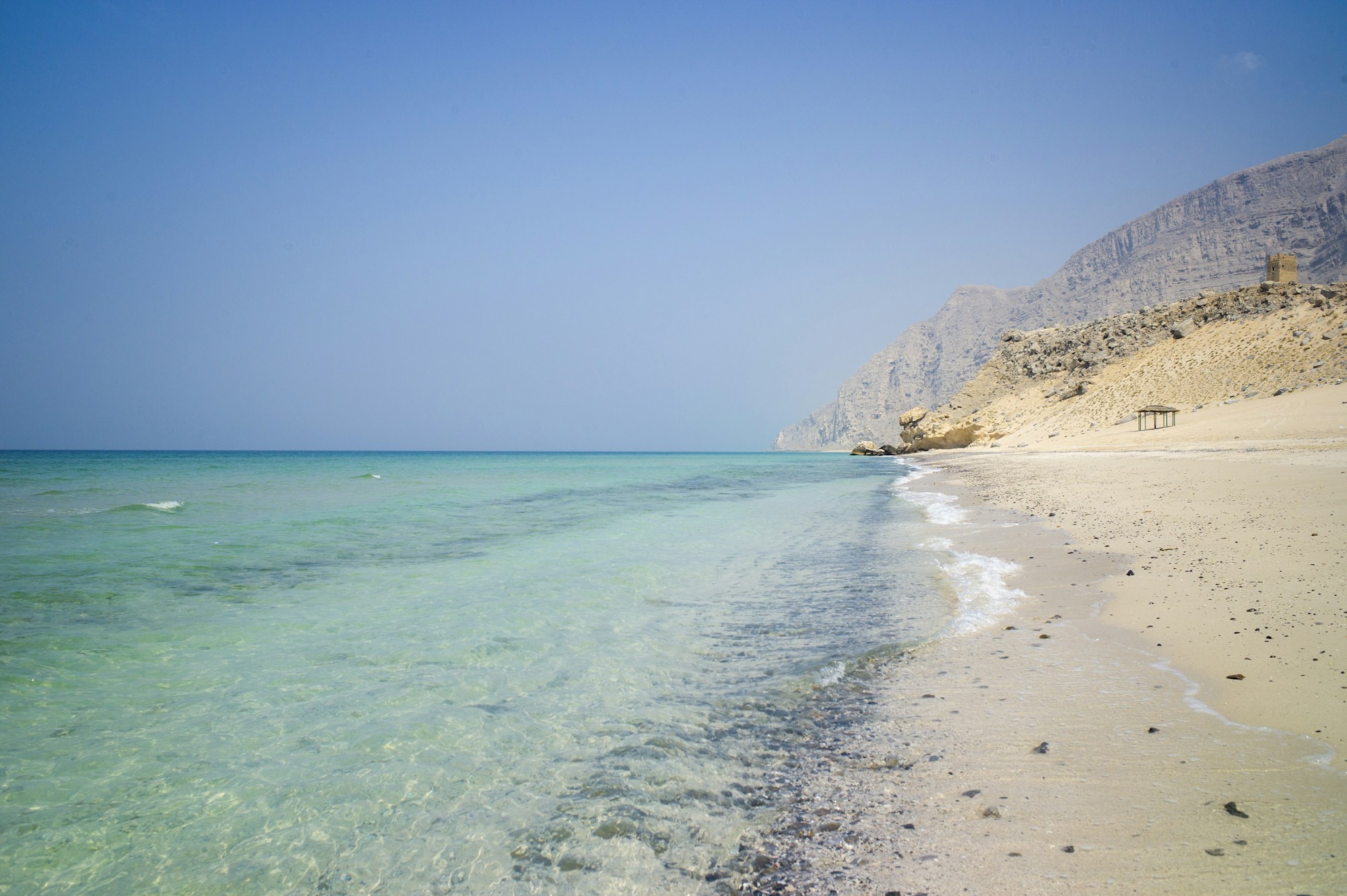
Fjords, dolphins, and crystal-clear waters
The Musandam Peninsula, an Omani exclave in the Strait of Hormuz, is the quintessential anti-Dubai. Its coastline, carved into spectacular fjords, has earned it the nickname « Norway of Arabia. » The Experience Oman website highlights it as a premier adventure region.
From Khasab, board a traditional dhow for a cruise between towering cliffs and secluded coves. The waters teem with dolphins (frequently spotted from November to March) and offer remarkable snorkeling on pristine reefs. Isolated villages accessible only by sea add a rare dimension of exploration.
Highlights
- Dhow cruise through the fjords
- Wild dolphin watching
- Snorkeling and diving on untouched reefs
Saudi Arabia: the Tourism Revolution
Saudi Arabia, long closed to tourists, has made a spectacular pivot. Since the launch of the electronic tourist visa in 2019 — a one-year, multiple-entry eVisa allowing up to 90 days of stay according to the official Visit Saudi portal — the kingdom is investing heavily in cultural and leisure tourism as part of Vision 2030. In return, visitors must respect a stricter framework: the Public Decorum charter governs dress and behavior in public.
5. AlUla & Hegra, UNESCO Gem
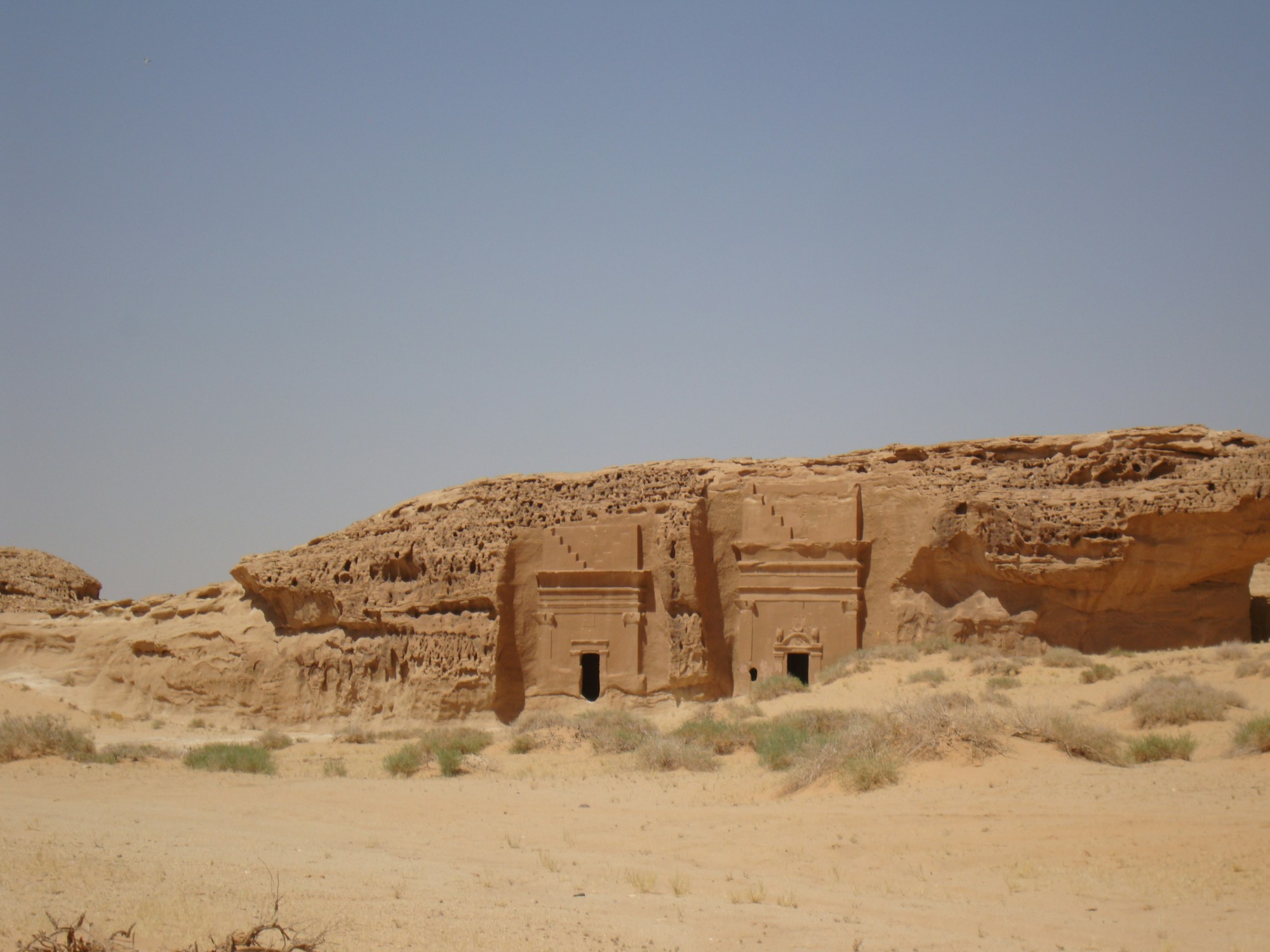
Saudi Arabia’s Petra
Hegra (Madain Saleh) is Saudi Arabia’s first UNESCO World Heritage Site. A former Nabataean city and sister to Petra, its 111 monumental tombs carved into sandstone are remarkably well preserved. The Experience AlUla website offers guided tours of 2 to 3 hours starting at 95 SAR (~$25).
But AlUla is more than just archaeology. The AlUla Arts Festival 2026 confirms the venue’s cultural ambition, with contemporary art installations set in the open desert. AlUla’s old town and its medieval alleyways round out a stay that blends millennia-old heritage with contemporary creation.
Highlights
- Exceptional Nabataean tombs (UNESCO)
- AlUla Arts Festival and emerging cultural scene
- Spectacular rock formations (Elephant Rock)
6. Riyadh & Edge of the World
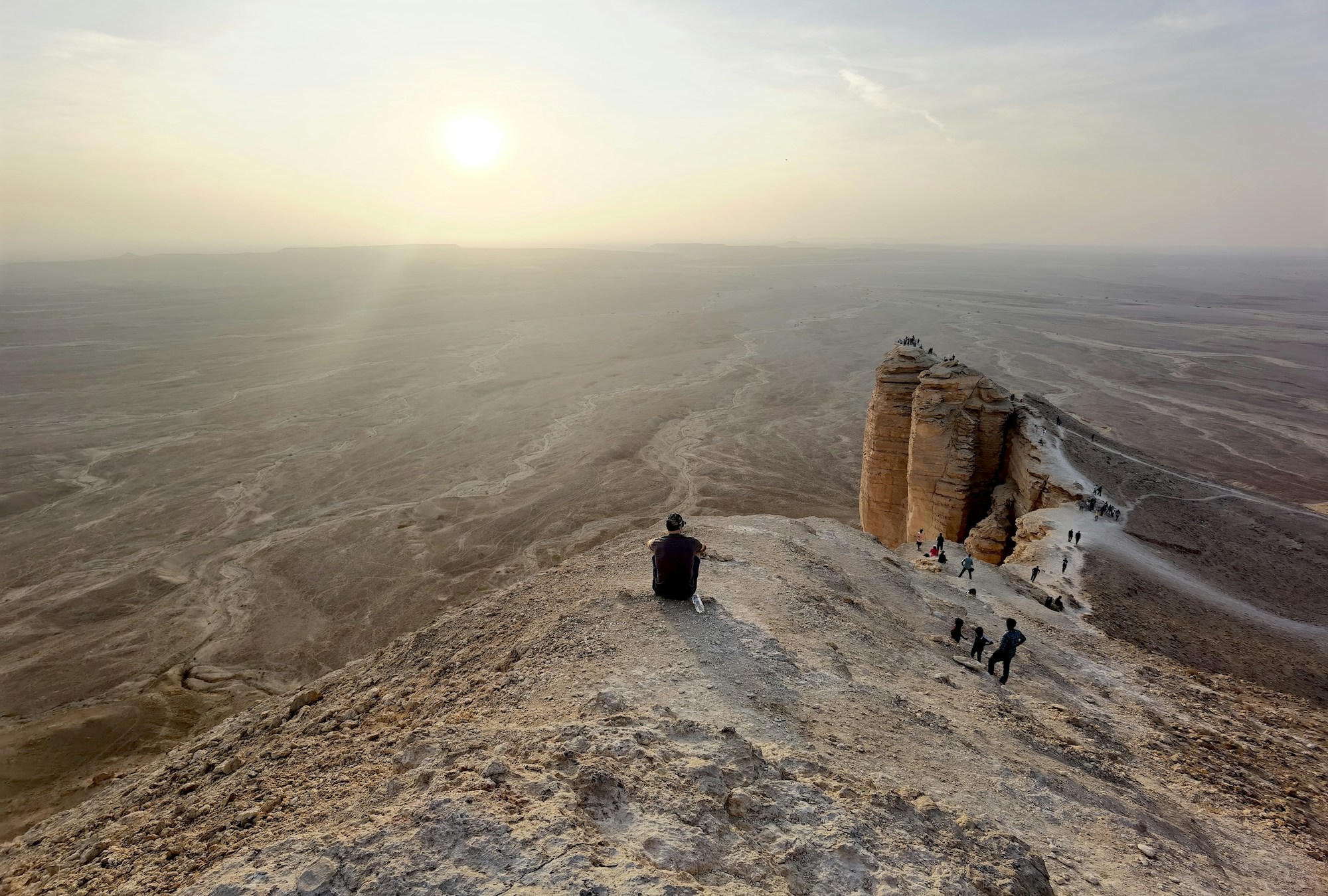
The megacity and the infinite horizon
Riyadh is full of surprises. The Saudi capital blends historic districts with futuristic ambition. The At-Turaif District in Diriyah, a UNESCO World Heritage Site, tells the story of the Saudi dynasty’s origins. Boulevard Riyadh City, a massive entertainment complex, embodies Vision 2030.
But the real showstopper lies 90 km from the city: Edge of the World (Jebel Fihrayn). This 300-meter cliff towers over a staggering void stretching as far as the eye can see — a striking geological and visual experience. According to BudgetYourTrip, Saudi Arabia remains remarkably affordable on a daily basis, with an average budget of $40 to $70 per day in the mid-range.
Highlights
- Edge of the World, breathtaking desert panorama
- Historic Diriyah (UNESCO) just 20 min from downtown
- Booming food scene in Riyadh
7. Vision 2030: NEOM, Red Sea & Al-Ahsa
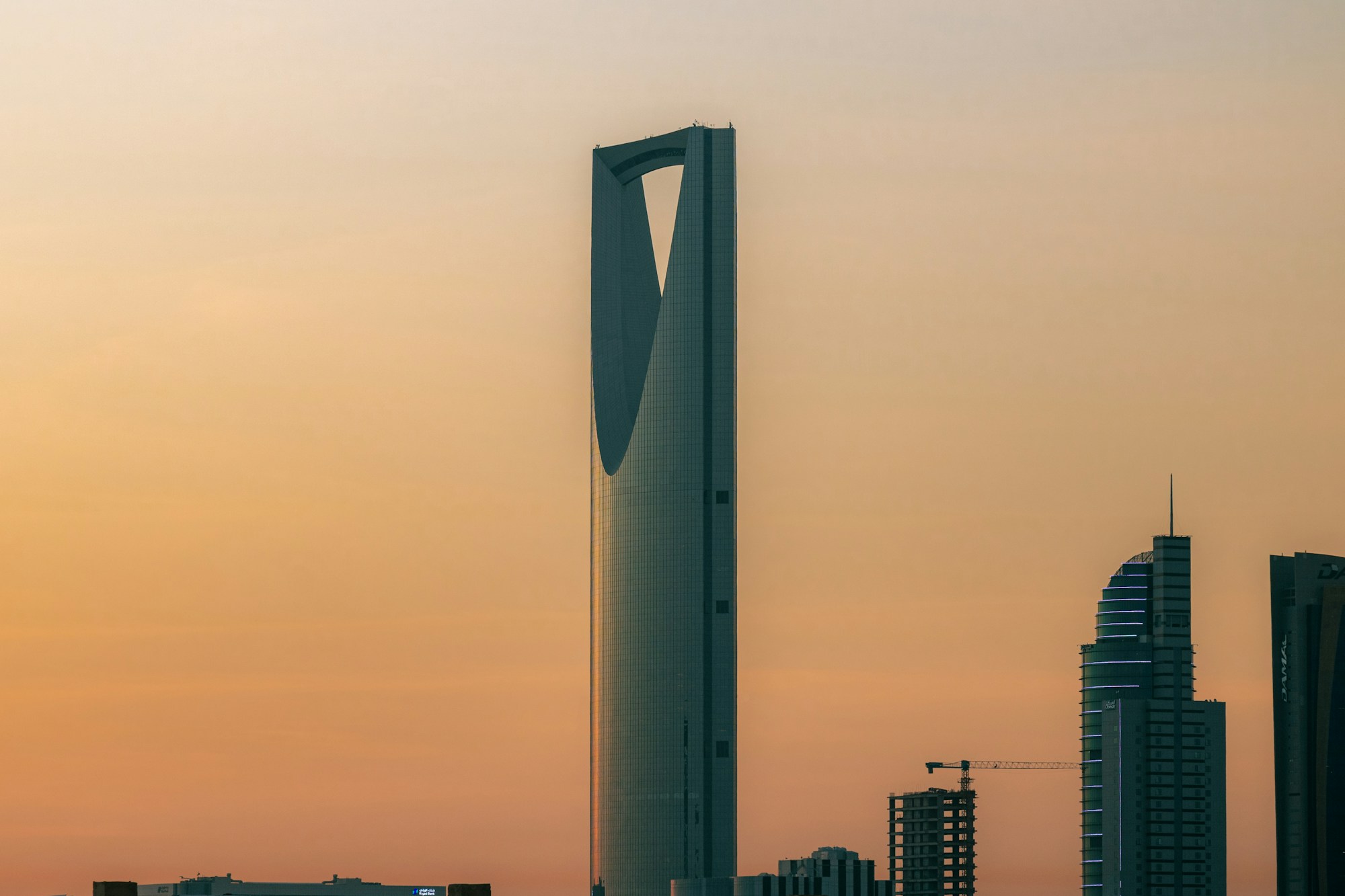
The Saudi Arabia of tomorrow
Vision 2030 is transforming Saudi Arabia at breakneck speed. NEOM, the futuristic megacity in the northwest, has seen its projects pushed back: according to Semafor (22 May 2026), work on The Line is delayed until after 2030, as are the Red Sea coast tourism projects. The Red Sea Project, a luxury seaside resort complex on the west coast, aims to become a rival destination to the Maldives with its 90 islands and pristine coral reefs.
For travelers seeking authenticity, the Al-Ahsa Oasis (UNESCO) offers a striking contrast: 2.5 million date palms, age-old canals, and the caves of Al Qarah Mountain. According to UNESCO, it is one of the most remarkable cultural landscapes on the peninsula. Further south, the mountainous Aseer region around Abha surprises with its cool climate, lush greenery, and a burgeoning food scene according to Visit Saudi.
Highlights
- Al-Ahsa: the world’s largest oasis (UNESCO)
- Red Sea coast: near-pristine coral reefs
- Aseer: lush mountains and cool climate
Budget, Visa, Safety: the Detailed Showdown
Budget
Saudi Arabia is significantly cheaper on a daily basis. According to BudgetYourTrip, expect an average of $40 to $70 per day in the mid-range, compared to $140 to $300 per day in Oman (source). The difference is explained by the high cost of car rental and accommodation in Oman. However, be aware that premium Saudi experiences (AlUla, Red Sea resorts) can quickly add up.
Visa and formalities
Both countries have simplified their procedures. Oman offers a free visa on arrival for French citizens (≤ 14 days) according to the French Ministry of Foreign Affairs. Saudi Arabia offers an online eVisa, valid for 1 year with multiple entries, via the official portal. Both are therefore accessible, with a slight edge to Oman for simplicity.
Safety
France’s Foreign Ministry advises against travel to parts of both countries: the Yemen border, Salalah, Duqm and Musandam in Oman, unless absolutely necessary; in Saudi Arabia, Najran is formally advised against, and Riyadh, Jeddah and Dammam are advised against unless absolutely necessary. The main area to avoid in both cases is the Yemeni border. Oman presents a specific risk related to flash floods in the wadis. In Saudi Arabia, heightened vigilance is recommended regarding social media and public statements — local laws are strict on this matter.
Culture and local rules
Both countries are conservative, but Oman is generally perceived as more relaxed for tourists. Saudi Arabia enforces a more formal public decorum charter (dress code, behavior, respect for Ramadan). In both cases, modest clothing is expected — but it is also a sign of respect that is appreciated locally.
Our Verdict: Oman or Saudi Arabia?
| Your profile | Our recommendation |
|---|---|
| Nature lover & road trip enthusiast | Oman — Wadis, mountains, desert, and fjords within manageable distances |
| History & archaeology enthusiast | Saudi Arabia — AlUla/Hegra, Diriyah, Ha’il petroglyphs (UNESCO) |
| First trip to the Middle East | Oman — More accessible, laid-back atmosphere, free visa |
| Tight budget | Saudi Arabia — 2 to 3 times cheaper on a daily basis |
| Seeking modernity & events | Saudi Arabia — Vision 2030, festivals, NEOM |
| Couple seeking romance | Oman — More intimate atmosphere, mountain resorts, and secluded beaches |
Why not both? A combined Oman + Saudi Arabia trip over 2 to 3 weeks is entirely feasible. Start with Oman for its easygoing charm and natural landscapes, then continue to Saudi Arabia for the cultural immersion and the buzz of its mega-projects. Muscat and Jeddah are connected by direct flights of less than 2 hours.
Frequently Asked Questions
Do French citizens need a visa for Oman and Saudi Arabia?
For Oman, French nationals benefit from a free visa on arrival for stays of up to 14 days, according to the French Ministry of Foreign Affairs. For Saudi Arabia, a tourist eVisa is available online via the official portal, valid for one year with multiple entries and stays of up to 90 days.
What budget should you plan for a trip to Oman vs Saudi Arabia?
Saudi Arabia is significantly more affordable: expect $40 to $70 per day in the mid-range compared to $140 to $300 in Oman according to BudgetYourTrip. Oman is pricier due to the near-mandatory car rental and accommodation costs. For a 10-day trip, budget approximately $700 for Saudi Arabia versus $2,000 for Oman (excluding flights).
Is it safe to travel to Oman and Saudi Arabia in 2026?
France’s Foreign Ministry discourages travel to parts of both countries, including the Yemen border, Salalah, Duqm, Musandam, Najran, Riyadh, Jeddah and Dammam, unless absolutely necessary. Check the official French advisory before you travel, as the regional situation changes quickly. Avoid the border areas with Yemen in both cases. In Oman, be cautious of flash floods in the wadis. In Saudi Arabia, respect local laws, including those concerning social media.
What is the best time to visit these two countries?
For both countries, the ideal season runs from October to March with pleasant temperatures (15–30°C depending on the region). In Oman, a unique bonus: the Khareef (mid-June to September) transforms the Salalah region into a lush green oasis with temperatures of 20–28°C, according to Experience Oman. Avoid summer (May–September) for the desert plains of both countries.
Is it easy to drive in Oman and Saudi Arabia?
In Oman, the car is king — main roads are excellent, but a 4×4 is essential for the wadis and desert. Travel in convoy in remote areas as recommended by the French Foreign Ministry. In Saudi Arabia, distances are greater and local driving is notoriously aggressive — hiring a private driver may be wise for certain stretches.
What dress code should you follow in Oman and Saudi Arabia?
Both countries are conservative. In Oman, modest clothing is sufficient (shoulders and knees covered). Saudi Arabia enforces a more formal public decorum charter: decent attire is mandatory in public spaces, prayer times must be respected, and photographing people without consent is prohibited. Women are no longer required to wear an abaya, but modest clothing is expected.
How many days should you plan for a first trip?
For Oman, 7 to 10 days allow you to cover Muscat, the Hajar Mountains, the desert, and Musandam — or swap Musandam for Dhofar in summer. For Saudi Arabia, 7 to 10 days are enough for 2 regions (for example AlUla + Riyadh), but 12 to 14 days are needed if you add the Red Sea or the southwest.
Can you combine Oman and Saudi Arabia in one trip?
Absolutely! A combined trip of 2 to 3 weeks is ideal. Muscat (Oman) and Jeddah (Saudi Arabia) are connected by direct flights of less than 2 hours. Start with Oman for nature and its easygoing charm, then continue to Saudi Arabia for history and modernity. Since each country requires its own visa, plan your paperwork in advance.
Is Oman in Saudi Arabia?
No. Oman and Saudi Arabia are two separate countries that share a 658 km land border. The treaty that fixes it was signed on 21 March 1990 at Hafr al-Batin and ratified in May 1991. The first official crossing, Ramlat Khaliya, opened in 2006.
Is Oman better than Saudi Arabia?
Neither is objectively better. Oman suits road trips, wadi swims and calm nature around Musandam and the Hajar Mountains. Saudi Arabia suits monumental heritage, above all AlUla and Hegra, and big-city life in Riyadh and Jeddah. Choose Oman for a relaxed self-drive trip, Saudi Arabia for ancient sites and cities.
Sources
- French Ministry of Foreign Affairs — Oman Travel Advice
- French Ministry of Foreign Affairs — Saudi Arabia Travel Advice
- Experience Oman — Official Tourism Portal
- Experience Oman — Climate and Weather
- Visit Saudi — Official eVisa Portal
- Visit Saudi — Public Decorum Charter
- Experience AlUla — Hegra Tours
- Wallpaper* — AlUla Arts Festival 2026
- UNESCO — Al-Ahsa Oasis
- UNESCO — At-Turaif District in Diriyah
- Visit Saudi — Al Qarah Mountain
- BudgetYourTrip — Oman Travel Cost
- BudgetYourTrip — Saudi Arabia Travel Cost
- U.S. Department of State — Oman Travel Information
- GOV.UK — Oman Safety and Security
- Responsible Vacation — Best Time to Visit Saudi Arabia
Research conducted in February 2026.
Ready to Explore the Middle East?
Whether you choose the enchanting wadis of Oman or the cultural revolution of Saudi Arabia, your next Middle Eastern adventure promises to be unforgettable. Discover our detailed itineraries to plan your trip with confidence.
Explore all itineraries