
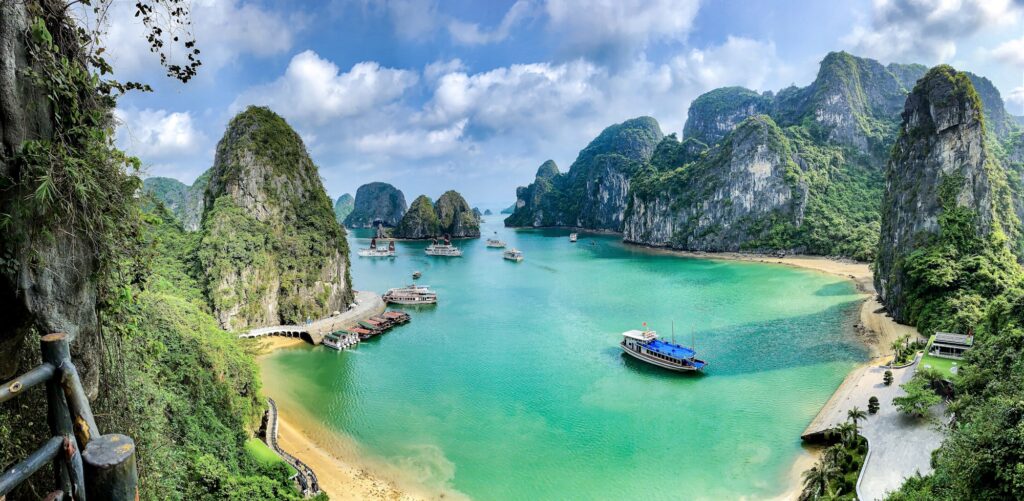
Vietnam remains one of Southeast Asia’s most affordable destinations for backpackers in 2026. From the magnetic chaos of Hanoi to the floating markets of the Mekong, this long, narrow country can be traveled from north to south in three weeks on a budget that would put any European capital to shame. With a free 45-day visa for French nationals, dorm beds at €5 a night and a steaming bowl of phở for under a euro, the value for money is unbeatable. This day-by-day guide delivers a tried-and-tested itinerary, real-world budgets, on-the-ground tips and all the practical advice you need for a memorable trip without breaking the bank.
1. Hanoi — Days 1 to 3
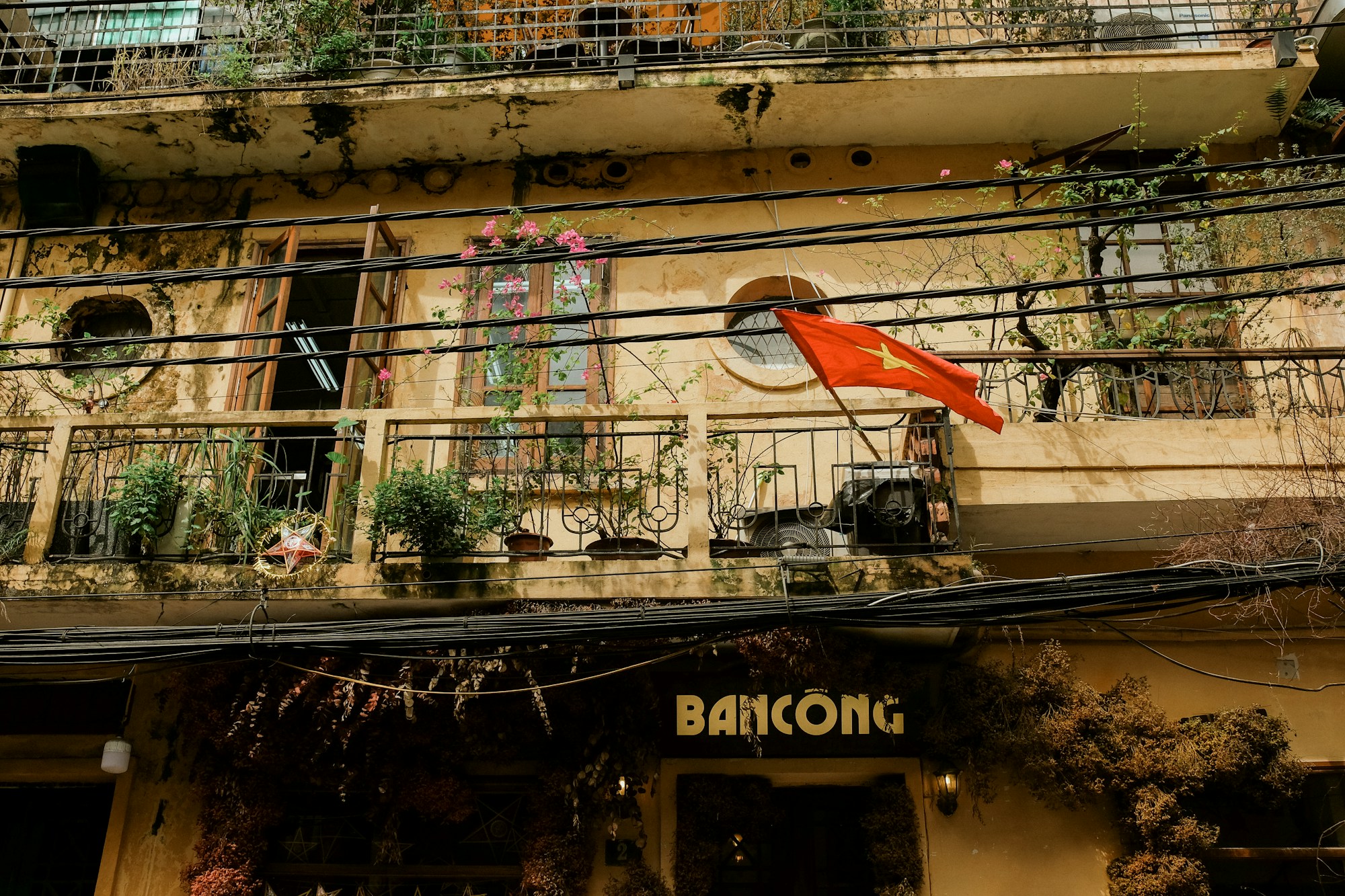
The Vietnamese baptism of fire
Hanoi is a sensory overload. The honking horns, the wafting aroma of morning phở, the scooters brushing past your knees on the sidewalk, the cà phê trứng (egg coffee) vendors crouched on tiny plastic stools — everything here throws you into another world. The Old Quarter (36 guild streets) is your main playground. Get lost in it on purpose.
Hoàn Kiếm Lake is the beating heart of the city, stunning at sunrise when locals practice tai chi along its shores. Cross the red The Huc Bridge to visit the Ngọc Sơn Temple (30,000 VND, ~€1.10). On weekends, the streets around the lake become pedestrian zones with live music and food stalls.
For culture, the Museum of Ethnology (40,000 VND) offers a masterful introduction to Vietnam’s 54 ethnic groups. The Ho Chi Minh Mausoleum is free but closed on Mondays and Fridays — arrive before 8 am to skip the queue.
Note: the famous Train Street (Phùng Hưng) has been regularly closed to tourists since 2019 for safety reasons. Check before heading there. Additionally, new motorcycle traffic restrictions will take effect in central districts starting July 2026.
Highlights
- Try bún chả at Đồng Xuân Market or a hole-in-the-wall eatery in the Old Quarter (~€1.50)
- Sip a cà phê trứng at Giảng Café, the birthplace of egg coffee since 1946
- Watch a water puppet show at Thăng Long Theatre (100,000 VND, ~€3.70)
- Stroll around Hoàn Kiếm Lake on the weekend in pedestrian mode
- Explore Hanoi’s night market (Friday-Sunday, from 6 pm)
2. Ha Long Bay / Lan Ha Bay — Days 3 to 5
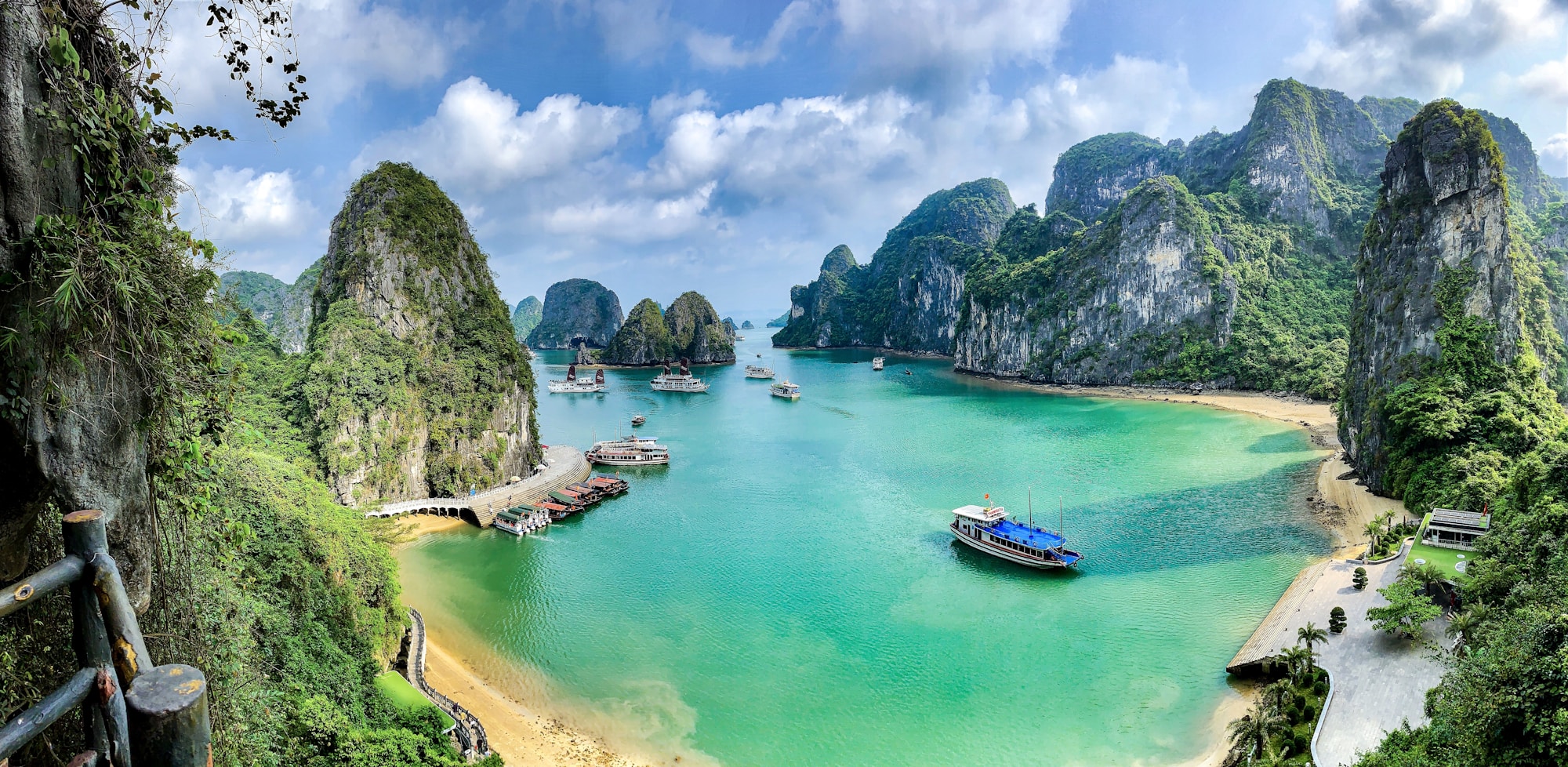
Karst landscapes, maritime edition
Ha Long Bay and its 1,600 limestone islets is Vietnam’s postcard-perfect landscape, a UNESCO World Heritage Site. But here’s the tip every backpacker ends up sharing: head to Lan Ha Bay instead, southeast of Cat Ba Island. Same spectacular geology, but without the hordes of mass-tourism boats.
You have two options. The 2-day/1-night cruise (€120-165) includes kayaking through caves, swimming, onboard meals and a night on the boat — an unforgettable experience. If your budget is tight, a day trip by boat from Cat Ba (€27-45) will give you a good taste, even if the magic of a night on the water will be missing.
Cat Ba Island itself deserves half a day: quiet beaches, national park hiking trails and a laid-back vibe. It’s a more authentic (and cheaper) base than the port of Ha Long City.
Highlights
- Choose Lan Ha Bay for a more intimate and less touristy experience
- Kayak through caves and hidden lagoons at sunset
- Spend the night on the boat and wake up among the karsts at dawn
- Explore Cat Ba Island by bicycle or scooter for an extra day
3. Ninh Binh — Days 5 to 7
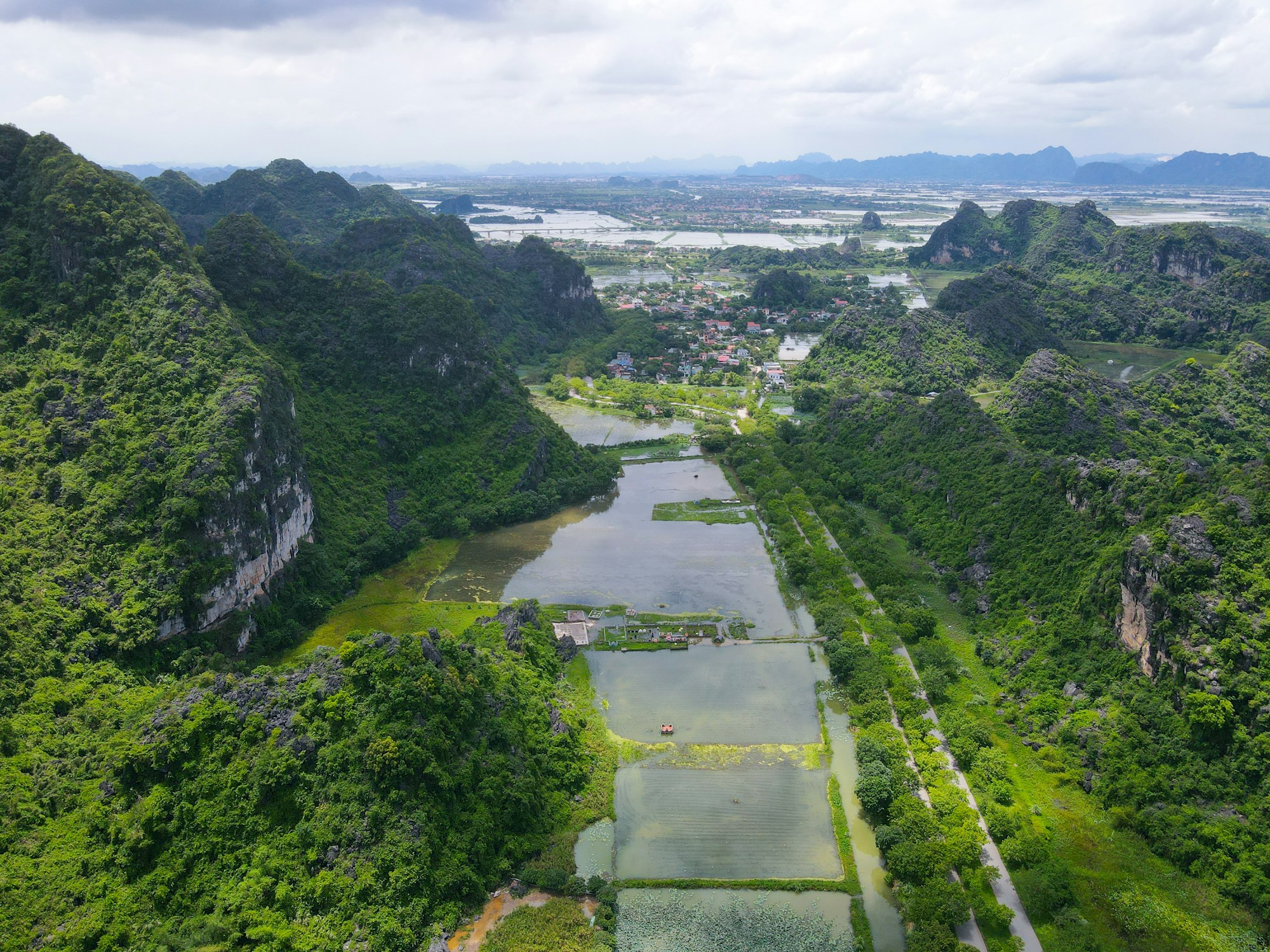
The inland Ha Long Bay
Ninh Binh is northern Vietnam’s underrated gem. Picture the karst peaks of Ha Long Bay, but set among brilliantly green rice paddies crisscrossed by winding rivers. This is where Kong: Skull Island was filmed, and it’s easy to see why.
The Tràng An scenic landscape complex (UNESCO) offers a 2-3 hour boat ride through caves and valleys (150,000 VND, ~€5.50). It’s the flagship excursion and worth every cent. Tam Cốc offers a similar but shorter experience. To avoid the crowds, opt for Linh Cốc, a lesser-known boat dock south of Tam Cốc, where you’ll have the scenery almost entirely to yourself.
Rent a bicycle or scooter (€1-5/day) and explore the back roads between the rice fields. The Bái Đính Pagoda, the largest in Vietnam, and the ancient capital of Hoa Lư round out a packed two-day stay.
Highlights
- Boat ride at Tràng An to glide through caves and rice paddies (UNESCO)
- Board at Linh Cốc rather than Tam Cốc to dodge the tourist crowds
- Climb Múa Temple (500 steps) for a 360° view of the karsts and rice fields
- Cycle through the countryside — one of the most beautiful landscapes in the country
4. Phong Nha — Days 7 to 9
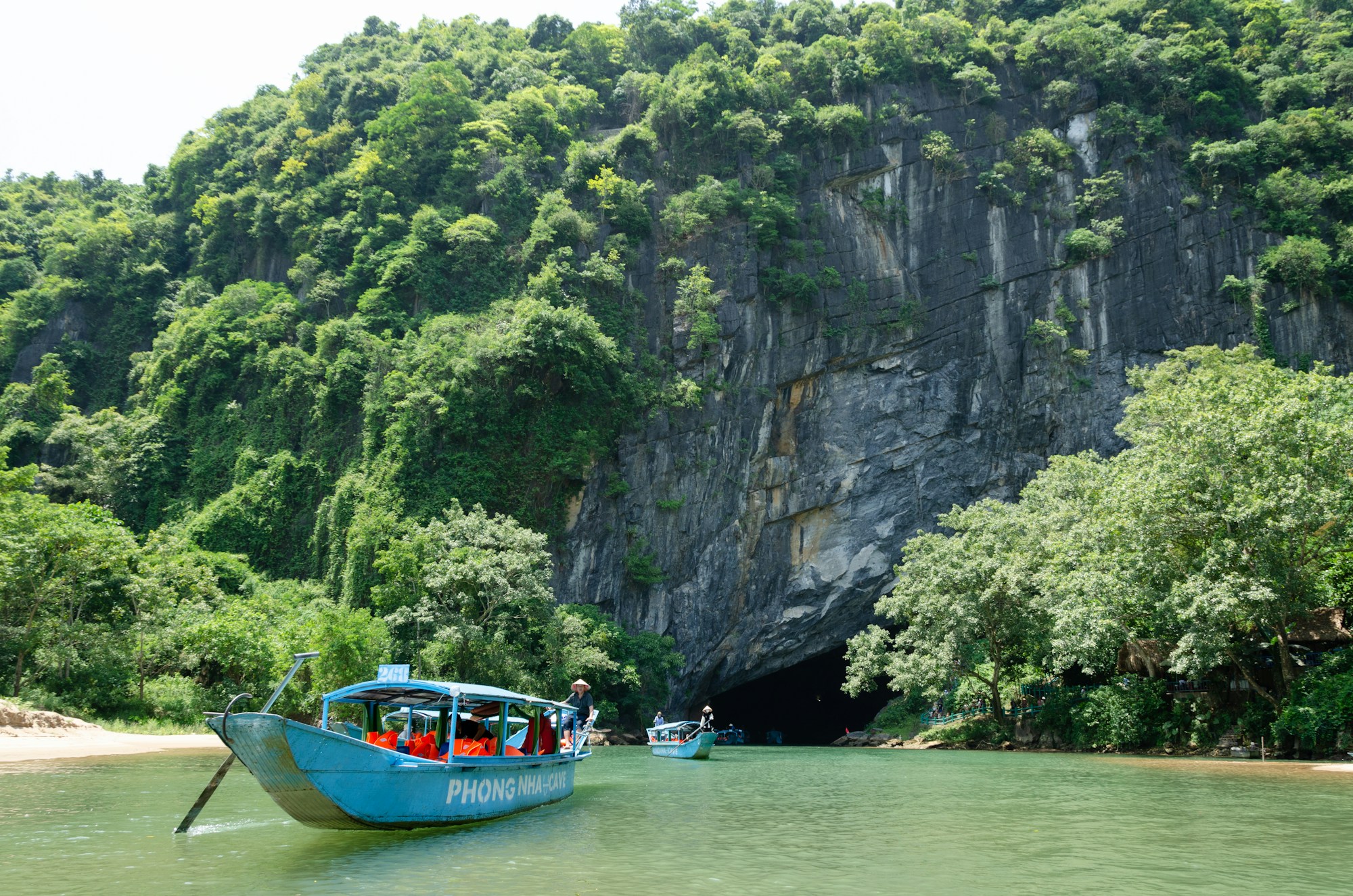
The underground kingdom
Phong Nha-Kẻ Bàng is a UNESCO-listed national park that is home to over 300 caves, including the world’s largest — Sơn Đoòng. This is the most adventurous stop on this itinerary, and one of Vietnam’s least touristy. The village of Phong Nha itself is tiny, nestled along the river, with a relaxed backpacker vibe.
Paradise Cave (Thiên Đường, ~€9.50) is a must-see: one kilometer of limestone formations straight out of a sci-fi movie. Dark Cave (~€18) is the adventure option — zip-lining, kayaking, mud caving and underground swimming. On the tightest budget, Phong Nha Cave itself (~€6) can be explored by boat along the underground river.
Ecotourism is at the heart of the region. Many local projects employ former loggers retrained as guides, directly contributing to forest preservation.
Highlights
- Paradise Cave: one kilometer of monumental stalactites and stalagmites
- Dark Cave: zip-lining, kayaking, mud caving — the full adventure
- Rent a scooter to explore Bong Lai Valley (pubs, farms, river swimming)
- Laid-back backpacker atmosphere — one of the coolest villages in Vietnam
5. Hue — Days 9 to 10
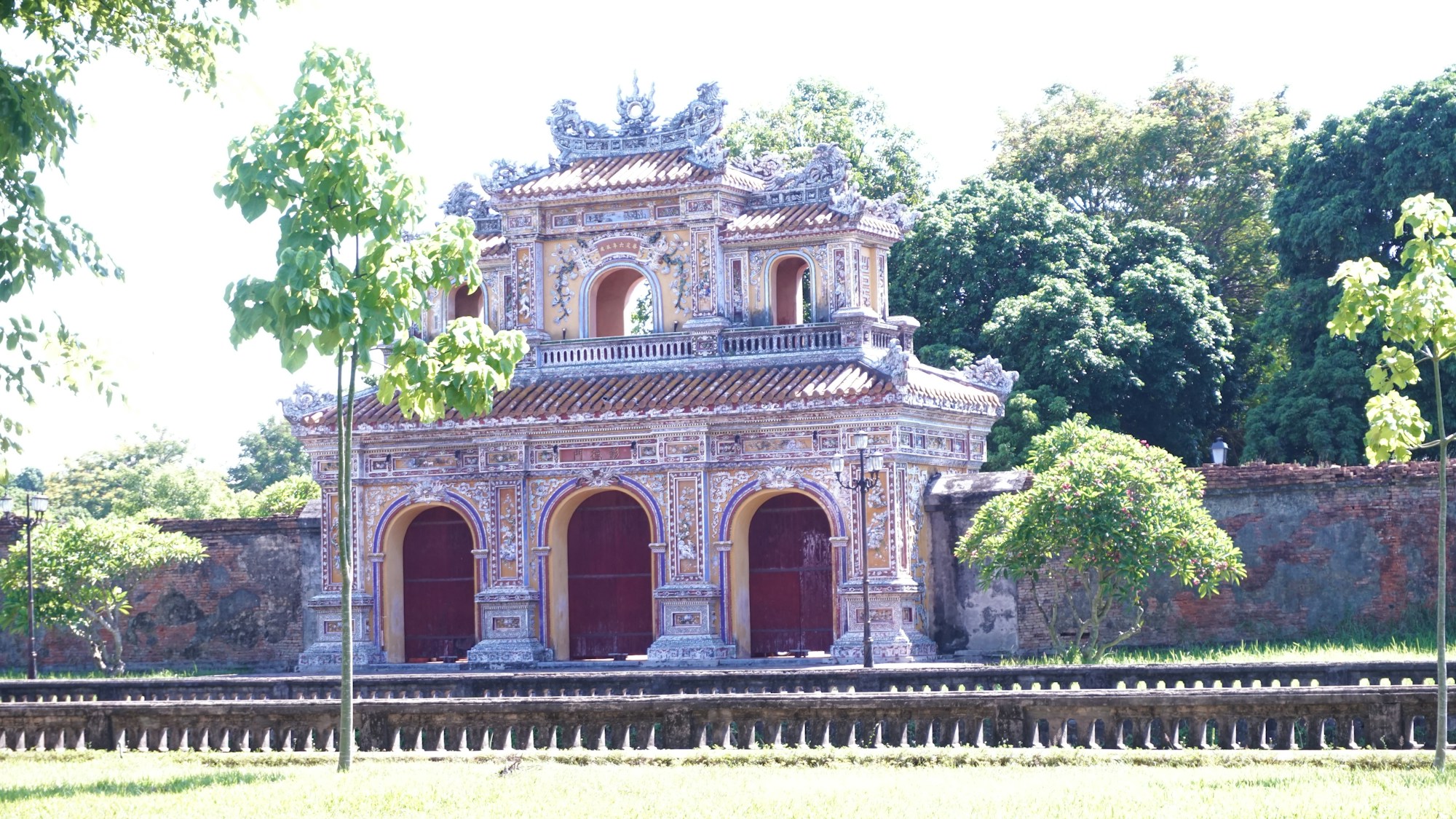
The former imperial capital
Hue is Vietnam’s most historically rich city. Former capital of the Nguyễn Dynasty (1802-1945), it preserves a UNESCO-listed Imperial City — a vast complex of palaces, temples and gardens enclosed by fortified walls, inspired by Beijing’s Forbidden City. Plan at least half a day to explore it fully.
Along the Perfume River, you’ll discover the Thiên Mụ Pagoda, Hue’s iconic landmark with its seven-story octagonal tower. Rent a bicycle and ride along the river to reach the royal tombs of Khải Định and Tự Đức — mausoleums surrounded by lush gardens, far less crowded than the Citadel.
Hue is also the culinary capital of central Vietnam. Bún bò Huế (spicy beef noodle soup) is a masterpiece — bold, aromatic and sold for 25,000 VND (~€0.90) at the food stalls of Đông Ba Market.
Highlights
- Imperial City: palaces, temples and gardens within a 520-hectare citadel
- Taste bún bò Huế at Đông Ba Market, the best in the country
- Cycle along the Perfume River to the Thiên Mụ Pagoda
- Visit the royal tombs of Khải Định and Tự Đức in peaceful serenity
6. Hội An — Days 10 to 13
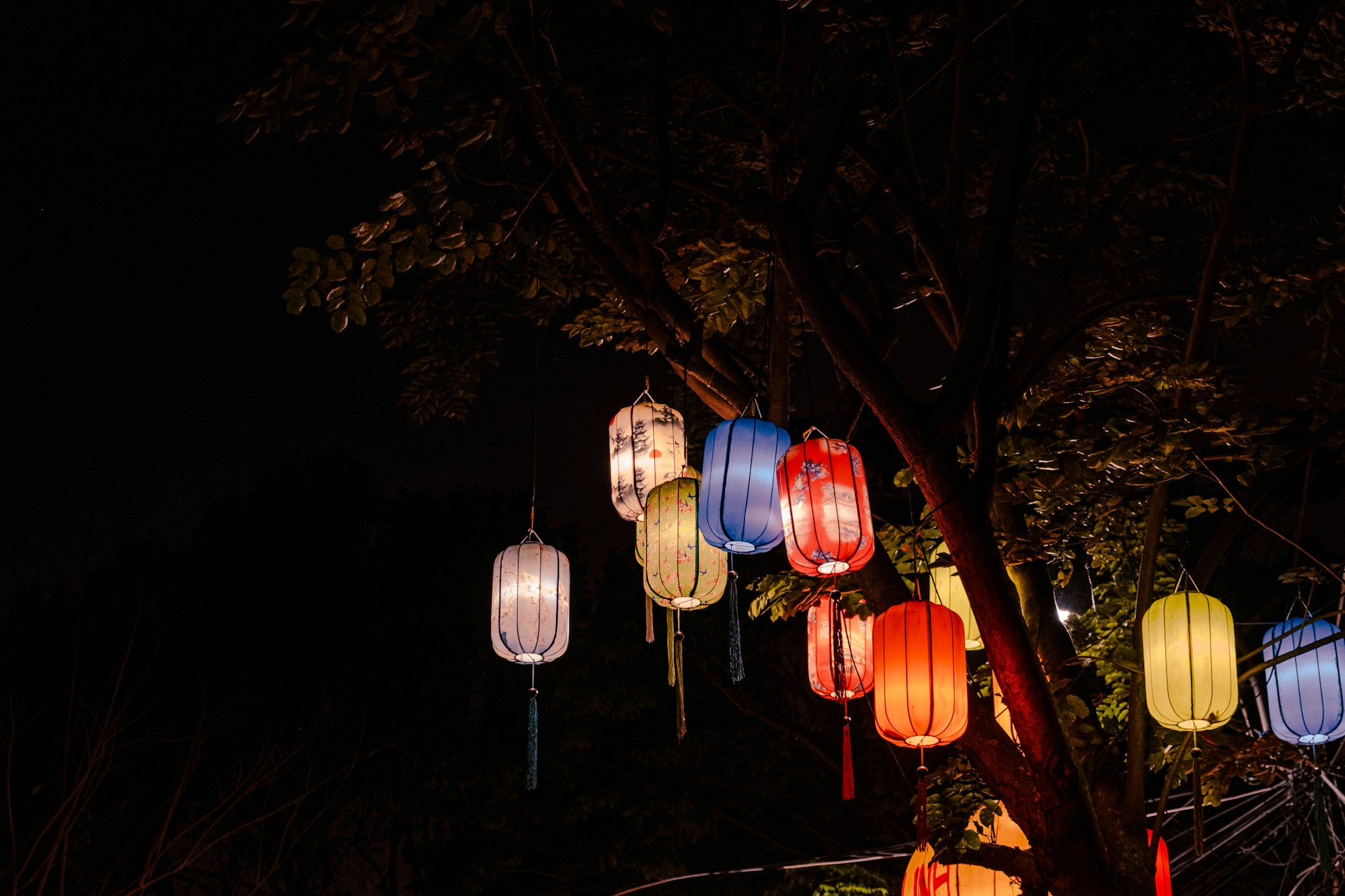
Lanterns, tailors and beaches
Hội An is arguably Vietnam’s most photogenic town. Its Old Town (UNESCO) is a labyrinth of Japanese merchant houses, Chinese temples and French colonial facades, all lit up by hundreds of colorful lanterns after dark. The Old Town ticket (120,000 VND, ~€4.40) grants access to five sites of your choice.
The town is world-famous for its tailors. Hundreds of workshops craft custom-made suits, dresses and shirts in 24-48 hours for a fraction of Western prices. A full suit in quality wool runs between €80 and €150. Allow at least three days for fittings and alterations.
An Bàng Beach, 4 km from the center, boasts fine sand and beachfront restaurants. Rent a bicycle (free at most hostels) to get there. Cooking classes (~€25 with market visit) are among the best activities in Vietnam — you’ll leave knowing how to make bánh xèo and cao lầu.
In transit: Hội An is 30 minutes from Đà Nẵng, which has the most convenient airport in central Vietnam. It’s often the departure point for flights to Đà Lạt (from ~€27).
Highlights
- Wander through the Old Town at dusk when the lanterns light up
- Order custom-made clothing from a tailor (allow 3 days for alterations)
- Take a cooking class with a market visit (~€25)
- Cycle to An Bàng Beach for a relaxing afternoon
- Try cao lầu, Hội An’s signature dish that you won’t find anywhere else
7. Đà Lạt — Days 14 to 16
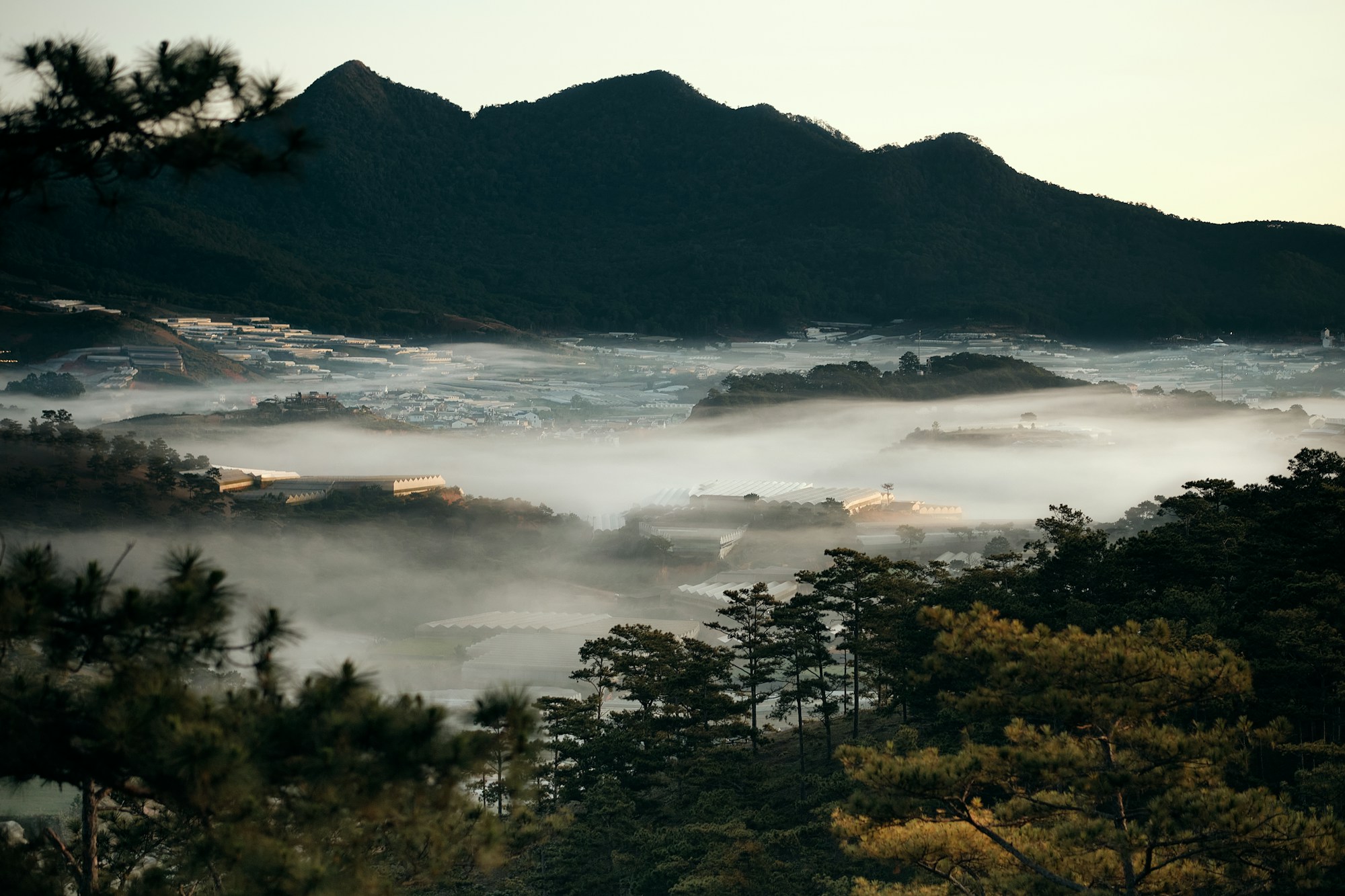
The cool highlands retreat
After the heat of central Vietnam and the beach, Đà Lạt is a breath of fresh air — literally. Perched at 1,500 meters above sea level, this former French hill station enjoys spring-like weather year-round (10-25 °C). Vietnamese couples love coming here for their honeymoon, which explains the romantic atmosphere and absurdly cheap dorm beds (~€3).
Waterfalls are the region’s star attraction: Elephant Falls, Datanla (with a natural toboggan ride!) and Pongour are all worth the trip. The Crazy House (100,000 VND, ~€3.70), a surrealist hotel-museum inspired by Gaudí, is best visited around 5 pm to avoid tour groups and catch the golden light.
Đà Lạt’s night market is an institution. Don’t miss the bánh tráng nướng — the « Vietnamese pizza »: a grilled rice paper topped with egg, onions, pâté and chili sauce, all for under €1. Wash it down with a sữa đậu nành (hot soy milk) for €0.30.
Highlights
- Night market and bánh tráng nướng at bargain prices
- Crazy House at 5 pm for the light and the calm
- Elephant Falls and Datanla (toboggan!) in a single day trip
- The cheapest dorms in Vietnam (~€3 per night with breakfast included)
- Sample the local coffee — Đà Lạt is the capital of Vietnamese coffee
8. Ho Chi Minh City — Days 16 to 18
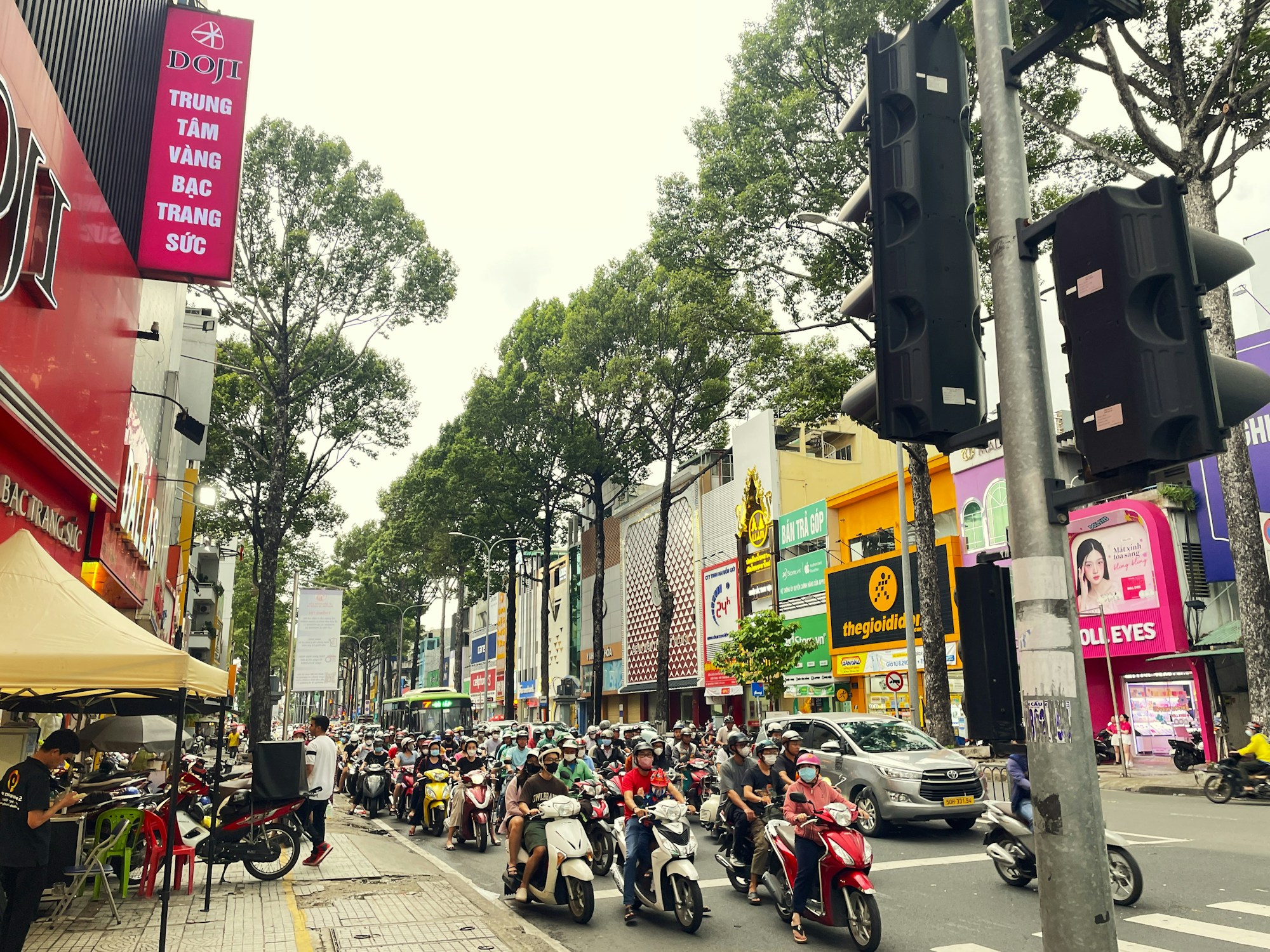
The energy of the south
Ho Chi Minh City (formerly Saigon) is the antithesis of Hanoi: bigger, more modern, even more chaotic. This megalopolis of 10 million people buzzes with frenzied energy, from gleaming new skyscrapers to the back alleys of District 4 where you’ll find the best cơm tấm (broken rice with grilled pork) in the country.
The War Remnants Museum (40,000 VND, ~€1.50) is an essential visit, both moving and raw. The Củ Chi Tunnels (~€22, half-day) reveal the incredible underground network used during the war — you can even crawl through sections widened for tourists.
In the evening, Bùi Viện Street (District 1) is the backpacker quarter, with local beers at 10,000 VND (~€0.37). For a more local vibe, head across to District 4 and its night markets, or visit the Chinatown of Chợ Lớn with the Thiên Hậu Temple and Bình Tây Market.
Highlights
- Củ Chi Tunnels: an immersive half-day journey into history (~€22)
- War Remnants Museum: poignant and essential (~€1.50)
- Street food in District 4: cơm tấm, bánh xèo, hủ tiếu
- Cold beer for €0.37 on Bùi Viện — the cheapest street on Earth
- Chợ Lớn district for a dive into historic Chinatown
9. Mekong Delta — Days 19 to 21
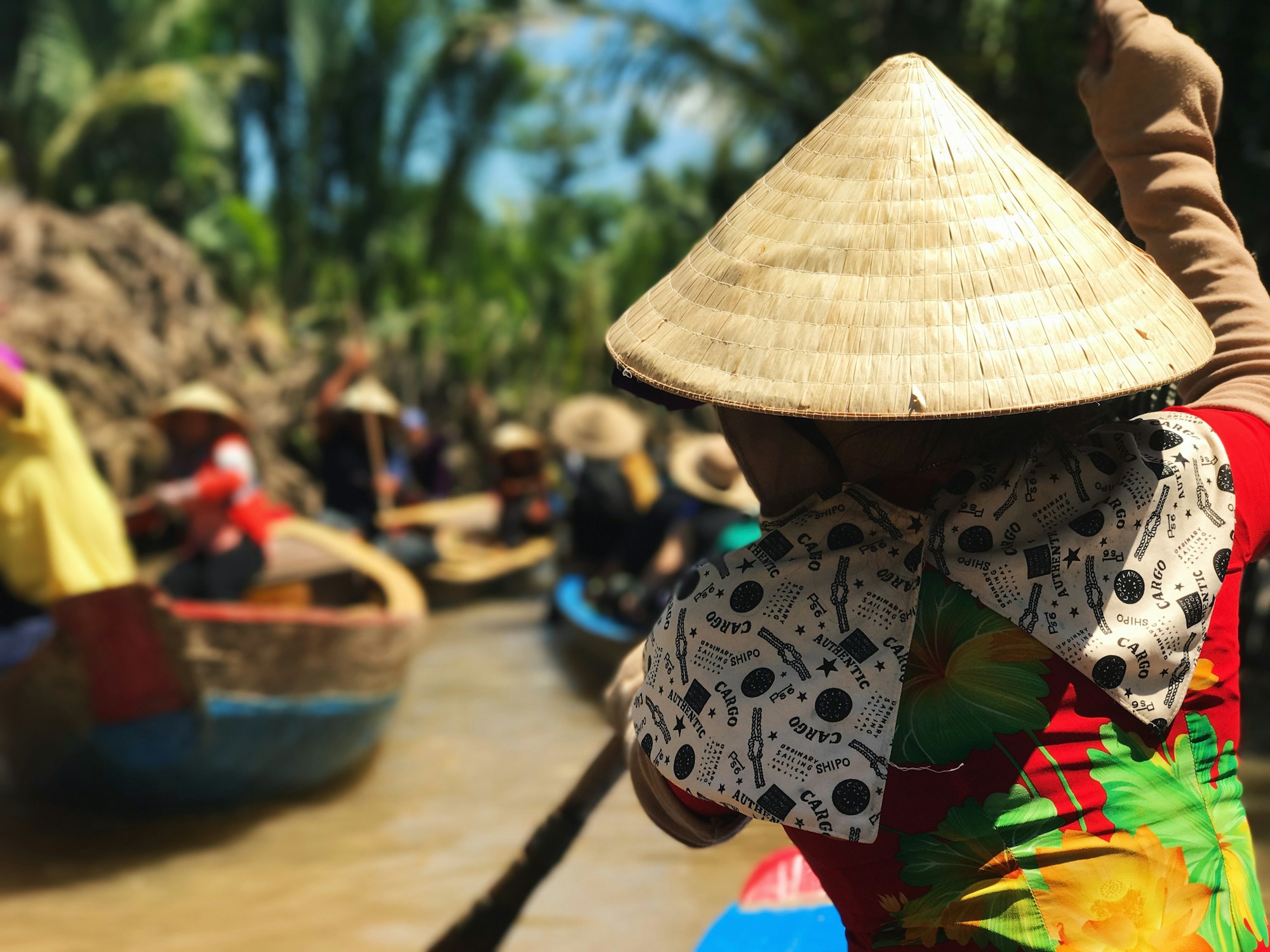
Vietnam’s rice bowl
The Mekong Delta is the perfect ending to this north-to-south journey. Here, Vietnam slows down. Roads give way to canals and rivers lined with coconut palms, markets are held on boats, and family-run homestays welcome you with tea and fruit from the garden.
The Cái Răng Floating Market in Cần Thơ is the largest and most authentic in the delta. Depart at 5 am by sampan to watch wholesalers trading watermelons, pineapples and mangoes between boats. It’s early, but the sunrise over the river is unforgettable.
Rather than taking an organized tour from HCMC, do it independently. Take a bus to Cần Thơ from HCMC (~€5, 3-4 hours), then spend the night in a homestay on a Mekong island. The next day, push on to Bến Tre (the « coconut capital ») or Vĩnh Long for even more rural scenery. Expect to pay ~€11 per night in a homestay, meals included.
Highlights
- Cái Răng Floating Market at sunrise (depart 5 am, return 8 am)
- Sleep in a homestay on a Mekong island: total immersion
- Navigate the canals by sampan through coconut palm plantations
- Taste freshly picked tropical fruits: mangosteen, rambutan, dragon fruit
10. Visa and entry requirements 2026
Good news: it’s free for 45 days
Since August 2023, French nationals have benefited from a 45-day visa exemption (previously 15 days). The policy was extended to Belgian and Swiss nationals in August 2025. For a 3-week trip, no visa is required.
Your passport must be valid for at least 6 months after the date of entry and have at least 2 blank pages. The exemption applies regardless of passport type (biometric or not) and regardless of the point of entry (airport, land border).
More good news: the rule that required 30 days between two visa-free entries has been abolished. You can technically make a round trip to Cambodia or Laos and return to Vietnam immediately.
If you wish to stay longer than 45 days, the e-visa is available online through the official portal: $25 for a single entry (90 days) or $50 for multiple entries. Processing time: 3 business days.
11. Budget summary table
How much does Vietnam really cost in 2026?
| Category | Backpacker budget | Comfort |
|---|---|---|
| Accommodation | €3-8 (dorm) | €18-37 (hotel) |
| Food | €5-9 (street food) | €9-18 (restaurants) |
| Local transport | €2-5 | €5-14 |
| Activities / entrance fees | €2-7 | €7-14 |
| Drinks / going out | €1-3 | €3-7 |
| Total per day | €18-28 | €32-64 |
| Total 21 days | €345-600 | €670-1,350 |
Note: these budgets do not include the Ha Long/Lan Ha Bay cruise (€120-165 for 2 days) or potential domestic flights (from €27). International flights are also excluded.
Money tips
- Fee-free ATMs: TPBank and VPBank charge no fees on the Vietnamese side. Always choose VND (never EUR) on the ATM screen.
- Cash: keep €35-75 in cash for rural areas (Phong Nha, Mekong). Major cities widely accept cards.
- No-fee card: a Revolut, Wise or N26 card will save you bank fees on every withdrawal.
- Bargaining: always haggle at markets and for taxis/Grab. Never bargain in restaurants.
12. Getting around Vietnam
Sleeper buses, trains and domestic flights
The sleeper bus is the backpacker’s go-to transport in Vietnam. Semi-reclined beds, blasting air conditioning and a blanket — all for €9-14 per 10-hour journey. The Sinh Tourist and Futa Bus are the most reliable operators. Book on Baolau or 12Go Asia.
The Vietnamese train is slower but offers stunning scenery, especially the Hue to Đà Nẵng stretch along the Hải Vân Pass — widely regarded as one of the most beautiful train journeys in Southeast Asia. A soft sleeper ticket from Hanoi to Hue costs around €27-37. Book on Baolau.
Domestic flights (VietJet Air, Bamboo Airways) are a fast option starting at €27 if you book early. The time saved is considerable for long distances: a 1.5-hour flight from Đà Nẵng to HCMC versus 18 hours by bus.
| Route | Transport | Duration | Indicative price |
|---|---|---|---|
| Hanoi → Ninh Binh | Bus | 2-3h | ~€5 |
| Hanoi → Ha Long | Bus / shuttle | 3-4h | €7-9 |
| Hanoi → Phong Nha | Train + bus | 10-12h | €14-23 |
| Phong Nha → Hue | Bus | 4h | ~€9 |
| Hue → Hội An | Bus / train + taxi | 3-4h | €5-9 |
| Đà Nẵng → Đà Lạt | Flight | 1h15 | €27-55 |
| Đà Lạt → HCMC | Sleeper bus | 7-8h | €9-12 |
| HCMC → Cần Thơ | Bus | 3-4h | ~€5 |
13. Street food: the must-tries
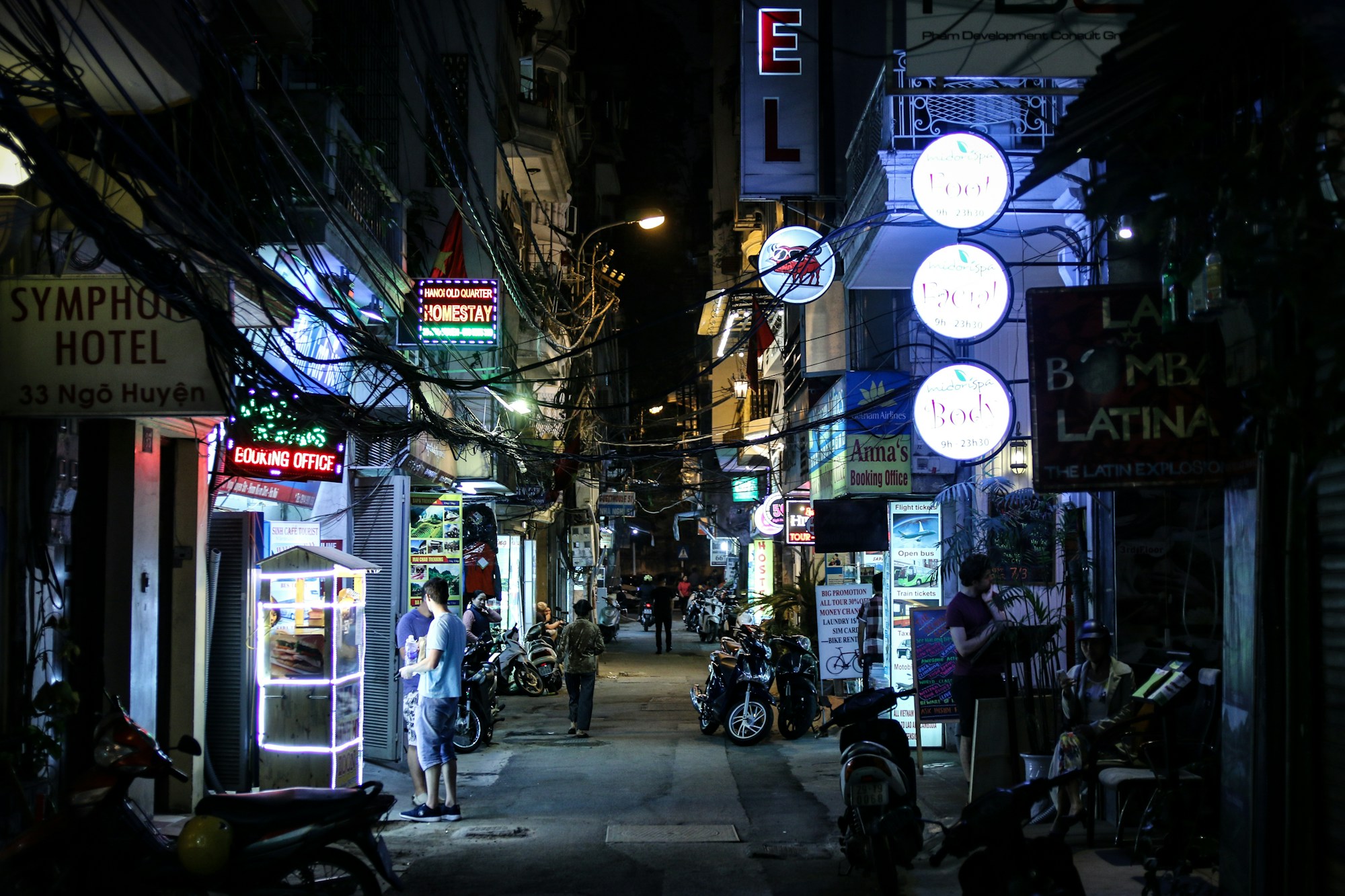
Eat like a local for under €2
Vietnamese street food is among the best in the world — and the most affordable. The golden rule: follow the locals. If a stall has nothing but Vietnamese people sitting on plastic stools, that’s where you should sit. High turnover means fresh ingredients.
The 7 essential dishes
- Phở bò — The national beef noodle soup. Broth simmered for hours, fresh herbs, chilies. The quintessential Vietnamese breakfast (~€1.10).
- Bún chả — A Hanoi specialty: grilled pork, rice vermicelli, nuoc chấm dipping sauce and herbs. Obama’s favorite dish during his visit (~€1.50).
- Bánh mì — The French legacy reimagined Vietnamese-style: crusty baguette, pâté, marinated meats, cilantro, chili. The world’s best sandwich for ~€0.75.
- Bún bò Huế — Hue’s spicy soup with beef and pork, lemongrass and fermented shrimp. Bolder than phở (~€0.90).
- Cao lầu — A Hội An exclusive: thick noodles, roast pork, croutons, herbs. The original recipe uses water from one specific well (~€1.50).
- Bánh xèo — Crispy turmeric crepe stuffed with shrimp, pork and bean sprouts. Eaten wrapped in lettuce leaves (~€1.10).
- Cơm tấm — The southern staple: broken rice, grilled pork chop, fried egg, pickles and sauce. Hearty and addictive (~€1.50).
14. Seasonal calendar by region
When to go? The answer by region
Vietnam stretches 1,650 km from north to south, crossing several climate zones. There is no single « perfect » time for the entire country, but March-April is the consensus for a north-to-south itinerary: winter is ending in the north, the monsoon hasn’t hit the center yet, and the south enjoys dry season.
| Region | Best time | Avoid | Notes |
|---|---|---|---|
| North (Hanoi, Ha Long, Ninh Binh) | Oct-Apr | Jun-Aug (heat, rain) | Dec-Jan can be chilly (10-15 °C) |
| North-Central (Phong Nha) | Feb-Aug | Sep-Nov (flooding) | Caves closed during floods |
| Central (Hue, Hội An) | Feb-May | Oct-Dec (typhoons, flooding) | Hội An floods in Nov-Dec |
| Central Highlands (Đà Lạt) | Nov-Mar | May-Oct (rain) | Cool year-round (10-25 °C) |
| South (HCMC, Mekong) | Dec-Apr | Jun-Oct (monsoon) | Monsoon = short showers, not all-day rain |
Frequently asked questions about backpacking Vietnam
Is 3 weeks enough for Vietnam?
Three weeks is enough to see the highlights from north to south at a comfortable pace. You’ll cover the 9 main stops in this guide without rushing. However, if you want to add Sapa, the Ha Giang loop, Nha Trang or Phú Quốc, plan for at least 4 to 5 weeks. Vietnam rewards those who take their time.
What total budget should I plan for 3 weeks in Vietnam?
On a backpacker budget, expect €345-600 for 21 days (excluding international flights). Add €120-165 for a Ha Long/Lan Ha Bay cruise and potentially €25-55 for a domestic flight. Realistic total budget: €500-820, or €24-39 per day all-in on the ground. For a comfort trip (hotels, restaurants), budget €670-1,350 instead.
Is Vietnam really cheaper than Thailand?
Yes, Vietnam is roughly 30 to 50% cheaper than Thailand for accommodation, street food and transport. A dorm bed costs €3-8 in Vietnam compared to €6-12 in Thailand. A street food dish runs €0.75-1.50 versus €1.50-3. Local beer is €0.20-0.55 versus €1-2. Only domestic flights are comparable in price.
What is the best season to travel Vietnam from north to south?
March-April is the ideal period for a north-to-south itinerary. The north is coming out of winter with pleasant temperatures (18-25 °C), the center hasn’t entered monsoon season yet, and the south is enjoying dry weather. October-November is a good alternative for a south-to-north route. Avoid Tết (late January/early February): transport is packed and prices double.
Do French nationals need a visa in 2026?
No. Since August 2023, French nationals benefit from a 45-day visa exemption. Belgian and Swiss nationals have also been eligible since August 2025. For a 3-week trip, no paperwork is needed. You just need a passport valid for 6 months after entry with 2 blank pages. The 30-day waiting period between two entries has been abolished.
Is it safe to rent a motorbike in Vietnam?
Motorbikes are the most popular mode of transport among backpackers, but accidents are common. Traffic is chaotic, driving rules are « flexible » and travel insurance often excludes motorized two-wheelers. Recommended alternative: « Easy Rider » tours with a local driver-guide (~€45-65/day). For short trips in smaller towns (Ninh Binh, Phong Nha, Đà Lạt), scooters remain practical if you’re experienced.
What street food dishes should I absolutely try?
The 7 essentials: phở bò (beef noodle soup, ~€1.10), bún chả (grilled pork and vermicelli in Hanoi, ~€1.50), bánh mì (baguette sandwich, ~€0.75), bún bò Huế (spicy Hue soup, ~€0.90), cao lầu (noodles exclusive to Hội An, ~€1.50), bánh xèo (crispy turmeric crepe, ~€1.10) and cơm tấm (broken rice with grilled pork in Saigon, ~€1.50). Don’t forget the cà phê trứng (egg coffee) in Hanoi and bánh tráng nướng (Vietnamese pizza) in Đà Lạt.
Is it better to book everything in advance or on the spot?
Most bookings are better made on the spot, directly at your hostel’s front desk. Prices are often negotiable and 30-40% cheaper than online. Exceptions to book ahead: the Ha Long/Lan Ha cruise in peak season (December-March), Sơn Đoòng Cave (months in advance), transport during Tết, and your first night’s dorm if you arrive late in a tourist town. For buses and trains, Baolau and 12Go Asia allow online booking at fair prices.
Sources
- Backpackers Wanderlust — Vietnam 3-Week Itinerary
- WanderOnLess — Vietnam Budget Travel Guide
- The Broke Backpacker — Backpacking Vietnam Travel Guide
- Vietnam Backpacker Hostels — Budget Tips 2026
- Rough Guides — Best Time to Visit Vietnam
- Lonely Planet — Best Time to Visit Vietnam
- Indie Traveller — Phong Nha Travel Guide
- Indie Traveller — Ninh Binh Guide
- Indie Traveller — Mekong Delta Independent Travel
- Jungle Boss Tours — Phong Nha Caves Guide
- MyVietnamVisa — Vietnam Visa Exemption Updates 2026
- Vietcetera — What to Expect in Vietnam 2026
- Vietnam Tourism — Official Vietnamese Tourism Website
- A Backpacker’s World — Backpacking Vietnam
- Baolau — Train and Bus Booking in Vietnam
Research conducted on February 16, 2026
Plan your trip to Vietnam
Discover detailed itineraries created by our community of travelers. From north to south Vietnam, find day-by-day inspiration with budgets, accommodations and activities for a tailor-made trip.
Explore all itineraries