
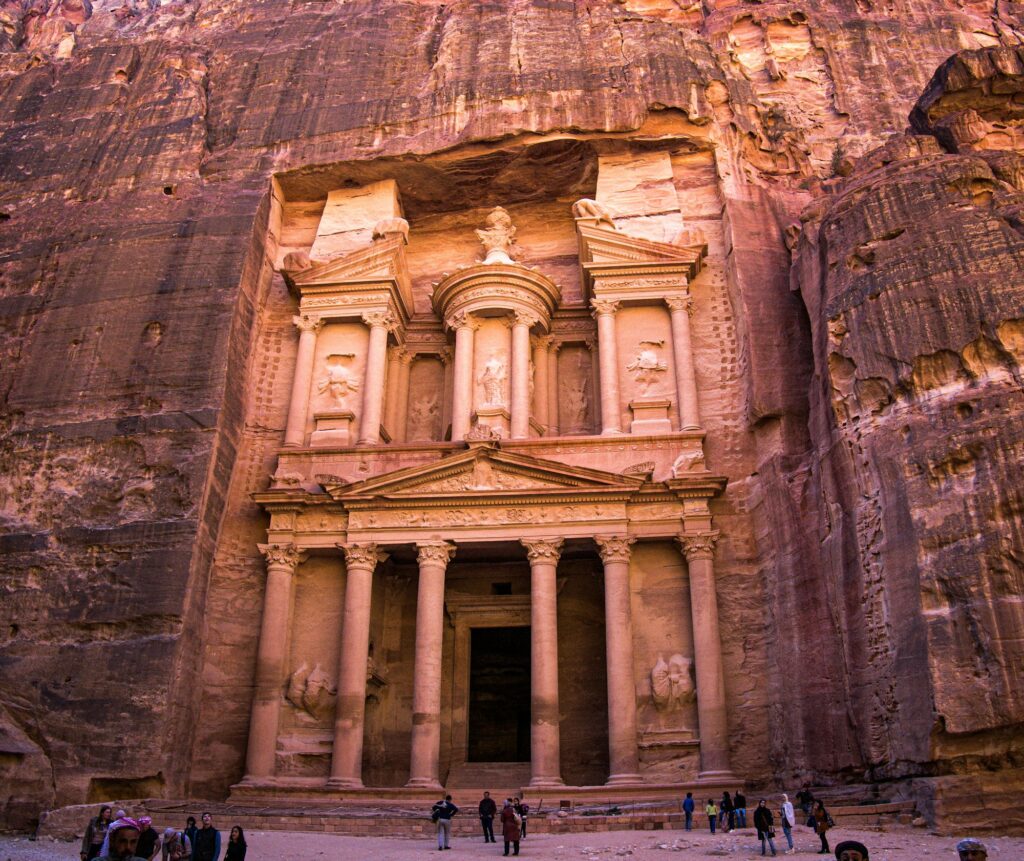
Jordan in 2026 may well be the best-kept secret in the eastern Mediterranean. Petra, the Nabataean city carved from rose-red rock, Wadi Rum with its breathtaking Martian formations, the Dead Sea where you float effortlessly at −430 metres… In 7 to 10 days, this small Middle Eastern country delivers an epic adventure — accessible, safe, and still spared from mass tourism. Here is the complete guide to making the most of it.
The Jordan Pass: Your First Purchase Before You Leave
The Ideal 7 to 10-Day Itinerary
According to Passport for Living, 7 to 10 days is the optimal duration for exploring Jordan beyond just the classic tourist sites. Here is a tried-and-tested structure:
| Days | Stage | Highlight |
|---|---|---|
| D1 | Amman / Madaba / Mount Nebo | Madaba mosaics, panoramic view towards Jerusalem |
| D2 | King’s Highway → Petra | Kerak Castle, Little Petra en route |
| D3–4 | Petra (Wadi Musa) | The Treasury, the Monastery, Petra by Night |
| D5–6 | Wadi Rum | Bedouin jeep tour, glamping under the stars |
| D7 | Dead Sea + Ma’in Hot Springs | Floating, thermal baths, mineral mud |
| D8 | Wadi Mujib + Jerash | Water canyon, Roman ruins |
| D9–10 | Dana Reserve / Aqaba | Hiking, diving in the Red Sea |
1. Petra — The Rose-Red City of the Nabataeans
Petra, Jordan — The Khazneh and Its Secrets
Petra, the ancient city carved from richly coloured sandstone, stands as one of Jordan’s most iconic monuments. This UNESCO World Heritage Site continues to captivate visitors from around the globe. According to Jordan MW, entry is via the Siq, a 1.2 km gorge with walls rising up to 80 metres high — and it leads to the Khazneh (the Treasury) in a moment of pure awe.
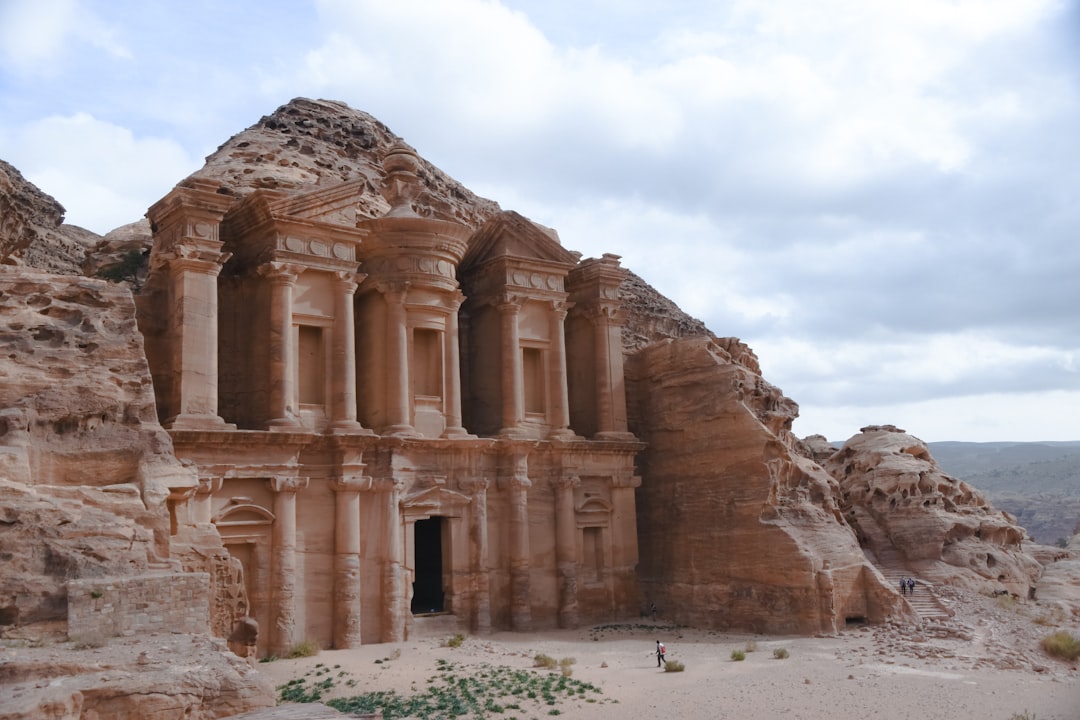
Beyond the Treasury, the adventure continues: the Royal Tombs, the Colonnaded Street, the ancient Theatre, and above all the steep trail (850 steps) up to the Monastery (Ad-Deir), which offers a 360° panorama over the surrounding desert. According to TourRadar, hikers who reach the Monastery find peaceful, quiet spaces well away from the crowds at the main site.
Highlights
- The Siq: a 1.2 km gorge leading to the Treasury
- The Ad-Deir Monastery: a hike with exceptional panoramic views
- The Royal Tombs: Nabataean architecture at sunset
- The Colonnaded Street: 2,000 years of history in the open air
2. Petra by Night — The Reinvented Show of 2025
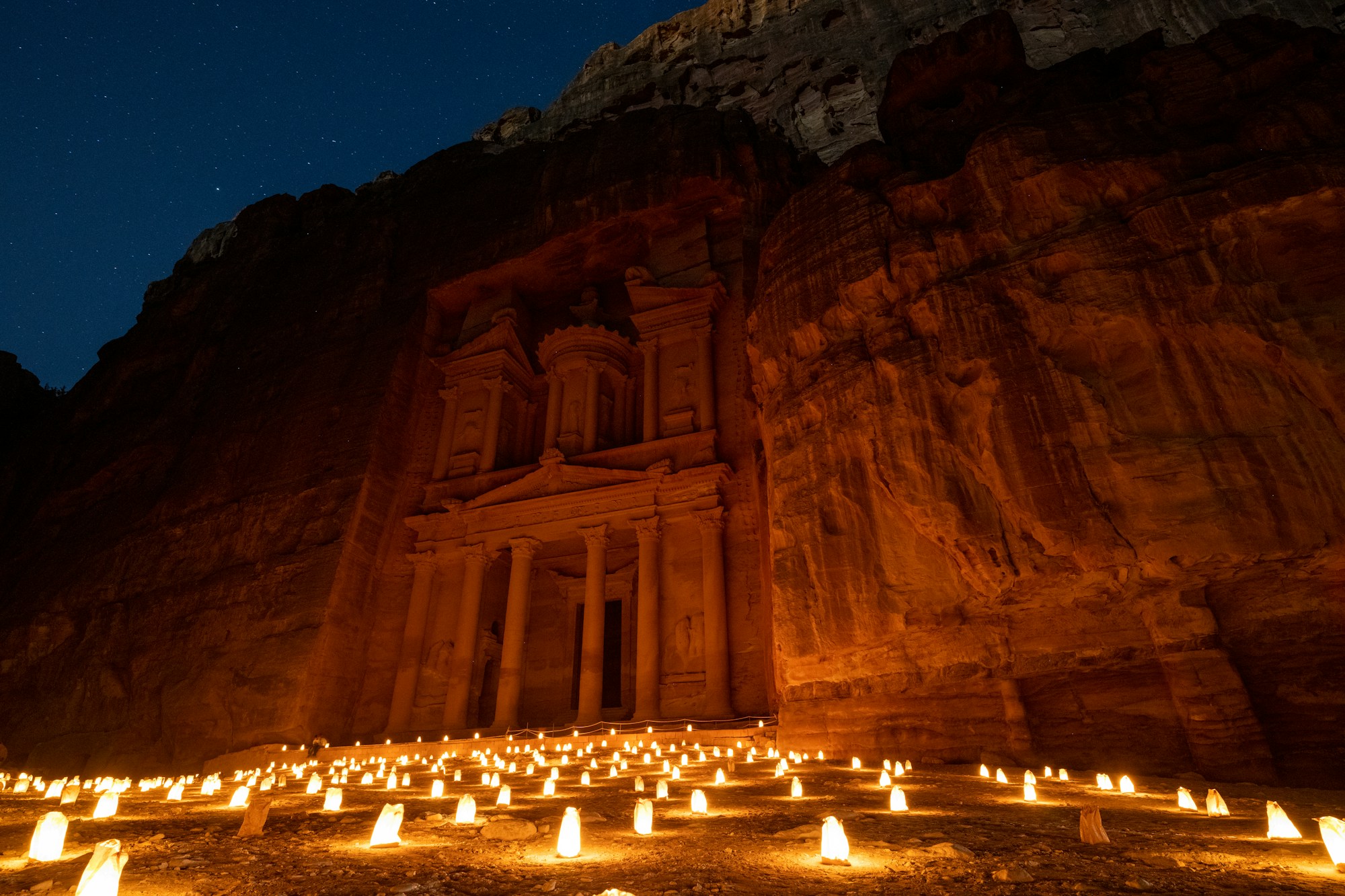
Petra by Night — Candles and 3D Mapping on the Treasury
The Petra by Night experience was completely reimagined in May 2025, blending the timeless charm of candlelight with a 3D projection mapping show on the Treasury’s facade. According to the official website visitpetra.jo, this show is now considered the world’s largest weekly projection spectacle of its kind — a living picture book narrating the Nabataean legacy.
The journey through the Siq, guided by 1,500 candles in near-total darkness, is an extraordinary experience in itself. As the blog Sur les Pas du Monde puts it: « The moment you arrive at the Treasury is incredible — the silence, the darkness, the monument lit from the ground up… »
Highlights
- The Siq traversed by candlelight in near-total darkness
- 3D projection mapping on the Treasury facade
- Immersive narration of the Nabataean heritage
- Children under 10: free entry
3. Wadi Rum — The Valley of the Moon
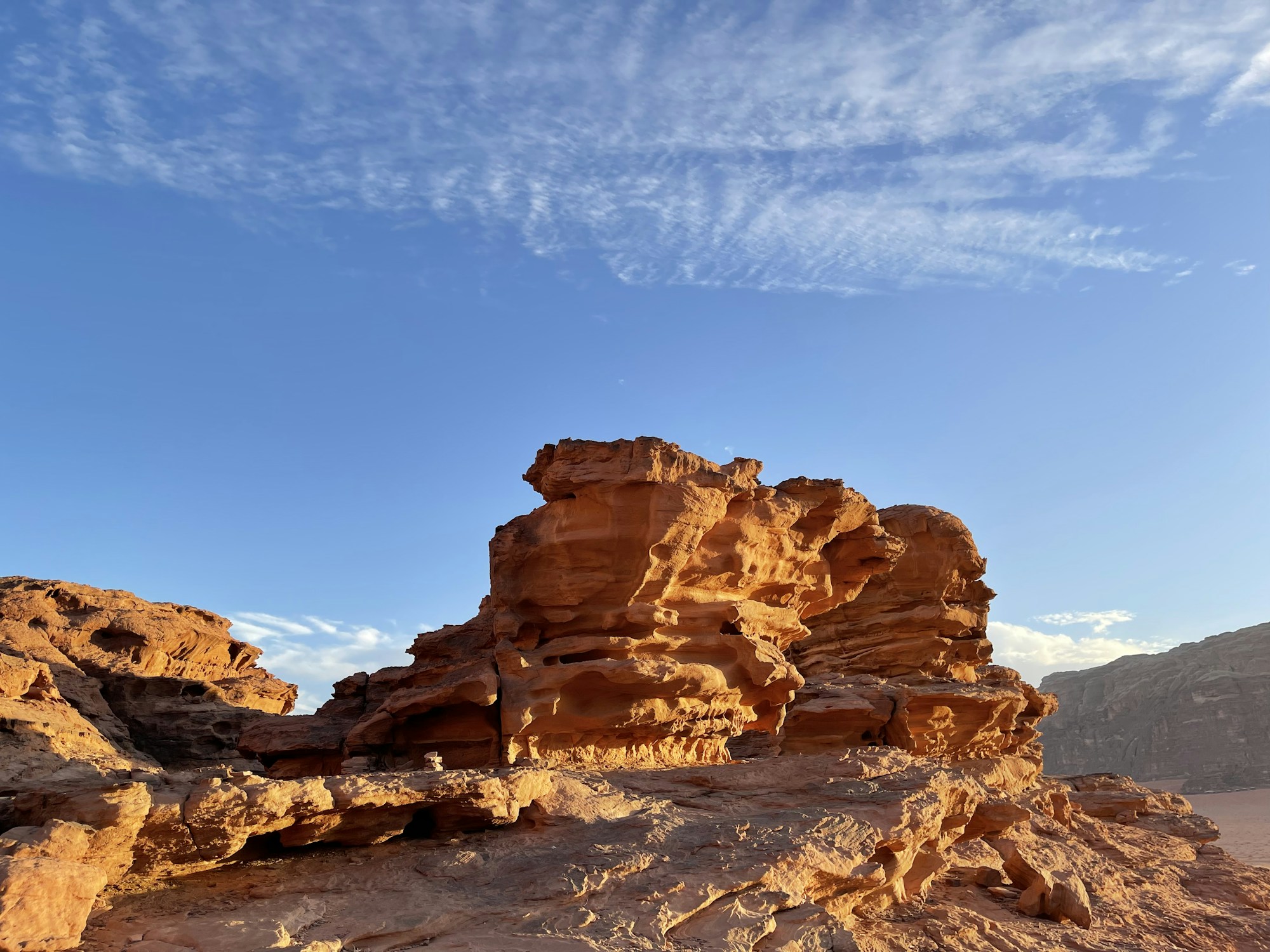
Wadi Rum — Red Desert, Infinite Sky
Wadi Rum, also known as the Valley of the Moon, is arguably one of the most striking destinations on earth. Its unique landscape — both terrestrial and lunar — has served as the backdrop for numerous Hollywood productions: Lawrence of Arabia, The Martian, Rogue One, and the live-action remake of Aladdin. According to Terres Oubliées, a Bedouin 4×4 circuit takes you through the Seven Pillars of Wisdom, the Nabataean inscriptions at Anfasieh, and the great red sand dune — four hours of total immersion in the desert.
But the ultimate Wadi Rum experience happens at night, far from any artificial light. As Jordan Petra Private Tour puts it: « Without city lights, the desert reveals a canopy of stars unmatched anywhere else on Earth. »
Highlights
- Bedouin 4×4 circuit through dramatic rock formations
- Camel trekking at sunset
- Climbing the red sand dunes
- Exceptional stargazing far from any light pollution
4. Glamping Under the Stars — The Martian Bubbles of Wadi Rum
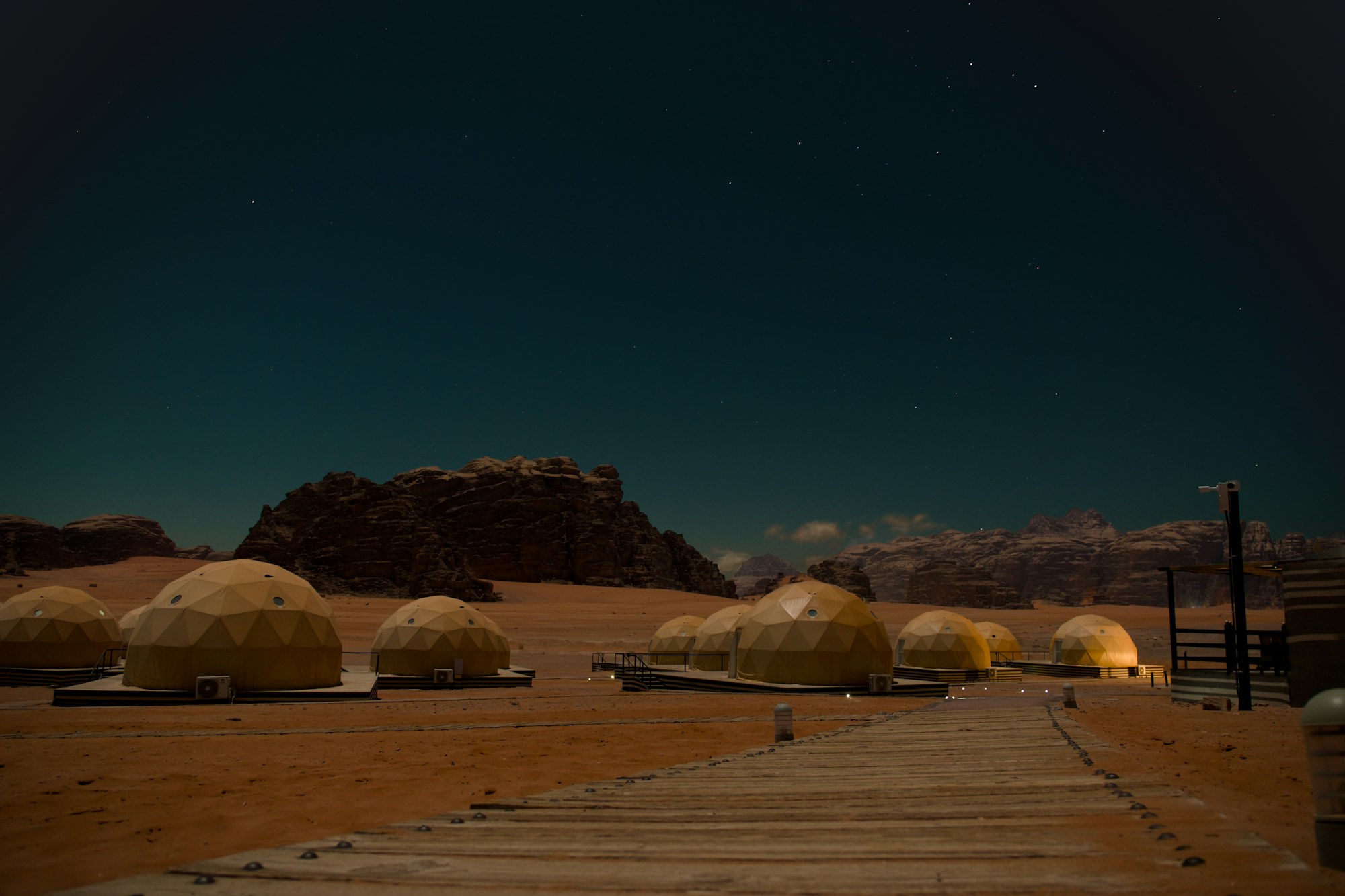
Bubble Tents and Luxury Bedouin Camps
In recent years, glamping accommodation has multiplied across Wadi Rum, led by transparent bubble tents with fully glazed ceilings so you can stargaze lying in bed. According to Jordan Traveler, prices vary considerably: basic Bedouin camp from $15/night, Bedouin tents between $45–70/night, premium bubbles between $105–140/night, and luxury options reaching $500/night.
The traditional Bedouin Zarb dinner, slow-cooked underground in a pit, is often included in stays: chicken, vegetables, and rice cooked to perfection, unveiled at sunset in a fascinating mini-spectacle, according to Curls en Route.
Accommodation Options
- Authentic Bedouin camp: from $15/night
- Observatory tents (partial transparent roof): ~$70/night
- Martian bubbles (360° view of the starlit sky): ~$120/night
- Bedouin Zarb dinner under the stars
5. The Dead Sea — Floating at −430 Metres
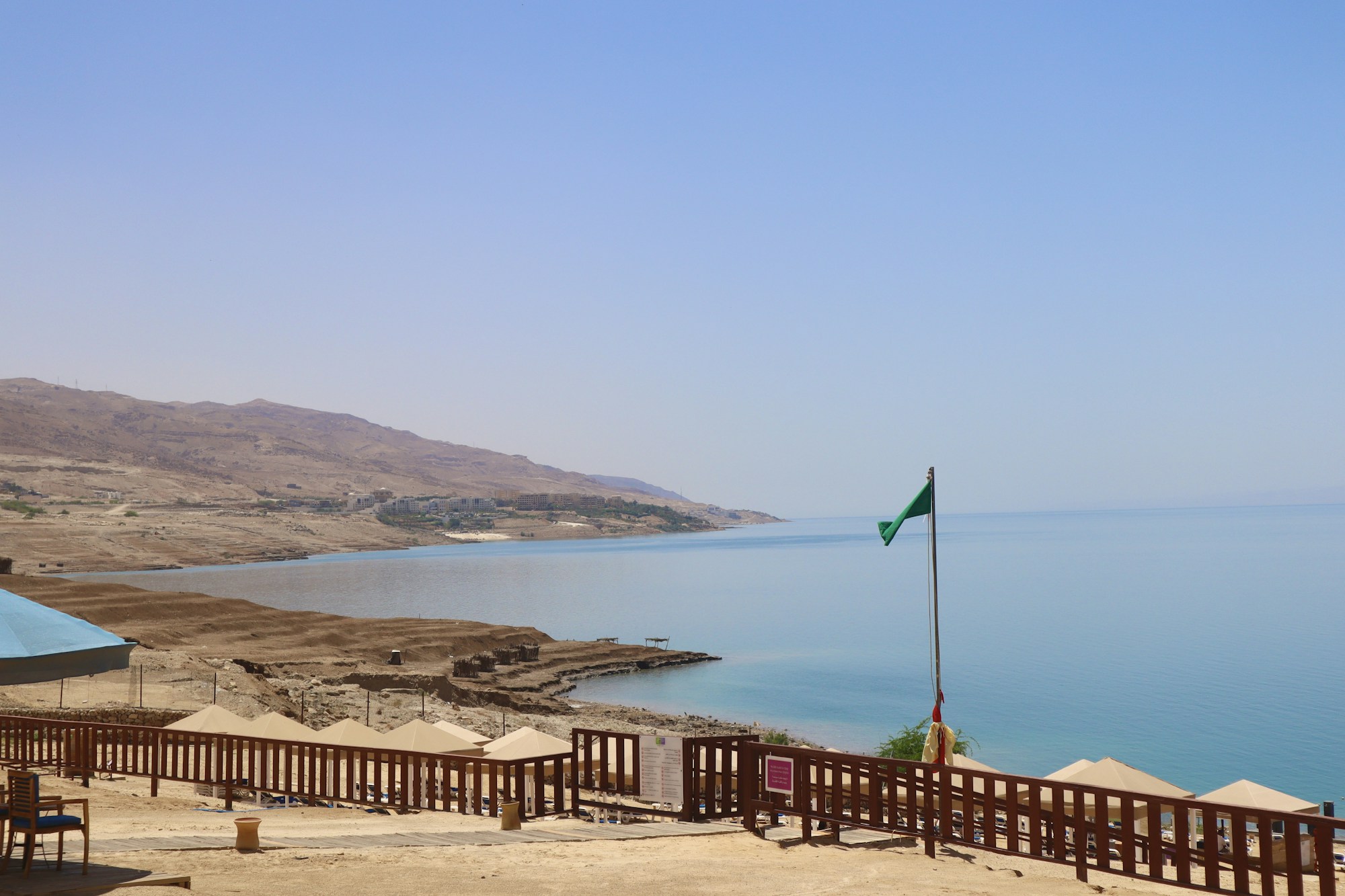
The Dead Sea — A Uniquely Therapeutic Experience
The Dead Sea is a salt lake covering 800 km², with a salinity of 27% that makes all macroscopic life impossible — hence its name. According to Terdav, it is also the lowest point on the earth’s surface, at −429 metres below sea level. The floating experience is both surreal and therapeutic: your body naturally stays afloat — sinking is simply impossible.
The black mineral-rich mud (potassium, magnesium, calcium) found along the shores has well-documented therapeutic properties for the skin. What’s more, the Dead Sea is shrinking by roughly one metre per year — this is an experience to have now.
Highlights
- Effortless natural floating in the ultra-saline waters
- Mineral mud mask applied directly on the shore
- Sunset from the Jordanian shore (facing the West Bank hills)
- Five-star resorts with freshwater pools
6. Jerash — The Pompeii of the Middle East
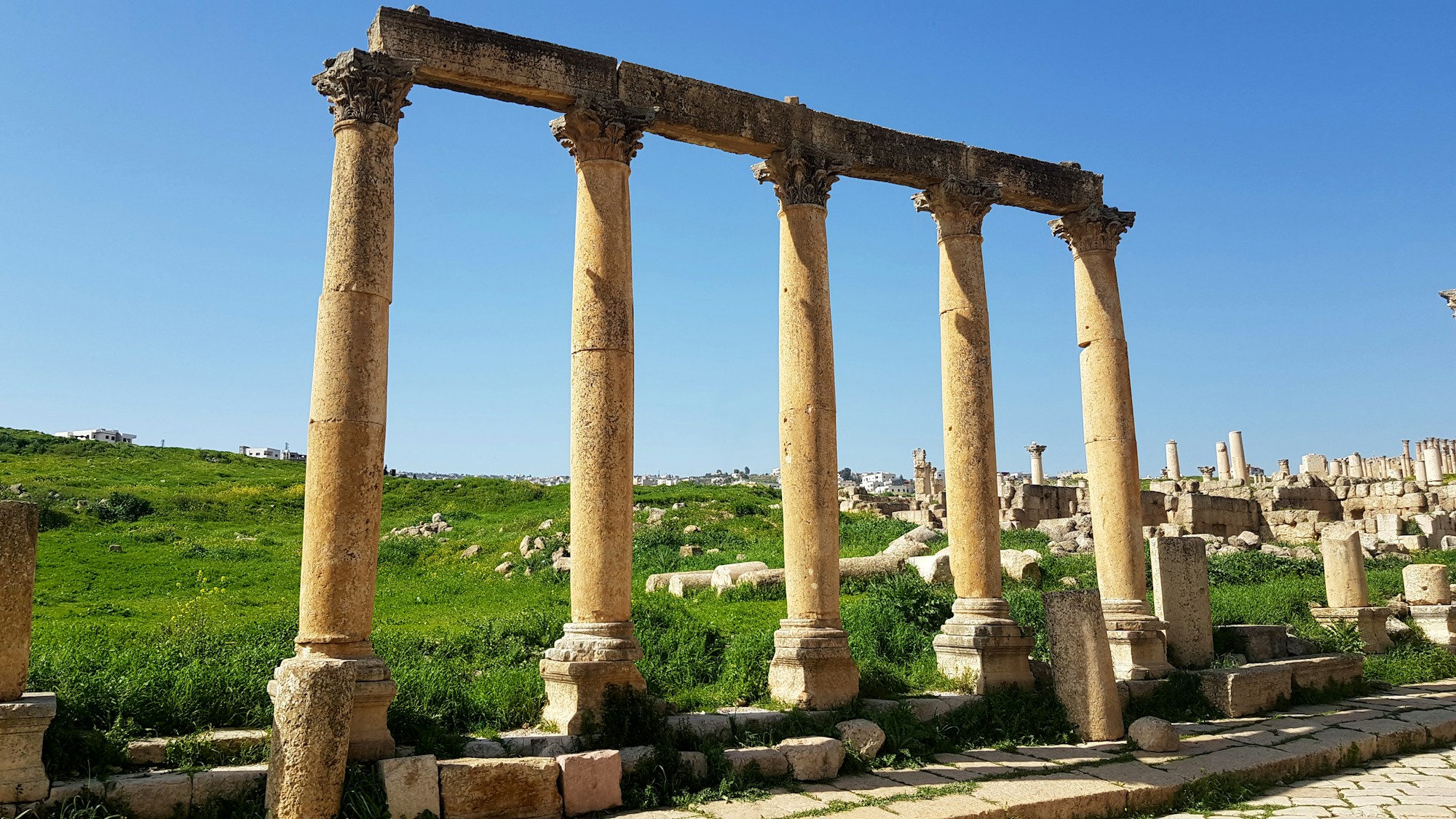
Jerash — Roman Ruins 50 km from Amman
Were it not for Petra and Wadi Rum in the south, Jerash in the north would attract far greater attention — its ruins are considered one of the finest examples of preserved Roman architecture outside Italy, according to Along Dusty Roads. Under Roman rule from 63 BC, the city reached its peak in the 2nd and 3rd centuries AD, and Emperor Hadrian even spent an entire year there in 129 AD.
The main thoroughfare, the Cardo Maximus, stretches for 800 metres, still paved with its original stones worn down by Roman chariot wheels. The unique oval forum and over 400 columns complete a truly remarkable architectural picture, according to WowJordan.
Highlights
- The Oval Plaza: a unique example of Roman architecture
- The Cardo Maximus paved with original stones (800 m)
- The South Theatre: ancient acoustics still intact
- Over 400 columns still standing
7. Jordan’s Hidden Gems
Beyond the headline sites, Jordan conceals jewels that are often overlooked by standard tourist itineraries. Here are four must-sees for travellers who want to go further:
Little Petra (Siq al-Barid) — Free Entry
Just 8 km north of Petra, Little Petra is a miniature Nabataean city that once served as a resting place for Silk Road merchants. According to Intrepid Travel, unlike Petra, entry is completely free and you will often find yourself virtually alone there. The site houses the only known painted fresco from the Nabataean period.
Tip: Combine it with the 3-hour Bedouin hike linking Little Petra to Petra via the back route, arriving at the Monastery while bypassing the crowds at the main entrance.
Ma’in Hot Springs — The Biblical Thermal Waterfalls
Thirty kilometres from Madaba, the Ma’in hot springs (historically known as Baaras) gush between 45°C and 60°C in a series of spectacular waterfalls cascading into a canyon. According to Tourist Jordan, King Herod visited regularly to benefit from their healing properties. A day pass costs just 10 JOD.
Tip: Combine Ma’in, Wadi Mujib, and the Dead Sea in a single day — all three are within 30 minutes of one another.
Wadi Mujib — The Grand Canyon of Jordan
This 70-kilometre canyon carved by the Mujib River (which flows into the Dead Sea) offers the Siq Trail: swimming, scrambling up waterfalls, and using ropes through a breathtaking water corridor. According to Jordan Experience, the trail costs 45 JOD and takes around 7 hours. Life jackets are compulsory. Season: April to October.
Tip: Book well in advance through the Wild Jordan IUCN office in Amman. The trail requires a minimum of 5 people.
Dana Biosphere Reserve — The Natural Gem
Jordan’s largest nature reserve at 300 km², Dana is one of the least-known hiking destinations in the Middle East. According to Visit Jordan, it is home to 800 plant species and 449 animal species, some of them endangered. The Feynan Ecolodge, ranked among the world’s top 25 ecolodges by National Geographic, is accessible only on foot.
Tip: The 4-day hike from Dana to Petra (70 km) is considered one of the finest in the region. Bring enough cash — no credit cards are accepted within the reserve.
Budget and Practical Information
According to Travel Unicorns, for a comfortable experience, budget between 70 and 105 JOD (€88–€132) per person per day. Here is a full breakdown:
| Item | Budget | Comfort | Luxury |
|---|---|---|---|
| Jordan Pass | 70–80 JOD (€88–€100) — Essential | ||
| Return flight (from UK) | ~€350 | ~€500 | ~€700 |
| Accommodation/night | 15–25 JOD | 40–70 JOD | 100–500 JOD |
| Meals/day | 10–15 JOD | 20–35 JOD | 40–80 JOD |
| Total 8 days/person | ~€850 | ~€1,200 | ~€2,500+ |
- Currency: Jordanian Dinar (JOD). 1 JOD ≈ €1.25. Use ATMs at banks such as Arab Bank for the best rates — avoid airport exchanges.
- Visa: Via the Jordan Pass (recommended) or visa on arrival at Amman Airport.
- Drones: Strictly prohibited in Jordan — subject to confiscation at the airport on arrival.
- Dress code: Cover shoulders and knees in villages and at religious sites.
- Ramadan 2026: ~17 February to 19 March. Sites remain open; adjust meal times accordingly.
Frequently Asked Questions — Jordan 2026
Is the Jordan Pass really worth it in 2026?
Yes, in almost every case. Petra entry alone ranges from 50 to 60 JOD depending on the number of days. Add the visa (40 JOD), Jerash (10 JOD), the Amman Citadel, and other sites, and you easily exceed 120–130 JOD. The Jordan Pass starts at 70 JOD and includes the visa (if you stay at least 3 nights) and all these entry fees. For most travellers, the real saving is between 30 and 80 JOD. Buy it at jordanpass.jo before you travel.
Is Jordan safe for British tourists in 2026?
Yes. Tourist areas (Petra, Wadi Rum, the Dead Sea, Amman, Jerash) operate normally with robust security measures in place, according to MyFairyTrail. Jordan maintains exceptional stability in the region. Always check the Foreign Commonwealth & Development Office (FCDO) travel advice before you depart for the latest official guidance.
What is the best time of year to visit Jordan?
Spring (March–May) is ideal for hiking and wildflowers. Autumn (September–November) offers perfect temperatures and fewer tourists. Summer (June–August) is very hot (35–40°C) but manageable for the Dead Sea. Winter is mild in the south. Note: Ramadan 2026 falls around 17 February to 19 March — sites remain open, but adjust your schedule accordingly.
How do you travel between Petra, Wadi Rum, and the Dead Sea?
Hiring a car offers maximum flexibility and is straightforward (driving is on the right, as in the UK). Public buses from Amman’s South Bus Station (Wihdat Station) serve Petra and Aqaba at low cost. Shared shuttles operate between the main sites. For Wadi Rum, Bedouin jeep transfers are often arranged directly from Petra (a 3-hour drive).
Can you bring a drone to Petra or Wadi Rum?
No. Drones are strictly prohibited throughout Jordan and may be confiscated at the airport on arrival. Certain high-powered binoculars are also restricted. It is strongly advised not to bring them, according to Terdav.
Can you visit Jordan during Ramadan?
Yes, without any real difficulties. Tourist sites remain open. A few adjustments are worth making: avoid eating or smoking in public out of respect, some restaurants open later in the day, and alcohol is served discreetly to non-Muslims in establishments accustomed to tourists. The atmosphere during Ramadan is often described as warm and festive in the evenings.
What should you wear in Jordan?
Jordan is a Muslim country: cover shoulders and knees in villages, markets, and at religious sites. In tourist areas (hotels, resorts, Aqaba), summer clothing is perfectly acceptable. For women, modest dress is recommended outside designated tourist zones, particularly after dark in less-frequented areas.
Is Petra by Night included in the Jordan Pass?
No. Petra by Night is a separate attraction charged at 30 JOD per person (children under 10 are free), and is not included in the Jordan Pass. The show runs Sunday to Thursday at 8:30pm, featuring the new 3D projection mapping show introduced in May 2025. Booking is recommended at petrabynight.jo.
Sources
- Jordan Pass (Official Website) — Pricing, inclusions, and purchasing details
- WowJordan — Jordan Pass Guide 2025 — Complete Jordan Pass guide
- Jordan MW — Petra Entrance Fee — Petra entry prices
- Visit Petra — Petra by Night (official) — New 2025 show
- WowJordan — Petra by Night 2025 — Up-to-date times and prices
- Sur les Pas du Monde — Petra by Night — In-depth review
- Travel Unicorns — Jordan Travel Cost 2025 — Full budget breakdown
- Jordan Traveler — Glamping in Wadi Rum — Luxury accommodation options
- Curls en Route — Wadi Rum Bedouin Camp — Glamping experience
- Tourist Jordan — Wadi Mujib — Canyon guide
- Jordan Experience — Wadi Mujib 2026 — Complete 2026 guide
- Visit Jordan — Dana Biosphere Reserve — Official guide
- MyFairyTrail — Jordan 2025-2026 — Safety and accessibility
Research conducted on 20 February 2026
Ready to Experience the Jordanian Adventure?
Petra, Wadi Rum, the Dead Sea… Jordan in 2026 offers a unique combination of ancient wonders, boundless desert, and legendary hospitality. Explore itineraries created by our community to plan your epic journey.