
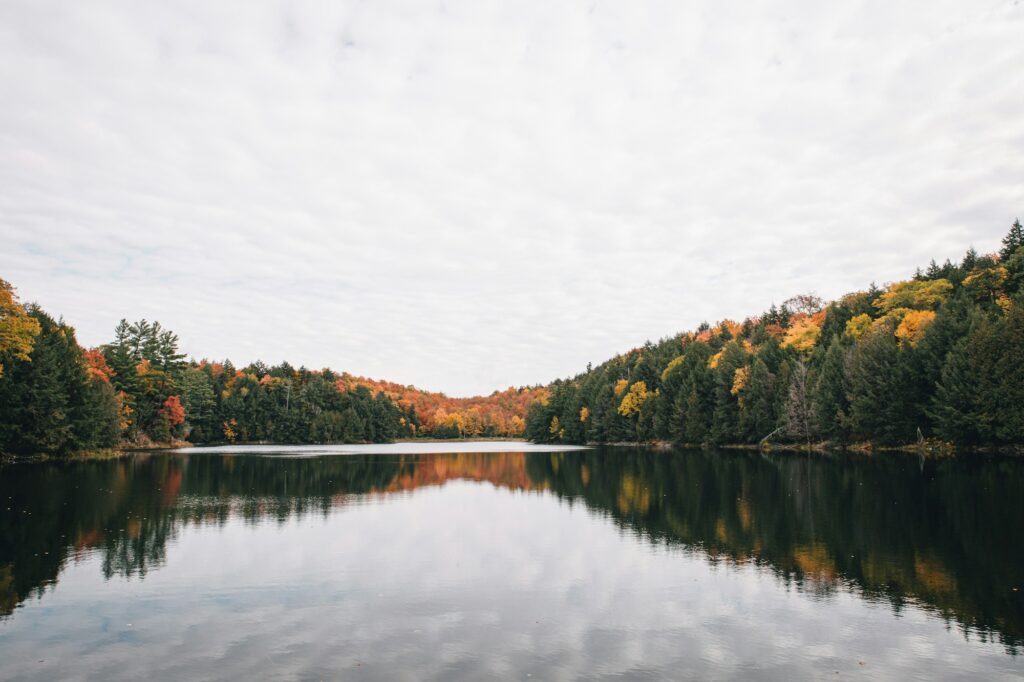
Every autumn, Canada puts on one of the most spectacular natural shows on Earth: the Indian Summer. From late September through mid-October, the forests of Quebec and Ontario ignite with blazing reds, burnt oranges, and golden yellows — a chromatic explosion that draws hundreds of thousands of visitors from around the globe. This 10-day itinerary takes you through the heart of this phenomenon, from the cosmopolitan energy of Montreal to the thundering mists of Niagara Falls, passing through the legendary fjords of the Saguenay, the bucolic hills of the Eastern Townships, and the vast wilderness of Algonquin Provincial Park. Whether you are a seasoned traveller or experiencing Canada for the first time, autumn 2026 promises to be unforgettable.
The Indian Summer — known in French as l’été des Indiens — is a climatic phenomenon unique to northeastern North America. After the first frosts of late September, a warm anticyclone settles in, bathing the landscape in soft golden light while the deciduous forests reach peak colour. The combination of cold nights and warm days triggers the production of anthocyanins in maple, birch, and oak leaves, producing the fiery palette that has made Quebec and Ontario world-famous among autumn travellers. This itinerary is designed to catch the best of this season, with a carefully calibrated route that follows the progression of colour from south to north and back again.
10-Day Overview: Quebec & Ontario Indian Summer
| Day | Destination | Highlights | Night |
|---|---|---|---|
| Days 1–2 | Montreal | Mont-Royal, Old Montreal, Jean-Talon Market | Montreal |
| Day 3 | Eastern Townships | Sutton, Knowlton, Abbaye Saint-Benoît-du-Lac | Magog or Sutton |
| Day 4 | Mauricie | Parc National de la Mauricie, canoe, La Tuque | Trois-Rivières |
| Day 5 | Jacques-Cartier & Charlevoix | Parc Jacques-Cartier, Parc des Grands Jardins | Baie-Saint-Paul |
| Day 6 | Tadoussac & Saguenay | Whale watching, Fjord, Pointe-Noire | Tadoussac |
| Day 7 | Old Quebec & Île d’Orléans | Château Frontenac, Plains of Abraham, Île d’Orléans loop | Quebec City |
| Day 8 | Gatineau & Ottawa | Parc de la Gatineau, Parliament Hill, Rideau Canal | Ottawa |
| Day 9 | Algonquin | Algonquin Provincial Park, canoe, wildlife watching | Huntsville or Whitney |
| Day 10 | Niagara-on-the-Lake & Falls | Niagara Parkway, Niagara Falls, wine route | Toronto or flight home |
Days 1–2 — Montreal: Urban Forest & Mont-Royal
Canada’s bilingual metropolis dressed in autumn gold
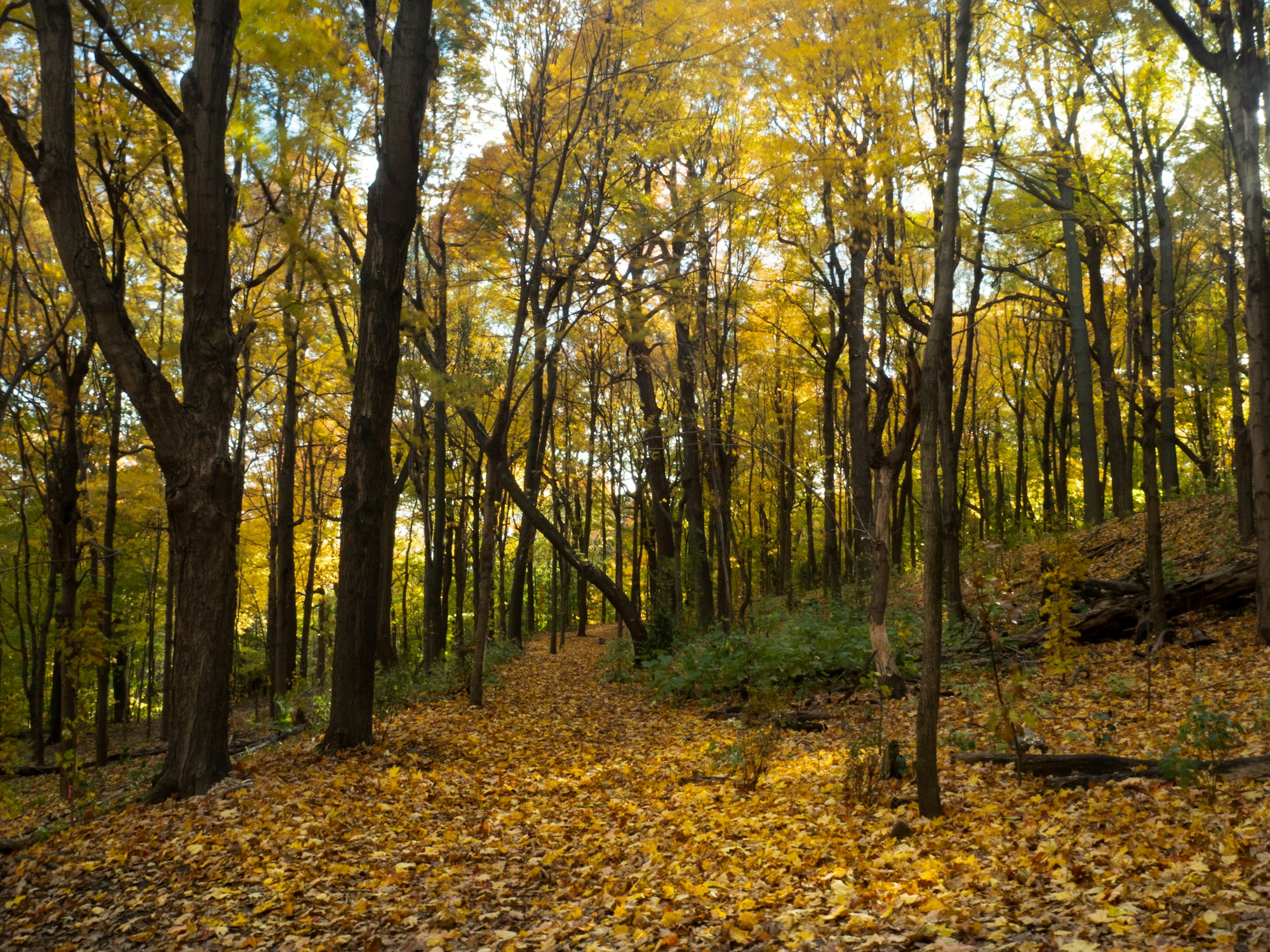
Montreal in autumn is a city transformed. The 200-hectare Parc du Mont-Royal, designed by Frederick Law Olmsted — the same landscape architect behind New York’s Central Park — becomes a cathedral of colour, its mixed forest of maples, beeches, and oaks blazing red, orange, and gold against the city skyline. Begin your first morning with the classic hike to the Kondiaronk Belvedere, the panoramic lookout at 233 metres above sea level that offers the definitive view of the Montreal skyline wrapped in autumn haze. The trail through the forest is particularly magical in the early morning, when the low October sun filters through the canopy and the air carries the crisp, earthy scent of fallen leaves. Take the time to explore the Smith House visitor centre for information on the park’s ecology and the story of how Olmsted’s vision has shaped the mountain for over 150 years. From the belvedere, look east towards the Olympic Stadium and west towards downtown’s glass towers — it is a view that encapsulates the particular genius of Montreal, where nature and urbanism coexist with unusual grace.
Spend your first afternoon in Old Montreal, whose 17th-century stone buildings take on a warm glow in the October light. The Place Jacques-Cartier and the cobbled Rue Saint-Paul are photogenic at any time of year, but autumn gives the old quarter a particular intimacy, as the summer crowds have thinned and the golden light rakes across the stone facades in long, soft lines. Visit the Basilique Notre-Dame de Montréal, whose neo-Gothic interior is genuinely one of the most beautiful spaces in North America. On your second day, dedicate the morning to the Jean-Talon Market in the Little Italy neighbourhood, one of the largest open-air markets in North America and a riot of colour in autumn — the stalls piled high with Quebec squashes, heritage apples, cider, maple products, and local cheeses. In the afternoon, explore the Plateau-Mont-Royal neighbourhood on foot, admiring the famous exterior staircases and the street art that has made the area one of the most characterful in Canada. End your Montreal stay with a meal in Mile End, the city’s creative hub, where restaurant terraces spill out onto the sidewalks for the last warm evenings of the year.
Highlights
- Sunrise hike to Kondiaronk Belvedere for panoramic city and foliage views
- Jean-Talon Market: Quebec autumn produce, ciders, and maple specialities
- Old Montreal: cobblestones, Notre-Dame Basilica, and warm stone facades
- Plateau-Mont-Royal neighbourhood walk: street art and local café culture
Day 3 — Eastern Townships: Country Roads & Maple Hills
Quebec’s most English corner, draped in autumn colour
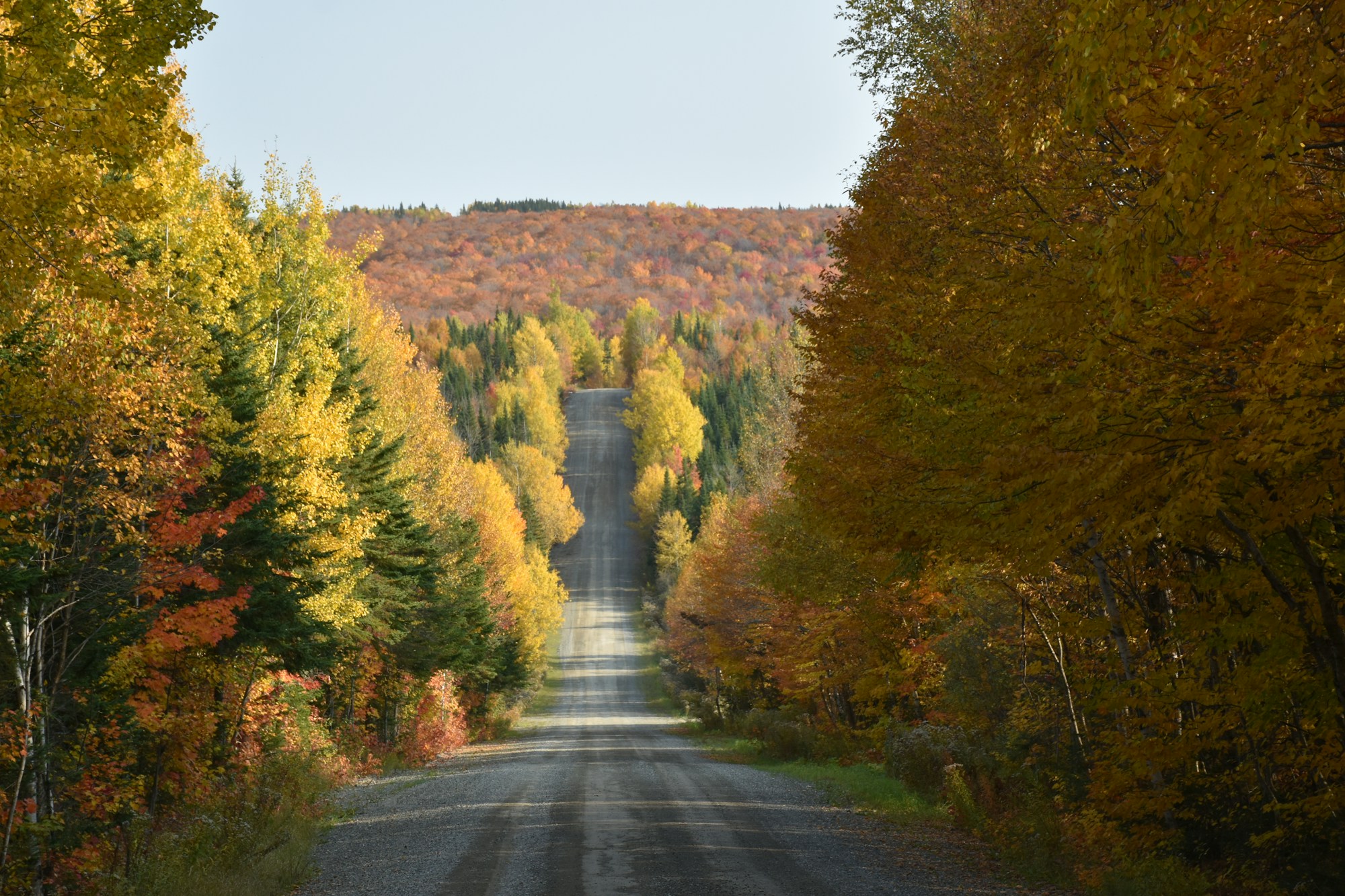
The Eastern Townships — or Cantons-de-l’Est in French — occupy the rolling hills and glacial lakes of southern Quebec, between Montreal and the US border. This region was settled primarily by United Empire Loyalists after the American Revolution, giving it a distinctly English flavour — charming Victorian villages, Anglican churches, covered bridges, and a viticultural tradition that has produced some of Quebec’s finest wines. In autumn, the countryside is simply breathtaking: the hills are carpeted in a patchwork of colour, the roads are lined with fiery maples, and the lakes reflect the blazing canopy in perfect stillness. Take the Route des Sommets, a scenic byway that winds through the Appalachian foothills and connects the villages of Sutton, Knowlton (Lac-Brome), and Magog. The village of Sutton is a particular favourite — a sophisticated little town with excellent restaurants, artisan galleries, and a ski hill that becomes a hiking and mountain-biking destination in autumn. The Sentier des Crêtes trail on Mont Sutton offers superb panoramas over the valley and into Vermont.
A short detour south of Magog brings you to the Abbaye Saint-Benoît-du-Lac, a Benedictine monastery perched dramatically above Lake Memphremagog, whose monks produce world-renowned cheeses (Ermite, Mont-Chaume) and apple-based products. The morning Gregorian chant services are open to visitors and provide an extraordinarily serene counterpoint to the chromatic spectacle outside. The lake itself, 48 kilometres long and straddling the Canada–US border, is magnificent in October light — take a short kayak or stand-up paddleboard rental from the town of Magog to experience the reflections of the surrounding hills from the water. In the afternoon, explore the Route des Vins in the Dunham area, where a cluster of Quebec wineries produce ice wines, ciders, and increasingly impressive still wines from cold-hardy grape varieties. The Vignoble de l’Orpailleur, founded in 1982, is one of Quebec’s most historic wineries and offers excellent guided tastings. Spend the night in Magog or Sutton to fully savour the evening calm of the Townships.
Highlights
- Route des Sommets: scenic drive through Appalachian foothills at peak colour
- Abbaye Saint-Benoît-du-Lac: Gregorian chants and artisan monastic cheeses
- Lake Memphremagog: kayaking among reflections of autumn-coloured hills
- Route des Vins: Quebec ice wine and cider tastings in Dunham
Day 4 — Mauricie: Wild Lakes & Boreal Forest
A national park where the Canadian Shield meets autumn fire
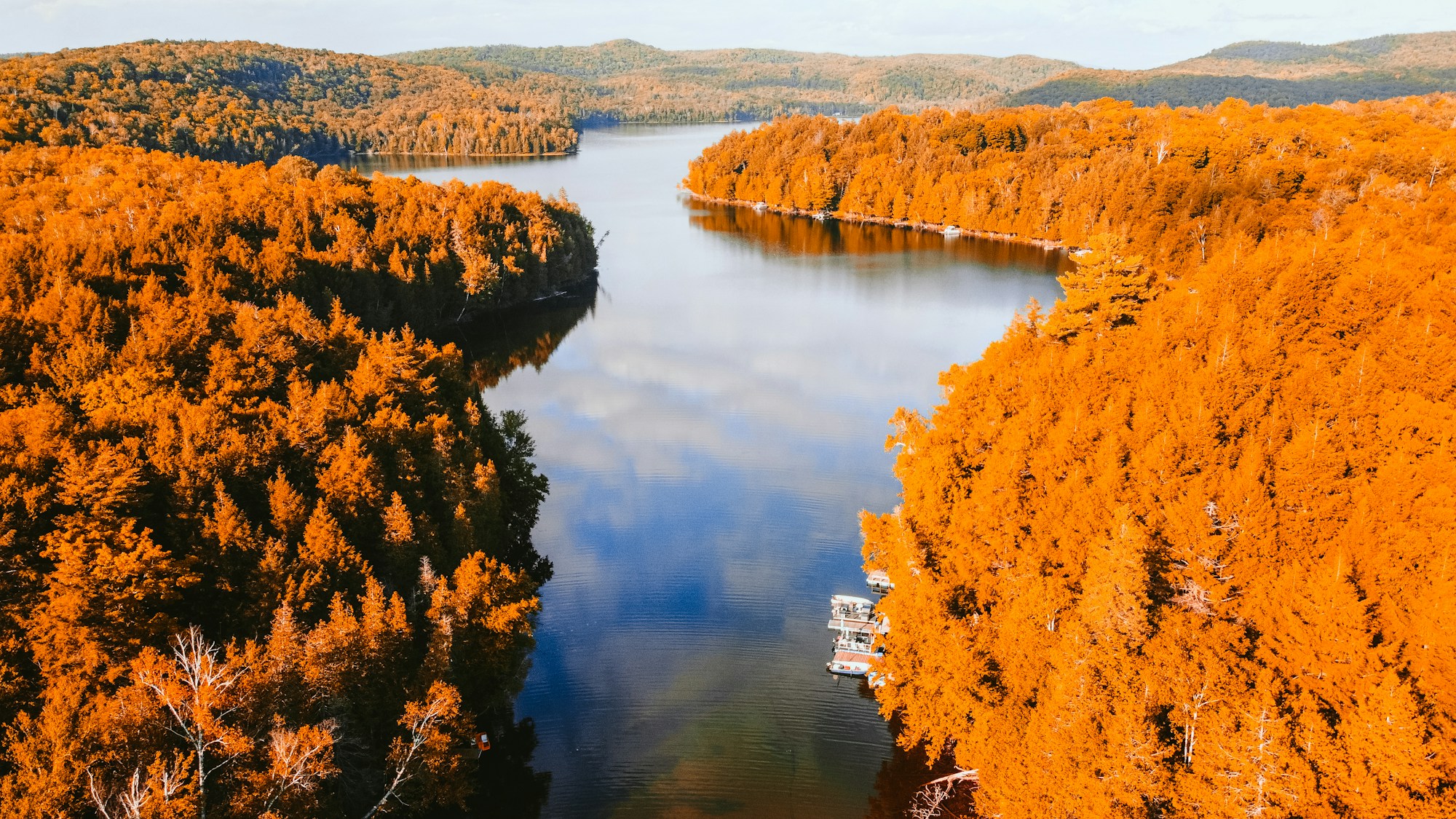
The drive north from Montreal or the Eastern Townships into the Mauricie region is itself a journey into the Canadian interior — the landscape shifts from the agricultural valleys of the St. Lawrence lowlands to the ancient, glacially scoured terrain of the Canadian Shield, where lakes, rivers, and boreal forest stretch north for hundreds of kilometres. Parc National de la Mauricie, a federal park covering 536 square kilometres of pristine wilderness, is one of the finest places in all of Canada to experience the autumn colour change from within the forest rather than above it. Enter the park from the Saint-Jean-des-Piles sector on Highway 55 and take the Lac-à-la-Pêche trail — a 16-kilometre loop that circles one of the park’s most photogenic lakes, offering constant views of the reflected forest in the perfectly still water. The combination of boreal spruce and fir with deciduous maple and birch creates a particularly rich palette: the dark green conifers provide a dramatic backdrop for the blazing golds and reds of the hardwoods.
If you have even a modest level of paddling experience, do not miss the opportunity to rent a canoe from the Parks Canada canoe outfitter at Lac Wapizagonke. Paddling through the interconnected lakes and portages of the interior is the quintessential Canadian wilderness experience, and in October the silence is profound — the summer crowds are gone, the mosquitoes are dead, and the only sounds are the paddle dipping in water, the distant call of a loon, and the occasional crack of a falling branch. The park is also excellent for wildlife watching in autumn: moose (orignal) are frequently spotted at dusk along the lake shores, and white-tailed deer are common throughout. Drive through the park on the Route du Lac-Édouard in the late afternoon for maximum golden-hour light — the road winds through tunnels of coloured canopy that are among the most photographed scenes in Quebec. Spend the night in Trois-Rivières, a historic city of 140,000 at the confluence of the St-Maurice and St. Lawrence rivers, which makes an excellent base and offers good restaurants and hotels at reasonable prices.
Highlights
- Lac-à-la-Pêche trail: 16 km loop with lakeside reflections of autumn forest
- Canoe rental on Lac Wapizagonke: paddling through silent wilderness lakes
- Wildlife watching: moose, deer, and beaver at dusk along lake shores
- Route du Lac-Édouard: scenic drive through tunnels of coloured canopy
Day 5 — Jacques-Cartier & Charlevoix: The Mountains of Light
High plateaus, ancient craters, and valleys ablaze with colour
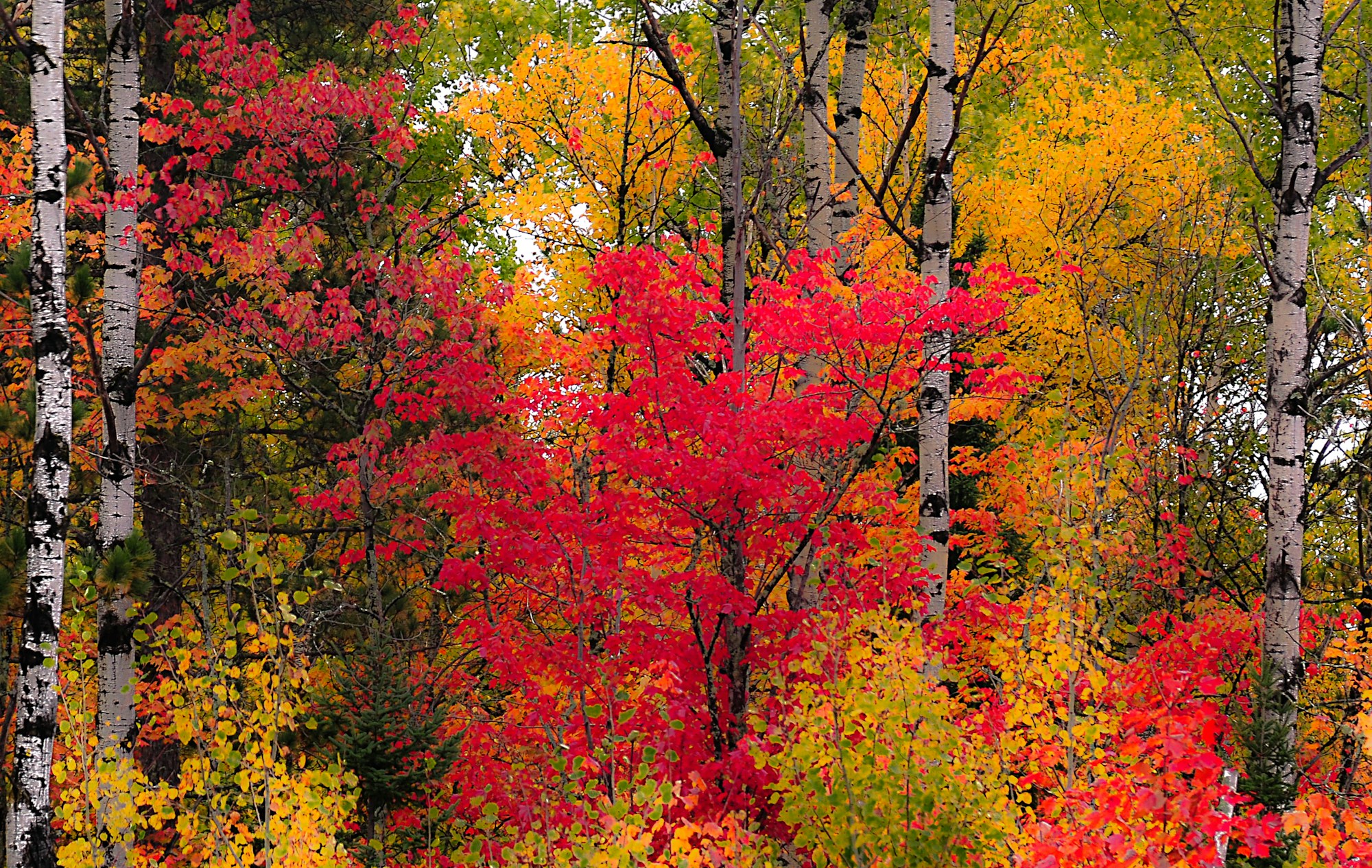
The drive from Trois-Rivières north along Highway 40 and then 138 towards Quebec City, and then northwest on Route 175, brings you into the dramatic terrain of the Laurentian highlands. Parc National de la Jacques-Cartier, just 40 kilometres north of Quebec City, is a geological wonder: a deep U-shaped valley carved by glaciers into the Laurentian plateau, its walls rising 550 metres above the Jacques-Cartier River. In autumn, the valley walls are a masterclass in colour gradation — the valley floor, sheltered and warmer, holds greens and early yellows, while the exposed upper plateaus blaze in deep crimson and orange. The Les Loups trail (14.4 km) climbs from the valley floor to the plateau rim and offers the definitive perspective on this dramatic landscape — you look down into a bowl of fire, the river glinting silver far below. The park is also prime moose habitat, and October is rutting season, making early-morning wildlife encounters almost guaranteed along the valley floor road.
From Jacques-Cartier, continue northeast on the Route 138 into the Charlevoix region, stopping at the Parc National des Grands Jardins, a high-altitude park whose taiga-like landscape of black spruce and lichen-covered rock feels more like northern Quebec than the relatively lush south. The park sits at the heart of the Charlevoix Biosphere Reserve, designated by UNESCO, and the views from the summit trails are extraordinary — a vast, undulating plateau of boreal forest, punctuated by the white domes of caribou-grazed lichen barrens and the blue glint of distant lakes. The park also harbours one of the southernmost caribou (woodland caribou) herds in eastern Canada, maintained through a careful conservation programme. The contrast between the fiery deciduous forest of the lower slopes and the austere boreal summit is one of the most visually arresting transitions in all of autumn Quebec. Arrive in Baie-Saint-Paul by late afternoon for the night — this charming art town, home to Cirque du Soleil’s founder Guy Laliberté, is one of the most appealing small cities in the province.
Highlights
- Les Loups trail: Jacques-Cartier valley panorama, 550 m descent through autumn forest
- Moose spotting at dawn along the valley floor road during rutting season
- Parc des Grands Jardins: UNESCO biosphere, taiga landscape, and woodland caribou
- Arrival in Baie-Saint-Paul: galleries, cideries, and the flavours of Charlevoix
Day 5 (continued) — Charlevoix: Baie-Saint-Paul & the St. Lawrence Shore
Art, gastronomy, and the world’s most beautiful estuary
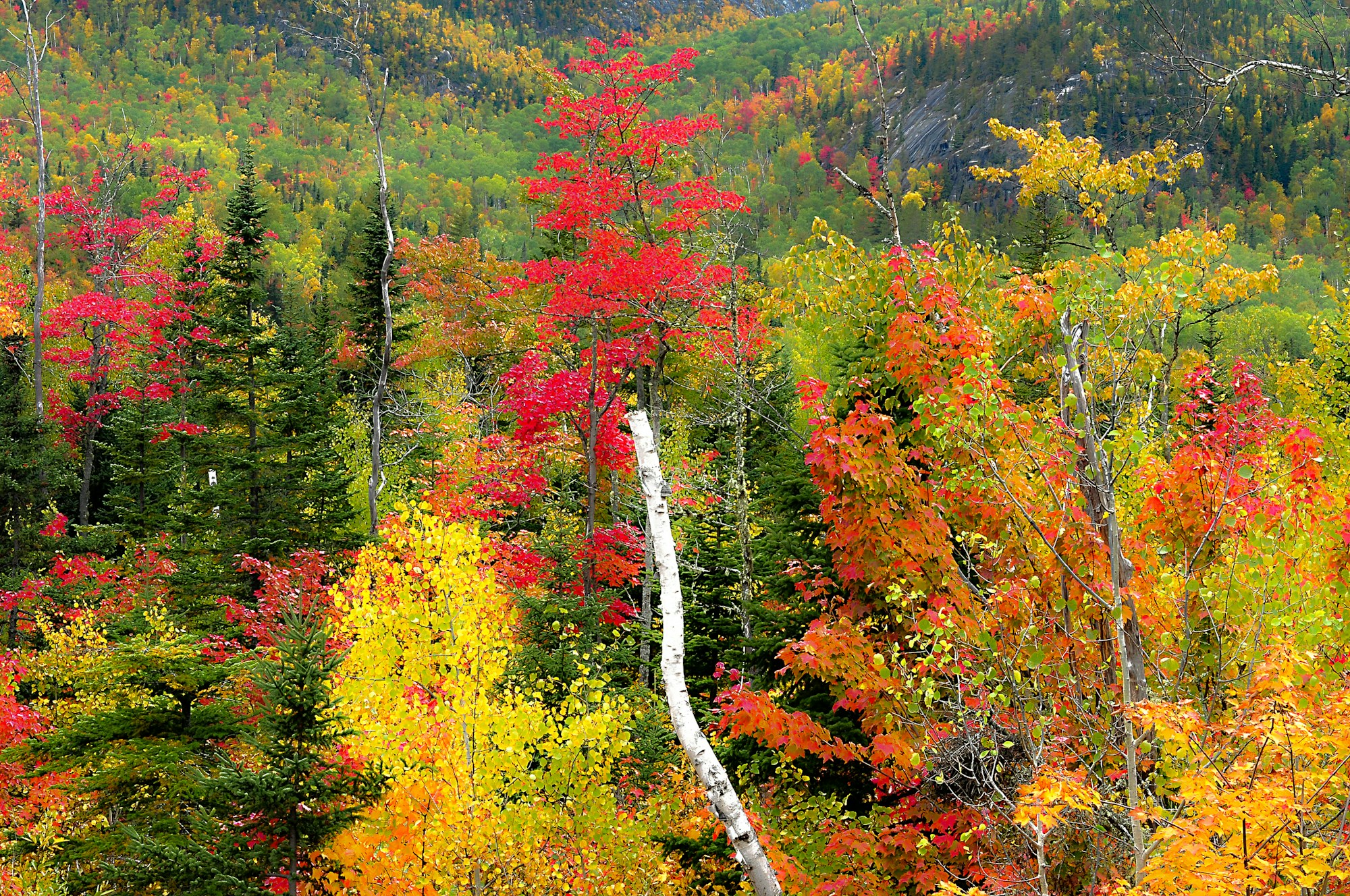
Baie-Saint-Paul is a town of just 7,000 residents that has punched far above its weight in Canadian cultural life for over a century. The Centre d’art de Charlevoix and the numerous private galleries along Rue Saint-Jean-Baptiste reflect a tradition of landscape painting that drew artists here from the late 19th century onwards, drawn by the extraordinary light that plays off the surrounding hills and the broad St. Lawrence estuary. In autumn, when the hills glow in warm reds and golds and the river turns a deep blue-grey under the October sky, you understand immediately why painters have been returning for generations. The town sits at the bottom of a glacial valley, surrounded on three sides by hills that create a natural amphitheatre — views of the coloured slopes from the town centre are spectacular, and a short hike to the Belvédère de Baie-Saint-Paul provides a bird’s-eye view of this remarkable setting.
The coastal road from Baie-Saint-Paul towards La Malbaie — the Route 362, known locally as the Route du Fleuve — is one of the most scenic drives in Canada. The road clings to the hillsides above the St. Lawrence, offering continuous sweeping views of the river, the mountains, and the distant south shore, all framed by flaming autumn trees. Stop at the Parc Marin du Saguenay–Saint-Laurent visitor panels at Les Éboulements and Saint-Irénée, where local farms sell heritage apple ciders pressed from the orchards that thrive in this sheltered microclimate. The Charlevoix region’s apple growing tradition dates back centuries, and the October cider season — featuring presses, cidery tours, and apple festivals — is a highlight of the autumn calendar. The Cidrerie du Verger Pedneault in Isle-aux-Coudres produces exceptional ice ciders and offers tastings in a historic farmhouse setting. If time permits, take the short free ferry to Isle-aux-Coudres, a 11-km-long island in the St. Lawrence that operates as a living agricultural museum, with windmills, schooner history, and extraordinary river views.
Highlights
- Belvédère de Baie-Saint-Paul: panoramic view of the amphitheatre valley in full colour
- Route 362: the most scenic coastal drive in Quebec, above the St. Lawrence
- Heritage apple cider tasting at orchard cideries along the river
- Isle-aux-Coudres: free ferry, windmills, and river panoramas from the island
Day 6 — Tadoussac: Whales, Fjords & Flaming Forests
Where the Saguenay fjord meets the St. Lawrence — and giants rise from the water
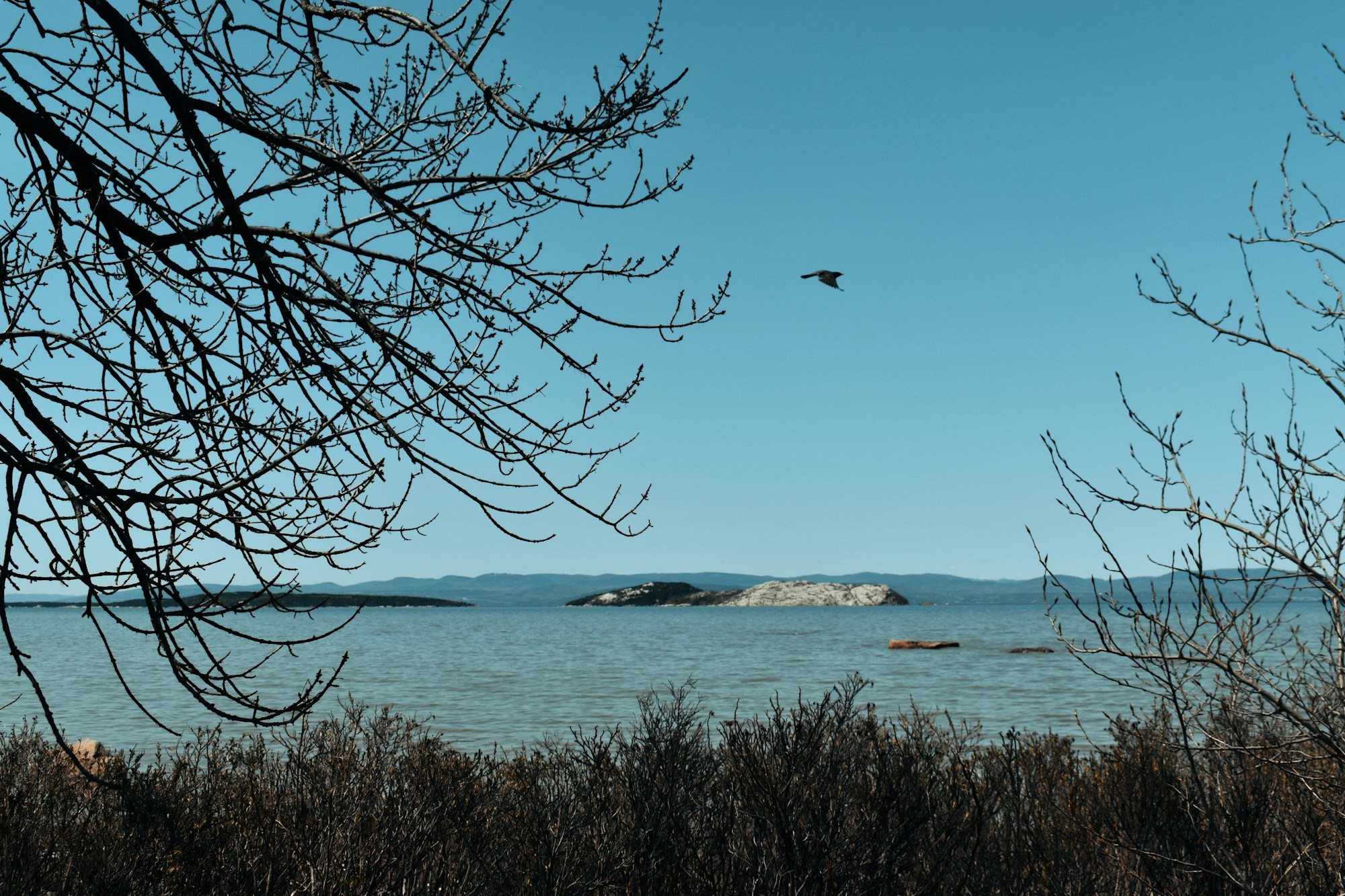
Tadoussac is one of the oldest continuously inhabited European settlements in North America — a tiny village of 800 people where Jacques Cartier wintered in 1535 and where Samuel de Champlain established a trading post in 1600. Its position at the confluence of the Saguenay River and the St. Lawrence is of extraordinary ecological significance: the cold, nutrient-rich waters of the Saguenay fjord collide with the warmer, saltier tidal waters of the estuary, creating an upwelling of krill and small fish that supports one of the largest concentrations of marine mammals in the world. At least 13 whale species frequent these waters, including the resident population of beluga whales — a year-round family of around 900 individuals that represents the southernmost beluga population on Earth. In autumn, beluga, minke, fin, and humpback whales are all regularly sighted, and blue whale encounters — the largest animals ever to have lived — are not uncommon. A whale-watching cruise with Groupe Scenic or AML Cruises is an absolutely unmissable experience.
The Parc National du Fjord-du-Saguenay extends 105 kilometres up the fjord from Tadoussac, with walls rising up to 500 metres directly from the dark, cold water. The scale is vertiginous and the autumn colouring of the flanking forests is dramatic — take the hike to the Pointe-Noire lookout for the definitive view of the confluence, where you can often watch belugas surfacing in the grey-green water far below. The Dune de Tadoussac, a massive sand dune at the edge of the village, is a geological curiosity — climb to its summit for panoramic views over the river mouth, the village with its iconic Hôtel Tadoussac in red and white, and the Saguenay canyon stretching north into the boreal interior. Back in the village, visit the Petite Chapelle de Tadoussac, the oldest wooden chapel in Canada (1747), and end the day with a meal of local seafood — crab, shrimp, and smoked beluga roe — at one of the village restaurants.
Highlights
- Whale-watching cruise: belugas, minkes, fins, and possibly blue whales at the confluence
- Pointe-Noire lookout: panorama over the Saguenay fjord and whale habitat
- Dune de Tadoussac: viewpoint over the village, river, and fjord entrance
- Petite Chapelle de Tadoussac: Canada’s oldest wooden chapel (1747)
Day 7 — Old Quebec & Île d’Orléans
North America’s only walled city and a living island of traditions
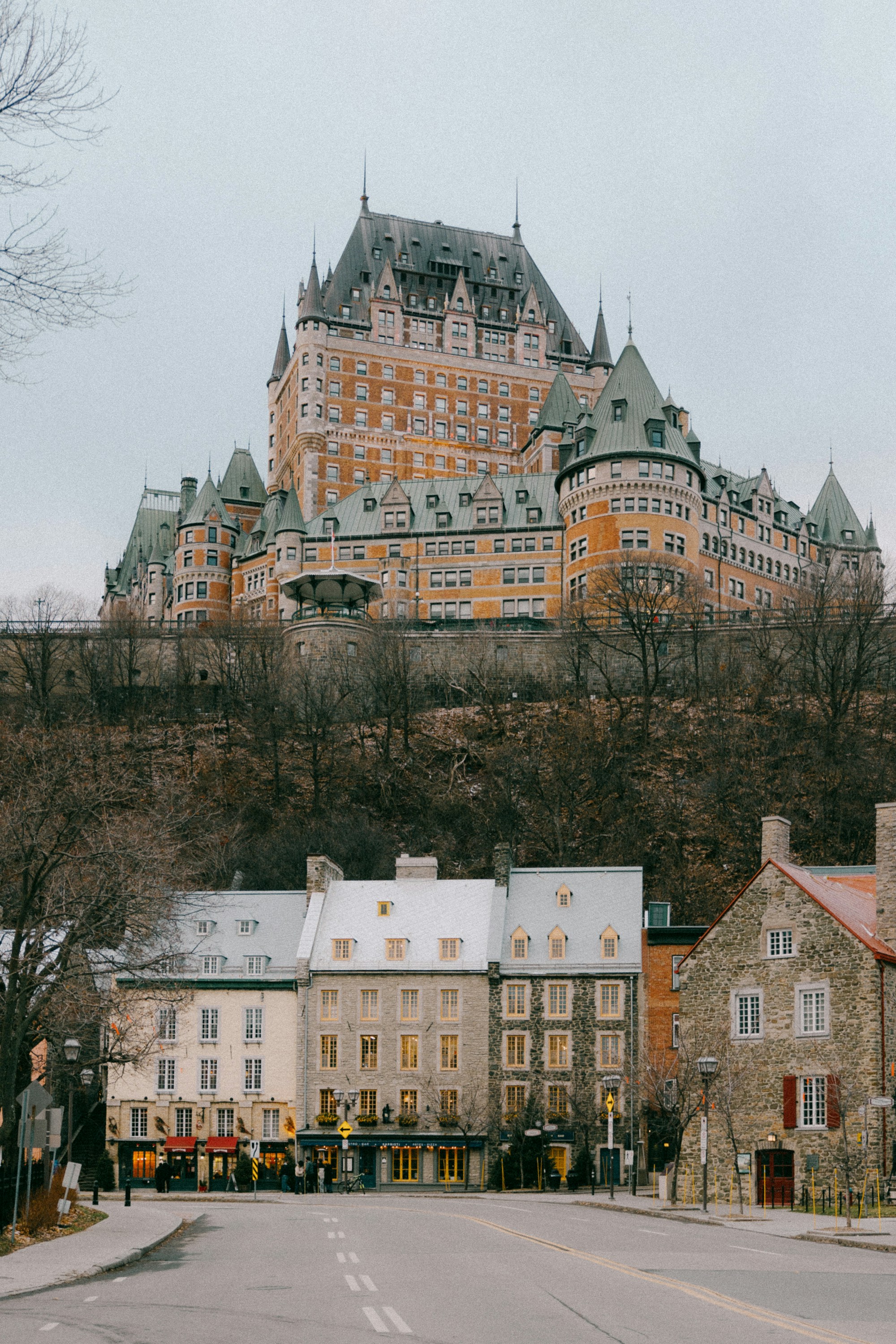
Quebec City is the only fortified city in North America north of Mexico, and its UNESCO World Heritage-listed historic district is simply one of the most beautiful urban environments on the continent. In autumn, the combination of the 17th and 18th-century stone architecture — Cap Diamant’s grey limestone glowing warmly in October sunlight — with the blazing trees of the Plains of Abraham and the Battlefields Park creates a scene of extraordinary visual richness. Begin the day with a walk along the Dufferin Terrace, the 671-metre-long wooden boardwalk that runs along the clifftop below the iconic Château Frontenac, offering expansive views over the St. Lawrence and the south shore. The Château Frontenac itself — opened in 1893, expanded in 1924 — is the most photographed hotel in the world and the undisputed symbol of Quebec City; even if you don’t stay there, a visit to the lobby bar for a coffee is worth it for the architecture alone. Explore the Upper Town (Haute-Ville) on foot: the Place d’Armes, the Rue du Trésor, the Basilique-Cathédrale Notre-Dame de Québec, and the Musée de la Civilisation are all within easy walking distance.
In the afternoon, cross the Pont de l’Île d’Orléans to reach the island that Jacques Cartier called Bacchus for its abundance of wild vines when he arrived in 1534. Île d’Orléans is an island of 6,000 people and 65 kilometres of agricultural coastline, encircled by a single road that passes through six distinct villages, each with its own parish church dating to the 18th century. In October, the island is one of the finest places in Quebec to experience the confluence of autumn colour and traditional agriculture: orchards hang heavy with heritage apples, sugar shacks offer maple taffy, small fromageries sell artisan cheese, and cideries press the season’s harvest. Stop at Cidrerie Isle de Bacchus for an exceptional ice cider tasting, then drive the full circuit of the island (67 km) for continuous views of the St. Lawrence, the Laurentians, and the Appalachians — with the blazing forest of the island’s interior providing the foreground. The view of Quebec City’s skyline from the island’s western tip, with the Château Frontenac silhouetted against the evening sky, is one of the most beautiful urban vistas in Canada.
Highlights
- Dufferin Terrace and Château Frontenac: the iconic vista of Quebec City in autumn
- Plains of Abraham Battlefields Park: coloured trees and dramatic historical setting
- Île d’Orléans circuit: six villages, apple orchards, cideries, and fromageries
- Sunset view of Quebec City skyline from the island’s western tip
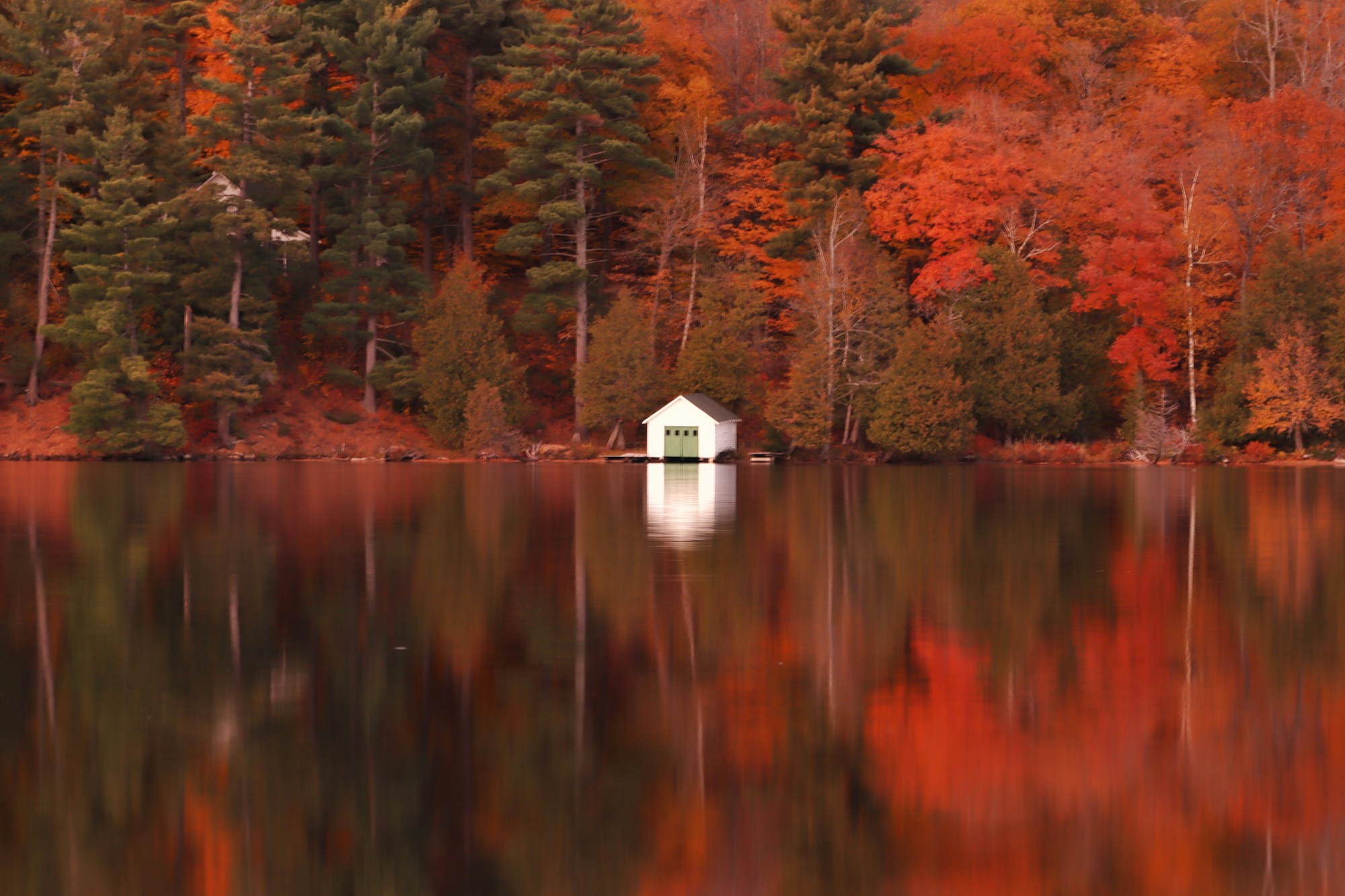
Day 8 — Gatineau & Ottawa: Two Capitals in Colour
Canada’s National Capital Region ablaze in autumn, on both sides of the river
The drive from Quebec City southwest to Ottawa (approximately 4.5 hours) traverses the southern Laurentians and the Ottawa Valley — a journey that passes through some of the finest autumn scenery in Ontario and Quebec. Begin the day in Parc de la Gatineau, a 361-square-kilometre wilderness park that begins practically at the edge of Ottawa and extends north into the Gatineau Hills of Quebec. The park is famous throughout Canada for the intensity of its autumn colour — the combination of hardwood forest on the Shield terrain, the reflective lakes, and the gentle topography that allows full panoramic views makes it one of the finest foliage destinations in the National Capital Region. The Champlain Lookout, accessible by car or via several excellent hiking trails, offers what is arguably the most spectacular view of the entire Ottawa Valley in autumn: a vast, unbroken canopy of red, orange, gold, and green stretching to the horizon, with the Ottawa River glinting in the middle distance. The lookout is named after the French explorer Samuel de Champlain, who first navigated these waters in 1613, and the view he would have seen — minus the distant city lights — was not vastly different from today’s.
Cross the Alexandra Bridge (or the Macdonald-Cartier Bridge) into Ottawa in the afternoon. Canada’s capital is an underrated autumn destination — the Parliament Hill complex, with its Gothic Revival Centre Block undergoing renovation but the East and West Blocks still accessible, sits at the top of a bluff above the Ottawa River, surrounded by trees that flame spectacularly in October. A free guided tour of the Parliament buildings is one of the best free activities in the city. Walk the Rideau Canal towpath south through the Glebe neighbourhood — the UNESCO-listed canal, the longest skating rink in the world in winter, is lined with mature trees that create a golden tunnel in October. Visit the National Gallery of Canada, whose collection of Canadian landscape painting includes the Group of Seven works that helped define the country’s artistic identity in the early 20th century — viewing Tom Thomson’s autumn paintings while surrounded by the actual autumn landscape they depict is a genuinely moving experience.
Highlights
- Champlain Lookout: the definitive panoramic view of the Ottawa Valley in autumn
- Parliament Hill: Gothic Revival architecture above the blazing riverbank trees
- Rideau Canal towpath walk through golden tunnel of mature trees
- National Gallery of Canada: Group of Seven autumn paintings in the autumn season
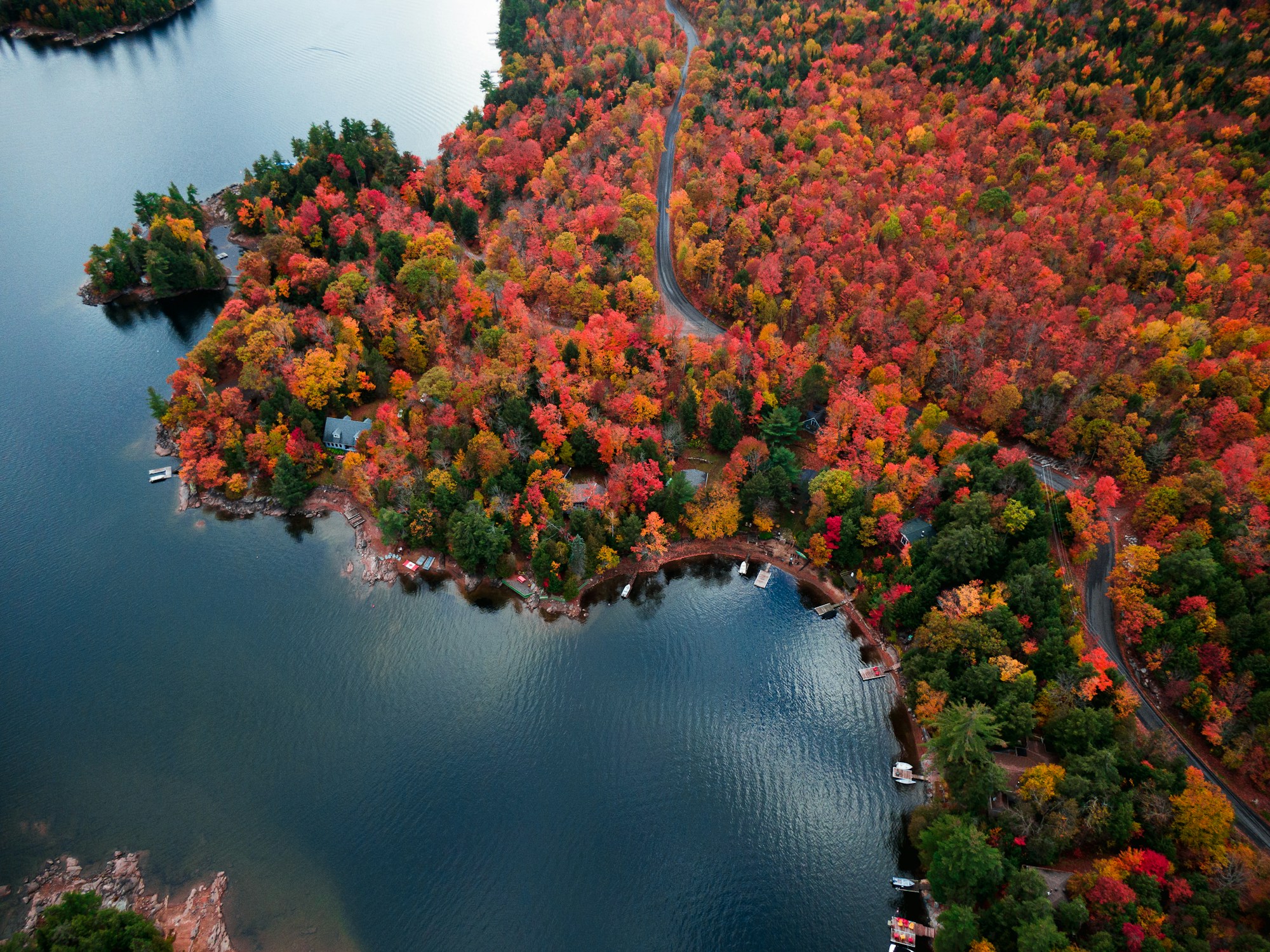
Day 9 — Algonquin: The Wilderness at Peak Colour
Ontario’s most celebrated provincial park — 7,600 km² of ancient forest at its autumn zenith
Algonquin Provincial Park, established in 1893 as Ontario’s first provincial park, is one of Canada’s most iconic wilderness destinations. At 7,653 square kilometres — larger than the combined areas of Prince Edward Island and Luxembourg — it encompasses 2,400 lakes, 1,200 kilometres of streams, and a forest transition zone between the southern deciduous hardwoods and the northern boreal conifers that produces an autumn colour display of extraordinary complexity and richness. The park is best accessed via Highway 60, the only paved road through the southern portion, which runs for 56 kilometres from the West Gate near Huntsville to the East Gate near Whitney. Along this corridor, a dozen short hiking trails allow you to explore the forest at depth, each offering a different perspective on the landscape. The Lookout Trail (1.9 km, 30 minutes) climbs to a rocky outcrop with views over a vast sea of orange and red forest that ranks among the finest autumn lookouts in Ontario. The Centennial Ridges Trail (10 km, 3.5–4 hours) is more demanding but rewards with continuous ridgetop views and encounters with the park’s wildlife — moose, black bear, and timber wolf are all resident here.
The Algonquin Art Centre, located at km 20 on Highway 60, displays works inspired by the park by artists including Tom Thomson, who spent every summer here from 1912 to 1917 and whose autumn sketches — bold, expressionistic depictions of the northern forest — helped launch the Group of Seven movement. Thomson drowned mysteriously in Canoe Lake in 1917, and the lake remains one of the park’s most atmospheric destinations. Rent a canoe from Portage Store at Canoe Lake for a paddle among the islands — you are following in Thomson’s exact wake, in the same landscape, in the same season. The park’s Visitor Centre at km 43 is excellent, with a comprehensive natural history museum and a spectacular deck overlooking the forest canopy. In the evening, drive the Highway 60 corridor slowly, stopping frequently — moose are commonly seen feeding in the marshy ponds along the road at dusk, and the low evening light turns the entire canopy to gold. Stay the night in Huntsville or Whitney, in small lodges that cater specifically to autumn visitors.
Highlights
- Lookout Trail: the finest short-hike panorama in Algonquin, 30 minutes return
- Canoe Lake paddle: following Tom Thomson’s route among the autumn islands
- Dusk moose watching along the Highway 60 marshy ponds
- Algonquin Visitor Centre: natural history and the story of the Group of Seven
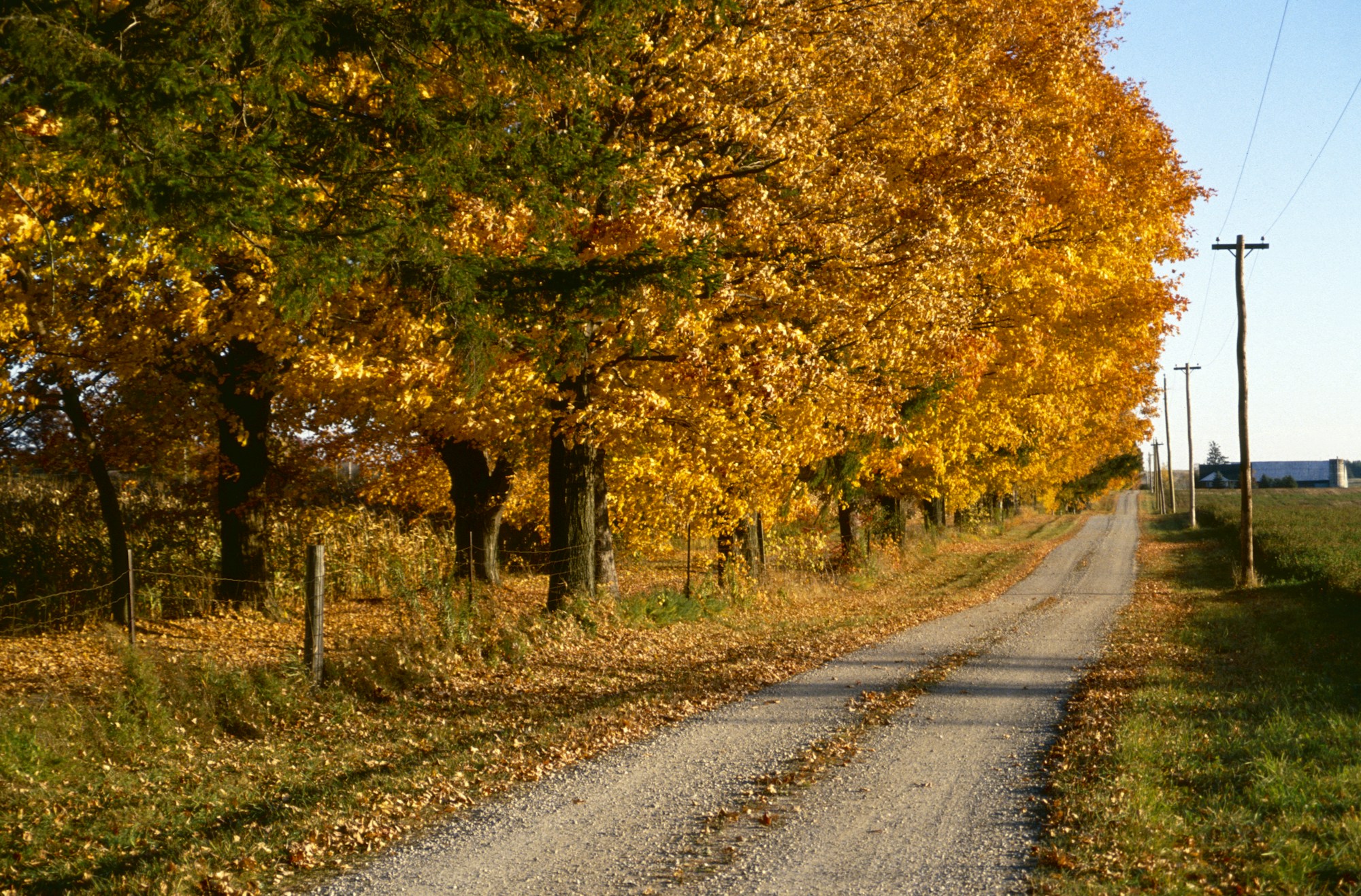
Day 10 — Niagara-on-the-Lake & Niagara Falls
A grand finale: golden wine country, thundering falls, and the last autumn light
The drive from Algonquin or Huntsville south through Ontario’s Muskoka region to the Niagara Peninsula takes approximately 3.5–4 hours and passes through the heart of Ontario’s cottage country — the Muskoka Lakes area, whose granite islands and blue lakes are surrounded by flaming autumn forest, is one of the most photographed landscapes in Ontario and worth a brief stop at the town of Gravenhurst or Bracebridge. Arriving in the Niagara Peninsula by mid-morning, spend the first part of the day in Niagara-on-the-Lake, often called the most attractive small town in Ontario. This jewel of Georgian and Loyalist architecture sits at the point where the Niagara River meets Lake Ontario, surrounded by vineyards and orchards that produce some of Canada’s finest wines. The town’s main street — Queen Street — is lined with elegant 19th-century buildings housing boutique hotels, bookshops, teatrooms, and galleries. In October, the surrounding vineyards are in the midst of harvest, and the combination of golden vines, blazing maples, and the soft light of the lake is extraordinarily picturesque. The Niagara-on-the-Lake wine route links over 20 wineries within a few kilometres of the town, with Inniskillin, Peller Estates, and Strewn Winery among the most acclaimed.
Drive the Niagara Parkway — a 56-kilometre riverside road maintained by the Niagara Parks Commission and famously described by Winston Churchill as « the prettiest Sunday afternoon drive in the world » — south from Niagara-on-the-Lake to Niagara Falls itself. In autumn, the trees lining the parkway create a spectacular golden corridor above the fast-flowing green water of the Niagara River. The falls themselves — the Horseshoe Falls on the Canadian side drop 57 metres and carry more water than any other waterfall in the world by volume — are magnificent at any time of year, but in autumn the mists that perpetually rise from the cataract catch the warm October light and create rainbow after rainbow above the blazing treeline. Take the Journey Behind the Falls experience to stand behind the curtain of water, or board the iconic Hornblower Niagara Cruises (the Canadian equivalent of the Maid of the Mist) to approach the falls from the water — an utterly exhilarating and thoroughly soaking finale to your 10-day journey. If your flight home departs from Toronto, the city is just 1.5 hours away via the QEW — easily reached for an evening flight or a final night in Canada’s largest metropolis.
Highlights
- Niagara-on-the-Lake wine route: harvest tastings at Ontario’s finest wineries
- Niagara Parkway drive: Churchill’s « prettiest Sunday drive » in full autumn colour
- Hornblower Niagara Cruise: approaching the Horseshoe Falls from the water
- Muskoka Lakes stopover: Ontario cottage country at peak foliage
Budget Breakdown: Canada Indian Summer 2026
The following estimates are based on two travellers sharing accommodation, renting a vehicle together, and dining at a mix of restaurants and self-catering. Flights are estimated from Western Europe (Paris, London, Brussels); adjust for your origin. All on-ground costs are in Canadian dollars (CAD); flights are in euros (€). As a reference: 1 CAD ≈ 0.68 € in early 2026.
| Expense | Economy | Mid-range | Comfort |
|---|---|---|---|
| Return flights (Europe → Montreal, Toronto) | € 500–700 | € 750–1,000 | € 1,200–2,500 |
| Car rental (10 days, mid-size SUV) | CAD 600–800 | CAD 900–1,200 | CAD 1,400–2,000 |
| Fuel (approx. 1,800 km total) | CAD 200–250 | CAD 200–250 | CAD 200–250 |
| Accommodation (per night, per room) | CAD 80–120 | CAD 130–220 | CAD 250–500+ |
| Accommodation total (10 nights) | CAD 800–1,200 | CAD 1,300–2,200 | CAD 2,500–5,000+ |
| Meals (per person, per day) | CAD 35–50 | CAD 55–90 | CAD 100–180 |
| Activities & park entries | CAD 150–200 | CAD 250–400 | CAD 500–800 |
| Whale-watching cruise (Tadoussac) | CAD 60–70 pp | CAD 80–100 pp | CAD 120–150 pp (private) |
| Wine & cider tastings | CAD 30–60 | CAD 80–150 | CAD 200–400 |
| Parks Canada Discovery Pass (per adult) | CAD 75 | CAD 75 | CAD 75 |
| TOTAL (per person, 10 days, excl. flights) | CAD 1,600–2,200 | CAD 2,500–3,800 | CAD 4,500–7,500+ |
Essential Tips for Your Canadian Autumn Journey
When to go
The autumn colour season in Quebec and Ontario generally runs from late September through mid-October. The northern parks (Algonquin, Jacques-Cartier, Mauricie) typically peak first — between September 25 and October 8 — while the southern areas (Eastern Townships, Niagara) peak later, between October 8 and 20. Following the colour from north to south as this itinerary does is an effective strategy for catching multiple peaks in a single trip. The Weather Network Fall Foliage map is updated weekly and is the standard reference for Canadian foliage tracking.
Getting there and around
Most international travellers will fly into Montreal-Trudeau Airport (YUL) to begin the itinerary and fly home from Toronto Pearson Airport (YYZ), creating a one-way route that avoids backtracking. This open-jaw booking is available from all major European carriers and typically costs no more than a return to a single city. A rental car is essential from Day 3 onwards — public transport does not reach the national parks or the Eastern Townships at useful hours. Book a mid-size SUV or crossover for comfort on gravel forest roads; the major parks all have at least some gravel sections.
What to pack
Canadian autumn weather is highly variable — temperatures can swing from -2°C at night to 18°C in the afternoon within a single day. The key is layering: a moisture-wicking base layer, a mid-layer fleece, and a waterproof outer shell will serve you through all conditions. Waterproof hiking boots are strongly recommended for the park trails, which can be muddy and slippery with wet leaves. Bring insect repellent (blackflies and mosquitoes are still active in the parks through late September) and sun protection (the autumn sun reflects intensely off lakes and rivers). A tripod for photography is worth the baggage if you shoot in the forests at dawn or dusk.
Health and safety
Canada has no reciprocal healthcare agreement with most European countries — comprehensive travel insurance including medical evacuation cover is mandatory. Medical costs in Canada for uninsured travellers are extremely high. In the national parks, follow all bear safety protocols: carry bear spray on hiking trails, store food in bear-proof containers or vehicle trunks, and never approach wildlife. The Jacques-Cartier and Algonquin parks both have black bears; Algonquin also has timber wolves and, very rarely, moose-vehicle collisions are a genuine hazard on dawn and dusk drives — drive slowly on forest roads at these times.
Useful apps and resources
- Parks Canada Explorer App: offline maps and trail information for all national parks
- AllTrails: crowd-sourced trail reviews and offline topo maps for Quebec and Ontario
- Whales Online: real-time whale sighting reports for the St. Lawrence
- Foliage Network: volunteer-reported colour updates across North America
- XE Currency: live EUR/CAD exchange rates for budgeting on the go
Frequently Asked Questions
When exactly is the best time to see autumn colours in Quebec and Ontario in 2026?
The peak autumn colour season in Quebec and Ontario generally falls between late September and mid-October, with significant variation by region and elevation. In 2026, based on historical patterns and early-season forecasts, the northern parks (Algonquin, Mauricie, Jacques-Cartier, Charlevoix) are expected to peak around October 2–10, while the southern regions (Eastern Townships, Ottawa Valley, Niagara Peninsula) typically peak later, between October 8–20. The Weather Network Fall Foliage tracker and the Algonquin Fall Colour Report are updated weekly throughout the season and provide the most reliable current information. Peak colour typically lasts 7–14 days in any given location before the leaves begin to fall, so flexibility in your travel dates of ±5 days either way is highly recommended.
Do I need a visa to travel to Canada from Europe?
Citizens of most European Union countries, the United Kingdom, Switzerland, and other visa-exempt countries do not require a visa for tourist visits to Canada of up to 6 months. However, they do require an Electronic Travel Authorization (eTA), which must be obtained before boarding a flight to Canada. The eTA costs CAD 7, is linked electronically to your passport, and is typically approved within minutes — though the Canadian government recommends applying well in advance of travel. Apply on the official Government of Canada website only — beware of third-party sites that charge inflated fees for this simple process. Note that the eTA is NOT required if you are entering Canada by land or sea, only by air.
Is it possible to do this itinerary without a rental car?
The short answer is: not comfortably. Days 1–2 in Montreal and Day 7 in Quebec City are entirely feasible without a car (both cities have excellent public transport), and the Ottawa day can also be done by public transit. However, the core of this itinerary — the Eastern Townships, Mauricie, Jacques-Cartier, Charlevoix, Tadoussac, Gatineau Park, Algonquin, and the Niagara wine route — all require a vehicle to experience properly. Bus services exist to some of these destinations but are infrequent, time-consuming, and don’t allow the flexibility to stop at viewpoints and trailheads. The one viable alternative is to join a guided autumn foliage tour — companies such as Tour the Tree Line offer multi-day coach tours that cover much of this territory. However, a rental car provides infinitely more freedom and is highly recommended.
What wildlife can I expect to see in autumn in Quebec and Ontario?
Autumn is one of the best seasons for wildlife watching in eastern Canada. Moose (orignal) are in rutting season from late September through October, making them more active and visible — look for them at dawn and dusk along lake shores and marshy roadsides, particularly in Algonquin and Jacques-Cartier parks. White-tailed deer are common throughout southern Quebec and Ontario. Black bears are active through October fattening up before hibernation — park roads in Algonquin and Mauricie are productive. Beavers are busy in autumn dam-building and easily spotted at dusk. At Tadoussac, beluga, minke, fin, and humpback whales are all regularly seen through early October. The woodland caribou herd in Parc des Grands Jardins (Charlevoix) can sometimes be spotted from the summit trails. Bird migration is also spectacular in October — raptors, waterfowl, and songbirds move through in large numbers, and Cape St. Mary’s-style lookouts along the St. Lawrence shore are excellent for watching southbound migrants.
How much French do I need to speak for this trip?
In practice, English is widely spoken throughout the tourist circuit covered by this itinerary — hotels, restaurants, national parks, and major attractions in all of these destinations routinely serve English-speaking visitors. In Quebec City, Montreal, and the national parks, bilingual service is essentially universal. In more rural areas of Quebec (smaller villages, local markets, some gas stations), French may be the only option — a few basic phrases (Bonjour, je ne parle pas bien français, parlez-vous anglais?) go a long way and are warmly appreciated by locals. Ottawa and Niagara operate primarily in English. The Eastern Townships have a strong English-speaking heritage and most tourism services are bilingual. In Algonquin and Ontario generally, you will function entirely in English. That said, making the effort to speak even basic French in Quebec is always well received and enriches the cultural experience considerably.
Is travel insurance really necessary for Canada?
Yes — it is absolutely essential. Canada has no reciprocal healthcare agreements with European countries, meaning that any medical treatment as an uninsured visitor is charged at full private rates. A single night in a Canadian hospital can cost CAD 5,000–15,000; emergency surgery or medical evacuation to Europe can run to CAD 50,000–200,000. Comprehensive travel insurance covering emergency medical treatment, hospitalisation, and evacuation is not optional for this trip — it is a fundamental necessity. Ensure your policy includes adventure activity coverage if you plan to canoe, hike, or engage in any outdoor sports (many standard policies exclude these). Compare policies at Compare Travel Insurance or through your usual broker. Also note: if you have any pre-existing medical conditions, declare them fully when purchasing insurance — failure to do so can invalidate your policy.
What are the best spots for autumn colour photography in this itinerary?
For pure autumn colour photography, the standout locations on this itinerary are: (1) Kondiaronk Belvedere, Mont-Royal, Montreal — best at sunrise for city skyline + foliage with soft light; (2) Champlain Lookout, Parc de la Gatineau — the classic panoramic foliage shot with the Ottawa Valley; (3) Canoe Lake, Algonquin Park — reflections of the forest in the still morning water; (4) Route 362, Charlevoix — coastal drive above the St. Lawrence with mountain colour backdrop; (5) Jacques-Cartier valley floor road at golden hour, looking up at the blazing valley walls; (6) Dune de Tadoussac — foreground of sand, village, and fiery forest behind; (7) Île d’Orléans western tip — Château Frontenac silhouette with autumn foreground. The absolute golden rule: shoot at dawn and dusk. The soft, directional light of the golden hour transforms already spectacular scenes into something transcendent, and the reflections on lakes and rivers are perfect when the wind drops in the early morning.
Can I adapt this itinerary for a shorter trip of 7 days?
Absolutely. For a 7-day Quebec-focused version, the recommended condensed itinerary would be: Day 1 Montreal, Day 2 Eastern Townships, Day 3 Charlevoix (Baie-Saint-Paul and coastal drive), Day 4 Tadoussac (whale watching and fjord), Day 5 Old Quebec and Île d’Orléans, Day 6 Algonquin (drive up Highway 60, overnight in the park area), Day 7 return to Montreal or fly from Ottawa. This eliminates Mauricie, Jacques-Cartier, and Niagara — all excellent destinations, but less essential for a first visit. Alternatively, for a 7-day Ontario-focused version: Day 1–2 Toronto, Day 3 Algonquin (east entrance), Day 4 Algonquin (west, Huntsville), Day 5 Gatineau/Ottawa, Day 6 Niagara-on-the-Lake and wine route, Day 7 Niagara Falls and departure from Toronto. Both variants are manageable without excessive driving days. Pixidia can help you build a personalised version of this itinerary tailored to your interests and schedule — explore our planning tools here.
Sources & Further Reading
- Parks Canada — Parc National de la Mauricie
- Parks Canada — Parc National de la Jacques-Cartier
- Sépaq — Parc National des Grands Jardins
- Ontario Parks — Algonquin Provincial Park
- Algonquin Park — Official Fall Colour Report
- National Capital Commission — Parc de la Gatineau
- Parc Marin du Saguenay–Saint-Laurent
- Tadoussac.com — Official Tourism Website
- Whales Online — Baleines en Direct
- Tourisme Charlevoix
- Eastern Townships Tourism
- Tourisme Montréal
- Quebec City Tourism
- Ottawa Tourism
- Niagara Falls Tourism
- Niagara-on-the-Lake Tourism
- UNESCO World Heritage — Historic District of Old Québec
- The Weather Network — Fall Foliage Map
- Government of Canada — Electronic Travel Authorization (eTA)
- Île d’Orléans — Official Tourism Website
- Jean-Talon Market, Montreal
- Les Amis de la Montagne — Parc du Mont-Royal
Ready to plan your Canadian autumn adventure?
Use Pixidia to build your personalised 10-day Indian Summer itinerary — customise day by day, save your favourite destinations, and access your travel plan offline anywhere in Canada, even deep in the national parks.
Discover Pixidia