
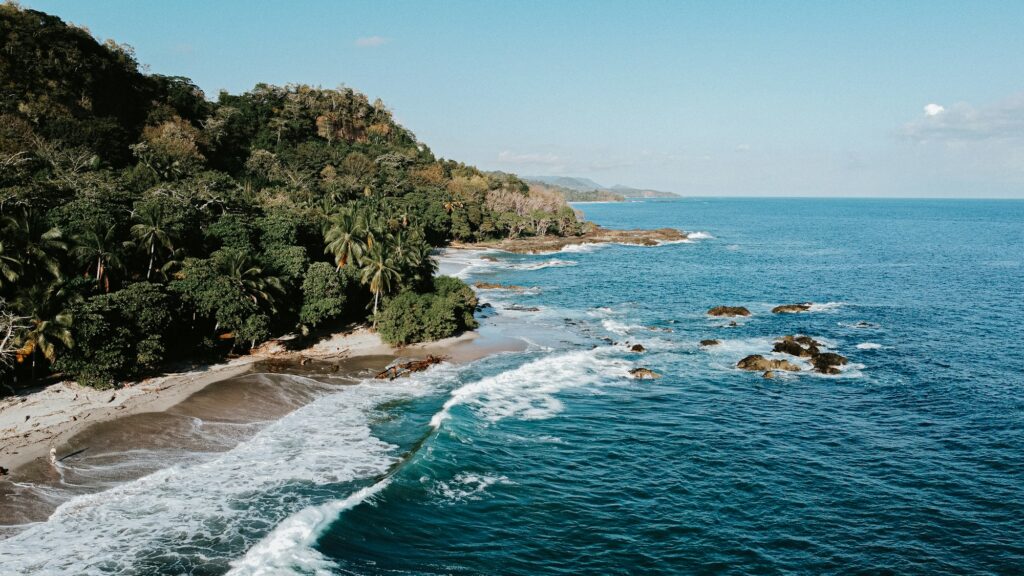
Pura Vida. These two words sum up everything Costa Rica promises: a philosophy of life centered around simple joy, preserved nature and authentic adventure. With 25% of its territory designated as nature reserves or national parks, this tiny Central American country is home to 5% of the world’s biodiversity — more than some entire continents. Active volcanoes blanketed in cloud forests, pristine Pacific and Caribbean beaches, rivers of impossibly blue water, scarlet macaws in the jungle… Costa Rica 2026 stands out as the ultimate eco-adventure destination for travelers who want to experience something truly exceptional while respecting this remarkable planet.
1. Arenal & La Fortuna: the volcano that still fascinates
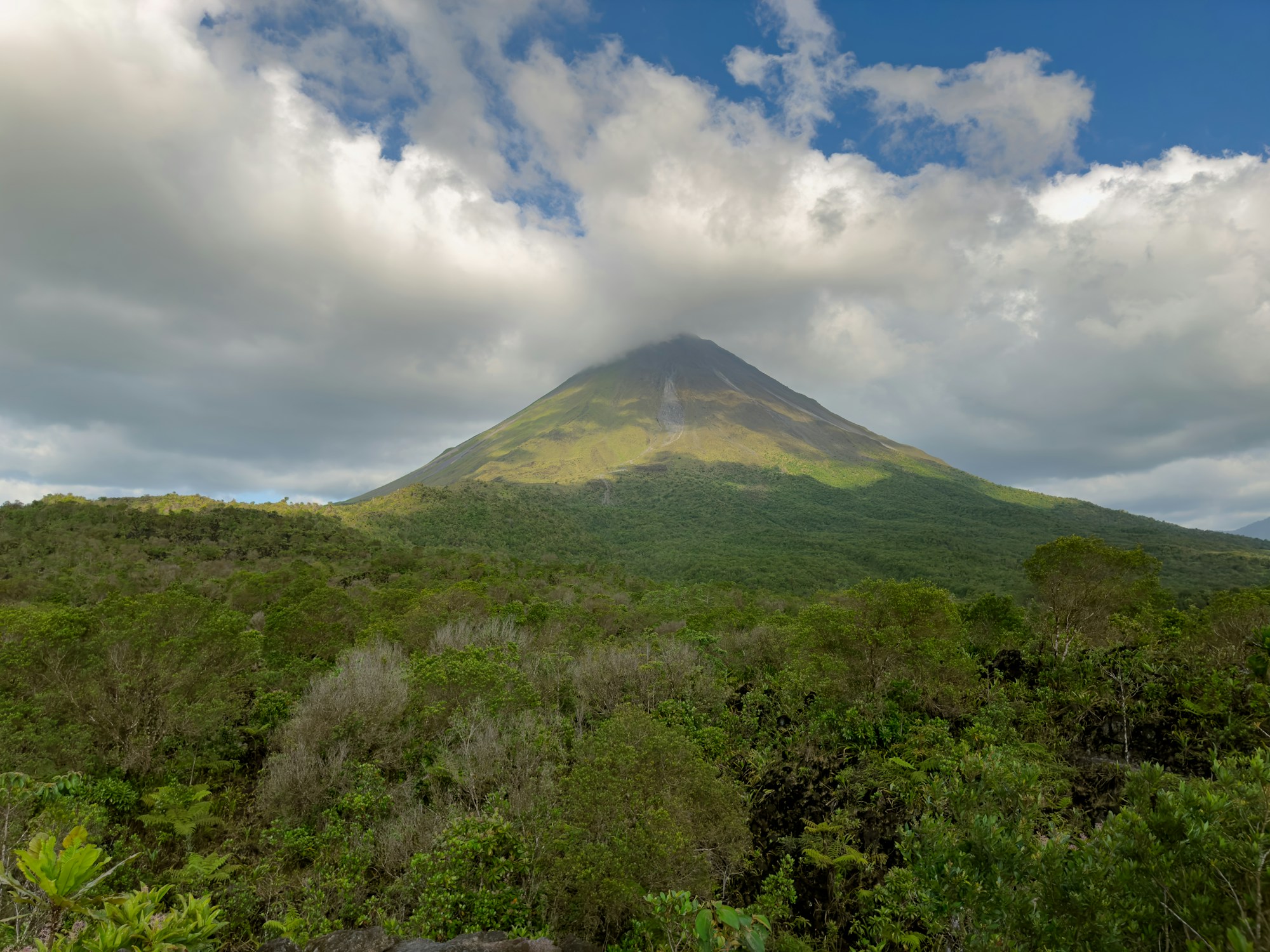
Alajuela Province, North-Central Costa Rica
The iconic Arenal Volcano majestically dominates the town of La Fortuna in northwestern Costa Rica. Still active — its last eruption was in 2010 — it is surrounded by the Arenal Volcano National Park and Lake Arenal. According to costarica.org, hikers can follow the « Las Coladas » trail, crossing lava rocks from the catastrophic 1968 eruption. The experience is breathtaking.
About an hour from La Fortuna, Tenorio Volcano National Park is home to the famous Río Celeste, whose electric blue color results from a rare natural phenomenon: the meeting of two rivers with opposite mineral properties, triggering a chemical reaction that turns the water an unreal shade of blue. According to mytanfeet.com, the entry fee to Arenal Volcano National Park is $15 per adult foreign visitor.
The hot springs of La Fortuna, naturally heated by the volcano’s geothermal energy, represent the signature experience of the region. According to Mistico Park, the Chollín River — a few steps from the main road near the Tabacón Resort — offers the same mineral-rich thermal waters as the luxury hot spring resorts… completely free of charge.
Must-dos in Arenal
- Hike the « Las Coladas » trail (lava rocks)
- Natural hot springs (free at the Chollín River)
- Mistico Hanging Bridges: suspended walkways through the forest
- Day trip to Río Celeste (Tenorio Park)
- Canyoning, rafting and zip-lining in the surrounding area
2. Monteverde: the cloud forest, jewel of global ecotourism
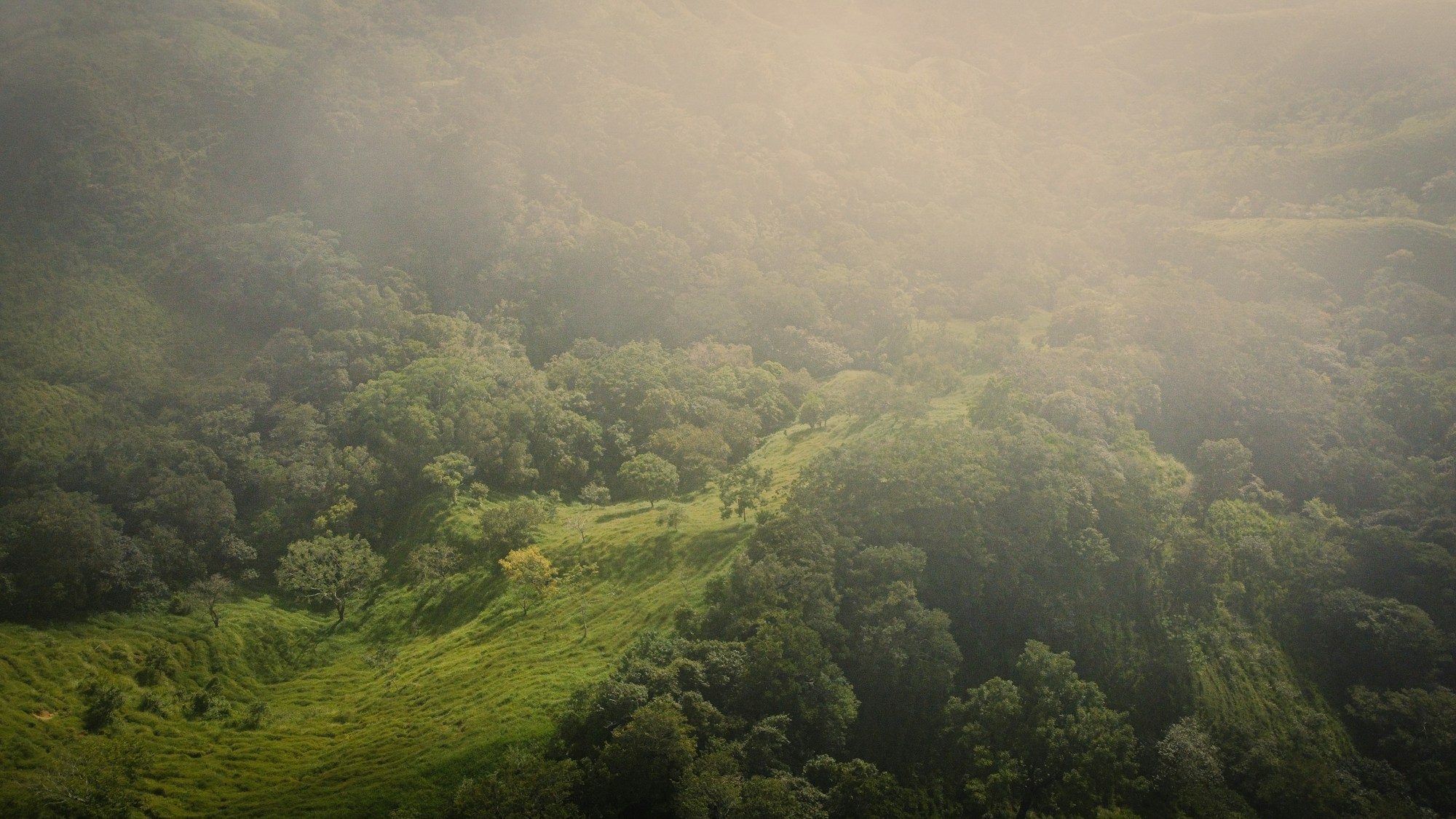
Puntarenas Province, Tilarán Mountain Range
National Geographic described it as « the jewel in the crown of cloud forests. » The Monteverde Cloud Forest Reserve spans 10,500 hectares at 1,200–1,800 meters altitude, creating such a unique ecosystem that in 2025 it was listed on the IUCN Green List among the world’s best-managed protected areas. According to cloudforestmonteverde.com, more than 2,500 plant species, 400 bird species and 120 reptile species coexist here.
Nature lovers travel from far and wide to spot the rare Resplendent Quetzal, once revered as a god by the Aztecs. This feathered jewel nests exclusively in Central American cloud forests. According to Costa Rica Experts, the green season (May–November) is paradoxically ideal for observing quetzals during nesting.
2026 Update: since December 2025, daily passes for the Monteverde Reserve are no longer available — visitors must purchase access to specific circuits. Book well in advance via the official website.
What not to miss
- Guided tour of the Cloud Forest Reserve (circuit booking required)
- Canopy zip-lining above the treetops (Sky Adventures)
- Night tour: armadillos, frogs, tarantulas and more
- Santa Elena Reserve, less crowded yet just as spectacular
- Resplendent Quetzal spotting with a naturalist guide
3. Corcovado National Park: the most biologically intense jungle on Earth
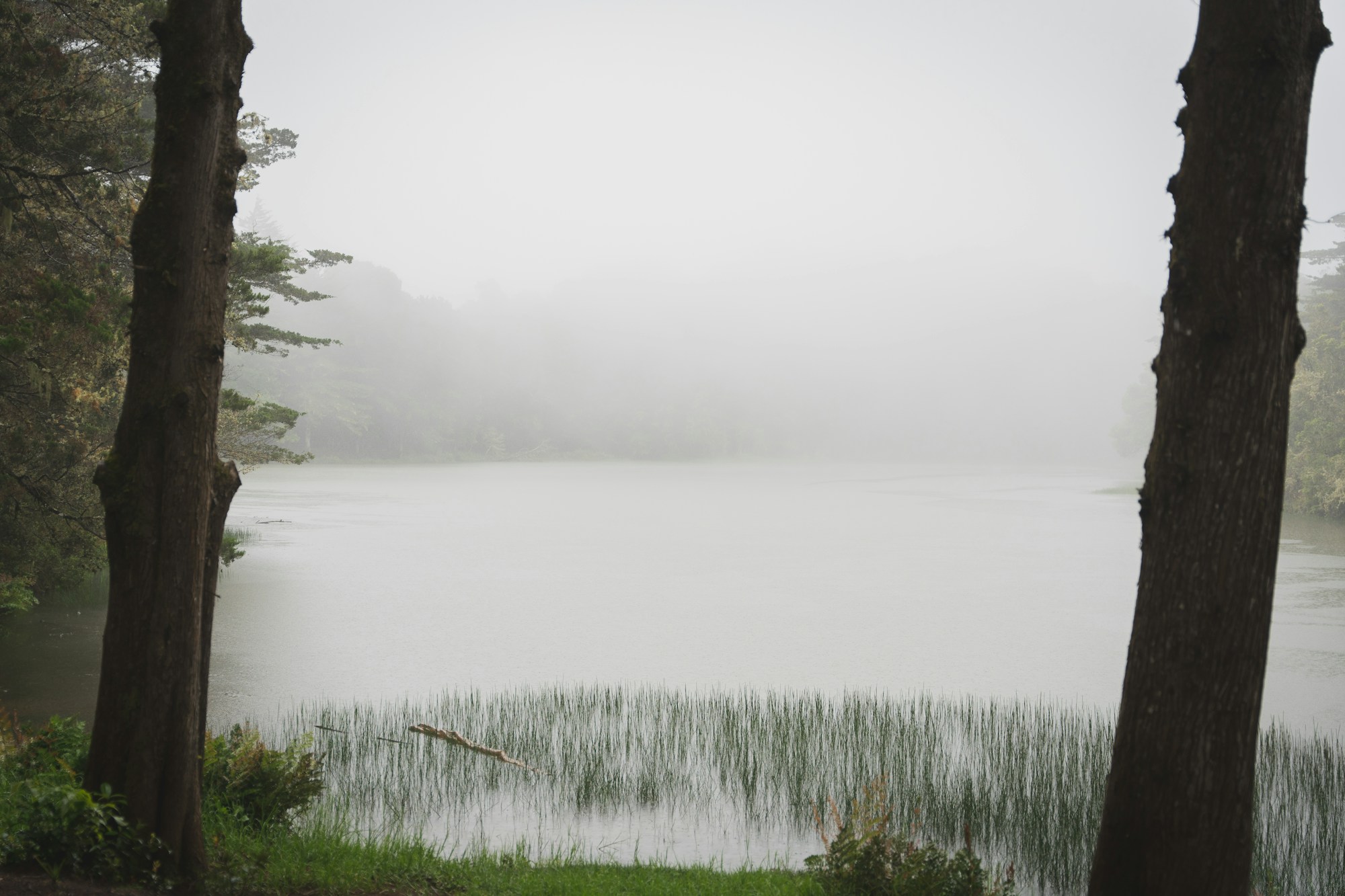
Osa Peninsula, Puntarenas Province (Southwest)
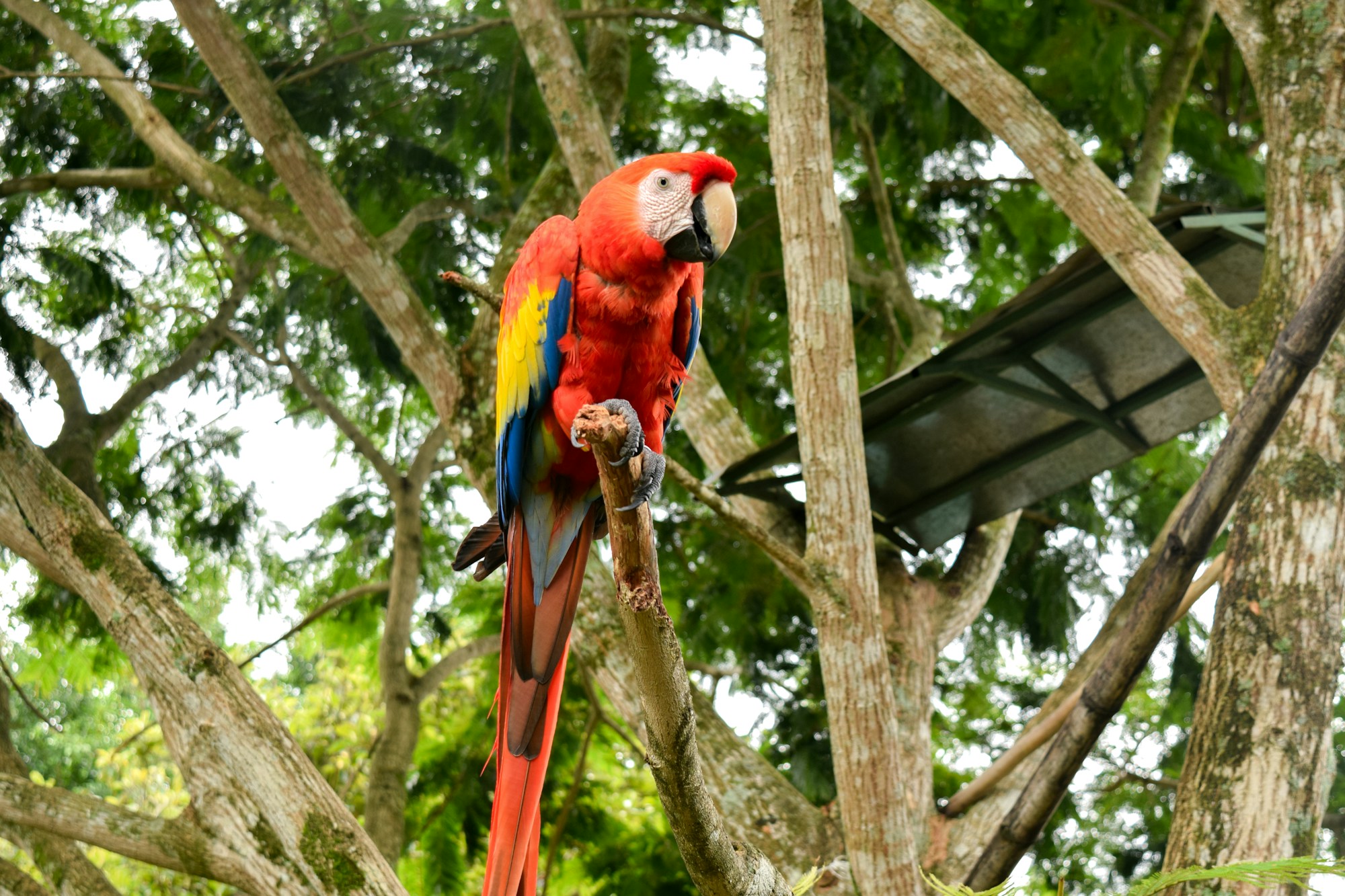
National Geographic is unequivocal: Corcovado is « the most biologically intense place on Earth. » This 424 km² national park alone harbors 2.5% of the world’s wildlife species, despite covering an area equivalent to just 0.001% of the Earth’s surface. According to Along Dusty Roads, jaguars, tapirs, collared peccaries, scarlet macaws and four species of monkeys coexist in this near-intact tropical rainforest.
Since 2024, access is strictly limited to 330 visitors per day across four ranger stations. The Sirena station, the park’s crown jewel accessible only on foot or by boat, admits just 100 daily visitors — 80 of whom can stay overnight. An ICT-accredited guide (Costa Rica Tourism Institute) is mandatory: independent visits are not permitted. According to Osa Tourism, the park closes in October for maintenance.
The least crowded — and often most rewarding — entry point is La Leona at Carate: fewer people, more freedom, and a wild Pacific coastline as a bonus. Accessible from Drake Bay or Puerto Jiménez.
Essential practical information
- Mandatory permits: $15/day (book at sinac.go.cr)
- ICT-accredited guide mandatory (budget $80–150/guide)
- Overnight at Sirena station: ~$30/night + meals $20–25
- Main entry points: Drake Bay, Puerto Jiménez or Carate
- Book 3–6 months in advance during high season
4. Tortuguero: the enchanted canals and sea turtles
Northeast Caribbean Coast, Limón Province
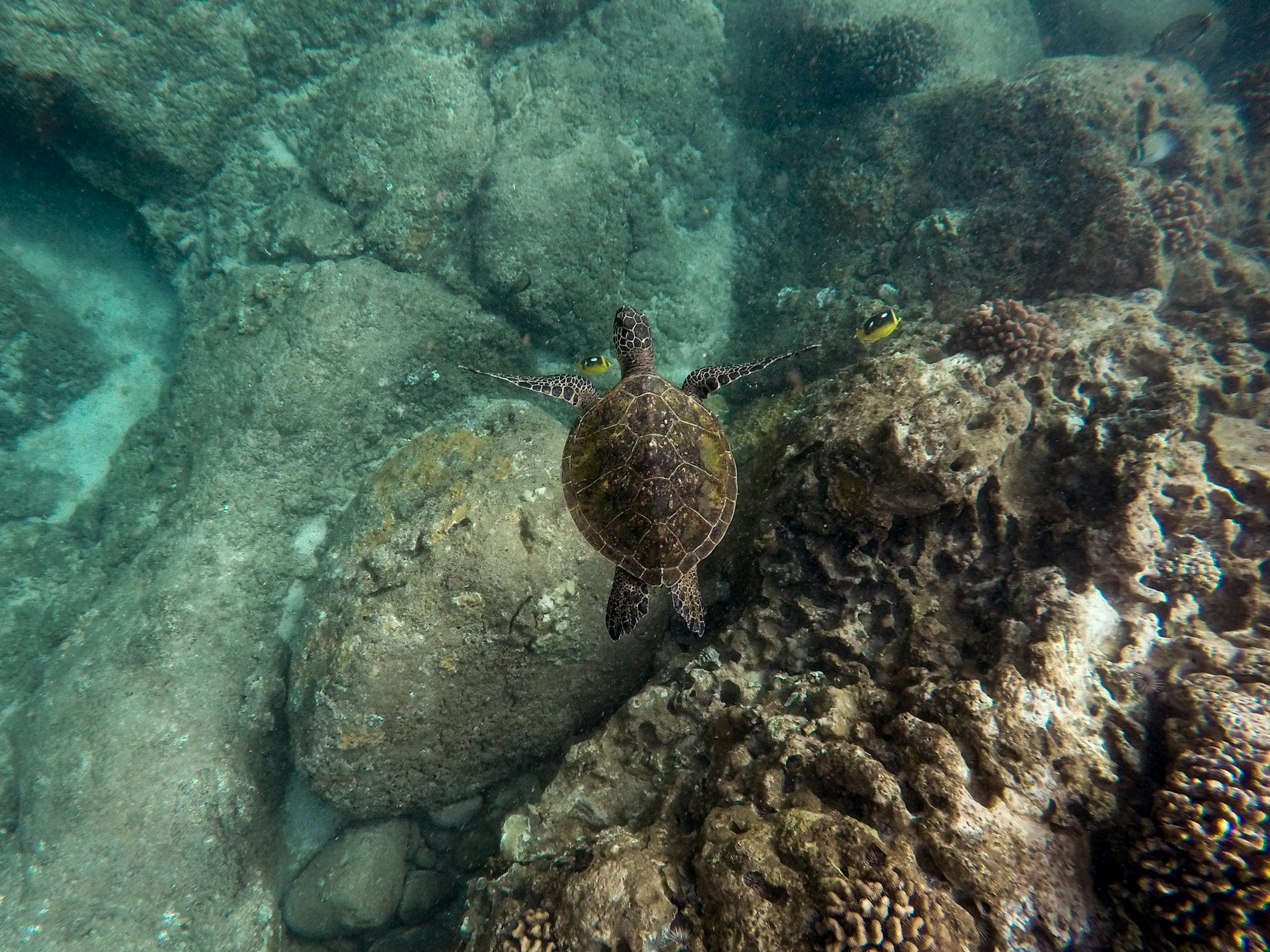
Accessible only by boat or small plane (no road access), Tortuguero National Park is one of the most pristine ecosystems in Central America. It protects over 190,000 acres of tropical rainforest, of which only 1% is open to tourism. Its name speaks for itself: tortuguero, « the place where turtles come. » According to costarica.org, Tortuguero’s beaches welcome thousands of green turtles each year from June to October to nest.
The best way to explore the canals is by guided boat, guaranteeing sightings of monkeys, crocodiles, iguanas, herons and kingfishers. For an even more intimate experience, opt for silent canoe: no engine noise, access to narrow channels, close-up wildlife encounters guaranteed. According to Two Weeks in Costa Rica, the canals literally serve as roads — boats replace cars in this village with no paved streets.
Must-dos in Tortuguero
- Guided boat tour through the canals (exceptional wildlife)
- Nighttime green turtle nesting observation (June–October)
- Canoe in secondary channels inaccessible to boats
- Hiking in the national park (guide required)
5. Río Celeste: the impossibly blue river
Guanacaste Province, Northern Costa Rica
At the heart of Tenorio Volcano National Park flows a river so stunning it seems born from a dream. Río Celeste owes its electric blue color to a unique phenomenon: at a point called « El Teñidero, » two rivers with opposite mineral properties converge, instantly transforming their normal waters into an impossibly blue current. According to Rio Celeste Hiking, the color is at its most vivid during the dry season when rain doesn’t dilute the minerals.
Tenorio Volcano National Park is, according to Ecoterra Costa Rica, one of the most enchanting and least explored gems in the country — with far fewer crowds than Arenal or Manuel Antonio. In 2025, improved trail maintenance and digital reservation systems enhanced its accessibility. Entry costs $12 per adult, tickets purchased at sinac.go.cr.
2026 Note: since mid-2025, the trail leading to the base of the Río Celeste waterfall has been partially closed following a landslide. Check the Park’s official Facebook page for the latest updates before your visit.
Activities in Tenorio Park
- Río Celeste waterfall (partial access since mid-2025)
- El Teñidero: watch two rivers merge into electric blue
- Natural hot springs within the park
- Base yourself in Bijagua de Upala: eco-lodges with birdwatching gardens
6. Cerro Chirripó: climbing the roof of Costa Rica
Chirripó National Park, San José Province
At 3,820 meters altitude, Cerro Chirripó is Costa Rica’s highest peak and one of the most accessible in Central America for determined hikers. From the village of San Gerardo de Rivas, a 20 km trail climbs over 2,000 meters in elevation, successively passing through cloud forests and páramos — those rare alpine tropical ecosystems found only at altitude in the New World. According to James Kaiser, on a clear day from the summit, you can see both the Caribbean Sea and the Pacific Ocean simultaneously.
Access is strictly regulated: only 60 hikers per day can enter the trail. Permits go live on sinac.go.cr up to 6 months in advance — and they sell out quickly. According to Special Places of Costa Rica, budget $21/day entry + $40/night accommodation + $37 for meals at the Crestones refuge (3,400 m altitude).
Logistics and tips
- Book SINAC permits up to 6 months in advance
- Check for cancellations every Tuesday (on sinac.go.cr)
- 2 days minimum: ascent on day 1, summit and descent on day 2
- Bring warm layers, waterproof jacket and a headlamp
7. Beaches and coasts: Pacific vs Caribbean
Two coasts, two worlds
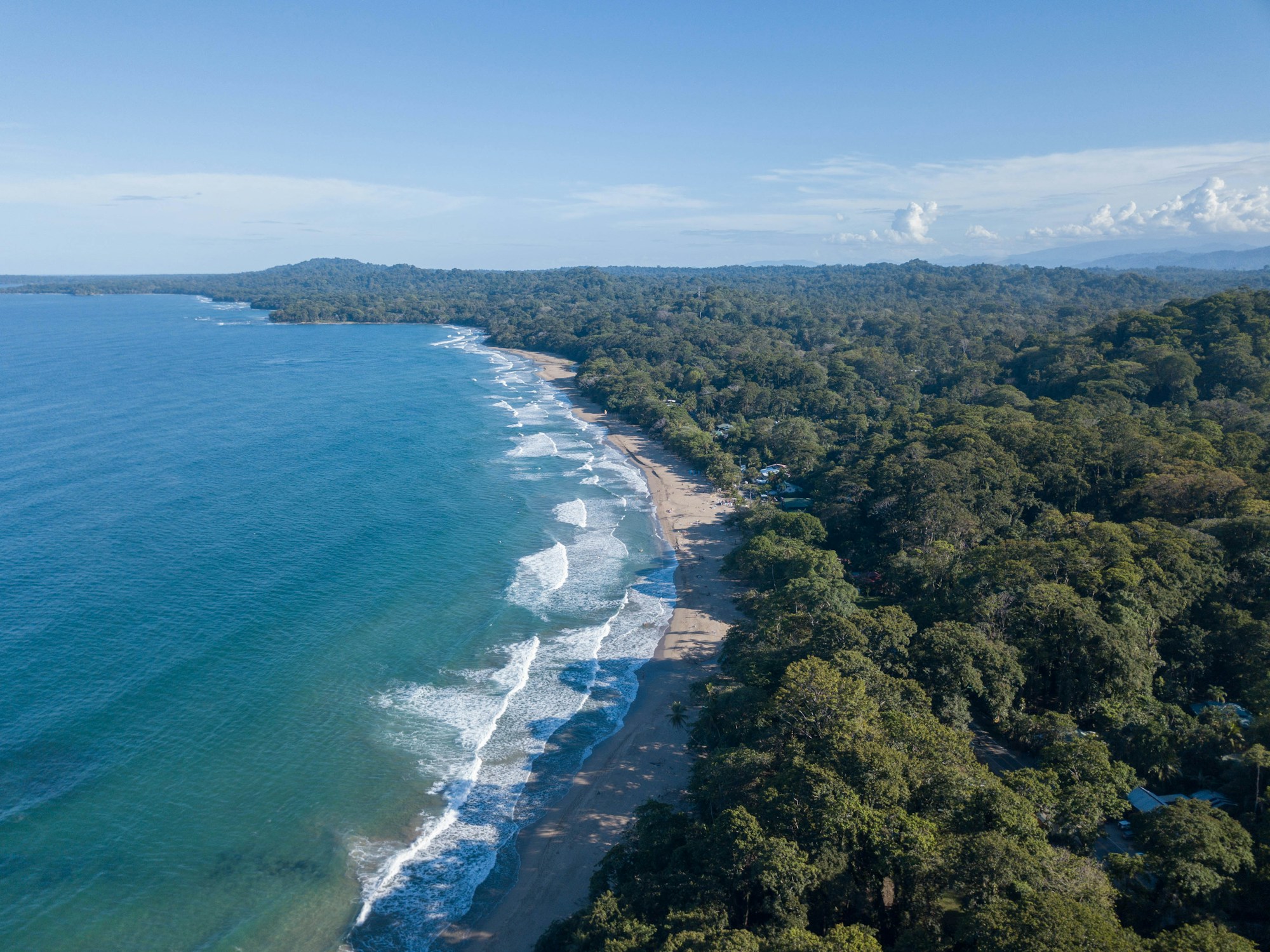
Costa Rica has two radically different coastlines, separated by the central Cordillera. The Pacific (Guanacaste, Nicoya Peninsula, Southern Pacific coast) offers golden beaches, perfect surf breaks and fiery sunsets. The Caribbean coast (from Puerto Viejo to Cahuita) reveals a wilder face, culturally Afro-Caribbean, with reggae, Creole cuisine and denser vegetation.
Playa Sámara (Nicoya) is one of the least touristy beaches in Guanacaste — soft sand, calm waters, relaxed vibe — while still being accessible and well-equipped with restaurants. According to Drink Tea Travel, it’s a gem often overshadowed by neighbors Nosara and Santa Teresa. Further south, Uvita and Marino Ballena National Park offer the famous « whale’s tail » — a unique sand formation visible at low tide — and the best humpback whale watching in the region (August–September). According to Without a Path, December to March brings a second migration.
On the Caribbean side, Cahuita is the antithesis of mass tourism: this village where bicycles replace cars has a National Park with a coral reef, a black sand beach (Playa Negra) and a white sand beach. According to Anywhere, the local Afro-Caribbean culture is authentic and well-preserved.
Top beaches by traveler profile
- Surf: Playa Avellanas, Playa Negra (Nicoya) — cheaper than Tamarindo
- Families/relaxation: Playa Sámara — calm waters, low-key vibe
- Whale watching: Uvita / Marino Ballena National Park (August–September)
- Caribbean culture: Cahuita + Puerto Viejo — reggae, Creole food, coral reef
Practical tips for your Costa Rica trip in 2026
Budget, transport and eco-responsible behavior
Costa Rica isn’t the cheapest destination in Central America, but it offers exceptional value for the experience. According to YY Island, budget for:
- Budget travel: $50–75/day (hostels, local sodas, public buses)
- Mid-range: $100–150/day (comfortable hotels, restaurants, activities)
- Luxury: $200–400/day (premium eco-lodges, private guides)
Transport: Public buses ($1–8 between main cities) remain the most economical option. For remote areas (Osa, off-track Guanacaste), a 4×4 is essential. Shared shuttles ($45–80/trip) offer a good comfort/price balance. Domestic flights (San José–Tortuguero, San José–Quepos) are often faster and more economical than many realize.
Essential eco-behavior: Costa Rica is a global pioneer in sustainable tourism. According to Dahler Costa Rica, follow these principles: maintain a minimum distance of 6 feet from wildlife, never use single-use plastics, prioritize accommodations certified with the CST (Certification for Sustainable Tourism), and never feed animals.
Frequently asked questions about Costa Rica in 2026
What is the best time to visit Costa Rica in 2026?
Costa Rica has two distinct seasons. The dry season (December–April) is ideal for the Pacific and outdoor activities — guaranteed sunshine, hikes, beaches. The green season (May–November) brings afternoon showers but lusher landscapes, fewer tourists and prices reduced by 20–30%. For the Caribbean coast, the calendar is reversed: September–October and March–April are the driest months. For sea turtles at Tortuguero, plan from June to October. According to Mistico Park, temperatures stay pleasant year-round (24–28 °C in the lowlands).
Is Costa Rica an expensive destination?
Costa Rica is more expensive than its Central American neighbors, but less so than North America or Northern Europe. For a mid-range budget, plan on $100–150 per day (accommodation, meals, activities, transport). A week costs $700–1,050 per person excluding flights. Budget travel is possible ($50–75/day) by staying in hostels, eating at local « sodas » and using public buses. According to Intrepid Escape, the biggest savings come from transport — share a vehicle rental or use shared shuttles.
Do you need to rent a car in Costa Rica?
For off-the-beaten-track routes, a car — ideally a 4×4 — is strongly recommended. Roads in remote areas like the Osa Peninsula, Boca Tapada or Guanacaste’s wild beaches require good ground clearance. For an itinerary limited to main destinations (San José, Arenal, Monteverde, Manuel Antonio), public buses and shared shuttles suffice and save considerably. According to Intrepid Escape, a 5–7 day road trip offers the greatest flexibility to explore off-the-beaten-path spots.
How do you book permits for Corcovado and Chirripó?
Both parks use the same SINAC (Sistema Nacional de Áreas de Conservación) online system: www.sinac.go.cr. Permits are available up to 6 months in advance — the recommended maximum lead time during high season (December–March). For Corcovado, permits cost $15/day and require a mandatory ICT-accredited guide. For Chirripó, budget $21/day + refuge accommodation. If places are unavailable, check for cancellations every Tuesday morning. According to Osa Tourism, booking through a local agency can help secure spots.
Is Costa Rica safe for solo travelers or families?
Costa Rica is considered one of the safest destinations in Central and Latin America. Crime-related risks are low compared to neighboring countries. Apply the usual precautions: don’t display valuables, avoid walking alone at night in large cities, use official taxis or Uber. For families, Costa Rica is particularly welcoming with diverse activities for all ages (zip-lining, canal boat tours, wildlife watching). According to YY Island, always greet with « buenos días » or « pura vida » for positive local interactions.
What vaccinations are recommended for Costa Rica in 2026?
No vaccines are required for Costa Rica (unless coming from a yellow fever transmission country). Recommended vaccines include: hepatitis A and B, typhoid, tetanus/diphtheria. Malaria is present in some remote areas near the Nicaraguan border and on the Osa Peninsula — consult a doctor before departure. Bring effective mosquito repellent (DEET ≥ 30%) and reef-safe sunscreen. Consult the Ministry of Health website or your doctor 6–8 weeks before departure.
What is the currency in Costa Rica and can you pay in US dollars?
The official currency is the Costa Rican colón (CRC). The US dollar is widely accepted in tourist areas, hotels and activities. However, in local markets, sodas, remote villages like Tortuguero, and public transport, colones are often the only option. According to costarica.org, there is only one ATM in Tortuguero — come prepared. The exchange rate was approximately 500 CRC per 1 USD in 2025. It’s advisable to withdraw colones at the airport or in major cities.
How can you travel responsibly in Costa Rica?
Costa Rica is a global pioneer in sustainable tourism. To travel responsibly: favor accommodations certified with CST (Certification for Sustainable Tourism, list at tourism-council.org), support ICT-accredited local guides, reduce your plastic footprint (bring a reusable water bottle), respect wildlife (minimum distance of 6 feet, never feed animals), choose operators that prioritize small groups. According to Dahler Costa Rica, use reef-safe sunscreen. By traveling responsibly, you directly contribute to conserving one of the planet’s richest biodiversities.
Sources
- Costa Rica Org — Arenal Volcano — Official information on Arenal Volcano
- My Tan Feet — Arenal Volcano National Park — Practical guide and fees
- Mistico Park — Backpacking La Fortuna — Budget tips for La Fortuna
- Monteverde Cloud Forest — Official website — Cloud Forest Reserve (new 2026 circuits)
- Costa Rica Experts — Monteverde — Ecosystem and wildlife description
- Two Weeks in Costa Rica — Monteverde — Complete destination guide
- Along Dusty Roads — Corcovado — Corcovado National Park visit guide
- Osa Tourism — Corcovado — Official park information
- James Kaiser — Corcovado Guide — Experiential Corcovado guide
- Costa Rica Org — Tortuguero — Tortuguero National Park
- Two Weeks in Costa Rica — Tortuguero Canals — Canal boat tour
- Rio Celeste Hiking — Complete Guide — Everything about Río Celeste
- My Tan Feet — Río Celeste Tips — Visit tips and 2025 fees
- Ecoterra — Tenorio Volcano Park — Activities in Tenorio National Park
- James Kaiser — Cerro Chirripó — Chirripó hiking guide
- Special Places of Costa Rica — Chirripó — Budget and logistics for the ascent
- Drink Tea Travel — Off the Beaten Path — Hidden gems in Costa Rica
- Without a Path — Costa Rica Guide — Complete travel guide
- Anywhere — Costa Rica Off the Beaten Path — Off-the-beaten-track destinations
- YY Island — Costa Rica Itinerary 2025 — Complete planning guide
- Dahler Costa Rica — Ultimate Pura Vida Guide 2025-2026 — Complete eco-adventure guide
- Two Weeks in Costa Rica — Off the Beaten Path — Alternative destinations
- Intrepid Escape — Costa Rica Itinerary — Off-the-beaten-path itinerary
Research conducted on February 22, 2026
Ready to live your Pura Vida adventure in Costa Rica?
Arenal Volcano at sunrise, Monteverde cloud forests, Corcovado jaguars, Tortuguero sea turtles… Costa Rica is one of those destinations that changes a traveler forever. Discover Costa Rica itineraries on Pixidia and plan a tailor-made trip that respects the exceptional environment of this pioneering ecotourism country.
Explore Costa Rica Itineraries