
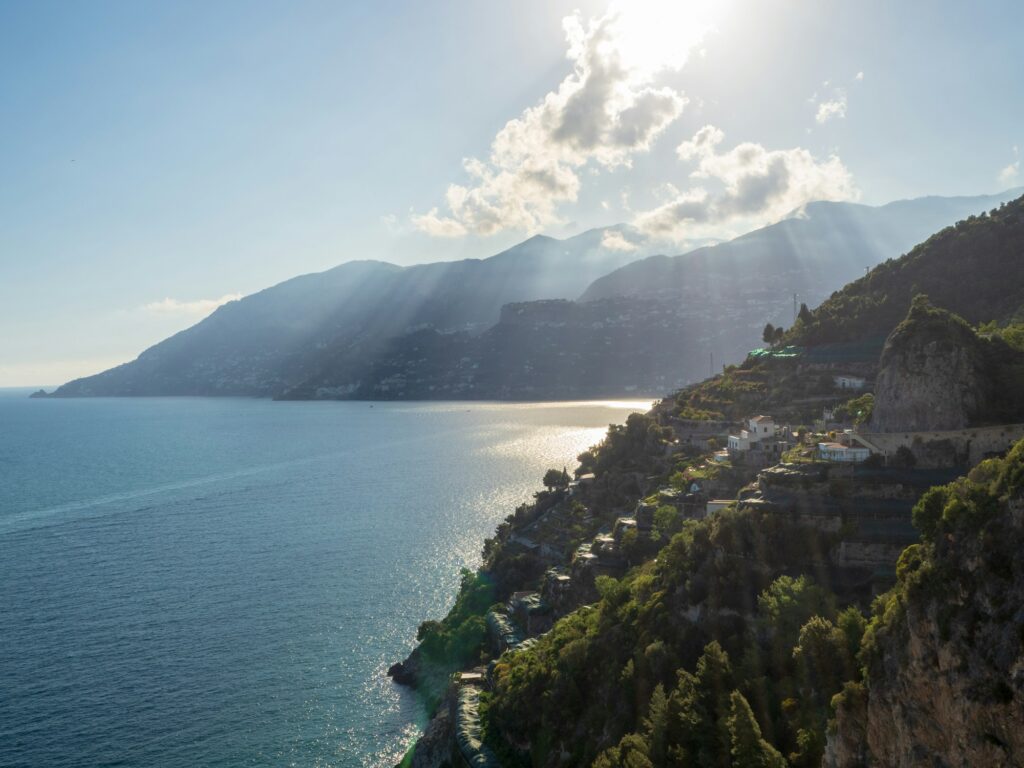
This 14-day road trip links two very different Italies — the cliffside villages of the Amalfi Coast and the whitewashed towns and trulli of Puglia — running from Naples to Lecce. Budget travellers should plan on roughly €1,800–2,800 per person for the full trip, though Positano’s peak-season rates of €150–300 a night make neighbouring Praiano or Minori smarter overnight bases. April–June and September–October remain the best windows, avoiding July–August’s Amalfi Coast gridlock while still catching Puglia’s beaches at their warmest. Our recommendation: fly into Naples, out of Bari or Brindisi, to travel south to north without backtracking.
Southern Italy is calling. On one side, the vertiginous cliffs of the Amalfi Coast plunging into a turquoise sea, cascading villages and the scent of lemon trees in the air. On the other, Alberobello’s trulli like something out of a fairy tale, Polignano’s Adriatic cliffs and Lecce’s exuberant baroque architecture. This 14-day road trip between Campania and Puglia is two Italies in one — the glamour of the Riviera and the generous authenticity of the Mezzogiorno. Here’s the complete itinerary, a realistic budget and our absolute must-sees for 2026.
1. Naples — Starting Point under Vesuvius
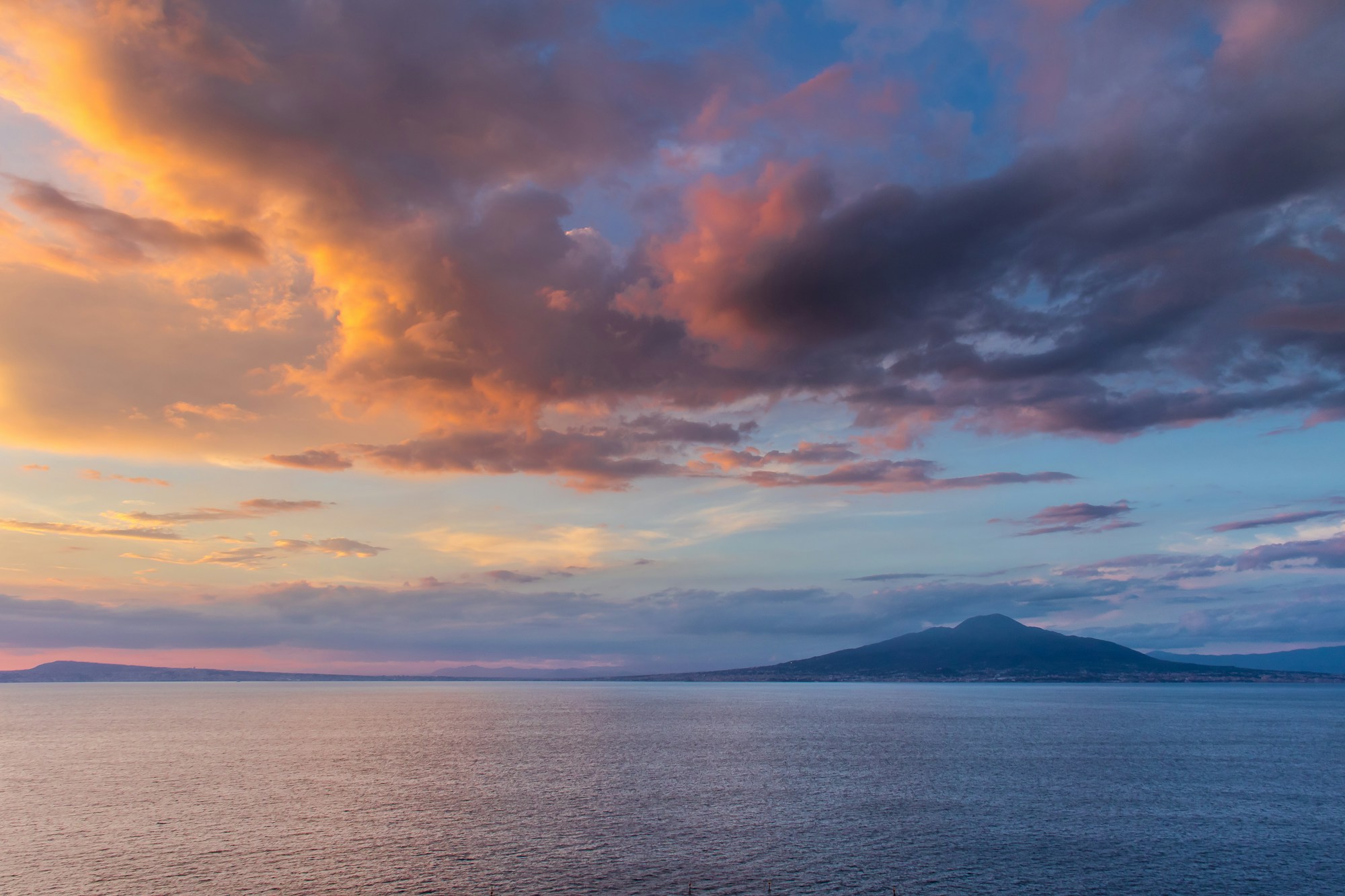
Naples (Campania)
Naples is far more than a simple airport transit. From the moment you land at Capodichino airport (15 minutes from the city centre), immerse yourself in the Neapolitan way of life by wandering along the great artery of Spaccanapoli, through the alleyways of the historic quarter listed as a UNESCO World Heritage Site. Century-old pizzerias (notably the famous Pizzeria Brandi, where the Margherita pizza was invented in 1889) and the city’s unique urban energy make it far more than a stopover. For a deeper taste of the city, a hands-on Neapolitan cooking class is a great way to spend a rainy morning before hitting the coast.
If you arrive before 4 pm, you can begin your circuit by spending the first night in Sorrento (1 hour by road), ideally situated for tackling the Amalfi Coast the next morning. If you arrive late, a night in Naples is a must — and well worth it.
Must-sees in Naples
- Historic Spaccanapoli quarter (UNESCO)
- Napoli Sotterranea — the ancient underground city
- Wood-fired pizza in a century-old pizzeria
- Guided hike to Vesuvius crater (panoramic view of the bay)
- National Archaeological Museum — treasures from Pompeii
2. Positano & the Amalfi Coast
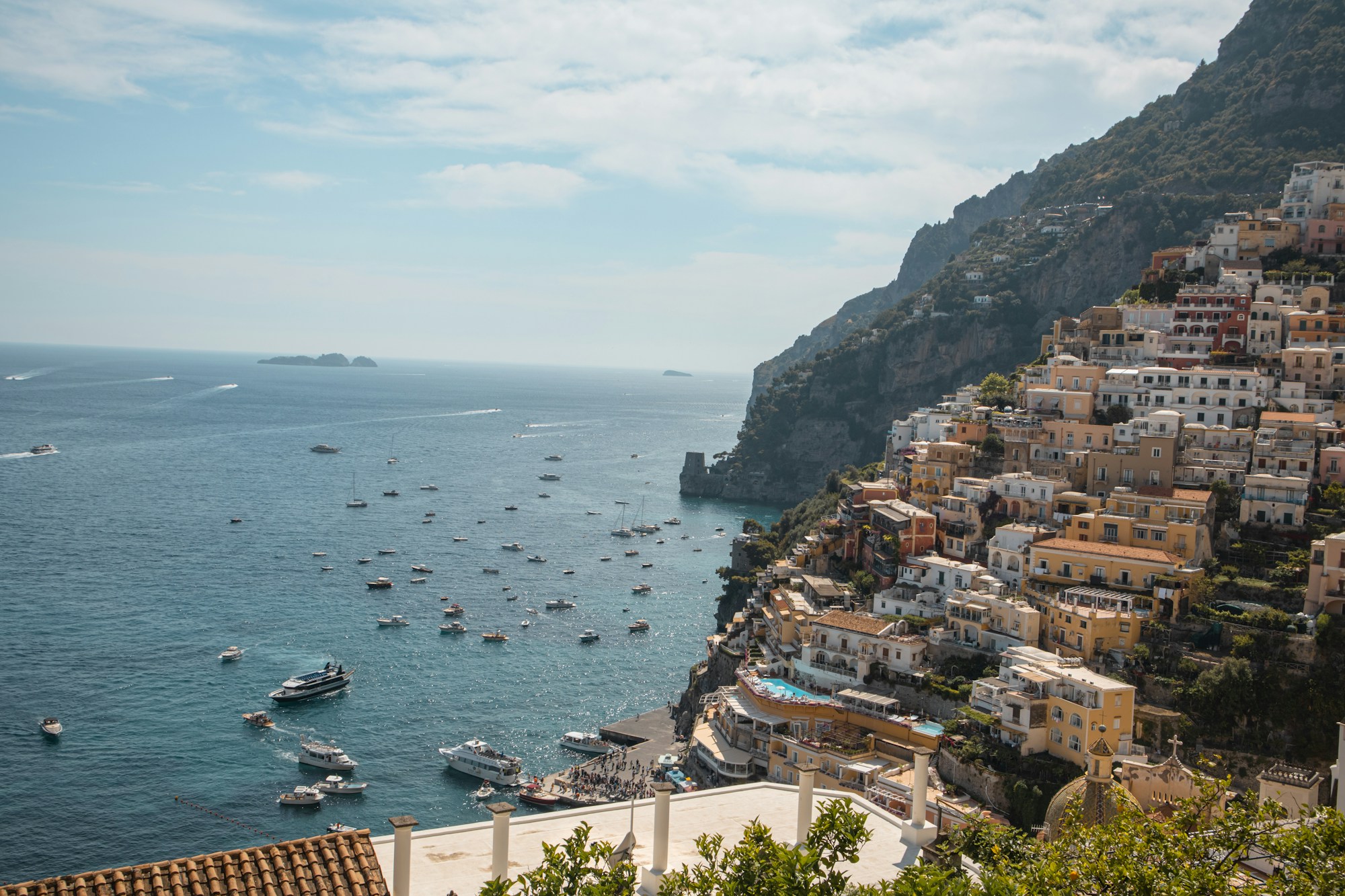
Positano — The Iconic Jewel
Positano is the postcard village par excellence: its multi-coloured houses tumble in cascades down to the Tyrrhenian Sea, framed by lemon groves and bougainvillaea. The coastal road — the Strada Statale 163 — is one of the most beautiful (and most winding) in Europe, carved into the clifftop mountainside.
Positano is the most expensive town on the coast — but close alternatives exist. In March or April, a 4-star hotel room with balcony and sea view can be found from about €155/night. The neighbouring towns of Praiano, Maiori, Minori and Cetara offer prices up to 50% lower for equivalent quality. If you’d rather skip the stress of the hairpin bends yourself, a private driver-guided tour of the Amalfi Coast covers the highlights without the parking headaches.
Experiences Not to Miss
- Traditional gozzo boat trip to Capri or the sea caves
- Fornillo Beach — quieter than the main tourist beach
- Tasting local artisan limoncello
- Visit the Chiesa di Santa Maria Assunta with its golden dome
3. The Sentiero degli Dei — The Path of the Gods
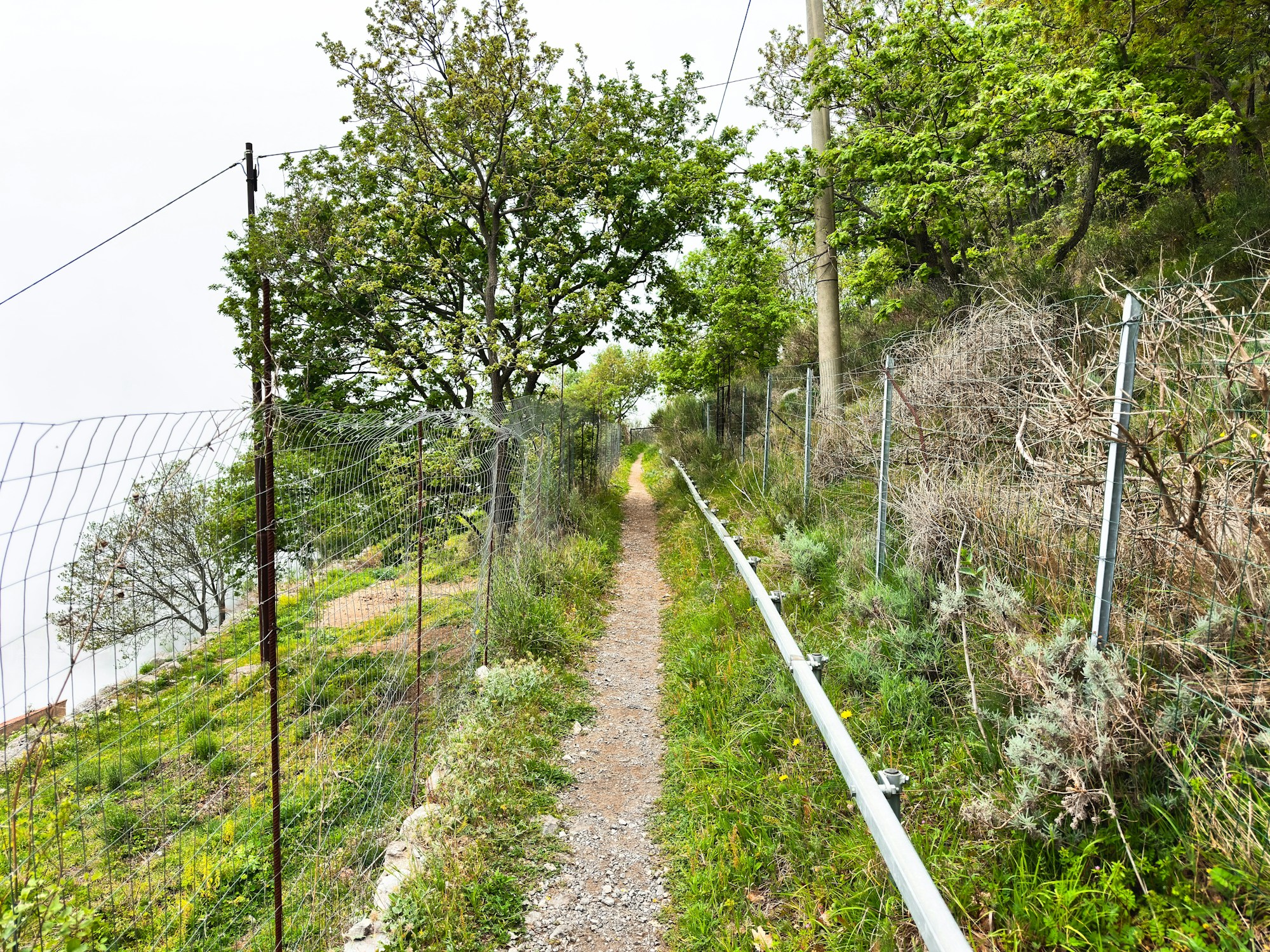
Sentiero degli Dei (Praiano → Nocelle)
The Sentiero degli Dei is without doubt one of Italy’s most spectacular hikes. Suspended between sky and sea at 600 metres altitude, it links the village of Bomerano (Agerola) to the hamlet of Nocelle, perched above Positano. Its name comes from Greek mythology: according to legend, the Greek gods used this path to rescue Ulysses from the sirens of the Li Galli islets.
This historic path, once the only means of communication between coastal villages, offers panoramic views over the Tyrrhenian Sea and the islands of Capri and Li Galli. Hikers describe the scent of wild rosemary, Mediterranean scrubland and the unique feeling of walking « between sky and sea ». It suits those with average fitness — some sections are exposed but not technical.
Practical Tips
- SITA bus from Amalfi → Bomerano (€2–3) to start at Praiano or Bomerano
- Descent to Nocelle then stairs down to Positano (around 1,500 steps)
- Less-crowded alternative: start from Praiano (more steps, fewer people)
- Early start (before 8am) in summer for coolness and quiet
4. Ravello & the Hidden Villages of the Coast
Ravello, Minori, Maiori & Cetara
Perched 350 metres above the sea, Ravello partly escapes the crowds of Positano and Amalfi. Its two legendary villas — Villa Cimbrone (€7) and Villa Rufolo (€8) — offer hanging gardens with views considered among the most beautiful in Europe. The Terrazza dell’Infinito of Villa Cimbrone, a balcony suspended above the sea, is worth the detour on its own. Wagner composed part of Parsifal here; D.H. Lawrence and Virginia Woolf stayed here. A visit can be done quickly — allow 3 to 4 hours.
To save money without sacrificing authenticity, Minori, Maiori and Cetara are the insiders’ preferred alternatives. These villages are significantly cheaper — accommodation starts from €50/night and beach clubs at a fraction of Positano prices. Cetara is renowned for its colatura di alici, a fermented anchovy sauce produced artisanally for centuries — an essential souvenir.
Hidden Villages to Explore
- Ravello — Terrazza dell’Infinito at Villa Cimbrone
- Cetara — Fishing village, artisan colatura di alici
- Minori — Early Christian Roman Villa (free entry)
- Furore — The secret fjord and its « painted village » (no actual town centre!)
5. Matera — The Timeless Troglodyte City
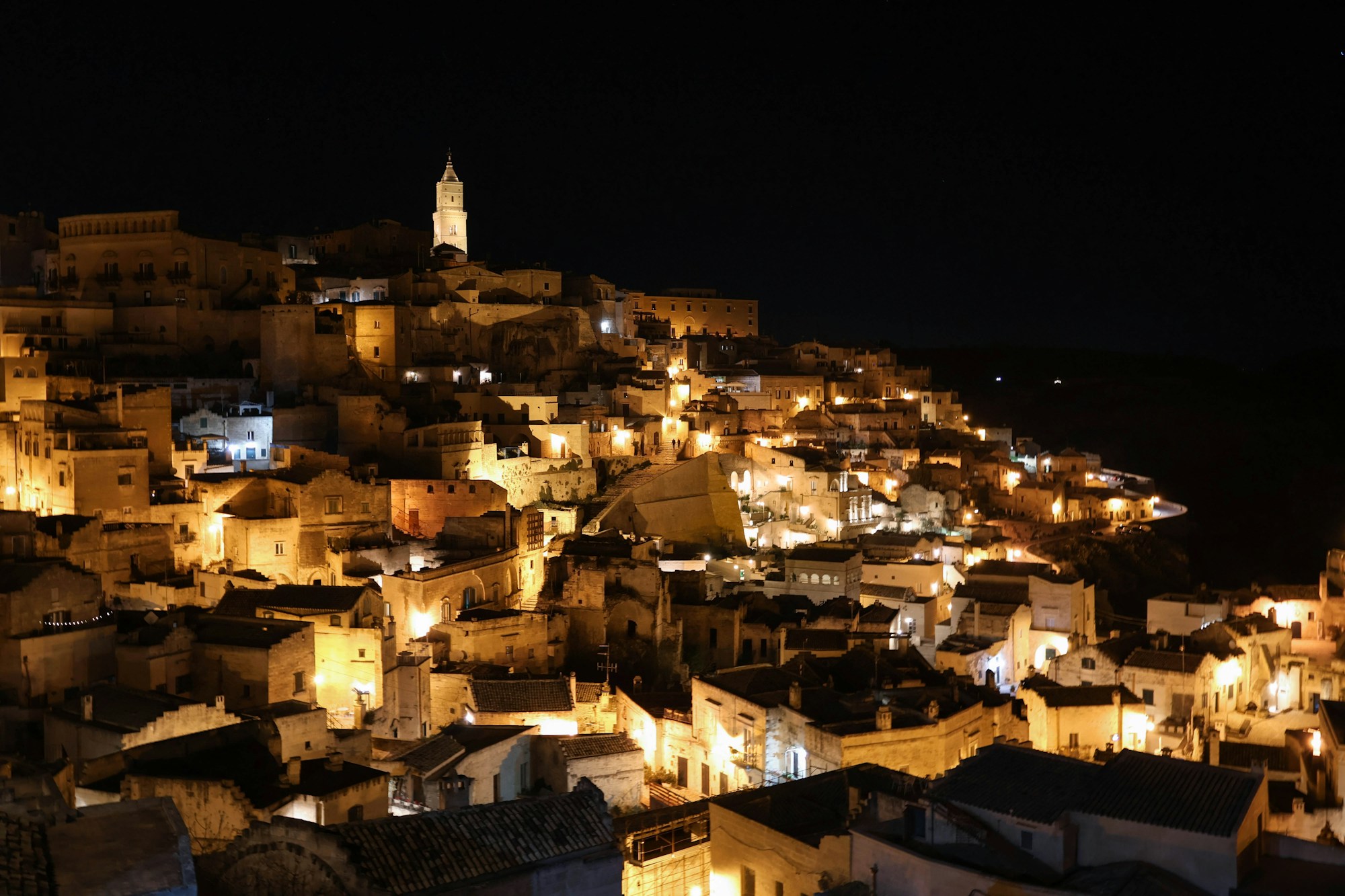
Matera (Basilicata) — The Pivotal Stop
Halfway between Campania and Puglia, Matera stands as one of Italy’s most extraordinary cities. Its Sassi — dwellings carved into the limestone more than 10,000 years ago — form an absolutely unique urban landscape, listed as a UNESCO World Heritage Site. Matera is one of the world’s oldest continuously inhabited cities and was named European Capital of Culture in 2019.
The city is ideally placed as a bridge between the two acts of the road trip. Sleep in a restored sasso turned guesthouse for a memorable experience at €80–200/night depending on comfort level. For long-term parking, the covered car park at Via Saragat on the edge of the centre costs around €15 for two days.
Absolute Must-dos in Matera
- Get lost in the alleyways of the Sassi Caveoso and Barisano
- Belvedere di Murgia Timone — views over the sassi from the other side of the ravine
- Casa Noha Museum — immersive museum on the history of the sassi
- Cave churches (chiese rupestri) adorned with Byzantine frescoes
- Tasting Aglianico del Vulture (exceptional local wine)
6. Alberobello & the Valle d’Itria — The Land of Trulli
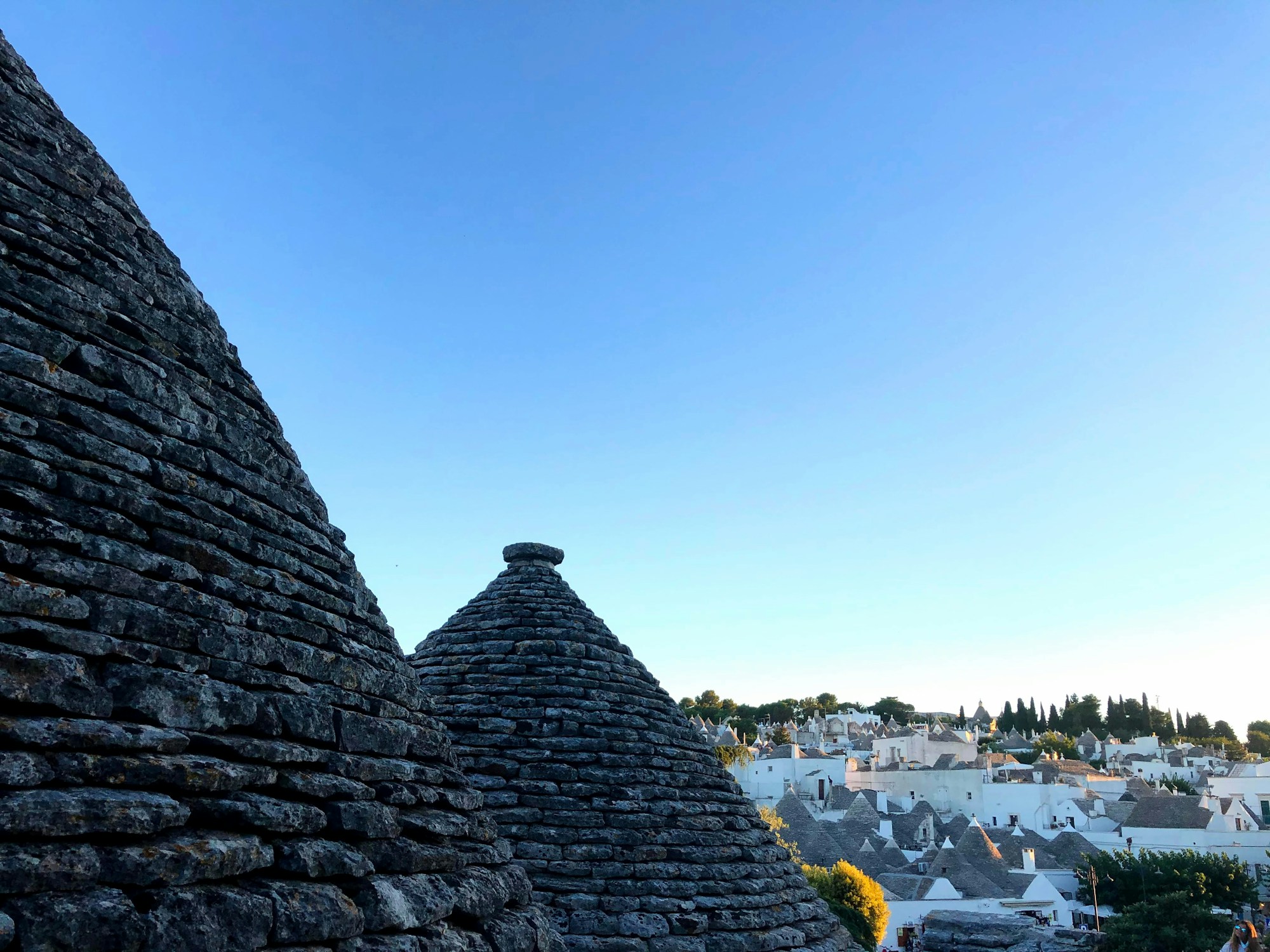
Alberobello & Locorotondo (Valle d’Itria)
Alberobello is one of Italy’s most unusual places. Its trulli — conical whitewashed limestone houses with grey roofs adorned with religious and astrological symbols — date back to the 14th century for the oldest. The Rione Monti quarter alone has over 1,000 trulli, listed as a UNESCO World Heritage Site in 1996. The views over the valley and its centuries-old olive groves are breathtaking.
To avoid the crowds at Alberobello’s tourist centre, Locorotondo is the ideal alternative, often overlooked by foreign visitors. This hilltop village is a hidden gem, with its white cobbled alleyways, flower-lined houses and panoramic views over the entire Valle d’Itria. Sleeping in a trullo is a unique experience you won’t find anywhere else in the world.
The Valle d’Itria in Depth
- Trullo Sovrano — the only two-storey trullo in Alberobello, a living museum
- Locorotondo — valley panoramas, renowned DOC white wine
- Cisternino — butcher shops serving grilled skewers in the evening (unique local tradition)
- Visit a masseria (traditional farm) with AOC olive oil tasting
7. Polignano a Mare — Domenico Modugno’s Adriatic Cliffs
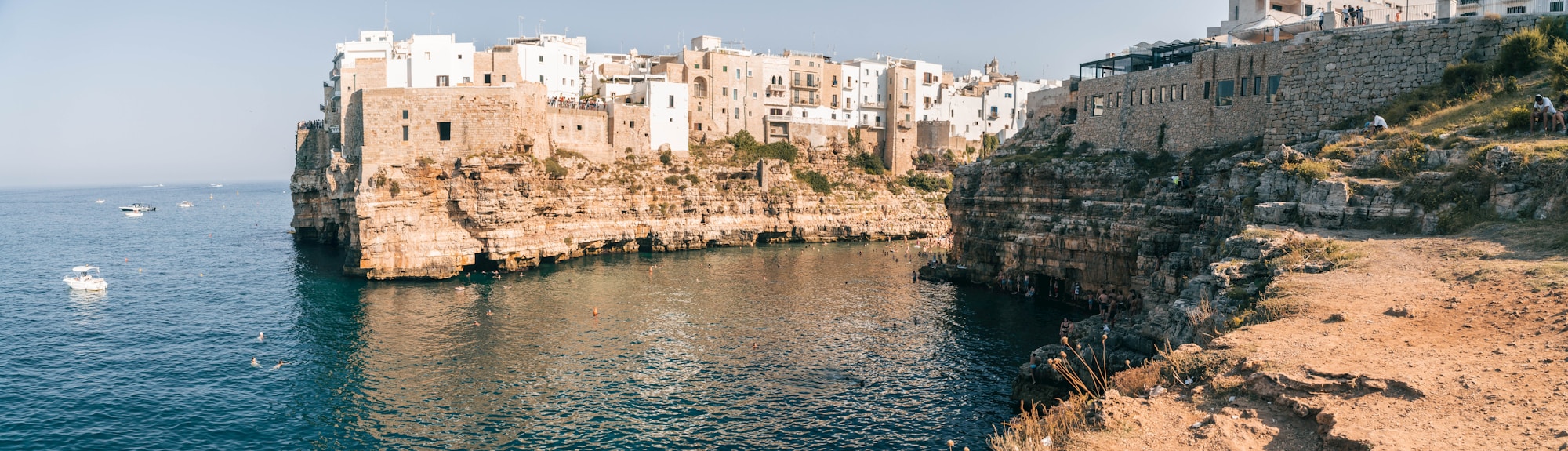
Polignano a Mare (Province of Bari)
Polignano a Mare is one of Puglia’s most photogenic sites. Its medieval historic centre is perched on white limestone cliffs towering some twenty metres above the Adriatic Sea, framing the famous Lama Monachile beach nestled between the rocks. This is where singer Domenico Modugno — author of the legendary Volare — was born in 1928, and where the annual Red Bull Cliff Diving competition takes place each summer beneath the historic Roman bridge.
The town is accessible by train from Bari in just 30 minutes on the Bari–Lecce line, making it an easy day trip if you’re based in Bari. The Grotte di Castellana, a few kilometres inland, form Italy’s most visited speleological network — a fascinating half-day underground adventure. The Cala Paura cove, tucked between the rocks, offers a peaceful escape in crystal-clear waters.
What to See in Polignano
- Lama Monachile beach framed by white cliffs
- Grotte di Castellana (cave network, 1–2h guided tour)
- Secret cove Cala Paura (bring water shoes)
- Artisan ricotta and fig gelato — local speciality
8. Ostuni & Cisternino — The White City and Its Endless Olive Groves
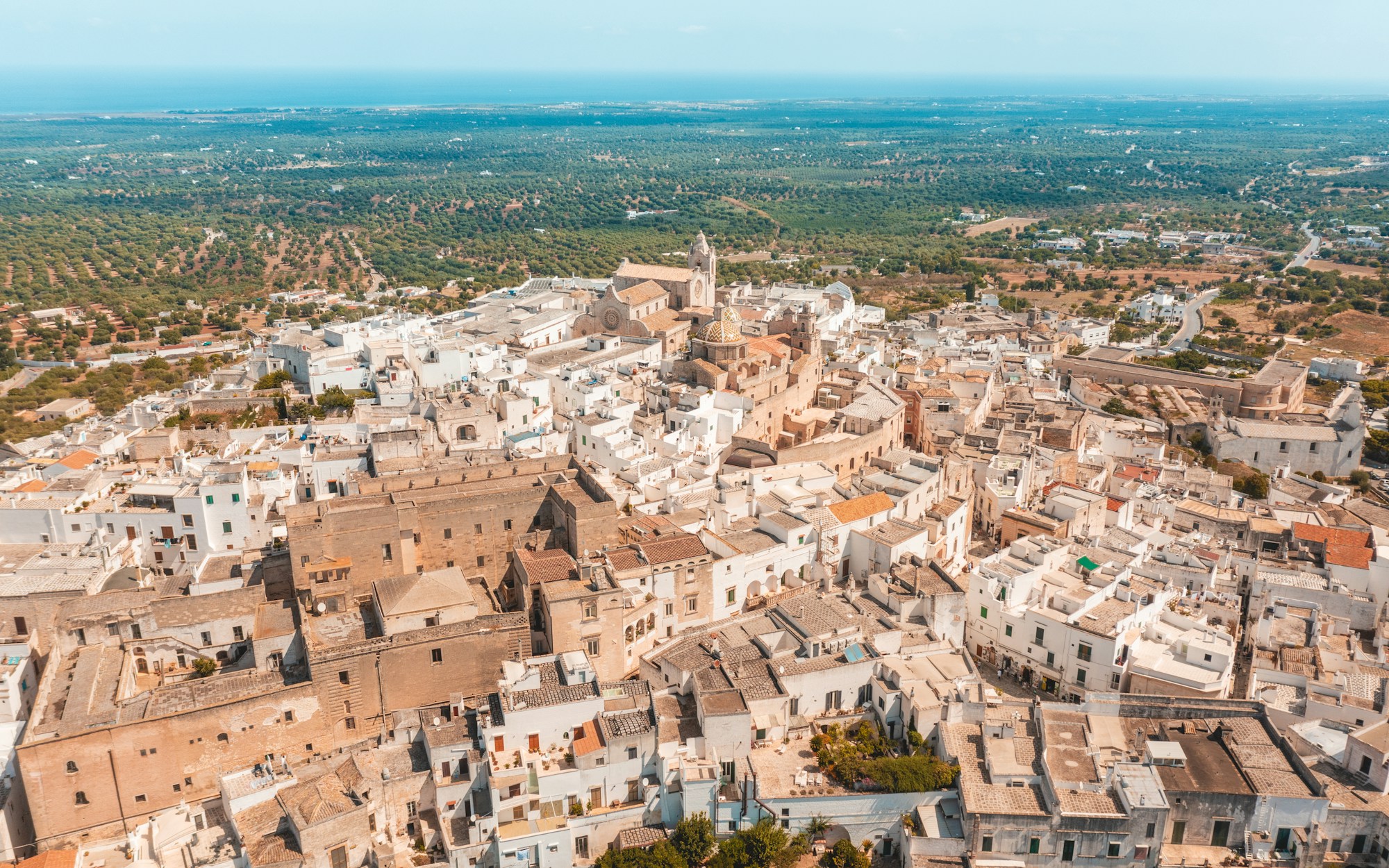
Ostuni — The « Città Bianca » of Puglia
Ostuni, nicknamed the Città Bianca (White City), is one of Puglia’s most photographed towns. Its whitewashed houses, medieval ramparts and 15th-century Gothic cathedral overlook an endless panorama of olive groves and golden hills. The fortified old town dates back to the Middle Ages, making it one of the most astonishing hidden gems of southern Italy.
About 20 minutes from Ostuni by car, the Torre Guaceto Marine Protected Area offers unspoilt beaches and exceptional underwater seascapes, far removed from mass tourism. Cisternino, 10 minutes away, is a timeless village where butcher shops (macellerie) serve grilled skewers on their doorsteps in the evening — a local tradition found nowhere else. Look out for family-run osterie for meals at €10–20 per head.
Ostuni and Surroundings
- 15th-century Gothic cathedral and panoramic views from the ramparts
- Torre Guaceto Marine Reserve — snorkelling and diving off the beaten track
- Cisternino macelleria — made-to-order grilled skewers, unique tradition
- Tasting Primitivo di Manduria at a local cantina
9. Lecce & the Salento — The Florence of the South at the Tip of the Boot
Lecce, Otranto, Gallipoli and the Salento Beaches
The journey ends with an architectural apotheosis — Lecce. Nicknamed the « Florence of the South », it is the capital of Puglian baroque: its church facades intricately carved from local golden limestone (pietra leccese), its majestic squares and vibrant streets make it a museum city of rare elegance. The Piazza del Duomo, its bell tower and episcopal palace form one of Europe’s most coherent baroque ensembles. Lecce is also far more affordable than the Amalfi Coast: B&Bs from €40, trattoria meals at €15–25 per person.
The Salento Peninsula to the south offers an incomparable playground. Lecce, Otranto and Gallipoli are 30–40 minutes apart — a single base allows everything to be explored on day trips. The beaches of Pescoluse, nicknamed the « Maldives of Salento », offer kilometres of blonde sand and almost tropical turquoise water. The two emblematic Salento wines — Negroamaro and Primitivo — can be tasted at small local cantinas for unbeatable prices. For a fuller picture of the region’s cuisine, see our roundup of the best food experiences in Lecce and Puglia, from pasticciotto bakeries to hands-on pasta workshops.
The Best of Salento
- Lecce — Baroque Piazza del Duomo and caffè leccese (almond iced espresso)
- Otranto — 12th-century Romanesque cathedral with giant floor mosaic
- Gallipoli — Old town on an island, Ionian beaches, Greek atmosphere
- Pescoluse — The « Maldives of Salento », 3 km of white sand and turquoise water
- Tasting Negroamaro and Primitivo at a local cantina
Suggested Itinerary: 14 Days from Naples to Lecce
Naples → Sorrento
Arrival at Naples Airport. Overnight in Sorrento (ideal base for the coast). Visit Naples city centre if morning arrival.
Amalfi Coast — Positano & Amalfi
Coastal road SS163, Positano, boat trip to Capri. Day 2: Amalfi, Sant’Andrea Cathedral, stroll through the alleyways.
Sentiero degli Dei + Ravello
Morning hike on the Sentiero degli Dei (depart Bomerano). Afternoon in Ravello: Villa Cimbrone, Terrazza dell’Infinito.
Hidden Villages — Cetara, Minori, Vietri sul Mare
Relaxed day in the less touristy eastern coast villages. Colatura di alici tasting in Cetara.
Road to Matera (2.5h from Salerno)
Transit day with optional stop at Paestum (5th-century BC Greek temples). Arrival in Matera, evening in the sassi.
Matera
Full day in the sassi. Casa Noha Museum, cave churches, Murgia Timone belvedere at sunset.
Valle d’Itria — Alberobello & Locorotondo
Road to Puglia (1.5h). Alberobello trulli in the morning, Locorotondo in the afternoon. Dinner at a masseria.
Polignano a Mare & Castellana Caves
Morning: Grotte di Castellana (1.5h guided tour). Afternoon: Polignano a Mare, Lama Monachile, Cala Paura.
Bari (optional) → Ostuni
Stop in Bari: medieval old town, San Nicola Basilica. Road to Ostuni in the afternoon. Dinner in Cisternino.
Lecce
Full day in the Florence of the South. Piazza del Duomo, Piazza Sant’Oronzo, Roman amphitheatre, caffè leccese on a terrace.
Otranto & the Salento Beaches
Otranto Cathedral and its ancient mosaic. Afternoon: Pescoluse beaches or Porto Selvaggio depending on preference.
Return → Brindisi or Bari Airport
Brindisi is 45 min from Lecce. Bari is 1.5 hours. Both airports have direct flights to London, Paris and many major European cities.
Detailed Budget: How Much Does This Road Trip Cost in 2026?
| Expense | Budget | Mid-Range | Luxury |
|---|---|---|---|
| Accommodation/night (Amalfi Coast) | €70–100 | €150–250 | €300+ |
| Accommodation/night (Puglia/Matera) | €40–80 | €80–150 | €200+ |
| Meals per day | €25–35 | €45–65 | €80+ |
| Car hire + fuel | €30–45/day | €45–70/day | €70+/day |
| Activities & sightseeing | €10–20/day | €30–50/day | Variable |
| Estimated total per person/day | ~€130–200 | ~€250–380 | €500+ |
| Total 14 days (per person) | ~€1,800–2,800 | ~€3,500–5,300 | €7,000+ |
Frequently Asked Questions about This Southern Italy Road Trip
How long do you need to combine the Amalfi Coast and Puglia?
Ten days on the Amalfi Coast alone is ideal for properly exploring Positano, Amalfi, Ravello and the islands of Capri and Ischia. For Puglia, allow an additional 7 to 10 days. In total, 14 to 21 days is recommended to do both regions without rushing. It is perfectly possible to do both in 10 days, but you will need to make choices and the pace will be brisk.
Is it better to fly into Naples or Bari?
The best logistical option is to fly into Naples and out of Bari or Brindisi, or vice versa. This avoids backtracking and allows the road trip to be done in one direction, south to north. Both airports serve many European cities. If you only want to do part of the trip, Naples gives access to the Amalfi Coast, while Bari is the gateway to Puglia.
Are there traffic restrictions on the Amalfi Coast?
Yes. In high season, the coastal road SS163 operates alternating traffic based on number plates (even plates on some days, odd on others). The rule changes regularly; it is advisable to check current conditions before departure on the ANAS website (Italian National Road Agency). Daily tolls or private car access restrictions are also being considered for upcoming seasons to limit congestion.
Is a hire car essential for this road trip?
For the Amalfi Coast, a car is not mandatory: SITA buses and ferries connect all coastal villages, and can be cheaper — but much slower. For Puglia, however, a car is virtually essential to explore the masserias, the Valle d’Itria and the Salento beaches. A car in Puglia gives you total flexibility and inter-city journeys are short — Bari to Lecce in just 2 hours.
What is the best time of year for this road trip?
The best periods are April–June (mild weather, few crowds, reasonable prices) and September–October (sea still warm, crowds and prices falling). Avoid July–August: the Amalfi Coast is packed, roads gridlocked and prices doubled. October–November is still ideal for Puglia: the sea remains warm, beaches almost empty and prices drop 30 to 50%.
How do you save on food in Southern Italy?
Italy is paradoxically one of the best countries for eating well and cheaply outside tourist restaurants. Italian supermarkets offer incredible charcuterie-cheese counters with fresh bread, and home-cooked dishes (lasagne, parmigiana) at very low prices. In Puglia, favour neighbourhood osterie run by local families rather than « tourist » restaurants on main squares. Cisternino butcher shops grilling skewers in the evening often cost under €10 for a full meal.
Is Puglia still authentic, or has it become too touristy?
The unmissable sites (Alberobello, Polignano, Ostuni, Lecce) now attract millions of visitors. But Puglia still has much to offer travellers seeking authenticity. The Gargano in the north, the Valle d’Itria villages (Locorotondo, Cisternino, Martina Franca) and the deep Salento remain largely off classic tourist circuits — and that’s where the real magic happens.
What are the 3 absolute highlights of this road trip?
Based on recent traveller feedback (2024–2026), three experiences consistently come out on top. First, the Sentiero degli Dei is unanimously cited as one of Italy’s best hikes. Second, a night in a Matera sasso and a night in an Alberobello trullo — the two most unique accommodation experiences of the trip. Third, a 4-hour boat trip from Positano along the entire coast, with its hidden caves and coves inaccessible by road, remains a memorable experience at a relatively reasonable price.
Sources
- Carnet de Route — Road trip en Italie : itinéraire Côte Amalfitaine et Pouilles — Detailed itinerary and practical logistics
- Elomotion — Road trip dans les Pouilles : itinéraire — One-week Puglia itinerary
- Positano.com — Amalfi Coast Costs Explained — Official coast budget and costs
- Vacances.guide — Sentier des Dieux : complete guide — Sentiero degli Dei hike
- One Medium Suitcase — From Bari to Lecce: 5-Day Puglia Road Trip — Puglia guide 2025
- Seluxia — Puglia off the beaten track — Lesser-known Puglia villages 2025
- The Tour Guy — Ultimate Guide to the Amalfi Coast on a Budget — Amalfi budget tips
- Le Voyageur Méditerranéen — Les Pouilles autrement — Off the beaten path destinations
- Italy Review — Visit Polignano a Mare — Detailed Polignano a Mare guide
- Not a Nomad Blog — Amalfi Coast Budget Tips — 7 Amalfi Coast budget tips
- Virée-Malin — Circuit Côte Amalfitaine — 5, 10 and 15-day itineraries
Research conducted in February 2026; reviewed and refreshed in July 2026.
Ready to Plan Your Southern Italy Road Trip?
Discover itineraries created by the Pixidia community to explore the Amalfi Coast, Puglia and Matera at your own pace. Detailed itineraries, verified accommodation and insider tips for an unforgettable journey.
Explore Italy Itineraries