
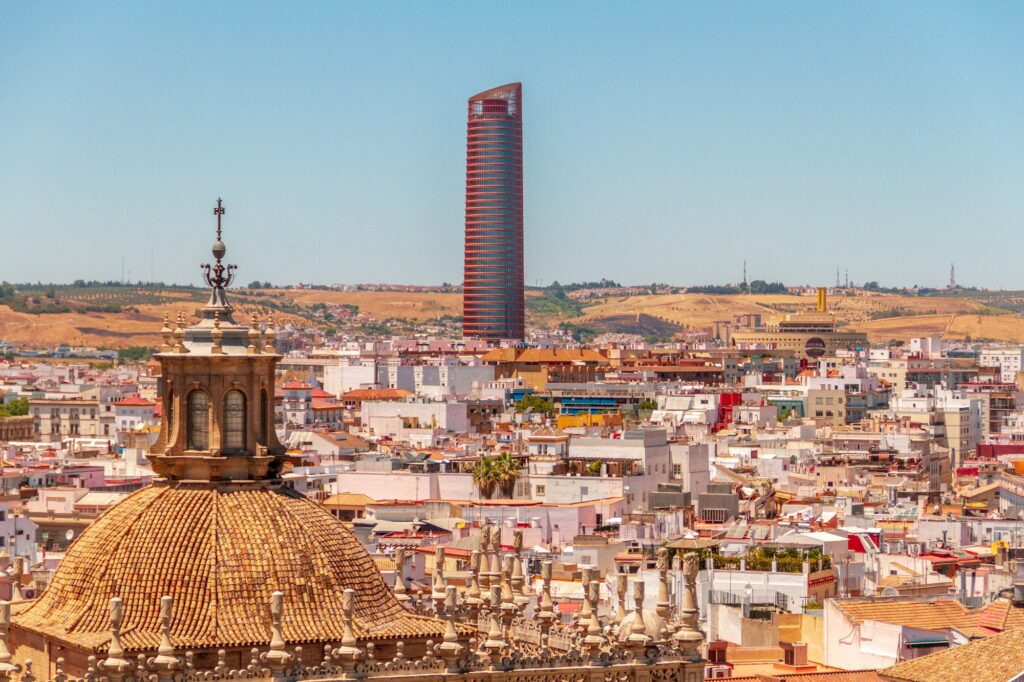
The 2026 Feria de Abril ran April 21-26 in Seville’s Los Remedios district, drawing an estimated 1.2 million visitors across 1,253 casetas (200 more than 2025) lit by 104,000 LED bulbs. Entry to the Real remains free; budget travelers manage on 60-90 EUR/day, mid-range visitors on 150-220 EUR/day. The next edition traditionally falls about two weeks after Semana Santa, so hotel bookings for 2027 should open roughly a year ahead.
Six days of gentle madness under the lanterns of Seville. Every year in April, the Andalusian capital transforms into an immense village of canvas and light: 1,253 casetas, 104,000 LED bulbs, 1.2 million visitors and rebujito flowing freely from Tuesday to Sunday. The Feria de Abril 2026 ran from April 21 to 26 in the Los Remedios district, on the Real de la Feria. Three weeks after Semana Santa, Seville traded devotion for celebration, mantillas for ruffled dresses, and processions for sevillanas. This complete guide gives you all the keys to experience this event from the inside, whether you’re planning a first visit or a return to Andalusian roots.
1. The Alumbrao: the opening ceremony
The luminous kick-off
It all begins on Monday evening, the official eve of the Feria. Sevillanos converge on the Real for the pescaíto, a fried fish dinner shared among friends in the still half-empty casetas. The atmosphere is relaxed, almost familial. Then, at midnight sharp, the Mayor of Seville flips the switch: the 104,000 LED bulbs of the monumental Portada light up all at once, bathing the grounds in a golden glow. This is the Alumbrao, the baptism of fire for the week.
The 2026 Portada, standing 37 meters tall and 50 meters wide, changes its theme every year. Last year, it paid tribute to the ceramic heritage of Triana. Regardless of the design, the moment this luminous wall rises from the darkness remains one of the most breathtaking spectacles in Andalusia.
Preparing for Alumbrao night
- Arrive around 9 PM to enjoy the pescaíto in a public caseta or at the invitation of Sevillan friends
- Position yourself facing the Portada around 11:30 PM to get a good view
- Bring a light jacket: April nights in Seville hover around 13-15 °C
- After the illumination, stay: the party is just getting started and the casetas remain open until dawn
2. The casetas: the beating heart of the Feria
1,253 tents, one single motto: conviviality
The Real de la Feria is a joyful labyrinth of 1,253 casetas lined up along streets named after famous bullfighters. Each tent has its own personality, decoration and music. Around 1,000 of them are private, belonging to families, businesses or associations: entry is by invitation only. But this is not a dead end for visitors.
The 253 public casetas welcome everyone with open arms. Among them are the casetas of municipal districts, trade unions, political parties and some cultural associations. Two addresses to remember: the Tourist Caseta, located at Calle Pascual Márquez 225-229, specially designed for foreign visitors, and La Marimorena, a rare caseta offering a 100% vegan menu.
How to get into a private caseta
- Ask at your hotel reception: many have arrangements with local casetas
- Be friendly and courteous at the entrance: you may be spontaneously invited in if the mood is right
- Visit during off-peak hours (Tuesday-Wednesday afternoon) when casetas are less crowded
- Join a guided Feria tour offered by local tourist offices
Budget-wise, entry to the Real is completely free. In public casetas, expect to pay 3 to 8 EUR for tapas and 10 to 25 EUR for a full meal. Rebujito (manzanilla + soda) sells for around 3 to 5 EUR per glass.
3. Sevillanas and flamenco
Four sequences, one collective communion
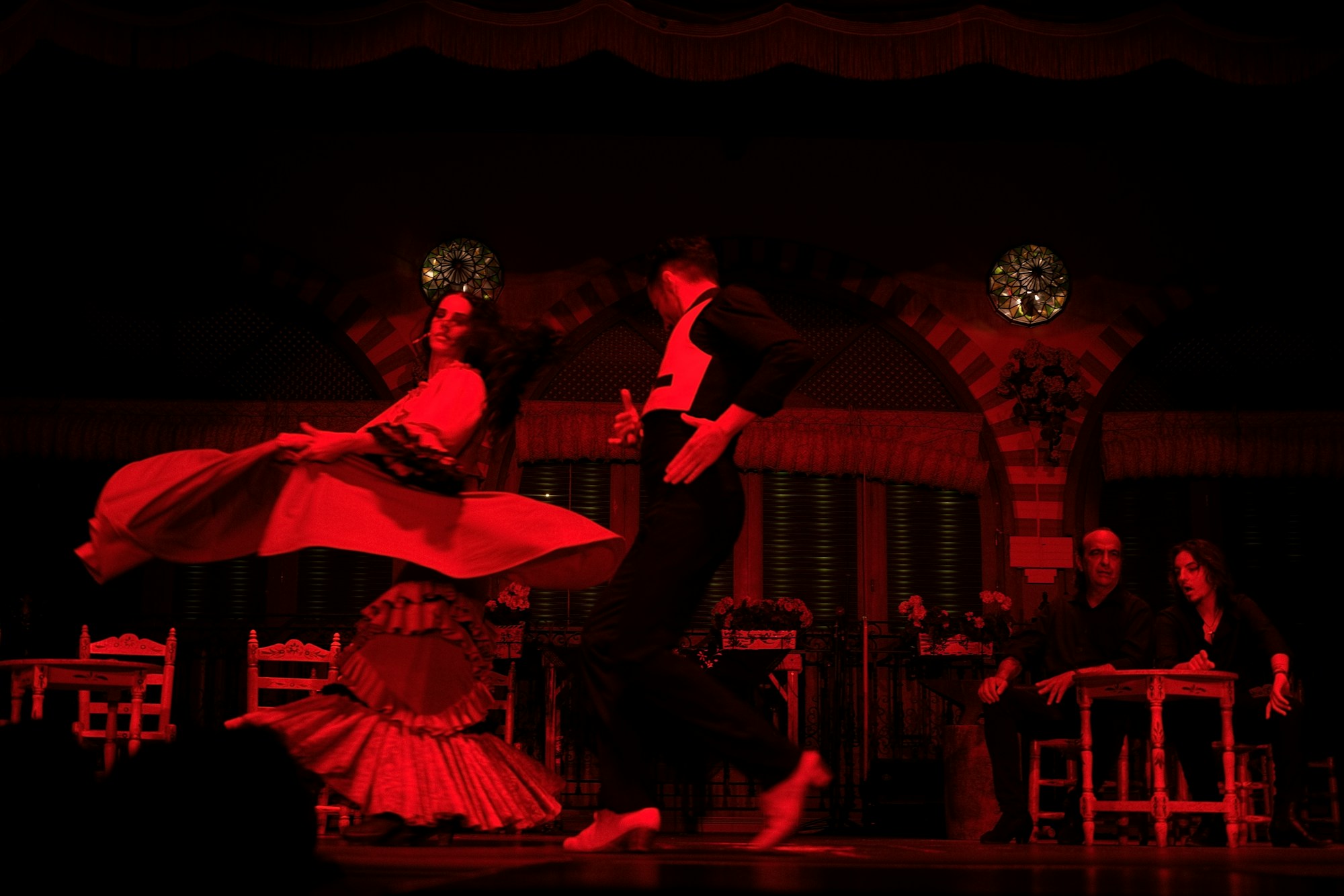
In the casetas, you don’t stay seated for long. As soon as the first notes of sevillanas ring out, everyone gets up. This popular dance, the festive cousin of flamenco, consists of four codified sequences (paseíllos, pasadas, careos, remate) that every Sevillan learns from childhood. It is danced in pairs, face to face, with a grace that never excludes spontaneity.
Sevillanas are not a spectacle: they are an invitation. Even beginners are encouraged to join the dance floor. If you feel intimidated, several dance schools offer accelerated pre-Feria workshops of one to three sessions, for 15 to 30 EUR. It’s an investment that multiplies the pleasure tenfold once you’re there.
Experiencing dance during the Feria
- Sign up for a sevillanas class at an academia in the Triana neighborhood upon arrival
- Watch experienced couples from the edge of the dance floor before joining in
- For pure flamenco, head to the tablaos on Calle Betis in Triana (shows from 25 EUR)
- Book a guided tour of the Triana flamenco quarter (around 15 EUR) to understand the roots of this tradition
The Feria also has more than 50 casetas accessible to people with reduced mobility, with ramps and adapted spaces. Inclusion is an integral part of the celebration.
4. The Paseo de Caballos: the equestrian parade
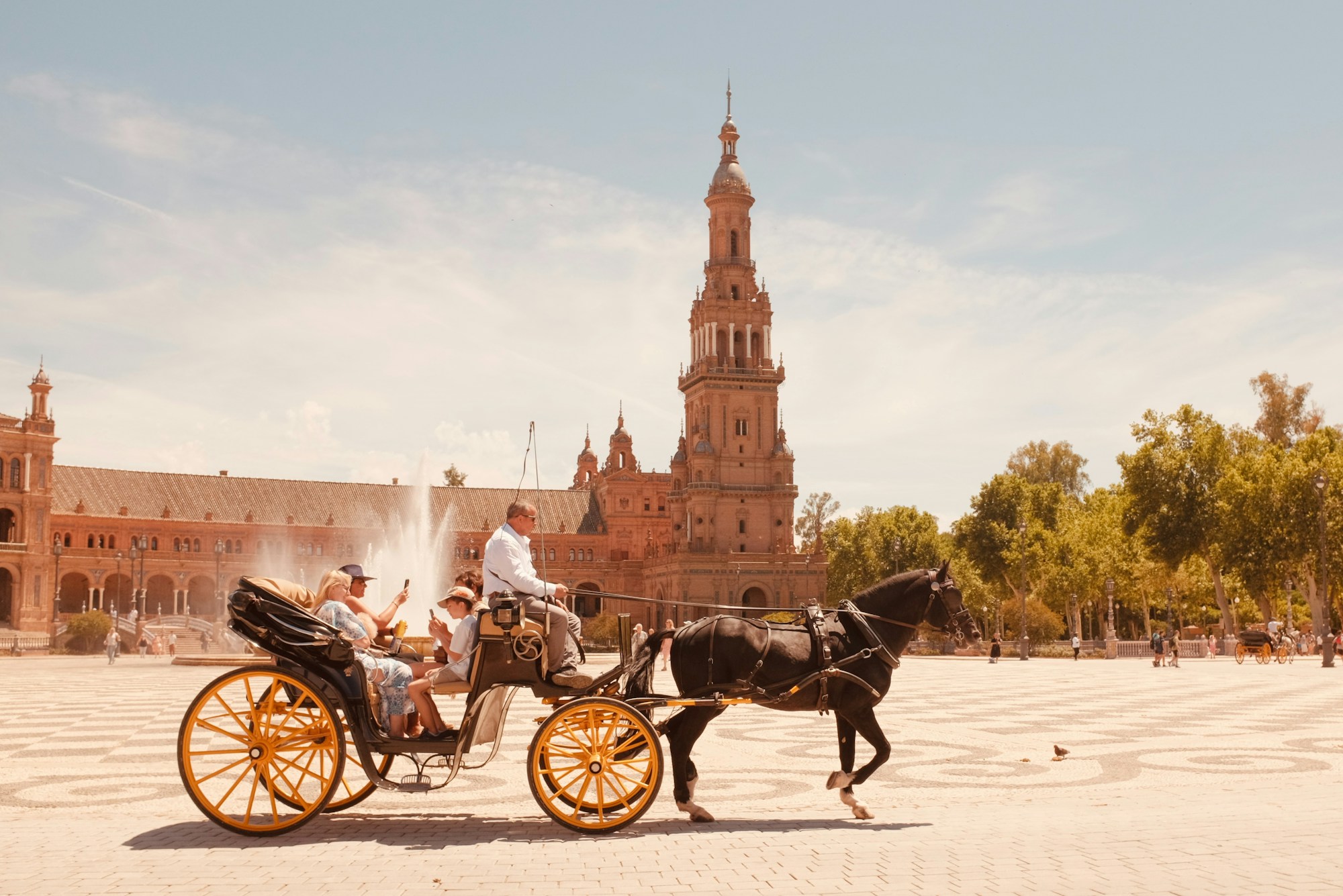
1,400 carriages under the April sun
Every day between noon and 8 PM, the Real transforms into an equestrian carousel from another century. 1,400 registered carriages and riders walk along the main avenues, notably Calle Alfonso de Borbón, Calle Juan Belmonte and Calle Antonio Bienvenida. Men in traje corto lead groomed Andalusian horses, while women in ruffled dresses sit sidesaddle behind them or in flower-adorned carriages.
The spectacle is entirely free for spectators. Simply position yourself along the avenues and enjoy. Photography enthusiasts will find scenes worthy of a Pedro Almodovar film, with vivid colors, golden dust and manes blowing in the wind.
Practical information
- The most beautiful carriages pass between 1 PM and 4 PM, when the Andalusian light is most flattering
- To rent a carriage, negotiate the price before boarding: expect 50 to 150 EUR per hour depending on size and decoration
- Settle on the terrace of a public caseta overlooking the main avenue to combine tapas and spectacle
- Bring a hat and sunscreen: temperatures easily reach 28-30 °C during the day
5. Dress code: traje de flamenca and traje corto 2026
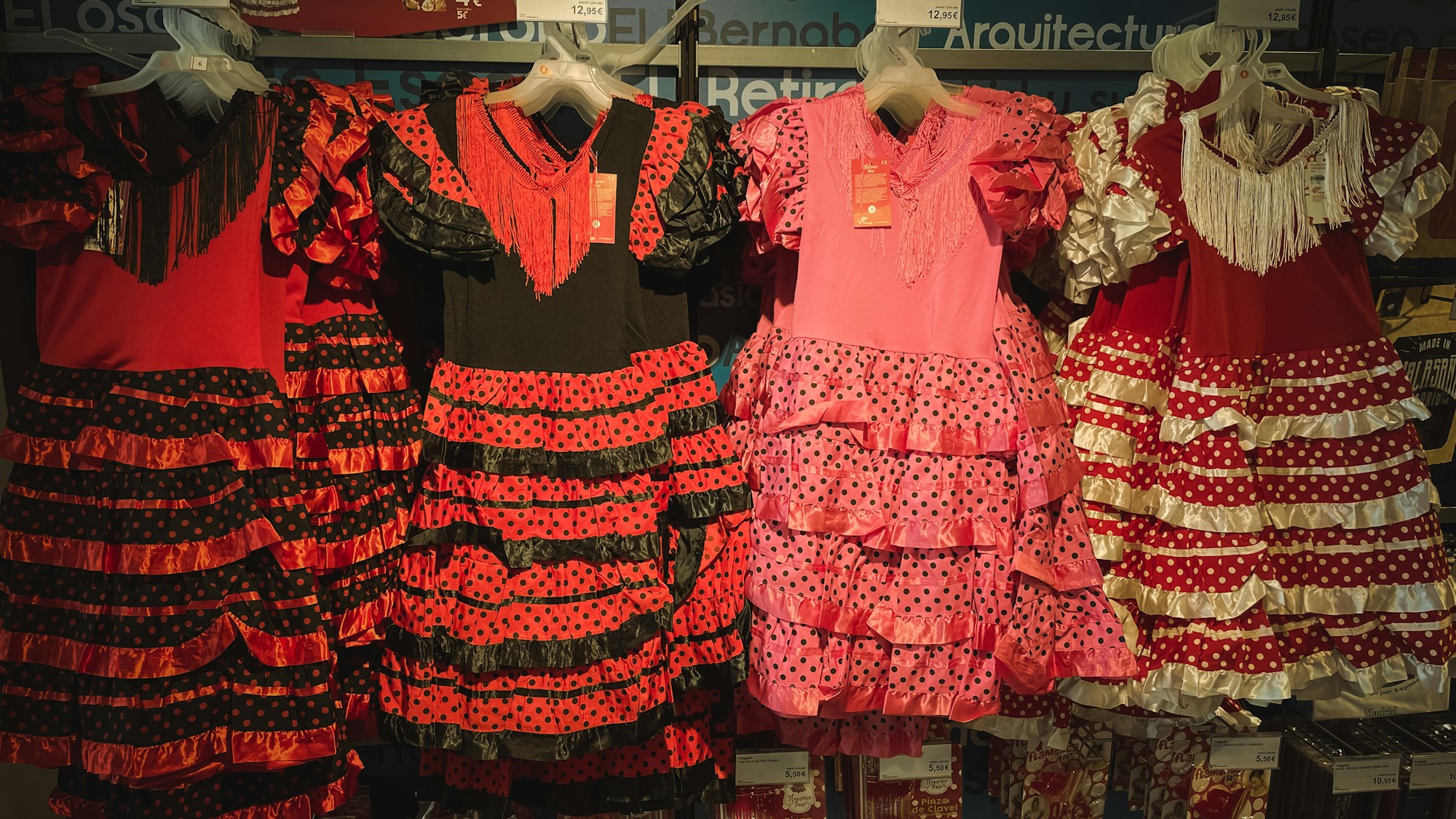
Dressing for the Feria
Wearing the traje de flamenca is not mandatory, but around 80% of women at the Feria do, and you’ll feel more immersed in the atmosphere by adopting the traditional outfit. According to Andalucia Mia, the 2026 trends favor warm tones, red, emerald green and hip-cut silhouettes (fitted at the hip) that modernize the traditional look.
A new traje de flamenca costs between 200 and 600 EUR depending on fabric and craftsmanship. For tighter budgets, the second-hand market is well-developed in Seville: 30 to 80 EUR in trajes de segunda mano shops in the city center and on local Facebook groups. Accessories complete the outfit: mantón (shawl), flower for the hair, pendientes (earrings) and fan. Expect a minimum of 15 to 30 EUR for a basic set of accessories.
Dress code guide
- Women: Traje de flamenca with ruffles (volantes), shawl, flower in the hair, comfortable heeled shoes
- Men: Traje corto (short jacket, high-waisted trousers, boots), cordobés hat, or smart city attire
- Tourists: If you don’t want to invest in a traje, opt for elegant clothing: polka-dot dress, well-cut shirt and trousers
- Shoes: Prioritize absolute comfort. You’ll be walking and dancing for hours on a dusty ground
6. The gastronomy of the Feria
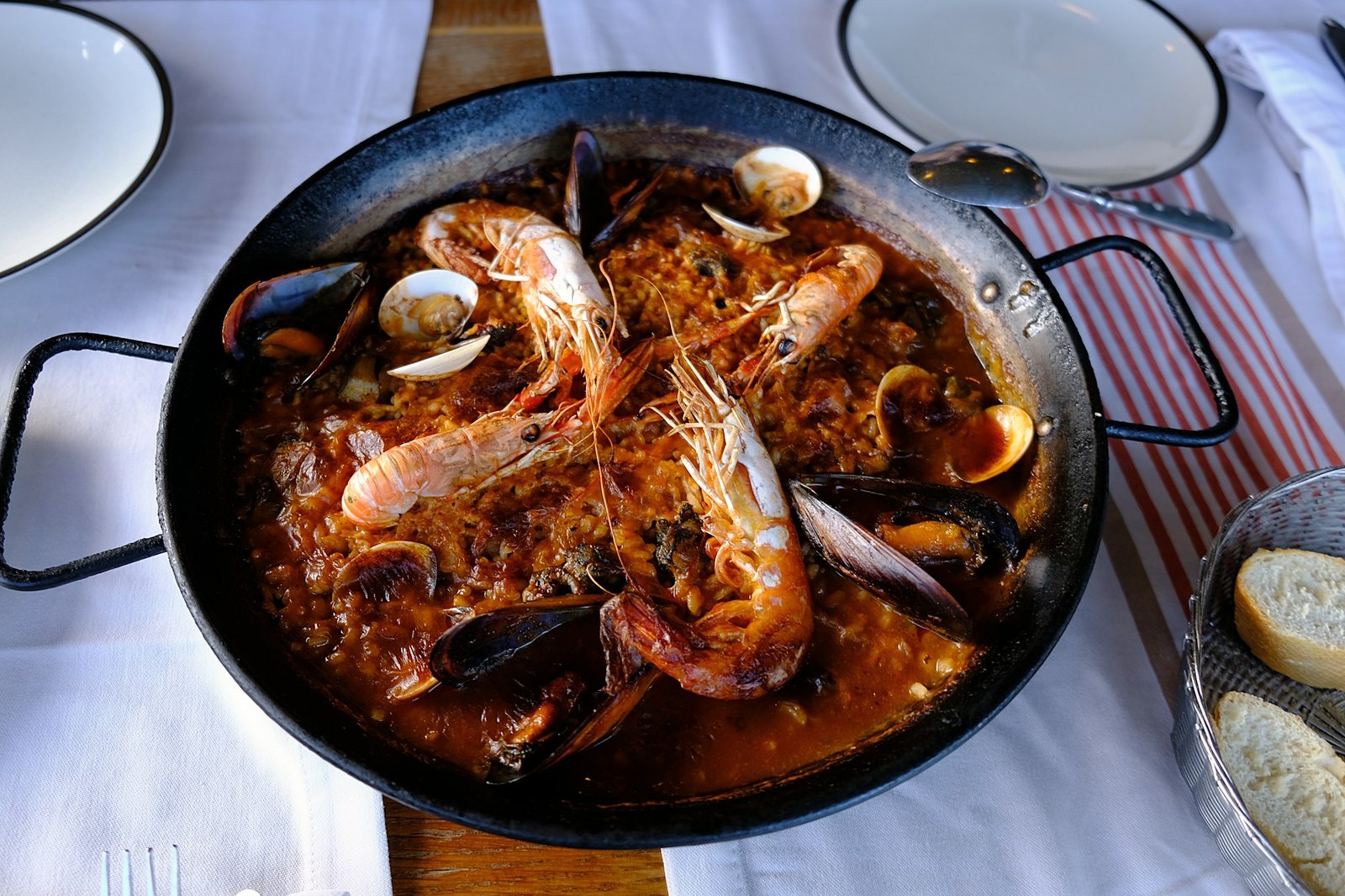
From rebujito to dawn churros
The Feria is experienced as much through the stomach as through the feet. Each caseta prepares its own specialties, but certain classics appear everywhere. Pescaíto frito (an assortment of small fried fish) is the signature dish, served in paper cones. Rebujito, a cocktail of manzanilla (dry fino from Sanlucar) and 7-Up, is the official drink of the Feria: refreshing, deceptively strong and omnipresent. Millions of liters are consumed in six days.
Beyond the rebujito and pescaíto, the casetas offer a range of Andalusian cuisine: icy gazpacho, hand-carved jamón ibérico, tortilla de patatas, gambas al ajillo and salmorejo (cold tomato cream, thicker than gazpacho). Portions are generous and prices reasonable in public casetas.
Must-try dishes
- Pescaíto frito: Anchovies, shrimp, fried squid. The quintessential Feria dish
- Rebujito: Manzanilla + lemon soda. Insist on real manzanilla, not just any white wine
- Jamón ibérico de bellota: Carved by knife before your eyes. An art form in itself
- Churros con chocolate: The dawn tradition, when heading home from the Feria at first light. A mandatory stop at a churrería
Food budget: expect between 40 and 70 EUR per day per person for proper eating and drinking. This figure drops if you stick to tapas and rebujitos, and rises if you opt for jamón de bellota and quality fino.
7. Calle del Infierno: the funfair
87,000 m² of adrenaline
Adjacent to the Real, the Calle del Infierno (literally « Hell Street ») is Spain’s largest funfair during the Feria. Spread across 87,000 m², more than 400 attractions thrill young and old alike: roller coasters, a Ferris wheel with a view of the illuminated Real, bumper cars, haunted houses and shooting galleries.
It’s a paradise for families during the day and for night owls after midnight. Entrance to the area is free, and each ride costs between 2 and 10 EUR. For a full evening with rides, cotton candy and churros, budget 30 to 50 EUR per person.
Good to know
- Rides generally open around 12 PM on weekdays and stay active until 3-4 AM
- Wednesday is often children’s day with reduced prices on some rides
- The Ferris wheel offers the best panoramic view of the entire illuminated Real
- Late in the evening, the atmosphere becomes more festive and adult-oriented: an excellent continuation of the night after the casetas
8. Accommodation and transport
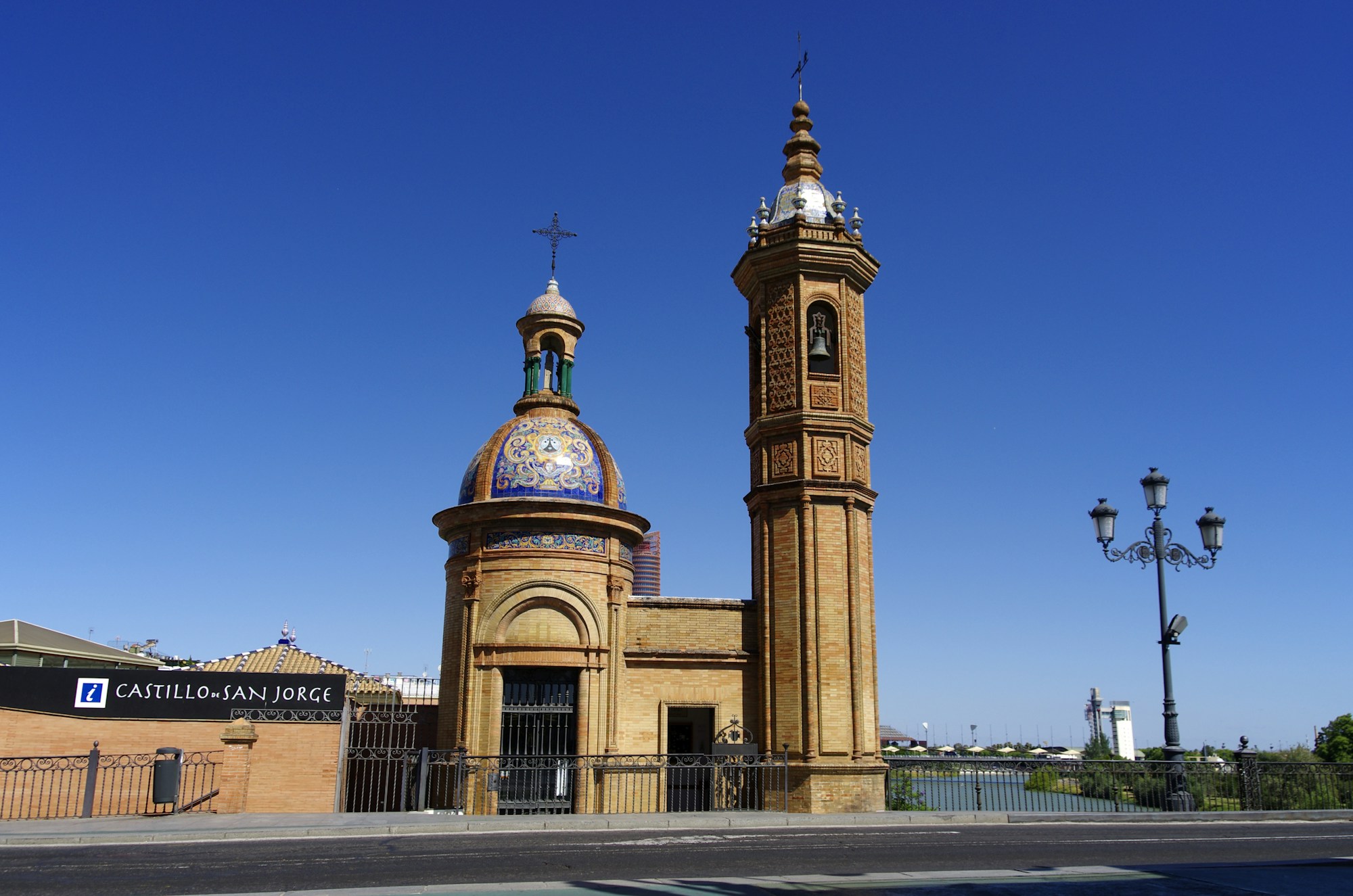
Where to stay and how to get around
Hotel prices in Seville double, even triple during the Feria. Expect 150 to 400 EUR per night depending on category and proximity to the Real. The golden rule: book 4 to 6 months in advance. The best establishments are snapped up by November.
Recommended neighborhoods
- Triana: Our top pick. An authentic neighborhood on the other side of the Guadalquivir, 15 minutes on foot from the Real. Tapas bars, ceramic workshops, village atmosphere within the city
- Los Remedios: The most practical. The Real is in this very neighborhood. Ideal for those who want to walk home at 4 AM
- Alameda de Hércules: The trendiest. A neighborhood of bars and restaurants, young and alternative atmosphere. A bit farther from the Real but very well connected
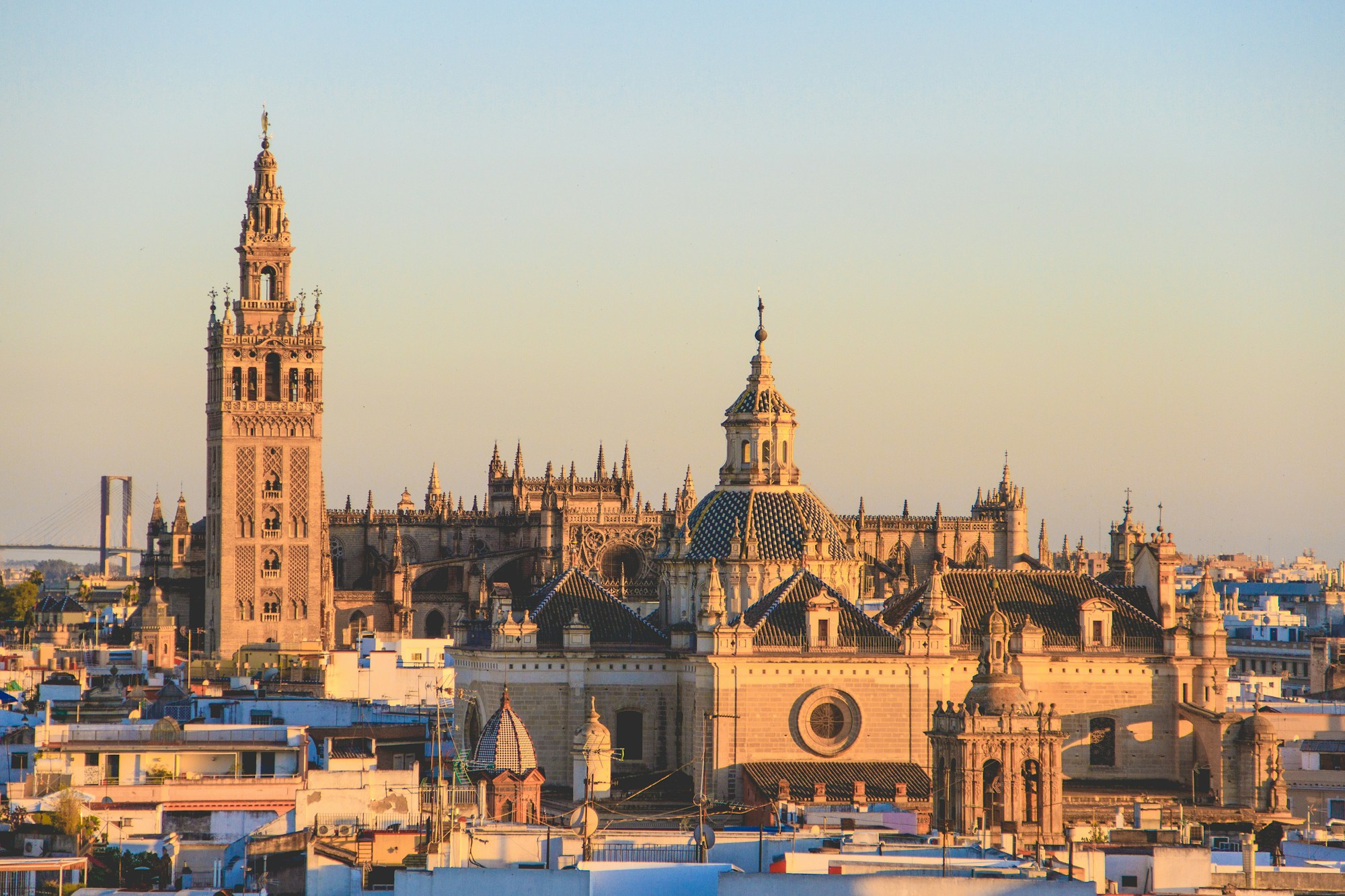
- Centro / Santa Cruz: For combining the Feria with cultural visits (Alcázar, Cathedral). Accessible by bus
The budget trick: sleep in Córdoba
For budget-conscious travelers, a smart alternative: book a hotel in Córdoba (much cheaper) and take the AVE (high-speed train) to Seville. The journey takes only 42 minutes and prices range from 15 to 30 EUR one way. You enjoy the Feria in the evening and head back to sleep in an affordable room.
Getting around Seville
- Bus: Lines 5, 6, 41, C1 and C2 serve the Real de la Feria. Service is reinforced during the week
- Metro: Plaza de Cuba station (line 1), 10 minutes on foot from the main entrance
- On foot: From Triana or Los Remedios, everything is walkable. From the historic center, allow 25-30 minutes on foot
- Taxi: Feria surcharge applies. Prefer ride-hailing apps (Uber, Cabify) and compare fares
9. Budget summary
How much does the Feria de Abril cost?
Good news: access to the Real de la Feria is completely free. It’s accommodation, food, drinks and extras that make the bill vary. Here are three realistic scenarios for a traveler in 2026, based on cross-referenced data from EuroTravelo and Visit Andalucia.
Budget: 60-90 EUR/day
- Hostel accommodation (25-40 EUR) or hotel in Córdoba + AVE
- Tapas and rebujitos in public casetas (20-30 EUR)
- Public transport (5-10 EUR)
- No traje (smart city attire)
Mid-range: 150-220 EUR/day
- 3-star hotel in Seville (80-150 EUR)
- Full meals in casetas + tapas (40-50 EUR)
- Traje de flamenca rental or second-hand (amortized over the week)
- A few rides at the Calle del Infierno (15-20 EUR)
Comfort: 300-500 EUR/day
- 4-5 star hotel or boutique hotel in Los Remedios (200-400 EUR)
- Access to private casetas through the hotel
- New traje de flamenca and accessories (amortized)
- Carriage ride, private flamenco show, gourmet dinner
10. A brief history: from cattle market to global festival
179 years of evolution
The Feria de Abril traces back to 1846, when two Seville town councillors, the Basque José María Ybarra and the Catalan Narciso Bonaplata, proposed an annual cattle and agricultural market to Queen Isabel II, who approved it. According to the fair’s documented history, the first fair opened on April 18, 1847, at the Prado de San Sebastián, purely as a trading event for livestock and farm goods.
The festive side known today came a year later: in 1848, the first three casetas appeared, put up by the Duke and Duchess of Montpensier, Seville’s Town Hall, and the Casino of Seville. From that seed of three tents, the fair has grown to 1,253 casetas in 2026. It has been held at its current site, the Real de la Feria in Los Remedios, since 1973.
Frequently Asked Questions
Is entry to the Real de la Feria free?
Yes, entry to the Real de la Feria is entirely free, 24 hours a day during the six days of the festival. You can stroll freely among the casetas, watch the Paseo de Caballos and soak up the atmosphere without spending a cent. Only food and drinks in the casetas and rides at the Calle del Infierno are paid.
How do you get into a private caseta?
The most reliable method is to ask your hotel: many have partnerships with casetas and can get you an invitation. You can also visit the Tourist Caseta (Calle Pascual Márquez 225-229), which is open to everyone. Finally, the 253 public casetas (districts, trade unions, associations) welcome everyone without distinction.
Is it mandatory to wear a traje de flamenca?
No, it’s not mandatory, but strongly recommended to fully immerse yourself in the atmosphere. Around 80% of women wear the traje de flamenca. If you prefer not to invest, elegant attire works perfectly fine. However, avoid shorts, flip-flops and overly casual outfits, which stand out on the Real.
Which days are the busiest?
Wednesday is traditionally the busiest day as it’s often a local public holiday. Friday evening and Saturday also reach peak attendance. For a more relaxed experience, visit on Tuesday (opening day) or Thursday during the daytime. Sunday is family-oriented and quieter.
How do you get tickets for the bullfight?
The Feria coincides with bullfighting season at the Real Maestranza de Caballería, one of Spain’s most prestigious bullrings. Tickets are available on servitoro.com and entradas-toros-sevilla.com. Prices range from 20 EUR (sunny seats, upper stands) to over 200 EUR (shade, front row). Book several weeks in advance for weekend corridas.
What’s new at the 2026 Feria?
The 2026 edition marks a notable expansion with 200 additional casetas, bringing the total to 1,253. Among the new initiatives, some casetas offer virtual reality tours of Sevillan monuments, a first in the history of the Feria. Accessibility has also been strengthened, with more casetas adapted for people with reduced mobility.
Can you combine Semana Santa and the Feria de Abril?
Yes, but you’ll need to plan a long stay or two closely-spaced trips. The two festivals are typically about two weeks apart: in 2026, Semana Santa ran from March 29 to April 5 and the Feria de Abril from April 21 to 26. Combining both is feasible in a single 4-week trip, or by exploring Andalusia in between (Granada, Córdoba, Ronda). Planning ahead: our Seville Holy Week 2027 guide already covers next year’s dates.
When is the closing fireworks display?
The closing fireworks are launched on Sunday, April 26 around 11 PM from the Real de la Feria. It’s the highlight of the week, a moment of collective emotion where Sevillanos cry and applaud at the same time. The best viewpoints are on the Triana bridge and along the Guadalquivir. Arrive at least 1 hour early to find a good spot.
Sources
- Spain.info — Feria de Abril de Seville
- Visit Seville — Seville April Fair
- Andalucia.com — Feria de Abril Guide
- EuroTravelo — Feria de Abril Seville: practical guide
- Visit Andalucia — Feria de Abril Seville
- Andalucia Mia — Feria de Abril: everything you need to know
- La Belle Séville — Feria de Abril 2026
- Spanaly — Feria de Abril: complete guide
- Wikipedia — Seville Fair (history)
Research conducted in March 2026, refreshed in July 2026 (broken source links repaired, history section added).
Plan your trip to the Feria de Abril
Discover dozens of detailed Andalusia itineraries created by our community of travelers. From Seville to Granada via Córdoba and Ronda, find inspiration for a journey that goes far beyond the Feria.
Explore Andalusia itineraries