
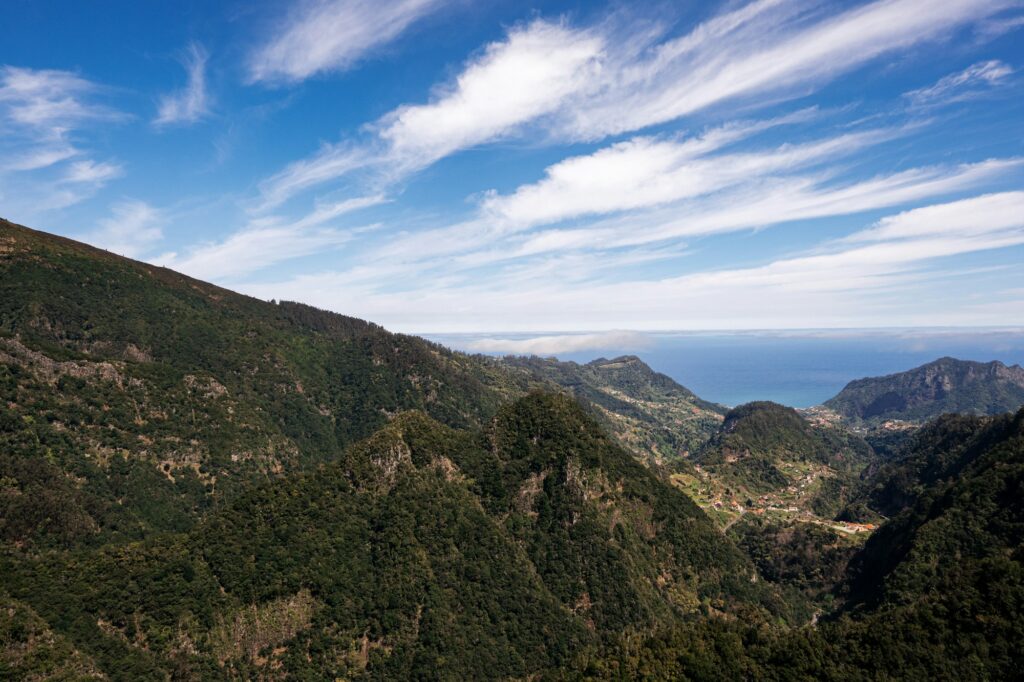
Named TripAdvisor’s #1 trending destination for 2026, Madeira is no longer a well-kept secret — and yet the island has lost none of the magic that earned it the nickname « Island of Eternal Spring ». This Portuguese archipelago floating in the middle of the Atlantic, just 3h30 from most European capitals, packs an astonishing concentration of everything that makes travelers’ hearts race: volcanic peaks soaring to 1,862 m above the clouds, ancient laurel forests listed by UNESCO, natural swimming pools carved from lava, and an island gastronomy of unsuspected richness.
In 2025, the archipelago welcomed 218,016 French visitors (+6.6%), confirming France as the third-largest source market after Germany and the United Kingdom. And this is just the beginning: 76% of travelers now favor slow tourism, preferring to explore a single destination in depth rather than rushing through a series of superficial getaways. Madeira answers this aspiration point by point — hikes along century-old levadas, authentic fishing villages, markets overflowing with tropical fruit, and Atlantic sunsets from vertiginous clifftops.
This complete guide gives you all the tools to discover Madeira in 2026: the must-sees, the hidden gems, the new hiking booking rules, a detailed budget breakdown, and the best times to visit. Whether you are a seasoned hiker, a slow travel enthusiast, or an epicurean in search of new flavors, the island will find a way to surprise you.
1. Funchal: the capital with a thousand faces
Gateway to the archipelago and gastronomic capital
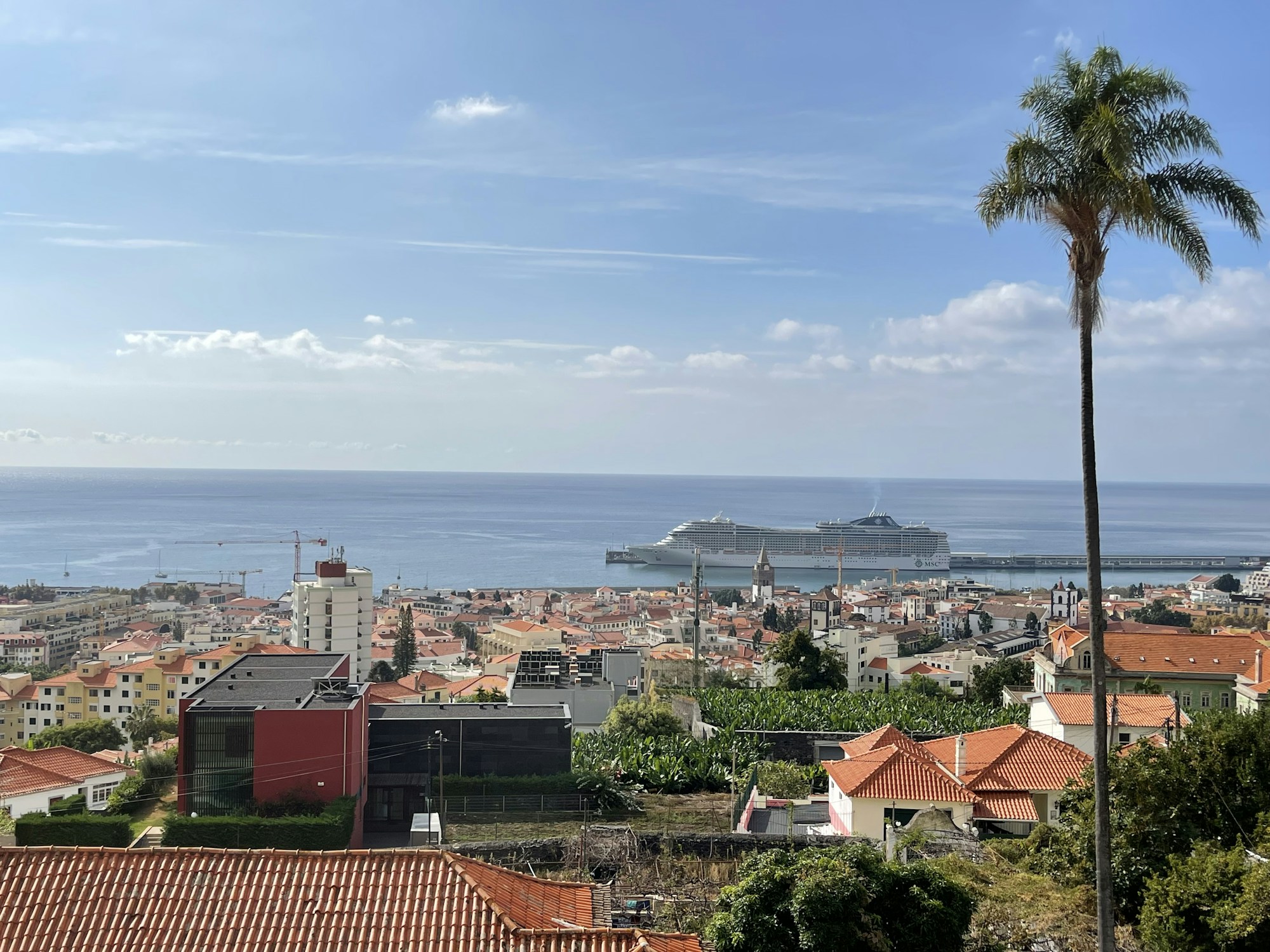
Funchal is much more than a mere jumping-off point for hikes. The capital of Madeira is a vibrant, colorful, and deeply captivating city. Its Mercado dos Lavradores (Workers’ Market) is an explosion of color: tropical fruits unavailable on the European mainland — custard apples, passion fruit, miniature bananas —, deep-sea fish, and exotic flowers in abundance. The city also boasts a world-class gastronomic scene with three Michelin-starred restaurants.
The historic Zona Velha (Old Town) district has undergone a remarkable artistic renaissance. The « Portas Abertas » project transformed the doors of houses into painted artworks by local and international artists, turning every alleyway into an open-air gallery. Higher up, the Monte Palace Tropical Garden, accessible by the famous cable car, offers a breathtaking panorama over Funchal Bay and botanical collections from around the world.
Funchal’s must-sees
- Mercado dos Lavradores: indoor market — taste fresh tropical fruits (custard apple, pitanga, tamarillo) and exotic flowers
- Zona Velha: door street art, trendy bars, authentic restaurants — the most photogenic neighborhood in the city
- Monte Palace: tropical garden + cable car + descent by carreiros do Monte (traditional wicker toboggans)
- Madeira Wine Lodges: Blandy’s Wine Lodge for a tasting of the famous fortified wine (from €6)
2. PR1 — Pico do Arieiro to Pico Ruivo: the legendary hike above the clouds
The roof of Madeira: from the third to the highest peak
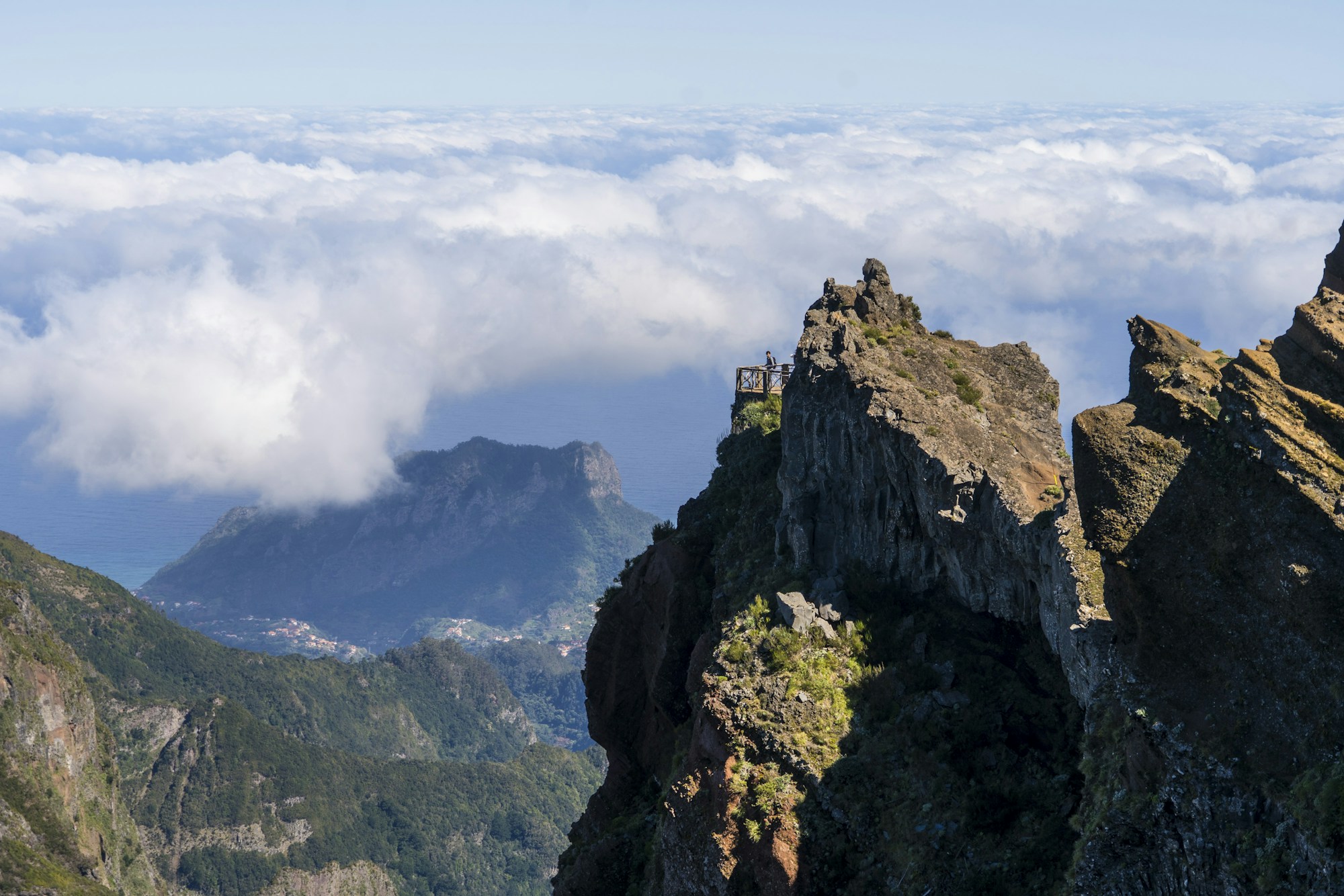
The PR1 is Madeira’s most iconic hike. This trail connects Pico do Arieiro (1,818 m), the island’s third-highest peak, to Pico Ruivo (1,862 m), the highest point. The experience is unlike anything else in the world: you literally walk above the clouds, with 360° panoramas over the Atlantic Ocean and the island’s deep valleys. The trail passes through tunnels cut into the volcanic rock (headlamp required), skirts dizzying ridges, and delivers viewpoints that rank among the most spectacular in Europe.
New in 2026: from 1 January 2026, advance booking is mandatory for all popular PR trails. Use the SIMplifica platform (simplifica.gov.pt) to reserve your time slot. This measure aims to protect the trails and limit overcrowding.
Practical tips
- Start early: set off before 8 am to avoid the clouds that build up mid-morning and to enjoy the golden morning light
- Equipment: waterproof hiking boots, headlamp (tunnels), layered clothing (10 °C difference from the coast), water and snacks
- Booking: mandatory since January 2026 on simplifica.gov.pt
- Alternative: possible as a one-way trip with a taxi back (~€25) or a shuttle from Achada do Teixeira (shorter 5.6 km trail)
3. The Levadas: hiking along century-old irrigation canals
PR6 — Levada das 25 Fontes & PR9 — Levada do Caldeirão Verde
The levadas are the network of irrigation canals that have crisscrossed Madeira since the 16th century, carrying water from the mountains to the terraced farmland below. Today, the paths that run alongside these canals form a hiking network unlike anywhere else in the world — flat and accessible trails that wind through laurel forests, natural tunnels, and spectacular waterfalls.
PR6 — Levada das 25 Fontes (the 25 Springs)
This is probably the most photographed hike in Madeira, and for good reason: the trail ends in a natural amphitheater where 25 springs simultaneously gush from moss-covered walls, feeding a deep-blue pool. The trailhead is at Rabaçal, accessible by shuttle from the Paul da Serra plateau car park. The path winds through laurissilva forest and offers plunging views over the valley.
PR9 — Levada do Caldeirão Verde (the Green Cauldron)
Wilder and less crowded than the PR6, the PR9 starts from Queimadas Forest Park (near Santana) and leads to a 100-meter waterfall plunging into an emerald pool framed by sheer cliffs. The trail passes through four tunnels (headlamp essential) and skirts impressive drops. For the most adventurous, you can extend 2 km further to Caldeirão do Inferno (the Hell’s Cauldron), even wilder and more spectacular.
Alternative trails off the beaten path
If you’re after solitude, lesser-known levada trails offer the same magic without the crowds. The Levada Velha do Rabaçal traverses some of the oldest sections of the laurissilva forest, the Levada da Ribeira da Janela winds through breathtaking tropical scenery, and the Levada do Furado passes through a natural green tunnel where light barely filters through.
- PR6 (25 Fontes): 11 km, 3–4h, moderate difficulty — the most photogenic
- PR9 (Caldeirão Verde): 13 km, 4–5h, moderate — the most spectacular with its tunnels
- Levada Velha do Rabaçal: less crowded, ancient forest, mystical atmosphere
- Levada do Furado: natural green tunnel, perfect for photographers
4. Porto Moniz and Seixal: volcanic pools and black sand beach
Wild swimming between lava and the Atlantic
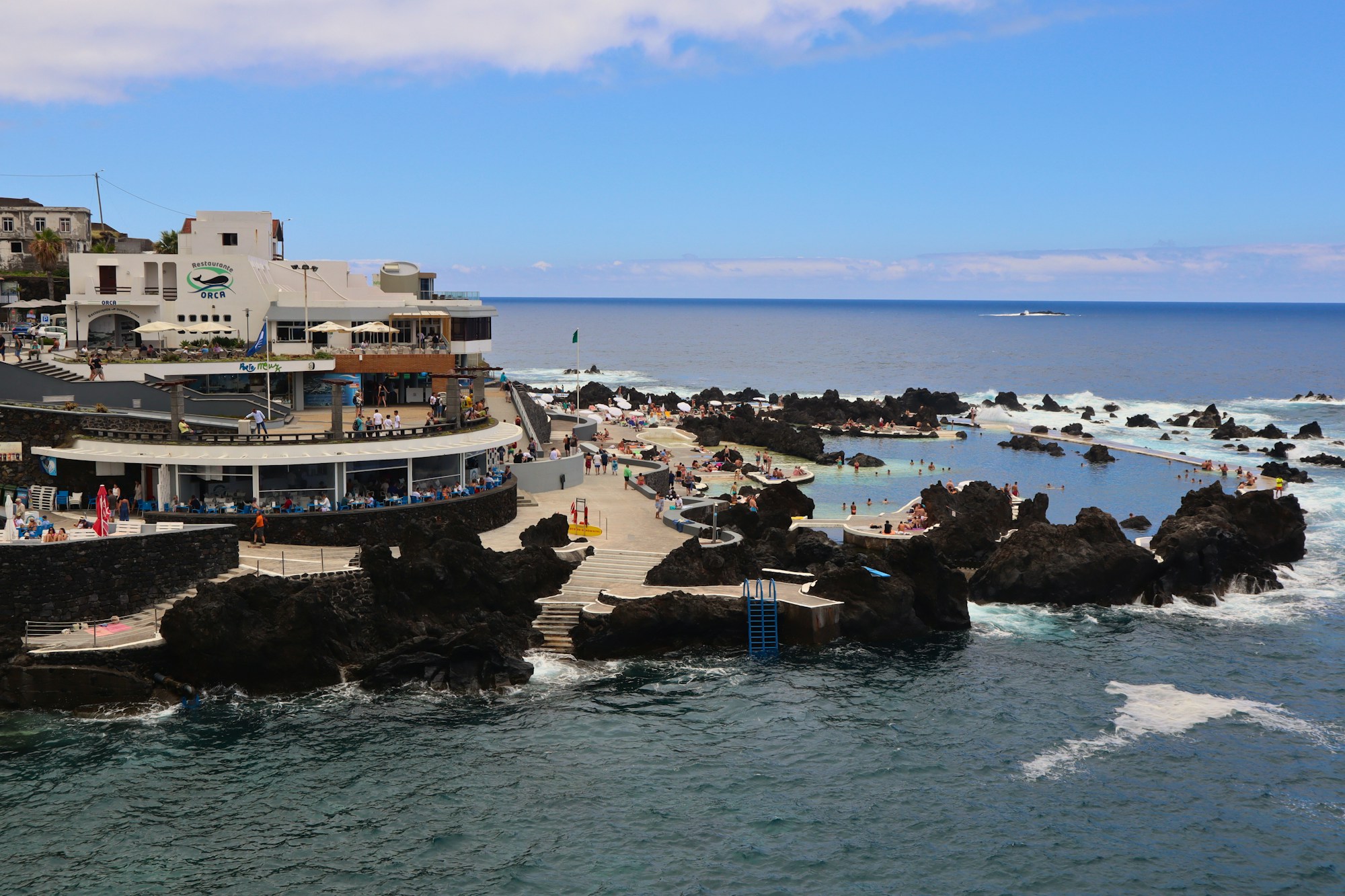
Nestled on Madeira’s northwest coast, the natural pools of Porto Moniz are a captivating geological wonder: carved into raw volcanic rock, they offer an extraordinary swimming experience in crystal-clear seawater. The eastern pools are entirely natural and free; the western pools, gently improved with walkways and changing rooms, charge a small fee. Both options are ideal for families, with shallow areas for children and deeper basins for stronger swimmers.
Seixal: the hidden black pearl of the north
Fifteen minutes east of Porto Moniz, Seixal is the best-kept secret on the north coast. Everyone rushes to Porto Moniz, but those in the know prefer Seixal — its black volcanic sand beach at the foot of lush cliffs, its natural lava pools (including a magnificent volcanic arch), and its preserved wild atmosphere. Entry is free and the place perfectly captures the raw coastal beauty of Madeira.
- Porto Moniz: volcanic natural pools, great for families, seafood restaurants
- Seixal: black sand beach, free natural pools, lava arch — far less touristy
- Coastal road: the road between the two villages hugs the cliff and delivers spectacular panoramas
- Véu da Noiva: on the way, stop at the miradouro to admire the « Bridal Veil » waterfall that plunges directly into the ocean
5. Fanal Forest: the ghostly world of the Laurissilva
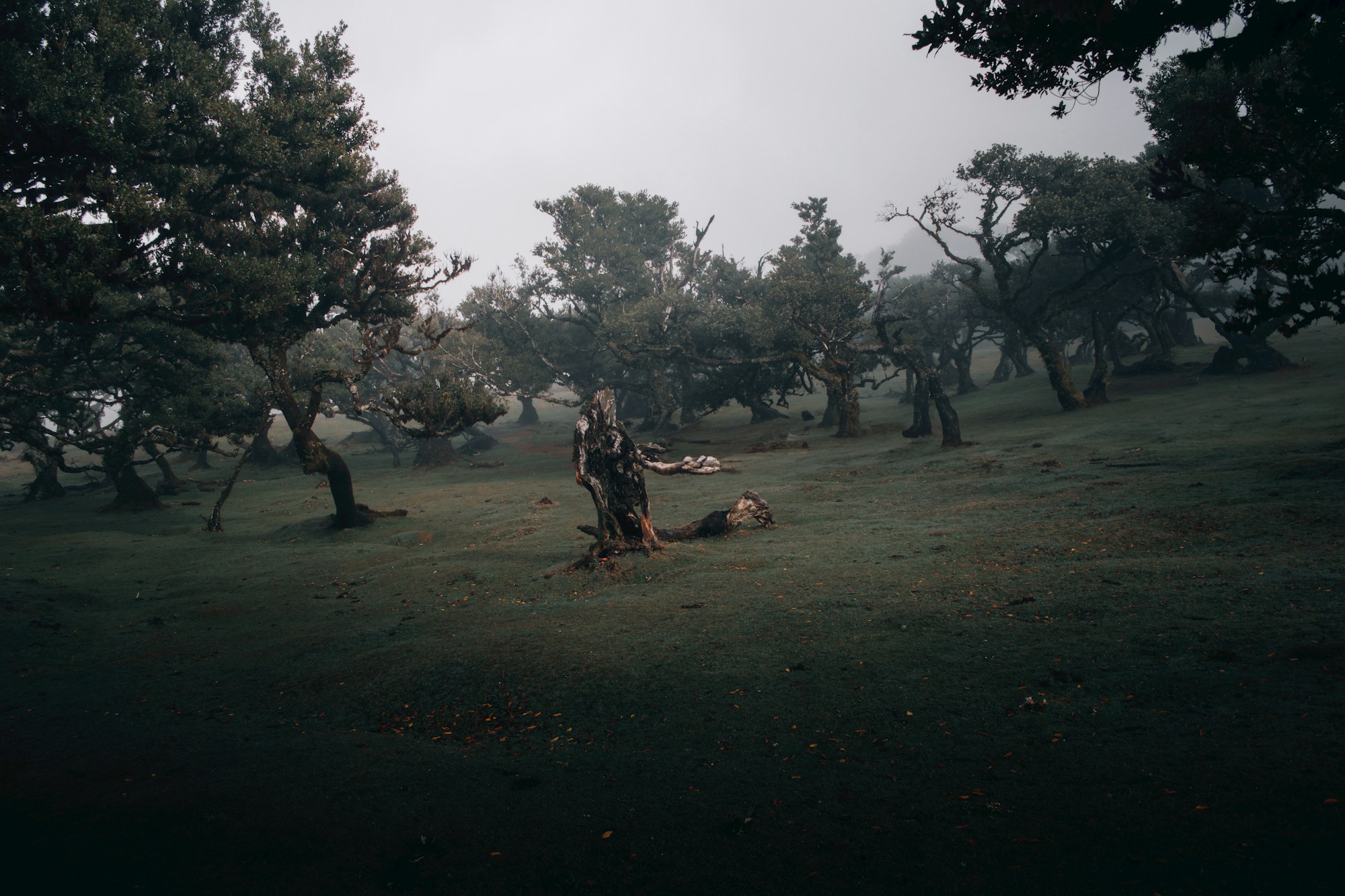
UNESCO World Heritage: the largest laurel forest in the world
Fanal Forest is one of the most otherworldly landscapes in Europe. Perched at 1,150 m altitude on the Paul da Serra plateau, it is home to centuries-old laurel trees with twisted trunks, draped in moss and wrapped in an almost permanent spectral fog. Madeira’s laurissilva forest, listed as a UNESCO World Heritage Site since 1999, is the largest surviving laurel forest in the world — a relic of the Tertiary era that once blanketed all of southern Europe.
With its ancient trees, misty atmosphere, and free-roaming cattle, Fanal looks like a scene from another world. It is a dreamlike place for photographers, hikers, and anyone seeking tranquility. The PR13 trail (Vereda do Fanal) begins in this forest and takes you through the heart of the island’s typical laurissilva forest.
- Access: by car from Funchal (~50 min), free parking at the forest entrance
- PR13 hike: Vereda do Fanal, trail through the heart of the laurissilva
- Photography: best conditions are on misty days — the forest reveals its full magic in the fog
- Combination: follow up with the PR6 (25 Fontes) from Rabaçal, a 15-minute drive away
6. Câmara de Lobos and Cabo Girão: vertiginous cliffs and whale watching
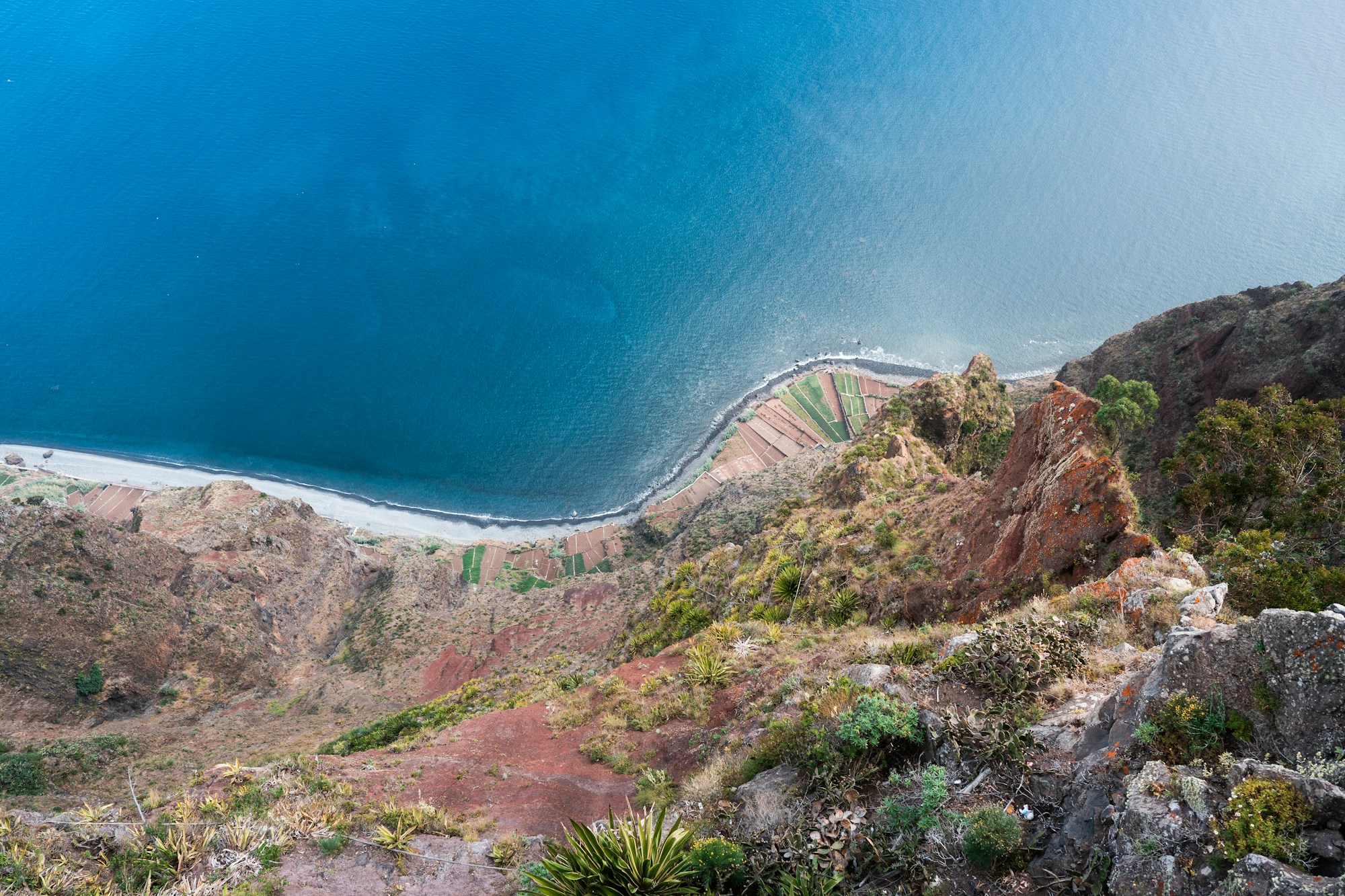
Churchill’s village and the highest sea cliff in Europe
Câmara de Lobos is a fishing village of colorful boats that inspired Winston Churchill during his stays on the island. Its steep alleyways, poncha bars, and picturesque harbor make it one of the most photogenic villages in Madeira. A few kilometers away, Cabo Girão houses one of the highest sea cliffs in Europe: 580 meters of pure vertigo above the ocean. The glass skywalk — a platform suspended over the void — delivers a breathtaking view for those without a fear of heights.
Whale watching: dolphins and whales year-round
Catamaran excursions departing from Funchal cruise along this spectacular coastline. Sightings are possible throughout the year, with at least 2 or 3 species always in the area — pilot whales, common bottlenose dolphins, Atlantic spotted dolphins, and occasionally sperm whales or humpback whales during their migration. Tours last 2.5 to 3 hours and cost between €35 and €90 depending on the catamaran type.
- Câmara de Lobos: colorful fishing village, poncha at a local bar, authentic atmosphere
- Cabo Girão: glass skywalk at 580 m, free access, dizzying view over the ocean
- Whale watching: catamaran excursions (2.5–3h), pilot whales and dolphins almost guaranteed
- Fajã dos Padres: secret beach accessible only by cable car from the top of Cabo Girão
7. Ponta de São Lourenço (PR8): the lunar landscapes of the east
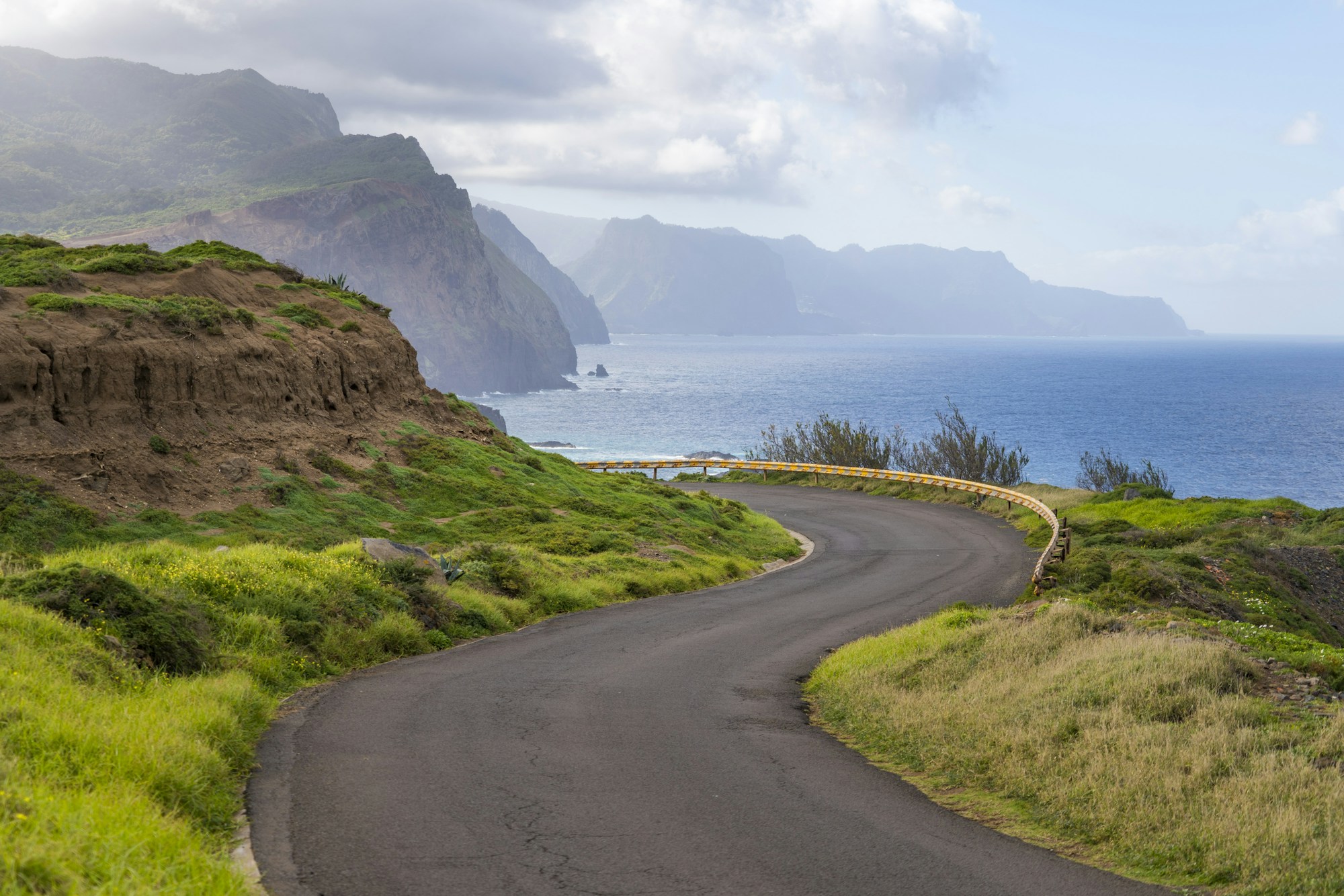
A striking contrast: from lush green to volcanic desert
This coastal hike runs along the eastern tip of the island and offers a striking contrast with the rest of Madeira: here, the lush vegetation gives way to an arid, mineral landscape, almost desert-like, swept by Atlantic winds. The São Lourenço peninsula is one of the few places in Madeira where bare volcanic rock is fully exposed, creating a lunar scenery radically different from the island’s usual abundance. The 360° ocean panoramas, the reddish cliffs, and the uninhabited islets offshore compose a scene of raw, untamed beauty.
- Starting point: Ponta de São Lourenço car park, near Caniçal
- Difficulty: moderate, some exposed sections in the wind — hiking boots recommended
- Sun protection: no shade on the trail — sunscreen and a hat are essential
- Combination: Casa do Sardinha (the easternmost point) offers a spectacular panorama on the return leg
8. Santana: fairy-tale houses and enchanted forests
The famous palheiros and Queimadas Forest Park
Santana is one of Madeira’s most famous postcard spots, known for its palheiros — colorful triangular thatched-roof houses that were once common across the island. Only a few remain, carefully preserved in the center of Santana. Beyond these iconic houses, the village offers lush landscapes, a Theme Park to discover local culture, and superb viewpoints accessible via short hikes.
Nearby is Queimadas Forest Park, the starting point for the PR9 trail (Caldeirão Verde). Even if you don’t attempt the full trail, visit the forest park — its traditional houses look straight out of a fairy tale, nestled amid ancient trees and giant ferns.
9. Gastronomy: Madeiran cuisine in 8 essential dishes
Island flavors you absolutely must try
Madeira is often underestimated as a gastronomic destination, but the island’s cuisine is a fascinating blend of Portuguese traditions and island influences. Here are the 8 specialties you simply cannot miss:
- Espetada Madeirense — Marinated beef skewers grilled over laurel branches, giving them a uniquely woody flavor. The island’s signature dish.
- Espada com Banana — Deep-sea black scabbardfish served with fried banana: a disorienting but utterly addictive combination that sums up the genius of Madeiran cooking.
- Lapas — Small shellfish grilled and bathed in garlic butter with a squeeze of lemon. Crispy on the outside and tender in the middle, a briny delight best paired with a local dry white wine.
- Bolo do Caco — A flat round bread made from wheat flour and sweet potato, baked on a hot stone, served piping hot with garlic butter. You’ll find it everywhere on the island.
- Milho Frito — Fried cornmeal cubes mixed with cabbage, a traditional side dish that accompanies many Madeiran plates.
- Bolo de Mel — Spiced sugarcane molasses cake with candied fruit, found in every bakery on the island.
- Madeira Wine — Globally recognized fortified wine, grown by the sea and on the plateaus for centuries. A tasting at Blandy’s is mandatory.
- Poncha — The traditional cocktail made from aguardente de cana (sugarcane spirit), honey, and lemon. Taberna da Poncha (Serra de Água) is THE reference — be prepared for locals to start singing and pour you a second round.
10. When to go and what budget to plan for
The Island of Eternal Spring: climate and detailed costs
Madeira owes its reputation as the « Island of Eternal Spring » to a temperate subtropical climate, shaped by the trade winds and the Gulf Stream. You’ll never be too hot or too cold. Here is the complete seasonal breakdown:
| Period | Weather | Ideal for | Notes |
|---|---|---|---|
| Jan.–Feb. | 14–19 °C, wetter | Low prices, whales, tranquility | Rain in the mountains |
| Mar.–Apr. | 14–20 °C, pleasant | Hiking, flowers in bloom | Crowds starting to build |
| May–June ⭐ | 16–23 °C, dry | Everything! Hiking + sea + Flower Festival | Best overall balance |
| Jul.–Aug. | 20–26 °C, sunny | Swimming, water sports | Crowds and high prices |
| Sept.–Oct. ⭐ | 20–23 °C, mild | Harvest season, warm sea, hiking | Slight increase in rainfall |
| Nov.–Dec. | 15–19 °C | NYE fireworks, quiet | Wetter at altitude |
The ideal periods are spring (May–June) and autumn (September–October), combining pleasant weather, lush nature, and moderate crowds. The best swimming conditions run from July to October, with a warmer sea (never below 18 °C) and diving visibility up to 40 m.
Detailed budget by traveler profile
The cost of living in Madeira is around 12% lower than in Western Europe. Restaurants are 32% cheaper, supermarkets 22% cheaper, and leisure activities 47% cheaper.
- Backpacker budget (€50–70/day): hostels €15–30/night, free hiking, market meals, local buses
- Mid-range budget (€100–150/day): double room ~€90, dinner at a restaurant ~€25, shared car rental, 1–2 paid activities
- Comfort budget (€200+/day): 4–5 star ocean-view hotels, fine dining, private excursions
- Return flight: from €136 in March from Paris. Direct flights from CDG, Orly, Beauvais, Nantes, Bordeaux, Lyon, Marseille. New EasyJet Nice–Funchal route launching in June 2026. Direct flights also available from many UK and European airports.
2026 Practical Checklist: preparing your Madeira trip
Everything you need to book and pack
Essential bookings before departure
- Time slot for PR hikes on simplifica.gov.pt (mandatory since January 2026)
- Rental car (supply is tight in high season — book 2–3 months ahead)
- Whale watching excursion (slots fill up quickly)
- Michelin-starred restaurants in Funchal (if planned)
Essential hiking gear
- Waterproof hiking boots, backpack with rain cover, waterproof jacket
- Headlamp (mandatory for tunnels on PR1, PR9 and other levada trails)
- Layered clothing (temperature can vary by 10 °C between the coast and the peaks)
- Sunscreen and a hat (especially for the PR8 Ponta de São Lourenço, with no shade)
Frequently asked questions about Madeira in 2026
Do you need to rent a car in Madeira?
Yes, it is highly recommended. Having your own vehicle radically changes how you explore the island: you gain the freedom to reach the best viewpoints, set off early, avoid crowds, and organize your days as you please. Fuel is around 30% cheaper than in Western Europe and there are no tolls. Expect to pay €25–45/day for a rental. A public bus alternative exists (Horários do Funchal), but schedules are limited outside Funchal.
Do you need to book hikes in advance in 2026?
Yes, it is now mandatory. Since 1 January 2026, advance booking is required for all popular PR trails. Use the SIMplifica platform (simplifica.gov.pt) to reserve your time slot. This measure aims to protect the trails in response to the surge in visitor numbers. Book as soon as your dates are confirmed, especially in high season (May–October).
How long should you stay in Madeira?
The average stay is 4.09 nights, but to truly explore the island — hikes, villages, gastronomy, north coast and south coast — allow 7 to 10 days. That is the ideal length to alternate active days (hiking, excursions) with relaxed ones (beaches, natural pools, tastings). A 5-day trip still lets you see the highlights if your schedule is tight.
Can you see whales and dolphins year-round?
Yes. You can see whales and dolphins year-round in Madeira, with at least 2 or 3 species always present. Common bottlenose dolphins are resident throughout the year, while other species (sperm whales, humpback whales, fin whales) vary by season. Catamaran excursions last 2.5–3 hours and cost between €35 and €90 per person.
Are there real sandy beaches in Madeira?
Natural sandy beaches are rare on the main island but they do exist. The black sand beach at Seixal is the most wild and spectacular. The beaches at Machico and Calheta offer excellent swimming conditions on the south coast. For fine white sand, the island of Porto Santo (2.5 hours by ferry from Funchal) has a continuous 9 km beach — one of the finest in the Atlantic.
Is Madeira a safe destination?
Absolutely. Madeira is a very safe island, with no particular security concerns. Hiking trails are well marked and can be done solo without worry. The local population is welcoming and accustomed to tourism. The only precautions to take are the usual ones: watch out for winding mountain roads and rapidly changing weather at altitude.
How do you get to Madeira from the UK and Europe?
Madeira is served by direct flights from numerous European cities including London, Manchester, Paris, Amsterdam, Frankfurt, and Lisbon, among others. The flight from London takes around 3h15–3h30 on average. Airlines including TAP Air Portugal, easyJet, Jet2, Ryanair, and TUI operate routes to Funchal. EasyJet is launching new routes in June 2026, further improving connectivity.
What language do they speak in Madeira?
The official language is Portuguese (a Galician-Portuguese variant), but English is near-universal in the tourism sector. Restaurant menus are frequently available in English in tourist areas, and most hotel and hospitality staff speak it comfortably. A few words of Portuguese (obrigado, bom dia) will always be appreciated by the locals.
Sources
- L’Écho Touristique — Madeira: over 215,000 French visitors in 2025
- InfoTravel — Madeira in line with traveler expectations
- Moustique — Why Madeira is the top trending destination for 2026
- Madeira.best — Guide to the PR1 hike Pico do Arieiro to Pico Ruivo
- Olá Daniela — Best hikes in Madeira (2026 booking rules)
- Journey Era — 25 best levada walks in Madeira
- Tim Tense — 6 must-do hikes in Madeira (maps, GPX, tips)
- More Life Adventures — Hidden gems of Madeira
- ZigZag On Earth — 12 hidden gems of Madeira off the beaten path
- Oh What A Knight — Top 25 things to do in Madeira
- Wine Tourism Portugal — Off the beaten path experiences in Madeira
- The Travel in Pink — 15 bucket list places in Madeira
- Terra Destination — Madeiran gastronomy: specialties and local addresses
- Madere-Portugal.com — The 10 best specialties of Madeira
- Madere.info — Discover Madeiran gastronomy
- Le Routard — Madeira travel guide
- Où et Quand — Budget and cost of living in Madeira
- Perspectives de Voyage — Budget and prices for a trip to Madeira
- Travelbase — When to visit Madeira: climate and best times
- ZigZag Voyages — When to visit Madeira (weather, whales, flowers)
- Partirou — When to visit Madeira: best period, climate, weather
- Remote Expeditions — Budget for visiting Madeira
- MisterTravel — Madeira strengthens its air connectivity
- Ocean Retreat — Michelin Guide Madeira
- GetYourGuide — Whale watching excursions from Funchal
- Sunbonoo — Catamaran whale watching tour
- Visit Madeira — Best off the beaten path levada hikes
- Madeira Lovers — The 15 best restaurants in Funchal
Research conducted on 2 March 2026
Ready to discover Madeira?
The Island of Eternal Spring is waiting for you. Start planning your trip with our detailed day-by-day itineraries so you don’t miss a single highlight of this exceptional destination.
Explore our Madeira itineraries