
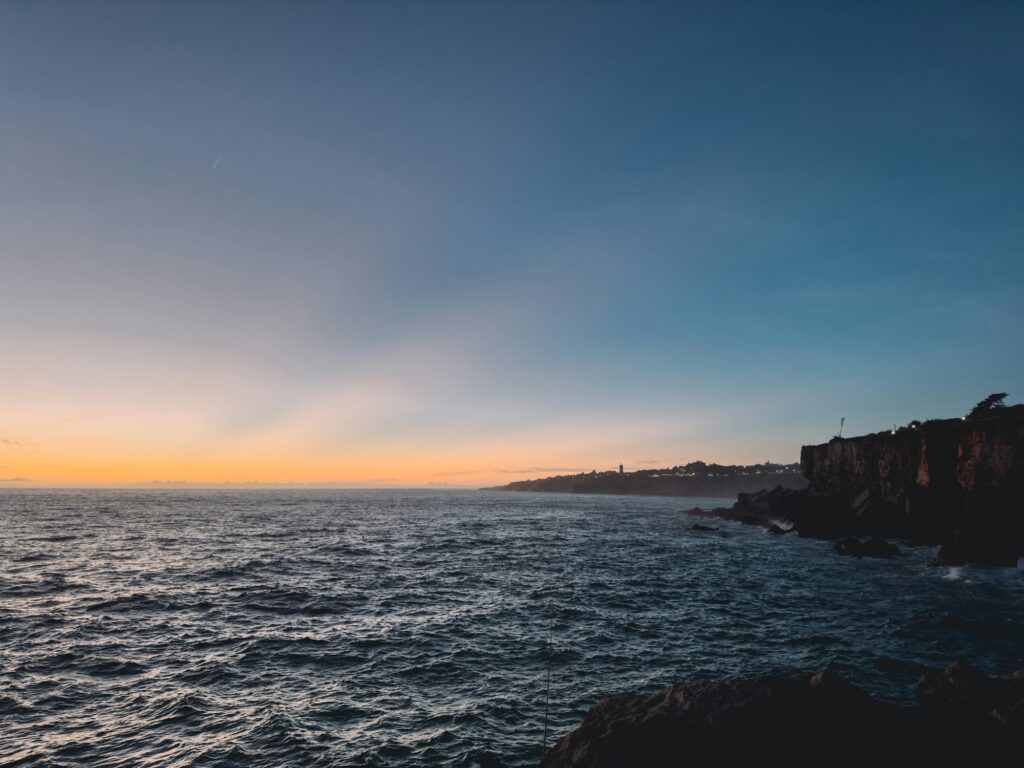
Just 30 minutes by train from Lisbon, one destination is on fire: Cascais. This jewel of the Portuguese Riviera — once a fishing village, then the summer residence of Portugal’s kings — is experiencing a staggering +460% surge in search volume in 2026. Travelers fleeing Lisbon’s long queues have discovered the best-kept secret of the Atlantic coast: pristine beaches, irresistible seafood, authentic nightlife, and a UNESCO-listed natural landscape stretching from dramatic cliffs to wild dunes. Welcome to Cascais — where Portuguese authenticity still holds its ground.
In 2026, Cascais hosted the Ageas Cooljazz festival in July, the Festas do Mar from 20 to 30 August with free concerts, and IRONMAN 70.3 was scheduled for 17 October. This guide covers beaches, food, the train from Lisbon and realistic budgets for every profile.
Verified on
1. Getting to Cascais from Lisbon
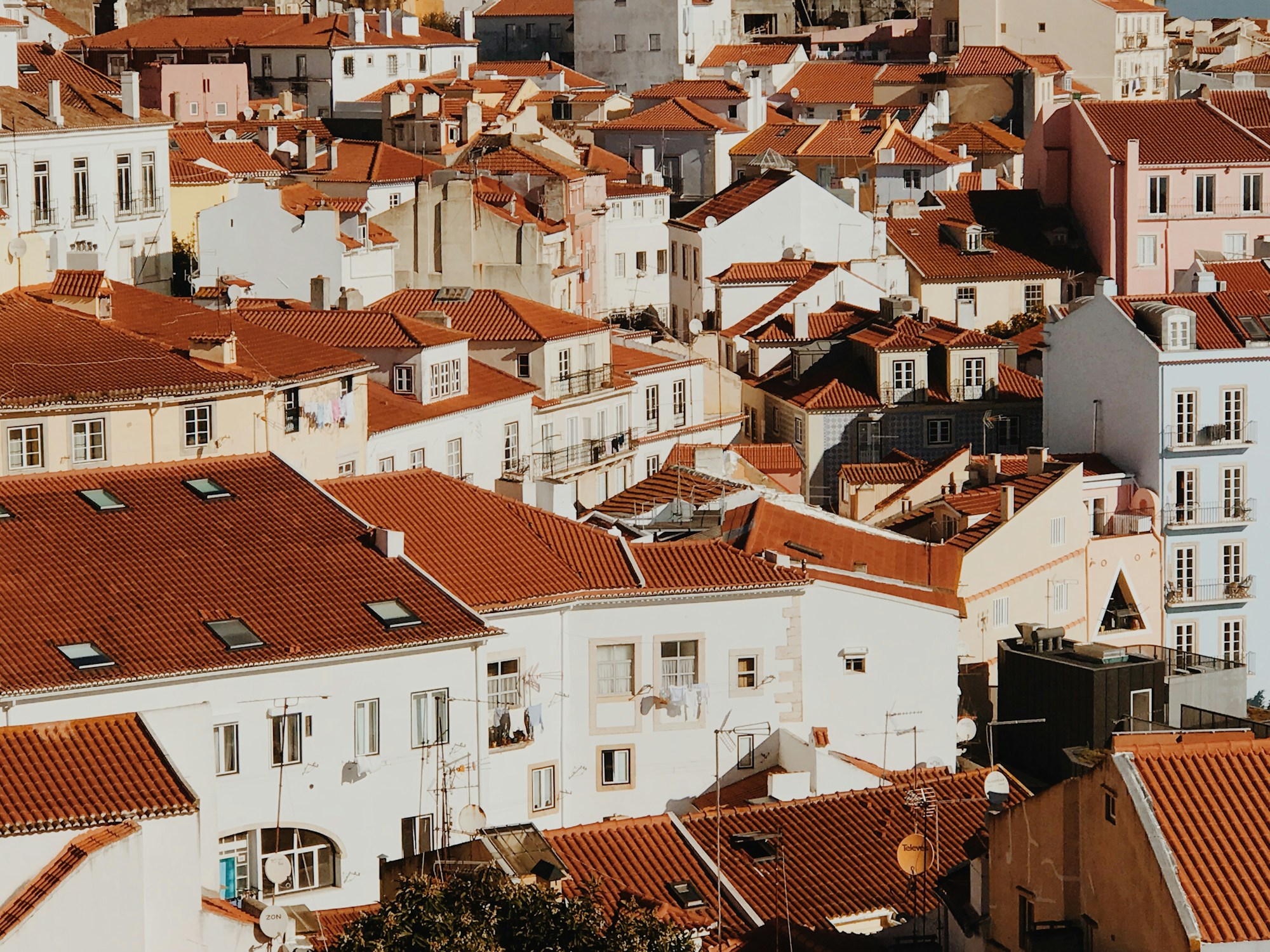
The Linha de Cascais: Portugal’s most scenic rail route
The train is undoubtedly the best way to reach Cascais from Lisbon. The Linha de Cascais departs from Cais do Sodré station (connected to the green metro line, in the heart of Bairro Alto) and serves all beaches and towns along the coast before reaching Cascais — the terminus — right in the city center. According to cascais-portugal.com, a one-way ticket costs just €2.45 per adult (€1.25 for children), loaded onto the reusable Navegante card (€0.50 to purchase).
The journey is considered one of the most scenic in the Iberian Peninsula: the train hugs the Tagus estuary, then the Atlantic Ocean for the entire ride, with breathtaking sea views. From Lisbon Airport, the journey costs €4.70 by public transport (metro + train, ~90 min), or around €25 by Uber for a 35-min ride according to cascais-portugal.com.
Practical tips
- Sit on the left side of the train heading to Cascais for ocean views
- Avoid rush hours (8–9am and 5–7pm): trains get very crowded
- Last trains run until 12:30–1:30am — perfect for a dinner and late return
- By car from Lisbon: the Avenida Marginal (N6) is beautiful but avoid it in summer
2. The historic centre: azulejos, palaces and village spirit
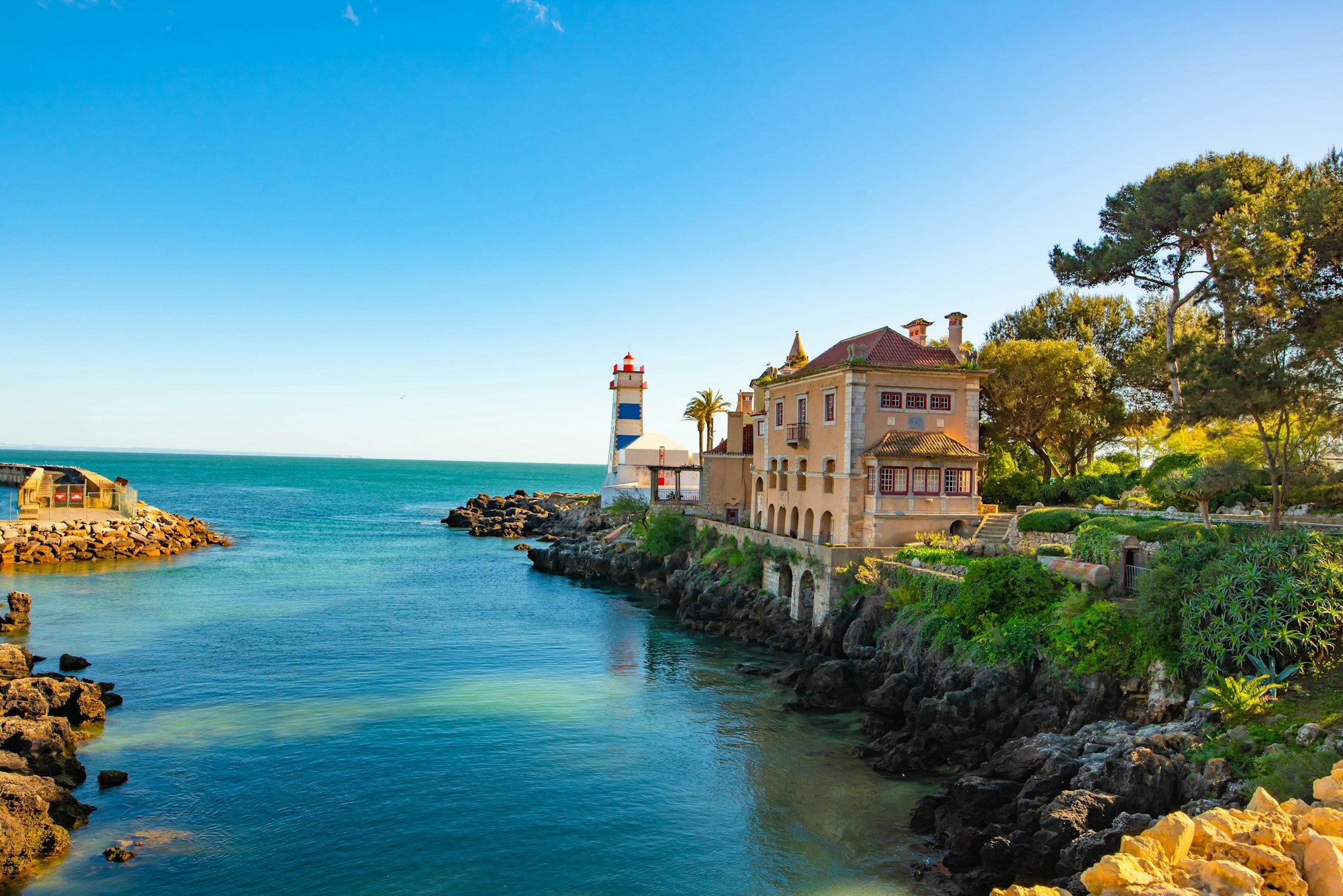
Cascais: Portugal’s first electrified town
Cascais (pronounced « Koosh-kaish ») is above all a village that has managed to remain a village. According to cascaisportugaltourism.com, this former fishing village became a cosmopolitan resort when the King of Portugal made it his summer residence in the late 19th century. The nobility followed, and elegant 19th-century mansions now line the cobbled streets of the historic centre and the waterfront.
The main street, Rua Frederico Arouca, with its typical Portuguese wave-patterned cobblestones, connects Praia da Rainha beach to the palm-lined Alameda. The atmosphere is a unique blend: Riviera chic, sun-drenched azulejos, lively terraces until midnight, and a marina nestled beneath a 16th-century citadel transformed into a cultural gem. A fun fact: Cascais was the first town in Portugal to have electricity, even before Lisbon — the first light bulb was switched on in the citadel in September 1878.
Don’t miss
- Citadelle Nossa Senhora da Luz — 16th-century fortress with panoramic views over the marina
- Museu dos Condes de Castro Guimarães — neo-Gothic villa with Atlantic views (€3–6)
- Santa Marta Lighthouse — blue and white stripes, an unmissable photo stop between beaches
- Parque Marechal Carmona — an oasis with free-roaming peacocks and tortoises (free entry)
3. Cascais beaches: from intimate cove to world-class surf spot
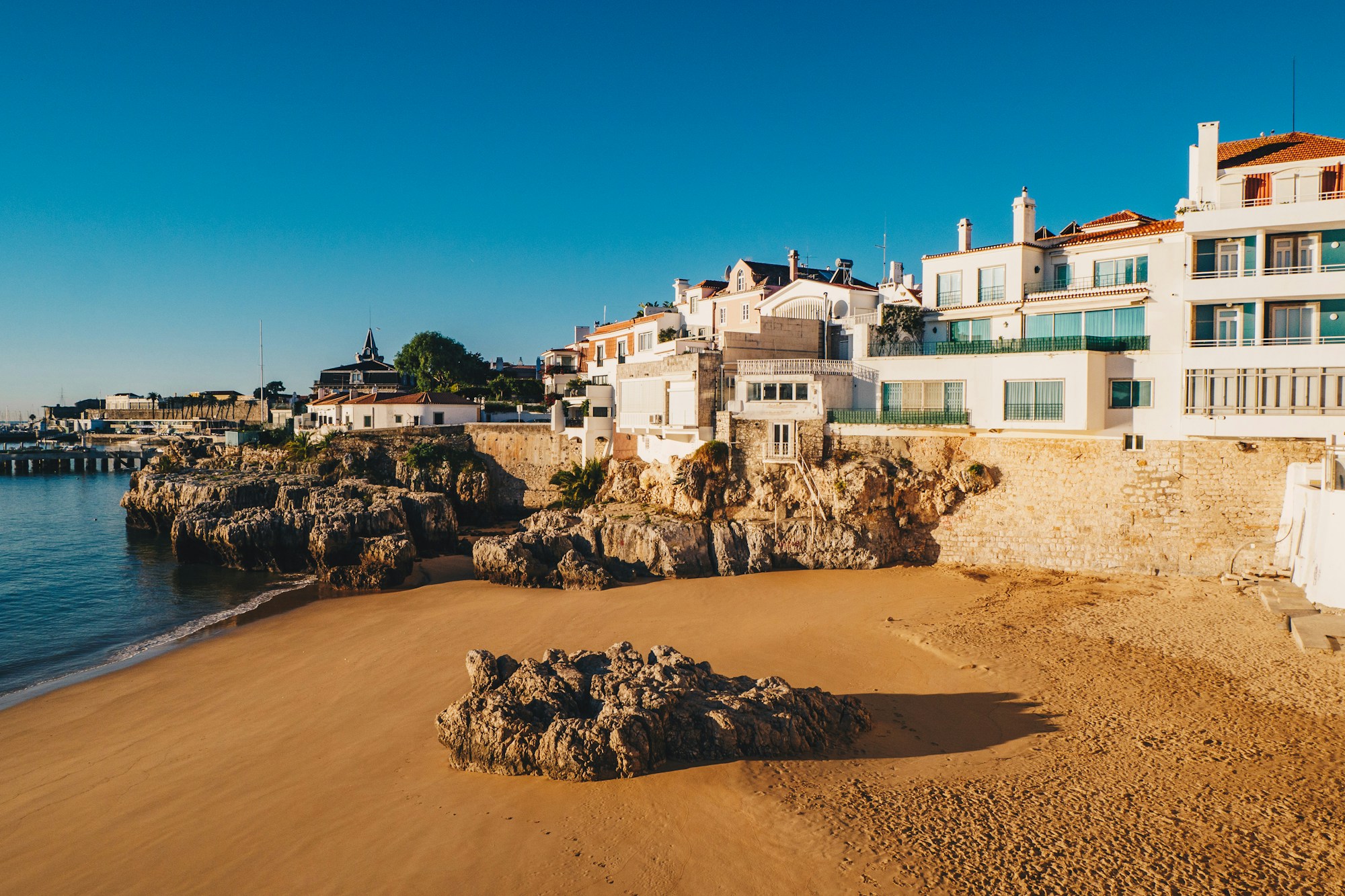
4 urban beaches + wild Praia do Guincho
Cascais offers an exceptional coastline with four urban beaches walkable from the train station, plus a world-class wild beach 9km away. According to cascais-portugal.com, the central beaches follow one after the other: Praia da Conceição, Praia da Duquesa, Praia da Rainha and Praia da Ribeira.
Praia da Rainha (Queen’s Beach) is an intimate cove with rock formations overlooking the bay — its historical importance dates back to 1889 when it was the private retreat of Queen Amélia. Praia da Conceição is one of the most picturesque, ideal for combining beach time with a stroll through the historic centre according to whereinrioandbeyond.com.
9km to the west, inside the Sintra-Cascais Natural Park, Praia do Guincho is in a different league: 1km of wild sand surrounded by dunes, powerful winds and swell, a surfer’s, kiter’s and windsurfer’s paradise. Guincho has hosted World Surfing Championships and was even used as a James Bond film location according to vivrealisbonne.com. To get there: bus 405 or 415 from the station, or cycle on the dedicated 9km coastal bike path.
Which beach to choose?
- Praia da Rainha: families, children, calm waters, sheltered cove
- Praia da Conceição: central location, restaurants nearby
- Praia do Guincho: surfing, kite, windsurf, nature walk (not for small children)
- Carcavelos (10 min by train): largest beach, ideal for beginner surf
4. Boca do Inferno: the « Mouth of Hell » that captivates everyone
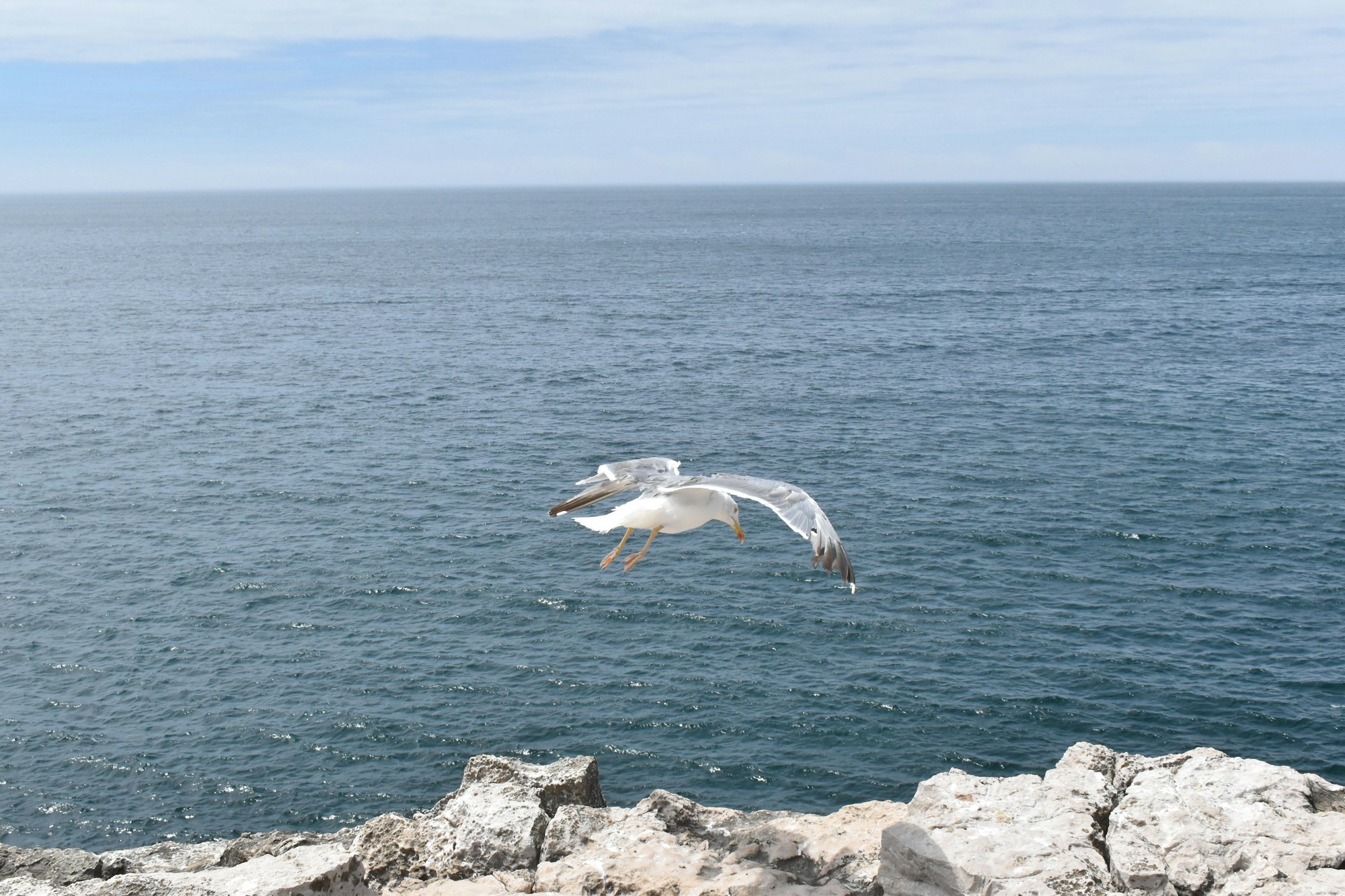
Portugal’s most spectacular sea arch — and it’s free
2km from Cascais town centre, on the rocky coastline, Boca do Inferno (« Mouth of Hell ») is one of the most striking geological formations on the Portuguese Atlantic coast. As ulysse.com explains, it’s a partially collapsed sea cave that has left a large rock arch giving access to a breathtaking natural basin — where the Atlantic crashes in with near-hypnotic force.
According to Expedia, the site’s viewing platforms allow you to observe this geological formation from every angle above the cliffs. When the ocean is rough — particularly in autumn and winter — the spectacle is even more dramatic: seawater shoots up several metres in a deep rumbling sound. The site also hosts a craft market with souvenir stalls.
Highlights
- Completely free access, year-round
- Unique geological phenomenon on the Portuguese coast
- 2km clifftop walk from the town centre
- Craft market on site with authentic local souvenirs
5. Food in Cascais: grilled sardines, perfect octopus and Michelin stars
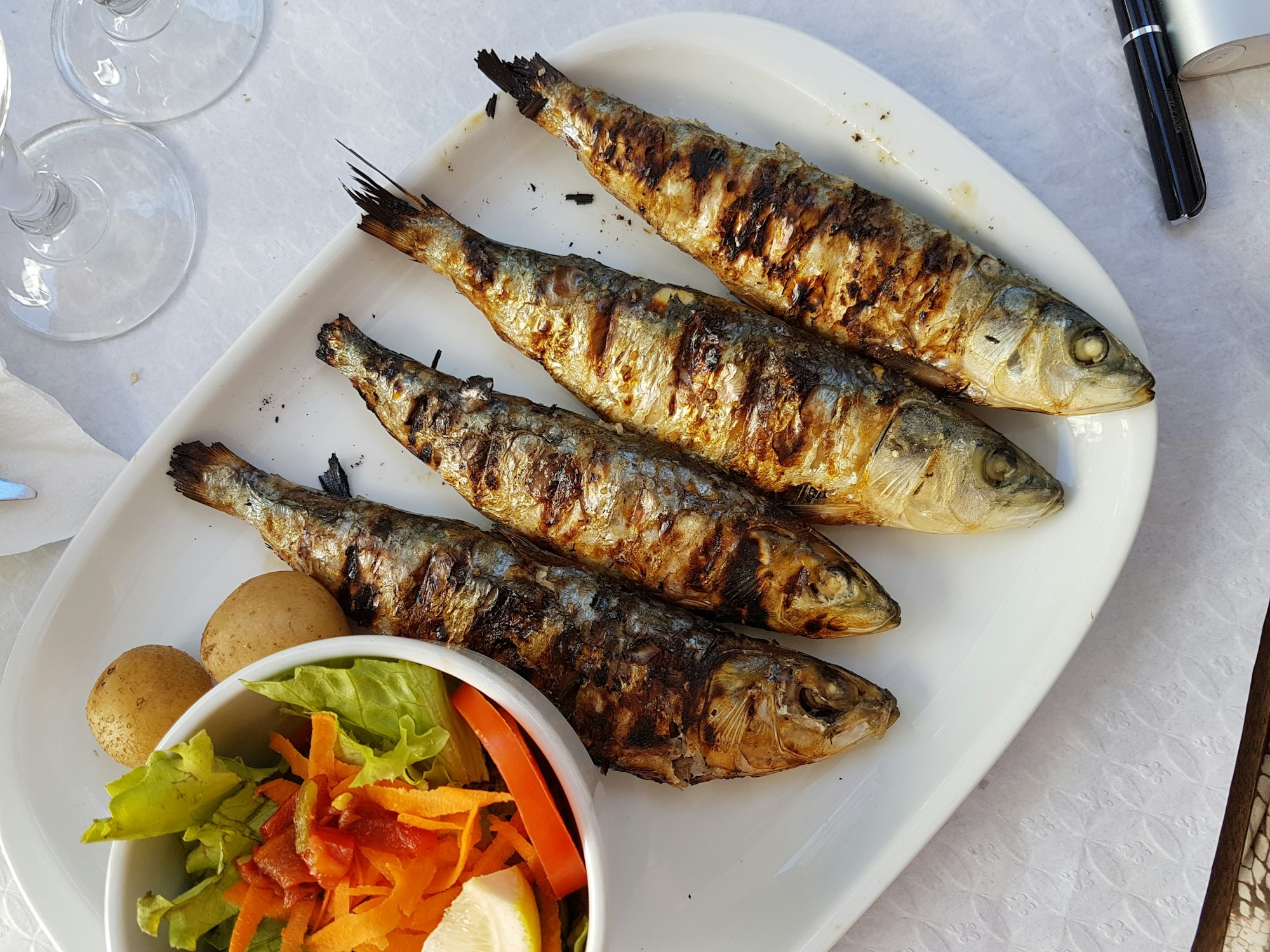
From €5 tasca to two Michelin stars
Cascais’ food scene is one of its most underrated strengths. Its coastal location naturally makes it a paradise for seafood: grilled sardines, perfectly cooked octopus, seafood rice and cataplana (a seafood stew cooked in a copper pot) are the local signature dishes. According to mapleleopard.com, Marisco na Praça, nestled inside the Mercado de Cascais, offers one of the freshest seafood experiences in the city in a lively market atmosphere.
For fine dining, two-Michelin-star chef José Avillez returned to his hometown to open Cantinho do Avillez, serving contemporary Portuguese cuisine with global influences. And Mar do Inferno — known locally as « Lourdes » or « Dona Lourdes » — is a legendary institution with its wave-facing terrace, epic seafood platters and mariscada (Portuguese seafood stew) that gets unanimous praise, according to Time Out Cascais.
Must-visit addresses
- Jardim dos Frangos: grilled chicken since 1974, local institution
- Rua Amarela: 16 diverse restaurants in a festive atmosphere (locals’ favourite street)
- Mercado de Cascais: fresh produce and Marisco na Praça for seafood
- Lusophonica: tiny café at the foot of the lighthouse, palm terrace, perfect playlist
6. Estoril and the Portuguese Riviera: glamour, Casino and coastal walks
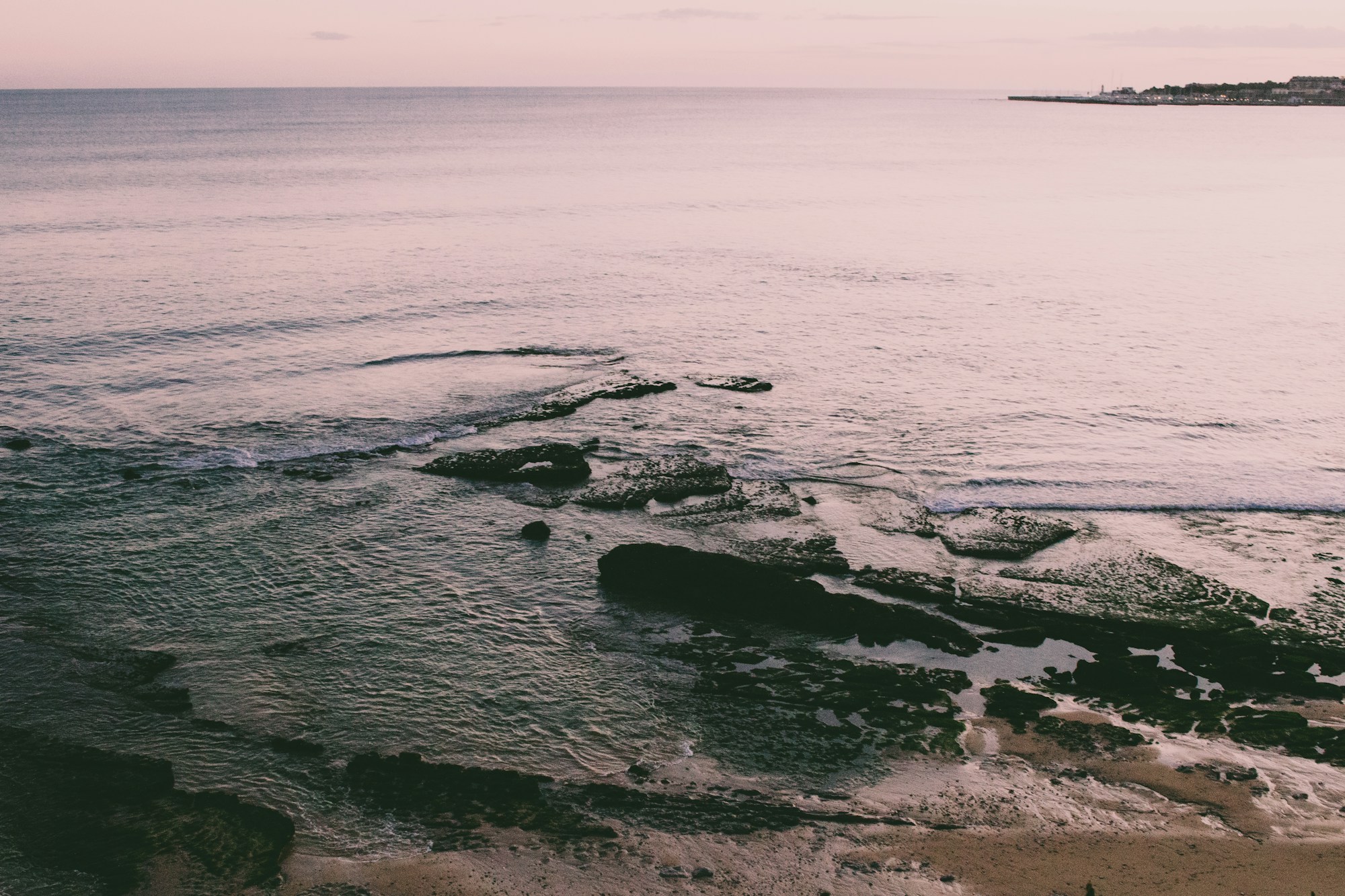
Ian Fleming, exiled kings and Europe’s largest Casino
2km from Cascais, connected by a superb coastal promenade or a single train stop, Estoril is inseparable from the glamorous history of the Portuguese Riviera. According to cascaisportugaltourism.com, during World War II, European monarchs seeking exile settled along the Lisbon coast in Cascais and neighbouring Estoril — contributing to the area’s wealthy and glamorous reputation.
The Casino Estoril is the centrepiece: Europe’s largest casino with over 1,000 slot machines and gaming tables. It is said to have directly inspired Ian Fleming when he wrote Casino Royale, according to hotels.com. And the Cascais–Estoril coastal promenade is a wave-level horizon, perfect for running, cycling or simply strolling and watching the sea.
Good to know
- Casino: free entry (smart dress required, under 18 not admitted)
- 1km seafront promenade between Cascais and Estoril
- Estoril Gardens (opposite the Casino): lush gardens facing the Atlantic
- Lamassa: only 6 tables, handmade pasta, reservation essential
7. Sintra-Cascais Natural Park: hiking and the edge of the world
A UNESCO-listed sanctuary at Cascais’ doorstep
The Sintra-Cascais Natural Park is one of the most remarkable protected areas in the Iberian Peninsula: cliffs, wild beaches, Atlantic dunes, dinosaur footprints (Praia Grande do Rodízio), and the Cabo da Roca — the westernmost point of continental Europe. The region earned UNESCO recognition in 1995, the first in Europe to receive it. According to lesglobeblogueurs.com, the vegetation is so lush it has regularly been compared to the enchanted forests of fairy tales.
The most popular excursion is to hire a bike in Cascais and pedal 9km along the ocean to the Cresmina and Guincho beaches on the dedicated cycle path. A tip from mifuguemiraison.com: bring your bike on the train to Cascais (allowed outside peak hours), then cycle to Guincho. An unforgettable experience for under €20.
Highlights in the park
- Cabo da Roca: vertiginous cliff, the « edge of the world » of continental Europe
- Praia do Guincho: world-class surf spot within the park
- 9km Cascais–Guincho coastal cycle path
- Free hiking trails (Komoot has the full route maps)
8. Where to sleep in Cascais: from hostel to historic palace
Budget €40 to luxury €400: options for every profile
Good news for the budget-conscious: Cascais remains affordable. According to ulysse.com, expect to pay €41–50/night at a hostel, €102 for a 3-star, €165 for a 4-star. In peak season, the average rises to €247/night — book early, summer 2026 is already selling out.
By category
- Budget: Cascais Bay Hostel — 1km from Praia da Rainha, 5 min walk from the station
- Mid-range: Hotel Baía — directly facing Praia da Ribeira, best location in town
- 4-star: Vila Galé or Eurostars — good value with Atlantic views
- Luxury history: Grande Real Villa Itália — former residence of Italy’s exiled royal family
- Design/boutique: L’Oitavos — contemporary architecture within the Natural Park
9. Day trip to Sintra from Cascais: fairy-tale palaces 30 minutes away
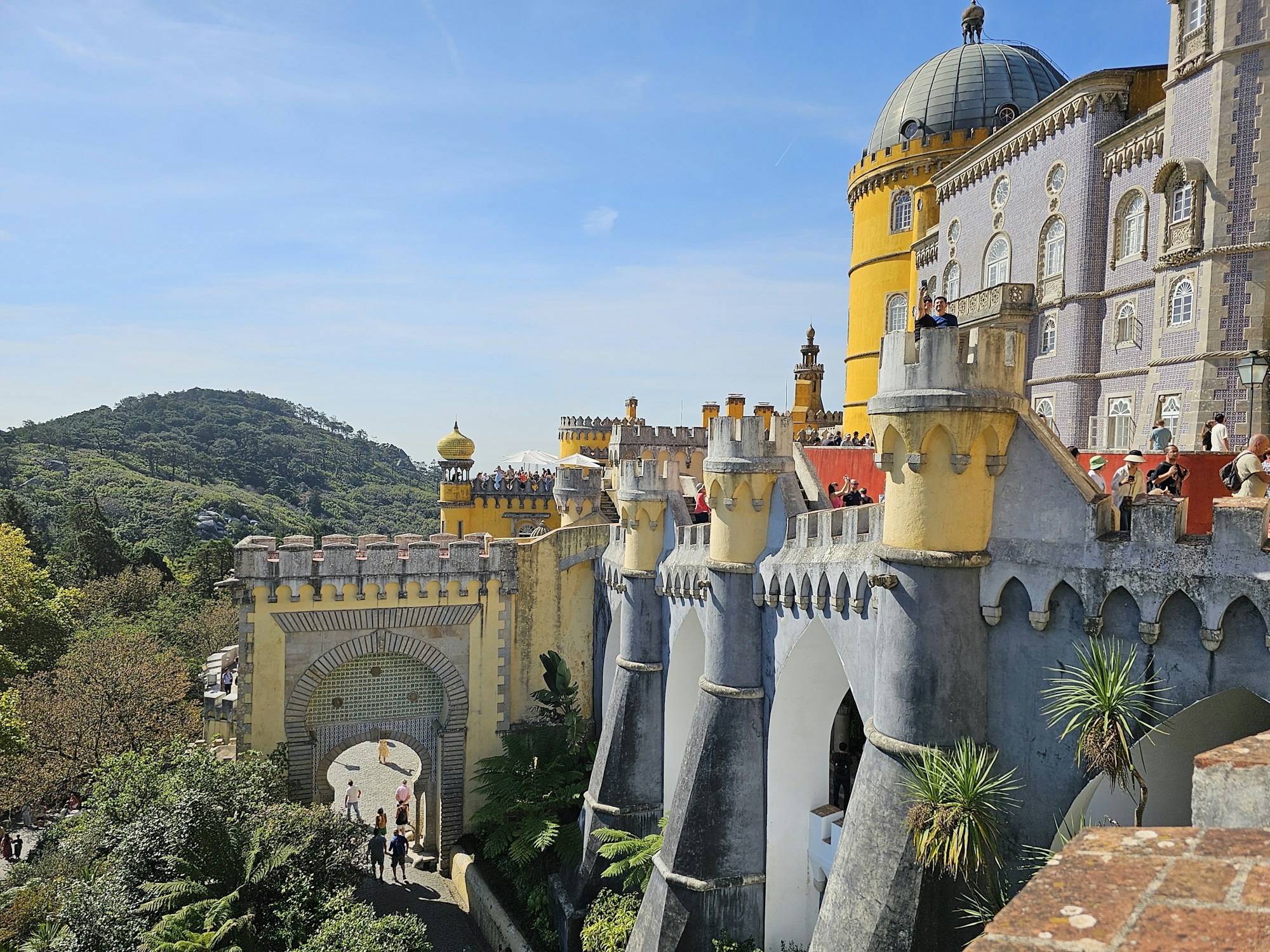
Sintra, UNESCO World Heritage Site a stone’s throw from Cascais
Cascais has a unique advantage over Lisbon for visiting Sintra: you’re closer. Two bus lines connect Cascais to Sintra according to cascaisportugaltourism.com: bus 417 (faster, hourly) and bus 403 (every 30 minutes, with a stop at Cabo da Roca). Listed as a UNESCO World Heritage Site in 1995 — the first region in Europe to receive this designation according to civitatis.com — Sintra feels like stepping into a fairy tale.
Palácio da Pena (€14), a blend of Romantic and neo-Manueline styles in vivid colours, crowns the hilltop. Quinta da Regaleira (€12), with its caves, initiation wells and mysterious gardens, is a unique experience in itself. Budget €30–40 for a full day.
Tips for Sintra
- Go early (before 9am) to beat the crowds at the palaces
- Bus 403: passes through Cabo da Roca — a free bonus in the same ticket
- Book Pena Palace tickets online in advance (sold out in July–August)
- Sintra is explored on foot: wear good walking shoes (hills)
10. Cascais budget guide 2026: how much should you plan?
From €55 to €360 per day depending on your travel style
Cascais remains significantly cheaper than central Lisbon. Here is the daily budget by travel profile, based on data from ulysse.com:
| Expense | Budget | Comfort | Luxury |
|---|---|---|---|
| Accommodation / night | €41–50 (hostel) | €102–165 (3–4★) | €250+ |
| Meals (lunch + dinner) | €10–15 | €25–40 | €60+ |
| Return train to Lisbon | €4.90 | €4.90 | €50 (rideshare) |
| Activities / day | €0–10 | €15–30 | €50+ |
| Total per day | ~€55–80 | ~€150 | ~€360+ |
Free highlights in Cascais
- All urban beaches (Rainha, Conceição, Duquesa, Ribeira)
- Boca do Inferno and the Estoril coastal promenade
- Parque Marechal Carmona (free-roaming peacocks and tortoises)
- Boca do Inferno craft market
Events in Cascais in 2026: dates and status
Dates from the 2026 event calendar, as of 18 October 2026.
| Dates | Event | Status |
|---|---|---|
| July | Ageas Cooljazz | Over |
| 20 to 23 and 27 to 30 August | Festas do Mar, free concerts | Over |
| 18 to 20 September | Estoril Classics | Over |
| 17 October | IRONMAN 70.3 Cascais | Over |
| November to January | Christmas in Cascais and New Year | Upcoming, dates not set |
Frequently Asked Questions about Cascais in 2026
What is the best time to visit Cascais?
For budget-conscious travellers, the best time is March to May — hotel prices are at their lowest and the weather is already pleasant. June to September is ideal for swimming but hotels are often fully booked and prices double. In January–February and December, Cascais is almost crowd-free, prices are minimal, and it’s the best time to watch spectacular waves at Boca do Inferno. Unlike most European beach resorts, Cascais remains lively year-round. Sources: TripAdvisor, Ulysse.
How do I get from Paris to Cascais?
From Paris, expect a 2h30 direct flight to Lisbon with Ryanair, easyJet, Transavia, Air France or TAP Portugal (up to 47 direct flights per week, according to ulysse.com). From Lisbon Airport, two options: metro + train (€4.70, ~90 min) or Uber (~€25, ~35 min). From central Lisbon (Cais do Sodré), the train takes 33–45 minutes for €2.45 according to cascais-portugal.com.
Is Cascais safe for solo female travellers?
Yes. Portugal ranks among the safest countries in Europe according to the Global Peace Index, and Cascais scores 4.2/5 for solo female traveller safety. The town is compact, fully pedestrianised in the centre, and the atmosphere remains family-friendly and welcoming even late at night. The easy train connection with Lisbon (every 20 min until 1:30am) is also a safety bonus. Source: Ulysse — Cascais Guide 2026.
Can you visit Cascais as a day trip from Lisbon?
Absolutely. Cascais is perfect for a day trip from Lisbon. A well-planned day lets you see the historic centre, Boca do Inferno, a beach, and have lunch at a local tasca — all for under €20 from Lisbon. For the Natural Park, excursions to Sintra, and evening gastronomy, 2–3 nights on site are ideal. Source: cascais-portugal.com.
Why is Cascais so popular in 2026?
Cascais ticks all the boxes of a trendy destination without the usual downsides. According to ulysse.com, the +460% search surge is explained by a unique combination: pristine beaches, excellent safety ratings, 120 Mbps internet (digital nomad paradise), still-reasonable prices compared to Lisbon, and zero overtourism. Portugal also recorded 32.5 million visitors and 82 million overnight stays in 2025, and within this tourism wave, Cascais is capturing an ever-growing share.
Should you book accommodation in advance for summer 2026?
Yes, strongly recommended. Cascais is on track for another sold-out summer 2026 following a record-breaking 2025 season. The best properties sell out months in advance. It is highly advisable to book flights and accommodation as early as possible, before prices spike and rooms run out. July and August are particularly affected. Source: cascais-portugal.com.
Are there family-friendly beaches in Cascais?
Yes, several. Praia da Rainha is ideal for families with its calm waters and natural rock pools. Praia da Conceição, right in the centre, is practical with cafés and restaurants nearby. The Carcavelos beaches (10 min by train) are the largest and best-suited for beginner surfing and skimboarding. Praia do Guincho, however, is not recommended for young children due to strong winds and currents. Sources: Expedia, visitlisboa.com.
What to do in Cascais when the weather is bad?
Cascais is much more than a beach destination. On a grey day, visit the Museu dos Condes de Castro Guimarães (Belle Époque neo-Gothic villa, €3–6), the Citadelle Nossa Senhora da Luz, the Casa das Histórias Paula Rego (contemporary art), or the Santa Marta Lighthouse Museum. The CascaisVilla shopping centre is also an option in the rain. And remember: the most dramatic waves at Boca do Inferno appear in rough weather! Source: tourismattractions.net.
Sources
- Ulysse — Complete Cascais Guide 2026 — Budget, trends, safety, accommodation
- Cascais Portugal Tourism (official guide) — History, attractions, transport
- Cascais-Portugal.com (independent guide) — Beaches, accommodation, day trips
- Vivre à Lisbonne — Complete Guide 2025 — Neighbourhoods, culture, gastronomy
- Time Out Cascais — Best Restaurants 2026 — Essential dining addresses
- Cascais-Portugal.com — Lisbon to Cascais Transport — Timetables, fares, tips
- WhereinRio — Best Beaches in Cascais — Beach guide 2026
- Les Globe Blogueurs — Sintra-Cascais Natural Park — Hiking, nature
- Maple Leopard — Food Guide Cascais & Sintra — Restaurants, markets
- Tourism Attractions — Essential Cascais Guide 2026 — Museums, activities
- Cascais Tourism — Transport and Getting Around — Buses, bikes, shuttles
- Local Cascais — Local guide — Addresses from the locals
Research conducted on 4 March 2026
Ready to discover Cascais?
Cascais is one of those rare destinations that manages to be both on-trend and genuinely authentic. It wins over digital nomads, families, surfers and food lovers alike. Plan your Portugal trip now — and explore all our itineraries to build your perfect stay.
Explore all itineraries