

Ten active volcanoes across Iceland, Indonesia, Sicily and Kamchatka define the 2026 trekking season, from fresh fissure lava to a permanent blue-fire crater. Iceland’s Reykjanes Peninsula has produced 12 eruptions since 2021, the latest in July 2025, letting hikers walk on lava only months old. Indonesia’s Kawah Ijen shows blue sulfuric flames up to 5 meters high, visible only between 2 AM and 4 AM. Etna’s summit crater has only been reachable from its north side since July 2021, while Kamchatka’s Klyuchevskaya Sopka (4,835 m) is the Northern Hemisphere’s tallest active volcano. First-timers should start with Java’s Kawah Ijen or Sicily’s Etna North before attempting Kamchatka’s multi-day expeditions.
Walking on lava born just months ago, peering into a turquoise acid lake at the bottom of a crater, or gazing at the tallest active volcano in the Northern Hemisphere from an alpine tundra: volcanic tourism is experiencing a golden age in 2026. Iceland’s relentless eruptions on the Reykjanes Peninsula have turned the island into an open-air geological laboratory. Indonesia, the archipelago of 76 active volcanoes, multiplies unique experiences — from the blue fire of Kawah Ijen to the three-day ascent of Rinjani. Sicily offers the rare combination of a picture-perfect eruption and a glass of Nerello Mascalese on the way back. As for Kamchatka, it remains the volcanic end of the earth: wild, expensive, unforgettable. This guide takes you to the ten must-visit destinations of 2026, with updated practical data, real risks to know, and insider tips that only local guides usually share.
🇮🇸 Iceland — Post-2025 Eruptions: The Open-Air Geological Laboratory
Since 2021, the Reykjanes Peninsula has experienced no fewer than 12 eruptions. The latest took place in July 2025 — and scientists are continuously monitoring the imminent return of volcanic activity. In 2026, Iceland is no longer just a spectacular destination: it is a unique volcanological playground where you literally walk on rock formed the same year.
1. Sundhnúkur / Reykjanes Peninsula — Fresh Lava and Fissure Eruptions
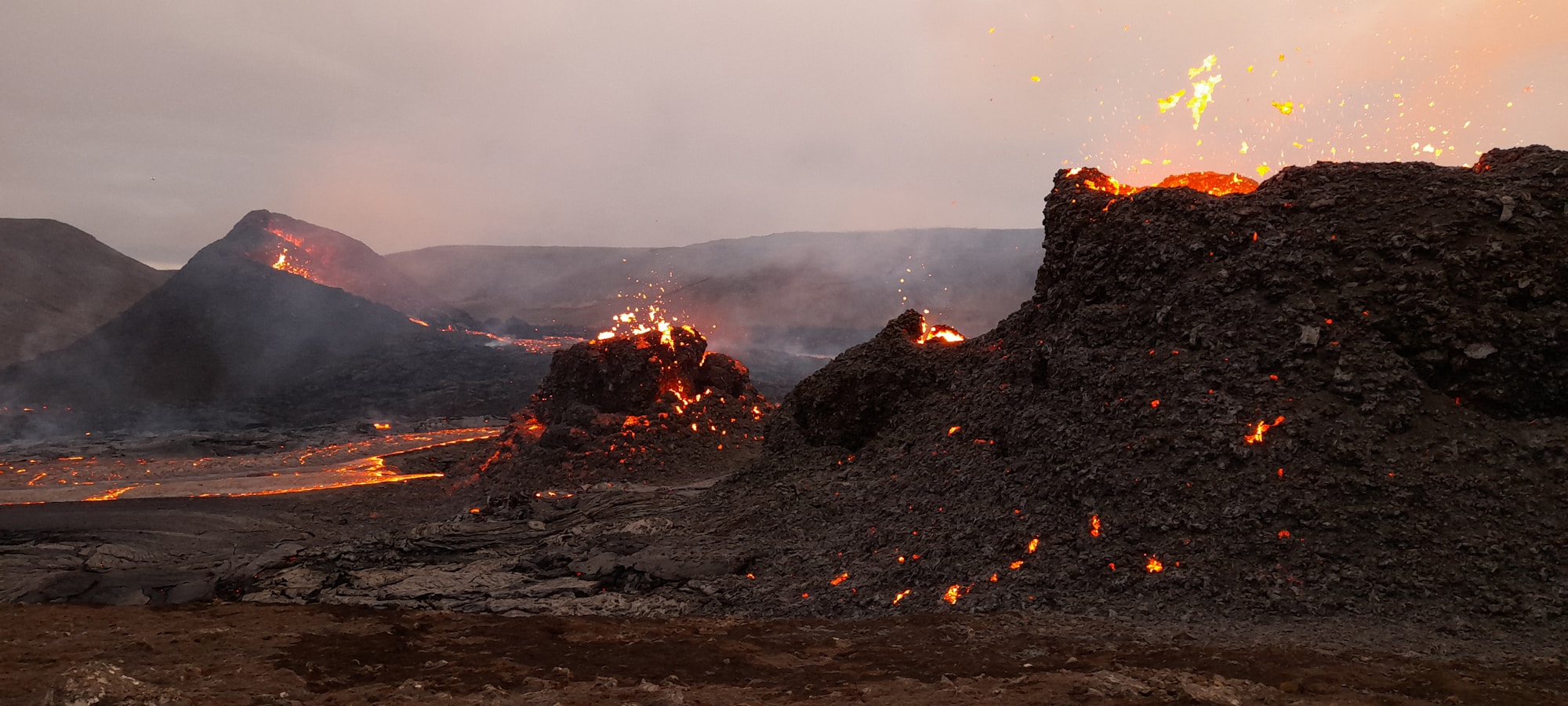
Sundhnúkur, South-West Iceland
The Reykjanes Peninsula has become one of Iceland’s most dynamic regions following a series of eruptions from 2021 to 2025. The last eruption along the Sundhnúkur crater row began on July 16, 2025 and ended on August 5. According to Guide to Iceland, scientists continuously monitor small earthquakes indicating that magma continues to accumulate beneath the surface.
What makes these eruptions unique is their fissure nature: lava flows from cracks in the ground rather than producing explosive ash clouds. These events are dramatic but generally localized, allowing guided visits even shortly after an eruption. You can walk on lava formed just months ago — an absolute rarity in volcano tourism.
Highlights
- Fresh 2024–2025 lava fields accessible on foot
- « Volcano Shuttle » (Super Jeep) tours operated by certified guides
- Combine with the renovated Blue Lagoon or Grindavík geothermal baths
- Access on foot (marked trails) or by Super Jeep from Reykjavik (45 min)
2. Askja Caldera (Highlands) — The Apollo Astronaut Training Ground
Askja, Central Highlands of Iceland
Askja is a caldera nestled in Iceland’s central highlands, accessible only via F-road tracks requiring a 4WD vehicle — a natural barrier that preserves an authentic exploration atmosphere. According to Epic Iceland, the landscape is so otherworldly that NASA trained Apollo astronauts here before lunar missions.
The hike leads to Lake Víti, a turquoise geothermal hot spring nestled in a crater (30 minutes from Vikraborgir parking), then to Lake Öskjuvatn, one of Iceland’s deepest. In 2026, Askja remains an active volcano: an eruption can occur at any time. The rangers at Dreki are your first point of contact before any visit.
Highlights
- Geothermal bathing in Lake Víti (surreal turquoise color)
- Near-pristine volcanic tundra landscape on weekdays
- Drekagil Gorge hike (2 hours from Dreki hut)
3. Hekla — The « Queen of Volcanoes » on the Verge of Eruption
Hekla, Southern Iceland
Hekla has erupted more than 20 times since Iceland’s settlement in the 9th century. Its last eruption was in 2000, but volcanologists report that pressure measurements are now increasing at a higher rate than before the last eruption. Hiking Hekla in 2026 means potentially walking on a volcano « about to erupt » — a unique thrill that adventure trekkers specifically seek.
The most direct route starts from the Raudaskal crater parking area, a 7 km round trip. Unlike the tourist-heavy Reykjanes area, Hekla remains almost wild, with minimal trail marking. The easiest ascent reaches the summit (1,491 m) in 3 to 4 hours.
Highlights
- Self-guided trek possible (budget-friendly) with views of southern glaciers
- Wild atmosphere, few tourists — authentic adventure
- Can be combined with Landmannalaugar natural geothermal baths
🇮🇩 Indonesia — The Archipelago of 76 Active Volcanoes
With 76 active volcanoes spread across 17,000 islands, Indonesia is undeniably the world capital of volcano tourism. From the blue fire of Kawah Ijen — a phenomenon that exists in only two places on Earth — to the multi-day ascent of Rinjani with its breathtaking views of the Segara Anak crater lake, each volcano tells a different geological and human story.
4. Kawah Ijen (Java) — The World’s Rarest Blue Fire
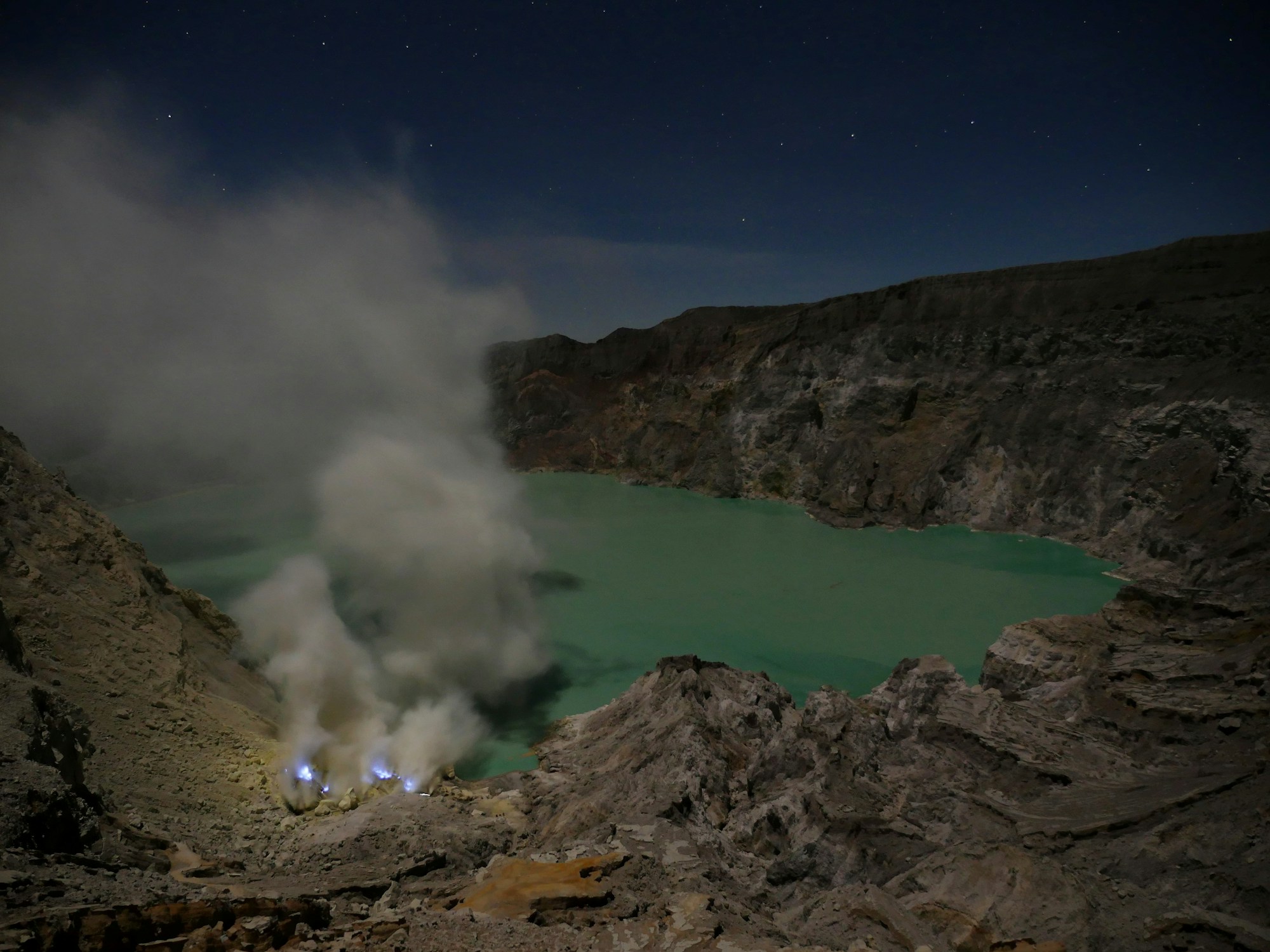
Kawah Ijen, Banyuwangi Regency, East Java
Kawah Ijen is one of the only places on Earth where you can witness « blue fire » — sulfuric gases that ignite spontaneously upon contact with oxygen, producing blue flames reaching up to 5 meters high. This phenomenon exists in only two locations worldwide. According to Ijen Expedition Tour, the best viewing window is between 2 AM and 4 AM.
Ijen’s crater lake is the world’s largest acid lake, its surreal turquoise color resulting from a mixture of sulfur and minerals. An unforgettable human dimension completes the experience: sulfur miners who still work in this highly toxic crater, carrying loads of 70 to 90 kg over kilometers of downhill track.
Highlights
- Blue fire phenomenon visible only at night (2–4 AM)
- Turquoise acid crater lake — the world’s largest
- Immersion in the reality of sulfur miners
- Easy combination with Bromo (3–4 day circuit from Bali)
5. Mount Rinjani (Lombok) — Indonesia’s Multi-Day Titan
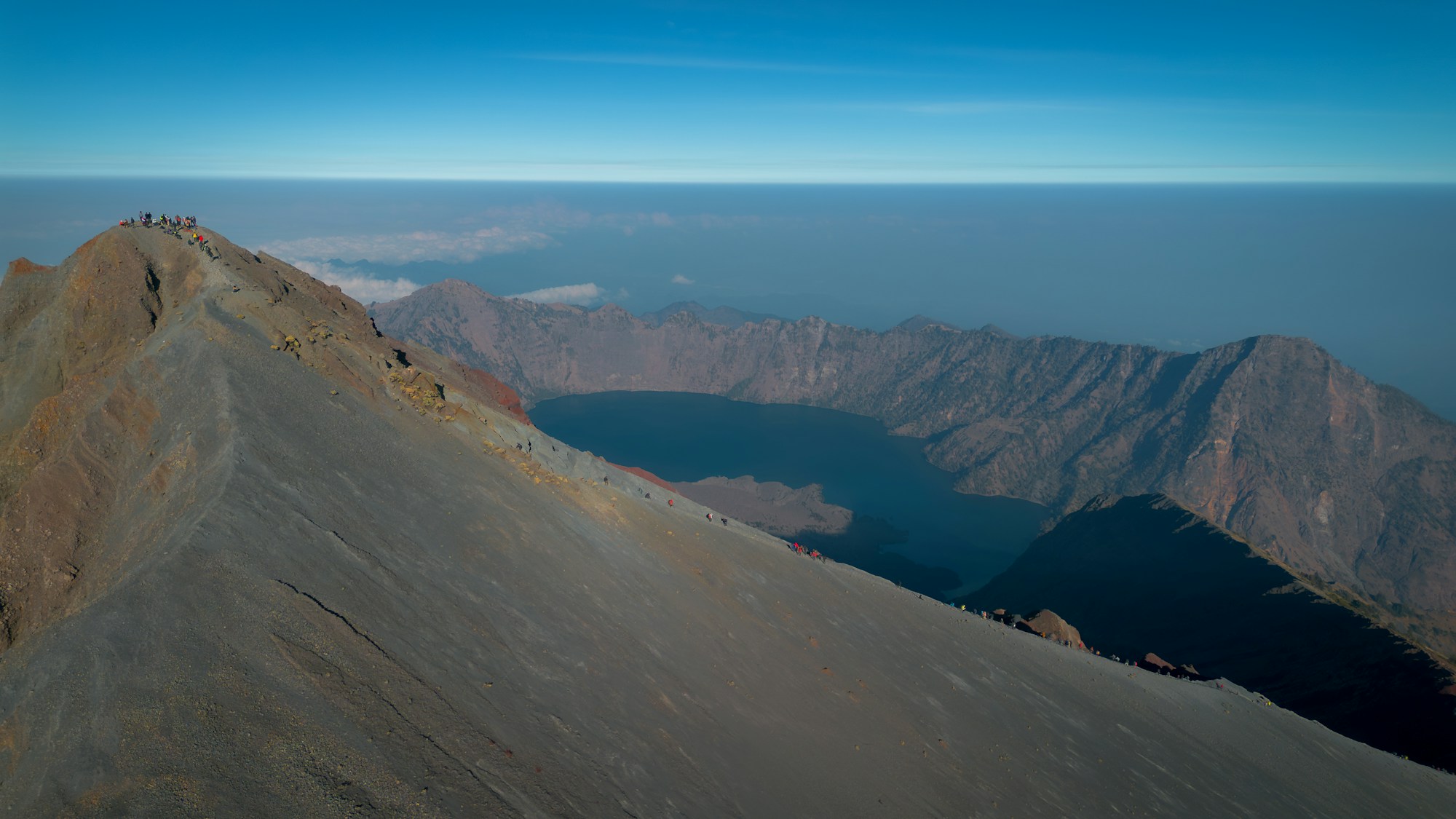
Mount Rinjani, Lombok Island, Indonesia
Mount Rinjani rises to 3,726 meters — Indonesia’s second-highest volcano. The classic multi-day trek climbs from Senaru or Sembalun to the summit, then descends to the stunning Segara Anak crater lake, dotted with natural hot springs. Plumes of smoke permanently rise from Mount Barujari, the active component of the volcano sitting inside the crater, visible from the trail.
According to Indiahikes, the complete circuit (ascending via Sembalun, descending via Senaru) is an experience that very few trekkers complete — most go up and down the same route. Local wildlife — macaques, deer, and remarkable birdlife — is often spotted along the way.
Highlights
- Segara Anak crater lake — natural hot spring in an eruptive setting
- Rare complete Sembalun → Senaru circuit
- Lombok next to Bali — much smaller crowds
- Exceptional wildlife: macaques, deer, endemic birds
6. Mount Dukono (Halmahera) — The Secret Volcano in Continuous Eruption
Dukono, Halmahera Island, North Maluku
Dukono is one of Indonesia’s most active volcanoes — it has been in near-continuous eruption since 1933. It is also the best-kept secret among advanced volcano trekkers: almost no Western tourists venture here, infrastructure is minimal, and the experience is completely authentic. According to The World Travel Guy, expeditions allow you to crawl to the crater rim and observe glowing molten lava below.
The trek takes approximately 12 hours through rough volcanic terrain and muddy jungle trails. Along the way, you’ll encounter pythons, monitor lizards, rare birds, and giant centipedes. The island is accessible from Ternate by internal flight (from Jakarta or Makassar).
Highlights
- Direct view into a crater in continuous eruption since 1933
- Exceptional wildlife: pythons, monitor lizards, endemic Maluku birds
- Near-zero tourists — 100% authentic experience
🇮🇹 Sicily — Etna, Europe’s Volcanic Rooftop
Mount Etna is Europe’s largest active volcano and a UNESCO World Heritage Site. With at least 80 eruptions over the past 100 years (including one in June 2025 and another in February 2025), Etna remains in permanent activity. Its unique feature: you can combine a high-intensity volcanic trek with a tasting of Etna DOC wines (Nerello Mascalese on volcanic soils), an experience no other volcano in the world can offer.
7. South Etna (Rifugio Sapienza) — The Classic UNESCO Heritage Route
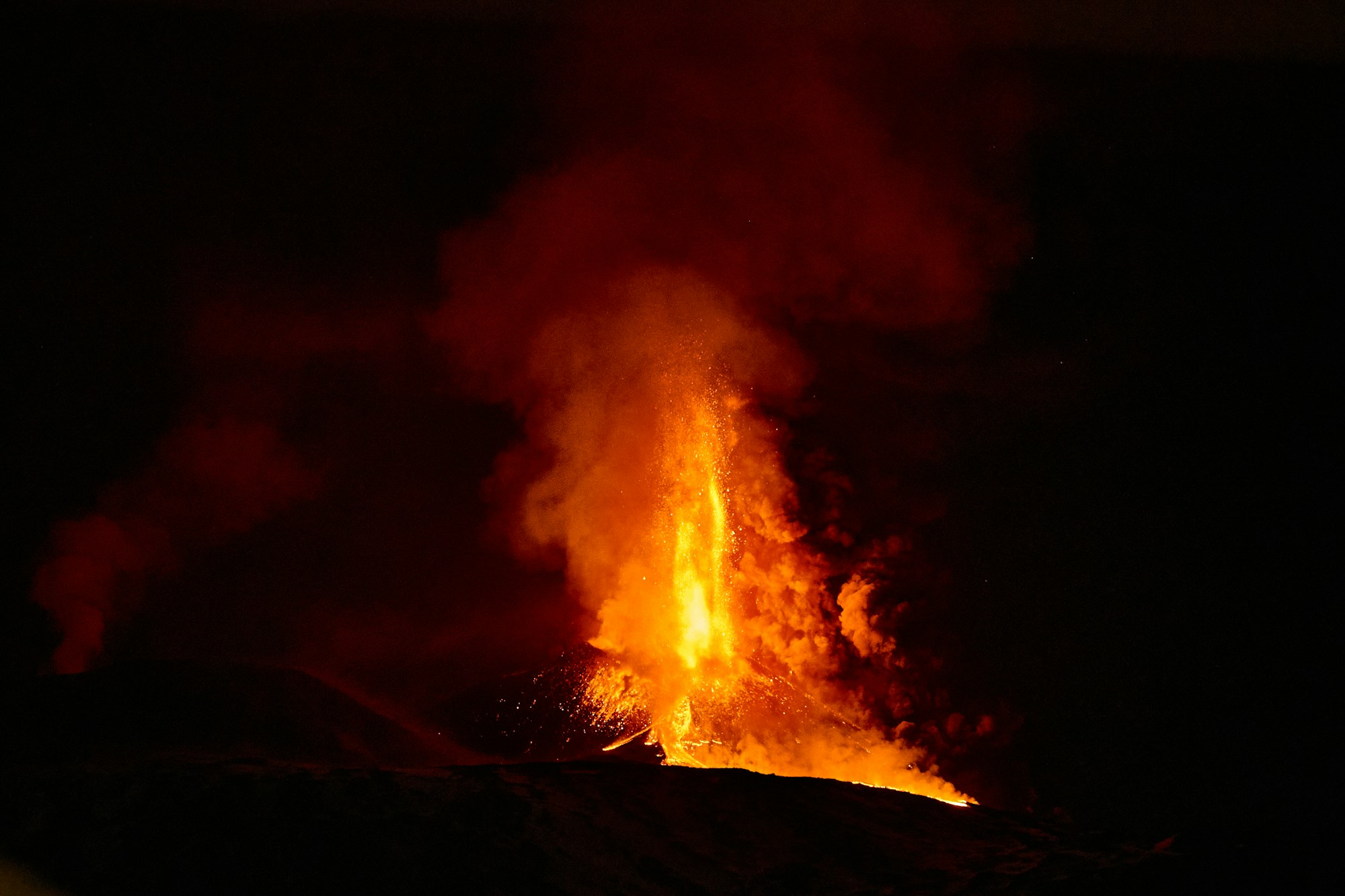
South flank, Province of Catania, Sicily
Etna erupted in June 2025, projecting a gigantic ash cloud and molten lava flows. In February 2025, a new flow appeared at 3,000 meters altitude near the New Southeast Crater. These recent phenomena enhance Etna’s appeal for travelers who want to experience a genuinely active volcano. According to Lonely Planet, hiking above 2,500 meters is strictly regulated and requires a licensed volcanic guide.
From the Rifugio Sapienza (1,923 m), the cable car rises to 2,500 m, then a 4WD completes the ascent to the summit zones. The cable car + 4WD + trekking combination is the most complete experience offered on the south side.
Highlights
- Cable car from Rifugio Sapienza (€35) then 4WD to craters
- Sunset tour — rare atmosphere and golden lighting
- Etna DOC wine tasting (Nerello Mascalese) after the trek
- UNESCO World Heritage Site
8. North Etna (Piano Provenzana) — The Secret Side and Active Lava Flows
Piano Provenzana, North flank, Linguaglossa, Sicily
Piano Provenzana is Etna’s secret starting point: far less crowded than the south side, no cable car, dense pine and beech vegetation, and ruins of buildings swallowed by lava in 2002 creating a striking post-apocalyptic atmosphere. Since July 2021, access to the summit crater has only been possible from the north due to volcanic activity on the south side.
According to Piano Provenzana, 4WD excursions reach 3,347 meters, with a stop at the buttonhole craters from the 2002 eruption. The « active lava flow » trek (€120/adult) includes a volcanological guide, helmet, trekking poles, jackets, and shoes.
Highlights
- Only access to the summit crater since July 2021
- Ruins of the « Le Betulle » hotel — engulfed by lava in 2002
- Views of the Aeolian Islands, Ionian coast, and Calabria
- Active lava flow trek with certified volcanological guide
🇷🇺 Kamchatka — The Volcanic End of the Earth
9. Mutnovsky and Avachinsky — Kamchatka’s Accessible Volcanoes
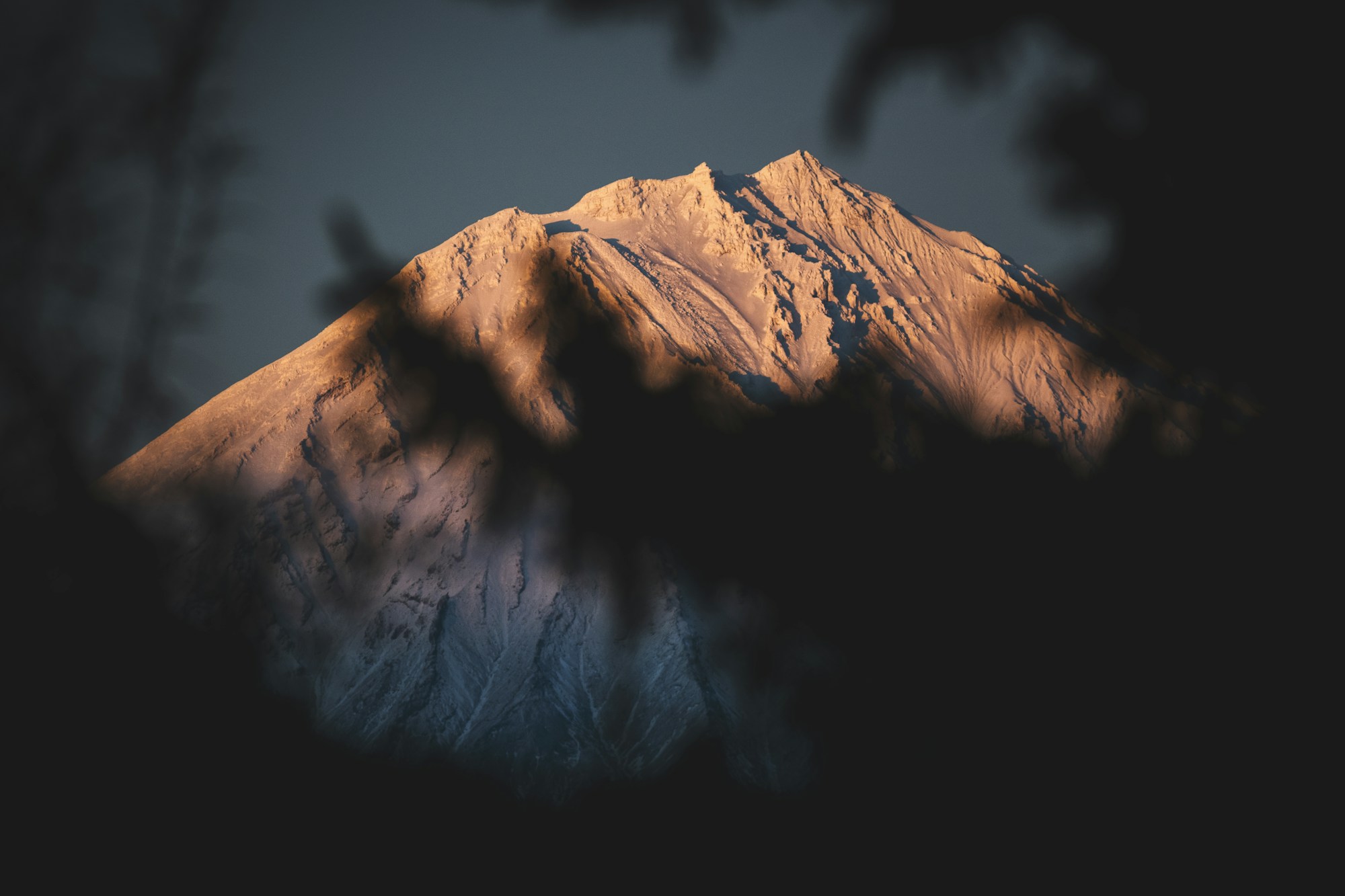
Kamchatka Peninsula, Russian Far East
The Kamchatka Peninsula is home to 30 active volcanoes. The full-day trek to the summit of Mutnovsky (2,322 m) is one of the world’s most spectacular volcanic hikes: sulfuric vents roaring like jet engines, steam fountains, and boiling mud create a scene of rare intensity. According to 56th Parallel, custom all-terrain trucks — Kamchatka’s « Mad Max » vehicles — provide access to the caldera.
Mount Gorely (1,829 m), one of Russia’s most active volcanoes, offers a legendary lunch on a rocky ledge above the crater, with views of the volcanic lake and steaming fumaroles. The wildlife is spectacular: Lake Kurilskoye and its brown bears attracted by migrating salmon create one of the planet’s most intense wildlife spectacles.
Highlights
- Mutnovsky caldera — roaring sulfuric vents, boiling mud
- Optional Mi-8 helicopter flight to the Valley of Geysers (world’s 2nd largest geyser field)
- Brown bear watching at Lake Kurilskoye in August
10. Klyuchevskaya Sopka and Tolbachik — The Ultimate Expedition
North-Central Kamchatka, Russia
Klyuchevskaya Sopka (4,835 m) is the tallest active volcano in the Northern Hemisphere. The expedition traverses landscapes straight out of a graphic novel, crossing the Studenaya River to the « Field of Mars » — an otherworldly volcanic plain — then reaching the Tolbachik region, site of a major eruption in 1975.
The « Forest of the Dead » is one of this expedition’s highlights: an ancient larch forest entirely covered by the scorching ash cloud of 1975, forming an haunting and slightly unsettling landscape. According to Epic Expeditions, walking through this area gives the feeling of being on another planet.
Highlights
- Tallest active volcano in the Northern Hemisphere (4,835 m)
- The « Forest of the Dead » — aftermath of a cataclysmic 1975 eruption
- Esso village — authentic Even and Itelmen indigenous culture
- Extreme isolation — feeling of being at the edge of the world
🗺️ Practical Comparison — 10 Volcanoes at a Glance
| Destination | Level | Budget / day | Best season | Crowds |
|---|---|---|---|---|
| Reykjanes (IS) | Easy–Medium | €150–250 | June–Sept | ⚡⚡⚡ |
| Askja (IS) | Hard | €180–280 | July–Sept | ⚡ |
| Hekla (IS) | Medium | €100–150 | June–Sept | ⚡ |
| Kawah Ijen (ID) | Medium | $30–60 | Apr–Oct | ⚡⚡ |
| Rinjani (ID) | Hard | $80–200 | Apr–Nov | ⚡⚡ |
| Dukono (ID) | Extreme | $80–150 | Apr–Oct | 0 |
| Etna South (IT) | Easy–Medium | €100–200 | May–Sept | ⚡⚡⚡ |
| Etna North (IT) | Medium | €80–120 | Year-round | ⚡ |
| Mutnovsky (RU) | Hard | $300–500 | July–Aug | ⚡ |
| Klyuchevskaya (RU) | Expedition | $400–700 | July–Aug | 0 |
Frequently Asked Questions
Is a guide mandatory for these volcano treks?
It depends on the destination. In Iceland, marked trails on Reykjanes are accessible without a guide, but guided volcanic shuttles are strongly recommended for safety. In Sicily, hiking above 2,500 m is strictly regulated: a guide licensed by the Collegio Regionale delle Guide Alpine e Vulcanologiche is legally required according to Lonely Planet. For Dukono and Kamchatka, a local expert guide is absolutely non-negotiable.
How do you manage the risk of an unexpected eruption during a trek?
Volcanic conditions can change within hours. The golden rule is to subscribe to local meteorological authority alerts: Vedur.is for Iceland, INGV for Etna, PVMBG for Indonesia. Never ignore a zone closure, even temporary ones. According to TravelPirates, Indonesia averages three unexpected closures per year, lasting from one day to several weeks. Check SafeTravel.is on the morning of your hike for Iceland.
Is Kamchatka accessible to Western travelers in 2026?
Technically yes, but with significant constraints. The Russian 30-day e-visa has been available for EU citizens since September 2025. However, there are no direct flights from Western countries: a mandatory layover in the Middle East or Central Asia is required. European tour operators have suspended their tours due to EU sanctions. Individual travelers can go at their own risk and must imperatively consult official government travel advisories before any project. Western Visa/Mastercard cards do not work in Russia.
Is Indonesia safe for volcano treks in 2026?
Yes, with the usual precautions. Seismologists continuously monitor volcanic activity. According to Keliling Nusantara, always confirm safety with your guide a few days before departure, as authorities close access frequently and without warning. Kawah Ijen and Rinjani are well-equipped for tourists; Dukono requires advanced logistical preparation.
What travel insurance do you need for volcano trekking?
Standard travel insurance is insufficient. You must take out insurance explicitly covering extreme sports or volcanic activities, helicopter medical evacuation (minimum €500,000), and cancellation for site closure by local authority. Specialized insurers to consider: World Nomads (widely used for this type of trek), Battleface, or Global Rescue. Check that Russia is covered if you are considering Kamchatka.
What is the best destination for a first active volcano trek?
For beginners, East Java (Bromo and Ijen) is the best entry point: well-developed infrastructure, English-speaking guides, moderate cost ($30–60/day). In Europe, Etna with the 4WD tour from Piano Provenzana is ideal — accessible year-round, professional supervision, spectacular scenery. In Iceland, the Reykjanes « Volcano Shuttle » tours allow you to experience volcanic activity without excessive physical effort, departing from Reykjavik itself.
What essential equipment should you bring to an active volcano?
Essential equipment for any active volcano trek: waterproof high-grip hiking boots, layered clothing (warm windbreaker even in summer), wrap-around sunglasses against volcanic dust, helmet (mandatory on Etna), gas mask or FFP3 mask against sulfur dioxide (SO₂) — particularly crucial for Kawah Ijen, headlamp (for night treks like Ijen), gloves, and at least 2 liters of water. According to Hermes Sicily, professional guides on Etna generally provide helmets and poles.
Can you combine several of these volcanoes in a single trip?
Absolutely. The most popular combination in Indonesia is Bromo + Kawah Ijen (3–4 days from Bali) — one of Asia’s most celebrated volcanic circuits. For a more ambitious challenge: tackle Merbabu, Ijen, Batur, Bromo, and Rinjani in one expedition. In Europe, Iceland + Sicily (Etna) is achievable in 12–15 days: both destinations are accessible from European hubs. Kamchatka naturally combines with a detour through Siberia or Japan (Hokkaido volcanoes).
How much does a volcano-hopping trip across these regions cost?
Costs vary widely by destination. Indonesia is the most affordable: Kawah Ijen runs $30–60 per day and the multi-day Rinjani trek $80–250 total. Sicily sits in the middle: €45–120 for the North Etna 4WD tour, up to €200 per day on the busier south side. Iceland ranges from €60–250 per day on Reykjanes to €180–280 per day for the harder Askja expedition. Kamchatka is by far the most expensive: organized day tours start at $300–500, and the full 16-day Klyuchevskaya Sopka expedition costs around $6,890, reflecting the helicopter access and remote logistics involved.
Sources
- SafeTravel.is — Reykjanes eruptions and earthquakes — Official alerts and access conditions
- Guide to Iceland — Sundhnúkur Eruptions 2024–2025 — Complete volcanic activity guide
- TravelPirates — Iceland 2026 Eruption Update — Risk analysis and practical advice
- Epic Iceland — Askja Guide 2026 — Routes, maps and hikes
- Backpackmoments — Complete Kawah Ijen Guide — Tickets, logistics, practical tips
- Ijen Expedition Tour — Travel Guide 2026 — Blue fire, acid lake, field tips
- Indiahikes — Rinjani Trek 2026 — Itineraries, difficulty, equipment
- The World Travel Guy — Dukono Hike — Expedition account and tips
- Lonely Planet — Etna Hiking 2025 — Regulations and licensed guides
- Piano Provenzana — Etna North Summit Tour — 4WD and trekking to 3,347 m
- 56th Parallel — Kamchatka Tours 2026 — Volcanoes, bears, geysers
- Epic Expeditions — 13-Day Kamchatka Expedition — Detailed complete itinerary
Research conducted in March 2026, reviewed and refreshed in July 2026 from recent official and specialized sources. Volcanic conditions change rapidly — always check current alerts before departure.
Ready to Plan Your Volcanic Expedition?
Iceland, Indonesia, Sicily or Kamchatka — each volcano is a unique adventure. Discover our themed itineraries and prepare your volcanic journey with the best resources available.
Explore all itineraries