
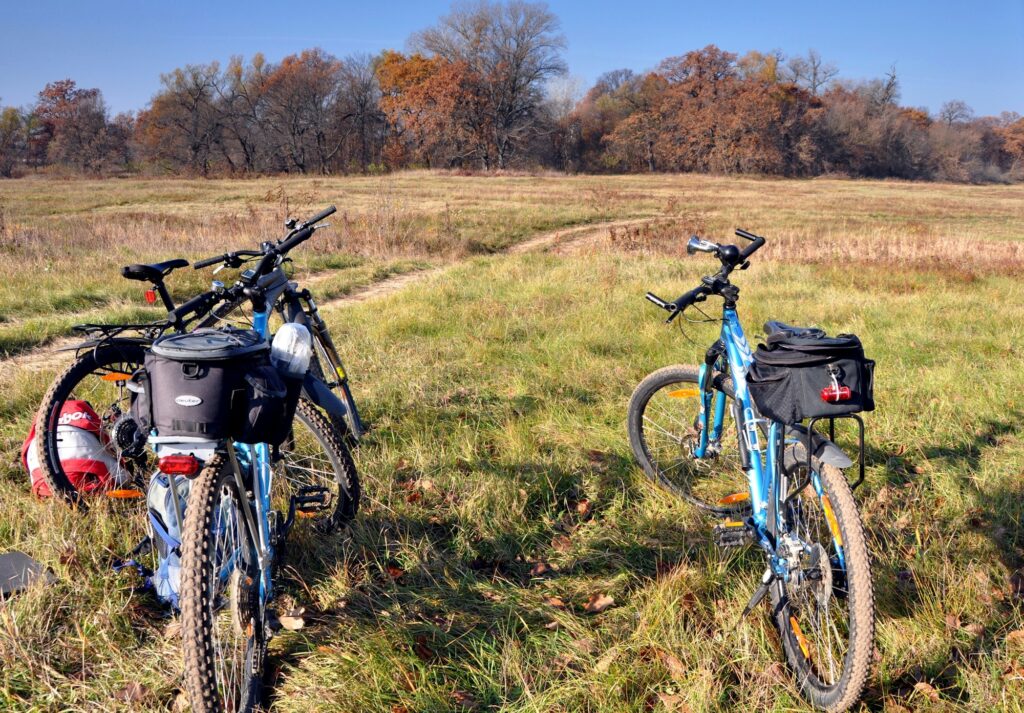
Central Europe hides a treasure unknown to the mainstream tourist circuit: a corridor stretching thousands of kilometres of forest tracks, gravel mountain passes and winding unpaved roads, running from the Julian Alps of Slovenia all the way to the depths of the Romanian and Polish Carpathians. In 2026, gravel bikepacking along this mountain arc stands out as one of the wildest and least-frequented cycling adventures in Europe. No crowds, breathtaking scenery, affordable budgets and legendary hospitality: here are the seven unmissable routes to ride off the beaten path, from Slovenia to the Carpathians.
| Route | Country | Distance | Elevation+ | Budget/day | Best season | Level |
|---|---|---|---|---|---|---|
| Slovenia West Loop | 🇸🇮 Slovenia | ~500 km | ~12,000 m | €50–90 | Jun–Aug | Intermediate |
| Trans Dinarica | 🇸🇮🇭🇷🇧🇦 Balkans | ~1,900 km | ~40,000 m | €20–70 | Apr–Oct | Intermediate+ |
| Slovakia Divide Gravel | 🇸🇰 Slovakia | 790 km | 13,000 m | €30–60 | May–Oct | Advanced |
| Carpathian Mountain Race | 🇸🇰🇭🇺🇷🇴 Carpathians | 1,900 km | ~35,000 m | €25–50 | Jul–Aug | Expert |
| Transylvania Gravel | 🇷🇴 Romania | ~900 km | ~20,000 m | €25–50 | May–Oct | Intermediate |
| Maramureș & Bukovina | 🇷🇴 Northern Romania | ~600 km | ~15,000 m | €20–40 | Jun–Sep | Intermediate |
| Poland Gravel Race | 🇵🇱 Poland | ~800 km | ~18,000 m | €35–65 | May–Sep | Intermediate+ |
1. Slovenia — The Julian Alps West Loop
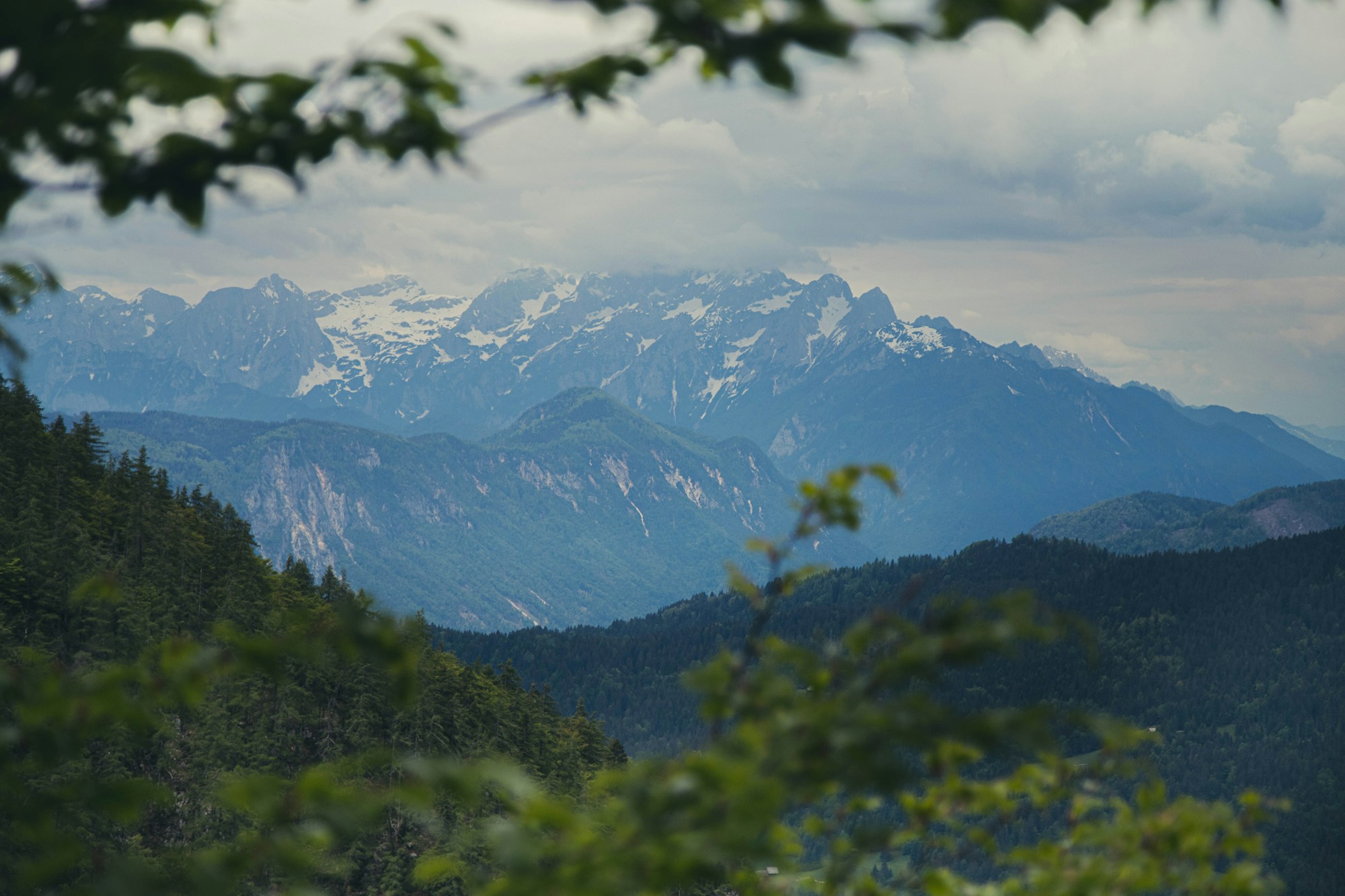
Ljubljana → Julian Alps → Soča Valley → Karst → Ljubljana
Slovenia is arguably the most perfect gravel bikepacking destination in Central Europe. This tiny country packs an extraordinary variety of landscapes: the jagged peaks of the Julian Alps, the supernatural turquoise of the Soča River, the limestone plateaus of the Karst and the Primorska vineyards — all on nearly deserted forest tracks. The Slovenia West Loop, documented on Bikepacking.com, is considered by many bikepackers one of the ten most beautiful routes in Europe.
The ride starts from Ljubljana, an easily accessible capital by train or plane via Vienna or Munich. The route climbs north through the Karavanke, crosses the Vršič Pass (1,611 m — the only fully unpaved mountain road in the Slovenian Alps), follows the emerald-green Soča to Tolmin, traverses the mysterious Karst plateau, and returns to Ljubljana through the rolling hills of Dolenjska. Surfaces wonderfully blend: compact forest roads, technical singletrack and a few paved linking sections.
Route highlights
- Vršič Pass (1,611 m) — the only fully unpaved alpine pass in Central Europe
- Soča Valley — water of a unique turquoise found nowhere else in the world, perfect for swimming
- Škocjan Caves — UNESCO World Heritage site, accessible by bike from the Karst trails
- Easy and frequent resupply throughout the route
- Authentic atmosphere far from the crowded alpine lake tourist circuit
Estimated budget
- Camping + food: €50–70/day
- Guesthouses and local hotels: €90–150/day
- Recommended duration: 8–12 days to enjoy it fully
2. Trans Dinarica — The Great Balkan Traverse
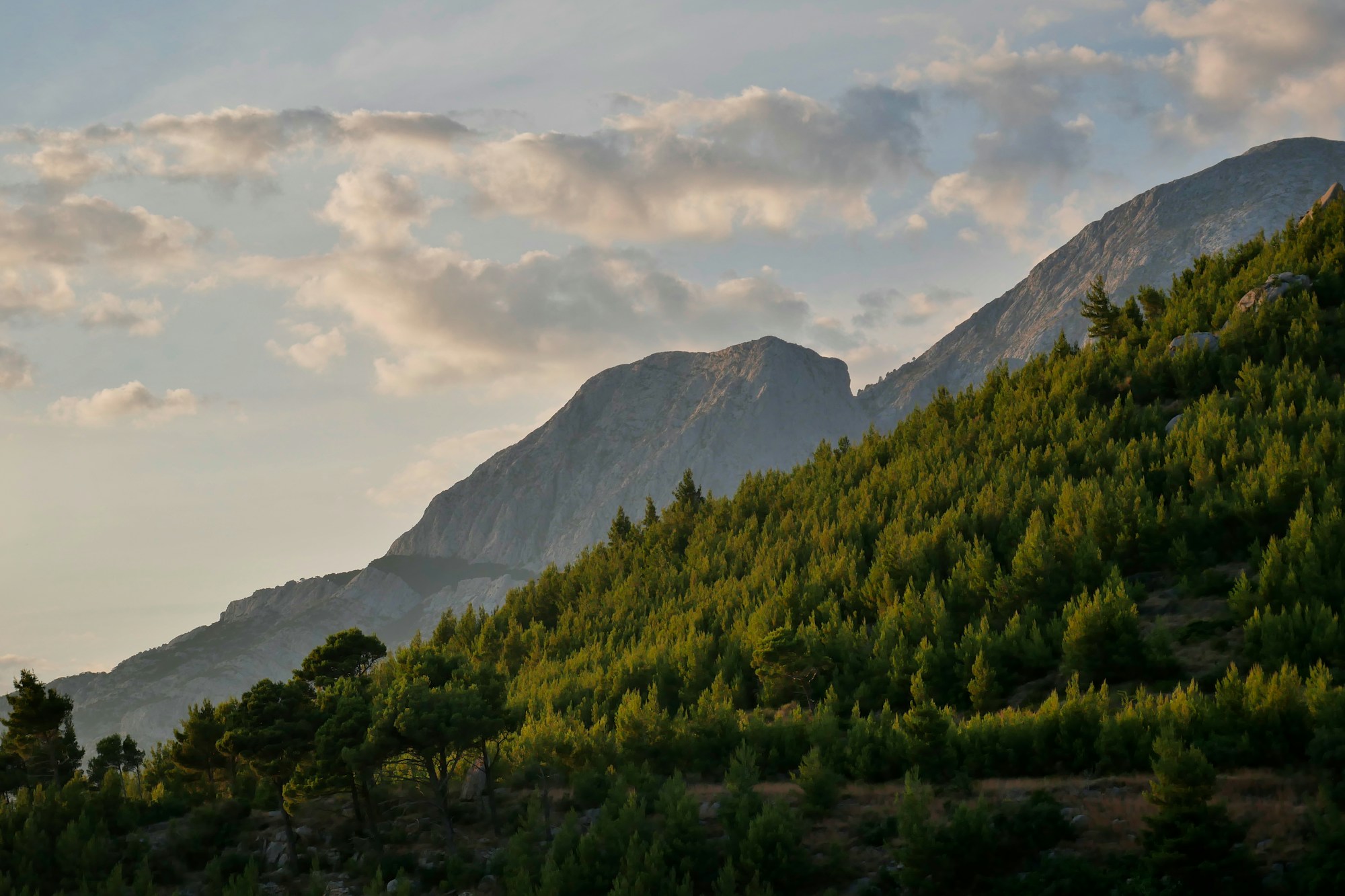
Tolmin (Slovenia) → Velebit Mountains (Croatia) → Bosnia-Herzegovina
The Trans Dinarica is one of Europe’s most ambitious cycling projects: a 1,900 km route linking Slovenia, Croatia, Bosnia-Herzegovina, Montenegro, Albania, Kosovo, North Macedonia and Serbia, running along the Dinaric ranges — mountain chains parallel to the Adriatic coast, still almost untouched by mass tourism. The route prioritises national parks, UNESCO sites, forgotten villages and unique viewpoints.
The Slovenia–Croatia–Bosnia section (the first 600–700 km) concentrates the finest scenery: from the Soča gorges, the route enters Croatia through the Velebit massif, one of the last great wilderness areas of Central Europe. Here, above 1,700 m, no crowds: abandoned villages, old-growth forests and vertiginous views over the Adriatic Sea and the Dalmatian islands. Bosnia then offers an incomparable cultural immersion — Ottoman villages, stone arch bridges, legendary hospitality — at one of the lowest budgets in Europe (€20–40/day).
Trans Dinarica highlights
- Velebit massif — panoramic views over the Adriatic from 1,700 m, zero crowds
- Nova Gorica — 2025 European Capital of Culture, first borderless city in the world
- Bosnia — the most authentic and affordable bikepacking destination in Europe
- Downloadable GPX tracks on transdinarica.com with suggested stages
- Possible to complete only the Slovenia–Croatia–Bosnia section in 3–4 weeks
3. Slovakia Divide Gravel Edition — The Slovak Carpathian Arc
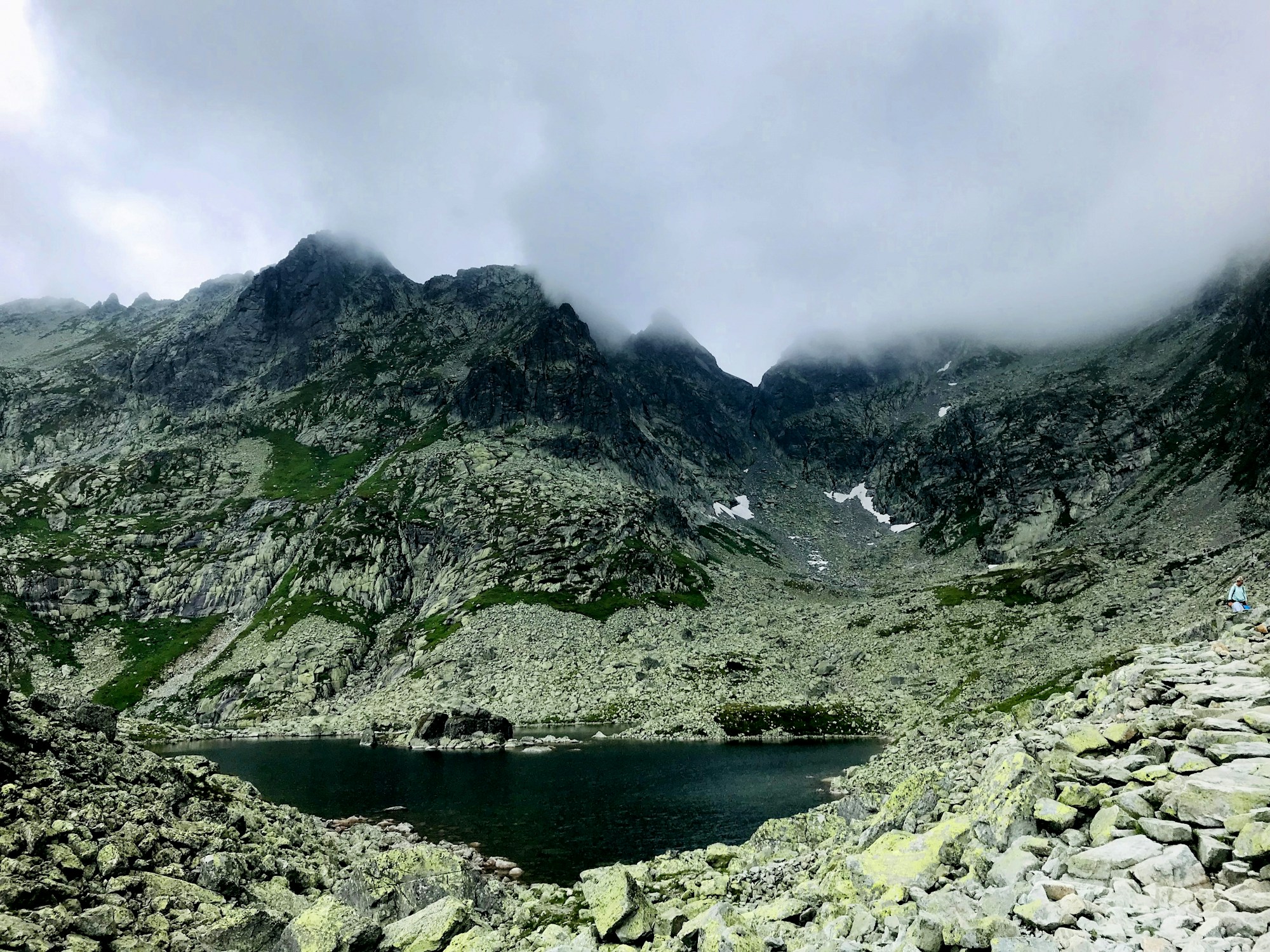
Modra (Bratislava) → High Tatras → Beňatina (Eastern Slovakia)
The Slovakia Divide is Slovakia’s answer to the Colorado Trail Race or the American Tour Divide: an unofficial but iconic crossing of the entire country from west to east, through the Little Carpathians, Javorník, White Beskids, Malá Fatra, High Tatras and Eastern Slovak Carpathians. The Gravel Edition (790 km / 13,000 m gain) is a faster and less demanding version than the classic MTB route (670 km / 15,700 m gain), but still a serious undertaking.
The magic of the Slovakia Divide lies in its succession of radically different landscapes: silent pine forests, alpine meadows overlooking misty valleys, traditional wooden Carpathian villages and panoramic ridges of the High Tatras where snow-capped peaks overlook deep glacial lakes. Slovakia is one of the most affordable cycling destinations in Europe, and its nature is remarkably well preserved — local wildlife includes lynx, wolves, brown bears, deer and wild boar.
What makes the Slovakia Divide unique
- Full country crossing from Bratislava to the Eastern Carpathians
- High Tatras — the most spectacular Carpathian peaks, accessible by bike
- Autumn colours among the most beautiful in Europe (September–October)
- Exceptional wildlife — wolves, lynx and bears regularly spotted
- Very affordable prices: Eastern European rates for accommodation and food
4. Carpathian Mountain Race — The Carpathian Ultra
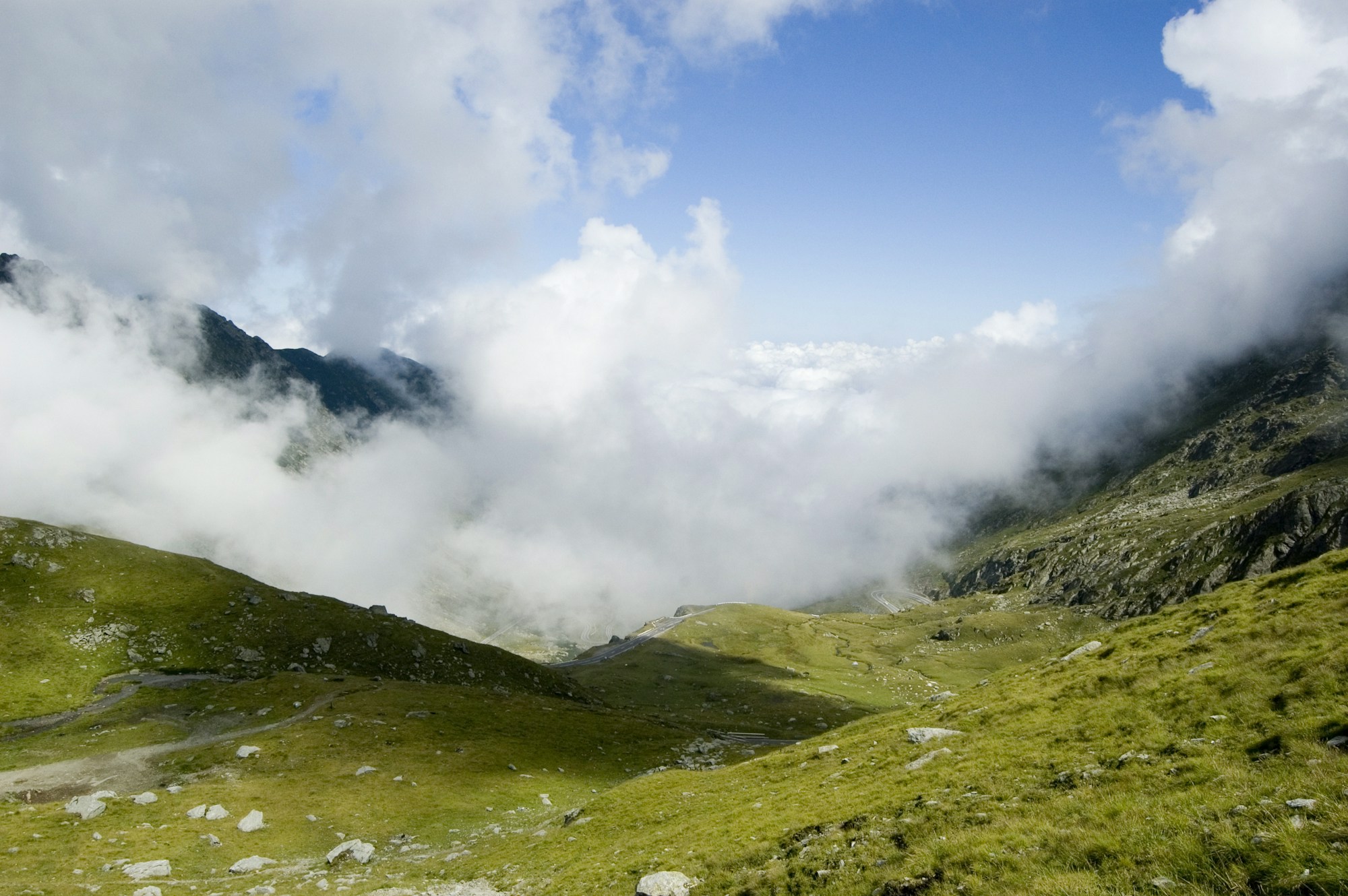
Slovakia → Hungary → Romania — 1,900 km through the Carpathians
The Carpathian Mountain Race is one of the premier ultra bikepacking events of Central Europe — but its GPX track, freely available after the event, also serves as the definitive reference for planning an autonomous grand traverse of the Carpathian arc. The route crosses Slovakia, Hungary and Romania over nearly 1,900 km, with entire sections of 200 km without resupply or civilisation — guaranteed total immersion.
The Romanian section of the route is the most spectacular: the Southern Carpathians concentrate the highest peaks outside the Alps, and Transylvania reveals its castles, Saxon villages and old-growth forests from gravel tracks that rival the best trails of North America. The Transfăgărășan (DN7C), often called the world’s most beautiful road, can be approached from altitude tracks for a truly exceptional experience.
Why choose the CMR route?
- The wildest ultra bikepacking in Central Europe — abundant wildlife, pristine nature
- Slovak + Transylvanian Carpathians in a single epic adventure
- Reference GPX usable for autonomous travel outside the race
- Budget among the lowest in Europe (Hungary and Romania very affordable)
- Transfăgărășan accessible from the route — the mythical Transylvanian Alpine road
5. Transylvania Gravel — Făgăraș Mountains & Southern Carpathians
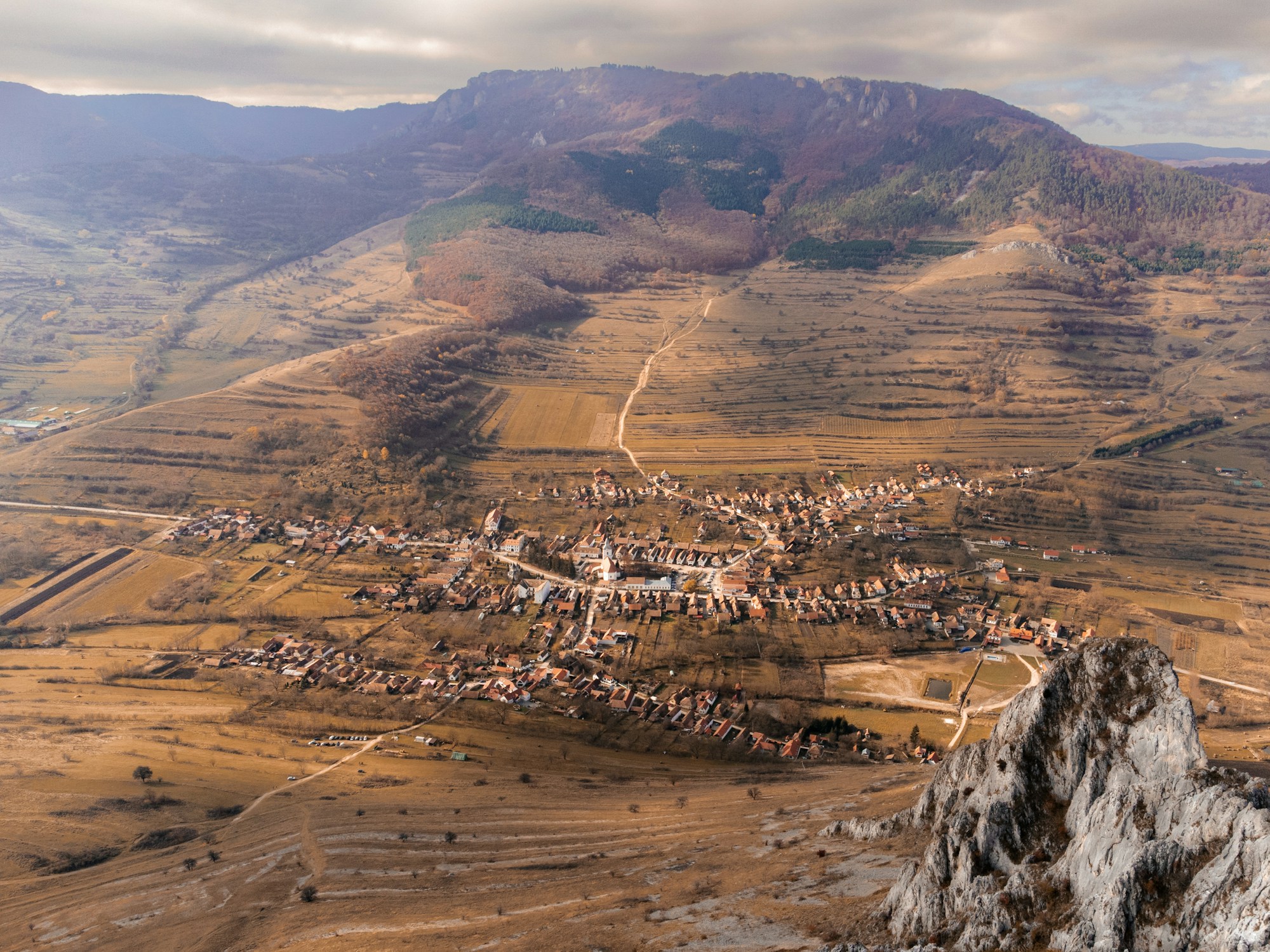
Brașov → Făgăraș Mountains → Sibiu → Sighișoara (Central Romania)
Transylvania is Romania’s premier cycling region. Its magical triptych — the Făgăraș Mountains (2,500 m) to the north, the picturesque Sibiu hills and the medieval city of Sighișoara — is ideally explored by bike, on gravel tracks winding through ancient beech forests, flowering alpine meadows and Saxon villages with colourful houses. Cycling in Transylvania, especially around Brașov, Sighișoara and Sibiu, benefits from a « Velo Popas » certified accommodation infrastructure: cyclist-adapted guesthouses with secure bike storage and equipment drying facilities.
The Făgăraș Mountains hold the highest peaks outside the Alps in Central Europe, and their slopes offer some of the wildest singletrack on the continent. Panoramic ridges, glacial lakes and a myriad of hidden trails through Romania’s endless forests make this a destination that rivals the great alpine destinations — at one third of the cost.
Transylvania gravel highlights
- Făgăraș Mountains — Romania’s highest peaks, breathtaking altitude trails
- Transylvanian Saxon villages — Viscri, Biertan, Saschiz, UNESCO World Heritage sites
- Brașov — excellent base camp, well connected by train
- Velo Popas accommodation — infrastructure specifically dedicated to cyclists
- Budget among the lowest in Europe for top-tier natural landscapes
6. Maramureș & Bukovina — The Forgotten Eastern Carpathians
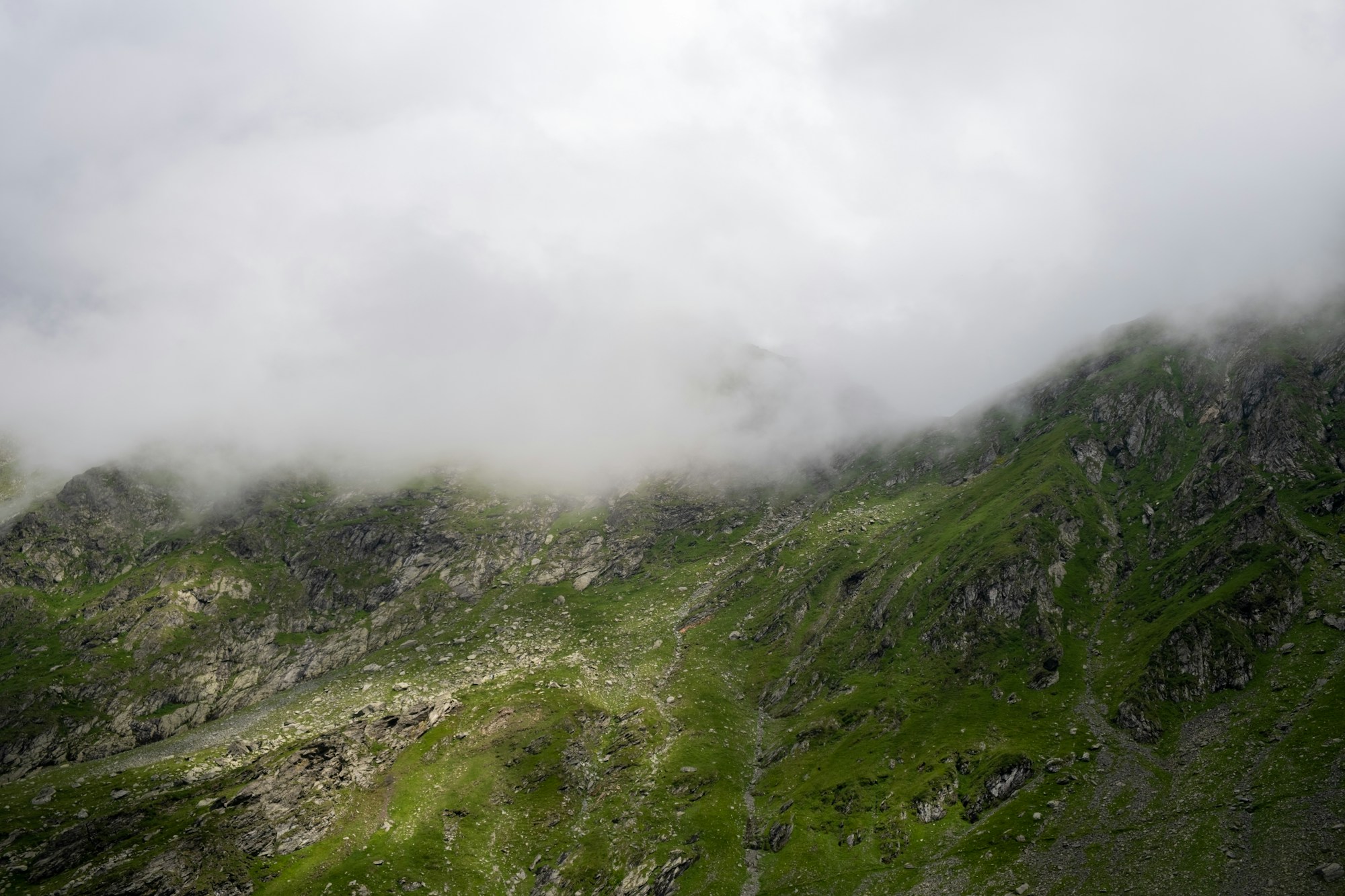
Baia Mare → Borșa → Prislop Pass → Bukovina (Northern Romania)
While Transylvania is becoming known to savvy travellers, Maramureș remains a jealously kept secret: a region in northern Romania that feels like a genuine medieval time capsule. Farmers still scything by hand, horse-drawn carts on gravel roads, the world-unique Merry Cemetery of Săpânța, 17th-century wooden monasteries and old-growth forests among the last in Europe — this is what awaits the bikepacker who ventures into this corner of Romania, still almost unknown to foreign cyclists.
The gravel route between Baia Mare and Bukovina crosses the Eastern Carpathians on forest roads that are often in excellent condition, dotted with villages where no other tourists are ever seen. The Prislop Pass (1,414 m) offers a 360-degree panorama over the wooded ridges of the Eastern Carpathians. An unexpected tip: begin your regional access by boarding the « Mocănița« , the narrow-gauge steam forest railway from Viseu de Sus, which climbs the Vaser Valley deep into old-growth forests before releasing you to ride by bike.
What makes Maramureș unique
- Almost no foreign cyclists — absolute solitude on the gravel roads
- Merry Cemetery of Săpânța — a uniquely Romanian cultural heritage site
- Mocănița — the Viseu de Sus steam forest railway to access old-growth forests
- Painted monasteries of Bukovina — UNESCO sites accessible by bike
- Lowest budget of the entire Slovenia–Carpathians arc
7. Poland Gravel Race — Bieszczady, Beskids & Tatras
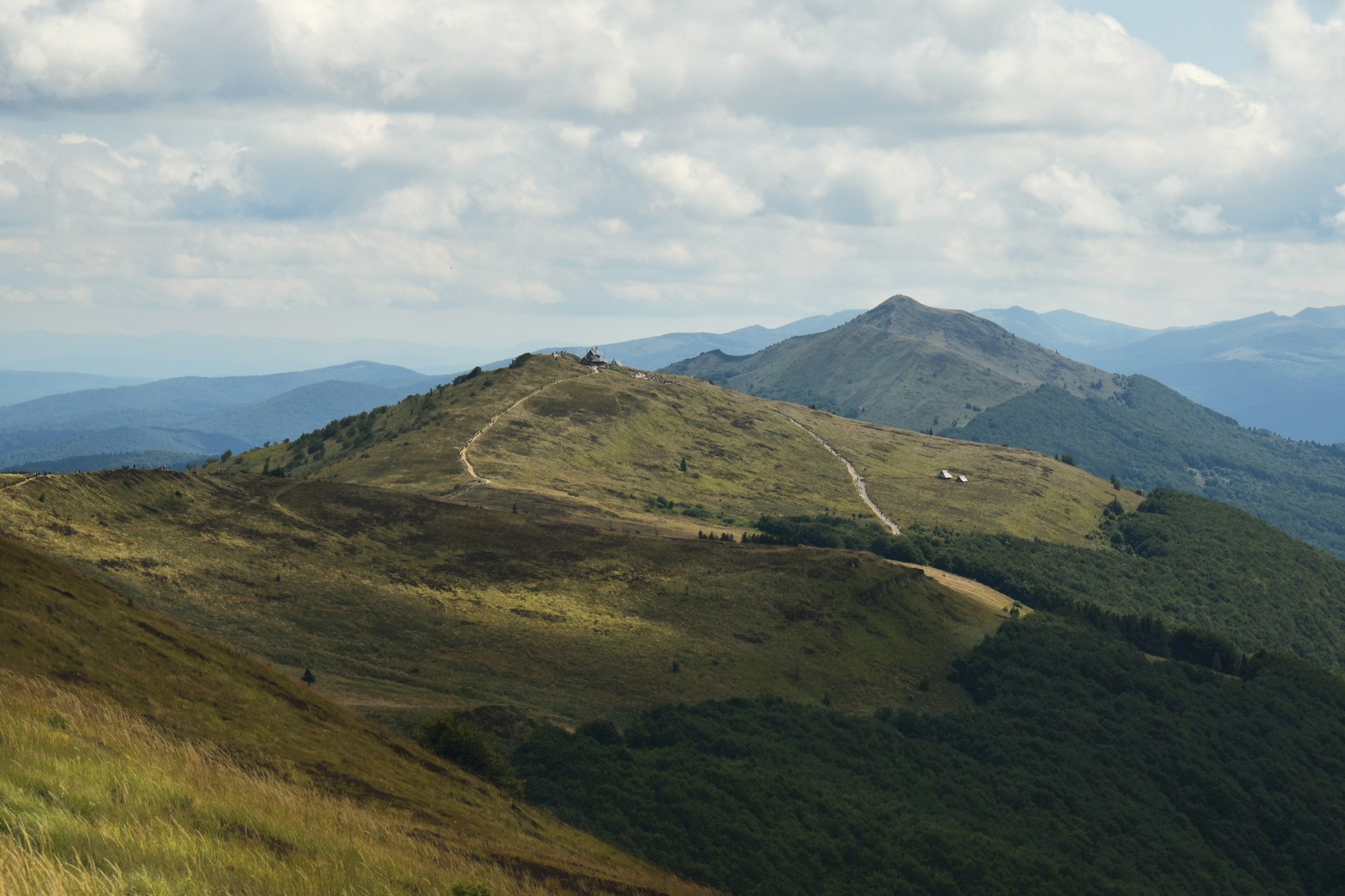
Przemyśl → Bieszczady → Beskid Niski → Pieniny → Tatras → Kraków
The Poland Gravel Race (PGR) is the flagship gravel bikepacking event of Poland, but its route is primarily an invitation to traverse the finest landscapes of the Polish Carpathians, still virtually unknown to foreign cyclists. From Przemyśl, a fortified city on the Ukrainian border, to Kraków via the wild Bieszczady, the Beskid Niski, the Pieniny and the majestic Tatras, this crossing of southern Poland’s highlands is an adventure in its own right.
The Bieszczady are the gem of this route: rounded, forested hills with a distinctly Carpathian character, almost deserted, where chamois, bison and lynx share the space with rare hikers. The gravel route often follows the ancient forest paths of the Lemkos, a Ukrainian minority whose abandoned villages still dot the valleys. To finish, the Tatras — Poland’s only true alpine range — provide a grand finale with their glacial lakes, pine forests and rocky ridges dominating the Slovak border.
Why choose the Polish Carpathian traverse
- Bieszczady — Poland’s wildest and most pristine nature, virtually no tourism
- Abandoned Lemko villages — a poignant cultural heritage in the heart of the forests
- Tatras — Poland’s only alpine peaks for a triumphant finale
- « Agroturystyka » — authentic farmhouse stays for €20–35/night
- Arrival in Kraków — one of Europe’s most beautiful cities to cap the adventure
Frequently Asked Questions — Gravel Bikepacking Europe 2026
What cycling level is required for these Central European gravel routes?
The required level varies considerably depending on the chosen route. The Slovenia West Loop and the Trans Dinarica Slovenia–Croatia section are accessible to intermediate gravel cyclists comfortable on varied terrain. The Slovakia Divide Gravel Edition requires an advanced level with experience in autonomous navigation in remote areas. The Carpathian Mountain Race is reserved for expert cyclists capable of managing 150–200 km days in full self-sufficiency. For the Transylvania, Maramureș and Polish Carpathians routes, good physical fitness is sufficient — the tracks are generally rideable and daily elevation can be modulated to your pace.
What bike should I choose for gravel bikepacking from Slovenia to the Carpathians?
The ideal bike is a capable gravel bike with 40–47 mm tubeless tyres, or a light hardtail MTB. The region’s tracks offer a wide mix of surfaces — smooth tarmac to rough gravel and forest roads — and a robust gravel bike with hydraulic disc brakes will cover the vast majority of routes. For the classic Slovakia Divide (MTB version), opt for a hardtail. For the Gravel Edition and the Transylvania and Poland routes, a performance gravel bike is perfectly suited. Favour bikepacking luggage (handlebar bag, seat bag, top tube bag) over panniers for technical descents.
Is wild camping allowed on these routes?
Rules vary significantly by country. Wild camping is legally permitted in Bosnia-Herzegovina, Serbia and Albania. In Croatia and Montenegro, it is technically prohibited but tolerated if you avoid beaches, national parks and private property. Slovenia has the strictest rules — wild camping is generally prohibited and guesthouses or inns are the necessary solution. In Slovakia, Romania and Poland, camping in state forests is often tolerated discreetly. In Bosnia, beware of mined areas clearly marked with red skull-and-crossbones signs.
How do I handle logistics to reach the starting points?
Slovenia is easily accessible from Vienna, Munich or Venice (train or bus accepting bikes). For the Trans Dinarica, reaching Tolmin can be tricky — a van transfer from Ljubljana with a local operator is often the most practical solution. For the Carpathians: fly to Bratislava (Slovakia Divide), Brașov or Sibiu (Transylvania), Baia Mare (Maramureș) or Kraków (Polish Carpathians). Note: low-cost flights in Central Europe rarely accept dismantled bikes — prefer full-service airlines or ship your bike in advance via a specialist freight service. Trains in Romania, Slovakia and Poland generally accept bikes on reservation.
What are the wildlife risks in Romania and Slovakia?
Romania has the largest brown bear population in Europe outside Russia. These bears can appear on mountain trails or near campsites, attracted by food smells. Carpathian shepherd dogs (Ciobănesc românesc) can also be very protective and aggressive. Carrying bear spray (capsaicin) is strongly recommended for Transylvania, Maramureș and the Carpathians. In Slovakia, local wildlife includes foxes, wild boar, deer, and a small chance of encountering wolves and bears in the most remote massifs. These animals remain wild and generally retreat from approaching cyclists — store your food in airtight bags.
What navigation tools should I use for these gravel routes?
Komoot, RideWithGPS and Garmin Connect are the references for these routes. Always download the official GPX tracks before departure: for the Trans Dinarica (transdinarica.com), the Slovakia Divide (slovakiadivide.sk) and the Poland Gravel Race (pgr.kolo-ultra.pl). Mobile network coverage is good in Slovenia, Slovakia and Poland, but very patchy in remote areas of Bosnia, Romanian Maramureș and Polish Bieszczady — an autonomous GPS watch (Garmin, Wahoo) with the pre-loaded track is essential. OpenStreetMap maps available in Komoot and OsmAnd cover these regions well, including unsignposted forest tracks.
What total budget should I plan for a gravel trip from Slovenia to the Carpathians?
The budget varies by country and travel style (camping vs guesthouses). Here is an estimate by country: Slovenia: €50–70/day (camping) to €90–150/day (guesthouses); Croatia: €40–60/day to €70–120/day; Bosnia-Herzegovina: €20–35/day to €40–70/day; Slovakia: €30–50/day to €60–100/day; Romania: €25–45/day to €50–90/day; Poland: €30–55/day to €60–100/day. For a moderately autonomous trip of 4–6 weeks covering the entire Slovenia–Carpathians corridor, budget between €2,500 and €4,500, excluding flights.
Can I combine several routes into one grand trip?
Absolutely — that is precisely the geographical appeal of the Slovenia–Balkans–Carpathians corridor. A great 6–8 week adventure could be organised as follows: Slovenia West Loop (10 days) → Trans Dinarica Balkans section (3–4 weeks) → Slovakia Divide Gravel Edition (10–15 days) → Transylvania Gravel (10–14 days). For the most ambitious, adding Maramureș and the Polish gravel adds another 3–4 weeks. The Trans Dinarica, officially linking 8 Balkan countries, forms the backbone of this adventure, which you can extend with the Carpathian routes to the north.
Sources and references
- Bikepacking Slovenia’s West Loop — BIKEPACKING.com
- Trans Dinarica Cycle Route — Official website
- Trans Dinarica Gravel Bike Touring in Slovenia — Epic Road Rides
- Cycling Trans Dinarica: Everything You Need to Know — Wobbly Ride
- Slovakia Divide — Official website
- Carpathian Mountain Race — BIKEPACKING.com
- Bike Tours in Romania — Epic Road Rides
- Gravel Bike Routes in Romania — Outdooractive
- Poland Gravel Race (PGR) — Official website
- Cycling Around the Tatra Mountains — Wobbly Ride
Research compiled from verified sources dating from 2024–2026. Route conditions evolve — always check GPX updates and weather conditions before departure.
Ready to ride off the beaten path?
Plan your next gravel bikepacking adventure in Central Europe with Pixidia — detailed itineraries, hand-picked accommodation and all the inspiration you need to get going.
Explore Pixidia Itineraries