
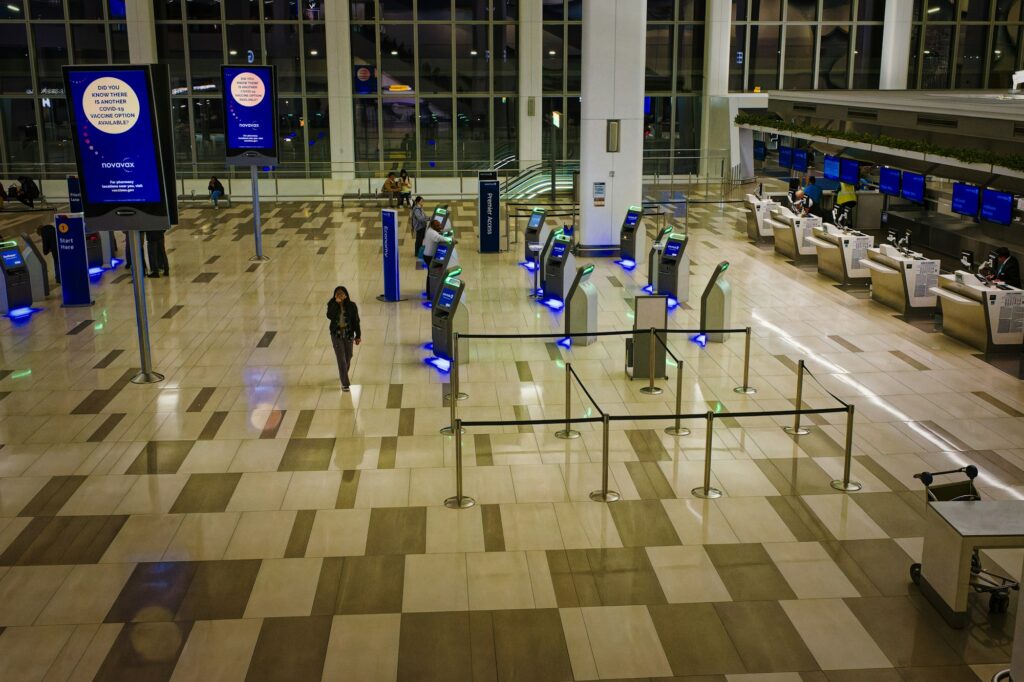
Ten seconds. That’s all it takes now to clear immigration at Singapore Changi. Seven seconds in Abu Dhabi. Five seconds in India with Digi Yatra. In 2026, facial recognition is radically transforming the airport experience: 238 American airports already use biometrics at border control, Changi is targeting 95% automated processes, and Europe is massively deploying next-generation gates as the EES comes into force. But behind these promises of seamless travel, the debate over privacy and consent is intensifying. A global overview of a revolution that concerns you from your very next flight.
1. How airport facial recognition works
Your face as a boarding pass
The principle is simple: a camera captures your face, an algorithm compares it to the photo stored in your biometric passport chip, and the system validates your identity in seconds. This verification can occur at every checkpoint — check-in, bag drop, security screening, departure lounge, boarding gate — creating a « seamless » journey where your face replaces both your passport and boarding pass, as detailed by Regula Forensics.
Major technology players — SITA, IDEMIA, NEC, iProov and CLEAR — are developing increasingly sophisticated systems. The latest generations incorporate multimodal biometrics (face + iris), infrared sensors for operation in all lighting conditions, and anti-spoofing devices capable of detecting fraud attempts using photos or masks, according to Simple Flying.
The ICAO vision: the Journey Pass
The International Civil Aviation Organization (ICAO) is pushing the concept even further with its Journey Pass, a digital travel card that centralizes the passenger’s biometric identity. The goal: to enable facial recognition at every checkpoint throughout the airport journey, from terminal arrival to the boarding gate. Australia is the first country to test this system, with a 30% reduction in processing time observed during pilot trials, reports tom.travel.
- Biometric passport required (RFID chip containing your photo)
- Verification compares your live face with the chip photo
- Works even with glasses, a beard, or a change in hairstyle
- The latest systems achieve over 99.5% accuracy
2. Europe gearing up
PARAFE, EES and FaceBoarding: the continent accelerates
France: PARAFE and Air France’s ambitions
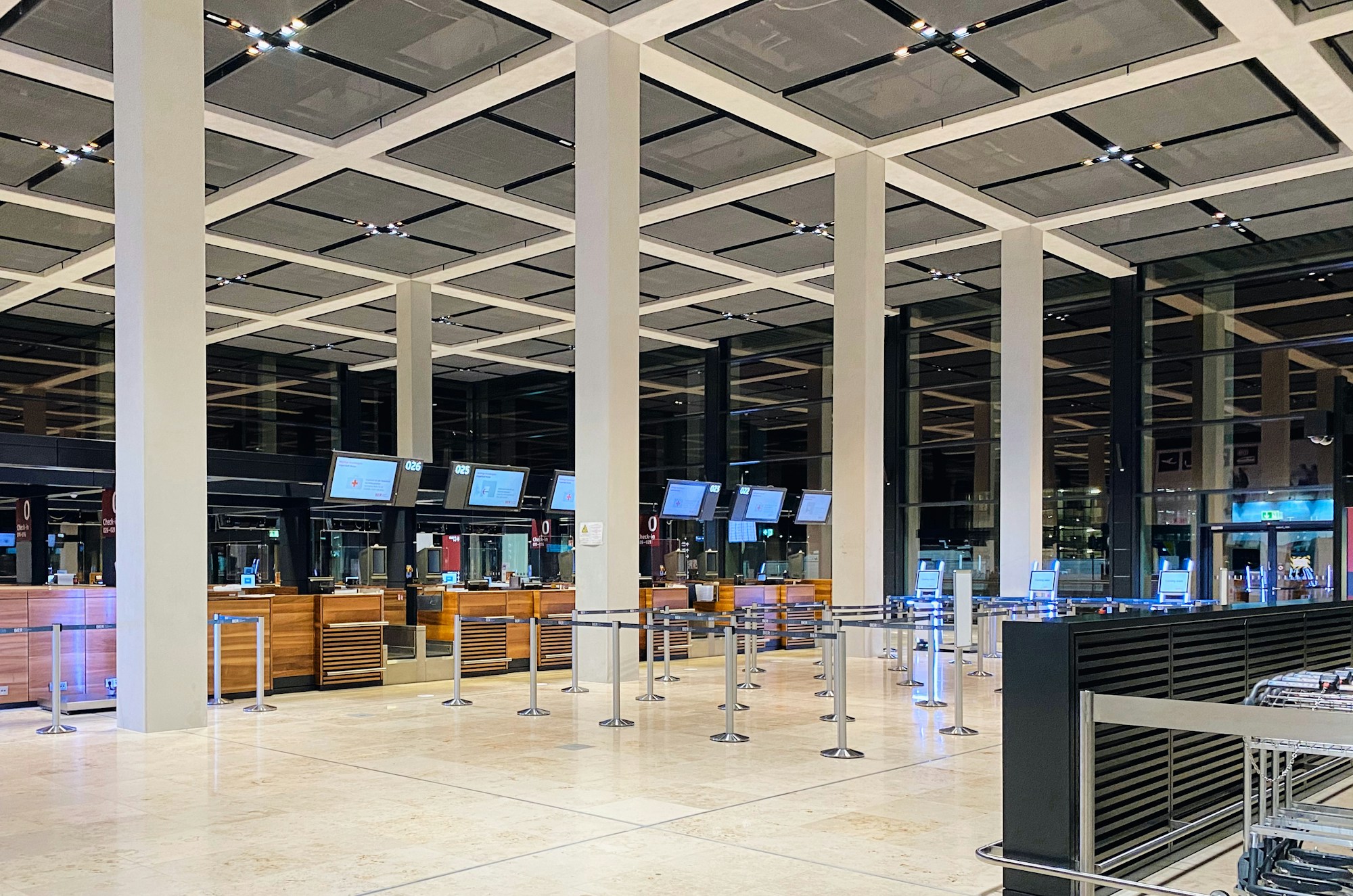
France uses the PARAFE (Passage Automatise Rapide Aux Frontieres Exterieures) system at its main airports — Paris-CDG, Orly and Marseille-Provence. This system combines biometric passport reading and facial recognition to automate border crossing for European nationals and certain partner countries. With over 200 million passengers passing through French airports each year, the stakes are enormous, notes CyberExperts. Air France is conducting advanced tests of an end-to-end biometric journey at Roissy, under the supervision of France’s data protection authority, the CNIL.
Germany: Frankfurt switches to SITA TS6 kiosks
Frankfurt Airport, Europe’s busiest hub by traffic, has installed 87 new SITA TS6 biometric kiosks in its Terminal 3, inaugurated in April 2026. These latest-generation kiosks combine passport reading, facial recognition and EES registration in a single step, significantly reducing border crossing times, according to Simple Flying.
Italy: FaceBoarding takes off
Italy has launched its FaceBoarding program at Milan-Linate and Catania airports. The concept: after an initial biometric enrollment, the passenger passes all subsequent checkpoints — security, lounge, and boarding gate — simply by showing their face. No more pulling out your passport or boarding pass at every step.
EES: biometrics become systematic at borders
The Entry/Exit System (EES), fully operational in 2026, requires biometric registration (facial photo and four fingerprints) of all non-EU nationals entering the Schengen area. This deployment required considerable investment: Eurostar invested over 10 million euros in installing biometric kiosks at its stations, reports Regula Forensics.
- PARAFE is free and open to EU citizens over 18
- EES applies to non-EU travelers on short stays (90 days max)
- Frankfurt, Rome, Milan and Amsterdam have the most advanced deployments
- Italian FaceBoarding is voluntary: the passenger chooses to enroll
3. Global champions: Changi, Abu Dhabi and the United States

Singapore, Abu Dhabi, United States: three models, three philosophies
Singapore Changi: 10 seconds and no passport needed
Singapore is the world’s laboratory for airport biometrics. Changi’s FAST (Facial Authentication for Seamless Travel) system allows passengers to clear immigration in 10 seconds — down from 23 seconds previously, a 56% reduction. The airport has 600 ABCS gates (Automated Border Control System) and has processed 47 million passport-free travelers since the program launched, reports Fortune. The 2026 target: achieving 95% fully automated processes, from check-in to boarding.
Abu Dhabi Zayed: the first « document-free » airport
Abu Dhabi’s Zayed Airport has become the world’s first airport to operate without any physical documents. The Smart Travel project allows passengers to pass through each checkpoint in 7 seconds — down from 25 seconds previously, a 72% reduction. Five of the nine checkpoints are already operational, and the system requires no pre-registration: the traveler’s face is automatically compared against immigration databases in real time, according to CNN Travel.
United States: TSA, CBP and CLEAR converge
In the United States, deployment is massive but fragmented. CBP (Customs and Border Protection) uses biometrics at 238 airports for border control, according to the official CBP website. In parallel, the TSA (Transportation Security Administration) has partnered with CLEAR to deploy biometric gates at three pilot airports, with expansion planned across the entire network, reports Nextgov. Orlando Airport is testing walk-through verification — the passenger simply walks through a corridor, without stopping, and is identified while moving. Delta Air Lines has even launched biometric bag drop, a bag drop facility entirely powered by facial recognition, according to WebProNews.
Preparations for the 2026 FIFA World Cup (United States, Canada, Mexico) are further accelerating the movement: airports in host cities are massively ramping up their biometric capabilities to handle the influx of millions of supporters.
- Changi operates 24/7 with 600 automated gates
- Abu Dhabi requires no pre-registration from travelers
- In the US, CLEAR is paid (~$189/year) but TSA PreCheck remains free for citizens
- British Airways boarded 400 passengers in 22 minutes using biometrics
4. Asia, the airport biometrics laboratory

Japan, Thailand, India: three approaches, one shared goal
Japan: Face Express and contactless kiosks
Japan is deploying its Face Express system at Haneda and Narita airports, the country’s two main gateways. NEC, the Japanese biometrics giant, provides next-generation walkthrough gates: the passenger walks through the gate without stopping, without pressing any button, and without touching any screen. The kiosks are controlled by gestures, a post-pandemic innovation that eliminates all physical contact, according to Biometric Update. Japan aims to welcome 60 million visitors per year by 2030, and biometrics is at the heart of this hospitality strategy.
Thailand: lightning-fast deployment across 6 airports
Thailand made a bold move by deploying its biometric system across six airports simultaneously from November 2024, covering both domestic and international flights. Bangkok’s One-ID system allows passengers to register their face once upon arriving at the terminal, then pass all subsequent checkpoints without any documents. A logistical feat for a country that welcomes over 30 million tourists per year.
India: Digi Yatra, the « data on your phone » model
India’s Digi Yatra program is arguably the most ambitious in the world in terms of scale and philosophy. Deployed across 24 airports, it has already processed 61 million trips and recorded 15 million app downloads. Per-passenger processing time has dropped to 5 seconds — the fastest in the world. But the real innovation lies elsewhere: biometric data is stored on the traveler’s device, not on a central server, and is deleted within 24 hours of the flight. A « privacy by design » model that sets the benchmark, according to AFAR.
- In Japan, NEC gates work via gestures, with no physical contact
- In Thailand, the system covers both domestic and international flights
- Digi Yatra stores data on the passenger’s phone, not on a server
- India deletes biometric data within 24 hours after the flight
5. Time savings: the global comparison
The central promise of airport facial recognition is time. Here are the documented figures from operators and authorities, compiled from official sources:
| Airport / System | Before | After | Improvement | Source |
|---|---|---|---|---|
| Singapore Changi | 23 s | 10 s | -56% | Fortune |
| Abu Dhabi Zayed | 25 s | 7 s | -72% | CNN |
| India (Digi Yatra) | ~60 s | 5 s | -92% | AFAR |
| ICAO Journey Pass (Australia) | — | — | -30% | tom.travel |
| British Airways (boarding) | ~40 min | 22 min | -45% | Regula |
The gains aren’t measured just in individual seconds. British Airways boarded 400 passengers in 22 minutes during biometric tests — a time that would be impossible with traditional manual verification. At the scale of an airport like Changi (68 million passengers in 2025), even a few seconds saved per traveler represents hundreds of hours saved each day.
6. GDPR and privacy: what the law says
Biometric data: Europe’s regulatory framework is the strictest in the world
In Europe, biometric data benefits from the highest level of legal protection. The General Data Protection Regulation (GDPR) classifies biometric data as sensitive data (Article 9), the processing of which is in principle prohibited except under strictly defined exceptions. The European Data Protection Board (EDPB) has issued specific guidelines on facial recognition at airports, establishing a fundamental principle: individuals must have maximum control over their biometric data.
Specifically, the EDPB requires that:
- The passenger’s explicit consent is required before any biometric collection
- A non-biometric alternative must always be available (manual queue, human verification)
- Storing data on the passenger’s phone is preferred over centralized storage
- Data must be deleted as soon as the purpose is fulfilled (end of flight, exit from terminal)
In France, the CNIL acts as an active watchdog. It has published a detailed reference framework on facial recognition at airports, stating that « the use of biometrics must not become the default standard » and that a « privacy impact assessment » is mandatory before any deployment.
In the United States: a much more lenient framework
The situation across the Atlantic is radically different. There is no federal law specifically governing the use of biometrics at airports. Only a few states (Illinois, Texas, Washington) have local legislation. Photos of American citizens taken by CBP are kept for 12 hours, but those of foreign nationals can be stored for up to 75 years, reports WebProNews.
7. Your rights as a traveler: a practical guide
What you can (and should) know before boarding
One observation stands out: in most airports, signage directs travelers toward biometric lanes, often presented as faster and more modern. The manual alternative exists, but it is rarely highlighted. As noted by Clubic, « you have the right to refuse, but nobody tells you. »
In the European Union
- You can refuse facial recognition at any time, without justification
- The airport must offer a non-biometric alternative lane
- You have the right to know what data is collected and for how long
- You can request the deletion of your biometric data after the flight
- EES exception: for non-EU nationals, biometric collection at borders is mandatory (no alternative)
In the United States
- American citizens can theoretically refuse CBP facial scanning
- Foreign nationals have no right to refuse upon entry to the country
- No federal law mandates a maximum data retention period
Practical tips for your next flight
- Check your airport’s and airline’s biometric policy before departure
- Look for « opt-out » or « manual queue » signage at checkpoints
- If you decline biometrics, politely ask for the alternative: the agent is required to offer it
- Keep your paper or digital boarding pass in case of technical issues
8. What changes by the end of 2026
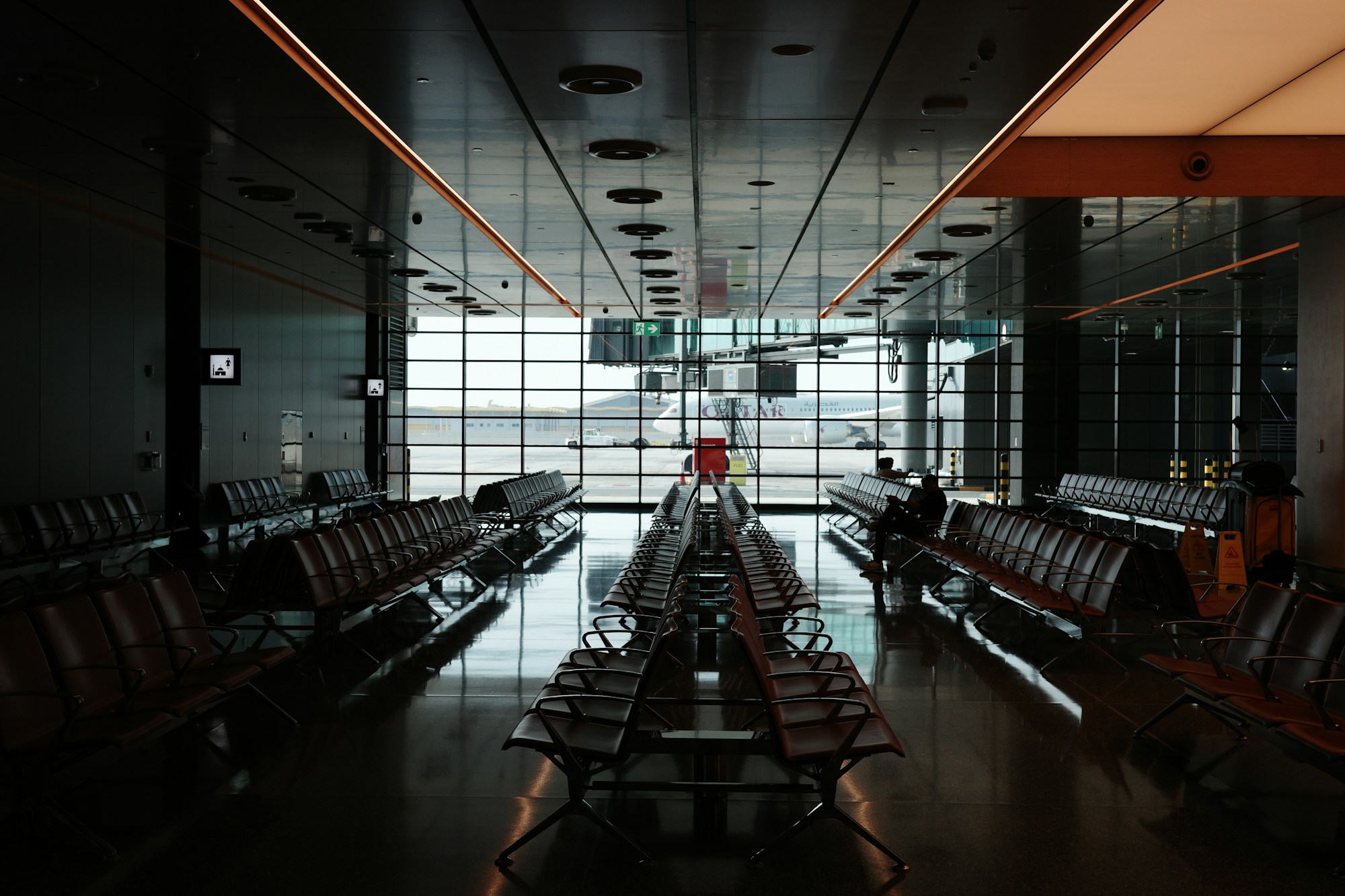
The upcoming deployment timeline
The end of 2026 marks a tipping point. Several events are converging to accelerate the global adoption of airport biometrics.
In Europe, the EES system will be fully operational across all Schengen borders. Airports that benefited from a transition period will switch to full biometric mode. ICAO plans to expand Journey Pass trials beyond Australia, with discussions underway with several European and Asian countries, reports tom.travel.
In the United States, the 2026 FIFA World Cup (June 11 – July 19) will serve as a real-world stress test for biometric systems. Airports in New York (JFK, Newark), Los Angeles (LAX), Miami, Houston and Dallas-Fort Worth are ramping up capacity to welcome millions of supporters from around the world.
In Asia, Singapore is pursuing its goal of 95% automated processes at Changi, Japan continues its Face Express deployment with an eye toward 60 million annual visitors by 2030, and India is extending Digi Yatra to new airports.
Technology trends to watch
- Multimodal biometrics: combining face + iris for increased accuracy
- Walk-through verification: identification while moving, no stopping or posing required
- Decentralized storage: data on the passenger’s phone (Digi Yatra model)
- Anti-fraud detection: infrared sensors and liveness tests against deepfakes
- Interoperability: ICAO’s Journey Pass aims for a single global standard
Practical information for your trip
Compare prices across hundreds of airlines.
Stay connected upon landing with an Airalo eSIM.
Cover your medical expenses and cancellations with SafetyWing.
Get up to 600 euros in compensation with AirHelp.
Frequently asked questions about facial recognition in airports
Can you refuse facial recognition at the airport?
In the European Union, yes. The GDPR requires explicit consent for the processing of biometric data. Airports and airlines must offer a non-biometric alternative (manual queue, verification by an agent). Exception: border controls under the EES are mandatory for non-EU nationals. In the United States, citizens can theoretically refuse, but foreign travelers do not have this right upon entry to the country. Sources: EDPB, Clubic.
How long is biometric data retained?
It depends on the country and system. In India (Digi Yatra), data is stored on the passenger’s phone and deleted within 24 hours. In the United States, CBP retains American citizens’ photos for 12 hours, but foreign nationals’ photos can be stored for up to 75 years. In Europe, the EDPB recommends deletion as soon as the purpose is fulfilled (end of flight or exit from terminal). The EES system retains non-EU travelers’ biometric data for 3 years. Sources: CBP, AFAR.
Which airport is the fastest thanks to facial recognition?
In terms of individual processing time, India’s Digi Yatra program holds the world record at 5 seconds per passenger across 24 airports. Abu Dhabi Zayed follows at 7 seconds and Singapore Changi at 10 seconds. In terms of overall boarding, British Airways managed to board 400 passengers in 22 minutes using biometrics. Sources: CNN, Fortune.
Does facial recognition work with a mask or glasses?
Modern airport facial recognition systems achieve over 99.5% accuracy and work with glasses, a beard, a change in hairstyle, or slight aging. However, masks covering the lower face significantly reduce accuracy. Since the end of health mandates, gates generally require the face to be fully uncovered. The latest generations (NEC, IDEMIA) use infrared sensors and multimodal biometrics (face + iris) to work in all conditions. Source: Simple Flying.
Do you need a biometric passport to use automated gates?
Yes, in the vast majority of cases. Automated gates (PARAFE in France, e-Gates elsewhere) compare your live face with the photo stored in the RFID chip of your biometric passport. If your passport is not biometric (no chip), you will need to use the manual queue with an agent. Exceptions: some systems like Digi Yatra in India work with a pre-registered photo in the app, regardless of passport type. Source: Regula Forensics.
Which airports in France use facial recognition in 2026?
The main French airports equipped with PARAFE biometric gates are Paris-Charles de Gaulle, Paris-Orly and Marseille-Provence. The system is open to citizens of the EU, EEA and Switzerland over the age of 18. Air France is conducting advanced tests of a full biometric journey at CDG, under CNIL supervision. With the EES, all airports with a Schengen external border checkpoint now have biometric kiosks. Sources: CyberExperts, CNIL.
Can facial recognition be fooled by a photo or deepfake?
Modern airport systems incorporate anti-spoofing devices (liveness detection) that detect fraud attempts using photos, videos, masks or deepfakes. Infrared sensors verify the presence of a live 3D face, and liveness tests sometimes require a micro-movement (blink, head turn). Providers like iProov, NEC and IDEMIA are specifically developing anti-deepfake technologies. No case of successful biometric fraud at an airport has been publicly documented to date. Source: Simple Flying.
What happens if facial recognition doesn’t recognize me?
If the system fails to identify you (faulty passport chip, insufficient lighting, significant physical change), you are redirected to a human agent who performs the verification manually. This takes a few extra minutes but is in no way grounds for denial of boarding. To avoid problems: make sure your passport chip works (test it with the ReadID app), remove sunglasses and hats before passing through, and look directly at the camera. Source: Regula Forensics.
Sources
- CNIL — Facial recognition at airports: challenges and key principles
- EDPB — Facial recognition at airports: maximum control over biometric data
- Clubic — Facial recognition at the airport: you have the right to refuse
- tom.travel — Australia first in line to test ICAO’s Journey Pass
- Fortune — Singapore airport immigration: facial recognition and iris biometrics
- Simple Flying — New facial recognition technology at airports
- Biometric Update — NEC supplying biometric walkthrough gates for Japanese airports
- CyberExperts — Biometrics: French airports at the crossroads of technology choices
- CBP — Biometrics at airports (official website)
- Nextgov — TSA and CLEAR rolling out biometric e-gates
- CNN Travel — Abu Dhabi Smart Travel Project
- WebProNews — Facial recognition revolutionizes US airports in 2026
- AFAR — New facial recognition tech is coming to airports
- Regula Forensics — Biometric boarding: the complete guide
Research conducted on March 16, 2026
Plan your next trip with confidence
Biometrics are transforming airports, but your itinerary remains unique. Explore our detailed travel routes, with all the practical information for every destination.
Explore all itineraries