

What if you could travel the world without ever paying for accommodation? House sitting turns this promise into reality for tens of thousands of travelers every year. The concept is as simple as it is appealing: you look after a homeowner’s house and pets while they’re away, and in return, you stay for free. No rent, no deposit, no hotel bills. Just an exchange of trust between two people.
In 2026, house sitting is experiencing spectacular growth. With over 260,000 members on TrustedHousesitters alone according to Two Can Travel, and dozens of new countries represented every month, this form of slow, immersive travel appeals to adventurous retirees and digital nomads alike. The savings are substantial: between $15,000 and $25,000 USD in accommodation per year for a full-time house sitter, according to Nomadic Matt. This comprehensive guide reviews the best platforms, the most popular destinations, the real budget, and tips for getting started successfully.
TrustedHousesitters is the best-known platform for international house sitting, and a 2026 comparison site describes it as having the biggest network worldwide. For a low-cost option, MindMyHouse charges 29 USD for 12 months of sitter access, according to its official page checked on 11 October 2026. Compare current prices on each platform before you join.
1. The best house sitting platforms in 2026

Four platforms for every profile
The house sitting market has organized around a few dominant platforms, each with its own strengths and geographic focus. Based on comparisons from House Sitting Magazine and Nomadic Matt, here are the four key players in 2026.
| Platform | Price/year | Members | Strength | Top region |
|---|---|---|---|---|
| TrustedHousesitters | $129-259 USD | 260,000+ | Largest community, insurance included | Worldwide |
| Nomador | $99-199 USD | 100,000+ | Two-way reviews, strong French-speaking community | Europe |
| HouseCarers | $50 USD | 40,000+ | Lowest price for worldwide coverage | Australia, NZ, North America |
| MindMyHouse | $29 USD | 30,000+ | Ultra-affordable entry point | North America, Europe |
TrustedHousesitters: the global leader
Founded in 2010 in the UK, TrustedHousesitters has become the absolute benchmark in the industry. With over 260,000 members and assignments in 130 countries, the platform offers the widest selection of house sits in the world. Its key advantage: veterinary insurance included in the subscription, covering up to GBP 10,000 in emergency care for the pets being looked after. The annual subscription ranges from $129 USD (sitter only) to $259 USD (combined sitter + owner plan), as detailed by Two Can Travel. The mobile app is smooth, the identity verification system is robust, and reviews from both parties are published simultaneously to avoid bias.
Nomador: the European champion
Born in France, Nomador has established itself as the go-to platform for house sitting in Europe. Its two-way review system — sitters and homeowners rate each other — promotes transparency. The platform offers a flexible option with a 3-month subscription at $65 USD, ideal for testing the concept before committing to a full year ($99-199 USD), according to House Sitting Magazine. Nomador also stands out for its community of « stopovers » — passing sitters who help each other out — and for the wealth of listings in France, Spain, Italy, and Portugal.
HouseCarers and MindMyHouse: the budget alternatives
For budget-conscious travelers, HouseCarers ($50 USD/year) and MindMyHouse ($29 USD/year) offer excellent value for money. HouseCarers stands out with a strong presence in Australia, New Zealand, and North America, while MindMyHouse, with the lowest price on the market, is perfect for beginners who want to try house sitting without a significant investment, according to Nomadic Matt. HouseCarers’ website is admittedly less polished than its premium competitors, but the listings are often high-quality, with long-term assignments (1 to 6 months).
2. Portugal — The Silver Coast and Alentejo, a house sitter’s paradise

Rural Portugal: a treasure trove of long-term assignments
Portugal has established itself as one of the most sought-after destinations for European house sitters. The Silver Coast, stretching from Lisbon to Figueira da Foz, is home to a growing number of British, Dutch, and German expats who own properties with gardens, pools, and pets. These homeowners travel frequently and actively seek reliable sitters, as reported by All The Ways You Wander.
The Alentejo, a rural region south of Lisbon, offers particularly long assignments — often 3 to 8 weeks — in quintas (agricultural estates) or country houses with acres of land. The cost of living is remarkably low: expect EUR 20 to 35 per day for your everyday expenses (food, transport, leisure), excluding accommodation of course since it’s free. Local markets overflow with affordable fresh produce: goat cheese, olive oil, and Alentejo wines at EUR 3-5 per bottle.
The best time for house sitting in Portugal is April to June and September to October: homeowners go on vacation, temperatures are ideal (20-28 C), and tourists are fewer than in peak summer. Listings for Portugal typically appear 1 to 3 months before the start date on TrustedHousesitters and Nomador.
Key highlights
- Many long-term assignments (3-8 weeks) in spacious properties
- One of the lowest costs of living in Western Europe
- Fiber optic available even in rural areas (ideal for remote work)
- Active French-speaking community on Nomador
3. Mexico — San Miguel de Allende and Lake Chapala, winter havens

North America at Latin American prices
Mexico has become a house sitting hotspot thanks to its large community of North American expats. San Miguel de Allende, voted « best city in the world » by Travel + Leisure on multiple occasions, is home to thousands of American and Canadian retirees who own stunning colonial homes and travel regularly, according to Above Us Only Skies. Lake Chapala (Jalisco), Mexico’s largest freshwater lake, hosts the largest community of American expats outside the United States.
The cost of living is remarkably low: EUR 15 to 25 per day is enough for varied meals (tacos for EUR 1, full set menus for EUR 3-5), local transport, and a few outings. The ideal season runs from November to April — expat homeowners often head back to the US or Canada for the holidays and spring, freeing up their homes for 2 to 8 weeks.
Mexico also offers a significant logistical advantage: citizens of most Western countries can enter visa-free for 180 days, allowing you to chain several assignments over an entire half-year. Flights from Europe are affordable in low season (EUR 400-600 round trip from Paris via the US or direct with Air France). Internet connections are generally reliable in expat towns, with high-speed WiFi in most homes.
Key highlights
- Extremely low cost of living (EUR 15-25/day)
- 180 days visa-free for most Western nationals
- Spacious colonial homes with garden and pool
- Ideal winter climate (escape the cold back home)
4. Costa Rica — The Southern Zone, a tropical gem off the beaten path

Extraordinary biodiversity and nature-focused assignments
Costa Rica attracts a unique breed of house sitters: those seeking immersion in tropical nature. The Southern Zone (Osa Peninsula, Dominical, Uvita) is home to isolated properties deep in the tropical rainforest, where homeowners — often American or European expats — need sitters to maintain their estates and care for their animals during the rainy season, as described by Two Weeks in Costa Rica.
The cost of living in Costa Rica is higher than the rest of Central America: expect $25 to 40 USD per day for everyday expenses. Grocery prices are comparable to Europe in supermarkets, but local markets (ferias) and « sodas » (small family restaurants) offer full meals for $4-6 USD. The best season for house sitting is the green season (May to November): homeowners escape the tropical rains, airfares are at their lowest, and nature is at its peak.
Assignments in Costa Rica often involve additional responsibilities: watering tropical gardens, managing self-contained water systems, and protecting the property from the elements. Some listings mention exotic animals (parrots, semi-domesticated howler monkeys) alongside the usual dogs and cats. Good physical fitness and a taste for rustic living are major assets.
Key highlights
- Spectacular properties in the heart of tropical nature
- Long-term assignments (1-3 months) during green season
- 90 days visa-free (renewable), excellent nomad ecosystem
- Pura Vida: one of the most welcoming populations in the world
5. New Zealand — The South Island, a dream for lovers of wide-open spaces

From farms to fjords: adventure house sitting
New Zealand ranks among the most popular destinations on HouseCarers and TrustedHousesitters. The South Island, with its fjords, mountains, and crystal-clear lakes, attracts homeowners who own farms (sheep stations) or rural houses on vast tracts of land. Assignments in New Zealand are renowned for their exceptional quality: well-maintained homes, communicative owners, and an idyllic setting.
The cost of living is higher than in continental Europe: budget 35 to 55 NZD per day (roughly EUR 20-33) for food, transport, and activities. New Zealand is particularly well-suited for house sitting couples — many homeowners prefer two people to manage remote properties with multiple animals. The peak house sitting season coincides with the Southern summer (December to March), when Kiwis travel abroad.
New Zealand assignments often involve farm animals — sheep, alpacas, chickens, horses — in addition to the usual pets. Sitters with farming or equestrian experience are highly sought after. The South Island offers unique opportunities in the Canterbury, Otago, and Southland regions, where properties are often isolated but boast spectacular views of the Southern Alps.
Key highlights
- Spectacular properties in pristine nature (farms, vineyards, lakeside)
- Very welcoming English-speaking community towards sitters
- 3 months visa-free for most nationalities (NZeTA required)
- Ideal for couples and experienced sitters
6. Rural France — Occitanie and Loire Valley, starting close to home
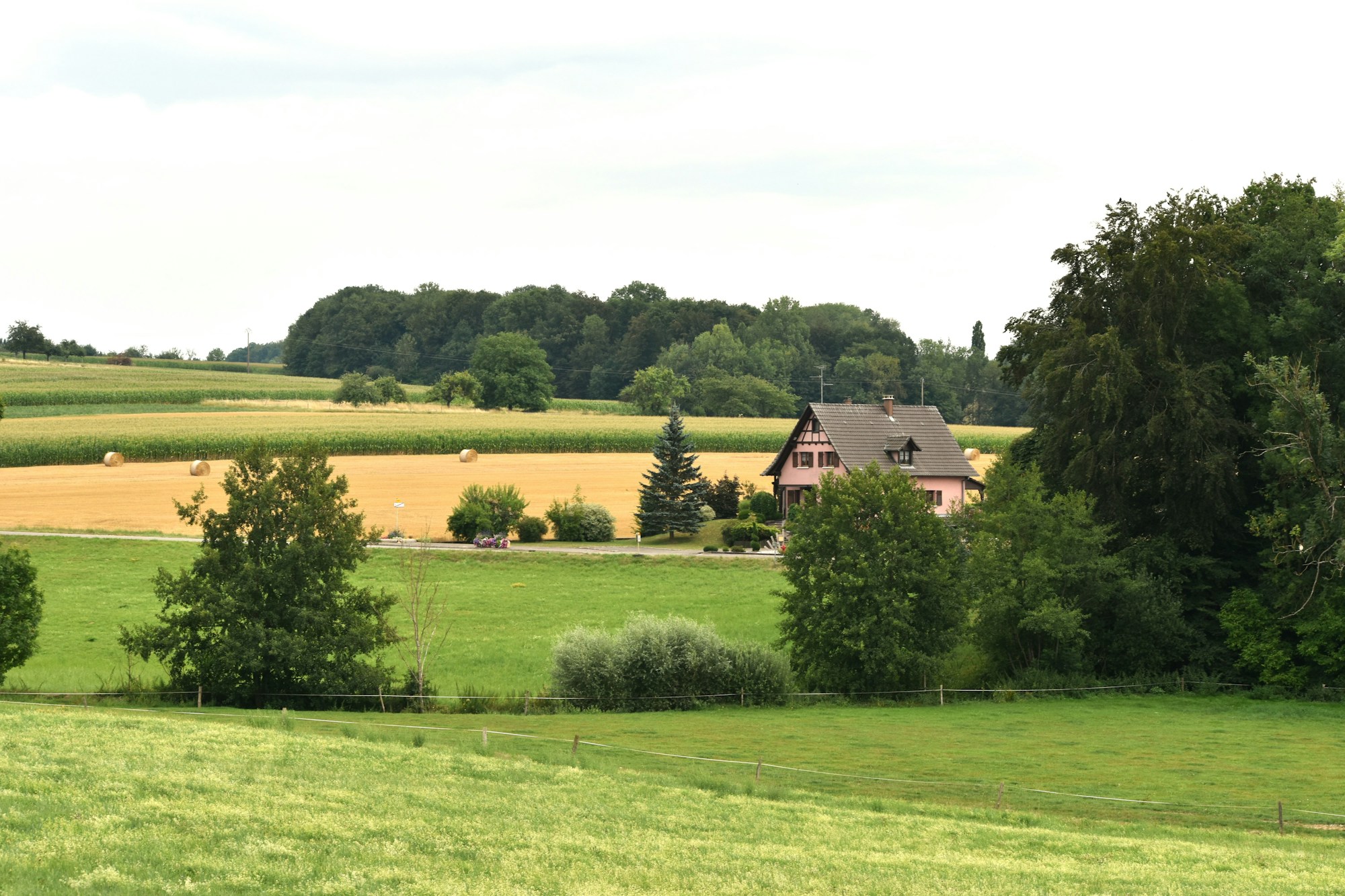
The ideal springboard for beginners
Rural France is the ideal training ground for house sitting beginners — and an underrated destination for experienced sitters. Occitanie (Gers, Ariege, Lot, Tarn-et-Garonne) and the Loire Valley (Sarthe, Mayenne, Maine-et-Loire) are full of character properties — bastides, longhouses, farmsteads — whose owners, often British or Northern European expats living in France, actively seek sitters, as highlighted by Voyages et Vagabondages.
Starting with assignments in France offers several strategic advantages. First, there are no international travel costs — a train ticket or rideshare is all you need. Second, you can build your first references without the pressure of a long-distance trip. Finally, French-speaking homeowners are more approachable for an initial exchange. The cost of living in rural areas remains moderate: EUR 20 to 35 per day for comfortable living, farmers’ markets included.
On Nomador, France is the number one market by listing volume. Assignments are particularly plentiful in spring (Easter holidays, May bank holidays) and autumn (All Saints’ holiday). The properties range from small Parisian apartments with a cat to large rural estates with horses, dogs, cats, and poultry — an excellent training ground before branching out to international assignments.
Key highlights
- Zero international travel costs, no visa needed
- Ideal for building your first references
- Diverse assignments (city, countryside, mountains, coast)
- Top Nomador market by number of listings
7. The real budget for house sitting in 2026: how much does it actually cost?
The calculation that changes everything
The most compelling argument for house sitting is the savings on accommodation. According to Nomadic Matt, a full-time house sitter saves between $15,000 and $25,000 USD per year on accommodation — the equivalent of a year’s rent for a studio apartment in a major European city. But house sitting isn’t entirely free: there are fixed costs to plan for.
| Expense category | Estimated annual cost | Notes |
|---|---|---|
| Platform subscriptions (2-3) | $200-500 USD | TrustedHousesitters + Nomador recommended |
| Travel health insurance | $400-800 USD | Required for Schengen area (EUR 30,000 min.) |
| Transport between assignments | $2,000-5,000 USD | Flights, trains, buses between destinations |
| Food and daily living | $6,000-10,000 USD | Varies by destination (EUR 15-40/day) |
| Communication (eSIM, VPN) | $200-400 USD | Multi-country eSIM + VPN for remote work |
| Miscellaneous (visas, vaccines, gear) | $500-1,000 USD | Varies by destination |
| Annual total | $9,300-17,700 USD | Versus $30,000-50,000 USD for traditional travel |
The « insurance » line item deserves special attention in 2026. According to industry data, medical costs are rising by 9.8 to 10.3% this year, and the average emergency claim abroad amounts to $1,816-1,900 USD. To travel within the Schengen area, a minimum coverage of EUR 30,000 is required. TrustedHousesitters is the only platform to include insurance in its subscription, but it only covers veterinary costs for the animals being cared for, not the sitter’s medical expenses.
In practical terms, a full-time house sitter living between Europe and Latin America can travel for $15,000 to $18,000 USD per year — a budget comparable to the cost of living in a small European town, while discovering 4 to 8 different countries. The actual savings compared to traditional hotel-based travel range between 50 and 70%, according to estimates from House Sitting Magazine.
Key highlights of the house sitting budget
- $15,000-25,000 USD/year saved on accommodation
- Total budget comparable to living in a small European town
- Ability to cook at home (food savings)
8. Beginner’s guide: 10 tips for a successful first house sit

From zero to confident house sitter
Landing your first house sitting assignment can seem daunting when you have no references yet. However, with the right approach, most beginners secure their first assignment within 2 to 4 weeks of signing up, according to Cerise et Vinaigrette. Here are the strategies that work.
1. Start locally
Before dreaming of looking after a villa in Bali, cut your teeth close to home. « Staycation sits » — assignments in your own area — offer a triple advantage: no travel costs, the chance to meet the homeowner in person before the assignment, and easy management if anything unexpected comes up. Look after your neighbor’s, friend’s, or coworker’s house and cat: every experience counts when building your reputation.
2. Create an irresistible profile
Your profile is your showcase. According to Half The Clothes, profiles with an introductory video receive 3 to 5 times more responses than text-only profiles. Film yourself interacting with animals, introduce yourself naturally, and explain your motivation. Add clear photos of you with animals, your clean background check (available online in most countries), and any veterinary or animal-related references.
3. Apply 1 to 3 months in advance
The best assignments go fast. For popular destinations (Portugal, Costa Rica, New Zealand), apply 2 to 3 months before your desired date. For assignments in your home country or nearby, 1 month is usually sufficient. Set up alerts on your platforms to be notified as soon as a new listing matches your criteria.
4. Personalize every application
Generic applications are the surest way to never get selected. Mention the pet’s name, reference a specific detail from the listing, and explain why this particular assignment interests you. Show that you’ve read the homeowner’s profile carefully and that you understand their expectations.
5. Be flexible on dates and locations
Beginners who land their first assignments fastest are those who don’t limit their search to a single destination or time period. Broaden your geographic range and accept short assignments (3-5 days) to accumulate your first references. Every positive review exponentially increases your chances for future assignments.
6. Sign up on 2-3 platforms
Don’t put all your eggs in one basket. Signing up on 2 to 3 platforms multiplies your opportunities and lets you compare listings. TrustedHousesitters for global volume, Nomador for Europe, and HouseCarers or MindMyHouse as a budget complement — that’s the optimal combination.
7. Prepare a digital « emergency kit »
Before each assignment, ask the homeowner to provide a shared document containing: the vet’s contact details, local emergency numbers, appliance instructions, the animals’ dietary and medical needs, and contact information for trusted neighbors. If a problem arises, you’ll be ready to act immediately.
8. House sitting is compatible with remote work
Over 60% of active house sitters in 2026 work remotely, according to estimates from House Sitting Magazine. The majority of house sit properties have reliable WiFi, and homeowners systematically mention connection quality in their listings. Always check the advertised speed and have a backup plan (mobile hotspot, nearby cafe with WiFi).
9. Secure your connection
When using someone else’s WiFi, protect your professional data with a VPN. This is especially important if you work remotely with sensitive data or use cafe networks during transitions between assignments.
10. Document and share your experience
Take photos of the pets you’ve cared for (with the owner’s permission), write detailed reports of your assignments, and ask for written recommendations. A well-maintained house sitting portfolio is worth its weight in gold for future applications.
Frequently Asked Questions
Is house sitting really free?
Yes, the accommodation is entirely free. You only pay for the platform subscription ($29 to $259 USD per year depending on the service) and your personal expenses (food, transport, insurance). In exchange for looking after the house and pets, you stay for free — there’s no rent, deposit, or utility bills. Some assignments even include use of a vehicle or access to leisure amenities (pool, bikes, kayak).
Do you need to love animals to do house sitting?
In practice, yes. About 90% of house sitting assignments involve caring for one or more pets — mainly dogs and cats, but sometimes also chickens, horses, rabbits, or more exotic animals. Pet-free assignments exist but are rare and highly competitive. If you’re not comfortable with animals, house sitting probably isn’t for you. That said, no specific training is required: a love of animals and common sense are enough for most assignments.
What is the minimum age to be a house sitter?
Most platforms require a minimum age of 18. TrustedHousesitters sets the threshold at 21 for solo sitters, although 18-20 year-olds can apply as part of a duo. Nomador, HouseCarers, and MindMyHouse accept sitters from age 18. In practice, the majority of house sitters are between 30 and 65, and retired couples are particularly valued by homeowners for their availability and reliability.
How do you get your first references with no experience?
Four strategies work for beginners: (1) Look after the pets of friends, neighbors, or coworkers and ask them for a written testimonial. (2) Do local pet-sitting via apps like Rover or TrustedHousesitters’ local sit feature to accumulate reviews. (3) Apply for short assignments (3-5 days) and last-minute sits, which are less popular with experienced sitters. (4) Create a detailed profile with a video introduction — first-time homeowners are often more open to sitters without established references.
How many platforms should you sign up for?
Most experienced house sitters recommend signing up for 2 to 3 platforms. A single registration significantly limits your opportunities, while more than 3 platforms becomes difficult to manage on a daily basis. The optimal combination: TrustedHousesitters (global volume) + Nomador (Europe and French-speaking community) + a budget platform (HouseCarers or MindMyHouse). The total annual cost for 2-3 subscriptions ranges from $200 to $450 USD.
Is house sitting compatible with remote work?
Absolutely. House sitting and remote work are a natural combination: you have a quiet workspace (an entire house), generally reliable WiFi, and a stable routine. Most listings mention internet connection quality. Always check the speed before applying and have a backup plan (mobile hotspot, local eSIM). Assignments in rural areas may sometimes have limited WiFi — prioritize homes of recent expats who typically have fiber or high-performance satellite internet installed.
Are there any legal or tax obligations?
House sitting is an exchange of services (caretaking in return for accommodation), not a paid activity. There is therefore generally no taxation on this activity in most countries. You don’t receive a salary and the homeowner doesn’t employ you — they offer you free use of their home in exchange for a non-monetary service. However, remain mindful of residence rules: respect the maximum duration of your tourist visa in each country, and check for any declaration requirements if you chain assignments over an extended period in the same country. Consult a tax advisor if you house sit full-time year-round.
What should you do in case of an emergency during an assignment?
Preparation is key. Before each assignment, set up a shared document with the homeowner containing: the regular vet’s contact information, the nearest emergency vet, trusted neighbors’ phone numbers, and local emergency contacts. In case of a medical issue with an animal, call the vet immediately and contact the homeowner via video call to keep them informed. TrustedHousesitters offers a 24/7 veterinary helpline for its members. For house-related emergencies (leaks, electrical outage), contact the neighbors and tradespeople listed in the shared document.
Which house sitting platform is best value for someone doing their first sit?
For a first sit, a low-cost platform keeps your costs down. MindMyHouse is one of the lowest-priced paid options we checked: 29 USD for 12 months of sitter access, according to its official page on 11 October 2026. Choose the platform whose listings match your destination, then check its current price page before you join.
Which house sitting platforms have the most listings?
Member counts are not comparable across platforms: MindMyHouse, for example, states a total that includes inactive members. Check the active listings for your destination and dates on two or three platforms before you choose.
Sources
- Two Can Travel — TrustedHousesitters Review 2026 — Comprehensive review of the leading platform (260,000+ members, insurance, pricing)
- Nomadic Matt — How to Start House Sitting — Introduction guide to house sitting with platform comparisons and budget estimates
- House Sitting Magazine — Best House Sitting Websites 2026 — Detailed comparison of house sitting platforms
- Half The Clothes — Nomador Review — In-depth review of the French platform Nomador
- All The Ways You Wander — House Sitting on Portugal’s Silver Coast — Firsthand account of house sitting on Portugal’s Silver Coast
- Above Us Only Skies — House Sitting in Mexico — Guide to house sitting in Mexico (San Miguel de Allende, Lake Chapala)
- Two Weeks in Costa Rica — House Sitting in Costa Rica — Specifics of house sitting in Costa Rica (Southern Zone, green season)
- Voyages et Vagabondages — House Sitting Guide — Practical guide in French, focus on France and Europe
- Cerise et Vinaigrette — TrustedHousesitters Review — French-language firsthand account after 2 years of house sitting
Research conducted on March 17, 2026
Ready to Plan Your Trip?
House sitting opens the door to slower, more authentic, and infinitely more affordable travel. Whether you dream of a French farmhouse, a Mexican colonial villa, or a New Zealand sheep station, your next adventure starts with a well-crafted profile and a first application. Explore our itineraries to plan your journeys between assignments.
Explore all itineraries