

Tourist taxes in Europe 2026: quick answer
In 2026, tourist taxes vary from €0.65/night in France to 33.5% of the room price in Amsterdam (12.5% tourist tax + 21% VAT). Barcelona doubled its tax to €10–15/night as of April 1. Venice charges day-trippers €5–10 just to enter. Bali levies IDR 150,000 (~€9) per visitor upon arrival. Edinburgh introduced its first tourist tax in July 2026. For a couple on a 5-night trip to Amsterdam, taxes alone can exceed €200. More than 40 European cities now apply some form of tourist tax in 2026 — up 30% in three years. Book accommodation on the outskirts, check exemptions by age, and pre-pay in Venice and Bali to save both money and time.
Have you checked the real cost of your next hotel night in Europe? If not, brace yourself. In 2026, tourist taxes are surging across the continent — and beyond. Amsterdam now levies a combined 33.5% in taxes on every night’s stay. Barcelona has doubled its tax as of April 1, 2026. Venice charges visitors just for entering, even day-trippers. And Edinburgh, previously untouched, is introducing its very first tourist tax in July.
The bottom line is clear: traveling in Europe is getting more expensive before you even set foot in a museum or restaurant. According to Euronews, over 40 European cities now impose some form of tourist tax — a 30% increase in just three years.
To help you plan ahead, we’ve scrutinized the regulations of 12 major destinations — amounts, exemptions, payment methods, and 2026 updates. Here’s the most comprehensive guide to avoid getting caught off guard.
1. Barcelona — The historic doubling of the tourist tax

Two layers of taxation: the regional IEET and the municipal surcharge
Barcelona doesn’t do things by halves. According to Travel and Tour World, the Catalan capital officially doubled its tourist tax as of April 1, 2026. The system is based on two separate levies: the IEET (Impost sobre les Estades en Establiments Turístics), Catalonia’s regional tax, plus a municipal surcharge specific to Barcelona.
In practical terms, for a 4 or 5-star hotel, expect between €10 and €15 per person per night. Short-term rentals like Airbnb aren’t spared either: according to Idealista, the tax can reach €12.50 per night for holiday rentals. Even cruise passengers are affected, paying around €6 per passenger per port call.
For a couple staying 5 nights in a 4-star hotel, the tax bill climbs to €100 or more — enough to cover several rounds of tapas.
What’s changing in 2026
- Barcelona’s municipal surcharge doubled as of April 1
- Holiday rentals (Airbnb) are now taxed at the same rate as hotels
- Barcelona becomes the most expensive city in Spain for tourist tax
- Cruise passengers pay around €6 per port call, also revised upward
2. Venice — The access fee, a world first
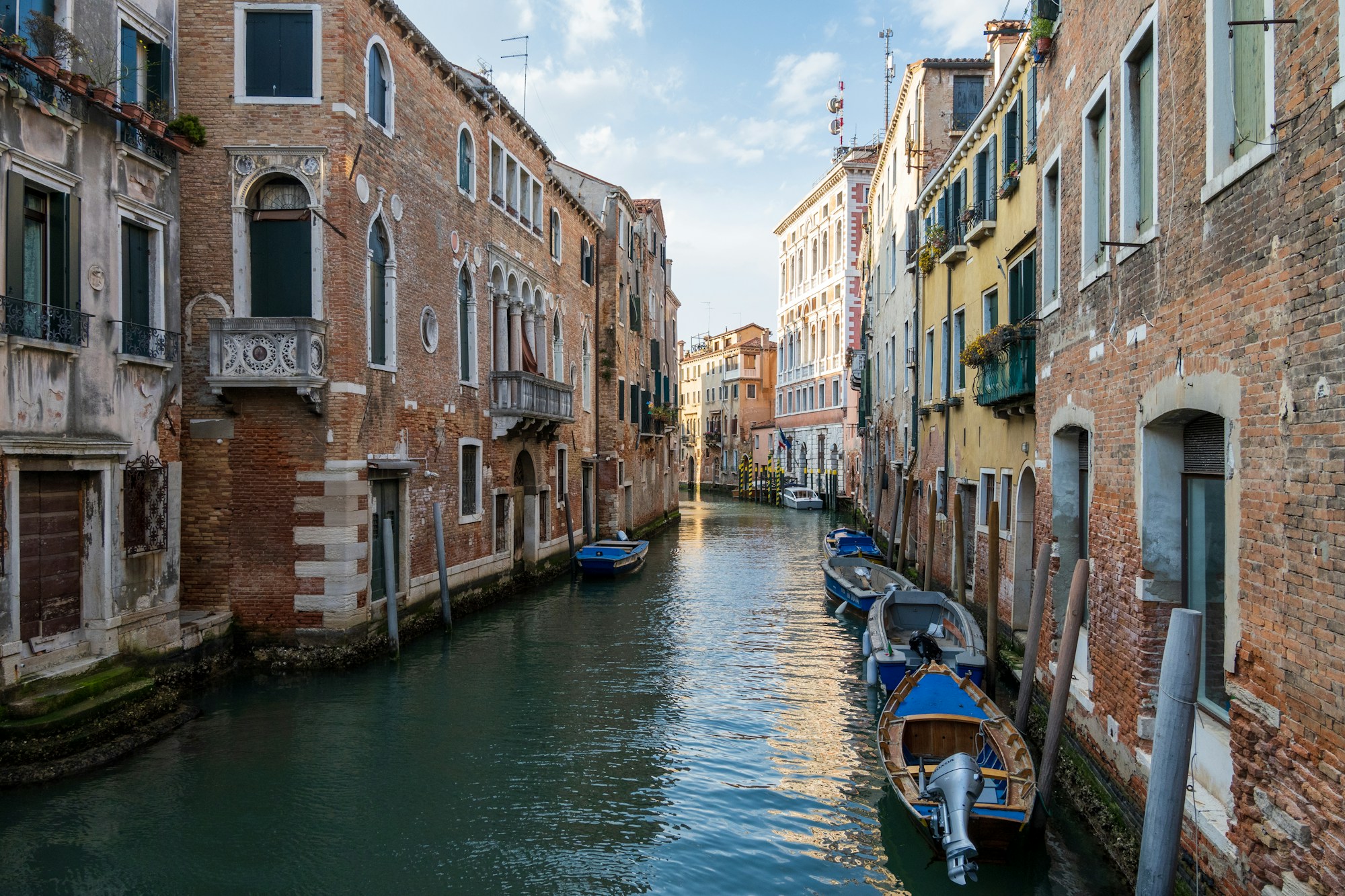
€5 or €10 to enter La Serenissima — even without spending the night
Venice has crossed a symbolic threshold that few cities dare to: charging an entry fee. Since 2024, La Serenissima has been trialing its « Contributo di Accesso, » and the 2026 edition expands the program. According to e-Venise, the fee applies on 60 days between April 3 and July 26, 2026, mainly on Fridays, Saturdays, Sundays, and public holidays.
The system is simple but unforgiving: if you visit Venice for the day without staying overnight, you must pay. The fee is €5 if you book at least 4 days in advance on the official website cda.ve.it, and €10 if you purchase on the same day. The applicable time slots run from 8:30 AM to 4:00 PM.
However — and this is a crucial point — travelers who stay overnight in Venice are exempt from this access fee. They already pay the standard tourist tax through their accommodation. Residents of the Veneto region, workers, and students are also exempt. The islands of Murano, Burano, and Torcello are not subject to the fee.
What’s changing in 2026
- Extended to 60 days (up from 29 days during the 2024 trial)
- Introduction of tiered pricing: €5 in advance vs. €10 on-site
- Increased enforcement at access points (train station, Piazzale Roma, Tronchetto)
- Fine of €50 to €300 for non-payment
3. Amsterdam — Europe’s absolute record: 33.5% in taxes
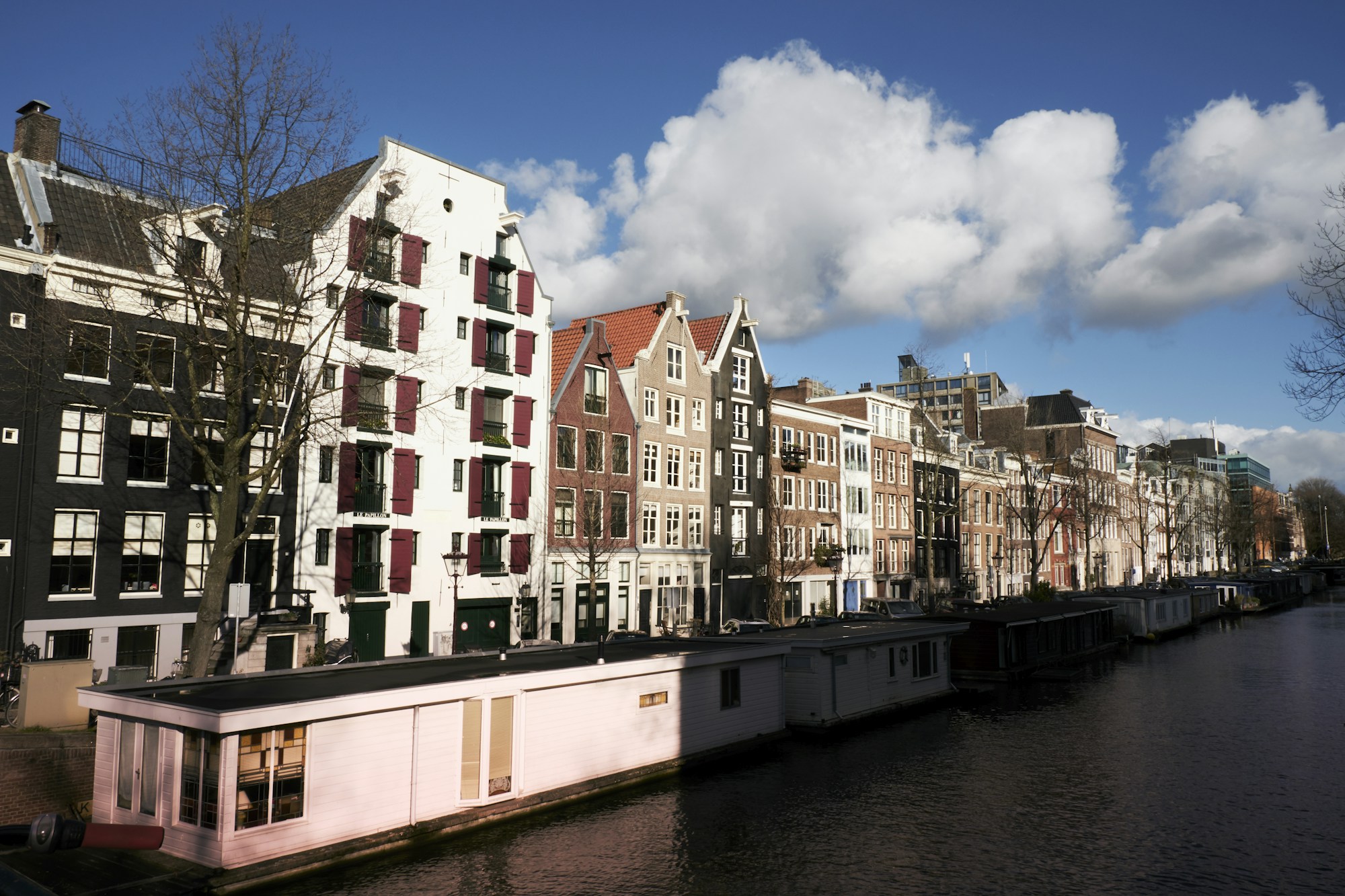
12.5% tourist tax + 21% VAT: the most expensive combo on the continent
Amsterdam doesn’t mess around. The Dutch capital now holds the European record for tourist taxation, by a wide margin. According to Amsterdam Explorer, the tourist tax is set at 12.5% of the room price before tax. So far, nothing alarming. But the real shock comes from the combined total: since January 1, 2026, the VAT on accommodation has jumped from 9% to 21%.
Let’s do the math. For a room listed at €200 before tax:
- Tourist tax: €200 × 12.5% = €25
- VAT (21%) on price + tax: (€200 + €25) × 21% = €47.25
- Total taxes: €72.25 — that’s 36% of the base price
According to Odeva, a 3-night stay at €200/night alone generates over €200 in taxes. For cruise passengers, the levy is €14.50 per person per day.
The only good news? If you stay with friends or family, no tax applies. However, there is no cap on the number of nights and no exemption for children.
What’s changing in 2026
- Accommodation VAT raised from 9% to 21% on January 1, 2026
- Total tax burden now around 33.5% — a continental record
- Cruise passenger tax increased to €14.50/day/person
- The Netherlands is considering extending this model to other tourist cities
4. Bali — The flat-rate tax that applies to everyone, babies included

IDR 150,000 (~€9) per visitor, with no exceptions
Bali isn’t in Europe, but this destination features in our comparison for a simple reason: it’s one of the few places in the world that taxes every visitor without exception, including infants. According to Bali Easy Visa, the « Bali Provincial Tourist Levy » is set at IDR 150,000, roughly €9 per person, charged once upon arrival.
Payment is made online before departure through the official portal lovebali.baliprov.go.id. You receive a QR code to present at Ngurah Rai Airport. According to Bali Holiday Secrets, enforcement has been significantly tightened since early 2026: failure to pay can lead to delays at immigration.
For a family of four (two adults, two children of any age), the bill comes to €36 before you’ve even left the airport. A modest amount compared to European taxes, admittedly, but it’s on top of the visa on arrival (around €35) and new international flight taxes.
What’s changing in 2026
- Tighter enforcement at the airport and seaports
- Discussions underway to raise the tax to IDR 250,000 (~€15) in 2027
- Revenue funds cultural and environmental preservation on the island
- Online payment now mandatory — paying on-site is increasingly difficult
5. The big comparison: all 2026 tourist taxes
Beyond the four flagship destinations analyzed above, many European cities apply their own tourist tax. Here’s a summary table to help you plan your budget without any unpleasant surprises.
| Destination | Amount | Calculation basis | Cap | 2026 update |
|---|---|---|---|---|
| Barcelona | €10-15/night | Per person, by category | None | Doubled on April 1 |
| Venice | €5-10/entry | Per day-visitor (day-trippers) | 1 day | 60 days of application, advance rate |
| Amsterdam | 12.5% + 21% VAT | % of room price | None | VAT raised from 9% to 21% |
| Bali | ~€9 (IDR 150,000) | Per visitor, one-time | One-time payment | Tighter enforcement |
| Paris | €0.65-15.93/night | Per person, by category | None | IDF Mobilites surcharge (+200%) |
| Rome | €4-10/night | Per person, by category | 10 nights | Trevi Fountain: €2 entry fee |
| Lisbon | €4/night | Per person | 7 nights (€28 max) | No major changes |
| Edinburgh | 5% of price | % of room price | 7 nights | New tax from July 24, 2026 |
| Dubrovnik | €1.80-2.65/night | Per person, by season | None | Slight seasonal increase |
| Berlin | 7.5% of net price | % of room price | None | Extended to business travelers |
| Brussels | €5/night | Per accommodation (not per person) | None | New system since January 2026 |
| Greece (Mykonos/Santorini) | €4-20/day | Per cruise passenger, by season | Per port call | €20 in peak season for cruise passengers |
Sources: Service-public.fr, Paris je t’aime, Ulysse, Euronews, Travelmole, Seatrade Cruise, Travelpedia. Data updated March 2026.
6. Six expert tips to reduce the impact of tourist taxes
Plan ahead, compare, and optimize
1. Check whether the tax is included in the displayed price
On Booking.com, the tourist tax is generally excluded from the listed price and appears in fine print below the total. On Airbnb, it may be included or added separately depending on the city and host. Before booking, look for the « taxes and fees » mention in the payment summary. In Amsterdam, this difference can represent over 30% of the displayed price.
2. Choose accommodation on the outskirts
In both Barcelona and Amsterdam, taxes are proportional to the room price or linked to the property’s category. A 3-star hotel 15 minutes from the center not only costs less upfront but also generates fewer taxes. In Amsterdam, dropping from €200 to €120/night cuts the tourist tax from €25 to €15 per night.
3. Travel with children — know the rules
Exemptions vary enormously from city to city. Barcelona exempts children under 16, Venice under 14, Rome under 10, Lisbon under 13. But Amsterdam and Bali offer no age exemption. For families, this difference can add up to tens of euros over a stay.
4. Take advantage of nightly caps
Some cities cap the tax. In Rome, you only pay for the first 10 nights. In Lisbon, the maximum is 7 nights (€28 per person). In Edinburgh, the cap will also be 7 nights. For longer stays, these caps paradoxically make these cities cheaper than Amsterdam, which has no cap at all.
5. Book in advance when pre-payment is available
In Venice, the difference between the advance rate (€5) and the on-site rate (€10) is 100%. In Bali, paying the tax online avoids endless queues. Whenever advance payment is available, take that option: you save both money and time.
6. Factor taxes into your budget from the planning stage
The most common mistake is discovering the tax at check-out. For a couple traveling 10 days between Barcelona (5 nights) and Amsterdam (5 nights), taxes can reach €250 to €350 in total. That’s a budget line item in its own right. Use the data in this article to build your estimate right from the planning phase.
Practical info for your trip
Stay connected across Europe and Bali. Unlimited data, instant activation.
From $4.50Nomad Insurance: global coverage from $56/4 weeks. 10% off via our link.
From $56 / 4 weeksFrequently asked questions
Is the tourist tax included in the price shown on Booking or Airbnb?
As a general rule, no. On Booking.com, the tourist tax appears as a separate surcharge in the summary, often payable directly at the hotel. On Airbnb, it depends on the city: in some cases, Airbnb collects the tax automatically and includes it in the total; in others, the host requests it on-site. Always check the fee breakdown before confirming your booking.
In Venice, do I have to pay the access fee if I’m staying overnight?
No. The access fee (Contributo di Accesso) only applies to day visitors — those who do not spend the night in Venetian accommodation. If you stay overnight in Venice, you pay the standard tourist tax through your hotel, and you are exempt from the entry fee. According to Venice Visit Pass, simply presenting your accommodation booking confirmation is sufficient to prove your exemption.
Are children exempt from tourist tax everywhere in Europe?
Far from it. Exemptions vary considerably: Barcelona exempts children under 16, Venice under 14, Rome under 10, Lisbon under 13. But Amsterdam provides no age exemption, and Bali taxes even infants. In Dubrovnik, children aged 12-18 pay 50% of the rate. Always check local regulations before your trip.
Which city has the highest tourist tax in 2026?
Amsterdam, without question. With a 12.5% tourist tax combined with 21% VAT, the total tax burden reaches approximately 33.5% of the room price. For a €200 night, that’s over €67 in taxes. Barcelona comes in second with €10 to €15 per night for upscale hotels, followed by Paris for palace-category hotels (up to €15.93/night).
Does Venice’s access fee apply in summer (July-August)?
Partially. In 2026, the scheme covers the period from April 3 to July 26, spanning 60 targeted days (mainly Fridays, Saturdays, Sundays, and public holidays). The months of August, September, October, November, and December are not affected. If you visit Venice in the height of summer after July 26, you won’t have to pay the access fee. According to e-Venise, the exact dates are published each year on the official website cda.ve.it.
Are there any European countries with no tourist tax?
Yes, several European countries still do not levy any national tourist tax in 2026. This includes the United Kingdom (except Edinburgh from July 2026), Ireland, Sweden, Denmark, Norway, and Finland. However, the trend is clearly toward wider adoption: more and more cities and regions are introducing these levies, and the list of tax-free destinations shrinks year after year.
How is tourist tax revenue used?
It varies by city. In Venice, the funds go toward managing overtourism and maintaining heritage sites. In Amsterdam, revenue feeds the city’s general budget, particularly transport and sanitation. In Barcelona, a portion is earmarked for sustainable tourism promotion and cultural infrastructure. In Bali, the tax is explicitly dedicated to the island’s environmental and cultural preservation. In most cases, these taxes aim to make visitors contribute to the costs that mass tourism imposes on residents.
How much does a Venice day trip cost in total with the access fee in 2026?
For a day trip to Venice in 2026, budget at least €5 to €10 per person just for the access fee (Contributo di Accesso), charged on 60 targeted days between April 3 and July 26. Book at least 4 days in advance on cda.ve.it to pay the lower €5 rate. For context: a Murano and Burano small-group boat tour starts from €52 per person — a popular way to extend your day trip while staying on budget, since the islands of Murano and Burano are exempt from the access fee. Add transport, food, and any museum entry fees, and a realistic day-trip budget is €60 to €120 per person depending on your choices.
Can I get a refund on the tourist tax if I cancel?
It depends on how the tax is collected. If it’s collected by the booking platform (Booking, Airbnb), it’s generally refunded when you cancel within the allowed timeframe. If it’s paid directly at the hotel upon check-in, it’s only due if you actually stay. For Venice’s access fee, a refund is possible if you cancel before the scheduled date via the cda.ve.it website. For Bali, the tax paid through the official portal is generally non-refundable.
Sources
- Travel and Tour World — Barcelona tourist tax doubling in 2026
- Idealista — Impact of the tax on holiday rentals in Barcelona
- CheckInScan — Detailed schedule of the Catalan IEET and exemptions
- e-Venise — Schedule and terms of Venice’s 2026 access fee
- Venice Visit Pass — Rates and exemptions for the Contributo di Accesso
- City of Venice (CDA) — Official payment portal for the access fee
- Le Routard — Practical guide to Venice: entry tax and calendar
- Amsterdam Explorer — Tourist tax and VAT in Amsterdam in 2026
- Odeva — Real cost calculation for a night in Amsterdam
- Rick Steves Forum — Traveler feedback on Amsterdam taxes
- Bali Easy Visa — Bali Provincial Tourist Levy, amount and procedure
- Bali Holiday Secrets — Enforcement and payment of the Bali tourist tax
- Service-public.fr — Official tourist tax schedule in France
- Paris je t’aime — Tourist tax in Paris and IDF Mobilites surcharge
- Ulysse — Tourist tax comparison: Rome, Lisbon, Brussels
- Euronews Travel — Edinburgh: the UK’s first tourist tax
- Travelmole — Berlin extends its tax to business travelers
- Seatrade Cruise — Greece: new taxes for cruise passengers in Mykonos and Santorini
- U.S. News Travel — Mediterranean cruise taxes
- Travelpedia — Tourist tax in Croatia and Dubrovnik
Research conducted in March 2026. Updated August 2026.
Ready to plan your next trip?
Explore our detailed itineraries for Barcelona, Venice, Amsterdam, and Bali — with budgets, accommodation tips, and practical advice included.
Explore all itineraries