

On January 1, 2026, Bulgaria reached a historic milestone by officially adopting the euro, becoming the twenty-first member of the eurozone. A few months earlier, in January 2025, the country fully joined the Schengen Area, eliminating the last land border controls. These two events, occurring within less than a year, radically transform the travel experience in Bulgaria: no more currency exchange, no more queuing at customs.
And yet, despite this double European integration, Bulgaria remains one of the cheapest countries on the continent. According to Budget Your Trip, a traveler can get by on 35 to 90 euros per day depending on their style, meals and accommodation included. Bulgarian tourism is booming: tourism revenues surged by 16% in 2025 according to Travel And Tour World, a sign that the secret is spreading — but prices haven’t yet caught up with Croatia or Greece.
From the majestic Alexander Nevsky Cathedral in Sofia to the cobblestone lanes of Nessebar, from the vineyards of Plovdiv to the golden beaches of the Black Sea, Bulgaria offers stunning diversity for a country of seven million inhabitants. Here’s why 2026 is precisely the year to go — before everyone else catches on.
Sofia: A Capital at the Crossroads of Civilizations
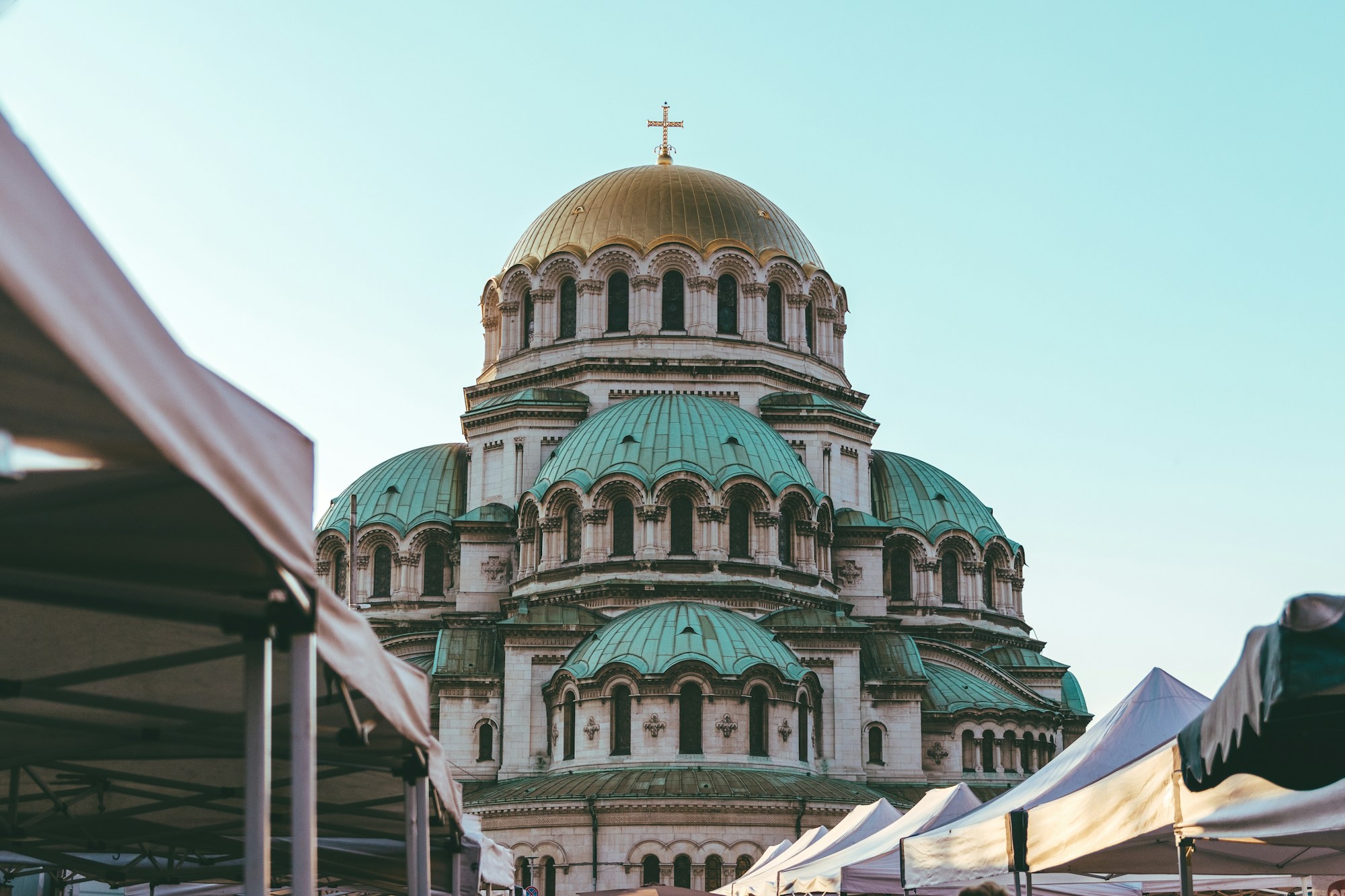
Sofia, Bulgaria
Sofia is one of those European capitals that rewards curious travelers. At first glance, the city may seem austere with its grand boulevards inherited from the Soviet era, but you only need to look up or turn into an alleyway to stumble upon a treasure. The Alexander Nevsky Cathedral, with its golden domes gleaming under the Balkan sun, is one of the largest Orthodox buildings in the world. Its crypt houses a collection of Bulgarian icons that would put many Western museums to shame. Entry costs just a few euros — a value proposition unthinkable in Paris or Rome.
But Sofia’s cultural gem lies on its outskirts. The Boyana Church, a UNESCO World Heritage Site, contains 13th-century frescoes considered by art historians as precursors to the Italian Renaissance — painted a century before Giotto. According to Lonely Planet, it’s one of Europe’s most underrated sites. Visits are limited to fifteen minutes per group to preserve the frescoes, making the experience all the more intimate and precious. Book your time slot online to avoid disappointment.
To understand contemporary Bulgaria, the Red Flat museum is a must. Set up in a real communist apartment reconstructed down to the last detail — orange wallpaper, black-and-white TV, jars of homemade preserves — it offers an immersive dive into the daily life of Bulgarians under the regime. It’s funny, moving, and deeply educational. On the food front, be sure to try the banitsa (cheese-filled pastry with sirene cheese) with a glass of boza (a fermented cereal drink — an acquired taste but addictive) in one of the traditional mekhanas downtown. The Zhenski Pazar market, Sofia’s oldest open-air market, is the perfect place to immerse yourself in local life and buy spices, mountain honey, and fresh cheese at a fraction of Western prices.
And if the summer heat gets to you, Mount Vitosha rises just twenty minutes from the city center by bus. This 2,290-meter mountain offers accessible hiking trails and panoramic views across the entire Sofia basin. Locals head up on weekends for picnics — join them.
Highlights
- Boyana Church (book online)
- Free Sofia Tour (tip-based)
- Red Flat Museum
- Zhenski Pazar Market
Pixidia Tip: Summer is paradoxically the quietest time in Sofia — Bulgarians head to the coast for vacation.
Plovdiv: Europe’s Oldest City, Reinvented
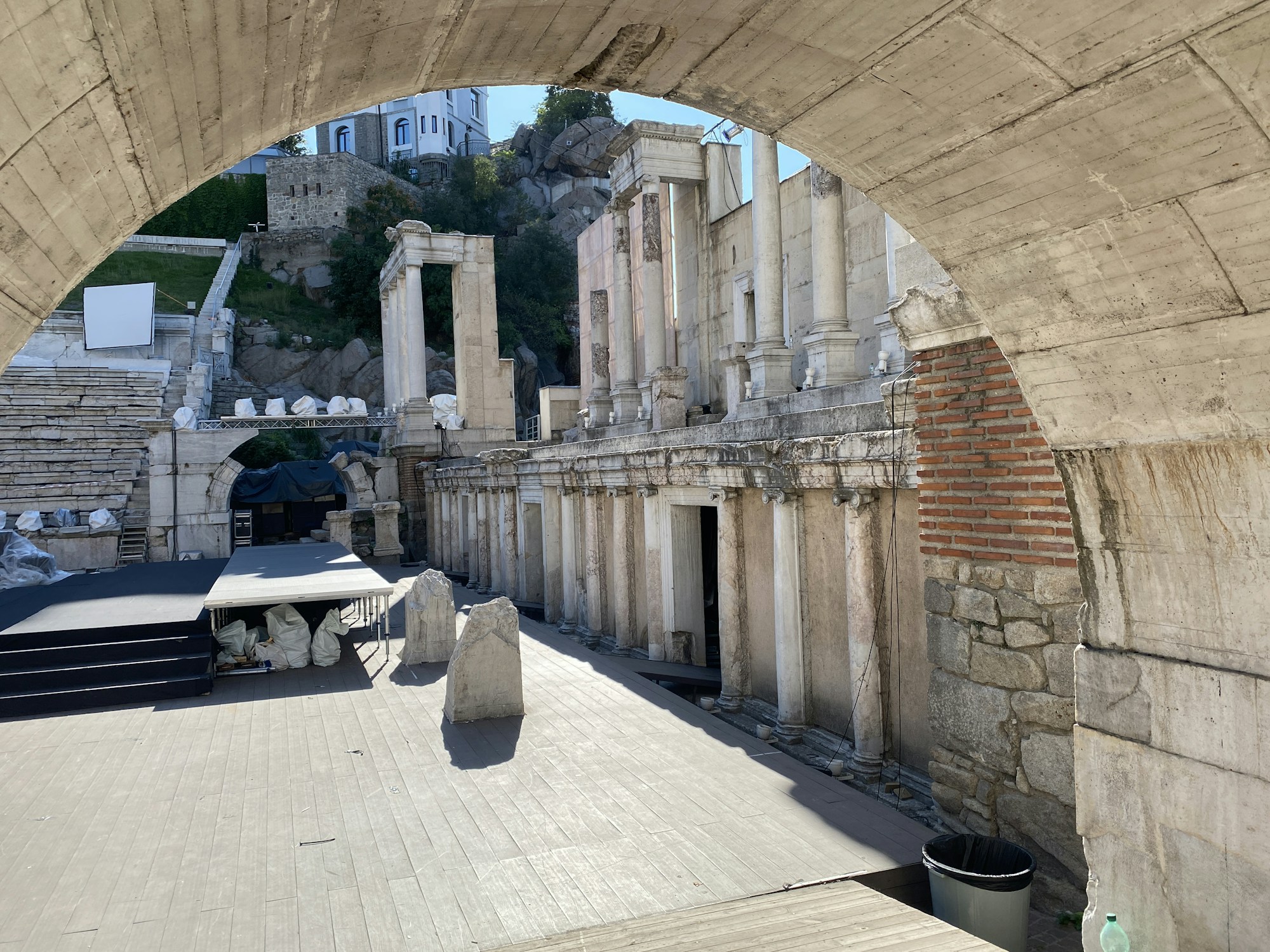
Plovdiv, Bulgaria
Plovdiv claims the title of Europe’s oldest continuously inhabited city — a title that Athens and Rome dispute, but which archaeological evidence seems to confirm with traces of habitation dating back to 6,000 BC. Bulgaria’s second city and European Capital of Culture in 2019, Plovdiv is experiencing a cultural renaissance that shows no signs of slowing. According to European Best Destinations, it ranks among Europe’s most promising destinations for 2026.
The Kapana district, once a maze of declining artisan workshops, has become the beating heart of Plovdiv’s nightlife and art scene. Its narrow lanes are lined with art galleries, cocktail bars, fusion restaurants, and designer boutiques. Nearly every wall is covered in street art. The Kapana Fest, held several times a year, transforms the entire neighborhood into an open stage with concerts, performances, and tastings. It’s the kind of place where you come for a coffee and end up staying until midnight.
Plovdiv’s Roman Theatre, discovered in 1972 after a landslide, is one of the best-preserved in the world. Dating from the 2nd century under Emperor Trajan’s reign, it still hosts concerts and performances in summer — attending an opera in a two-thousand-year-old amphitheater is an experience hard to match. The Old Town, perched on three of Plovdiv’s seven historic hills, showcases colorful houses in the Bulgarian Renaissance style, with overhanging upper floors and painted facades. Plovdiv was also named European Wine Capital 2025 by the RECEVIN organization, and the surrounding Thracian Valley produces some of the finest red wines in the Balkans — the mavrud, an indigenous grape variety, absolutely deserves to be discovered.
For the ultimate panorama, climb Danov Hill at sunset. From the clock tower crowning its summit, the view sweeps across the Old Town rooftops, the Roman Theatre, and the Rhodope Mountains in the background. It’s free, it’s sublime, and Plovdivians climb up every evening with a bottle of local wine — do as they do.
Highlights
- Kapana District and street art
- Roman Theatre (summer concerts)
- Old Town and Bulgarian Renaissance houses
- Danov Hill at sunset
Pixidia Tip: Climb Danov Hill at sunset with local wine — the Plovdivians do the same.
Varna and the Black Sea Coast: The Still-Secret Riviera
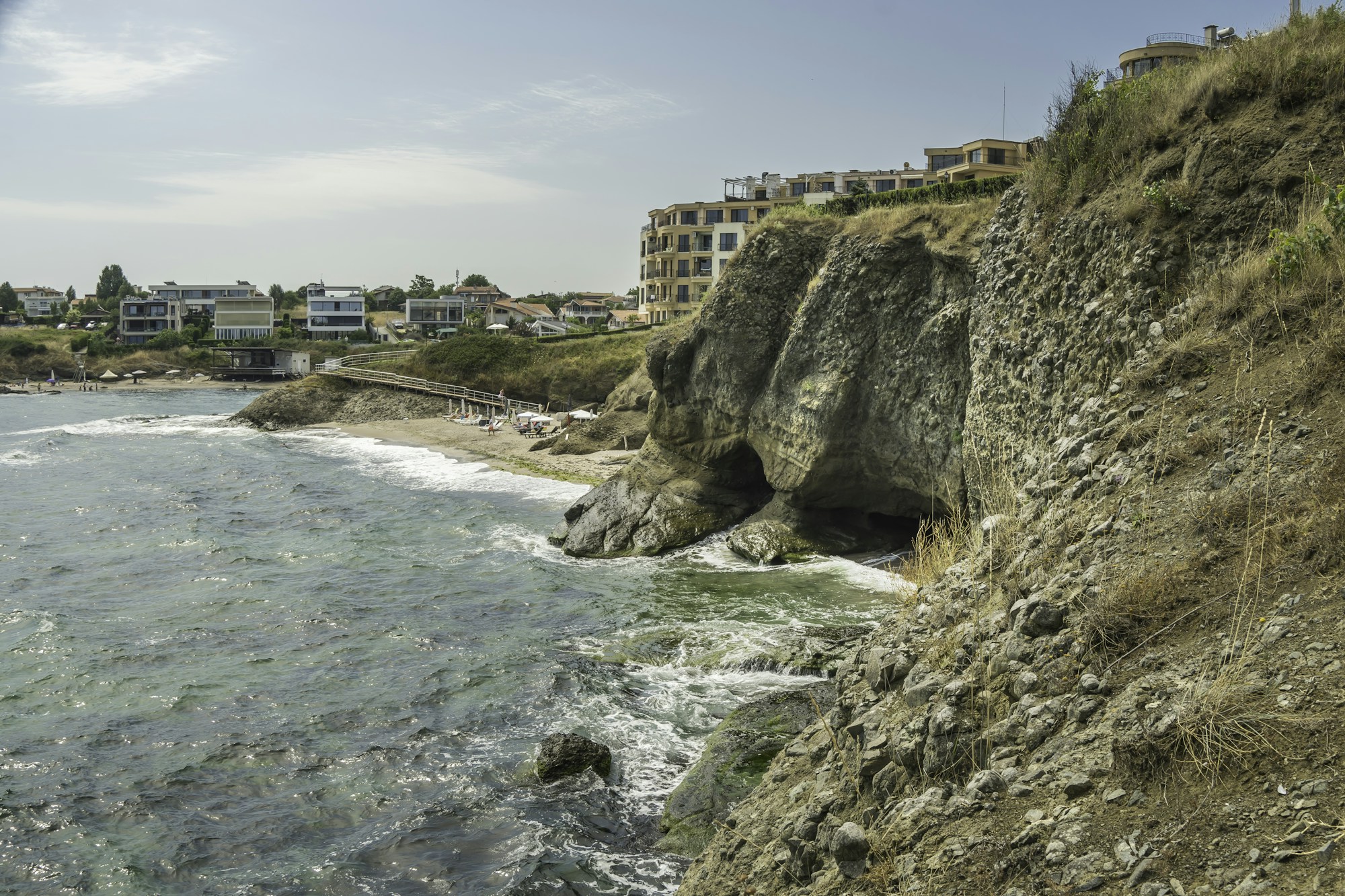
Varna, Black Sea Coast
Nicknamed Bulgaria’s « summer capital », Varna is the country’s third-largest city and the gateway to the Black Sea coast. Every summer, Bulgarians flock to its sandy beaches and seafood restaurants — but for Western travelers, Varna remains surprisingly unknown. It’s a city of 350,000 people with a vibrant cultural life, magnificent parks, and an archaeological heritage that rivals any Mediterranean metropolis.
The Varna Archaeological Museum houses what is considered the world’s oldest worked gold: the Varna Gold, a funerary treasure dating from 4,600 to 4,200 BC, predating the Egyptian pyramids by two millennia. Discovered in 1972 in the Varna Necropolis, this collection of over 3,000 gold objects — scepters, bracelets, ornaments — testifies to a civilization of astonishing sophistication for its era. The entrance ticket costs around 10 euros: it’s probably the best value museum in all of Europe.
The Sea Garden (Morska Gradina) stretches eight kilometers along the coastline. This century-old park, planted with exotic species, houses a zoo, an aquarium, a planetarium, and countless cafe terraces. Locals jog there in the morning, bring their children on Sundays, and organize music festivals in summer. The central beach, directly accessible from the garden, offers golden sand and calm waters — the Black Sea is significantly less salty than the Mediterranean, making it more pleasant for extended swimming.
For a dive into recent history, Varna’s Retro Museum offers a fascinating collection of everyday objects from the communist era: Trabant and Moskvitch cars, radios, school uniforms, propaganda posters. It’s a living, interactive, and often funny museum that provides essential insight into understanding modern Bulgaria and the complex relationship Bulgarians have with their recent past. On the food front, Varna is a seafood lover’s paradise: mussels in tomato sauce, grilled sea bass, octopus salad — all at prices that would make restaurateurs in coastal Western Europe blush.
Highlights
- Archaeological Museum (Varna Gold)
- Sea Garden (8 km promenade)
- Varna Central Beach
- Retro Museum
Pixidia Tip: Varna’s Retro Museum offers a nostalgic journey through the communist era — essential for understanding modern Bulgaria.
Nessebar and Sozopol: The Twin Pearls of the Black Sea
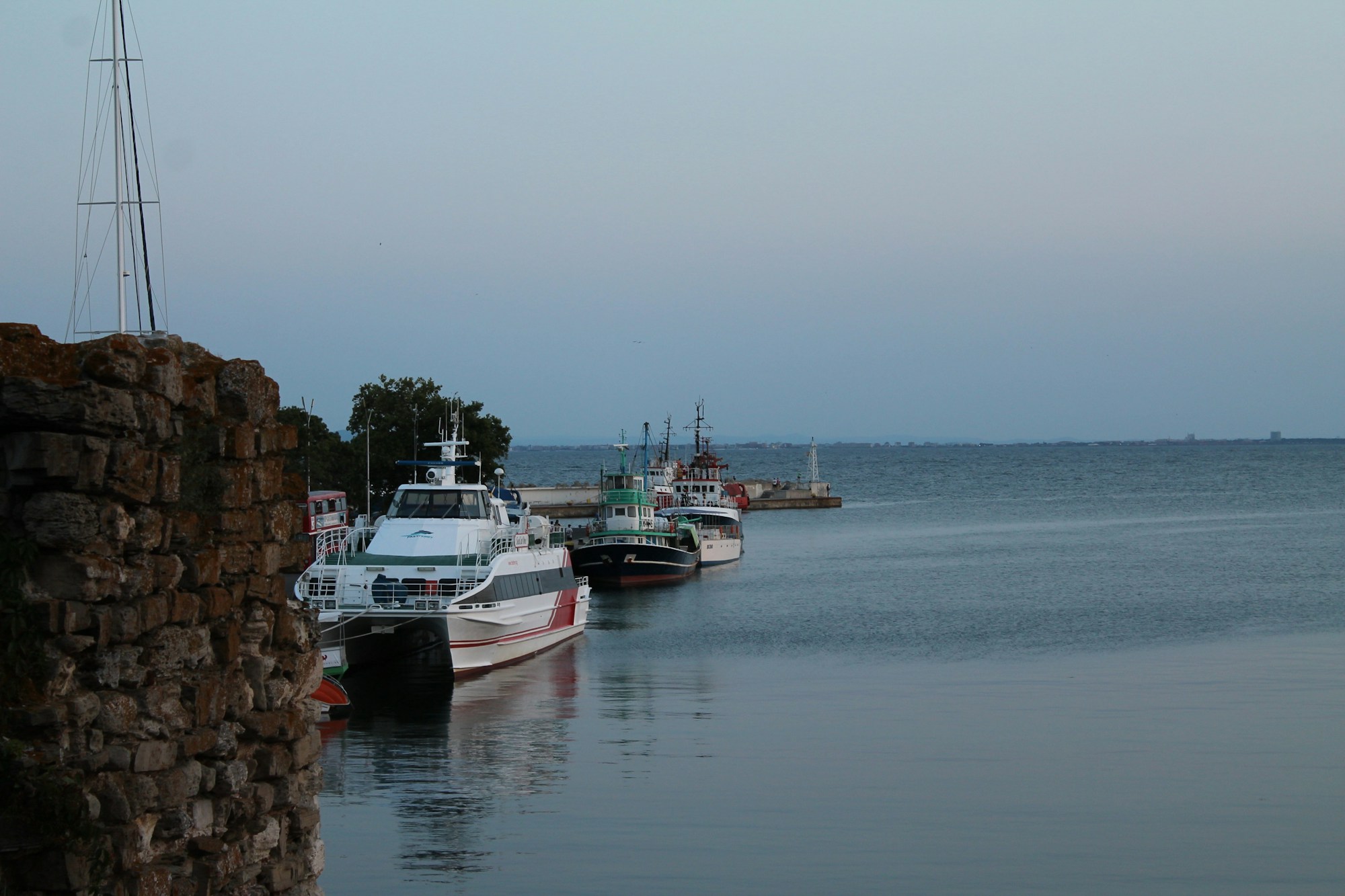
Nessebar and Sozopol
Nicknamed the « Pearl of the Black Sea », Nessebar is one of those places that seem to defy time. Perched on a narrow rocky peninsula connected to the mainland by a thin causeway, this city with over 3,000 years of history has been a UNESCO World Heritage Site since 1983. Within barely 850 meters, the old town packs some forty Orthodox churches — some in romantic ruins, others still adorned with medieval frescoes. According to Barcelo, it’s one of the densest concentrations of religious buildings in the world. The 19th-century wooden houses, with their upper floors cantilevered over the turquoise waters, create a postcard-perfect setting that even the neighboring beach resorts haven’t managed to spoil.
Thirty-five kilometers south, Sozopol offers a more bohemian and less crowded alternative. Smaller, quieter, more authentic, Sozopol is the town of Bulgarian artists and intellectuals. The Apollonia Festival, held each year in early September, transforms the town into a cultural stage with theater, music, dance, and visual arts — it’s the Bulgarian equivalent of the Edinburgh Festival, on the scale of a 5,000-inhabitant town. Harmani Beach, nestled at the foot of the old town, is considered one of the finest on the coast: fine sand, crystal-clear waters, and an unbeatable view of the red-tiled rooftops of the ancient city.
A fast ferry connects the two towns during the summer season, making it easy to combine these two coastal gems. The ideal approach is to base yourself in Sozopol, which is quieter and cheaper, and take a day trip to Nessebar. Avoid July-August if possible: the neighboring Sunny Beach resorts pour hordes of tourists into Nessebar’s old town. In May-June or September, you’ll have the cobblestone lanes and churches almost to yourself.
Highlights
- Nessebar Old Town (UNESCO)
- Sozopol Beaches (Harmani, Kavatsi)
- Apollonia Festival (early September)
- Coastal fast ferry between the two towns
Pixidia Tip: Arrive before 9am in Nessebar or visit in September to avoid the crowds. Sozopol is the more authentic and less touristy alternative.
Veliko Tarnovo: The Suspended Medieval Capital
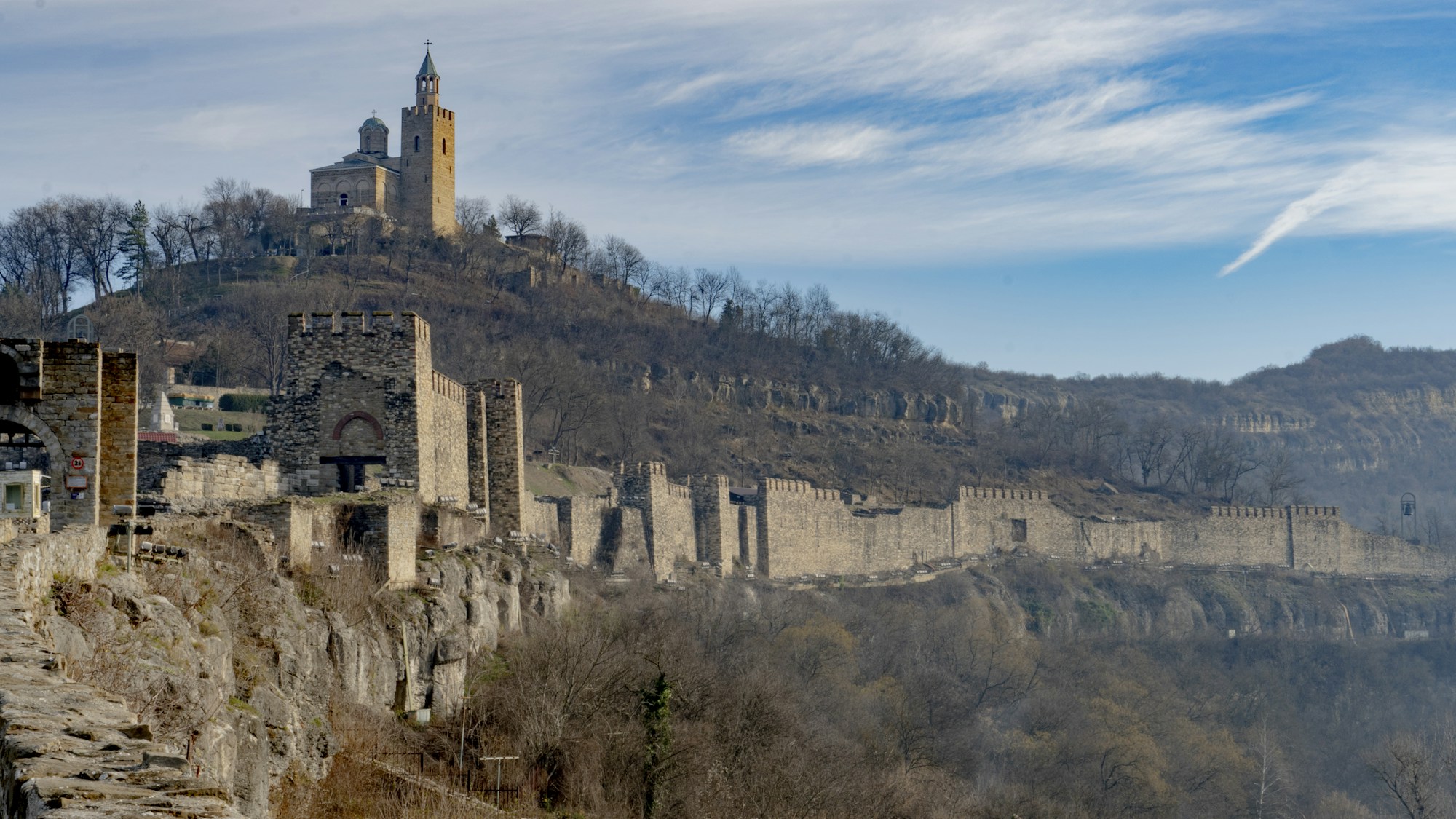
Veliko Tarnovo, Bulgaria
Imagine Porto, but in a medieval Balkan version at a fifth of the price. Veliko Tarnovo, former capital of the Second Bulgarian Empire (1185-1393), is built on three steep hills separated by the winding Yantra River. Houses with colorful facades cling to the cliffs like swallows’ nests to their walls, creating an urban landscape of striking verticality. It’s one of the most photogenic cities in the Balkans, and yet it rarely appears in mainstream guidebooks.
The Tsarevets Fortress, perched atop the hill of the same name, dominates the city with its ramparts and reconstructed patriarchal church. This is where Bulgarian tsars ruled for over two centuries, before the Ottomans seized the city in 1393 after a three-month siege. In summer, a sound and light show projects the history of medieval Bulgaria onto the fortress walls — lasers, symphonic music, and pyrotechnics transform Tsarevets into an open-air theater. The show has no fixed schedule (it depends on tourist demand and events), but check with the local tourist office upon arrival.
A few kilometers from the city, the village of Arbanassi is an open-air museum. This fortified village, founded in the 15th century by wealthy Bulgarian merchants, houses fortress-homes whose interiors reveal unsuspected opulence: carved ceilings, religious frescoes, period furniture. The Church of the Nativity, with its interior frescoes covering every square centimeter of wall and ceiling, is a masterpiece of Balkan Christian art. Veliko Tarnovo is also an excellent base for exploring rural Bulgaria: the surrounding villages, still untouched by mass tourism, offer an authentic glimpse into traditional Bulgarian life.
Highlights
- Tsarevets Fortress
- Sound and light show (summer)
- Arbanassi Village and its churches
- Old cobblestone streets of the Varosha quarter
Pixidia Tip: Tsarevets Fortress at sunset offers one of the most photogenic panoramas in all of Bulgaria.
Rila Monastery and Mountains: Spiritual Bulgaria
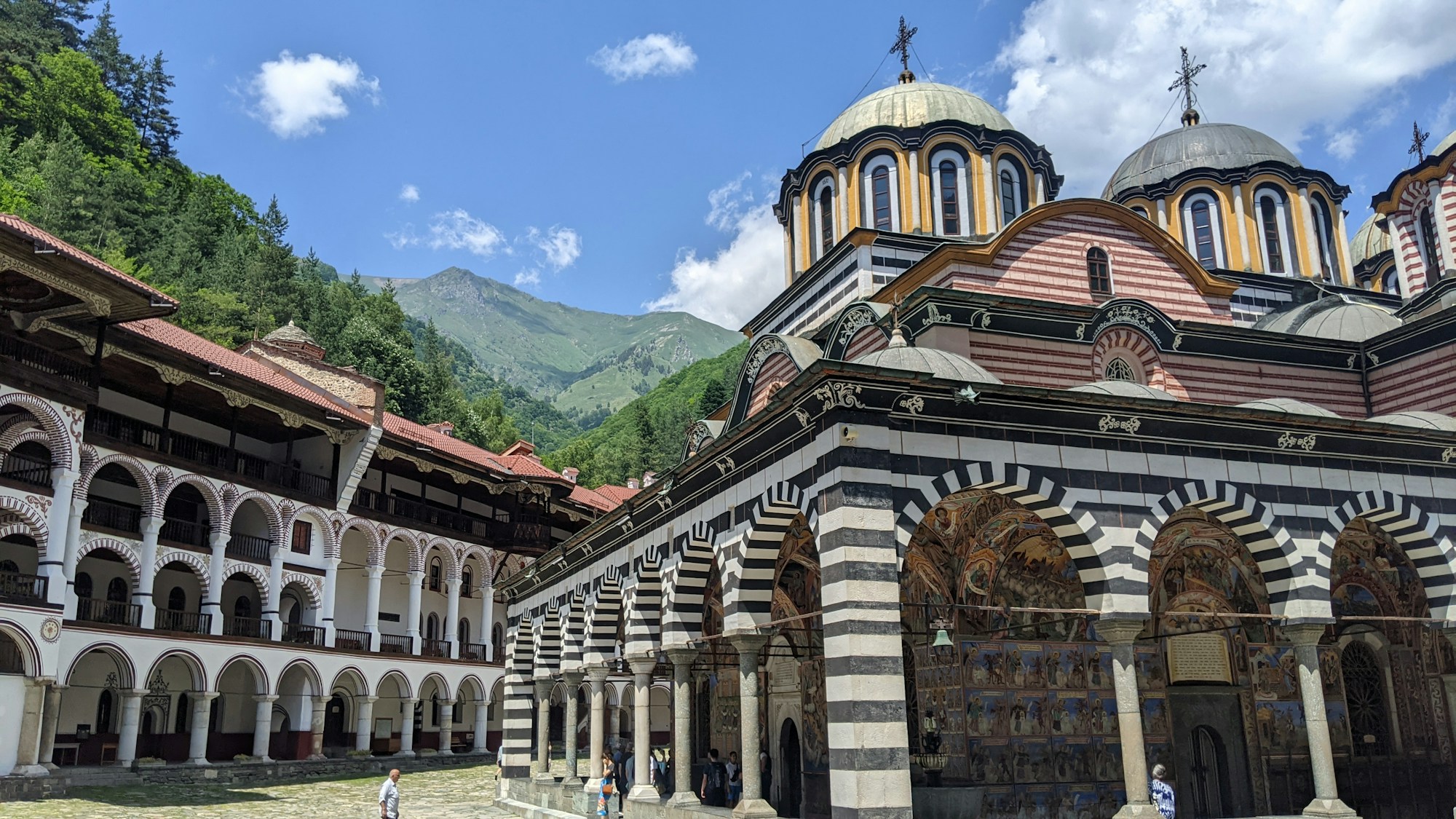
Rila Monastery, Rila Mountains
Nestled at 1,147 meters altitude in the folds of the Rila Mountains, Rila Monastery is Bulgaria’s most iconic monument and one of the most moving sites in the Balkans. Founded in the 10th century by the hermit Ivan Rilski, it has been a UNESCO World Heritage Site since 1983 and remains the country’s largest Orthodox monastery. According to Passport Pilgrimage, it’s a place that « transcends religion to touch the universal. »
The monastery’s architecture is stunning. From the inner courtyard, wooden galleries painted with black and white stripes rise four stories high, framing the small Church of the Nativity whose every square centimeter of facade and interior is covered with jewel-toned frescoes — lapis blue, vermillion red, gold — depicting biblical scenes, saints, and visions of hell of shuddering intensity. Admission to the monastery is free; only the historical museum inside is ticketed (around 8 euros). It’s even possible to sleep at the monastery in spartan but clean monastic cells, for about twenty euros a night — a unique experience that lets you see the monastery at sunrise, before the tour groups arrive.
The Rila Mountains themselves deserve lingering. The Seven Rila Lakes hike is considered one of the most beautiful in all of Southeastern Europe: seven glacial alpine lakes, arranged in a staircase pattern on the mountainside, each bearing an evocative name (the Tear, the Eye, the Kidney, the Twin, the Trefoil, the Fish Lake, the Lower Lake). The full hike takes five to six hours and presents no major technical difficulty, but requires good physical fitness. For more ambitious mountaineers, Musala Peak rises to 2,925 meters — the highest summit in all the Balkans. The ascent from Borovets station takes about four hours one way and offers breathtaking views of the Bulgarian, Greek, and Macedonian mountains on clear days.
Highlights
- Rila Monastery (free admission)
- Seven Rila Lakes hike (5-6 hours)
- Musala Peak (2,925 m, highest in the Balkans)
- Jewel-toned frescoes
Pixidia Tip: Visit early morning or on weekdays to avoid tour groups. Sleeping at the monastery is possible for a unique experience.
2026 Budget: How Much Does a Trip to Bulgaria Cost?
One of the most compelling reasons to visit Bulgaria in 2026 is its exceptional value for money. Despite the adoption of the euro on January 1, 2026, prices remain among the lowest in Europe. According to Balkan Trails, Bulgaria remains in the cheapest quarter of European countries, far behind the rates charged in Croatia, Greece, or Portugal. Data from Round Trip Bulgaria confirms this trend with dining and accommodation prices that defy any Western competition.
| Expense category | Budget | Mid-range | Comfort |
|---|---|---|---|
| Accommodation | 10 – 12 € (dorm) | 25 – 52 € (3* hotel) | 60 – 100 € (4* hotel) |
| Meals | 5 – 8 € | 10 – 15 € | 20 – 35 € |
| Local transport | 1 – 3 € | 5 – 10 € | 15 – 25 € |
| Activities | 0 – 5 € | 10 – 20 € | 25 – 50 € |
| Total / day | 25 – 35 € | 55 – 90 € | 120 – 200 € |
A few practical tips on payments: since the switch to the euro, prices are displayed in euros throughout the country (with dual display in Bulgarian leva until August 2026 to ease the transition). Credit cards are widely accepted in cities and tourist areas, but always keep some cash for markets, small village restaurants, local buses, and tips. ATMs are available everywhere, including in small towns. Tipping is not mandatory but appreciated: 10% in restaurants is the norm.
For transport between cities, car rental remains the most flexible option with rates from 23 euros per day according to Budget Your Trip. Intercity buses are reliable and affordable (5 to 15 euros for most routes), and the rail network, while slow, offers spectacular scenery — notably the Sofia-Plovdiv line that winds through the Iskar Gorge. Bolt and Uber apps work in major cities for urban travel.
Practical Info for Your Trip to Bulgaria
Stay connected from landing. Unlimited data, instant activation.
From $4.50Nomad Insurance: global coverage from $56/4 weeks. 10% off via our link.
From $56 / 4 weeksFrequently Asked Questions about Bulgaria in 2026
Does Bulgaria use the euro in 2026?
Yes. Bulgaria officially adopted the euro on January 1, 2026, becoming the twenty-first member of the eurozone. The conversion rate was set at 1 euro = 1.95583 Bulgarian leva (BGN). A dual price display system (euros and leva) is in effect until August 2026 to ease the transition. You can therefore pay everywhere in euros, whether by card or cash. Source: European Central Bank.
Do I need a visa to visit Bulgaria in 2026?
No, no visa is required for citizens of the European Union and the European Economic Area. Since January 2025, Bulgaria is a full member of the Schengen Area, meaning there are no longer any controls at land, sea, or air borders. A valid ID card or passport is sufficient. For non-EU citizens, standard Schengen rules apply (90 days within 180 days without a visa for many nationalities).
Is Bulgaria still cheap with the euro?
Yes, Bulgaria remains one of the cheapest countries in Europe despite the switch to the euro. According to Budget Your Trip, a traveler can get by on 25 to 35 euros per day backpacker-style, 55 to 90 euros mid-range, and 120 to 200 euros in comfort mode. A full meal at a local restaurant costs between 5 and 15 euros, a draft beer between 1.50 and 3 euros, and a night in a 3-star hotel between 25 and 52 euros. The Bulgarian government has implemented price monitoring measures to prevent excessive rounding during the conversion.
When is the best time for the Black Sea coast?
The beach season on the Black Sea coast runs from June to September, with water temperatures reaching 24-26 °C in August. July and August are the hottest months but also the most crowded, particularly in resorts like Sunny Beach. September is the ideal month: the sea is still warm (22-24 °C), the crowds have dispersed, prices drop, and the autumn light is magnificent for photography. May-June is perfect for combining beach and cultural visits with pleasant temperatures (20-28 °C) without the summer rush.
How do you get around between Bulgarian cities?
Several options are available. Car rental is the most flexible, with rates from 23 euros per day. Intercity buses are the most commonly used transport by Bulgarians: reliable, frequent, and affordable (5 to 15 euros for most routes). Trains are slower but offer superb scenery, notably the Sofia-Plovdiv line. Bolt and Uber apps work in major cities (Sofia, Plovdiv, Varna, Burgas). For the coast, seasonal ferries connect the main beach resorts.
Is English widely spoken in Bulgaria?
In tourist areas, hotels, restaurants, and museums in major cities, English is generally understood and spoken, especially by younger generations. Off the beaten path, communication can be more challenging. The official language is Bulgarian, which uses the Cyrillic alphabet — which can be disorienting at first when reading signs and menus. Tip: download the Bulgarian Cyrillic alphabet and a few basic words before your trip. Bulgarians greatly appreciate tourists’ efforts to speak a few words in their language. Note: in Bulgaria, nodding your head means « no » and shaking your head means « yes » — the opposite of most countries.
Should I worry about price increases with the euro?
The Bulgarian government has anticipated this concern by implementing several measures: mandatory dual price display until August 2026, a price monitoring commission, and penalties for merchants engaging in excessive rounding. The experience of other countries that joined the eurozone (Slovakia, Baltic states, Croatia) shows that the actual impact on prices is generally limited to 0.2-0.3% additional inflation in the first year. Since Bulgaria’s prices start from a very low base, even a slight increase would leave the country among Europe’s most affordable destinations.
Is Bulgaria safe for tourists?
Yes, Bulgaria is generally a very safe country for tourists. Violent crime rates are low, and incidents involving travelers are rare. As with any tourist destination, standard precautions apply: watch your belongings on public transport and in busy areas, avoid conspicuously displaying valuables, and use ATMs inside banks rather than standalone ones on the street. Taxi scams are the main nuisance reported by tourists — use the Bolt or Uber apps, or agree on the fare before getting in.
Sources
- ECB — European Central Bank — Bulgaria’s accession to the eurozone
- Lonely Planet — Sofia and Bulgaria guide
- Nomadic Matt — Bulgaria Travel Guide 2026
- Budget Your Trip — Average travel costs in Bulgaria
- Balkan Trails — Travel Budget Guide 2026
- European Best Destinations — Best Places in Bulgaria
- Barcelo — Nessebar guide and Bulgarian cuisine
- Indie Traveller — Sofia City Guide
- Passport Pilgrimage — Visiting Rila Monastery
- Travel And Tour World — Bulgarian tourism growth in 2025
- Round Trip Bulgaria — Prices and cost of living
- Real Talk Travel — Plovdiv Travel Guide
Research conducted on March 23, 2026
Ready to Discover Bulgaria?
Create your custom itinerary with Pixidia and explore Sofia, the Black Sea coast, and Bulgaria’s hidden treasures.
Explore all itineraries