
Update, mid-July 2026: the regional situation remains volatile. A ceasefire memorandum was signed on 17 June 2026 in Versailles, but hostilities resumed and the interim truce collapsed around 8 July 2026. Tourist areas (Petra, Wadi Rum, Dead Sea) continue operating normally, and Jordan itself has recorded no fatalities from regional strikes. Still, always check your government’s official advisory before booking, and choose fully refundable flights and accommodation until the situation stabilises.
+50% more searches in 6 months. Jordan is fast becoming one of the most coveted destinations of 2026 — and for good reason. Between the Rose-Red City of Petra, the lunar landscapes of Wadi Rum and the ultra-salty waters of the Dead Sea, this country packs an extraordinary density of wonder into just 7 days that few destinations in the world can match. But in March 2026, travelling to Jordan requires honest, complete information on the regional geopolitical context. In this article, we lay it out plainly, then give you the perfect 7-day itinerary for when conditions allow.
⚠️ Geopolitical Context: What You Must Know Before You Go (March 2026)
The situation in March 2026: stay informed
According to the US Embassy in Jordan, Jordan itself recorded only 28 injuries and no fatalities during the initial strikes. Tourist infrastructure continues to operate normally in major tourist areas. However, the regional situation remains volatile and can change without warning.
Update, 16 July 2026: the conflict has continued in cycles of ceasefire and renewed strikes since our initial research. A memorandum ending the war was signed on 17 June 2026 in Versailles, but the interim truce collapsed again around 8 July 2026 after attacks from both sides, according to ongoing conflict tracking. The regional situation therefore remains fluid: confirm the latest advisory level for Jordan before finalising any booking.
Areas to avoid entirely
- Jordanian-Syrian and Jordanian-Iraqi border areas
- Towns of Mansheyat al Ghayyath and Ruwayshid
- Any political gatherings or demonstrations
Recommendations if you are planning a trip
- Check your government’s official alerts right up to your departure date
- Book flexible flights and refundable accommodation
- Register your details with your embassy
- Take out travel insurance covering cancellations for geopolitical risk
- Prepare an evacuation plan with at least two exit routes
Why Searches for Jordan Are Exploding in 2026 (+50%)
A historic tourism boom
In just the first two weeks of January 2026, 76,054 visits were recorded across Jordanian historic sites, including 15,244 at Petra alone, according to the Ministry of Tourism and Antiquities. In 2025, Jordan welcomed 7.04 million visitors, generating revenue up 7.6% to reach a record 5,523 million Jordanian dinars.
Several factors explain this growing appeal. First, improved air connectivity: new low-cost routes now serve Amman from London, Paris and several other European cities. Second, Jordan is diversifying its tourism offering: from Bedouin camps to bubble domes under the stars at Wadi Rum, Dead Sea wellness retreats to wild trekking in Dana.
1. Petra — The Rose-Red Nabataean City
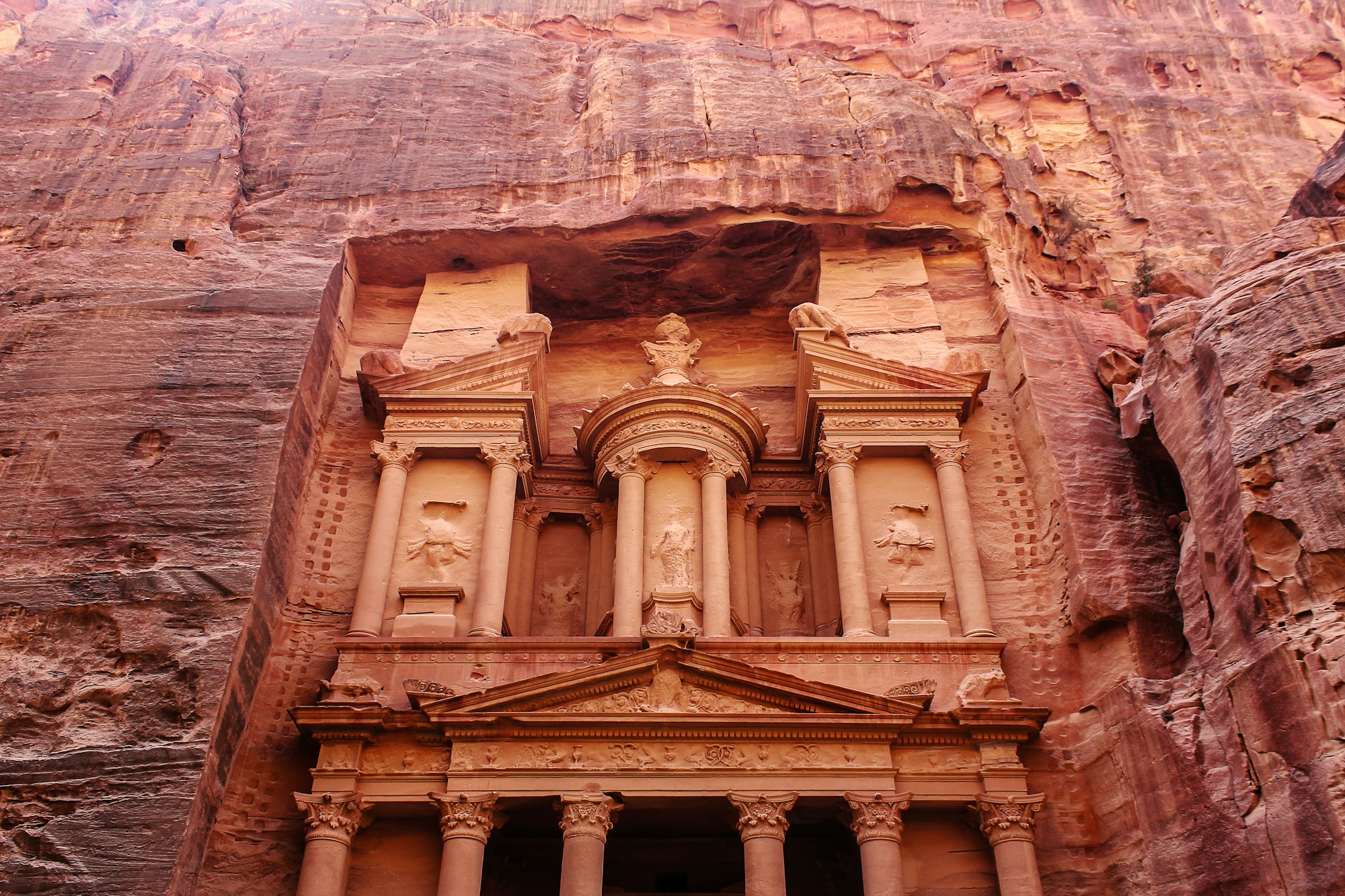
The jewel of Nabataean antiquity
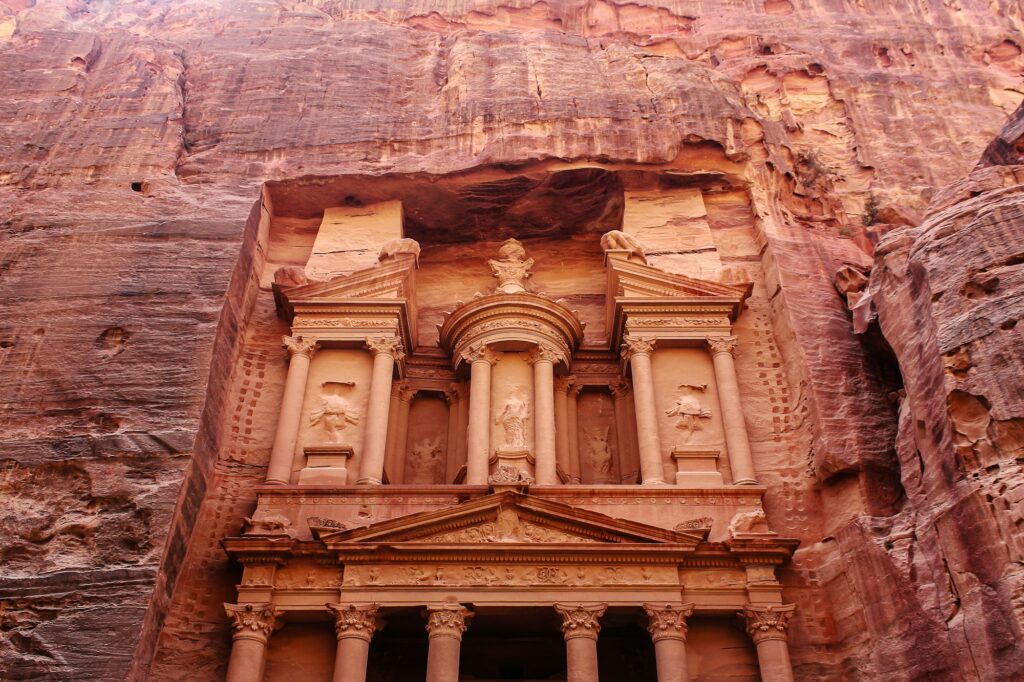
Petra is one of the most impressive archaeological wonders in the world. This 60 km² complex contains the Nabataean city carved into rose-red sandstone, with its tombs, temples, palaces and the iconic Khazneh (Treasury), revealed at the end of a spectacular 1.2 km gorge called the Siq. According to Responsible Vacation, travellers « enter the city through the spectacular Siq canyon before reaching the iconic Treasury monument — an immersive journey through Nabataean history ».
In 2026, Petra leads Jordan’s visitor rankings with 15,244 visits in the first two weeks of January alone. The site now benefits from improved visitor services, enriched guided experiences and tailored cultural tours.
Must-see highlights
- The Siq and the Treasury (Al-Khazneh) — the iconic entrance
- The Monastery (Ad-Deir) — 800 steps, worth every one
- Petra by Night — once a week, candles and music
- Little Petra (Siq al-Barid) — 13 km away, far fewer crowds
2. Wadi Rum — The Valley of the Moon
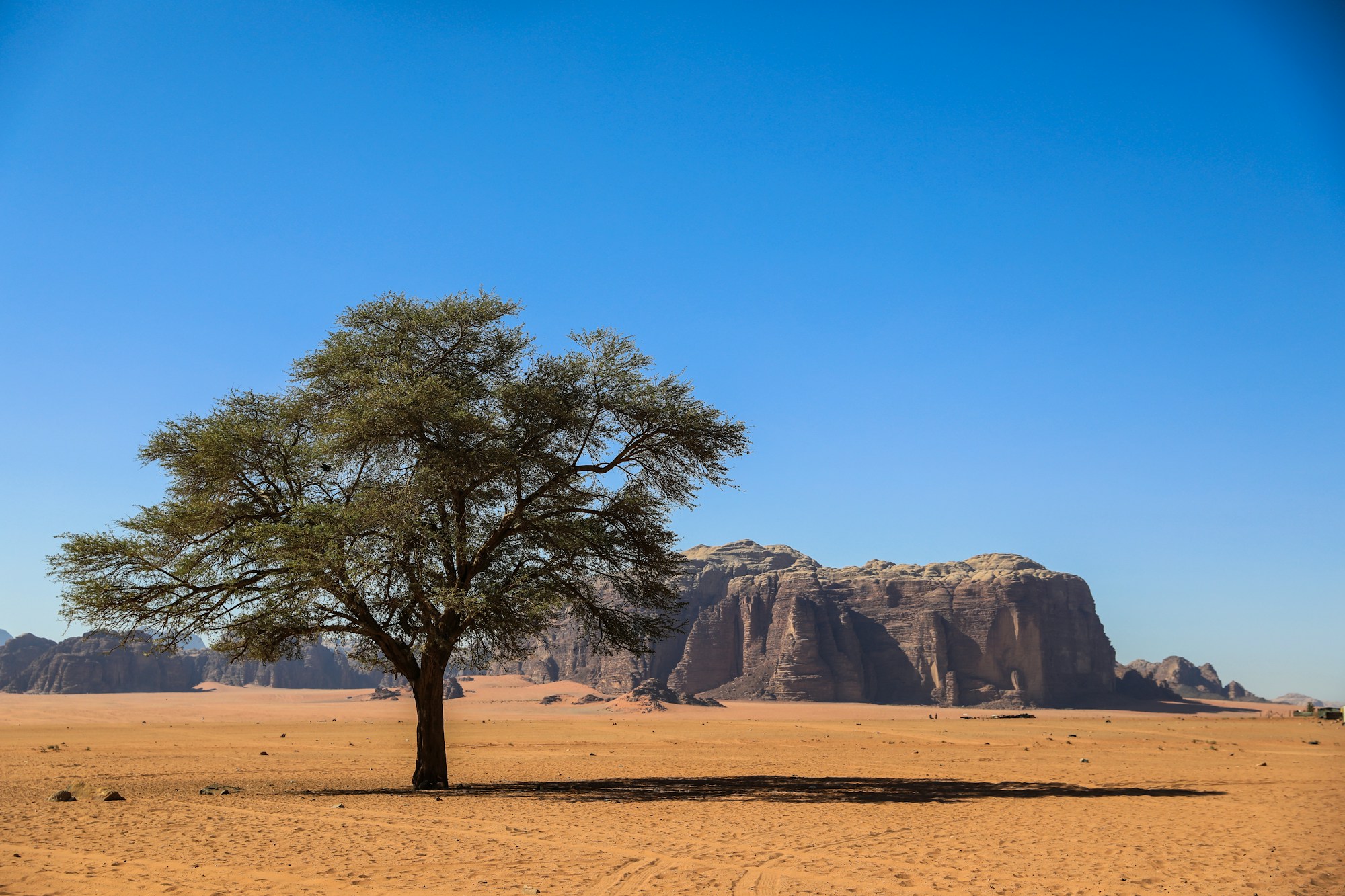
The otherworldly landscapes of the Jordanian desert
A UNESCO World Heritage Site, Wadi Rum — also known as the Valley of the Moon — is Jordan’s largest valley and one of the most dramatic desert landscapes on the planet. From natural arches to red sandstone cliffs, from endless dunes to Bedouin camps beneath the stars, this place served as the backdrop for Lawrence of Arabia, The Martian and Rogue One. According to Nomadic Matt, « spending a night in a Bedouin camp is highly recommended — there is nothing quite like sleeping in the desert under the vast open sky ».
In 2026, glamping options have exploded: bubble domes with transparent ceilings allow you to stargaze from your bed, for a magical experience between sky and sand.
Essential activities
- Guided 4×4 safari with a local Bedouin guide (half-day: ~37 JOD/person)
- Night in a Bedouin camp (dinner + breakfast included: ~45 JOD)
- Rock climbing on red sandstone cliffs
- Sandboarding on the golden dunes
3. The Dead Sea — Float at the Lowest Point on Earth
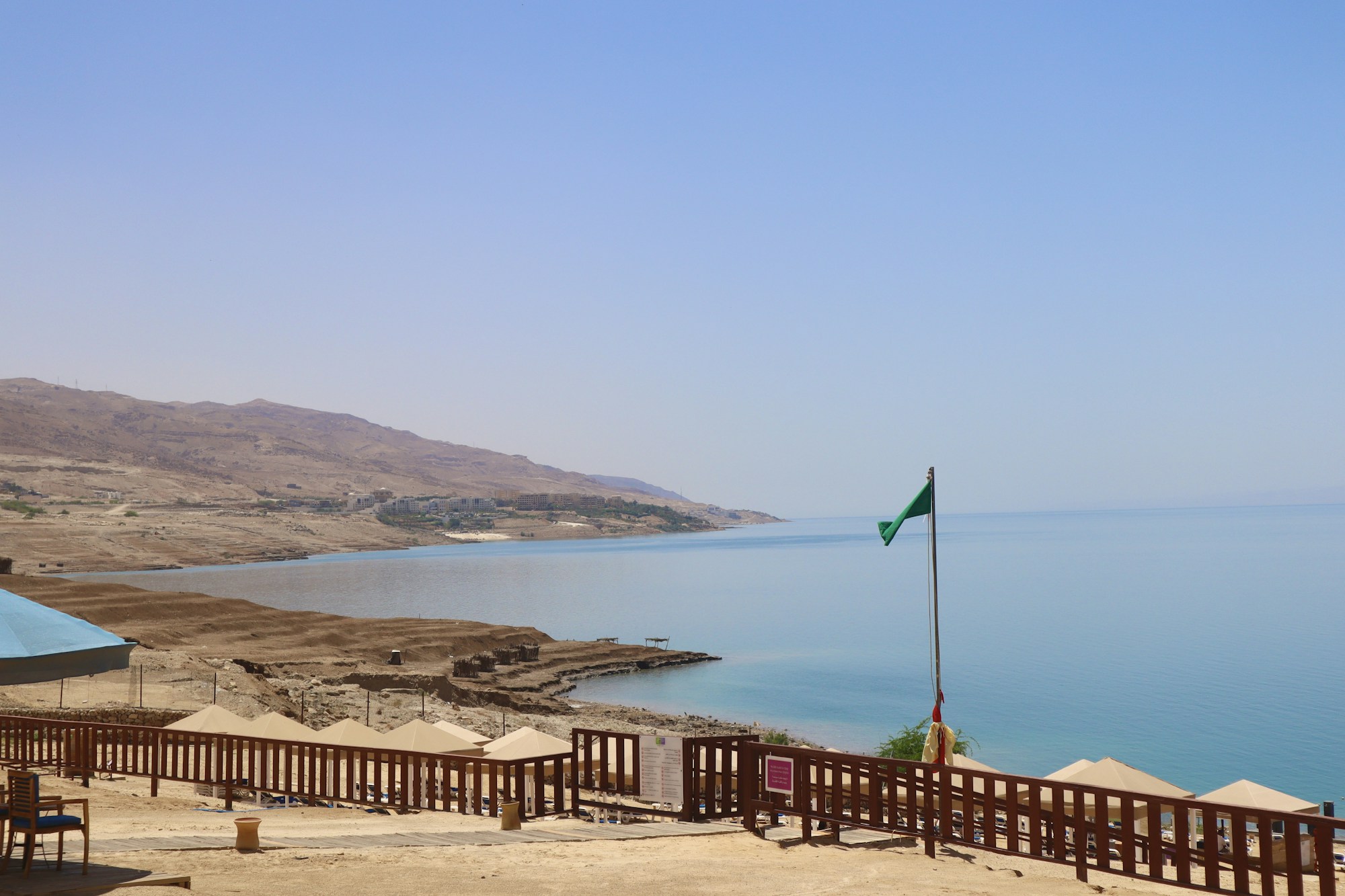
The most unique floating experience in the world
The Dead Sea, at −430 metres below sea level, is the lowest point on Earth. Its salt concentration — ten times that of the oceans — creates buoyancy so extreme that staying submerged is impossible. Visitors float effortlessly, book or phone in hand, in a moment that is simultaneously surreal and deeply relaxing. The unique mineral composition of its waters and the increased atmospheric pressure create a natural wellness environment recognised for centuries.
Essential Dead Sea tips
- Bring fresh water to rinse off after swimming
- Water shoes are essential (salt crystals on the shore are sharp)
- Do not shave 24 hours before to avoid stinging
- Avoid swimming if you have any cuts or open wounds
4. Amman & Jerash — The Capital and the Pompeii of the East
Two thousand years of history in one day
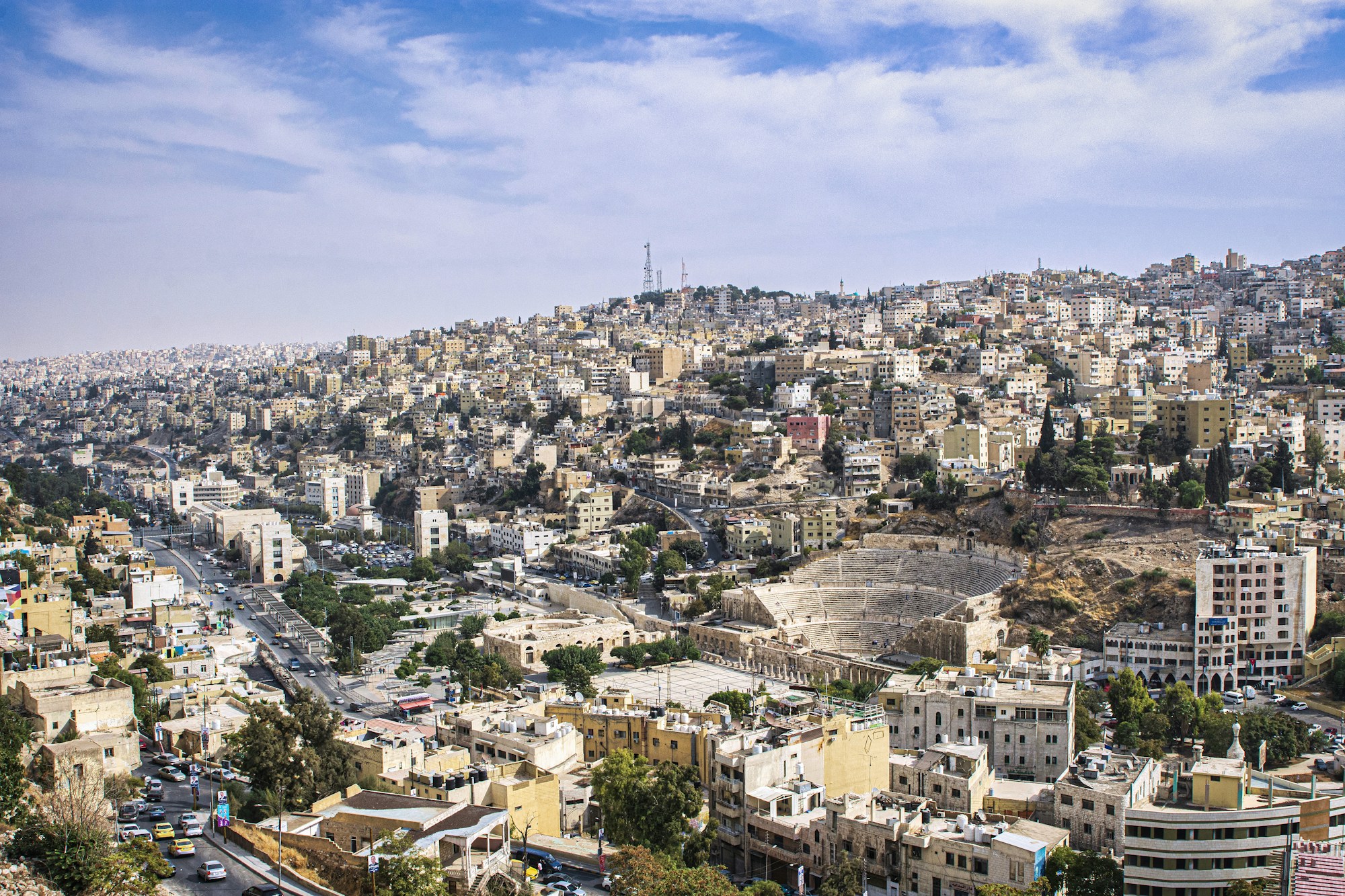
Amman, the capital of seven hills, consistently surprises visitors with its cosmopolitan energy. The Jordan Museum, which recorded 11,812 visits in the first two weeks of January 2026, houses the Dead Sea Scrolls and the 9,000-year-old Ain Ghazal statues. Rainbow Street is the city’s bohemian heart: art galleries, speciality coffee shops and restaurants reinventing Levantine cuisine.
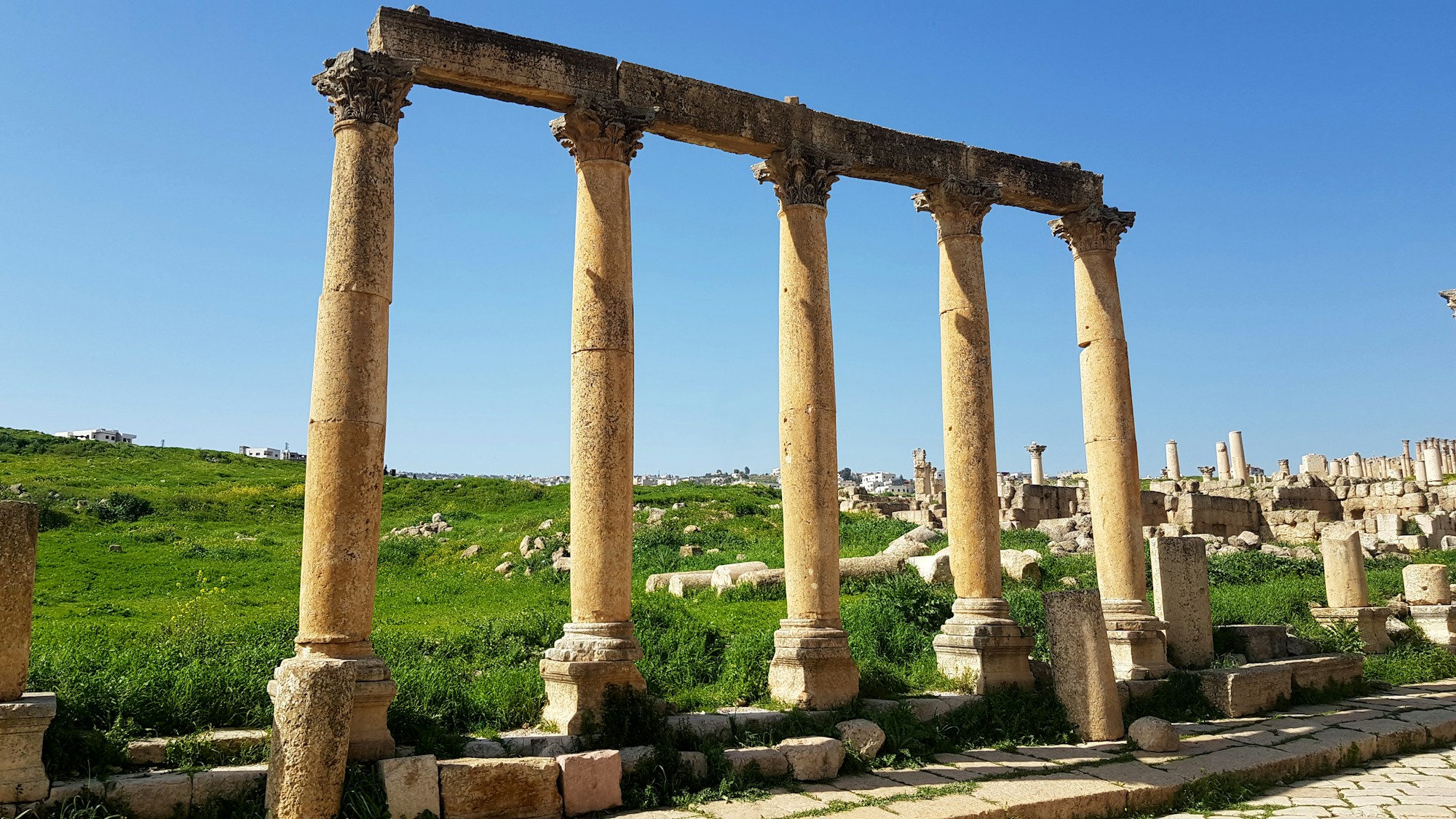
Jerash, 48 km north of Amman, is dubbed the « Pompeii of the East ». Its remarkably preserved colonnaded streets, triumphal arches, hippodrome and Roman theatres rank among the greatest Roman ruins outside Italy, yet the experience remains infinitely less crowded than European Roman forums.
The Perfect 7-Day Jordan Itinerary
7 days to see the essentials
In just seven days, it is possible to explore Amman, walk through the wonders of Petra, experience the desert landscapes of Wadi Rum and float in the mineral waters of the Dead Sea. According to Jordan Experience, this is the ideal balance between cultural richness and natural adventure.
Arrive at Queen Alia International Airport. Check in, visit the Citadel (panoramic city views), Roman Theatre, Jordan Museum. Evening on Rainbow Street. Dinner: Mansaf or mezze at a local restaurant.
Early morning departure for Jerash (Roman ruins). Afternoon at Ajloun Castle (medieval Arab citadel in pine forests). Return to Amman for the night.
Legendary route via Madaba (6th-century Byzantine mosaic), Mount Nebo (view of the Promised Land), Karak Castle (Crusader fortress at 1,000 m altitude). Arrive in Wadi Musa in the evening.
Depart at opening time (6am). The Siq, the Treasury (Khazneh), the Colonnaded Street, the Great Temple, the Royal Urn. Climb to the Monastery (Ad-Deir) in the afternoon: 800 steps but a breathtaking view. Possible evening: Petra by Night (on certain days).
Morning at Little Petra (Siq al-Barid) — free entry, virtually no tourists. Afternoon: drive to Wadi Rum (1.5 hours), check in at the village, first 4×4 safari at end of day, night in a Bedouin camp under the stars.
Sunrise from the dunes (magical). Breakfast at camp. Drive to the Dead Sea (3 hours via Aqaba or 2 hours via the north). Afternoon floating and mineral mud treatments. Dinner at the hotel or resort.
Option A (April–October): Canyoning in the Wadi Mujib gorges — Jordan’s « Grand Canyon ». Option B: Return via Madaba, visit the mosaic workshop, then Amman and the airport.
Budget: How Much Does 7 Days in Jordan Cost?
Three levels, one truth: Jordan is accessible
| Category | Budget 🎒 | Mid-range 🏨 | Luxury 🌟 |
|---|---|---|---|
| Accommodation/night | 8–20 JOD | 30–70 JOD | 100–250 JOD |
| Meals/day | 5–10 JOD | 15–25 JOD | 40–70 JOD |
| Transport | JETT bus (7–20 JOD) | Taxis/transfers | Private car/driver |
| Jordan Pass | 70–80 JOD | 70–80 JOD | 70–80 JOD |
| Total 7 days (excl. flights) | ~£320–£490 | ~£650–£980 | ~£1,600–£2,850 |
The Jordan Pass (from 70 JOD, ~£60) is the single most important purchase to make before you leave. It includes visa exemption (provided you stay a minimum of 3 nights) and entry to over 40 sites, including Petra (50 JOD/day without the pass). According to Petra Budget Guide 2026, « visiting just three additional sites after Petra recoups the entire cost of the pass ».
Flights from London to Amman are available from around £260 return (prices observed on Aviasales, March 2026 data — prices vary).
How to Get to Jordan from the UK
Flights, entry requirements and formalities
Queen Alia International Airport (AMM) in Amman is the main gateway. Several airlines operate direct flights from London Heathrow and Gatwick, including Royal Jordanian and British Airways. Connecting flights via Istanbul or Dubai often offer better prices. Low-cost options operate from other UK airports.
Practical Information for Your Trip to Jordan
Stay connected from the moment you land in Amman. Instant activation, no physical SIM card to hunt for on arrival.
From £4In the current geopolitical climate, insurance covering cancellations for security risk is essential. SafetyWing covers medical emergencies worldwide.
From $1.50/dayFrequently Asked Questions
Is Jordan safe in March 2026?
In March 2026, Jordan is under a Level 3 alert (Reconsider Travel) issued by the US State Department, following the US-Israeli strikes against Iran that began on 28 February 2026. Iranian missiles struck the region, causing 28 injuries in Jordan (no fatalities). The US Embassy evacuated non-essential personnel from Amman. Canada advises avoiding non-essential travel. Tourist areas (Petra, Wadi Rum, Dead Sea) are operating normally, but the situation can change rapidly. Check official advisories before any departure.
Do British citizens need a visa for Jordan?
British passport holders require a visa for Jordan. It can be obtained on arrival (40 JOD) or is included in the Jordan Pass (from 70 JOD), provided you stay a minimum of 3 consecutive nights. The Jordan Pass is strongly recommended as it also covers entry to over 40 tourist sites, including Petra (50 JOD/day without the pass). According to Petra Budget Guide 2026, it is the best saving you can make for your trip.
What is the best time of year to visit Jordan?
Spring (March–May) and autumn (September–November) are the best times to visit Jordan. Temperatures are ideal for Petra (15–25°C), Wadi Rum and the Dead Sea. Summer (June–August) is extremely hot (+35–45°C), except in Aqaba for diving. Winter is pleasant at the Dead Sea but can be cold at Petra and snowy in Amman. According to Finantours, October–November offers excellent value with hotels at −20/−30% compared to peak season.
How many days do you need to visit Jordan properly?
Five to seven days allow you to comfortably visit the key highlights: Petra, Wadi Rum, the Dead Sea and the main historic sites. The 7-day itinerary detailed in this article is optimal for a first trip. To include Aqaba (snorkelling), the Dana Reserve (hiking) or the desert castles of the north, plan for 10 to 12 days. According to Responsible Vacation, « Petra and Wadi Rum are not places where you spend just an afternoon — plan at least two days for each ».
Is the Jordan Pass really worth it?
Yes, the Jordan Pass is the best investment for your trip. From 70 JOD (~£60), it includes visa exemption (40 JOD) + entry to 40+ sites. Petra alone costs 50 JOD for a single day. Add Jerash (10 JOD), Mount Nebo, the Amman Citadel and Karak Castle — you have already recouped the pass cost. According to Petra Budget Guide 2026, for two people with the pass versus without, the saving is 92 JOD (~£79). Buy it online at jordanpass.jo before you travel.
How do you get around in Jordan?
Jordan Express Tourist Transport (JETT) is the long-distance bus operator serving all major sites (Amman–Petra ~4h, ~10 JOD). Informal minibuses and shared taxis connect towns, but without fixed schedules. Car hire is an excellent option for the Kings’ Highway and maximum flexibility. Careem (Uber equivalent) and Bolt work in Amman. In Wadi Rum, private vehicles are banned beyond the village — only guided jeep tours. According to Nomadic Matt, JETT buses are the most reliable for long distances.
What should you pack for Jordan?
Jordan is a predominantly Muslim country: modest dress is recommended, especially in mosques and markets. For women, light trousers and tops covering the shoulders are appropriate. Bring a lightweight scarf (head covering, sun protection). For Petra: sturdy walking shoes are essential (over 10 km on foot). For Wadi Rum: extra layers for desert nights (can be cold even in April). For the Dead Sea: water shoes to protect against salt crystals. Also pack high-factor sun cream and a hat.
Can you pay by card everywhere in Jordan?
Cards are accepted in major hotels, restaurants and tourist sites in Amman, Petra and Aqaba. Outside these areas, cash (Jordanian dinars — JOD) is essential. ATMs are available at Queen Alia Airport and in major towns. Only euros, US dollars and pounds sterling are easily exchanged. According to the Canadian government, bring enough cash for rural areas and local markets. Avoid carrying too much cash in tourist areas.
Can you bring a drone to Petra or Wadi Rum?
No. Drones are strictly prohibited throughout Jordan and may be confiscated at the airport on arrival. Certain high-powered binoculars are also restricted. It is strongly advised not to bring them, according to Terdav.
Can you visit Jordan during Ramadan?
Yes, without any real difficulties. Tourist sites remain open. A few adjustments are worth making: avoid eating or smoking in public out of respect, some restaurants open later in the day, and alcohol is served discreetly to non-Muslims in establishments accustomed to tourists. The atmosphere during Ramadan is often described as warm and festive in the evenings.
Is Petra by Night included in the Jordan Pass?
No. Petra by Night is a separate attraction charged at 30 JOD per person (children under 10 are free), and is not included in the Jordan Pass. The show runs Sunday to Thursday at 8:30pm, featuring the new 3D projection mapping show introduced in May 2025. Booking is recommended at petrabynight.jo.
Sources
- US Embassy in Jordan — Travel Alert March 2026 — Level 3, staff evacuation
- Government of Canada — Travel Advice Jordan — Recommendation to avoid non-essential travel
- U.S. Department of State — Jordan Travel Advisory — Regional risk assessment
- Travel and Tour World — Jordan Tourism Boom 2026 — January 2026 visitor data
- Travel and Tour World — Jordan’s Tourism Growth — 2025 revenues and 2026 forecasts
- Petra Budget Guide 2026 — Cost breakdown and Jordan Pass
- Nomadic Matt — Jordan Travel Guide — Practical tips and budget
- Jordan Experience — 7-Day Itinerary — Detailed planning
- Salt In Our Hair — 7 Days Jordan — Itinerary tips
- Finantours — Is Jordan Worth Visiting in 2026? — Comprehensive analysis
- Wikipedia — 2026 Iran War — Conflict timeline
- Al Jazeera — US-Israel strikes on Iran tracker — Live updates
Research conducted on 24 March 2026, last fact-checked on 16 July 2026.
Ready to Plan Your Jordan Adventure?
As soon as the regional situation allows, Jordan awaits with one of the most spectacular itineraries on the planet. In the meantime, explore our travel itineraries to start planning your trip.
Explore all itineraries