
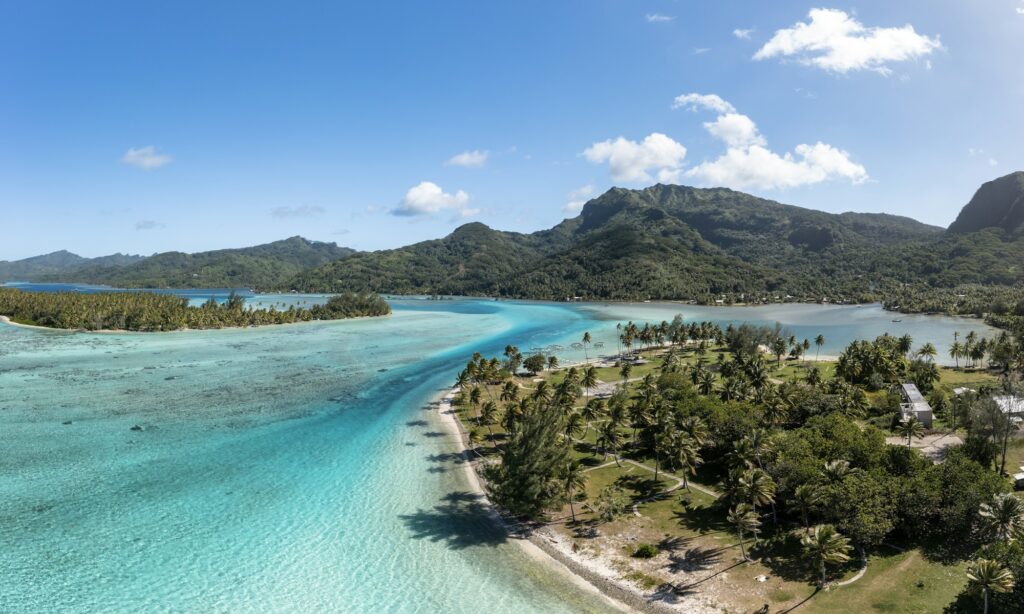
What if the most beautiful islands of French Polynesia weren’t the ones you’ve been shown? Bora Bora is a global icon — overwater bungalows, turquoise lagoon, Polynesian luxury — but at €3,000 a night in a dream resort, it has become out of reach for most travellers. What many people still don’t know: just a few Air Tahiti flights away, islands of equal or superior beauty are waiting for you, with virtually no crowds. Huahine, nicknamed « the secret island », shelters 150 ancestral temples in its forests. Fakarava, a UNESCO Biosphere Reserve, gathers up to 200 grey reef sharks in a single pass. The Marquesas, the absolute ends of the earth, offer wild valleys where time has stood still. This 2026 guide covers the 10 authentic destinations of French Polynesia that deserve your attention — with budgets, ideal timing and insider advice.
Bora Bora or the authentic islands: the real differences
Why look beyond Bora Bora in 2026
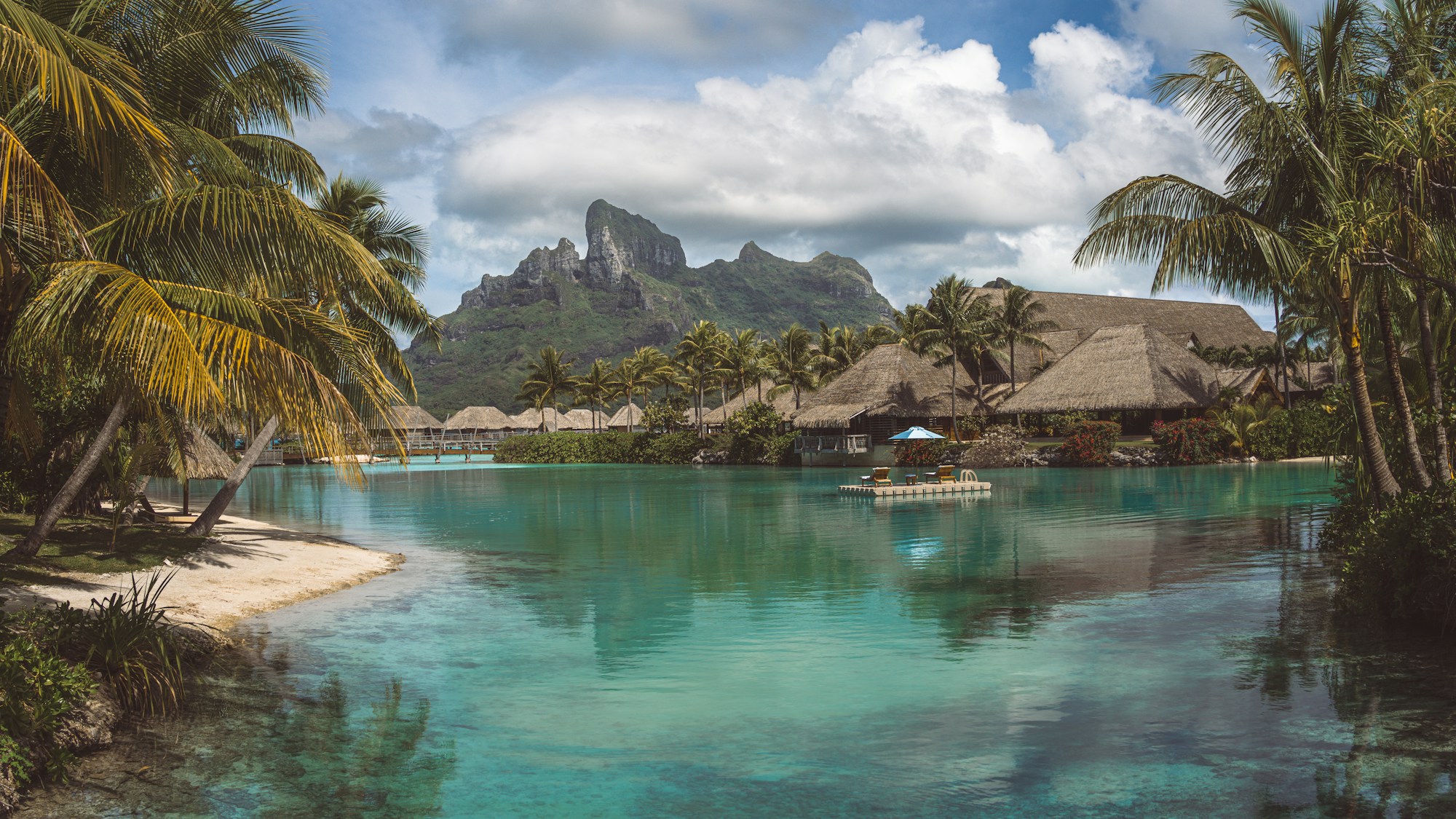
French Polynesia comprises 118 islands spread across five archipelagos: the Society Islands, the Marquesas, the Tuamotu, the Gambier and the Australes. Yet the vast majority of tourist traffic concentrates on just three or four destinations. This over-concentration has a direct impact on prices: Bora Bora is the most expensive. Moorea offers 80% of the experience at half the price. Huahine, Maupiti and the Tuamotu are the least expensive and often the most authentic.
A realistic minimum budget for 2026
- Paris–Tahiti flights: €1,200–1,400 (low season) · €2,000–2,500 (July–August)
- Air Tahiti inter-island pass: €400–500 for 4–6 domestic flights
- Family guesthouses (pensions de famille): €80–120/night half-board (vs €500–3,000 at a resort)
- Activities: lagoon tour €120–180 · diving €80–120 · whale watching ~€150
1. Huahine — « The Secret Island » of the Society Islands
Huahine, Society Islands
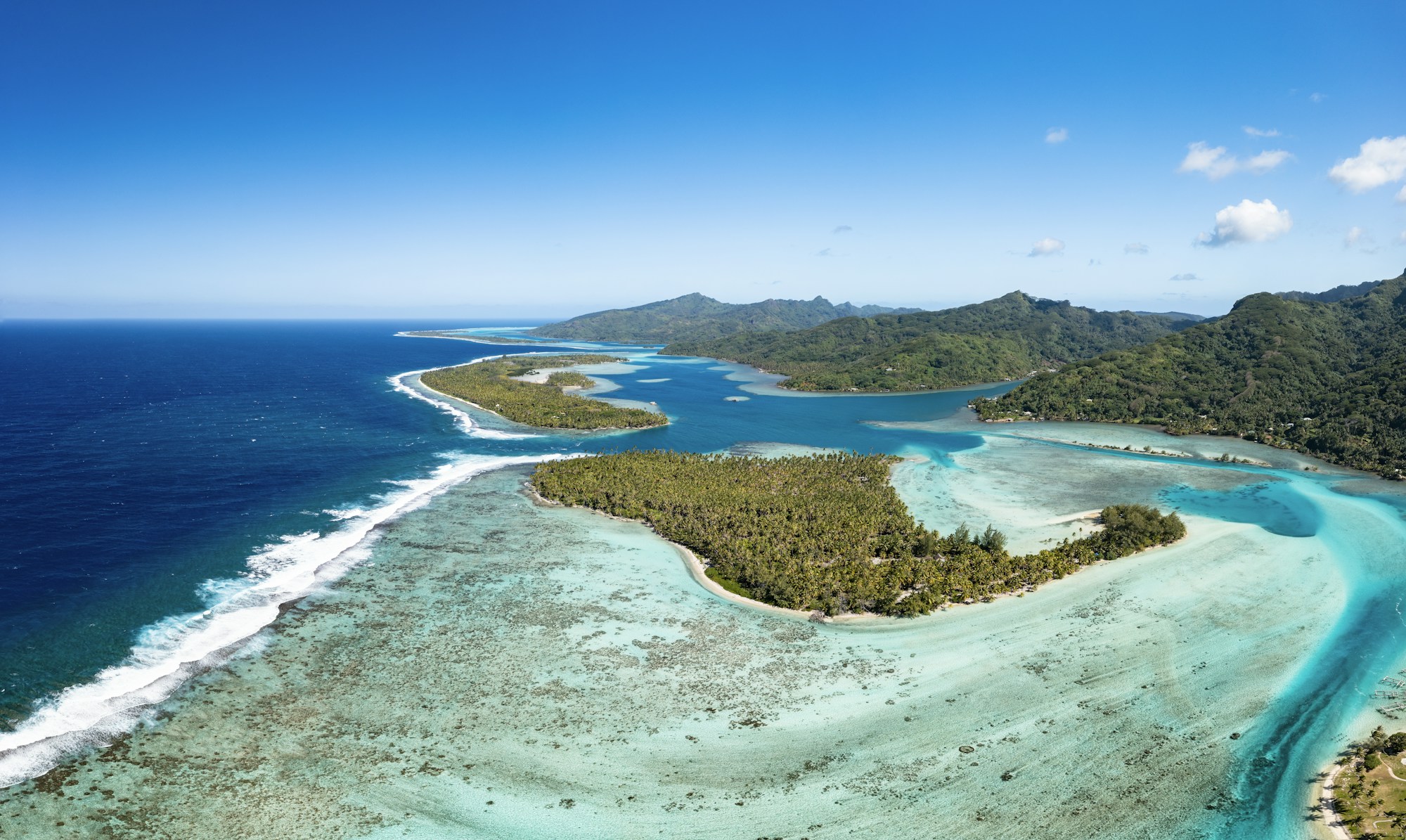
Huahine is made up of two islands linked by a bridge — Huahine Nui and Huahine Iti — located 175 km north-west of Tahiti. Nicknamed « the secret island », it has long remained untouched by mass tourism. What truly sets Huahine apart is its deep cultural roots: traditions here are not staged for visitors, they are simply part of daily life. The island is home to more than 150 marae (ancient Polynesian temples), including the famous Marae de Maeva, one of the best-preserved in the archipelago. On the shores of Lake Fauna Nui, V-shaped fish traps built from coral blocks centuries ago once caught fish for the royal families of Maeva.
What makes the difference
- More than 150 preserved marae — the largest archaeological site in the Society Islands
- No large hotel complexes — family guesthouses only
- Ancient fish traps on Lake Fauna Nui
- Turquoise lagoons and near-deserted beaches
2. Fakarava — The Divers’ UNESCO Biosphere Reserve
Fakarava, Tuamotu Archipelago
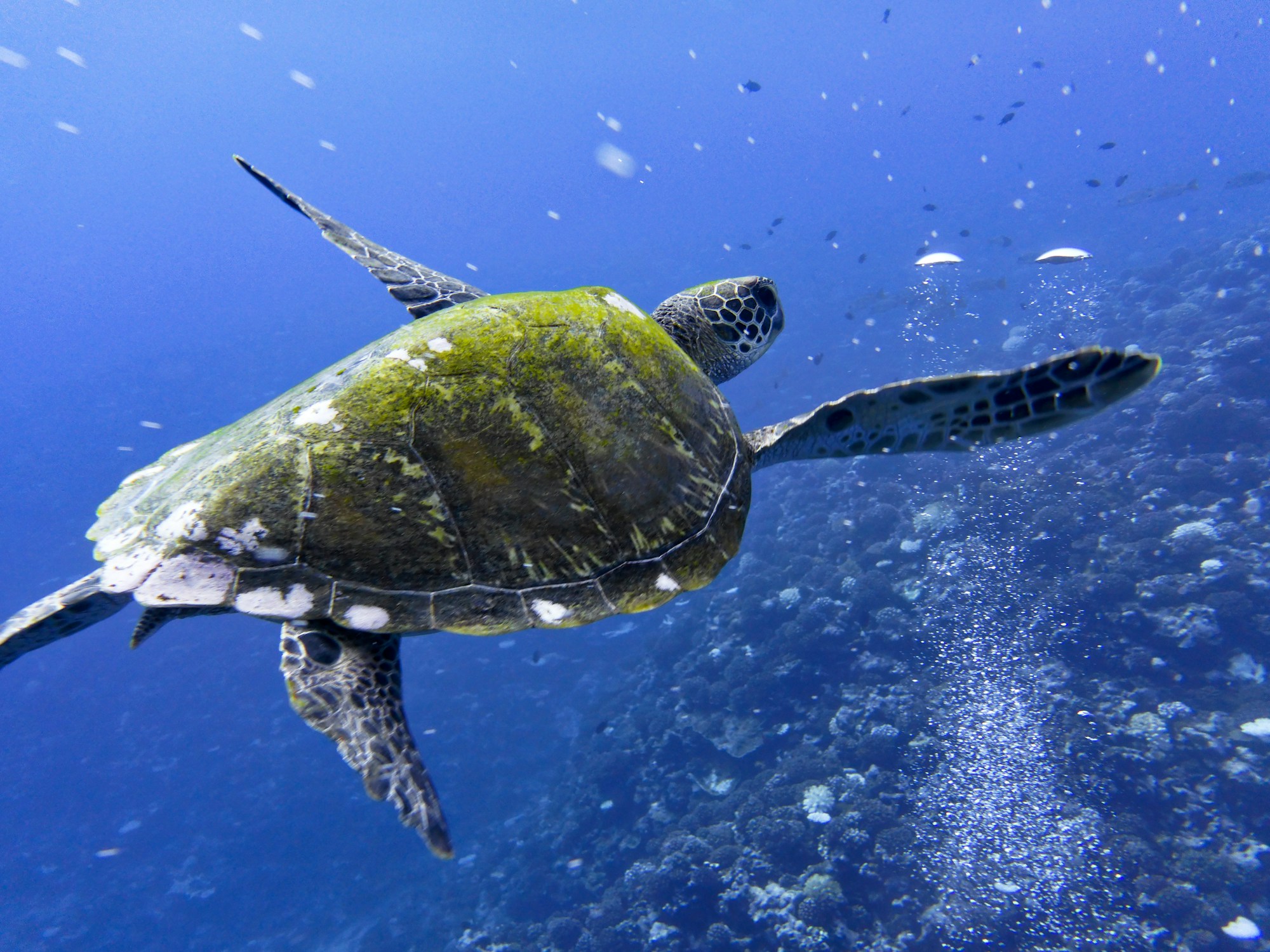
Fakarava, the second-largest atoll in French Polynesia after Rangiroa, is listed as a UNESCO Biosphere Reserve. Its two main passes are legendary among divers: in the north, the vast Garuae pass with its powerful currents; in the south, the more intimate Tumakohua pass, carpeted with coral roses where grey reef sharks endlessly circle. Some dive centres record over 700 marine species visible over the course of a year.
Once a year, between late June and mid-July, divers converge to witness a spectacle found nowhere else on earth: groupers gather to spawn in the South Pass, drawing every predator into a frenzied underwater ballet. It is one of the very few places on the planet where this phenomenon occurs on such a grand scale.
What makes the difference
- Up to 200 grey reef sharks in the South Pass on a single dive
- Annual grouper spawning aggregation (June–July)
- Tetamanu — the former capital with a coral church dating from 1874
- Pension Raimiti: a roadless motu with a true Robinson Crusoe atmosphere
3. Tikehau — The Atoll of Pink Beaches
Tikehau, Tuamotu Archipelago
Just one hour’s flight from Tahiti, Tikehau is a Tuamotu atoll celebrated for its lagoon shimmering with a thousand shades of blue and its pink sand beaches — this unique sand is formed from fragments of coral and shells that take on a rosy hue in the sunlight. With fewer than 600 inhabitants, the island has remained authentically itself. Locals live from fishing, copra and tourism. Jacques-Yves Cousteau himself once dubbed this atoll « one of the most fish-rich places on earth ».
The village of Tuherahera offers a genuine glimpse of Polynesian local life, with its colourful houses, flowering gardens and craftspeople specialising in pandanus weaving. It is a relatively peaceful atoll, far less visited than its neighbours Rangiroa and Fakarava.
What makes the difference
- Unique pink sand formed by coral — a landscape found nowhere else
- Bird Island (motu Puarua) — noddies, terns, frigatebirds, red-footed boobies
- Swimming with manta rays — non-aggressive and very curious
- Far fewer tourists than Rangiroa or Fakarava
4. Maupiti — What Bora Bora Used to Be
Maupiti, Leeward Islands
Maupiti is the smallest inhabited island of the Leeward Islands, just 40 km west of Bora Bora. It closely resembles what its famous neighbour looked like 50 years ago. Here, no overwater bungalows, no jet skis, no hotels — simply family guesthouses. Its lagoon ranks among the most beautiful in Polynesia, and its beaches are among the most pristine in the archipelago. Terei’a beach, framed by the turquoise waters of the lagoon, gives you the feeling of having the whole world to yourself.
Between June and November, Maupiti welcomes humpback whales that come to breed in its warm waters. Swimming with these giants — in a guided, respectful manner — is an experience very few Polynesia travellers can claim to have had. A lagoon excursion costs around €140 at Maupiti, compared with €300 at Bora Bora.
What makes the difference
- Lagoon comparable to Bora Bora’s — without the crowds or the prices
- Swimming with humpback whales (June–November)
- Traditional Tahitian earth oven (four tahitien) on Saturdays — prepared alongside locals
- Mount Teurafaatiu (380 m) — 360° panorama over the lagoon
5. Nuku Hiva — The Raw Power of the Marquesas
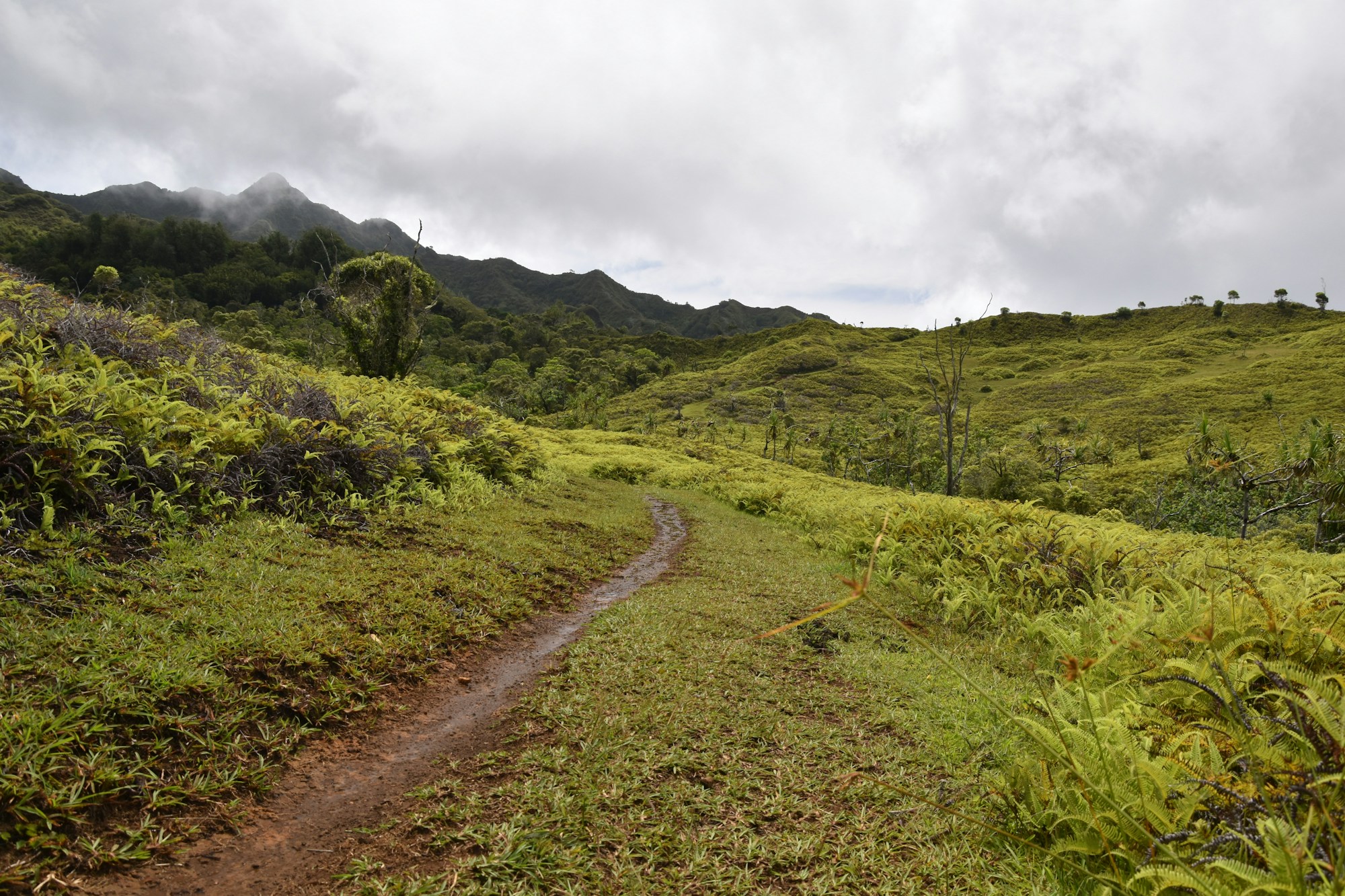
Nuku Hiva, Marquesas Archipelago
Nuku Hiva is the largest island in the Marquesas archipelago at 330 km², lying 1,500 km north-east of Tahiti. Its tortured cliffs, deep bays and vertiginous drops that plunge brutally into a dark Pacific make for an island that is magnificent and imposing. The Hakaui waterfall reaches 350 metres in height — the 3rd highest waterfall in the world — flanked by cliffs where seabirds nest.
If you are looking for a trip without connectivity and a true digital detox, Nuku Hiva is the destination for you. Although the island officially has a 2G network, the signal is often faint or nonexistent across most of its territory. The Marquesas are not islands to be visited at the speed of an Instagram photo — they demand time, patience and a genuine open-mindedness.
What makes the difference
- Hakaui waterfall (350 m) — the 3rd highest waterfall in the world
- Archaeological sites and petroglyphs in the villages of Anaho and Hatiheu
- Taipivai — following in the footsteps of Herman Melville (1842)
- Total disconnection — virtually no signal across most of the island
6. Hiva Oa — The Island of Gauguin and Jacques Brel
Hiva Oa, Marquesas Archipelago
Seen from the sea, Hiva Oa reveals itself through its rugged relief, sheer cliffs and black-sand beaches bordered by dense tropical vegetation. The island is profoundly marked by two figures: Paul Gauguin and Jacques Brel, both of whom came here seeking, each in their own way, refuge from the tumult of the Western world. The Calvary cemetery, overlooking the bay of Taaoa, holds their graves in a simple, peaceful setting. Paul Gauguin produced some of his most iconic works here.
At Hiva Oa stands the tiki Takai’i, a towering 2.6-metre stone statue considered the largest in French Polynesia. The archaeological site of Puama’u houses the largest tiki in Polynesia, while that of Ta’a’oa reveals a vast ancestral place of worship.
What makes the difference
- Graves of Gauguin and Brel — Calvary cemetery with views over the ocean
- Tiki Takai’i at Puama’u — the largest statue in French Polynesia (2.6 m)
- Paul Gauguin Museum in Atuona — replica of the « Maison du Plaisir »
- Hanakee Lodge — spectacular panoramic views over the ocean
7. Fatu Hiva — The Absolute End of the World
Fatu Hiva, Southern Marquesas
Fatu Hiva is the southernmost and most isolated island in the Marquesas. No airport: it is reached only by boat from Hiva Oa (3 to 4 hours at sea), or aboard the cargo vessel Aranui 5. It is precisely this difficulty of access that preserves its unique character. Wild, deeply carved and untouched, Fatu Hiva is also the greenest of the Marquesas, thanks to the intense rainfall that feeds its lush valleys.
On Fatu Hiva, tapa is far more than a craft — it is a living heritage passed down from generation to generation. This unique vegetable textile, made from the bark of the paper mulberry tree and beaten by hand using ancestral techniques, is one of the most authentic souvenirs you can bring back from Polynesia.
What makes the difference
- Bay of Virgins (Hanavave) — one of the most beautiful bays in the Pacific
- 17 km cross-island trail — a legendary hike between Hanavave and Omoa
- Tapa craftsmanship — the only island where this ancestral technique truly lives on
- An absolute feeling of being at the ends of the earth
8. Ua Huka — The Island of Wild Horses and Master Carvers
Ua Huka, Northern Marquesas
Ua Huka is a destination for art lovers and history enthusiasts, with its museums and surprising wildlife. This small stretch of land with its desert-like landscapes, where wild goats and horses roam freely, is home at Melaute to the most important archaeological site in the Marquesas, with its enormous buried me’ae and tiki carved from red stone or volcanic tuff.
In December 2025, this island hosted the Marquesas Arts Festival (Matavaa), the archipelago’s most significant cultural gathering. This festival brings the islands together around dance, song, sculpture and traditional Marquesan arts. It takes place every 4 years on different islands — check the calendar before you travel.
What makes the difference
- Melaute archaeological site — the oldest in the Marquesas
- Unique arboretum — hundreds of citrus species from around the world
- Wild horses and goats roaming freely
- Marquesan wood carvings — among the finest in Polynesia
9. Raiatea & Taha’a — The Sacred Island and the Vanilla Island
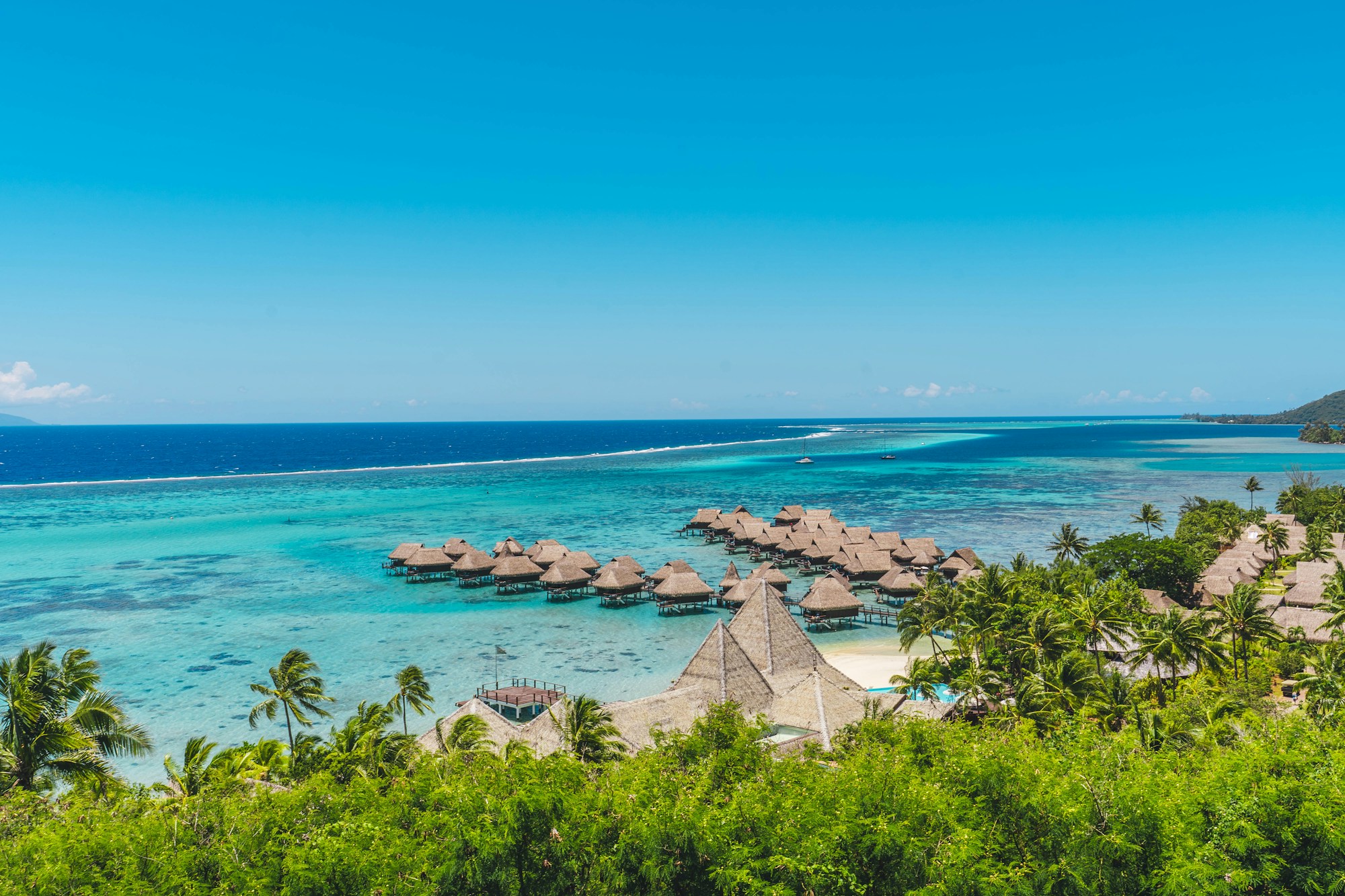
Raiatea & Taha’a, Leeward Islands
Raiatea and Taha’a share the same lagoon in the Leeward Islands. Raiatea is the sacred island and cradle of Polynesian culture: Marae Taputapuatea, listed as a UNESCO World Heritage Site, is the only inscribed site in all of French Polynesia. This sacred place invites exploration of ancestral rituals and the connections between the great Polynesian families of the Pacific. The Faaroa river — the only navigable river in Polynesia — offers a gentle and immersive kayaking experience.
Taha’a, nicknamed « the vanilla island », is a world apart: its plantations quite literally perfume the air. Visiting a pearl farm and a vanilla plantation with a local lunch included is an unmissable experience. For premium budgets, the overwater bungalows at the Taha’a by Pearl Resort on the lagoon motus rank among the finest in Polynesia.
What makes the difference
- Marae Taputapuatea — the only UNESCO World Heritage site in French Polynesia
- Faaroa river — the only navigable river in Polynesia, accessible by kayak
- Taha’a vanilla plantations — visit with tasting
- Boat shuttle between the two islands — very affordable
10. Rangiroa — The Giant of the Atolls
Rangiroa, Tuamotu Archipelago
Rangiroa is the largest atoll in French Polynesia, just one hour’s flight from Tahiti. Listed as a UNESCO Biosphere Reserve, it is famed for its wall of grey reef sharks — up to 700 individuals gathering in the passes. This phenomenon is explained by the currents, which allow the sharks to absorb oxygen without swimming, creating a hypnotic underwater ballet.
Rangiroa also boasts a rare curiosity: a vineyard unique in the world at this latitude, managed by the Gilmore family, producing an exceptional coral white wine. The atoll is also home to the mysterious Blue Lagoon, a secondary interior lagoon accessible only by boat, with waters of an unreal turquoise and total transparency. Dolphins are present year-round in the Tiputa pass.
What makes the difference
- Shark wall — up to 700 grey reef sharks gathered in the passes
- Blue Lagoon — interior lagoon of impossibly turquoise waters
- Gilmore vineyard — the world’s only atoll wine
- Dolphins present year-round in the Tiputa pass
Bonus: The Aranui 5 Cruise — The Royal Road to the Marquesas
Aranui 5, the World’s Only Mixed Cargo Vessel
For those wishing to discover the most remote islands without the logistical anxiety, the Aranui 5 is the ideal solution. This unique mixed cargo vessel calls at 8 spectacular islands over 12 days: Tahiti, Fakarava, Huahine, Nuku Hiva, Ua Pou, Ua Huka, Hiva Oa, Tahuata, Fatu Hiva and Rangiroa. Each port of call is an experience in itself: visits to archaeological sites, local craft workshops, tasting of traditional specialities and snorkelling in crystal-clear lagoons.
The Aranui 5 is not a conventional cruise ship — it is also a cargo vessel that supplies the Marquesan communities with food, building materials and goods. This unique role creates authentic interactions with islanders that conventional cruises simply cannot offer.
Practical information for your trip to Polynesia
Stay connected from landing in Tahiti. Instant activation, no physical SIM card required.
From €4.50Full coverage for water activities and Marquesas hikes. Essential.
From €0.99/dayFrequently Asked Questions about Authentic Polynesia in 2026
What is the budget difference between Bora Bora and the authentic islands?
Bora Bora is the most expensive destination in French Polynesia. Moorea offers 80% of the experience at half the price. Huahine, Maupiti and the Tuamotu are the least expensive and often the most authentic. Savings can reach 40 to 60% on accommodation by opting for family guesthouses off the beaten track: expect €80–170/night half-board on the authentic islands, compared with €500–3,000/night at Bora Bora resorts. Source: My Little Polynesia
How do you travel between islands without blowing the budget?
Air Tahiti offers inter-island passes that allow you to cover several atolls in a single trip: the Lagons Pass (Tuamotu) and the Bora-Bora Tuamotu Pass are the most popular. The Lagons Pass covers the flights Tahiti–Tikehau–Rangiroa–Fakarava–Tahiti for around €400. For the Marquesas, the Discovery Marquises Pass includes up to 4 domestic flights. These passes must be purchased before departure from France — they are not always available in Tahiti. Source: O2 Fakarava
Do you need to speak Tahitian or French to travel off the beaten track?
French is sufficient everywhere in French Polynesia — it is the official administrative language. In the Marquesas, locals often speak Marquesan among themselves, but French is always understood and appreciated. A few words of reo tahiti open doors: Ia orana (hello), Māuruuru (thank you), Nana (goodbye), Māeva (welcome). A genuine smile and a respectful attitude matter far more than vocabulary.
Are the Marquesas Islands suitable for a family trip with children?
The Marquesas require good physical fitness (winding roads, hikes, difficult access to some islands). For families with young children, opt for the Society Islands (Huahine, Raiatea) or the Tuamotu (northern Fakarava, Tikehau), which offer suitable water activities and better infrastructure. For families with children aged over 8 who enjoy adventure, Nuku Hiva and Hiva Oa are entirely accessible. Source: Vivre en Polynésie
How much time should you allow for each archipelago?
Never stay fewer than 4 days on each island — you need time to settle in, acclimatise and truly discover the place. For the Marquesas: allow a minimum of 10 days for a full experience on Nuku Hiva and Hiva Oa, with an optional 3 to 5 extra days for the more remote small islands (Fatu Hiva, Ua Huka). For a complete Society + Tuamotu + Marquesas trip: allow 3 to 4 weeks. Source: A Nous 5 le Monde
How do you eat locally and cheaply in Polynesia?
Local snack bars (roadside eateries) serve dishes for €8–15: raw fish in coconut milk, poulet fafa, Polynesian chao mein. Roulottes (local food trucks) offer delicious meals for €10–15 per person — unmissable on Tahiti, particularly at Place Vaiete in the evenings. The most economical strategy: stay at a family guesthouse with half-board included, which reduces your food budget to almost nothing. Source: Voyageurs Français
Is Fakarava suitable for non-divers?
Absolutely. You don’t need to be a certified diver to enjoy Fakarava’s marine riches. Snorkelling in the lagoon or near the motus reveals an extraordinary array of multicoloured corals and tropical fish. Above water, there is no shortage of activities: cycling around the atoll (€15–30/day), boat excursions to isolated motus, visiting the village of Rotoava and the old coral church at Tetamanu (1874). The Pension Raimiti on a roadless motu offers a Robinson Crusoe experience without diving. Source: Revaoa
What health and practical precautions should you take before departing?
French Polynesia is a French territory — no compulsory vaccinations. Bring: mosquito repellent (dengue fever is possible, especially during the rainy season); coral-safe sunscreen (without oxybenzone) to protect the reefs; seasickness medication (Polynesian ferries can be rough); a basic medical kit, as isolated islands have limited healthcare facilities. In the Tuamotu, rainwater is the only freshwater source — bring bottled water or a filtering flask. Travel insurance is strongly recommended to cover the cost of medical evacuations from remote islands. Source: Revaoa
Sources
- Tahiti Tourisme — Official guide to Huahine
- Voyageurs Français — What to do in Huahine
- Twalo — Huahine guide: culture and traditions
- My Little Polynesia — Fakarava: complete guide
- Ultramarina — Diving in Fakarava: the passes
- Anoe Tahiti — Tikehau atoll 2025
- Le Monde des Mirons — Complete guide to Maupiti
- Culturîles — Nuku Hiva: the majesty of the Marquesas
- Pacifique à la Carte — Nuku Hiva stay
- Figaro Nautisme — Hiva Oa: the garden of the Marquesas (2025)
- My Little Polynesia — Top 5 Fatu Hiva
- La 1ère / France Info — Marquesas Festival 2025 in Ua Huka
- Tahiti Tourisme — Authentic Polynesia stay: Moorea, Huahine, Raiatea
- Explorer la Terre — The Tuamotu: the paradise archipelago
- Tahiti Tourisme — Aranui 5 Marquesas cruise 2025-2026
- Voyageurs Français — Budget for French Polynesia: full estimates
- Vivre en Polynésie — A trip to the Marquesas: practical advice
Research conducted on March 24, 2026 from verified sources (2024–2026).
Ready to Discover Authentic Polynesia?
Beyond Bora Bora, an entire archipelago is waiting to be explored. From the sacred eels of Huahine to the sharks of Fakarava, from the wild Marquesas to the pink lagoons of Tikehau — authentic Polynesia offers experiences that very few travellers can tell. Explore our verified itineraries to plan your Polynesian adventure.
Explore all itineraries