
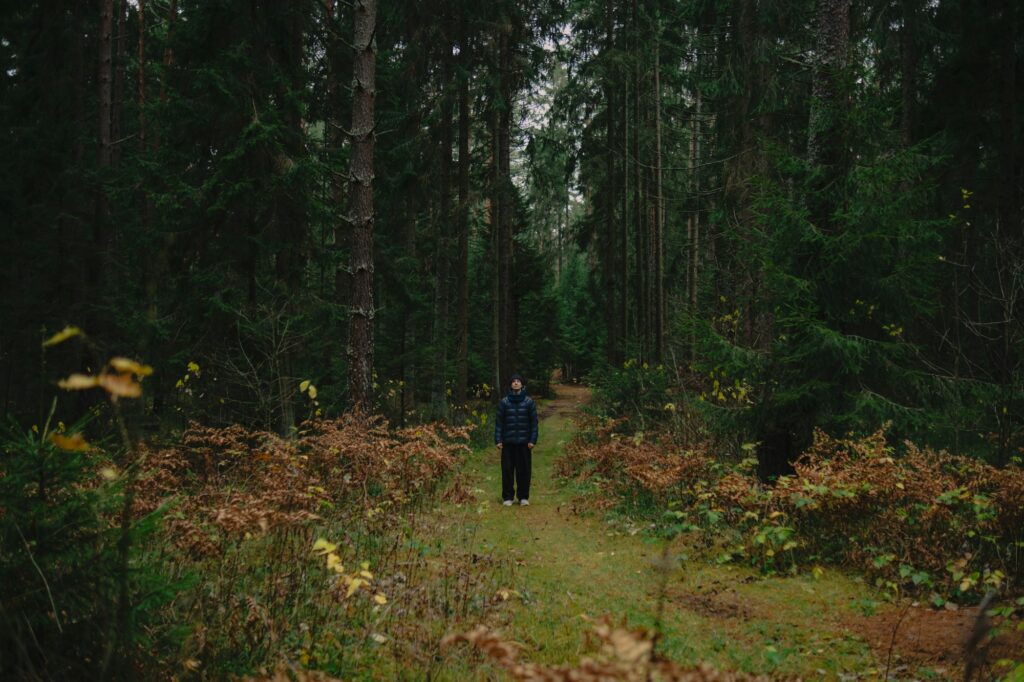
Imagine slowing your heart rate within minutes — no pill, no app, no WiFi required. That’s the promise of shinrin-yoku (森林浴) — literally « forest bath » — the Japanese practice of immersing yourself consciously in a forest’s atmosphere. Officially coined in 1982 in the ancient cedar groves of Akasawa, Japan, the concept has since spread across every latitude. According to a meta-analysis published in 2025 in Frontiers in Public Health, forest bathing significantly reduces cortisol, stimulates NK immune cells and shifts the nervous system toward parasympathetic dominance. From Japan’s ancient forests to Germany’s Black Forest and France’s Vosges Mountains, here are the best shinrin-yoku destinations for 2026.
Why forests heal: what science says in 2026
The scientific validation of shinrin-yoku is now robust. According to a systematic review published on PubMed in 2025, forest bathing is associated with:
- Significant cortisol reduction after just 40 minutes of forest walking
- 50% increase in NK immune cell activity after 3 days in the forest
- Lower blood pressure and heart rate
- Improved mood and reduced depressive symptoms
- Better sleep quality and concentration
In South Korea, Canada and increasingly across Europe, doctors now prescribe « nature prescriptions ». Canada’s PaRx program officially recommends at least two hours in nature per week. The question is no longer whether forests heal — but where to go to experience it most powerfully.
1. Akasawa Forest, Nagano (Japan) — The sacred birthplace of shinrin-yoku
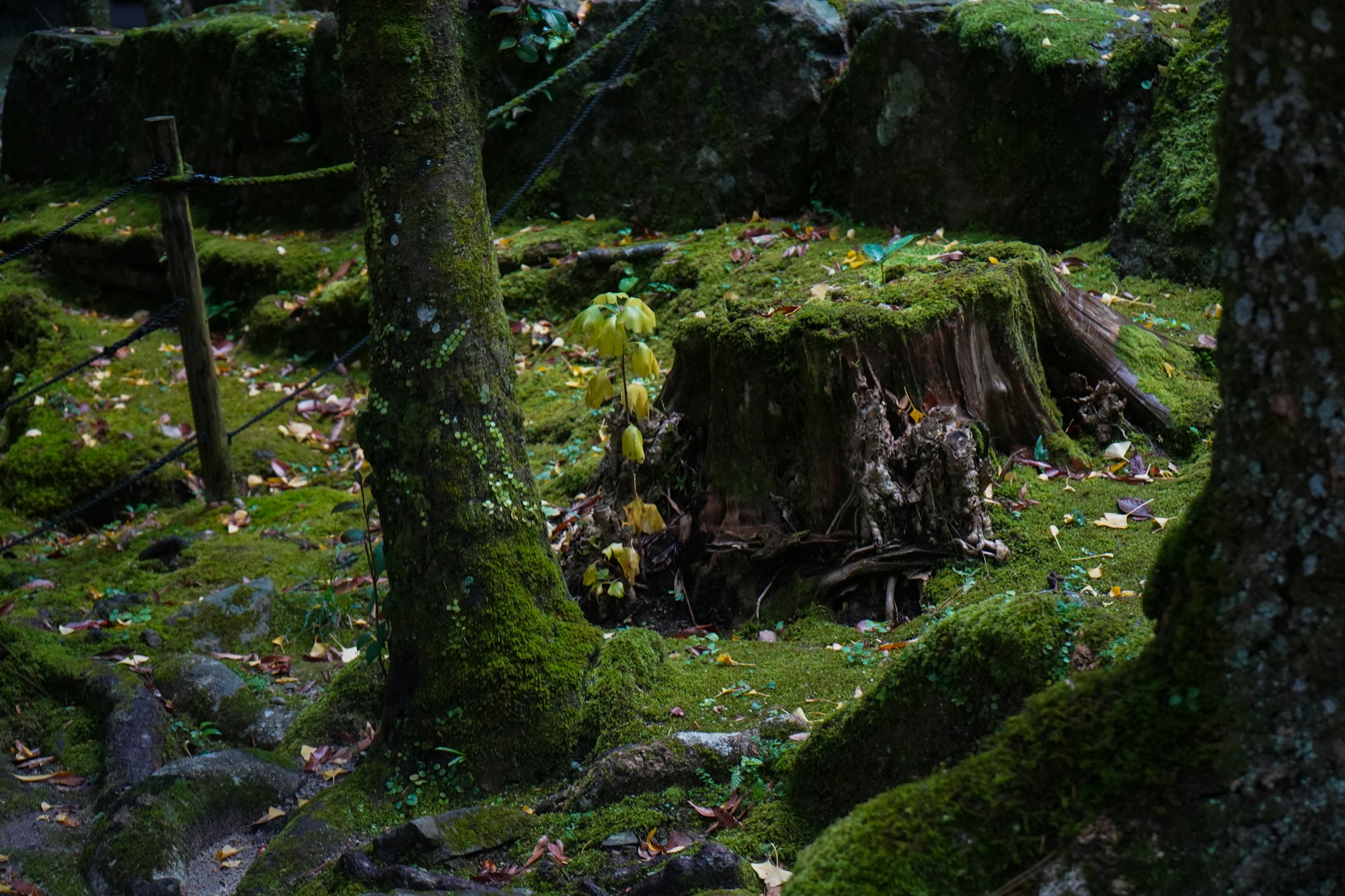
The forest where it all began: 728 hectares of century-old cypress
It is here, in the Kiso Valley, that the term shinrin-yoku was officially coined in 1982 by the Japanese Forestry Agency. A commemorative stone marks the spot in the heart of the Kiso cypress (hinoki) forest, where trees exceed 300 years of age. According to the Japan National Tourism Organization, the Akasawa forest spans 728 hectares and is recognized as one of Japan’s « 100 Most Fragrant Sites » by the Ministry of the Environment — reflecting its exceptionally high concentration of phytoncides.
The experience is unique on two levels: you can walk silently beneath the trees practicing forest bathing, then board the heritage forest railway, a remnant of the old timber transport system, for a 25-minute journey under the canopy. Protected since the Edo Period (1603–1867), this forest once supplied the sacred timber for the Grand Ise Shrine.
Highlights
- The only place in the world where the birth of shinrin-yoku is officially commemorated
- 25-minute heritage forest railway (a unique experience)
- 300-year-old Kiso cypress trees with record phytoncide concentration
- Trails closed in winter: ideal from June to October
2. Yakushima Island (Japan) — Princess Mononoke’s ancient forest
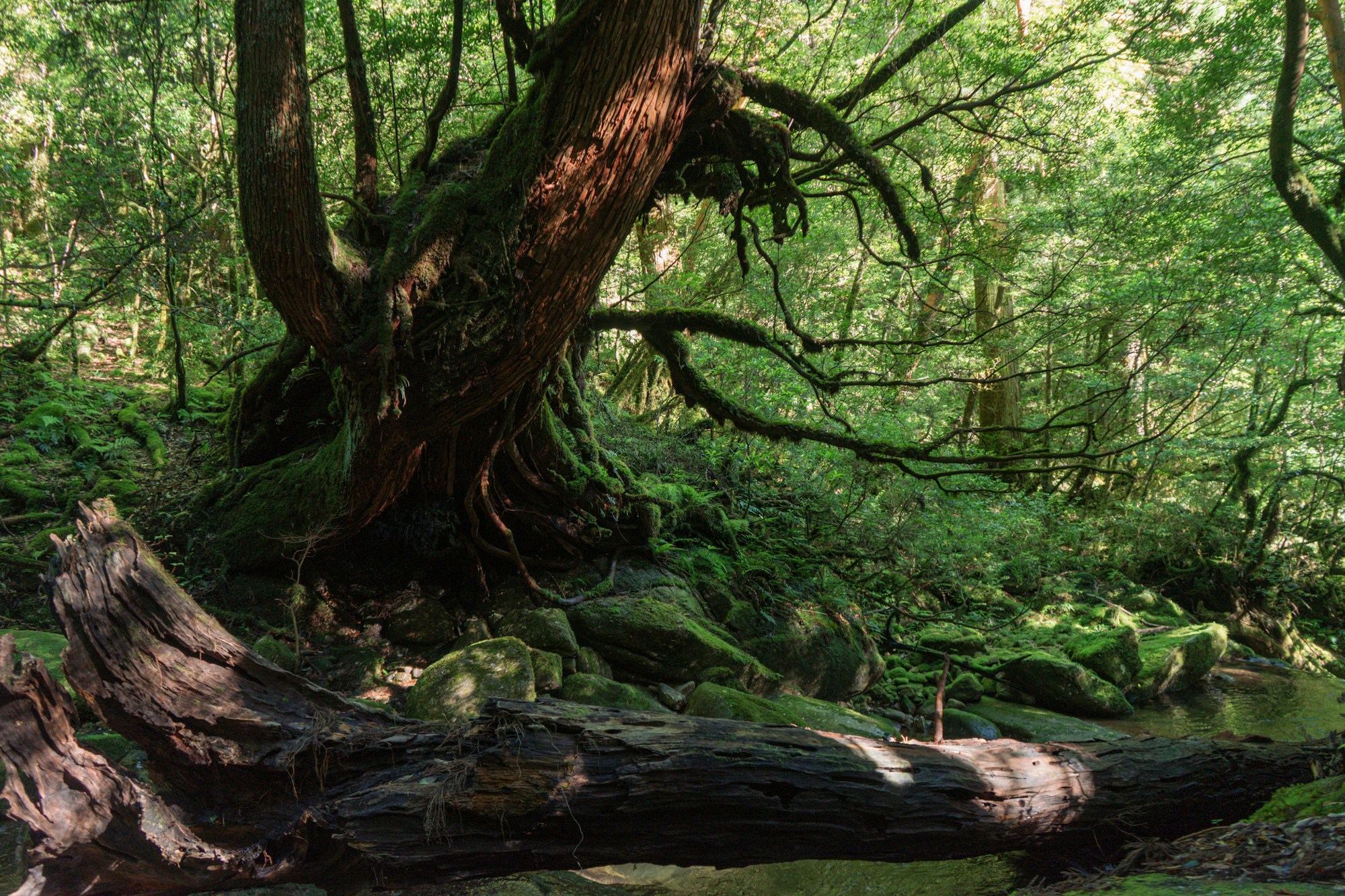
The island where trees are 7,000 years old and animated films are born
Yakushima is a subtropical island off the coast of Kyushu, with one fifth of its territory designated as a UNESCO World Heritage Site. Its forests harbor cedars over 1,000 years old — the yakusugi — the oldest of which, the Jômon Sugi, is estimated to be over 7,000 years old. According to Japan Guide, it is one of the world’s best-preserved primeval forest ecosystems.
The Shiratani Unsuikyo ravine — with its carpet of green moss, lichen-covered boulders and crystal-clear streams — was the direct inspiration for Hayao Miyazaki’s film Princess Mononoke. Walking here is literally entering an animated masterpiece. Combined with a soak in the geothermal hot spring of Hirauchi Kaichu Onsen (accessible only at low tide), the sensory experience becomes complete.
Highlights
- Jômon Sugi: Japan’s oldest cedar (~7,200 years)
- Shiratani Unsuikyo forest, inspiration for Princess Mononoke
- Rare combination: shinrin-yoku + seaside hot spring
- Wild Yakushima deer and monkeys roaming freely in the forest
3. The Black Forest / Schwarzwald (Germany) — The atmosphere of Grimm’s fairy tales
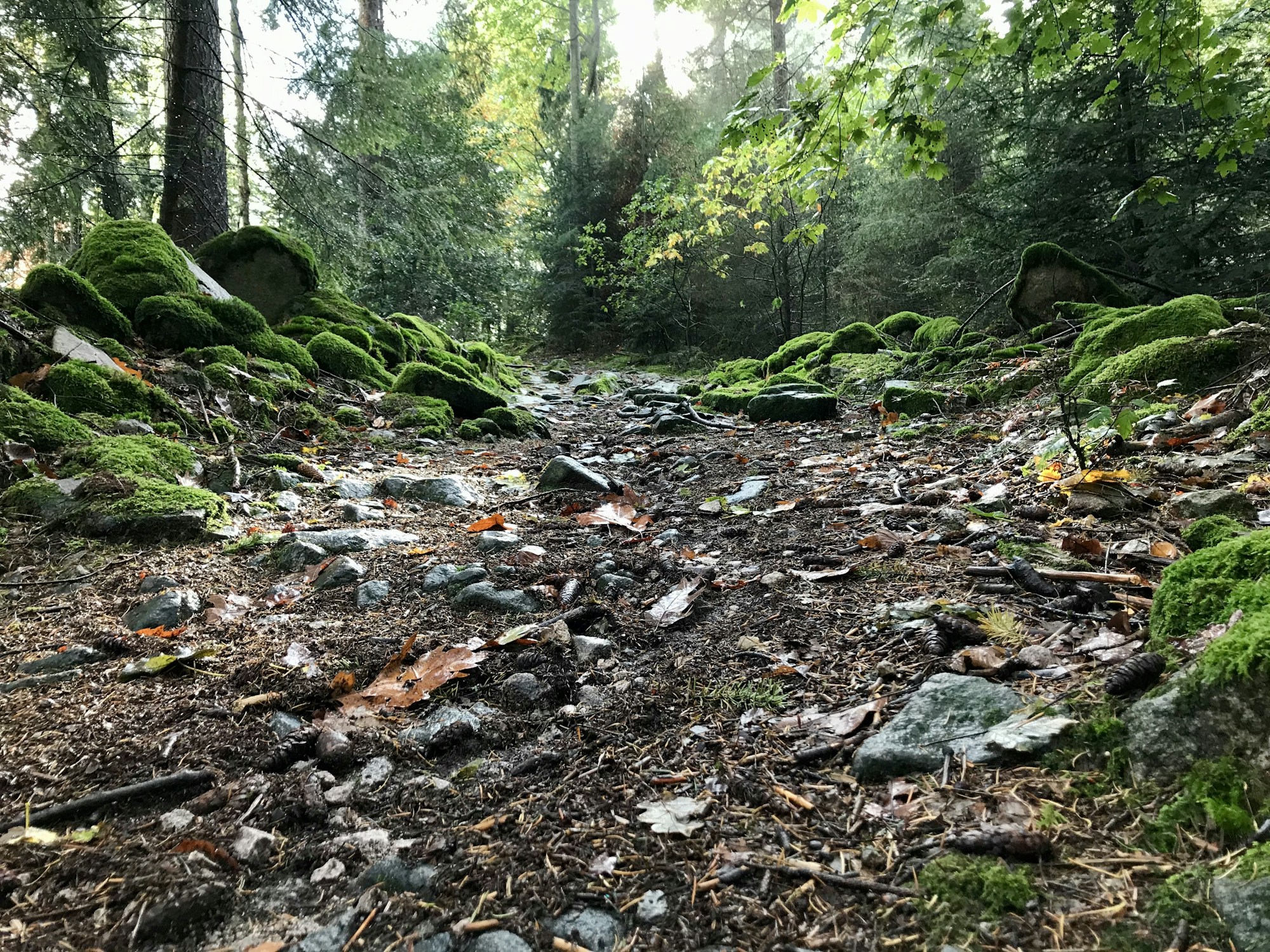
23,000 km of trails, thermal spas and a unique forest gastronomy
The Black Forest (Schwarzwald) stretches 160 km across southwest Germany in Baden-Württemberg. Its towering spruce and fir trees, streams winding through moss-covered gorges and hidden waterfalls make it the ideal shinrin-yoku destination in continental Europe. According to Treehousemap, it is one of Europe’s densest and most phytoncide-rich forests.
The distinctly German combination of Kur (thermal cure) + forest bathing is unique in the world: after hours in the forest, the thermal baths of Baden-Baden or Triberg extend the sensory experience. Local gastronomy — smoked Black Forest ham, Black Forest cake, forest honey — fits naturally into the immersive approach.
Highlights
- 23,000 km of marked trails (Europe’s largest network)
- Baden-Baden thermal baths: post-forest thermal cure (Kur tradition)
- Feldberg (1,493 m): ideal altitude for phytoncide concentration
- Grimm fairy-tale atmosphere, especially intense in autumn
4. The Vosges Mountains (France) — Shinrin-yoku, Alsatian style
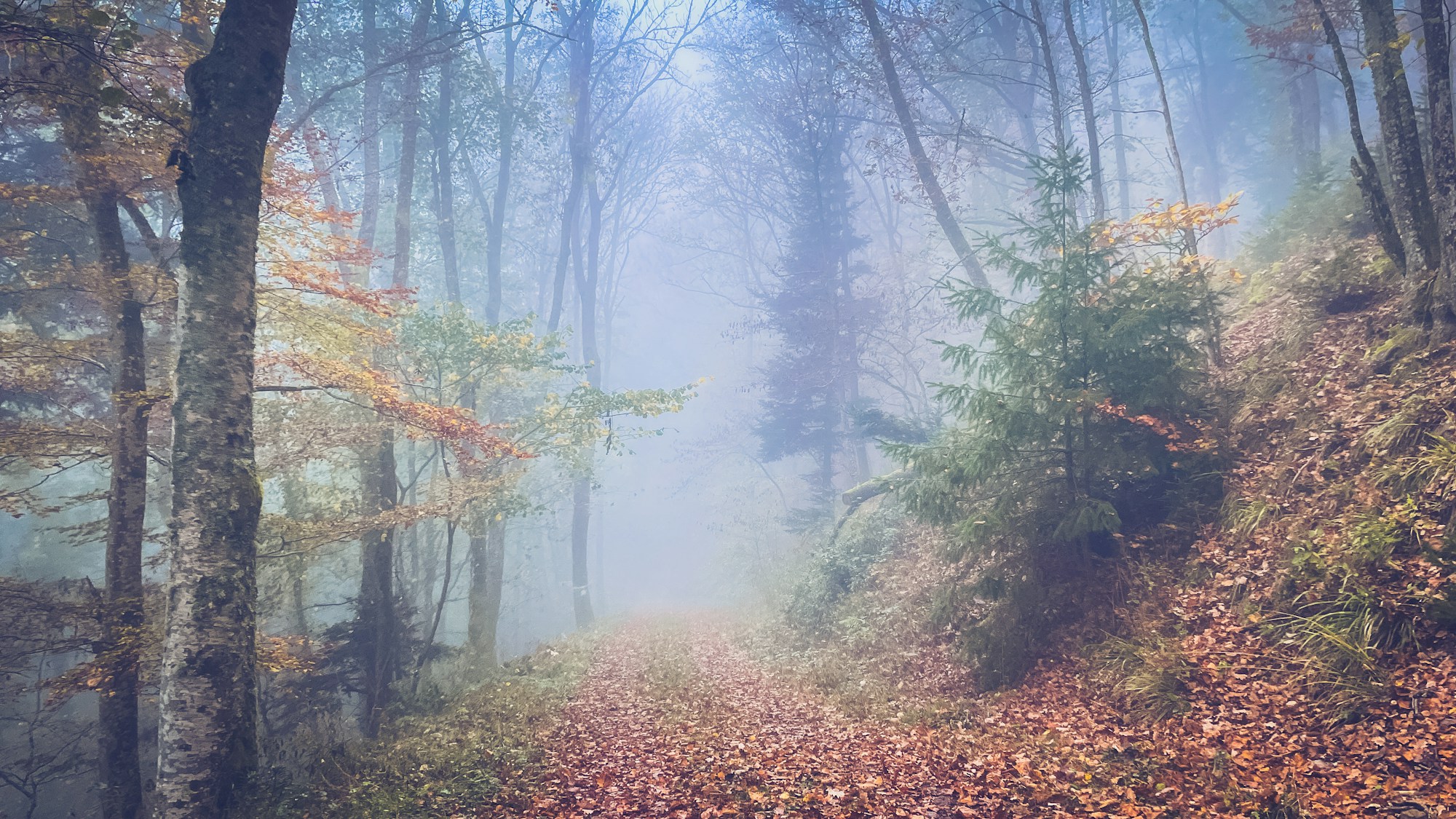
Full-throttle phytoncides, certified guides and Riesling on the side
The Vosges massif has one of the highest rainfall levels in metropolitan France — which maintains a dense, aromatic forest atmosphere year-round, producing a record concentration of phytoncides. Ancient beech-fir forests, high-altitude peat bogs and open ridges compose an ecosystem of exceptional richness. According to Bain de Forêt Vosges, state-certified guides offer 3-hour total immersion sessions.
The Vosges’ special feature is its dual sensory experience: a morning forest bath in the highlands (around Ribeauvillé or Barr), followed by an afternoon Riesling or Pinot Gris tasting in the Alsatian wine caves of the foothills. A unique Franco-Japanese alliance between forest therapy and wine tourism.
Highlights
- Guided 3-hour group sessions: from €35/person
- High rainfall = concentrated phytoncides year-round
- Unique combination: Vosges forest + Alsace Wine Route
- Autumn morning mists creating a mystical atmosphere
5. Finnish Lapland (Finland) — Everyone’s right in the boreal forest
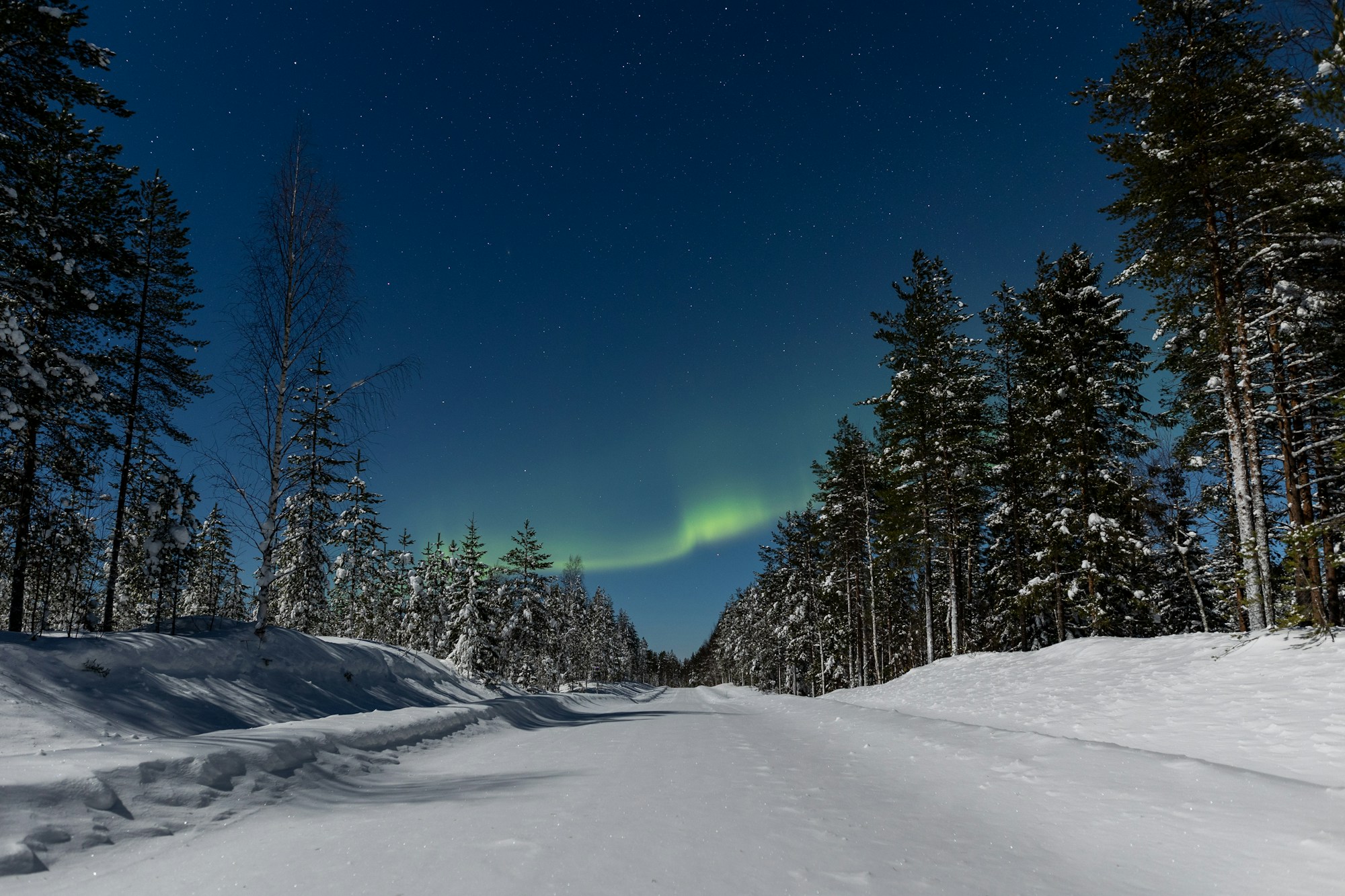
When the « everyman’s right » turns every Finn into a forest therapist
In Finland, forest bathing isn’t a trend — it’s an ancestral way of life. Thanks to the concept of everyman’s right (jokamiehenoikeus), any visitor can freely camp, walk and swim in any Finnish forest. According to Arctic Forest Products, Lapland offers two exceptional seasons: the midnight sun of summer (lush forests at 11pm) and the aurora winter (snow-covered forests in absolute silence).
In 2010, Professor Korpela created Finland’s « power trails »: self-guided marked walks that maximize the psychological and physiological benefits of nature. According to Dose of Nature, over 80% of participants report measurable benefits. These trails require no guide — a total democratization of shinrin-yoku. Finnish authorities officially recognize the practice as a stress management therapy, reimbursable by some employers.
Highlights
- Free access to all Finnish forests (everyman’s right)
- Midnight sun in summer: forest bathing at 11pm in unique golden light
- The kaamos experience (polar night) in winter: absolute silence and darkness
- Scientifically proven self-guided power trails
Three more remarkable forest bathing destinations
🇰🇷 South Korea — State-sponsored forest therapy (Jirisan National Park)
South Korea has invested $140 million in its network of 32 official therapeutic forests. The Korea Forest Welfare Institute manages so-called « SoopCheWon » centers at 7 national sites. Jirisan National Park offers sessions combining forest bathing, tea ceremony, sound healing and integrated medical consultations — a nature prescription approach unique in the world. Budget: €30–60/day.
🇺🇸 California Redwoods — The giant therapists (Stout Grove, Jedediah Smith)
California’s coastal redwoods, some exceeding 100 meters in height, offer a forest bathing experience of rare intensity. Avoid Muir Woods (too touristy). Prefer Stout Grove in Jedediah Smith State Park — ancient redwoods crossed by a clear river, nearly deserted. Budget: $100–180/day.
🇳🇿 Whakarewarewa Forest, Rotorua (New Zealand)
A unique bicultural experience: forest bathing among California redwoods transplanted a century ago, integrating traditional Maori practices of connection with nature. Rotorua combines sacred geothermal areas and ancient forests. According to the NZ Herald, Secret Spot Hot Tubs won the World Luxury Forest Bathing Spa Award two consecutive years. Budget: €70–150/day.
Practical information for your forest stay
Stay connected in Japanese, Finnish or German forests from the moment you land. Instant activation from your phone.
From €4.50Full coverage for your forest hikes and wilderness excursions. Medical repatriation included. Save 10% with our link.
From $1.5/dayFAQ — Your questions about shinrin-yoku
How long does an effective forest bathing session last?
A significant cortisol drop is observable after just 40 minutes of forest walking. A full shinrin-yoku session typically lasts 2 to 4 hours at a slow pace (1–2 km/h maximum). Even 20 minutes daily in an urban green space produces measurable effects. For lasting immune benefits (NK cell activity persisting 30 days), a 2–3 day forest immersion is recommended.
What’s the difference between hiking and forest bathing?
The difference is fundamental. In hiking, the destination is « out there » — you move toward a goal. In shinrin-yoku, the destination is « here »: you stop, observe, breathe deeply, touch tree bark, close your eyes to listen. The pace is slow (often 1 km per hour), and progress is secondary. As the Association of Nature and Forest Therapy (ANFT) explains: « The forest is the therapist — the guide simply opens the door. »
Is shinrin-yoku scientifically proven?
Yes, robustly so. A systematic review published in 2025 in Frontiers in Public Health confirms measurable benefits: cortisol reduction, increased NK immune cell activity, lower blood pressure, reduced depressive and anxiety symptoms, improved sleep. Phytoncides — volatile organic terpene compounds emitted by trees (mainly conifers) — are identified as the primary biological mechanism. Studies by Professor Qing Li (Tokyo Medical University) show that immune effects persist up to 30 days after 3 days in the forest.
Do you need a certified guide to practice shinrin-yoku?
No. You can practice alone, at your own pace, in any forest. The key is to slow down, switch off your phone and deliberately engage all your senses. A certified guide is useful for deepening the experience through specific exercises (sensory meditations, forest tea ceremonies, mindfulness practices) and for learning about the particular properties of local flora. In Japan, the INFFT certifies forest therapy guides at Akasawa and several other sites nationwide.
Which is the best forest in Europe for shinrin-yoku?
The Vosges Mountains in France are considered a reference, thanks to their high rainfall maintaining optimal phytoncide concentration year-round and the presence of many state-certified guides. Germany’s Black Forest offers 23,000 km of trails and the unique Kur (thermal cure) tradition. For a wilderness experience, Finland’s Lapland stands apart: free access to all forests, midnight sun in summer and the incomparable silence of polar night in winter. For Asia, Japan’s Akasawa remains the historical birthplace and the most phytoncide-rich destination on Earth.
Can forest bathing be medically prescribed?
In Japan, shinrin-yoku has been prescribable since the early 2000s. In Canada, the PaRx program encourages doctors to prescribe time in nature (standardized recommendation: at least 2 hours per week, minimum 20 minutes per session). In South Korea, stays in state therapeutic forests are partially covered by national health insurance. In Germany and France, complementary medicine increasingly integrates forest therapy into burnout and anxiety disorder treatment protocols.
What is the best season for shinrin-yoku in Japan?
Each season has its character in Japan. Spring (March–May) is magical with cherry blossoms in the forests. Summer (June–early August) offers maximum greenery and the highest phytoncide concentration, though humidity can be intense. Autumn (mid-September–November) is the ideal season: mild temperatures, extraordinary chromatic richness (koyo) and a meditative atmosphere. For Yakushima specifically, September–November is recommended for pleasant weather and fewer rainfalls. Avoid Japanese public holidays (Golden Week in early May, Obon in mid-August) for serene forests.
Can you practice shinrin-yoku in a city?
Yes, to a lesser extent. In Tokyo, Arisugawa-no-miya Memorial Park (Hiroo) features densely wooded sections with waterfalls, just 5 minutes from the subway. In London, Richmond Park or Hampstead Heath allow meaningful practice. In New York, the Ramble in Central Park offers a forest-like environment. The effects are real but less intense than in deep forests: phytoncide concentrations are lower and disturbances (noise, pollution) reduce parasympathetic benefits. For maximum effect, move away from urban areas into a dense conifer forest.
What are the best forest bathing destinations in the world?
The best forest bathing destinations are Akasawa Forest in Nagano, where shinrin-yoku was officially coined in 1982, Yakushima Island in Japan, the Black Forest in Germany, the Vosges in France and Finnish Lapland. For a first session, pick the one closest to you: a 2 to 4 hour slow walk is enough to feel the effect, and Japan is worth the trip from June to October.
Sources
- PubMed / Frontiers in Public Health (2025) — Forest bathing, immunity and stress hormones: systematic review
- Japan National Tourism Organization (JNTO) — Akasawa Natural Recreation Forest
- Japan Guide — Yakushima Island guide
- Arctic Forest Products (2025) — Forest bathing in Finland
- Always Packed (2025) — Best global forest bathing destinations
- Treehousemap — Best forests for shinrin-yoku
- Bain de Forêt Vosges — Guided sessions in the Vosges massif
- Dose of Nature — Forest therapy around the world
- Korea Forest Welfare Institute — SoopCheWon facilities
- Visit California — Forest bathing introduction
- NZ Herald — Rotorua, top wellness destination
- National Geographic — Forest therapy trails worldwide
- Nid des Vosges — Guided forest bathing in the Vosges
Ready to plan your forest immersion?
Pixidia helps you organize your shinrin-yoku stay from A to Z — personalized itineraries, forest accommodations and insider tips.
Explore forest itineraries