
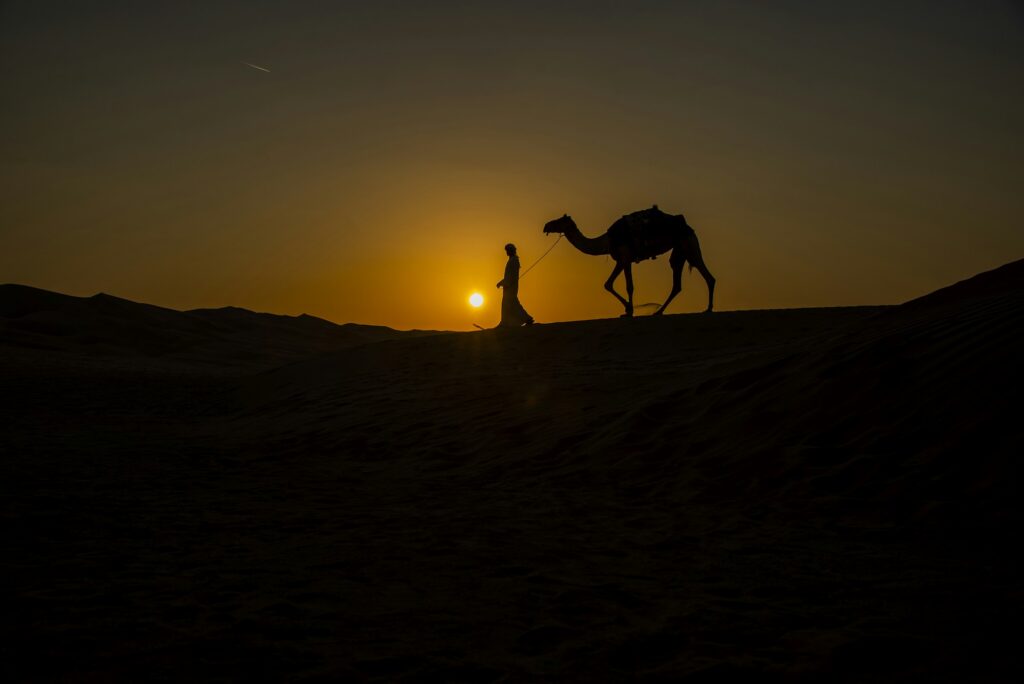
They don’t post any announcement. They don’t share a farewell story on Instagram. They simply close — a family agency in Salalah that won’t have any clients this summer, an independent guide in Muharraq whose phone has been silent for three months, an Omani operator who hands back his license and returns to work in the public sector. Gulf tourism is breaking records in absolute numbers, yet behind the NEOM megaprojects and the Hilton chain hotels at 900 dirhams a night, another reality is being written in silence: small local operators are disappearing, and no one sees them go.
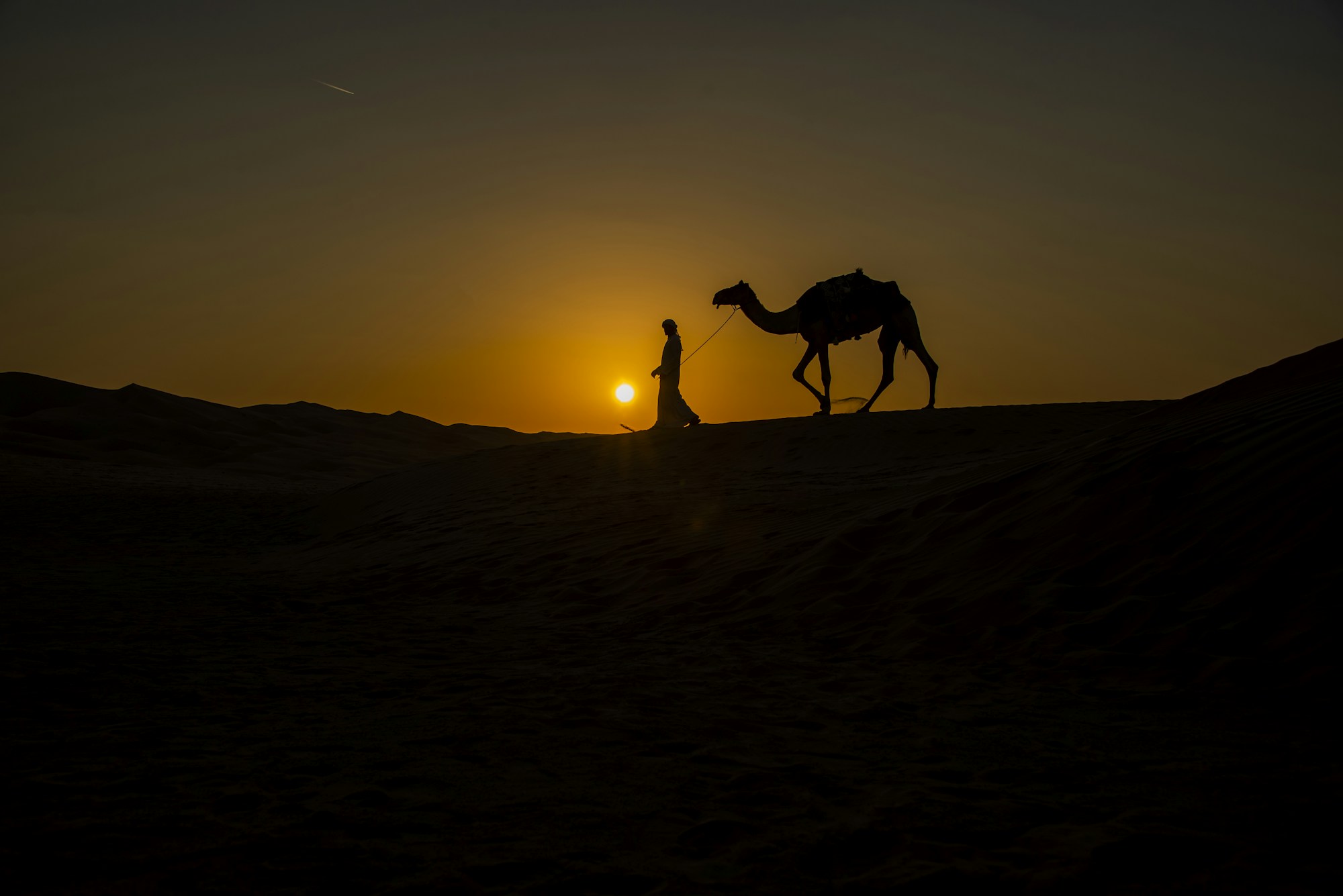
These independent agencies, these licensed guides who pass on decades of accumulated field knowledge, represent the only genuine access to the experiences travelers seek most. Bivouacking in the Rub al-Khali, sharing tea in a Qatari majlis, discovering the Nabataean tombs of Hegra with a Rawi born in the village — experiences that are impossible to book on Booking.com. A look at those no one sees closing, and the destinations they take with them.
Why are they disappearing quietly?
A structurally fragile business model
The root cause is well known within the industry, even if it is rarely stated publicly: major digital platforms have captured the customer relationship. According to a 2025 MDPI study on sustainable tourism, OTAs such as Viator, GetYourGuide, and Airbnb Experiences dictate pricing trends, control consumer access, and influence supplier visibility, leaving small tour operators with minimal bargaining power.
The commission charged — between 20% and 30% of the tour price — often represents the entire margin of an independent guide whose fixed costs (license, insurance, vehicle) cannot be compressed. When a last-minute cancellation comes in, it can represent half a month’s income.
- 20–30% commission charged by OTAs on each booking
- $600M/day in tourism losses in 2026 due to geopolitical tensions in the Gulf
- The Middle East recorded the strongest relative growth in international arrivals worldwide in 2024
On top of this structural economic pressure, there are three aggravating factors specific to the Gulf:
- Repeated geopolitical shocks: Each regional crisis (COVID-19, then the 2026 tensions) hits actors without cash reserves first.
- License regulations: In Oman, tour guides must be fully licensed by the Ministry of Tourism — a requirement that entails unavoidable annual costs. Some guides opt not to renew rather than go into debt.
- Accelerated mass tourism: Saudi Arabia’s Vision 2030 targets (39 million visitors) and the UAE’s (40 million) are driving massive investment in institutional operators, mechanically crushing artisanal structures.
1. Oman, Salalah: Beautiful Salalah Tours on borrowed time
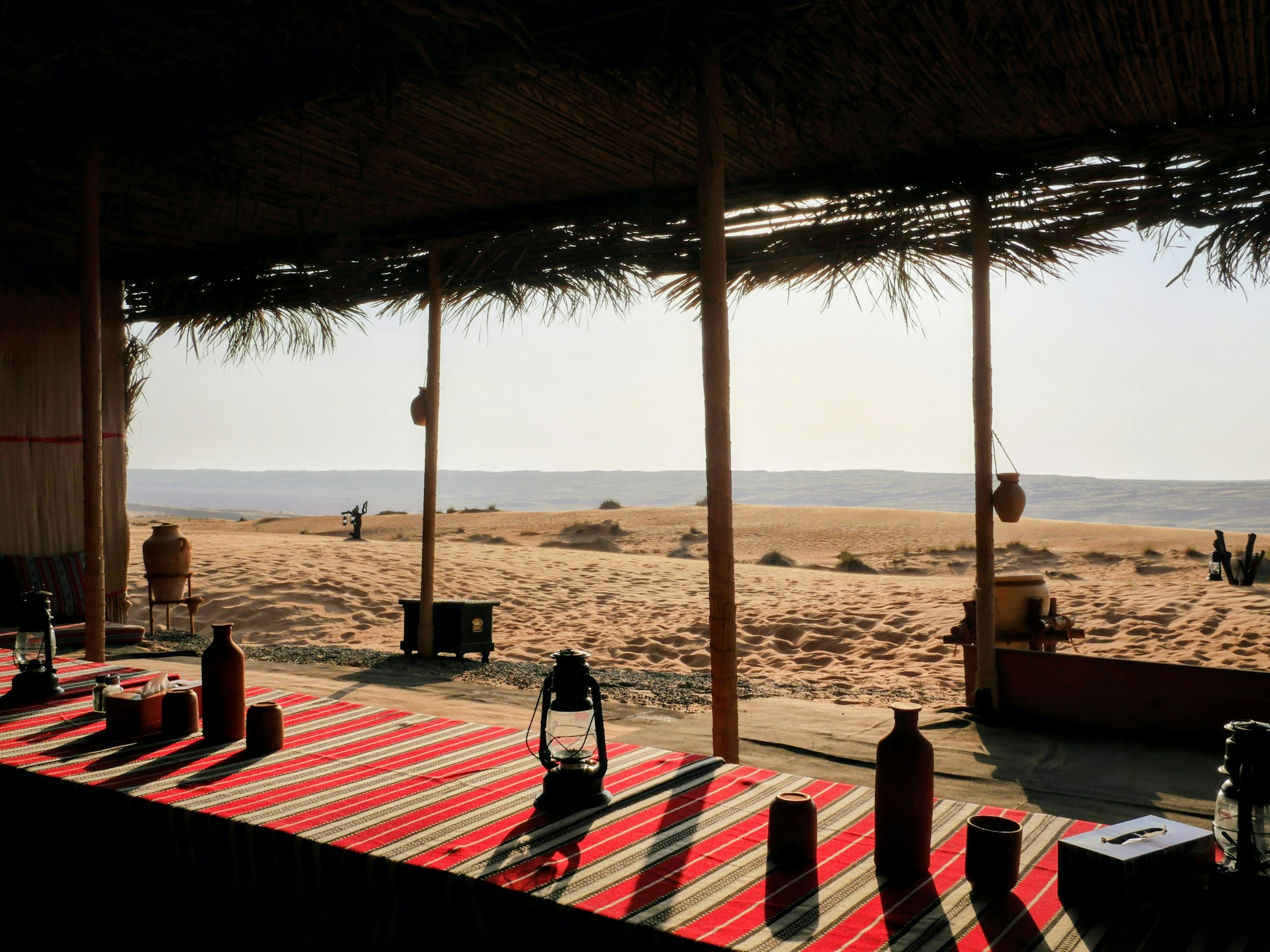
Beautiful Salalah Tours — Dhofar Governorate, Oman
Salalah is the Gulf’s tourism anomaly: during the summer monsoon (khareef, from June to September), when the rest of the region bakes at over 45°C, the low clouds of Indian Ocean origin transform the Dhofar plateaus into green meadows and ephemeral waterfalls. Thousands of Omanis and Gulf tourists converge on this inverted season — and it is family operators like Beautiful Salalah Tours who serve as their guides.
Founded by an Omani family wholly dedicated to local hospitality, Beautiful Salalah Tours offers tours to Wadi Darbat, the frankincense tree site at Shis, and the secluded beaches of Mughsail. What sets these trips apart, according to repeat travelers, is the personal dimension: each guide is mentioned by name in TripAdvisor reviews, praised for going beyond standard itineraries and sharing meals in their own home.
Yet since 2025, the pressure of group cancellations linked to regional tensions has made itself felt. According to local industry sources, several micro-agencies in Salalah suspended their operations between 2025 and 2026, unable to absorb two consecutive seasons of uncertainty.
- Best time to visit: June–Sept. (Khareef) and October–April
- Budget: $80–180/day (guide + transport)
- Not to be missed: Wadi Darbat, Shis frankincense, Ayn Khor waterfalls
- Getting there: Direct flights Paris–Salalah via Oman Air (stopover in Muscat)
2. Oman, Hajar Mountains: the vanishing highland guides
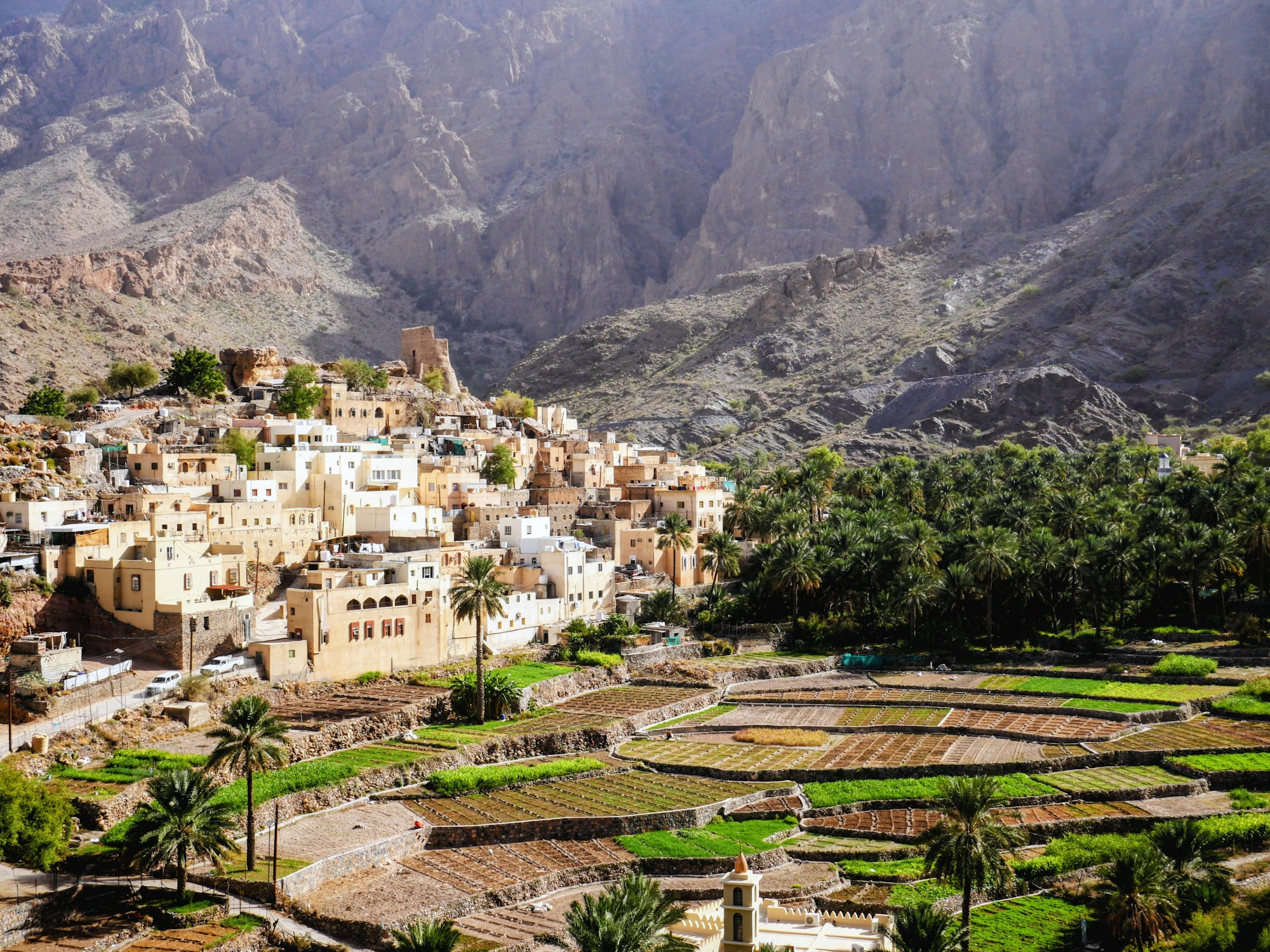
Guide Oman & Oman Self Drive Tours — Al Hajar Al Gharbi
The Hajar mountain range — reaching a maximum elevation of 3,074 m at Jebel Shams — is one of the wildest and least touristified regions in the Gulf. The stone villages of Jebel Akhdar, inaccessible without a local guide who knows the 4×4 tracks, have preserved Damask rose and mountain apple cultivation that no international tour operator carries in their catalogue.
Guides licensed by the Omani Ministry of Tourism (guideoman.org) are the only gateway into these communities. The difference between a tour guide and a simple driver is fundamental in Oman: only authorized guides can lead historical and cultural visits and facilitate meetings with mountain families. This official distinction is paradoxically what endangers their livelihoods — the cost of the license, combined with declining tourist flows in 2026, is pushing some of them not to renew their authorization.
- Best time to visit: October–April (pleasant temperatures at altitude)
- Budget: $150–280/day (private guide + 4×4 + homestay)
- Not to be missed: Rose water production at Al Jabal Al Akhdar, Jabreen Castle, Nizwa market
- Getting there: Flight to Muscat, then 2h30 drive inland
3. Bahrain, Muharraq: the guides of the Pearl Path
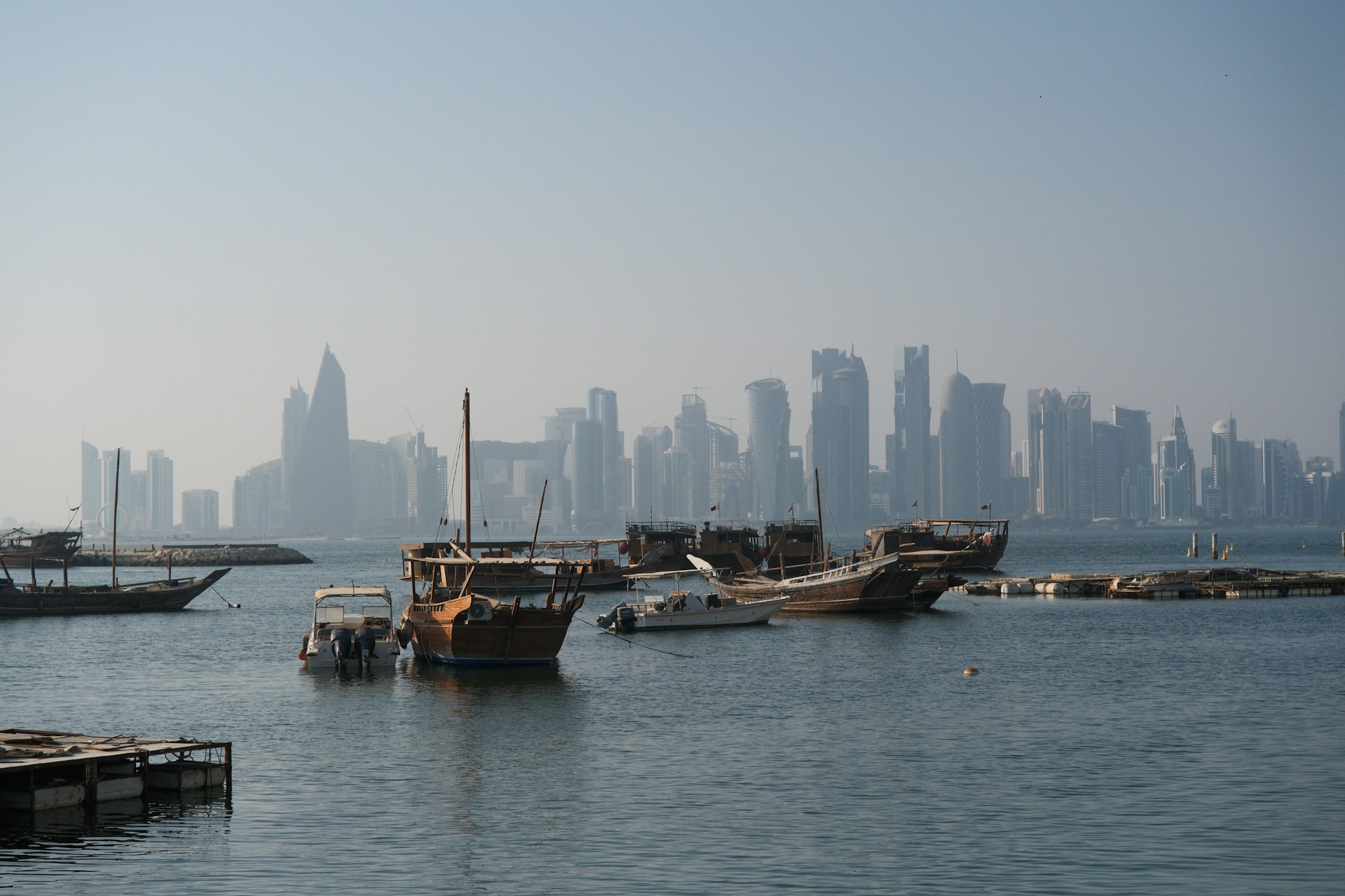
Independent cultural guides — Muharraq, Bahrain
On the island of Muharraq, a five-minute drive from Manama, stretches the Pearl Path, a UNESCO World Heritage Site. This network of merchant houses and buildings enriched by pearl diving — an activity that made Bahrain the world capital of mother-of-pearl until the 1930s — is traversed every day by a handful of independent guides born in these alleyways.
These guides are among the most vulnerable in the sector. They have no well-ranked website, no partnership with the Ritz-Carlton hotels in Manama, no presence on TripAdvisor. They exist through word of mouth: a mention in a travel journal, a recommendation from the Bahrain Tourism Authority (culture.gov.bh), a message passed from traveler to traveler.
One of the favorite stops these guides offer is the Bahraini Coffee House, where coffee brewed with rose water and cardamom is served according to an age-old tradition. These guides recount how coffee houses were once gathering places for merchants, musicians, and artists — a tradition that lives on today, but whose living memory fades with every guide who closes their business.
- Best time to visit: November–March
- Budget: Half-day guided tour: 20–40 BHD ($50–105)
- Not to be missed: Bu Maher Fort, the Coffee House, weavers’ workshops
- Getting there: Direct flight Paris–Bahrain via Gulf Air (~6h)
4. Saudi Arabia, AlUla: the Rawis, living voices of Hegra
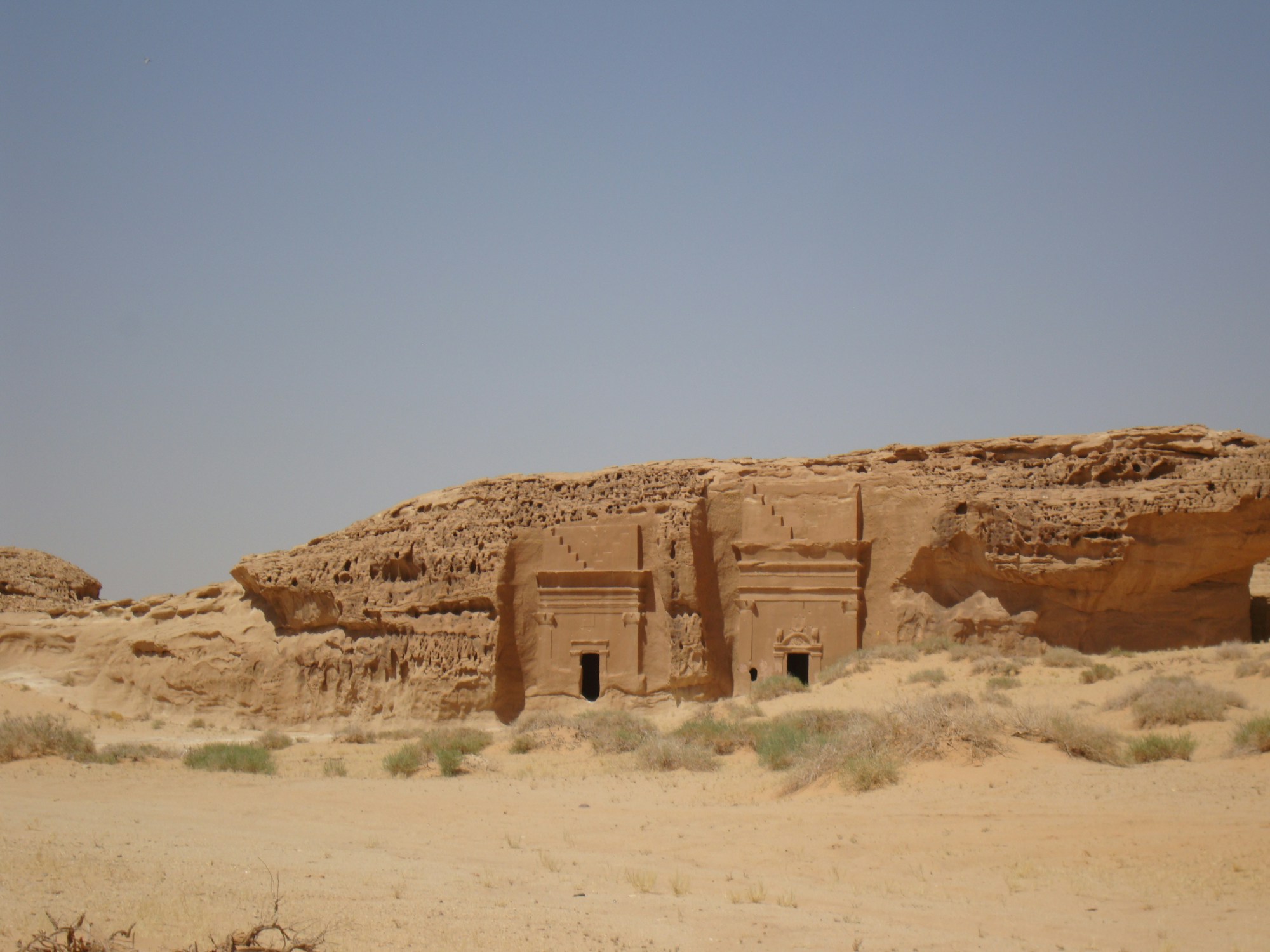
The Rawis of AlUla — Experience AlUla Platform
AlUla, in northwestern Saudi Arabia, is one of the most extraordinary tourist destinations on the planet: an open-air museum spanning 22,561 km² where 200,000 years of human history intertwine with 110 monumental Nabataean tombs carved into sandstone cliffs, and desert luxury camps. Hegra, Saudi Arabia’s first UNESCO World Heritage Site, is accessible through a category of guide unique in the world: the Rawis.
These official guide-storytellers were born in the villages of AlUla. Trained according to a « light-footprint tourism » model, they embody AlUla’s stated strategy: that each of the region’s 46,000 inhabitants becomes a keeper of living memory, not merely a hotel employee. The Royal Commission for AlUla (RCU) has established training scholarships to preserve ancient arts and traditional craftsmanship.
Yet the very success of the model contains its own contradiction: as AlUla is transformed into a global tourism brand — with Banyan Tree hotels and Michelin-starred restaurants — the risk is that the Rawis shift from being independent entrepreneurs to being employees of a government commission. Some independent guides who worked in AlUla before the RCU’s arrival have already left the region or joined official structures, losing their pricing autonomy in the process.
- Best time to visit: October–March (AlUla Moments Festival)
- Budget: Hegra + Dadan heritage visits: <200 SAR combined
- Not to be missed: Tomb of Lihyan ibn Kuza, ancient Dadan, the Oasis Trail
- Getting there: Flights from Riyadh or Jeddah to Prince Abdul Majeed AlUla Airport
5. Qatar, Al Zubarah: the Ghost Fort and its rare guides
Sand Castle Tourism — Northern Qatar
105 km northwest of Doha, the archaeological site of Al Zubarah stretches in near-total silence. A UNESCO World Heritage Site, this remnant of an ancient pearl-fishing and trading city (18th–19th centuries) is guarded by metre-thick walls and a handful of local guides who know every stone. Among them is the team at Sand Castle Tourism, which offers tours of northern Qatar that virtually no international agency markets.
The true local operators of Qatar offer the experience Al Zubarah deserves: immersion in a traditional Qatari Majlis, where tea flows freely and stories of generations are exchanged, followed by a falconry demonstration — the most deeply rooted tradition in Qatari identity. Purple Island, the Al Thakira mangroves by kayak, the Inland Sea of Khor Al Adaid: experiences that will disappear from what is accessible to the general public if these operators close.
Competition from institutional organizers in Doha, swelled by revenues from the Qatar 2022 World Cup, has considerably squeezed the margins of these small operations.
- Best time to visit: November–March
- Budget: Al Zubarah excursion + local guide: $40–80/person
- Not to be missed: Al Zubarah UNESCO site, Al Thakira mangrove kayaking, Khor Al Adaid (Inland Sea)
- Getting there: Flight Paris–Doha via Qatar Airways (~6h)
6. Kuwait, Failaka Island: the Gulf’s forgotten Greece
Local Tour Kuwait — Failaka Island & Kuwait City
A Kuwaiti traveler once summed up the situation with candid clarity: « I understand why tourists find Kuwait boring because Kuwait is designed for Kuwaitis. » It is precisely this absence of tourist staging that makes Failaka Island extraordinary. The entire island was evacuated at the start of the Gulf War and has not been durably inhabited since — leaving behind abandoned schools, houses, and banks, a graveyard of Saddam Hussein’s rusting army tanks in the desert, and the ruins of an ancient Greek temple from Alexander the Great’s era.
The local operators of Local Tour Kuwait are the only serious gateway to this extraordinary heritage. Their stated mission is to « dive into the rich tapestry of the country’s cultural heritage and historical sites » through exclusive, personalized visits. But they operate in an economy without mass tourism, without advertising revenues, and in a country that does not particularly seek to develop a foreign tourism industry — which is simultaneously their charm and their vulnerability.
- Best time to visit: November–March
- Budget: Ferry + private Failaka guide: $65–165/half-day
- Not to be missed: Greek temple ruins, tank graveyard, Sharq fish market
- Getting there: Flight Paris–Kuwait City via Kuwait Airways (~5h30)
7. UAE, Northern Emirates: the Anti-Dubai facing absorption
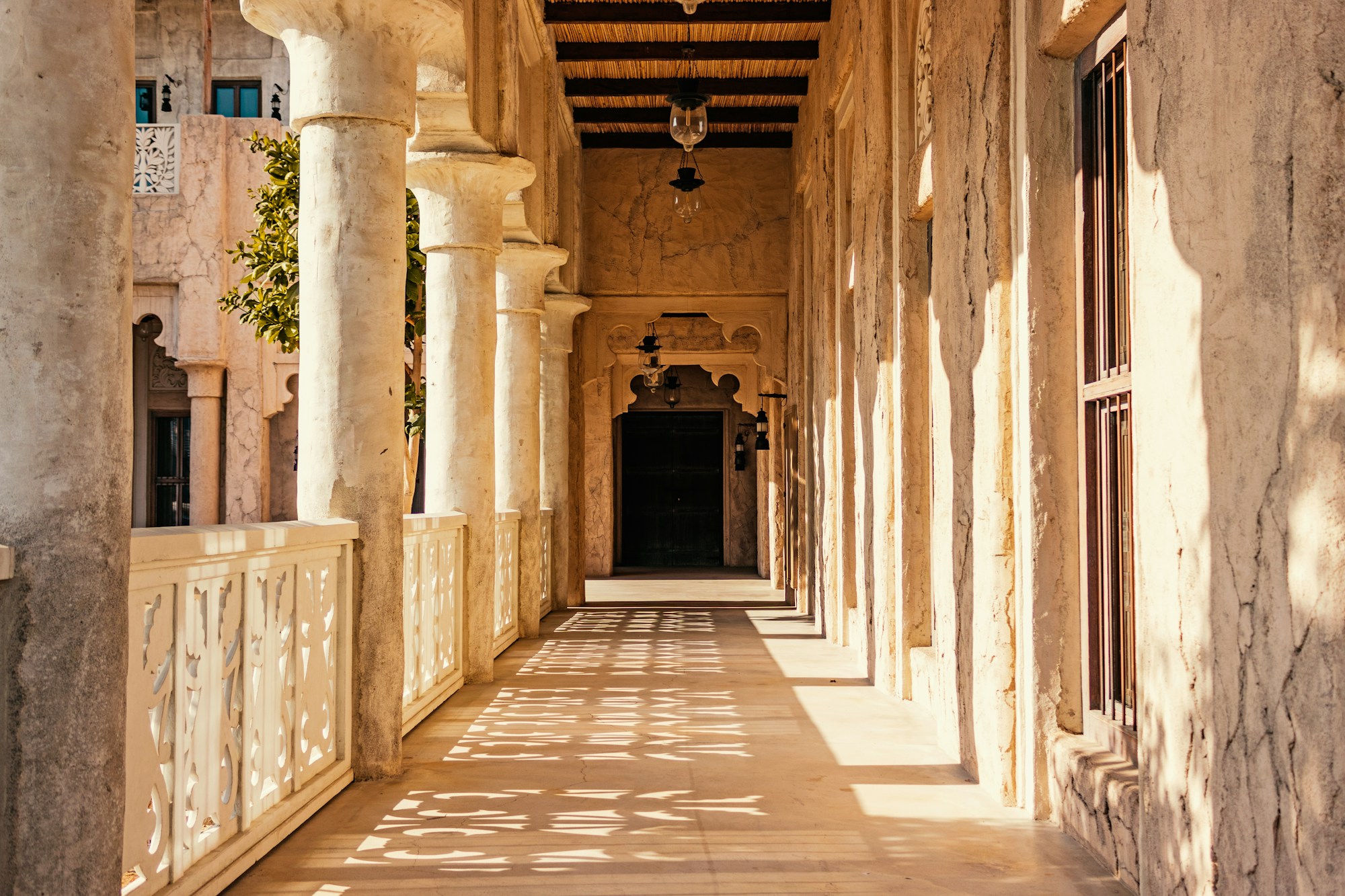
Culture Hub Travel, Eman Al (GoWithGuide) — Ras Al Khaimah, Fujairah, Hatta
While Dubai dazzles with its skyscrapers and attractions costing 500 dirhams a ticket, the Northern Emirates offer a quiet, deeply authentic slice of the UAE. Ras Al Khaimah, Fujairah, Sharjah, Ajman, and Umm Al Quwain are rich in history, culture, and natural beauty — but they are also the territories where independent guides are most at risk, operating in the shadow of Dubai’s global reputation.
Eman Al, an Emirati local guide working through GoWithGuide, perfectly illustrates this profile: with a degree in tourism and cultural communications, she began guiding « as a passion that lets you feel the Emirati difference through local guidance, honesty, and a clear understanding of the unique Emirati heritage. » In Abu Dhabi and Ras Al Khaimah alike, she opens doors that the major hotel circuits never touch.
According to field data, Ras Al Khaimah is on average 25.5% cheaper than Dubai — from accommodation to dining. Al-Bidyah Mosque (15th century), Fujairah Fort (the oldest in the UAE), Hatta’s natural rock pools, the corals of Snoopy Island off Fujairah: these are treasures that the independent guides of these emirates bring to life with a depth no Abu Dhabi agency can match.
- Best time to visit: November–April (avoid May–Sept., >40°C)
- Budget: Full-day guided tour in RAK: 200–400 AED/person
- Not to be missed: Fujairah Fort, Hatta Mountain Tour, Snoopy Island corals
- Getting there: Flight Paris–Dubai or Abu Dhabi, then 2h drive to RAK or Fujairah
FAQ — Frequently asked questions about local tourism in the Gulf
Is travel in the Gulf still safe in 2026?
The geopolitical situation in the Gulf is evolving rapidly in 2026. Following the escalation of tensions related to the US–Israel–Iran conflict, travel insurance coverage has been suspended or severely restricted in several countries in the region (UAE, Qatar, Saudi Arabia, Bahrain, Kuwait, Oman). Before any trip, you must consult the travel advisories from your country’s foreign affairs ministry and take out insurance that specifically covers geopolitical risks. Oman remains broadly less affected by direct tensions, but travelers should stay alert to flight connection disruptions.
How do you tell a genuine local guide apart from an intermediary posing as one?
In Oman, the first indicator is the official license from the local Ministry of Tourism. There is a legal distinction between a tour guide (authorized to lead historical and cultural visits) and a driver (who simply transports you). Always ask for a license number before booking. In other Gulf countries, check whether the business is listed in the national tourism authority’s register. Be wary of TripAdvisor profiles created recently with few reviews.
Can major platforms like Viator or GetYourGuide offer the same experiences as local operators?
No, not in most cases. These platforms dictate pricing trends, control consumer access, and influence supplier visibility, leaving small operators with minimal bargaining power. The most authentic experiences — bivouacking in the Rub al-Khali, meeting frankincense harvesters in Salalah, lunching in the local cafés of Muharraq — simply do not appear on these platforms. They exist exclusively through direct booking with local operators.
Is Oman the best destination for authentic tourism in the Gulf?
Experienced travelers broadly agree that Oman is the Gulf country with the richest network of authentic small local operators. The Omani pace of life allows for unhurried exploration of sites such as Jabreen Castle, with time to appreciate the ornate ceilings. Omani guides facilitate genuine encounters: shared meals in local homes, learning rose water production in isolated mountain communities — experiences that rushed tourists never come across. However, Bahrain (for its pre-oil heritage) and Kuwait (for its non-touristified character) offer equally valuable alternatives.
Why are small Gulf operators closing at a higher rate than in other regions?
Several factors converge: (1) the growing dominance of OTAs (Viator, Airbnb Experiences) that take 20–30% in commission while dictating prices; (2) the accelerated mass-tourism push driven by Vision 2030 strategies that favor large institutional operators; (3) repeated geopolitical shocks (COVID-19 in 2020, regional tensions in 2026) that exhaust the cash reserves of small operations; (4) mandatory professional licensing costs in countries such as Oman; and (5) weak digital word-of-mouth, as small operators lack the resources to maintain a competitive online presence.
What are the Gulf countries’ tourism ambitions by 2030?
The figures are staggering. GCC countries aim to more than double their visitor numbers by 2030. Saudi Arabia is targeting 39 million annual visitors and the UAE 40 million. According to the Roland Berger GCC Tourism 2024 report, these ambitious targets are precisely what threatens small operators: the inevitable mass-tourism push standardizes travel experiences and progressively marginalizes artisanal structures that lack the capacity to absorb hundreds of clients per week.
Why is Kuwait so underdeveloped for tourism compared to its neighbors?
Kuwait does not particularly seek to develop an international tourism industry — a rarity in the region. Its economy is built on hydrocarbons and its local population, not on foreign tourism revenues. This absence of mass tourism is paradoxically what makes the local guides of Failaka Island or Al-Mubarakiya market so valuable: they share a Kuwait that even its own inhabitants barely know. Failaka Island, with its ruins of Alexander the Great’s Greek temple and its abandoned war tanks, is the symbol of this non-touristified heritage that only these guides can unlock.
What certification should you check to ensure a local operator is ethical and sustainable?
At the international level, the reference standard is the GSTC (Global Sustainable Tourism Council). GSTC principles represent the minimum requirements for protecting the world’s natural and cultural resources. In practice in the Gulf, check the national Ministry of Tourism license (mandatory in Oman, recommended in all GCC countries), TripAdvisor « Travelers’ Choice Award » reviews, and the transparency of direct contact by WhatsApp or email. An operator who refuses direct bookings and consistently redirects you to third-party platforms is a warning sign.
Sources
- Roland Berger — Tourism in the GCC Report 2024
- MDPI — The Role of Digital Tourism Platforms in Advancing Sustainable Development Goals (2025)
- Experience AlUla — Official Hegra Tour
- Skift — Inside AlUla’s Strategy for Sustainable Growth (2024)
- Beautiful Salalah Tours — Dhofar, Oman
- Guide Oman — Association of Licensed Omani Guides
- Sand Castle Tourism — Beyond the Skyline, Qatar
- Local Tour Kuwait — Visit Kuwait with a Local
- GoWithGuide — Eman Al, Emirati local guide
- The Land of Wanderlust — Hidden Gems in Bahrain
- Travel and Tour World — Gulf Travel Insurance Meltdown (2026)
- Oxford Business Group — Gulf Tourism Partnerships 2025
- GSTC — Destination Stewardship Yearbook 2024-2025
- Entrepreneur Middle East — When Travel Stops: Leading Through a Crisis
- Roznew — Saudi Arabia Travel Guide 2026
Plan your Gulf trip with Pixidia
Explore our tailor-made itineraries for Oman, the United Arab Emirates, Qatar, and Saudi Arabia — designed to connect you with the region’s best local operators.
Explore Gulf itineraries
8. How to identify and support them in practice
5 signs of an authentic local operator
The main challenge for travelers is this: in a sector where international agencies masquerade as local operators, how do you recognize a genuine independent? Here are the five filters that make the difference:
How to support them in practice