

Your visa expires in 48 hours, your flight has been cancelled, and the airspace is closed. Since February 28, 2026, US-Israeli strikes on Iran and Iranian retaliatory strikes have triggered the worst aviation disruption the region has seen in decades. Over 20,000 flights cancelled, thousands of travellers stranded from Tel Aviv to Dubai — and one urgent question: what do you do when your visa expires and you can’t leave?
This practical guide, updated in March 2026, details the exact steps to take in each Middle Eastern country: automatic extensions, police station procedures, open land corridors, and consular emergency numbers. Keep this guide close — it could save you from a fine, deportation, or worse.
The March 2026 crisis: what triggered everything
The escalation began with US-Israeli strikes on Iranian nuclear sites on February 27, 2026. Iranian retaliation targeted the US Embassy in Baghdad and the city’s international airport. In response, eight countries closed all or part of their airspace within 24 hours. According to Fragomen Immigration, the disruption is unprecedented in its geographic scale.
Several governments, however, responded quickly by relaxing their immigration rules to protect stranded travellers. Israel introduced an automatic 3-month extension. The UAE, Qatar, and Saudi Arabia suspended overstay fines. This guide breaks down the situation country by country.
1. Israel: automatic 3-month extension — no action required
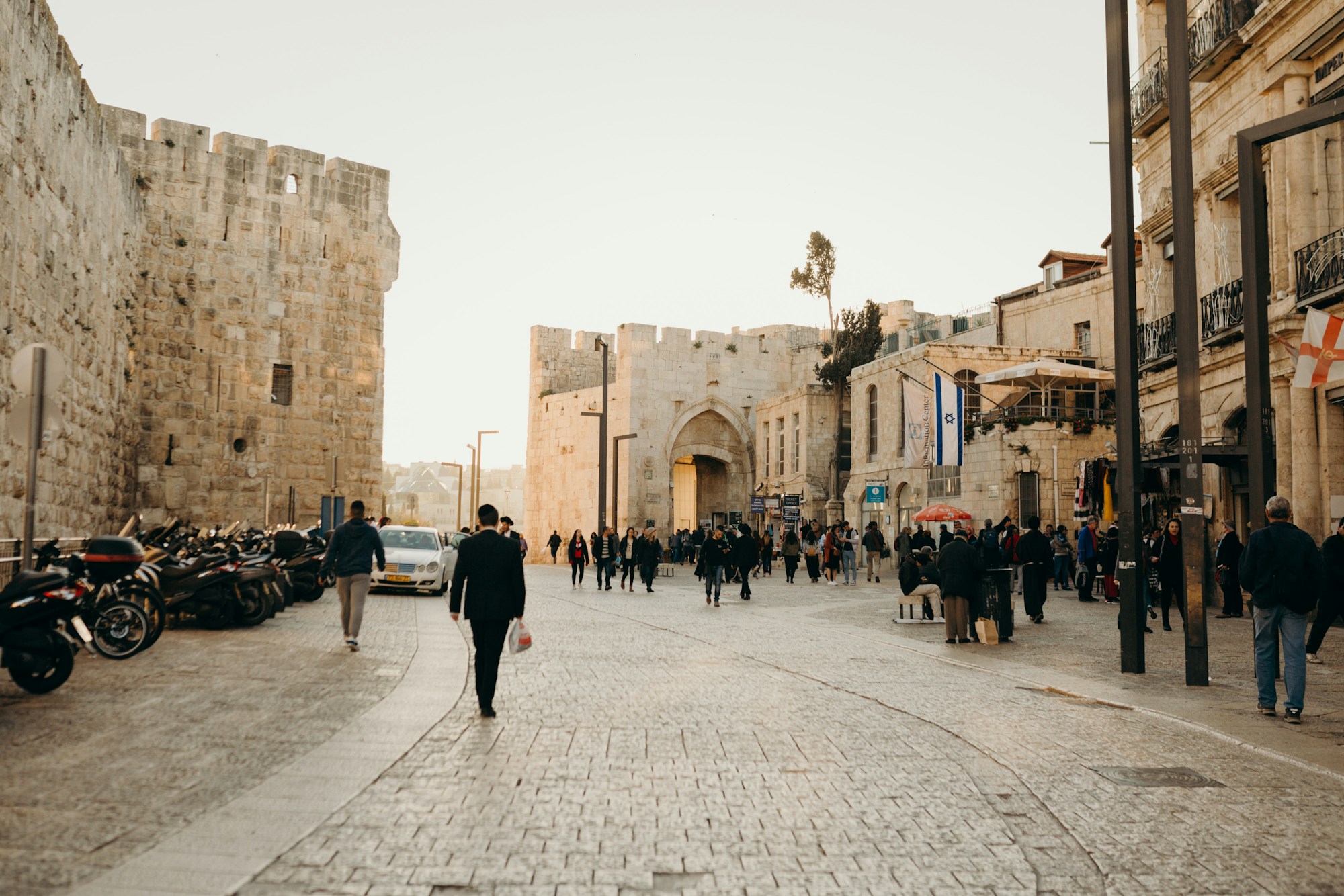
Automatic extension — eligible visa categories
- B-1, B-2, B-4, A-1 to A-5 and DCL visas expiring between February 22 and March 31, 2026: automatic 3-month extension
- No action needed — automatic update in the Population Authority’s systems
- Note: this extension does not extend work permits
- Land exits: Eilat → Aqaba (Jordan) or Taba (Egypt), open 24/7
According to Fragomen Immigration, the Israeli Population Authority announced that return visas for foreign workers expiring between February 28 and March 14, 2026 benefit from an automatic extension until March 21, 2026. The US Embassy is running a bus service to the Taba crossing for nationals wishing to leave by land.
Land exit budget: Allow $50–150 USD for the Eilat–Taba leg, then $30–80 USD to reach Sharm el-Sheikh airport (Egypt), from which international connections are available.
2. Jordan: police station visit before expiry + land corridors
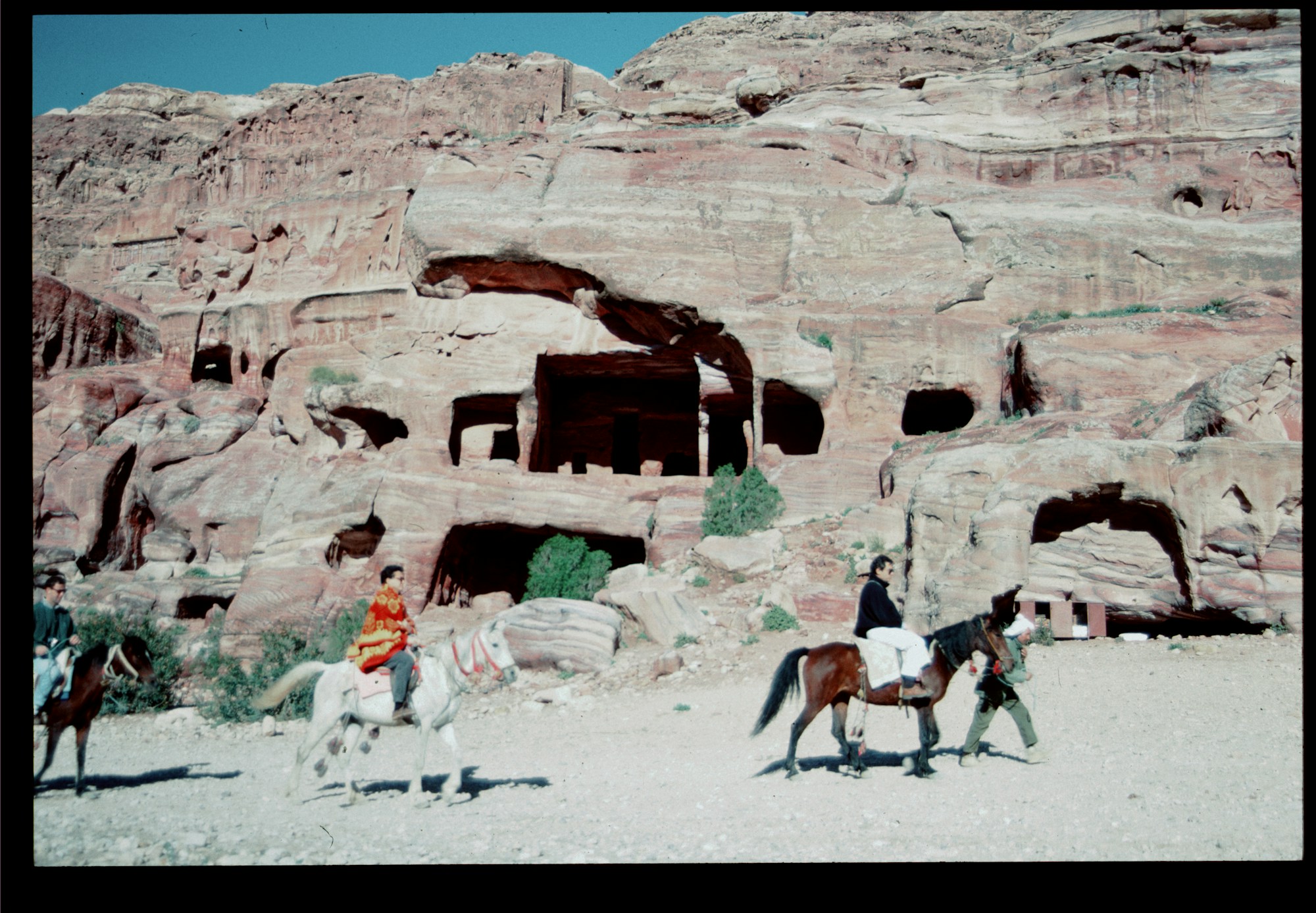
Visa extension at a Jordanian police station
- Visit any Jordanian police station before your visa expires
- Only one extension available: 60 additional days
- Overstay fine: 3 JOD/day (~$4 USD), payable on departure
- Amman Airport (AMM) remains intermittent but operational
Jordan doesn’t offer mass automatic extensions, but has a quiet and effective mechanism. According to the Canadian government, travellers who don’t renew their visa in time face a daily fine assessed on departure, and cannot leave the country until it’s paid. In cases of force majeure linked to the conflict, present your flight cancellation documents to request a fine waiver.
Amman as an exit hub: Even with pressure on Jordanian airspace, Queen Alia Airport remains one of the best gateways to Europe. From Aqaba, sea crossings to Sharm el-Sheikh (Egypt) are also available.
3. Egypt: a major exit hub — the Mogamma’a to extend your visa
The Mogamma’a: visa extension procedure
- Immigration office: Mogamma’a, Abbasseya district, Cairo — office hours only
- Extension available: +1 month on initial 1-month tourist visa
- Cairo Airport (CAI): operational, international connections available
- Taba crossing (Israel–Egypt border): open 24/7
Egypt is both a peripheral zone of the conflict and one of the main exit corridors. According to the French Foreign Ministry, visa extensions are processed at the Mogamma’a in Abbasseya upon presentation of a valid passport. Arrive early in the morning: queues can exceed 2 hours.
Critical pitfall to avoid: If you’ve lost your documents and need to file a police report before going to the Mogamma’a, the administrative hurdles can become insurmountable and lead to an involuntary overstay. In that case, keep all records of your administrative attempts without fail.
Estimated budget: $40–80 USD/day in Cairo. Flights from Cairo to major European hubs: $330–770 USD during the crisis period. Red Sea resorts (Hurghada, Dahab) offer fallback options at $33–66 USD/night.
4. Turkey: strict 90-day limit — European exit gateway but stay alert
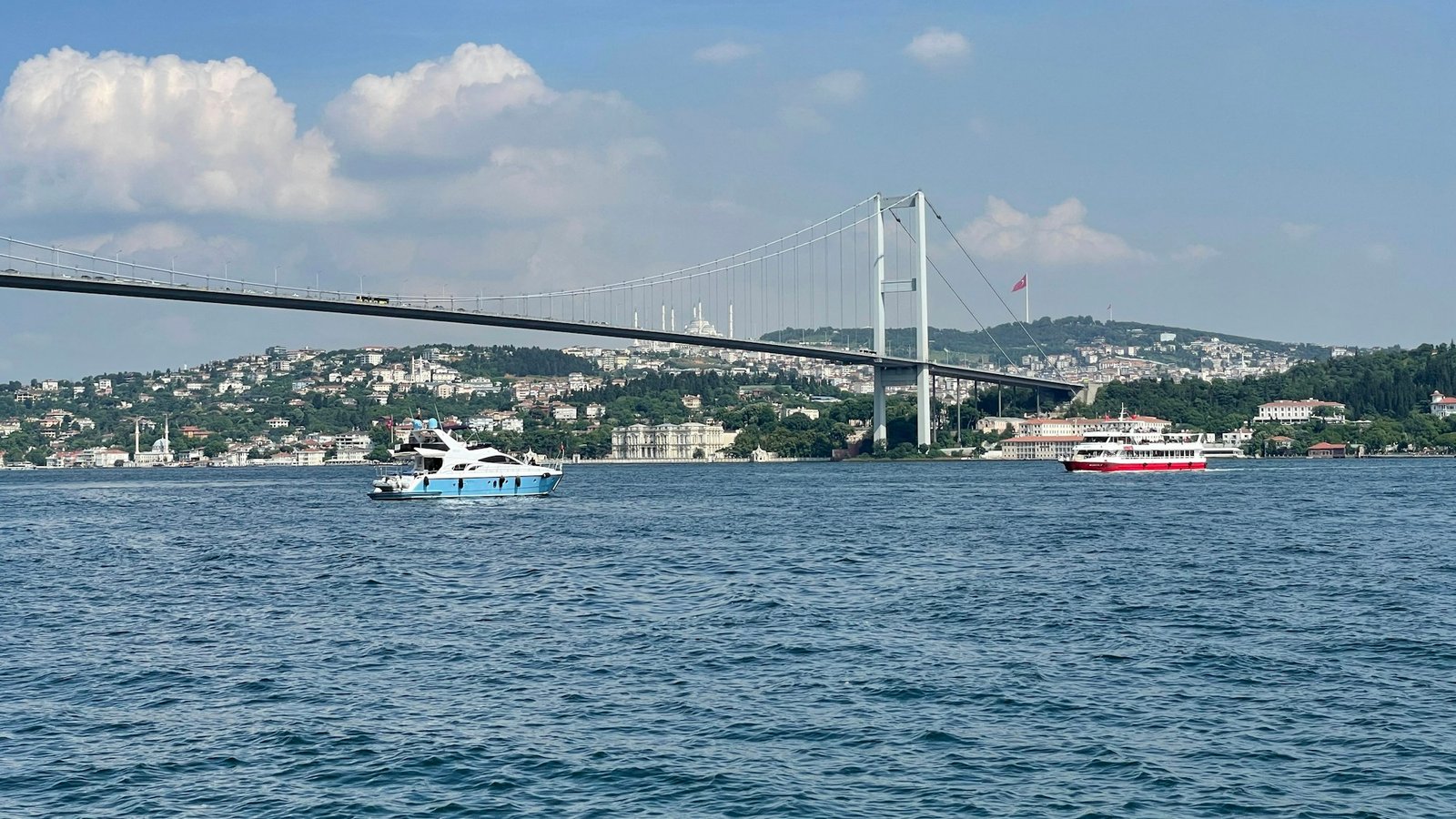
Turkey’s 90-day/180-day stay rules
- Maximum stay: 90 days in any 180-day period (e-Visa, visa exemption or consular visa)
- Overstay fine: ~€28 + risk of entry ban
- Legal extension: residence permit from the Göç İdaresi office
- Istanbul Airport: 300+ destinations worldwide via Turkish Airlines
Turkey is not directly affected by the conflict but is impacted by surrounding airspace closures. The French Foreign Ministry notes that since March 2, 2026, the Iran–Turkey land border is closed in the direction of Iran (except for Iranian nationals), but remains open for third-country nationals entering Turkey from Iran — subject to prior notification to your embassy.
For stays exceeding 90 days, file a residence permit application with the Göç İdaresi (regional migration office). In your appeal letter, specifically mention « yürütmenin durdurulması » (stay of execution) to legally prevent any deportation during the proceedings.
Estimated budget: €30–60/day in Istanbul or Ankara. Beware of fake online visa websites: the only official portal uses the .gov.tr domain.
5. Oman (Muscat): the Gulf’s unexpected evacuation hub
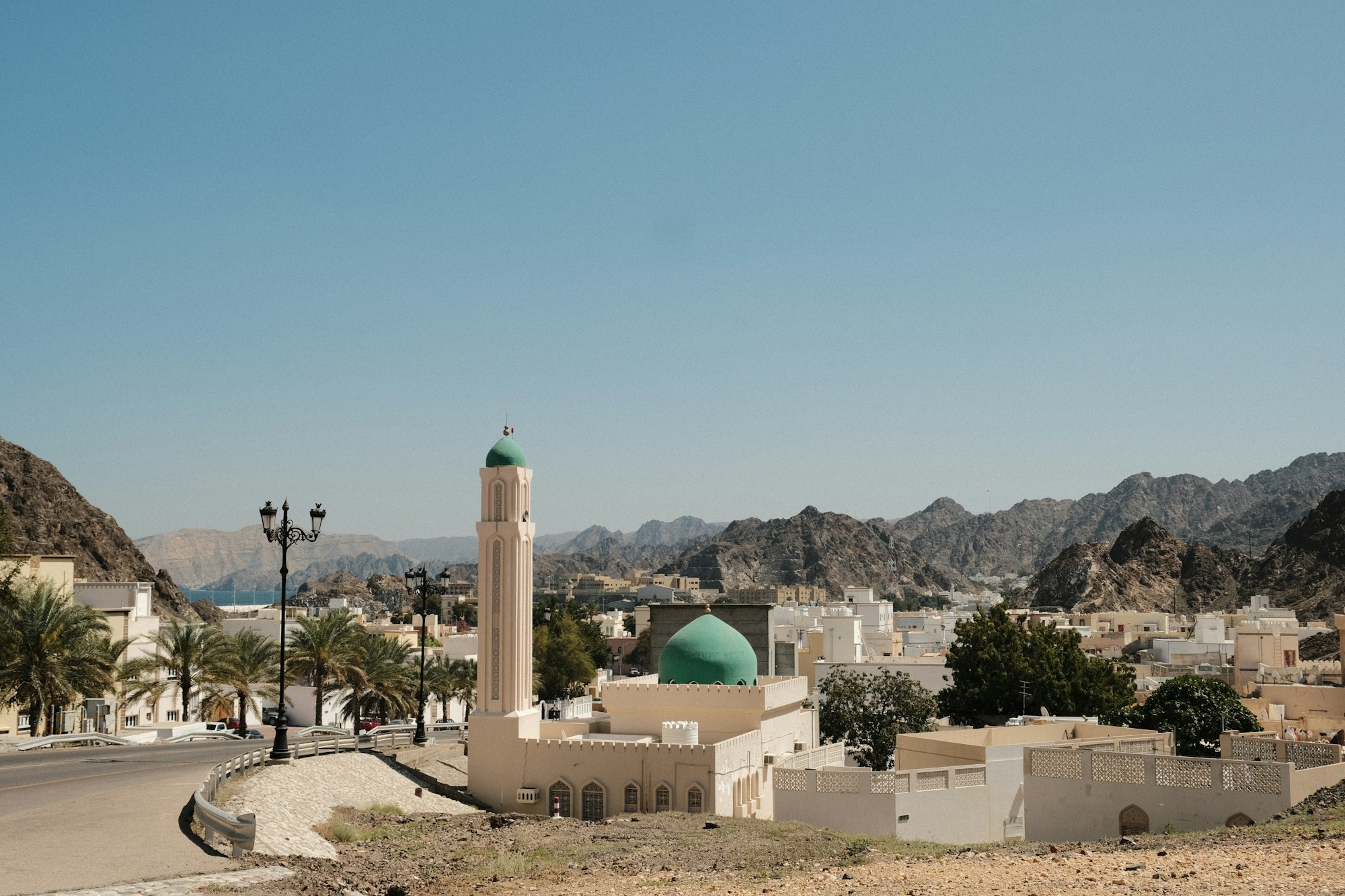
Muscat: operational airport, visa on arrival
- Muscat Airport: fully operational — the only major Gulf hub unaffected by the crisis
- Sharjah → Muscat buses operated by Oman Air: $15–20 USD (twice daily)
- Visa on arrival for most Europeans: 10–20 OMR
- Oman Air: direct flights to Paris, Rome, Amsterdam, Madrid, London, Berlin
Oman became the logistical pivot of the entire regional crisis within days. According to Ulysse.com, Oman Air transported 97,000 passengers in one week and added 80 extra flights to London, Milan, Istanbul, Amsterdam, Cairo, Bangkok, and Jeddah. The first French repatriation flight chartered by Air France departed Muscat on March 4, 2026 at 3am.
Land route from the UAE: If you’re stranded in Dubai or Sharjah, the most reliable solution is to cross into Oman via the Al Ain/Al Buraimi land border (about 3–4 hours by road) and then fly from Muscat. Oman Air shuttle buses serve this corridor from Sharjah twice daily.
Estimated budget in Muscat: €60–150/day. Muscat International Airport (580,000 m², capacity 20 million passengers/year) has lounges, transit hotels, and a full range of dining options.
6. Cyprus (Larnaca): the ESTIA plan, Europe’s Mediterranean gateway
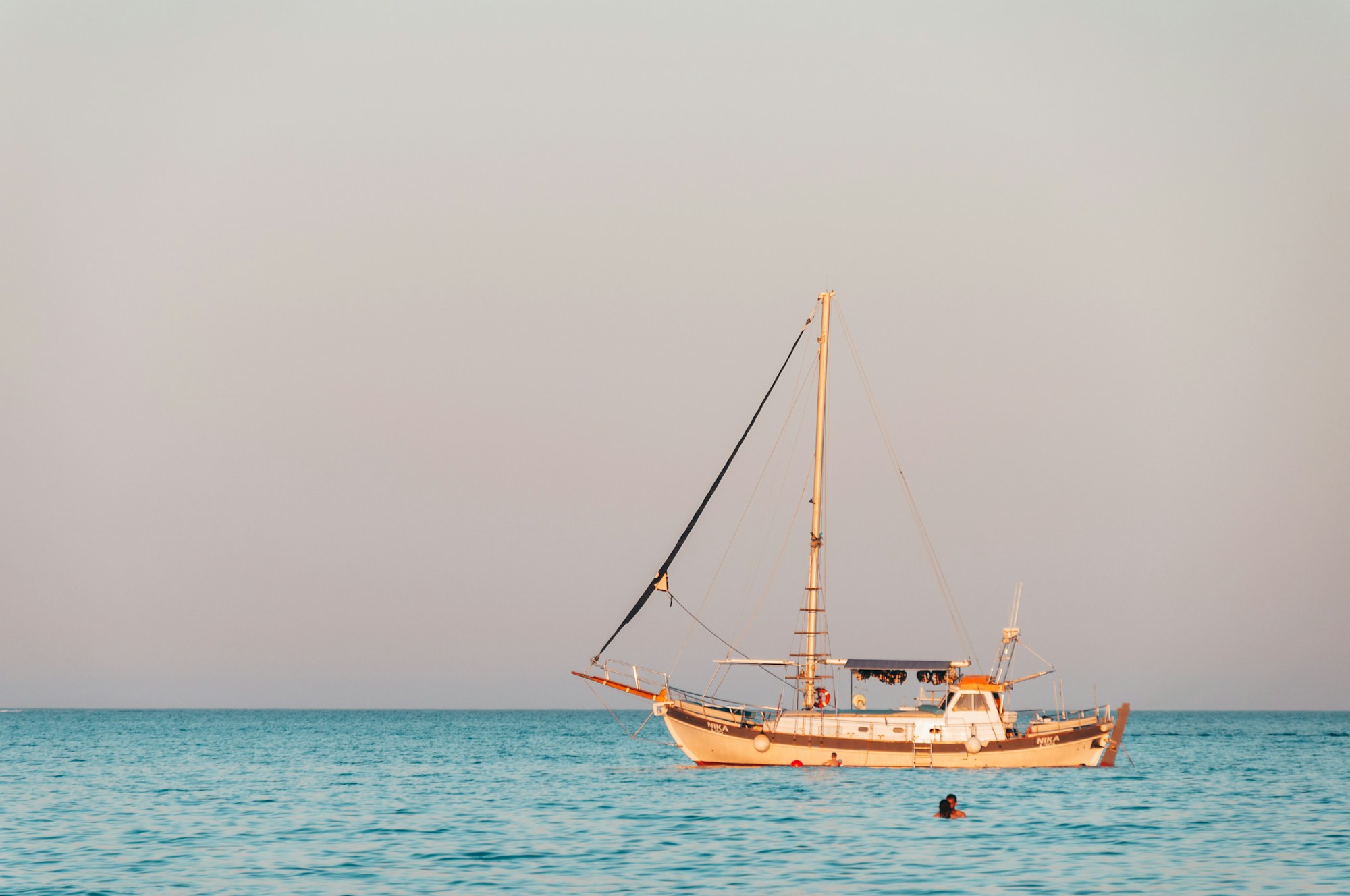
ESTIA plan: evacuation to the EU via Cyprus
- Larnaca (LCA): operational, European routes functioning normally
- ESTIA plan activated: EU humanitarian hub for regional evacuations
- Maritime evacuations from Beirut (Lebanon) to Larnaca available
- Cyprus = EU/Schengen member → freedom of movement throughout Europe
Cyprus plays a little-known but strategic role in regional evacuations. The special national ESTIA plan was activated by the Cypriot Ministry of Foreign Affairs to support the evacuation of foreign civilians via the island. According to Newland Chase, Larnaca (LCA) functions as a key evacuation hub for the Eastern Mediterranean.
The airport saw significant cancellations (29 to 51 flights on some days), mainly on Middle East and Gulf routes. European routes, however, are largely operating normally. Upon arriving in Cyprus, EU citizens enjoy full freedom of movement to all Schengen member states — a decisive advantage.
Estimated budget in Larnaca: €80–150/day. Hotels are charging premium rates due to the influx of stranded travellers — book as soon as possible.
7. Iraq: Level 4 « Do Not Travel » — building your force majeure case
If you are in Iraq, immigration services are nearly non-functional. According to Newland Chase, the priority strategy is to build a real-time force majeure file:
- Submit a visa extension request as soon as possible, even if systems are degraded
- Screenshot every attempt (including error messages and « system unavailable » notices)
- Keep all flight cancellation emails, accommodation receipts, and official communications
- Record the date and time of each attempt — this digital evidence is your primary defence
Iraqi Kurdistan (Erbil) remains significantly more stable than Baghdad. If you can safely reach it, Erbil International Airport has connections to several countries in the region. Minimum budget in a secure zone: €30–60/day in Erbil.
8. Lebanon: leave immediately if at all possible
Beirut’s Rafic Hariri Airport (BEY) remains operational but highly unpredictable, with Israeli strikes in the vicinity. According to Newland Chase, consular services are suspended. The US Embassy is advising immediate departure.
Exit options from Lebanon:
- By air: Book the first available flight out of Beirut, regardless of destination. From there, organise your onward journey home.
- By sea: Maritime evacuations to Cyprus (Larnaca) are available via civilian vessels — contact your embassy for coordination details.
- By land via Syria: Not recommended — Israeli military operations in the vicinity.
Visa extension theoretically possible: Lebanon’s General Directorate of General Security can grant +2 months, but services are severely disrupted. In a force majeure situation, all standard operations should be treated as non-functional until further notice.
On-the-ground survival budget: $60–120 USD/day in relatively safe areas. Work exclusively in US dollars or euros — the Lebanese pound is extremely volatile.
9. UAE & Qatar: overstay fine waivers and hotel accommodation
- UAE: Automatic retroactive fine waiver from February 28, 2026 — the ICP confirmed that no penalties will be applied to expired visas
- Qatar: Visitor visas automatically extended by 1 month. Hotel accommodation provided for stranded passengers
- The UAE General Civil Aviation Authority is covering accommodation, meals, and rebooking fees for stranded travellers
- Land option: UAE → Oman and UAE → Saudi Arabia borders remain open
According to Travel and Tour World, the UAE waiver applies retroactively from February 28, 2026. Dubai International has resumed partial operations, but cancellations continue. UAE consular services have partially resumed with significant delays.
Tip: If you’re stranded in Dubai or Abu Dhabi, contact your airline immediately for a rebooking. The official hotel coverage theoretically includes accommodation, meals, and communications.
10. Consular assistance: how your government’s crisis cell works
🇺🇸 US: travel.state.gov — ACS: +1 (202) 501-4444
🇬🇧 UK: FCDO Helpline +44 (0)20 7008 5000 (24h)
🇦🇺 Australia: +61 2 6261 3305 (24h)
🇨🇦 Canada: +1 613 996-8885 (24h)
How does government-organised repatriation work?
There is no automatic right to repatriation. Being a foreign national abroad does not mean the state is obliged to organise immediate evacuation. Repatriation is generally organised in three tiers:
- Rerouting on commercial flights that are still operating
- Chartered civilian flights for the most vulnerable nationals (elderly, families with children, those with medical needs)
- As a last resort: government aircraft, mobilisable by executive decision
Register with your government’s traveller registration programme — your top priority: Most governments offer systems (STEP for US citizens, FCDO registration for UK nationals, etc.) that allow consular authorities to locate you precisely and send real-time alerts. Registration takes 2 minutes and determines whether you’re included in priority evacuation lists.
11. Travel insurance in conflict zones: the exclusions that catch everyone out
Almost all travel insurance policies contain an exclusion for damage arising directly or indirectly from civil or foreign war. The phrase « directly or indirectly » is the most treacherous: even a purely logistical cancellation (airspace closed for security reasons) can be denied if a conflict is underway in the region.
- Premium bank cards (Visa Premier, Gold Mastercard): most exclude conflict zones
- Specialist insurers (SafetyWing, World Nomads, Chapka): « war risk » extension possible, but taken out before departure and before the conflict
- What the airline MUST do: full refund within 7 days or rerouting
- Keep ALL your receipts: tickets, hotel, meals, transport
According to Ulysse.com, travellers who booked a package holiday almost always have the right to cancel free of charge and receive a full refund. Check whether your policy distinguishes between « declared war » and « political instability » — some policies make this distinction, a nuance that may work in your favour. File your claim within the contractual deadline, often set at 5 business days.
12. Land evacuation routes: open corridors in 2026
| From | To | Status | Visa required? |
|---|---|---|---|
| Israel (Eilat) | Aqaba, Jordan | ✅ Open | Yes (on arrival or online) |
| Israel (Taba) | Egypt | ✅ Open 24/7 | Yes (on arrival) |
| UAE (Sharjah/Al Ain) | Oman (Al Buraimi) | ✅ Shuttle buses | Yes (on arrival, 10–20 OMR) |
| Lebanon | Syria | ⚠️ Risky | Check constantly |
| Iran | Turkey | ⚠️ Partial | Open into Turkey with prior notification |
| Lebanon (Beirut) | Cyprus (Larnaca) | ✅ Maritime | No (EU/Schengen) |
Consular teams are positioned at the Israel–Egypt and Israel–Jordan borders to facilitate crossings. According to Ulysse.com, for travellers stranded in the UAE, the land route to Oman via Al Ain/Al Buraimi remains the most reliable way to reach an operational air hub.
Practical information for your trip
Stay connected from the moment you land, wherever you are. Middle East, Oman, Turkey, Egypt, Cyprus — instant activation, no physical SIM needed.
From $4.50Nomad Insurance: global coverage from $56/4 weeks. Covers medical emergencies, evacuation. 10% off via our link.
From $56 / 4 weeksFAQ — Expired visa in the Middle East
My visa expires in 48 hours and I can’t leave — am I automatically in violation?
Not in the vast majority of cases during a major conflict. Several governments have quickly relaxed their immigration rules to protect stranded travellers. Israel offers an automatic 3-month extension; the UAE and Qatar have suspended overstay fines. However, don’t assume automatic protection until it is officially confirmed by ministerial decree in your temporary country of residence.
How do I prove I’m stranded due to force majeure?
Keep the following without fail: your flight cancellation emails with booking reference numbers, screenshots of airspace closures (Flightradar24, official NOTAMs), your communications with the airline, official embassy advisories, and evidence of attempted alternative flight bookings. These form your force majeure file — the same documents your lawyer would present before an immigration tribunal.
Am I entitled to automatic repatriation organised by my government?
No, there is no automatic right to repatriation. Governments can organise evacuation flights, but priority goes to vulnerable individuals (elderly, families with young children, those with medical needs). Government-chartered flights are typically repayable advances — you may be required to reimburse the cost. Register with your government’s traveller registration system to be included in consular lists.
Does my travel insurance cover me if I took it out before the conflict?
Insurance taken out after February 28, 2026 (when the strikes became public knowledge) will treat the event as foreseeable and deny coverage. Only « all-cause » or « all-risk » policies taken out before the conflict offer genuine protection. Check whether your policy distinguishes « declared war » from « political instability » — this nuance may work in your favour. Premium bank cards (Visa Premier, Gold Mastercard) generally exclude conflict zones.
My passport has expired and I have no valid documents — what should I do?
Contact your embassy or consulate immediately. Consuls can issue an emergency travel document to return home, or an emergency passport valid for one year if you plan to continue travelling to other countries. Note: emergency passports are not biometric and may not be accepted at all borders (particularly certain automated e-passport gates). Also secure digital copies of all your documents stored in a secure cloud service.
Can the airline charge me rebooking fees during a conflict?
No, in the case of extraordinary circumstances. Armed conflict and airspace closure are textbook cases of « extraordinary circumstances » under EU Regulation EC 261/2004. As a result: no flat-rate compensation (€250–600), but a full refund within 7 days or free rerouting is mandatory. Package holidays generally carry the right to free cancellation and full refund. US travellers should check DOT rules and their credit card’s travel protections.
How can I check whether a land border crossing is open in real time?
Consult your government’s official travel advisory website: travel.state.gov (US), gov.uk/foreign-travel-advice (UK), smartraveller.gov.au (Australia), travel.gc.ca (Canada). Be wary of social media information — even from bloggers on the ground. Flightradar24.com publishes real-time airspace closures with interactive maps. Your embassy will also send SMS alerts to nationals registered with the traveller registration programme.
Which countries outside the conflict zone also granted visa extensions?
Several countries acted quickly for nationals from countries with disrupted airspace. India announced a free 30-day extension for all expired visa holders this month. Sri Lanka and the Philippines froze visa expirations until April 1, 2026. Within the Schengen area, national migration authorities can grant a free extension under Article 33 of the Visa Code (force majeure) — apply to local authorities with supporting documents.
Sources
- Fragomen Immigration — Middle East Crisis Update (2026)
- Newland Chase — Crisis Advisory FAQ (March 2026)
- Ulysse.com — Rights of stranded travellers in the Middle East (2026)
- Ulysse.com — Oman Muscat, evacuation hub (2026)
- French Foreign Ministry — Travel advice for Egypt
- French Foreign Ministry — Travel advice for Turkey
- Visamundi — Visa extensions during the Middle East crisis (2026)
- WowJordan — Jordan visa 2026: procedures and fines
- Government of Canada — Travel advice for Jordan
- FranceInfo — Repatriation from the Middle East (2026)
- Wego Travel Blog — Cyprus: airport status and flight cancellations (March 2026)
- Air Journal — Gulf carriers managing the crisis (2026)
- Tuncay & Barcin Law — Entry rules and overstay in Turkey (2026)
- Travel and Tour World — UAE overstay fine waiver (2026)
Plan your next trip with confidence
Build your itineraries with Pixidia and access practical guides on visa procedures, travel insurance, and the world’s best destinations.
Explore itineraries