
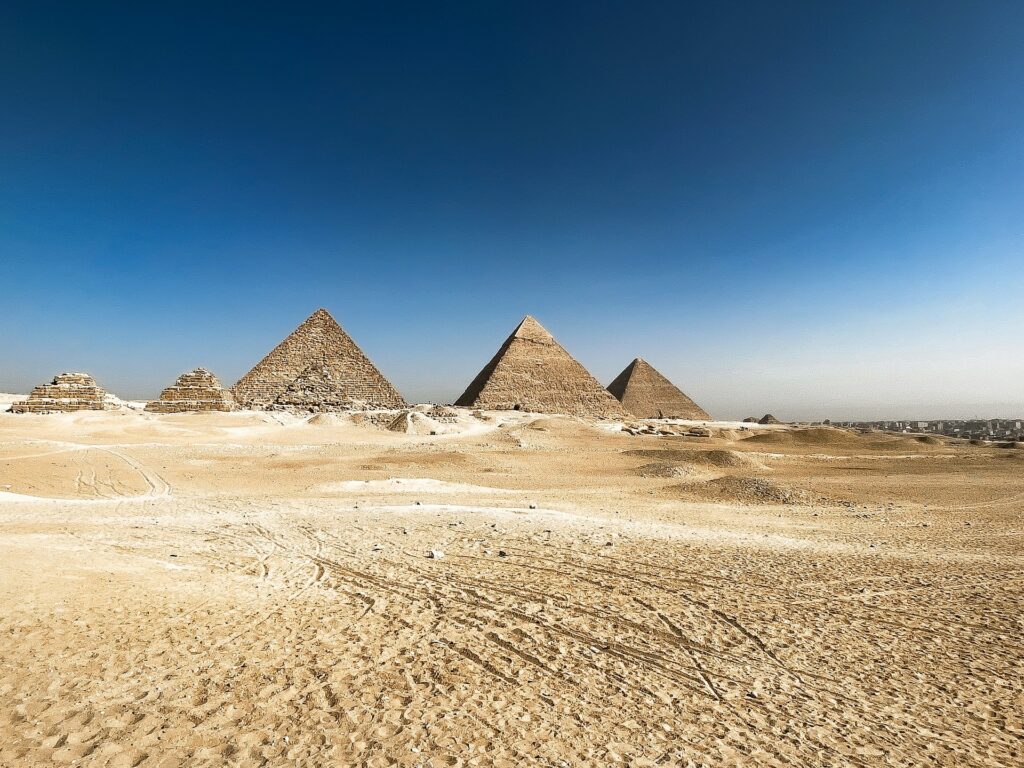
Three million French travelers visit Egypt every year, and the same question comes up before every trip: is it still safe in 2026? With the conflict in Gaza echoing across the region, unrest in Sudan to the south, and broader geopolitical tensions, it’s a legitimate concern. The short answer: yes, Egypt’s major tourist destinations — Cairo, Luxor, Hurghada, Sharm el-Sheikh — remain safe and accessible. But the longer answer deserves a zone-by-zone breakdown, drawing on official advisories from the French, American and British governments updated in March 2026.
Security Dashboard — Official Advisories March 2026
🇫🇷 France — Ministry of Foreign Affairs
According to the French Ministry of Europe and Foreign Affairs (MEAE), updated March 18, 2026, Egypt is classified under heightened vigilance (orange zone) for the majority of tourist areas. This means travel is possible, but requires particular attention. Certain zones are formally advised against (red), but they are far from standard tourist circuits.
🇺🇸 United States — State Department
In July 2025, the US Department of State downgraded its alert to Level 2: « Exercise Increased Caution, » acknowledging the overall improvement in security within tourist areas. Egypt officially welcomed this revision. In early March 2026, a broader advisory urged American citizens to exercise caution in the region without specifically targeting Egypt, citing potential regional instability.
🇬🇧 United Kingdom — FCDO
The UK Foreign, Commonwealth & Development Office (FCDO) continues to regard Cairo, Alexandria, Luxor, Aswan and the Red Sea resorts as safe for travelers. It warns of an « increased risk of regional tensions » and advises taking reasonable precautions. Like the US, it downgraded its alert level in July 2025.
| Zone | France | United States | Recommendation |
|---|---|---|---|
| Cairo, Giza, GEM | 🟡 Heightened vigilance | 🟡 Level 2 | ✅ Travel possible |
| Hurghada, Marsa Alam | 🟡 Heightened vigilance | 🟡 Level 2 | ✅ Travel possible |
| Sharm el-Sheikh, Dahab | 🟡 Heightened vigilance | 🟡 Level 2 | ✅ Travel possible |
| Alexandria, Siwa | 🟡 Heightened vigilance | 🟡 Level 2 | ✅ Travel possible |
| North Sinai | 🔴 Formally advised against | 🔴 Do Not Travel | 🚫 No tourist access |
| Gaza / Israel border | 🔴 Formally advised against | 🔴 Do Not Travel | 🚫 Avoid absolutely |
| Sudan border (south of Abu Simbel) | 🔴 Formally advised against | 🔴 Do Not Travel | 🚫 Avoid absolutely |
| Libyan desert (border area) | 🔴 Formally advised against | 🔴 Do Not Travel | 🚫 Avoid absolutely |
Zones to Avoid Absolutely in 2026
These zones are outside standard tourist circuits and do not affect typical Egypt holidays. That said, knowing them is essential:
- North Sinai: Formally advised against due to active instability and terrorist risks. No tourists go there. Not to be confused with South Sinai (Sharm el-Sheikh, Dahab), which is accessible.
- Israeli border (Egyptian side): The border area between Egypt and Israel is red-listed because of the Gaza situation. The Rafah area on the Egyptian side is off-limits.
- Sudanese border: The entire zone south of Abu Simbel toward Sudan has been advised against since the 2023 clashes. Excursions to Abu Simbel from Aswan remain perfectly safe.
- Western Desert (Libyan border): The area between Marsa Matruh and the Libyan border is advised against. The Cairo–Farafra–El Kharga triangle (including the White Desert) remains accessible with heightened vigilance.
- Important: According to the Belgian Foreign Affairs Office, drones are strictly prohibited throughout Egypt, including tourist sites. Do not bring a drone.
Cairo, Giza & the Grand Egyptian Museum
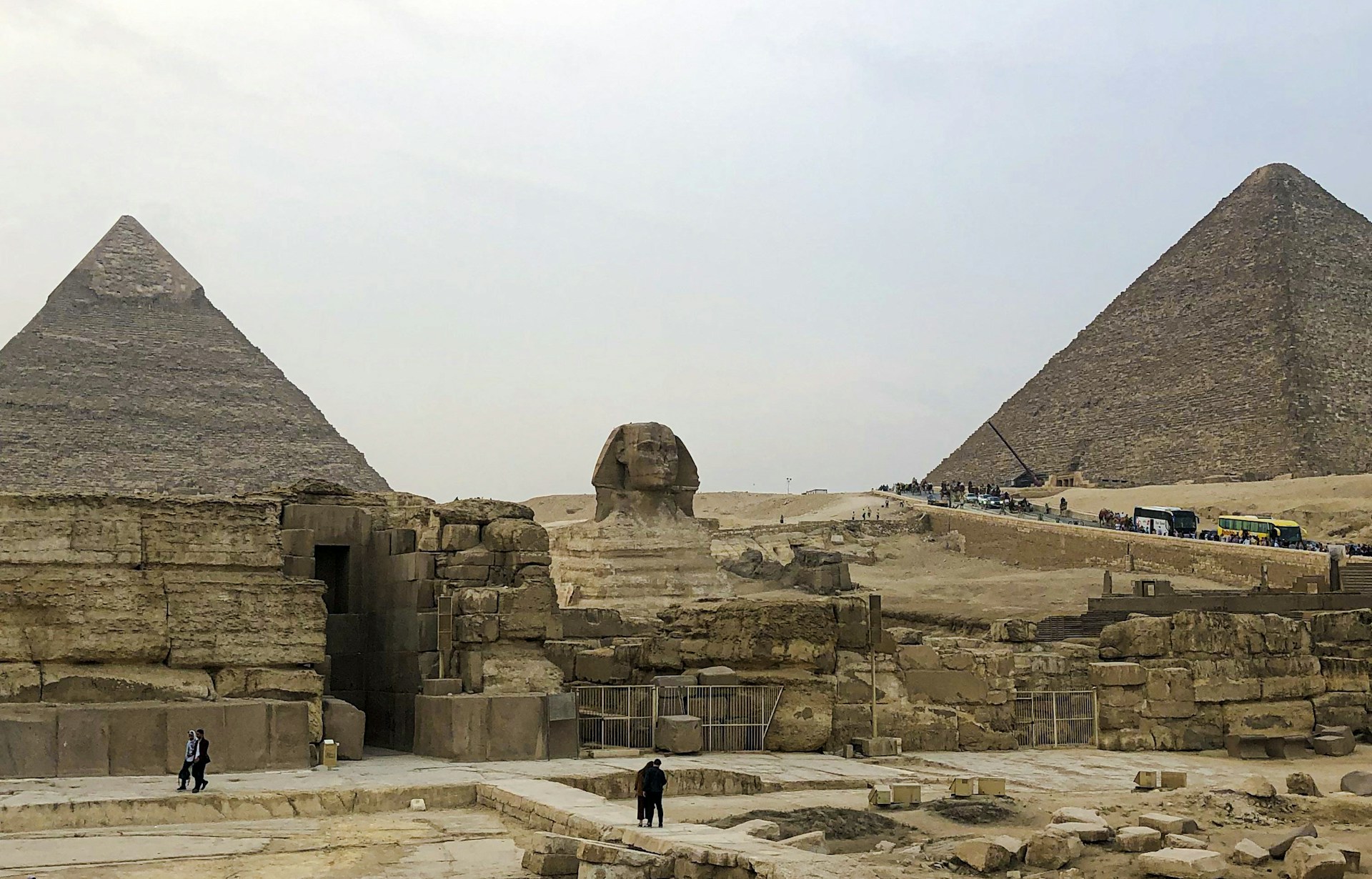
Cairo remains Egypt’s flagship destination, and the official opening of the Grand Egyptian Museum (GEM) on November 1st, 2025, makes it the unmissable cultural event of 2026. This museum — the largest in the world dedicated to ancient Egypt — displays for the first time the complete collection of 5,398 objects from Tutankhamun’s tomb, including the solid gold funeral mask weighing 11 kg. It perfectly complements a visit to the Giza Pyramids, just 10 minutes away.
Cairo’s security is permanently maintained: over 20,000 specialized police officers are deployed daily across tourist cities, with private security agents at the most visited sites. According to louxorbalades.com, no major attack against tourist sites has been recorded since 2019.
Budget: €40–80/day in comfort (accommodation + meals + entry fees). The cost of living in Cairo is 60% lower than in France. GEM admission costs $25–30 (online booking required).
Luxor & Upper Egypt
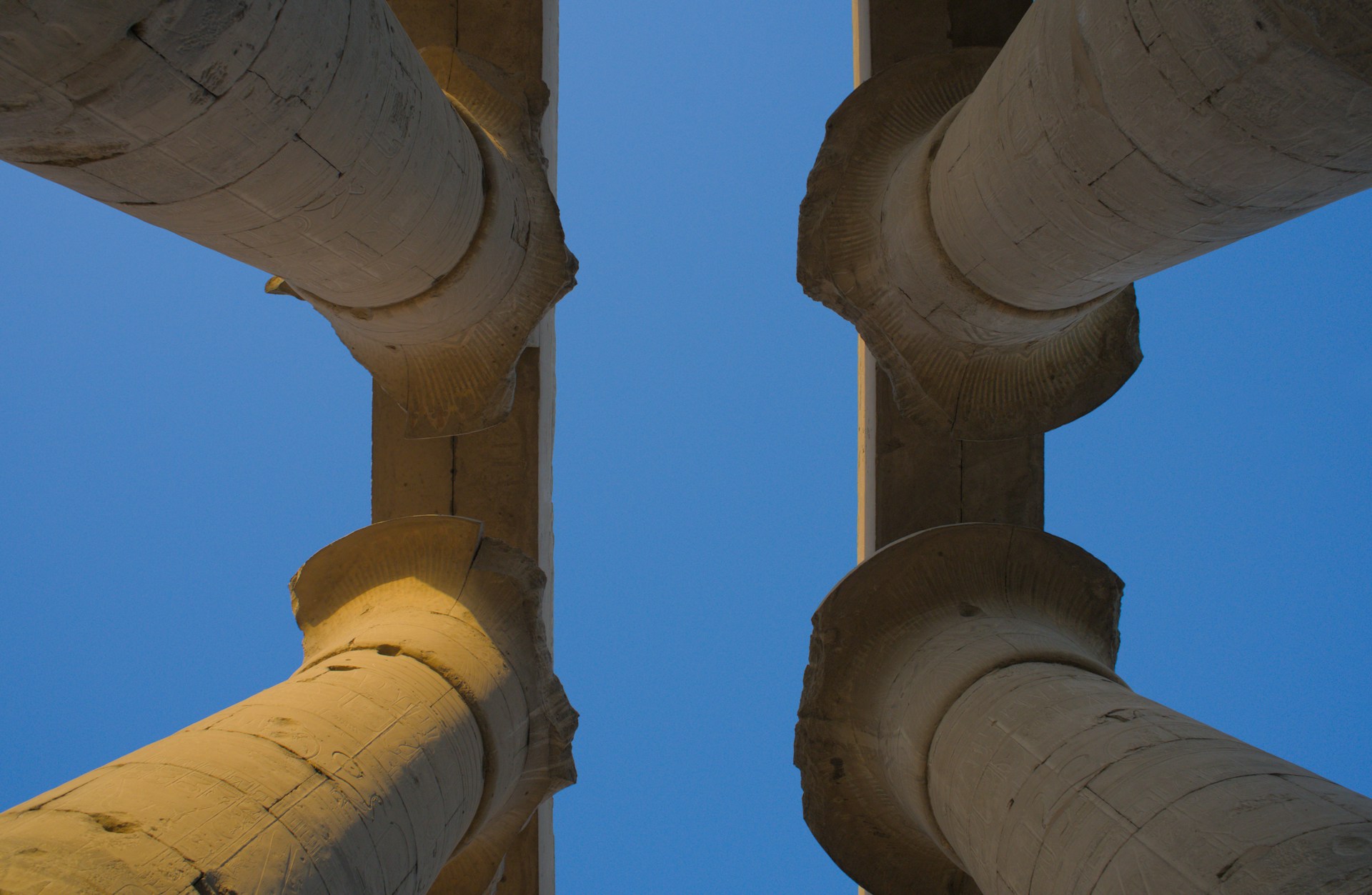
Luxor alone contains a third of the world’s archaeological heritage. On the east bank, the Karnak complex (the largest religious complex ever built) and the Luxor Temple lit up at night. On the west bank, the Valley of the Kings, the Valley of the Queens and funerary temples, including that of Pharaoh Hatshepsut at Deir el-Bahri. From Luxor, an excursion to Abydos and Dendera opens up sites virtually free of tourists.
The city is safe: strong police presence, no major incidents recorded in recent years. According to louxorbalades.com, a local tourism specialist, the city lives primarily from tourism and its stability is crucial for the local economy.
Budget: €30–60/day. A good 4-star hotel with a Nile view costs €50–80 per night. Access to major sites is 30 to 200 EGP depending on the monument.
Nile Cruise — Luxor → Aswan
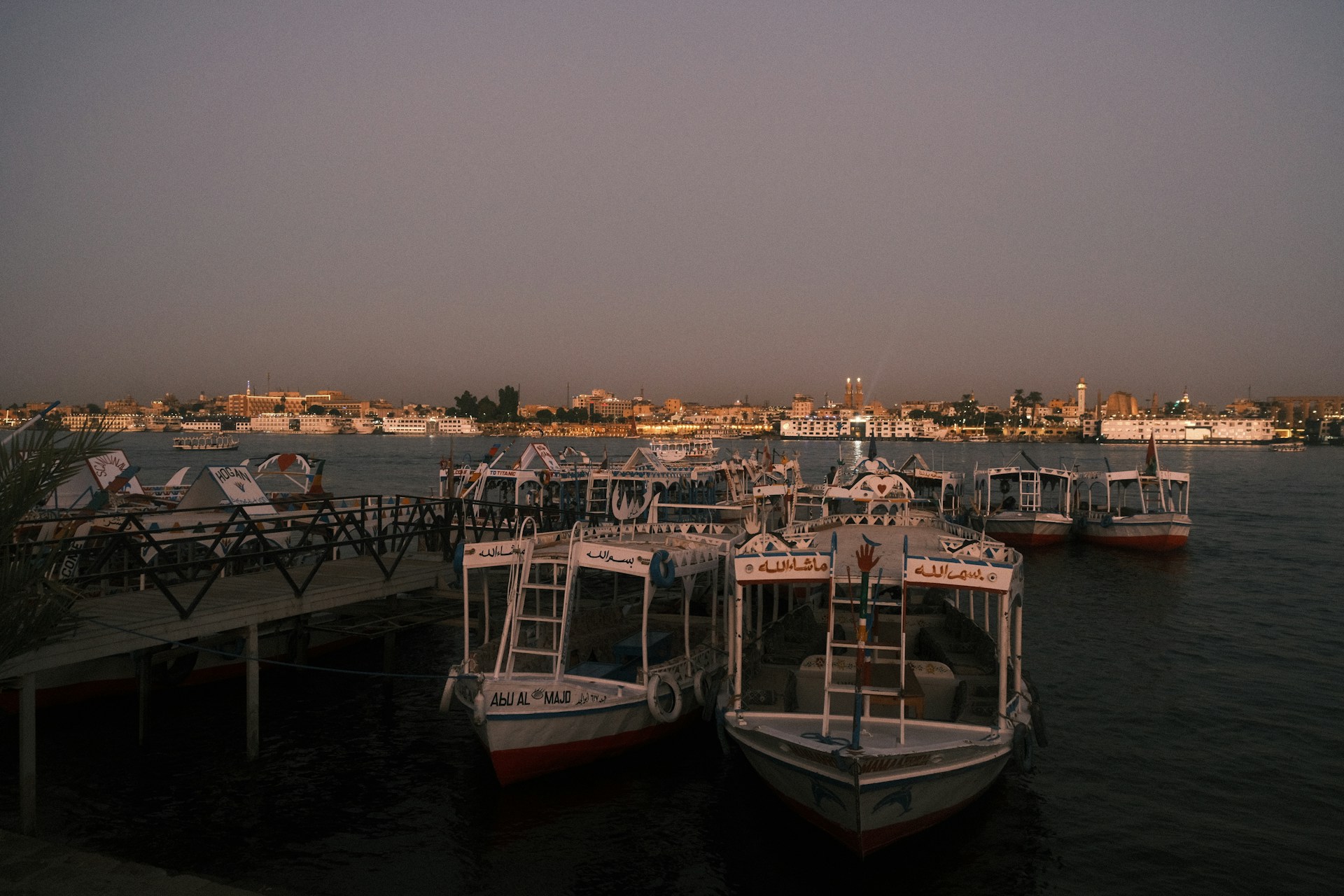
A Nile cruise remains the quintessential Egypt experience, and it’s making a spectacular comeback: +15% bookings in 2025 compared to 2024, according to local operators. Stops include the Temple of Edfu (the best-preserved in Egypt), Kom Ombo (temple of the crocodile god Sobek), the Island of Philae dedicated to Isis, and the option to excursion to Abu Simbel and its giant statues of Ramesses II.
Nile river cruises remain perfectly safe — incidents are limited to border areas far from river itineraries. A more authentic alternative: the dahabiya, a traditional wooden sailing boat accommodating 6 to 12 people maximum, with stops in villages inaccessible to large cruise ships.
The Red Sea — Hurghada & Sharm el-Sheikh
Hurghada
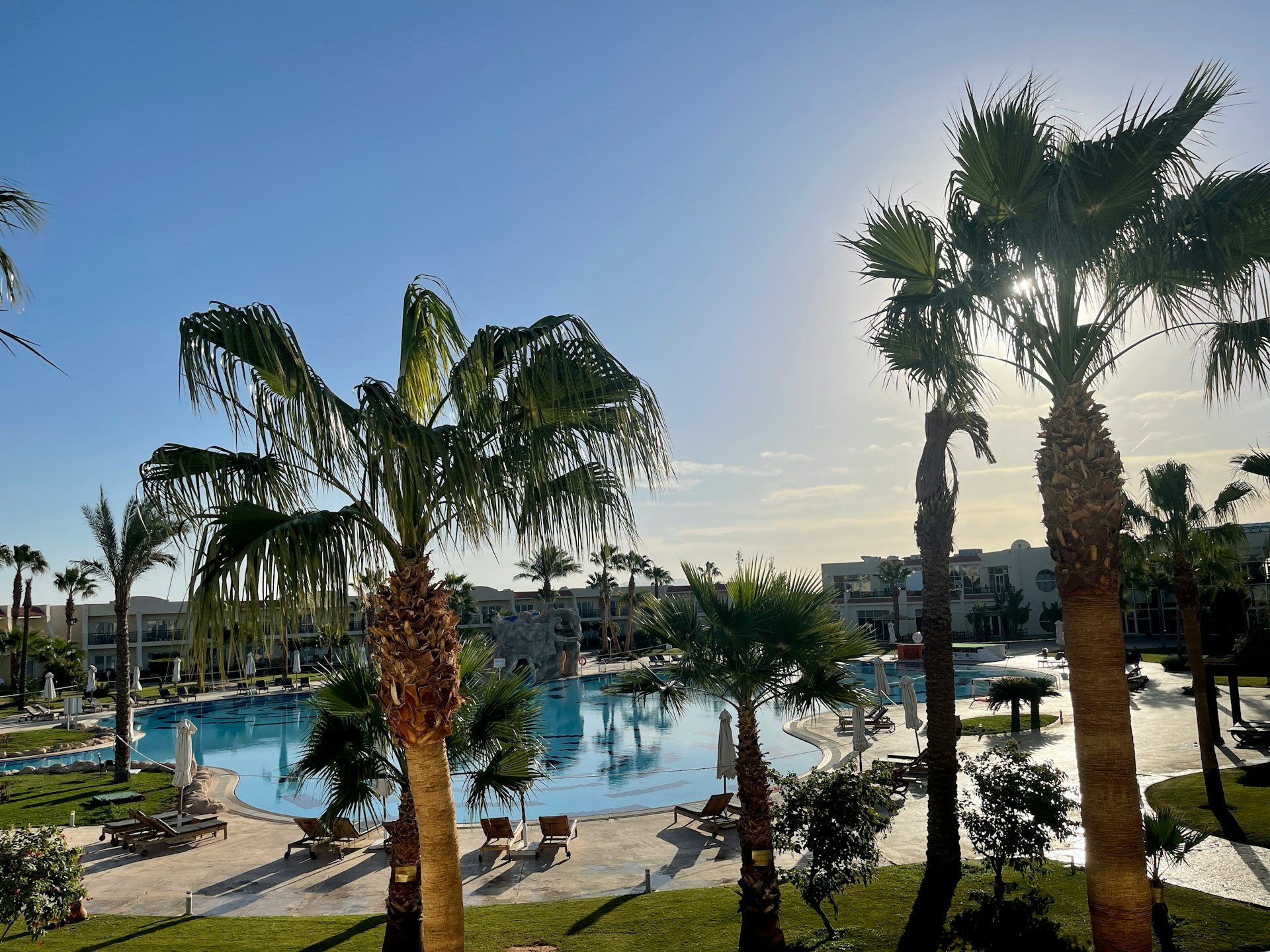
Hurghada stretches 40 km along the Red Sea coastline. Security figures are reassuring: according to this crime analysis for Hurghada, the resort records a crime index of 30.98/100 (low level, comparable to many European cities). Of the 148,000 French visitors in 2024, fewer than 12 incidents were reported — 0.008% of travelers.
Sharm el-Sheikh
Honored with the nickname « City of Peace, » Sharm el-Sheikh regularly hosts international diplomatic conferences — a testament to its security level. Its 31 dive sites (including the legendary Elphinstone Reef) are home to over 1,000 species of fish and 150 varieties of crustaceans. An important distinction: Sharm el-Sheikh is located in South Sinai (orange zone) — absolutely not to be confused with North Sinai (formally red-listed). The two zones are completely different from a tourism perspective.
Gaza, Sudan, Iran: What’s the Real Impact on Egypt?
This is the question everyone has been asking since 2024. The answer from on-the-ground experts is clear: Egypt plays a mediating role — it is not a belligerent. According to louxorbalades.com, a Luxor-based specialist, « worrying about a holiday in Egypt because of the Iranian situation makes as much sense as refusing to go to Greece or Italy because of the Russia-Ukraine conflict. »
The geographical distances explain everything:
- Gaza → Cairo: 350 km. Border tensions are in North Sinai (red zone for years), far from tourist circuits.
- Sudan → Aswan: 800 km. The advised-against Sudanese border is south of Abu Simbel; Nile cruises stop well before that zone.
- Iran → Hurghada: 2,500 km. Iran-Israel tensions have no direct geographical impact on Red Sea resorts.
In 2024, the Gaza-Israel war had little impact on tourist zones. Egypt maintained its role as a diplomatic pivot and its tourist flows continued to grow: Air Journal reports that the new New Alamein resort near Alexandria recorded a 450% increase in tourist arrivals in 2025.
Budget, Visa & Practical Tips
Overall Budget 2026
The cost of living in Egypt is 57% lower than in France. According to hotel-secret.com:
- 7 days: €400–650 (budget), €800–1,200 (comfort), €2,000–3,500 (luxury)
- 10 days: €600–950 (budget), €1,200–1,800 (comfort)
- 15 days: €850–1,400 (budget), €1,800–2,700 (comfort)
Excluding international flights. Return flights from Paris range from €280 to €700.
Visa
French nationals can obtain a visa on arrival at Cairo Airport: $25 in cash (bring US dollars). E-visas are also available online before departure. Validity: 30 days. Passport must be valid for at least 6 months after the return date.
Currency
As of early 2026, €1 ≈ 54–56 EGP. Most archaeological sites no longer accept cash at ticket offices — book online where possible. Budget for bakshish (tips) of €5–15 per day.
Practical Safety Tips
- Transport: Use Uber or Careem rather than street taxis, which are less reliable and may overcharge.
- Do not photograph military buildings, bridges, airports or government facilities. It is prohibited and you may be detained.
- Common scams: « Spontaneous guides » at sites, fake papyrus, diluted perfume, inflated camel rides. Politely decline and walk on.
- For women: Verbal harassment remains a real issue. Use the women-only carriages on the Cairo metro, dress modestly outside beach resorts, and adopt the « eyes straight ahead » rule in markets.
- Driving: Absolutely avoid driving at night outside cities. Hire local drivers who know the routes.
- Health: Drink bottled water only. Hepatitis A vaccination is strongly recommended. Take out travel insurance covering medical costs and repatriation.
Prepare Your Egypt Trip
Stay connected from the moment you land in Cairo. Instant activation, no airport queues.
From €4.50Medical coverage and repatriation — essential for a worry-free stay in Egypt.
From €1.99/dayFAQ — Your Questions About Safety in Egypt in 2026
Is Egypt safe for tourists in 2026?
Yes. Tourist zones (Cairo, Luxor, Aswan, Hurghada, Nile cruises) are safe and heavily monitored. Over 20,000 specialized police officers are deployed daily across tourist cities. There have been zero major attacks against tourist sites since 2019. The few security incidents recorded concern exclusively the border zones that have already been advised against for years (North Sinai, Sudanese border).
Does the war in Gaza affect tourism in Egypt?
Very little. Egypt plays a mediating role in the conflict and is not directly involved in fighting. The distances separating major tourist destinations (Cairo, Luxor, Hurghada) from tension hotspots are considerable. In 2024, tourist bookings in Egypt continued to grow despite the Gaza war. The only visible impact is on some regional flights, which may be rerouted or cancelled.
Can you visit Sharm el-Sheikh in 2026? Isn’t it in Sinai?
Yes, Sharm el-Sheikh is accessible in 2026. It’s essential to distinguish North Sinai (red zone, formally advised against due to persistent instability and terrorist risks) from South Sinai, which includes Sharm el-Sheikh, Dahab and Taba. South Sinai is classified as heightened vigilance (orange zone) like most of Egypt’s tourist areas — travel is possible with reasonable precautions.
What documents do you need to enter Egypt?
A passport valid for at least 6 months after the return date is required. A visa is needed and can be obtained on arrival at Cairo Airport for $25 cash (bring US dollars). An e-visa can also be applied for online before departure. A national ID card alone is not sufficient.
Are vaccinations required to visit Egypt?
No vaccines are mandatory (except yellow fever if arriving from a high-risk country). Hepatitis A is strongly recommended by French health authorities. Up-to-date routine vaccinations (diphtheria, tetanus, polio) are advised. Drink only bottled water throughout your stay.
Can you bring a drone to Egypt?
No. Drones are strictly prohibited in Egypt, even in tourist areas. Any drone brought in will be confiscated by authorities on arrival and will not be returned. Do not risk your equipment.
What is the best time to visit Egypt?
The best time is October to April, with pleasant temperatures (20–28°C). December and January are the busiest and most expensive months. To avoid crowds while still enjoying good weather, March–April is ideal. Summer (May–September) is manageable only on the Red Sea coast (sea breeze) but very challenging in Luxor (40–45°C).
Are there flight disruptions to Egypt in 2026?
Egyptian airspace remains open. Disruptions recorded in early 2026 concern regional routes (EgyptAir temporarily suspended flights to Dubai, Doha, Amman…). Direct flights from Paris with Air France, EgyptAir, Transavia and Vueling are not affected. Cairo Airport welcomed 31 million passengers in 2025. Check your flight status in the 48 hours before departure.
Sources
- French Ministry of Foreign Affairs — Travel Advice Egypt (updated March 2026)
- US State Department — Egypt Travel Advisory
- UK FCDO — Foreign Travel Advice Egypt
- Belgian FPS — General Security in Egypt
- Louxor Balades — Egypt Traveler Safety: Facts and Statistics 2025
- Sémélégantvoyage — Is Egypt Dangerous in 2026?
- Hôtel Secret — Egypt 2026: Is It Really Safe?
- Air Journal — GEM Revives Pharaonic Tourism (March 2026)
- Grand Egyptian Museum — Official FAQ
- Simbye — Egypt Trip Cost 2026: Complete Budget Breakdown
- Memphis Tours — Is Traveling to Egypt Dangerous?
- Destination Égypte — Egypt Travel: Risks to Avoid
- Toulon Club Nautique — Is Hurghada Dangerous? Risk & Safety Guide
- Egyptian Streets — Egypt Welcomes Upgraded U.S. and U.K. Travel Advisories (July 2025)
Ready to Plan Your Egypt Trip?
Explore our tailor-made itineraries to organize your Egypt holiday in complete peace of mind — from the Giza Pyramids to the Red Sea reefs.
Discover Egypt Itineraries