
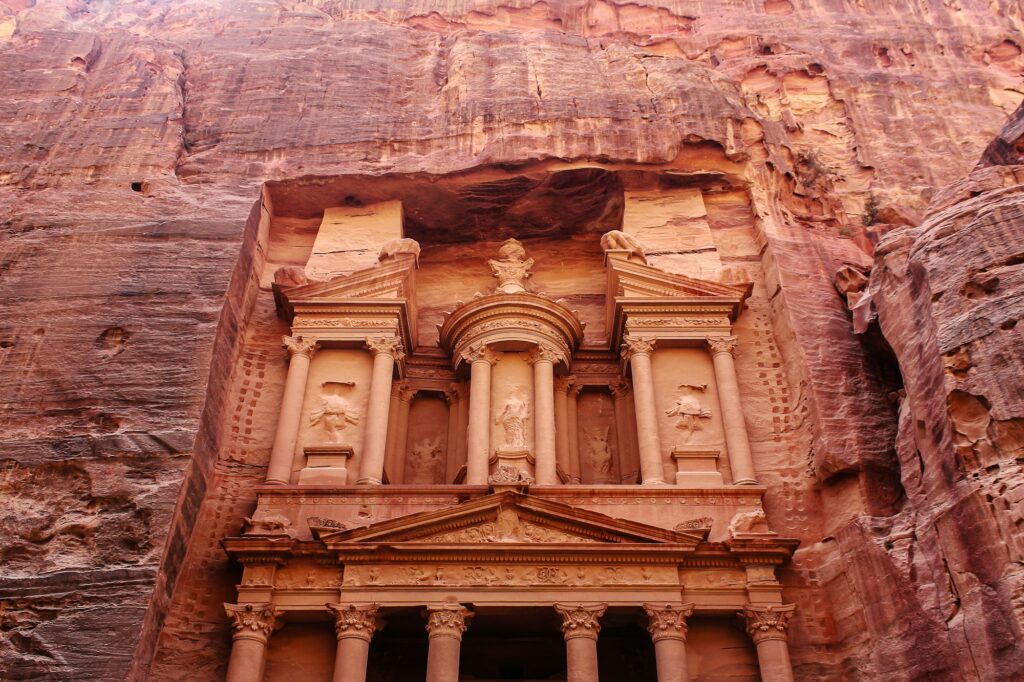
The question has been haunting thousands of travellers for months: should you cancel your trip to Jordan and Petra, or just postpone it? Between the Middle East security escalation of March 2026, the Level 3 alert issued by the US State Department, the dramatic drop in visitors to Petra (−61% in 2024) and the timid signs of recovery from January 2026, the information is contradictory. Yet the reality on the ground is far more nuanced than it appears. This comprehensive guide provides an honest assessment — with data verified as of 1 April 2026 — to help you decide with full knowledge of the facts: cancel, postpone by a few weeks, or go now.
⚠️ Security situation in March–April 2026: the full picture
What foreign ministries are really saying
Jordan has historically been distinguished by its internal political stability — a precious asset in a troubled region. But since the US-Israeli strikes on Iran in February 2026 and the reprisals that followed, the regional situation has deteriorated significantly. According to the UK Foreign, Commonwealth & Development Office, traffic restrictions, airspace closures and flight cancellations are expected across the region.
Jordan is not at war: it recorded only 28 injured and no deaths during the initial strikes, according to the US Embassy in Amman. But its geographical position, surrounded by Iraq, Syria, Israel and Saudi Arabia, places it at the heart of a region under high tension.
Zones to avoid completely
- Jordanian-Syrian and Jordanian-Iraqi borders
- Towns of Mansheyat al Ghayyath, Ruwayshid and Ma’an (local tensions)
- Near the Israeli and US embassies in Amman (Friday demonstrations)
- Any political gathering or demonstration — particularly on Fridays after prayers
Safe zones for tourists
- Petra and the Wadi Musa region — reinforced police presence, no incidents since 2022
- Wadi Rum — desert far from any tension zone
- Dead Sea — luxury hotels with enhanced private security
- Tourist areas of Amman (Jabal Amman, Rainbow Street)
- Aqaba — southern port, far from tensions
The tourism crisis in numbers: Petra emptied of its visitors
From 1.17 million to 457,000 visitors: the dramatic fall
The figures are damning. According to the Petra Development and Tourism Authority, visitor numbers fell from 1.17 million in 2023 to just 457,000 in 2024 — a 61% decrease with devastating economic consequences for the region. In the first half of 2025, the trend had not yet reversed: just 259,798 visitors, compared to 692,595 over the same period in 2023.
The impact on accommodation has been equally brutal: 28 classified hotels have closed in the Petra region, representing 1,975 rooms and 56% of local hotel capacity. The occupancy rate of establishments still open has fallen below 6%, compared to 60–70% in normal times. According to Ulysse, the loss of nearly 550,000 international tourists cost Jordan over half a billion euros between November 2023 and June 2024.
The first signs of recovery in 2026
The situation is not without hope. In just the first two weeks of January 2026, 76,054 visits were recorded across Jordan’s historical sites, including 15,244 at Petra alone, according to the Jordanian Ministry of Tourism. This is an encouraging signal, even if the March 2026 re-escalation has probably slowed this recovery.
Petra in 2026: the site is open, but what to really expect?
Petra: open but profoundly transformed
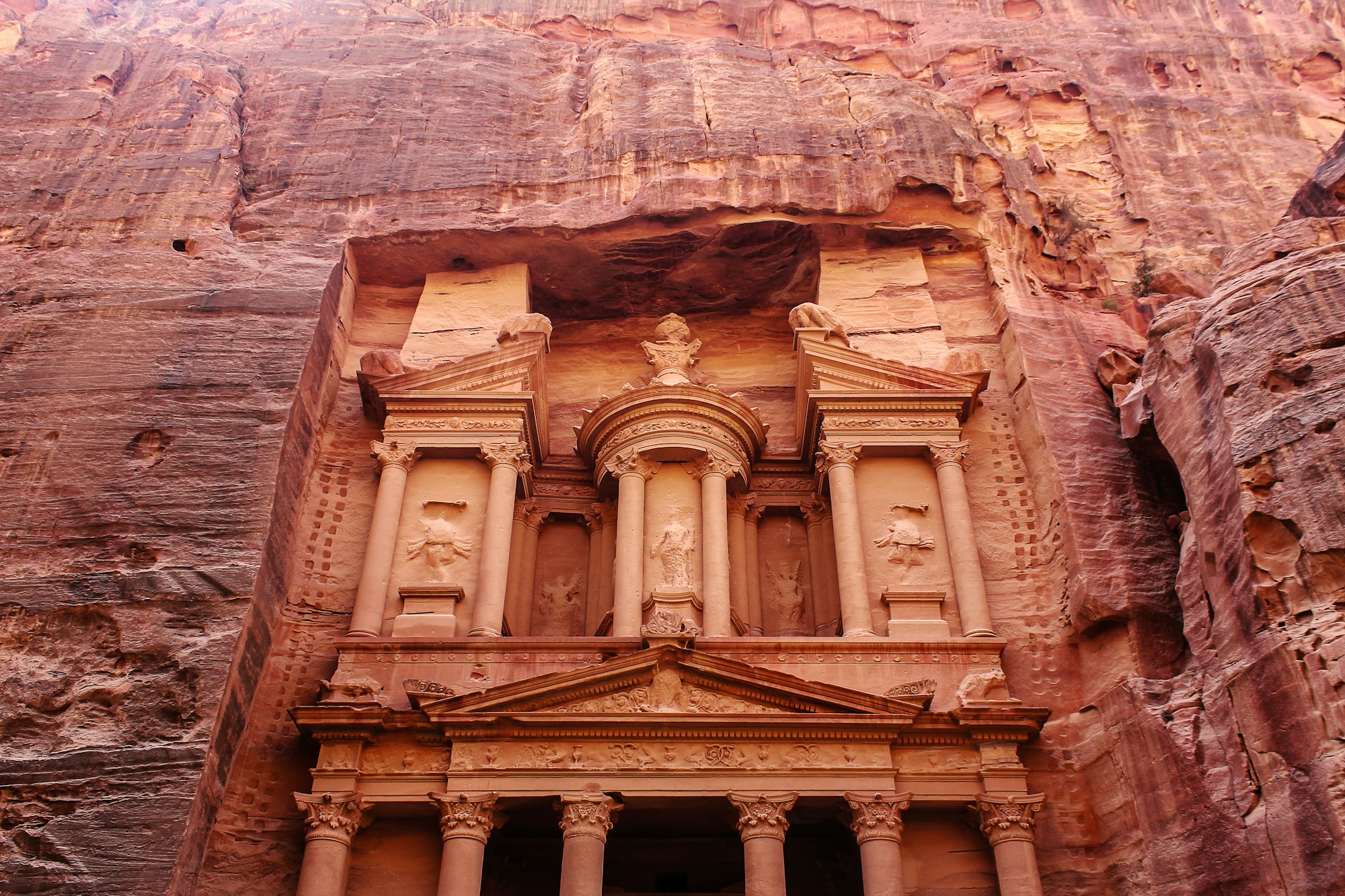
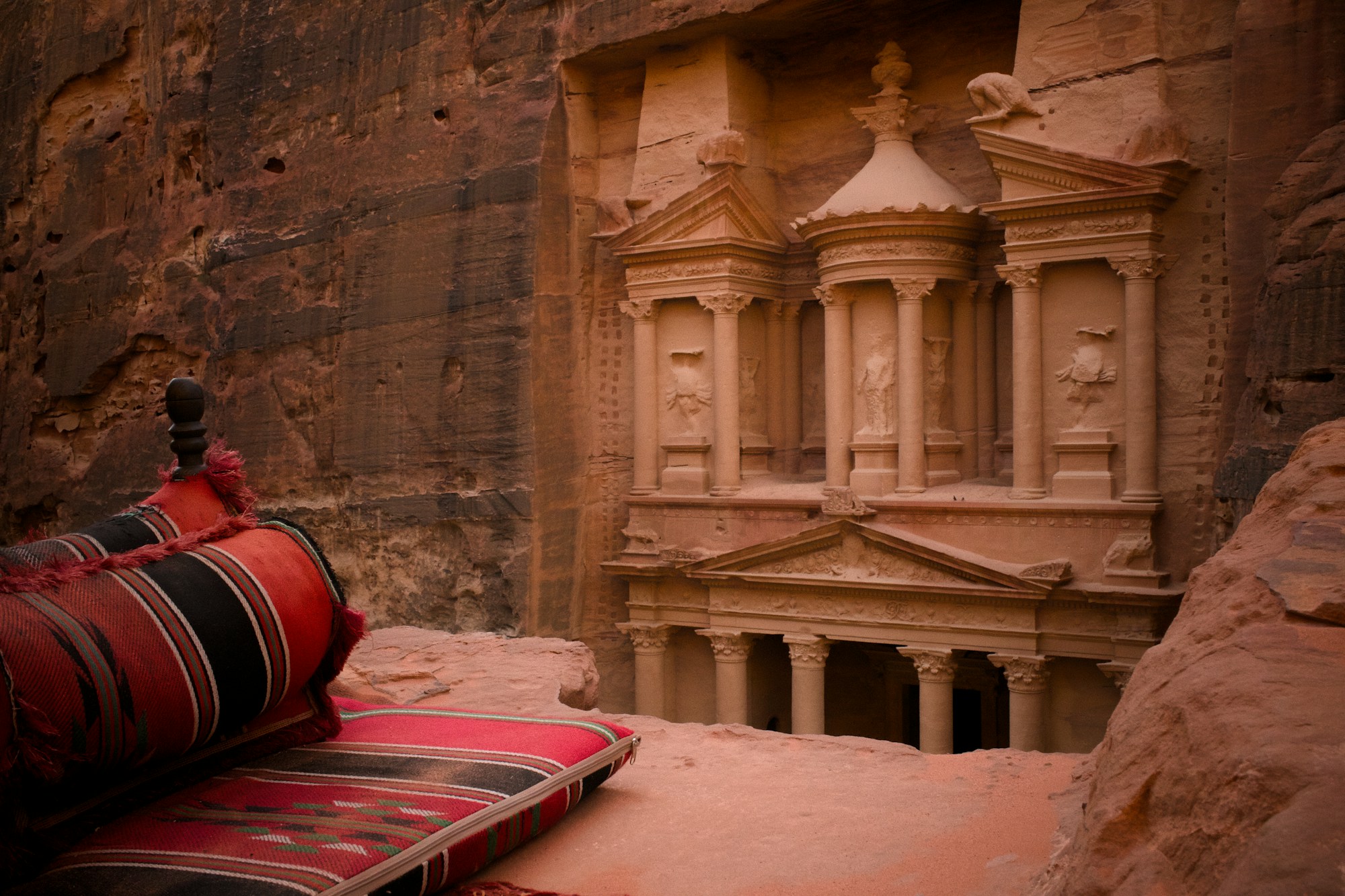
Despite the alarming headlines, Petra is open and fully operational. Guided tours are organised daily. Police presence has been reinforced at the entrance and along the Siq. Restaurants and shops in Wadi Musa (the access village) are functioning, although many have reduced their hours, according to Travel and Tour World.
What many travellers don’t yet know: Petra is today almost empty of tourists. Hussam Battat, a guide at Petra for 16 years, testifies: « People in Europe don’t really understand what’s happening here. They’re afraid to come to the Middle East in general. » This misperception creates a paradoxical situation: visiting Petra in 2026 means strolling alone in front of the Treasury at sunrise — something that had been impossible for years.
The Jordan Pass 2026: still the best investment
The Jordan Pass remains essential: 70 JOD (€86) with 1 day at Petra, 75 JOD (€92) with 2 days, 80 JOD (€99) with 3 days. It includes the Jordan visa fee waiver (provided you stay at least 3 nights) and access to over 40 archaeological sites. Without the Jordan Pass, entry to Petra alone costs 50 JOD (€65) per day.
Wadi Rum: the extraordinary desert experience
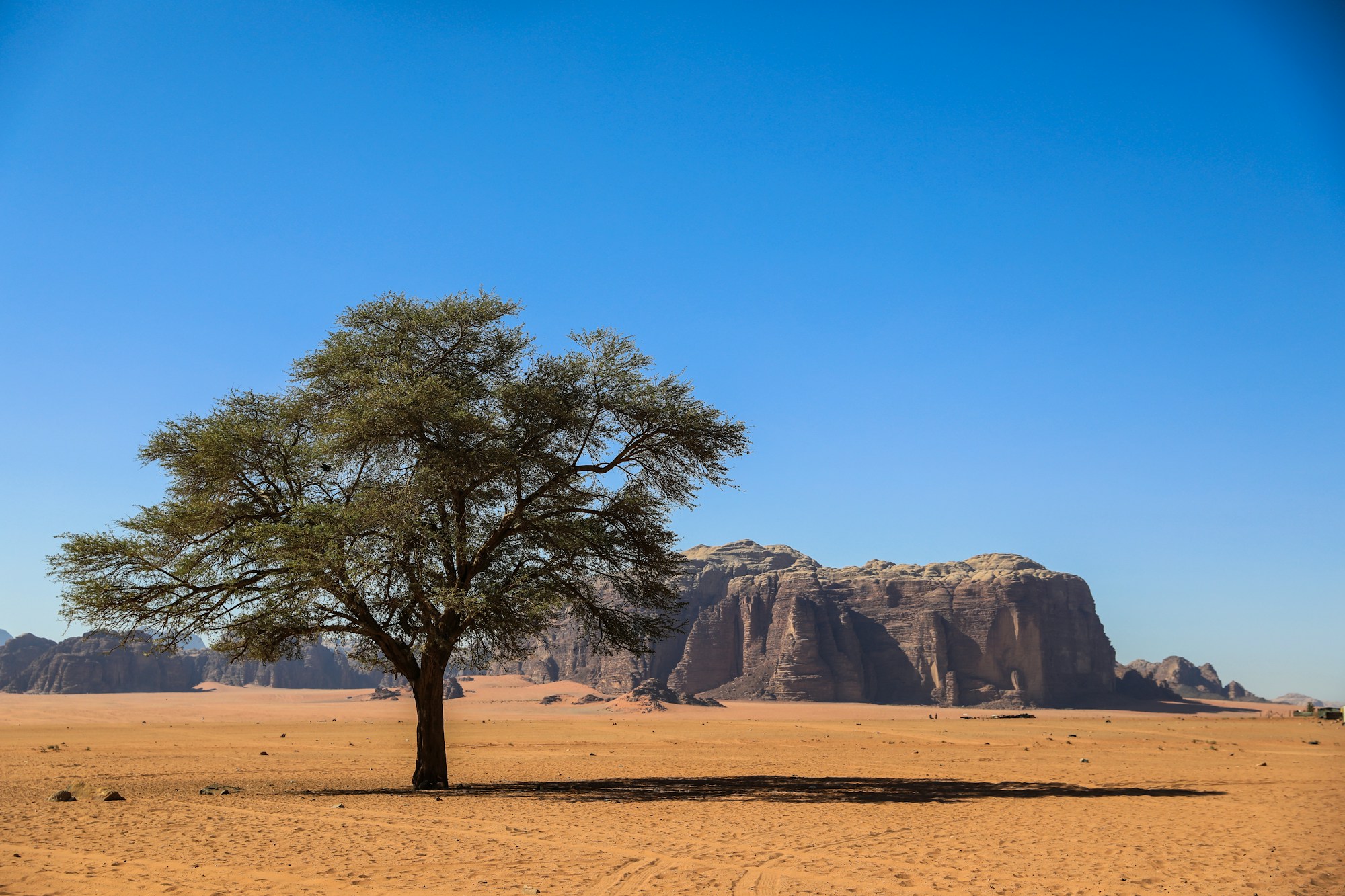
The Valley of the Moon with its empty Bedouin camps
Wadi Rum is just 1h30 from Petra by road. With the drop in tourism, Bedouin camps are almost empty. Groups are very small, which means excursions sometimes take place with a guide all to yourself. Orange desert landscapes as far as the eye can see, encounters with dromedaries, meals prepared in the middle of the desert, blazing sunsets. According to MyFairyTrail, it is now possible to book unique experiences such as hot air balloon rides over Wadi Rum at negotiable rates.
The Wadi Rum desert is located tens of kilometres from any tension zone. It constitutes one of the safest and most spectacular parts of the country. The roads between Petra, Wadi Rum and Aqaba pass through regions completely removed from the problematic borders (Syria, Iraq).
Amman and the Dead Sea: the other must-sees
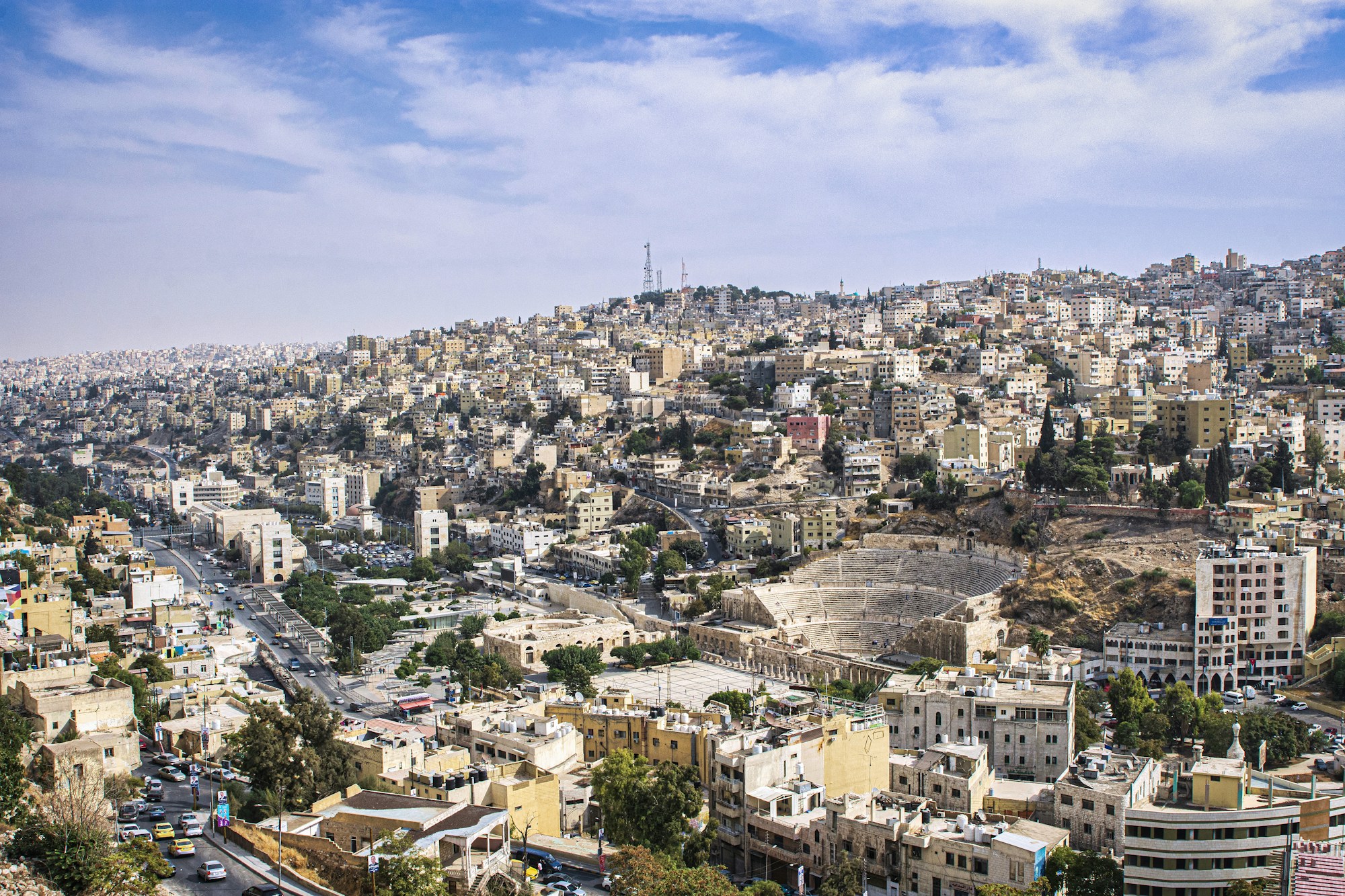
Amman: the safe capital to start your stay
Amman remains one of the safest capitals in the Middle East for tourists. The hilltop city offers the Citadel with its Temple of Hercules and panoramic views, the Roman Theatre, desert castles (Qasr Amra, UNESCO-listed), and the bohemian Rainbow Street district. Jordanian cuisine — mansaf, falafel, mezze — is at its best here.
Important precaution: Demonstrations regularly take place in Amman in districts near foreign embassies, particularly on Fridays after prayers. Avoid these areas during these times. The rest of the city remains calm and accessible, according to Australian Smartraveller travel advice.
Dead Sea: the world’s unique floating experience
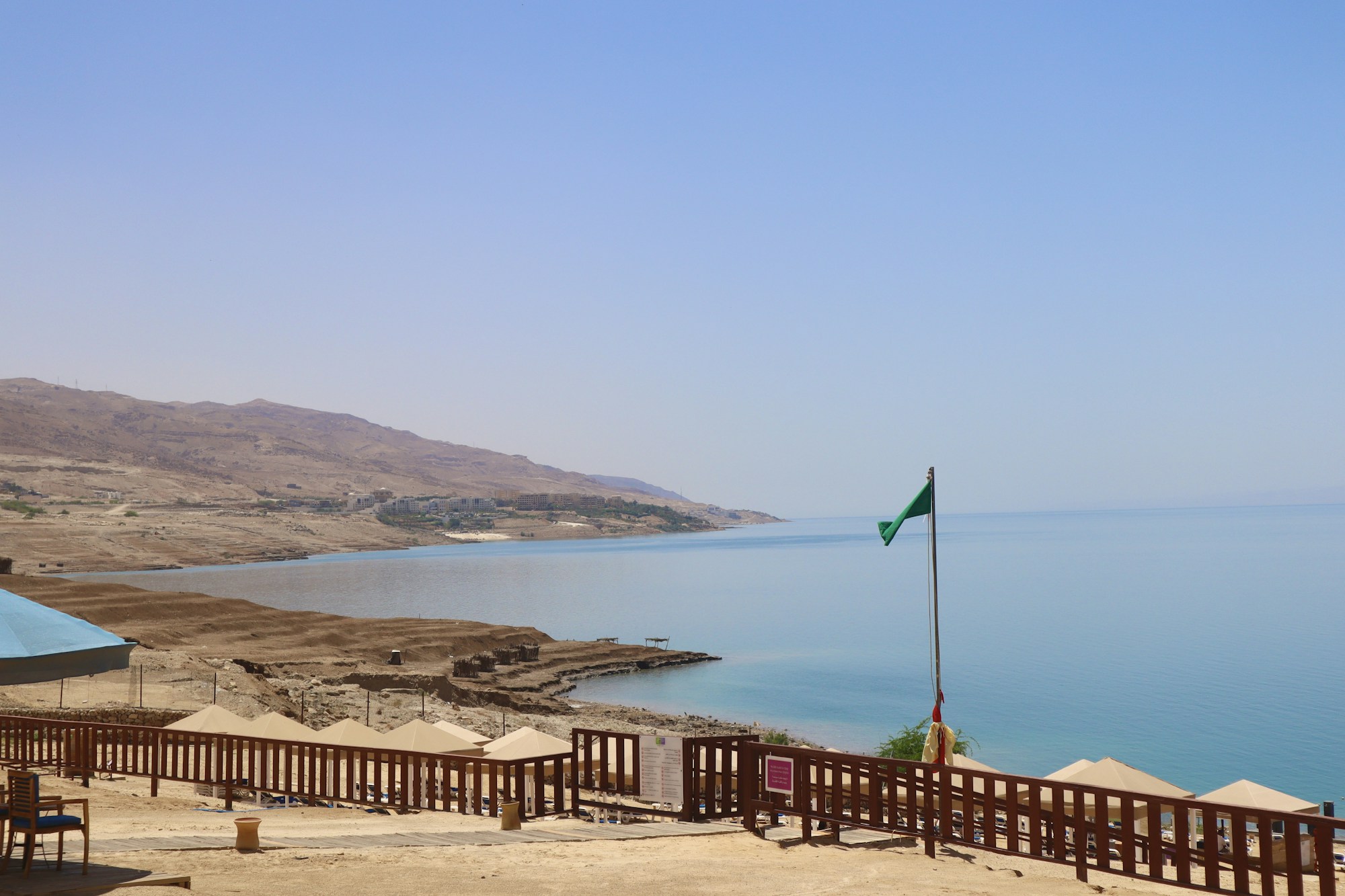
Floating naturally in water with 30% salt is an experience only the Dead Sea can offer. Located at −430m below sea level, it is the lowest point on Earth. 5-star hotels on the shores offer day passes generally between 20 and 40 JOD (€25–55). In 2026, with reduced footfall, some luxury hotels have cut their rates by 30–40%, according to GTLA.
Cancel, postpone or go? The 3 scenarios according to your profile
Make the best decision for you
Based on data gathered from the UK Foreign Office, the US State Department and several on-the-ground operators, three traveller profiles stand out this spring 2026:
🔴 Scenario 1 — Cancel
Who it’s for: You have non-refundable bookings for flights or accommodation and the regional situation has worsened further since your booking. First check your cancellation insurance (some cover geopolitical risks). Cancelling is reasonable if your country’s foreign office formally advises against travel on your departure date.
🟡 Scenario 2 — Postpone by 4 to 8 weeks
Who it’s for: You are in the planning phase and don’t yet have firm bookings. This is the most sensible recommendation at this time. The situation related to the strikes on Iran (February 2026) could stabilise by May–June. Only book flexible, modifiable tickets. The ideal season (Jordanian spring) extends to May, and autumn (September–November) is an excellent alternative window.
🟢 Scenario 3 — Go now
Who it’s for: You are an adventurous, well-informed traveller with total flexibility on your dates and plans. Jordan has maintained exemplary stability despite its proximity to conflict zones. You will have sites like Petra and Wadi Rum almost to yourself, at prices not seen for ten years. Essential condition: check official advice in the 48 hours before each flight, take out evacuation insurance, and keep a back-up evacuation plan.
Jordan travel budget 2026: what you’ll really pay
Realistic estimate for a couple (7 days)
For 14 days in Jordan, a couple can expect to spend approximately €2,117, or €75 per person per day on the ground, including the Jordan Pass. In 2026, with discounts linked to low footfall, this budget is even more achievable:
- Flights: €200–400 per person return from London (easyJet, Royal Jordanian, British Airways)
- Jordan Pass 2 days Petra: 75 JOD (€92) — visa + 40 sites included
- Accommodation: €35–50/night at a 3★ hotel, from 25 JOD in a Wadi Rum Bedouin camp
- Meals: 7–12 JOD (€9–15) at a restaurant, 2–3 JOD for a sandwich
- Transport: car hire recommended, ~€30/day, excellent roads
Practical information for your trip to Jordan
Stay connected from the moment you land in Amman. Access real-time security alerts, offline maps, emergency contacts. Instant activation before departure.
From €4.50In a geopolitically sensitive area, insurance covering medical expenses, evacuation and cancellation is essential. Jordan’s healthcare system charges tourists.
From $1.49/dayFrequently asked questions about travelling to Jordan in 2026
Should you cancel your trip to Jordan in 2026?
The decision depends on your profile and travel date. The UK Foreign Office has not banned travel but recommends heightened vigilance since March 2026. Classic tourist areas (Petra, Wadi Rum, Dead Sea) remain accessible and secure. However, if you are travelling in the next two weeks, only book refundable or modifiable tickets and accommodation, take out evacuation insurance, and check official alerts in the 48 hours before your departure. Postponing by 4 to 8 weeks is the most prudent recommendation at this time.
Is Petra still open and accessible in 2026?
Yes, Petra is open and fully operational. Guided tours are organised daily. The site benefits from reinforced police presence. With the tourism slump, you will have the rare privilege of wandering in front of the Treasury (Al-Khazneh) with very few people around. Temporary closures remain possible in the event of a sudden regional escalation, which is why total flexibility in your bookings is essential.
Is there a risk of Jordanian airspace closure?
Due to the current situation, significant restrictions on regional air traffic are possible: short-term airspace closure, delayed or cancelled flights. An airspace closure remains conceivable in the event of regional escalation, according to the Swiss travel advice. It is essential to only book refundable or modifiable tickets and to monitor your flight status with your airline daily.
Have prices really fallen with the tourism crisis?
Yes, significantly. Hotel occupancy has fallen below 6%. Fierce competition among the few remaining active providers translates into 30–50% discounts on accommodation and tours. Bedouin camp nights in Wadi Rum are available from 25 JOD with dinner and breakfast. Dead Sea 5-star hotels are offering day passes and nightly rates unseen for a decade. For the adventurous, well-informed traveller, this is a historic opportunity.
Is Jordan safe for solo female travellers?
Jordan ranks among the best options for solo female travellers in the Middle East, thanks to a combination of a welcoming society and effective safety practices. Respecting local customs regarding dress is essential. Classic tourist circuits (Petra, Wadi Rum, Dead Sea, Amman) remain the most suitable for solo female travellers. Avoid areas near foreign embassies in Amman, particularly on Fridays.
Is the Jordan Pass really worth buying?
If Petra is on your itinerary, the Jordan Pass is essential: for a 7–10 day stay including 2 days at Petra, it costs 75 JOD (€92) and includes the Jordan visa fee waiver. Without the Jordan Pass, entry to Petra alone costs 50 JOD (€65) per day. The Jordan Pass also covers access to Jerash, Wadi Rum and more than 40 other sites. It must be purchased online before arriving in Jordan at jordanpass.jo.
What is the best time to visit Jordan in 2026?
Spring (March–May) and autumn (September–November) offer the most pleasant temperatures: 18–25°C at archaeological sites. Avoid July and August at all costs: extreme heat up to 42°C in Wadi Rum and 48°C in the Jordan Valley. In 2026, given the security situation, autumn (October–November) offers better visibility on the regional geopolitical evolution before booking.
How do you get to Jordan from the UK in 2026?
Queen Alia International Airport in Amman is the main gateway. Royal Jordanian, British Airways, easyJet and several other airlines offer flights from London and other UK cities, with prices ranging from €200 to €400 return depending on the season. Check for any overflight restrictions related to the regional situation before departure. Land crossings from Israel and the West Bank may be closed without notice — do not include them in your main itinerary.
Sources and references
- UK Foreign, Commonwealth & Development Office — Jordan travel advice (updated March 2026)
- US State Department — Jordan Travel Advisory (Level 3 — Reconsider Travel, March 2026)
- Smartraveller Australia — Jordan (February 2026)
- Ulysse — Petra: Jordan faces an unprecedented tourism crisis
- Carnets de voyages — Petra faces an unprecedented tourism crisis (2026)
- Travel and Tour World — Jordan Tourism Boom 2026 (January 2026)
- Travel and Tour World — Planning a Trip to Jordan: 2026 Safety Update
- MyFairyTrail — Jordan in 2025-2026: Safe, Affordable, and More Accessible Than Ever
- Jordan Pass — Official prices 2026
- Government of Canada — Travel advice and advisories for Jordan
Ready to plan your trip to Jordan?
Browse our itineraries and experiences on Pixidia to find the best adventures in Jordan, tailored to your profile and budget.
Explore Jordan itineraries