
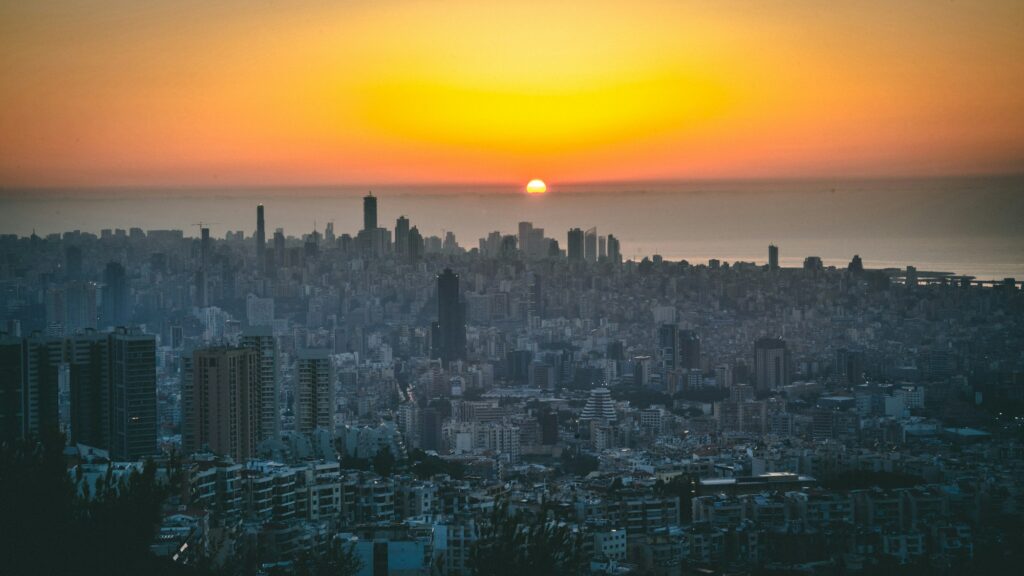
An article that was almost impossible to write. Lebanon in April 2026 is a nation at war. Since March 2, 2026, Israeli airstrikes have killed more than 1,450 people and displaced 1.2 million Lebanese citizens. Beirut, Byblos, the Bekaa Valley — names that once evoked gastronomy, millennial archaeology, and the legendary Levantine art of living — now resonate with an entirely different sound. Yet this article exists. Because you need to understand what is happening. Because thousands of Lebanese diaspora members are searching for reliable information about their country. And because Lebanon — as it has done after 1975, after 2006, after 2020 — will come back. This guide is both a factual overview of the situation in April 2026 and a roadmap for when peace is restored.
🔴 The April 2026 War: What You Absolutely Need to Know
Security situation in April 2026
Since March 2, 2026, Lebanon has been at war again. The collapse of the November 2024 ceasefire — a 60-day agreement meant to allow Israeli withdrawal and Hezbollah’s retreat north of the Litani river — gave way to renewed hostilities in the context of the Iran-Israel war. Hezbollah launched strikes on Israel in retaliation for the assassination of Iranian Supreme Leader Ali Khamenei, and Israel responded with a large-scale aerial campaign across Lebanon.
According to Al Jazeera (April 6, 2026), Israeli airstrikes have killed more than 1,450 people and displaced approximately 1.2 million residents — around 22% of Lebanon’s population — since the conflict began. The worst-affected zones: southern Lebanon, the southern suburbs of Beirut (Dahiyeh), and the Bekaa Valley.
Risk zones map
- EXTREME risk: Southern Lebanon (below the Litani), southern Beirut suburbs (Dahiyeh), eastern Bekaa, Baalbek, Syrian border
- HIGH risk: Central Beirut, Achrafieh, Hamra, airport area
- MODERATE risk: Mount Lebanon (Jounieh, Byblos, Bcharré), Tripoli
🏙️ Beirut: The Capital That Refuses to Die
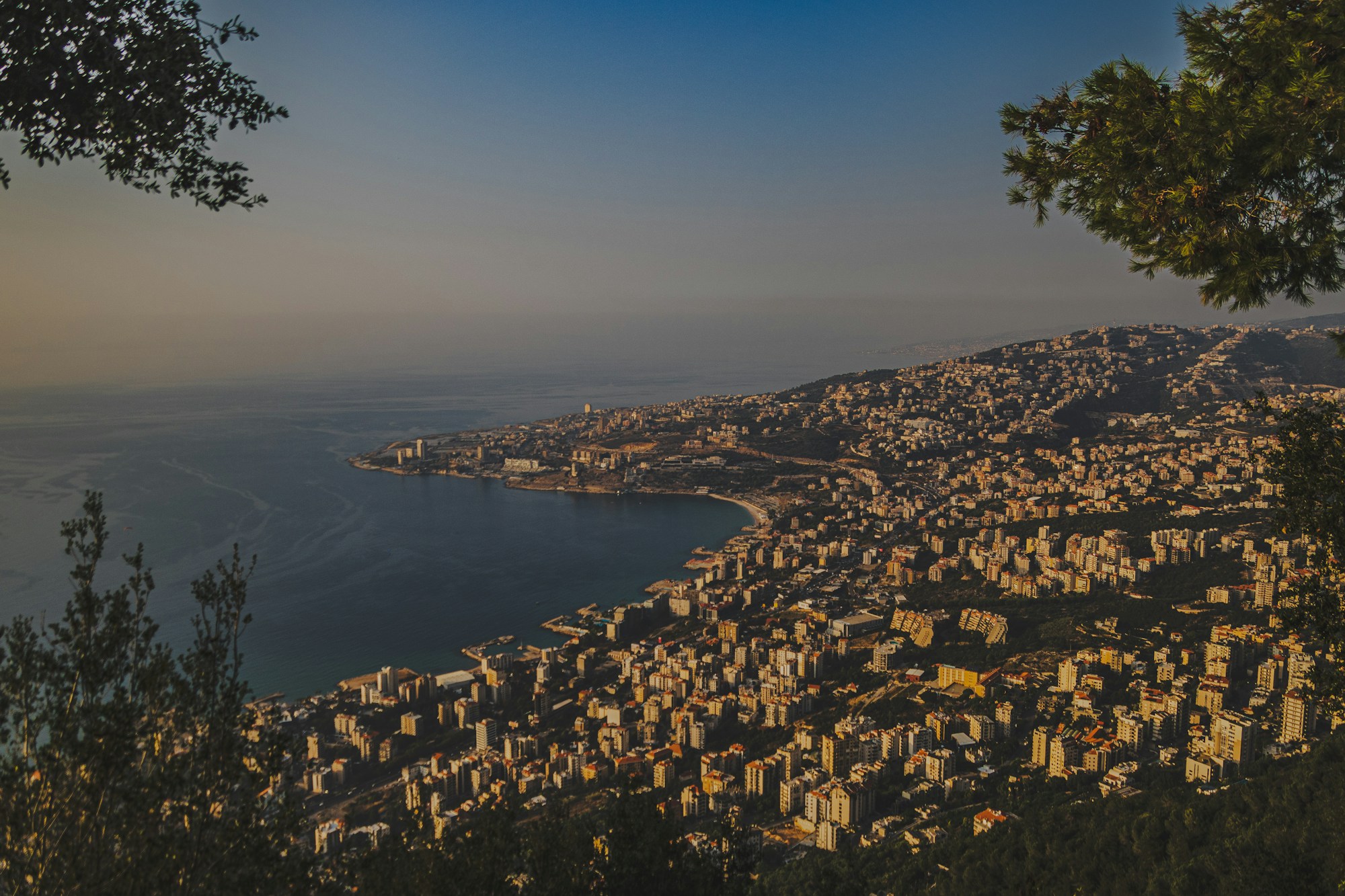
Current state of the Lebanese capital
Beirut is a city of absolute paradoxes. Cosmopolitan, multi-religious (18 communities coexist), formerly the cultural hub of the Arab-speaking world, it remains one of the most fascinating metropolises in the Middle East. Its scars are many: the civil war (1975–1990), the 2006 war, the devastating port explosion in August 2020, and now 2026. Yet Beirut persists.
In April 2026, only certain neighborhoods remain relatively approachable. According to Graphislam.com, the least-affected areas are central Beirut — the neighborhoods of Achrafieh, Hamra, Gemmayzé — and parts of Mount Lebanon. Absolutely avoid the southern suburbs (Dahiyeh), a Hezbollah stronghold and regular target of airstrikes.
The economic impact is catastrophic: according to ICI Beirut, 60 to 70% of downtown businesses are closed. And on January 14, 2026, the iconic Hotel Commodore — the historic refuge of foreign correspondents — permanently closed its doors for the first time since its founding.
What Beirut offered travelers (for when peace returns)
- The Corniche and Pigeon Rocks (Raouché) at sunset
- The National Museum of Lebanon with its Phoenician collections
- The gastronomic scene of Gemmayzé and Mar Mikhael
- The Armenian quarter of Bourj Hammoud, underrated but authentic
- The rebuilt downtown souks developed by Solidere
🏛️ Byblos (Jbeil): The World’s Oldest City Holds On
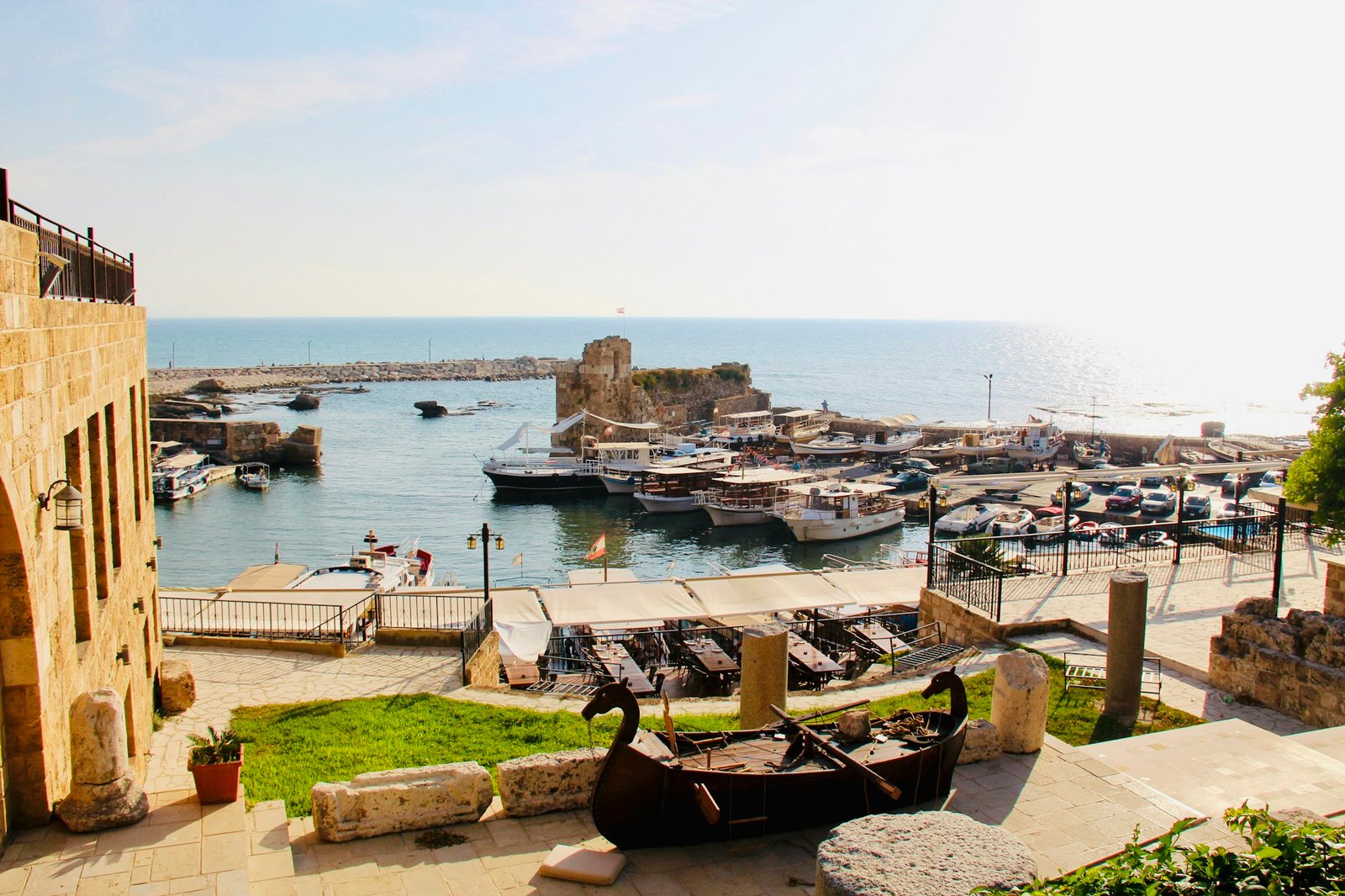
One of the oldest cities on earth
Byblos is one of those places that physically confronts you with the scale of human time. Continuously inhabited for at least 7,000 years, it rivals Damascus and Jericho for the title of oldest city in the world. Its history is literally universal: the Phoenician city was central to the papyrus trade from ancient Egypt, so much so that « byblos » came to mean « papyrus » in Greek. The word « Bible » itself derives from the Greek name of this city, according to UNESCO.
In 2026, Byblos benefits from a relatively sheltered geographic position — north of Beirut and far from the combat zones. According to the Routard, it is one of the least-exposed cities in the country. But bear in mind: « less exposed » does not mean « safe » in the context of an active conflict. Flights to Beirut remain very limited and the overall situation demands constant vigilance.
A remarkable cultural note: from March to August 2026, the Institut du Monde Arabe in Paris is presenting a major archaeological exhibition titled « Byblos, Millennial City of Lebanon, » featuring 400 pieces spanning 9,000 years of history — originally planned for 2024, it was postponed due to the conflict. Learn more about the exhibition.
Not to miss in Byblos (when conditions allow)
- The archaeological site: Phoenician temples, Persian fortifications, Roman ruins, and Crusader citadel
- The old harbor and its seafood restaurants
- The Bronze Age necropolis, discovered during ongoing excavations since 2018
- MACAM (Museum of Modern and Contemporary Art) in a converted factory
🍷 The Bekaa Valley: Vineyards in Suspense
Lebanon’s breadbasket between war and resilience
The Bekaa Valley is a 120-km-long fertile plain nestled between Lebanon’s two mountain ranges. This is where the Middle East’s most renowned wineries are concentrated: Château Ksara (founded in 1857, 2.4 km of historic cellars), Château Musar (legendary for producing wine throughout the civil war), and Château Kefraya. According to Voyages-Yolo, Lebanon is one of the world’s oldest wine-producing regions.
But in 2026, the Bekaa is severely impacted. Travel to the eastern Bekaa and the Syrian border is formally discouraged. Israeli airstrikes have emptied towns and destroyed businesses. One winery owner lost $500,000 during the 2023–2024 conflict and watched his sales collapse from 10,000 to 1,000 bottles, according to The National News.
The Bekaa’s gems to discover in peacetime
- Château Ksara: 2.4 km of cellars and tastings in 1,000 m altitude vineyards
- Château Musar at Chtaura: the most mythical estate, with stories of winemaking through civil war
- Zahlé and its riverside restaurants, nicknamed « the city of mezze and poetry »
- The Umayyad site of Anjar (UNESCO), Lebanon’s only fortified city from the Islamic period
🏚️ Baalbek: The Wounded Roman Gem
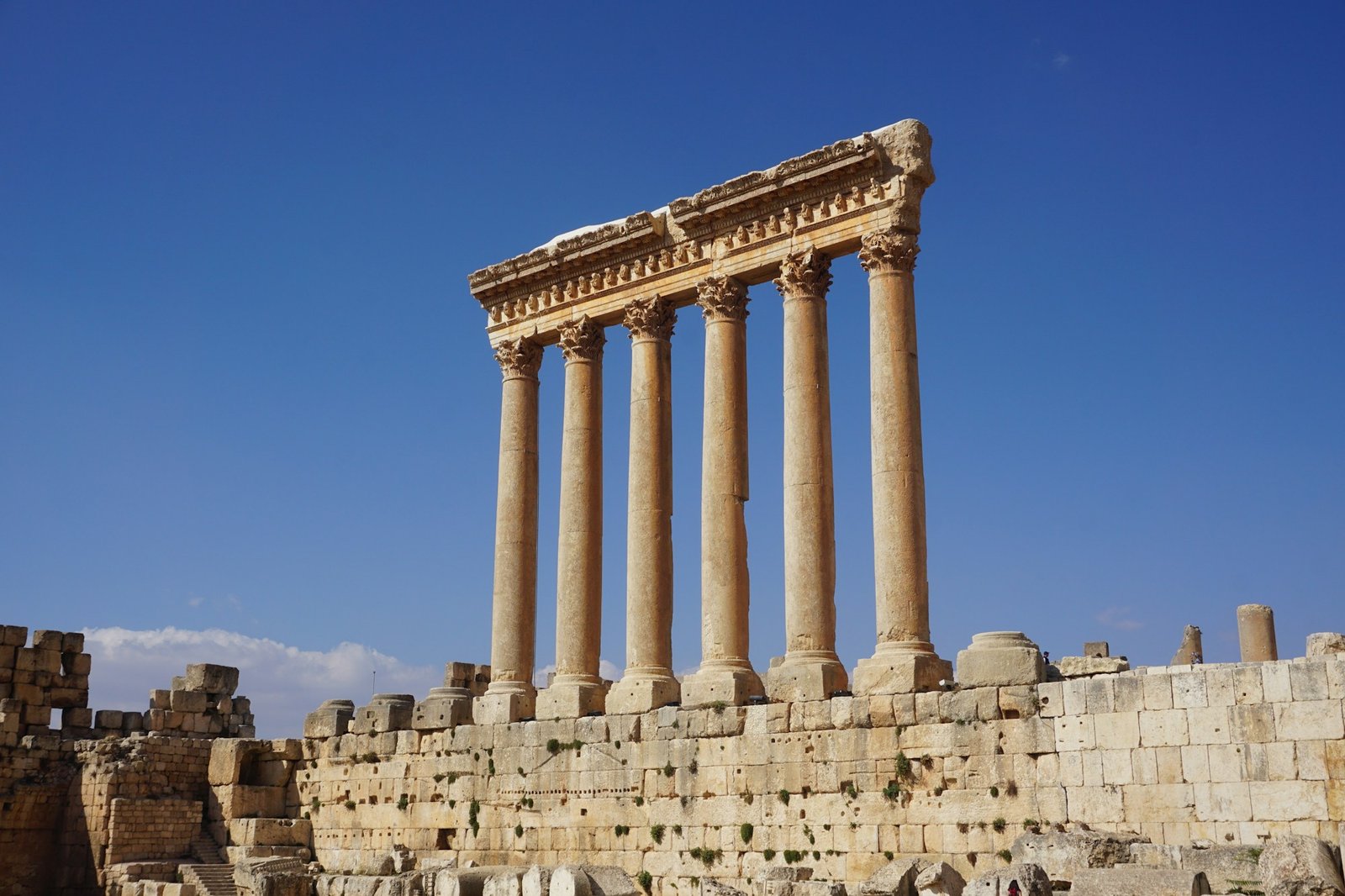
❌ War zone — Impossible to visit in April 2026
Baalbek is home to one of the largest Roman temple complexes ever built. The Temple of Jupiter with its six 22-metre-tall columns still standing, the Temple of Bacchus — better preserved than the Parthenon — and the Temple of Venus compose an ensemble that defies comprehension. A UNESCO World Heritage Site since 1984, Baalbek was one of the ten most remarkable archaeological destinations in the world.
In 2026, the situation is catastrophic. « We’re back to zero, » said a business owner to The National News (March 6, 2026). Israeli strikes have erased the fragile economic recovery sparked by the return of the Baalbek Festival in 2025. During the 2024 campaign, the historic Hôtel Palmyra — which had hosted Charles de Gaulle and Jean Cocteau — closed for the first time in 150 years after sustaining damage.
⛰️ Mount Lebanon: The Relative Refuge in the Storm
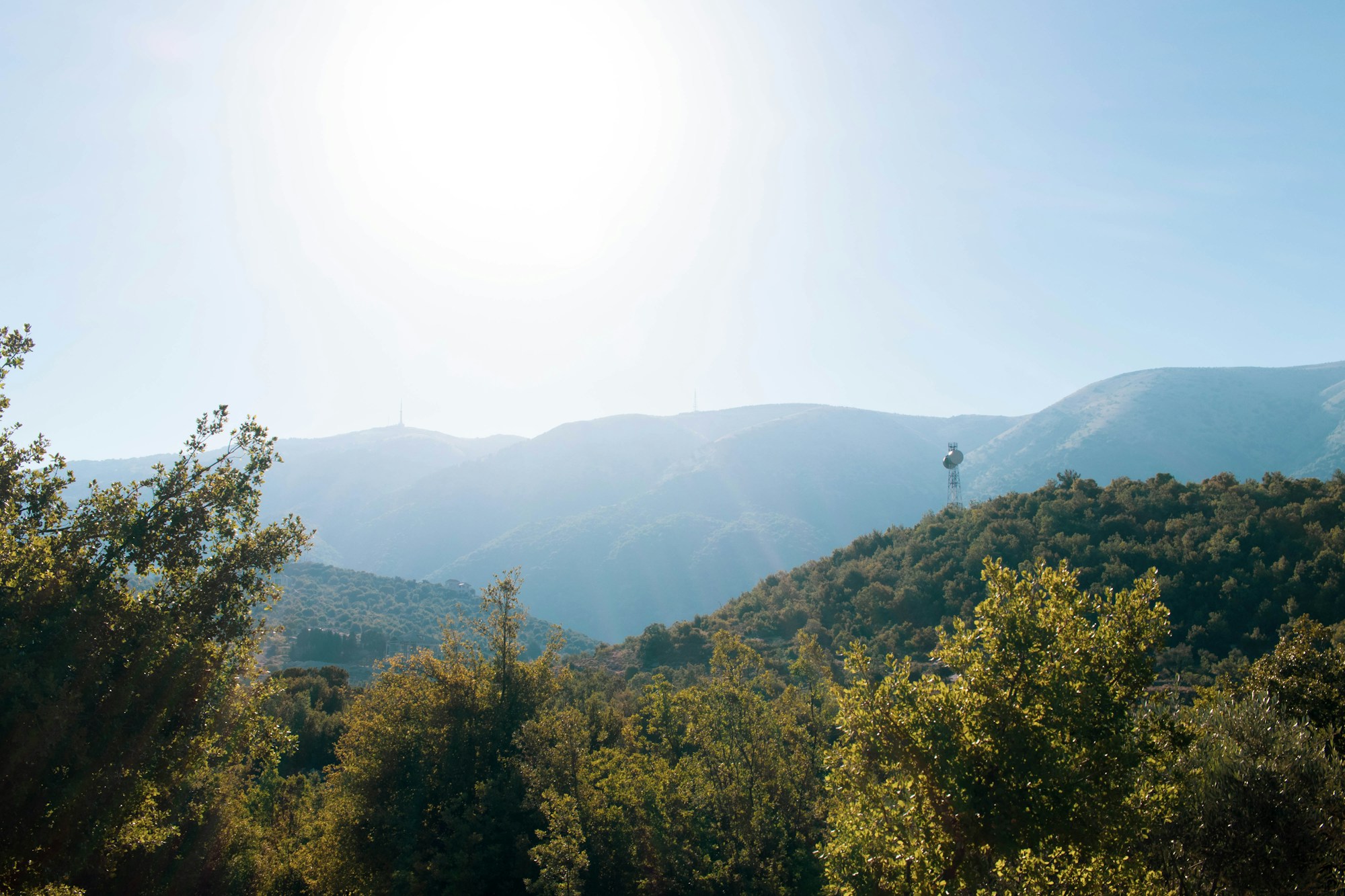
The central range: least exposed to active fighting
Mount Lebanon is currently the least-exposed refuge from active combat. Central Beirut, Mount Lebanon, Byblos, Tripoli, and mountain resorts are generally considered the least-affected zones, subject to permanent vigilance. This is where the country’s internally displaced people are concentrated, fleeing the south and the Bekaa.
In peacetime, Mount Lebanon offers a phenomenon unique in the world: skiing in the morning and swimming in the Mediterranean in the afternoon on the same day. The resorts of Faraya-Mzaar, The Cedars, and Laqlouq are less than an hour from Beirut. In spring and summer, hiking through gorges and medieval Maronite villages takes over.
Mount Lebanon’s highlights
- Jounieh and the cable car to Our Lady of Harissa (panoramic view of the bay)
- Jeita Grotto: the world’s largest stalactite, boat ride through underground galleries
- Ehden and Zgharta in the north: ancient Maronite monasteries
- Deir el-Qamar and Beiteddine: preserved Ottoman palaces and village in the Chouf
🌲 The Qadisha Valley and the Cedars of God
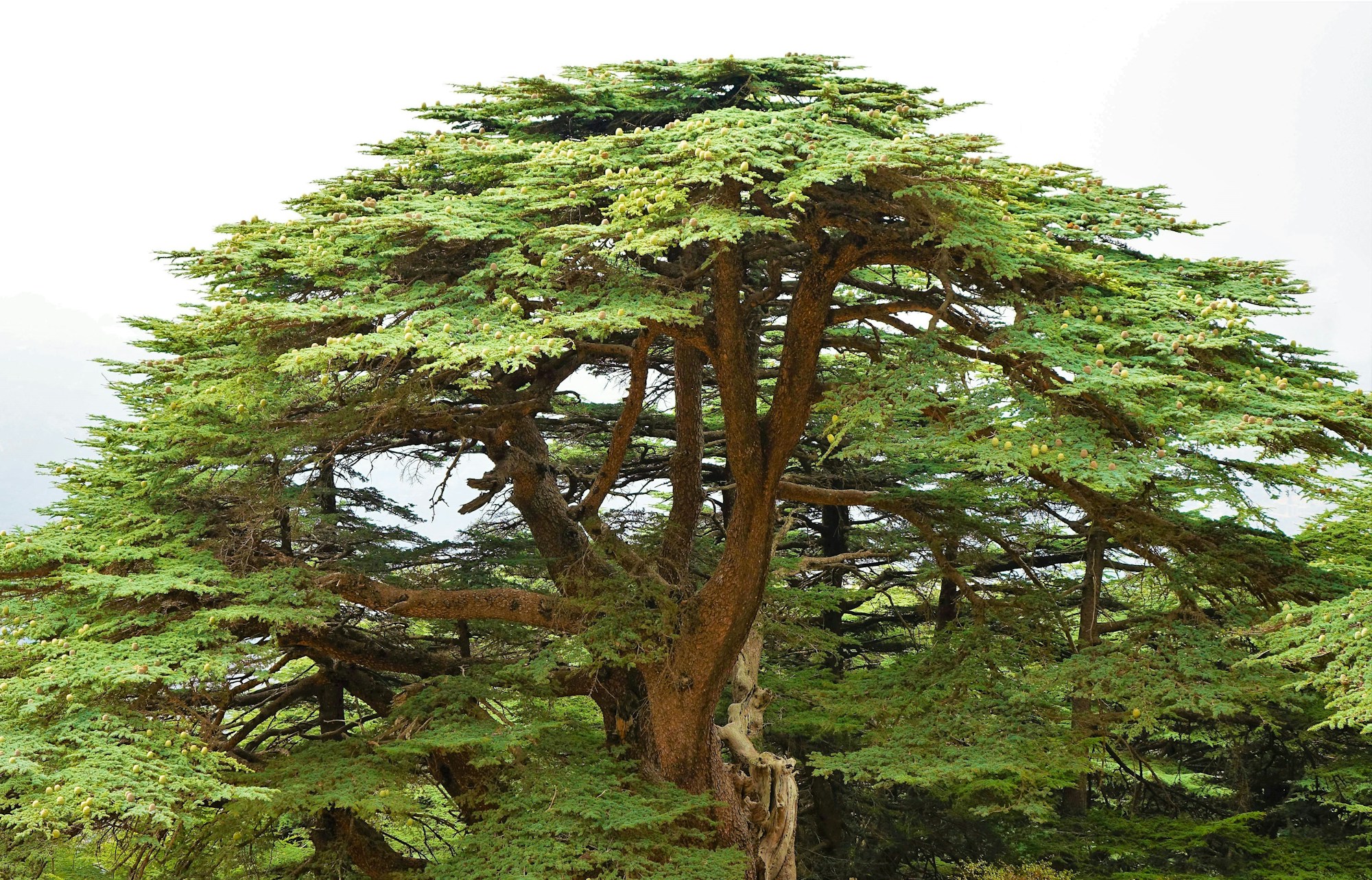
Dual UNESCO heritage in the heart of northern Lebanon
The Qadisha Valley (« the Sacred » in Aramaic) is one of Lebanon’s most spiritually charged sites. Carved by the Qadisha river and mentioned in the Bible, this rugged gorge shelters ancient Maronite monasteries, hermitages carved into the rock since the 5th century, and the pretty village of Bcharré — birthplace of Khalil Gibran, whose museum is housed in a converted 19th-century monastery. Here, the Gibran Museum preserves the drawings, paintings, and manuscripts of the author of The Prophet, repatriated from New York after his death in 1931.
Just above, the Forest of the Cedars of God (Horsh Arz el-Rab) is the remnant of an ancient forest. These majestic trees — Cedrus libani, emblem of the Lebanese flag — can live more than 1,000 years and reach 40 metres in height. The Qadisha + Cedars ensemble has been a UNESCO World Heritage Site since 1998.
🔭 Reopening Prospects: When Will Lebanon Come Back?
Two scenarios for Lebanese tourism
Before the resumption of conflict in March 2026, Lebanon had achieved a spectacular tourism rebound. In 2025, the country recorded 1.63 million visitors, up 44.6% year-on-year, according to Libnanews. The lifting of travel bans by Kuwait and the UAE, the reopening of Jeita Grotto, the return of the Baalbek Festival — everything pointed to a solid recovery.
The war erased it all. GDP contraction for 2026 is estimated at 12% to 16%, with the collapse of tourism as the primary driver.
Practical information for your trip to Lebanon
Nomad Insurance: global coverage including conflict zones. Essential for Lebanon in 2026. 10% off via our link.
From $56 / 4 weeksStay connected as soon as you land in Beirut. Instant activation, no physical SIM needed.
From €4.50Frequently asked questions about Lebanon in 2026
Can you travel to Lebanon in 2026?
No, not for tourist purposes in April 2026. The U.S. State Department classifies Lebanon as Level 4 « Do Not Travel. » France, the UK, Australia, and virtually all Western countries have issued similar advisories. The conflict could escalate rapidly or spread to other areas without warning. If you are already in the country, remain in the least-exposed zones (Achrafieh, Hamra, Mount Lebanon) and contact your embassy.
Is Byblos accessible despite the war?
Geographically, Byblos (42 km north of Beirut) is in a less-exposed zone. It is one of the least-affected cities in the country according to Graphislam.com. But « less exposed » does not mean « safe » in the context of an active conflict. Flights to Beirut are severely reduced and the situation can deteriorate without warning. Tourist travel to Byblos remains inadvisable while maximum-level government alerts remain in effect.
Can Baalbek be visited in 2026?
No. Baalbek is at the heart of an active combat zone in the Bekaa Valley. Israeli airstrikes forced the mass evacuation of the entire city during the 2024 conflict, and the situation has worsened in 2026. According to The National News, the renewed strikes have « brought the situation back to zero » for local business owners. The archaeological site itself is under enhanced UNESCO protection.
Is Beirut International Airport operational?
The situation is very unstable in April 2026. Runways were damaged during initial military engagements, and flights were temporarily suspended. Some flights resumed during ceasefire periods, but airlines modify their schedules daily. Always check your airline’s status before any travel. The road from the airport to the city is itself risky due to the proximity of the southern suburbs (Dahiyeh).
Does my travel insurance cover Lebanon in 2026?
Almost certainly not with a standard policy. The vast majority of travel insurance policies exclude zones classified red by governments, as is the case for Lebanon. In the event of an emergency evacuation, a charter flight can cost €15,000 to €50,000. If you must travel to Lebanon for compelling reasons (family, humanitarian work), subscribe to a specialized policy explicitly covering conflict zones with emergency medical evacuation guarantees.
When could tourism to Lebanon resume normally?
In the best case, if a lasting ceasefire is signed in spring-summer 2026, the areas of central Beirut, Mount Lebanon, and Byblos could welcome visitors again by 2027. Baalbek and southern Lebanon will require several additional years of reconstruction. According to Libnanews, Lebanon’s tourism sector recorded +44.6% visitors in 2025 before the conflict resumed — proof that rapid rebound is possible once stability returns.
Which areas of Lebanon are relatively least risky in 2026?
The zones least exposed to active combat in April 2026 are: central Beirut (Achrafieh, Hamra, Gemmayzé neighborhoods), Mount Lebanon (Jounieh, Byblos, Bcharré, ski resorts), and Tripoli in the north. However, no area of Lebanon can be considered safe in the tourist sense of the word while maximum-level government alerts remain in force. Absolutely avoid southern Lebanon (below the Litani river), the southern suburbs of Beirut (Dahiyeh), and the eastern Bekaa.
Has the heritage of Baalbek and Byblos been damaged by airstrikes?
For Byblos: the archaeological site is physically preserved so far, as it is located far from active combat zones. For Baalbek: during the 2024 campaign, Israel bombed a restaurant near the site and damaged the historic Hôtel Palmyra (open since 1874). UNESCO has granted enhanced protection to the 34 most threatened Lebanese cultural sites. According to The Art Newspaper, a strike destroyed an Ottoman building at the very edge of the Baalbek temple complex.
Sources
- U.S. Department of State — Lebanon Travel Advisory (Level 4)
- U.S. Embassy Beirut — Security Alert April 3, 2026
- UK Foreign, Commonwealth & Development Office — Lebanon travel advice
- Wikipedia — 2026 Lebanon War
- Al Jazeera — 1.2 million displaced (April 6, 2026)
- The National News — Baalbek « Back to Zero » (March 6, 2026)
- The Art Newspaper — Lebanese heritage threatened (March 2026)
- Libnanews — Lebanon’s 2025 tourism rebound threatened by war
- Institut du Monde Arabe — Byblos Exhibition 2026
- UNESCO — World Heritage Site: Byblos
Research conducted on April 7, 2026. The situation in Lebanon changes daily — always verify official sources before any travel.
Plan Your Next Trip Today
Lebanon will return. While waiting for peace to be restored, discover our itineraries in other Mediterranean and Middle Eastern destinations.
Explore all itineraries