
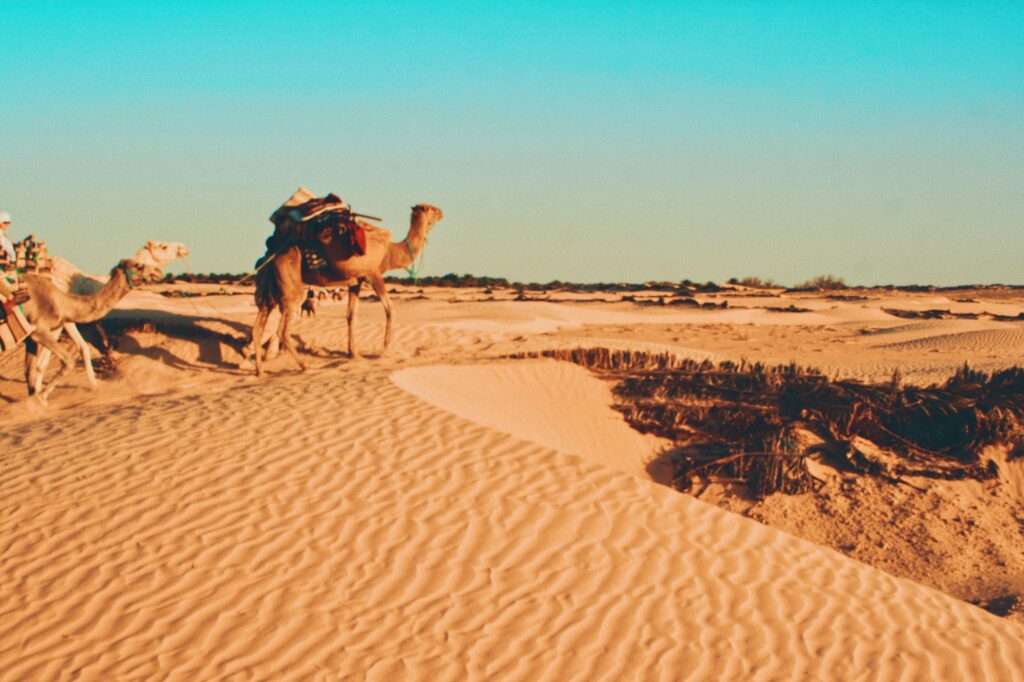
In April 2026, while the Middle East burns under American-Israeli strikes against Iran, another region of the Arab world quietly draws the gaze of travelers seeking authenticity: North Africa. Tunisia, Algeria, coastal Libya — three countries outside the theater of operations, three destinations experiencing an unprecedented tourism renaissance, and perhaps the most underestimated travel opportunity of the moment.
Between the Saharan dunes of Tozeur, the Ottoman medina of Algiers inscribed on the UNESCO list, the pharaonic Roman ruins of Leptis Magna, and Oran’s consecration by the New York Times (7th best destination in the world for 2026), the western Maghreb is profoundly reshaping the map of Mediterranean tourism. Here is why 2026 could be the ideal year to take the plunge.
What the USA-Israel-Iran war changes for tourism in North Africa
Since February 28, 2026, the American-Israeli military operations against Iran (dubbed « Operation Roaring Lion » on the Israeli side, « Operation Epic Fury » on the American side) have upended global tourism in the Middle East. According to Euronews Travel, the conflict is costing the regional travel industry €515 million per day, and tourist arrivals in the Middle East could fall by 11 to 27% year-on-year.
For North Africa, the situation is paradoxical. On one hand, the conflation between « war in the Middle East » and « the entire Arab world » generates distrust in some source markets. On the other, travelers who were considering Jordan, Dubai, or Istanbul are turning to culturally similar alternatives — but geographically out of missile range. Tunisia, Algeria, and coastal Libya are not in the theater of operations. Direct flights from Paris, Madrid, or Rome to Tunis, Algiers, or Tripoli do not pass through the closed airspace of the Gulf.
Tunisia: the Mediterranean comeback
Tunisia crossed the threshold of 11 million tourists in 2025, according to the Tunisian Ministry of Tourism. Ranked the 6th most peaceful Arab country according to the Global Peace Index, it has established itself in the Top 50 world destinations for 2026 according to the TTW ranking. But beyond Hammamet and Djerba, authentic Tunisia — desert, forgotten medinas, wild coastlines — remains largely unexplored.
Tozeur & the Oasis Route — Gateway to the Sahara
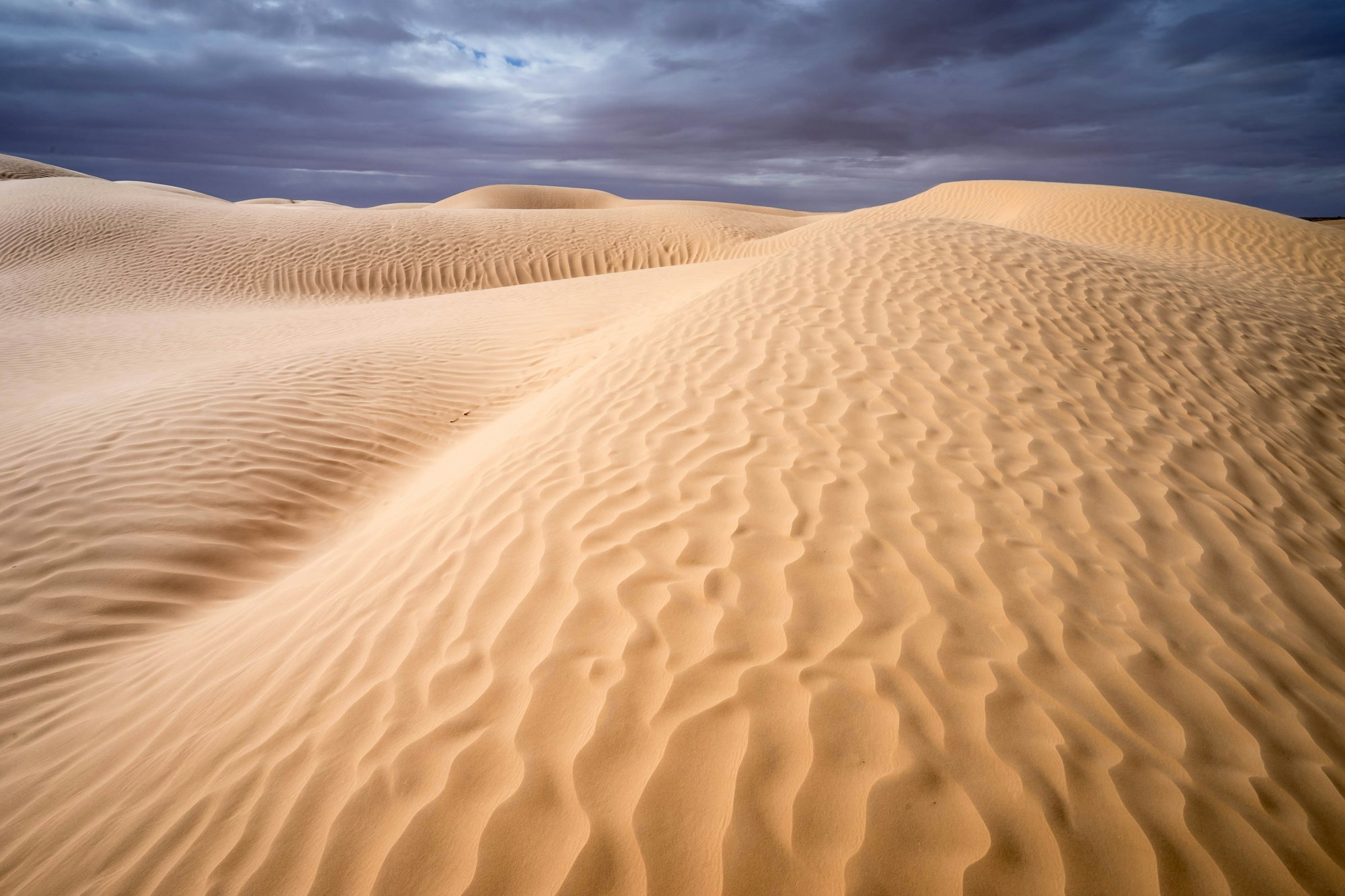
Tozeur is the gateway to the Sahara in Tunisia — just 2.5 hours by plane from Paris. Its 14th-century medina displays a singular architecture in ochre tones, adorned with clay bricks engraved with geometric patterns. Around it, the 1,000-hectare palm grove shelters 400,000 date palms producing the famous Deglet Nour dates, among the most prized in the world.
According to Le Routard, the mountain oases of Chebika, Tamerza and Midès offer lush landscapes in the heart of the arid desert. The legendary Chott el-Djérid — this 100 km salt desert, filming location for Star Wars — is an indescribable spectacle at sunset. Flights from €64 one-way from Paris.
Tabarka & Djerba — Tunisia’s secret between forests and coral
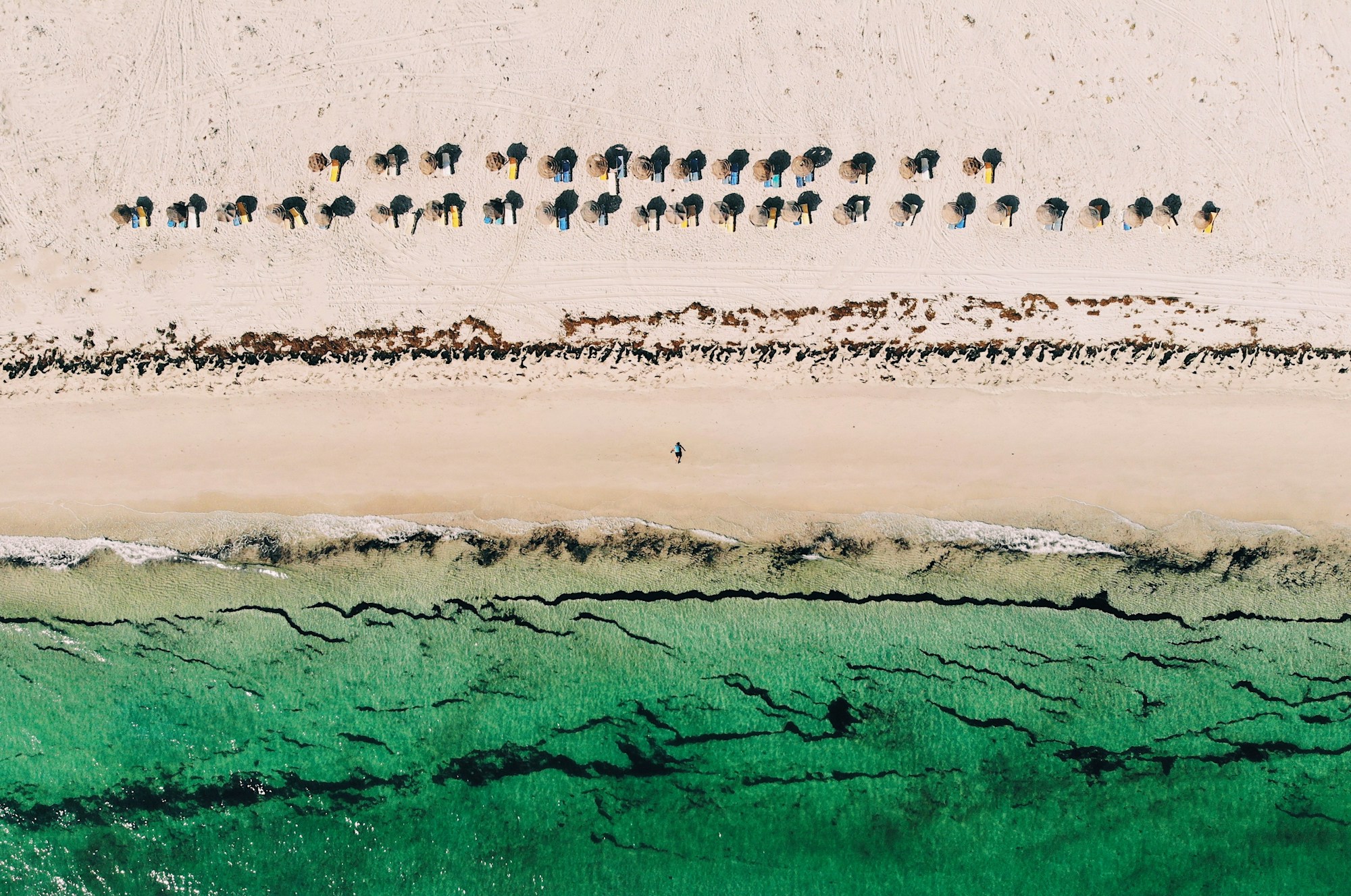
Tabarka, nestled between sea and cork oak forests on the Tunisian-Algerian border, is the great forgotten of Mediterranean tourism. According to Destination Tunisie, the reopening of the La Forêt hotel in Aïn Draham in early 2025 marks the region’s revival. Its seabed — coral reefs, underwater caves, exceptional biodiversity — rivals spots ten times more famous.
On the other side of the map, the island of Djerba still delivers on its promises: turquoise waters, sfax (Berber pottery) and the medina of Houmt Souk to wander early in the morning. Unlike the overcrowded beach resorts on the east coast, Tabarka has never succumbed to mass tourism — and the 2026 season is unfolding right now.
Kairouan & Douz — Holy medina and gateway to the Sahara
Kairouan, founded in 670 AD, is one of the four holy cities of Sunni Islam — and one of the best-preserved medinas in the Maghreb. Its Great Mosque, among the most architecturally beautiful in the world, contrasts with its relative tourist obscurity. Targeted investment projects underway in the Central region enable the restoration of medieval fondouks (caravanserai inns) and guesthouses.
300 km further south, Douz — « gateway to the Sahara » — and the oasis of Ksar Ghilane (natural hot springs at 38°C amid the dunes, accessible by 4×4) offer a quasi-mystical experience. According to Cityzeum, the Sahara Festival in Douz in December celebrates nomadic culture with shows, camel races, and craft markets.
Algeria: the « sleeping giant » the world is rushing to in 2026
The BBC, CNN Travel, the Washington Post, and the New York Times all agree on one point: Algeria is the most spectacular tourism revelation of 2026. Long perceived as one of the world’s most closed countries, it aims for 12 million tourists by 2030 after 3.5 million in 2025. The African Travel and Tourism Association (ATTA) places it at the top of « African destinations to watch » in its 2026 annual report. Visas on arrival are now available for the Sahara and High Plateaus.
Oran — 7th best destination worldwide according to the New York Times
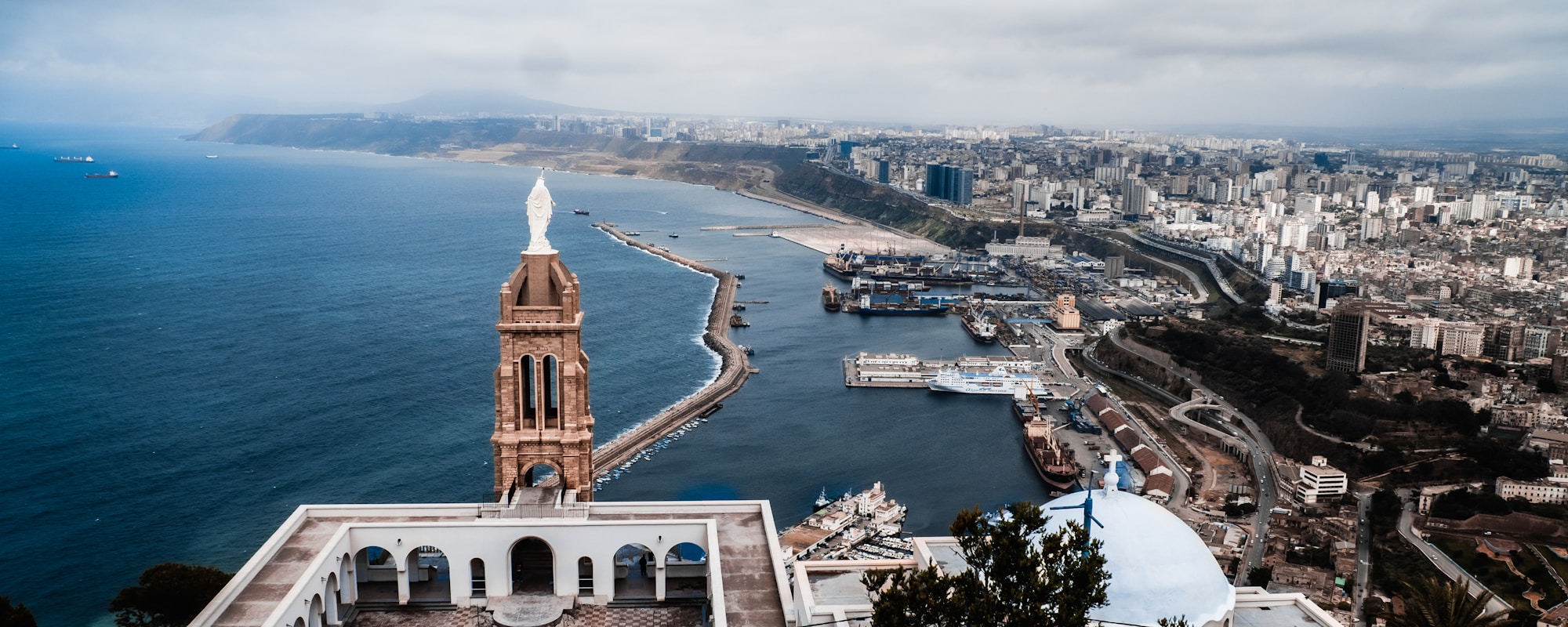
The consecration came at the start of 2026. Oran was ranked 7th in the prestigious New York Times 52 Best Places to Go ranking — ahead of Barcelona (Poblenou, 10th) and the Caribbean island of Saba. According to ObservAlgérie, the newspaper highlights its Mediterranean panoramas from the hills, its palaces and fortresses, and its century-old Regional Theater recently restored.
Birthplace of raï — music of popular resistance —, Oran hosts its dedicated national festival every summer. The Sidi El Houari district (old Spanish Oran) displays Art Deco facades with a charmingly dilapidated air that offer exceptional photographic subjects. An authentic Mediterranean city to discover before the tourism wave arrives.
Djanet & Tassili n’Ajjer — The Sahara’s Louvre
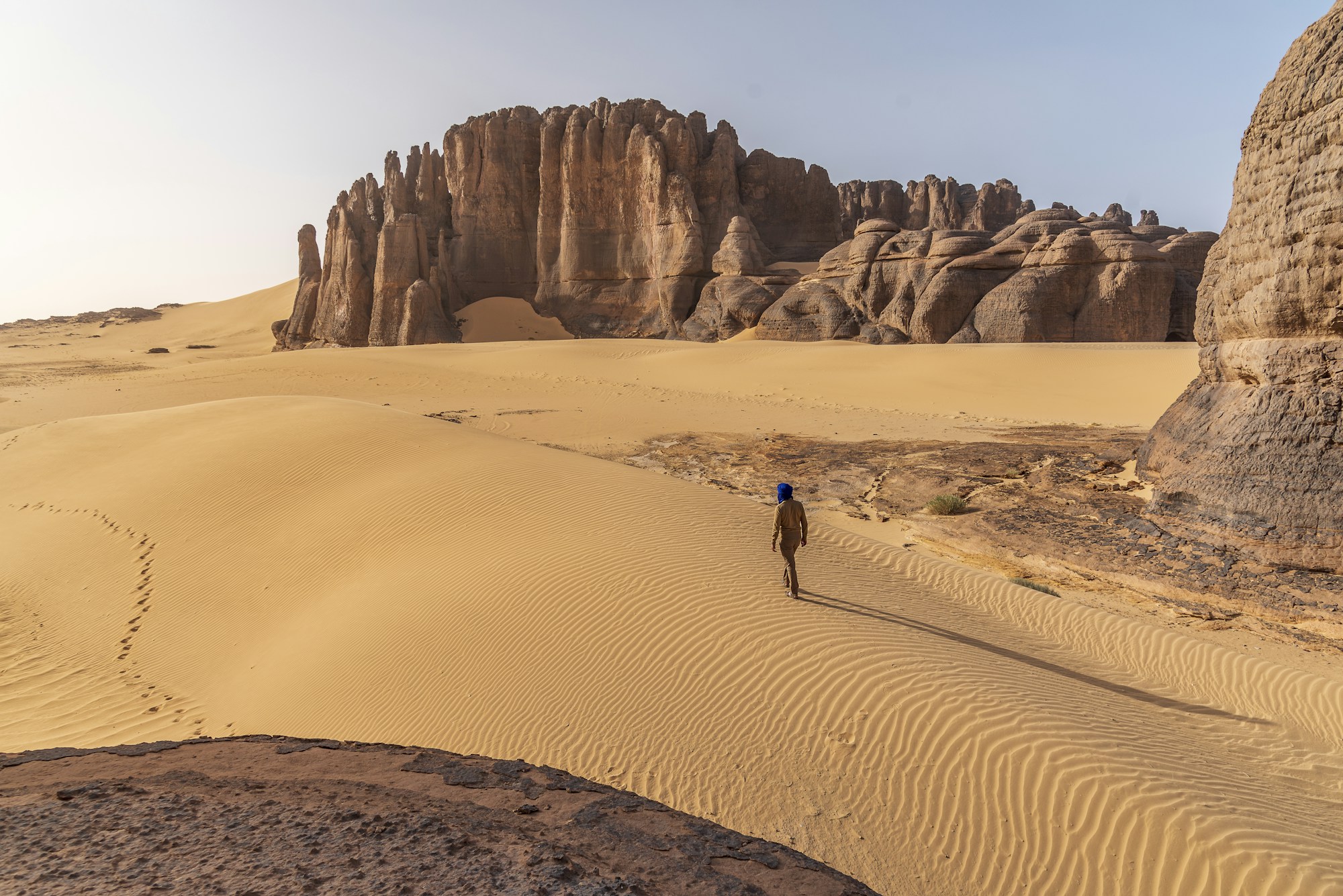
Tassili n’Ajjer is a UNESCO-listed open-air museum: it teems with rock paintings and engravings 7,000 to 12,000 years old, hidden in its nooks, cavities, caves, and shelters. You must walk to reach the mythical sites of Séfar, Tamrit, or Jabbaren — there is no other way. According to Atalante, notable visitor numbers were recorded in February 2025 — prefer November-December for near-pristine landscapes.
A 10-day circuit generally includes the domestic flight to Djanet, a Tuareg guide, 4x4s, bivouacs, and full board (€1,500 to €2,500 depending on the agency). The contrasting landscapes — canyons, dunes, wadis, plateaus, oases — are traversed alternating trekking and 4×4. The Iherir valley, an oasis nestled among imposing cliffs, is among the most beautiful in Saharan Africa.
Algiers & the Casbah — The Ottoman labyrinth of the Mediterranean
Algiers is a superposition of styles and eras: Moorish, Byzantine, and colonial influences, Ottoman heritage, age-old monuments such as the 17th-century Ketchaoua Mosque. The Casbah, a UNESCO World Heritage Site, unfolds its stepped alleyways, Turkish houses with shaded courtyards, and Ottoman mosques with a bird’s-eye view over the bay. According to ObservAlgérie, CNN Travel places Algeria among its best destinations for 2026.
The national hotel capacity reaches 160,000 beds in 2026 (144 new projects). 70 km away, Tipaza offers Roman ruins on the Mediterranean coast — one of the most visually striking experiences in the entire Maghreb, and still surprisingly little known. Explore Worldwide is launching its first Algerian expeditions in early 2026, proof that the international market has firmly placed Algeria on the map.
Coastal Libya: the adventurers’ return — with all due precautions
Yet the trend is clearly toward a return. In the first half of 2025, 282,000 people visited the main Libyan archaeological sites (Sabratha, Leptis Magna) according to the Libyan government — a 60% increase compared to the previous year, according to Euronews Travel. Untamed Borders records a 200% increase in its Libyan bookings. The country introduced an e-visa system in 2024 — where months of waiting and consular trips were previously required, applications are now made online.
Leptis Magna & Sabratha — The Pompeiis of the Mediterranean
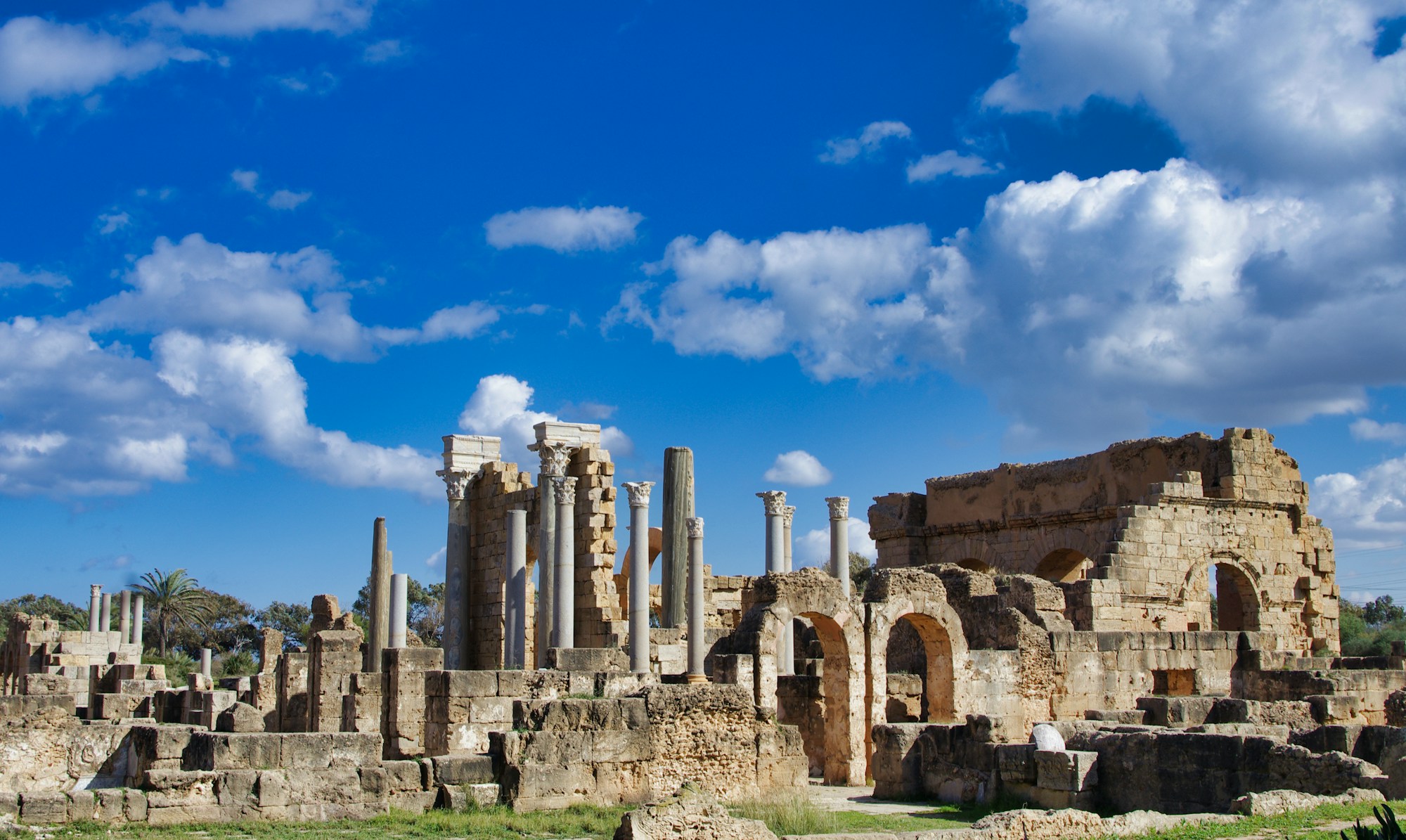
Leptis Magna is one of the best-preserved ancient jewels in the Mediterranean: a 20,000-seat amphitheater, imperial forums, and colossal baths spread across 350 hectares of majestic ruins 130 km east of Tripoli. 80 km to the west, Sabratha enchants with its ancient theater facing the sea — one of the most spectacular images of the Roman world.
According to Clio Voyages — with three decades of experience in Libya —, after fifteen years of interruption, it is once again possible to travel there safely and comfortably. This exceptional archaeological site is often nearly deserted, offering you a quasi-private visit to ruins that rival Rome or Pompeii. The renovated National Museum of Tripoli has reopened after 14 years of closure.
Tripoli & Ghadames — The Bride of the Sea and the Pearl of the Desert
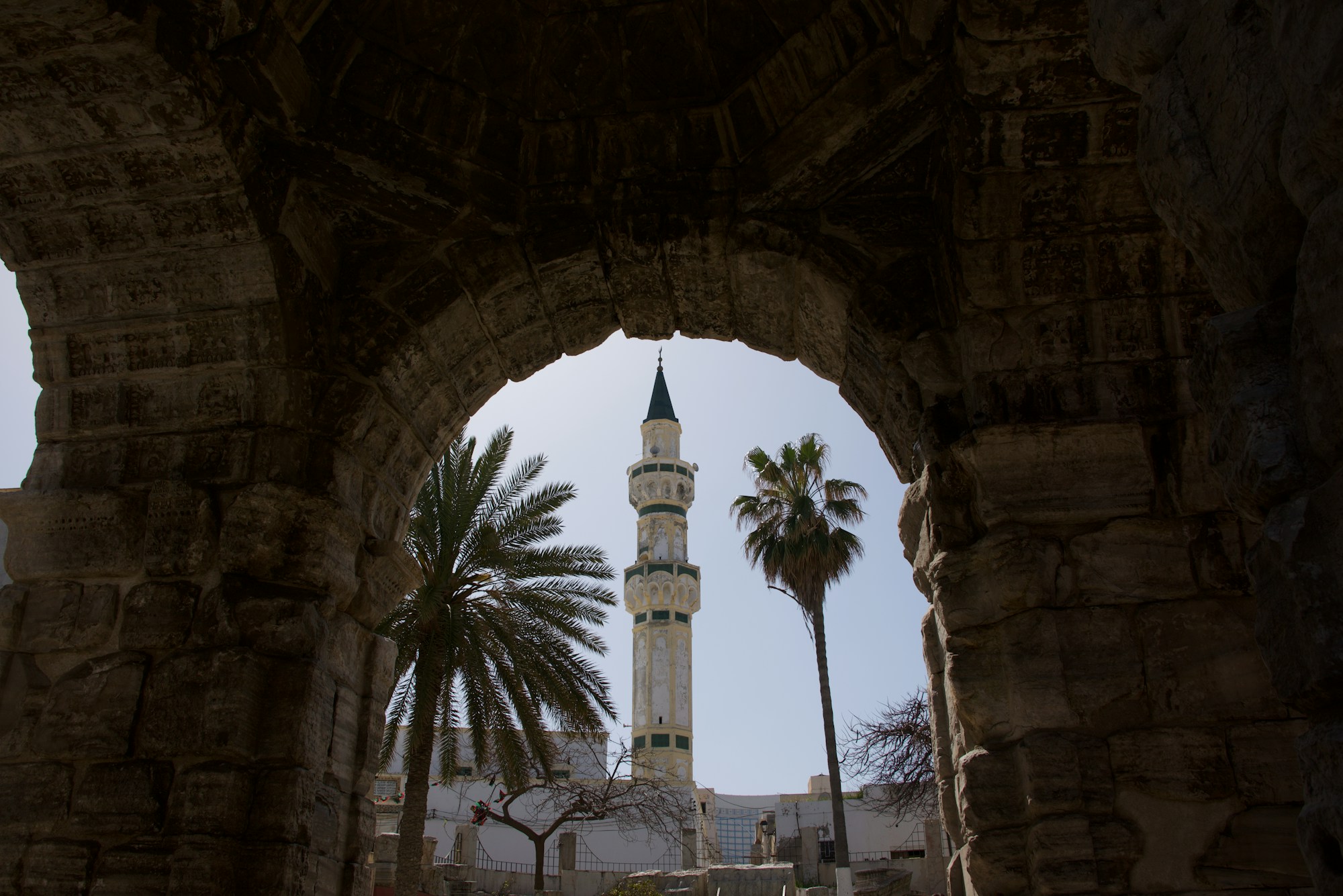
Tripoli, nicknamed « Ârûsat al-Bahr » (Bride of the Sea), lines its whitewashed buildings against a deep blue port under an almost permanent Mediterranean sun. The Ottoman medina, its souks with goldsmiths and carpet merchants, the Arch of Marcus Aurelius (2nd century), the Red Castle — Libya’s first museum, dating from 1919 — form a fascinating historical palimpsest. The evening corniche where young Libyans gather for mint tea offers an unexpectedly warm human touch.
600 km to the southwest, the oasis of Ghadames (UNESCO 1986) is a fully preserved medieval city, with its covered streets allowing everyone to move in the shade, its houses with blue shutters, and its millennial qanat (underground irrigation). From Ghadames, you can reach the three-country triangle (Libya, Algeria, Tunisia) and 70-meter-high dunes. According to Mzungu Expeditions, the inhabitants even speak Ghadamési — a unique Berber language.
Practical information for your North Africa trip
Stay connected from the moment you land, without switching SIM cards. Instant activation, unlimited data available.
From €4.50Comprehensive coverage including medical repatriation — essential for Libya and remote areas. Save 10% via this link.
From $1.50/dayFrequently asked questions about tourism in North Africa in 2026
Are Tunisia, Algeria, and Libya safe during the USA-Israel-Iran war in April 2026?
Tunisia, Algeria, and coastal Libya are geographically outside the theater of military operations. North Africa is not on the battlefield. The direct repercussions mainly concern energy prices and media conflation. Direct flights from Europe (Paris, Madrid, Rome) to Tunis, Algiers, or Tripoli do not pass through the closed Gulf airspace and are fully operational. Always check your government’s official travel advisory website before departure — the situation is evolving rapidly.
Do you need a visa for Tunisia, Algeria, and Libya?
Tunisia: No visa required for EU nationals. Since January 1, 2025, passport must be valid at least 3 months after the return date.
Algeria: Visa required for Europeans (consulate), but visas on arrival are available for the Sahara and High Plateaus. A 30-day tourist visa is now possible.
Libya: E-visa introduced in 2024 — apply online, response within a few weeks. Much simpler processing than before.
What budget should you plan for a trip to Tunisia in 2026?
Tunisia offers excellent value for money. Budget €30 to €70/day depending on your travel style: guesthouse or dar accommodation (€25–50/night), local restaurant meals (€5–15), Sahara 4×4 excursion (€30–80). Flights from Paris are available from €64 one-way. An organized circuit in southern Tunisia (Douz, Tozeur, Djerba) over 4 days starts from €250/person all inclusive.
Can you visit Algeria as an independent traveler?
Yes, for northern Algeria (Algiers, Oran, Constantine, Tlemcen). Intercity buses are comfortable and cheap. However, for the Sahara (Djanet, Tamanrasset), a domestic flight is essential — the new Domestic Airlines company (an Air Algérie subsidiary) is improving connections to remote regions. In protected parks (Tassili n’Ajjer, Ahaggar), a local Tuareg guide is compulsory. Organized tours are therefore the most practical option for these destinations.
Is Libya really accessible in 2026 for a Western tourist?
Yes, but with strict conditions. Libya is reserved for experienced travelers, traveling exclusively with a specialized operator (Clio Voyages, Mzungu Expeditions, Untamed Borders). Tourists cannot move around Tripoli independently — an escort guide is compulsory. Untamed Borders recorded a 200% increase in Libya bookings for 2025-2026. Budget $2,390 to $3,500 for a 7 to 11-day all-inclusive circuit. Credit cards are not accepted — bring cash.
What is the best season to visit North Africa?
The best season varies by region:
• Mediterranean coasts (Tunisia, Oran, Tripoli): April–June and September–October — calm sea, ideal temperatures (20–28°C), without summer crowds.
• Desert (Tozeur, Tassili, Ghadames): October to March — daytime temperatures remain manageable (15–25°C), nights are cool.
• Northern Algeria (Algiers, Casbah): year-round, but spring and autumn are ideal.
Are there trans-Maghrebi tourist routes in 2026?
Yes, and it is one of the most fascinating trends. Travelers are combining Tunisia + Libya in a single loop: Mzungu Expeditions offered in January 2026 a Libya expedition (Jan. 2–8) followed by a Tunisia expedition (Jan. 8–13). Circuits combining the Algerian Tassili n’Ajjer and the Tunisian dunes of Tozeur are developing at several operators. These ultra-confidential « trans-Saharan » routes represent the future of adventure tourism in the region.
What currency to use and can you pay by card?
Tunisia: Tunisian dinar (non-convertible outside Tunisia). Bank card accepted in tourist hotels and restaurants. ATM withdrawals available.
Algeria: Algerian dinar (non-convertible). Bring cash — ATMs for foreign cards are rare.
Libya: Libyan dinar. Cash only — debit and credit cards are generally not accepted, ATMs for foreign cards are virtually non-existent. Bring euros or US dollars.
Sources
- Tunisian Ministry of Tourism — 11 million tourists in 2025
- Euronews — Iran war: $40 billion loss for tourism
- L’Économiste Maghrébin — Tunisia top 50 worldwide 2026
- Destination Tunisie — 2026 season, crisis strategy
- ObservAlgérie — Oran 7th destination worldwide NYT 2026
- Afrique Asie — Algeria, ATTA destination 2026
- Mediaterranee — BBC ranks Algeria in top 20 destinations 2026
- TSA Algérie — Washington Post and Algeria 2026
- Atalante — Tassili n’Ajjer, Algerian desert circuits
- Algérie Patriotique — Ghardaïa, 11,700 tourists 2025-2026 season
- Euronews Travel — Traveling in Libya in 2026
- Clio Voyages — Highlights of Libya circuit 2026
- Mzungu Expeditions — Libya expedition 2026
- Le Routard — Tozeur, gateway to the desert
- Partirou — Guide to the Libyan coast
Plan your North Africa trip with Pixidia
Build your personalized itinerary for Tunisia, Algeria, or Libya — and access the best local experiences in 2026.
Explore itineraries