

Summer 2025 broke all records: 42°C in Seville, 38°C in Marseille, overcrowded beaches and unbearable tropical nights. In 2026, a quiet revolution is sweeping through savvy travellers — the coolcation, a blend of « cool » and « vacation ». Google searches for fresh destinations have exploded by 300% in one year. Tourism in Scandinavia is set to surge 35% in 2026. And 42% of travellers now say they prefer less crowded, more authentic destinations. This guide presents the four standout coolcation destinations where temperatures stay below 25°C — for a summer that truly lets you breathe.
The coolcation: the big travel trend of summer 2026
- 300% surge in « coolcation » searches in 2025-2026 (Google Trends)
- 35% projected growth in Scandinavian tourism in 2026
- 42% of travellers now prefer less-crowded, more authentic destinations
- Average summer temperatures: 14–22°C in Brittany · 15–20°C in Scotland · 12–20°C in the Lofoten · 18–24°C in the Azores
The coolcation is no longer a marketing gimmick — it’s a travel philosophy responding to a genuine climatic reality. Escaping the overheated south of Europe in August is no longer a second-best option: it’s an informed choice. Less overtourism, often softer prices than the Mediterranean in peak season, and more authentic experiences in preserved natural settings.
In practical terms, a week on the French Riviera in August often exceeds €1,500 per person. The destinations we present offer a comparable — or lower — budget for incomparable experiences, without the crowds or oppressive heat. Swap the queue at the Parthenon for a deserted trail in the Highlands, the air conditioning of a resort for the fresh wind of a Norwegian fjord.
1. Brittany: guaranteed Atlantic freshness
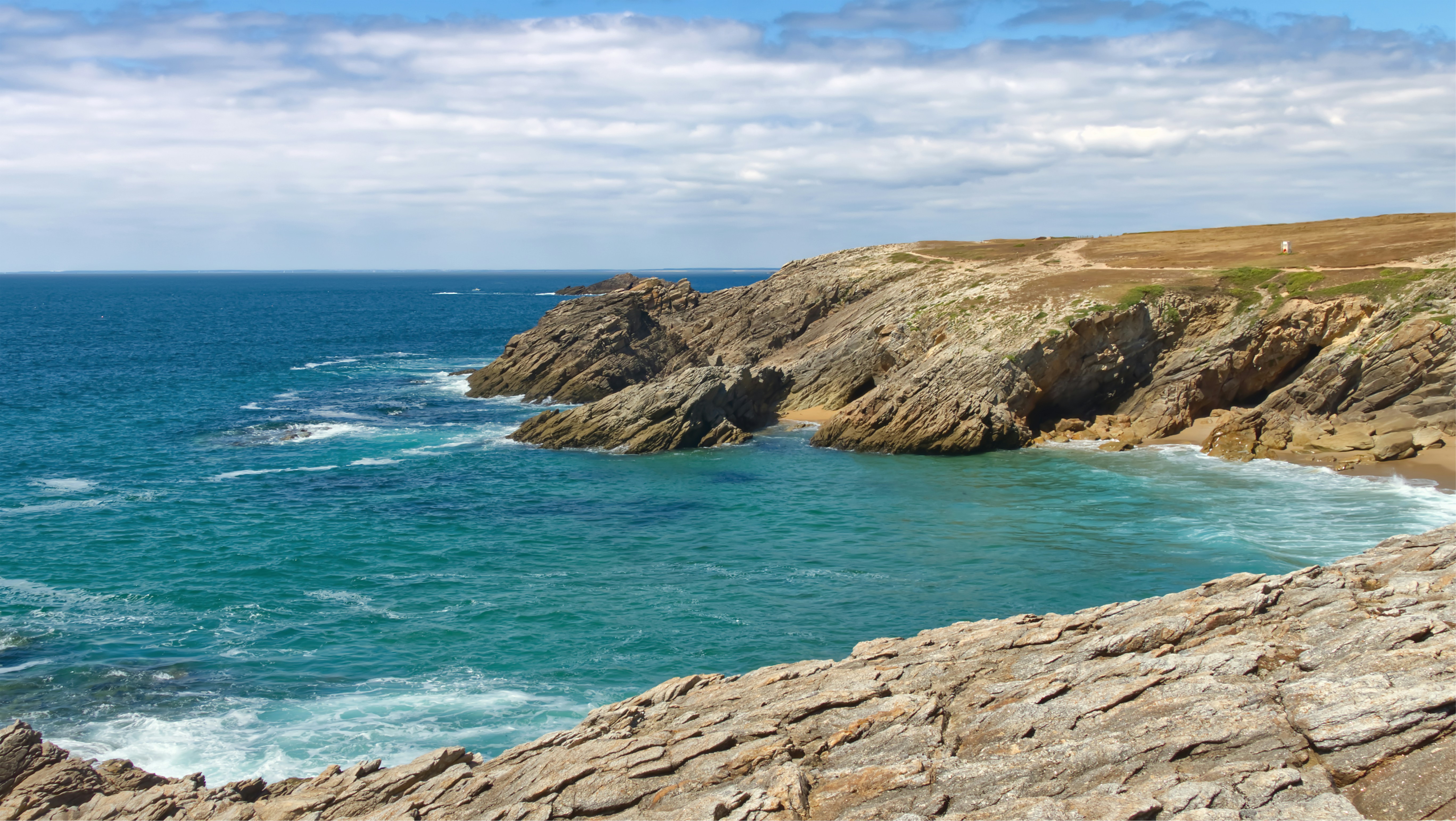
Brittany — Wild Atlantic coast just 1.5h from Paris
In Brittany, from Saint-Malo to the Pink Granite Coast, the sea breeze keeps things fresh. In summer, temperatures stay around 14 to 22°C. You can hike during the day without melting, dine outdoors comfortably, and actually sleep with the window open. The 2025 season confirmed this trend: a marked increase in visitors from southern and eastern France seeking relief from heatwaves.
The northerly coastal winds bring welcome freshness, tempering the hottest days. Temperatures rarely exceed 25°C, making Brittany ideal for hiking even in August. The wild coast of Quiberon concentrates everything spectacular about Brittany: cliffs sculpted by the Atlantic, hidden coves inaccessible from land, a striking blue-green sea.
To avoid the most crowded spots, head to the island of Ouessant or the isolated coves of Finistère. Belle-Île-en-Mer offers 85 kilometres of coastal paths, surfing, paddleboarding, and hidden coves — all wrapped in salty sea air. The Gulf of Morbihan has Brittany’s best microclimate: sheltered by its sea inlets and islands, it reduces wind and temperature swings.
Highlights
- Pink Granite Coast: unique lunar landscapes in Europe, 4h by car from Paris
- Ouessant and Belle-Île: fresh even in August, rarely above 22°C
- Festival Interceltique de Lorient (August): 750,000 spectators, Celtic cultures worldwide
- GR34: 2,000 km of coastal trails along historic customs officer paths
2. Scotland: wild freshness of the Highlands
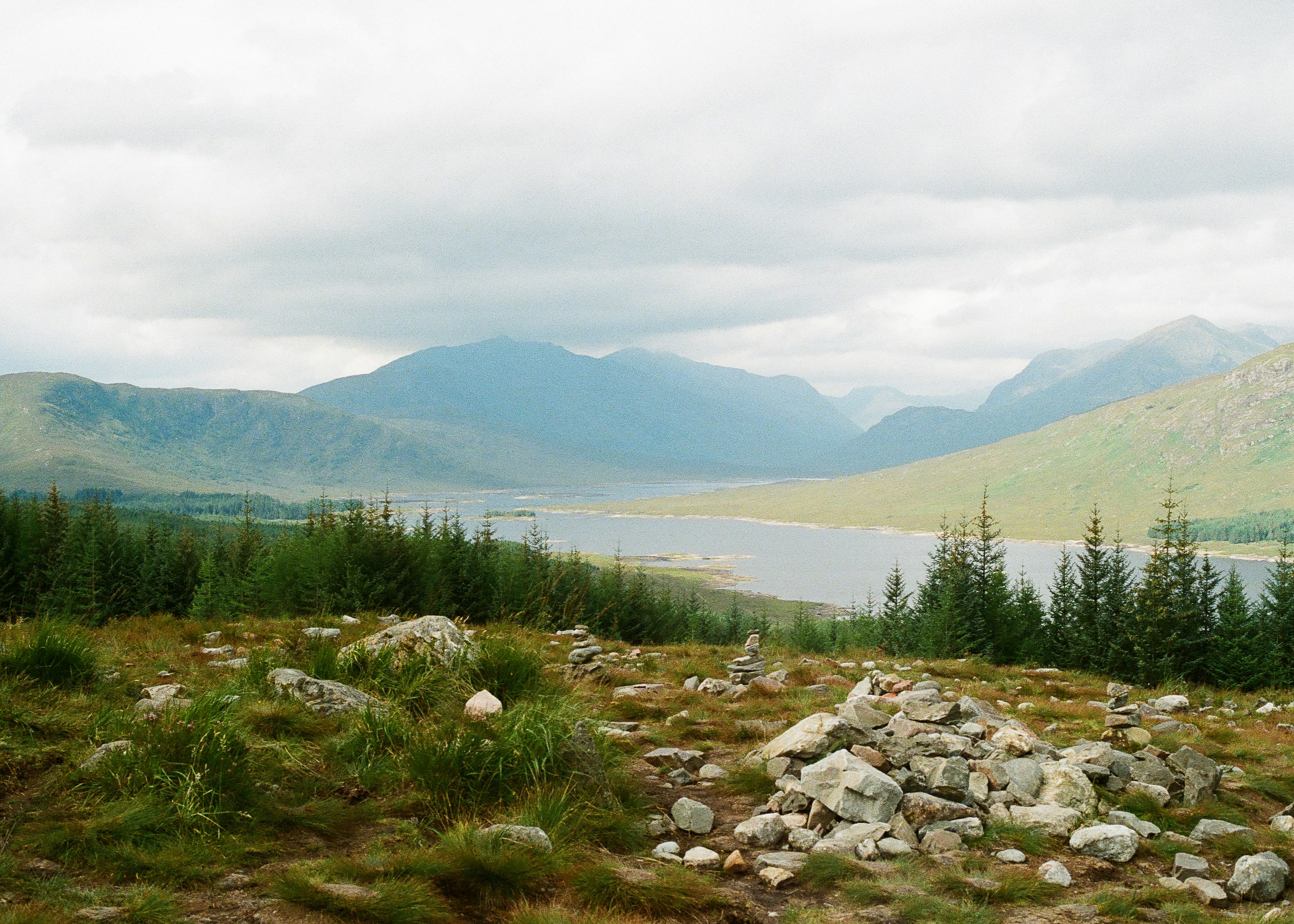
Scotland — Endless moorlands and ruined castles
Scotland is experiencing an unprecedented surge in interest. These legendary lands, once shunned for their changeable weather, have become the new hotspot of climate tourism. Rain is now seen as a blessing that keeps the landscapes an extraordinary emerald green. The Highlands offer stable temperatures around 15 to 20°C in summer — never a heatwave, never a stifling night.
From Edinburgh, the Glen Coe valley and the Glenfinnan Viaduct — made famous by the Harry Potter films — are accessible as day trips. Isle of Skye, with its spectacular rock formations (Old Man of Storr, Fairy Pools), is one of the most photogenic landscapes in Europe. The islands of Lewis and Harris remain nearly untouched by mass tourism, with white sand beaches worthy of the Caribbean — but at 16°C.
For road-trippers, the North Coast 500 (NC500) is unmissable: 830 kilometres of wild coastline from Inverness, with vertiginous cliffs, fishing villages, and ruined castles. Allow a minimum of 7 days to appreciate it without rushing. Flights from Paris start at €72 return; the eco-friendly alternative is the Dunkirk-Rosyth ferry, car included.
Highlights
- NC500: most spectacular coastal road in the UK, 830 km of cliffs and lochs
- Isle of Skye: Quiraing cliffs, Fairy Pools, Eilean Donan Castle at sunrise
- Wild camping legal everywhere (Land Reform Act 2003) — total freedom, zero cost
- Glenfinnan Viaduct — the real Harry Potter bridge, accessible from Fort William
3. Scandinavia: fjords and Nordic light
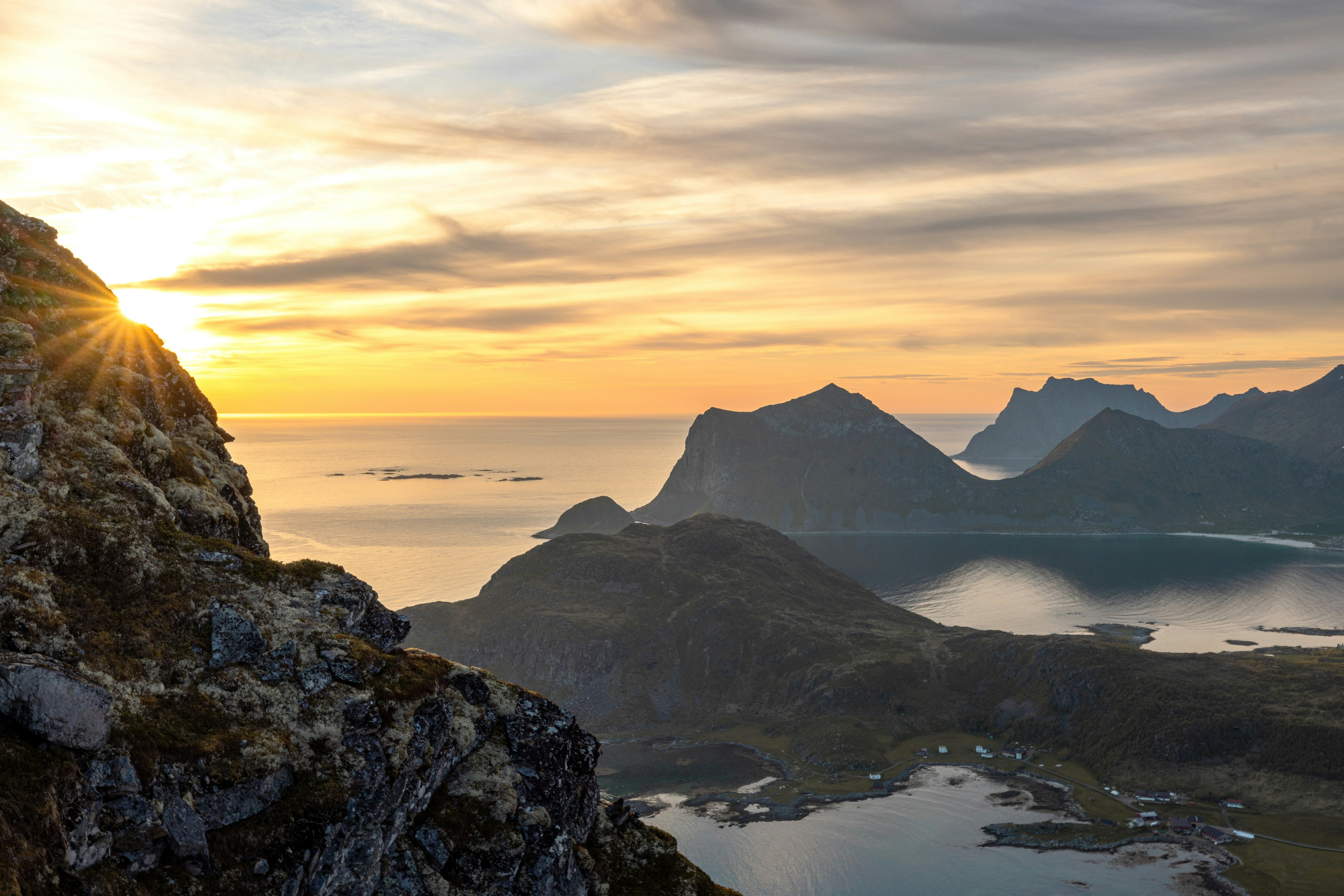
Lofoten (Norway) — The midnight sun spectacle
Scandinavia is not just beautiful — it’s becoming the world laboratory for sustainable tourism. The Lofoten Islands, above the Arctic Circle, maintain temperatures between 12 and 20°C in summer. These spectacular archipelagos reveal dramatic fjords, colourful fishing villages clinging to cliffs, and the midnight sun that transforms nights into a magical extension of the day.
The light in the Lofoten in summer is a phenomenon in itself: golden, raking, it bathes the rorbuer (converted fishermen’s cabins) in an orange glow at any hour. Hikes to summits — like Ryten or Reinebringen — offer breathtaking panoramas over interlaced fjords. Finland, with its culture of the mökki (lakeside cabin) — waking in absolute silence, diving into a 18°C lake, sweating in a traditional sauna — completes the Nordic experience perfectly.
Highlights
- Midnight sun (June–July): golden light at 11pm, magical nights without darkness
- Converted fishermen’s rorbuer: accommodations on stilts above the fjords
- Pioneer of sustainable tourism: electric public transport, certified eco-lodges
- Reinebringen hike: 360° panorama over the archipelago, among Europe’s finest
4. The Azores: the volcanic Atlantic archipelago
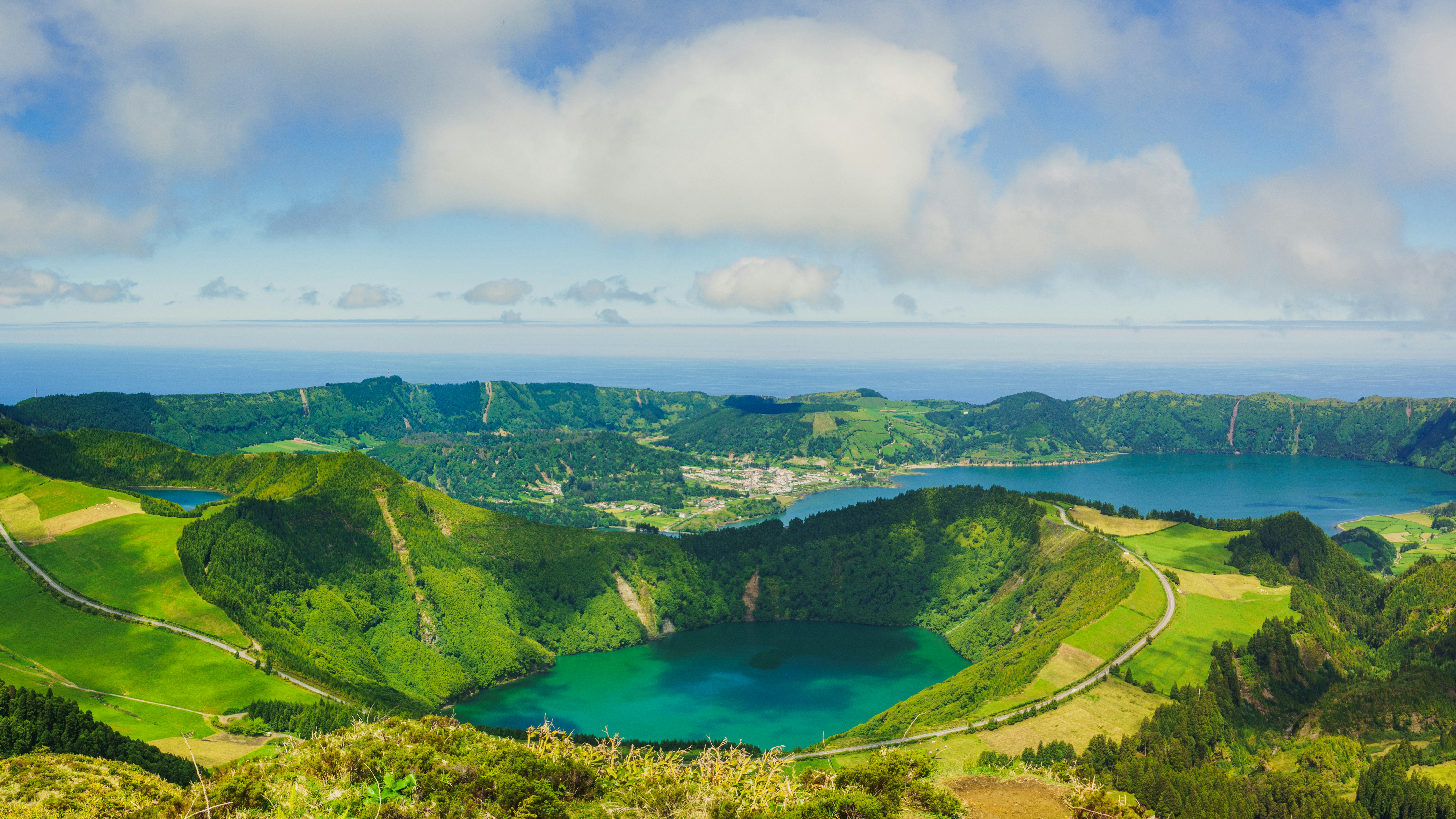
Azores — The secret archipelago of the Atlantic
Faced with recurring heatwaves across continental Europe, the Azores are emerging as a prized alternative for cooler summer holidays. Temperatures range between 18 and 24°C in summer, with generally sunny days tempered by cool Atlantic breezes. June, July and August see very little rainfall — the best of all worlds.
São Miguel, the largest island, captivates with its contrasting landscapes: from the emerald blue of crater lakes (Lagoa das Sete Cidades, Lagoa do Fogo) to tea plantations — the only ones in Europe — and natural hot springs where you bathe surrounded by geothermal steam. The island of Flores, at the far west, is still nearly untouched by tourism: winding roads thread between giant hydrangeas and vertiginous waterfalls.
The island of Pico, dominated by its namesake volcano (2,351m, Portugal’s highest point), offers UNESCO-listed vineyards and unique opportunities to dive with blue sharks. The Azores also stand out for exceptional marine biodiversity: whale and dolphin watching throughout the summer, with over 24 species recorded in these waters.
Highlights
- Lagoa das Sete Cidades: two differently-coloured lakes in a single volcanic crater
- Guaranteed whale watching: over 24 cetacean species in Azorean waters
- Furnas hot springs: outdoor natural baths at 40°C in a volcanic setting
- UNESCO Pico vineyards: tastings facing the Atlantic on the volcano’s slopes
Comparison table: which destination to choose?
| Destination | Summer temp. | Budget/day | Transport from Paris |
|---|---|---|---|
| Brittany | 14–22°C | €50–90 | Train from €30 |
| Scotland (Highlands) | 15–20°C | €70–130 | Flight from €72 RT |
| Norway (Lofoten) | 12–20°C | €120–180 | Flight from €100 RT |
| Sweden (Gothenburg) | 16–20°C | €90–140 | Flight from €50 RT |
| Finland | 15–20°C | €90–150 | Flight from €100 RT |
| Azores | 18–24°C | €60–120 | Flight from €185 RT |
| Iceland | 10–15°C | €150–250 | Flight from €59 OW |
| Ireland | 10–20°C | €80–130 | Flight from €50 RT |
| Estonia (Tallinn) | 17–21°C | €50–80 | Flight from €100 RT |
FAQ — Frequently asked questions about coolcations
Which European destination is the coolest in July-August 2026?
Iceland offers the lowest temperatures with an average of 12.5°C in summer. The Faroe Islands (5–13°C) and the Lofoten Islands in Norway (12–20°C) are also very cool. To stay below 20°C almost guaranteed, these three destinations are the safest choices. Brittany (14–22°C) and Scotland (15–20°C) offer the most accessible freshness from France.
Can you swim in these cool destinations?
Yes, swimming is possible in most of these destinations. Sea temperatures in Brittany reach 19–20°C in August in the Gulf of Morbihan. Azorean lakes reach 20–22°C. In Finland, lakes reach 18–22°C in July. In Iceland, geothermal lagoons (Blue Lagoon, Secret Lagoon) allow you to swim at 38–40°C even in cool weather.
Are these destinations suitable for families with children?
Absolutely — children often struggle with intense heat. Brittany stands out for its accessibility, varied beaches and activities (kayaking, surfing, cycling). The Azores with their natural pools and whale watching delight youngsters. Finland with lakeside mökkis is ideal for families with young children. Sweden with Gothenburg’s Liseberg amusement park rounds off the picture.
Are coolcations really cheaper than the Mediterranean in August?
A week on the French Riviera in August often exceeds €1,500 per person. Scotland, Estonia or the Azores are objectively competitive. However, Norway and Iceland remain more expensive. Brittany, accessible without a flight, offers the best value for French travellers — no airfare, accommodation from €50/night.
When should you book for summer 2026?
For Nordic destinations (Lofoten, Faroe, Iceland), book 4 to 6 months in advance — prices double as summer approaches. For Iceland in August 2026, demand is even stronger due to the solar eclipse on 12 August: start looking now. Scotland and Brittany require less advance planning, but the best B&Bs and cottages go fast from March-April onwards.