
The Feria del Caballo de Jerez 2026 takes place from 9 to 16 May at Parque González Hontoria. The illumination ceremony (Alumbrado) is on Saturday 9 May at 10 pm. All 175 casetas are open to everyone free of charge — unlike Seville’s mostly-private Feria de Abril. Equestrian events include the Paseo de Caballos (Tuesday–Saturday, 1 pm–7:30 pm), the Concurso de Enganches and the Doma Vaquera. Average budget: €80–200/day. Book your accommodation at least 3 months in advance: hotel occupancy exceeds 93%.
Seville has its Feria de Abril — Jerez has its horses. Every May since the 13th century, the Andalusian city of Jerez de la Frontera transforms into the world capital of equestrian art. The Feria del Caballo 2026 runs from 9 to 16 May, dedicated this year to Jerez as the Spanish Capital of Gastronomy. With its 175 casetas open to all, two million LED lights, world-class equestrian competitions and flamenco por bulerías played in its most authentic form, this festival is one of the most accessible and intense in Europe. This comprehensive guide gives you everything you need to experience an unforgettable week.
1. The Alumbrado: the magic of the opening ceremony (Saturday 9 May, 10 pm)
2,567,738 LED points to open the festivities
The Feria del Caballo always opens with the Alumbrado, the illumination ceremony. In 2026, the opening event takes place on Saturday 9 May at 10 pm at Parque González Hontoria. According to the Jerez city council, the LED installation comprises 52 double archways, 204 arches, 1,525 m of garlands and 350 tower garlands, with a total power of 308,257 W — a balance designed for modernity, efficiency and respect for the environment.
When the 2,567,738 LED points light up simultaneously, it is pure magic: the entire venue instantly plunges into a golden glow. New for 2026: on the eve of Friday 8 May, an official pregón (proclamation speech) will open the festivities at the kiosk of the municipal caseta, entrusted to local Jerezano Marco Antonio Velo, in the tradition of the Club Amigos Karkomedo revived in 1976.
Tips for experiencing the Alumbrado
- Arrive by 9 pm to find a spot in front of the main portada entrance before the crowd arrives
- The illuminated entrance arch is the most iconic photo subject of the week — choose your angle carefully
- Bring a light jacket: May nights in Jerez reach 14–17°C (57–63°F)
- After the illumination, casetas stay open until dawn — the evening is just beginning
2. The casetas: free entry — unlike Seville
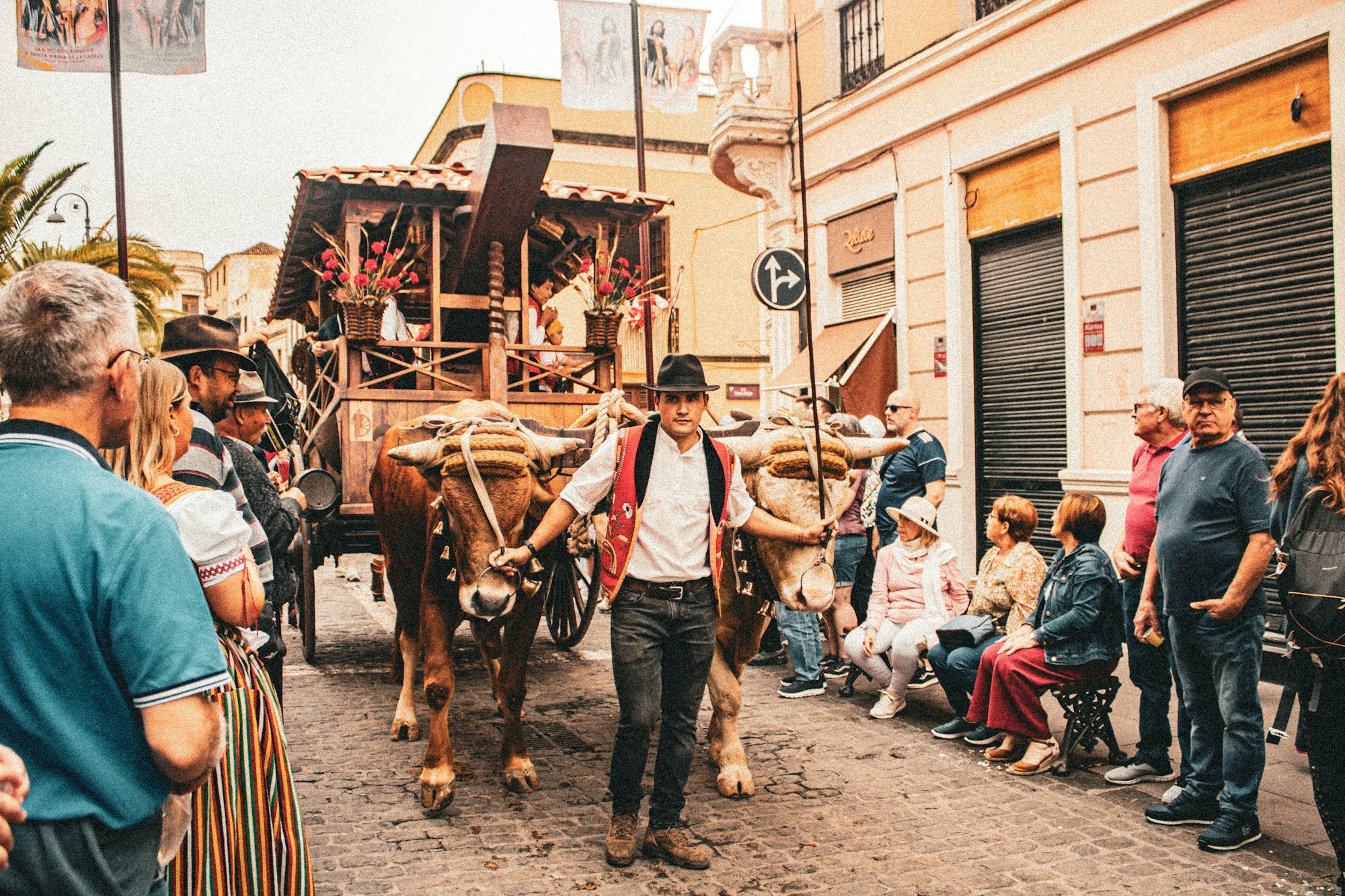
175 casetas, all open to everyone
This is the major difference between Jerez and Seville: at the Feria de Abril in Seville, around 1,000 casetas are private and require an invitation. In Jerez, it is the opposite: all 175 casetas are open to everyone, free of charge. No connections, no invitation needed. The Junta de Gobierno Local approved a 2026 plan with 157 traditional casetas and 13 non-traditional ones, spread along the main avenues and side streets of Parque González Hontoria.
Four municipal casetas deserve special mention: the Accessibility Caseta (no. 130) fully adapted for disabled visitors, the Caseta del Mayor (no. 140) for senior citizens, the Templete Municipal (no. 134) for official performances, and the Onda Jerez caseta (no. 160). Each caseta has restrooms, a bar and a dance floor. New for 2026: each caseta now has its own number to help visitors and security services navigate.
Must-visit casetas
- Peña Flamenca La Bulería: authentic flamenco, the place to hear pure cante jerezano
- Peña Flamenca Tío José de Paula: intimate atmosphere, few tourists, local artists
- Caseta Cayetano del Pino (no. 66): known for its hospitality and local cuisine
- Caseta del Mayor (no. 140): perfect for watching real flamenco from 5 pm onwards
3. The Paseo de Caballos: the grand equestrian parade
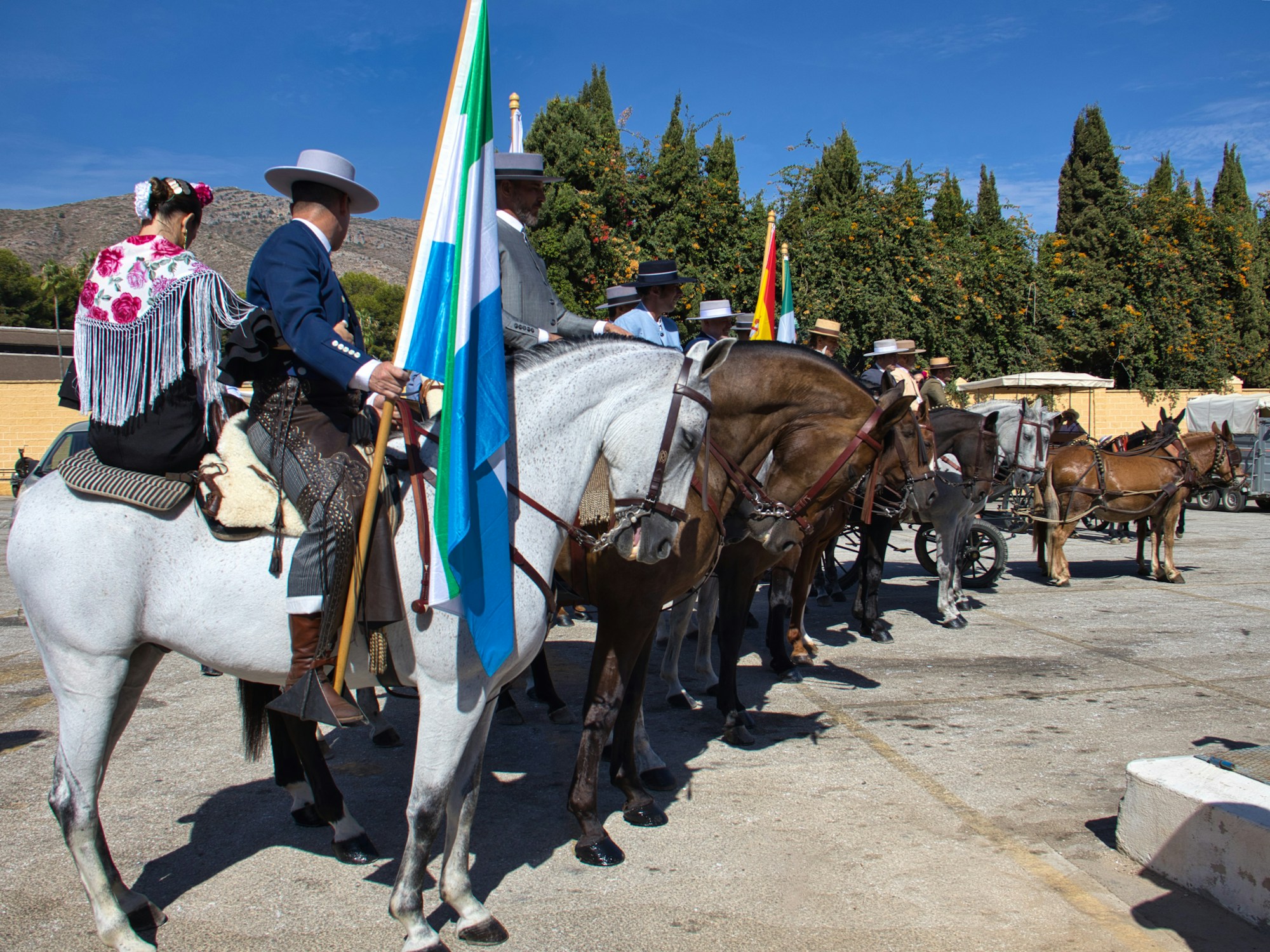
Hundreds of riders and carriages every afternoon
From the second to the last day of the Feria, from 1 pm to 7:30 pm, Parque González Hontoria becomes an equestrian carousel. Hundreds of riders in traje corto and flower-decorated carriages parade at a walk along the main avenues in a spectacle that synthesises 800 years of Andalusian equestrian art. The horses are adorned with ornate bridles, embroidered blankets and feathers, while female riders in flamenco dresses travel sidesaddle.
New for 2026: a 1,080 m² public harnessing and hitching area where horses and carriages will be prepared before entering the Paseo. All equestrian events will also be live-streamed worldwide and available on replay on the official Feria website.
Equestrian competitions not to miss
- Concurso de Enganches: presentation, harmony and mastery of carriage teams — the most elegant competition
- Doma Vaquera: traditional Spanish dressage, working in harmony between rider and horse
- Acoso y Derribo: spectacular Andalusian cattle-working discipline, little known to foreign visitors
- Premio Caballo de Oro: presentation of the Golden Horse award to the best horse of the fair
4. The Real Escuela Andaluza del Arte Ecuestre: the equestrian ballet
« How Andalusian Horses Dance » — a unique spectacle in the world
The Fundación Real Escuela Andaluza del Arte Ecuestre is ranked among the world’s four great riding schools (alongside Vienna, Saumur and Jerez itself). Its show « How Andalusian Horses Dance » is an equestrian ballet with 18th-century costumes, authentic Spanish music and a choreographic precision that leaves audiences speechless. The performance lasts approximately 90 minutes with an interval.
During the Feria del Caballo 2026, the programme is as follows: regular shows on 9, 12, 13 and 14 May at noon; Gala de Feria on Friday 15 May at 10 pm (prestige evening, sold out weeks in advance); and a guided tour of the facilities on Saturday 16 May. A complete visit includes the stables, the Museum of Equestrian Art, the Carriage Museum and the Recreo de las Cadenas.
How to book
- Book directly at realescuela.org — the official box office
- The 15 May Gala sells out within hours: book as soon as possible
- Adult show ticket: ~€20–25, reduced: ~€15, tour only: ~€12
- The 9 May session (night of the Alumbrado) is the most festive; arrive dressed for the occasion
5. Flamenco in the casetas: the soul of Jerez
The birthplace of the bulería
Jerez de la Frontera is considered one of the cradles of modern flamenco — and this title is well-earned. What you hear here is the cante por bulerías, a nervous, fast-paced style that is deeply Jerezano and distinct from Sevillian or Gaditan flamenco. UNESCO inscribed flamenco on the Intangible Cultural Heritage of Humanity in 2010, and Jerez proudly claims an essential part of it.
In the casetas, flamenco erupts naturally, without staging, performed by artists who have known it since childhood. The audience participates, clapping (palmas), crying olé. This is very different from a tourist tablao. According to local guides, the best flamenco is played in the late afternoon between 5 pm and 8 pm — after 11 pm, casetas shift towards pop music and sevillanas.
Where to hear the real flamenco
- Peña Flamenca La Bulería: an absolute must, celebrated artists every evening from 5 pm
- Peña Flamenca Tío José de Paula: family atmosphere, excellent acoustics
- Caseta El Cuadro: local and national artists every afternoon
- For a tablao outside the fair: Tablao Puro Arte (€25–50/person with drink)
6. The dress code: decoding Feria outfits
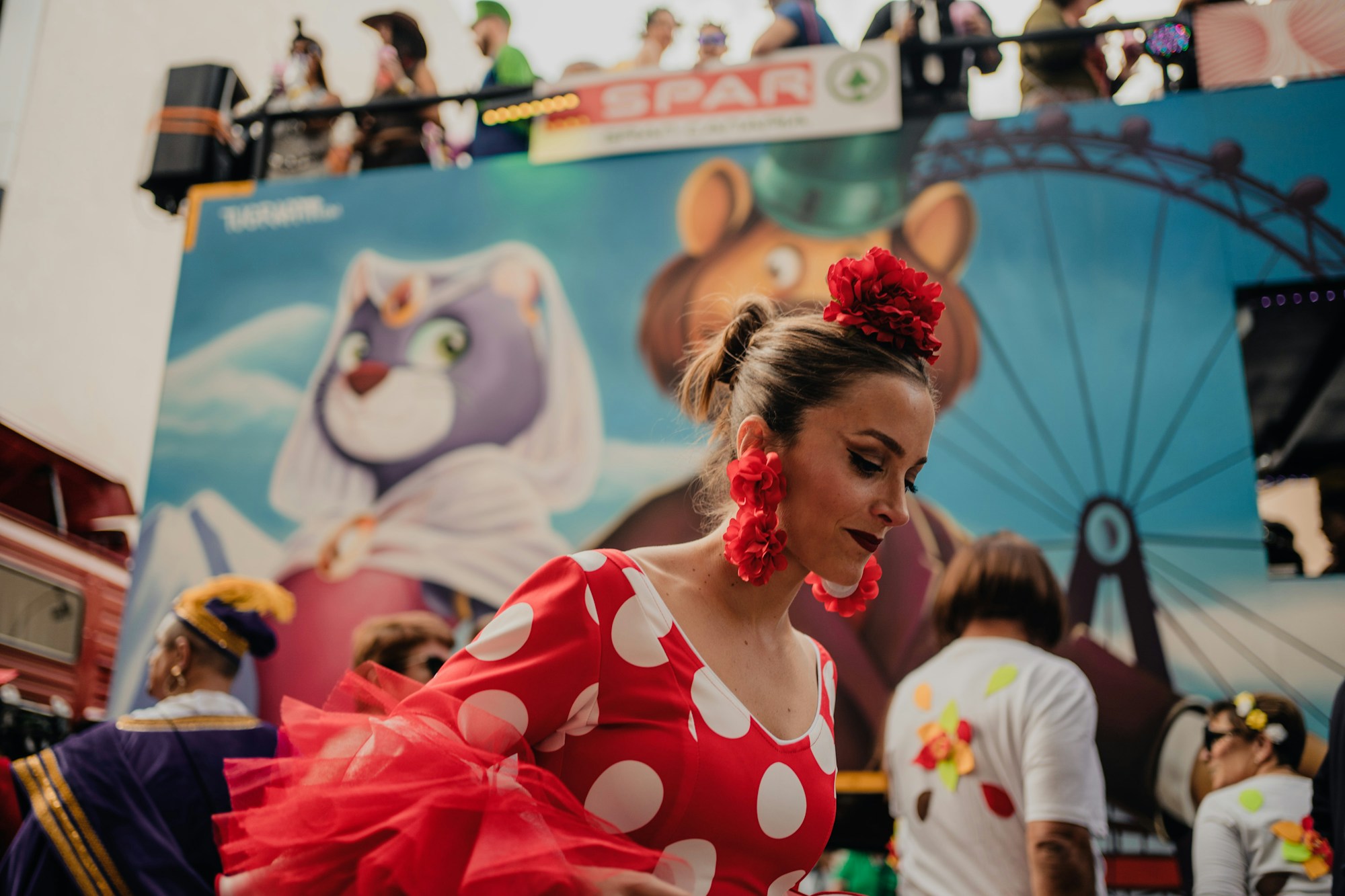
Traje de gitana, traje corto and… comfortable shoes
There is no strict rule imposed on visitors, but a strong unwritten social code asserts itself naturally. The most common daytime outfit is the traje corto (short jacket, riding trousers, wide-brimmed hat) for men on horseback, and the traje de gitana (flamenco dress with ruffles and vibrant prints) for women. In the evening, semi-formal attire is expected.
For tourists, smart trousers and a shirt for men, or a colourful dress for women, will integrate you naturally without investing in a full traje. Shorts and flip-flops are tolerated but will immediately identify you as uninitiated. What is absolutely non-negotiable: comfortable shoes suitable for albero, the yellowish clay earth covering the park’s paths. Never break in new shoes on the day of the Feria.
How to dress in practice
- Women: ruffled colourful or printed dress (new traje de gitana: €150–400, second-hand: €30–80)
- Men: light-coloured trousers + smart shirt at minimum; traje corto to fully immerse yourself
- Shoes: wedges or flat shoes with thick soles for women, comfortable dress shoes for men
- Secret accessory: a small brush to clean albero dust from your shoes
7. Gastronomy: Jerez, Spanish Capital of Gastronomy 2026
Rebujito, fino, manzanilla and local cuisine
The Feria del Caballo 2026 is dedicated to the title of Spanish Capital of Gastronomy held by Jerez this year. An entire day — Tuesday 12 May, Día de la Gastronomía en la Feria del Caballo — will showcase local culinary heritage, with traditional dishes, special tapas and regional produce offered in all casetas.
The signature drink is the rebujito: a mix of Fino or Manzanilla (dry sherry) with lemon-lime soda and plenty of ice. Refreshing, low in alcohol and ubiquitous. Purists prefer Fino or Oloroso served chilled by the glass. Food highlights: jamón ibérico, pescaíto frito, chicharrones, tortilla, cola de toro, tagarninas esparragás and the adventurous berza jerezana.
The Jerez gastronomic scene beyond the fairground
- The bodegas González Byass (Tío Pepe), Williams & Humbert and Domecq open their doors for tours during the Feria
- Calle Larga and Plaza del Arenal: lively terraces for lunch between caseta sessions
- The most authentic gastronomy is found in small neighbourhood casetas, away from the main portada
- Average daily budget food + drinks: €25–40 (budget) to €50–80 (comfort)
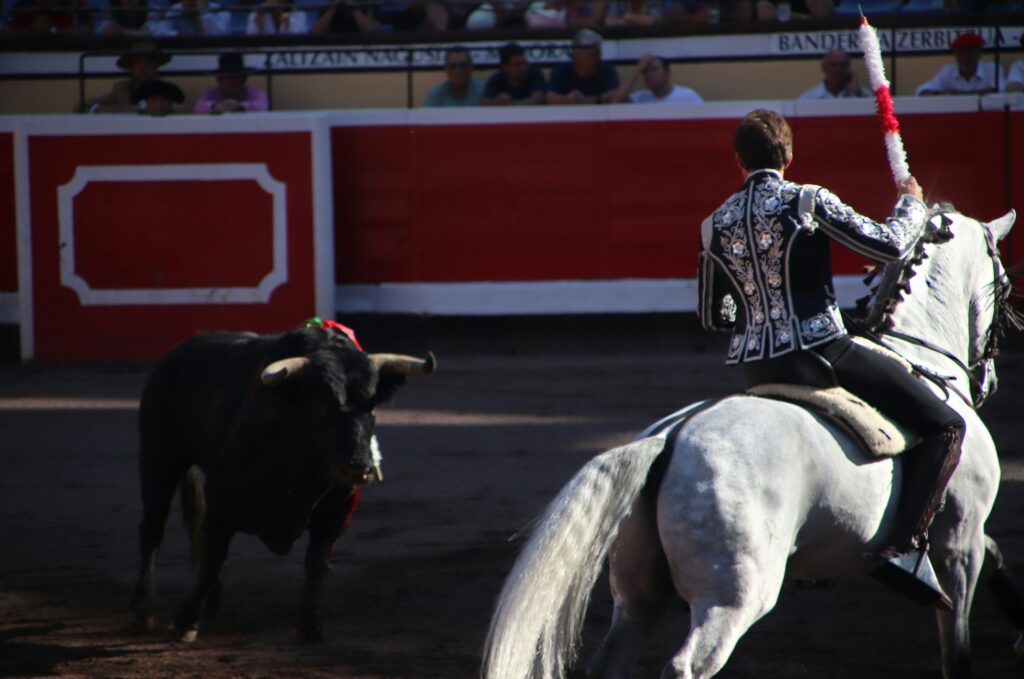
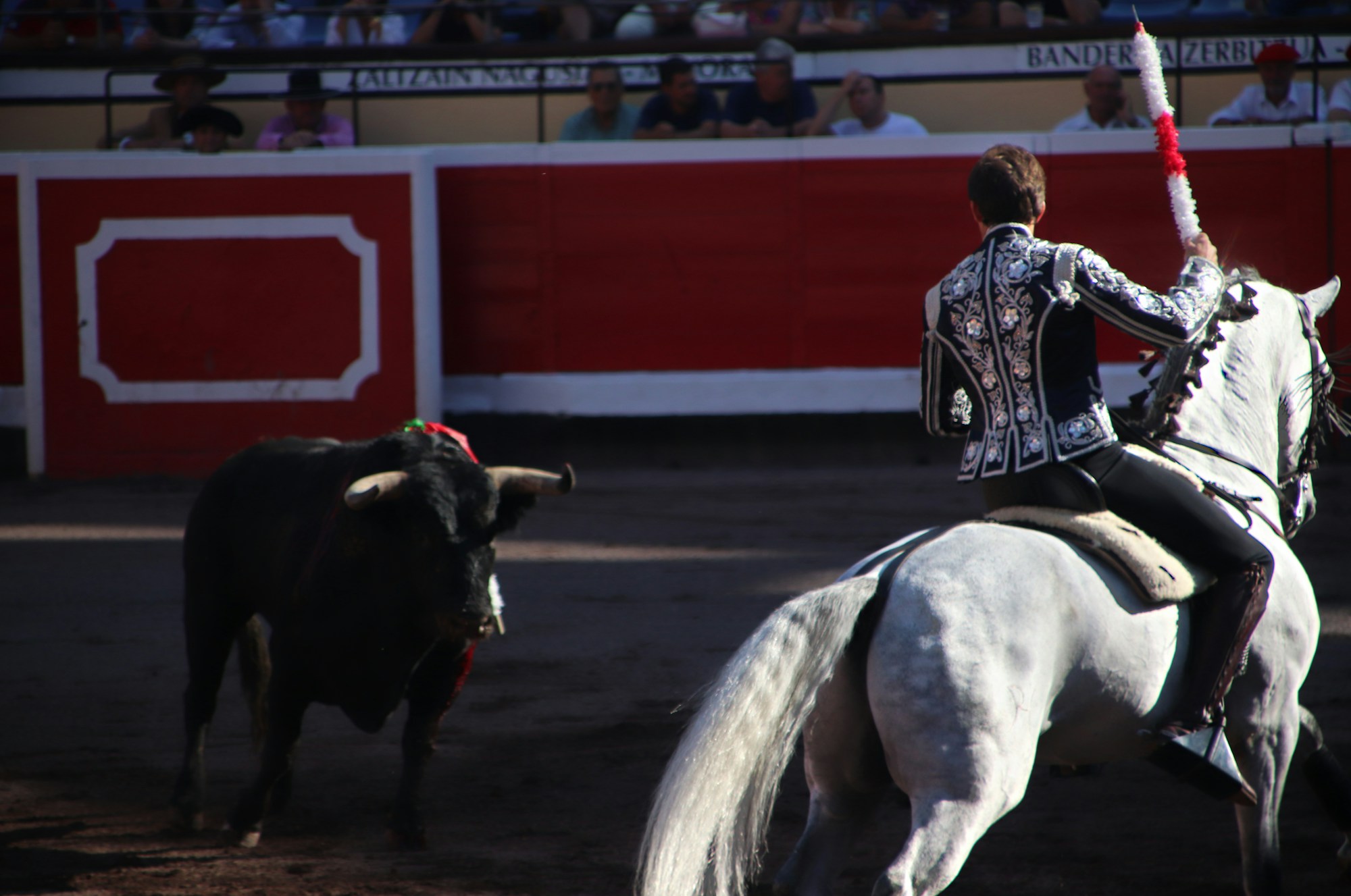
8. The corrida de toros: an exceptional bullfighting event
Rafael de Paula, Álvaro Domecq and Morante de la Puebla
Jerez will host four bullfighting events on 10, 15 and 16 May 2026. The Feria del Caballo 2026 pays tribute to two living legends of the city: Rafael de Paula and Álvaro Domecq. The presence of Morante de la Puebla is also confirmed at the Gala de Jerez, a corrida that ranks among the most anticipated taurine events in Andalusia.
Bullfights in Jerez are distinguished by a particularly intimate and passionate atmosphere — local aficionados are among the most demanding in Spain. For first-timers, the corrida de rejones (on horseback) is often more accessible: visually impressive, it highlights the bond between the rejoneador and his horse, in direct continuity with the equestrian spirit of the Feria.
Practical information
- Book at entradastorosjerez.com — several weeks in advance for weekends
- Sun (sol) seats: €15–35. Shade (sombra): €40–80. Shade in the morning, sun in early afternoon
- Bullfights typically start at 6 pm or 7 pm — allow 2.5 to 3 hours for the full event
- For a first encounter with bullfighting, choose a corrida de rejones (mounted bullfighting)
9. Accommodation and budget: planning without breaking the bank
93% occupancy rate — book now
Jerez consistently records a hotel occupancy rate of nearly 93% during the Feria del Caballo. City centre prices are heavily inflated. The most economical strategy: stay in El Puerto de Santa María (20 min by train from Jerez, frequent connections) or Cádiz (35 min by train), where prices are two to three times lower than in Jerez during the Feria.
If you still wish to stay in Jerez, some recommended addresses: esZentrico Suites (eco-hotel in the city centre, rooftop pool, good value), Hotel Bodega Tío Pepe (in the old town, terrace and elevated pool, ideal for couples) and Hotel Doña Blanca (modern, affordable, well located for tighter budgets).
Full budget estimate (per person per day)
- Budget (~€80/day): accommodation in Cádiz (€40–60), simple meals (€25), transport (€8), free activities
- Comfort (~€200/day): Jerez hotel (€100–180), casetas + restaurants (€50), Real Escuela + taxi (€30)
- Luxury (~€500/day): boutique hotel (€250–400), fine dining + wines (€100), Gala + private hire (€80)
- The Feria itself (casetas, paseo) is entirely free — the big spend goes on accommodation
10. Transport and logistics: how to get to Jerez
Plane, train, car — and a record 240 taxis
By air: Jerez Airport (XRY) is the most convenient. By train: direct services from Seville (approx. 1 hour), Cádiz (30 min) and Madrid (AVE, ~3.5 hours). By car: motorway A-4 from Seville (1 hour), A-382 from Cádiz (30 min). The city council has arranged approximately 2,500 free parking spaces in municipal car parks around the Real (Avenida de las Olimpiadas, Avenida Chema Rodríguez).
The 2026 Feria is ambitious on mobility: 25 new buses have been added with increased frequency, and the night service runs until 5 am on the busiest nights. Another unprecedented record: 240 operational taxis (including 71 from other municipalities) — the highest figure in the Feria’s history. Cabify and Bolt ride-hailing services are also very active.
Transport tips
- Avoid driving on Friday and Saturday evenings: returning by taxi or ride-share is far more relaxing
- Taxi from city centre to the recinto: €5–10. Shuttle bus: €1.50–2
- From Seville: the Renfe Cercanías C-1 train is the most convenient and reliable option
- 35,000 m² of paths in Parque González Hontoria have been fully renovated in 2026 — more comfortable terrain
Practical information for your trip to Jerez
Stay connected from the moment you land in Jerez. Instant activation, no physical SIM card needed.
From €4.50Comprehensive coverage to travel with peace of mind during the Feria del Caballo.
From €1.76/dayFrequently asked questions about the Feria del Caballo de Jerez 2026
What are the exact dates of the Feria del Caballo 2026?
The Feria del Caballo 2026 runs from Saturday 9 to Saturday 16 May 2026 at Parque González Hontoria in Jerez de la Frontera. The opening ceremony (Alumbrado) takes place on Saturday 9 May at 10:00 pm. The Feria is open daily from 1 pm until the early hours, with the Paseo de Caballos from Tuesday to Saturday, 1 pm to 7:30 pm.
Is entry to the casetas paid in Jerez?
No — this is the key difference from Seville’s Feria de Abril. In Jerez, access to all 175 casetas is entirely free and open to everyone, with no invitation or membership required. Entry to the recinto ferial (Parque González Hontoria) is also free. Only food and drinks need to be paid for.
Is a traje de flamenca required?
No, it is not compulsory. Smart casual attire (a colourful dress for women, trousers and a shirt for men) is perfectly acceptable. Many Jerezanos and riders wear the traje de corto or traje de gitana, but foreign visitors are not required to do so. The essential rule: comfortable shoes suitable for the albero ground (yellowish clay).
How do I book Real Escuela Andaluza del Arte Ecuestre shows?
Tickets are available directly at realescuela.org. During the Feria 2026, shows are on 9, 12, 13 and 14 May at noon, the Gala de Feria on Friday 15 May at 10 pm (sells out within hours) and a guided visit on Saturday 16 May. Prices: ~€20–25 per show, ~€15 reduced, ~€12 for the tour only.
What are the best days to visit the Feria del Caballo?
Tuesday 12 May is the Día de la Gastronomía — ideal for food lovers and less crowded than weekends. Friday and Saturday showcase the finest outfits and the most elegant Paseo de Caballos. Sunday and Monday are more local and less busy. For equestrian activities, the weekend is unmissable.
Are there bullfights during the Feria del Caballo?
Yes. Jerez hosts four bullfighting events on 10, 15 and 16 May 2026 at the Plaza de Toros de Jerez. The Gala de Jerez 2026 pays tribute to Rafael de Paula and Álvaro Domecq, with Morante de la Puebla also confirmed. Tickets at entradastorosjerez.com — from €15 (sun) to €80 (shade).
How do I get to Jerez de la Frontera from London or Seville?
From the UK: direct flights to Jerez Airport (XRY) or Seville (SVQ, then 1 hour by train). From Seville: Renfe Cercanías C-1 train (~1 hour, frequent departures). From Cádiz: train (~30 min). By car: motorway A-4 from Seville. The city council provides 2,500 free parking spaces around the recinto during the Feria.
Do I need to book accommodation far in advance?
Absolutely. Hotel occupancy in Jerez reaches 93% during the Feria. Ideally book 3 to 6 months in advance for city centre hotels. Budget alternative: stay in El Puerto de Santa María (20 min by train) or Cádiz (35 min), where prices are 2 to 3 times lower. Cádiz hotels have excellent rail connections to Jerez.
Sources
- Jerez City Council — Feria del Caballo 2026 (official)
- Definitive 2026 caseta plan — Jerez City Council
- Official Feria 2026 presentation — Gastronomic Capital
- Cádiz Noticias — Feria del Caballo dedicated to the Gastronomic Capital
- Jerez TV — New equestrian activities 2026
- Real Escuela Andaluza del Arte Ecuestre — Feria 2026 programme
- Toros Jerez — Corridas Feria 2026
- La Voz del Sur — 2026 poster by Julio Rodríguez
- Jerez Sin Fronteras — Complete Feria del Caballo guide
- Cavago — Complete Feria del Caballo 2026 guide (EN)
- Wikipedia — Feria del Caballo (history)
Explore Andalusia with Pixidia
Detailed itineraries, festival guides and inspiration for your travels in Spain and around the world.
Discover the magazine