
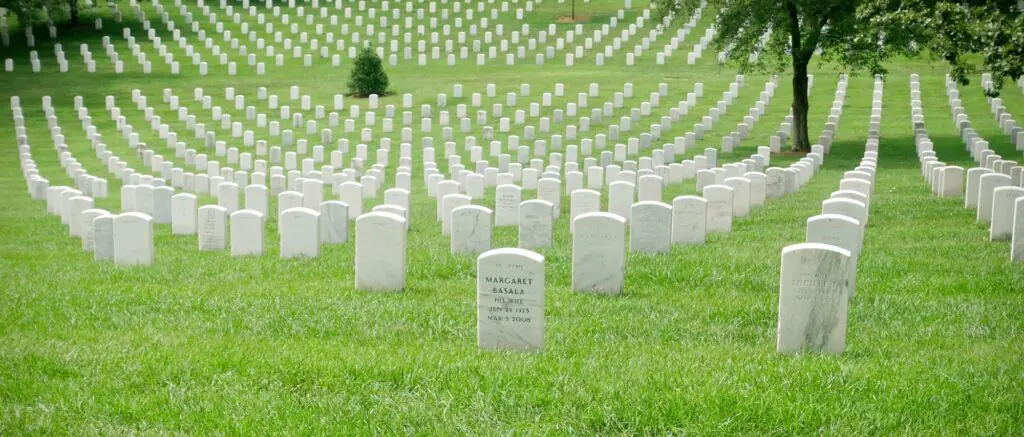
The D-Day Festival Normandy 2026 runs from 30 May to 14 June 2026 — its 20th edition, marking the 82nd anniversary of the Allied Landings of 6 June 1944. The official international ceremony takes place on 6 June at 16:30 at Langrune-sur-Mer (between Juno Beach and Sword Beach), not at Omaha Beach. Over 100 free events are spread across 16 days: parachute drops, parades of 150 period vehicles, swing dances. The American Cemetery at Colleville-sur-Mer has free admission with no booking required in 2026. Book your accommodation now: availability near 6 June is almost gone.
Normandy is Europe’s leading destination for war memorial tourism. Every year since 2007, the D-Day Festival Normandy brings together history enthusiasts, families and veterans who travel from around the world to pay tribute to the 10,300 Allied soldiers who fell on 6 June 1944. The 2026 edition is the festival’s 20th, commemorating the 82nd anniversary of Operation Overlord — the largest amphibious operation in history. From reenactment camps in Norman fields to parachute jumps from authentic C-47 aircraft, this is your complete guide from Utah Beach to Sword Beach. As a UK visitor, you’re particularly well placed: Brittany Ferries sails direct from Portsmouth to Ouistreham (Caen’s port), and the British Normandy Memorial at Ver-sur-Mer is one of the most moving sites on the entire circuit.
1. 6 June 1944: the most ambitious military operation in history
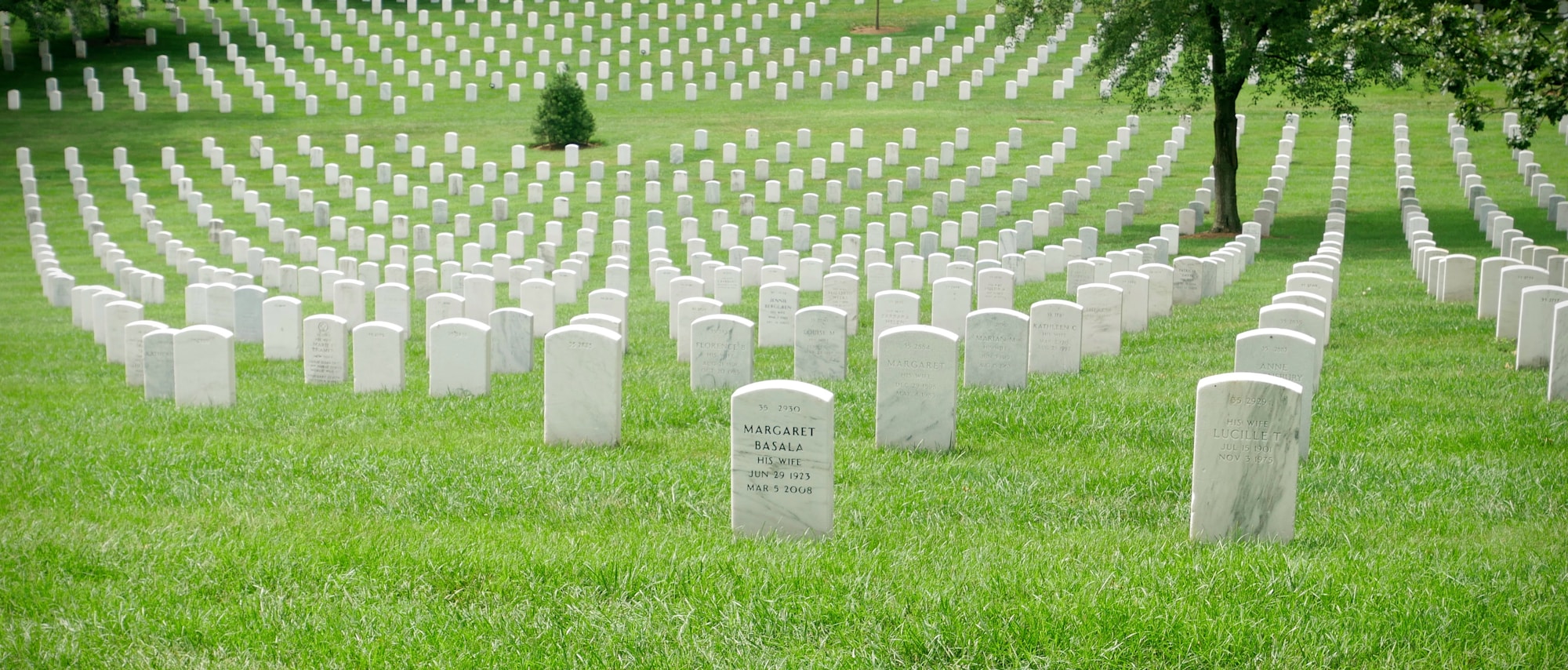
Operation Overlord — 82 years of remembrance
Operation Overlord remains the largest amphibious invasion in history. According to D-Day Overlord, 156,115 Allied soldiers from 12 nations landed on the five Norman beaches in a single day: 132,715 by sea and 23,400 by air, including 18,000 American and British paratroopers dropped on the night of 5–6 June. The front stretched 80 km, from the mouth of the Vire to the Orne. Allied losses amounted to approximately 10,300 killed, wounded or missing on D-Day alone.
Sainte-Mère-Eglise became the first French town liberated during the night of 5–6 June, taken by paratroopers of the 82nd Airborne. The figure of John Steele — a paratrooper who hung from the church steeple for hours — is immortalised by a uniformed effigy still visible today. At Utah Beach, the accidental drift of American troops 1.5 km towards a less-defended zone paradoxically saved thousands of lives: only 197 casualties from 21,000 soldiers landed.
Key facts
- 9,386 white crosses at the American Cemetery at Colleville-sur-Mer (ABMC) — free admission
- Five beaches: Utah and Omaha (Americans), Gold, Juno and Sword (British and Canadians)
- Operation Bodyguard: the Germans believed the invasion would target the Pas-de-Calais
2. Utah Beach: the American landing site in the Cotentin
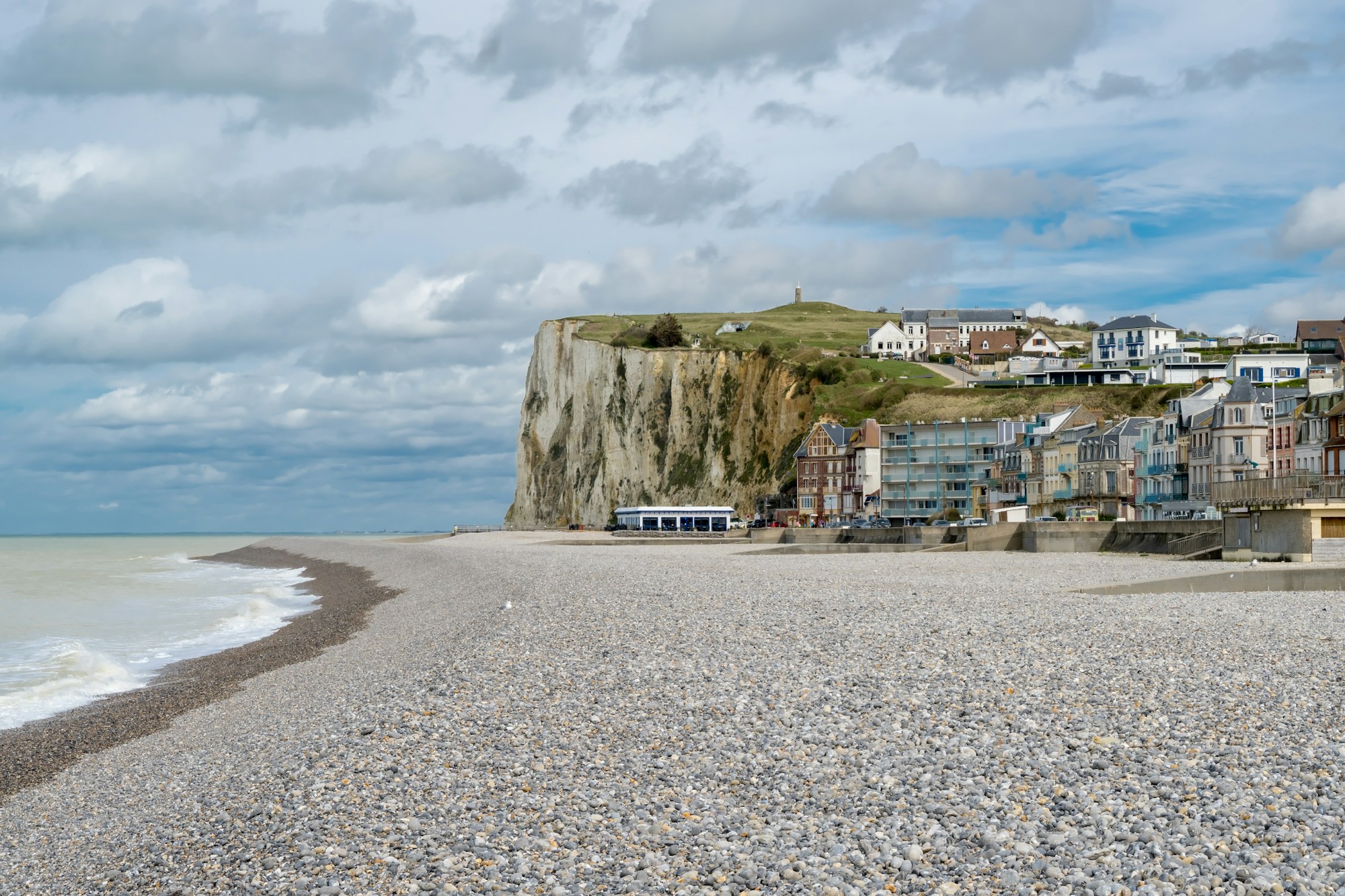
Utah Beach — Sainte-Marie-du-Mont, Manche
Utah Beach is the westernmost of the five D-Day sectors. The accidental drift of the 4th Infantry Division towards a less-fortified section of the Atlantic Wall kept casualties to just 197 men out of 21,000 landed — a remarkably low toll compared to Omaha. According to Cotentin Tourisme, the proximity of Sainte-Mère-Eglise — the first French town to be liberated — gives this sector enormous symbolic resonance.
The Airborne Museum at Sainte-Mère-Eglise (adults €11.50, children €7.50, open 09:00–19:00) presents a new 2026 temporary exhibition: « Comics Go to War ». A few kilometres away, the D-DAY Experience Museum (Carentan-les-Marais) recreates a parachute jump aboard an authentic C-47. The Utah Beach Landing Museum is one of the only museums built directly on a German bunker and houses a B-26 bomber — one of only six surviving in the world.
Highlights
- Camp Geronimo (3–7 June): full-scale 101st Airborne reenactment — the festival’s most iconic event
- Grand Parachute Drop at La Fière (7 June): dozens of paratroopers in 1944 uniforms jump from an authentic C-47 over the exact battle site
- Camping Le Cormoran (5-star, Ravenoville-Plage) a few metres from Utah Beach — open 3 April to 27 September 2026
3. Omaha Beach: « Bloody Omaha » and the American Cemetery
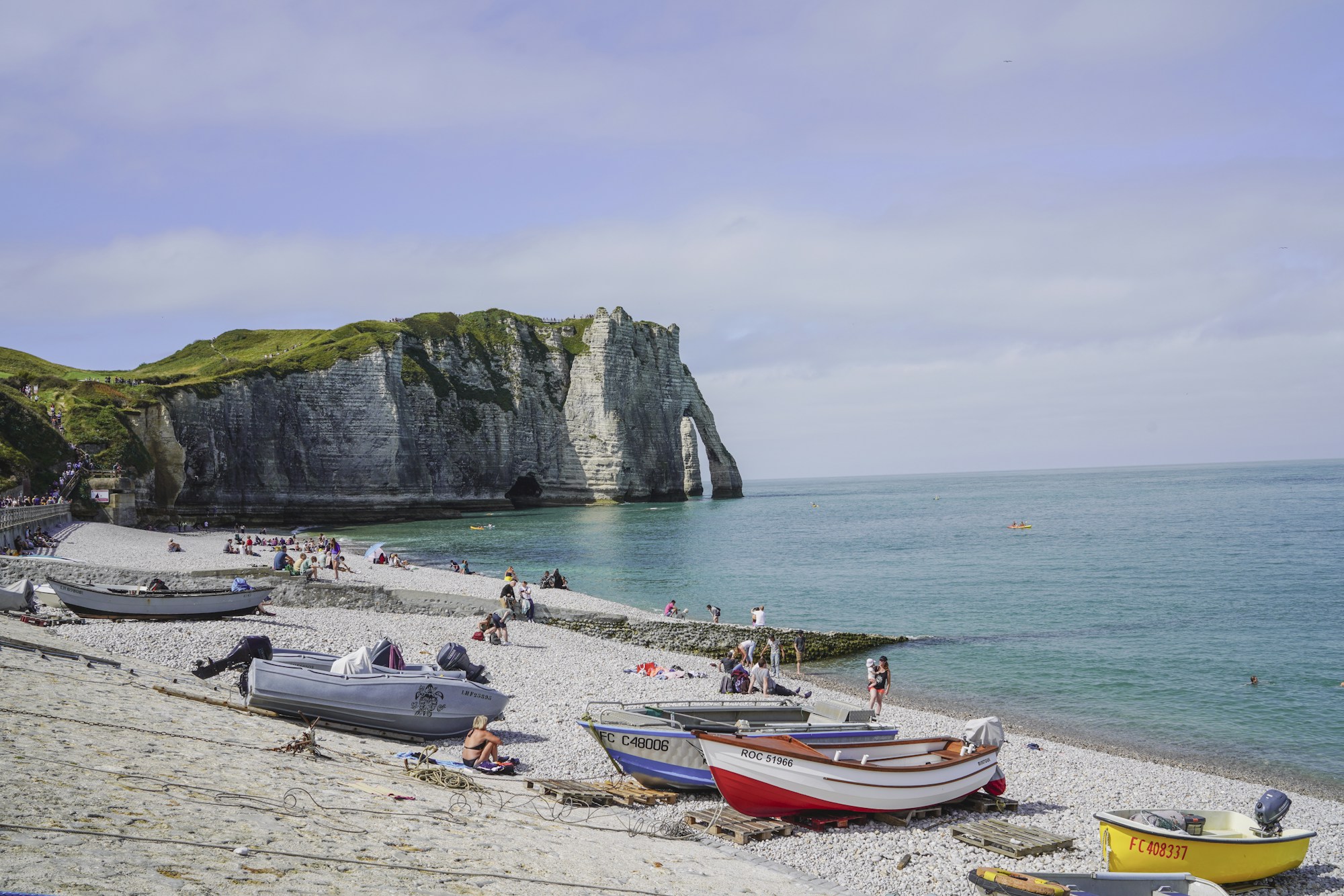
Omaha Beach — Colleville-sur-Mer, Calvados
With 4,100 casualties from 34,250 men landed, Omaha Beach remains the bloodiest D-Day sector. The 1st and 29th US Infantry Divisions faced enfilading fire from the cliffs overlooking the 8 km of coastline. The American Cemetery at Colleville-sur-Mer — 9,386 white crosses immaculately aligned on a lawn above the beach — is one of the most moving sites in Europe. According to the American Battle Monuments Commission (ABMC), admission remains free with no mandatory booking throughout 2026 (a pre-booking system has been postponed to 2027).
Nearby, the Overlord Museum (adults €9.90, reduced €7.50) assembles more than 10 authentic tanks and armoured vehicles. The Omaha Beach Memorial (Saint-Laurent-sur-Mer, adults €7.90) allows a one-hour visit focused on the assault itself. Important: Pointe du Hoc — where Colonel Rudder’s Rangers scaled the cliffs under enemy fire — is undergoing a $10 million, 18-month restoration project that began in February 2026; the visitor centre has been closed since March 2026, but the site remains accessible via the west path according to the ABMC.
Highlights
- 9,386 white crosses at Colleville-sur-Mer Cemetery — free admission, no booking required in 2026
- Omaha Village (4–7 June): American reenactment camp, bagpipe concerts, military vehicle rides
- « Bedford Boys » ceremony on 6 June at Vierville-sur-Mer: tribute to the 19 soldiers from Bedford (Virginia) all killed on D-Day
4. Gold Beach and Arromanches: the Mulberry Harbour
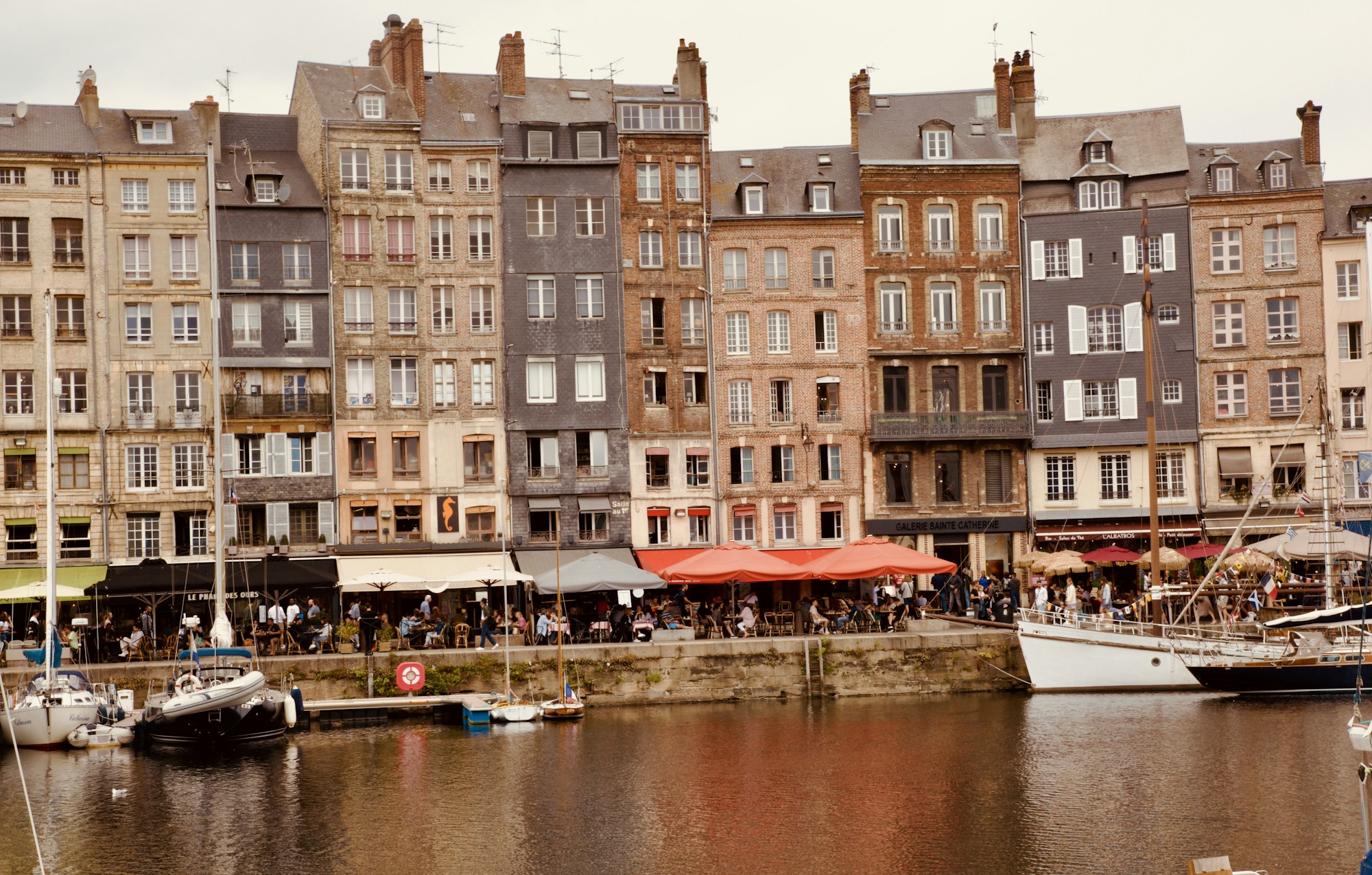
Gold Beach — Ver-sur-Mer, Arromanches, Calvados
The Gold Beach sector, assigned to the British 50th Division, is dominated by the ghostly silhouette of the Mulberry B harbour caissons — still visible in the bay at Arromanches 82 years after D-Day. This feat of military logistics, designed in Britain and assembled in just a few days, enabled the landing of more than 2.5 million soldiers and 500,000 vehicles over ten months. According to Normandie Tourisme, Arromanches remains one of the most visited D-Day sites with its 1:25 scale model of the harbour.
The British Normandy Memorial at Ver-sur-Mer, inaugurated in 2021, inscribes the names of 22,442 British and Commonwealth soldiers who fell during the Battle of Normandy. In 2026, the « Standing with Giants » installation (on display from April to September) deploys 1,475 steel silhouettes across the memorial grounds to represent every British and Commonwealth soldier killed on D-Day alone. The official British ceremony takes place on 6 June at 10:30 — free admission, registration recommended. Note: roadworks at Ver-sur-Mer until October 2026 make access via Courseulles or Arromanches preferable.
Highlights
- « Standing with Giants »: 1,475 steel silhouettes at the British Normandy Memorial, on display from April to September 2026
- Arromanches 360: circular cinema on 9 screens, D-Day archive footage in 20 minutes of total immersion
- Grand parade of 150 military vehicles on the evening of 5 June (Colleville-Montgomery to Creully-sur-Seulles, 29 km)
5. Juno Beach, Sword Beach and the international ceremony at Langrune-sur-Mer
Juno Beach (Canada) and Sword Beach (UK) — Calvados
Juno Beach was the Canadian sector: the 3rd Canadian Infantry Division suffered the second-highest casualties on D-Day after Omaha. The Juno Beach Centre (Courseulles-sur-Mer, open 09:30–19:00 May–August) is the only museum in France dedicated exclusively to Canadian soldiers in the Second World War. The Canadian commemorative ceremony takes place on 6 June at 09:30 at the Garth Webb esplanade. At 14:00 that same day, a concert by the Royal Canadian Mounted Police « H » Division (Nova Scotia) revives the spirit of the era. The event « La Berniéraise » — a flotilla of sailboats in front of the Maison des Canadiens at Bernières-sur-Mer — is a unique maritime spectacle that few visitors know about. According to the Juno Beach Centre, it is the most moving symbolic reenactment of the festival on the Canadian side.
To the east, Sword Beach is the beach closest to Caen. It was here that the 177 French Marine Commandos of Commando Kieffer landed. At Bénouville, Pegasus Bridge was the first bridge in occupied France to be liberated — at 00:16 on 6 June 1944, by British gliders of the 6th Airborne. The Pegasus Memorial (Ranville) recounts this lightning operation.
The most significant event of 2026 is the official international ceremony on 6 June at 16:30 at Langrune-sur-Mer, Place du 6 Juin, at the monument to the 48th Royal Marine Commando. This is the first time the ceremony is held at the symbolic junction of the British and Canadian landing zones. A musical prelude begins at 15:45, and a moment of reflection takes place at 15:00 at the Canadian military cemetery at Bény-sur-Mer.
Highlights
- International ceremony on 6 June at 16:30 at Langrune-sur-Mer — open to the public, best view from the Voiles de Nacre sailing club
- « La Berniéraise » on 6 June: flotilla of sailboats and rowing boats in front of the Maison des Canadiens at Bernières-sur-Mer
- Camp Hillman (26th edition, 4–7 June): reenactment of the 3rd British Division HQ at Colleville-Montgomery
6. Caen and Bayeux: two ideal bases for exploring the circuit
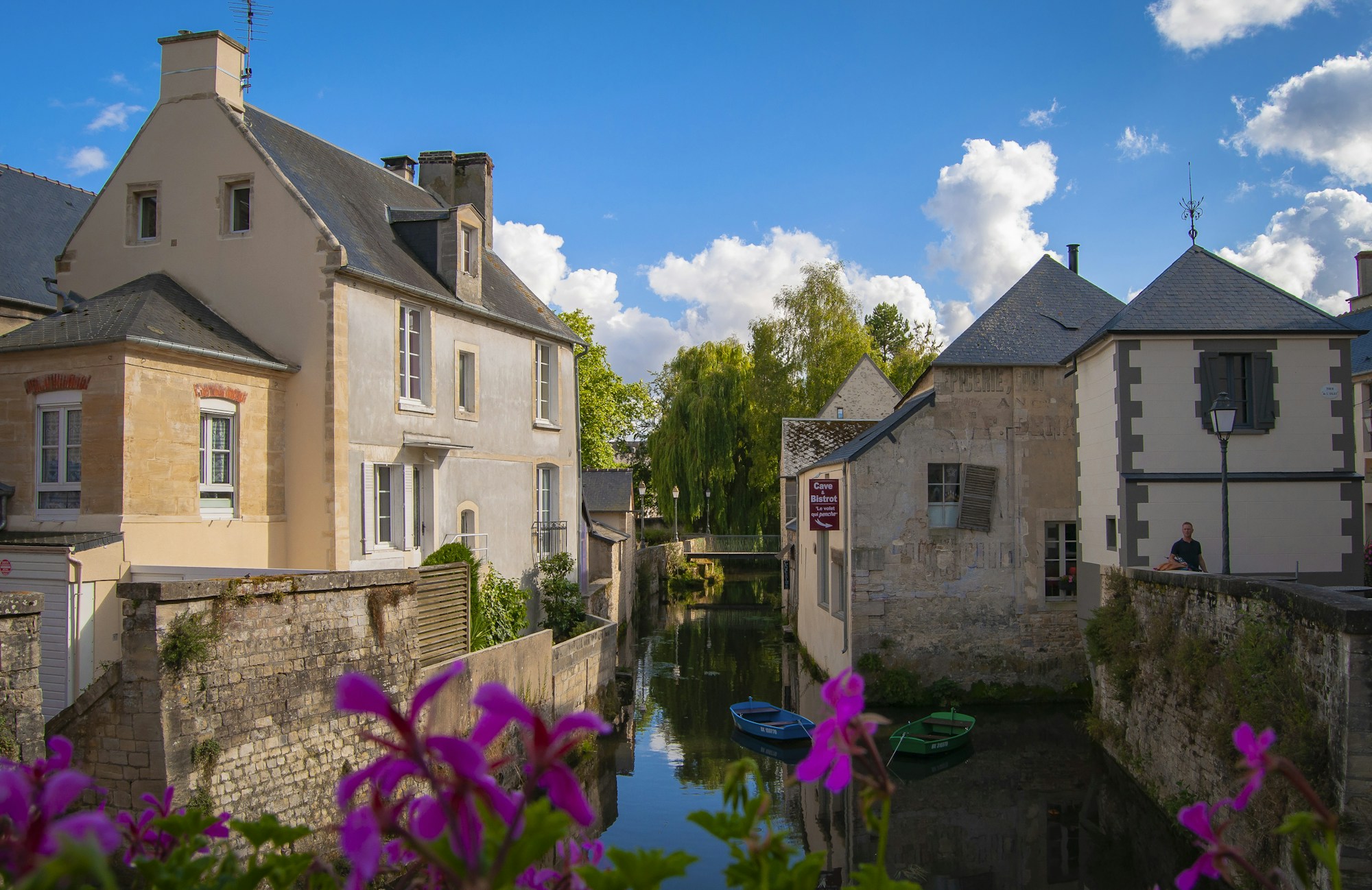
Caen and Bayeux — the ideal pairing
Caen is Normandy’s natural gateway. From the UK, the most straightforward route is Eurostar from London St Pancras to Paris (around 2 hours 20 minutes), then a train from Paris Gare Saint-Lazare to Caen (around 2 hours), giving a total journey of roughly 4.5–5 hours. Alternatively, Brittany Ferries operates a direct crossing from Portsmouth to Ouistreham (Caen’s port) in around 6 hours — ideal if you are travelling with a car. Caen was 70% destroyed during the Battle of Normandy. Its Mémorial de Caen is one of Europe’s largest contemporary museums of the Second World War (adults €20.80, seniors €18.50, students €6, children under 10 free, open 09:00–19:00 in June). A 2026 temporary exhibition, « Decolonising through Art », completes the programme. The Marathon de la Liberté (starting 7 June at 09:10 from Courseulles-sur-Mer, finishing at Caen’s Stade Hélitas) covers the memorial sites over 42 km.
Bayeux (population 13,000) is the ideal base for Gold, Juno and Sword beaches. It was the first major French town to be liberated, on 7 June 1944 — and the only large town to be entirely spared from bombing — preserving its medieval architecture intact. The Bayeux British Military Cemetery is the largest British war cemetery in France (4,648 graves), with free admission. Note: the Bayeux Tapestry Museum is closed for renovation until October 2027 — the millennium tapestry will be lent historically to the British Museum in London from September 2026.
Highlights
- Mémorial de Caen: the benchmark museum of the Second World War — allow at least 3 hours
- Bayeux: the Lion d’Or Hotel (hosted Eisenhower in 1944) and the Château de Vouilly a few km from the beaches
- Marathon de la Liberté on 7 June: 42 km from Courseulles to Caen via Juno Beach, Pegasus Bridge (start 09:10)
7. Transport, accommodation and budget: everything you need to know

D-Day logistics — 80 km of coastline, a car is essential
The five D-Day beaches stretch across 80 km of coastline, from the mouth of the Vire to the Orne. A car is essential to connect the sites: the drive between Utah Beach (Cotentin) and Sword Beach (Ouistreham) is around 1 hour 20 minutes. Bayeux is only 30 minutes from Omaha Beach, making it the ideal logistics base for the British and central American beaches. From the UK, the main options are: Eurostar from London St Pancras to Paris (2 hrs 20 min), then train to Caen (2 hrs), total around 4.5–5 hrs — or Brittany Ferries direct from Portsmouth to Ouistreham (~6 hrs, up to 3 daily sailings) which lands you directly at Caen’s port, perfect if travelling with a car. Once in Normandy, hire a car from Caen or Bayeux.
For accommodation, the week of 6 June is the hardest: according to Destination WWII, the best spots close to the beaches book up 11 months in advance. As of May 2026, availability near 6 June is almost nil. Options still possible: basing yourself in Caen (central hub), or searching within a wider radius. Budget for 3 days (4-star campsite + 3 museums + local meals, excluding travel from the UK): approximately £160–250 per person. Guided half-day tours from Bayeux: £80–105 per person. In June, expect temperatures of 15–17°C, approximately 8 hours of sunshine per day, and sunset around 22:00.
Highlights
- Cyclo’Scenic cycling route (51 km, Arromanches to Grandcamp-Maisy) for cyclists — cycling event on 31 May 2026
- Historic accommodation: Hôtel Lion d’Or Bayeux (hosted Eisenhower) and Château de Vouilly (4-star)
- Themed campsites: Flower Camping Omaha Beach (direct beach access) and Camping Le Cormoran facing Utah Beach
Practical information for your trip to Normandy
Stay connected to share your photos from the D-Day beaches without roaming charges. Instant activation before departure.
From €4.50Global medical cover and repatriation for your stay in France or Europe. Nomad Insurance from $56 per 4 weeks. 10% off via our link.
From $56 / 4 weeksFrequently asked questions about the D-Day Festival Normandy 2026
Do I need to book to visit the American Cemetery at Colleville-sur-Mer in 2026?
No, admission to the American Cemetery at Colleville-sur-Mer remains free with no mandatory booking until at least the end of 2026. A pre-booking system was considered but has been postponed to 2027. The site is open every day from 09:00 to 17:00. For special ceremonies on 6 June, contact the ABMC: [email protected]. Source: ABMC.
Where does the official international ceremony take place on 6 June 2026?
The official international ceremony marking the 82nd anniversary of the Landings takes place on 6 June 2026 at 16:30 at Langrune-sur-Mer, Place du 6 Juin, at the monument to the 48th Royal Marine Commando — not at Omaha Beach or the American Cemetery. A musical prelude begins at 15:45, and a moment of reflection at the Canadian military cemetery at Bény-sur-Mer is scheduled for 15:00. Access is best on foot or by bicycle (roads restricted on the afternoon of 6 June). Source: Cœur de Nacre Tourisme.
Is Pointe du Hoc accessible during the 2026 festival?
Yes, but with important restrictions. The Pointe du Hoc site is undergoing a $10 million, 18-month restoration project that began on 17 February 2026. The visitor centre has been closed since 9 March 2026. Access to the site remains possible via the west path only, from 09:00 to 17:00. Contact the ABMC on +33 2 31 51 62 00 for the latest updates. Source: ABMC — Pointe du Hoc Restoration.
Can I see the Bayeux Tapestry during the festival?
No. The Bayeux Tapestry Museum is closed for renovation until October 2027 (a new €38 million museum). The millennium tapestry will travel on a historic loan to the British Museum in London from September 2026 — the first time it has left Bayeux since it was created approximately 1,000 years ago. Source: Bayeux Museum.
Are the D-Day Festival events free?
The vast majority of D-Day Festival events are free: parades of 150 military vehicles, parachute drops, Liberation dances, swing concerts, official ceremonies, fireworks. Only the museums charge admission: Mémorial de Caen (€20.80), Airborne Museum (€11.50), Overlord Museum (€9.90), Omaha Beach Memorial (€7.90). The American Cemetery at Colleville-sur-Mer always has free admission. Source: Normandie Tourisme.
How do I get to the D-Day beaches without a car?
Without a car, the D-Day beaches are difficult to access. The closest station to the coast is Carentan (for the Cotentin/Utah Beach) from London via Eurostar and Caen. Local public transport is insufficient to link the sites. The most practical option is a guided tour from Bayeux or Paris: half-day from €98 per person, full day from €152. Hiring a car from Caen or Bayeux is the most flexible alternative. Source: Destination WWII.
What budget should I plan for 3 days at the D-Day Festival Normandy 2026?
Budget approximately £160–250 per person for 3 days (4-star campsite + 3 museums + local meals), excluding travel from the UK. For a stay with hotel accommodation including travel from London, the budget rises to approximately £350–550 per person over 3 days. The Mémorial de Caen (€20.80/adult), Airborne Museum (€11.50) and Overlord Museum (€9.90) make a 3-museum programme for around €42 per adult. Source: Ophorus Travel Guide 2026.
Sources
- Normandie Tourisme — D-Day Festival Normandy 2026 — Official festival programme, dates and events
- D-Day Overlord — 2026 commemorations calendar — Detail of 150+ events
- Caen la mer Tourisme — DDay Festival Normandy — 32-page PDF programme (May 2026)
- Cœur de Nacre Tourisme — International ceremony at Langrune-sur-Mer — Details of the official 6 June 2026 ceremony
- Comité du Débarquement — 82nd anniversary — Context and official programme
- ABMC — Normandy American Cemetery — Cemetery information (free entry 2026)
- ABMC — Pointe du Hoc Restoration Project — Works since February 2026
- British Normandy Memorial — Standing with Giants 2026 — The 1,475 steel silhouettes installation
- British Normandy Memorial — D-Day 82 ceremony — Registration for the official British ceremony
- Juno Beach Centre — Events — Canadian programme 6 June 2026
- Airborne Museum Sainte-Mère-Eglise — Admission 2026 — Adults €11.50, children €7.50
- Mémorial de Caen — Admission 2026 — Adults €20.80, family €53
- Overlord Museum — Admission — Adults €9.90, reduced €7.50
- Destination WWII — 3-day itinerary — Logistics and suggested routes
- Brittany Ferries — Portsmouth to Caen — Direct ferry from Portsmouth to Ouistreham (~6 hrs, 3 daily sailings)
- Lost in Landmarks — Getting to Normandy from the UK — Eurostar, ferry and tunnel options
Research conducted on 13 May 2026. Information is subject to change — check official sources before travelling.
Ready to experience the D-Day Festival in Normandy?
From 30 May to 14 June 2026, Normandy becomes the world’s largest open-air museum. Book your accommodation and guided tour now — places disappear fast for the week of 6 June.
Explore Normandy with Pixidia