
Commercial partnership. This article contains affiliate links. If you book through these links, Pixidia earns a small commission at no extra cost to you. Learn more
To learn tango in Buenos Aires like a local, start with a private lesson in a San Telmo studio (from £28/h), practise at a practica, then attend authentic milongas in Almagro or Palermo. The Viator experiences below combine lessons and milonga accompaniment for a full immersion in a single session. Ratings from 4.46 to 5.0 out of 5, all with fast confirmation. Our top pick for a serious first encounter with the dance: the private lesson in a San Telmo studio.
Prices verified on via the Viator partner API (rates, availability).
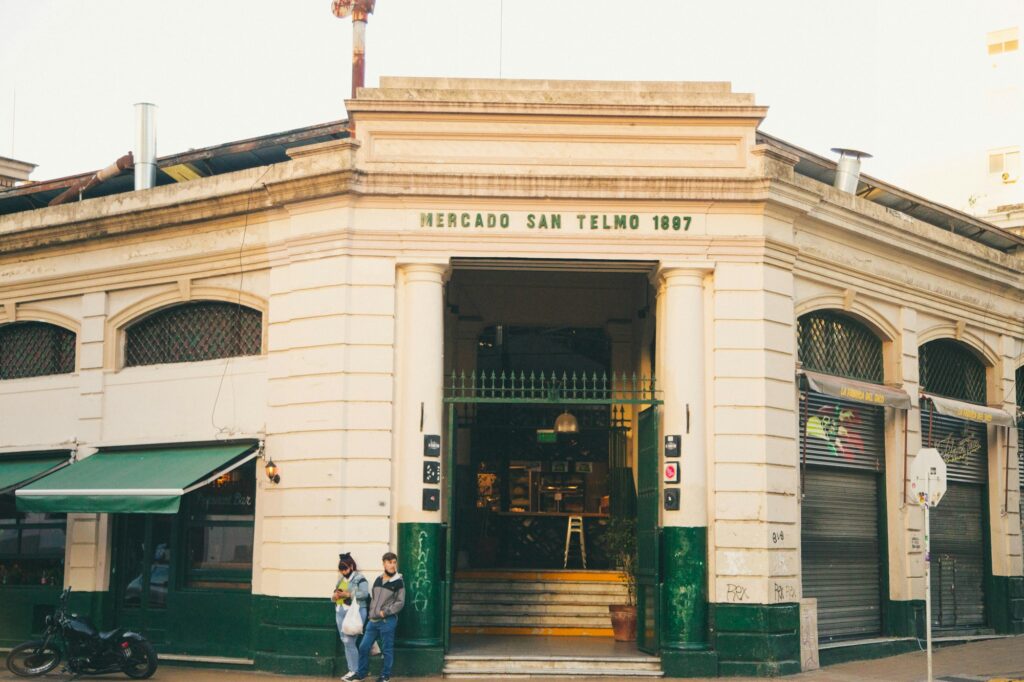
Tango is not a performance — it is a conversation between two bodies learning to listen to each other. When I first looked into where to take tango classes in Buenos Aires, I found dozens of glitzy dinner shows with menus printed in four languages. Interesting once, but that is not where tango really lives. The real tango exists in the studio private lessons inside San Telmo’s converted conventillos, in the Almagro practicas where retirees and students refine their abrazo until midnight, and in the Palermo milongas where nobody dances to be watched.
Buenos Aires has an unmatched density of exceptional teachers: instructors who learned the dance from a grandparent, in apartments with three-metre ceilings, to the sound of a bandoneon. The city received UNESCO Intangible Cultural Heritage status in 2009 for tango — not for its tourist shows, but for the living practice that continues every evening in its milongas. This guide brings together my selection of 10 experiences to enter that world, whether you are a complete beginner or an intermediate dancer looking to improve with locals. All rated 4.5 or above on Viator, with options for every budget and level.
From conventillos to milongas: the history of porteño tango
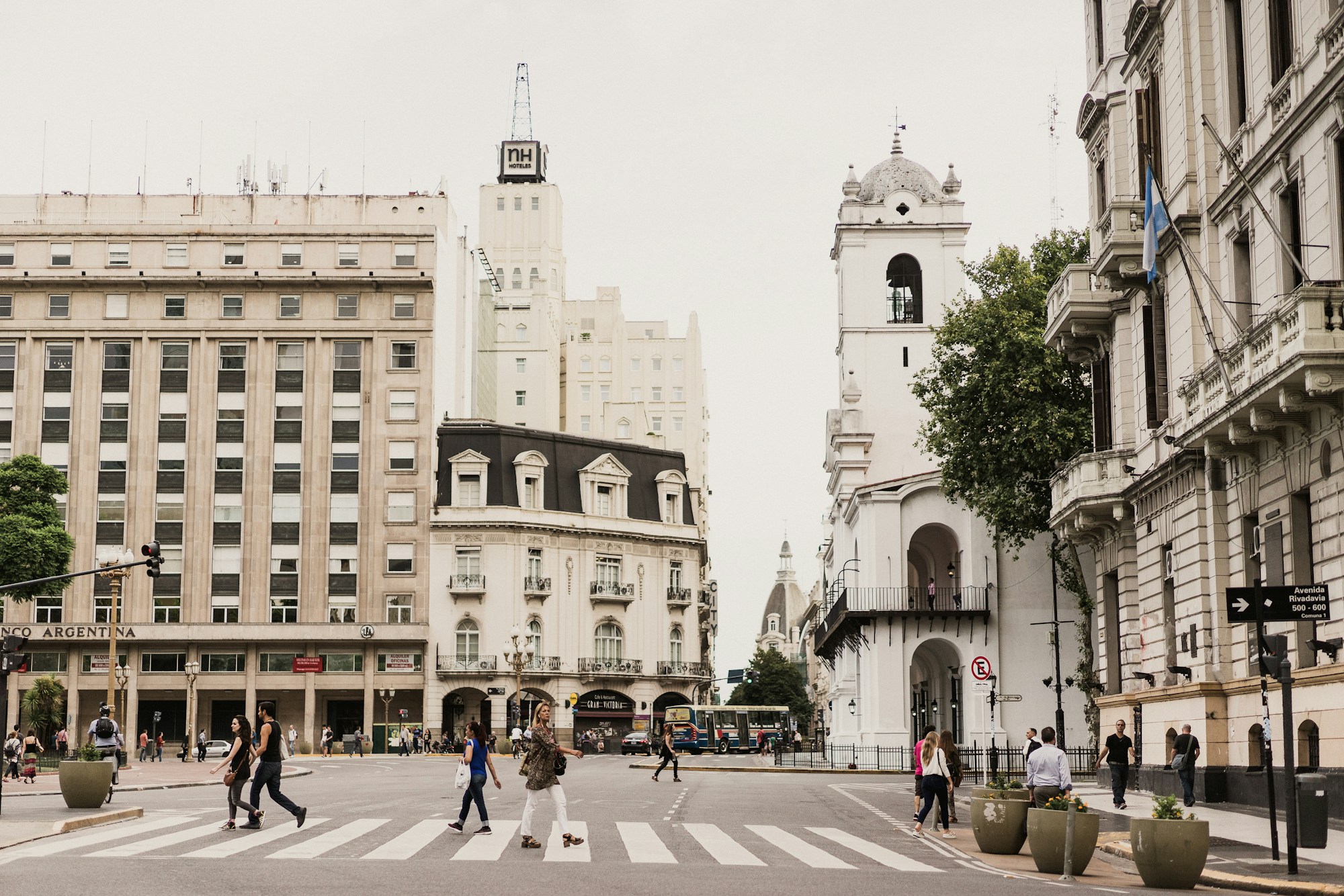
Tango was born in the late 19th century in the conventillos — the crowded port tenements shared by Italian and Spanish immigrant families and descendants of African enslaved people. From that creative proximity emerged a dance fusing the gaucho milonga, the Cuban habanera and African candombe. The iconic instrument, the bandoneon — a German button accordion adopted by immigrants — gives tango its characteristic melancholic sound. Carlos Gardel popularised the genre in the 1920s, ushering in the Golden Age. In 2009, UNESCO inscribed tango on the Intangible Cultural Heritage list, a joint Argentina–Uruguay candidacy, recognising its role in intercultural dialogue.
Today, four neighbourhoods define the tango experience in Buenos Aires. San Telmo — the historic birthplace, authentic studios inside converted conventillos, Sunday tango market at Plaza Dorrego. La Boca — the iconic port district; Caminito provides the visual backdrop but is very touristy for serious classes. Almagro and Boedo — the preferred neighbourhoods for advanced Argentine dancers, non-tourist milongas such as La Catedral and Club Gricel. Palermo — nuevo and contemporary tango; La Viruta milonga (Armenia 1366) runs group classes every evening before the social dance. Your best neighbourhood choice depends on your level and the atmosphere you are seeking — this guide will help you decide.
The 10 best tango experiences in Buenos Aires
1. Private tango lesson in a studio — San Telmo
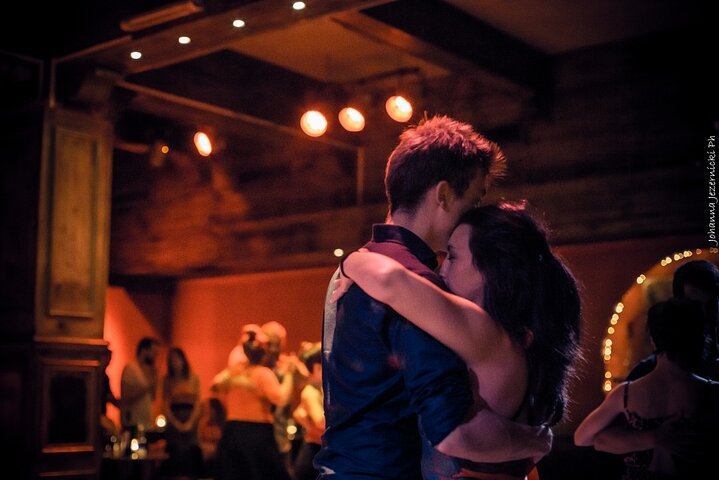
This is the private lesson we recommend first: a certified teacher with at least 15 years of experience, in a San Telmo studio frequented by Porteños — not a converted hotel meeting room. The lesson adapts entirely to your level, whether you are experiencing your very first abrazo or refining your dissociation technique. Reviews unanimously praise the teacher’s patience and a progressive approach that never feels mechanical.
- Certified teacher — 15+ years of experience
- Suitable for all levels, complete beginners welcome
- Authentic studio in the historic San Telmo neighbourhood
2. Private lesson with an expert — the ideal taster class
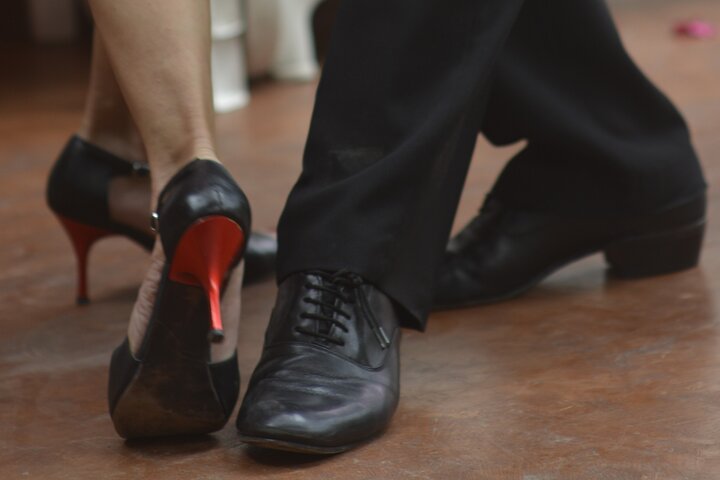
A perfect 5.0 rating and the most affordable price in our selection (from £28): this is the ideal lesson if you want to try tango before committing further. Under the guidance of Laurence, a dancer and performer with 25 years of experience, you will leave with solid foundations and the conviction that this dance was made for you. Based in Palermo, in a relaxed, pressure-free setting. Perfect for a first class or for travellers on a budget who still want quality teaching.
- Expert Argentine instructor — 25 years of experience
- Most affordable option in the selection
- Ideal for complete beginners, instant confirmation
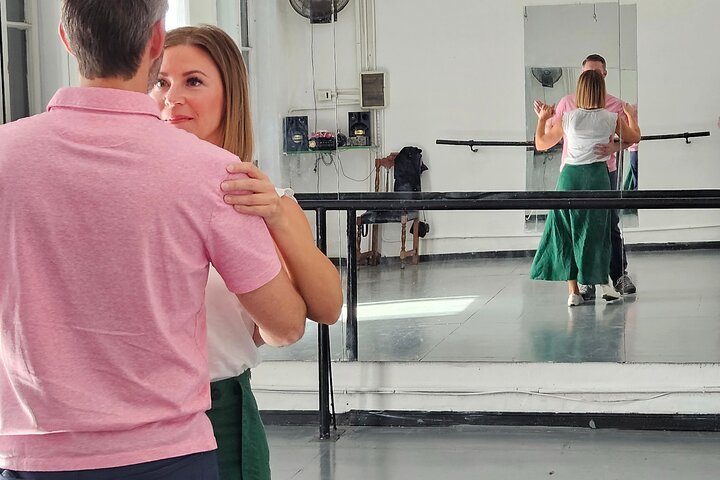
3. Tango class + Argentine wine tasting
This experience takes place inside an 18th-century conventillo in San Telmo — exactly the kind of building where tango was born. First hour: tango class covering the basics needed to dance at a milonga. Second half: a tasting of quality Argentine wines in the same heritage setting. It has the most substantial review count (121) in our selection while remaining very accessible. The double cultural angle — heritage and wine — makes it a particularly strong choice for travellers who like every experience to tell a story.
- Historic 18th-century conventillo — unique heritage setting
- Argentine wine tasting included
- 2 hrs covering class and tasting — excellent value
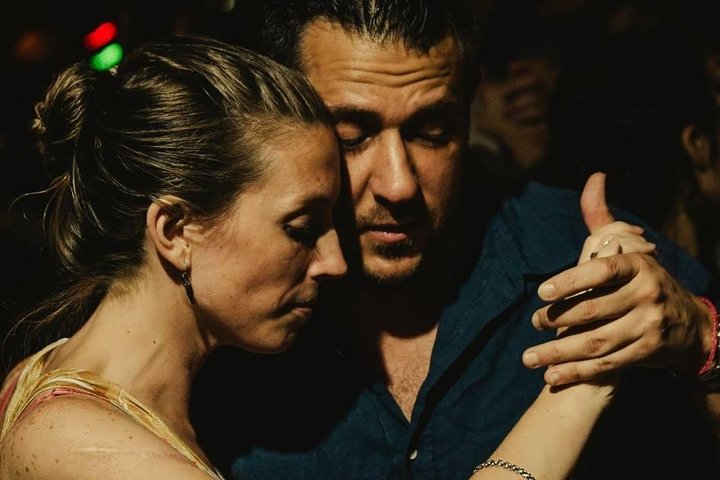
4. Tango lesson + guided entry to a real local milonga
This experience bridges the gap between learning and real social dancing. A perfect 5.0 rating and a two-part format: tango lesson covering the essentials, then guided entry into a real local milonga — not a theatre full of tourists, but a milonga attended by Argentine dancers with 20 years of practice. Your two guides explain the códigos (cabeceo, tanda, ronda) on the spot, in real time. If you want to understand how a milonga actually works from the inside, this is the most honest experience I found.
- Guided entry to a real non-touristy milonga
- Milonga codes and etiquette explained on the spot
- 2 hrs 30 of total immersion — class then social dancing
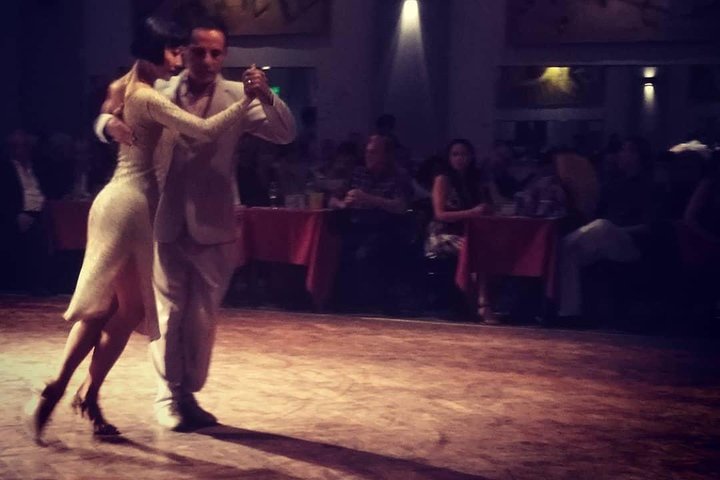
5. Tango like a local — 4-hour immersion in Almagro
For this evening, you are not a tourist — you are a Porteño for a few hours. Four hours of total immersion in the Almagro neighbourhood — the heartland of traditional tango — with local dancers who have more than 20 years of milonga experience. A structured beginner lesson, then access to authentic milongas you would never have found on your own. Shared wine included. This is the experience that justifies the title of this article, and the one I recommend to discerning travellers who want a memorable evening, not a postcard.
- 4 hrs of total immersion with local dancers
- Authentic non-touristy milongas — Almagro neighbourhood
- Shared wine included — a rare treat for discerning travellers
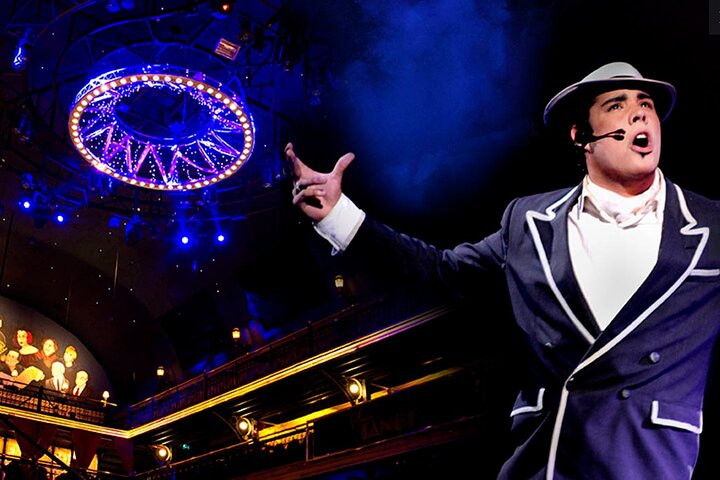
6. Señor Tango — the legendary grand show in Barracas
Señor Tango has been open since 1988 and remains one of the most iconic shows in the city. Its 700-seat venue in Barracas, live orchestra and the scenic quality of its dancers make it the undisputed benchmark for those who want tango in grand-scale format. This is not the most intimate experience, but it delivers the full visual and musical power of tango at its most polished — a 3-course dinner included. A complete evening combining dining and show.
- Iconic 700-seat venue — Barracas, open since 1988
- Live orchestra — authentic bandoneon sound
- 3-course Argentine dinner included
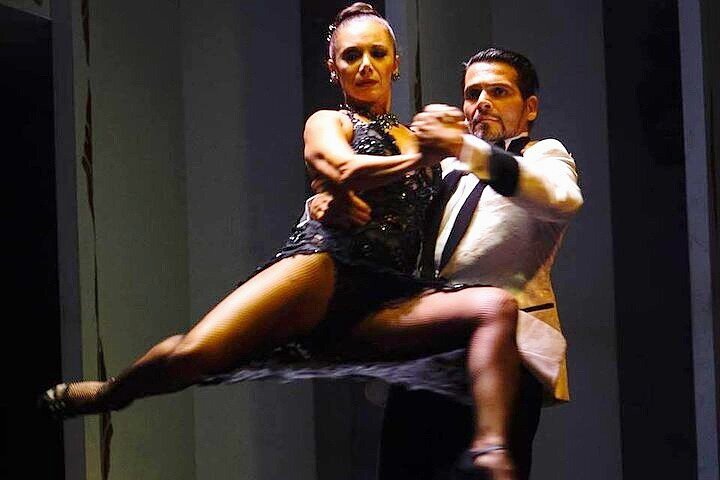
7. Café de Los Angelitos — intimate show in an 1890 café
Café de Los Angelitos has stood on Avenida Rivadavia since 1890, a short walk from Plaza del Congreso. The tango show performed there every evening combines the atmosphere of a historic café — dark wood panelling, mirrors, art deco — with professional dancers and musicians. The 90-minute format is ideal when time is short or when you want to follow the show with dinner elsewhere in the Centro. It is the most atmospheric option in our selection — the setting alone is worth the ticket price.
- Historic 1890 café — original art deco interior
- Intimate 90-min show — perfect for a short evening
- Instant confirmation — in the Centro, easy access
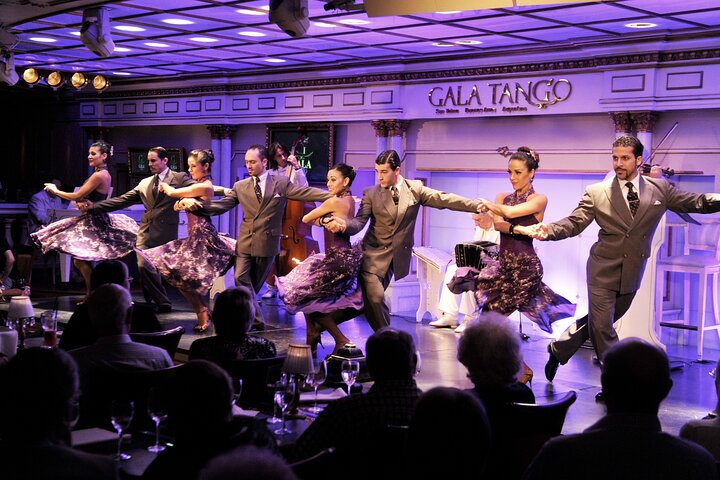
8. Gala Tango Show — gourmet dinner and premium show
Gala Tango stands out for its French-inspired architecture and refined finishes — one of the few venues in Buenos Aires where tango is staged with genuine aesthetic care. Argentine gourmet dinner included, with optional hotel transfers available — convenient for visitors who do not want to worry about late-night logistics. Four hours combining fine dining, dance and live music in an elegant setting. Choose this for a special occasion such as a birthday or anniversary dinner.
- Argentine gourmet dinner included
- 4-hr show — French-inspired architecture
- Optional hotel transfers available
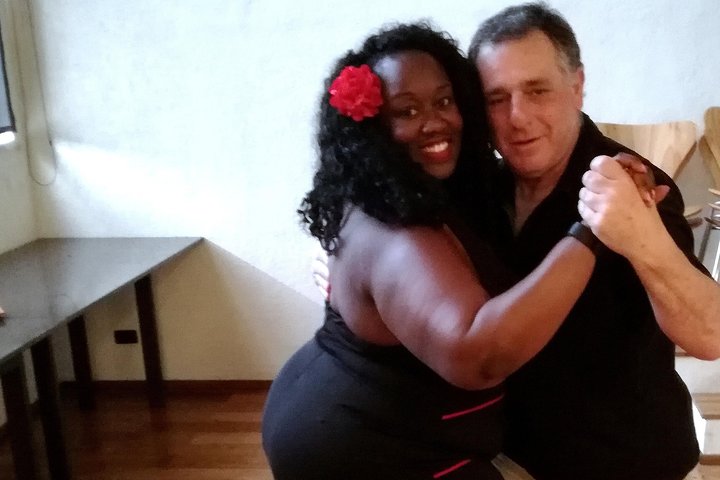
9. Private tango + Argentine cooking class + home dinner
A perfect 5.0 rating over 37 reviews. This is the most exclusive experience in this selection and by far the most memorable: a private tango lesson with a dedicated local instructor, then a fully hands-on Argentine cooking class — empanadas, asado, dulce de leche — followed by a 3-course dinner with wine at a local’s home. Everything takes place in a private house, in a small group or entirely exclusive. If you could only take one experience away from Buenos Aires, this would be it. Advance booking required.
- Private tango lesson + Argentine cooking class exclusively
- 3-course dinner with wine included — at a local’s home
- Perfect rating — advance booking strongly recommended
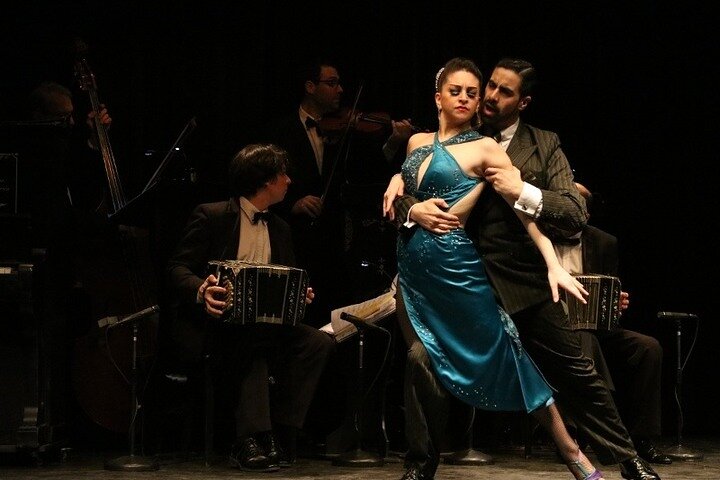
10. La Ventana — the absolute San Telmo institution
With 683 reviews — six times the volume of the next best-reviewed show in this list — La Ventana is unquestionably the benchmark tango experience in Buenos Aires. Installed in San Telmo since 1967, this historic venue embodies the continuity of porteño tango across more than half a century. The 5-hour show offers two options: show only, or dinner plus show. We recommend the dinner option for a complete evening out. If you only see one tango show in Buenos Aires, make it this one.
- Iconic San Telmo venue since 1967 — 683 reviews, top reference
- Show only or dinner plus show options
- The one show to see if you only pick one — the cradle of tango
Planning your trip to Buenos Aires
Stay connected from the moment you land at Ezeiza. Argentina eSIM available, activated in 5 minutes.
Get my Argentina eSIMNomad Insurance: global coverage including Argentina from $56/4 weeks. 10% off via our link.
Get coveredFlights from London to Buenos Aires (EZE) available year-round. Best fares several weeks in advance.
Search London–Buenos Aires flightsThe tango lesson + local milonga in 2 hrs 30 — perfect 5.0/5 rating. Ideal for combining a private lesson with a real guided milonga evening.
Book my lesson and milonga eveningPractical tips for taking tango classes in Buenos Aires
When to go: Buenos Aires is a year-round tango destination, but the most pleasant months are March–May (southern autumn, 18–26 °C) and September–November (spring, 16–24 °C). Avoid January–February: oppressive heat and fewer active milongas as locals head off on holiday. The Festival Internacional de Tango takes place every year in August — free milongas across the whole city, but hotels are booked out fast and prices double. Book your classes well in advance during that period.
Getting around: Buenos Aires has a 6-line metro (Subte), efficient for reaching San Telmo, the Centro and Palermo. Buy a rechargeable SUBE card at the airport or any kiosk — a single journey costs around 1,753 pesos (general fare, since 1 September 2026). For Barracas (Señor Tango), use a safe taxi via the InDriver or Uber app, both of which work reliably in Buenos Aires. From Ezeiza international airport, the Tienda León direct coach to the centre is recommended (approximately 50 minutes).
Budget on the ground: Viator experiences are paid in your home currency at the time of booking. For free-entry activities (practica, milonga entry), budget roughly £2–7. International cards are accepted at nearly all venues listed here. For everyday purchases (coffee, restaurants), the Argentine peso remains the norm — having a few small notes is handy.
Milonga codes to know before you walk in: The cabeceo (invitation by eye contact, never by physical approach), the tanda (a set of 3–4 tracks in the same style) and the cortina (a short musical break signalling a change of partner) are the three fundamental rules. The ronda is the counter-clockwise flow of dancing — never cut across it or step backwards against the current. Smart, discreet dress is required. Smooth-soled shoes are recommended for beginners (tango-specific shoes are not obligatory for a first visit). For further reading on local logistics, our guide to South America itineraries covers Buenos Aires practicalities in detail.
Note: A practica is not a milonga. It is the open practice space where you can self-correct, restart and work on sequences. The social milonga is reserved for movements you already have under control. Do not confuse the two — Argentine dancers always notice.
Frequently asked questions about tango classes in Buenos Aires
Do I need any dance experience to join a tango class in Buenos Aires?
No, the private lessons in our selection all accept complete beginners. The San Telmo studio classes and the expert instructor lesson are explicitly designed for novices. The advantage of a private lesson over a group class: the teacher adapts the pace and vocabulary to your level in real time. Allow 2 to 3 one-hour sessions to acquire the foundations needed to enter a milonga.
What is the difference between a tango show and a milonga?
A tango show (Señor Tango, La Ventana, Gala Tango) is a professional performance with dancers, musicians and staging — you are an audience member. A milonga is a social dance event where all participants dance with different partners following the codes of the cabeceo. Shows are accessible with no prior experience; milongas require at minimum a grasp of the abrazo and the ronda. For travellers who want both experiences, the lesson plus guided milonga experience is the best entry point.
Do I need special shoes to dance tango?
For a beginner class or a first milonga visit, any smooth-soled shoes (leather or suede) will do. Tango-specific shoes (5–7 cm heel for women, leather sole for men) improve pivot and stability but are not required at the start of your learning journey. Avoid thick rubber soles that grip the floor and make pivots difficult. Most Buenos Aires studios can point you to local tango shoe shops if you decide to invest.
What is the best time of year to take tango classes in Buenos Aires?
Tango in Buenos Aires runs all year. The most enjoyable months for classes and milongas are March–May (southern autumn) and September–November (spring) — temperatures between 16 and 26 °C, milongas well attended by locals. Avoid January–February: extreme heat and many Porteños on holiday make milongas quieter. The Festival Internacional de Tango in August is a world apart — free milongas across the entire city — but hotels fill up quickly.
Which neighbourhood in Buenos Aires is best for tango classes?
For private lessons, San Telmo is the benchmark neighbourhood — authentic studios inside historic conventillos, a unique atmosphere. Palermo is a good alternative for contemporary tango and more modern formats (La Viruta). For non-touristy milongas where Argentines actually dance, Almagro and Boedo offer the most authentic experience. Grand-format shows (Señor Tango, Gala Tango) are in Barracas and San Telmo. Staying in the Centro or San Telmo makes it easy to reach studios and milongas on foot.
Sources
- UNESCO — Tango, Intangible Cultural Heritage of Humanity (2009) — accessed 2026-05-16
- Wikidata — Carlos Gardel (Q14770) — accessed 2026-05-16
- Wikidata — Bandoneon (Q184476) — accessed 2026-05-16
- Wikidata — San Telmo (Q1022168) — accessed 2026-05-16
- Wikidata — La Boca (Q489093) — accessed 2026-05-16
- Buenos Aires International Tango Festival — official programme — accessed 2026-05-16
- Buenos Aires City Government — Tango official page — accessed 2026-05-16
- Pixidia — South America Itineraries
Ready to dance tango in Buenos Aires?
Book your class or show in advance — the best teachers’ slots fill up fast, especially in peak season (August, Tango Festival) and March–May. Our recommended starting point for a first time: the private lesson in a San Telmo studio.
See class #1