
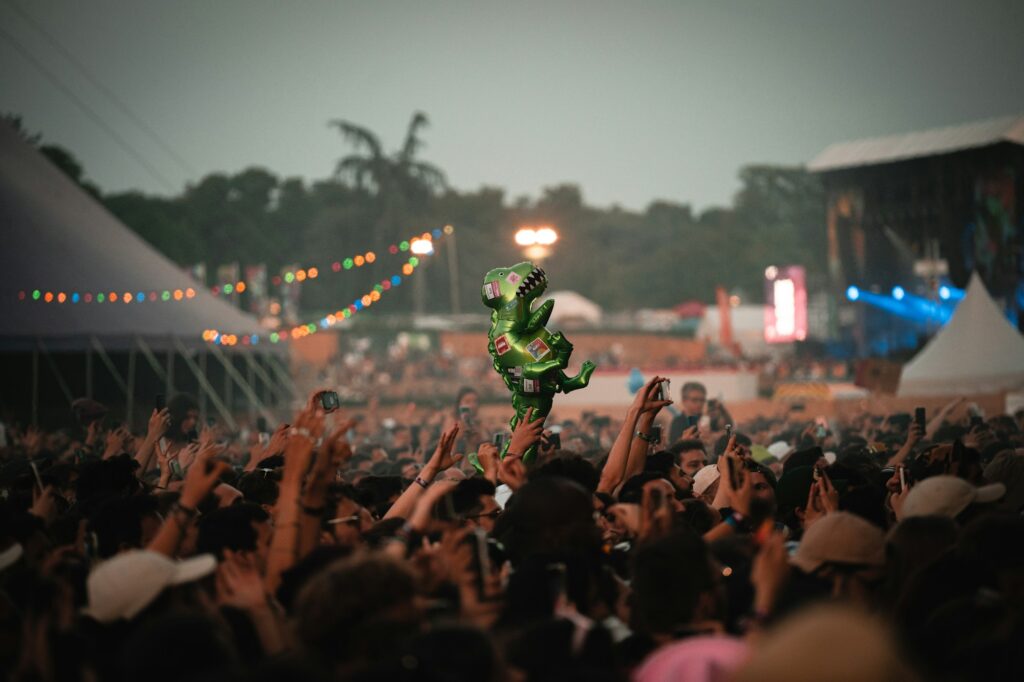
Roskilde Festival 2026 runs from 27 June to 4 July in Roskilde, Denmark (54th edition). 130,000 festival-goers, 177 artists from 37 countries across 7 stages, camping included in all tickets. Headliners: The Cure (1 July), Gorillaz (2 July), Jennie (3 July), Zara Larsson (4 July). 8-day pass at 2,600 DKK (approx. £290). Total budget from London: approximately £700–£1,050 with camping. Buy tickets on the official website now — Wednesday and Saturday are on last-chance sale.
Some festivals make noise. Others change the way you see the world. Roskilde is firmly in the second category. Since 1971, this Danish giant has welcomed 130,000 people each summer to the historic Viking city — just 30 minutes from Copenhagen — in a radically non-commercial atmosphere you won’t find anywhere else in Europe. No corporate billboards, no brand coldness: every single penny of profit goes to humanitarian causes. In 2026, it’s the 54th edition, with a rebuilt Orange Stage 30% taller, the return of Cinema after 13 years, and a staggering line-up — from The Cure to Jennie (BLACKPINK) via Gorillaz and their ninth album. Here’s everything you need to plan your trip from the UK.
1. Roskilde Festival at a glance: Europe’s most unique non-profit giant
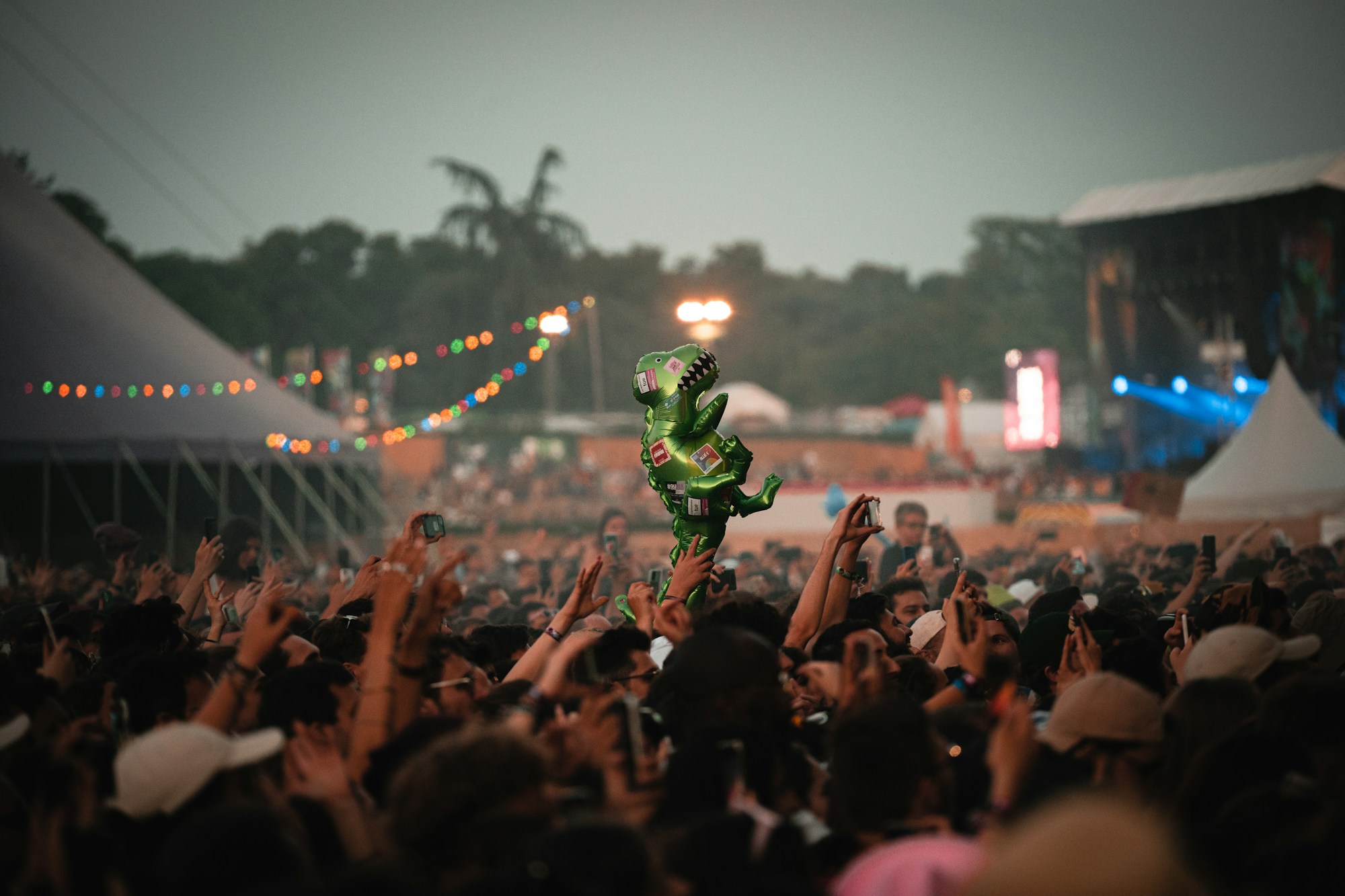
Roskilde Festival 2026 — key facts
Founded in 1971 by two Danish teenagers, Mogens Sandfær and Jesper Switzer Møller, Roskilde Festival has grown over half a century into the largest festival in the Nordic countries and one of the most important in Europe. Its defining characteristic: since 1972, it has been run by a non-profit foundation. According to the official website, 476 million DKK (approximately £42 million) has been distributed to humanitarian, cultural and youth causes since the beginning. The 2025 surplus stood at 15.4 million DKK — every krone donated.
In 2026, the 54th edition brings major changes. The Orange Stage — the festival’s iconic landmark, inaugurated by the Rolling Stones in 1978 — has been expanded and raised by 30%, with enhanced technical capabilities for sound, lighting and staging. Two new stages join the line-up: Fauna (open-air, natural atmosphere in the north-east corner) and Lagune (covered, maritime aesthetic). Apollo and Avalon are gone. Cinema returns after a 13-year absence — Oscar-winning films, documentaries, and late-night vampire screenings co-programmed with CPH:DOX.
Highlights
- 100% non-profit model unique in Europe: no comparable festival donates all its profits
- Denmark’s 4th largest « city » for 8 days (130,000 people, average age 24)
- 27,000 volunteers including 15,500 from charities — a unique social economy
- 90+ art installations, performances and activism conferences from 30 countries
- Goal: full carbon neutrality by 2028, 100% renewable energy, 100% organic food
2. 2026 Line-up: the highlights not to miss
Orange Stage: headliners night by night
Roskilde Festival 2026 brings together 177 musical artists from 37 countries across 7 stages. The programme splits into two parts: the First Days (27–30 June), focused on art, cinema, sport and 41 emerging Nordic artists, followed by the Main Days (1–4 July), with the headliners on the revamped Orange Stage.
| Date | Artist | Time | Stage |
|---|---|---|---|
| Wednesday 1 July | The Cure | 22:00 | Orange Stage |
| Wednesday 1 July | Wolf Alice (support) | Before 22:00 | Orange Stage |
| Thursday 2 July | Gorillaz | 22:00 | Orange Stage |
| Thursday 2 July | Lykke Li (return after 12 years) | TBC | Orange Stage |
| Friday 3 July | Jennie (BLACKPINK) | 22:00 | Orange Stage |
| Friday 3 July | David Byrne | 20:30 | Arena |
| Saturday 4 July | Clipse | 18:30 | Orange Stage |
| Saturday 4 July | Lily Allen | 20:45 | Orange Stage |
| Saturday 4 July | Zara Larsson (closing set) | 23:15 | Orange Stage |
The moments to remember
- The Cure (1 July): 50 years of career — Robert Smith celebrates this milestone on the brand-new Orange Stage. Their last Roskilde appearance (2019) lasted 3 hours
- Gorillaz (2 July): 25th anniversary of their debut album + showcase of The Mountain, their 9th album (released 27 February 2026), recorded between India and London — NME calls it « their richest work since Plastic Beach »
- Jennie (3 July): first K-pop artist to headline a main stage at a Danish festival in history — her solo album Ruby (2025) was praised by Rolling Stone
- Clipse (4 July): return 16 years after their first Roskilde appearance (2007), with the album Let God Sort Em Out (2024, Grammy-nominated)
World music fans will also find: Rizwan-Muazzam Qawwali (Pakistani Sufi), Los Mirlos (Peruvian cumbia), Liniker (Brazil), The Zawose Queens (Tanzania), DBN Gogo (South Africa) — and for metal fans, Napalm Death (who also play Hellfest in Clisson that same month).
3. Camping: how to organise your 8 days properly
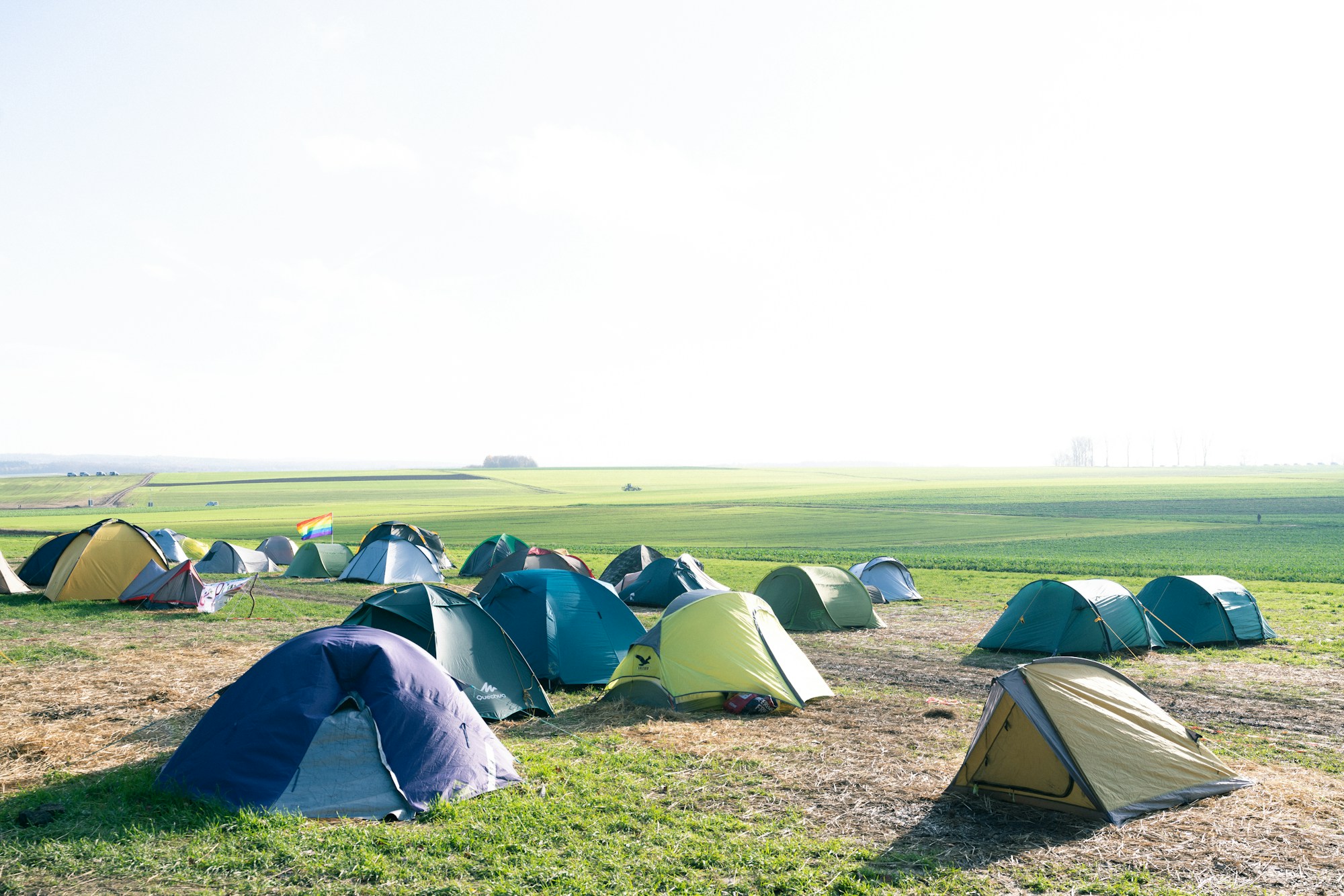
From Regular Camping to glamping tipis: your 2026 options
Camping is included in all festival tickets, including 1-day and 2-day passes. Regular Camping (no reservation, first come first served) covers approximately 80 hectares, with East zones (closer to the Orange Stage) and West zones (closer to the station). For those wanting more comfort, Special Camping offers 14 different packages.
| Option | Price | Best for |
|---|---|---|
| Regular Camping | Included | Budget travellers, adventurers |
| Get A Silent Spot | 175 DKK/person (approx. £15) | Party-goers who still want sleep |
| Get A Place (50 m²) | 1,450 DKK (approx. £128) | Groups of 6–10 people |
| Pre-pitched tent | 1,200 DKK (approx. £106) | Flying in from the UK |
| Tenthouse | 3,100 DKK (approx. £274) | Comfort + 230V power socket |
| Glamping Tipi (2 people) | 3,600 DKK (approx. £318) | Premium experience |
Major change for 2026: glass is completely banned on the campsite. According to the official festival announcement, aluminium, plastic and cardboard containers remain permitted — bring cans. Drop-off bins for remaining glass are available at campsite entrances. Cheap disposable gazebos (flat-pack type) are also banned — only durable folding gazebos are permitted.
Highlights
- Arrive from 27 June with an Early Entry train (80 DKK) to secure the best spots in Regular Camping
- West Camping: ideal for late arrivals and quick departures (station side)
- Dream City: creative zone built from mid-April with monumental structures — the soul of the festival
- Roskilde Road Trip: community zone for international travellers (ideal for solo UK visitors)
5. Tickets and budget: what does it actually cost?
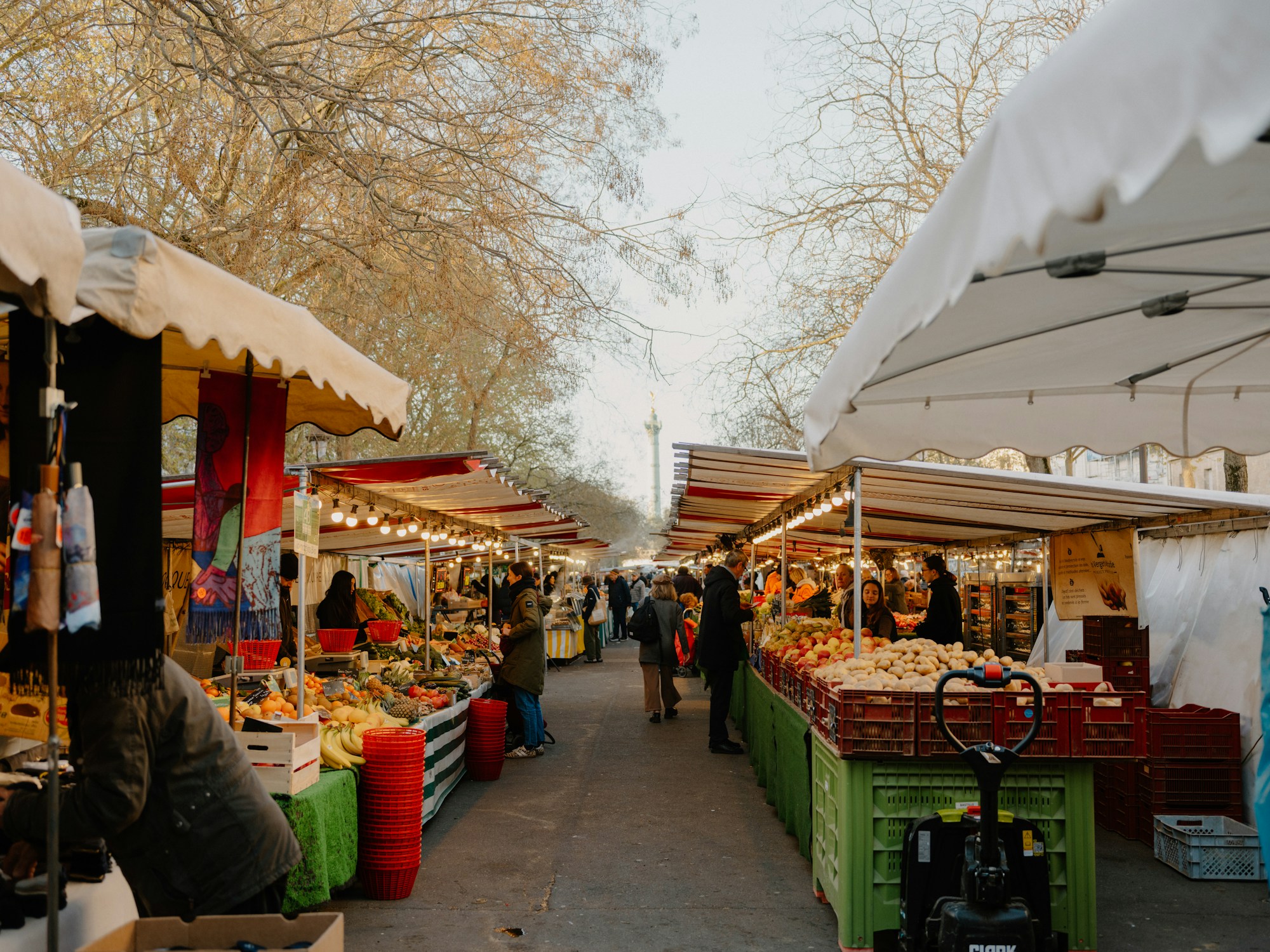
Official ticket prices and 2026 budget estimates
Official 2026 prices from the official ticket shop (exchange rate: 1 GBP = 8.90 DKK, May 2026):
| Ticket | DKK price | GBP approx. | Availability (May 2026) |
|---|---|---|---|
| 8-day pass (full festival) | 2,600 DKK | approx. £290 | Available |
| 2-day pass | 2,200 DKK | approx. £247 | Some combinations sold out |
| Day pass — Wednesday 1 July | 1,430 DKK | approx. £161 | ⚠ Last chance |
| Day pass — Thursday 2 July | 1,430 DKK | approx. £161 | Available |
| Day pass — Friday 3 July | 1,430 DKK | approx. £161 | Available |
| Day pass — Saturday 4 July | 1,430 DKK | approx. £161 | ⚠ Last chance |
For a total budget from London, consider two scenarios. 8-day camping: flights (£80–180 return) + ticket (£290) + transport (£10–15) + food and drinks (£140–315) + sundries (£45–90) = approx. £565–890. 4 days with a Copenhagen hotel (no camping): the total rises to £850–1,300.
Money-saving tips
- Stock up at a Danish supermarket on arrival: a 24-pack of Tuborg (33cl) costs around 200 DKK (£22) vs. festival prices
- Free water at taps across the site — a reusable water bottle is essential
- Volunteering: 24–32 hours of work = full festival wristband, meals included, free hot showers
- Only buy from roskilde-festival.dk — secondary ticketing is illegal in Denmark; only the official platform is authorised
6. Roskilde: a festival unlike any other
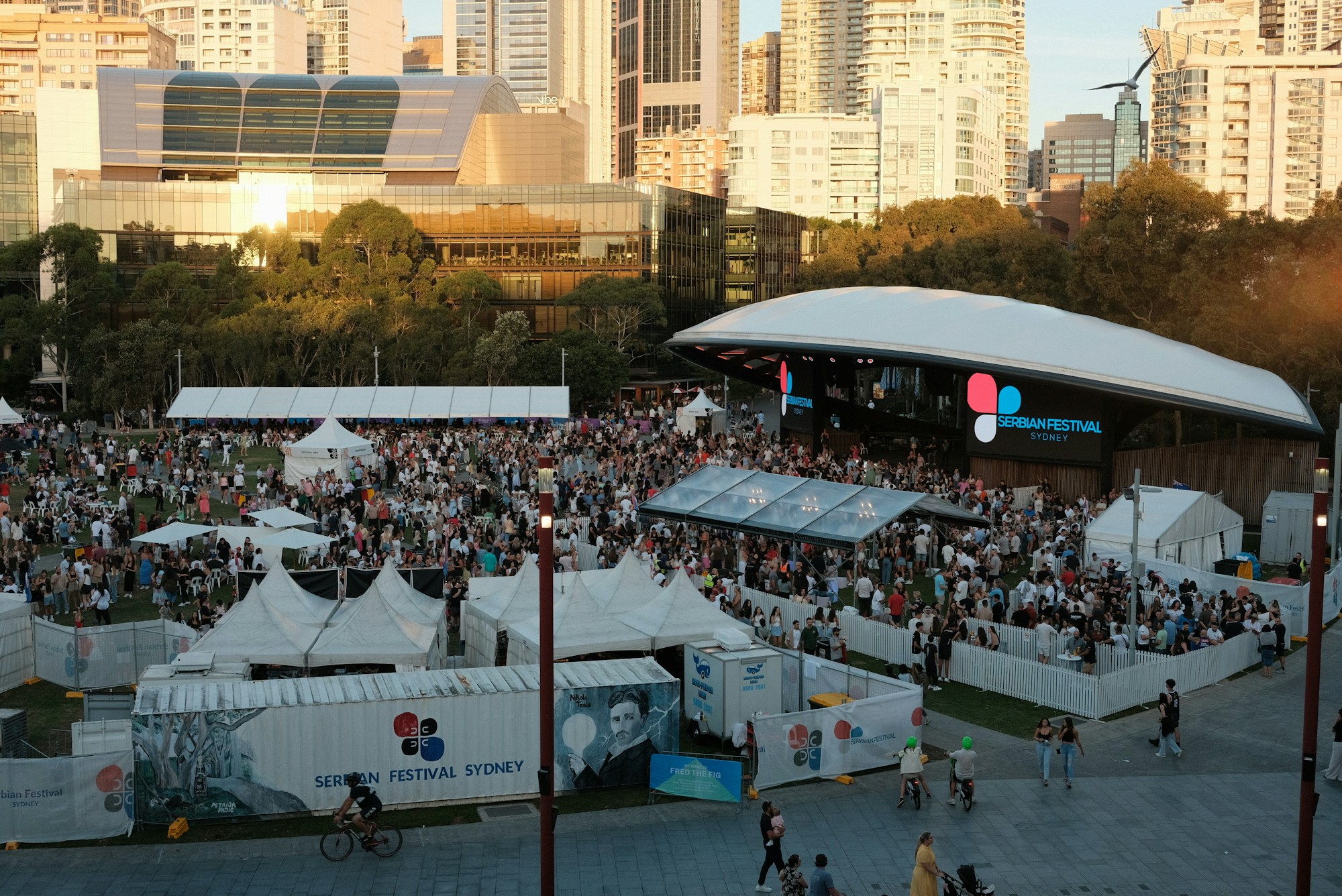
The unique DNA of Roskilde: non-commercial, humanist, sustainable
Roskilde is universally described as one of the least commercial festivals in the world. No corporate sponsor billboards, no brand deals dictating the line-up: all profits go to humanitarian, cultural and youth causes. This is what fundamentally sets Roskilde apart from Tomorrowland or most of the big European commercial festivals.
On the environmental front, the Green Footsteps programme is one of the most ambitious in the industry: full carbon neutrality targeted for 2028, 100% renewable energy operation, 100% organic food on site, red meat portions limited to 80 grams per dish. In 2017, the deposit system helped recover 8 million items. The official app (Android/iOS) includes an interactive map, the full programme and Spotify playlists organised by genre.
The festival’s traditions are equally distinctive: the Naked Run, a nude race around the campsite since 1999 (sign up at Camp Turist Misinformation, space H50), where one man and one woman win a ticket for the following year. And of course, Dream City — the creative city built from mid-April by artist camps featuring monumental structures worthy of a contemporary art museum.
Highlights
- 476 million DKK (approx. £42M) donated since 1971 — in 2026, the beneficiary is Amnesty International Denmark
- Cashless payments across the entire site (Visa and Mastercard accepted everywhere, including contactless)
- Full accessibility: Handicamp with adapted toilets, lifts, ramps, viewing platforms
- Roskilde city itself: UNESCO Cathedral (21 Danish kings buried there), Viking Ship Museum with rowing trips, RAGNAROCK rock music museum
Practical info: plan your trip
Compare British Airways, SAS, easyJet, Norwegian and Ryanair for your London to CPH flight. Heathrow, Gatwick and Stansted routes available. Book early — June prices rise fast.
From £40 one-wayNot camping? Stay in Vesterbro or Nørrebro — 24 minutes by train to the festival. Book 3–4 months ahead: June is the most expensive month of the year in Copenhagen.
From £65/night (3-star)Stay connected at the festival without roaming charges. Activate a Denmark eSIM before you leave — use the official Roskilde app, share photos and book S-tog trains on the go.
From £3Nomad Insurance: global coverage from $56/4 weeks. Covers festival cancellation, lost luggage and medical repatriation — essential for 8 days outdoors in unpredictable Danish weather. 10% off via our link.
From $56 / 4 weeksFrequently asked questions about Roskilde Festival 2026
When should I buy tickets for Roskilde Festival 2026?
As soon as possible. By May 2026, the 2-day passes for Wednesday-Thursday, Thursday-Friday and Thursday-Saturday were already sold out. Tickets for Wednesday 1 July (The Cure) and Saturday 4 July (Zara Larsson) are flagged as « last chance ». The 10,000 early-bird tickets from autumn 2025 sold out within hours. Only buy from roskilde-festival.dk/tickets — secondary ticketing is illegal in Denmark.
Is camping included in the Roskilde Festival ticket price?
Yes, Regular Camping (no advance reservation, first come first served) is included in all festival tickets, including 1-day and 2-day passes. Special Camping upgrades — pre-pitched tent (1,200 DKK), glamping tipi (3,600 DKK), Tenthouse (3,100 DKK), reserved quiet zone spot (175 DKK/person) — are available at extra cost via the official festival webshop.
How do I get from London to Roskilde Festival 2026?
The best route from London: fly to Copenhagen (CPH) — approximately 2 hours direct from Heathrow (British Airways, SAS), Gatwick (easyJet, Norwegian) or Stansted (Ryanair), from around £40 one-way. Then take the Metro M2 from the airport to Copenhagen Central (13 minutes, 30 DKK), followed by the S-tog Line A to Roskilde Station (24 minutes, every 10–15 minutes), then the festival train or Nobina shuttle to the campsite (30 DKK, card only). Total door-to-door: approximately 4 hours.
Do UK nationals need a visa for Denmark in 2026?
No visa is required. UK nationals can visit Denmark (Schengen Area) for up to 90 days within any 180-day period without a visa. However, a valid passport is mandatory — a UK national ID card is not accepted. Your passport must be valid for at least 3 months beyond your departure date and no more than 10 years old. Note: the EU ETIAS travel authorisation system (approx. €7) is expected to launch in late 2026 — check gov.uk for the latest before you travel.
What weather should I expect at Roskilde in late June and early July?
Danish summer weather is unpredictable — think Scottish Highlands, but flatter. Temperatures range from 13°C at night to 20°C during the day over the festival period. Between 3 and 8 days of rain can fall in a month; sunshine and heavy showers can alternate within the same day. Essential kit: a waterproof jacket, waterproof trousers or joggers, wellies (the campsite can get very muddy), a sleeping bag rated to 10–12°C, and multiple layers.
Can you bring alcohol and glass to Roskilde Festival 2026?
Alcohol bought outside can be brought into the campsite (not the concert arena). However, note the major 2026 change: glass is completely banned on the campsite. Only aluminium, plastic and cardboard containers are allowed. Drop-off bins for remaining glass are at campsite entrances. The festival recommends stocking up on cans at a Danish supermarket before arriving — a 24-pack of Tuborg (33cl) costs around 200 DKK (approx. £22) versus festival prices.
Sources
- Roskilde Festival — Line-up and programme 2026 — Official website, accessed 24 May 2026
- Roskilde Festival — Tickets 2026 — Official prices and availability
- Roskilde Festival — Camping — All 2026 camping options
- Roskilde Festival — Press Kit (official figures) — Capacity, volunteers, site area
- Roskilde Festival — Getting there (RF26) — Transport and shuttles
- Roskilde Festival — Festival with a purpose — Humanitarian impact, 476M DKK donated
- Roskilde Festival — New stages and Cinema returns 2026 — Fauna, Lagune, CPH:DOX
- Skyscanner — London Heathrow to Copenhagen flights — Flight prices and routes
- VisitDenmark — Entry to Denmark — Travel document requirements
- Wikipedia — Roskilde Festival — History and traditions
Research carried out on 24 May 2026.
Ready to experience Roskilde?
Roskilde Festival is far more than a concert: it is a life experience. Eight days in Denmark’s 4th-largest temporary city, alongside 130,000 people, world-class music and a unique humanitarian model. All that’s left is to book your ticket — and perhaps your wellies.
Explore more European destinations
4. Getting from London to Roskilde: the best route
London Heathrow/Gatwick → Roskilde Festival: around 4h door-to-door
The route from London is straightforward. According to the festival’s official travel guide, here is the optimal journey:
There is also a direct airport train CPH → Roskilde (DSB, 39 minutes, roughly hourly). The City Pass Large (zones 1–99) covers the airport, Copenhagen and Roskilde — ideal if you plan day trips to the capital during the festival.
Highlights