
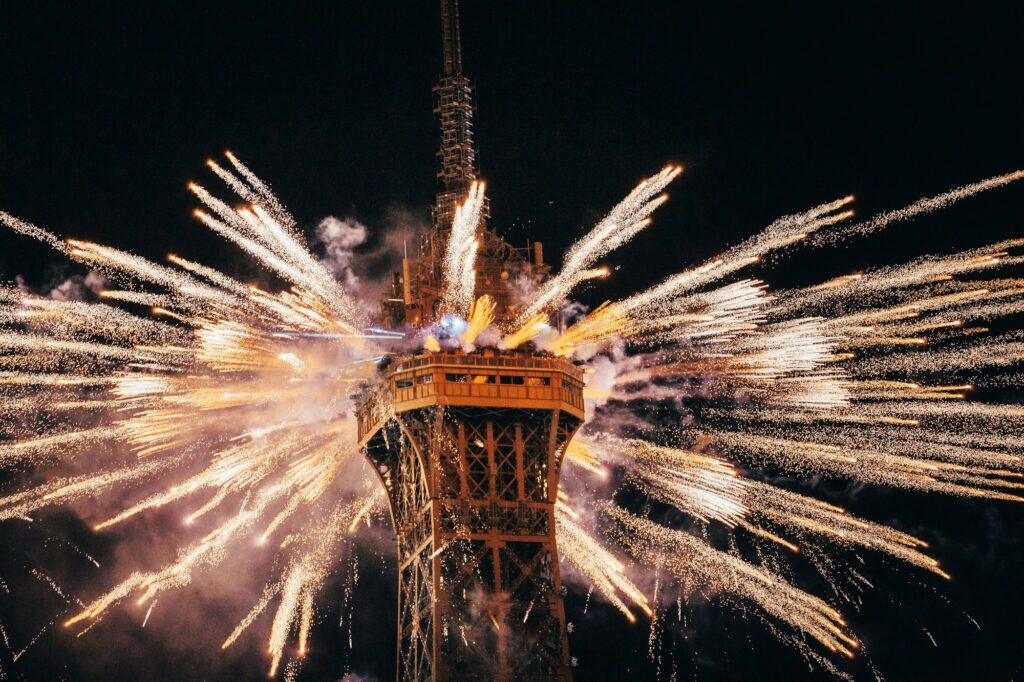
The Paris Firemen’s Ball 2026 (also searched as « Paris firemens balls ») takes place on 13 July 2026, from 9 pm to 4 am, with free entry at all 30+ fire stations across the city. In 2026, the night is doubly exceptional: the Eiffel Tower fireworks have officially been moved to 13 July — the same night as the balls — in tribute to the victims of the Nice attack. The 10 best stations range from Sévigné (Le Marais, medieval courtyard) to Bitche (Canal de l’Ourcq, 8,000+ guests). Budget: €15–35 all-in including drinks. Arrive before 9:30 pm at popular stations to avoid 1–2 hour queues. Some stations (Malar, Montmartre) open on 12 July — ideal for a two-night tour.
There’s one night a year when Paris drops its guard. Fire station doors swing open onto lantern-lit cobbled courtyards, the firefighters swap their helmets for their best smiles, and the whole city dances until dawn. The Firemen’s Ball — known in French as the bal des pompiers, and sometimes called the Paris firemens balls in English — is one of the most cherished traditions of Bastille Day. Born in 1937 at Montmartre, it now draws tens of thousands of Parisians and visitors every 13 July.
In 2026, the night takes on an extra dimension. The City of Paris has officially announced that the Eiffel Tower fireworks — usually on 14 July — will be moved to 13 July 2026, in agreement with the Élysée Palace. The reason: 14 July 2026 marks the 10th anniversary of the Nice truck attack (86 victims), and the day will be dedicated to commemoration. The result: the night of 13 July combines the Firemen’s Ball and the fireworks — in the same night.
Here’s our pick of the 10 best fire stations for this extraordinary night — with addresses, opening times, vibes and practical tips so you can make the most of it.
1. Caserne Montmartre (18th) — Where It All Began
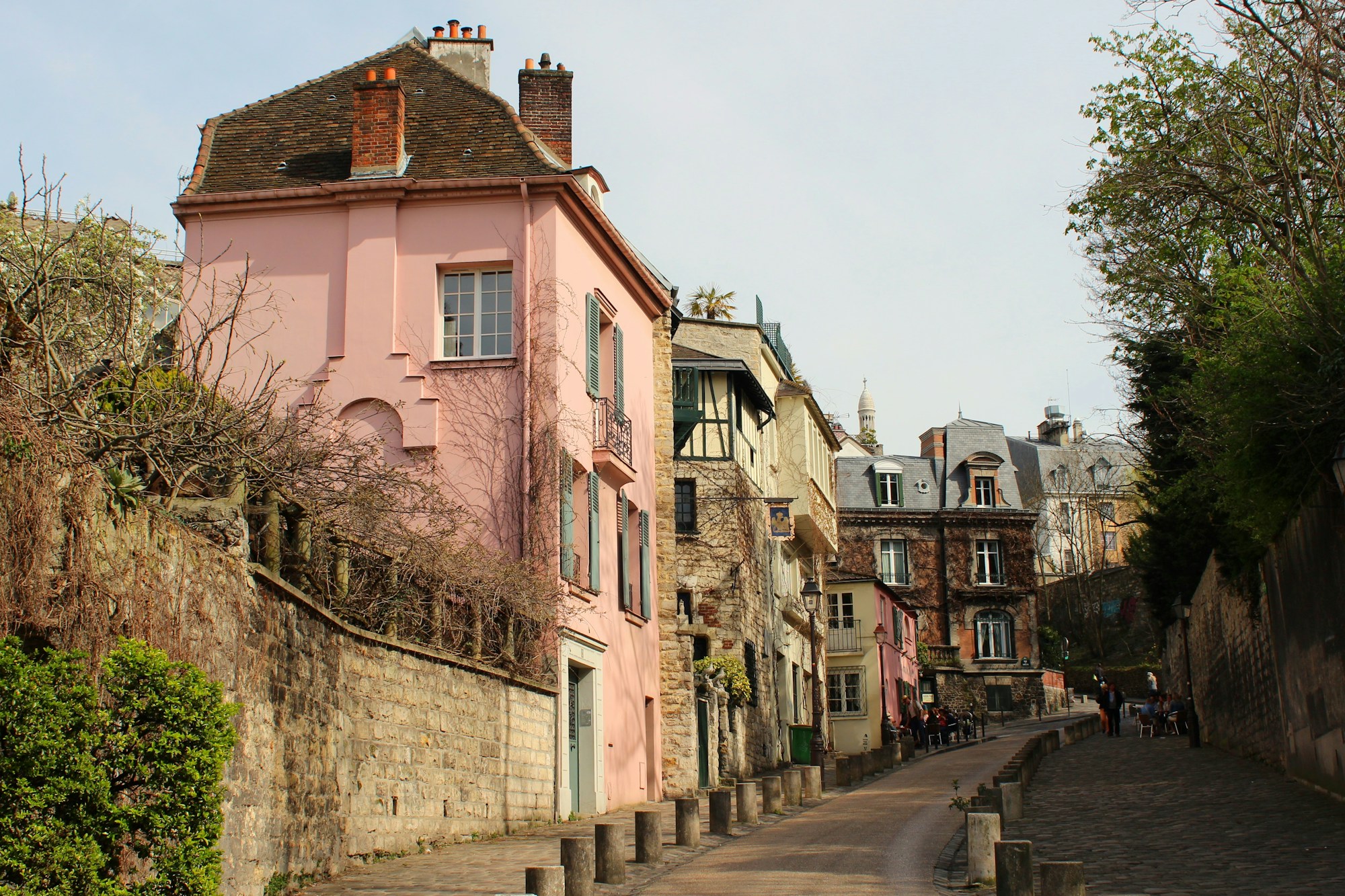
This is where it all started. On 14 July 1937, Sergeant Cournet and his men at the Carpeaux station opened their doors to Parisians heading home from the military parade. An orchestra, a few steps of bal musette — and a tradition was born. According to Paris ZigZag, it was this station that launched a movement which would go on to spread across all of France.
The architect Paul Héneux (1898) designed a Renaissance-inspired brick-and-stone building with balustrades, dormer windows and grand arcades topped by a clock tower. The dance floor spills out into the open air, beneath the Butte’s starlit sky — a postcard-perfect setting.
In 2026, the Montmartre station holds its ball on 12 July from 7 pm, making it easy to weave into a full Montmartre evening (dinner on Place du Tertre, a drink facing the Sacré-Cœur, then the ball) before saving 13 July for the bigger stations.
Highlights
- The original station — unmatched historical value
- Outdoor Montmartre setting, village atmosphere
- Opens 12 July: perfect as a first-night warm-up
- Steps from Sacré-Cœur for a romantic pre-ball stroll
2. Caserne Sévigné / Hôtel de Chavigny (4th, Le Marais) — The Medieval Landmark
The Hôtel de Chavigny is one of the best-preserved medieval mansions in Paris. Built in 1265 by Charles of Anjou, remodelled in 1637 by François Mansart for Léon Bouthillier de Chavigny (adviser to Louis XIII), and listed as a historic monument since 1988. The Paris Fire Brigade has been based here since 1814. According to Trésors de Paris, it’s « the most chaotic, wettest, loudest night in Paris — and yet somehow magical. »
Two 17th-century inner courtyards each host their own DJ. LED projections light up the historic stonework. The crowd is gloriously mixed: Marais locals, English-speaking tourists, members of the LGBTQ+ community (the neighbourhood is famously gay-friendly), and off-duty firefighters dancing with the guests.
Highlights
- The only ball held in a medieval listed mansion
- Two simultaneous courtyards — two different vibes
- Le Marais neighbourhood: bars and restaurants on the doorstep
- Inclusive, festive atmosphere
3. Caserne Grenelle / Pavillon Violet (15th) — The Neo-Palladian Gem
The Pavillon Violet is a neo-Palladian mansion built in 1824 by architect Jean Léonard Violet, listed as a historic monument since 1993 (façades and rooflines). Transferred to the City in 1860 to house a fire station, it remains one of the most elegant architectural settings in Paris for an open-air ball. According to Monumentum, the condition of the façades is exceptional.
The evening starts in family mode: children, parents and 15th-arrondissement neighbours gather around the food stalls from 9 pm. After midnight, the DJ turns up the volume and the courtyard becomes an open-air club. The firefighters themselves join the party — a constant across all BSPP stations.
Highlights
- 19th-century neo-Palladian architecture, listed historic monument
- Great family option for the early part of the evening
- Less crowded than Sévigné or Bitche
- Easy walk to the Eiffel Tower — perfect for watching the fireworks from nearby rooftops
4. Caserne Blanche (9th) — The Century-Old Winemakers
Caserne Blanche has one of the most surprising stories in Paris: its firefighters have been tending their own vineyard since 1926 — a near-centennial tradition. According to Sortiraparis, the grapes are harvested each autumn and produce a « decorative » wine served at station events. A great conversation starter on the night.
The ball kicks off at 7 pm — one of the earliest in Paris — with entertainment and rescue demonstrations, then runs through to 4 am. Ideally located two steps from Pigalle and its bars, it’s perfect for stretching the night in every sense.
Highlights
- The firefighters’ century-old vineyard — a uniquely Parisian quirk
- Opens at 7 pm: perfect for a festive apéro start
- Central location, well connected by metro
- Relaxed, neighbourhood atmosphere
5. Caserne Bitche (19th) — The Biggest Party, by the Canal
Caserne Bitche, opened in 1901 on the banks of the Canal de l’Ourcq, is probably the most electric ball in Paris. With spectacular video-mapping projections on the canal-facing façade, it has drawn more than 8,000 people in a single night, according to VLS. The brigade’s diving team is based here — a detail that adds an extra layer of BSPP authenticity.
The main dance floor is one of the largest of any Paris ball. Children’s entertainment runs from 7 to 9 pm, then the energy builds steadily. With the Cité des Sciences and Parc de la Villette close by, you’re at the heart of working-class, festive Paris.
Highlights
- Biggest dance floor of any Parisian ball
- Views over the Canal de l’Ourcq — exceptional setting
- Kids’ entertainment 7–9 pm
- The most electric atmosphere in Paris after midnight
6. Caserne Masséna (13th): One of Europe’s Largest Fire Stations
Built in 1971, Caserne Masséna is one of the largest fire stations in Europe at 13 storeys of concrete. It houses the 19th and 2nd companies of the BSPP. According to the official BSPP listing, the ball runs on the night of 13 July, from 9 pm to 4 am. Its large capacity makes it a safe bet if you want to avoid the queues at the more high-profile stations.
DJ sets, open-air dance floor, a massive bar, cocktails, Champagne, street food stalls: the logistics here are well-oiled. The crowd reflects the 13th arrondissement — one of Paris’s most cosmopolitan — mixing generations and backgrounds in equal measure.
Highlights
- Open-air dance floor and well-oiled organisation
- Striking 13-storey brutalist architecture
- Large capacity — lower risk of being turned away
- Cosmopolitan 13th district, diverse and inclusive crowd
7. Caserne Boursault (17th) — The BSPP’s Official Ball
Caserne Boursault is listed as the official ball of the Paris Fire Brigade (BSPP) on the official BSPP portal (terre.defense.gouv.fr). From 7 pm, the courtyard is transformed — the firefighters play the role of hosts with infectious enthusiasm.
The Batignolles neighbourhood (17th) — upscale-bohemian, residential, quiet — provides a pleasant contrast to the frenetic energy of the evening. A mixed crowd, plenty of chance encounters and flawless organisation. A safe bet for those who want a well-run night without overwhelming crowds.
Highlights
- Official BSPP ball — a badge of quality
- Opens at 7 pm — a long, relaxed evening
- Residential neighbourhood: far less crowded than the Marais or Montmartre
- Impeccable organisation
8. Caserne Ménilmontant (20th) — The Authentic East-Paris Experience
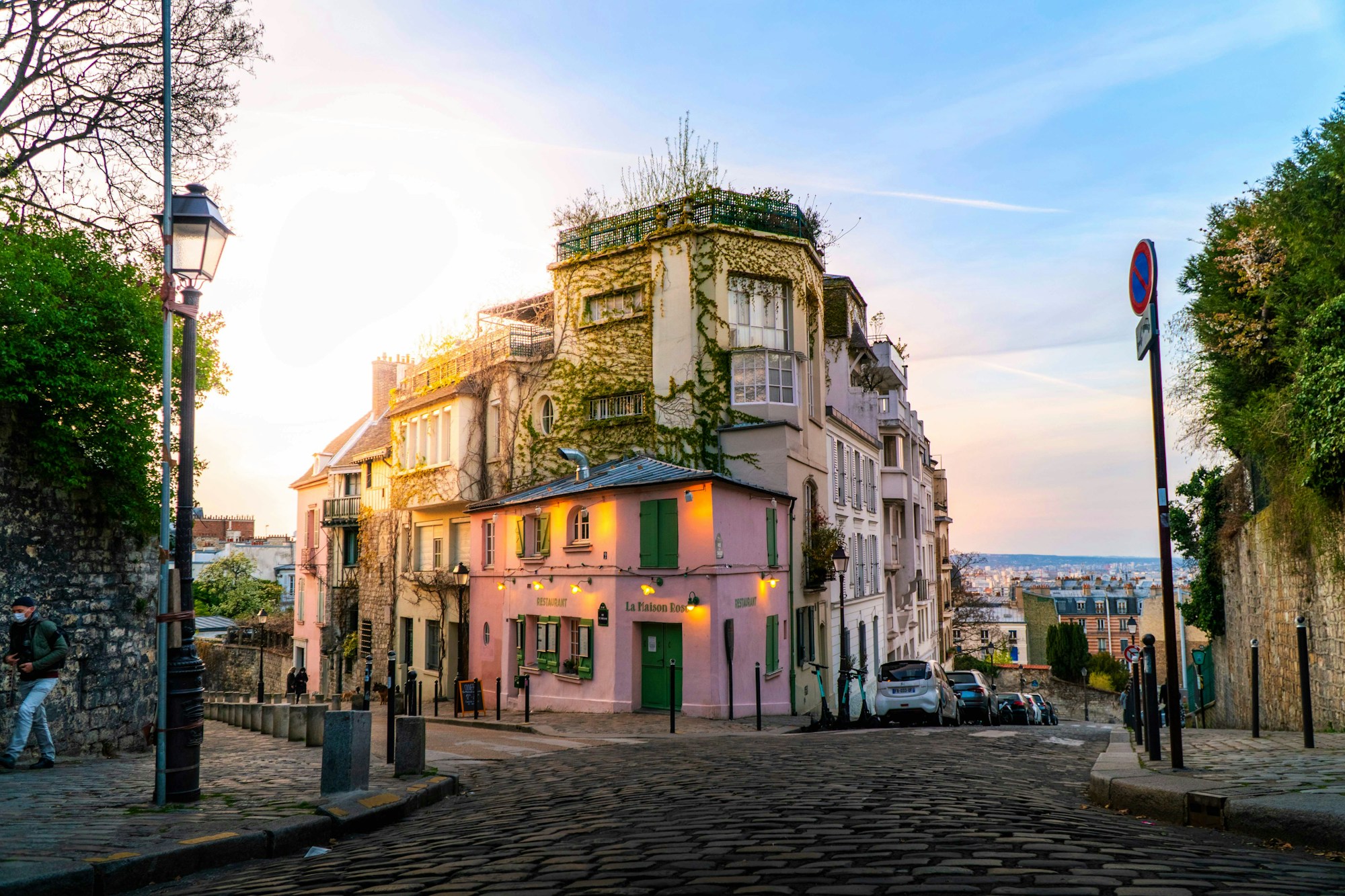
Caserne Ménilmontant is the most under-the-radar pick in our selection — and possibly the most genuine. According to the local blog Ménilmontant-info, « the atmosphere here has an exceptional reputation. » Fewer tourists, more neighbours: the 20th arrondissement — cosmopolitan and working-class — celebrates in its own way: warm, unpretentious and utterly Parisian.
DJ sets or live orchestras playing French classics and current hits. Several food and drink stalls. The firefighters join in enthusiastically. This is the ball we recommend to anyone who’s done with the queues and wants the raw Parisian experience.
Highlights
- Genuine neighbourhood atmosphere, very few tourists
- Less crowded — no queue
- The real working-class east of Paris
- Warm, convivial evening
9. Caserne Colombier / Le Vieux-Colombier (6th) — Bohemian Left Bank
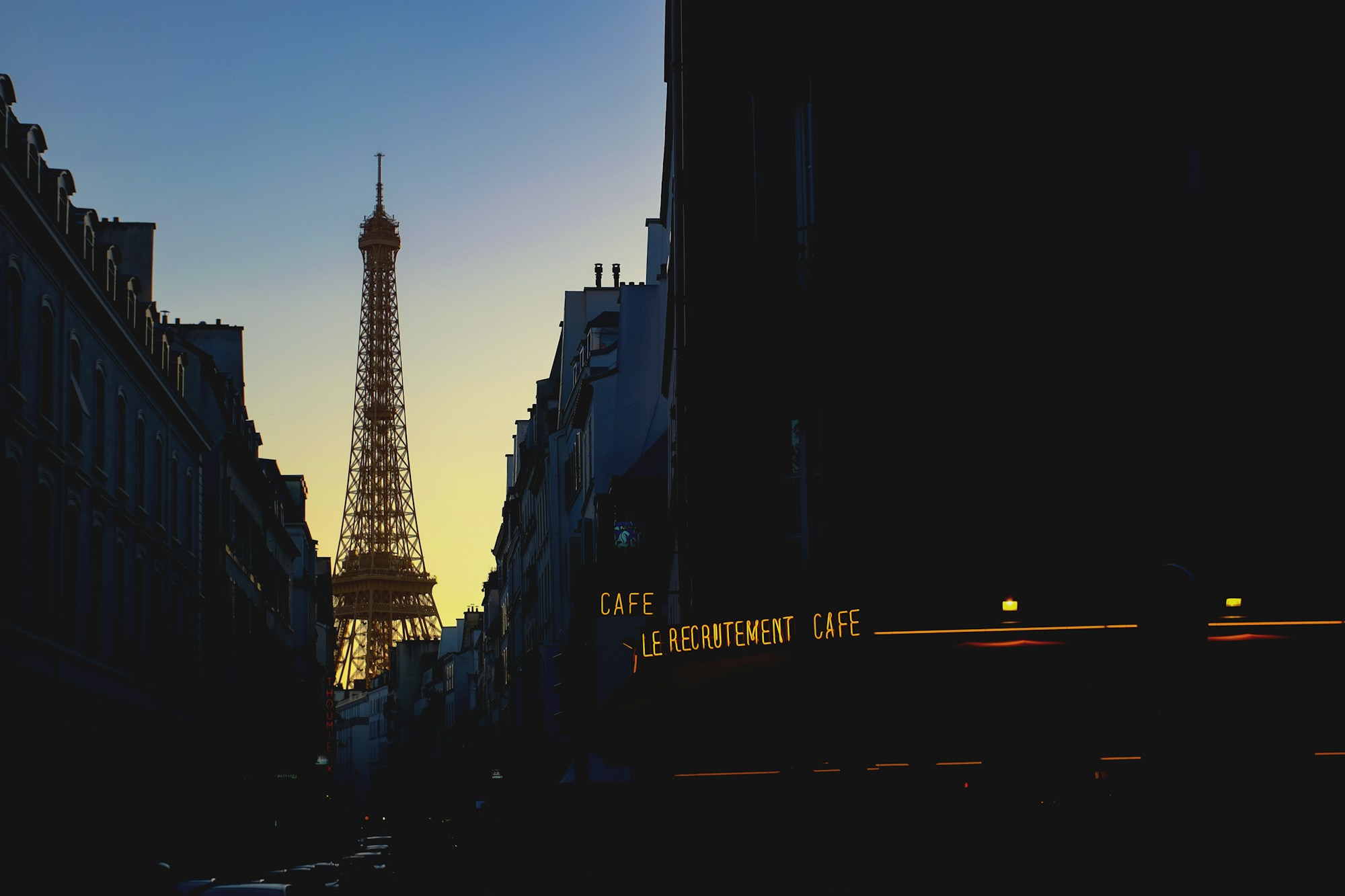
The Vieux-Colombier station is the ball of the intellectual Left Bank. At the heart of Saint-Germain-des-Prés — steps from the Théâtre du Vieux-Colombier (part of the Comédie-Française) and the legendary Café de Flore and Les Deux Magots — it draws a crowd of artists, locals, 6th-arrondissement families and the occasional lucky tourist.
According to Hotels Paris Rive Gauche, Caserne Colombier offers a warm atmosphere without excessive crowds — ideal for those who want to dance without fighting for space. Two stations in the 6th and 7th (Colombier + Malar) mean you can choose based on your base.
Highlights
- Saint-Germain setting — exceptional cultural backdrop
- Less crowded than the north-central stations
- Easy to extend the night into Saint-Germain’s bars
- Mixed, culturally-minded crowd
10. Caserne Malar (7th) — The Chic Option, From 6 pm
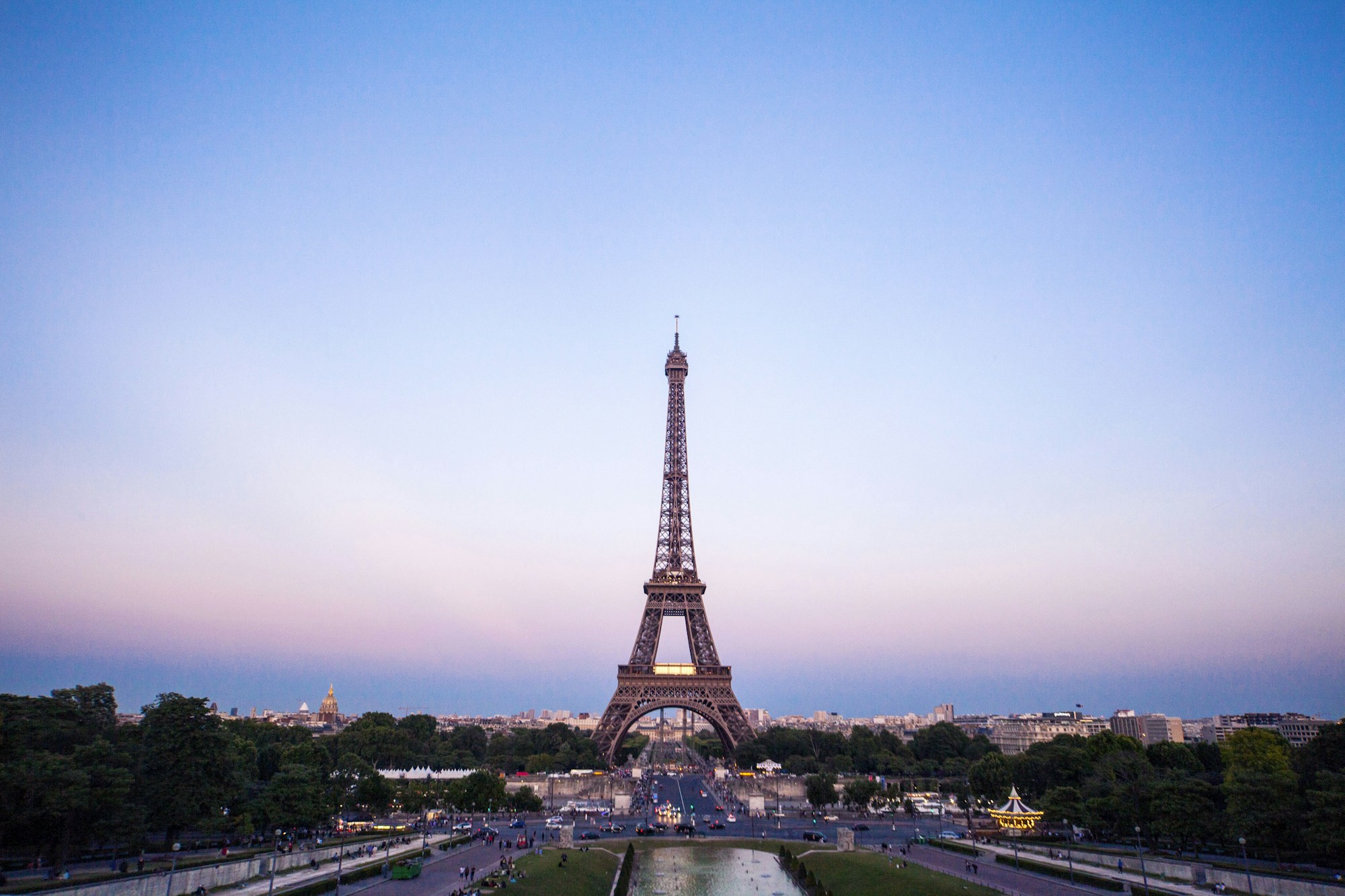
Caserne Malar has a quietly elegant feel. According to Le Bonbon, its vibe is « a touch refined. » The 7th arrondissement — Invalides, Musée d’Orsay, embassies — tends to draw a more polished crowd than average. Perfect for those who want the experience without the chaos.
Another distinctive feature: Caserne Malar holds its ball on 12 July (the evening before), from 6 pm, closing at 1 am. It’s ideal as a first ball in a two-night strategy: Malar on 12 July, then one of the bigger stations — plus the fireworks — on 13 July.
Highlights
- Refined atmosphere — the most elegant ball in Paris
- Opens 12 July at 6 pm — perfect to kick off your two-night tour
- Closes at 1 am — ideal for those who pace themselves
- Near the Eiffel Tower for the 13 July fireworks
Practical information for the Firemen’s Ball 2026
Entry is free at all Paris fire stations (a donation of €1–5 into the traditional barrel at the door is appreciated — the funds go towards improving working conditions for firefighters and supporting families affected by fires). Drinks are €2–5 per glass (Champagne, beer, soft drinks). Food stalls on site: €5–10. Night bus (Noctilien): €2. Total budget: €15–35 for a full evening.
The Paris metro runs until 2:15 am on the night of 13 July (the eve of a public holiday). After 2:15 am, options include the Noctilien (48 night bus routes, 12:30–5:30 am, from Châtelet, Gare de l’Est and Montparnasse), the Vélib’ bike-share (24/7), or a taxi or rideshare booked well in advance. Taxis will be virtually impossible to hail spontaneously after 10:30 pm — the balls and fireworks all end at similar times. Vélib’ is strongly recommended for the central stations.
Smart-casual: jeans, a summer dress, a colourful shirt. Flat, comfortable shoes (fire station courtyards are often cobbled — heels are a bad idea). A light jacket for the early part of the evening. Tricolour touches (blue, white, red) are welcome but not required. Bring ID.
Discover the cobblestone streets and hidden corners of Montmartre — birthplace of the Paris Firemen’s Ball since 1937. An instant-confirm guided tour perfect for the afternoon of 12 July before the Caserne Montmartre ball opens that evening. 5/5 stars, 113 reviews.
From £22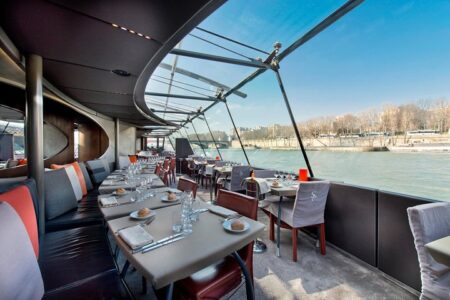
Make the night even more memorable — combine the Firemen’s Ball with a Bateaux Parisiens cruise on the Seine. Lunch or dinner on board, with sweeping views of Notre-Dame, the Eiffel Tower and the Paris riverbanks.
From £71.50Frequently asked questions about the Paris Firemen’s Ball 2026
When is the Paris Firemen’s Ball 2026?
The Paris Firemen’s Ball 2026 takes place mainly on 13 July 2026, from 9 pm to 4 am, across more than 30 fire stations in Paris. Some stations open as early as 12 July (Montmartre and Malar stations, from 6–7 pm). In 2026, this night is doubly festive: the Eiffel Tower fireworks have officially been moved to 13 July (to mark the 10th anniversary of the Nice attack). Source: City of Paris.
Is the Firemen’s Ball free?
Yes, entry is free at almost all Paris fire stations. A traditional wooden barrel is placed at the entrance for voluntary donations (€1–5 appreciated — the funds go towards improving firefighters’ working conditions and supporting families affected by fires). Drinks and food on site are paid at reasonable prices (€2–5 per drink). Total budget for a full evening: roughly €15–35.
Do you need to book for the Firemen’s Ball?
No booking is required. Entry is first-come, first-served. The BSPP reserves the right to refuse entry on safety grounds once capacity is reached. For the most popular stations (Sévigné in Le Marais, Montmartre, Bitche in the 19th), aim to arrive before 10 pm to avoid queues of one to two hours.
Are the Eiffel Tower fireworks really on 13 July in 2026?
Yes — in 2026, the Eiffel Tower fireworks are exceptionally moved to 13 July, the same night as the Firemen’s Ball. The City of Paris and the Élysée Palace made this decision to dedicate 14 July 2026 to commemorating the 10th anniversary of the Nice truck attack (14 July 2016, 86 victims). The military parade on the Champs-Élysées remains on 14 July. Source: Sortiraparis.
How do you get home after the ball at 4 am?
The Paris metro runs until 2:15 am on the night of 13 July 2026 (the eve of a public holiday). After 2:15 am, your options are the Noctilien (48 night bus routes, 12:30–5:30 am, from major stations and Châtelet), Vélib’ bike-share (24/7), or a taxi or Uber booked well in advance. Taxis and rideshares will be extremely hard to find spontaneously after 10:30 pm — the simultaneous end of the balls and the fireworks will cause a surge in demand across the city.
What are the Paris firemens balls — and how many are there?
The Paris firemens balls (officially the bals des pompiers in French, also written « Paris firemen’s ball » in English) are a series of open-air parties held inside fire station courtyards every year around 13 July, the eve of Bastille Day. In 2026, more than 30 fire stations across Paris host their own ball, each with its own atmosphere, music and capacity. Entry is free at all of them. The tradition started in 1937 at the Montmartre station and has since spread across the whole city — and indeed across France. Each station is independent: times, dates (some open on 12 July) and ambiance vary from one caserne to the next.
Which fire station is the most popular, and how do you avoid queues?
The most in-demand stations are Sévigné (Le Marais, 4th), Montmartre (18th) and Bitche (19th), where queues can stretch to one or two hours after 10 pm. To avoid the wait: arrive before 10 pm (ideally 9–9:30 pm), choose a smaller neighbourhood station (Ménilmontant, Boursault, Colombier), or opt for Caserne Masséna (13th), which is larger and tends to flow more smoothly.
- terre.defense.gouv.fr — Official BSPP portal
- paris.fr — Eiffel Tower fireworks moved to 13 July 2026
- Wikipedia — Bal des pompiers
- Paris ZigZag — The tradition born in Montmartre
- Trésors de Paris — Marais ball (Caserne Sévigné)
- Monumentum — Pavillon Violet listed monument (Caserne Grenelle)
- VLS — Caserne Bitche 19th
- Euronews — France’s viral Fireman’s Ball (2025)
- Sortiraparis EN — Complete guide to the Firemen’s Ball 2025
- Ménilmontant-info — Firemen’s Ball at Ménilmontant
- Le Bonbon — 5 hottest balls in Paris
- Hotels Paris Rive Gauche — Left Bank balls 2025
Ready for the night of 13 July in Paris?
Pick your station, wear comfortable shoes and slip a couple of euros into the barrel. If you’re spending these nights in Paris from abroad, don’t forget your France eSIM to navigate without roaming charges.
Explore all our Paris guides