
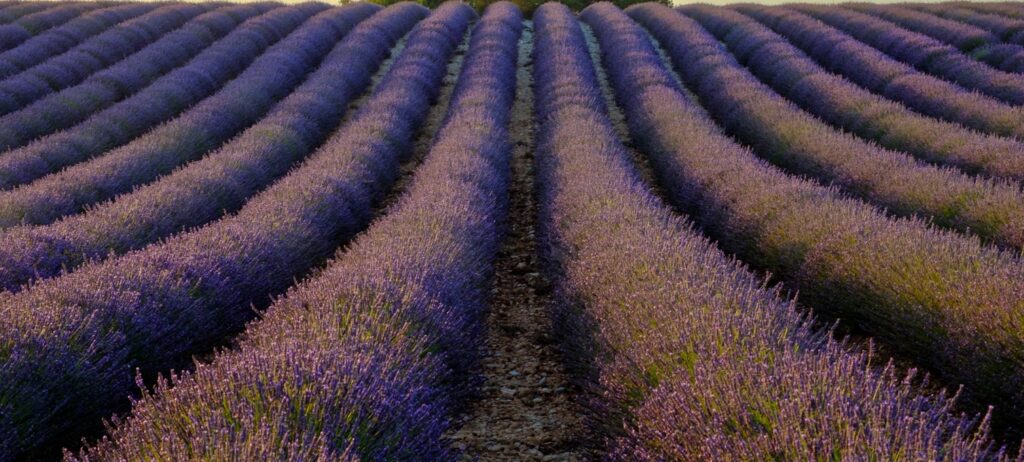
Provence lavender peak bloom 2026 falls between 1 and 15 July at Valensole and between 10 and 25 July at Sault. The Valensole Plateau, with its 12,700 hectares of lavandin at 500 m altitude, blooms two weeks ahead of the Sault plateau (760 m), the heartland of AOP fine lavender. The Valensole Lavender Festival falls on Sunday 19 July 2026; Sault’s on Saturday 15 August 2026 (39th edition). To avoid the crowds, visit on a weekday before 8 am — or choose Sault, far more authentic and peaceful.
Every July, Provence turns into an ocean of violet and blue that belongs to nowhere else on earth. The lavender fields of the Valensole Plateau and the Sault countryside rank among the most photographed landscapes in France — and the 2026 season is shaping up beautifully. Climate trends are pushing the bloom four to seven days earlier than historic averages, placing Valensole’s absolute peak between late June and mid-July. English schools break up around 22 July, making early July the sweet spot for UK visitors: full fields, smaller crowds, and that golden morning light. This practical guide gives you the exact dates, photography tips, official festivals and all the logistics to plan your trip with confidence.
2026 Bloom Calendar: plateau by plateau
| Area | Bloom start | 2026 Peak | Harvest | Variety |
|---|---|---|---|---|
| Valensole | around 15 June | 1–15 July | from mid-July | Lavandin (hybrid) |
| Sault / Albion | early July | 10–25 July | late July–August | Fine lavender AOP |
| Sénanque Abbey | mid-June | late June–mid-July | around 15–20 July | Fine lavender |
| Drôme (Ferrassières) | late June | July | early August | Fine lavender |
1. Valensole Plateau: the most intense lavender spectacle
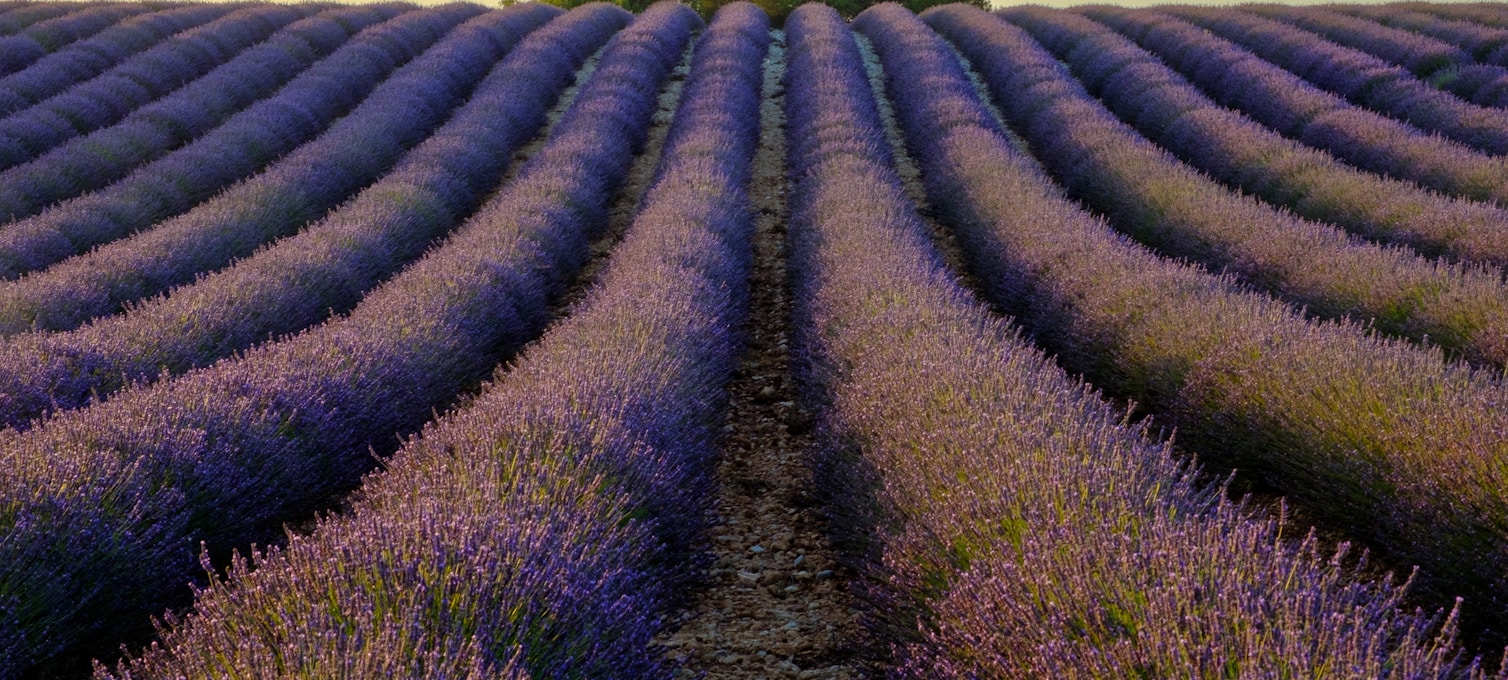
Valensole Plateau: lavandin as far as the eye can see
With 12,700 hectares under cultivation and an 800 km² plateau sitting at 500 m above sea level, Valensole is the largest concentration of cultivated lavender in Europe. What you’ll actually see here is mainly lavandin — a hybrid of fine lavender and spike lavender — with branched stems carrying three vivid purple spikes and wide clumps 60–90 cm across. Spectacular and enormously photogenic, though not covered by the AOC/AOP designation reserved for fine lavender grown at altitude. According to routes-lavande.com, the plateau accounts for more than a third of France’s total lavender-growing surface area and over half of national production volumes.
The D6 and D8 departmental roads (between Moustiers-Sainte-Marie and Valensole) run right alongside the densest plots. Access is completely free: the fields line the road and there’s no entry charge. Parking is free along the verges — but packed before 10 am on July weekends. Weekdays before 8 am are quieter, with that low, raking light that photographers dream about. British visitors flying into Marseille can reach Valensole in about 1 hour 15 minutes by car.
Highlights
- Exceptional scale: 12,700 ha, 360° views from the ridge roads
- Lavender Festival on Sunday 19 July 2026 (80 artisan stalls, distillation demos, farandole, free entry)
- Villages to combine: Riez (market Wed & Sat), Moustiers-Sainte-Marie, Gréoux-les-Bains
- From Marseille in ~1 h 15 min, from Aix-en-Provence in ~50 min (car essential)
2. Sault Plateau: AOP fine lavender at altitude
Sault and the Albion Plateau: fine lavender and genuine Provençal character
The Sault countryside, at the foot of Mont Ventoux in the Vaucluse, is the heartland of AOP fine lavender (Lavandula angustifolia). According to ventouxprovence.fr, Sault accounts for 95 % of Provence’s AOP lavender volumes. The landscape is trichromatic — blue fine lavender, violet lavandin, straw-yellow spelt fields. The 760 m altitude delays bloom by two to three weeks compared with Valensole, which is a major advantage for travellers who can only come in late July or August — perfect timing for UK families heading out during the summer school holidays.
Sault’s Provençal market, established in 1515, takes place every Wednesday morning. The villages of Aurel and Saint-Trinit, reachable from Sault via walking trails, offer views over much less-visited fields. The Chemin des Lavandes is a free, signposted 5 km loop (1 h 30) from the village, with interpretive panels on botany and distillation.
Highlights
- AOP fine lavender: a more delicate fragrance and extended bloom into early August at altitude
- Free distilleries: Aroma’Plantes (organic since 1978, personal distillation workshops) and Vallon des Lavandes (founded 1947)
- Lavender Festival on Saturday 15 August 2026, 39th edition — French Lavender Scythe-Cutting Championship, countryside lunch at £21/person
- Far more authentic and relaxed than Valensole — no tourist coaches on weekdays
3. Sénanque Abbey and the quieter lavender spots
Sénanque, Simiane-la-Rotonde and Ferrassières
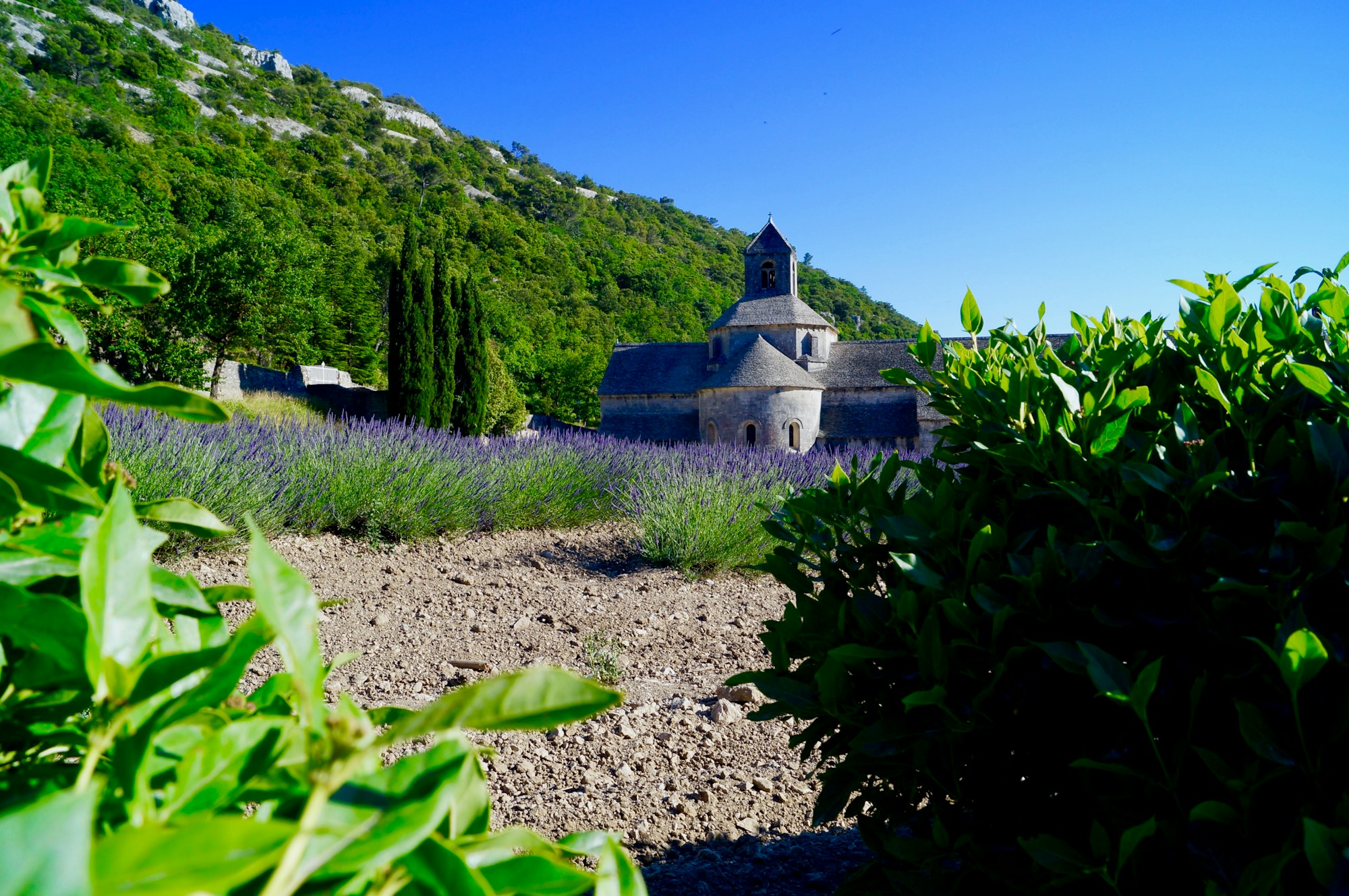
Sénanque Abbey — a Cistercian monastery founded in 1148 and still home to a community of monks — produces the most-shared photograph in Provence: a Romanesque facade flanked by rows of fine lavender. Bloom starts mid-June, peaking from late June to mid-July, slightly earlier than Sault owing to its intermediate altitude. Arrive before 9 am — tourist coaches roll in from Gordes from 10 am. According to senanque.fr, the monks harvest by hand with scythes around 15–20 July.
For less-photographed images, Simiane-la-Rotonde (650 m, Alpes-de-Haute-Provence) is home to France’s largest lavender cooperative — its organic fine lavender fields around the village are accessible from June before the crowds arrive. Even more under the radar, Ferrassières in the Drôme is nicknamed « capital of fine lavender » and its botanical trails stay near-deserted all summer.
Highlights
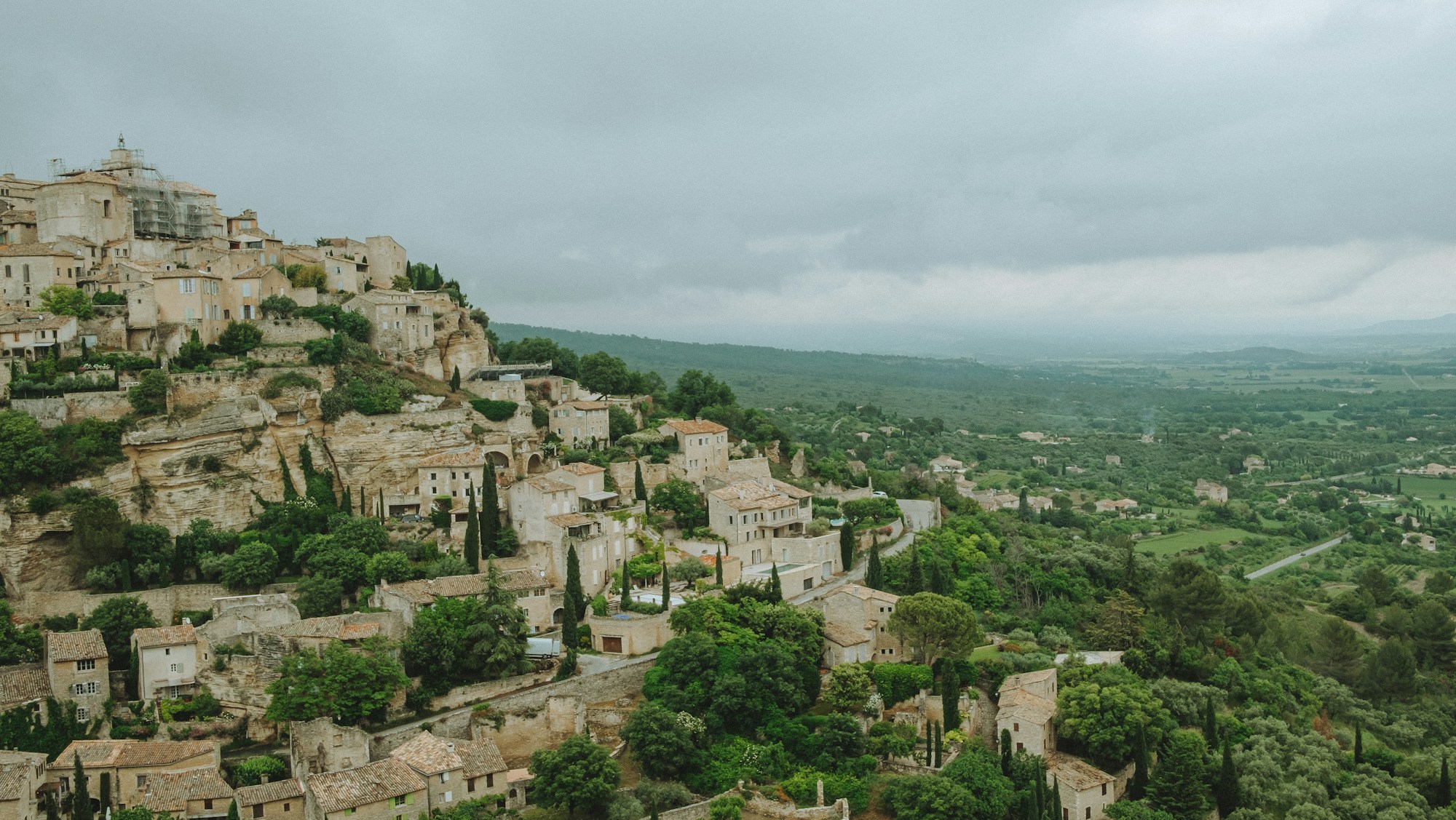
- Sénanque: pair it with Gordes (one of France’s Most Beautiful Villages) and the Musée de la Lavande in Coustellet (€8, open 10 am–6 pm Jul–Aug)
- Simiane-la-Rotonde: visitable from June, ahead of the July crowds
- Ferrassières (Drôme): free botanical trails, zero tourist coaches, July bloom
4. Fine lavender AOP vs lavandin: how to tell them apart in the field
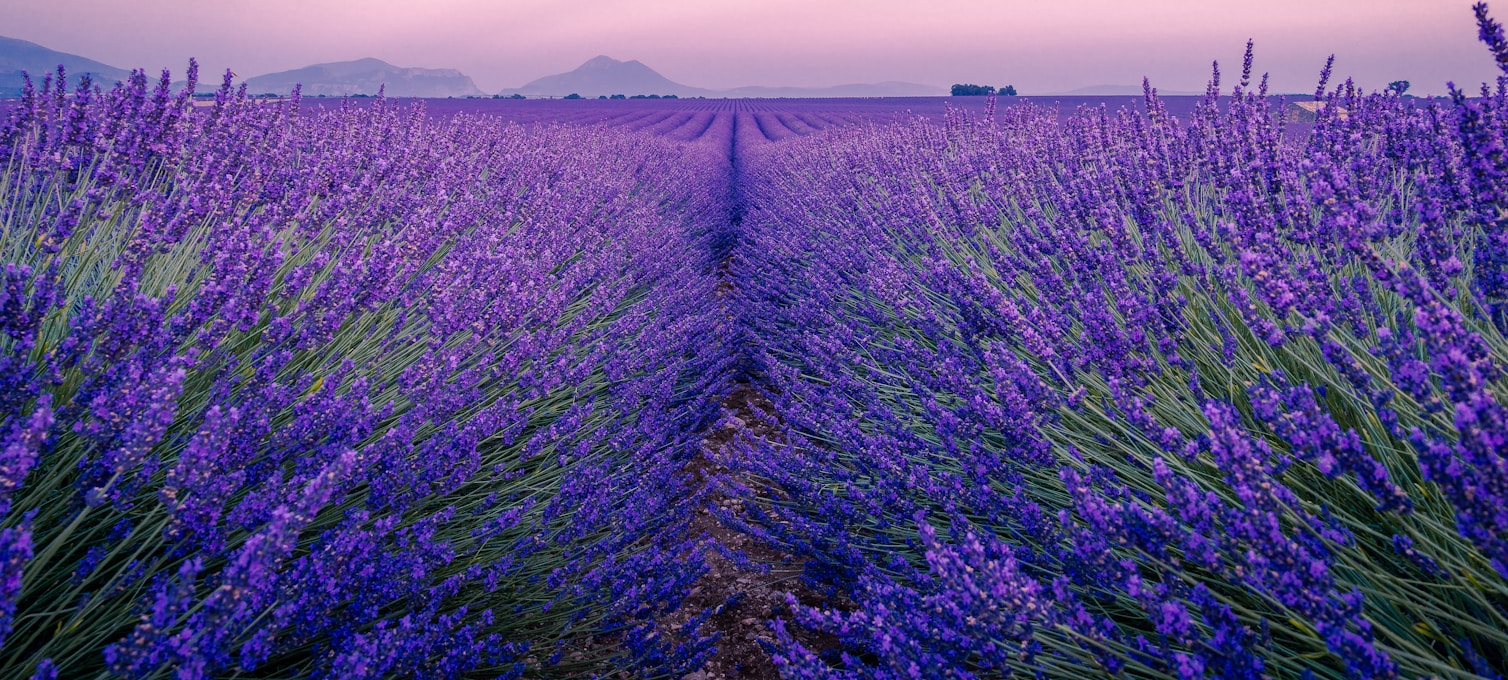
Identifying each species with the naked eye
There’s widespread confusion among visitors: the vast majority of fields in Provence — especially at Valensole — are planted with lavandin, a sterile hybrid (propagated by cuttings only) that is far more productive but excluded from the AOC/AOP. Fine lavender (Lavandula angustifolia) is grown mainly around Sault and the Albion Plateau, above 600–800 m. According to the Musée de la Lavande, the AOC was created on 18 December 1981 — the world’s first appellation d’origine for an essential oil — covering 284 communes across four departments.
To spot fine lavender in the field: it has slender stems carrying a single intensely blue-to-violet flower spike, and a lighter, more floral fragrance. Lavandin has branched stems with three spikes, wider clumps, a more vivid purple and a more camphor-like scent. Fine lavender is harder to photograph (smaller flowers), but its essential oil is in a different league. If you’ve ever bought lavender in the UK — think the bottles at gift shops, garden centres, or markets in the Cotswolds — chances are it’s lavandin. Provence’s AOP is something else entirely.
Highlights
- AOP fine lavender essential oil: 10 ml between €8 and €15 from producers — far cheaper than in tourist shops or back home
- Provençal lavender honey IGP 500 g: €10–15 at markets (Riez, Forcalquier Monday market)
- L’Occitane guided tour in Manosque: €6, 7 days a week April–October, sensory workshops included
5. Planning your visit: rules, timings and itinerary
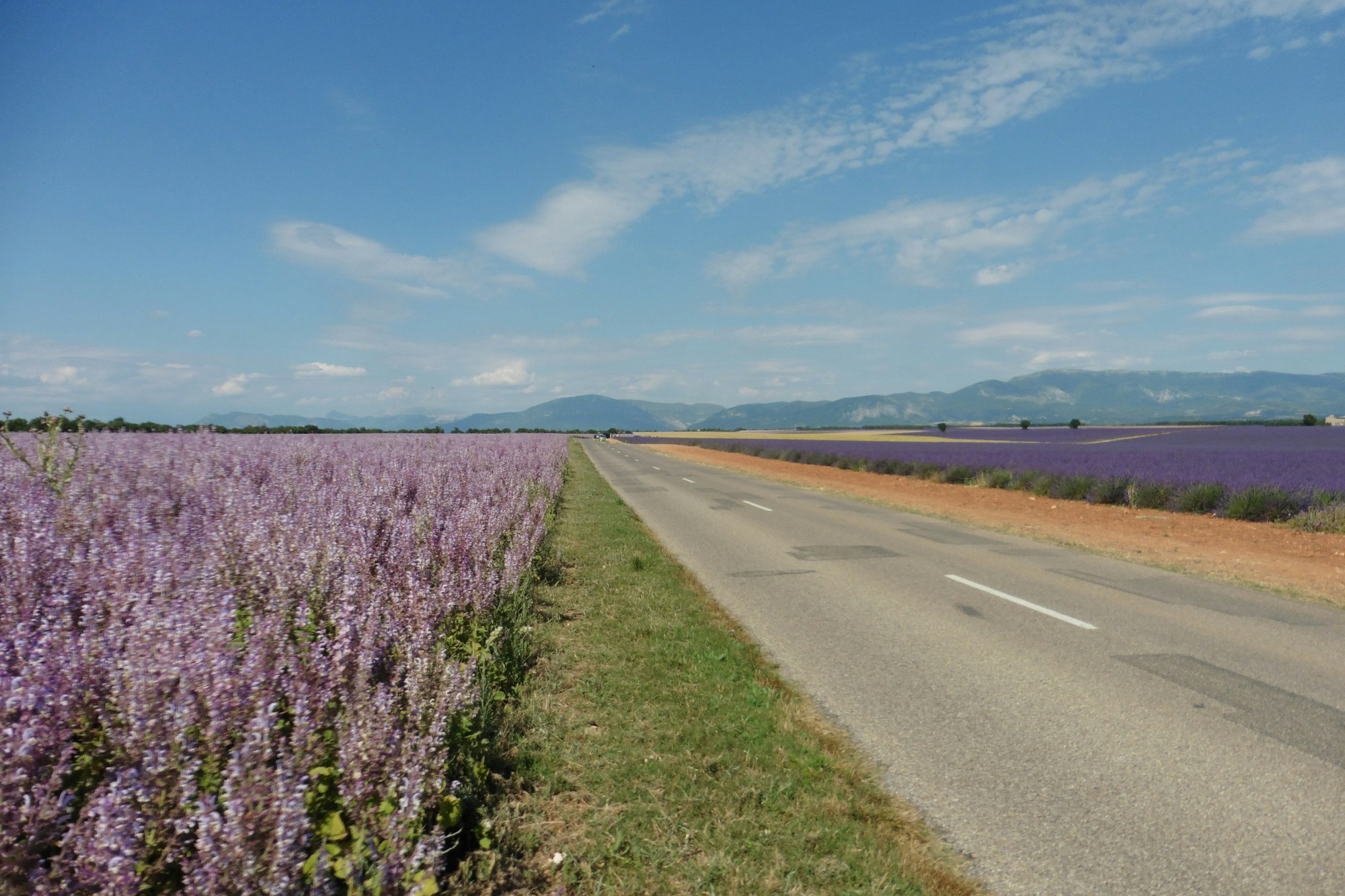
Rules to respect in the fields
The lavender fields are working farmland and private property. Visitor behaviour has become a real issue since Instagram and a Chinese TV programme brought Valensole to global attention in the early 2010s. According to France 3 PACA, 87 % of producers in the Alpes-de-Haute-Provence Chamber of Agriculture reported bouquet theft in 2021. Some growers have since fenced off their fields.
Highlights
- Stay on road verges or official marked paths — never walk into the rows
- Never pick flowers (theft is a criminal offence); park only in official pull-offs, not blocking tractor access
- Suggested 3-day itinerary: Day 1 — fly London–Marseille (2 h), drive to Valensole for sunrise on D6; Day 2 — Sault, distilleries and Chemin des Lavandes; Day 3 — Sénanque + Gordes + Roussillon
- No car? Organised minivan excursions run from Marseille (Valensole, ~6 h) and Avignon (Sault, ~5 h) via Viator
6. Lavender festivals and events in 2026 — don’t miss these
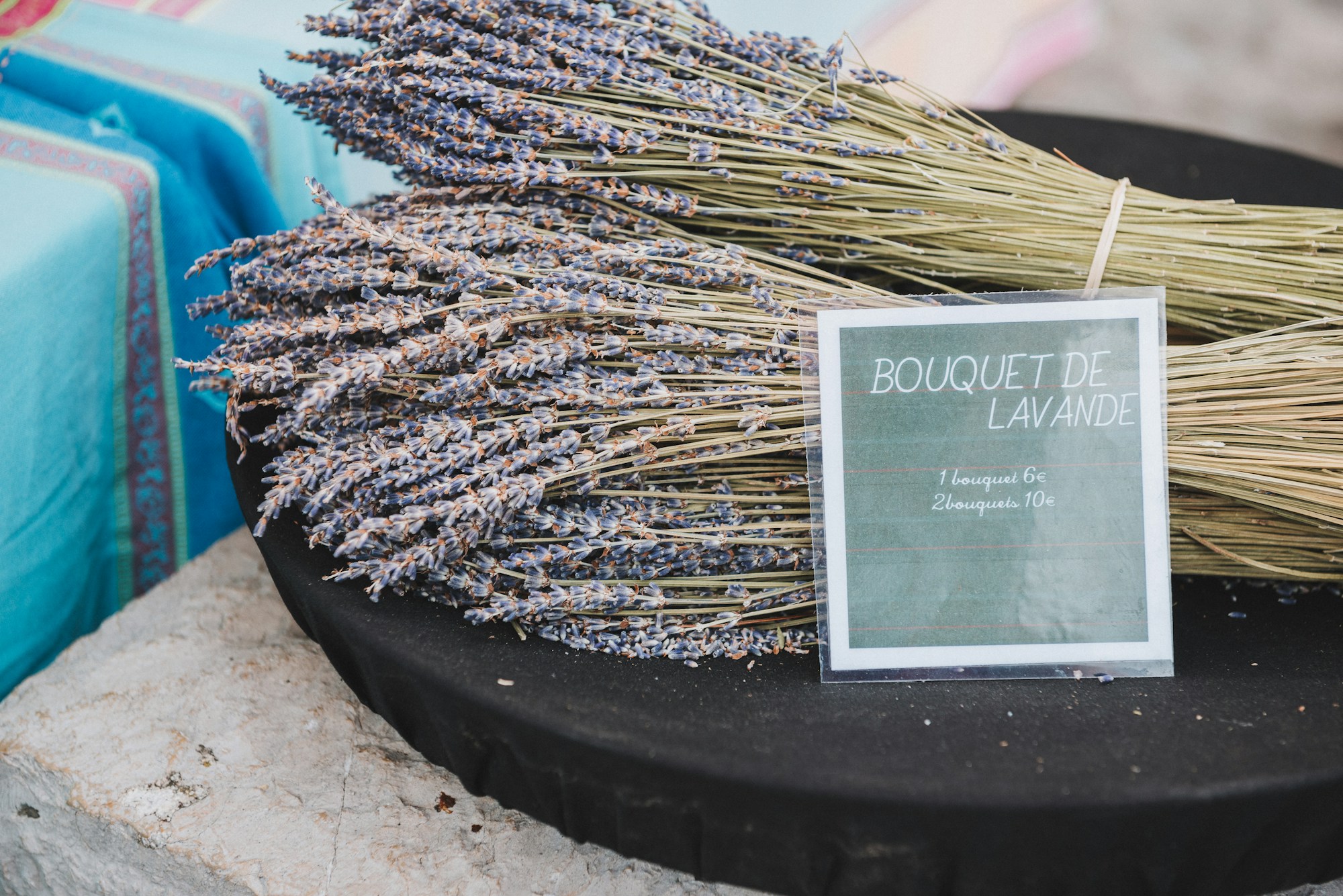
The three big lavender celebrations of summer 2026
Valensole Lavender Festival, Sunday 19 July 2026 (9 am to midnight): held every third Sunday in July, it coincides with the tail end of peak bloom. The programme, according to avecvous-valensole.com: 80 artisan stalls, distillation demonstrations at the GAEC du Riou, lavender-cutting demonstrations (10:30 am and 3:30 pm), a grand farandole of 120 dancers and musicians (11:45 am), a DJ set (9 pm to midnight) and helicopter rides. Free entry.
Sault Lavender Festival, Saturday 15 August 2026 (39th edition): set on the Feast of the Assumption, this is the oldest and most polished of the lavender festivals. According to fetedelalavande.fr, the French Lavender Scythe-Cutting Championship is the centrepiece, with amateur contests, folk groups, an equestrian show and a closing concert. Free entry; countryside lunch €25/person — book from 1 July.
Corso de la Lavande in Digne-les-Bains (31 July to 4 August 2026), 80th edition: Provence’s largest flower-float parade — 20,000 to 25,000 visitors a day, brass bands, dancing and fireworks. Free to attend.
Highlights
- The Valensole festival marks the start of harvest — still fields in bloom AND the festival on the same day
- The Sault festival (15 August) suits UK visitors arriving in late July — fine lavender is still visible, and it falls during the long UK summer holiday
- The Digne Corso is accessible by SNCF train (Marseille–Digne line) — no car needed
Practical information for your Provence lavender trip
Essential for GPS in the Provence fields — a Europe eSIM keeps you connected on the isolated plateaux where signal drops. From £13 for 10 GB, compatible with iPhone and Android.
From £13 / 10 GB EuropeNomad Insurance: global coverage from $56/4 weeks. Covers medical emergencies, trip interruption and evacuation — all you need for a summer road trip through the mountain roads above Sault. 10% off via our link.
From $56 / 4 weeksFrequently asked questions about Provence lavender
When exactly is the lavender in bloom at Valensole in 2026?
Full bloom at Valensole falls between 20 June and 15 July 2026, with an absolute peak in the first two weeks of July. Mechanical harvesting starts from mid-July in the lower plots. The climate trend (+4 to 7 days earlier) could place the optimal window between 25 June and 10 July. To maximise your chances, visit on a weekday before 8 am. Source: Routes de la Lavande.
What’s the difference between the Valensole and Sault lavender fields?
Valensole (500 m altitude) is planted mainly with lavandin — a highly productive hybrid with vivid purple colour, spectacular to photograph, hugely popular with tourists, and harvested from mid-July. Sault (760 m) is the heartland of AOP fine lavender, a higher-quality variety, less intensely coloured but more fragrant, with a later bloom (peak 10–25 July) and a far more relaxed atmosphere. Sault is the better choice for UK visitors arriving after mid-July or in August.
Can you visit the lavender fields without a car?
It’s tricky without a car, but organised tours run from Avignon, Aix-en-Provence and Marseille (roughly 5–6 hours). Viator offers a lavender fields visit from Marseille and a half-day at Sault from Avignon. By public transport alone, the journey is very awkward (train to Manosque or Carpentras, then limited bus connections). Car hire remains the best option — from around £55/day in Marseille outside peak season, rising to £70–90/day in July.
Can you pick lavender in the fields?
No — it’s forbidden. The fields are private property and picking amounts to theft, which can be prosecuted. According to France 3 PACA, 87 % of growers reported theft in 2021. To buy bouquets or essential oils, visit the local distilleries or the Maison des Producteurs de Sault — at producer prices.
Is the Sault Lavender Festival always on 15 August?
Yes — the Sault Lavender Festival is traditionally held on 15 August (Feast of the Assumption) since its founding. In 2026: Saturday 15 August, 39th edition, at the Hippodrome du Deffends. Free entry. The countryside lunch under the oak trees (€25/person) must be booked from 1 July at the Sault tourist office: +33 4 90 64 01 21. Source: fetedelalavande.fr.
What to do if you arrive after the Valensole harvest in July?
If you arrive after 15 July and find Valensole fields already cut, head straight to Sault — the fine lavender at altitude is still in bloom until late July, even into early August at higher elevations. You can also combine with the Gorges du Verdon from Moustiers-Sainte-Marie, the Provençal Colorado at Rustrel, and the lively weekly markets at Forcalquier or Apt, all excellent in high summer.
Is the lavandin sold everywhere actually real Provençal lavender?
Not quite. The majority of fields you’ll see — particularly at Valensole — are lavandin, a sterile hybrid that is more productive but of lower olfactory quality. AOP fine lavender, protected since 1981, is grown at altitude (mainly at Sault and the Albion Plateau) and makes up less than a third of total acreage. To buy genuine high-quality Provençal lavender, look for the « AOP Lavande de Haute-Provence » label on the bottle. Source: Wikipedia.
Sources
- Sault Lavender Festival (official site): 2026 programme, 39th edition, 15 August
- Valensole Lavender Festival 2026: official programme, 19 July 2026
- Routes de la Lavande, bloom calendar: dates and zones
- Routes de la Lavande, Valensole Plateau: acreage and varieties
- VentouxProvence.fr, Sault bloom: AOP Albion plateau calendar
- Sénanque Abbey, official bloom: visiting hours and rules 2026
- Musée de la Lavande (Coustellet), fine lavender vs lavandin: botany and distinctions
- Wikipedia, AOC/AOP Lavande de Haute-Provence: history and regulation
- France 3 PACA, overtourism at Valensole: visitor behaviour and solutions
- Chambres d’Agriculture France, 2023 figures: 8,082 ha fine lavender + 22,144 ha lavandin
- Réussir, lavandin sector crisis 2024: prices divided by three, 2,500 ha uprooted
- Digne-les-Bains Tourisme, Corso de la Lavande 2026: 80th edition, 31 July–4 August
- Expressions Holidays, Provence lavender fly-drive: flights from London Heathrow/Gatwick
- Bank Holidays UK, Summer Bank Holiday 2026: Monday 31 August 2026 (England, Wales, NI)
Research conducted 7 June 2026. Event programme details may change — check with organisers before you travel.
Plan your Provence lavender road trip
The lavender fields are just the beginning. Explore the Provence itineraries built by Pixidia to combine lavender, the perched villages of the Luberon and the Gorges du Verdon in one coherent trip.
Explore Provence itineraries