
Commercial partnership. This article contains affiliate links. If you book through these links, Pixidia earns a small commission at no extra cost to you. Learn more
Testaccio is Rome’s least-touristy food neighbourhood in 2026. Located just 8 minutes’ walk from Piramide underground station (Line B), it is home to the Mercato Testaccio (103 stalls, Monday to Saturday 7am–3:30pm) and the quinto quarto tradition — the offal-based cuisine born in the 19th century. Every food tour in this selection is rated 4.8 stars or above on more than 100 verified reviews. For a first visit, we recommend starting with the Eating Europe reference tour for a complete, local-guided introduction.
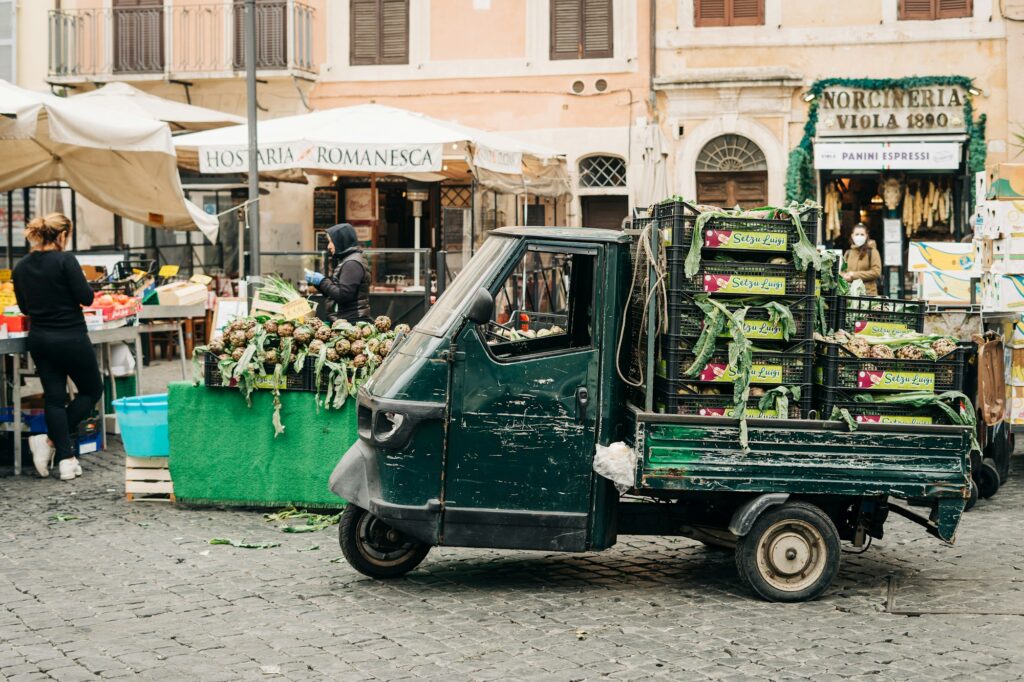
I spent a morning in Testaccio last March, and I finally understood why Roman locals keep this neighbourhood to themselves. While queues snake around the Trevi Fountain and Trastevere restaurants fill up before noon, Testaccio carries on at its own pace — that of a working-class Roman district that eats, drinks and argues without once glancing at tourists. That is exactly what the Eating Europe Taste of Testaccio tour has been capturing for fifteen years with remarkable consistency.
The neighbourhood owes its gastronomic reputation to a rather specific history: for nearly a century (1891–1975), it housed Rome’s great municipal slaughterhouse, the Mattatoio. The butcher workers, known as vaccinari, were paid partly in the cuts that the bourgeoisie refused — offal. This constraint gave rise to a cuisine of genius: coda alla vaccinara, trippa alla romana, rigatoni con la pajata. The Mercato Testaccio, rebuilt in 2012 in a modern building above ancient ruins, carries that tradition forward through roughly a hundred independent stalls, some run by the same families for generations.
In this selection, I have picked 10 experiences covering three levels of immersion in Testaccio and Rome’s food scene: exploring the market with a local guide, tasting street food through the back streets, and learning to cook the three iconic Roman pasta dishes in a neighbourhood flat. Every experience is rated 4.8 stars or above on Viator, with consistently small groups — maximum 12 people for food tours.
Testaccio: the real belly of Rome — what travel guides leave out
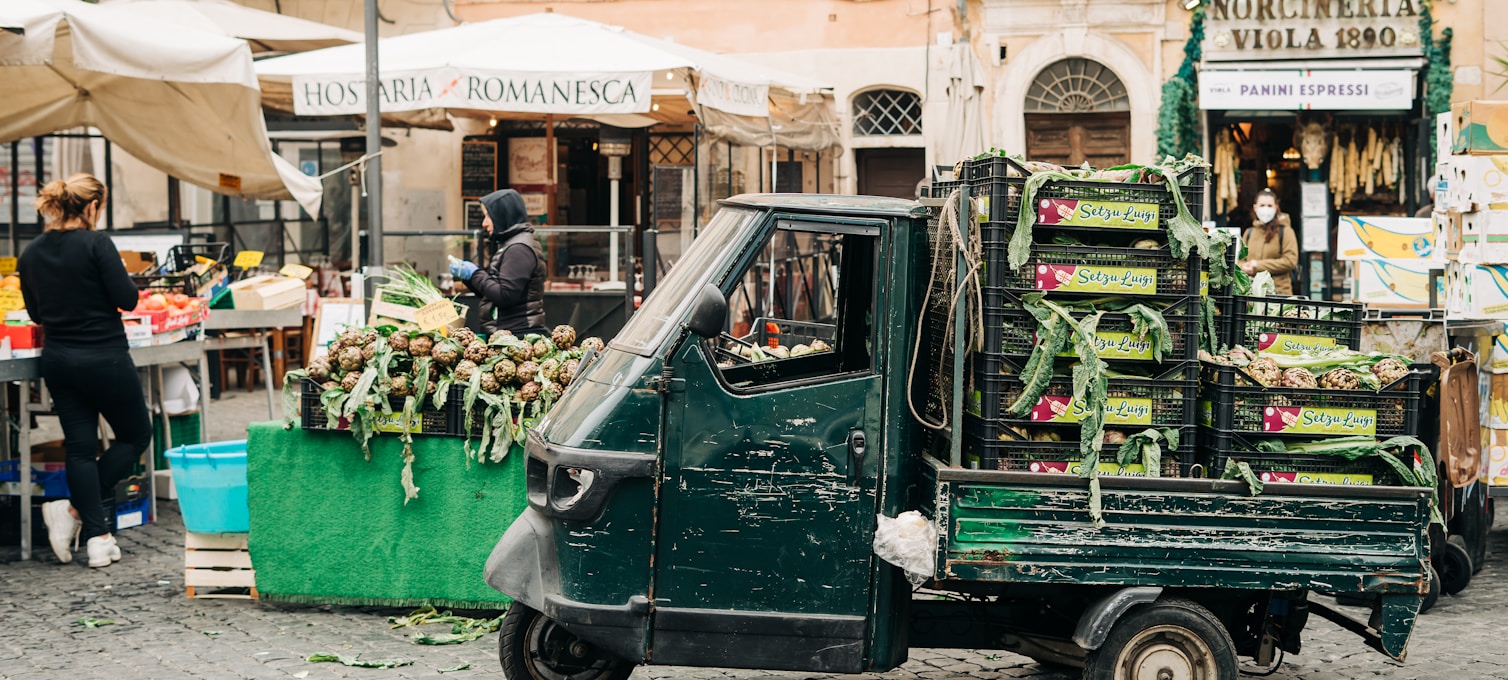
The neighbourhood’s name comes from Monte Testaccio (Wikidata Q956657), an artificial hill 36 metres high composed of 53 million broken amphorae — the jars that carried olive oil to ancient Rome from Spain and North Africa. These containers, unusable after a single journey because of rancid oil residue, were stacked on site from the 2nd century BC onwards. It is the largest organised rubbish dump of antiquity. Today, caves dug into this hill — the cantine — have been used to store wine at a constant temperature since the Middle Ages, and feature as a unique stop on several food tours.
The former municipal slaughterhouse, the Mattatoio di Testaccio (Wikidata Q3869753), built between 1888 and 1891 by architect Gioacchino Ersoch, shaped the neighbourhood’s culinary identity. Converted since the 1990s into a cultural hub (MACRO Testaccio, Città dell’Altra Economia), it now sits beside the covered market. At the edge of the neighbourhood stands the Pyramid of Cestius (Wikidata Q206282), a Roman monument from the 1st century BC, and just a short walk away, the Protestant Cemetery (Wikidata Q1227695) where Keats and Shelley are buried. Testaccio is far more than a market: it is a Roman history lesson you eat your way through.
The 10 best food experiences in Testaccio and Rome’s food scene
1. The definitive Testaccio tour by Eating Europe
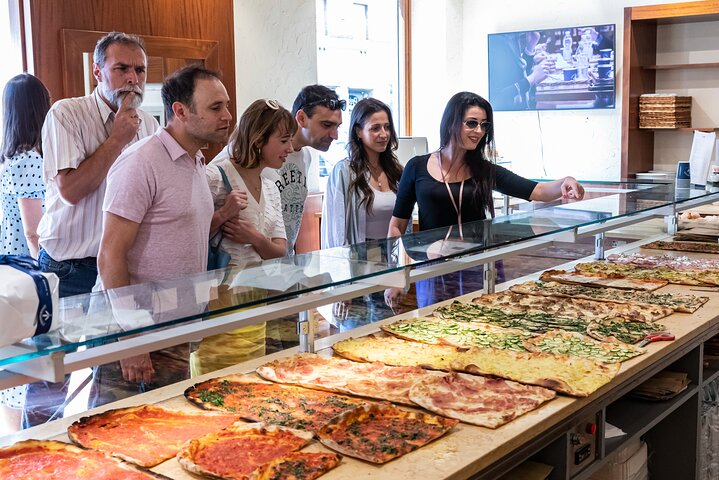
This is the food tour that invented the category in Rome back in 2009, and after fifteen years and more than 1,700 reviews it remains the benchmark. What sets it apart from the imitators? Access to a 105-year-old gelateria, market stalls whose vendors know the guide by name, and nine tastings that tell the story of Testaccio from the inside — not as a tourist highlight reel, but as a local resident’s lunch.
- Rome’s three iconic pasta dishes: carbonara, amatriciana and cacio e pepe
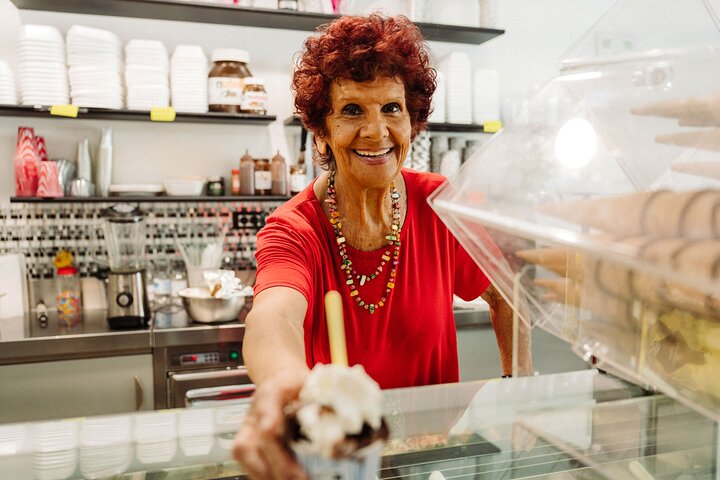
- Access to a 105-year-old gelateria (rare distinction vs industrial gelato)
- Guided walk through the Mercato Testaccio with stops at local producers
2. Testaccio Market + ancient Roman wine cave, 14 tastings
This tour stands out for a stop that very few operators offer: a wine cellar carved directly into Monte Testaccio, the ancient hill of amphorae. These cantine, used since the Middle Ages to keep wine at a constant temperature, are one of the secrets of Testaccio that even many Romans do not know. With 14 tastings across 8 family-run establishments and a group capped at 12, this is the ideal experience for a first visit to Rome without the £147 price tag.
- Access to a wine cellar carved into Monte Testaccio (unique historic site)
- 14 tastings across 8 independent family-run spots
- Pasta lunch at a family trattoria included
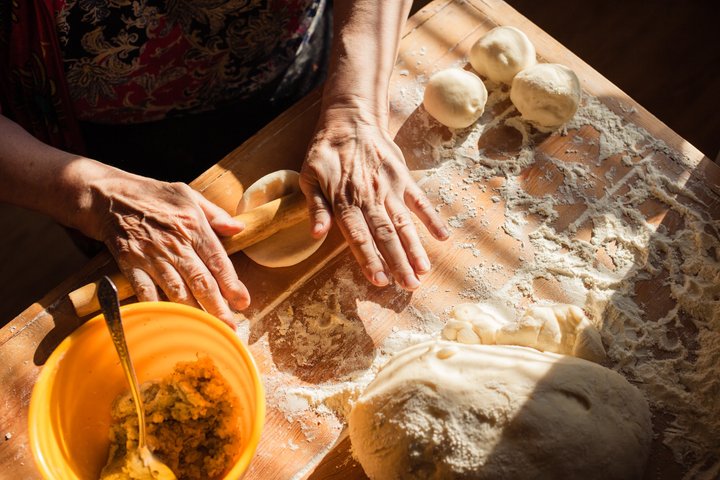
3. At-home class in a Roman flat: the 3 neighbourhood pasta dishes
The host shops every morning at the Mercato Testaccio and comes home to cook in their neighbourhood flat — which is precisely what makes this class different from an impersonal cookery school. You will learn to master the three iconic Roman pasta dishes — cacio e pepe, amatriciana and carbonara — using ingredients bought just hours earlier at the market, before sharing the meal together around the table. Complete beginners are welcome.
- Immersive setting: a real Roman flat (not a cookery school)
- Fresh ingredients sourced that morning from Mercato Testaccio
- Wine included, final meal shared as a group
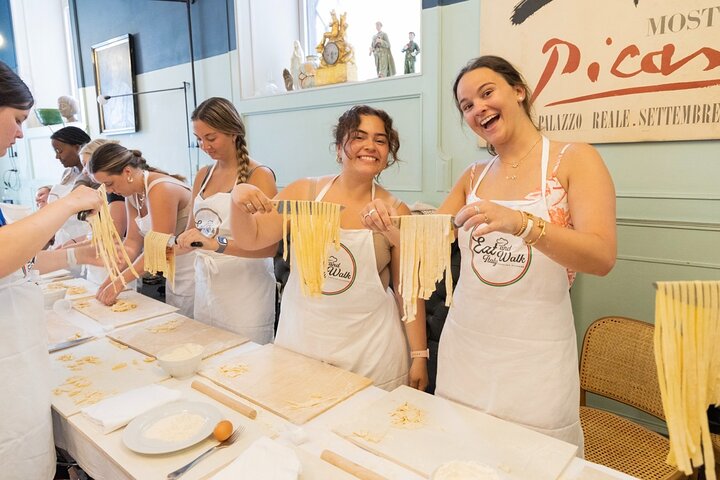
4. Rome’s best-selling cooking class: 3 recipes in 3 hours
With 8,506 reviews, this is by far the most popular cooking class in Rome — a volume that speaks for itself in terms of reliability. The operator covers three practical recipes in a single three-hour session: fettuccine, ricotta ravioli and tiramisu, with wine and prosecco throughout. Based near Piazza Navona, it makes the natural complement to a morning spent in Testaccio, and works very well for families with children.
- 8,506 verified reviews — Rome’s top-rated class on Viator
- 3 practical recipes: fettuccine, ricotta ravioli, tiramisu
- Wine and prosecco included, suitable for children
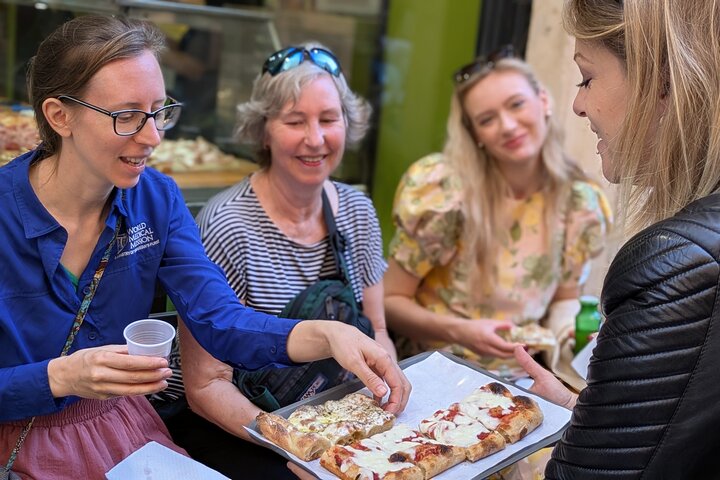
5. Evening street food in Trastevere and Campo de’ Fiori
Trastevere in the evening and Testaccio in the morning: these are the two complementary faces of working-class Roman food, and this tour captures the first perfectly. With a group capped at 10, you discover authentic Roman street food in the city’s most vibrant districts — from the cobbled alleys of Trastevere to the bustle of Campo de’ Fiori. Six to eight tastings, a glass of local wine, and a guide who knows each vendor by name.
- Trastevere + Campo de’ Fiori by night (local crowd, not tourist-facing)
- 6 to 8 Roman street food tastings and a glass of local wine
- Group capped at 10 for an intimate experience
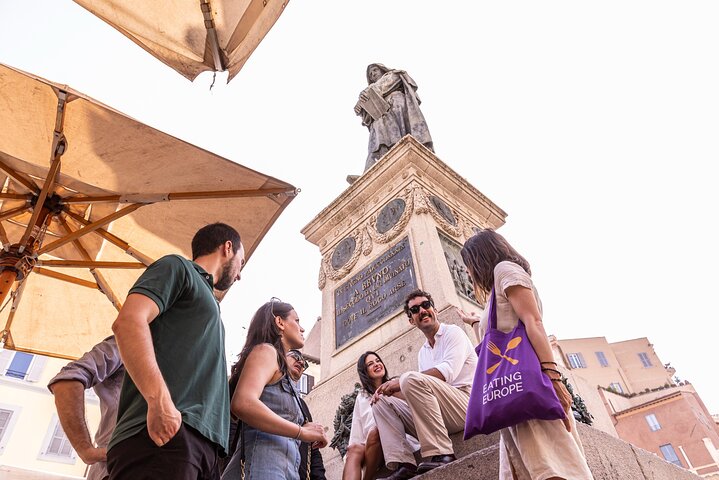
6. Eternal Rome food tour: Jewish Ghetto, Campo dei Fiori, Piazza Navona
Same operator as the Testaccio experience, but this time the route crosses three historic neighbourhoods and 2,000 years of Roman culinary tradition. The stop in the Jewish Ghetto is not incidental: Rome’s Jewish communities played a decisive role in inventing the fritti romani and frying techniques that appear throughout the cuisine of Testaccio today. Exclusive access to a 2,000-year-old wine cellar completes the experience.
- Jewish Ghetto + Campo dei Fiori + Piazza Navona in a single tour
- Exclusive access to a 2,000-year-old Roman wine cellar
- 9+ tastings including guanciale, fritti romani and carciofi alla giudia
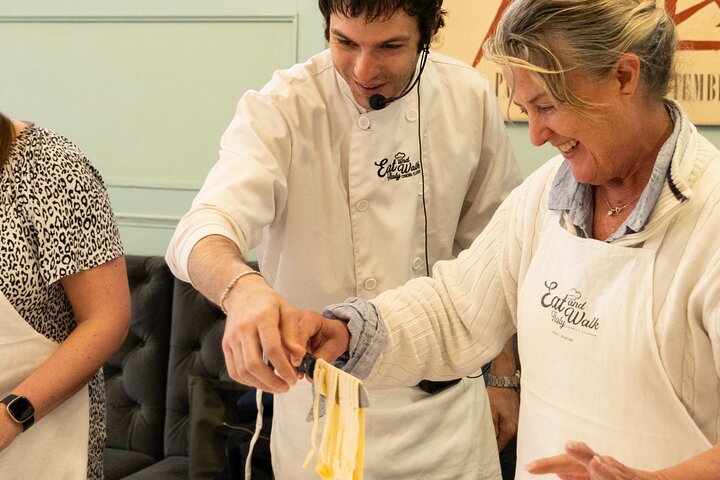
7. The original Fettuccine and Tiramisu masterclass (5.0 stars)
5.0 stars across 431 reviews — a score very few cooking classes in Rome maintain over time. This « original » 15-year-old class (same house as the 3-in-1 bestseller) focuses on two iconic recipes: hand-rolled fresh fettuccine and traditional tiramisu. The duration is designed for travellers with a packed itinerary: two and a half hours, a prosecco aperitivo, and you leave with the technique in your hands.
- Perfect 5.0/5 rating sustained over 15 years of classes
- Hand-rolled fresh fettuccine + traditional tiramisu from scratch
- Prosecco aperitivo included, compact 2h30 format for busy schedules
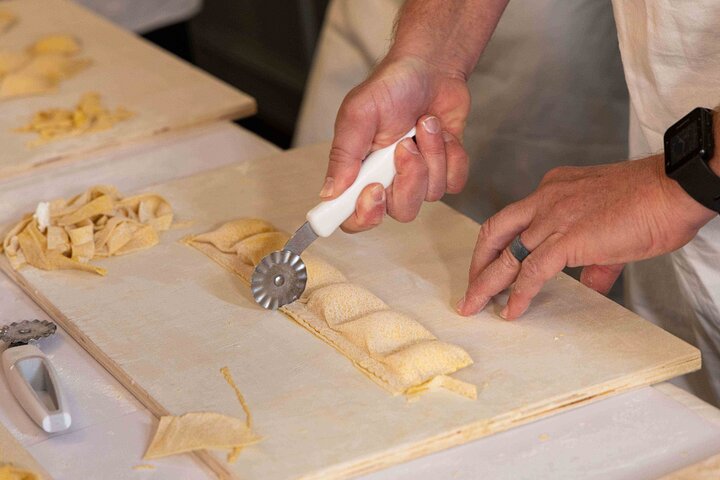
8. Fettuccine, Ravioli and Tiramisu with a classically trained chef
What sets this class apart from the others in the list? The operator is a classically trained chef — not an enthusiast sharing family recipes, but someone who learned technique at a professional culinary school and knows how to explain why every action matters. Three hours covering fresh fettuccine, ricotta ravioli and tiramisu, with the final meal included. The value for money is among the strongest in the list.
- Classically trained chef (rigorous technique, not guesswork)
- Fettuccine + Ricotta ravioli + Tiramisu in 3 hours
- Lunch or dinner included after the class
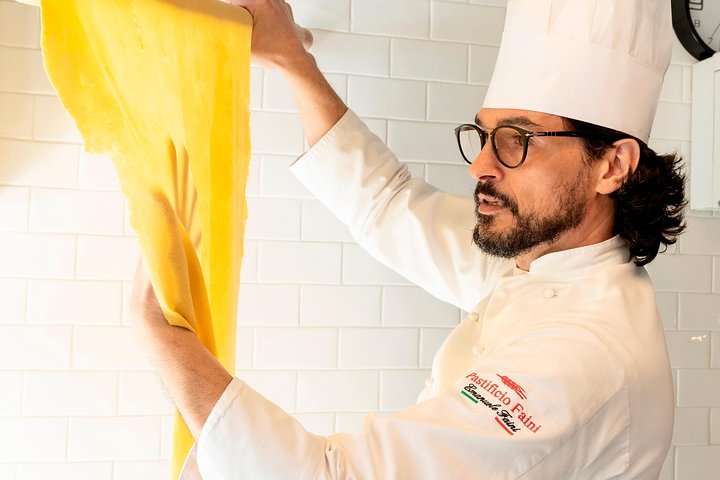
9. The professional laboratorio: pasta like a Roman artisan
This is not a tourist cooking class: it is a session in a fresh pasta laboratorio listed in the Gambero Rosso guide since 2017 and recognised as one of Rome’s ten best pasta workshops. You work with professional production equipment — steel roller, drying rack, tipo 00 stone-ground flour. Hand-stretched sfoglia (pasta sheet without a machine) is on the programme. For those who want to go home with a real technique, not just a photo.
- Gambero Rosso-listed laboratorio (top 10 pasta workshops in Rome)
- Hand-stretched sfoglia technique and professional equipment
- Small group (4–8 people) and fresh pasta to take home possible
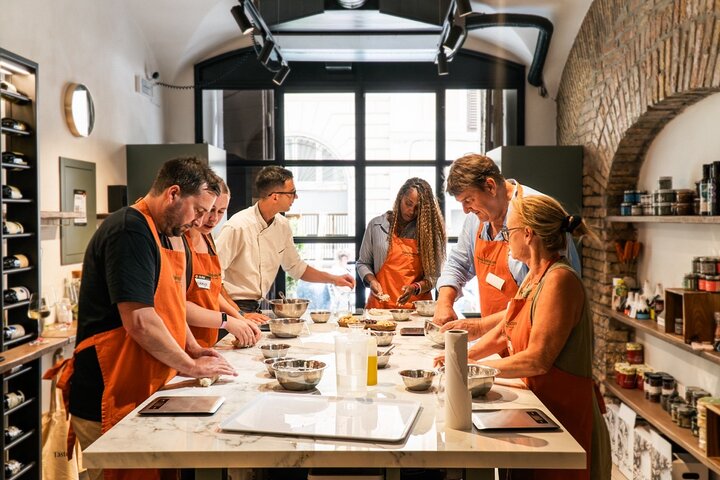
10. Neapolitan pizza, artisan gelato and Roman suppli (families welcome)
The highlight of this workshop? It covers three Roman specialities in one session: Neapolitan pizza, homemade gelato and suppli (Rome’s iconic fried rice balls filled with stretchy mozzarella). Children particularly love the gelato section, and the fine Italian wine served alongside reconciles adults with the idea of a « family activity ». Its location near the Colosseum makes it a logical choice at the end of a sightseeing day.
- Neapolitan pizza + artisan gelato + Roman suppli in one session
- Fine Italian wine included (food and wine pairing throughout)
- Near the Colosseum, ideal for families with children
Planning your trip to Rome
4G/5G connection from the moment you land at Fiumicino or Ciampino, no physical SIM required. Compatible with iPhone and Android.
Get my Italy eSIMNomad Insurance: global coverage from $56/4 weeks. 10% off via our link.
From $56 / 4 weeksCompare flights from London Heathrow or Gatwick to Rome Fiumicino (FCO) on Aviasales. Fares vary significantly by date and how far in advance you book.
Search London–Rome flightsFor groups wanting a dedicated guide through the market and local eateries, without a fixed departure time.
Check availabilityPractical tips for visiting Testaccio
Getting there: the Underground Line B (Piramide station) is the fastest route from the centre. From Termini, it is just one stop. By bus, routes 23 and 75 serve the neighbourhood directly from the historic centre. On foot from the Colosseum, allow 20 to 25 minutes via the Aventine Hill — a pleasant walk in the morning.
Mercato Testaccio opening hours: Monday to Saturday, 7am to 3:30pm. The best window is between 9am and 11am on weekdays — stalls are fully stocked, the crowd is local and organised tour groups have not yet arrived. At weekends, allow an extra 30 minutes to navigate the aisles comfortably.
Budget on the ground: a self-guided morning at the market with street food tastings costs between £12 and £20 per person. The trapizzino (a triangular sandwich filled with coda alla vaccinara) from the market stalls is under £4 — do not miss it. For gelato, the gelaterie along Via Marmorata charge reasonable prices well away from tourist zones.
Best season: spring (April to June) is ideal — comfortable temperatures for walking and Roman artichokes (carciofi romanesco) at their peak at the market. Avoid July and August: intense heat and several restaurateurs taking their own holidays. Autumn (September to November) is an excellent alternative with fewer crowds.
Useful phrases: at the market, a simple « posso assaggiare? » (may I taste?) often opens doors. Cheese and charcuterie vendors will happily offer a slice of guanciale or pecorino to curious visitors who ask politely.
Frequently asked questions about Testaccio and Rome food tours
What is the best food tour in Testaccio, Rome?
The Eating Europe « Taste of Testaccio » tour is the benchmark: 4.9 stars across more than 1,700 verified reviews since 2009. It includes nine tastings covering the three iconic Roman pasta dishes, access to a 105-year-old gelateria and a guided walk through the Mercato. For a tighter budget, the food tour with the Monte Testaccio wine cave offers 14 tastings at eight family-run spots from around £71. See the Eating Europe tour or the historic wine cave tour.
Is Testaccio far from central Rome?
No, Testaccio is very easy to reach. Piramide Underground station (Line B) is an 8-minute walk from the Mercato Testaccio — and Piramide is just one stop from Roma Termini. By bus, routes 23 and 75 serve the neighbourhood directly from the historic centre. On foot from the Colosseum, allow 20 to 25 minutes via the Aventine Hill.
Is Testaccio market open on Sundays?
No, the Mercato Testaccio is closed on Sundays and Italian public holidays. It is open Monday to Saturday from 7am to 3:30pm. The best time to visit is between 9am and 11am on weekdays: stalls are at their fullest, the crowd is local, and few organised tour groups have arrived yet. At weekends, it is noticeably busier.
Is quinto quarto cuisine suitable for beginners?
Yes, Testaccio food tours include a gradual introduction to quinto quarto. You are never obliged to try everything: guides are used to travellers discovering offal for the first time and will always offer alternatives. Trippa alla romana and coda alla vaccinara are generally the most approachable entry points. The pasta dishes — carbonara, amatriciana and cacio e pepe — suit every palate.
What is the best time of year to visit Testaccio and join a Rome food tour?
Spring (April to June) is the ideal period: comfortable walking temperatures, and Roman artichokes in peak season at the Mercato Testaccio (carciofi romanesco and cimarolo, the traditional varieties). Autumn (September to November) sees fewer crowds and a lovely back-to-local atmosphere. Avoid July and August: intense heat and some restaurants reducing their hours or closing entirely.
Which Testaccio food tour includes a visit to the market?
Two tours in this selection walk you through Mercato Testaccio with tastings: the Eating Europe « Taste of Testaccio » tour and the small-group Testaccio Market & Local Tastings tour. Book a morning departure, because the market stalls are open Monday to Saturday from 7am to 3:30pm and are closed on Sundays. See the Eating Europe tour or compare the small-group market tour.
Sources
- Wikidata — Testaccio (rione Q1751443) — consulted 2026-06-08
- Wikidata — Monte Testaccio (Q956657) — consulted 2026-06-08
- Wikidata — Mattatoio di Testaccio (Q3869753) — consulted 2026-06-08
- Eating Europe — Testaccio Rome Guide — consulted 2026-06-08
- Romeing — Testaccio Neighbourhood Guide 2026 — consulted 2026-06-08
- Devour Tours — Testaccio Market Guide — consulted 2026-06-08
- Turismo Roma — Official website — consulted 2026-06-08
- Visit Rome — Testaccio neighbourhood guide — consulted 2026-06-08
- Viator API — product data for Testaccio Rome (destinationId 511), retrieved 2026-06-08 with Accept-Language: en
Ready to experience the real Testaccio?
Food tour slots in Testaccio fill up fast in high season. Book ahead to secure a small group and your preferred guide.
See the #1 Testaccio tour