
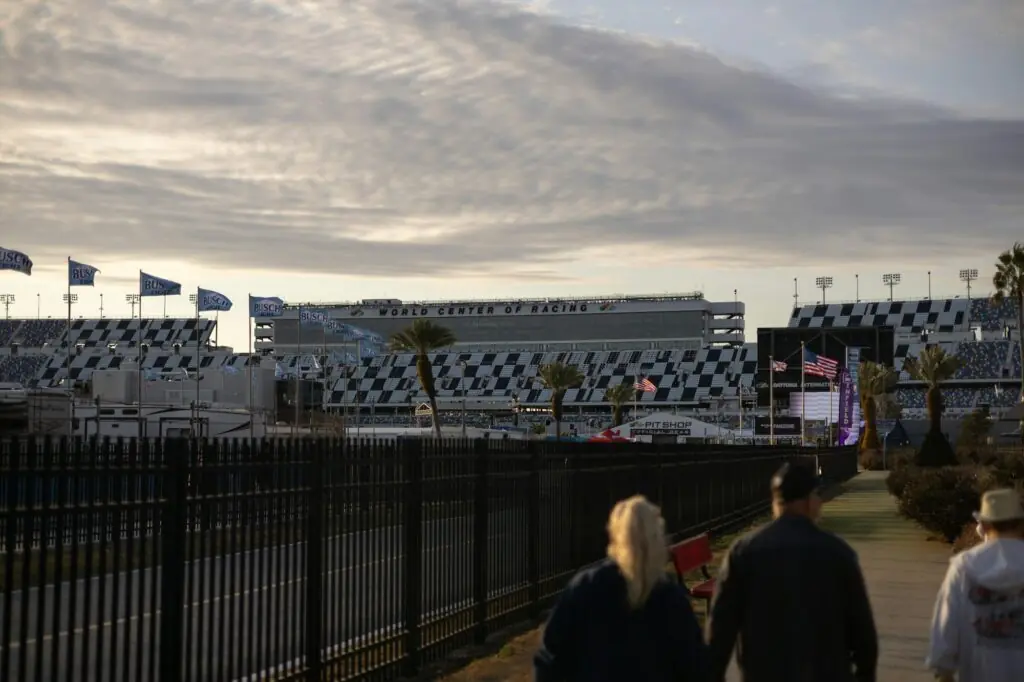
The 2026 Hungarian Grand Prix takes place at the Hungaroring from 24 to 26 July, just 20 minutes from Budapest. Race day is Sunday 26 July at 3:00 pm local time (CEST / 2:00 pm BST), Round 11 of a season introducing the biggest technical revolution since 2014. Tickets start from €160, and the Gellért Baths remain closed until 2028. Book your Budapest accommodation months ahead: occupancy tops 90% that weekend.
The Hungaroring has been around since 1986, when this circuit – built in barely eight months – became the first Formula 1 venue staged behind the Iron Curtain. Forty years on, the 41st Hungarian Grand Prix arrives with plenty to talk about: a freshly renovated track (new covered grandstand, new pit garages), a 2026 season that overhauls the sport’s power units and aerodynamics, and, just 20 minutes down the road, a capital that has changed several of its own rules since last year. This guide covers the race weekend in full – dates, tickets, grandstands, access – then the best way to extend it into a city break in one of Central Europe’s most affordable and spectacular capitals.
1. The 2026 Hungarian Grand Prix at the Hungaroring
A classic weekend, no sprint race
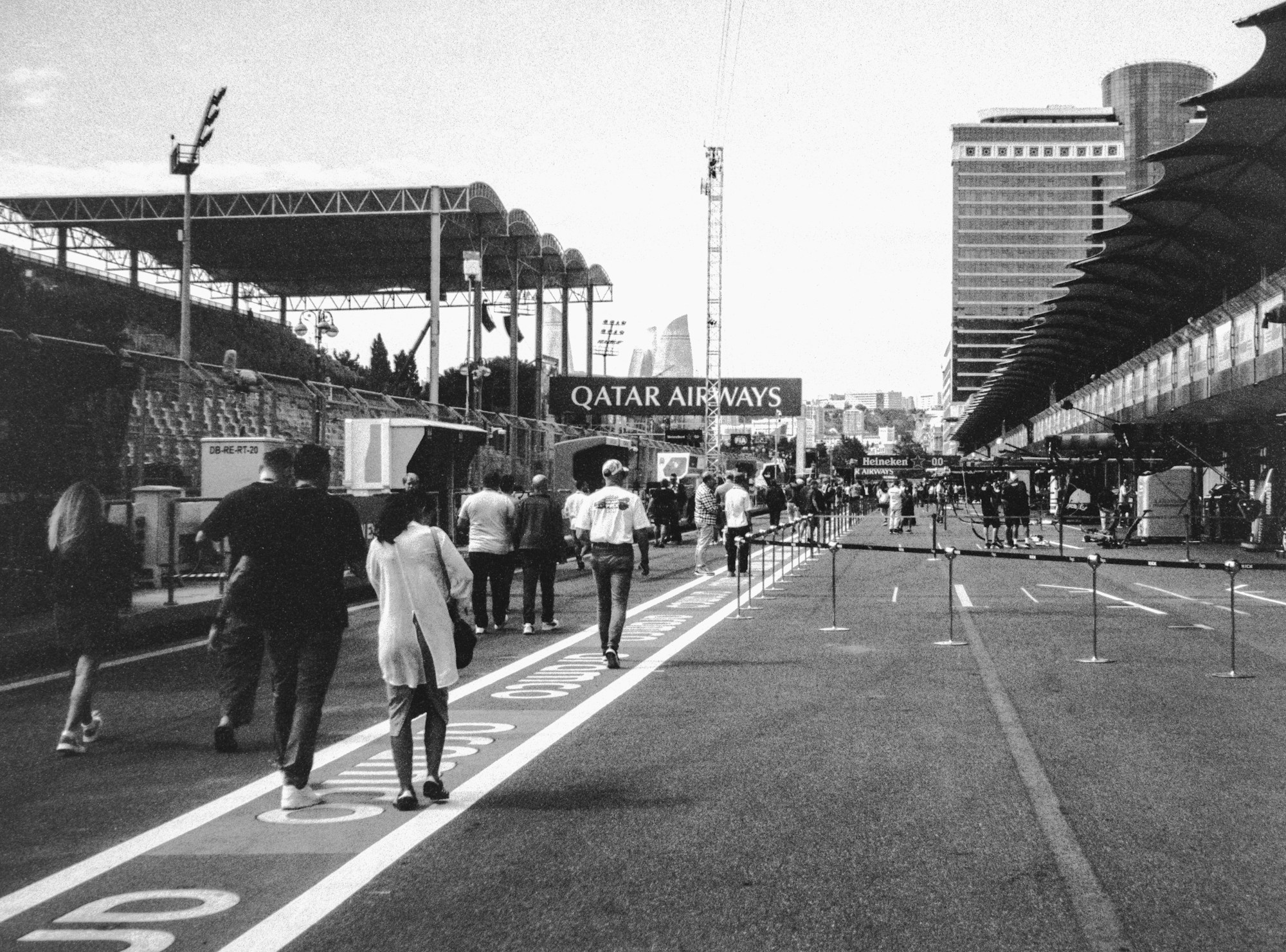
According to formula1.com, the 2026 Hungarian Grand Prix (official name: Formula 1 AWS Hungarian Grand Prix) is Round 11 of a championship that now runs to 22 races, following the cancellation of the Bahrain and Saudi Arabian Grands Prix due to the Middle East conflict. The format is classic: three Free Practice sessions, Qualifying on Saturday, no sprint race. It’s the 41st edition of the Hungarian Grand Prix, on a circuit inaugurated on 24 March 1986 after a record build time of barely eight months, according to Wikipedia.
| Session | Date | Time (CEST) |
|---|---|---|
| Free Practice 1 | Friday 24 July | 13:30 – 14:30 (12:30 BST) |
| Free Practice 2 | Friday 24 July | 17:00 – 18:00 (16:00 BST) |
| Free Practice 3 | Saturday 25 July | 12:30 – 13:30 (11:30 BST) |
| Qualifying | Saturday 25 July | 16:00 – 17:00 (15:00 BST) |
| Race (70 laps) | Sunday 26 July | 15:00 (14:00 BST) |
In the UK, every session is broadcast live on Sky Sports F1, whose exclusive rights to Formula 1 now run until 2034 following a deal announced in May 2026, with highlights of every race free-to-air.
At 4.381 km long with 14 corners, the Hungaroring sits in a natural bowl that lets spectators see around 80% of the track from almost any vantage point, a rare bonus for fans. According to Wikipedia, Lewis Hamilton holds the record for wins here (8, statistically the most favourable circuit of his entire career) and McLaren the record among constructors (13); the last two editions have in fact smiled on the British team, with Oscar Piastri’s maiden career win in 2024 followed by McLaren’s 200th victory with Lando Norris in 2025.
Highlights
- Fully renovated circuit for 2026: a 10,000-seat covered grandstand, new pit garages for 11 teams
- Contract extended to 2032, one of the most stable fixtures on the F1 calendar
- Just a 20-minute drive from central Budapest
2. Tickets, grandstands and circuit access
From €160 for General Admission to over €800 for a covered grandstand
Tickets are sold exclusively online, at tickets.formula1.com or the independent fan guide f1hungary.com. According to GPdestinations.com, here’s a selection of the grandstands available after the circuit’s renovation:
| Grandstand | Category | Guide price (3-day) | Best for |
|---|---|---|---|
| Hungaroring Grandstand | Platinum | €735-819 | The only covered grandstand, with a view of the start/finish, pit lane and podium |
| T1 | Gold | €450-789 | Best spot for overtakes at the end of the straight |
| Silver / Chicane | Silver | €199-335 | Balcony view over the technical section, good value |
| General Admission | – | from €160 | Natural hillside zone, freedom to roam, the cheapest option |
To reach the circuit from Budapest without a car, the recommended route combines the M2 metro line to Örs vezér tere, then the HÉV H8 suburban railway to Kerepes, then a free shuttle reserved for ticket holders to Gate 3 of the circuit. Allow 60-75 minutes in total, according to Celtic Horizon Tours. By car, the M3 motorway connects the circuit to the city centre in around 20 minutes (a motorway vignette is required, roughly €16); a taxi costs €35-50 depending on which part of town you’re starting from.
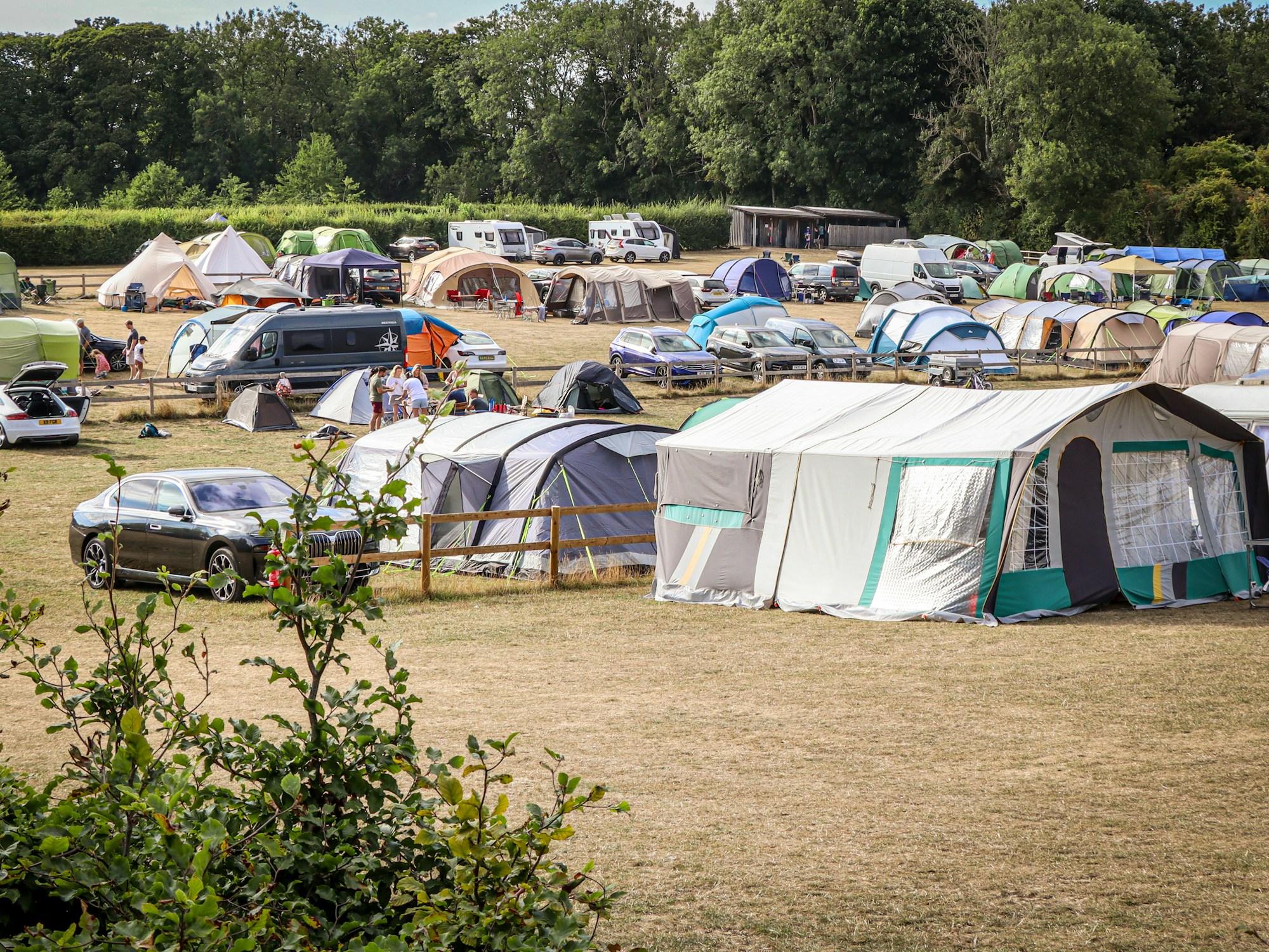
Five camping areas surround the circuit, including Zengo Camping (right behind the final corner) and Camping Gold Panorama, from around €100 per person for 4 nights, one of the lowest rates on the European F1 calendar. A full General Admission-plus-camping weekend costs roughly €430 per person excluding international travel; budget closer to €860 for a mid-tier grandstand and 3-star hotel combination.
3. The 2026 season: regulatory revolution and sporting stakes
The most revolutionary season since 2014
According to formula1.com, the 2026 season introduces the most profound technical change in the sport since hybrid engines arrived in 2014:
- 50/50 power unit between electrical and combustion power (versus a heavily combustion-dominated mix before), with the MGU-H removed
- Active aerodynamics: classic DRS is gone, replaced by movable wings and an « Overtake Mode » that releases extra electrical energy when within one second of a rival – downforce cut by 30%, drag by 55%
- Two new teams: Cadillac (Ferrari-powered) and Audi (formerly Sauber, with its own power unit), expanding the grid to 11 teams and 22 cars
On a circuit as tight as the Hungaroring, this active aerodynamics could reshuffle the usual overtaking zones, beyond the exit of Turn 1 alone.
Provisional standings (after the Austrian Grand Prix, Round 8)
| Position | Driver | Team | Points |
|---|---|---|---|
| 1 | Kimi Antonelli | Mercedes | 171 |
| 2 | George Russell | Mercedes | 131 |
| 3 | Lewis Hamilton | Ferrari | 125 |
According to RacingNews365, young Italian driver Kimi Antonelli (Mercedes) led the championship with a 40-point lead over teammate George Russell after eight rounds. That standing, however, predates the British and Belgian Grands Prix, held just before Hungary – so the order will likely have shifted by 24 July. Hungary in fact closes out a summer double-header with Belgium, just a week after the race at Spa-Francorchamps (covered in our Belgian Grand Prix 2026 guide), right before the championship’s traditional summer break.
The Hungaroring carries a persistent reputation as a circuit that doesn’t produce great racing: a narrow track (10-12 metres wide for most of the lap), only one real straight for attempting an overtake, and a nickname that says it all – « Monaco without the guardrails ». According to F1 Briefing, this geometry remains a structural factor that regulation alone struggles to overcome. The last two editions have bucked that trend, though: Oscar Piastri’s maiden win in 2024 and Lando Norris’s 2025 victory, fought right to the end against his own teammate, both delivered genuine drama.
4. Budapest: neighbourhoods and must-sees for the perfect city break
Buda for the views, Pest for city life
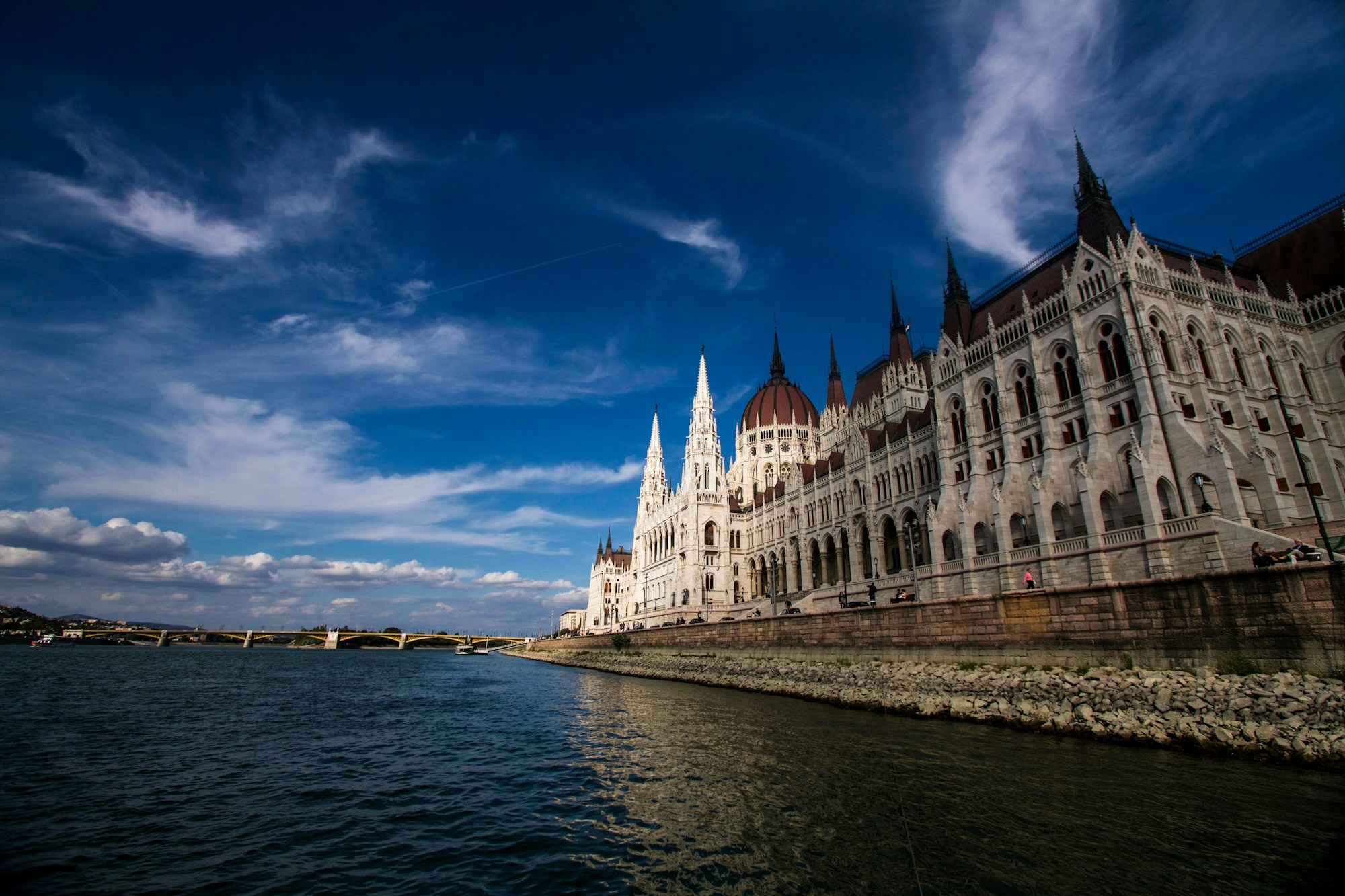
Born in 1873 from the merger of Buda, Óbuda and Pest on either side of the Danube, Budapest holds most of Hungary’s tourist appeal. For a first visit, guides agree on the central triangle, according to Go Ask a Local:
| District | Profile | Best for |
|---|---|---|
| V – Belváros | The most central, Parliament, St Stephen’s Basilica | First-time visitors, maximum proximity |
| VI – Terézváros | UNESCO-listed Andrássy Avenue, a quieter feel | Peaceful, but Airbnb banned since 1 January 2026 |
| VII – Erzsébetváros | The Jewish Quarter, ruin bars, the best street-food scene | Nightlife, tight budgets |
District VI became, according to Balkan Insight, the first district in Hungary to fully ban short-term lets from 1 January 2026, a political response to overtourism that has taken around 2,700 Airbnb listings off the local market. If you’d normally have stayed in Terézváros, plan on looking at Districts V or VII instead, where conventional hotel supply remains plentiful.
Must-sees on the Buda and Pest sides
- Fisherman’s Bastion: a panoramic terrace open 24 hours a day, free entry before 9am and after 9pm, with views over the Parliament and the Danube
- Buda Castle and the Chain Bridge (1849), the first permanent bridge across the Danube in Hungary, guarded by its famous stone lions
- Dohány Street Great Synagogue, the largest synagogue in Europe (3,000 seats), and the Great Market Hall, voted Europe’s best market by CNN in 2013
To get out of the city without giving up a whole day, Szentendre – a heritage artists’ village 40 minutes away by HÉV train from Batthyány tér – is easy to visit in half a day: cobbled lanes, art galleries and the Danube waterfront. According to our dedicated guide to Budapest in 48 hours, this side trip pairs well with a stay focused on the city centre.
5. Thermal baths, food and nightlife
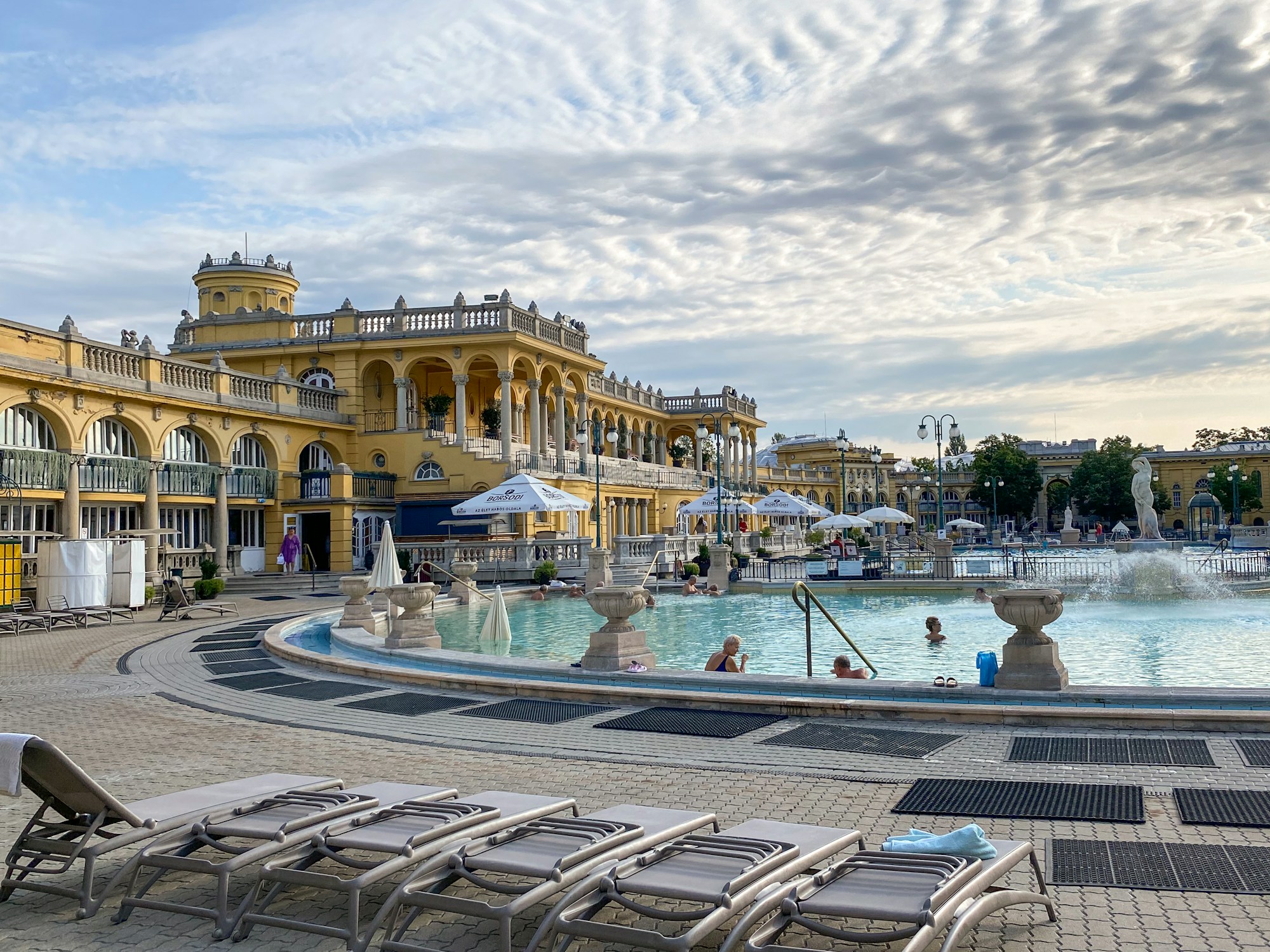
Heads up: the Gellért Baths remain closed in 2026
Three alternatives comfortably cover the Hungarian thermal bath experience: Széchenyi, Europe’s largest thermal complex (18 pools, open since 1913, around €33-38); Rudas, with its Ottoman heritage and Danube-facing terrace (around €16-29, single-sex sessions on weekdays); and Lukács, the locals’ choice, at one flat rate all week (around €19), according to Hungary Unlocked. These baths are in fact among the most remarkable natural thermal springs in the world, well worth the detour even outside race season.
What to try
- Goulash (gulyás): a paprika beef stew inherited from 9th-century Magyar herdsmen
- Kürtőskalács: a spiral chimney cake with sugar and cinnamon, a street speciality since the 17th century
- Lángos: fried dough topped with garlic, sour cream and cheese, best tried at the Great Market Hall
District VII (Erzsébetváros), Pest’s former Jewish quarter, has been home to the famous ruin bars since the 2000s, starting with Szimpla Kert, opened in 2002 and still the most visited. Expect to pay HUF 800-1,400 for a craft beer (roughly €2-3.50). This same neighbourhood is identified by local studies as one of the main drivers of overtourism in Budapest: night-time noise, litter and antisocial behaviour are among residents’ recurring complaints, according to data reported by Balkan Insight. A little restraint on these residential streets doesn’t hurt anyone.
For everyday spending, Hungary uses the forint (HUF) and hasn’t adopted the euro despite being an EU member. Avoid street currency-exchange kiosks (hidden fees) and stick to a regular bank ATM, always choosing to pay in forints rather than your home currency.
Practical info: eSIM, travel insurance and flights
Stay connected for GPS to the circuit, social media and getting around Budapest. Plans from $4 USD (1 GB / 7 days), or 10 GB / 30 days for a full race weekend plus city break.
From $4 USDNomad Insurance: global coverage from $56/4 weeks. Covers medical expenses, trip cancellation and lost luggage – useful for a Grand Prix weekend, where tickets are generally non-refundable. 10% off via our link.
From $56 / 4 weeksBudapest Ferenc Liszt is the capital’s only airport, 21 km from the centre and the Hungaroring, with direct flights from London and other UK airports on Wizz Air, Ryanair, easyJet and British Airways. Prices climb sharply on Grand Prix weekend: compare early.
Compare pricesFrequently asked questions about the 2026 Hungarian Grand Prix
What are the exact dates of the 2026 Hungarian Grand Prix?
The 2026 Hungarian Grand Prix runs from 24 to 26 July 2026 at the Hungaroring. Race day is Sunday 26 July at 15:00 local time (CEST / 14:00 BST), Round 11 of the 2026 championship. Source: formula1.com.
Is the 2026 Hungarian Grand Prix a sprint weekend?
No, it follows the classic format (Free Practice 1, 2 and 3, Qualifying, Race). The 6 sprint races of the 2026 season are held in China, Miami, Canada, Silverstone, Zandvoort and Singapore. Source: RacingNews365.
How much do tickets cost for the 2026 Hungarian Grand Prix?
From €160 for General Admission (3 days) up to more than €800 for covered Platinum grandstands. VIP Paddock Club packages start around €6,920 for 3 days. Tickets are sold exclusively online. Source: GPdestinations.com.
How do I get to the Hungaroring from Budapest without a car?
Take the metro M2 line to Örs vezér tere, then the HÉV H8 suburban railway to Kerepes, then a free shuttle (a valid Grand Prix ticket is required) to the circuit. Allow 60-75 minutes in total. Source: Celtic Horizon Tours.
Can I visit the Gellért Baths during my stay?
No. The Gellért Baths have been closed since 1 October 2025 for a major renovation and won’t reopen until 2028. Head to Széchenyi, Rudas or Lukács instead during this period. Source: Time Out.
Which neighbourhood should I stay in to combine the city and the Grand Prix?
Districts V (Belváros), VI (Terézváros) and VII (the Jewish Quarter) remain the most central. District VI, however, has banned short-term lets since 1 January 2026, which has reduced Airbnb supply in that specific area: go for Districts V or VII if you want that type of accommodation. Source: Balkan Insight.
Who holds the record for most wins at the Hungarian Grand Prix?
Lewis Hamilton, with 8 wins, statistically the most favourable circuit of his entire Formula 1 career. McLaren is the most successful constructor with 13 wins in total. Source: Wikipedia.
Do UK travellers need a visa to visit Budapest in 2026?
No visa is required for UK citizens for stays of up to 90 days in any 180-day period. From late 2026, though, you’ll need to apply for ETIAS – an electronic travel authorisation (around £17, valid for 3 years) – before entering Hungary and the rest of the Schengen area. Apply online in advance; it isn’t issued on arrival. Source: etias.com.
Sources
- Formula 1 – official 2026 Hungarian Grand Prix page – dates, schedule, sporting context
- Hungaroring official site – circuit organiser
- F1Hungary.com – detailed weekend schedule
- RacingNews365 – weekend format, 2026 standings
- Wikipedia – Hungaroring – circuit history and technical specifications
- Wikipedia – Hungarian Grand Prix – roll of honour and records
- Hungarian Conservative – 2024-2026 circuit renovation
- GPdestinations.com – budget, tickets and logistics
- Celtic Horizon Tours – grandstand and access guide
- Formula 1 – 2026 regulations explained
- Sky Sports – cancellation of the Bahrain and Saudi Arabian Grands Prix
- Sky Sports – exclusive UK broadcast rights extended to 2034
- RaceFans – circuit reputation and spectator feedback
- F1 Briefing – technical analysis of the track
- Visit Hungary – official Hungarian tourism board
- Time Out – Gellért Baths closure until 2028
- Hungary Unlocked – guide to Budapest’s thermal baths
- Balkan Insight – Airbnb ban in District VI
- Go Ask a Local – guide to Budapest’s neighbourhoods
- Daily News Hungary – currency and payments
- etias.com – visa requirements and ETIAS
Research conducted on 2 July 2026.

Plan your trip with Pixidia
Pixidia learns how you travel and helps you build a trip that truly fits you and everyone coming along.
Open the planner