
No, summer 2026 isn’t just an extension of spring’s troubles. Five countries have active aviation-related labour disputes running between June and September: Italy has published Europe’s busiest strike calendar (5 and 21 July stand out), Spain’s SAERCO air traffic controllers have been on an indefinite strike since 17 April, and France had no air traffic controller strike notice filed as of 11 July, though the underlying tension hasn’t gone away. Check official channels before you fly, and never buy travel insurance after a strike notice appears: it won’t cover you.
A flight cancelled by strike action isn’t just a one-off from a rocky spring anymore. It’s a structural risk running through the whole summer season. Between June and September 2026, France, Italy, Spain, Belgium and Portugal are all going through aviation-related labour disputes at the same time, each with its own logic and its own timeline. This guide brings together the dates already confirmed, the threats that are still uncertain, your actual rights if your flight is cancelled, and the habits that genuinely limit the damage.
The summer 2026 calendar, country by country
Unlike spring’s one-off flare-ups, the 2026 season isn’t a case of just one or two dates to note down. Here are the disputes confirmed by official sources or by notices that have actually been filed, running from 17 April to 21 July 2026 (later, still-uncertain dates are covered country by country further down).
| Date | Country | Location | Type |
|---|---|---|---|
| 17 April to end of August | Spain | 9 to 14 airports (Canary Islands, mainland) | Unlimited SAERCO strike, private air traffic control |
| 2-3 June | Belgium | Zaventem, Charleroi | Spontaneous air traffic controller strike |
| 3 June | Portugal | Nationwide | CGTP general strike (TAP, Ryanair, easyJet) |
| 10 June | France | Nationwide (rail) | SNCF strike, one in three TGVs cancelled |
| 13 June | Italy | Verona, Milan Linate, Cagliari | Air traffic control, ground staff, easyJet |
| 15-16 June | Belgium | Zaventem, Charleroi | Spontaneous Aviapartner baggage handlers’ strike |
| 18 June | France | CDG, Orly, Le Bourget | Security and baggage staff, badge access dispute |
| 19-20 June | Italy | Nationwide | 24-hour general strike, all sectors |
| 24-26 June, then 30 June-2 July | Spain | Ryanair flights | Cabin crew walkouts (USO, SITCPLA) |
| 26 June | Italy | All airports | 24-hour nationwide ground staff strike |
| 5 July | Italy | Malpensa, Rome, nationwide | Air traffic control, ground handling, security, easyJet |
| 9 July to mid-September | Italy | Rome Fiumicino, Ciampino | Rolling airport security strike notice |
| 21 July | Italy | Milan Malpensa | 24-hour ground staff strike |
This flight calendar overlaps with another well-known peak: the changeover weekend between 31 July and 4 August 2026, when roads and trains are already under nationwide strain. A disrupted flight on that particular weekend leaves you with far fewer fallback options than the rest of the summer. The days to avoid on the road are in our piece on France’s July 2026 traffic jams.
France: this summer’s most exposed gateway
CDG, Orly, Sud-Rail: three separate fronts
On 18 June 2026, a joint union coalition (CGT, CFDT, UNSA, SUD Aérien) called a 24-hour strike at Roissy-CDG, Orly and Le Bourget. This wasn’t an air traffic control dispute, but a fight over security badges: unions say the rules for getting and renewing access badges to secure zones have tightened since a new prefect took over security for the Paris airports, putting jobs at risk for baggage handlers, ramp agents and technicians. According to Air Journal, the impact showed up as longer queues and slower boarding.
There’s an often-overlooked rail risk on top of that. On 10 June 2026, a nationwide SNCF strike cancelled around one in three TGVs and six Eurostar services out of Paris Gare du Nord, according to TourMag. That’s worth flagging for UK travellers too, since Eurostar is how a lot of long weekends in Paris start at London St Pancras. The Sud-Rail movement is then keeping up a rolling, localised and hard-to-predict strike notice into early September 2026, with one specific weak point for air travellers: the RER B line between Paris and Roissy-CDG, partly run by SNCF. An on-time flight doesn’t count for much if the train that’s meant to get you there has been cancelled, notes NomadLawyer.
On the air traffic control side, no national strike notice had been filed as of 11 July 2026 for the rest of the summer. The mood stays tense, though: a Cour des comptes report published on 5 and 6 July 2026 found French controllers manage just 0.81 controlled flights per hour, against a European average of 0.98, and work roughly 1,420 hours a year against a sector average of 1,607 hours, according to Air Journal. French law only requires 5 days’ notice before a strike, which leaves little warning if a dispute breaks out in the middle of August.
What already happened this spring
This isn’t hypothetical. Over the Ascension long weekend, an air traffic controller strike already cancelled up to 75% of flights at Orly and 65% at Roissy-CDG. Full details in our piece on the France ATC strike over Ascension, May 2026.
A forced day of downtime in Paris because of a strike doesn’t have to be a day wasted. This guided tour (Louvre, the Seine, Eiffel Tower) cancels free up to 24 hours before departure, a genuine plan B if your schedule gets rearranged.
Italy: Europe’s busiest strike calendar
A risky day almost every week
Italy is the only country with an official, centralised calendar of air strikes, run through the Ministero delle Infrastrutture e dei Trasporti (MIT) and ENAC. That calendar guarantees fasce di garanzia (protected time slots), usually 7am to 10am and 6pm to 9pm, which makes disruption more predictable there than anywhere else in Europe, according to ENAC.
June already had four strike dates: the 13th (Verona Villafranca, Milan Linate, Cagliari-Elmas — air traffic control and ground staff), the 19th and 20th (a 24-hour nationwide general strike, every sector), the 24th (Lamezia Terme, ground handling), and, most notably, 26 June — a nationwide ground staff strike at every Italian airport.
5 July 2026 has the largest number of groups striking at once: air traffic control at Milan Malpensa, nationwide ground handling (Assohandlers, CUB Trasporti), security at Rome Fiumicino and Ciampino, and a fifth strike in an ongoing series by easyJet Italy’s pilots and cabin crew, who’ve been in dispute since January over a new collective contract, according to Sky TG24 and AirMappr. On 21 July, Milan Malpensa faces another 24-hour ground staff strike (ALHA, MLE-BCube). In Rome, a rolling airport security strike notice (FAST-Confsal) runs from 9 July to mid-September, without amounting to one continuous strike day.
Some relatively good news: under Italian sector rules, an exemption period sharply cuts back air-sector strikes in August. That’s the opposite of France, where nothing legally stops a strike notice landing in the middle of August.
Spain: three overlapping disputes
Spain’s situation is being described as the most complex in Europe this summer: three legally separate disputes, with different workers, employers and legal frameworks, are all running in parallel.
- SAERCO (a private air traffic control provider, separate from Enaire): an indefinite strike since 17 April 2026, affecting 9 to 14 airports, mostly in the Canary Islands and at smaller mainland airports. An almost total minimum service keeps actual cancellations low, but the action stays active until at least the end of August, according to the Ministerio de Transportes.
- Ryanair Spain cabin crew (USO, SITCPLA): walkouts on 24, 25, 26 and 30 June, then 1 and 2 July 2026, involving around 1,400 Spain-based crew members.
- USCA, Enaire’s long-standing controllers’ union (not to be confused with SAERCO): an internal vote came back 98% in favour of a strike, with 18 or 20 August floated by several outlets. As of 11 July 2026, though, no formal notice had been confirmed, with Aena calling the move « neither fair nor justified », according to Aena. Treat this date as a threat to watch, not a done deal.
This isn’t a new mood in Spain: several airports already saw disruption back in May. We cover that in our piece on the Spain airport strikes, May 2026.
Belgium: when the strike shows up without warning
Belgium runs on a completely different system to France (a legal 5-day notice period) or Italy (a centralised calendar): several strikes have hit this summer with no formal notice at all, making it the hardest case for a traveller to plan around.
On 2-3 June 2026, a spontaneous air traffic controller strike paralysed Zaventem and Charleroi: around 270 people spent the night at the airport before traffic resumed, according to VRT NWS. On 15-16 June, baggage handlers at contractor Aviapartner walked out with no notice, starting at 3:30am.
A third front is still worth watching: Alysa, a ground handling contractor at Zaventem, filed a strike notice in early July after sacking an employee the same day she was named a union rep. The ACV union postponed the action once talks opened with management, but explicitly warns it « will restart action in August » if there’s no progress, with no firm date set yet, according to La Libre. Belgian pilots are separately threatening action over pension reform, also without a fixed date.
One consequence is already visible on the ground: Wizz Air and Volotea are now avoiding part of Belgian airspace, rerouting some flights via Germany and the Netherlands to limit their exposure.
Portugal, Germany, Greece, Norway: what else to watch
On 3 June 2026, a Portuguese general strike called by the CGTP union, over labour law reform with no direct link to aviation, hit TAP Air Portugal, Ryanair and easyJet Portugal through the cabin crew union SNPVAC’s participation. Precise minimum service levels were set flight by flight, according to AirHelp Portugal.
Germany, by contrast, looks like the calmest country this summer after a genuinely rough spring. The Lufthansa strikes (pilots, cabin crew) and Verdi strikes (ground staff, security) between February and April 2026, which notably paralysed Berlin Brandenburg Airport on 18 March, have settled down thanks to a run of pay deals. No major strike was confirmed for June, July or August 2026 at the time of writing.
In Greece, no strike date is confirmed for summer 2026: the underlying situation stays structurally tense (ageing radar systems, chronic controller understaffing), but that diffuse risk shouldn’t be mistaken for a dated strike notice. In Norway, a SAS cabin crew strike and an aircraft maintenance action were, as of late June and early July 2026, still conditional on ongoing mediation failing.
Finally, Malta and Cyprus show no strike signals at all for summer 2026 so far: they could work as relatively unaffected alternatives, as long as your connections don’t route through busier hubs like Rome, Milan, Madrid or Paris.
Your rights if your flight is disrupted (EU261 and UK261)
The distinction that changes everything: internal or external strike
EU Regulation 261/2004 covers any flight departing an EU airport, whatever the airline, and any flight arriving in the EU operated by an EU carrier: if your flight is cancelled or delayed by 3 hours or more on arrival, fixed compensation runs from €250 for flights of 1,500km or less up to €600 for the longest routes, regardless of what you paid for the ticket, according to the European Commission.
If you’re departing from a UK airport, though, it’s actually UK261 that applies to you, not EU261: the UK’s own version of the same rule, enforced by the Civil Aviation Authority (CAA) rather than an EU body, with the money paid in pounds — £220, £350 or £520 depending on distance, according to the CAA. Fly home from an EU airport back to the UK, though, and EU261 still applies, because it’s the departure airport that decides which regime you’re under, not your nationality or the airline.
The point most people get wrong, when research from the UK Civil Aviation Authority found only one in ten passengers feel fully informed about their rights when a flight is disrupted, comes down to one distinction:
A strike by an airline’s own staff (pilots, cabin crew, directly employed ground agents) doesn’t count as an extraordinary circumstance. Under the Krusemann and Others v TUIfly ruling (CJEU, 2018), a precedent UK courts still follow under retained EU case law, even a wildcat strike by staff doesn’t release the airline from its duty to pay compensation. So a cabin crew strike at Ryanair or easyJet does entitle you to the fixed payout, whether you’re claiming under EU261 or UK261.
A strike outside the airline itself (air traffic controllers, airport security staff, a subcontractor’s baggage handlers, a national general strike) generally does count as an extraordinary circumstance. No fixed compensation in that case, but a refund or rerouting, plus care costs (meals, hotel, communication), are still owed in full, whether the claim falls under EU261 or UK261. That covers almost all the strikes expected this summer: air traffic control, security, ground handling.
An EU directive from March 2026 extended the right to a fee-free cancellation to airport strikes, but only for package holidays (flight and hotel booked together through the same organiser). It’s an EU-only rule that doesn’t automatically extend to UK-organised package holidays, which stay under separate UK package travel rules. And if you’ve booked your flight and accommodation separately, which is still how most independent travellers plan their trip, none of this applies either way: only the standard EU261/UK261 flight rules do.
What to do if your flight is disrupted
- Check your flight status in real time on the airline’s app or website.
- Never cancel your own ticket before the airline cancels officially: you’d lose every right you have.
- Decide quickly between a refund and rerouting; replacement flights fill up fast in peak season.
- Keep every receipt for expenses (meals, hotel, transport).
- File a complaint with the airline, which has 2 months to respond; if that goes nowhere, the CAA’s passenger complaint route (or, for an EU-departure flight, that country’s national enforcement body) costs nothing to use.
How to limit the damage before and during your trip
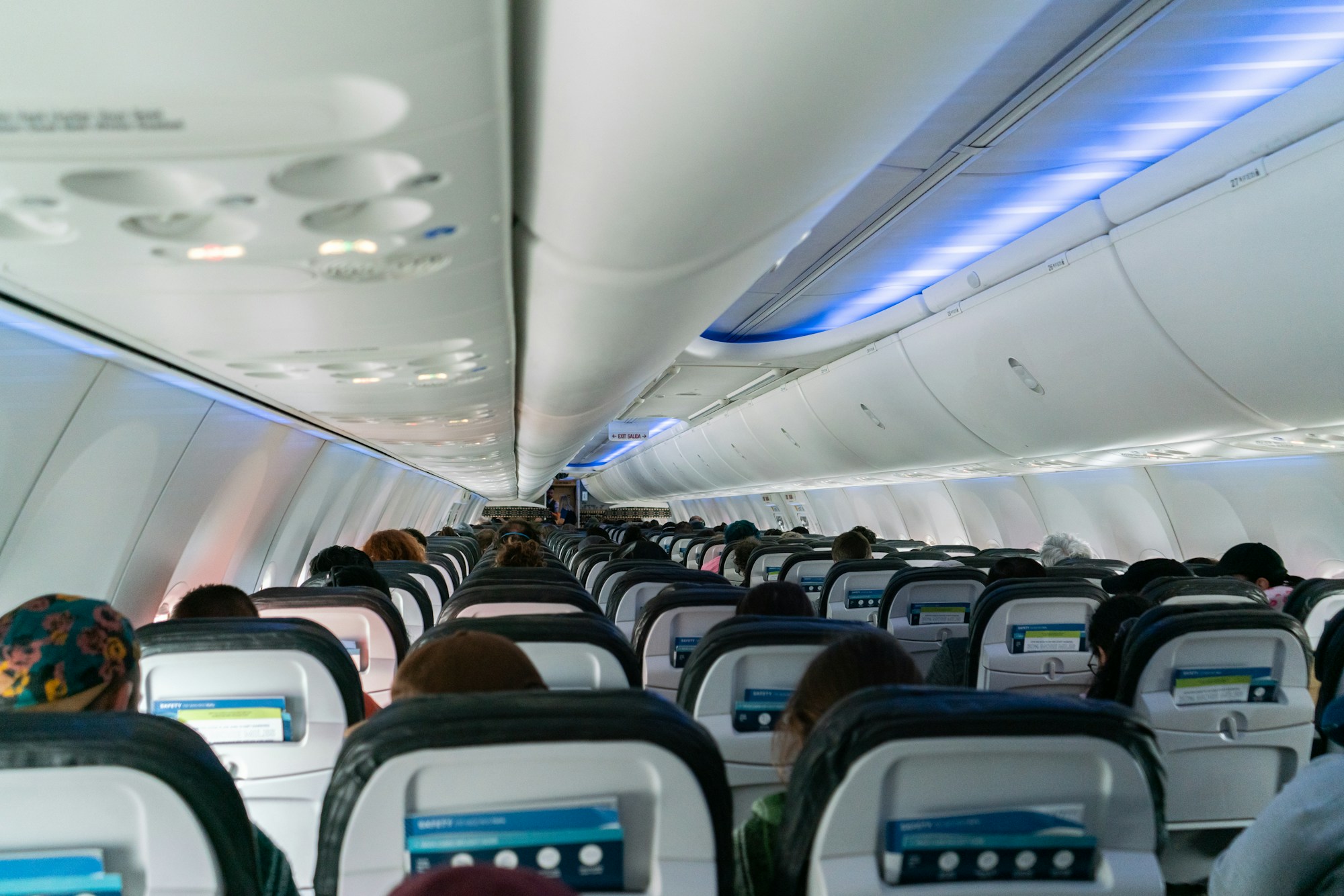
No tool can predict a strike 15 days out, but a few habits genuinely limit the damage if your flight does get disrupted.
Before you go
- Go for direct flights where you can: a connection adds another point of failure, especially during a ground-handling strike.
- Avoid « self-transfer » connections on two separate tickets: without guaranteed connection protection, a delay on the first flight can cost you the second, with no comeback.
- Travel with cabin baggage only when you can, to cut your reliance on baggage handlers during a ground-handling strike.
- Build in a safety margin before any non-negotiable commitment (a wedding, a cruise, a long-haul connection).
- Install a flight-tracking app like Flighty or FlightAware: some alerts land before the airline’s own official update.
The golden rule on insurance that everyone ignores
For longer trips, building buffer days between two non-negotiable legs is still the best protection against a strike’s knock-on effect. That’s also what a trip planned with these safety margins gives you, rather than a tightly stacked chain of back-to-back bookings.
Get ready for the trip
Stay connected the moment you land, so you can track flight alerts in real time without hunting for a local SIM card.
Pick-your-own data plans, instant activationA strike that’s already been announced is never covered: sign up when you book your trip, not after a notice appears.
Nomad Insurance from $56 / 4 weeksFrequently asked questions
Are there really confirmed strike dates for the whole of summer 2026, or is this speculation?
Both, depending on the country. Italy publishes a very precise official calendar, with firm dates like 5 and 21 July 2026. Spain has had an indefinite SAERCO controllers’ strike running since 17 April. France, on the other hand, had no air traffic controller strike notice filed as of 11 July 2026 for the rest of the summer, even though past notices have sometimes landed just 5 days before the action, according to Sky TG24.
If my flight is cancelled because of an air traffic controller strike, am I entitled to €250-€600 (or £220-£520) in compensation?
No, generally not. An air traffic controller strike is external to the airline and counts as an extraordinary circumstance, which rules out the fixed payout, whether you’re under EU261 or its UK equivalent, UK261. A refund or rerouting, plus meals and hotel costs, are still owed though, based on CJEU case law that both regimes follow.
What if the strike involves the airline’s own staff (cabin crew, pilots)?
In that case, the fixed payout still applies, because it counts as an internal strike within the airline’s normal management, under the Krusemann v TUIfly ruling (CJEU, 2018). So a cabin crew strike at Ryanair or easyJet does entitle you to compensation.
Does my travel insurance cover me if a strike has already been announced when I book?
No, in almost every case. The policies we checked (SafetyWing, premium cards, American Express, standard travel insurance) all exclude strikes that were already known or announced before you took out the policy. To actually be covered, you need to insure before the announcement, not after.
Is the train a safe backup in France this summer if my flight is cancelled?
Not automatically. The Sud-Rail movement is keeping up a rolling strike notice into early September 2026, with a specific risk on the RER B line to Roissy-CDG and on international trains like Eurostar or Thalys, according to NomadLawyer.
Will the July 2025 French strikes and the August 2025 Greek strikes repeat exactly in 2026?
No, those are real events, but old ones: the French strike on 3-4 July that cancelled over 1,500 flights dates from 2025, as does the Greek controllers’ strike blocked by the courts on 28 August. No equivalent confirmed date existed for 2026 at the time of publication, even though the mood stays tense in both countries.
Should you cancel your own ticket as soon as a strike is announced?
No, this is the most important and most counter-intuitive piece of advice here. Cancelling your own ticket before the airline’s official cancellation costs you every right to a refund, rerouting or care. Always wait for the official cancellation.
Sources
- European Commission: air passenger rights
- EUR-Lex: Regulation (EC) No 261/2004, full text
- UK Civil Aviation Authority (CAA): am I entitled to compensation
- AirHelp UK: UK 261 compensation guide
- Court of Justice of the European Union: case law on extraordinary circumstances
- French Senate (Sénat): report on DSNA performance (2026)
- Eurocontrol: network operations plan, summer 2026
- Ministerio de Transportes (Spain): SAERCO minimum service ruling
- ENAC (Italy): guaranteed flights during strikes
- Aena (Spain): statement on the USCA strike threat
- Air Journal: the Cour des comptes report on France’s air traffic controllers
- Air Journal: the 18 June strike at Roissy-CDG
- Sky TG24: Italy’s July 2026 strike calendar
- AirMappr: the easyJet Italy pilot strikes
- VRT NWS: the spontaneous controller strike at Zaventem
- La Libre: action threat at a Brussels Airport contractor
- AirHelp Portugal: the 3 June general strike
- TourMag: the 10 June SNCF strike
- NomadLawyer: Sud-Rail and airport connections
- UK Civil Aviation Authority: research on passenger awareness of their rights
- France 24: the French air traffic controller strike, July 2025
- GTP Headlines: the Greek controller strike blocked by the courts, August 2025
Information verified on 11 July 2026. The situation keeps evolving: check official channels (the CAA, DGAC, ENAC, Aena, Enaire) before you travel.

Plan your trip with Pixidia
Pixidia learns how you travel and helps you build a trip that truly fits you and everyone coming along.
Open the planner