
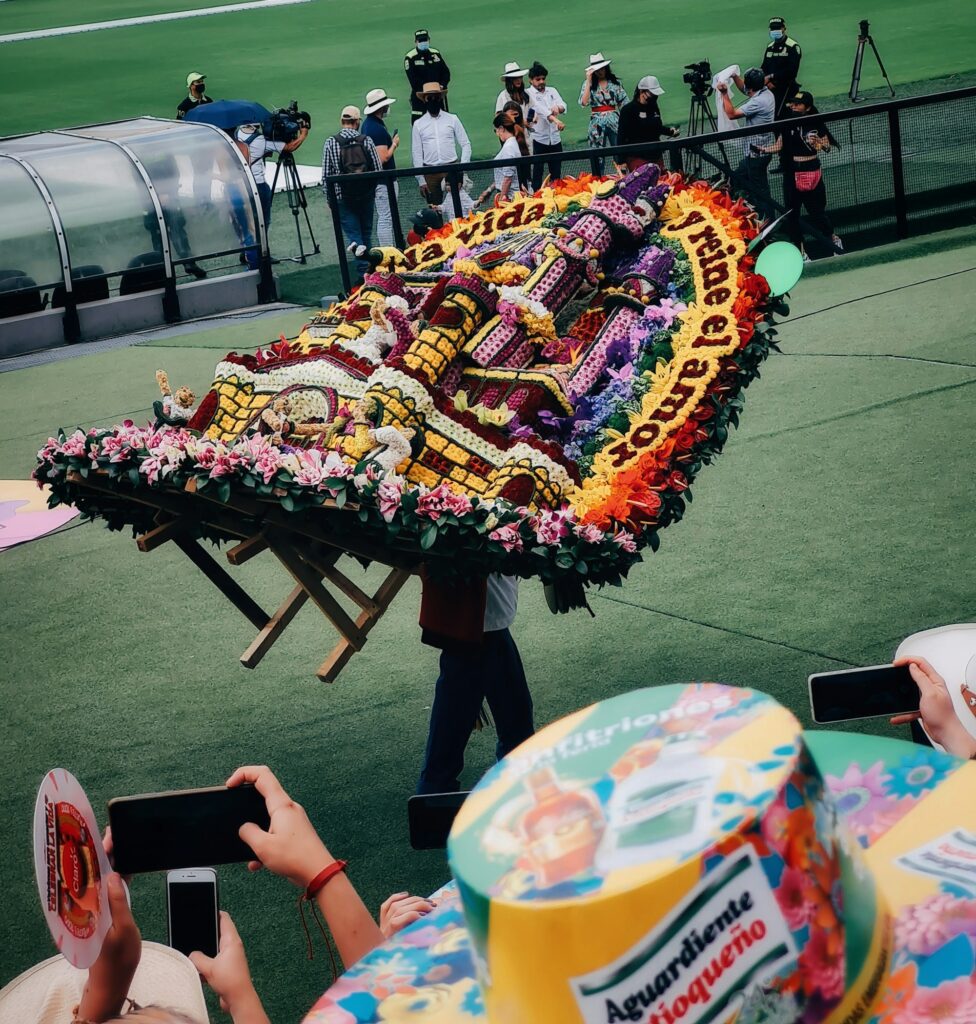
The Feria de las Flores 2026 takes place in Medellín, Colombia, from 31 July to 9 August. Over 2 million people attend this cultural festival — widely regarded as the country’s most important — which culminates with the Desfile de Silleteros on Sunday 9 August: 500 flower carriers from Santa Elena parade over 2.4 km with floral arrangements weighing up to 80 kg. International arrivals jumped 27% in 2025, confirming the event’s growing global appeal. Book your accommodation several months in advance and aim to arrive before 9 am on parade day to secure a spot along the route.
On Sunday 9 August 2026, an eerie silence falls over the Avenida del Ferrocarril. Then, in the distance, a tide of colour appears. Five hundred men and women walk slowly, carrying cathedrals of flowers on their backs: gladioli, roses, orchids, agapanthus. These are the silleteros of Santa Elena, heirs to a two-century-old farming tradition, descending from the mountains of Antioquia to give Medellín the crowning moment of its Feria de las Flores. The 68th edition of this festival, running from 31 July to 9 August 2026, cements its status year after year as an unmissable cultural event in Latin America — now drawing over 2 million spectators and 65,000 international visitors.
The Day-by-Day Programme for Feria de las Flores 2026
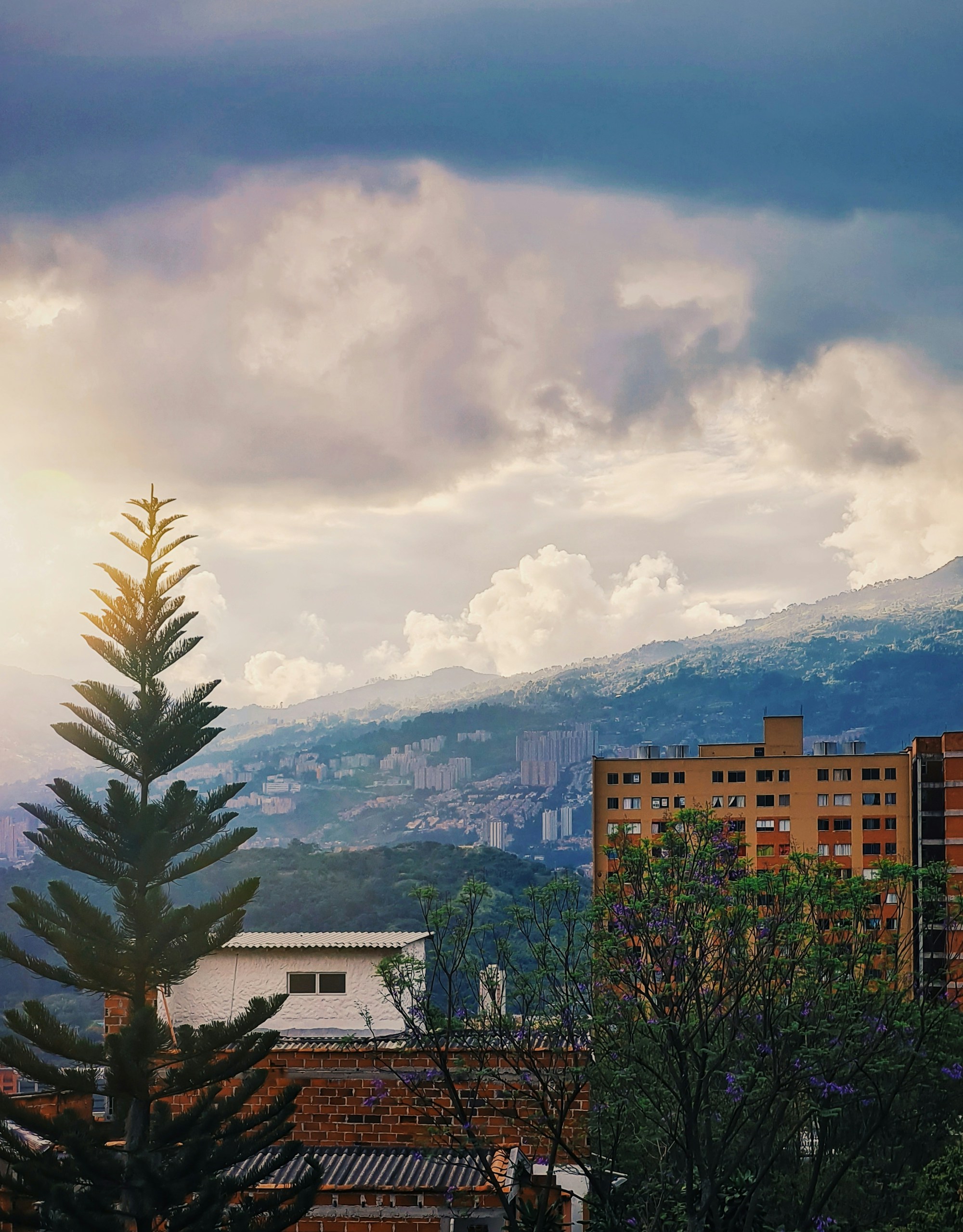
Ten days, thirty venues, one hundred and ten events
The Feria de las Flores is far more than just a flower parade. It is a sprawling festival that mobilises the entire Antioquian capital for ten days, with a programme blending rural traditions, contemporary music, and paisa gastronomy. The official detailed programme for the 2026 edition has not yet been published by the Medellín Mayor’s Office as of 13 July 2026, but the festival’s well-oiled structure, refined over decades, allows us to anticipate its flow. According to Guanabana Tours, which has already published its 2026 guide, previous years’ formats remain a reliable reference while awaiting the official release.
Friday 31 July: official opening. The Feria kicks off with a free inaugural concert at El Obelisco, in the Laureles neighbourhood, blending Colombian music, reggaeton, and vallenato. Alboradas (fireworks displays) mark the start of festivities across several comunas.
Saturday 1 and Sunday 2 August: first weekend. The traditional fondas open their doors: large music and paisa food spaces set up notably at the Aeroparque Juan Pablo II. The Orchid Exhibition begins at the Botanical Garden (9 am – 8 pm, every day of the festival), showcasing over 2,000 species in one of Latin America’s most significant displays, as reported by the official Medellín tourism website.
Monday 3 to Thursday 6 August: heart of the festival. Noches Culturales take place each evening at Plaza Gardel (6 pm – 1 am): Noche Afro, Noche Colombiana, Noche Tropical, Noche de Son y Bolero. The Festival Nacional de la Trova — improvised verbal jousts in paisa Spanish — entertains the Parque de los Deseos, with a final at Plaza Mayor awarding the winner the Orquídea de Oro. The 21 tablados (free music stages) spread across Medellín’s 16 comunas offer concerts every evening.
Friday 7 August: public holiday in Colombia (Battle of Boyacá). One of the festival’s busiest days. In the morning, the Avenida Primavera: Calle, Ritmos y Flores sees flower-covered floats, dance troupes, and orchestras parade along the Avenida Regional, from Puente de Guayaquil to Plaza Mayor. In the afternoon, the Desfile de Autos Clásicos y Antiguos gathers over 285 vintage vehicles (1900–1987) over a 19 km route, drawing around 200,000 spectators according to figures reported by Real City Tours.
Saturday 8 August: eve of the big day. The Desfile de Chivas y Flores — a caravan of brightly painted traditional buses decked out in flowers, with music and dancing — rolls along Carrera 70. In the evening, the Super Concierto de la Feria brings together the biggest names in Latin music at the Polideportivo Sur in Envigado. Tickets, on sale via Tuboleta, range from 90,000 COP (~£18) to 1,800,000 COP (~£350) for tables near the stage.
Sunday 9 August: 2 pm: the Desfile de Silleteros. The grand finale. Over 500 men, women, and children from Santa Elena walk 2.4 km from Puente de Guayaquil to Plaza Mayor, cheered on by more than 600,000 spectators lining the Avenida del Ferrocarril and Calle San Juan. Palcos (paid grandstands) sell out weeks in advance. National broadcaster Telemedellín airs the event live, and streaming is available on the Alcaldía de Medellín Facebook page.
The Desfile de Silleteros: 9 August, Day of Glory
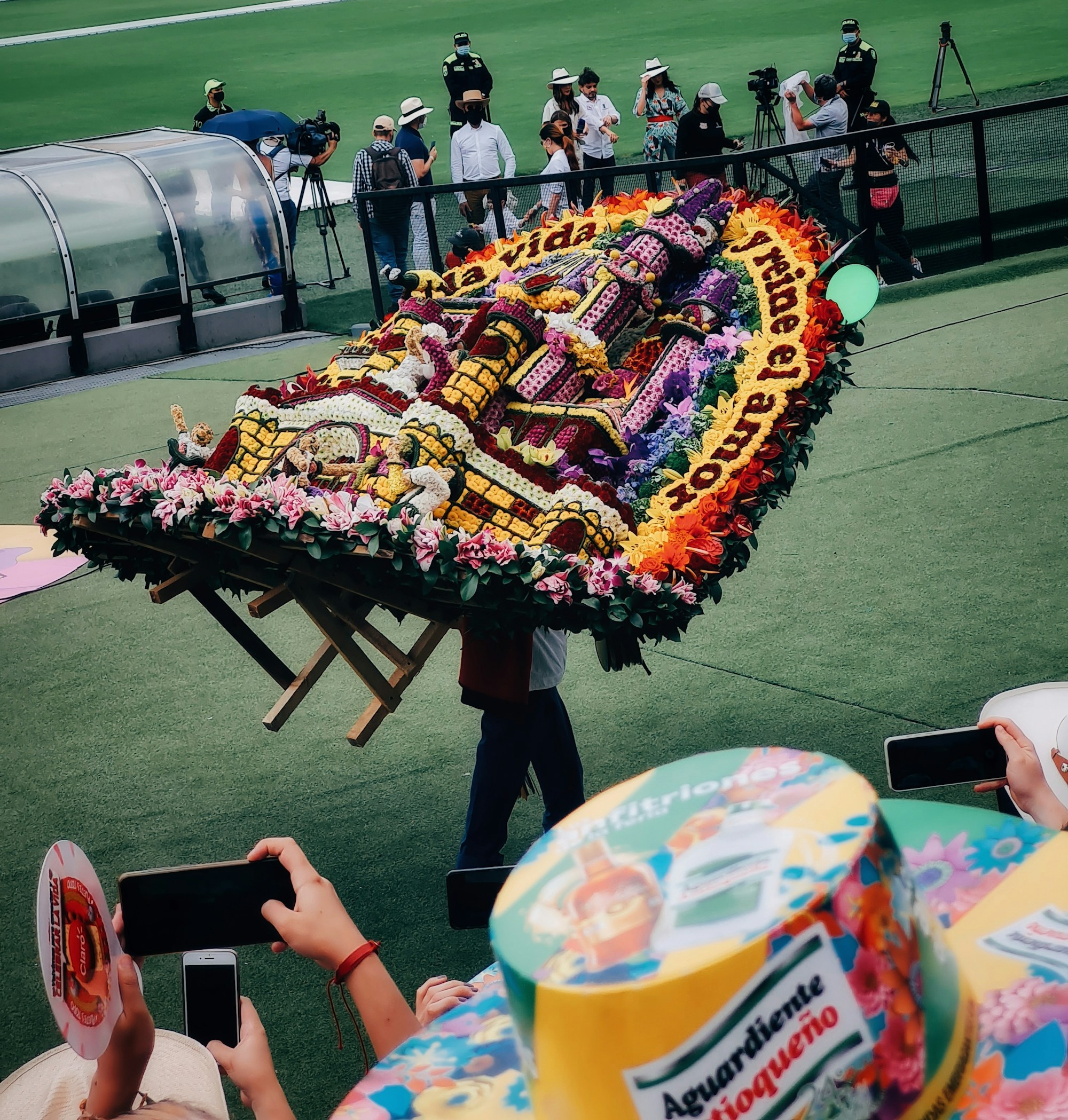
500 silleteros, 2.4 km, an immense crowd
The Desfile de Silleteros is not merely a parade: it is a procession that tells two centuries of Antioquian history. Its route starts at Puente de Guayaquil, follows the Avenida del Ferrocarril for just over a kilometre, turns onto Calle San Juan, and finishes at Plaza Mayor, where the official finish line stands. According to Guanabana Tours, a jury evaluates each silleta according to its category — traditional, emblematic, monumental, commercial, or artistic — and awards the highly coveted prizes that reward weeks, sometimes months, of family work.
The five competitive silleta categories
- Tradicional: the most authentic, faithful to the farming origins. Simple bouquets woven onto pine branches, with a minimum of 15 flower varieties. Weight: 50–120 kg.
- Emblemática: carries a civic, educational, or religious message composed of flower images and text. May include dried flowers. Dimensions: up to 2.20 m.
- Monumental: the most spectacular. Over 300 flower varieties arranged individually in a circular crown 2 m in diameter, weighing around 100 kg. This is the flagship category, won in 2025 by Juan Pablo Sánchez from the village of San Ignacio.
- Comercial: reproduction of logos or brands. A mobile advertising piece where dried and dyed flowers are permitted.
- Artística: three-dimensional designs with maximum creative freedom. The most experimental category.
Two special categories complete the parade: Jóvenes (50 spots for teenagers) and Silleteritos (30 spots for children), who carry their own miniature silletas. A Desfile de Silleteritos also takes place in Santa Elena on 20 July, as a prelude to the festival, and a second one in the La Floresta neighbourhood during the Feria.
Where to position yourself on parade day
Three options are available to watch the parade. The first: palcos, paid grandstands (44 structures, 22,000 seats) offering unobstructed views, shade, and toilets. Prices are estimated between 50,000 and 200,000 COP (~£10–£40) and tickets go on sale from June via the Alcaldía’s official channels. The second option, free: the pavement along the route. You need to arrive before 9 am to hope for a front-row spot — five hours before the parade starts at 2 pm. The best spots are near Parque de las Luces and at the start of the route at Puente de Guayaquil. Finally, you can watch the parade live on Telemedellín or stream it on the Alcaldía de Medellín Facebook page.
Santa Elena: The Village That Makes Medellín Bloom
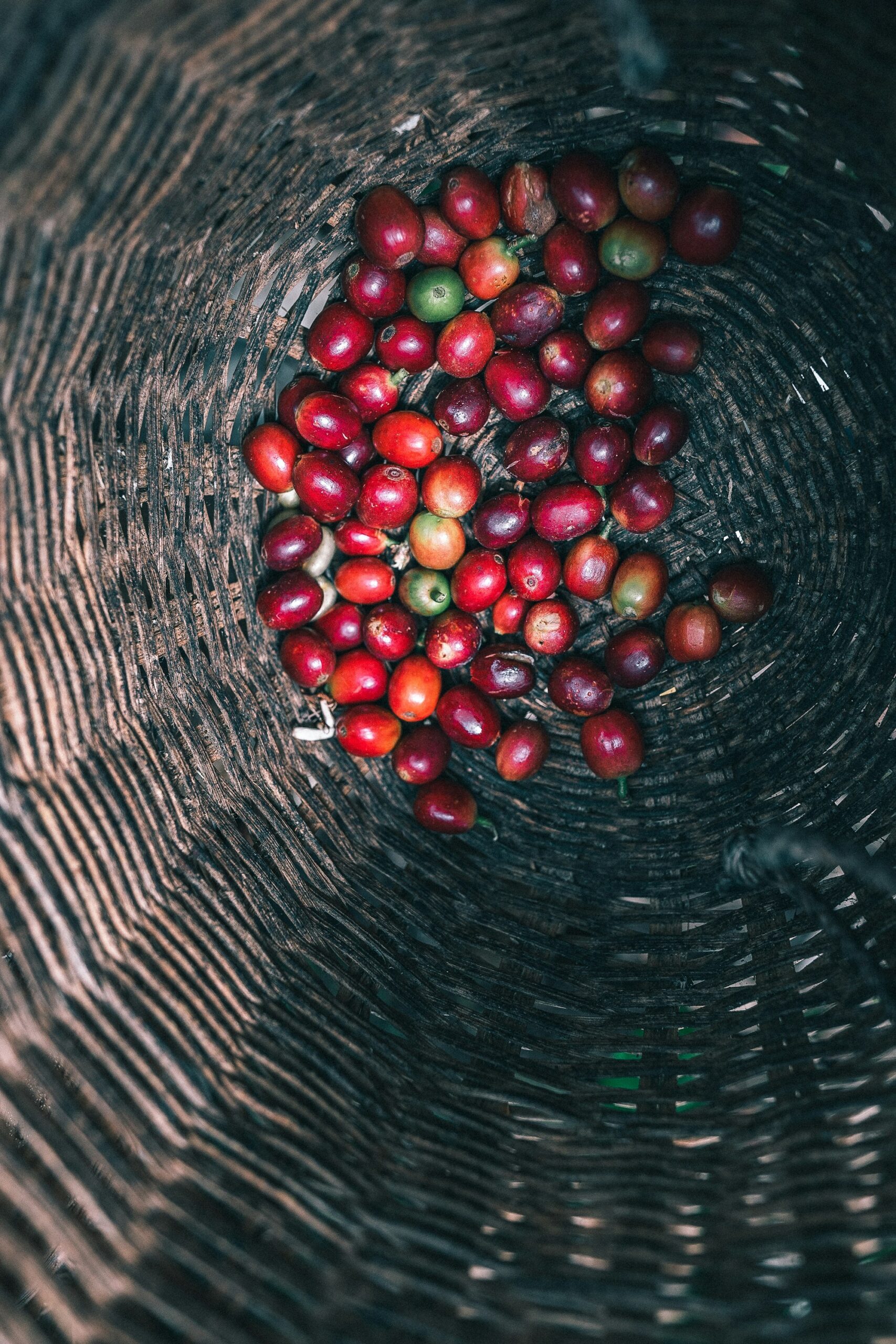
A tradition born on mountain paths
Santa Elena is not just a village: it is the beating heart of the silletera tradition. Located about 18 km east of Medellín city centre, this corregimiento (rural administrative division) perched at 2,600 m altitude is home to the families who, generation after generation, grow the flowers and perpetuate the art of the silleta. The story begins in the 19th century: farmers from Santa Elena would walk down to Medellín — often barefoot, at night, for 5 to 6 hours — to sell their flowers at the city’s markets, using wooden frames carried on their backs, the silletas, originally designed to carry people across the steep Andean trails, as detailed by Medellín Living.
In 1957, Arturo Uribe Arango, a member of Medellín’s Office of Tourism Development, had the idea of organising a flower festival to celebrate this tradition. The first edition, on 1 May 1957, brought together 40 silleteros at Parque Bolívar and a floral exhibition in the atrium of the Metropolitan Cathedral. From 1958, the festival was moved to August to coincide with Antioquia’s Independence month. In 2003, the silleteros were declared Cultural Heritage of the Nation by the Colombian Congress (Law 738 of 2003), and in 2010, the tradition was recognised as Intangible Cultural Heritage by the Ministry of Culture.
The great silletera families
Among the most emblematic families, the Londoño family embodies over 104 years of silletera tradition. Their Finca Silletera Los Londoño is one of the most visited during the Feria, notably hosting the event ¡Que Viva el Sancocho! — a full day with chiva rumbera transport, trova performance, silleta-making demonstration, and a sancocho antioqueño lunch. Doña Blanca Ligia Londoño, an iconic figure of the family, was invited to the United States in 2001 to create 27 floral arrangements in tribute to the Colombians who died on 11 September, parading through the streets of New York. The farm of Don Aristides, a veteran silletero with over 40 years of experience, is described by Hatchetman’s Guide as « perhaps the most famous in the world for understanding how silletas are made. »
The economic reality of the silleteros
Behind the magic of the parade, the economic reality of the silleteros is mixed. According to Medellín Living, a company pays around 23 million COP (~£4,500) to commission a large advertising silleta, but the silletero receives only about 2 million COP (~£390), with the rest going to the government. A winning silleta can earn a bonus of roughly 2 million COP extra. The silleteros do not live off the parade — which only happens once a year. Most grow and sell organic vegetables, flowers, or offer tourist visits to their fincas to supplement their income. The right to participate in the parade is hereditary: only around 500 families hold a consecutive number assigned by the Mayor’s Office, passed down through generations.
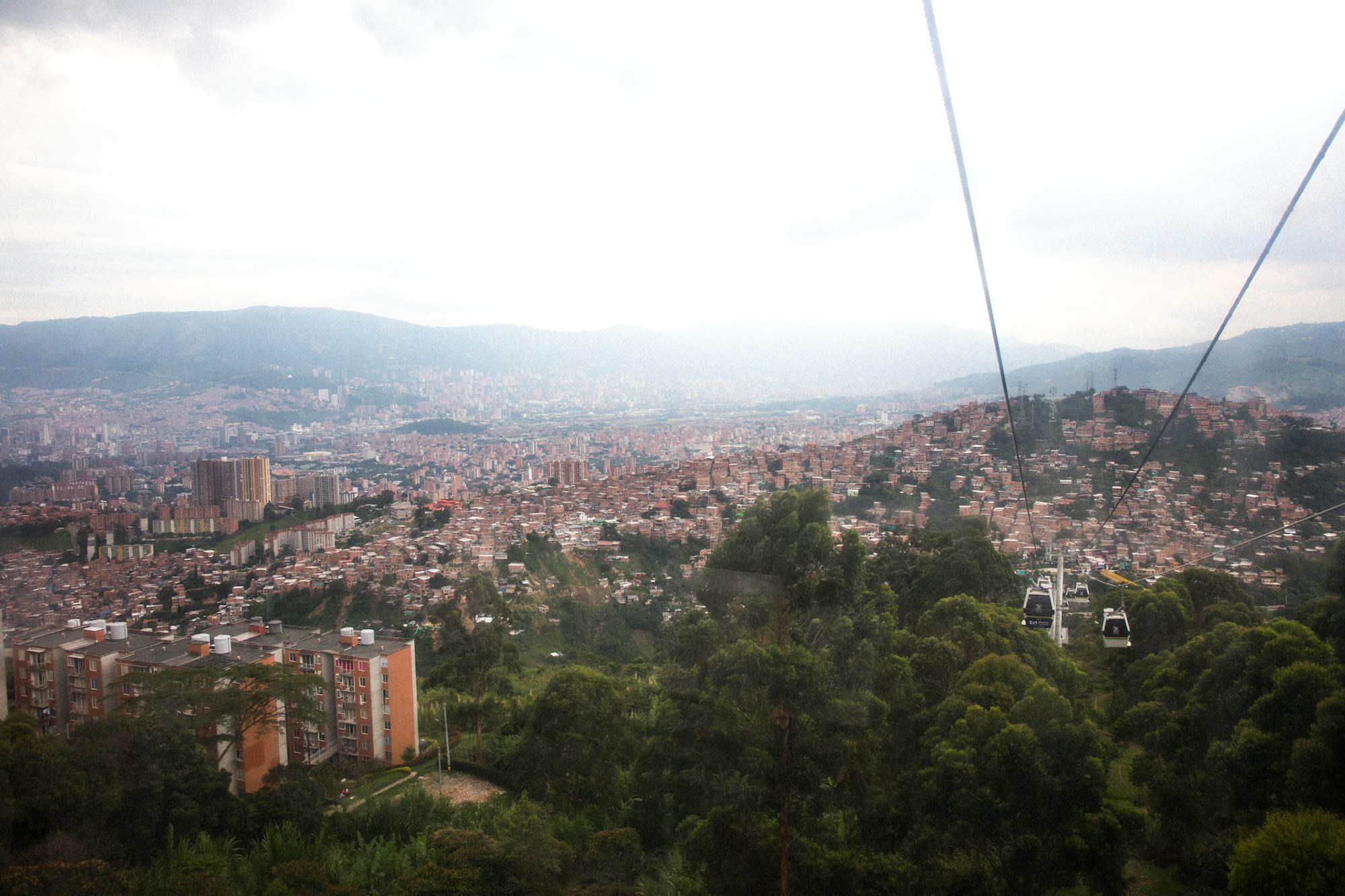
Visiting Santa Elena is possible year-round, and it is even recommended outside the Feria period for a calmer experience. During the festival, the atmosphere is far more festive but also more crowded. From Medellín, you can get there by metro (Line A) then Metrocable Line L to Parque Arví, followed by a taxi or local bus — or, more simply, via an organised tour with transport included (expect $40–$120 USD). The road is winding; allow 45–60 minutes for the journey. The altitude (2,600 m) means temperatures are noticeably cooler than in Medellín: bring a warm jacket.
Beyond the Flowers: Paisa Culture and Gastronomy
The Feria, mirror of paisa identity
The Feria de las Flores is inseparable from paisa identity, the regional culture of Antioquia. Paisas are known for their legendary pride — the saying goes that a Paisa is prouder of being Paisa than Colombian — their entrepreneurial spirit (berraquera), and their distinct dialect. During the festival, you will hear « ¡qué chimba! » (how cool), « parce » (mate), and « ¿qué más? » (what’s up) ringing through the streets of Medellín. According to Colombia Travel, the symbols of this identity are everywhere: the carriel (leather satchel), the poncho, the flowers, and of course the arepa paisa, a white corn flatbread eaten daily.
What to eat during the Feria
Antioquian gastronomy is generous, hearty, and designed for farm workers. Here are the emblematic dishes you will encounter in the fondas and restaurants of Medellín during the festival:
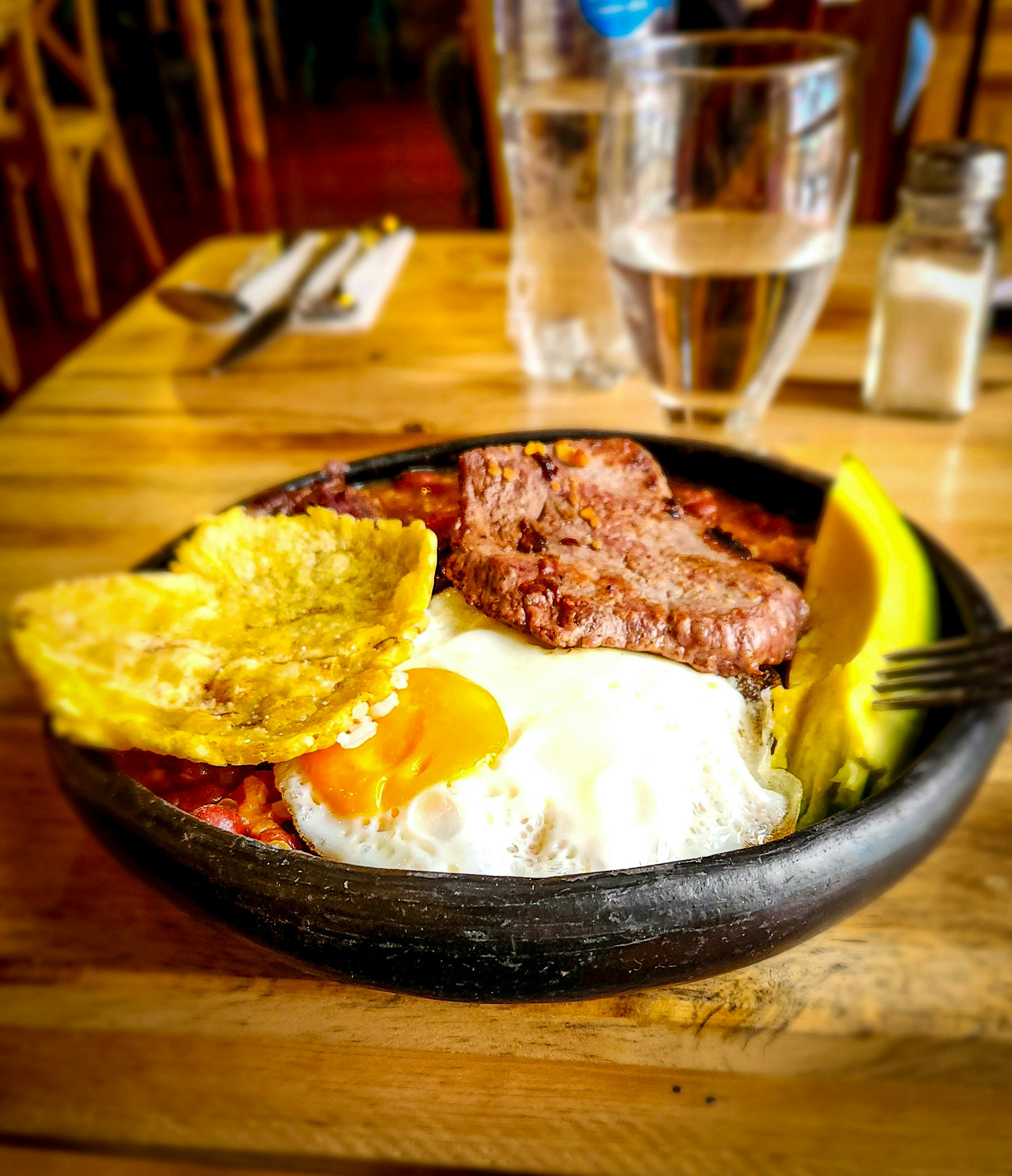
- Bandeja Paisa: the national monument. Slow-cooked red beans, white rice, minced meat, chicharrón (crispy fried pork belly), chorizo, fried egg, ripe plantain, avocado, arepa. All served on a large oval platter.
- Sancocho Antioqueño: chicken or beef stew with plantain, corn, potatoes, yucca. The centrepiece of family gatherings — notably served at the ¡Que Viva el Sancocho! event in Santa Elena.
- Empanadas Antioqueñas: corn pastry pockets filled with meat and potatoes, fried, served with ají (chilli sauce).
- Mazamorra Antioqueña: corn dessert served with milk and panela (unrefined cane sugar).
On the drinks front, aguardiente (anise-flavoured spirit) is Colombia’s national drink and the festival’s main sponsor — an omnipresence that has drawn criticism, as reported by BigAlcohol Exposed, denouncing the instrumentalisation of cultural heritage for commercial purposes by the Fábrica de Licores de Antioquia. Refajo (beer mixed with Colombiana soda) is a lighter local alternative. Fresh fruit juices — lulo, maracuyá, guanábana, mango — are excellent and very affordable.
Other events not to miss
Beyond the Desfile de Silleteros, the festival offers a multitude of free events, as highlighted by Real City Tours. Most neighbourhood concerts (tablados), the Noches Culturales at Plaza Gardel, the street parades, and the floral exhibitions in shopping centres are free to access. Only the grandstands, certain mega-concerts, and the Orchid Exhibition require a paid ticket.
Coming to the Feria: A Practical Guide
Everything you need to know to plan your trip
Flights from the UK
There are no direct flights between London and Medellín. The most common routes connect via Bogotá (Avianca), Madrid (Air Europa/Iberia), Miami (American Airlines), Amsterdam (KLM), or Panama City (Copa). You will fly out of London Heathrow (LHR) or London Gatwick (LGW) and arrive at José María Córdova International Airport (MDE), located in Rionegro, 35–45 minutes from El Poblado. August is actually one of the cheapest months to fly this route. Return fares in August 2026 range from £600 to £1,000 (roughly 700–1,200 EUR). Booking 3 to 6 months ahead secures the best prices — the sweet spot is about 8 weeks before departure. The fastest option is Avianca via Bogotá (~14h 15m total) or Air Europa via Madrid (~14h 35m). An airport transfer costs $20–$25 USD (~80,000–100,000 COP) via Uber to El Poblado, or $40–$60 USD for a pre-booked private transfer.
Accommodation: book early, prices surge
The Feria falls in August, Medellín’s peak tourist month, and hotel prices rise by 30–50% compared to usual rates. Here is an indicative price grid:
- Hostel dorm bed: $14–$25 USD/night (instead of $9–$12). E.g. the hostels in El Poblado.
- 3-star hotel: $75–$135 USD/night (instead of $50–$90). Recommended neighbourhoods: Laureles, Envigado.
- 4-star hotel: $120–$240 USD/night (instead of $80–$160). El Poblado and Provenza.
- 5-star hotel: $250–$600+ USD/night. International chains in El Poblado.
Tip: foreign bank cards may exempt you from Colombian VAT (19%) on accommodation, provided you request it at check-in. Ideally book 3 to 6 months ahead (February–April): hotels in El Poblado and Provenza sell out weeks before the festival. Cases of last-minute cancellations followed by relisting at 2–3 times the price have been documented, as reported by Travel And Tour World. Favour bookings with free cancellation and check the terms carefully.
Safety: what you need to know
Medellín benefits from reinforced security deployment during the Feria, with a strong and visible police presence at all official events. The main risk, as reported by Medellín Guru, is pickpocketing in dense crowds, particularly phone theft along the parade route. The UK FCDO does not advise against travel to Medellín — the city falls within Colombia’s safer « green zone » alongside Cartagena and Bogotá. Here are the recommended precautions:
- Phone in your front pocket, never in the back. Snatch theft by motorbike is a known risk near road edges.
- Cross-body bag worn to the front. Never place your phone or wallet on a café terrace table.
- No flashy jewellery or luxury watches. Bring an old phone and leave your main device in the hotel safe.
- Use ride-hailing apps exclusively (Uber, Cabify, DiDi) rather than street-hailed taxis.
- Never accept a drink from a stranger. The risk of scopolamine (« devil’s breath ») drugging is documented in Medellín.
Neighbourhoods to avoid at night: Parque Lleras and Calle 10 (pickpockets, scams), Prado, Barrio Trinidad, La Sierra, as well as Parque de las Luces, Parque San Antonio, and Parque Periodista after dark.
Entry requirements for UK citizens
UK passport holders do not need a visa for tourist stays in Colombia of up to 90 days (extendable by a further 90 days, for a maximum of 180 days per calendar year). Your passport must be valid for at least 6 months beyond your planned return date, and a return or onward ticket is required at entry. The Check-MIG form is mandatory: this free online immigration declaration must be completed between 72 hours and 1 hour before your flight, both on entry and exit. The generated QR code is required at boarding and on arrival. The yellow fever vaccine is not mandatory (unless you are arriving from an endemic country such as Brazil). Always check the latest FCDO travel advice at gov.uk/foreign-travel-advice/colombia before travelling.
Weather and what to pack
Medellín lives up to its nickname « City of Eternal Spring »: average temperatures of 23–24°C year-round. In August (the relatively dry season), expect daytime highs of 27–29°C and nighttime lows of 16–18°C. Short showers (1–2 hours) in the late afternoon remain possible on 14–17 days per month. Mornings are almost always clear. Pack sunscreen, a hat, light clothing, a waterproof jacket (rather than an umbrella, which will block the view during the parade), and good walking shoes. In Santa Elena (2,600 m), temperatures are noticeably cooler: add a warm jacket and, if you are taking a chiva excursion, a cushion for your back (the mountain road journeys are bumpy).
Indicative budget for 10 days (excluding international flights)
Based on data compiled by Medellín.com and Hostelz:
- Backpacker style: $900–$1,300 USD (hostel dorm, street food, 2–3 excursions).
- Comfortable style: $1,800–$2,600 USD (3-star hotel, varied restaurants, 4–5 excursions).
- Luxury style: $3,500+ USD (5-star hotel, fine dining, private tours, transfers).
A corrientazo meal (full set menu: soup, main, juice, dessert) costs $4–$7 USD, a mid-range dinner in El Poblado $20–$40 USD per person, and a speciality coffee $3–$6 USD. A metro ticket costs about $0.85 USD (~3,500 COP) and the Civica card is rechargeable.
Practical Info for Your Trip
Stay connected throughout the Feria with a Colombian eSIM. Data plans from 1 GB (3 days, $4 USD) to 50 GB (30 days, $49 USD). The 10 GB / 30-day plan at $28 USD is ideal for the festival period. Set-up in minutes, no eKYC required. Runs on the Tigo network.
From $4 USDPrivate clinics in Colombia are pay-as-you-go and expensive. Nomad Insurance offers global medical coverage, emergency evacuation, and trip interruption — from $56 per 4 weeks. Pixidia readers get 10% off via our Ambassador link.
From $56 / 4 weeksFrequently Asked Questions About Feria de las Flores 2026
What is the exact date of the Desfile de Silleteros in 2026?
The Desfile de Silleteros takes place on Sunday 9 August 2026 at 2:00 pm. It is the final day of the Feria de las Flores (31 July – 9 August 2026). The 2.4 km route runs from Puente de Guayaquil to Plaza Mayor, via Avenida del Ferrocarril and Calle San Juan. The nearest metro station to the start is Industriales (Line A). Guanabana Tours.
Do I need a ticket to watch the Desfile de Silleteros?
No, access along the route is free. However, you need to arrive before 9 am to secure a front-row spot (the parade starts at 2 pm). Paid grandstands (palcos) are available for those wanting guaranteed seating with shade and toilets: 50,000–200,000 COP (~£10–£40). Tickets go on sale from June via the Alcaldía de Medellín’s official channels and platforms like Tuboleta. Real City Tours.
Is Medellín dangerous during the Feria?
The Feria benefits from reinforced security with a strong police presence at all official events. The main risk is pickpocketing in dense crowds, particularly phone theft along the parade route. By applying common-sense precautions (phone in front pocket, no visible valuables, using ride-hailing apps rather than street taxis), the vast majority of visitors enjoy the festival without incident. The UK FCDO does not advise against travel to Medellín. Medellín Guru.
What budget should I plan for 10 days at the Feria de las Flores?
Excluding international flights: $900–$1,300 USD backpacker style (hostel, street food, 2–3 excursions), $1,800–$2,600 USD comfortable style (3-star hotel, varied restaurants, 4–5 excursions), and $3,500+ USD luxury. Add £600–£1,000 for a return flight from the UK (no direct flights). Hotel prices rise 30–50% during the Feria. Medellín.com.
When should I book accommodation for the Feria?
Ideally 3 to 6 months in advance of the festival (February–April 2026). Hotels in El Poblado and Provenza sell out weeks before the Feria begins. Prices increase by 30–50% in August. Favour bookings with free cancellation: cases of abusive cancellations followed by relisting at inflated prices have been documented. Hotel El Zarzo.
How do I get to Santa Elena from Medellín?
Several options: (1) metro Line A + Metrocable Line L to Parque Arví, then a taxi or local bus; (2) bus from Terminal del Norte; (3) organised tour with transport included (the easiest, $40–$120 USD). The road is winding and the journey takes 45–60 minutes. At 2,600 m altitude, Santa Elena is noticeably cooler than Medellín: bring a warm jacket and good walking shoes. Medellín Travel.
Sources
- Guanabana Tours: Medellin Flower Festival 2026: The Complete Guide for Visitors — comprehensive guide with dates, events, and practical tips.
- Real City Tours: Ultimate Guide for Medellin’s Flower Festival 2026 — detailed guide to events, safety, and logistics.
- Hotel El Zarzo: How to Plan Medellin Flores Feria 2026 — accommodation and trip planning advice.
- Forbes: Medellín’s Feria de las Flores Is A Point Of Pride, And Now A Reason To Visit (August 2025) — record attendance figures and tourism impact analysis.
- Medellín Living: Silleteros: The Men and Women Behind Medellin’s Flower Parade — in-depth report on the lives and economy of silletera families.
- Medellín Guru: Feria de las Flores: History of the Flower Festival — complete history of the festival since 1957.
- Medellín Guru: Safety Tips to Attend the Medellin Flower Festival — Feria-specific safety advice.
- Colombia Travel (ProColombia): Medellín Flower Festival — official Colombian tourism promotion.
- Medellín Travel: Silletera Farms: Medellín’s Tradition Blooms in Santa Elena — official Medellín tourism guide to silletera fincas.
- MedellinColombia.co: Feria de las Flores 2025 — figures, events, and economic impact.
- Hatchetman’s Guide: Feria de las Flores: What’s the Big Deal? — guide to Santa Elena and finca visits.
- Latino News Network: Feria de las Flores: Medellín Blooms with Culture and Color — 2025 edition coverage.
- Colombia.co: Silleteros of Medellin: Living Tradition of the Floral Festival — cultural and historical context of the silletera tradition.
- EGL Tours: Medellín Flower Festival Returns July 31 (11 July 2026) — most recent confirmation of 2026 dates.
- BigAlcohol Exposed: Cultural Heritage Hijacked — critical analysis of alcohol industry sponsorship of the Feria.
- Travel And Tour World: Travel Shudder in Medellín — price gouging and cancellation practices during the Feria.
- Naya Traveler: Santa Elena: The True Colors of Colombia — immersive report on the village of Santa Elena.
- Medellín.com: Medellín Vacation Cost 2026 — detailed budget by travel style.
- Wikipedia: Festival of the Flowers — historical and cultural overview.
- Medellín.com: Medellín Weather 2026 — climate, seasons, and month-by-month weather.
- UK FCDO: Foreign Travel Advice — Colombia — official UK government safety guidance for travel to Colombia.
Research conducted on 13 July 2026. The official 2026 programme has not yet been published by the Alcaldía de Medellín as of this date.

Plan your trip with Pixidia
Pixidia learns how you travel and helps you build a trip that truly fits you and everyone coming along.
Open the planner