
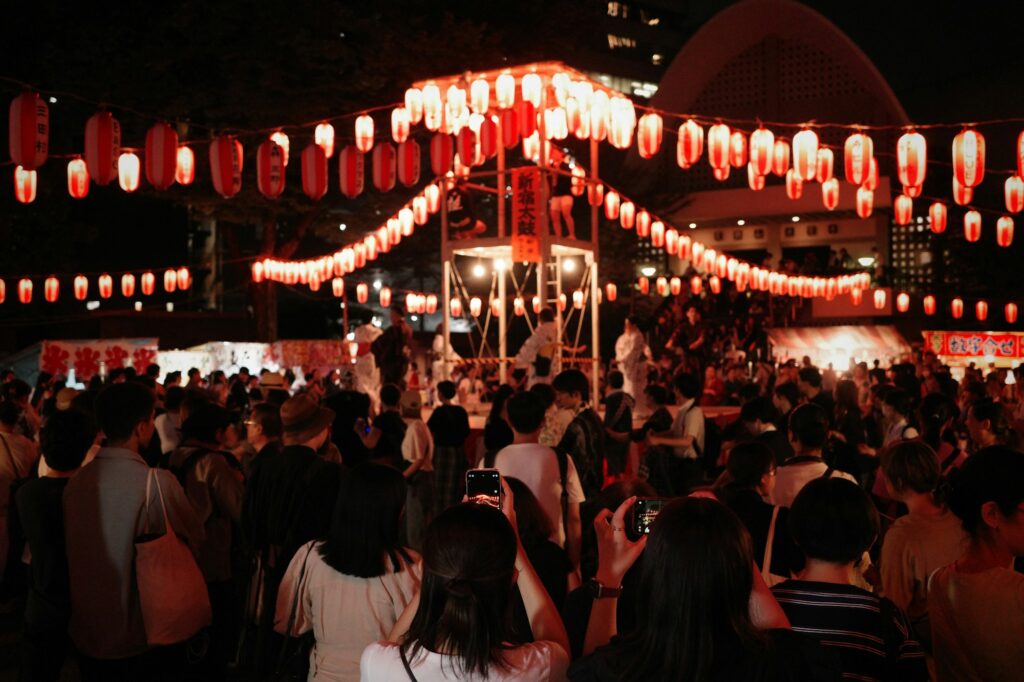
Tokushima’s Awa Odori, Japan’s biggest dance festival, brings together around 100,000 dancers from 11 to 15 August 2026, with the street dancing itself concentrated on the four evenings of 12 to 15 August. Free viewing zones cost nothing to enter; paid zones range from 1,000 to 15,000 yen. After a serious governance crisis between 2018 and 2023, the festival climbed back above a million visitors under the new THE AWAODORI banner from 2024 onward. Book your Tokushima accommodation months ahead — rooms sell out fast.
Every evening from 12 to 15 August, more than a hundred thousand dancers take over the streets of Tokushima to the sound of shamisen and taiko drums, keeping alive what Japan has regarded for more than four centuries as its greatest popular dance festival. The 2026 edition actually opens on 11 August with an indoor-only evening, before the whole city turns into an open-air stage for four straight nights. After a severe financial crisis that nearly sank the festival between 2018 and 2023, Awa Odori 2026 continues a genuine comeback under the THE AWAODORI banner, not to be confused with its cousins in Tokyo (Kōenji Awa Odori) or the neighbouring city of Naruto.
Awa Odori Tokushima 2026: dates, location and the essentials
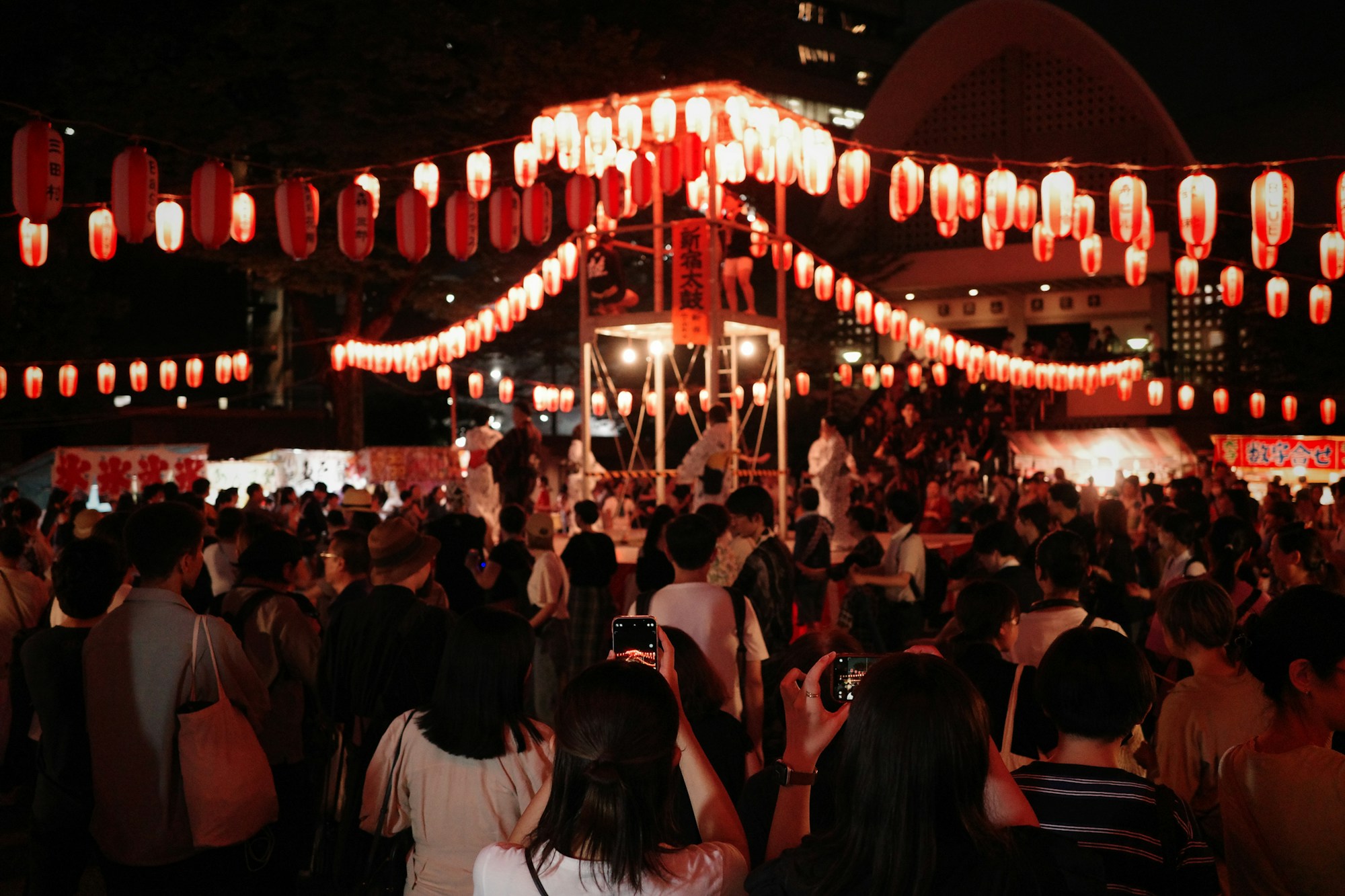
A hundred thousand dancers in the streets, across five evenings
Awa Odori (literally « the dance of Awa », the old name for Tokushima province) is considered Japan’s biggest dance festival, with more than 1,000 troupes known as ren and around 100,000 dancers taking part across the whole event, for a crowd that has long topped a million spectators, according to Japan Guide. If this is your first trip to the archipelago, our complete 2026 Japan guide covers the basics before we get into festival specifics. The 2026 edition officially runs from 11 to 15 August, but those five days actually cover two very different phases worth telling apart before you book a ticket or a flight.
11 August, a national holiday (« Mountain Day »), marks the festival’s opening with the Suguribi: an indoor-only show at the Asty Tokushima venue. There’s no street dancing that day. The Matsuribi, the heart of the festival, starts on 12 August: four consecutive evenings through to 15 August, combining indoor performances at Awagin Hall with street dancing in both paid and free zones, every evening from 6pm to 10pm, according to Wanderful Tokushima. If you’re only coming for the street dancing, those are the four evenings to plan around.
Highlights
- Japan’s biggest dance festival, with more than 1,000 troupes and around 100,000 dancers
- Every festival site sits 5-15 minutes’ walk from JR Tokushima Station
- The street dancing itself is concentrated on the four evenings of 12 to 15 August
Many visitors use their time in Tokushima to push on to the Iya Valley, about a two-hour drive into the mountains of Shikoku. Public transport there is too sparse to attempt without planning ahead, which is why most travellers opt for a private car excursion instead.
A 400-year-old tradition, part legend, part historical doubt
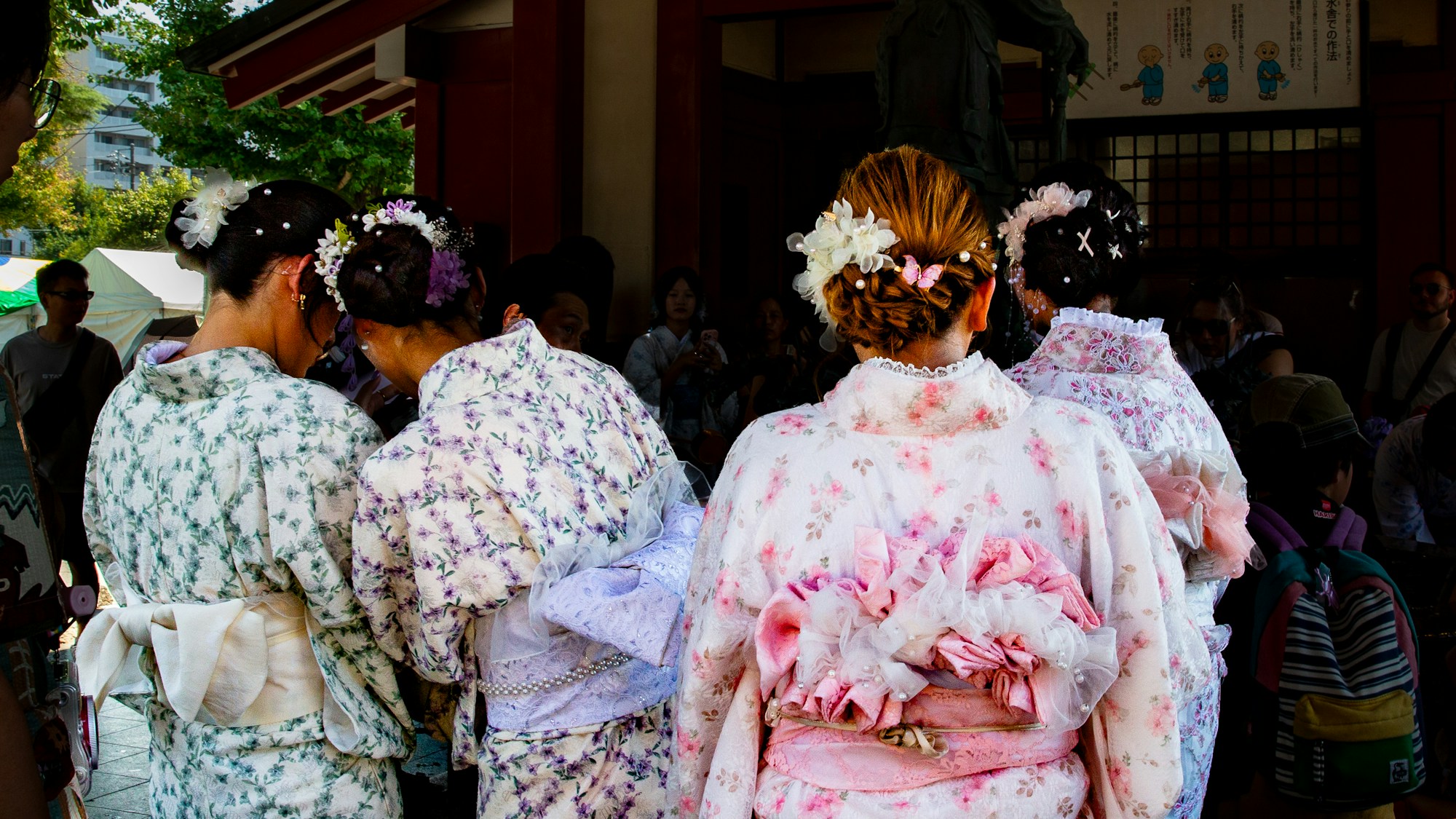
An origin less certain than it looks
« Awa » is the old province whose territory Tokushima inherited; « odori » simply means « dance ». The most commonly repeated story places the festival’s origin in 1586-1587, during a celebration held by feudal lord Hachisuka Iemasa to mark the completion of Tokushima Castle. That story deserves some scepticism, though: according to local historian Miyoshi Shoichiro, cited by Wikipedia, the tale was first published only in 1908, in an article in the Mainichi Shimbun, with no hard evidence behind it. What’s known with more certainty is that the festival draws on Buddhist dances from the Kamakura period (the Nembutsu-odori) and the broader Bon-odori tradition, and that 17th-century edicts already describe a celebration lasting more than three days.
The name « Awa Odori » itself only became widespread in the 20th century: prefectural authorities revived and officialised it in 1926, turning it into the region’s flagship tourist draw. The festival gets its « fools’ dance » nickname (阿呆踊り) from a refrain that’s still famous today: « Odoru ahou ni, miru ahou, onaji ahou nara, odorana son son » (« the dancers are fools, the watchers are fools, everyone’s a fool either way, so you might as well dance ») — a philosophy of joyful participation, with no judgement on artistic skill, that still sits at the heart of the festival’s identity. Its fame has spread well beyond Japan: Awa Odori troupes perform every year at Japan Matsuri, the Japanese culture festival held annually in London’s Trafalgar Square, alongside other major traditions like Kyoto’s Gion Matsuri or Aomori’s Nebuta Matsuri.
Highlights
- Roots in Buddhist dances from the Kamakura period and the Bon-odori tradition
- Name only made official in 1926, despite a much older practice
- The 1586 castle legend rests on a 1908 newspaper article, not on direct historical evidence
The 2026 schedule hour by hour: Suguribi, then Matsuribi
The festival unfolds in two very distinct phases, according to the Japan National Tourism Organization and Wanderful Tokushima:
| Festival phase | 2026 dates | What happens |
|---|---|---|
| Suguribi (opening) | Tuesday 11 August | National holiday (Yamanohi). Indoor-only opening show at the Asty Tokushima venue. No street dancing. |
| Matsuribi (festival core) | Wednesday 12 to Saturday 15 August | Indoor shows at Awagin Hall, street dancing in paid and free zones from 6pm to 10pm, daily finale (so-odori) at 9:40pm. |
Every Matsuribi evening ends with the so-odori, a closing performance bringing together around 1,700 dancers from 15 different troupes in one coordinated routine, according to a Tokyo Weekender report. The same format played out identically in 2025, a good sign the announced 2026 calendar will hold. Keep in mind that typhoon risk is real in mid-August: the 2023 edition had to be cut short to three days for that reason.
The festival’s hidden side: the 2018-2023 crisis and the THE AWAODORI rebirth
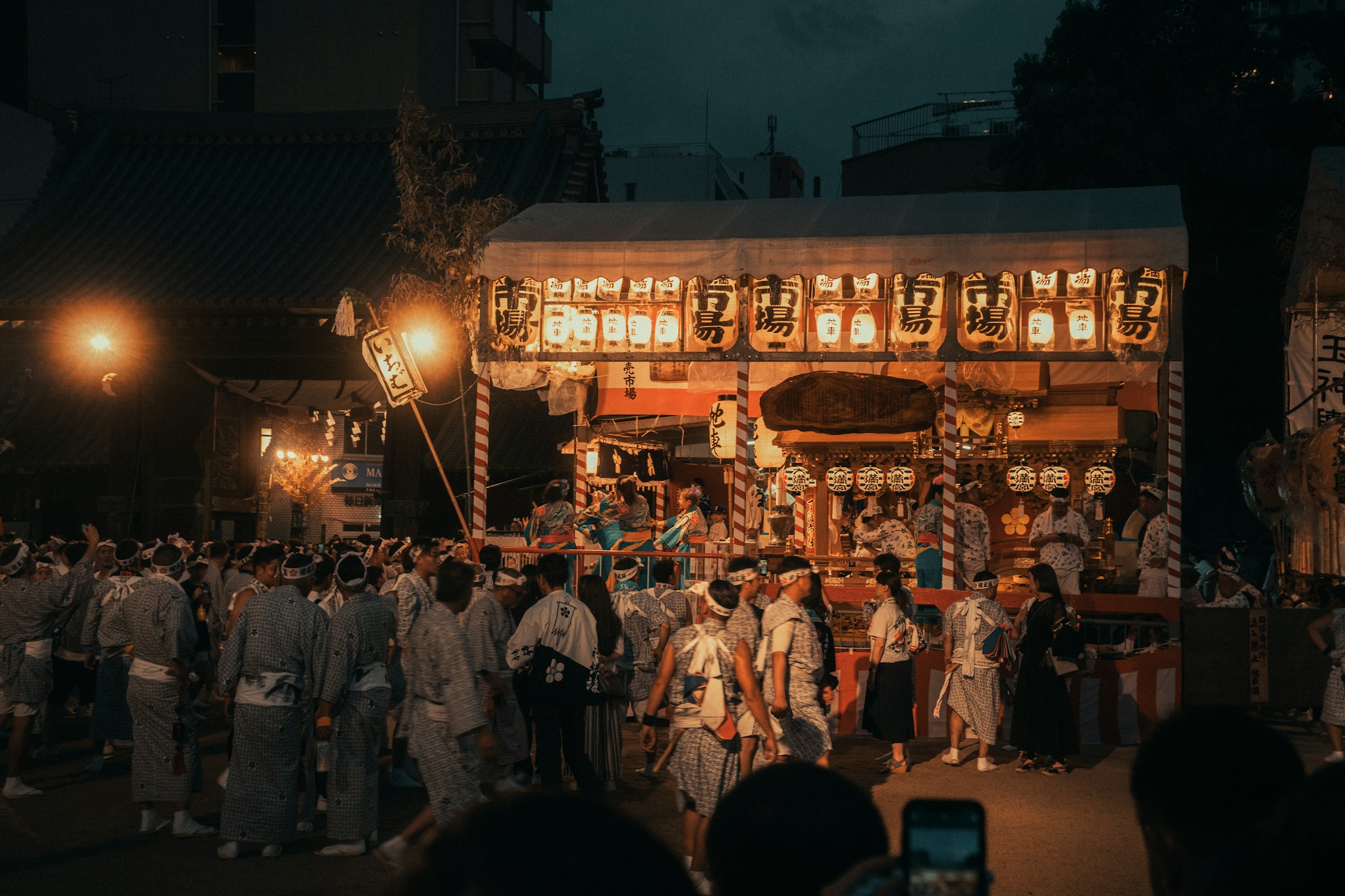
From a 2018 bankruptcy to the symbol of the THE AWAODORI revival
Few guidebooks mention this recent chapter of the festival’s history. In March 2018, the Tokushima city tourism association, which had co-organised the event for decades, was declared bankrupt with total liabilities of around 3.8 billion yen, in the wake of a ticketing favouritism scandal involving local newspaper Tokushima Shimbun, according to Wikipedia (Japanese edition). The following years brought one crisis-management effort after another: a deficit under city management in 2018, a record deficit under a different consortium in 2019, a full cancellation in 2020 due to the pandemic (a first in the festival’s modern history), and a scaled-down edition in 2021. Attendance bottomed out in 2022 at around 460,000 visitors, less than half a normal year’s crowd.
The turning point came in 2023, with the creation of a neutral three-way committee, the Awa Odori Mirai e Tsunagu Jikko Iinkai, bringing together the city, dance troupes, local businesses and tourism operators, with no single interest dominating, according to the organising committee’s website. In 2024, the festival, relaunched under the unified THE AWAODORI brand, drew 1.02 million visitors — the first time in six years the million mark had been passed — according to business daily Nikkei. The 2026 edition is a direct continuation of that revival, with expanded air-conditioned indoor stages and dedicated communication for international visitors, according to Japan Food Guide.
Highlights
- Festival governance has been structurally stable since the neutral committee was set up in 2023
- 2024 marked a return above a million visitors, the first time in six years
- THE AWAODORI remains the official brand for the 2026 edition
Paid or free zones: how to watch the street dancing
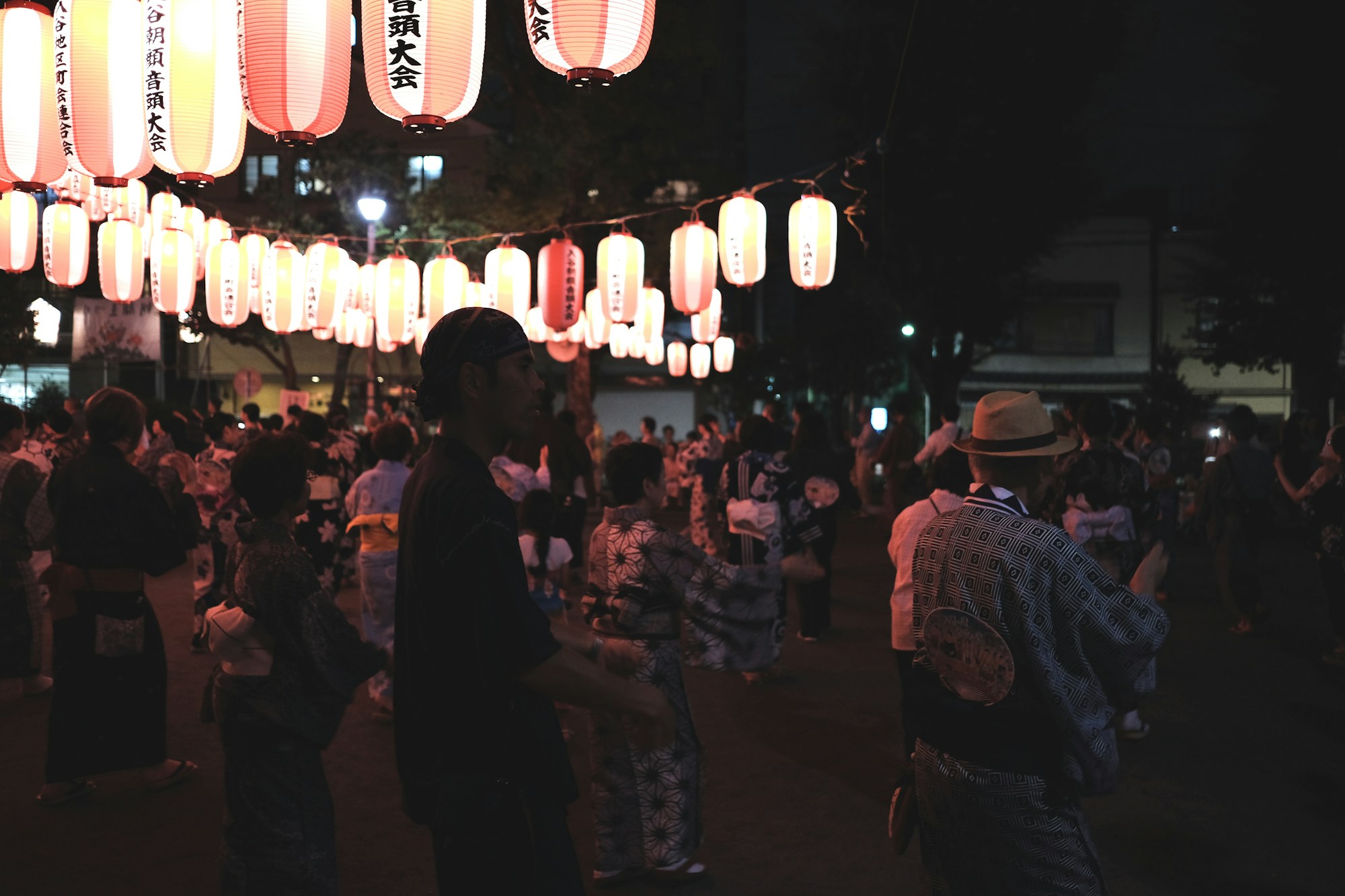
Two very different ways to experience the evening
Paid zones (yuryo enbujo) are grandstands set up along wide avenues, where well-known troupes (the yumei-ren) parade past with more polished choreography than the general street crowd. Three venues host these stands in 2026: Aibahama (the most sought-after, 5 minutes from the station), Minamiuchimachi and Konyamachi. You pick a seat category (from C to SS) rather than a specific seat, with prices broadly ranging from 1,000 to 15,000 yen depending on location, and a handful of rare « hospitality » seats running as high as 200,000 yen, meal and English-speaking guide included, according to Kanpai Japan and Outdoor Wild.
Free zones (muryo enbujo) need no booking: you come and go freely, no ticket required, first come first served. Two venues account for most of the free-zone crowds: Shinmachi-bashi, near Mount Bizan (where troupes turn around on a central median, so you catch them passing twice), and above all Ryogoku Honmachi, 5 minutes from JR Tokushima Station, rated by several guides as the best balance of accessibility and view, according to Wanderful Tokushima. 2026 ticketing follows a set calendar: advance sales (Japanese only) from 13 to 21 June, general sale from 1 July via Ticket Pia, 7-Eleven convenience stores or the Tokushima Welcome Center, with dynamic pricing kicking in from 8 July. No refunds once a ticket is bought.
Highlights
- Watching Awa Odori costs nothing if you pick one of the two free zones
- Ryogoku Honmachi, 5 minutes from the station, remains the most recommended free venue
- Tickets are just as easy to buy at any 7-Eleven in Japan
Don’t mix up Tokushima with Kōenji (Tokyo) or Naruto
It’s one of the most common mix-ups among travellers planning a Japanese summer: at least three distinct events carry the name « Awa Odori » in 2026, and they don’t share the same dates or the same scale.
| Criterion | Tokushima (the original) | Kōenji, Tokyo | Naruto (neighbouring city) |
|---|---|---|---|
| 2026 dates | 11-15 August | 29-30 August | 9-11 August |
| Origin | More than 400 years | Founded in 1957 | Local festival, modest scale |
| Scale | Around 100,000 dancers, more than 1,000 troupes | Up to 12,000 dancers, around 188 troupes | Spectator platform around 80 metres long |
| Hours | 6pm-10pm | 5pm-8pm | Daytime, free niwaka-ren around 8pm |
Kōenji Awa Odori, in Tokyo’s Suginami ward, was born in 1957 out of an initiative by local shopkeepers, one of whom, originally from Tokushima, served as dance mentor: a direct lineage, but a wholly separate event, held in late August rather than mid-August. It’s now Japan’s second-biggest Awa Odori, well ahead of every other offshoot to have appeared since the 1950s, according to Tokyo Cheapo.
Naruto Awa Odori, in the neighbouring city of Naruto (40 minutes by train from Tokushima, known for its tidal whirlpools), runs just before, from 9 to 11 August 2026: a much smaller-scale version, with tickets at 900-1,200 yen and a free niwaka-ren late in the evening. Well-organised travellers can string both festivals together in one trip. Other spin-offs exist elsewhere in Japan, such as Kanagawa Yamato Awa Odori, which happens to mark its 50th anniversary in 2026, but Tokushima remains by far the tradition’s only legitimate historical source.
Dancing with no experience: the niwaka-ren and festival etiquette
What really sets Awa Odori apart from a festival you simply watch is that you can join in without preparing anything. The niwaka-ren (« improvised troupe ») is open to everyone, tourists included, free of charge and with no advance sign-up. No costume is needed — everyday clothes will do, though comfortable shoes are worth prioritising since you’ll often be on your feet for a long stretch. A roughly 10-minute crash course, taught by experienced dancers before each session, covers the basic step: alternating right and left foot forward, a light kick, arms raised alternately overhead, all in time with the drum and shamisen, according to the Japan National Tourism Organization.
Sessions are usually held around Tokushima Ekimae Dance Plaza and Motomachi-odori Dance Plaza, late in the evening. Exact 2026 times and locations hadn’t been officially republished at the time of writing — it’s worth confirming at the tourist office once you’re there. On photography, flash is generally discouraged so as not to disturb the dancers, and it’s customary to ask permission before a close-up shot of any one dancer. Central streets close to traffic after 6pm during festival evenings, so walking or public transport beats driving — parking is very limited anyway.
Highlights
- No experience or costume needed to join a niwaka-ren
- The basic step takes about 10 minutes to learn, guided by experienced dancers
- Bring a small fan, water and light rain protection
Getting there and staying: the number one thing to watch
Tokushima has its own airport, Tokushima Awaodori Airport (code TKS), with direct flights from Haneda (around 63 a week, 1h15 to 1h30 in the air) and Fukuoka. British Airways and Japan Airlines both fly direct from London Heathrow to Haneda in around 13-14 hours, which conveniently puts you at the right airport for that onward domestic hop. From Tokyo, there’s no direct Shinkansen: you’d need to change at Okayama, for a total journey of 5 to 6 hours and around 19,000 yen, or fly instead. From Osaka, the most practical transit point for most travellers coming from the Kansai region, allow 2h30 to 3 hours by direct coach or a train-and-coach combination, according to Rome2Rio. Once there, every festival site sits 5-15 minutes’ walk from JR Tokushima Station, with no extra transport needed. Note that the All Shikoku Rail Pass covers neither Tokushima prefecture’s local buses nor the connections to the Iya Valley.
The point practical guides flag most often is accommodation: Tokushima hotels book out months in advance for festival dates, especially around the station. If everywhere’s full, several alternatives sit at reasonable distances: Naruto (40 minutes, with its own mini-festival on 9-11 August), Takamatsu (1 hour, with night trains letting you skip staying over) or Osaka (2h30), a city that Pixidia knows how to weave neatly into a complete Japan itinerary. On budget, set aside 15,000 to 30,000 yen in cash per person for a few days: 24-hour 7-Eleven cash machines remain the most reliable back-up to card payments, which are still poorly accepted at some yatai (street food stalls) and small restaurants.
Highlights
- Dedicated airport (TKS) with direct flights from Haneda in 1h15-1h30
- Osaka, 2h30 away by coach, remains the most practical transit point from Kansai
- Naruto, Takamatsu and Osaka are good fallbacks if Tokushima is fully booked
Practical info for your Japan trip
Stay connected from the moment you land, no hunting for a local SIM card: set up on your phone in minutes.
Data plans from a few eurosCover built for an active trip between festival crowds and excursions into the Shikoku mountains, with an online quote in minutes.
Free quote, no commitmentFrequently asked questions
What are the exact dates of Awa Odori 2026 in Tokushima?
The festival runs from 11 to 15 August 2026. 11 August, a public holiday, opens the festival with an indoor-only show (Suguribi); the street dancing itself takes place from 12 to 15 August, 6pm to 10pm, according to Wanderful Tokushima.
Are the Tokushima Awa Odori and the Tokyo Kōenji Awa Odori the same festival?
No, they’re two separate events. Tokushima is the original, with more than 400 years of history (11-15 August 2026); Tokyo’s Kōenji Awa Odori, founded in 1957, is linked to it by lineage but takes place on different dates (29-30 August 2026), according to Wikipedia.
Do you need a ticket to see the street dancing?
No, two free zones (Ryogoku Honmachi and Shinmachi-bashi) let you watch the parade without a ticket, provided you arrive early for a good spot. Paid zones, from 1,000 to 15,000 yen, guarantee a seat and often feature more prestigious troupes, according to Glos Travel.
Can you dance with no experience or costume?
Yes, through the niwaka-ren, open to everyone free of charge and with no sign-up, with a roughly 10-minute crash course given by experienced dancers before each session, according to the Japan National Tourism Organization.
Has the festival run into trouble in recent years?
Yes, a governance crisis between 2018 and 2023 (the organising association went bankrupt in 2018, with visitor numbers falling to around 460,000 in 2022) was resolved by setting up a neutral committee in 2023 and launching the THE AWAODORI brand in 2024, which brought visitor numbers back above a million.
When should you book accommodation in Tokushima?
Several months ahead, ideally. Many visitors fall back on Naruto (40 minutes), Takamatsu (1 hour) or Osaka (2h30) when nothing’s available in town during the festival.
How do you get to Tokushima from Tokyo or Osaka?
From Tokyo, a direct flight to Tokushima Awaodori Airport (1h15-1h30) is the simplest option, since there’s no direct Shinkansen (train via Okayama, 5-6h). From Osaka, allow 2h30 to 3 hours by direct coach or train, according to Rome2Rio.
Sources
- Japan Guide: general overview and festival dates
- Japan National Tourism Organization: official government source, niwaka-ren
- Tokushima Prefecture: official page on Awa Odori tradition
- Wanderful Tokushima: detailed 2026 ticketing calendar
- Wanderful Tokushima: 2026 advance ticket sales
- Wanderful Tokushima: free and paid dance zone details
- Wikipedia: festival history and origins
- Japan Matsuri London: Awa Odori performances in Trafalgar Square
- Wikipedia (Japanese edition): detailed timeline of the 2018-2023 financial crisis
- THE AWAODORI: neutral organising committee’s website
- Nikkei: 2024 attendance figures
- Japan Food Guide: complete THE AWAODORI guide
- Wikipedia: Kōenji Awa Odori, Tokyo
- Tokyo Cheapo: 2026 Kōenji Awa Odori edition
- Naruto City Official Travel Guide: Naruto Awa Odori 2026
- Kanpai Japan: paid zones and ticket prices
- Outdoor Wild: pricing details by paid venue
- Glos Travel: 2026 practical guide
- Tokyo Weekender: how the nightly so-odori unfolds
- Rome2Rio: transport from Tokyo and Osaka
- GOV.UK: entry requirements for British citizens visiting Japan
Research conducted on 5 August 2026.

Plan your trip with Pixidia
Pixidia learns how you travel and helps you build a trip that truly fits you and everyone coming along.
Open the planner