
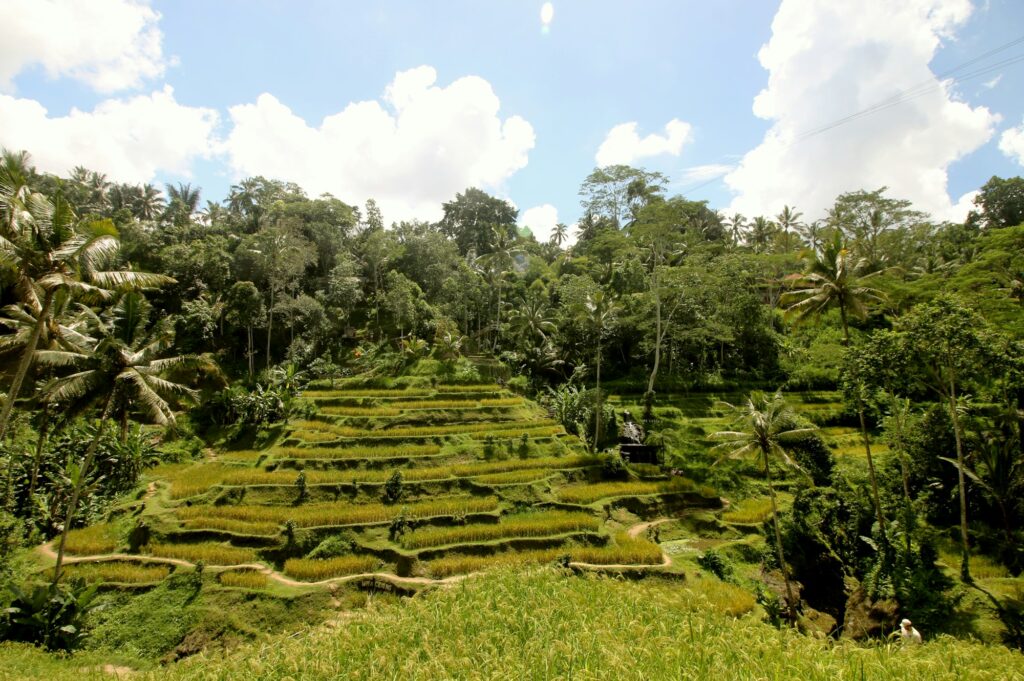
In August, head to Bali (dry season, 15 to 40 mm of rain) and skip the classic Himalayan treks in Nepal (peak monsoon, up to 680 mm around Pokhara). Summits stay hidden 85 to 90% of the time, and a landslide cut the Araniko Highway in early August 2026. Sri Lanka’s east coast, central Vietnam (Hoi An, Da Nang) and Ladakh escape the rain too, thanks to a rain-shadow effect. The one Nepalese exception: Upper Mustang, which stays dry even at the height of the monsoon.
In August, Asia doesn’t run on a single climate. On one side, Bali and the Indonesian archipelago are hitting peak dry season: clear skies, rainfall close to zero. On the other, India, Nepal and much of continental Asia sit right in the middle of the Southwest Monsoon, with hidden summits, cut roads and flash floods to match. Between these two extremes, a handful of lesser-known dry pockets (Sri Lanka’s east coast, central Vietnam, Ladakh, Upper Mustang) add some nuance to the map. Here’s how to make sense of it before you book.
Why Asia splits in two in August
The monsoon is a seasonal reversal of wind patterns driven by the contrast in warming between continents and oceans. During the northern summer, the Indian subcontinent heats up faster than the Indian Ocean, creating a thermal low that pulls moist air inland: that’s the Southwest Monsoon, active from June to September or October according to Britannica. It affects India, Nepal, Sri Lanka’s west coast, Myanmar and most of continental Southeast Asia.
Indonesia works the other way round. Bali, like Java, Lombok or Flores, sits south of the equator, so the climate pattern flips: dry season runs from April to October. Indonesia’s official meteorological agency, BMKG, confirms a peak drought in August 2026 covering 429 zones of the country, or 61.4% of its territory, according to an official BMKG statement.
Between these two regimes, a third factor reshapes the map: terrain. When a mountain range intercepts moisture coming off the ocean, it creates a rain shadow behind it, a zone that stays dry even at the height of the monsoon. That’s the mechanism behind why Ladakh stays dry in the middle of a soaked Himalaya, why Nepal’s Upper Mustang escapes the rain that floods Pokhara just a few dozen kilometres away, or why central Vietnam stays relatively sheltered while the north and south of the country sit under heavy showers. One last factor, coastal exposure, explains why an island like Sri Lanka can have a soaked coast and a dry coast at the same time. If your holiday window doesn’t fall in August, our month-by-month guide to the best destinations covers the rest of the year.
Bali and Indonesia: August’s big yes
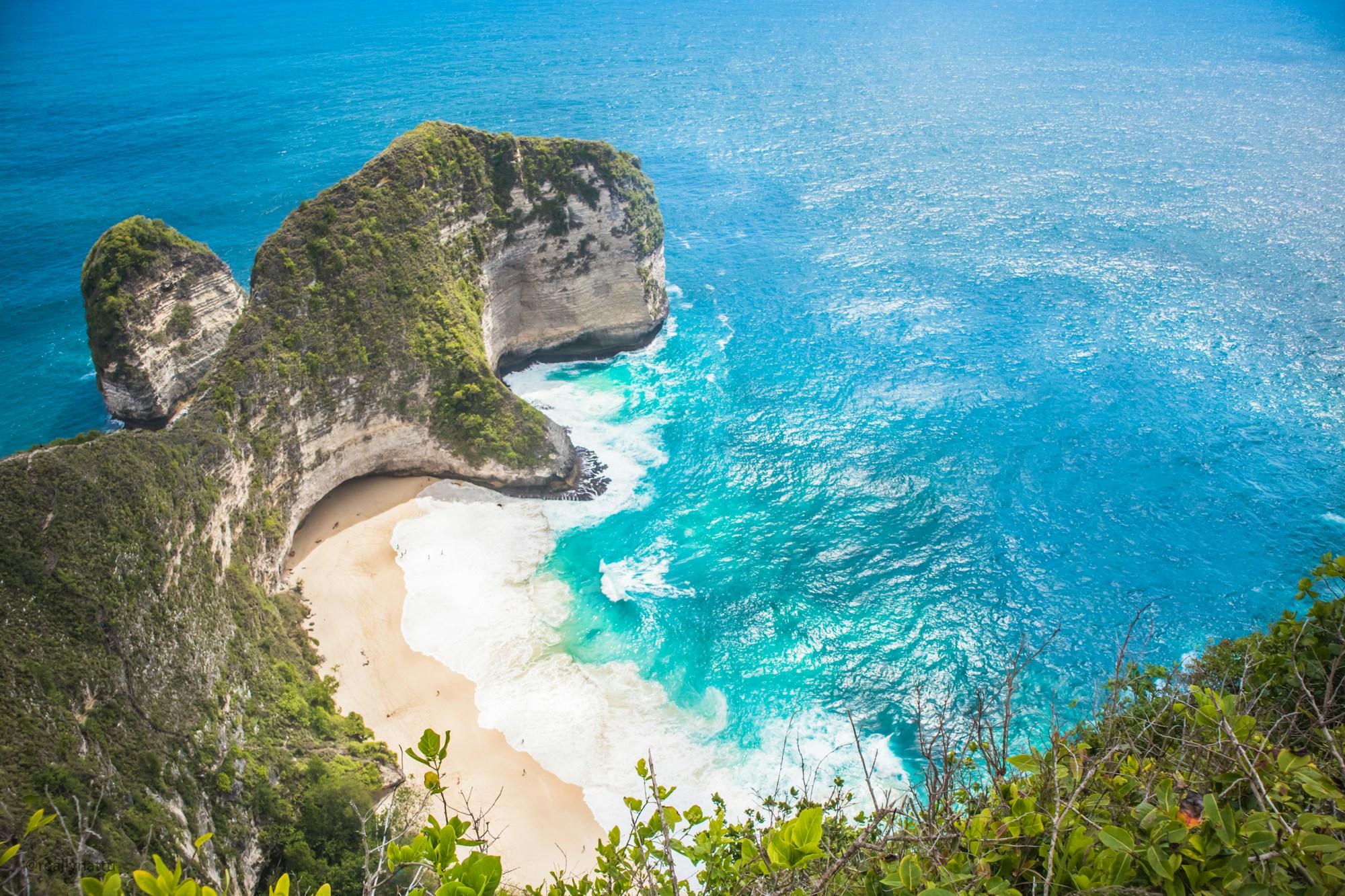
Bali
Across the whole of August, Bali gets just 15 to 40 mm of rain, against more than 300 mm during the height of the wet season in December-January, with around 10 hours of sunshine a day according to Bali.com. Humidity stays high (80 to 88%), but without the downpours tied to the monsoon hitting the rest of the continent, a contrast confirmed by Climate-Data.org. Nusa Penida, the islet offshore famous for Kelingking Beach and Angel’s Billabong, is even drier: barely one rainy day all month, calm seas and maximum dive visibility, right in the middle of mola-mola (sunfish) and manta ray season, according to Nusa Penida Fast Boat Ticket.
Highlights
- The driest AND sunniest month of the year, officially confirmed by Indonesia’s meteorological agency BMKG for 2026
- Nusa Penida, Lombok and Flores follow the same pattern, with dive visibility topping 25 metres
- Rated as one of the best months to spot Komodo dragons in their natural habitat
Since February 2024, a tourist tax of IDR 150,000 (about €9.50) is due on every entry into Indonesia, and a paid VOA or e-VOA (about €30, 30 days with possible extension) applies to British passport holders too, according to the UK Foreign, Commonwealth & Development Office (FCDO). For a first trip, our 9-day Ubud, rice terraces and beaches itinerary gives a good sense of the pace to expect.
Nepal: the big no, with one exception
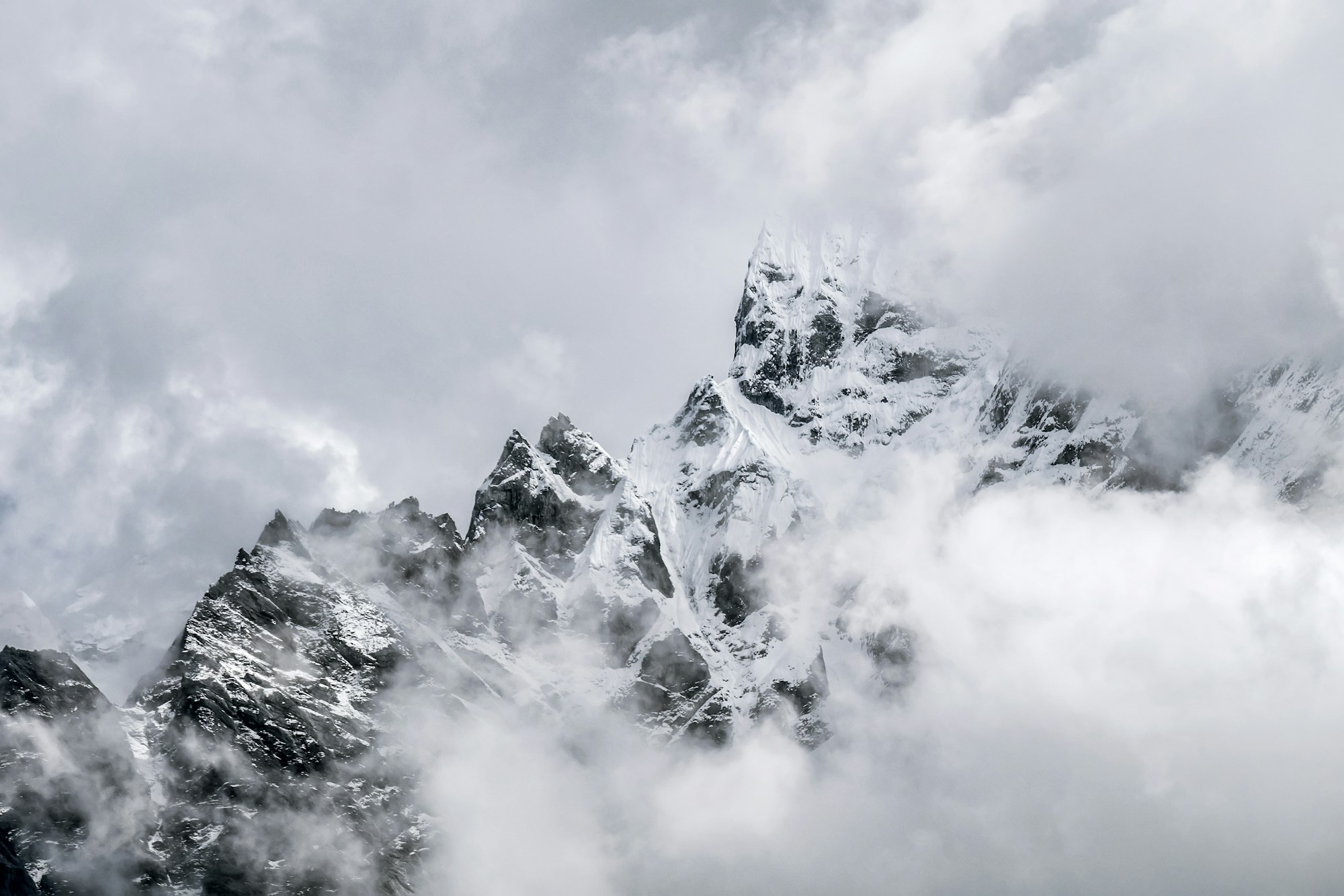
Nepal
On the most in-demand routes, August rainfall is overwhelming. The Everest Base Camp region gets 320 to 400 mm of rain over the month with cloud cover 85 to 90% of the time, and the Annapurna Base Camp region around Pokhara climbs to 580-680 mm, the wettest zone in the country, according to Trek & Tour Nepal. In practice, that means hidden summits most of the time, slippery trails, bridges and roads sometimes washed out, and flights to Lukla frequently delayed or cancelled.
Early August 2026 news drives the point home: a landslide cut the Araniko Highway, the route linking Nepal to China, at Ikhu in Sindhupalchok district on 7 August, according to Khabarhub. Nepal’s disaster risk authority (NDRRMA) expects around 226,000 people could be affected by monsoon-related incidents nationwide in 2026.
Why skip the classic treks in August
- Summits hidden 85 to 90% of the time on the Everest, Annapurna and Langtang routes
- Up to 680 mm of rain around Pokhara, the wettest zone in the country
- Roads and trails cut by landslides, Lukla flights unreliable
The exception that proves the rule: Upper Mustang and Dolpo
Some Nepalese valleys are shielded by a rain-shadow effect: the Annapurna and Dhaulagiri massifs intercept most of the moisture coming from the south, leaving Upper Mustang and Dolpo, further north, nearly dry even at the height of the monsoon. Upper Mustang gets just 25 to 45 mm of rain in August, 88 to 94% less than Pokhara over the same period, with clear skies 80 to 85% of the time and visitor numbers down 90% compared with October, according to Trek & Tour Nepal. Dolpo, even more remote, sits in the same range (30-55 mm). In other words, Nepal closes its door on the classic treks in August, but not on the whole country.
Since 31 March 2023, all independent trekking has required a licensed guide and a TIMS card obtained through an official agency, according to the UK Foreign, Commonwealth & Development Office (FCDO), which strongly recommends insurance covering mountain rescue and helicopter evacuation.
Sri Lanka: one island, two monsoons
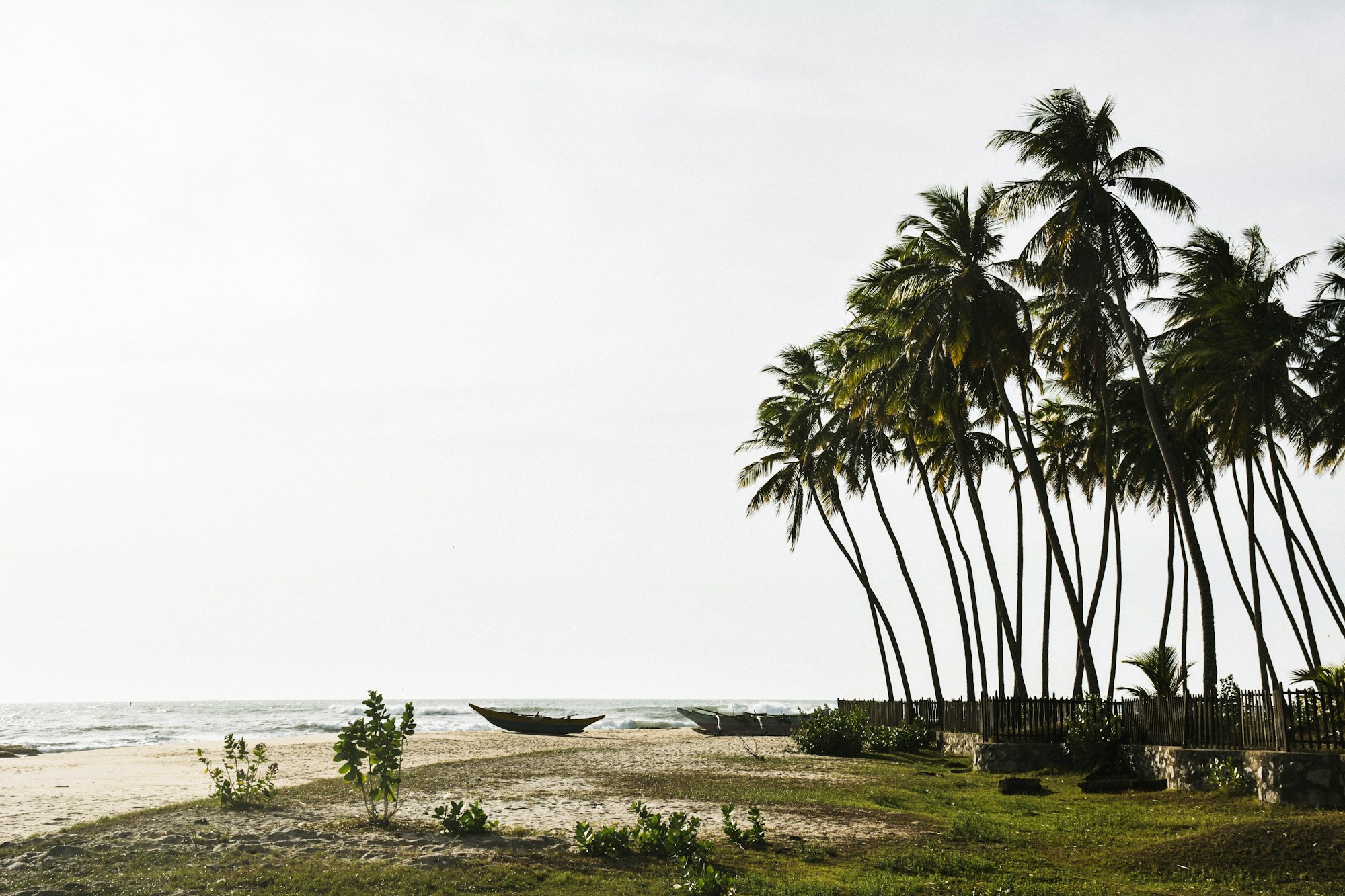
Sri Lanka, east coast
Sri Lanka is the textbook case for understanding the logic behind this whole map: the island catches two separate monsoon systems. The Yala monsoon (southwest, May to September) hits Colombo, Galle and the central highlands, while the Maha monsoon (northeast, October to January-February) hits the north and east, according to Lakpura. In August, that makes the east coast the dry one: Trincomalee gets around 65 mm of rain over the month against 120 mm in Colombo, roughly half, according to Wego Travel Blog.
Highlights
- Whale watching and shallow coral reefs at Trincomalee (Nilaveli, Uppuveli)
- Arugam Bay in peak surf season through July-August
- Far fewer crowds than the west coast at the same time of year
Vietnam, Thailand, Cambodia, Laos: mapping the mainland monsoon
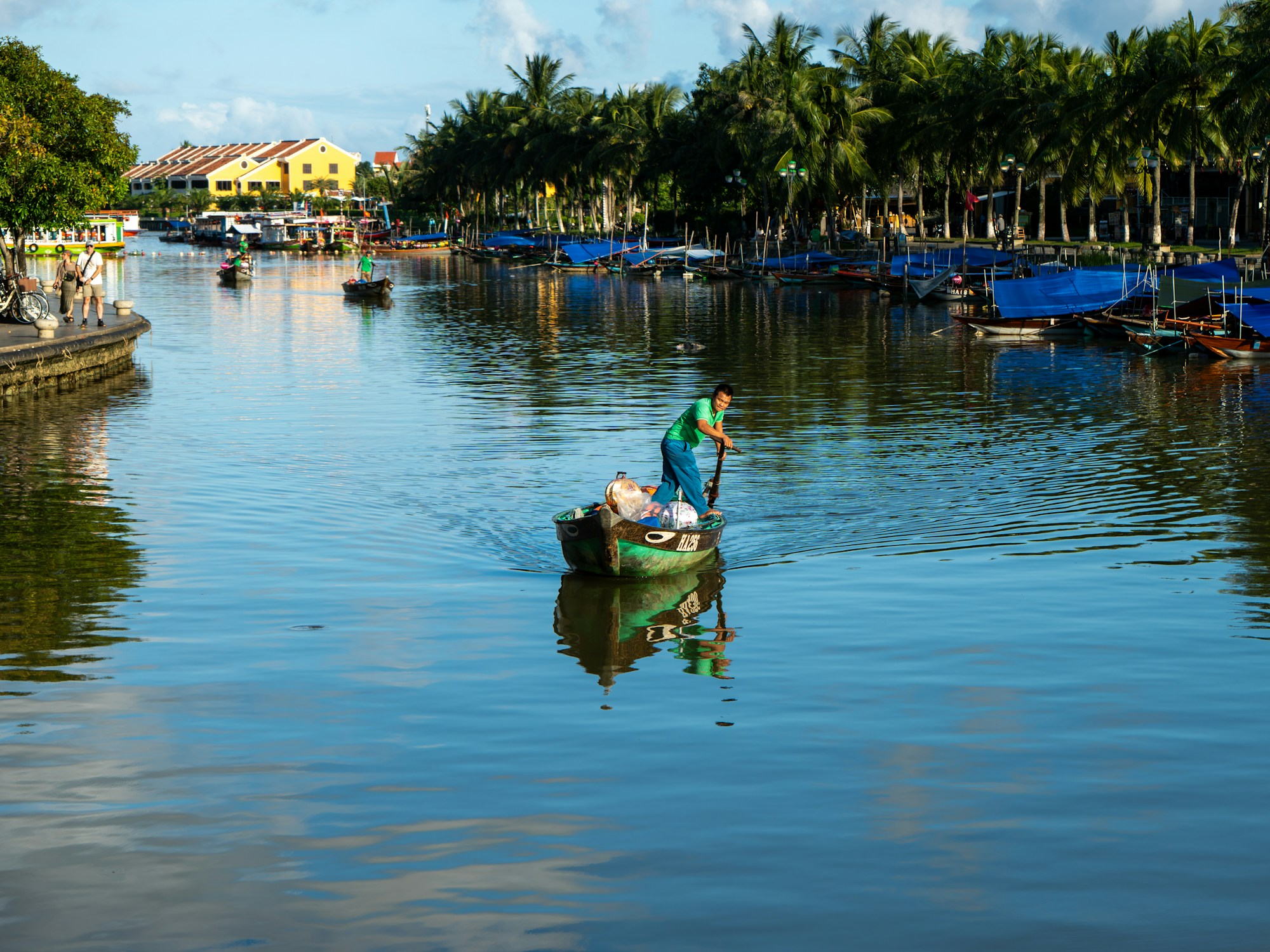
Central Vietnam: the dry pocket
Vietnam alone sums up the whole map’s complexity, with three distinct climate regimes in August. The north (Hanoi, Sapa, Ha Long Bay) and the south (Ho Chi Minh City, the Mekong Delta) are in full monsoon, with 275-338 mm and 280-297 mm of rain over the month respectively, according to Weather and Climate. Central Vietnam (Da Nang, Hoi An, Nha Trang), on the other hand, forms a relatively dry pocket: the mountains block the southwest monsoon, which cuts rainfall to just 4 to 7 days over the month against 16 to 20 elsewhere, according to TNK Travel. Rain does tend to pick up in the last days of the month though, worth keeping in mind when you pick your dates.
Thailand shows the same contrast within a single country: the north and centre (Bangkok, Chiang Mai) get the heaviest rain, the Andaman coast (Phuket, Krabi) is best avoided with the Similan Islands officially closed from May to October, but the Gulf islands (Koh Samui, Koh Phangan, Koh Tao) follow a gentler pattern, around 120-130 mm over roughly 12 days, according to Travelfish. On 8 August 2026, Thailand’s meteorological department (TMD) issued a heavy rain warning covering 70 to 80% of the north and centre, with 43 provinces under flood watch, according to The Thaiger.
In Cambodia, Angkor Wat gets around 202 mm of rain over 18 days in August, but mornings generally stay dry and workable for visiting the temples, with the bonus of noticeably thinner crowds, according to kimkim. Laos, on the other hand, is the most demanding destination in the region in August: remote areas like Phongsali can become hard to reach, with impassable tracks and landslide risk, while the south of the country stays more manageable.
Highlights
- Central Vietnam: only 4 to 7 rainy days over the month, sea at 28°C
- Thailand’s Gulf islands (Koh Samui) noticeably drier than the Andaman coast
- Angkor Wat workable in the mornings, with far smaller crowds than peak season
The Philippines and Japan: typhoon roulette
In the Philippines, August sits right in the middle of typhoon season (June to November), with close to 70% of annual typhoons forming between July and October. The Philippine weather agency PAGASA forecasts 2 to 4 tropical cyclones entering its area of responsibility in August 2026, according to GMA News. The main risk isn’t so much continuous rain as logistical disruption: on 7 August 2026, Typhoon Maymay forced ferry routes to shut and blocked mountain roads, including the main access to Baguio, according to Travelers Today. The country’s east-facing side (Siargao, Palawan) is relatively sheltered thanks to the rain-shadow effect, which also makes it a good stretch for surfing, while Boracay stays heavily soaked (327-426 mm).
Japan isn’t part of the Indian monsoon system, but August marks the peak of its own typhoon season: 5.7 systems form on average that month, more than July (3.7) or October (3.4), according to Nippon.com. The 2026 El Niño pattern is pushing their formation further southeast, giving them more time to strengthen before reaching the archipelago. News from 7-8 August 2026 makes the point directly: Typhoon Dolphin, a category 4 storm with sustained winds of 162 km/h, hit Okinawa head-on, injuring 5 people, cutting power to 14,000 homes and forcing the cancellation of numerous ANA and JAL flights, according to NBC News. The geographic gradient is clear: Okinawa is the country’s most exposed region, with 7 to 8 typhoon approaches a year on average, while Hokkaido, up north, stays the most sheltered and coolest. If your trip covers several regions, visit Hokkaido first and save Okinawa for the end of your stay, so you can absorb a weather curveball rather than take it on day one. Our full rundown of what’s changing in Japan in 2026 also covers the latest entry rules.
India: monsoon central, except in Ladakh
India bears the brunt of the 2026 monsoon’s toll. By 5 August, the death toll had passed 133 since July from flooding and landslides: Assam is the worst-hit state with 87 deaths, followed by Jammu and Kashmir (31 deaths) and Kerala (15 deaths, 7 missing, more than 10,000 people sheltering in relief camps), according to Al Jazeera. India’s meteorological agency (IMD) had actually forecast a slightly below-normal monsoon for 2026, a useful reminder that « below normal » doesn’t mean « without danger ».
Ladakh escapes this picture thanks to the same rain-shadow mechanism as Nepal’s Upper Mustang, just on a bigger scale: the Himalayan range intercepts most of the moisture, and Leh gets less than 10 cm of rain a year on average, according to jtreks.co. August is even considered one of the best months of the year there: both access roads (Manali-Leh and Srinagar-Leh) are open, the weather is the most stable of the year, with daytime temperatures of 20-25°C.
Two counter-examples add nuance to the Indian picture. In Goa, swimming is officially banned on all beaches from 1 June to 30 September, but some travellers still take advantage of rock-bottom prices and a quiet atmosphere. In Kerala, the Kerala Tourism Board goes the other way and promotes the monsoon (mid-June to mid-August) as Ayurveda season, « Karkidaka Chikitsa »: the humid air is said to help the skin absorb medicinal massage oils, an argument that drove 58% of Ayurveda or houseboat bookings in a 2025 search sample, with average flight savings of 47% versus peak season, according to Kerala Tourism. So the monsoon can become a selling point in its own right rather than just an obstacle, though that clearly isn’t the case for Himalayan trekking.
Mongolia and Central Asia: your monsoon-free alternatives
Outside the monsoon system altogether, two destinations remain a safe bet in August. In Mongolia, it’s still peak summer season: 28-35°C in the Gobi Desert, an overall dry climate punctuated by the occasional shower that keeps the steppes green. The big national Naadam festival takes place in mid-July, but a smaller « Danshig Naadam », mixing traditional competitions and religious ceremonies, is held in August, outside the crowd peak.
In Central Asia (Uzbekistan, Kazakhstan), dry heat dominates: 35 to 45°C in desert cities like Bukhara or Khiva, with just one rainy day on average over the whole month. Mountain areas like Chimgan offer a cooler break, good for hiking.
Quick-reference map: where to go (and where to skip) in August
To make sense of it all at a glance, here’s a summary of the main zones covered in this article, from most recommended to riskiest.
| Destination | Status in August | What to know |
|---|---|---|
| Bali, Lombok, Flores (Indonesia) | Yes | Dry season April-October, 15-40 mm of rain in August |
| Sri Lanka, east coast (Trincomalee) | Yes | ≈65 mm in August, Yala monsoon only active on the west side |
| Central Vietnam (Hoi An, Da Nang) | Yes, with caveats | 4-7 rainy days, caution in the last days of the month |
| Ladakh (India) | Yes | Rain shadow, under 10 cm of rain a year |
| Upper Mustang, Dolpo (Nepal) | Yes, exception | 25-55 mm in August despite the monsoon elsewhere in the country |
| Angkor (Cambodia) | Yes, mornings | 202 mm over 18 days, showers concentrated in the afternoon |
| Mongolia, Central Asia | Yes | Outside the monsoon system, dry heat |
| Kerala (India, Ayurveda angle) | Mixed | Monsoon promoted as an official therapeutic season |
| Nepal, classic treks (Everest, Annapurna) | No | 320-680 mm, summits hidden 85-90% of the time |
| North and Northeast India (Assam, Kashmir) | No | 133+ deaths recorded since July 2026 |
| North and south Vietnam, remote Laos | No | 275-338 mm, tracks sometimes impassable |
| Thailand, Andaman coast (Phuket, Krabi) | No | Up to 330 mm, Similan Islands closed May-October |
| Philippines (except the east coast) | No | Peak typhoon season, 2-4 systems expected |
| Japan, Okinawa | No | Peak typhoon season, 5.7 on average in August |
Practical info for a summer in Asia
A local eSIM you can activate before you fly, handy for tracking real-time weather and official alerts (BMKG, DHM, TMD, PAGASA) once you’re there.
Data plans ready from the moment you landEspecially useful for any mountain trek (evacuation, repatriation) or when booking during peak typhoon season.
Sign up online in a few minutesFrequently asked questions
Why does Bali avoid the monsoon in August?
Bali sits in the southern hemisphere, where the seasonal calendar runs opposite to India or Nepal: the dry season runs from April to October there, with a peak drought in August confirmed by Indonesia’s official meteorological agency, BMKG.
Can you still trek in Nepal in August?
On the classic routes (Everest Base Camp, Annapurna), it’s strongly discouraged: up to 680 mm of rain and summits hidden 85 to 90% of the time. Rain-shadow valleys like Upper Mustang or Dolpo, on the other hand, stay dry (25-55 mm) and are trekkable year-round, August included.
What’s the best alternative time to trek in Nepal?
October-November offers the best summit visibility, but it’s also the busiest period, with bookings needing to be made months in advance. March-May, rhododendron blooming season, is the next best recommended option.
Are Nepal’s leeches dangerous?
No. They’re painless and don’t transmit any disease. The real risk of the Nepalese monsoon is landslides and flash floods, not leeches.
Which other destinations in Asia are dry in August?
Sri Lanka’s east coast (Trincomalee, Arugam Bay), central Vietnam (Hoi An, Da Nang), Ladakh in India, Mongolia and Central Asia, as well as Thailand’s Gulf islands like Koh Samui.
Should you avoid Vietnam entirely in August?
No. The north (Hanoi) and south (Ho Chi Minh City) are in full monsoon, but the centre (Hoi An, Da Nang) benefits from a relatively dry weather pocket thanks to terrain that blocks the southwest monsoon, with only 4 to 7 rainy days over the month.
Is Japan affected by the monsoon like India?
Not in the Indian sense, but August marks the peak of its own typhoon season, with 5.7 systems forming on average that month. Okinawa is the most exposed region, Hokkaido the most sheltered and coolest.
Is it safe to visit the Philippines in August?
It’s peak typhoon season, with 2 to 4 systems expected in August 2026 according to weather agency PAGASA, and a real risk of flight and ferry disruption. The country’s east-facing side, particularly Siargao, is relatively sheltered thanks to the rain-shadow effect.
Does travelling in peak monsoon really cost less?
Yes, typically 20 to 50% savings depending on the destination, on accommodation, permits or flights. But that saving comes at the cost of logistical uncertainty (cancelled flights, cut roads) and reduced visibility on the landmark scenery.
Sources
- BMKG: official confirmation of Indonesia’s peak 2026 dry season
- Bali.com: Bali weather in August
- UK Foreign, Commonwealth & Development Office (FCDO): entry requirements, Indonesia
- UK Foreign, Commonwealth & Development Office (FCDO): safety and security, Nepal
- Trek & Tour Nepal: trekking in Nepal in August, rain-shadow data
- Khabarhub: landslide on the Araniko Highway, August 2026
- Wego Travel Blog: Sri Lanka’s two monsoons
- TNK Travel: central Vietnam weather in August
- The Thaiger: Thailand weather warning, 8 August 2026
- GMA News / PAGASA: Philippines cyclone forecast, August 2026
- Nippon.com: peak typhoon season in Japan in August
- NBC News: Typhoon Dolphin hits Okinawa, August 2026
- Al Jazeera: India’s 2026 monsoon toll
- jtreks.co: Ladakh and the rain shadow
- Kerala Tourism: the monsoon as Ayurveda season
Research and source verification carried out on 8 August 2026.

Plan your trip with Pixidia
Pixidia learns how you travel and helps you build a trip that truly fits you and everyone coming along.
Open the planner