
Commercial partnership. This article contains affiliate links. If you book through these links, Pixidia earns a small commission at no extra cost to you. Learn more
Budapest’s Jewish Quarter, Erzsébetváros, is best explored through guided tours, between historic synagogues and ruin bars. Eleven verified experiences, rated 4.6/5 or higher. Prices and availability checked over the 30 days following 11 August 2026, most with instant confirmation. The Dohány, Rumbach and Kazinczy synagogue triangle, the Shoes on the Danube memorial and Budapest’s first ruin bar, Szimpla Kert, anchor most of the routes. If you only book one, start with the Jewish heritage tour with entry to the Dohány Street Synagogue, the most complete pick in this selection with 621 reviews.
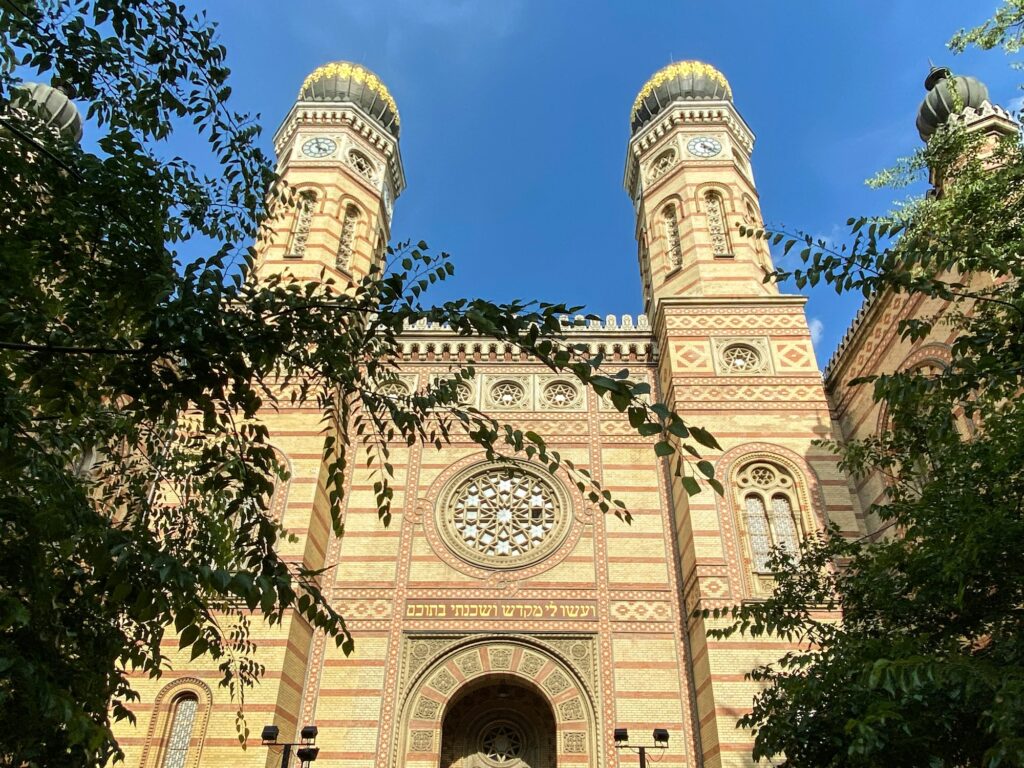
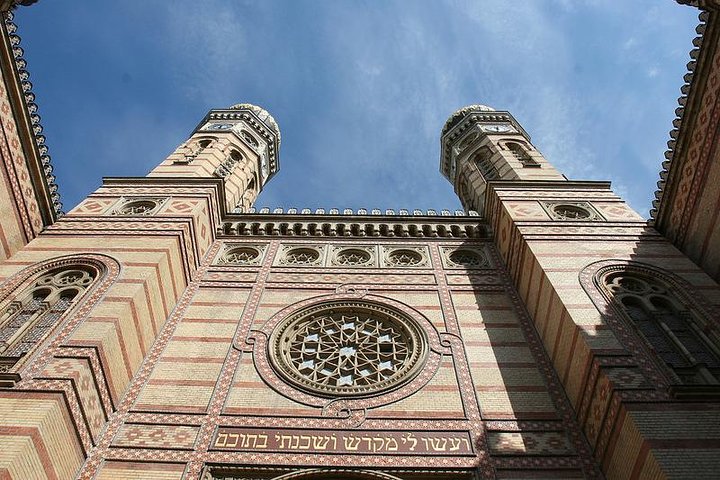
Erzsébetváros isn’t a museum you walk through: it’s a living neighbourhood in Budapest’s 7th district, where the memory of what was once the second-largest Jewish community in Europe now sits alongside the city’s most popular ruin bar courtyards. Standing alone in front of the Dohány Street Synagogue, you see an impressive Moorish façade; with the right guided tour, you learn it was built between 1854 and 1859 to become the largest synagogue in Europe, and that this same street marked the boundary of the 1944 ghetto.
In this article, I’m sharing my pick of 11 guided tours and experiences to book in Erzsébetváros, all verified in early August 2026: the synagogue triangle, a tip-based tour, food tours built around Jewish culinary heritage, private tours into hidden courtyards, and the quarter’s after-dark side with its historic ruin bars. The prices shown are real, with the traveller base always stated.
If you only had to pick one option, the Jewish heritage tour with entry to the Dohány Street Synagogue remains the most complete pick in the whole selection: 4.8/5 from 621 reviews, starting right across from the Great Synagogue, and a route that covers the museum, the synagogue and the Tree of Life memorial in a single outing. It’s the foundation I’d build a first visit to the quarter around, before adding one or two complementary picks depending on your profile: history buff, food lover, or drawn to the nightlife.
Erzsébetváros, Budapest’s Jewish Quarter: memory and revival
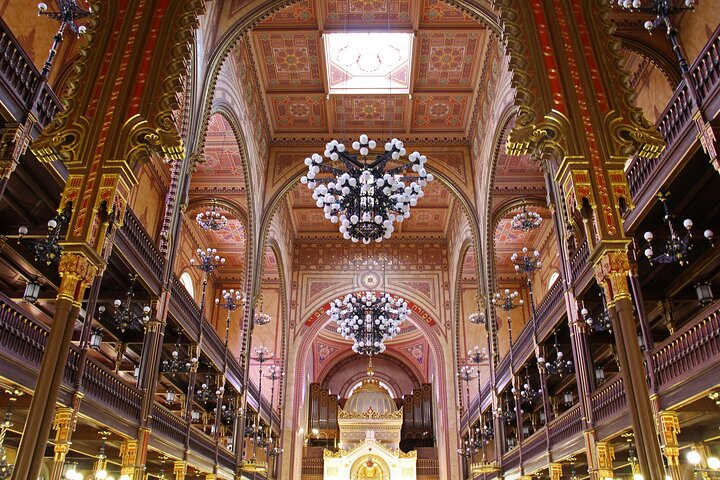
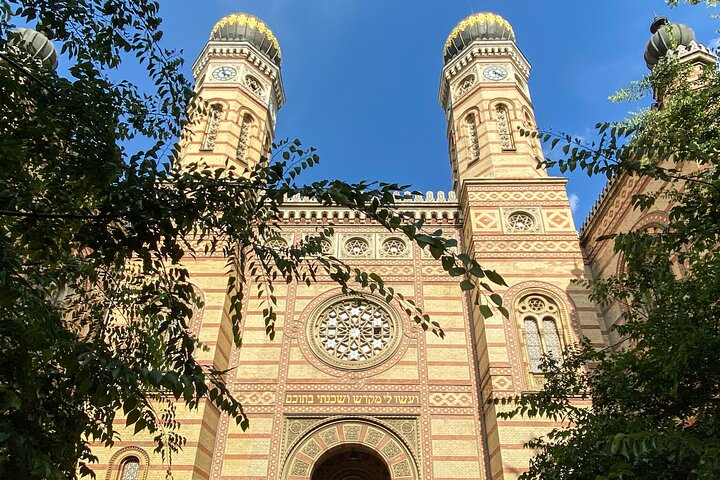
Erzsébetváros [Q284541], Budapest’s 7th district, became the heart of the Hungarian Jewish community after the 1867 emancipation: by 1910, more than 23% of the city’s population was Jewish, a peak that made Budapest home to the second-largest Jewish community in Europe after Warsaw [World Jewish Travel]. The religious split within 19th-century Hungarian Judaism left three synagogues within a few hundred metres of each other, known as the synagogue triangle: the Dohány Street Synagogue [Q754397], the largest in Europe with Moorish domes reaching 43 metres [European Heritage Label]; the Rumbach Street Synagogue [Q569083], designed by a young Otto Wagner and reopened in 2021 after a complete restoration [We Love Budapest]; and the Kazinczy Street Synagogue [Q725839], still active for the Orthodox community.
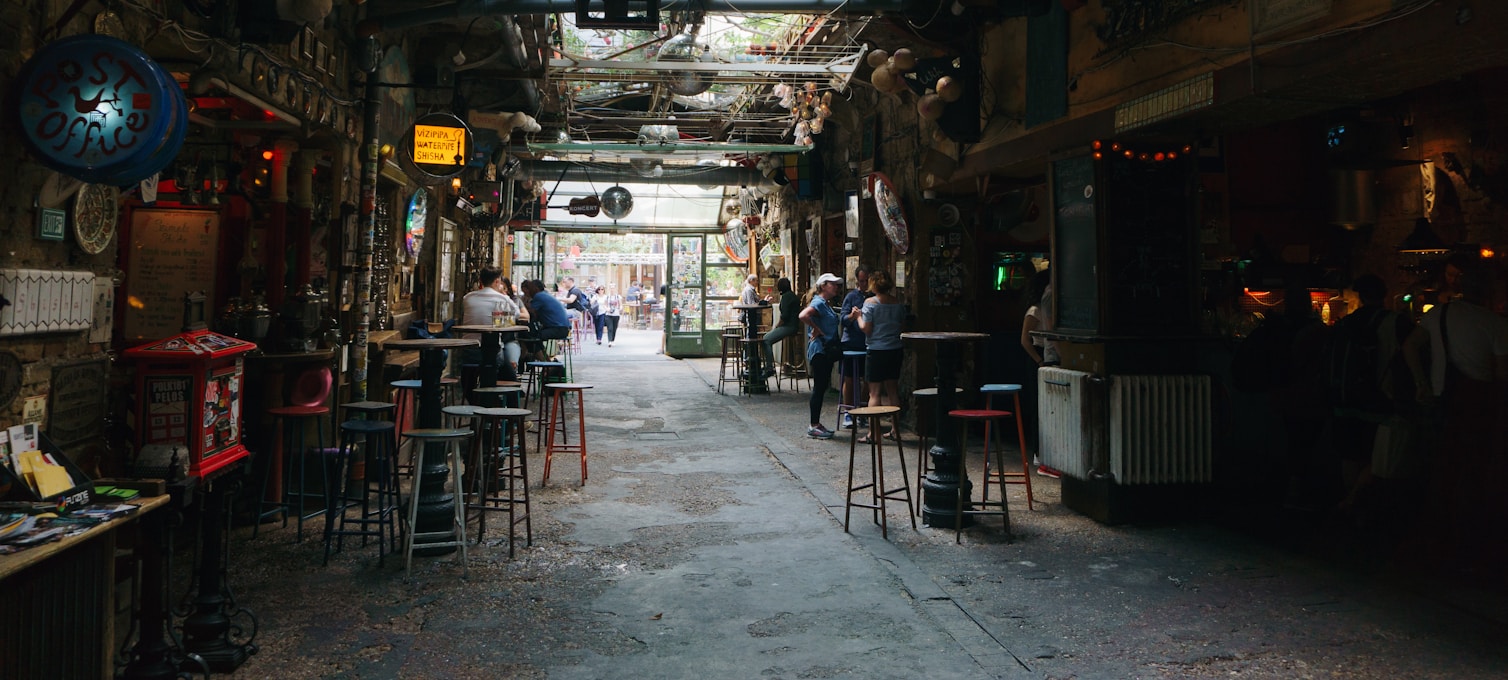
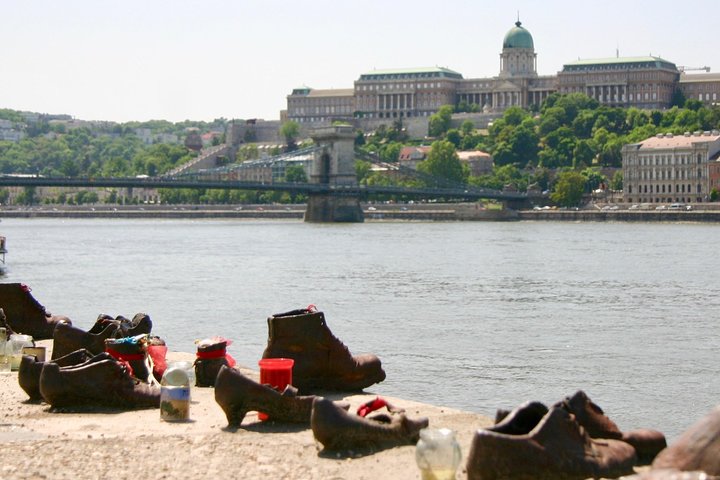
In November 1944, around 70,000 people were locked inside a walled ghetto centred on this same Dohány street [Wikipedia — Budapest Ghetto], and thousands were executed on the nearby banks of the Danube. The Shoes on the Danube memorial [Q473811], 60 pairs of cast-iron shoes, honours these victims [Yad Vashem]. Left largely derelict after the war, the quarter’s buildings then gave rise in 2002 to Budapest’s first ruin bar, Szimpla Kert [Q3509700] [Wikipedia], followed by the full renovation of the Gozsdu Udvar shopping passage [Q1027774]: it’s this double identity, both memorial and festive, that sets Erzsébetváros apart from the rest of Budapest today. If you’re combining Budapest with other Central European capitals, our golden triangle itinerary details the legs to Prague and Sofia. Prices are in Hungarian forints (HUF), as Hungary hasn’t adopted the euro.
The 11 best experiences to book in Budapest’s Jewish Quarter
1. Jewish Museum, Dohány Synagogue and Holocaust Memorial
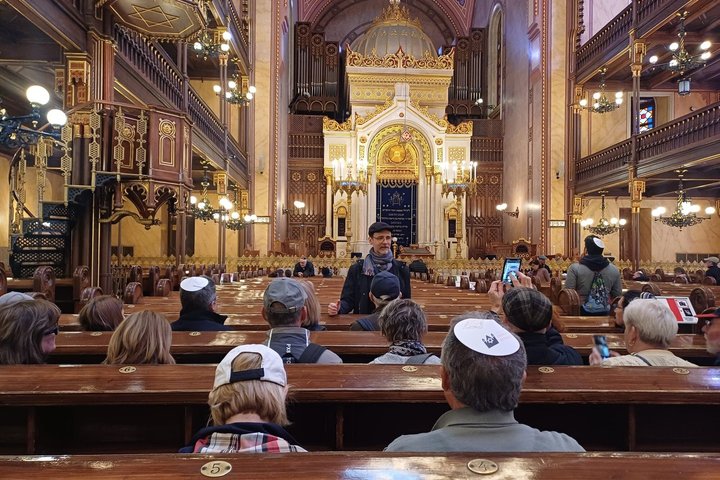
This is the tour I rank first for a first approach to the quarter: 4 hours covering the Jewish Museum, the interior of the Great Dohány Street Synagogue and the Tree of Life memorial, with a dedicated professional guide. Meeting point is directly across from the synagogue on Dohány street. With 621 reviews, it’s the most established Jewish Heritage tour in the quarter, but slots book up fast: only 17 of 30 days were open at the time of checking.
- Entry to the Great Dohány Street Synagogue and the Kazinczy Street Synagogue (Grand Tour package)
- Hungarian Jewish Museum and Tree of Life memorial included in the route
- Dedicated professional guide, 4 hours total
2. Three Synagogues, Entry Included: Dohány, Heroes’ and Rumbach
This one pushes the logic a step further than the heritage tour: entry tickets to all three synagogues — Dohány, Heroes’ and Rumbach — are included in the price, with guides who’ve specialised in the quarter for more than 25 years. The format stays close to the spirit of a free tour: you only pay for building entry, not for the guided walk itself. Meet at the secured entrance; the coordinator is easy to spot with a blue flag or umbrella.
- Entry to all three synagogues — Dohány, Heroes’ and Rumbach — included in the ticket
- Guides who’ve specialised in the quarter for more than 25 years
- You only pay for building entry, not for the guided walk itself
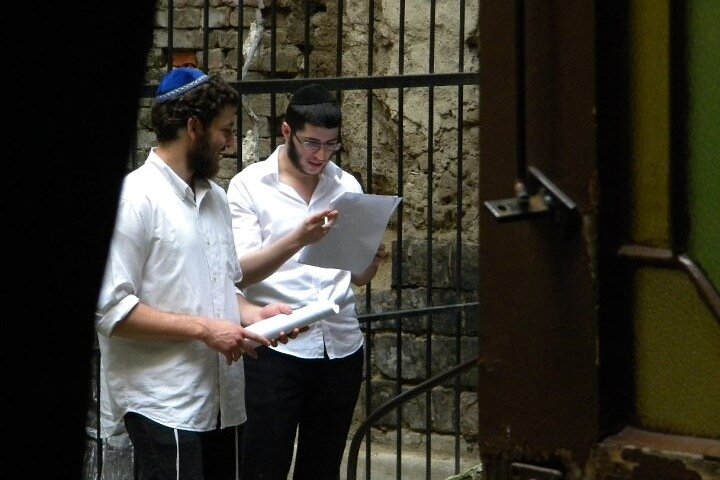
3. The Tip-Based Tour: Past and Present of the Quarter
Pay attention to the pricing model here — it works differently from the rest of this selection: the €6 shown by the platform only covers an administrative booking fee, not the tour itself — the guide is paid entirely through the tip you leave at your own discretion at the end, as is standard for pay-what-you-want tours. In 1h 45min, the route crosses the Gozsdu Udvar passage, the Rumbach Street Synagogue and several of the quarter’s street art murals. Meeting point is about 15 metres from the Budapest Eye Ferris wheel, near the Danubius fountain — your guide holds a small blue flag to be easy to spot.
- Only the booking fee is included in the price shown; the guide is paid by tip
- Route through Gozsdu Udvar, the Rumbach Street Synagogue and local street art
- Instant confirmation, 1h 45min walking route
4. Contemporary Jewish Identity: A Dialogue With a Local Guide
The most distinctive tour in this selection: instead of a simple historical recap, the guide opens up a real conversation about what it means to be Jewish in Hungary today, contemporary antisemitism included, over 3 hours. Meeting point is in front of the White Lutheran Church, not far from Deák Ferenc tér. The format wins people over — a perfect 5.0/5 rating — but slots are scarce: only 9 of 30 days were available at the time of checking, so book well ahead.
- Dialogue format on contemporary Jewish identity in Hungary
- The question of present-day antisemitism addressed directly with the guide
- Licensed local guide, meeting point in front of the White Lutheran Church
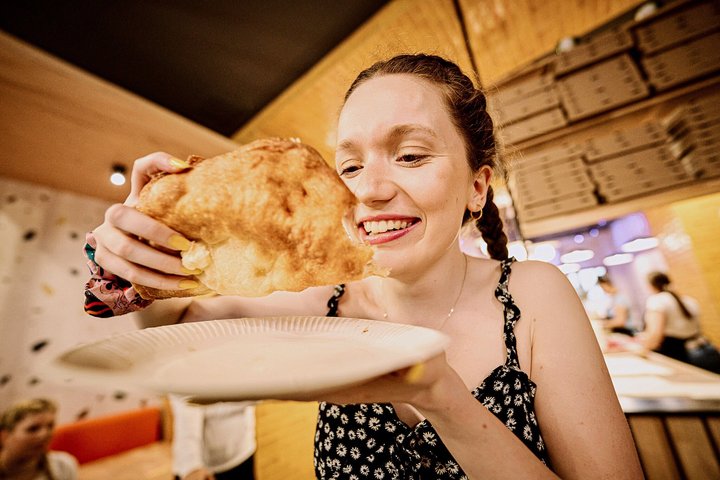
5. Food Tour Through Jewish Culinary Heritage
The meeting point sets the tone: right in front of the synagogue, for a 2.5-hour food walk that traces Jewish influence on Hungarian cuisine across four local spots, with priority access included. Wine, beer and shots accompany the tastings, kept to a small group to preserve the conversation with the guide. A good way to understand the quarter through the palate rather than through monuments alone.
- Tastings across four Hungarian restaurants, wine, beer and shots included
- Starts in front of the synagogue, focused on the Jewish influence on local cuisine
- Small group with priority access at the spots visited
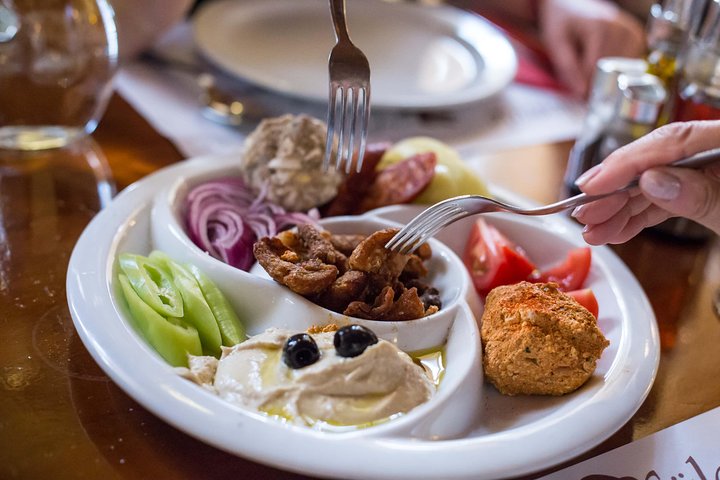
6. A 4-Hour Food Walk Through Jewish Culture
A longer, more immersive format than the previous one: 4 hours with an expert Taste Hungary guide, lunch with wine included and a tasting of pálinka, Hungary’s traditional brandy. Meeting point is near the Sisi statue, with a free tote bag at the start. This is the option to pick if food matters more to you than pace: here, you sit down to eat properly rather than snacking on the move.
- Lunch with wine and a pálinka tasting included
- Expert Taste Hungary guide, free tote bag at the start
- 4 hours dedicated to the quarter’s Jewish food and culture
7. Private Tour: Hidden Courtyards and the Shoes Memorial
A private tour with a Jewish historian guide that goes beyond the three synagogues into the quarter’s hidden courtyards and the Shoes on the Danube memorial, over 2h 45min. The meeting point is flexible: you choose a café or your hotel, and entry fees are included in the price. The private format lets the pace and the questions adapt to your group, rather than following a fixed route.
- Jewish historian guide, private small-group tour
- Flexible meeting point: your choice of café or hotel
- Stops at the Shoes on the Danube memorial and hidden courtyards
8. Ultra-Local Private Tour: Kazinczy 55 and a Kosher Grocery
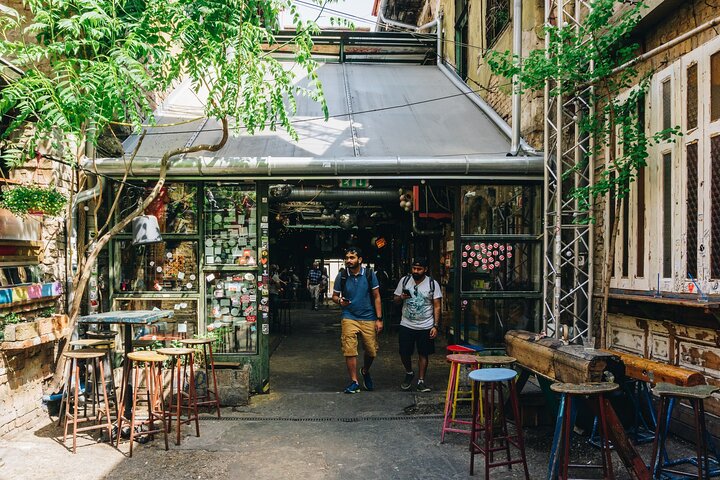
The most niche pick in the whole selection: this private guide takes you to addresses that few tours even mention, like the building at 55 Kazinczy street or a still-operating neighbourhood kosher grocery. Allow 2.5 hours, meeting point in front of the Scala shop. The price reflects the exclusivity of the format — one guide, one group, a route built to measure — rather than a standardised route.
- Dedicated private guide, fully customisable route
- Stops at 55 Kazinczy street and a local kosher grocery
- The most in-depth « hidden gems » angle in the selection
9. A Private Walk Through the Quarter’s Gentrification
This one tells a different story: how the quarter went from post-war wasteland to trendy address from the 1990s onward, told through Király street and a rarely-visited memorial back courtyard. Over 4 hours, pickup is directly from your hotel. A useful angle if you’ve already done a classic heritage tour and want to understand the quarter’s recent transformation rather than just its past.
- Private tour with hotel pickup included
- Stops on Király street and a memorial back courtyard
- Narrative centred on the quarter’s gentrification since the 1990s
10. Ruin Bars, Street Art and Culture in One Evening
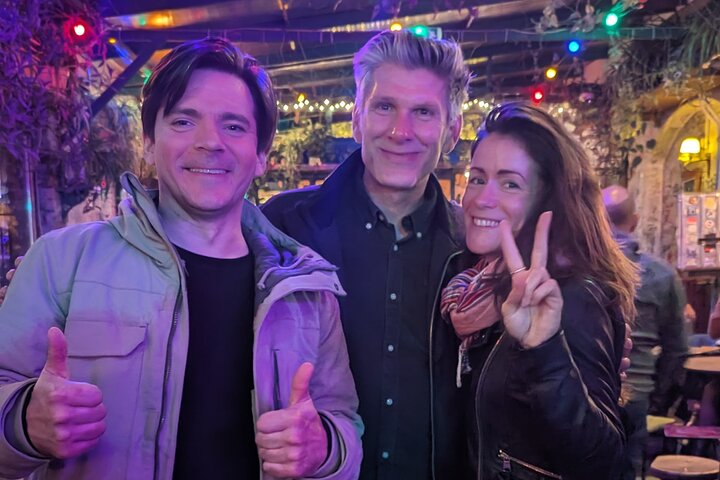
This one shifts to the quarter’s other side: 3.5 hours combining historic ruin bars, street art and culture, with one drink included along the way. The tone stays more measured than a classic pub crawl, built to help you understand the quarter at night without stacking up shots. Meeting point is in front of the Budapest Eye Ferris wheel on Erzsébet tér, priority ticket entrance on the right.
- Historic ruin bars, street art and culture combined in one outing
- One drink included along the way
- Starts in front of the Budapest Eye Ferris wheel, Erzsébet tér

11. VIP Pub Crawl Through the Quarter’s Historic Bars
The most festive and most-reviewed format in this selection, with 762 reviews: 6 free shots, VIP entry into several historic bars in the party district, and drinking games across 6 hours. Guides check you in with an orange wristband; arriving 5 minutes early is recommended so you don’t miss anything. Better booked with a small group of friends than solo, since the vibe is firmly collective.
- 6 free shots and VIP entry into several historic bars
- Drinking games throughout the 6-hour crawl
- Digital photos of the night included
Planning the trip
Instant connection the moment you land in Budapest, no need to hunt for a SIM shop in town.
Get my eSIMWorldwide coverage, useful if your private tour or your return flight gets disrupted.
Get coveredAllow around 2h35 for a direct flight with Wizz Air, British Airways or Ryanair.
Check flight pricesPractical tips on the ground
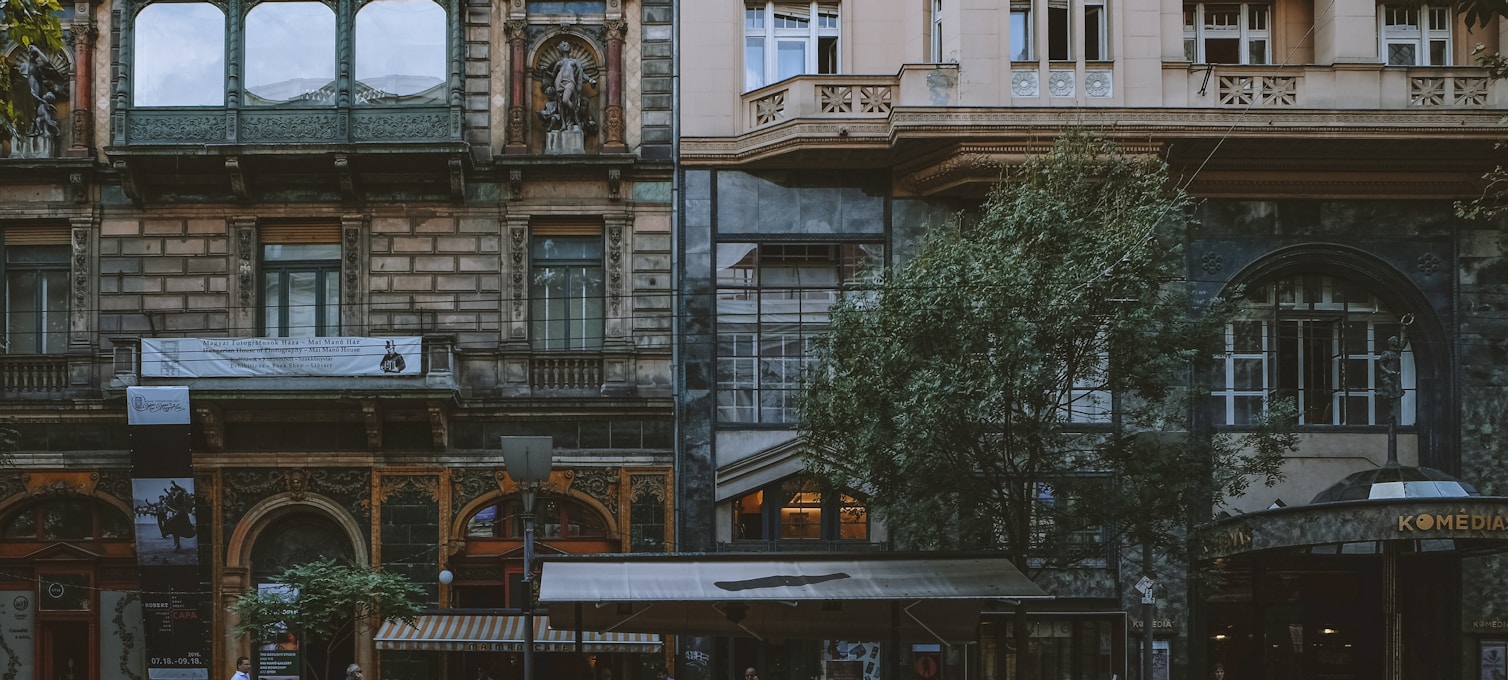
The quarter sits just behind Deák Ferenc tér, the only station where metro lines M1, M2 and M3 all meet: from there, everything is walkable, with Gozsdu Udvar about a five-minute walk away [Budapest Tourism]. Astoria station (line M2) drops you closer to the Great Dohány Street Synagogue, and trams 47 and 49 run along the quarter’s southern edge.
Opening hours at the Dohány Street Synagogue vary by season: April-October, Sunday-Thursday 10am-6pm and Friday 10am-4pm; November-March, hours tighten by an hour at the end of the day [Storyhunt]. It closes systematically on Saturdays (Shabbat) and during major Jewish holidays — worth checking before you lock in a weekend visit. The dress code is strict across all the quarter’s synagogues: shoulders and knees covered, no vests or shorts; men must cover their heads, with a kippah provided at the entrance.
For the day’s rhythm, weekday mornings stay the calmest time to visit the synagogues, before the queues form; nightfall marks the shift toward the after-dark scene, when the ruin bars start filling up. A common approach is to combine a tip-based tour for an overview of the quarter with a paid tour focused on the Dohány Street Synagogue for the interior visit, on the same day [Big Boy Travel]. If your Budapest stay also includes the city’s thermal baths, our round-up of natural hot springs around the world covers Széchenyi and Gellért. To extend the trip toward Prague, our guide to the Malá Strana quarter covers a similar hyperlocal format on the Czech side; and to continue on to Poland, our 3-day Kraków itinerary rounds out this Central European triangle nicely.
Frequently asked questions
Do you have to pay to visit Budapest’s Jewish Quarter?
Walking around Erzsébetváros is free at any time: the streets, Gozsdu Udvar passage and the ruin bars by day are all open access. Only entry to the synagogues and the Jewish Museum is paid, between 5,000 and 7,000 HUF depending on the ticket type. Guided tours are an optional add-on: from €91.62 for a private tour, or through the tip-based format where only a €6 booking fee is charged online. Details on the tip-based tour.
When’s the best time to visit the quarter’s synagogues?
Opening hours vary by season, generally 10am-6pm from April to October (10am-4pm on Fridays), tightened by an hour in winter. The Dohány Street Synagogue and the quarter’s other religious buildings close systematically on Saturdays for Shabbat, as well as during major Jewish holidays — worth checking before you lock in a weekend visit. Weekday mornings stay the calmest time to avoid queues. See the most complete tour of the memorial triangle.
How much time should you set aside for Budapest’s Jewish Quarter?
Allow 2 to 3 hours for a classic walking tour combining synagogues and street art, half a day if you add a food stop, and up to 4 hours for the most complete formats in this selection, like the food walk dedicated to Jewish cuisine and culture. See the 4-hour food walk.
How do you get to Erzsébetváros from central Budapest?
The quarter sits just behind Deák Ferenc tér, the only station where metro lines M1, M2 and M3 all meet; from there, everything is walkable. Astoria station (line M2) drops you closer to the Great Dohány Street Synagogue, and trams 47 and 49 run along the quarter’s southern edge.
What’s the difference between a free tour and a paid tour of the Jewish Quarter?
Tip-based tours cover most of the public space and the ghetto’s history, but don’t include any building entries: synagogues and the museum stay outside the route. Paid or private tours generally include entry to one or more synagogues and go further into the historical detail. Many travellers combine both in the same day: the tip-based tour for an overview, then a tour focused on the Dohány Street Synagogue for the interior visit. See the tip-based tour or the tour with synagogue entry.
Is Budapest’s Jewish Quarter also known for its ruin bars?
Yes: Erzsébetváros carries a deliberate double identity. Budapest’s first ruin bar, Szimpla Kert, opened in 2002 in a building slated for demolition, and the concept has since spread across the whole quarter. Night tours range from the cultural format, which covers ruin bars and street art without an organised drinking component, to the classic pub crawl with shots and VIP entries. See the ruin bars and street art outing or the pub crawl.
Sources
- Wikipedia — Erzsébetváros — accessed 2026-08-11
- Wikipedia — Budapest Ghetto — accessed 2026-08-11
- Unveiling Jewish Budapest — World Jewish Travel — accessed 2026-08-11
- Wikipedia — Shoes on the Danube Bank — accessed 2026-08-11
- The Shoes on the Danube Promenade — Yad Vashem — accessed 2026-08-11
- Wikipedia — Szimpla Kert — accessed 2026-08-11
- Origins and history of ruin bars in Budapest — Gambero Rosso International — accessed 2026-08-11
- Wikipedia — Rumbach Street Synagogue — accessed 2026-08-11
- Wikipedia — Kazinczy Street Synagogue, Budapest — accessed 2026-08-11
- Dohány Street Synagogue Complex, Hungary — European Heritage Label — accessed 2026-08-11
- Dohány Street Synagogue Budapest: Tickets, Dress Code & Hours — Storyhunt — accessed 2026-08-11
- Explore Gozsdu Courtyard Budapest — Storyhunt — accessed 2026-08-11
- History of Gozsdu Udvar — Capital Shooting Range Budapest — accessed 2026-08-11
- Budapest Jewish Quarter: 2026 Guide to District VII — accessed 2026-08-11
- A Guide To Budapest’s Jewish Quarter (District 7) — Offbeat Budapest — accessed 2026-08-11
- District VII Jewish Quarter Budapest guide 2026 — accessed 2026-08-11
- A Traveller’s Guide to Budapest’s Thriving Jewish Quarter — accessed 2026-08-11
- Flódni Is The Hungarian-Jewish Treat Made With Luxurious Layers Of Filling — Tasting Table — accessed 2026-08-11
- The Jewish-Hungarian Cake That Conquered Budapest: Flódni — Offbeat Budapest — accessed 2026-08-11
- Budapest Jewish Quarter Walking Tour — Free Map Ghetto — Big Boy Travel — accessed 2026-08-11
- Beautifully restored Rumbach Synagogue now home to religion and culture — We Love Budapest — accessed 2026-08-11
- The Jewish Cultural Festival in Budapest 2026 | Dates & Venues — accessed 2026-08-11

Plan your trip with Pixidia
Pixidia learns how you travel and helps you build a trip that truly fits you and everyone coming along.
Open the planner