
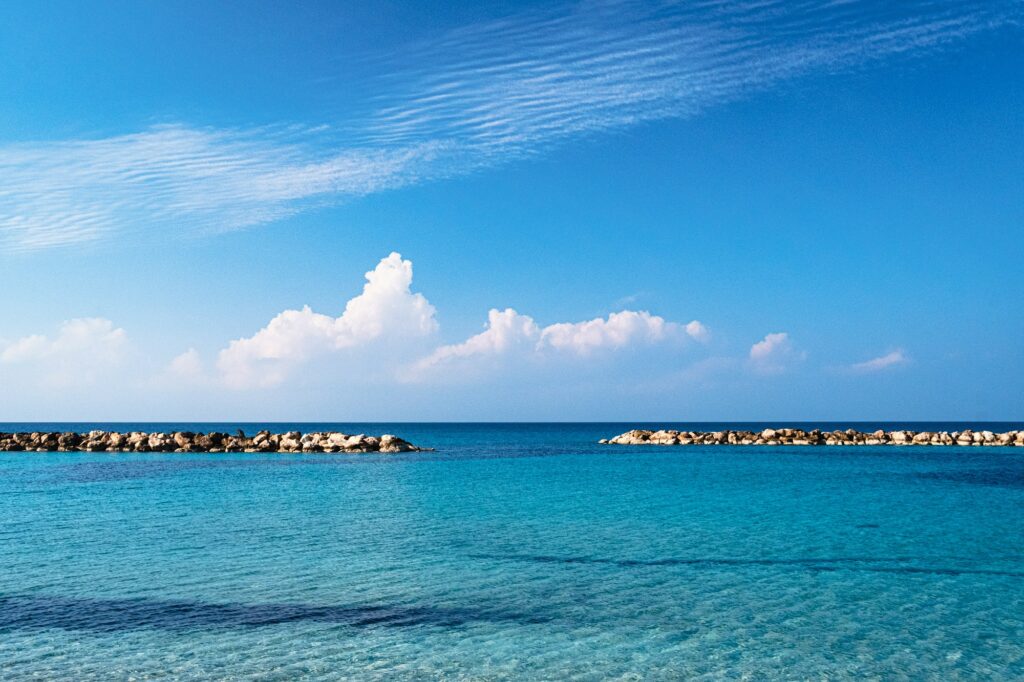
Come October 2026, Europe’s warmest sea is Cyprus, averaging 25.2°C (up to 27.6°C in places). Crete, Malta and the Canaries follow at about 23.4-23.5°C. According to the European Environment Agency, 100% of Cyprus’s coastal bathing waters were rated “excellent” in the 2025 season. For a warm swim combined with sightseeing, Crete is the better all-round pick.
Every year, come early October, the same question comes up: where can you still get in the sea without wincing? The sourced data all points the same way: Cyprus keeps the warmest sea in Europe, thanks to its position as the EU’s southernmost country and the thermal inertia of the eastern Mediterranean, which is still giving back the heat it stored all summer. Crete, Malta and the Canaries sit within a whisker of each other behind it, between 23.4 and 23.5°C, but for radically different physical reasons — and with pricing, crowd and Schengen dynamics that can tip the balance depending on your travel profile.
The comparison at a glance
Before getting into the detail of each destination, here are the numbers that actually matter when weighing up the four. Sources: Ça baigne ? for sea temperatures, the European Environment Agency for water quality.
| Criterion | Cyprus | Crete | Malta | Canaries |
|---|---|---|---|---|
| Sea (October average) | 25.2°C | 23.4°C | 23.4°C | 23.5°C |
| Air (daytime) | 25-27°C | 21-25°C | 22-24°C | 24-27°C |
| Sunshine/day | 8-9 h | 6-9 h | 7 h | 11 h |
| Hotel prices vs summer | -20 to -40% | -30 to -50% | -20 to -35% | -30 to -50% |
| Schengen Area | No | Yes | Yes | Yes |
| Why it stays warm | EU’s southernmost latitude + thermal inertia | Mediterranean thermal inertia | Small, shallow body of water around the archipelago | Subtropical latitude + open-ocean smoothing effect |
Why does the sea stay so warm this late in autumn?
The answer comes down to one precise physical phenomenon: thermal inertia. Water has a far higher heat capacity than air, which creates a seasonal offset known as the seasonal lag. April and October receive almost identical solar energy (both months sit equidistant from the solstices), yet the Mediterranean averages 14.9°C in April against 22.0°C in October — the gap is purely down to the water’s « memory, » still cold from winter in spring, still warm from summer in autumn, according to Windy.app.
The sea’s actual temperature peak lands 4 to 6 weeks after the solar peak in June, so mid-August rather than midsummer, and that stored heat keeps being released through September and October. This mechanism also explains why Cyprus dominates so clearly: as the EU’s southernmost country (34°N), just 380 km from Egypt, it inherits « all of summer » from the Mediterranean basin. It has the longest swimming season in Europe: the sea there passes 21°C as early as May and doesn’t drop below 20°C again until December, according to DanEri Yachts.
The Canary Islands deserve a correction here: contrary to popular belief, the Canary Current is actually a cold current (a descending branch of the North Atlantic gyre, amplified by coastal upwelling off Western Sahara) — it doesn’t warm the archipelago at all. What keeps the Canaries mild year-round is their subtropical latitude (28°N, comparable to Florida) and the smoothing effect of the open ocean, which limits seasonal swings in both directions: the sea there oscillates between 18-20°C in winter and 23-24°C in summer/autumn, whereas parts of the eastern Mediterranean can top 28°C in summer and drop below 15°C in winter.
Cyprus — Europe’s warmest sea in October
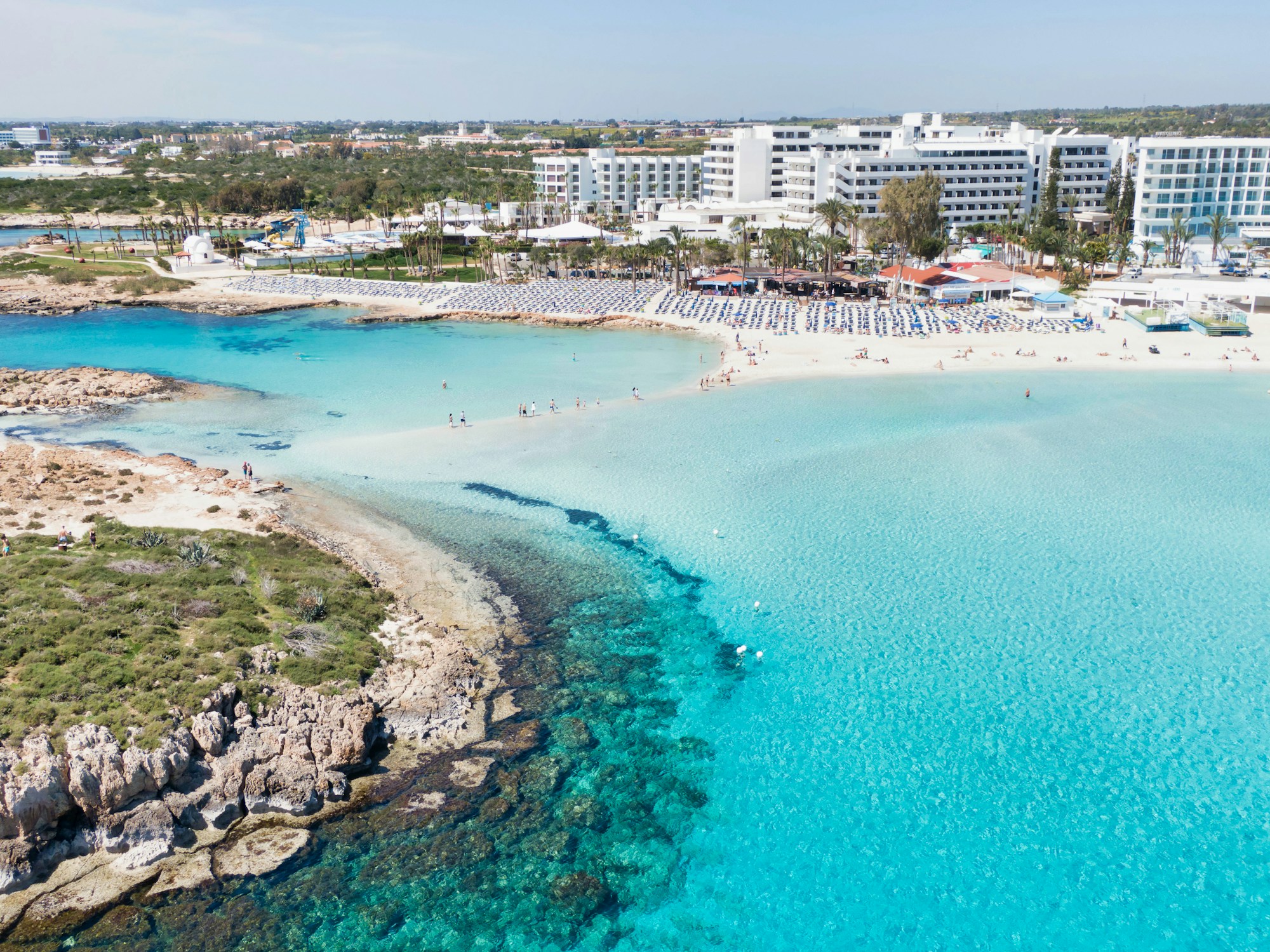
Averaging 25.2°C (23.2 to 27.6°C depending on the cove), Cyprus is unanimously Europe’s warmest sea in October 2026 — Ayia Napa peaks at 25.5°C, Larnaca at 25.3°C, Paphos at 24.5°C, according to Ça baigne ?. After 20 October, the gap with the other three destinations widens sharply: Cyprus alone stays above 24°C, according to SkyLand. Its bathing waters are rated 100% « excellent » by the European Environment Agency, level with Lithuania and Slovenia for the best score in the EU. On the crowd front, arrivals for the first half of 2026 are down 10.1% year on year according to Cyprus Mail — the UK alone made up 33% of June’s arrivals — which only sharpens the end-of-season price drop (-20 to -40% vs July-August). Return flights from the UK run anywhere from £42 to £168 in October depending on carrier and dates (easyJet, Ryanair), so it’s worth comparing a few departure airports. Our guide to a beach holiday in Cyprus in 2026 covers the areas still fully set up for tourism.
Highlights
- Europe’s warmest sea: 25.2°C on average, up to 27.6°C in places
- 100% of bathing waters rated « excellent » (EEA, 2022-2025 data)
- The longest swimming season on the continent, from May to December
Crete — the best mix of exploring and swimming
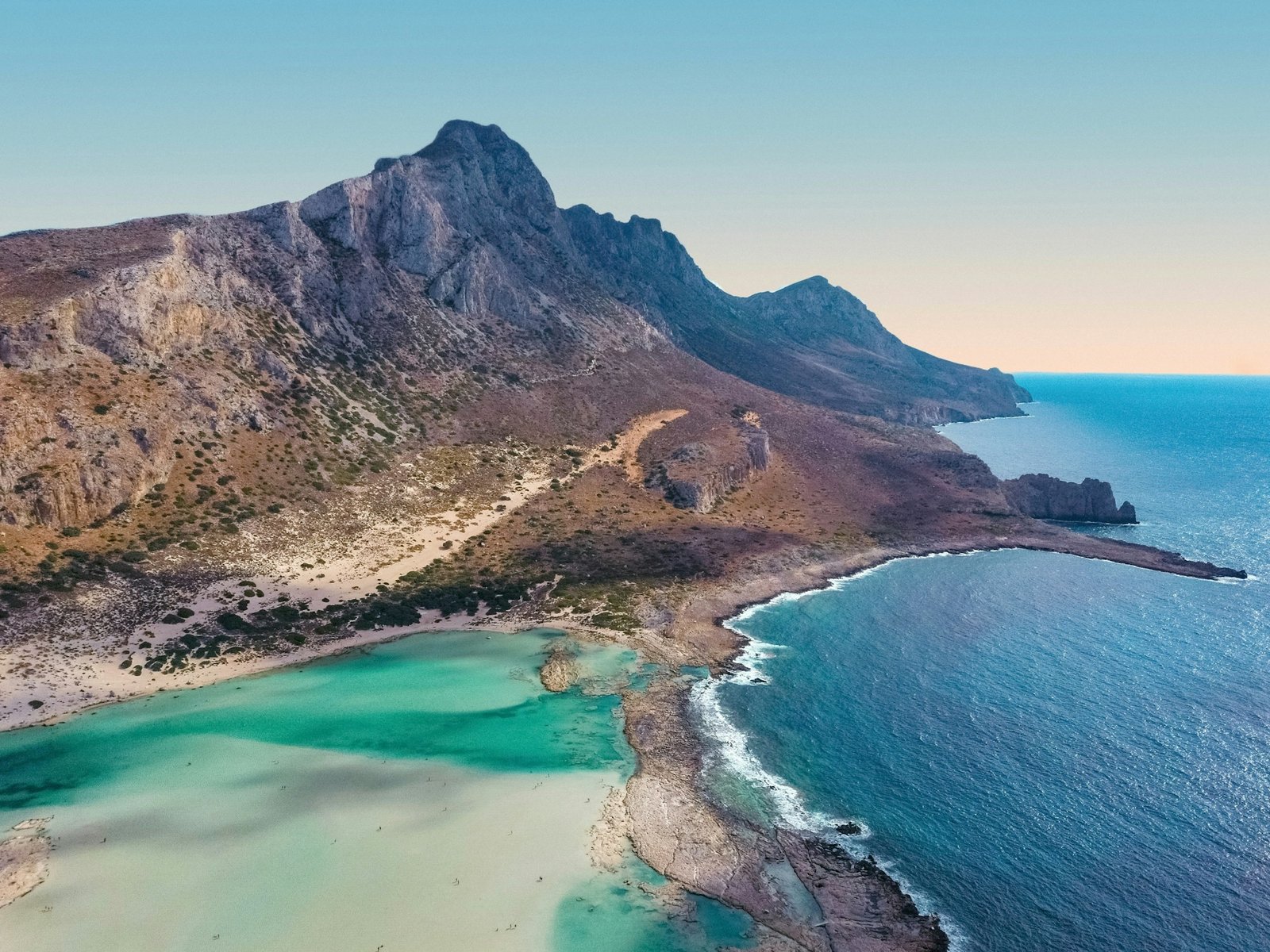
Averaging 23.4°C at Heraklion (21.8 to 25°C depending on the coast), Crete sits just behind Malta and the Canaries, but it makes up for it with a genuine advantage: it’s fully within the Schengen Area, unlike Cyprus. The 2nd and 3rd weeks of October are judged the best trade-off of the year according to A House to Stay: the weather’s still reliable, crowds have already thinned out, and prices are already down 30 to 50% on the August peak. The drop in visitor numbers is dramatic at the big sites — Elafonissi goes from several thousand visitors a day in August to a few dozen by mid-October. Crete also remains the number one region for Greek tourism, with 5.6 million international arrivals in 2025 (+5.5%) according to sofokleous10.gr. Return flights from London to Chania start around £81 with Ryanair (6-20 Oct) or £112 with easyJet — some of the cheapest fares of the year outside peak summer. For planning the trip, our 4-day Crete itinerary covers Heraklion, Knossos and Chania.
Highlights
- Weather still reliable and crowds already thinned by the 2nd-3rd week of October
- Visitor numbers down 40 to 60% at major sites (Elafonissi, Knossos)
- Hotel prices down 30 to 50% compared with August
Malta — the car-free city break, sea included
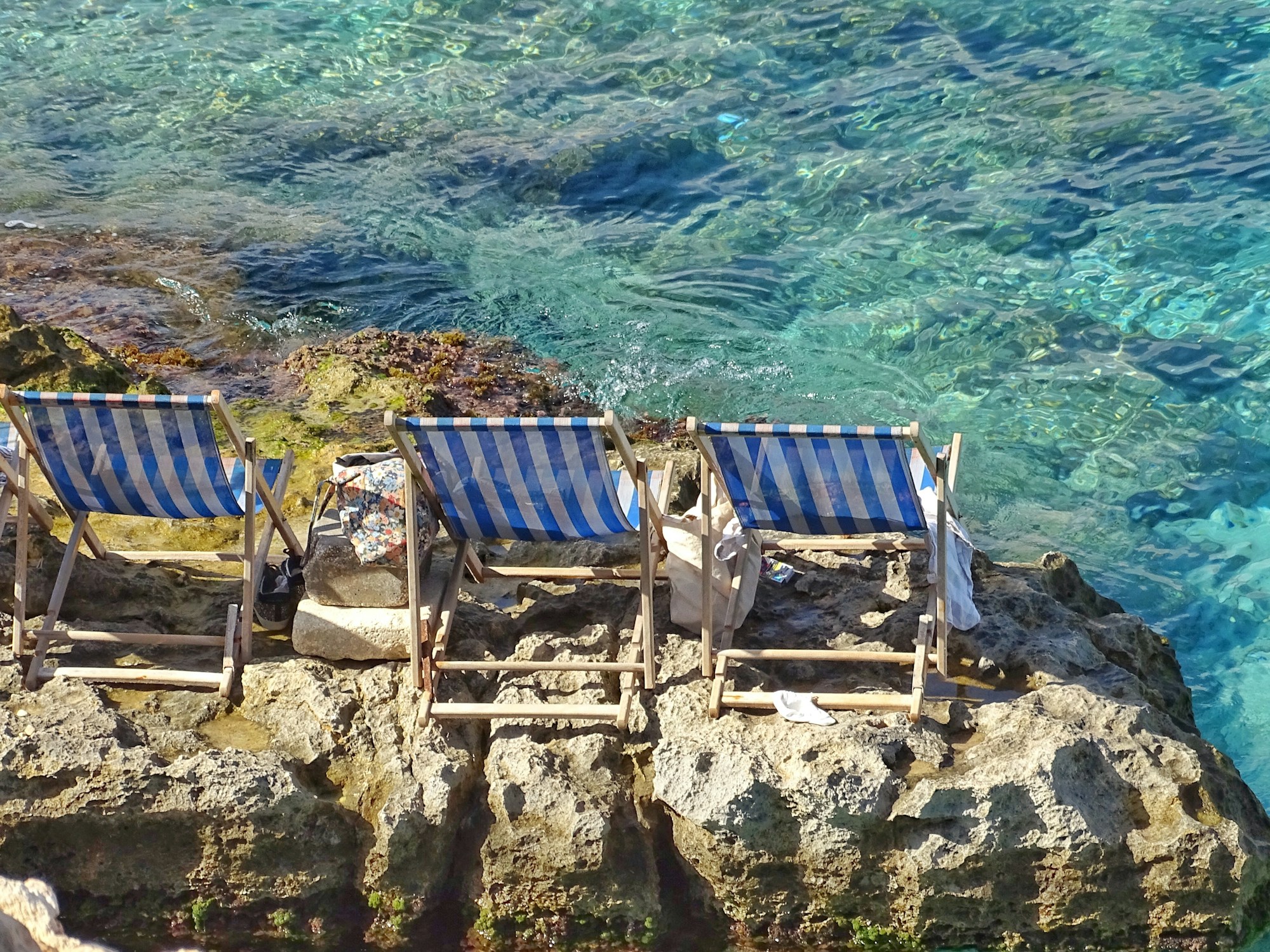
The sea around Malta averages 23.4°C (21.7 to 24.9°C), remarkably even across the whole island, from Valletta to Gozo — a score almost identical to Crete’s, according to Ça baigne ?. It holds above 23°C until mid-October before easing back to 21-22°C towards month’s end. The real difference from the other three destinations isn’t thermal but touristic: average stay length has fallen to 5.7 nights (from 12 previously), which spreads tourism across the whole year rather than piling it into summer. A public debate has followed: the Malta Tourism Authority’s chief executive maintains the archipelago isn’t suffering from overtourism despite a projected 4.5 million visitors in 2026, while economist Lino Briguglio and the ADPD party argue Malta has « exceeded its carrying capacity, » according to The Malta Independent. Return flights from London start around £60 with Ryanair (28 Sept-7 Oct 2026), among the cheapest fares of the year to the island. For a compact trip, our 3-day Malta itinerary covers Valletta, Mdina and Gozo without needing to hire a car.
Highlights
- Compact island, public transport is enough, no car needed
- Notte Bianca on 3 October 2026, a free cultural all-nighter in Valletta
- Tourism spread evenly across the year, so the summer/autumn contrast is milder than elsewhere
Canary Islands — the most stable sea, not the warmest
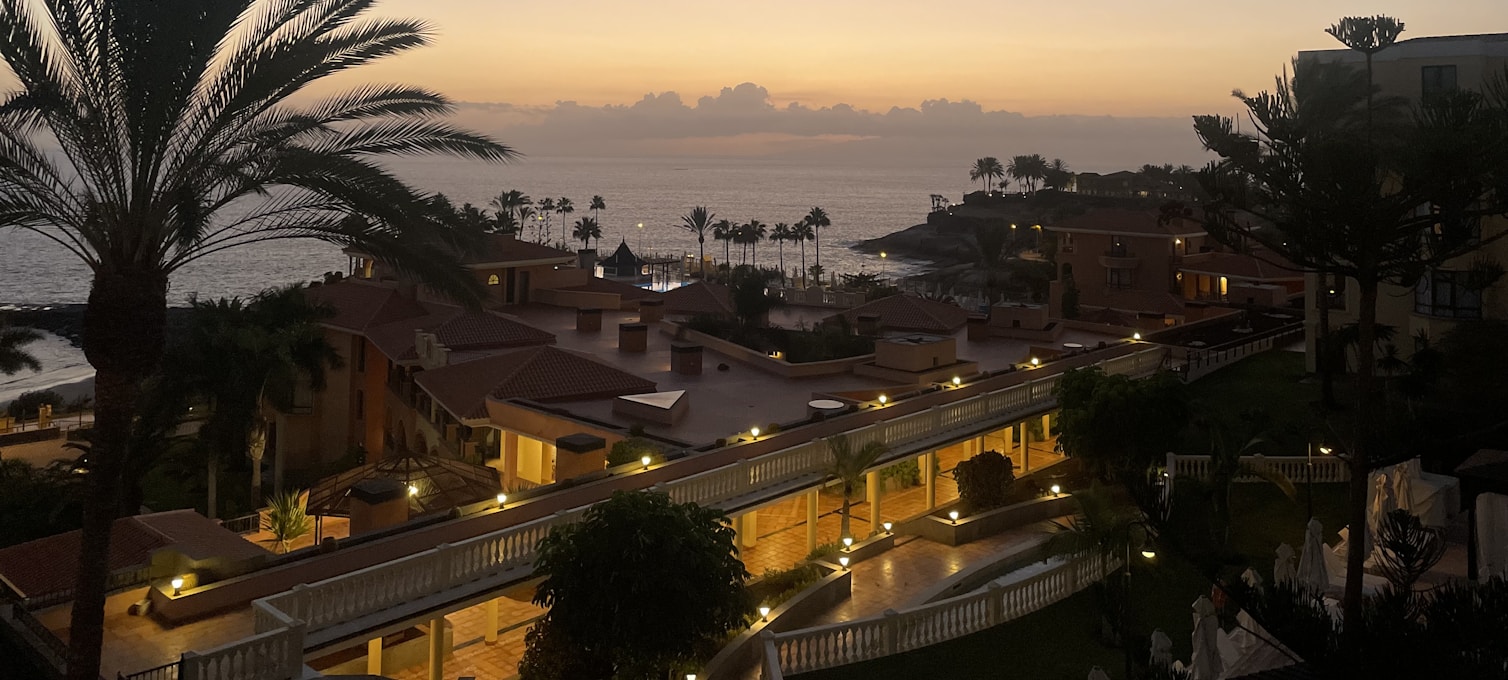
The sea around the Canaries averages 23.5°C on Gran Canaria (22.9 to 24.7°C depending on the island), slightly behind the three Mediterranean destinations but with an edge none of Cyprus, Crete or Malta can match: near-perfect stability all year round. Unlike the Mediterranean, where the water can drop below 15°C in winter, the Canarian sea only swings between 18-20°C in winter and 23-24°C in summer/autumn — and October marks the annual thermal peak here, the reverse of the Mediterranean pattern, where the peak falls closer to late August-September. The climate is also the sunniest of the four destinations, with 11 hours of sunshine a day against 6 to 9 hours elsewhere. An active tourism-protest movement, « Canarias tiene un límite, » has been running since 2024: coordinated demonstrations took place on 15 June 2026 over concerns about housing and fresh-water resources, with local councils responding with a pilot tourist tax of €1-3 per night in some municipalities. Return flights from Birmingham start around £74 (3-10 Oct) and from Belfast around £92 (31 Oct-7 Nov) with Ryanair/easyJet — routes from regional UK airports are often cheaper than from London for this one. Our comparison of European islands weighs the Canaries against Paros, Kos and Madeira for different types of trip.
Highlights
- October is the sea’s annual thermal peak here, unlike the Mediterranean
- Swimmable year-round, never below 18°C even in winter
- 11 hours of sunshine a day, the best of the four destinations
Which destination fits your trip?
Beyond the raw temperature figure, the right choice really comes down to what you’re after in October 2026:
- The warmest sea, full stop: Cyprus, at 25.2°C — and for UK travellers, time spent there doesn’t count against your Schengen 90-day allowance either.
- A hiking-plus-beach trade-off, inside Schengen: Crete, with the 2nd-3rd week of October as the sweet spot.
- A car-free cultural city break: Malta, with Notte Bianca on 3 October as a free highlight.
- A stable sea all year, for a trip outside strict school-holiday dates: the Canaries, the only one of the four where swimming stays viable in the depths of winter.
Before you go
One eSIM lets you compare network coverage across Cyprus, Crete, Malta and the Canaries without effort, no need to swap a physical SIM at every stop.
Plans from a few euros, depending on destinationEspecially handy for the Canaries (a longer flight) or a multi-island Mediterranean trip: repatriation, luggage and cancellation cover included.
Free quote onlineFrequently asked questions
Where is the sea warmest in Europe in October 2026?
Cyprus, averaging 25.2°C with peaks of 27.6°C in places — Europe’s warmest sea that month, according to Ça baigne ? and SkyLand.
Can you still swim in Crete in October?
Yes, the sea stays at 22-24°C depending on the area, averaging 23.4°C at Heraklion, gradually cooling towards the end of the month according to Ça baigne ?.
Is Malta warmer than Crete in October?
Practically identical: 23.4°C in both cases on the most precise data available. Some sources give Malta a very slight edge, but the difference is negligible in practice.
Is the Canary Islands sea as warm as the Mediterranean in October?
It’s actually slightly cooler (23.5°C on average, down to 22.6°C around Lanzarote and Fuerteventura) than Cyprus, but far more stable year-round and never freezing, unlike the Mediterranean in winter.
Why does the sea stay warm so late in autumn?
Thermal inertia: water takes much longer than air to warm up and cool down. The sea’s real peak arrives 4 to 6 weeks after the solar peak, so mid-August rather than June, and keeps releasing that stored heat through September and October, according to Windy.app.
Does the Canary Current warm the archipelago’s water?
No, that’s a myth worth correcting: the Canary Current is actually a cold current, driven by upwelling off Western Sahara. What keeps the Canaries mild is their subtropical latitude and the smoothing effect of the open ocean, not a warm current.
Is Cyprus in the Schengen Area?
No, not as of September 2026. A vote by the Council of the EU is expected this same month, with accession possible in late 2026 or 2027. For UK passport holders this actually cuts in your favour: you can still enter Cyprus visa-free for up to 90 days in any 180-day period, an ETIAS authorisation is expected to become mandatory from late 2026, and — usefully — time spent in Cyprus doesn’t count towards your separate Schengen 90/180-day allowance. Malta, Crete and the Canaries, by contrast, are fully within Schengen.
Are prices really lower than in summer?
Yes, between -20% and -50% depending on the destination: Crete and the Canaries offer the sharpest drops (-30 to -50%), followed by Cyprus (-20 to -40%) and Malta (-20 to -35%, since its seasonality is more spread out across the year).
Sources
- Ça baigne ? — Cyprus sea temperature in October
- Ça baigne ? — Crete sea temperature in October
- Ça baigne ? — Malta sea temperature in October
- Ça baigne ? — Canary Islands sea temperature in October
- SkyLand — Cyprus, Crete or Malta in October
- European Environment Agency — European bathing water quality 2025
- Copernicus Marine Service — Marine heatwave, first half of 2026
- Windy.app — How Mediterranean sea temperature changes through the year
- DanEri Yachts — Cyprus sea temperature by month
- Cyprus Mail — Cyprus tourism, first half of 2026
- CyprusVisa.co.uk — Cyprus ETIAS 2026: do UK travellers need it?
- sofokleous10.gr — Crete, the leader of Greek tourism
- A House to Stay — Crete in September and October
- The Malta Independent — The overtourism debate in Malta
- Travel And Tour World — Canary Islands, new rules and protests in 2026
- Severe Weather Europe — Medicane risk in the Mediterranean
- momondo.co.uk — Cheap flights from the UK to Malta
- Ryanair — Flights to Crete
- Ryanair — Flights to the Canary Islands
Research carried out on 7 September 2026.

Plan your trip with Pixidia
Pixidia learns how you travel and helps you build a trip that truly fits you and everyone coming along.
Open the planner