
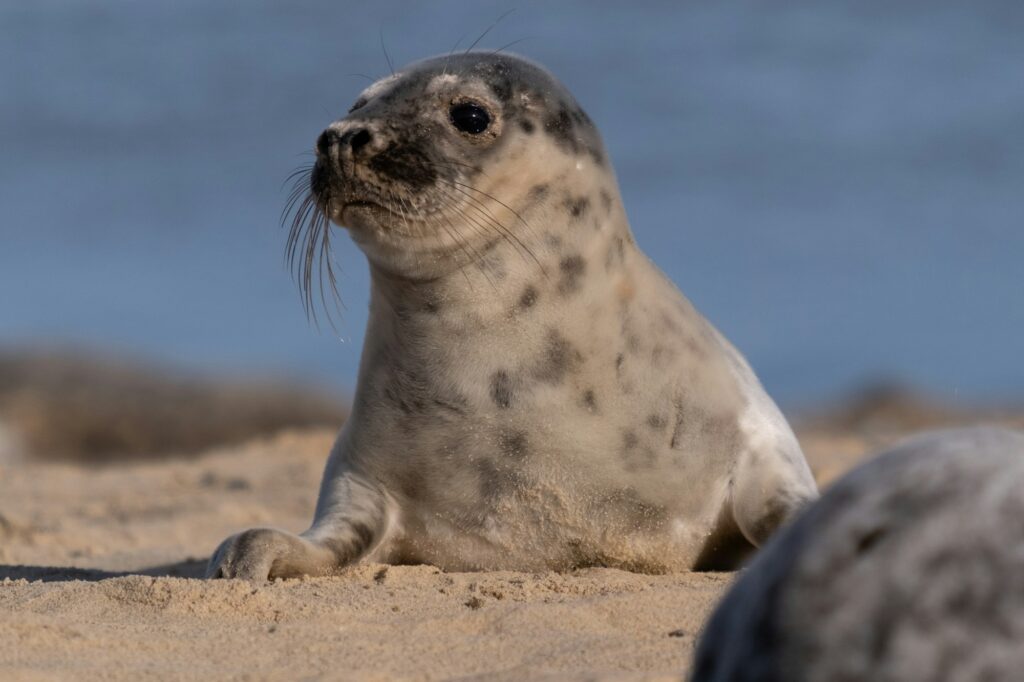
Grey seal pups at Horsey can be seen from early November to late January, with a peak between mid-November and mid-December. The colony counted 3,246 newborns in 2024-2025, according to the regional press. Watch from the dunes: the beach is closed to walkers for the whole season.
Checked on against the official and charity sources cited.
Every winter, the coast between Waxham and Winterton, in Norfolk, hosts one of the largest grey seal colonies in the UK. The females give birth on the sand, and the pups, covered in a fluffy white coat, stay on the beach for several weeks before heading to the sea. This guide tells you when to go, where to stand, how to get to the coast from Norwich, and what to avoid so you don’t disturb the mothers.
When to see the seal pups at Horsey
The pupping season lasts about twelve weeks, from November to January, according to Friends of Horsey Seals (FoHS), the volunteer group that monitors the colony from Waxham to Winterton. The first females arrive in late October, and FoHS then puts in place a voluntary closure of the beach. Births peak from mid-November to mid-December, which is also the busiest period, Christmas included.
January is still good for seeing pups already born. Fewer are born at that point, according to FoHS. Dates vary from one year to the next: check the association’s announcements before you travel.
| Period | What happens | Beach access | Dune access |
|---|---|---|---|
| Late October | Pregnant females arrive, first births possible | Closed (voluntary closure) | Open, marked viewing points |
| November | Births, the peak builds up gradually | No walking allowed | Open |
| Mid-November to mid-December | Peak of births and visitors | No walking allowed | Open, very busy at Christmas |
| January | Older pups, fewer births | No walking allowed | Open |
| February to March | Pups moult and gradually head to the sea | Outside pupping season (to be confirmed) | Open |
| April to October | Outside pupping season | Open | Open |
Source: Friends of Horsey Seals, visit page, checked on 11 October 2026. The February to March row is an estimate based on the species’ biology, not published for Horsey.
The end of the season is debated: late January according to FoHS and Visit North Norfolk, early February according to several tourism sites. Use late January as your benchmark, and check the association’s announcements if you’re coming in early February.
Popular sources give a nursing period of about three weeks, followed by several weeks on land during the moult. These durations don’t come from a published study on Horsey: treat them as rough orders of magnitude.
For other family trip ideas in England in autumn, read our article on October half-term family breaks in England.
How many seal pups are born at Horsey
The figure most often quoted is the number of newborns counted each week by FoHS volunteers on the coast from Waxham to Winterton, about five miles of beach. An estimate from the regional press (ITV, January 2022) says the colony has grown roughly twenty-five-fold in twenty years.
| Season | Newborns counted | Source |
|---|---|---|
| 2019-2020 | 2,069 | Press, citing FoHS |
| 2022-2023 | 3,796 | Press and FoHS |
| 2023-2024 | 3,616 | FoHS page, season total (27 December 2023) |
| 2024-2025 | 3,246 | Regional press, January 2025, citing FoHS |
Source: Friends of Horsey Seals, seal counts, checked on 11 October 2026, and regional press from January 2025 for the 2024-2025 season. FoHS publishes a 2025-2026 total, but we have not confirmed how to read its columns, so we don’t use it here.
Across the three seasons from 2022-2023 to 2024-2025, counts stay between 3,246 and 3,796 pups. The drop of 370 births between 2023-2024 and 2024-2025 is not considered significant by FoHS chairman Peter Ansell, according to the press. He points to a possible move towards Orford Ness, in Suffolk.
Where to stand: Horsey Gap, the Windpump and Winterton
Two spots let you watch the seals from land: Horsey Gap and Winterton. The Windpump is a comfort fallback, with no view of the seals. In every case, stay on the dunes or at the marked viewing points, and never settle on the sand where the pups rest.
Waxham, on the same coast, is a quieter beach with no car park of its own. A local guide and a holiday park say the seals often come close to the water and the sand in November and December. We have not checked this with an official source. The FoHS count covers the whole coast, from Waxham to Winterton.
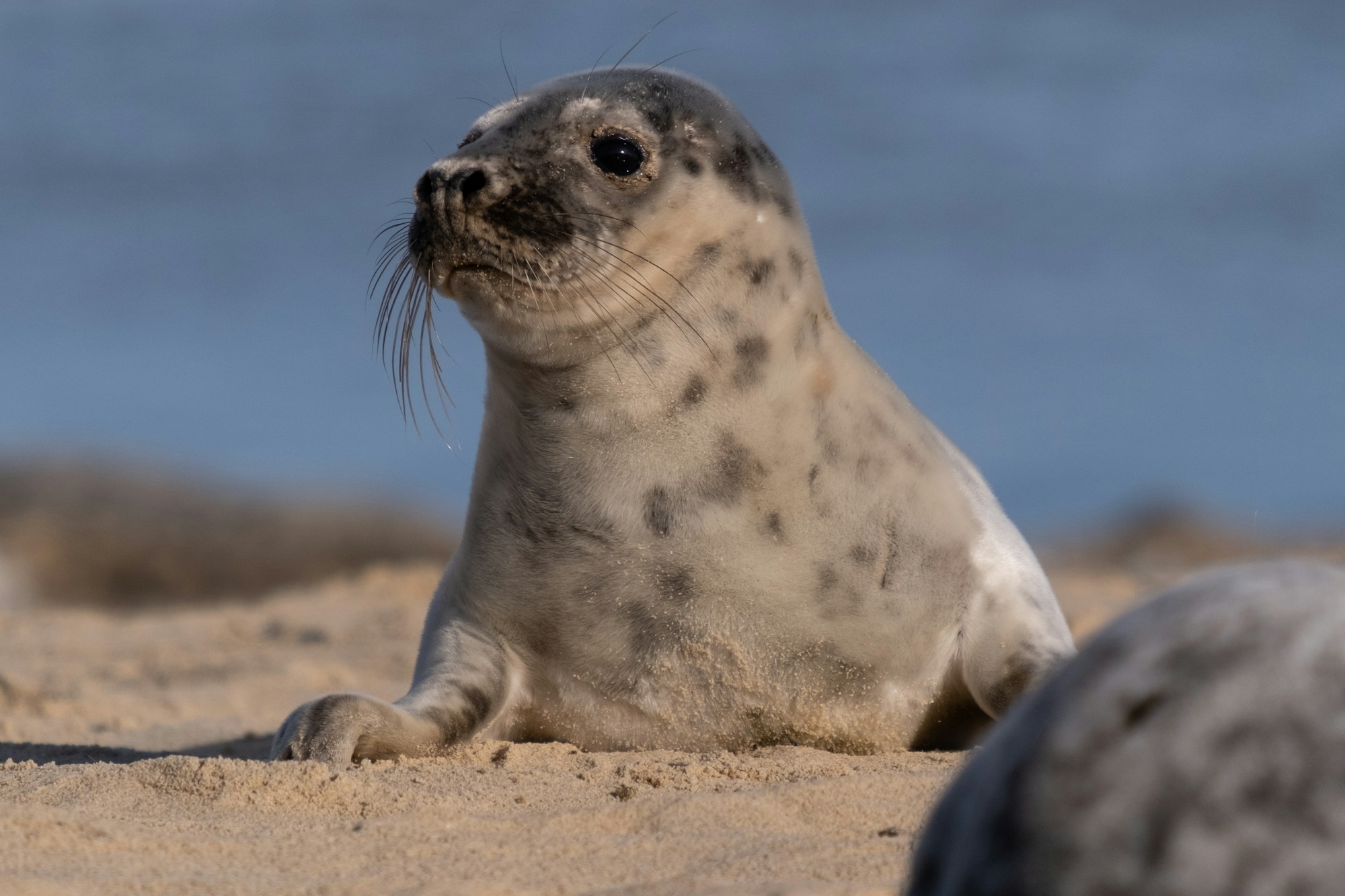
Horsey Gap: the main viewpoint
The car park is run by Horsey Estate, and the viewpoints are on top of the dunes, marked off by ropes. The first viewing point is about five minutes’ walk from the car park, according to the car park operator. The path is a sandy track, sometimes flooded in winter, and the viewing paths are moved from time to time to let the dunes recover.
What to know
- FoHS volunteers, recognisable by their fluorescent yellow jackets, tell you where to stand.
- Toilets and a café are not listed on the operator’s page, so bring something to keep you going on site.
- Dogs must stay on a short lead at all times.
Some operators also run boat trips to the Scroby Sands sandbanks, off Great Yarmouth. We found no recent reports of these trips: ask the operator whether they expect to see seals on your dates.
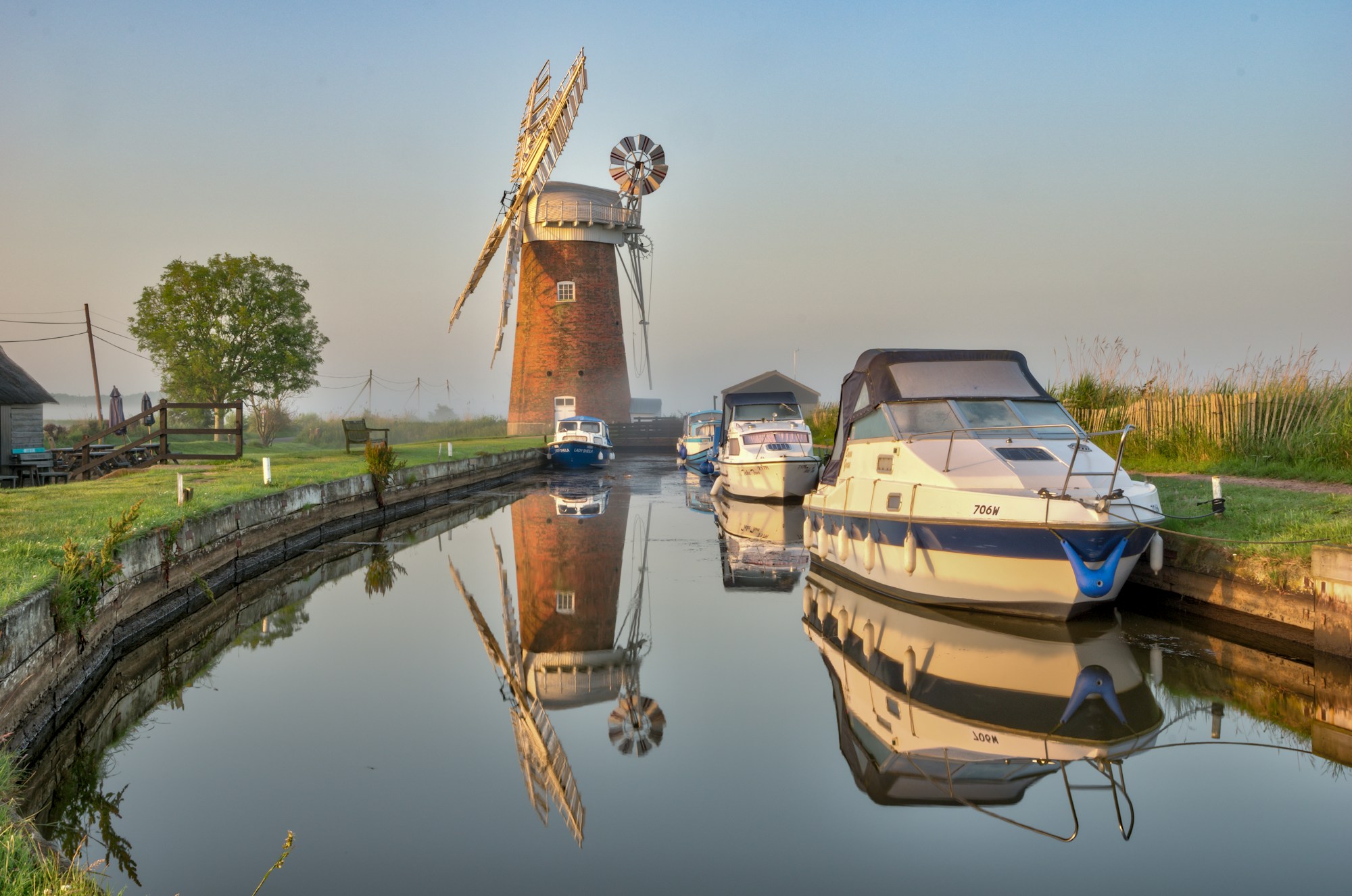
Horsey Windpump: the fallback when the beach is full
Horsey Windpump, run by the National Trust, is about one mile from the beach car park. The car park opens from dawn to dusk. The mill itself is open to the public from March to October, and the National Trust reopened it on 1 March 2026, according to its page. Important point: the National Trust does not show seals from the mill. The view is over Horsey Mere, the lake next to it.
What to know
- Adult entry is £8.50 according to the National Trust (Gift Aid price), to be reconfirmed on the day of your visit.
- Parking is free for National Trust members.
- The path to the viewpoint is accessible by wheelchair and pushchair.
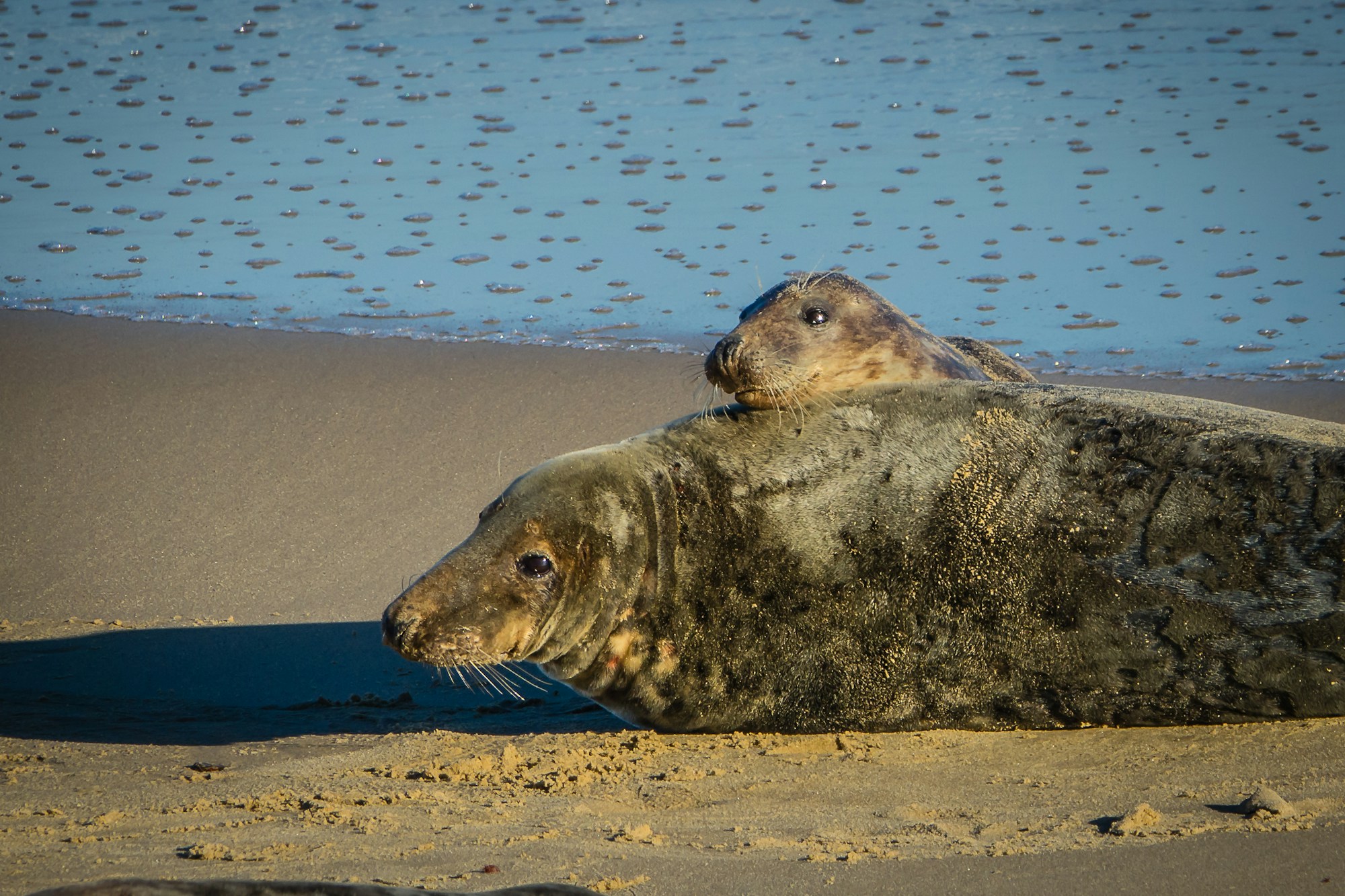
Winterton-on-Sea: the view from the raised car park
Winterton is the other main access point to the colony. The car park is paid, cash only, and closes at 4:00 pm, when it is locked. A chestnut-post fence funded by Natural England marks out a viewing corridor. The raised car park gives a view over the colony, and people with reduced mobility can reach it by car. It is the simplest option for them, even though the beach itself remains very hard to reach.
What to know
- No caravans, motorhomes, coaches or motorbikes, and no parking on the access road.
- Binoculars help you see the pups from the car park.
- Dogs must stay on a lead.
Distance: 100 metres or 10 metres?
The question comes up in every guide, and the answer depends on the source. The official reference is 100 metres, or 330 feet. FoHS quotes it on behalf of the government on its visit page. Natural England gives it as “where possible” in a blog post dated 26 February 2025. Defra’s visitor advice, published in 2023, says “try to stay”.
The 10 metres repeated by some operators and volunteers is a practical limit inside marked viewing areas. It is not a legal rule. The safest option is to stay behind the ropes and use binoculars or a telephoto lens.
| Source | Distance | Type | Date |
|---|---|---|---|
| Natural England, blog post | 100 m “where possible” | Official | 26 February 2025 |
| Defra, visitor advice | 100 m “try to stay” | Official | 2023 |
| Friends of Horsey Seals, visit page | 100 m, citing the government, and more than 10 m | Volunteer group | Checked on 11 October 2026 |
| Horsey Gap car park operator | 10 m | Operator | Undated |
| Cotswold Outdoor, Horsey Beach guide | 15 m | Third party | Undated |
Source: Friends of Horsey Seals, visit page and Horsey Gap seals, checked on 11 October 2026; Natural England, blog post of 26 February 2025; Defra, visitor advice published in 2023.
FoHS sums up the main risk in one sentence: “Never get too close or walk between a cow and pup.” A female who loses sight of her pup, or who feels threatened, can panic and abandon it. The local press has reported incidents: a man chasing a pregnant female, filmed by a witness, and about a hundred seals that threw themselves into the sea at Waxham in July, after a plastic bag blew past.
Getting to Horsey from Norwich
Driving is the simplest option, but the last few miles are on narrow country roads. The train is the most reliable car-free option, as long as you plan the rest of the journey to the coast. There is no direct link identified between Norwich and Horsey.
| Mode | Journey | What to know |
|---|---|---|
| Car | Via the A1151, then the A149 towards Stalham, then local roads | About 45 minutes according to a visitor guide, not measured. Postcode NR29 4EQ for satnav |
| Train | Norwich to Great Yarmouth line, about 32 minutes | Greater Anglia timetable valid from 17 May 2026. Taxi or bus afterwards |
| Bus | Route 717 / 2A, Norwich to Hemsby via Martham | Winterton stop reported since August 2025. April 2026 change reported for Saturdays; reduced service on Sundays and bank holidays, check with the operator |
Source: live-departures.info (rail timetable), checked on 11 October 2026; the 717 / 2A bus timetable has not been re-checked and must be confirmed with the operator.
The Coastal Clipper 1 and 1A, run by First Bus, follows the coast from Martham to Lowestoft via Winterton. It does not start in Norwich: use it to get around along the coast once you’re there.
Check the December timetable on the Greater Anglia site: the aggregator preview stops around 12 December 2026. From Great Yarmouth, a taxi or bus reaches the coast. No dated fare was found for this leg: ask the price when you book.
On foot, walking to another viewing point along the sand is not an option in November and December, as the beach is closed to walkers during the pupping season.
If you’re coming from London, our article on the best day trips from London will help you choose your option.
Car parks and parking rules
Each car park has its own manager, payment method and opening hours. The table summarises them, as they appear on the pages we checked.
| Place | Manager | Payment | Hours | Vehicles |
|---|---|---|---|---|
| Horsey Gap | Horsey Estate | Card or cash (pay-and-display) | 8:00 am to 6:00 pm October to March; 8:00 am to 8:00 pm April to September | Cars only: no motorhomes, caravans, buses, coaches or motorbikes |
| Winterton | Private | Cash only | Closes at 4:00 pm, locked after that | No caravans, motorhomes, coaches or motorbikes |
| Horsey Windpump | National Trust | Ticket; free for members | Dawn to dusk | Motorhomes charged, no overnight parking |
Source: Visit North Norfolk, Horsey Gap car park, Friends of Horsey Seals, visit page and National Trust, Horsey Windpump, checked on 11 October 2026.
The 2026 fee for the Horsey Gap car park has not been confirmed. Ask Horsey Estate for the current amount, and carry both payment methods. Overnight parking is not allowed at Horsey Gap, according to Visit North Norfolk.
Your parking ticket needs to cover the round trip on foot: the first viewing point is about five minutes from the car park, and the others are half an hour away, according to FoHS. Allow plenty of time, as the return often happens late in the day, when the car park is still filling up.
Blakeney Point: another colony, another rule
Blakeney Point, further north, had nearly 9,000 pups born in 2023, according to SMRU, the body that carries out the national counts, a figure relayed by the National Trust. The walking restriction there runs from late October to mid-January, according to the National Trust. There is no access on foot during the pupping season.
The National Trust recommends boats from Morston Quay as the suggested way to visit, without running them itself. Boats cannot land near the colony: trips keep their distance. Dogs are banned on Blakeney Point during the pupping season.
| Operator | Departure | Price | Season listed | To check before booking |
|---|---|---|---|---|
| Beans Seal Trips | Morston Quay | £20 adult, £10 child (14 and under); undated price, check with the operator | Daily trips from 1 April to 31 October, “regularly throughout the winter” in winter | Trips depend on the tide. Advance booking “strongly recommended” |
| Temple Seal Trips | Morston Quay | £13 per person; undated price, check with the operator | Undated | Current times and price |
| Ptarmigan | Morston Quay | Not listed | Daily trips from April to early November, undated listing | 2026-2027 season and price |
Source: Beans Seal Trips, Visit North Norfolk, Temple Seal Trips, Visit East of England and National Trust, Seal watching at Blakeney Point, checked on 11 October 2026. The Beans and Temple prices are undated: they are given for reference only, so check with the operator before booking.
How to behave so you don’t disturb the colony
The colony depends on the mothers being left in peace. A few simple habits prevent accidents, and the most important is never to approach the pups. Here is what FoHS, the car park operator and the National Trust ask.
- Keep your distance. Stay behind the ropes, and use binoculars or a telephoto lens. For distance guidance, see the section above. FoHS also asks visitors never to take a close-up selfie with a seal.
- Keep your dog on a short lead. A threatened seal can attack a dog, according to FoHS.
- Never touch, stroke or feed a seal. Adults can bite hard, and FoHS repeats this on its visit page.
- Never pass between a female and her pup. This is one of the FoHS rules quoted above.
- Don’t go onto the beach during the voluntary closure. Volunteers put it in place from late October to protect the pupping.
A female who feels threatened can charge, according to third-party guides, who describe large animals able to move fast (unofficial source). Keep your distance, even when the pup seems to be on its own.
The Defra and Natural England rules are advice, not laws. Follow the signs on site and the instructions from the volunteers.
What to do if you find a pup alone on the beach
Seeing a pup alone on the beach is unsettling. A lone pup is not necessarily abandoned: the mother may be out feeding for several hours. The time thresholds given by sources vary, and none is used here for Norfolk.
Don’t touch it, move it or push it towards the sea. Report it to a FoHS volunteer on site, recognisable by their fluorescent yellow jacket, or to the RSPCA. Note the exact place and time before you call.
For the exact steps and who to contact, follow the RSPCA’s official advice on what to do if you find a seal pup, linked below.
Source: RSPCA, Seals: what to do if you find one and Friends of Horsey Seals, visit page, checked on 11 October 2026.
Planning your day watching seals
Here is one possible plan, based on the advice gathered.
Watch the high tide. At high tide, pups can get trapped against the sea wall at Waxham, according to a rescue report cited by the press. Check a tide table for Horsey beach before you go: we found no reliable source of tide times for this site.
- Morning, early. The Cotswold Outdoor guide advises arriving early, before the spot fills up.
- On site, stay on the viewing points. Follow the volunteers, stand behind the ropes and leave room for other visitors.
- Midday, change spot. The Windpump offers a break with an accessible path and a view over the mere.
- Late afternoon, plan the way back. The car park may be full, and late afternoon brings crowds too.
Grey and drizzly days draw fewer visitors, according to visitors’ accounts. It’s an option if you can choose your date, with no guarantee.
Budget: what to plan for
Amounts in pounds sterling, checked on 11 October 2026. Those marked undated or unconfirmed should be checked with the operator.
- Horsey Gap car park. Paid, by card or cash. The 2026 fee is not confirmed: ask Horsey Estate.
- Winterton car park. Paid, cash only. Have change ready.
- Horsey Windpump. Adult entry £8.50 according to the National Trust, to be reconfirmed. Parking is free for members.
- Boat trip. To Scroby Sands, the Viator card shows €70.91 per adult for two adults, for dates between 15 November and 15 December 2026, checked on 11 October 2026. Morston Quay operators list their prices without dates: ask for the price before booking.
- Train and bus. The Norwich to Great Yarmouth fare was not checked for this article: check it on the Greater Anglia site.
Accessibility: wheelchairs, pushchairs and reduced mobility
Horsey Gap is hard to reach: the track is sandy and sometimes flooded in winter. FoHS describes access by wheelchair or pushchair as very difficult. No accessible platform or boardwalk has been identified at Horsey.
Winterton offers the best option: the view from the raised car park can be reached by car, with binoculars. The Windpump has an accessible path to the viewpoint over Horsey Mere, with accessible toilets and reserved spaces.
A colony that grew from a small protected group
The Horsey colony formed shortly before the 2000s. In 2003, according to FoHS, Natural England and the Broads Authority protected a small group of seals that were pupping on the beach.
Today, FoHS, a charity with about fifty volunteers according to the press, runs the wardening and publishes the weekly counts. Natural England remains the conservation authority for the Winterton and Horsey Dunes SSSI and SAC sites, and Winterton Dunes is a national nature reserve. In December 2024, Natural England ran a pilot drone count on Winterton beach: a research method, not a rule for the public.
The national SCOS 2025 report from SMRU, published in February 2026, estimates pup production in England about 18% higher than in 2021, according to the press summary we read. Horsey, Blakeney and Donna Nook are the east coast colonies.
What other guides don’t tell you
Here are three points that official or charity sources let us settle, and that guides often skip.
- The beach closure is voluntary. It is set up and kept by FoHS volunteers from late October (Friends of Horsey Seals, visit page, checked on 11 October 2026).
- Volunteers don’t know where the seals go. The chairman of FoHS admits it. Orford Ness, in Suffolk, is a possible move, and the Scroby Sands sandbanks a more speculative guess (regional press, January 2025, checked on 11 October 2026).
- Restriction windows are not the same. Blakeney Point is closed to walkers from late October to mid-January according to the National Trust, while FoHS gives November to January for Horsey (National Trust, Blakeney Point, checked on 11 October 2026).
Practical information for your stay
An eSIM lets you check bus and train times as soon as you land, with no physical SIM card.
Prices vary by plan and durationTravel insurance can cover a cancelled or delayed trip, depending on the plan you choose.
Prices vary by plan and coverFrequently asked questions about Horsey’s grey seal pups
When can you see the seal pups at Horsey?
The pupping season runs from early November to late January, according to Friends of Horsey Seals. The first females arrive in late October, and the beach is closed voluntarily from that date. Some tourist sites give early February as the end of the season. Exact dates vary from year to year. The best time to see many pups is from mid-November to mid-December, the busiest period.
What is the best date to see the seal pups?
The birth peak falls between mid-November and mid-December, according to FoHS. It is also the busiest period, especially over the Christmas holidays. Arrive early in the morning to get a space in the car park. January still works for seeing pups already born, but births decline.
Can you go down onto the beach to see the seals?
No, not during the pupping season. FoHS asks visitors not to walk on the beach during the twelve weeks from November to January. The closure is voluntary and put in place by volunteers in late October. You watch from the dunes and from the viewing points marked by ropes.
How far should you stay from the seals?
The official reference is 100 metres: Natural England gives it as “where possible”, and Defra’s advice is “try to stay”. The 10 metres repeated by some operators and volunteers is a practical limit inside marked areas, not a legal rule. When in doubt, stay behind the ropes and use binoculars or a telephoto lens.
How many seal pups are born at Horsey each year?
The FoHS count gives 3,796 newborns in 2022-2023 and 3,616 in 2023-2024. For 2024-2025, the regional press reports 3,246. FoHS publishes a 2025-2026 total, but we have not confirmed how to read its columns, so this article does not quote it.
Is the Horsey Gap car park paid?
Yes. The car park is run by Horsey Estate, you pay by card or cash, and it is for cars only. Hours are 8:00 am to 6:00 pm from October to March, then 8:00 am to 8:00 pm from April to September. The 2026 fee has not been confirmed: ask Horsey Estate for the current amount before you go.
How do you get to Horsey from Norwich without a car?
Take the train to Great Yarmouth, about 32 minutes according to the Greater Anglia timetable valid from 17 May 2026. There is no direct link identified to Horsey. A taxi or bus then covers the coast. Route 717 / 2A runs from Norwich to Hemsby via Martham, with a reported stop at Winterton. An April 2026 change affects Saturdays, and the service is reduced on Sundays and bank holidays: check the timetable before you travel.
Can you bring your dog?
Yes at Horsey, but the dog must stay on a short lead at all times, according to FoHS and the car park operator. A threatened seal can attack a dog, according to FoHS. At Blakeney Point, dogs are banned during the pupping season, according to the National Trust.
What should you do if you find a pup alone?
Don’t touch it, move it or push it towards the sea. A lone pup is not necessarily abandoned: the mother may be out feeding for several hours. Report it to a FoHS volunteer on site, recognisable by their fluorescent yellow jacket, or to the RSPCA, noting the exact place and time. The RSPCA’s official advice on finding a seal pup gives the steps to follow.
Are the seals accessible by wheelchair?
Access is very difficult at Horsey, where the track and sandy dunes are hard going for a wheelchair or pushchair. Winterton offers a view from the raised car park, reachable by car and usable with binoculars. At the Windpump, the path is accessible to the viewpoint over Horsey Mere, but it does not show the seals.
Sources
- Friends of Horsey Seals, visit page: season, closure, distances, rules for dogs and selfies.
- Friends of Horsey Seals, seal counts: weekly counts and season totals.
- Horsey Gap seals: beach access, first viewing point, rules for dogs.
- Visit North Norfolk, Horsey Gap car park: opening hours and parking rules.
- National Trust, Horsey Windpump: reopening, prices and access.
- National Trust, Seal watching at Blakeney Point: recommended boats, no walking access during the pupping season.
- National Trust, Seal pupping season on Blakeney Point: walking restriction window.
- Beans Seal Trips, Visit North Norfolk and Temple Seal Trips, Visit East of England: Morston Quay operators and announced seasons; prices undated, check with the operator.
- Cotswold Outdoor, Horsey Beach: 15 m distance and advice to arrive early (third-party source).
- SMRU, SCOS 2025: national report on grey and common seals, published February 2026 (PDF not read, figures taken from the press).
- Norwich to Great Yarmouth timetable: rail service.
- First Bus, Coastal Clipper 1 and 1A: coastal service, timetable not re-checked for this article.
- Natural England, blog post of 26 February 2025, and Defra, visitor advice published in 2023: reference distances.
Pages checked on 11 October 2026. Fares and times marked “to confirm” should be checked before any trip.
Plan your trip with Pixidia
Pixidia learns how you travel and helps you build a trip that truly fits you and everyone coming along.
Open the planner