
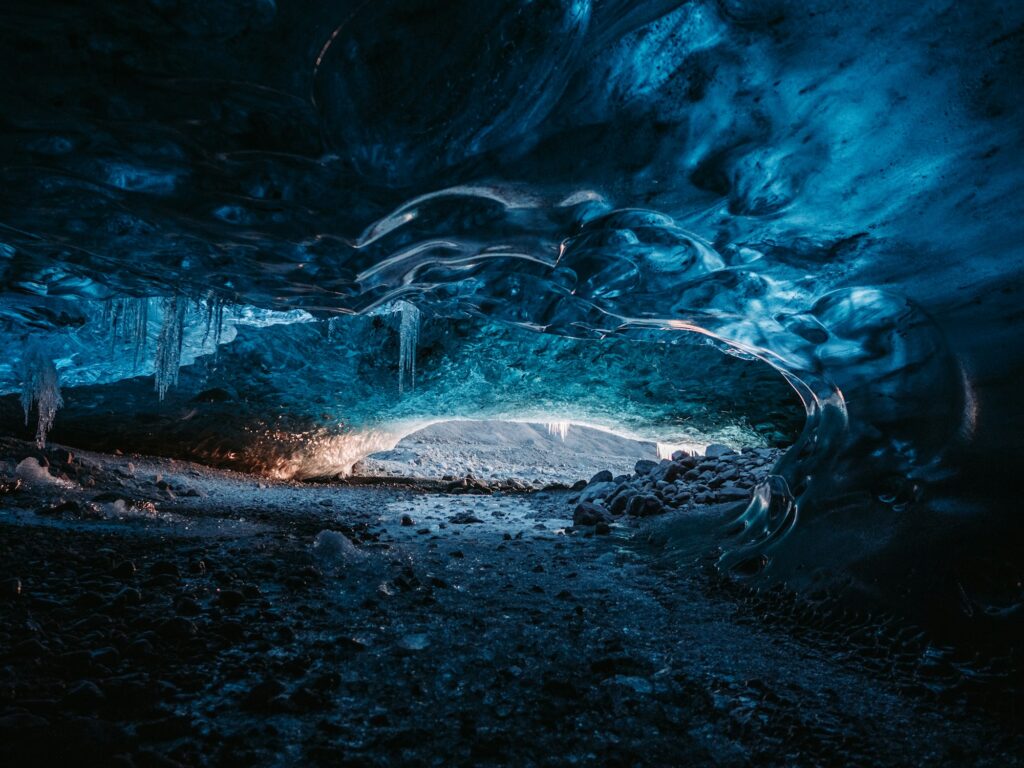
As of 23 October 2026, Vatnajökull ice caves are visited from mid-November to mid-March according to the tourist office, always with a guide. Park contracts for 2025-2027 limit groups to 8 to 16 guests per guide. Some operators advertise October, but no official 2026-2027 date had been published. Confirm the date with your operator before you book.
Checked on against the official sources cited (national park, tourist office, Official Gazette) and the commercial prices recorded.
You don’t book a Vatnajökull ice cave like a museum ticket. It forms under the ice during winter, changes shape from one season to the next, and sometimes disappears partway through the season. A cave you photographed the winter before may no longer exist. What you’re actually buying is a guided trip into a cavity the guide has judged safe to enter that day. This article brings together what the official sources say, what operators advertise, and the points to check before you pay.
An ice cave that only lasts one winter
What you actually visit
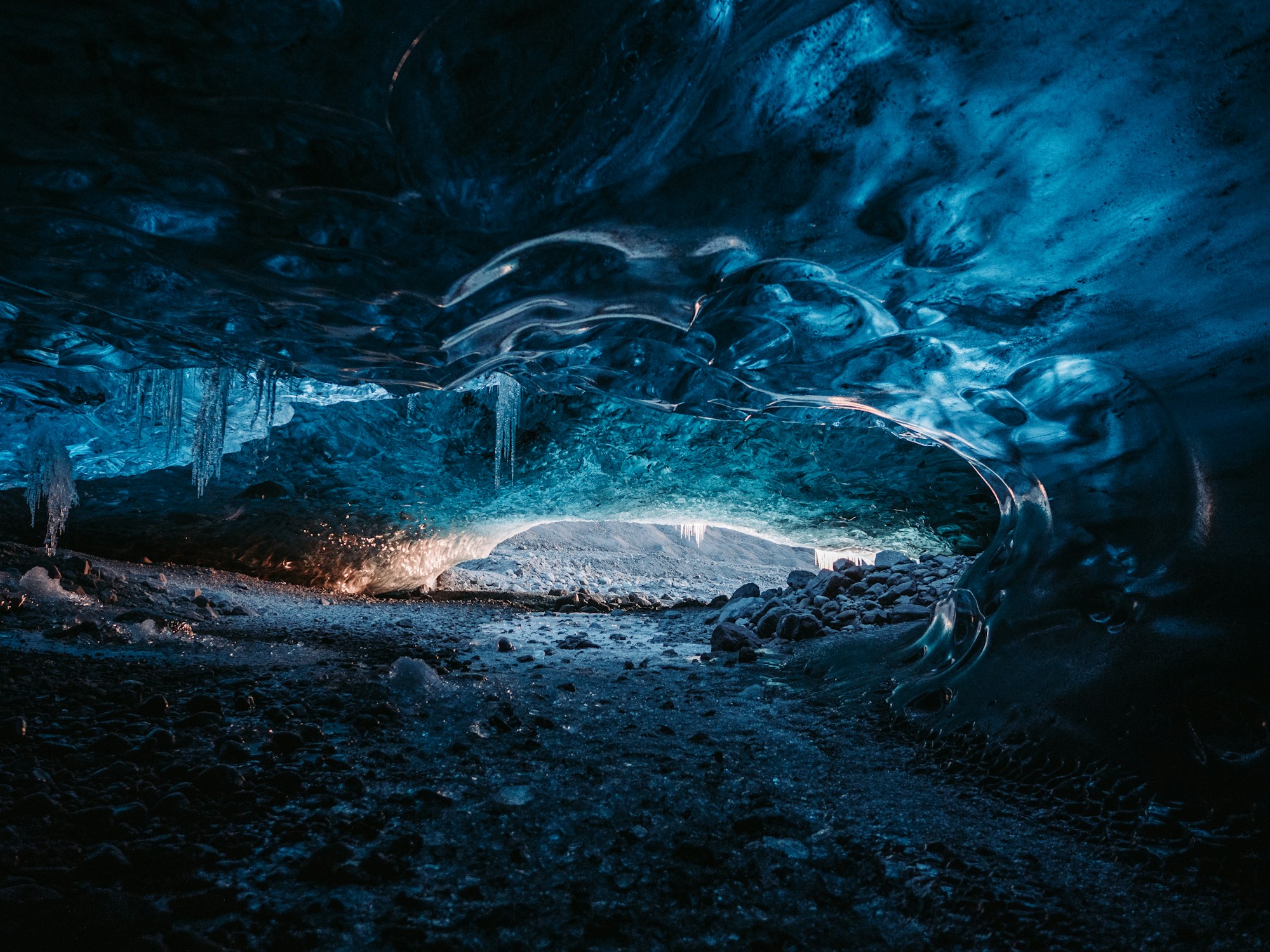
A natural ice cave is a cavity that meltwater carves inside a glacier. In Vatnajökull the ice is very dense and absorbs light, which gives the translucent blue seen in almost every photo. These caves form in winter and change as the season goes on. Visit Vatnajökull says so on its dedicated page: the caves don’t last from one year to the next, and guides locate them each autumn (Visit Vatnajökull, ice caves, accessed 23 October 2026).
Three things get blurred together on many sites. Natural caves in Vatnajökull only open in winter and require a guide. Artificial tunnels, such as the one in Langjökull, are dug into the ice and are open all year according to operators. The Katla caves, near Vík, are presented by commercial pages as accessible for much of the year, but their main arch recently collapsed according to Guide to Iceland (French edition), a commercial page updated on 19 October 2026. This article only covers the natural caves of Vatnajökull.
What changes from one winter to the next
- The caves form in autumn and move with the glacier.
- Access depends on snow, wind, rain and melt.
- Prices and dates are published by operators, not by the park.
The season: a window, not a date
The question people ask most is when. The honest answer is a window: winter, from mid-November to mid-March according to the tourist office, with an end of season that varies by source: mid-March for the tourist office, 31 March for Local Guide, and May for icecave.org, with no fixed date. The start is vaguer still. The September 2025 press announced a reopening in early October, and operators often advertise October.
That variation doesn’t mean the sources are wrong. It reflects two realities. First, the park closed the natural caves from May to September 2025, and reopening depends on ice conditions rather than a fixed calendar. Second, the operator and the guide decide when the season starts, after assessing the ice before each trip. No official park notice giving the exact 2026 reopening date had been published when this article was written.
| Source | Type | Announced start | Announced end | Note |
|---|---|---|---|---|
| Visit Vatnajökull, FAQ | Tourist office | Mid-November | Mid-March | Most-cited reference, no visible update date |
| Visit Vatnajökull, caves page | Tourist office | November | Usually March | Access « during the winter months » |
| Reykjavík Grapevine, 16 September 2025 (citing RÚV) | Press | Early October | Closed May to September | Reopening after the summer closure |
| Iceland Review, 15 September 2025 | Press | October, « winter season » | Not specified | Guides preparing for the following month |
| Local Guide of Vatnajökull | Commercial | October | 31 March | Undated page, footer © 2025 |
| Guide to Iceland (French edition), 19 October 2026 | Commercial | Mid-October (Crystal Ice Cave) | March | Skaftafell from November to March |
| icecave.org | Commercial | November | May | Dates not fixed |
Source: Visit Vatnajökull, FAQ, Reykjavík Grapevine, Iceland Review, Local Guide of Vatnajökull, Guide to Iceland, icecave.org, checked on 23 October 2026.
For a trip, the most cautious reading is this: aim for a visit between mid-November and mid-March, then ask the operator whether it has already opened for the season. If you’re aiming for October or late March, keep a backup date and a cancellation policy that fits your flight.
What the official framework requires since 2025
Since 1 October 2025, cave visits and glacier walks in Vatnajökull National Park have run under contracts with the park, valid until 30 September 2027. For 30 available contracts, 34 companies applied, according to Reykjavík Grapevine (16 September 2025). The areas concerned are Breiðamerkurjökull, east and west of Jökulsárlón, Falljökull or Virkisjökull, and Skeiðarárjökull.
The contract sets rules you rarely see on operators’ websites. The lead guide must have completed at least the Hard Ice 3 training from the Icelandic mountain guides association (AIMG), or comparable training. The operator’s file includes a licence from Ferðamálastofa and a safety plan with risk assessment, work procedures, a contingency plan and an incident report. The form targets the lead guide: nothing says that every guide must hold Hard Ice 3.
Each guide can lead between 8 and 16 guests, depending on the type of trip. Guides assess conditions every day, under the supervision of the nature protection agency, and operators share risk information with each other. The agency can also cap the total number of visitors to reduce queues.
One point needs saying plainly: the park’s general regulation, published in the Icelandic Official Gazette on 3 April 2020 (no. 300/2020), doesn’t mention ice caves. It sets no guide requirement and no cave-specific safety plan. The rules for caves therefore come from the contracts with the park. The same text reminds visitors that they go « at their own risk » (art. 8).
| Item | Value | Source | Status |
|---|---|---|---|
| Contract period | 1 October 2025 to 30 September 2027 | Vatnajökull National Park | Official |
| Companies under contract | 30, for 34 applications | Reykjavík Grapevine, 16 September 2025 | Press citing the authorities |
| Guests per guide | 8 to 16 | Iceland Review, 15 September 2025 | Press citing the authorities |
| Lead guide | Hard Ice 3 (AIMG) or comparable training | island.is application form 2025-2027 | Official |
| Safety plan | Risk assessment, procedures, contingency plan, incident report | island.is application form 2025-2027 | Official |
| Daily conditions check | Every day, by the guides | Iceland Review, 15 September 2025 | Press citing the authorities |
| Minimum age | No official rule; 6 to 16 years depending on the operator | Operators’ pages | Commercial |
| Caves in regulation 300/2020 | No mention | island.is, Stjórnartíðindi | Official |
Source: Vatnajökull National Park, 2025-2027 contracts, island.is, application form, Stjórnartíðindi, regulation 300/2020, checked on 23 October 2026.
A step-by-step visit: departure, drive, walk and gear
From Jökulsárlón to the cave of the day
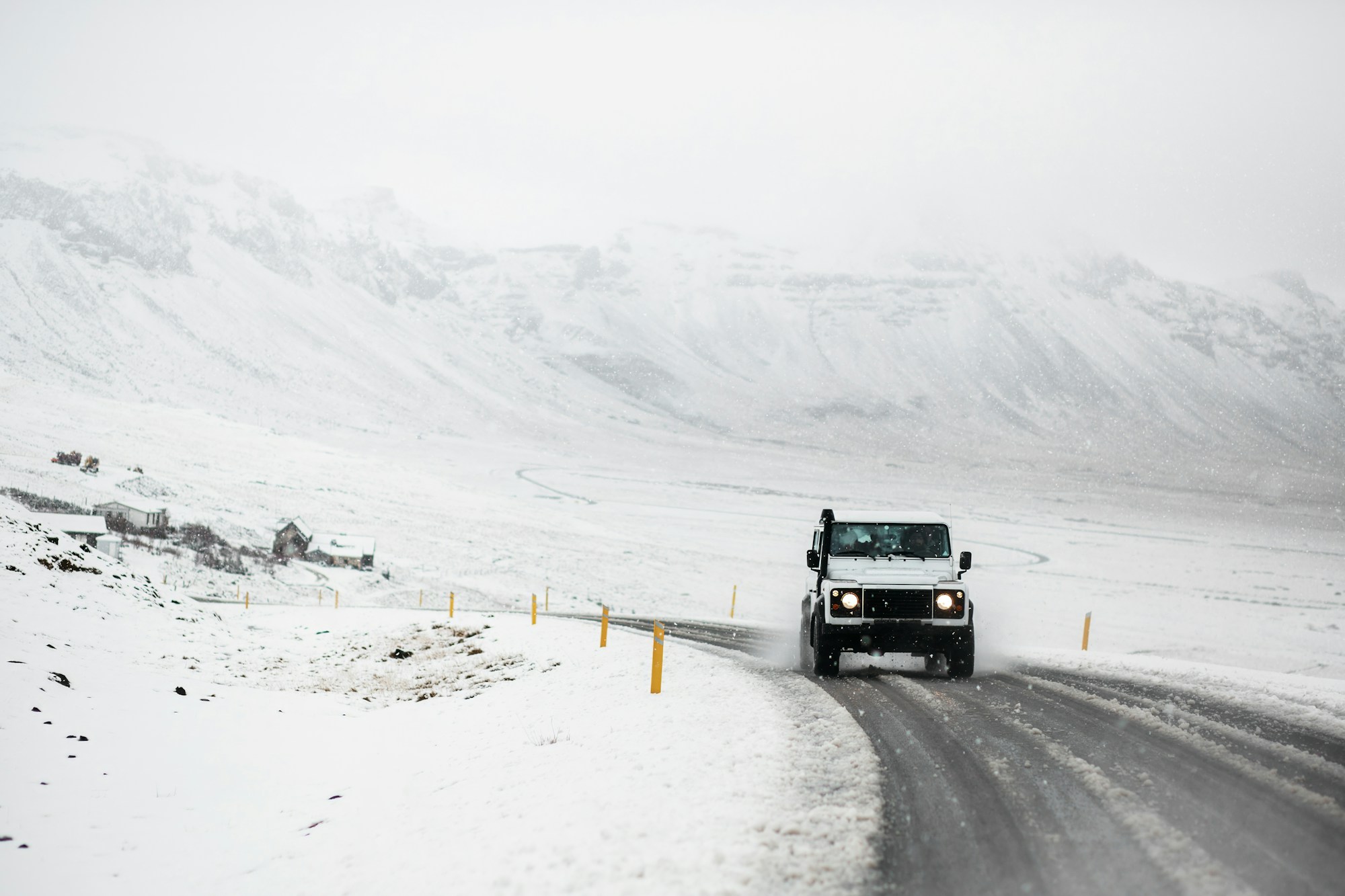
Most trips leave from Jökulsárlón, the glacier lagoon, or from the Skaftafell nature reserve. The ride is in a super jeep, a 4×4 modified for snow and ice, for about 25 minutes to the walking area, according to Local Guide of Vatnajökull. The approach walk, over moraine or ice, runs from 1.4 to 5.5 km depending on the cave of the day. A safety briefing comes before the descent.
Allow 2.5 to 4 hours for a public trip, depending on the operator. The travel blog Ventsetvoyages (in French) describes a trip of about 3 hours, with 30 minutes’ drive to the first cave, snow sometimes blocking the entrances, and a stretch you have to crawl through on all fours. That account isn’t a rule, but it gives a realistic sense of the rhythm of the day.
The word « walk » is misleading. You’ll walk on ice, wearing crampons, in a cold and windy setting, sometimes under fresh snow. The helmet and crampons are provided by the operator. Boots aren’t, and they make the difference on ice.
What to bring
- Sturdy hiking boots with ankle support that take crampons
- A waterproof jacket and trousers
- An insulating layer and warm clothing
- Waterproof gloves and a warm hat
Price and cancellation: what’s shown, and what isn’t
Public prices are modest for an Icelandic excursion, but none is reliably dated. The Local Guide of Vatnajökull page lists 23,900 ISK per person for a public trip, leaving from the Jökulsárlón car park. It carries a « © 2025 » notice even though the season shown is 2026-2027. Treat that figure as an indication, and ask for the price of the day.
Undated commercial listings put trips between €162 and €173 per person (Manawa). The Viator product featured above is €176.79 per person for two adults, price checked on 23 October 2026 for departures between 15 November 2026 and 15 March 2027, with 115 days available out of 121. That amount varies with the date and the number of participants, and it is higher than the undated listings.
| Operator or product | Duration | Announced price | Minimum age | Price date | Status |
|---|---|---|---|---|---|
| Local Guide of Vatnajökull, public winter trip | 2.5 to 4 hours | 23,900 ISK per person (about €164) | 10 years | Undated | Commercial |
| Manawa, Crystal Blue | 3 hours | From €162 | 6 years | Earlier listing | Commercial, to be rechecked |
| Manawa, speleology | 2.5 to 4 hours | From €173 | 8 years | Earlier listing | Commercial, to be rechecked |
| Expedia listing, small group (operator to be confirmed) | 2.5 hours | About $171.65 per adult | Not stated | Undated (extract) | Commercial, search extract |
Source: Local Guide of Vatnajökull; Manawa and Expedia, search extracts recorded on dates earlier than 23 October 2026, checked on 23 October 2026.
Cancellation policies differ, and this is the point that costs the most when the weather intervenes. Local Guide refunds in full if you cancel at least 24 hours before departure. Visit Vatnajökull, in its FAQ, says that for general tours, cancellations made less than 48 hours ahead are not refundable. Ask your operator for the exact rule in writing.
Wind, rain and snow can cancel a trip on the morning itself. Depending on the operator, the trip is then either rescheduled or refunded. The Ventsetvoyages blog says the refund is complete if conditions prevent the trip: that’s a practice, not a guarantee, and it has to be confirmed in the booking terms.
Why summer is closed: what the researchers say
The summer closure isn’t a comfort decision. It rests on Icelandic expertise. A 2017 report written for the national park by Magnús Tumi Guðmundsson, Finnur Pálsson and Jón Gauti Jónsson concludes that cave visits in summer are dangerous. It recommends running them only in winter, and only when conditions are right: no thaw, and no meltwater or rain running over the glacier.
A note from the Icelandic Meteorological Office (Veðurstofa Íslands), dated 4 September 2024 (reference 2024-0234), repeats that recommendation and reminds readers of the risk of glacial floods. The danger isn’t limited to the ice ceiling.
The park has also acted on the ground. In September 2024 it suspended access to the caves during the contract extension, until 30 October 2024, because of the danger from ice overhead at that time of year, according to its notice of 26 September 2024. Outside the season, access can therefore be closed as soon as the ice presents a danger.
The debate isn’t over. In March 2025, an advisory committee proposed a longer closure, from 15 April to 15 October. The park adopted a shorter schedule, from May to September, according to Reykjavík Grapevine (11 March 2025 for the proposal, 16 September 2025 for the closure as applied).
For visitors, the takeaway is simple. A winter trip with a qualified guide is the framework the authorities have chosen. An offer promising a natural cave outside that window doesn’t match any published rule. The vatnajokullicecaves.com page, updated in July 2026, also says there is no natural cave between April and October: a commercial claim, but one consistent with the official sources.
Choosing an operator: reliable signs and warning signals
No commercial page guarantees the cave you’ll actually see. A good operator, however, answers precise questions. Ask for the lead guide’s name and training, the maximum number of guests on the trip, the cancellation rule, the minimum age, and the date of its first trip of the season.
Reassuring signs
- A lead guide whose training is stated, with Hard Ice 3 or a named equivalent.
- A stated group cap, consistent with the 8 to 16 guests in the contracts.
- Listed equipment, with helmet and crampons provided.
- A written cancellation policy with a precise deadline.
Warning signs
- A page promising a named cave, with no mention of the season and no update date.
- A price with no date, or dated from a past season. Several pages checked for this article are in that situation.
- A promise of a natural cave accessible in summer. No official source consulted allows it.
By traveller: family, tight budget, first time, reduced mobility
Families
The lowest age recorded is 6, for a trip presented as family-friendly. No official rule sets that age: the operator decides. Ask for the minimum age in writing, and check that your child can walk several kilometres on ice in crampons, since the approach ranges from 1.4 to 5.5 km depending on the cave. A private trip allows more flexibility on pace and timing.
Tight budget
A public trip is offered at 23,900 ISK per person by Local Guide, according to an undated page. A private trip costs more, but it lets you choose the time slot and gives you more room if the weather changes. The best calculation isn’t only about price: a clear cancellation policy, detailed in the « Price and cancellation » section, is often worth more than a lower fare that can’t be refunded.
First time
For a first visit, choose a small group, a clear cancellation policy and a flexible date. Keep a spare day in your itinerary, since a trip can be cancelled or moved. If you’re planning the rest of the route, our Iceland ring road guide lists the stops you can make around the south-east.
Reduced mobility
No source consulted describes arrangements for people with reduced mobility. The trip means walking on ice, putting on crampons, stooping through narrow passages and coping with the cold. If your mobility is limited, tell the operator before booking and ask its advice: it is best placed to say whether the trip is realistic for you.
In December or February
Days are short, and roads can be harder in December and February, according to car rental blogs (search extracts, not checked here). For the holiday calendar, see our article on Christmas in Iceland, the Yule Lads and New Year in Reykjavík. Allow more margin than you would for a trip in November.
A realistic day, step by step
The most reliable plan starts in Reykjavík early in the morning and includes a night on site. The drive to Jökulsárlón takes about 5 hours, according to Ventsetvoyages, which rules out a day trip there and back. The trip itself takes half a day, between 2.5 and 4 hours including the briefing and the return, if the weather allows.
A sensible schedule: one night near Jökulsárlón, the day before spent checking the weather and the road, then the trip the following day. If the operator cancels, a spare day stops you losing the whole stay. Check the sunset time for your date before you set the start time.
If you spend time in Reykjavík before or after the trip, our Blue Lagoon or Sky Lagoon comparison helps you choose between the two.
Budget to plan for
- The trip: €162 to €173 per person according to undated commercial listings, €176.79 on the Viator product checked on 23 October 2026, or 23,900 ISK for a public trip with Local Guide (undated).
- The car or transfer: to be costed by season. No verified fare is given here.
- Technical clothing, if you don’t own any: it’s often the forgotten expense.
- An eSIM for the road, and insurance that covers glacier hiking.
What other guides don’t tell you
These three points come from official sources, or from press citing the authorities.
- The reopening can be announced in October. Reykjavík Grapevine and Iceland Review reported in September 2025 a reopening in early October, while the tourist office speaks of mid-November. No official announcement for 2026-2027 had been found at the date of checking (Reykjavík Grapevine, 16 September 2025, accessed 23 October 2026).
- The cave rules come from a contract. Park regulation 300/2020, published on 3 April 2020, doesn’t mention ice caves. The guide training requirement and the safety plan appear in the 2025-2027 application form (island.is, application form, accessed 23 October 2026).
- The form targets the lead guide, not every guide. It requires Hard Ice 3 for the lead guide; nothing in the source says that every guide must hold that training (island.is, application form, accessed 23 October 2026).
Practical info before you book
An eSIM gives you mobile data as soon as you land, useful for operator confirmations and offline maps on the south coast road.
Plans depend on duration and data, compare on the siteBefore you buy, check that the policy covers glacier hiking and adventure activities, and cancellations linked to safety.
Price depends on duration and coverageFrequently asked questions
When can you see the Vatnajökull ice caves?
In winter, from mid-November to mid-March according to the tourist office Visit Vatnajökull. Operators often advertise October, and the September 2025 press reported a reopening in early October after the May to September closure. As of 23 October 2026, no official park date for 2026-2027 had been published. Confirm the date of your trip before you book.
Is a guide compulsory?
Yes. Visit Vatnajökull states that an ice cave must never be visited without a glacier guide and suitable safety equipment. The 2025-2027 operating form requires the lead guide to have completed at least the Hard Ice 3 training from the AIMG, or comparable training. The park regulation doesn’t mention the caves: the requirement comes from the contracts with the park.
How many people per guide?
The park’s agreements for 2025-2027 set between 8 and 16 guests per guide, depending on the type of trip, according to Iceland Review and Reykjavík Grapevine (September 2025). One operator, Local Guide, sets a limit of 12 people per guide for its public winter trips. Private trips cost more but are more flexible.
What is the minimum age for a child?
No official rule has been found. Each operator sets its own threshold: Local Guide accepts public trips from age 10, and Manawa offers a trip presented as family-friendly from age 6. Visit Vatnajökull refers each company to its own conditions. Check the minimum age in writing before you book for a child.
How much does the visit cost?
Local Guide of Vatnajökull lists 23,900 ISK per person for a public trip, on an undated page. Other operators quoted from €162 or €173 in earlier listings. An Expedia listing seen as a search extract gives about $171.65 per adult. These amounts are commercial: confirm the price of the day with the operator before you pay.
What happens if wind or rain cancels the trip?
It depends on the operator. The timelines and their sources are given in the « Price and cancellation » section. Read the conditions before you pay, especially if your stay is short.
What should I bring?
The helmet and crampons are provided by the operator. Bring sturdy hiking boots that take crampons, a waterproof jacket and trousers, an insulating layer, waterproof gloves and a warm hat, as set out by Local Guide and icecave.org. City clothes won’t cope on the ice.
Are the caves always in the same place?
No. Visit Vatnajökull says the caves don’t last from one year to the next, and that guides locate them each autumn.
Can you visit an ice cave in summer?
No: the natural caves of Vatnajökull are closed from May to September, for the reasons set out in the section « Why summer is closed ».
How long is the drive from Reykjavík?
About 5 hours to Jökulsárlón, according to the travel blog Ventsetvoyages, and longer if you go via Skaftafell or if the road is difficult. The road condition isn’t checked in this article. Don’t plan a day trip there and back.
Can you come by rental car?
Yes, if you can drive on snow and ice. The park publishes a page on driving in its area. Open it before you set off, and check conditions on the access road that morning. The condition of this road hasn’t been checked for this article.
Is the trip dangerous?
Yes, it is a risky activity, and the official sources describe that plainly: ice can break away, crevasses open up, and meltwater can flood. The guide, the equipment provided and the daily assessment of conditions reduce the risk without eliminating it. The Veðurstofa note of 4 September 2024 (reference 2024-0234) mentions the incident of 25 August 2024 at Breiðamerkurjökull. According to the press at the time, an ice vault collapsed above a viewpoint on a guided trip, causing casualties. The sources consulted don’t establish its cause.
Why are the natural caves closed in summer?
A 2017 report for the park, cited by the Veðurstofa in its note of 4 September 2024, judges summer visits dangerous: see the section « Why summer is closed ».
Sources
- Vatnajökull National Park, 2025-2027 operating contracts: official framework for the trips.
- island.is, 2025-2027 application form: requirements for the lead guide and the safety plan.
- Stjórnartíðindi, park regulation no. 300/2020: general text, no mention of caves.
- Vatnajökull National Park, notice of 26 September 2024: access suspended until 30 October 2024.
- Veðurstofa Íslands, note 2024-0234 (PDF): recommendations on cave visits and glacial floods.
- Visit Vatnajökull, ice caves and FAQ: announced season, mandatory guide, cancellations.
- Reykjavík Grapevine, 16 September 2025: summer closure, number of companies under contract, visitor limits.
- Iceland Review, 15 September 2025: reopening, limited group sizes, daily assessment.
- Local Guide of Vatnajökull: prices, duration, cancellation, equipment (commercial).
- icecave.org, plan your visit: equipment and guide (commercial).
- Ventsetvoyages, visiting ice caves: itinerary and drive from Reykjavík (travel blog in French).
- Guide to Iceland (French edition), ice cave guide: seasons and caves that change (commercial, updated 19 October 2026).
Sources checked on 23 October 2026. Most recorded prices are commercial and undated: confirm them with the operator.
Plan your trip with Pixidia
Pixidia learns how you travel and helps you build a trip that truly fits you and everyone coming along.
Open the planner