
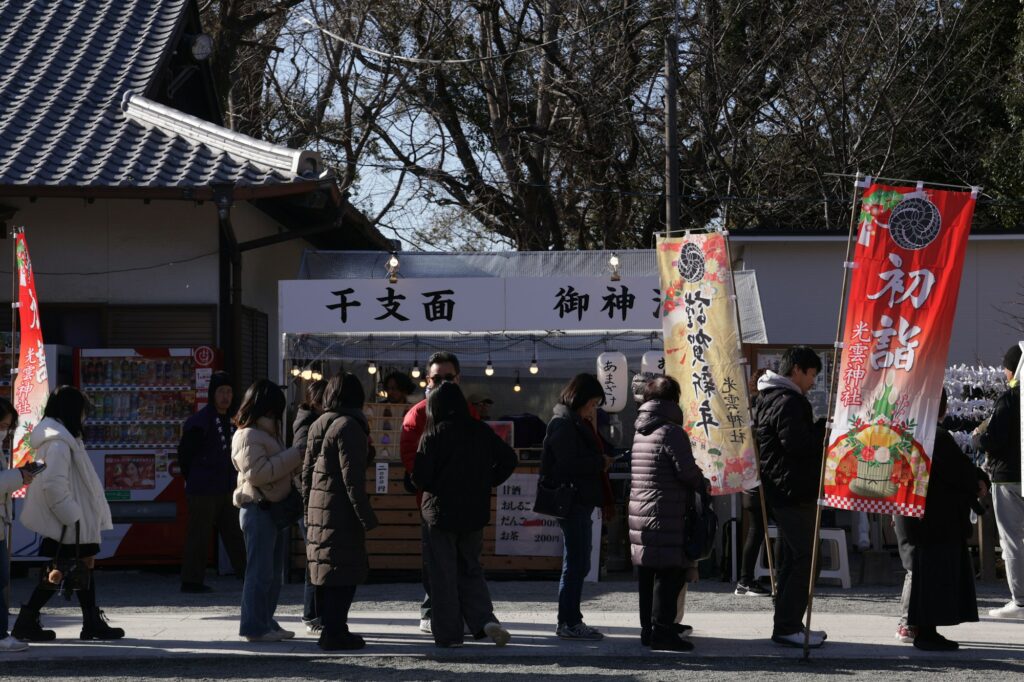
On 1 January 2027 (a Friday), a national public holiday, the Bank of Japan is closed according to its official calendar, and department stores are generally closed according to guides. Temples, shrines and konbini generally stay open. 2 and 3 January are not public holidays, and many 2026-2027 opening hours have not been published yet.
Checked on against the official sources read (Cabinet Office, Bank of Japan, the websites of the temples and museums cited) and dated guides; the Japan Rail Pass increase comes from a relayed announcement.
On the evening of 31 December, Tokyo, Kyoto and Osaka don’t look like the city you saw in November. The Japanese New Year, oshogatsu, is a break of four to six days centered on 1 January, a national public holiday. During the week around that date, some shops, banks and museums close, while temples, shrines and konbini keep running. This article answers a simple question: what’s open between 29 December and 4 January, and what to do instead of what’s closed.
A warning first. As of 24 October 2026, most Japanese operators haven’t published their 2026-2027 year-end hours yet, and announcements usually arrive between late November and mid-December. The hours below therefore come from three separate sources: the official 2027 calendar, the announcements already published for 2026-2027, and the 2025-2026 season, used as a guide to typical behavior. Each piece of information carries its source and the date it was checked.
What stays open: temples, shrines and konbini
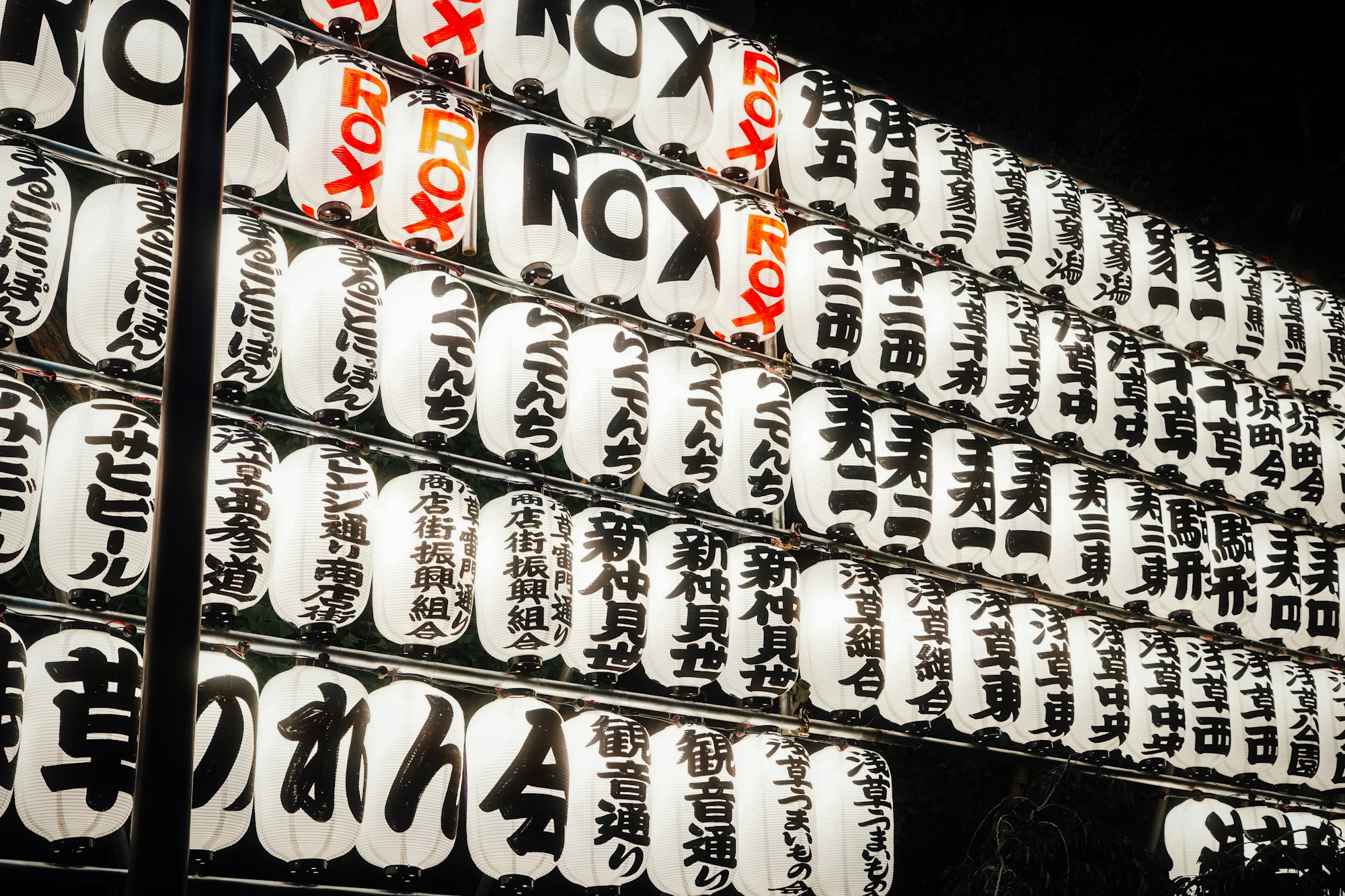
Temples and shrines, the heart of the holidays
Temples and shrines stay open through the window. This is where hatsumode, the first visit of the year, takes place, usually between 1 and 3 January. The main hall of Senso-ji in Asakusa opens at 6:30 am from October to March, according to the temple’s official website (checked 24 October 2026). No specific hours for 1 January 2027 are published there yet. For other shrines, opening times rely on guides.
Meiji Jingu in Tokyo and Senso-ji are among the most visited shrines in this period: the Tokyo tourist office flags them as very busy between 31 December and 3 January (gotokyo.org, checked 24 October 2026). To see them with fewer people, the simplest rule is to aim for the days either side of the peak.
Highlights of the window
- Temples and shrines open during the window, with hatsumode from 1 to 3 January (Senso-ji’s opening confirmed on its official site; Todai-ji described as recurring and to be reconfirmed for 2027; the others based on guides)
- Konbini open 24 hours a day during the break, according to a guide checked 24 October 2026
- Senso-ji’s main hall open from 6:30 am from October to March, according to the temple’s official site
- Harajuku Meiji Shrine walking tour: open on 29, 30 and 31 December and on 4 January as of the 24 October 2026 check, with no slots from 1 to 3 January
What really closes: department stores, banks and museums
Department stores and banks
According to guides, Tokyo’s department stores generally close for the whole of 1 January, and often from the afternoon of 31 December (Truly Tokyo, undated page, and WaTabi for the 2025-2026 season). No 2026-2027 announcement had been published as of 24 October 2026. For the previous season, WaTabi reports a reopening between 2 and 3 January depending on the store: check this before planning a purchase.
The Bank of Japan is closed from 31 December through 3 January inclusive, and reopens on 4 January, according to its official calendar (checked 24 October 2026). Commercial bank branches also close for part of the window, with hours that vary by institution.
Neighborhood shops
In Kyoto, Nishiki Market has no shared closing day: its association is closed from 30 December to 4 January, but each shop sets its own dates, and many close from 1 to 3 January (official market site, undated page, checked 24 October 2026). Small family restaurants often close for several days, while chains and hotel restaurants generally stay open on 1 January.
Summary table by type of place
| Type of place | Usual status | Level of evidence |
|---|---|---|
| Department stores (Tokyo, Osaka) | Usually closed all day | Secondary (2025-2026 season) |
| Bank of Japan | Closed from 31 December to 3 January inclusive; reopens 4 January | Official |
| Commercial banks and counters | Closed for part of the window, hours vary | Secondary |
| Konbini (7-Eleven, FamilyMart, Lawson) | Open 24 hours | Secondary, no announcement from the chains |
| Temples and shrines | Open, hatsumode from 1 to 3 January | Official for Senso-ji; Todai-ji official but recurring (to be reconfirmed); secondary for the others |
| Tokyo National Museum | No 2026-2027 announcement | Official (absence of announcement) |
| Ghibli Museum (Mitaka) | No 2026-2027 announcement; 2025-2026: closed 27 December to 2 January | Official (absence) and secondary |
| Nishiki Market (shops) | Many closed 1 to 3 January | Official, undated page |
| Ryokan and hotels | Open, each property sets its own dates | Secondary |
Sources: Bank of Japan, Tokyo National Museum, Ghibli Museum (official sites), guides listed in the Sources section, checked 24 October 2026.
The calendar, day by day
Within the 29 December to 4 January window, only one day is a public holiday: 1 January 2027. Seijin no Hi falls on Monday 11 January, outside the window. 2 and 3 January are not legal public holidays, even though many companies take them off, so reopening depends on custom, not on a national rule.
| Date | Day | Legal status | Usual practice |
|---|---|---|---|
| 29 December 2026 | Tuesday | Not a public holiday | Slowdown, neighborhood shops often closed |
| 31 December 2026 | Thursday | Not a public holiday | Bank of Japan closed; commercial banks with variable hours; department stores often closed from the afternoon, according to guides; bells in the evening |
| 1 January 2027 | Friday | National public holiday | Department stores closed, temples open and very busy |
| 2 January 2027 | Saturday | Not a public holiday | Many shops reopen, depending on the brand |
| 3 January 2027 | Sunday | Not a public holiday | Gradual reopening of shops, depending on the brand; Bank of Japan still closed |
| 4 January 2027 | Monday | Not a public holiday | Bank of Japan reopens; back to the normal calendar for many companies |
| 11 January 2027 | Monday | National public holiday (Seijin no Hi) | Long weekend, heavier traffic |
Source: Cabinet Office, public holiday calendar, checked 24 October 2026 for legal status; usual practice from the guides listed in the Sources section at the end of the article, checked 24 October 2026.
A mistake comes up often: many guides give Monday 12 January for Seijin no Hi. That’s the 2026 date. In 2027, the holiday falls on Monday 11 January.
Trains, metro and buses: what changes over the holidays
Shinkansen: book early
Nozomi trains are reportedly fully booked from 25 December 2026 to 5 January 2027, according to tetsudo-ch.com, which cites an announcement by JR Central and JR West (checked 24 October 2026). This is a secondary source: the official 2026-2027 announcement was not found. Signs of high demand also cover 28 to 31 December and 2 to 4 January, with no official source. For a departure on 30 December, seat sales normally open one month ahead, on 30 November at 10:00, following JR’s usual rule: check on the JR Central website.
Japan Rail Pass
An increase in the ordinary adult 7-day Japan Rail Pass is announced, from 50,000 to 53,000 yen from 1 October 2026, according to a JR group announcement relayed by JNTO (page not read directly, checked 24 October 2026). One site disputes the scope of the increase: TravelTomorrow limits it to foreign agents. Check the JR website before you buy. For the full context of the 2026 changes, see our guide to the changes for tourists.
Night trains on 31 December
For 2025-2026, JR East announced night-time terminus service on six lines on 31 December and 1 January, according to its press release (checked 24 October 2026). The full list wasn’t pulled here, and no 2026-2027 announcement was found. Osaka’s network is more limited: Osaka Metro doesn’t run night service on 31 December, according to WaTabi (2025-2026 season).
Reference points: 2025-2026 season and 2026-2027 status
| Operator or service | 2025-2026 reference | 2026-2027 status | Source |
|---|---|---|---|
| JR East (six lines with night terminus service) | Night terminus on 31 December and 1 January | Not published | JR East (official) |
| Kyoto City, buses | No night terminus on 31 December; holiday service from late December to 4 January (2025-2026 season) | Not published | Kyoto City (official) |
| Osaka Metro | No night service on 31 December | Not published | WaTabi (secondary) |
| Tokyo Metro | Holiday timetable from 30 December to 3 January | Not published | Secondary guide, site not read |
| Nozomi (Tokaido) | Not applicable | According to a secondary site: fully booked from 25 December to 5 January (JR announcement not found) | Tetsudo-ch (secondary) |
| Japan Rail Pass 7-day ordinary adult | 50,000 yen | 53,000 yen from 1 October 2026 | JR announcement relayed by JNTO (scope disputed) |
Sources: JR East, Kyoto City, JNTO, checked 24 October 2026.
Museums, palaces and parks: check each site
As of 24 October 2026, the Tokyo National Museum and the Ghibli Museum had not published any 2026-2027 announcement on their official sites. The Tokyo National Museum shows its usual hours as 9:30 am to 8 pm (tnm.jp, checked 24 October 2026). A secondary guide mentions a closure between 26 and 31 December 2026, but its source isn’t reliable at this stage.
- Ghibli Museum (Mitaka): no 2026-2027 announcement on the official site. For the previous season, secondary sources report a closure from 27 December to 2 January, with reopening on 3 January. Tickets are sold by time slot, so book ahead. For the Aichi park, see our article on the Ghibli park 2026.
- Tokyo Imperial Palace: the sanga (general greetings) takes place on 2 January by tradition. The 2026 hours cited by a secondary outlet are not confirmed for 2027.
- Hiroshima Peace Memorial Museum: sources disagree on closing days. Check the museum’s website before you travel.
- Tokyo Disney Resort: the official December 2026 calendar lists no New Year’s Eve event on 31 December. Hours for 1 January 2027 are not published.
In every case, the rule is the same: check the official page of the site and note the date you checked it. A 2025 page or a recurring guide doesn’t replace an announcement from the venue itself.
Cash, restaurants and osechi
Withdraw your cash before 29 December. The Bank of Japan closes from 31 December to 3 January, and commercial bank ATMs may be disrupted. This is a precaution, not a certainty for every ATM: check your bank’s network before you leave.
On the food side, chains and hotel restaurants generally stay open on 1 January, according to the guides read. Small izakaya and family restaurants are more likely to close for several days. For New Year’s Eve dinner, book ahead or buy a pre-order set. For Kyoto and Osaka food, our 48-hour foodie itinerary has booking pointers.
New Year’s food, osechi, is sold in department stores, konbini, supermarkets and hotels. According to a Teikoku Databank study of 110 brands, the average price of a three-tier box, or one for 3 to 4 people, reached 29,098 yen in 2026, up 3.8% (Zaikei, checked 24 October 2026). The pages don’t agree on the 2025 baseline for comparison, so treat it mainly as an order of magnitude.
Price benchmarks
| Item | Amount | Date or season | Level of evidence |
|---|---|---|---|
| Japan Rail Pass 7-day ordinary adult | 53,000 yen | From 1 October 2026 | JR announcement relayed by JNTO (scope disputed) |
| Osechi, average (110 brands) | 29,098 yen | New Year 2026 | Specialist study |
| Ryokan, indicative budget | 10,000 to 20,000 yen per night | No date | Guide, not specific to the holidays |
Sources: JNTO (Japan Rail Pass), Zaikei (osechi), checked 24 October 2026.
What to do from 29 December to 4 January: a possible plan
31 December: the bells and the sunrise
New Year’s Eve is all about the bells. In Kyoto, the joya no kane rings 108 times, according to the city’s tourism office (kyoto.travel, published 18 December 2025, checked 24 October 2026). The 2026-2027 list of temples that hold the ceremony hasn’t been published yet. In Nara, the tourism office says the central gate of Todai-ji opens at midnight, with free entry until 8 am, and that a wood fire warms visitors near the Kagami-ike pond. This page presents itself as recurring: reconfirm the 2027 hours.
For sunrise on 1 January, the Geikosai on Mount Takao, southwest of Tokyo, runs from 31 December to 1 January 2027, with monks reciting sutras at daybreak (Japantravel, checked 24 October 2026, secondary source, to be reconfirmed for 2027). The approach walk is in the dark: bring a flashlight and warm clothes.
1 January: hatsumode and the neighborhoods that stay open
1 January is hatsumode day, with shrines very busy from midnight. Temples stay open, but many shops, museums and food markets are closed, according to the guides read. Busy districts such as Shibuya, Shinjuku or Dotonbori in Osaka stay lively, even though there’s no official programming. For a quieter shrine, guides point to Hie Jinja, Kanda Myojin or Yushima Tenmangu in Tokyo (secondary source).
2 and 3 January: shops, sales and fukubukuro
Fukubukuro, the mystery bag sold by department stores, goes on sale from 1, 2 or 3 January depending on the store, according to the sources read: they disagree. For the 2025-2026 season, WaTabi reports that Takashimaya opened its January sales and fukubukuro sales from 3 January, after closing on 1 and 2 January. Those dates only apply to the previous season. The advice stays the same: check the store before you go.
A few variations by travel style
- Families: favor the late afternoon of 31 December at a temple near your accommodation, and keep 1 January for a shrine that’s open. Check museums one by one.
- Couples: for sunrise on 1 January, the Geikosai on Mount Takao (secondary source, to be reconfirmed for 2027) or a morning at Senso-ji, whose main hall opens at 6:30 am (official site). Confirm the hours before you go.
- Budget travelers: konbini and chain restaurants generally stay open during the break. Kyoto accommodation fills up fast, according to guides. In Hakone, the hotel operator Kinnotake opened its stays from 28 December to 3 January on 26 March 2026, with 94% occupancy the previous season (kinnotake-resorts.com, checked 24 October 2026); no 2026-2027 price list was found.
- First-time visitors to Japan: keep a buffer day after 31 December, since night trains and closures can upset a tight schedule.
For reduced mobility, we don’t have sourced data on site access during the holidays: check each venue before you plan.
What other guides don’t tell you
Five points that several guides we read get wrong or leave out. Each one links to its source, with the date it was checked.
- Seijin no Hi 2027 falls on Monday 11 January, not the 12th. Guides that give the 12th repeat the 2026 date. Source: Cabinet Office, public holiday calendar (checked 24 October 2026).
- The Bank of Japan closes from 31 December to 3 January inclusive, not from 29 December to 4 January. The wider window applies to some branches and ATMs, not to the central bank. Source: Bank of Japan, closing days (checked 24 October 2026).
- 2 and 3 January 2027 are not legal public holidays. The long weekend those two days create is a company practice, not a national rule. Source: Cabinet Office (checked 24 October 2026).
- Nishiki Market has no shared closing day. The association is closed from 30 December to 4 January, but each shop sets its own dates. Source: official Nishiki Market site (checked 24 October 2026, undated page).
- The ordinary adult 7-day Japan Rail Pass should rise to 53,000 yen on 1 October 2026, according to a relayed JR announcement. The guides we read still give 50,000 yen. The scope of the increase is disputed: check the JR website. Source: JNTO, relayed announcement (checked 24 October 2026).
Practical info: eSIM, insurance and emergencies
Mobile network access from the moment you land, to check opening hours published online, a map or a train ticket, without hunting for a SIM card at the station during the holidays.
Prices vary by duration and data volume; compare on the siteMedical costs and repatriation abroad. Before you compare, check what your credit card and your current health insurance already cover in Japan.
Pricing depends on trip length and coverageEmergencies and health
For a non-urgent medical question in Tokyo, the fire department’s #7119 advice line runs 24 hours a day, according to a secondary source. Ota City lists the Himawari medical information service for the 2026-2027 year-end at 03-5272-0303, open 24 hours (city.ota.tokyo.jp, checked 24 October 2026). Many pharmacies and clinics are closed on 1 January, but emergency hospitals stay open. Write down your accommodation’s address and keep your insurance documents within reach.
Frequently asked questions
Which shops stay open on 1 January in Japan?
1 January is a national public holiday. Department stores are generally closed all day, and the Bank of Japan stays closed until 3 January. Konbini, chain restaurants and many hotels stay open, as do temples, according to the guides read. Independent small shops vary from one to the next, so check before you go. Source: Cabinet Office.
Are konbini open over New Year?
In most cases, yes. The three major chains, 7-Eleven, FamilyMart and Lawson, are presented as open 24 hours a day during the break, according to a guide checked on 24 October 2026 (secondary source). Stores inside train stations or closed shopping centers may stay shut, and a single store can close temporarily. No official announcement from the chains has been found for 2026-2027.
When do department stores reopen?
It depends on the store. For the 2025-2026 season, WaTabi reports that Takashimaya closed on 1 and 2 January, with sales and fukubukuro from the 3rd, while Mitsukoshi Isetan opened on 2 January. Sources disagree on the fukubukuro, presented on 1 January by some guides and on the 2nd by others. No 2026-2027 announcement had been published as of 24 October 2026: check each department store’s website.
Can you visit a temple on the evening of 31 December?
Yes, in many cases. The Chumon gate of Todai-ji in Nara opens at midnight, with free entry until 8 am, according to the Nara tourism office (recurring page, to be reconfirmed for 2027). In Kyoto, the New Year bell rings 108 times at several temples. Exact hours for each temple for 2026-2027 are not published yet.
Do trains run through the night of 31 December to 1 January?
Some do, but on a limited basis. JR East announced night-time terminus service on six lines for 2025-2026, according to its official press release. Kyoto’s buses had no night terminus on 31 December 2025, and Osaka Metro doesn’t run all night, according to WaTabi. Hours for 2026-2027 are not published: check each line when you travel.
Should you withdraw cash before New Year?
It’s a useful precaution. The Bank of Japan is closed from 31 December to 3 January, according to its official calendar. Japan Guide reports that, for the 2025-2026 season, some banks and ATMs were closed for part of the 29 December to 4 January window. Withdraw cash before 29 December for small purchases.
Is the Shinkansen fully booked for 30 December?
Nozomi trains are reportedly fully booked from 25 December 2026 to 5 January 2027, according to tetsudo-ch.com, which cites a JR announcement (secondary source). For a departure on 30 December, seat sales normally open on 30 November at 10:00, following JR’s usual rule. Book as soon as sales open, and check on the JR Central website.
What can you do on 1 January when department stores and banks are closed?
Hatsumode is the simplest option, since temples and shrines stay open. Meiji Jingu and Senso-ji are among the most visited shrines in this period, according to the Tokyo tourist office (gotokyo.org). Shibuya, Shinjuku and Dotonbori stay lively. For sunrise at altitude, bring warm clothes.
Does the Japan Rail Pass go up in October 2026?
An increase is announced: the ordinary adult 7-day Japan Rail Pass would go from 50,000 to 53,000 yen from 1 October 2026, according to the JR group announcement relayed by JNTO. TravelTomorrow limits the increase to foreign agents: check the JR website before you buy.
Are museums closed over New Year?
It depends on the museum. As of 24 October 2026, the Tokyo National Museum and the Ghibli Museum had published no 2026-2027 announcement on their official sites. For the 2025-2026 season, secondary sources report a Ghibli Museum closure from 27 December to 2 January. Check each museum’s page before you go, and note the date you checked it.
Sources
- Cabinet Office, public holiday calendar: 2026-2027 public holidays (official)
- Bank of Japan, closing days: closed from 31 December to 3 January inclusive (official)
- JNTO, 2026 Japan Rail Pass increase: relayed JR group announcement (scope disputed)
- JR East, night terminus service 2025-2026: previous season (official)
- Kyoto City, buses during the holidays: 2025-2026 season (official)
- Kyoto Tourism, joya no kane: New Year bell (official)
- Nara Tourism Office, Todai-ji: New Year, recurring page (official)
- Tokyo Tourist Office, Meiji Jingu (official)
- Senso-ji: main hall hours (official)
- Tokyo National Museum: usual hours, no 2026-2027 announcement (official, checked 24 October 2026)
- Ghibli Museum, news: no 2026-2027 announcement (official)
- Nishiki Market, official site (official, undated page)
- Kinnotake Resorts, announcement of year-end stays in Hakone (hotel operator announcement)
- City of Ota, year-end 2026-2027 medical information (official, ward)
- Tetsudo-ch, Nozomi bookings 2026-2027 (secondary)
- WaTabi, New Year opening guide (secondary, 2025-2026 season)
- Zaikei, Teikoku Databank osechi study 2026 (specialist study)
- Japantravel, Geikosai at Mount Takao (secondary)
Research carried out 24 October 2026. Most operators had not published their 2026-2027 hours as of that date.
Plan your trip with Pixidia
Pixidia learns how you travel and helps you build a trip that truly fits you and everyone coming along.
Open the planner