
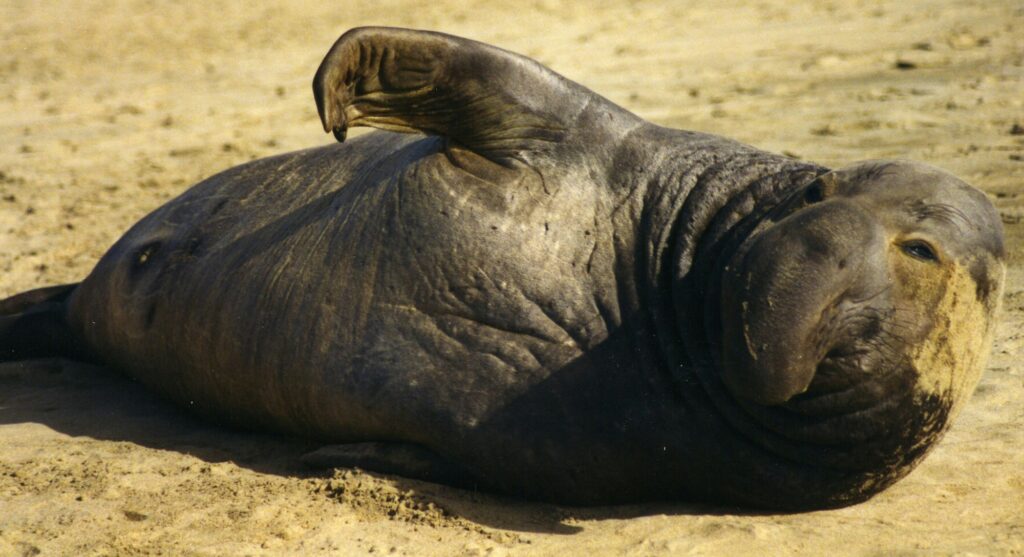
To see elephant seals at Año Nuevo in winter, you need to book a guided tour: 2026-2027 reservations opened on October 20, 2026, 56 days before each date. From December to March, only the guided tour gets you into the viewing area. From April to November, a self-guided visit is enough, with a free permit.
Checked on against the official sources cited (parks.ca.gov, Año Nuevo State Park).
Along the coast road that links San Francisco and Santa Cruz, Año Nuevo State Park is home to one of the largest mainland colonies of northern elephant seals. Every winter, the males fight on the beach, the females give birth, and the pups nurse and wean in front of visitors. But this visit doesn’t happen on a whim. You have to book it, it comes with strict rules, and this year it was hit by an avian flu outbreak.
This guide covers what you need to know for this winter: the 2026-2027 calendar, published fees, how to book, safety rules, the 2026 outbreak, how to get there from San Francisco and Santa Cruz, and the mistakes to avoid. Dates and rules come from California State Parks pages, checked on October 24, 2026. Secondary sources are flagged in the text.
1. Año Nuevo State Park at a glance
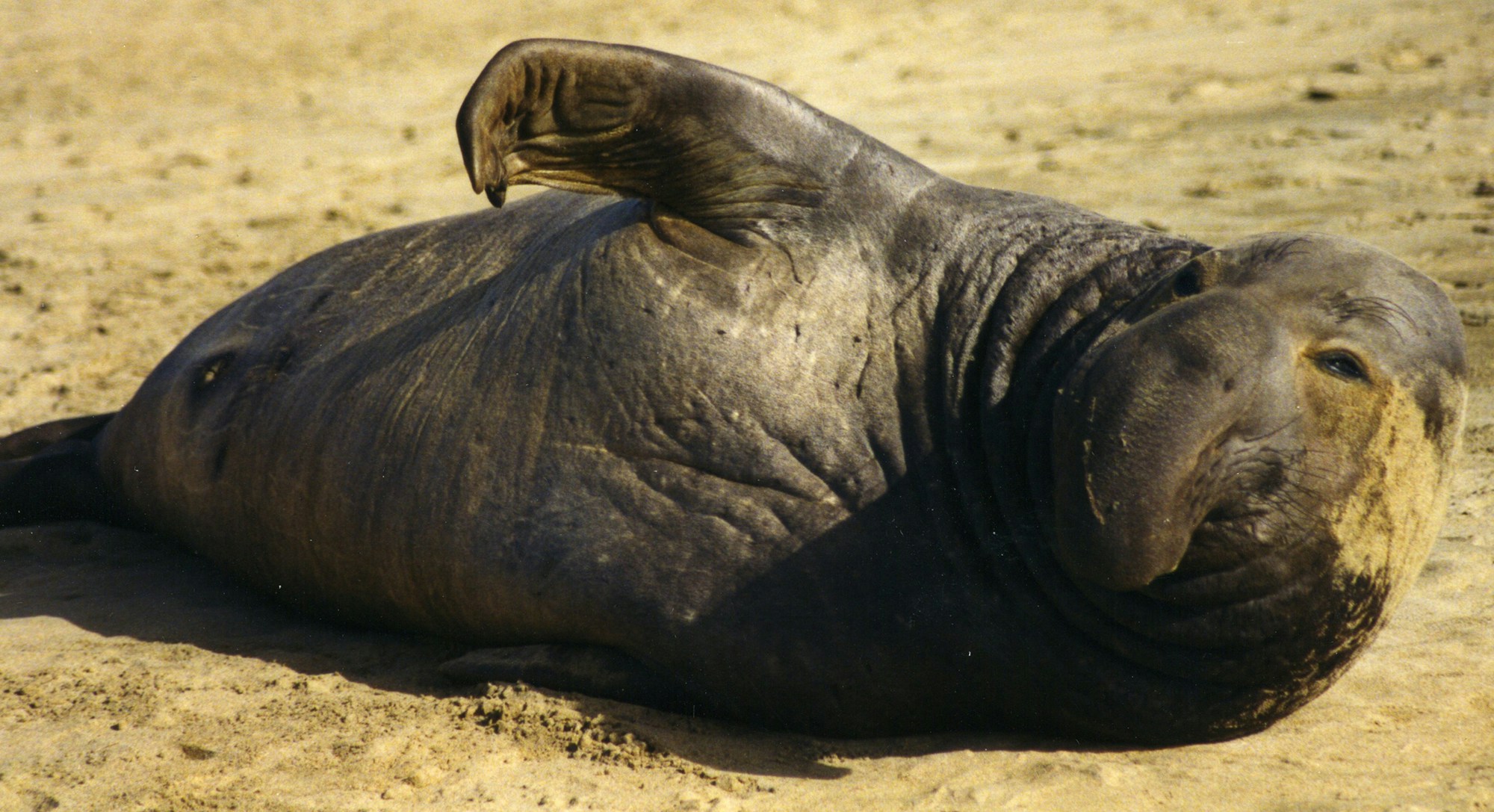
Año Nuevo State Park
The park protects a breeding colony of northern elephant seals, one of the largest on the continent. Researchers have tracked the colony for more than forty years. The walk runs over sand and dunes, and Año Nuevo Island, a few hundred meters offshore, is a University of California reserve closed to the public. Official park page (parks.ca.gov).
Highlights
- Watch males, females and pups during the breeding season
- Walk with the park’s docents (naturalist guides), who explain the colony
- Visit on your own from April to November, with a free permit
This trip doesn’t leave from Año Nuevo. It starts in Monterey, on the bay of the same name, and runs two hours by kayak, with otters, seals and sea lions in sight. It isn’t an official park visit: the elephant seal colony is booked through the state. It suits someone who wants time on the water as an add-on, not someone looking for elephant seals at Año Nuevo.
2. 2026-2027 calendar: what’s open and when
The park’s official page, updated on October 23, 2026, publishes the season calendar. Two booking dates already matter. On October 3, school groups could book by phone. On October 20, public tours and Equal Access accessible tours opened for booking. Each date can be booked 56 days ahead. The guided season starts on December 15, 2026, so that date was bookable from October 20, since October 20 plus 56 days is December 15. At the time of checking, open slots run through December 19. Confirm that on ReserveCalifornia.
| Period | Access | Booking |
|---|---|---|
| October 3, 2026 | School groups | By phone only, 8 a.m. to 6 p.m. |
| October 20, 2026 | Public tours and Equal Access | Online or by phone (public); by phone (Equal Access) |
| December 1 to 14, 2026 | Viewing area closed | No tours |
| December 15, 2026 to March 31, 2027 | Guided tours only, with naturalists | Required, 56 days ahead |
| Every year, April to August | Self-guided visit during molting | Not required, free visitor permit |
| Every year, September to November | Self-guided visit for young seals | Not required, free visitor permit |
Source: California State Parks, Año Nuevo page, checked October 24, 2026.
Closures change from one season to the next. Pages for the 2025-2026 season listed a closure on December 25 and on February 1 and 2. Those dates aren’t confirmed for 2026-2027, so check the booking page before you pick a date.
On a self-guided visit, you have to leave the reserve before 5 p.m. during molting (April to August) and for young seals (September to November), according to the park page checked on October 24, 2026. Older announcements give 3:30 p.m. or 4 p.m. for permit issuance: check the time on the park page before you go.
3. Booking, paying and canceling
The official channel is ReserveCalifornia, online or by phone at 1-800-444-4445, 8 a.m. to 6 p.m. International visitors have a dedicated line, 833-448-7287. School groups can only book by phone. Your ticket is a reservation: it gets you a spot on a tour at the time you chose.
The price of the 2026-2027 guided tour isn’t shown on the official page we checked. So we don’t repeat prior seasons’ amounts: the exact price appears on ReserveCalifornia when you book. On cancellations, an undated page about the guided tours, which needs confirming on ReserveCalifornia, says there are no refunds unless the park cancels the tour. The state’s general booking policy, which keeps an $8.25 non-refundable fee, is a separate rule. Its scope isn’t clear from the pages we checked.
| Item | Amount | Note |
|---|---|---|
| Parking, vehicle, day | $10 | Per vehicle, per day |
| Parking, senior 62 and older | $9 | Reduced rate |
| Bus, 10 to 24 passengers | $50 | Per bus |
| Bus, 25 passengers or more | $100 | Per bus |
| Guided tour, 2026-2027 season | Not shown on the official page we checked | Amount visible on ReserveCalifornia |
Source: California State Parks, Año Nuevo page, checked October 24, 2026. The same page notes that different rates may apply during peak season and on holidays.
Book right away if you’re aiming for a December weekend or the Christmas holidays. Booking is required for guided tours. A county page mentions tickets sold on site on weekdays, but the park hasn’t confirmed it, so don’t count on it. Arrive on time: an older park announcement says a late arrival can cost you your booking. That rule needs confirming.
Don’t mix this up with other offers. The Coastside State Parks association also runs the Seal Adventure, a paid event separate from the state’s tours. Its 2027 dates aren’t confirmed in the pages we checked, so check the association’s website before you plan around it.
4. Visit rules and safety
The park sets the rules, and they apply to every visitor. The most important one is distance: stay 25 feet, about 7.5 meters, from every elephant seal. Some press articles say 30 feet. Go by the park’s rule.
| Rule | What you need to know |
|---|---|
| Minimum distance | 25 feet (about 7.5 m) from elephant seals |
| Dogs | Not allowed anywhere in the park, including in a parked car |
| Drones | Banned throughout the park |
| Umbrellas | Banned in the natural reserve area |
| Strollers | Not allowed in the viewing area, December to March |
| Food | Not allowed during the guided tour (page 1112, undated) |
| Cameras and binoculars | Allowed (page 1112, undated) |
| Group size | 15 people maximum per tour, including leaders (page 1112, to confirm) |
| Children | One adult per 10 children aged 17 and under, at most (page 1112, to confirm) |
| Animals, alive or dead | Don’t touch them (instruction from the February 2026 press release) |
Source: California State Parks, page 523 and page 1112 on guided tours (undated). Page 523 checked October 24, 2026; page 1112 is undated.
Why these rules? Adult males are much bigger than females, and their fights sometimes happen close to the public. Distance protects the animals and the visitors. Harassing marine mammals is illegal under federal law. A 2012 NMFS letter, written about harbor seals, notes that recommended distances aren’t legally binding in themselves. Harassment is still an offense, whatever the distance.
5. The 2026 avian flu outbreak
In early 2026, weaned young seals were found dead at Año Nuevo, some with tremors and convulsions. The USDA’s national lab confirmed H5N1 in seven young seals on February 24. The state’s February 25 release closed access to the viewing areas and announced the cancellation of guided tours « for the rest of the season. » During the outbreak, the instruction was not to touch animals, alive or dead.
| Date | What happened | Source |
|---|---|---|
| February 19 and 20, 2026 | Weaned young seals found dead | UC Davis, press |
| February 24, 2026 | USDA lab confirms H5N1 in seven young seals | State Parks NewsRelease 1485 |
| February 25, 2026 | Viewing area access closed, guided tours cancelled for the rest of the season | State Parks NewsRelease 1485 |
| March 10, 2026 | First confirmed case in a sea lion | CIDRAP |
| March 24, 2026 | End of the outbreak announced, more than 30 days without a positive case | KRON4, not confirmed on the UC Davis site |
| April 11, 2026 | Marine reserve and viewing areas reopen | KRON4 |
Sources: State Parks news release 1485 (checked October 24, 2026), CIDRAP and KRON4.
Read these dates with care. The April reopening and the announcement that the outbreak was over come from the press, and the official page for 2026-2027 lists booking dates without mentioning any health measures. So we can’t promise the season will run without interruption, and we can’t predict the health situation next winter. If your trip depends on this visit, plan a backup.
Press figures on cancellations, visits and tickets are not repeated here, since no official primary source backs them.
6. Elephant seals: seasons and biology
What you see changes from month to month, because each season matches a stage in the species’ cycle. Use this calendar to pick a date based on what you want to see. For male fights and births, aim for January and February. For weaned young on the beach, late February to April. For molting, April to August.
- December: males arrive first, then females. Males fight over territory and harems. These fights are visible on guided tours.
- January: births. Each female gives birth once a year, shortly after arriving.
- February: nursing, then weaning. Pups weigh about 60 to 75 pounds (27 to 34 kg) at birth and about 300 pounds (136 kg) at weaning, after about 28 days of nursing (National Park Service).
- March: mothers leave, then males. The young stay on the beach.
- April to August: molting. Adults and young lose their coat over a few weeks and stay on the sand during that time.
- September to November: young return to the beach, fewer than in winter.
After weaning, the mothers head back to sea. The young stay alone on the beach for eight to twelve weeks, about two to three months depending on the source. They fast and can lose up to a quarter of their body weight before they learn to swim near the coast (UC Santa Cruz, Point Reyes Light). So if you see pups in March or April, you’re watching young seals waiting for their first trip to sea.
Migrating adults usually dive between 350 and 650 meters, for 20 to 40 minutes. The deepest recorded dive is about 1,560 meters according to the Smithsonian, but the NPS gives a maximum of 1,678 meters. Both figures are in circulation. Females tracked by researchers head north to the Aleutian Islands, and males head to the Gulf of Alaska.
Año Nuevo Island, farther offshore, is a University of California reserve closed to the public. Its lighthouse operated from 1872 to 1948. Scientific monitoring of the colony has run for more than forty years. If marine wildlife fascinates you, also read Grey Seal Pups at Horsey: When and Where to See Them to compare with another colony in Europe.
7. Getting there from San Francisco or Santa Cruz
You need a car to visit the park. The sources we checked list no public transit option, so plan on driving. The route follows Highway 1, which runs along the coast south from San Francisco or north from Santa Cruz.
| From | Distance | Drive time |
|---|---|---|
| San Francisco | Not given in the sources we checked | About 1 to 1.5 hours, depending on traffic |
| Santa Cruz | About 22 miles (35 km) | 30 to 40 minutes |
Sources: Visit Santa Cruz County (distance and drive time from Santa Cruz) and Secret San Francisco (drive from San Francisco: « just over an hour »), checked October 24, 2026. Times vary with traffic.
We couldn’t find any information on the state of Highway 1 near Pescadero in October 2026. Check Caltrans QuickMap before you leave. Guides list the address as 1 New Years Creek Road, Pescadero, CA 94060. Check it on the official listing before you set your GPS.
If you’re staying in San Francisco, the Alcatraz and Sausalito tours from San Francisco are a separate trip. Plan them for another day rather than adding Año Nuevo to the same one. From Santa Cruz, the drive is listed at 30 to 40 minutes, but times vary with traffic.
8. Which option fits which visitor
Not everyone comes for the same reason. Here are four common profiles and what to check for each.
Families with kids
On guided tours, the rule is one adult for every ten children aged 17 and under, at most (undated page, to confirm). Strollers aren’t allowed in the viewing area from December to March, so bring a baby carrier for the sand and dunes, and tell the kids about the 25-foot rule before you start.
Wildlife lovers and photographers
Cameras and binoculars are allowed. The minimum distance makes a telephoto lens almost essential, since it means you don’t have to get closer. Drones are banned throughout the park, and umbrellas are banned in the natural reserve area, which affects shooting in the rain.
Visitors with limited mobility
The Equal Access program offers accessible tours. They can only be booked by phone, starting October 20, 2026. The association’s pages mention a boardwalk over the dunes, and a repair project on it is also reported, but its status isn’t confirmed. The phone numbers given in the sources differ, so call 1-800-444-4445 to be directed.
Budget travelers
Parking costs $10 per vehicle per day, and a self-guided visit from April to November uses a free permit, with no booking needed. For the winter guided tour, the price isn’t listed here: compare it on ReserveCalifornia before you set your budget.
9. A typical day from San Francisco
Plan on a full morning, since the guided tour runs about two and a half hours, not counting the drive. Here’s the order we recommend.
- Before you leave: confirm your booking and time slot, then check Highway 1 on Caltrans QuickMap.
- On the road: allow about 1 to 1.5 hours, depending on traffic. Leave early: a late arrival can cost you your spot.
- At the park: pay for parking, $10 per vehicle, then head to your tour’s meeting point.
- During the tour: according to the park’s undated guided tour page, about 2.5 hours for 3 to 4 miles round trip, on sand and dunes. No food during the walk, and stay 25 feet from the animals.
- In the afternoon: head to Santa Cruz, 30 to 40 minutes away, or drive back to San Francisco.
Bring water, layers, a windbreaker, a rain jacket and closed-toe shoes. Sand and dunes make the walk harder than it looks.
10. Mistakes to avoid
- Showing up in December without a booking: booking is required for guided tours. A county page mentions weekday tickets sold on site, but the park hasn’t confirmed it, so don’t count on it. Book 56 days ahead.
- Thinking the self-guided visit gets you to the winter colony: from December to March, only the guided tour gets you into the viewing area.
- Bringing a dog, even leaving it in a parked car: it’s banned throughout the park.
- Bringing a stroller or an umbrella into the viewing area, from December to March for strollers.
- Getting close for a photo: the 25-foot distance applies to photographers too.
- Relying on a webcam: we found no official webcam.
- Mixing up the offers: the association’s Seal Adventure isn’t a state tour, and its dates aren’t confirmed.
What other guides don’t tell you
Most of the guides we read for this article date from 2015 to 2025. Here are five points we checked on official pages, missing from these guides or wrong in them.
- The 2026-2027 season booking dates. School groups could book from October 3, 2026, and the public from October 20, with each date opening 56 days before the visit. Official park page (checked October 24, 2026).
- The end-of-season cancellation for 2025-2026. The February 25, 2026 release cancels guided tours « for the rest of the season. » NewsRelease 1485 (checked October 24, 2026).
- The official 25-foot distance. Some press articles cite 30 feet, and several guides don’t state the park’s rule clearly. Official park page (checked October 24, 2026).
- The dog ban, including in a parked car. Most guides just say « no dogs » and don’t mention this case. Official park page (checked October 24, 2026).
- Self-guided visits need no booking. From April to November, a free visitor permit is enough, with no reservation. Many guides mix it up with the winter guided tour. Official park page (checked October 24, 2026).
Frequently asked questions about elephant seals at Año Nuevo
When should I book to see elephant seals in December 2026?
Public bookings opened on October 20, 2026. Each date opens 56 days before the visit, so for the first date of the guided season, December 15, 2026, the window opened on October 20. Book on ReserveCalifornia or by phone at 1-800-444-4445, 8 a.m. to 6 p.m. December dates sell out fast, especially on weekends.
Can I see elephant seals without a guided tour?
Not in winter. From December to March, the viewing area is only open on a guided tour. From April to November, you can visit on your own with a free visitor permit, no booking needed. The viewing area stays closed from December 1 to 14. Check the season dates on the official park page before you go.
How much does the guided tour cost?
The price of the 2026-2027 guided tour isn’t shown on the official page we checked on October 24, 2026. The exact amount appears on ReserveCalifornia when you book. Parking is published: $10 per vehicle per day. Prices from earlier seasons don’t apply to this year, so we don’t repeat them here.
Can I cancel a booking and get a refund?
According to an undated page about the park’s guided tours, which needs confirming on ReserveCalifornia, there are no refunds unless the park cancels the tour. During the February 2026 outbreak, the press reported that bookings were canceled and refunded. The state’s general booking policy keeps an $8.25 non-refundable fee, a separate rule whose scope isn’t clear. Read the terms when you book.
How far should I stay from the seals?
The park requires a minimum distance of 25 feet, about 7.5 meters, from elephant seals. The rule applies at all times, to photographers and other visitors alike. Some press articles cite 30 feet, but go with the park’s figure. A telephoto lens lets you stay back and still get the shot.
Can I bring a dog or a stroller?
No dogs: they’re banned throughout the park, including in a parked car. Strollers aren’t allowed in the viewing area from December to March. Bring a baby carrier for the sand and dunes.
Is there an accessible tour for visitors with limited mobility?
Yes, the Equal Access program offers accessible tours, with an adapted vehicle. The association’s pages mention a dune boardwalk, and a repair project on it is reported, though its status isn’t confirmed. Accessible tours can only be booked by phone, starting October 20, 2026. The phone numbers in the sources differ, so call 1-800-444-4445 to be directed to the right line.
How long does it take to get there from San Francisco?
Plan on about 1 to 1.5 hours of driving, depending on traffic, via Highway 1 south. Secret San Francisco describes it as « just over an hour. » From Santa Cruz, it’s about 22 miles, or 30 to 40 minutes. Before you leave, check the road on Caltrans QuickMap, since we found no up-to-date information on Highway 1 near Pescadero in October 2026.
Is there a webcam to watch the seals?
No, we found no official webcam for Año Nuevo in the sources checked on October 24, 2026. If a third-party site shows a webcam, check with the park before you plan a visit around it, since a live feed doesn’t guarantee the animals will be there when you visit.
Did the elephant seals come back after the 2026 outbreak?
The sources we checked don’t say whether the colony has been seen on the beach since the press reported the reopening on April 11, 2026. The viewing areas were closed from February 25, 2026. The animals are wild, so no sighting is guaranteed, and the official pages give no health measures for 2026-2027.
Sources
- California State Parks, Año Nuevo, guided tours and 2026-2027 calendar: calendar, parking fees, rules (checked October 24, 2026)
- California State Parks, February 25, 2026 news release (NewsRelease 1485): H5N1 outbreak and tour cancellations
- California State Parks, guided tours during the breeding season: capacity, duration, equipment (undated page)
- Coastside State Parks Association, Año Nuevo: Equal Access boardwalk, visitor center
- National Park Service, elephant seal monitoring 2022-2023: birth and weaning weights
- UC Natural Reserve System, Año Nuevo Island Reserve: island, lighthouse, scientific monitoring
- Visit Santa Cruz County, Winter Wildlife Watch: distances from Santa Cruz (updated November 2024)
- Secret San Francisco, elephant seals at Año Nuevo: access from San Francisco (December 27, 2025)
- UC Davis Institute for Pandemic Insights, H5N1 outbreak in marine mammals: outbreak background
- CIDRAP, avian flu in California elephant seals: first case in a sea lion
- KRON4, end of the outbreak: March 24, 2026 announcement, press
- Caltrans QuickMap: road conditions, check before you leave
Checked on October 24, 2026, unless noted otherwise. Guided tour prices aren’t included. The refund rule comes from an undated page: confirm it on ReserveCalifornia.
Plan your trip with Pixidia
Pixidia learns how you travel and helps you build a trip that truly fits you and everyone coming along.
Open the planner