
Befana 2027 falls on Wednesday 6 January 2027, a national public holiday in Italy. Urbania, in the Marche region, announces a 30th edition for early January 2027, dates to be confirmed; in Rome, the Befana’s descent on Piazza Navona was cancelled on 6 January 2026 because of a weather alert. Have a backup plan and check the dates before you book.
Checked on against the official sources cited in this article (Chamber of Deputies, Turismo Roma, Holy See Press Office bulletin, festadellabefana.com, icalendario.it).
In Italy, the Befana is celebrated in several towns, in very different formats, and the 2027 celebration does not have a fixed programme yet. This guide separates what is settled (6 January 2027 is a Wednesday and a national public holiday), what is announced but still to be confirmed (the Urbania dates), and what actually happened in 2026, including the cancellation of the descent on Piazza Navona. The goal: pick a town and a backup plan before you book.
1. Who is the Befana, and why the celebration changes from town to town
The Befana is the old woman who, on the night of 5 to 6 January, comes down the chimney to fill the children’s stockings: sweets for the good ones, coal for the others. Today that coal is usually black sugar. Her name comes from a popular distortion of the Greek word epifania, Epiphany. Theories about her origin remain hypotheses: some researchers link her to pre-Christian traditions, others to a figure that emerged in the Middle Ages to personify Epiphany. No single origin is established.
6 January closes the Christmas holiday cycle. The same character takes very different forms depending on the place: a street festival in Urbania, a descent from a bell tower in Pistoia, a race of costumed rowers in Venice, a religious procession in Rome. Choosing your destination means choosing a format, not just a city.
2. 6 January 2027: what is fixed and what is not
The date of Epiphany does not change: it falls on Wednesday 6 January 2027, a national public holiday. The status comes from the parliamentary file of the Chamber of Deputies, which lists 6 January among the national civil holidays. The dossier AC 578 sets out the legal basis.
What changes from one year to the next is the organisation around the day. Wednesday the 6th creates no structural long weekend: Monday 4 and Tuesday 5 are working days. Schools are due back on Thursday 7 January in most regions, and Sicily extends its break to that same 7 January inclusive. Not all regional calendars were final when we checked them.
| Date | Status | What to know |
|---|---|---|
| Sunday 3 January 2027 | Weekend | Possible arrival in Rome, Venice or Pesaro |
| Monday 4 January 2027 | Working day | First day of preparation, before the festival |
| Tuesday 5 January 2027 | Working day, Epiphany eve | Eve date, which hosted animations in Urbania in 2026 |
| Wednesday 6 January 2027 | National public holiday (Epiphany) | Day of the descents and parades, subject to the organisers holding them |
| Thursday 7 January 2027 | Schools due back, except Sicily | Return to school planned that day; regional calendars not all final |
Source: icalendario.it (Epiphany 2027) and money.it, school calendar 2026-2027 (return to school), checked on 24 October 2026.
For the days to plan around 6 January, see our article on Christmas and New Year 2026-2027.
3. Rome: the descent on Piazza Navona and its backup plan

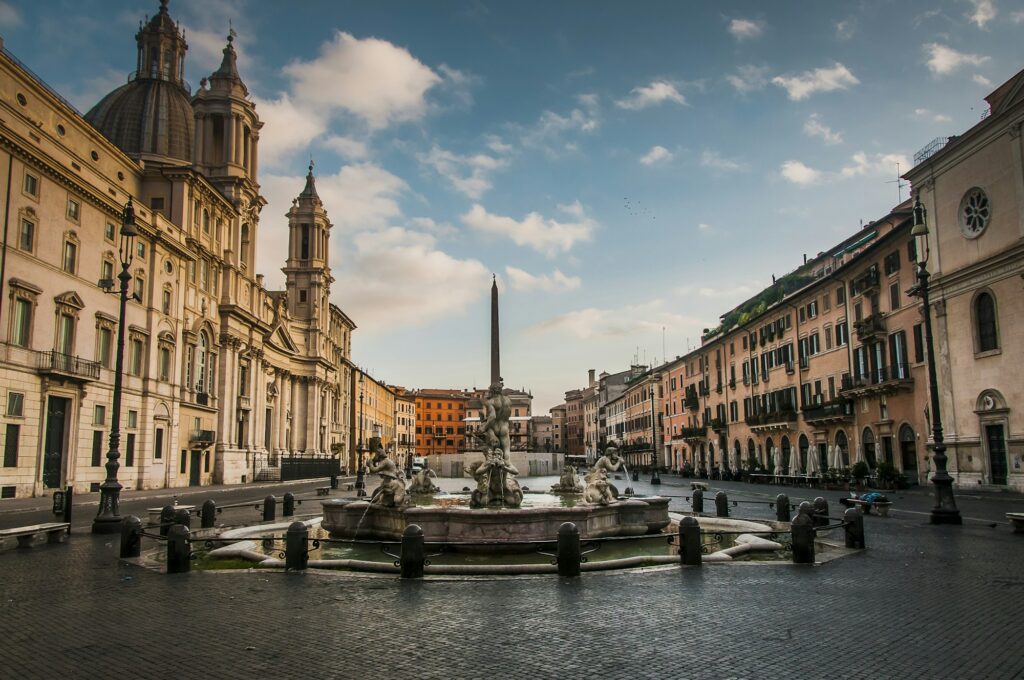
Piazza Navona on 6 January: a descent that depends on the weather
In 2025, the Befana’s descent took place on Piazza Navona, from the Borromini terrace, between the dome and the bell tower of Sant’Agnese. According to LaPresse, « thousands and thousands » of families filled the square that day. The square stays very crowded: arrive early if you want to see the scene. The Christmas market that surrounds the square is covered in our Piazza Navona market guide; here we only look at the 6 January programme.
The time is not set for 2027, and the sources disagree. Turismo Roma indicates a descent from 10 am for the 2024-2025 season. A Roma Capitale notice dated 6 December 2025, passed on by our market guide, announces 2 pm. We did not open that notice directly: check the time the day before.
The risk is real. On 6 January 2026, the mayor of Rome signed an order banning recreational and sporting events in public spaces that day, because of heavy rain and an orange weather alert. The Befana’s flight over Piazza Navona was cancelled, and the parks and cemeteries closed (Wanted in Rome, 6 January 2026). The descent therefore depends on the municipal order and on conditions on the day, which are sometimes only settled at the last minute.
If the descent is cancelled, as in 2026, the afternoon can take another turn. A three-hour cooking class run by Eat and Walk Italy is one option. The listing places it a few steps from Piazza Navona, at the restaurant Gusto al Passeto (via Giuseppe Zanardelli 14): fettuccine, ravioli and tiramisu. The listing offers a full refund if you cancel at least 24 hours before the start, and the operator does not cancel the activity because of bad weather.
Highlights
- The Baroque setting of the square, with its fountains, in the heart of the historic centre on the day of the festival.
- A family and popular celebration, with the descent visible up close if you arrive early.
- A complementary religious event the same day: the Viva la Befana procession, which heads to St Peter’s Square.
On 6 January, Rome’s major sites generally keep their usual hours, but booking changes the picture. The table below reproduces Turismo Roma’s listing for 6 January 2026, the last festival day with published hours.
| Site | Hours on 6 January 2026 | Booking |
|---|---|---|
| Colosseum, Roman Forum, Palatine Hill | Usual hours | Timed slot required |
| Borghese Gallery | Usual hours | Required |
| Baths of Caracalla | Usual hours | Not specified |
| National Roman Museum | Usual hours | Not specified |
| Vatican Museums | Closed | Not applicable |
Source: Turismo Roma, holiday opening hours 2025-2026, checked on 24 October 2026.
On 6 January 2027 falls within the Colosseum’s winter season, which runs from 25 October 2026 to 28 February 2027. According to an extract of the official page (colosseo.it, page not opened directly), it opens at 8:30 am, the last entry is at 3:30 pm, and the park closes at 4:30 pm. Visits are on a mandatory timed slot, and tickets go on sale 30 days ahead (colosseo.it, checked on 24 October 2026 via the site’s search results). These hours apply to the period: nothing guarantees a special arrangement on 6 January.
The Vatican Museums were closed on 6 January 2026. For 2027, nothing is confirmed: check the official site before you buy anything. The Viva la Befana procession follows a different logic. Launched in 1985 by a group of volunteers according to Vatican News (a 2019 article), it arrives at St Peter’s Square in the morning. The Holy See published the programme for the 2026 edition: after the midday Angelus, from the central Loggia, the three Magi offered Pope Leo XIV symbolic gifts. Our Christmas at the Vatican guide details the religious events of the period.
4. Urbania: the national festival, its tower and its giant stocking
Urbania, in the Marche region: the Befana as a national festival
Urbania, a small town in the Marche region in the Metauro valley, hosts the Befana’s national festival. Sources do not agree on how old it is, and the festival is recent compared with the tradition. The organisers announce around 30,000 visitors a year, a figure repeated by Visit Urbania for the 2025 edition; other guides put the figure higher, which we do not use.
The highlight is the Befana’s descent from the bell tower, accompanied by a giant stocking carried by thousands of children along Corso Vittorio Emanuele II. SiViaggia, for the 2026 edition, describes it as more than 70 metres long. The tower’s height varies between sources: italia.it gives a 36-metre jump, Gambero Rosso a 23-metre tower. We therefore quote no height.
The Casa della Befana, the Befana’s house, is set up in the civic palace and is open all year according to italia.it, and it can be visited during the festival. The status of the visit within the ticket has varied: according to the official page it is included in the day ticket, whereas the Comune indicated in 2025 an extra €2 entry, as for the Palazzo Ducale. Check the rule when you buy.
Highlights
- A festival designed for families, with workshops, wooden games and farm animals in recent editions.
- Local produce stalls in the market square, the Duomo square and the Palazzo Ducale, plus craft stalls.
- A bostrengo, a traditional dessert from the Metauro valley; according to Gambero Rosso, its recipe is passed on by word of mouth.
The 2026 programme ran from Saturday 3 to Tuesday 6 January. The table below gathers the known times, to be repeated for 2027 without guarantee.
| Day | Time | Moment |
|---|---|---|
| Saturday 3 January | Exceptional opening | Casa della Befana |
| Sunday 4 January | 10 am | Handover of the keys of the town to the Befana, Piazza San Cristoforo |
| Monday 5 January | 8 pm | Gift delivery by the Pro Loco |
| Tuesday 6 January | 1 pm | Philatelic postmark, Befana post office |
| Tuesday 6 January | 4 pm and 6:30 pm | Architectural video projection on the bell tower |
| Tuesday 6 January | 5 pm | « Winx Club, The Magic is Back » show |
Source: SiViaggia, 2026 programme, checked on 24 October 2026. The time of the descent from the tower is not given in this source.
For 2027, the official site contradicts its own programme. The header announces a 30th edition on « 5-6 gennaio 2027 », while the programme section still refers to 2026. The edition number is consistent (the 29th was held in 2026), and the likely window is 5 and 6 January 2027. Nothing is confirmed, though: the date of the descent, the times and the events must be checked on festadellabefana.com, checked on 24 October 2026.
The 2025 ticket price and the one on the official page differ. The adult ticket went from €6 to €8, with no visible date on the page. Under-10s and residents enter for free. Tickets are sold through LiveTicket.
| Visitor | 2025 edition | Official page (undated) |
|---|---|---|
| Adult | €6 | €8 |
| Group | €3 per person (more than 25 paying, with booking) | €5 per person |
| Under 10 | Free | Free |
| Residents | Free | Free |
| Palazzo Ducale and Casa della Befana | €2 each, on top of the ticket | Not specified |
Source: festadellabefana.com (official page) and Comune di Urbania (2025 edition), checked on 24 October 2026.
Without a car, the route goes through Pesaro station, then a direct bus to Urbania, which takes about 1 hour 30 according to the published information. Fano is also served. The nearest airport is Ancona-Falconara, about 90 km away (SiViaggia, 2025). Special bus and train timetables for 2027 are not published as of our check.
An article from SiViaggia, about the 2025 edition, puts a room at €80 to €150 a night. Local press reports that the town often sells out during the festival: book early.
5. Venice: the Regata delle Befane on the Grand Canal
Venice, 6 January: a race of Befane on the Grand Canal
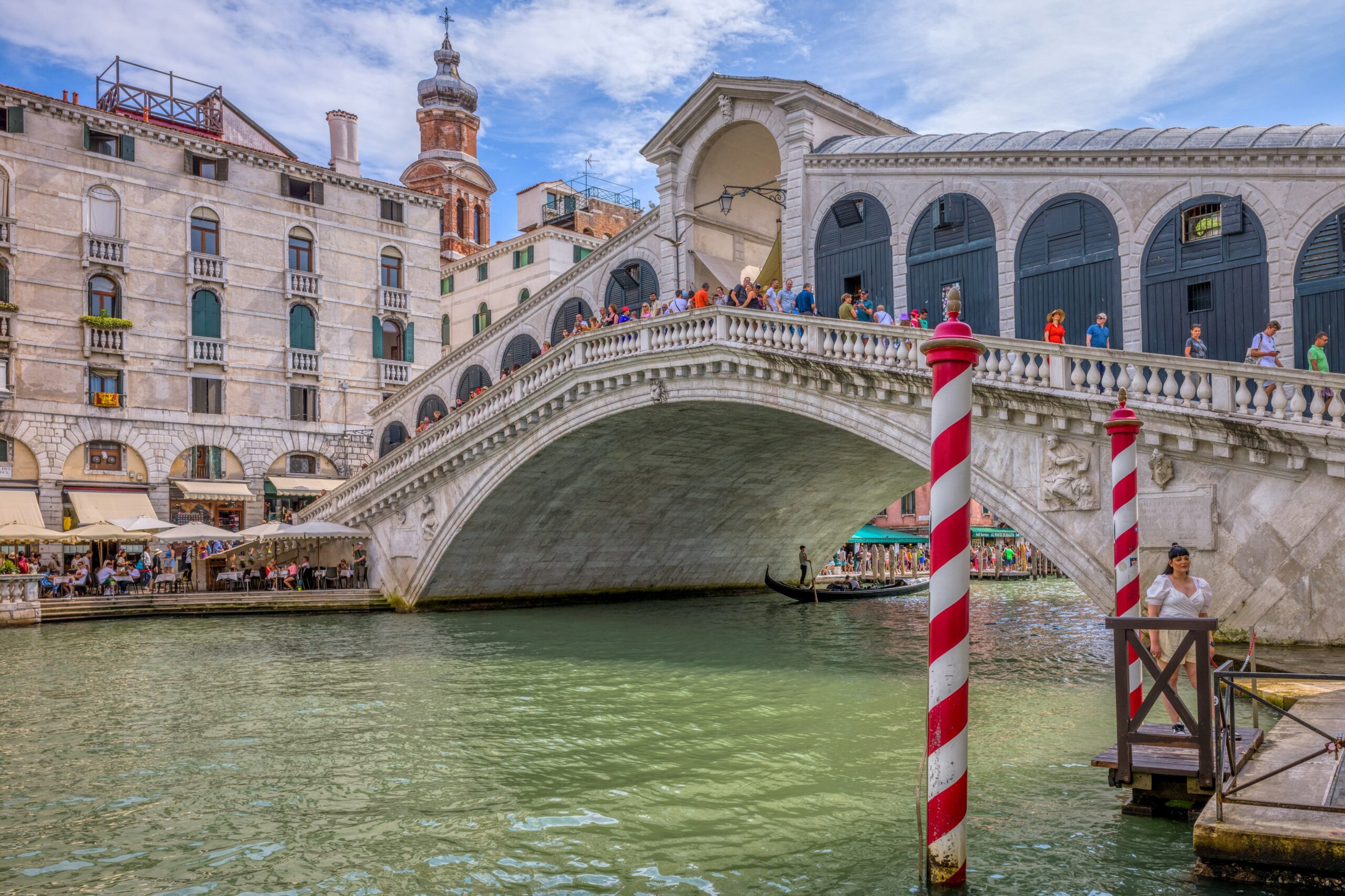
The Regata delle Befane is Venice’s version of the festival: a race on the Grand Canal in which the rowers dress as Befane. It is organised by the Reale Società Canottieri Bucintoro, which published the 2026 programme on 31 December 2025. The race finishes under the Rialto Bridge, where the « Befana 2026 » is crowned late in the morning.
To see the finish, pick a bank near the Rialto Bridge before 10:30 am, when the procession arrives and the giant stocking is put on display. You can get there by vaporetto, at the Rialto stop. In January the lagoon is cold: dress in layers and expect to stand on the quay for a while.
Highlights
- A timed programme published in advance, which lets you plan the morning.
- The Grand Canal setting, with the Rialto as a finish line visible from several banks.
The 2026 programme follows a simple timeline, gathered in the table below. The times are those published by the organiser for this edition.
| Time | Moment | Place |
|---|---|---|
| 8:30 am | Dressing of the Befane | Headquarters at the Magazzini del Sale |
| 10 am | Departure of the water procession | Grand Canal |
| 10:30 am | Arrival at the Rialto and display of the giant stocking | Rialto |
| 11 am | Start of the race, finish under the Rialto Bridge | Grand Canal |
| 11:30 am | Crowning of the « Befana 2026 » and prize-giving | Rialto |
Source: Reale Società Canottieri Bucintoro, programme published on 31 December 2025, checked on 24 October 2026.
If you spend the day in Venice, also check the entry rules for the city in 2027. Our article on the Venice access fee in 2027 sets out the days concerned.
6. Pistoia and Viterbo: two other formats
Pistoia, in Tuscany, held a descent of the Befana from the Duomo bell tower on Tuesday 6 January 2026, from 4 pm to 6 pm, on the Piazza del Duomo. The event was organised by the fire brigade, with the City (Visit Pistoia, consulted on 24 October 2026). No 2027 programme was published as of our check.
Viterbo, in Lazio, is known for its Calza della Befana, billed as the longest stocking in the world. In 2026 it was scheduled with a fallback to Saturday 10 January in case of bad weather. The descent is handled by the fire brigade’s S.A.F. specialists, and more than a thousand stockings are handed out free to children (SiViaggia, search extract, consulted on 24 October 2026). No source we consulted confirms a descent from a bell tower in Viterbo: do not plan for it without checking first.
7. Indicative budget and how to organise the day
The budget depends mostly on the town you choose and on transport. 2027 prices are not published yet, and most prices should be checked at the time of booking.
- Urbania festival ticket: €8 for an adult according to the official page (undated), free for under-10s and residents.
- Accommodation in Urbania: €80 to €150 a night for a room, according to SiViaggia (2025 edition).
- Cooking class in Rome: €52 to €64 per person, based on 2 adults, for the slots on 6 and 7 January 2027 checked on 24 October 2026.
- Colosseum and Vatican Museums: not priced here. The prices we found contradict each other from one site to another, and the official pages were not read for prices.
To combine Rome and the descent, a typical day can follow this order: in the morning, the procession towards St Peter’s, with the midday Angelus (a ritual observed in 2026); after lunch, the Borghese Gallery, which required a booking in 2026; then Piazza Navona, if the descent goes ahead, at the time published the day before. Leave a margin: the Roman programme depends on the weather, and the plan changes if the descent is cancelled.
For Urbania, plan to sleep on site if you can, and book your return transport in advance.
What other guides don’t tell you
These points come from official sources or dated checks, and are often missing from general guides.
- The dates for Urbania 2027 are not fixed. The header of the official site announces a 30th edition on « 5-6 gennaio 2027 », while its programme still refers to 2026. Guides often repeat the 2025 or 2026 dates without saying so (festadellabefana.com, consulted on 24 October 2026).
- The Befana’s flight over Piazza Navona was cancelled on 6 January 2026. A mayoral order banned recreational events in public spaces because of an orange weather alert (Wanted in Rome, 6 January 2026, consulted on 24 October 2026).
- The Vatican Museums were closed on 6 January 2026, while the Borghese Gallery required a booking. Guides rarely distinguish between these two rules (Turismo Roma, consulted on 24 October 2026).
Practical info before you go
The festival squares are packed on 6 January. Three practical points are worth settling before you leave.
In Rome, the historic centre’s ZTL (limited traffic zone) is active from 2 pm to 6 pm, according to a 2026 search source we could not open directly: check with the City of Rome before you take a vehicle. The Borghese Gallery requires a booking, and the Colosseum, the Forum and the Palatine Hill run on mandatory timed slots.
Mobile data from the moment you land, with no physical SIM card. Useful for checking timetables and local orders on the day.
Price depends on the bundle and duration: see the listingCovers medical costs and emergency evacuation. Check before you buy whether trip cancellation for bad weather is among the covered benefits.
Price depends on duration and age: see the quote on the pageFrequently asked questions about Befana 2027
When is Befana in 2027?
Befana is linked to Epiphany, which falls on Wednesday 6 January 2027. It is a public holiday in Italy. The events themselves are not all fixed: for Urbania, the 30th edition is announced for early January 2027, with dates still to be confirmed on the festival’s official site.
Is Befana a public holiday in Italy?
Yes. 6 January is among the national civil holidays, according to the parliamentary file AC 578 of the Chamber of Deputies. For 2027, schools are due back on Thursday 7 January in most regions, with Sicily extending its break to 7 January inclusive.
Can you see the Befana’s descent on Piazza Navona?
Usually yes, but the descent depends on the weather and on a municipal order. On 6 January 2026, the flight was cancelled because of an orange alert, and Rome’s parks and cemeteries closed. No official announcement for 2027 had been published on the date of our check, 24 October 2026, and neither was the time. Plan a backup and check the day before.
How much is the ticket for the Urbania festival?
The official page lists €8 for an adult and €5 per person for a group, with no visible publication date. Under-10s and residents enter for free. In 2025, the adult ticket cost €6. The 2027 price is not published as of our check: confirm it on festadellabefana.com before you buy.
How do you get to Urbania without a car?
Take the train to Pesaro, then a direct bus to Urbania. The stated journey time is about 1 hour 30. Fano is also served. Special timetables for 2027 are not published as of our check: check the operators’ timetables the week you travel and book early, as the town often sells out.
Are Rome’s museums open on 6 January?
According to Turismo Roma, on 6 January 2026 the Colosseum, the Forum, the Baths of Caracalla and the National Roman Museum kept their usual hours. The Borghese Gallery required a booking, and the Vatican Museums were closed. For 2027, nothing is confirmed: check each site before you go.
Are there special trains on 6 January?
No source we consulted confirms a special train for 6 January 2027. Check the day before on the operator’s website, before you travel to Urbania, Venice or Rome.
What is the Regata delle Befane?
It is a race of rowers dressed as Befane on the Grand Canal in Venice, on 6 January. Organised by the Reale Società Canottieri Bucintoro, it starts around 10 am and finishes under the Rialto Bridge, where the « Befana 2026 » is crowned late in the morning. The 2027 programme is not published as of our check.
Where does the Befana come from?
Her name probably derives from the Greek epifania, but no single origin is established. Some researchers link her to pre-Christian traditions, others to a figure invented in the Middle Ages to personify Epiphany. Reference sources, such as the English Wikipedia article, present these as hypotheses.
Sources and dates of consultation
- icalendario.it: date of Epiphany 2027 (consulted on 24 October 2026)
- Chamber of Deputies, dossier AC 578: national status of 6 January (consulted on 24 October 2026)
- money.it, school calendar 2026-2027: return to school planned for 7 January 2027 (consulted on 24 October 2026)
- festadellabefana.com: official site of Urbania, prices and 2027 dates that contradict each other (consulted on 24 October 2026)
- SiViaggia, Urbania 2026: programme, giant stocking, 29th edition (consulted on 24 October 2026)
- Visit Urbania, 2025 edition: 2025 prices and announced attendance (consulted on 24 October 2026)
- Comune di Urbania, 2025 edition: opening hours, prices and paid entries (consulted on 24 October 2026)
- Italia.it, Befana Urbania: history of the festival and Casa della Befana (consulted on 24 October 2026)
- Gambero Rosso, Festa della Befana: bostrengo and height of the Urbania tower (page not opened directly, search extract, consulted on 24 October 2026)
- Wanted in Rome: cancellation of the descent on Piazza Navona (6 January 2026)
- LaPresse, Piazza Navona: attendance at the 2025 descent (6 January 2025)
- Turismo Roma, Piazza Navona season 2024-2025: descent from 10 am (page not opened directly, search extract, consulted on 24 October 2026)
- Turismo Roma, holiday opening hours 2025-2026: Roman sites and the Vatican on 6 January 2026 (consulted on 24 October 2026)
- Vatican News, Viva la Befana procession: history of the procession, launched in 1985 (2019 article, consulted on 24 October 2026)
- Holy See Press Office bulletin, 6 January 2026: midday Angelus and gifts from the Magi (consulted on 24 October 2026)
- Colosseo, winter opening hours: period from 25 October 2026 to 28 February 2027 (checked on 24 October 2026, via search results)
- Reale Società Canottieri Bucintoro, Regata delle Befane 2026: timed programme (31 December 2025, consulted on 24 October 2026)
- Visit Pistoia, Befana descent: Duomo bell tower, 6 January 2026, 4 pm to 6 pm (consulted on 24 October 2026)
- SiViaggia, Viterbo Calza della Befana 2026: fallback to 10 January, S.A.F. descent (search extract, consulted on 24 October 2026)
- Wikipedia (EN), Befana: origins and lines of research (consulted on 24 October 2026)
Research carried out on 24 October 2026. Dates, hours and prices may change: check them with the organisers and official sites before you book.
Plan your trip with Pixidia
Pixidia learns how you travel and helps you build a trip that truly fits you and everyone coming along.
Open the planner