
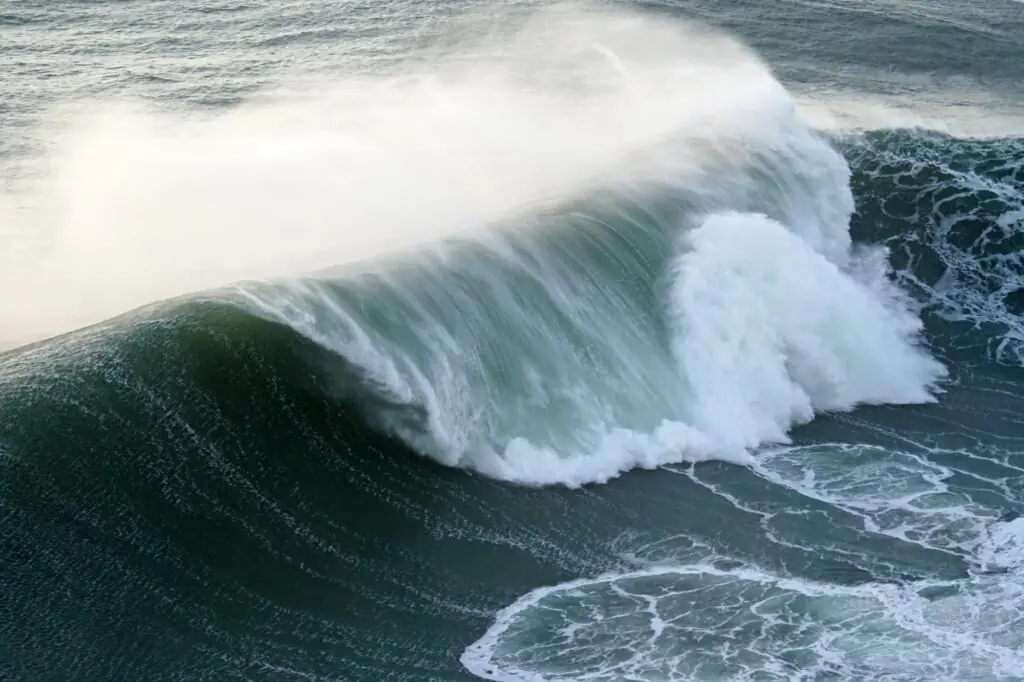
Nazaré’s big waves are mostly seen from November to February, and the WSL 2026/27 competition window runs from 1 November 2026 to 31 March 2027. No date is fixed for the event: it depends on the swell. The official record stays at 26.21 m, set by Sebastian Steudtner on 29 October 2020.
Checked on against the official sources cited (Nazaré Waves news item no. 283, Nazaré Waves visitor page, Guinness World Records).
Nazaré doesn’t have a big-wave calendar. The swell is read on the buoys and forecast a few days ahead, not a few months. So make your call three or five days out, based on the swell forecast: the WSL competition window runs from 1 November 2026 to 31 March 2027, with no date set. When information is missing or sources disagree, we say so.
1. Where to see the big waves at Nazaré
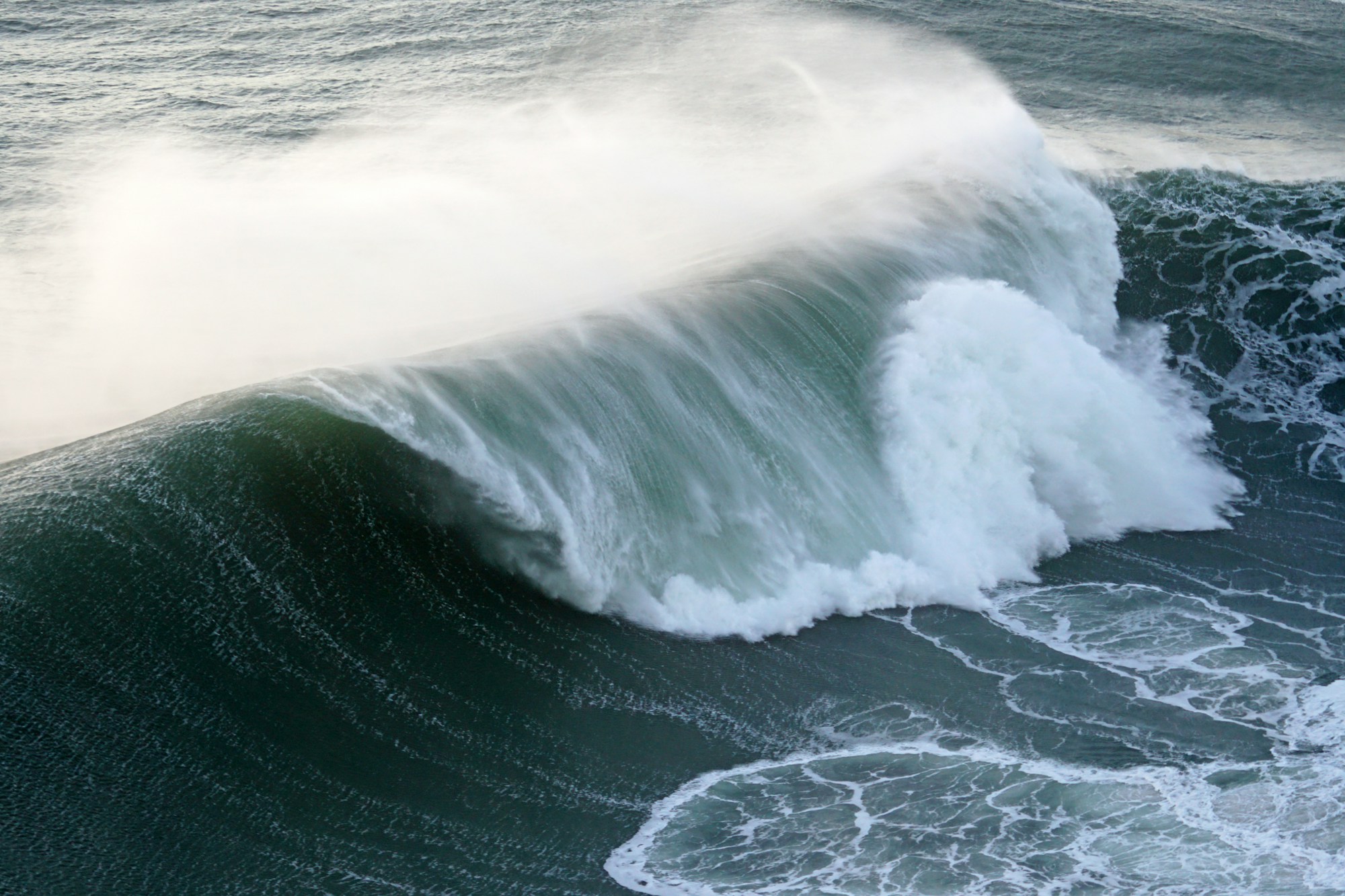
Praia do Norte, the beach where the swell breaks
Praia do Norte is the beach, north of Nazaré, where the big swell breaks. The organiser, Nazaré Waves, presents it as the venue for the competitions. To get there you follow a dirt track from the car park: the ground is sloping and slippery, and grippy shoes are essential. The Nazaré Waves visitor page sets out these guidelines.
Facilities here are basic. The restaurants are more than 500 metres away, the food trucks about 500 metres, and there are very few portable toilets. Bring water, something to eat, warm waterproof clothing, and a waterproof mat to sit on damp ground.
The essentials
- The spot for big swells, and the WSL competition venue
- Access on foot from the car park, along a dirt track
- A sea the organiser describes as dangerous, with drownings reported
A guided tour is another way to see the coast. The Viator listing describes a three-hour electric-bike ride, combining the fishing traditions of Praia da Nazaré with the giant waves of Praia do Norte. An optional entry to the Forte is among the extra charges. The listing doesn’t say whether the route uses the dirt track, or how much walking it takes to reach the lighthouse. The meeting point hasn’t been checked: ask the operator before you book.
Who’s it for? Someone who wants a guide and an organised half-day. The catch is the date: the swell doesn’t follow the calendar. Pick a booking you can cancel (the listing shows free cancellation), then confirm your trip after the three- to five-day forecast. The listing says confirmation is manual. Between 1 November 2026 and 31 January 2027, the calendar is open on 58 of 92 days (Viator check, 25 October 2026).
The Forte de São Miguel Arcanjo and the Sítio offer two more viewpoints, covered in the next section. The table below sums up the options and what to watch for.
| Spot | What you see | Access | What to check |
|---|---|---|---|
| Praia do Norte | The swell breaking on the competition beach | Dirt track from the car park, sloping ground | Dangerous sea according to the organiser |
| Forte de São Miguel Arcanjo | View over Praia do Norte, and a wall of boards signed by surfers | On foot from the Sítio, or by tuk-tuk | Opening hours and entry price to confirm with the municipality or Nazaré Waves before you visit; may close on competition days |
| Sítio and Ermida da Memória | Upper quarter, view over the cliff and the town | Funicular from the main beach, or by road | Funicular status in 2026 not confirmed |
Source: Nazaré Waves visitor page, checked 25 October 2026.
2. The Forte, the Sítio and the funicular
The Forte de São Miguel Arcanjo sits on the headland of the Sítio, above Praia do Norte. It’s the most-cited viewpoint on the spot. A wall of boards signed by big-wave surfers is on display there. According to the organiser’s page, the fort can close on competition days.
Entry and opening hours. Opening hours and the entry price need confirming with the municipality or Nazaré Waves before your visit. The sources we checked don’t agree on this, and we couldn’t read an official page from the Câmara Municipal de Nazaré. One local source mentions a reopening after February 2026, with no exact date: confirm it’s open with the municipality before you set off.
The Sítio is the upper quarter, on the cliff. The Ermida da Memória chapel sits at the cliff edge, next to the Our Lady of Nazaré sanctuary. You reach it by funicular from the main beach. The price on the organiser’s page dates from 2023. Whether it runs in 2026 isn’t confirmed: a municipal test report is dated 26 March 2026, but we couldn’t read its conclusion. Don’t count on the funicular until you’ve checked. The road is the fallback.
To reach the lighthouse, there’s no parking near it or in the Sítio. Leave the car outside the perimeter and allow about 13 minutes’ walk, over a kilometre, from the Sítio. The tuk-tuk makes the same trip, according to the visitor page.
3. When to go: read the swell, not the calendar
The calendar tells you when the season starts. It doesn’t tell you when there’ll be waves. The sources agree on the essentials: the season runs October to March, with a core from November to February. The WSL competition window for 2026/27 runs from 1 November 2026 to 31 March 2027, as the local organiser announced in its news item of 19 October 2026.
The WSL 2026/27 window has no date
Nazaré Waves news item no. 283 says the competition date isn’t set. The event goes ahead if the swell and conditions are good enough. For the 2025/26 season, the WSL describes an alert system: a yellow alert up to 72 hours before a possible event, then a confirmed green alert within 24 hours. We haven’t seen it confirmed for 2026/27. For a visit, that means deciding when to leave from the alerts and the forecast, not from the calendar.
| Period | What the sources say | Confidence level |
|---|---|---|
| 1 November 2026 to 31 March 2027 | WSL competition window, date not set | Confirmed by the local organiser (19 October 2026) |
| November | Window opens, first big swells possible | Window confirmed; the rest is an estimate |
| December | Last competition edition on 13 December 2025; often cited as the peak | 2025 edition confirmed; the peak comes from secondary sources |
| January | IPMA red alert in January 2025; Storm Kristin on 28 January 2026 | Dated regional press (2025) and Lusa news wire (2026) |
| February | The core season runs on, according to the Nazaré Big Waves site | Reference source, page updated 9 September 2026 |
Source: Nazaré Waves, news item no. 283, Nazaré Big Waves (in French), RR, checked 25 October 2026.
What to read in the forecasts
A big-swell session needs several parameters together. The swell should come from the north-west to west. The wind should be light to moderate and blow from the north-east to east: that’s offshore wind, which hollows the wave before it breaks. A south-west wind disorganises it. The peak period matters too: some secondary sources describe the strongest sessions with periods of 14 seconds or more. One favourable parameter isn’t enough on its own.
To read these, the reference is the MONICAN buoy run by the Instituto Hidrográfico, which gives significant wave heights and peak periods offshore of Nazaré, with forecasts from the institute’s WW3 model. IPMA sea-state warnings are issued by district, including Leiria. The Nazaré Big Waves page (in French) gives offshore swell readings and tips. Consumer apps like Windguru or Surfline also exist; we haven’t checked them for this article.
A major swell usually shows up three to five days ahead, sometimes less. Let that window guide your decision more than a date set in advance. Nazaré Big Waves sums it up in one line: a window of opportunity, never a guaranteed date.
Why here: the canyon
The Nazaré canyon is an undersea gorge that runs close to the coast. It concentrates the swell’s energy near the shore. Secondary sources describe it as reaching depths of around 5 km. The exact mechanism is still debated, and we don’t quote any figure for how much it amplifies waves: none is backed by a verified source.
What can’t be predicted
No official source puts a number on big-wave days per season. Guides talk about « a few days a month », without a source. We also couldn’t find reliable data on the effect of the tide. Tide times are part of reading the day: check a tide table alongside the swell forecast.
4. Getting there from Lisbon
Nazaré is about an hour and a half from Lisbon by car, and a bit longer by bus. The bus is the simplest and most frequent option. The fares below are the ones the organiser lists on its visitor page: they date from 2025 and should be confirmed when you buy.
| Mode | Journey time | Fare | Fare date |
|---|---|---|---|
| Car (one way) | about 1 h 30 | about €25 | 2025 |
| Bus Rede Expressos (Sete Rios) or FlixBus (Oriente) | about 1 h 45 | €4 to €12 | 2025 |
| Train (change at Famalicão da Nazaré, then bus) | about 2 h 40 | €11 to €24 | 2025 |
Source: Nazaré Waves visitor page, checked 25 October 2026.
No official shuttle has been confirmed to reach Praia do Norte or the lighthouse. Before you count on local transport, check with the municipality.
The train exists, but it isn’t direct. The organiser shows a change at Famalicão da Nazaré, then a bus of about 10 minutes. The route hasn’t been checked with CP (Comboios de Portugal): verify the timetables before you book.
Entry formalities
Since 10 April 2026, the EU’s Entry/Exit System (EES) has been fully operational at Schengen’s external borders, according to the French Ministry of Foreign Affairs. It registers non-EU visitors with a biometric check, and it tracks the 90-days-in-180 rule. British visitors are non-EU visitors, so the check applies to you. Residents of the EU, the EEA and Switzerland are exempt. The UK government’s Portugal travel advice says you may be asked to register at a special booth on your first visit, and that fingerprints or a photo may be needed when you leave. Based on the sources we checked, there’s nothing to do before you travel.
5. Safety and municipal decisions
The sea and the cliff
The sea at Praia do Norte is dangerous. The organiser’s page says several tourists have drowned there, and asks people to stay well clear of the sea and the cliff edge. Wind is a risk in its own right: a report circulating in 2026 describes a sudden storm, with gusts that knocked spectators off the cliff. We don’t know the exact date or the toll of that episode.
The municipality’s decisions
Storm Kristin hit mainland Portugal on 28 January 2026, and Nazaré was placed under a municipal state of calamity. On 2 February 2026, the Câmara Municipal suspended all tourist, maritime and leisure activities at sea for the duration of that state. It advised against going to the Forte de São Miguel Arcanjo or its surroundings. We couldn’t read the official notice, so we don’t know whether the suspension also covers walking access to Praia do Norte or the Sítio. Check the situation before you set off.
Precedents
In January 2025, IPMA put seven coastal districts, including Leiria, on red alert for sea agitation. A north-west swell was forecast at 7 to 8 metres significant height, possibly reaching 14 metres. The bar at Nazaré was closed to navigation (RR, 28 January 2025). In August 2025, a yellow alert was issued in ten districts, with a risk of rip currents (RR, 25 August 2025).
Sea excursions
Jet-ski trips out to the wave zone are sold online. We haven’t checked these operators’ safety: don’t book without checking the provider and its cancellation terms.
Simple rules
The following rules come from the organiser’s guidance and the municipal decisions cited above: stay well clear of the sea, keep away from the cliff edge, don’t go on site in storm conditions, check with the municipality and IPMA the same morning, and wear warm, waterproof clothing.
6. Budget and logistics
Your budget falls into four areas. We don’t give a hotel rate: the pages we checked showed summer prices, and we found no December or January 2026 rates.
- Transport: the bus from Lisbon costs €4 to €12 one way, according to the organiser’s 2025 fares. The car costs about €25 one way. Parking isn’t priced: we found no rate.
- Fort and funicular: opening hours and entry price to confirm with the municipality or Nazaré Waves before your visit. The funicular price on the organiser’s page dates from 2023.
- Guided tour: from €38 per person based on two people, excluding the optional Forte entry, paid on site and not priced here; Viator check of 25 October 2026, unchanged across six dates checked between 11 November 2026 and 30 January 2027, to confirm at booking. Other sites showed prices in dollars with no date: compare in euros when you book.
- Accommodation: one travel blog advises booking as soon as a big swell is forecast, ideally with free cancellation, because places go quickly during storms.
For clothing, pack waterproof layers, grippy shoes, a waterproof mat to sit on, and gloves for the wind.
7. A day at Nazaré when a big swell is forecast
The day before. Check the swell on the MONICAN buoy and the IPMA warnings for the Leiria district. Check the WSL alerts too. If a yellow alert is issued, keep the day free.
The morning. Leave early. The organiser advises arriving early on good-forecast days, as crowds build fast. Check the day’s tide table, and confirm the municipality hasn’t issued a new notice.
Midday. Leave the car outside the Sítio perimeter and walk to the lighthouse, or take the tuk-tuk. If the Forte is open that day, its view over Praia do Norte is still the main reason to visit.
Late afternoon. If the swell picks up, stay back from the cliff edge, out of the gusts; if the wind rises, leave the headland. Keep away from the sea. If no swell shows up, change plans: the Sítio and its quarter are worth a visit in their own right, provided you check the funicular’s status before you set off.
8. Depending on your profile
With family
Praia do Norte calls for care: slippery ground, a dangerous sea, a cliff. Keep children well away from the sea and the cliff edge. The Sítio and the Forte, if their opening hours allow, make an easier visit. Check the funicular before you go.
A couple, on a first trip
Our advice: don’t fix a date. Book accommodation you can cancel, follow the swell three to five days out, and keep a spare day for the Sítio and the town.
On a small budget
The bus is the cheapest option from Lisbon: Rede Expressos from Sete Rios, or FlixBus from Oriente, depending on where you start (fares in the table in section 4). Confirm the Forte’s hours and the funicular’s status before your visit.
With reduced mobility
The ground at Praia do Norte is sloping and slippery, and the walk from the car park is more than a kilometre. We don’t have verified accessibility information for the funicular or the fort. Ask the municipality before you go.
What other guides don’t tell you
Points checked against an official source, from the organiser or a news agency, that are missing or contradicted in the travel guides we looked at. Each one carries its source and date of consultation.
The homologated record is 26.21 m, according to Guinness World Records, checked 25 October 2026. A 29.15 m claim isn’t homologated according to Nazaré Waves (news item no. 281, search extract, page not opened), while some guides cite more than 30 m, with no source.
WSL alerts come in stages. The mechanism is described for the 2025/26 season (World Surf League, article of 1 November 2025, checked 25 October 2026).
The municipality suspended sea activities on 2 February 2026. The travel guides we checked don’t mention it (Lusa wire story via Notícias ao Minuto, checked 25 October 2026).
Praia do Norte isn’t a risk-free spot. Guides present it as accessible. The Nazaré Waves visitor page, checked 25 October 2026, flags a dangerous sea and drownings.
Practical info for planning the trip
Two providers that help with this trip. Prices change: check them on the provider’s site before you buy.
A mobile connection from the moment you land in Lisbon, with no SIM card to buy locally. Choose the plan by duration and data allowance.
Price depends on the plan, see the storeCover for medical costs and unexpected events during your trip. Read the cover before you travel, especially for activities at sea.
Price depends on duration and coverFrequently asked questions
When can you see the big waves at Nazaré?
The season runs from October to March, with a core from November to February. The WSL 2026/27 competition window runs from 1 November 2026 to 31 March 2027. Those dates set the frame, not a specific day: the waves show up when the swell arrives, and the swell is forecast three to five days ahead. Source: Nazaré Waves, news item no. 283.
Is there a fixed date for the competition?
No. The organiser says the date isn’t set and the event goes ahead if the swell and conditions are good enough. The WSL alert system described for 2025/26 gives a yellow alert up to 72 hours before, then a green alert within 24 hours; we haven’t seen it confirmed for 2026/27. Follow the alerts before you book, and choose accommodation you can cancel.
Where can you watch the waves from land?
Two main spots. Praia do Norte is the beach where the swell breaks, but the organiser flags the sea as dangerous there. The Forte de São Miguel Arcanjo, on the Sítio headland, has the most-cited view of the spot. The fort can close on competition days, and its hours need confirming with the municipality. One local source mentions a reopening after February 2026, with no exact date.
How much do the fort and the funicular cost?
The fort’s opening hours and entry price need confirming with the municipality or Nazaré Waves before your visit. The funicular price on the organiser’s page dates from 2023, and whether it runs in 2026 isn’t confirmed. Check both before you set off.
How do you get from Lisbon to Nazaré?
The Rede Expressos (Sete Rios) or FlixBus (Oriente) bus takes about 1 h 45 and costs €4 to €12. Driving takes about 1 h 30 and costs about €25 one way, parking not priced. The train, with a change at Famalicão da Nazaré, takes about 2 h 40 and costs €11 to €24. These fares date from 2025, and the train route hasn’t been checked with CP. No official shuttle has been confirmed to the lighthouse.
Can you surf or swim at Praia do Norte?
The organiser describes the sea as dangerous and says several tourists have drowned there. We found no surf or swimming ban at Praia do Norte for 2026. The only surf ban we found dates from 2020, during the pandemic. The 2025 swimming ban covered the main beach at Nazaré, not Praia do Norte.
What’s the biggest wave ever surfed?
The record homologated by Guinness World Records is 26.21 m, set by Sebastian Steudtner on 29 October 2020. A 29.15 m claim by Rodrigo Koxa isn’t homologated according to Nazaré Waves (news item no. 281, search extract), so we don’t present it as a record.
Are the waves there in January?
January is part of the peak season, but nothing is guaranteed. In January 2025, IPMA put the coast on red alert, and Storm Kristin hit Portugal on 28 January 2026. January brings both the biggest swells and the biggest risks. Check the forecast on the day.
Should you book accommodation in advance?
A travel blog advises booking as soon as a big swell is forecast, ideally with free cancellation, because places go quickly during storms. We didn’t find accommodation rates for December or January 2026: the pages we checked showed summer prices.
Sources and dates of consultation
- Nazaré Waves, news item no. 283: WSL 2026/27 window and no fixed date (published 19 October 2026).
- Nazaré Waves, visitor page: access, car park, safety, last edition, 2025 fares for car, bus and train, fort entry.
- World Surf League, article of 1 November 2025: yellow and green alert mechanism (2025/26 season).
- Guinness World Records: largest wave surfed.
- Notícias ao Minuto (Lusa wire): municipal suspension of 2 February 2026.
- RR, 28 January 2025: IPMA red alert.
- Nazaré Big Waves (in French): peak season and swell reading.
- Instituto Hidrográfico, MONICAN buoys: offshore swell forecasts for Nazaré.
- UK government (GOV.UK), Portugal travel advice: entry requirements: biometric registration at the border and the 90-day rule.
- French Ministry of Foreign Affairs, EES: start date of 10 April 2026.
Research and checks carried out on 25 October 2026. Each fact carries its date of consultation in the text.
Plan your trip with Pixidia
Pixidia learns how you travel and helps you build a trip that truly fits you and everyone coming along.
Open the planner