
The Rauhnächte 2026 last twelve nights, from 25 December 2026 to 6 January 2027. An alpine variant starts on Thomasnacht, Monday 21 December 2026. The first known events are in Kirchseeon (Bavaria) from 26 November 2026, and in Innsbruck on 3 December 2026. Check times with the organisers.
Checked on against the official sources cited (ÖAMTC, Tyrol state government, UNESCO.at, tourist offices).
Between Christmas and Epiphany, German-speaking villages keep rituals linked to the Rauhnächte: smoking out the houses, omens, and processions of Perchten and Krampus figures. This article sets out the dates for winter 2026-2027, the events in December and January, and the driving rules in Austria. The times quoted come from the event pages consulted on 6 November 2026.
When the Rauhnächte start and end in 2026-2027
Twelve nights, two calendars
The Rauhnächte are the nights « between the years ». In most German-speaking regions there are twelve of them, from 25 December to 6 January. For 2026-2027, the Ártala app, the reference calendar of the jahrzaehler.de site, sets them from 25 December 2026 to 5 January 2027: the last night ends on the morning of 6 January 2027 (jahrzaehler.de, consulted 6 November 2026).
A variant, cited by kuriose-feiertage.de (consulted 6 November 2026), starts on Thomasnacht, 21 December, and ends on 1 January. It exists alongside the twelve-night version. Sources do not all agree on the number of nights, which is why this article uses the jahrzaehler.de calendar as its reference.
| Date | What happens | Source |
|---|---|---|
| Monday 21 December 2026 | Thomasnacht, start of the alpine variant | kuriose-feiertage.de |
| Friday 25 December 2026 | First of the twelve nights | jahrzaehler.de (Ártala) |
| Friday 1 January 2027 | End of the alpine variant | kuriose-feiertage.de |
| Tuesday 5 January 2027 | Glöcklerläufe in Gmunden, Obertraun and Ebensee; the night of 5 to 6 January in Bad Ischl | oberoesterreich.at, UNESCO.at |
| Wednesday 6 January 2027 | Last of the twelve nights, Epiphany | jahrzaehler.de |
Source: jahrzaehler.de, kuriose-feiertage.de and oberoesterreich.at, checked 6 November 2026.
25 December 2026 is a Friday, and 5 January 2027 is a Tuesday. Not all event dates are confirmed: check them with the organisers.
Where the name comes from, and why twelve nights?
The origin of the name is not established. The DWDS, cited by jahrzaehler.de, proposes the Middle High German rûch, « hairy », or Rauch, « smoke ». The database of the University of Innsbruck (uibk.ac.at, consulted 6 November 2026) links it to the Ausräuchern des Hauses, the purification of the house by smoke. These are hypotheses.
According to jahrzaehler.de, the number twelve comes from the gap between the 354-day lunar year and the 365-day solar year. This is a reconstruction, not proof, as Rainer Wehse, cited by kuriose-feiertage.de, points out.
Räuchern: smoking the house with embers
Räuchern is the practice best described in the sources. According to the Innsbruck database, embers taken from the hearth receive incense, remnants of the blessed Palmbesen (the palm-frond broom from Palm Sunday) and blessed herbs. The person carrying the censer walks through the house praying, while a second person sprinkles holy water in every room (uibk.ac.at, consulted 6 November 2026).
In the late Middle Ages, the practice was meant to drive away « spirits and demons ». It was widespread in Tyrol but now survives only in a few pockets. In Matrei in Osttirol, it is still performed at Christmas, New Year and Epiphany.
The Innsbruck database also records a belief tied to these nights: people thought Percht, a legendary figure, moved about during the Rauhnächte, and they left milk and bread outside the door. According to the same database, Perchten processions were held on the eve of 6 January; that was a particularity.
Perchten and Krampus: two figures not to confuse
Schiachperchten and Schönperchten
Perchten are masked figures who roam the villages during the Rauhnächte. An extract from austria-forum.org (consulted 6 November 2026) distinguishes two types. Schiachperchten wear frightening masks, horns, furs and bells: they chase away winter and evil spirits. Schönperchten wear taller, colourful headdresses and bring good fortune.
What sets them apart
- Schiachperchten: frightening masks, horns, furs, bells, chasing away winter
- Schönperchten: colourful, taller headdresses, good fortune
- Krampus: walks with Saint Nicholas on 5 December, a separate feast
Krampus and Perchten often mix in today’s parades, but they are two distinct traditions. Krampus belongs to the feast of Saint Nicholas, on 5 December. Perchten are linked to the Rauhnächte period.
The peak of the December 2026 events falls on Saturday 5 December, and the list is not exhaustive. The table below reproduces the official listings read on 6 November 2026, and flags the unconfirmed extracts from aggregators.
| Date | Place | What the listing says |
|---|---|---|
| Thursday 3 and Friday 4 December 2026 | Innsbruck (Tyrol) | Krampus and Perchten; no time or price given |
| Friday 4 December 2026 | Bischofshofen (Salzburg) | Unconfirmed extract, at 7 pm |
| Saturday 5 December 2026 | Sterzing / Vipiteno (South Tyrol) | Krampusday, pedestrian zone, 6 pm to 8 pm; listing dated 16 January 2026, to be reconfirmed |
| Saturday 5 December 2026 | Sand in Taufers (Tauferer Ahrntal) | Krampus run, procession at 6 pm from the festival hall, entertainment until 11:59 pm; mulled wine served on site |
| Saturday 5 December 2026 | Straß, Deutschlandsberg, Trofaiach (Styria); Altenmarkt, Unken (Salzburg) | Unconfirmed aggregator extracts; Altenmarkt at 8 pm, Unken at 6 pm |
| Sunday 6 December 2026 | Rattenberg (Tyrol) | Perchtenlauf and Hexentanz; time and price not given |
| Monday 7 December 2026 | Mattsee (Salzburg), Toblach (South Tyrol) | Unconfirmed extracts |
| Saturday 12 December 2026 | Klöch (Styria), Natz-Schabs (South Tyrol) | Unconfirmed extracts |
| Undated | Graz (Styria) | No reliable date at the time of checking |
Source: Innsbruck Tourism (tyrol.com), yesalps.com, south-tirol.com and tirol.at, checked 6 November 2026. Lines marked « extract » come from aggregators and have not been verified on the organisers’ sites.
Krampus runs are not limited to Tyrol. The newspaper Salzburg24 keeps a list of the 2026 Krampus runs across the whole of the Salzburg state, updated on 28 October 2026. The number of entries it lists has not been checked here.
Gastein, a festival every four years
The Perchtenlauf of Gastein (Bad Gastein and Bad Hofgastein) has been on Austria’s national inventory of intangible heritage since 2011, in the « Social practices » category for the state of Salzburg, under identifier 248. The UNESCO.at page does not mention an entry on the UNESCO Representative List (consulted 6 November 2026).
According to the same page, the event takes place every four years, on one day between 1 January and Epiphany. It brings together about 140 figures and some thirty headdress bearers.
An extract from gastein.com, not read in full, gives 1 January 2026 as the last documented edition and mentions an edition over several days, whereas the UNESCO.at page describes a single day. This contradiction still needs settling with the tourist office. If the four-year cycle holds, the next edition would fall in 2030: this is an inference, not an official announcement.
The Glöcklerläufe of the Salzkammergut, 5 January 2027
Glöcklerläufe are bell processions, and most take place on a fixed day, 5 January. The oberoesterreich.at page (updated 14 September 2026, consulted 6 November 2026) gives the following events:
- Gmunden: Glöcklerlauf and Dreikönigssingen, 5 January 2027, on the Rathausplatz.
- Obertraun: every 5 January.
- Bad Ischl: the night of 5 to 6 January, which is the last Rauhnacht.
- Ebensee: every 5 January, according to the UNESCO.at page. No time slot is confirmed.
The Glöcklerlauf in Ebensee has been on the Austrian national inventory since 2010 (identifier 241), without an entry on the UNESCO list (unesco.at, consulted 6 November 2026).
Kirchseeon, a season of about six weeks in Bavaria
The Perchtenlauf in Kirchseeon runs over a season: from 26 November 2026 to 6 January 2027, on Thursdays, Saturdays and Sundays. The season closes with a Perchtennacht, from 5 to 6 January 2027. Spectators enter free of charge. You can get there by train on the S-Bahn S6, to Kirchseeon station (festivalsindeutschland.de, page updated 8 September 2026, consulted 6 November 2026).
The detailed plan for the season was not published on the date checked. Recheck the exact date of the performance you want between 1 and 26 November 2026. An extract from bayern.de announced in March 2024 a recognition at the level of the State of Bavaria, not a UNESCO listing.
Alter Silvester, 13 January 2027 in Appenzell
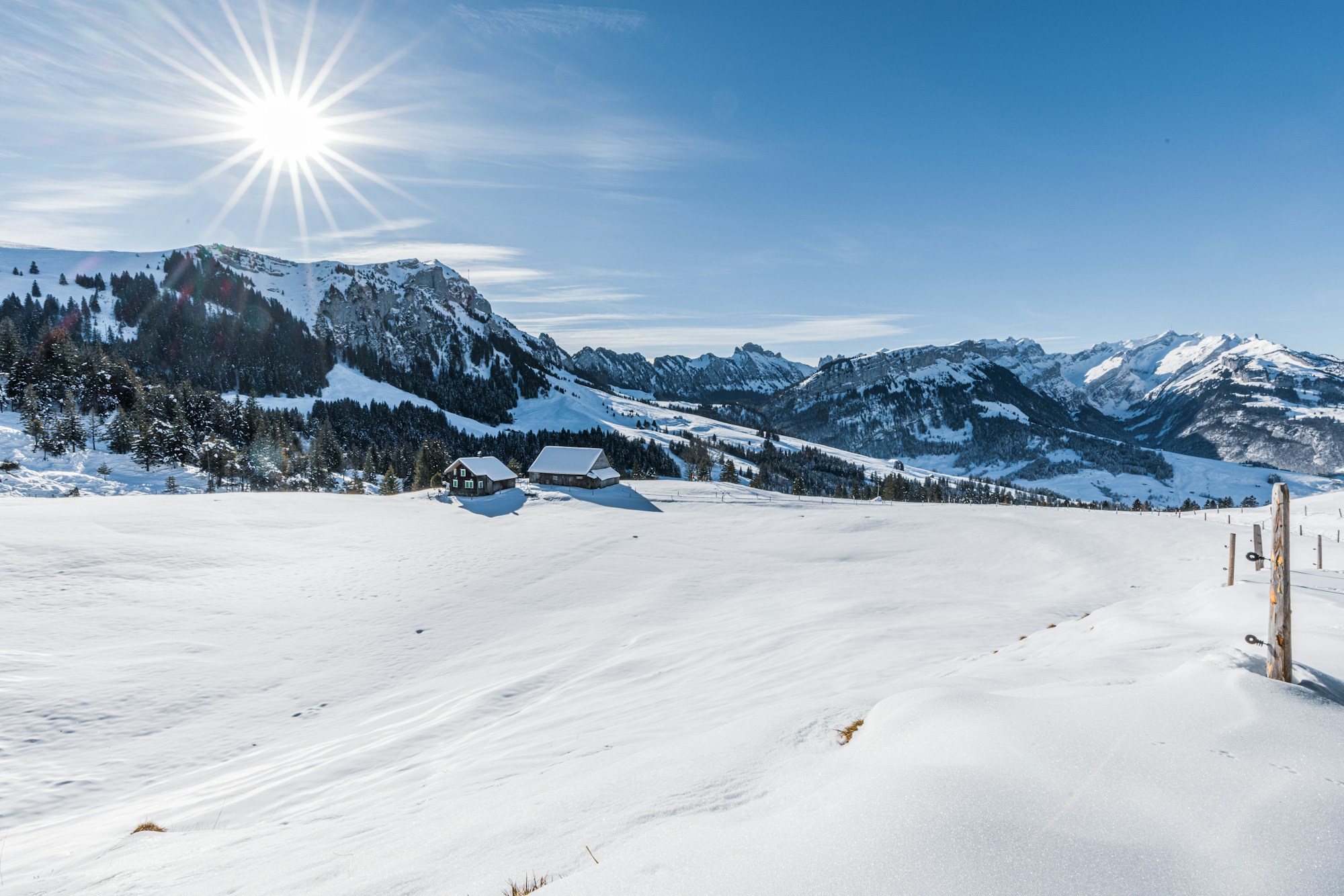
Appenzell’s second New Year’s Eve
New Year’s Eve is celebrated on 31 December in the Gregorian calendar. In Appenzell Outer Rhodes, the festivities continue with Alter Silvester, on 13 January 2027, according to the Julian calendar (MySwitzerland, consulted 6 November 2026). The Silvesterchläuse parade in Urnäsch, Waldstatt, Hundwil, Schwellbrunn and Schönengrund, among other villages. If the date falls on a Sunday, the festivities are brought forward to the Saturday before.
Roads, vignette and tyres: the winter rules to know
If you reach the valleys by car, three rules matter. They come from the ÖAMTC, the Austrian motoring club, consulted on 6 November 2026.
The 2026 Austrian motorway vignette costs €106.80 for the year, €32 for two months, €12.80 for ten days and €9.60 for one day. The annual one is valid from 1 December 2025 to 31 January 2027. From 2027, the sticker vignette disappears and only the digital vignette will remain, according to the ÖAMTC. Its price is not official yet, so we do not give it.
From 1 November to 15 April, winter tyres become mandatory as soon as the road is snow-covered, slushy or icy, on all wheels. Snow chains can replace them, fitted to at least two driving wheels. The ÖAMTC recommends not exceeding 50 km/h with chains.
| Item | Amount or rule | Validity | Source |
|---|---|---|---|
| Annual vignette | €106.80 | 1 December 2025 to 31 January 2027 | ÖAMTC |
| Two-month vignette | €32.00 | Length of the vignette, to be reconfirmed | ÖAMTC |
| Ten-day vignette | €12.80 | Length of the vignette, to be reconfirmed | ÖAMTC |
| One-day vignette | €9.60 | Length of the vignette, to be reconfirmed | ÖAMTC |
| Winter tyres | Mandatory as soon as there is snow, slush or ice, on all wheels | 1 November to 15 April | ÖAMTC |
| Chains | At least two driving wheels; 50 km/h recommended at most | 1 November to 15 April | ÖAMTC |
| Fine for missing equipment | About €100; up to €10,000 if other road users are endangered | Winter season | ÖAMTC |
Source: ÖAMTC, vignettes and ÖAMTC, winter tyres, checked 6 November 2026. The validity of the short vignettes still needs reconfirming with the ÖAMTC.
This section covers Austria only. The equipment rules for Germany, which apply to Kirchseeon, and for Italy, which apply to South Tyrol, have not been checked. A trip to Bavaria or to Sterzing therefore means checking the local rules before you leave.
For entry formalities, the answer above is for French nationals: they do not need ETIAS, the system for travellers from outside the European Union. If you hold a UK passport, check your own position on the official EU site, since the UK is outside the EU. This answer still needs reconfirming on that site, and no official start date for ETIAS had been found at the time of checking.
Mountains and avalanches: the emergency numbers and the Tyrol advice
In its statement of 19 February 2026, the Tyrol state government, through Landesrätin Astrid Mair, asked people to stay on secured pistes and to give up off-piste hiking in alpine terrain for the time being. The danger level reached 4 over much of the territory, and the statement cited two deaths and one serious injury. For the situation of the day, check the bulletin of the Lawinenwarndienst Tirol. Avalanches with no victims should be reported to the Leitstelle Tirol (tirol.gv.at, consulted 6 November 2026).
In an emergency, call 112, the European number, 144 (Notruf, emergency services) or 140 (Alpinnotruf, mountain rescue). The SOS-EU-Alp app is also mentioned in the same statement.
Krampus runs: three debates to keep apart
Three debates surround Krampus runs, and they do not rest on the same evidence.
The first is about commercialisation. An article in Meinbezirk, marked as sponsored content, explains that tourism is bringing the Krampus season forward. A column in the 1000things magazine, which is an opinion piece, sees a commercial show that invokes custom. The debate is real, but it rests on opinions, and they should be attributed as such.
The second is about violence and safety. An extract from Bluewin reports that in Matrei in Osttirol, in December 2025, two Krampus figures attacked a father. An extract from Salzburg24 describes a Krampus run in Völkermarkt, in Carinthia, as having got out of hand. Neither case shows a trend.
The third is about authenticity. The Innsbruck database and jahrzaehler.de point out that current practices are partly reconstructed, and that some commercial sites present as old rituals that historical sources do not confirm.
Budget: what you pay for and what is free
Most of the budget goes on the road and on paid activities. The priced items, all checked on 6 November 2026, are:
- Austrian vignette: from €9.60 for one day to €106.80 for the year (ÖAMTC).
- Cooking class in Salzburg: €130 for two adults, or €65 per person, checked 6 November 2026 (Viator).
- Kirchseeon: free entry for spectators (festivalsindeutschland.de).
- Fine for missing winter equipment: about €100 (ÖAMTC).
The listings for Innsbruck, Rattenberg and Sand in Taufers give no entry price for their processions. Accommodation is not priced, as there is no dated and verified rate grid.
Depending on your travel style
With family. Kirchseeon is the simplest option: entry is free and the station is served by the S-Bahn S6. For younger children, the advice stays the same: tell them what to expect before the masks appear.
As a couple, or for a first time. Innsbruck hosts Krampus and Perchten on 3 and 4 December 2026 (Innsbruck Tourism listing). Rattenberg, on 6 December, adds an event the same weekend, with no price or time published.
On a small budget. A one-day vignette at €9.60 or a ten-day one at €12.80 covers a short stay on Austrian roads, subject to the validity still to be reconfirmed. Kirchseeon costs nothing. Do not rely on an estimated figure for 2027: it is not official.
For tradition lovers. The Glöcklerläufe of 5 January 2027 are spread across Gmunden, Obertraun, Ebensee and Bad Ischl. The Perchtenlauf of Gastein only takes place every four years.
Four mistakes to avoid
- Calling Ebensee, Gastein or Kirchseeon UNESCO-listed. These are entries on the Austrian national inventory, or a Bavarian regional recognition.
- Relying on an old listing. The Sterzing listing is dated 16 January 2026 and needs reconfirming.
- Thinking the 2026 vignette expires at the end of December. The annual one stays valid until 31 January 2027.
- Counting on snow. None of the sources consulted for this article guarantees snow on a given date. Check the situation in the village or resort the week you leave.
Points to reconfirm before you go
Four points were still open on the date of checking. Each one refers to a source cited earlier in the article.
- Sterzing, 5 December 2026. The tourist office listing is dated 16 January 2026 (yesalps.com, checked 6 November 2026). Reconfirm the time with the office before you travel.
- Kirchseeon, season plan. The detailed plan was not published on 6 November 2026 (festivalsindeutschland.de, listing of 8 September 2026). Check it between 1 and 26 November 2026.
- Gastein, next edition. An extract from gastein.com mentions an edition over several days, while the UNESCO.at page describes a single day (checked 6 November 2026). No 2027 date is announced in the listings checked.
- Graz and Styria. No reliable date for Graz at the time of checking. The Styrian dates read in aggregators are unconfirmed extracts.
Frequently asked questions about the Rauhnächte 2026
When do the Rauhnächte start and end in 2026-2027?
In the most common version, they run from 25 December 2026 to 6 January 2027, twelve nights in all. An alpine variant starts on Thomasnacht, 21 December 2026, and ends on 1 January 2027, according to kuriose-feiertage.de. This article’s reference calendar is that of jahrzaehler.de.
What does the word Rauhnächte mean?
The origin of the name is not established. Two leads, « hairy » and « smoke », are presented with their sources in the section « Where the name comes from », earlier in this article.
What is a Perchtenlauf?
It is a procession of masked figures who roam the villages during the Rauhnächte. The Schiachperchten, with frightening masks, chase away winter and evil spirits; the Schönperchten, in colourful headdresses, bring good fortune (austria-forum.org, extract consulted 6 November 2026).
Is the Perchtenlauf free to attend?
There is no single answer. In Kirchseeon, Bavaria, entry is free for spectators (festivalsindeutschland.de, consulted 6 November 2026). The listings for Innsbruck and Rattenberg give no price.
When is the Perchtenlauf in December 2026?
The clearest dates are 3 and 4 December 2026 in Innsbruck, Saturday 5 December in Sterzing and Sand in Taufers, and Sunday 6 December in Rattenberg, according to the listings checked on 6 November 2026. The Sterzing listing is dated 16 January 2026 and needs reconfirming.
Are the Perchtenläufe safe?
The sources consulted do not show a trend. Isolated incidents are reported in the regional press, such as Matrei in Osttirol in December 2025, where two Krampus figures attacked a father (Bluewin, extract consulted 6 November 2026). One isolated case is not enough to generalise.
What are the driving rules in Austria in winter?
From 1 November to 15 April, winter tyres are mandatory as soon as the road is snow-covered, slushy or icy, on all wheels. Chains are an alternative, fitted to at least two driving wheels. The fine for missing equipment is about €100 (ÖAMTC, consulted 6 November 2026).
How much is the Austrian vignette in 2026?
The annual vignette costs €106.80 and is valid from 1 December 2025 to 31 January 2027. The two-month (€32), ten-day (€12.80) and one-day (€9.60) vignettes also exist, with validity still to be reconfirmed with the ÖAMTC. From 2027, only the digital vignette will remain (ÖAMTC, consulted 6 November 2026).
Which number should I call in the mountains in Austria?
112 is the European number. 144 (Notruf) is for emergency services and 140 (Alpinnotruf) for mountain rescue. The Tyrol state government cites them together in its statement of 19 February 2026, along with the SOS-EU-Alp app (tirol.gv.at, consulted 6 November 2026).
When is the Perchtenlauf in Gastein?
Every four years, on one day between 1 January and Epiphany, according to the UNESCO.at page. The last documented edition, on 1 January 2026, comes from an extract from gastein.com. If the cycle holds, the next one would fall in 2030: this is an inference, not an official announcement.
Where can I see a Glöcklerlauf on 5 January 2027?
In Gmunden, on the Rathausplatz, in Obertraun and in Ebensee, on 5 January 2027. In Bad Ischl, the night of 5 to 6 January is the last Rauhnacht. These dates come from oberoesterreich.at, consulted 6 November 2026. No time slot is confirmed for Ebensee.
When is Alter Silvester 2027?
On 13 January 2027, according to the Julian calendar, in Appenzell Outer Rhodes. Urnäsch, Waldstatt, Hundwil, Schwellbrunn and Schönengrund are cited (MySwitzerland, consulted 6 November 2026). The date is confirmed, not the 2027 programme of each village.
Sources
- jahrzaehler.de, Rauhnächte: Ártala calendar, origin of the name according to the DWDS, calendar explanation
- kuriose-feiertage.de, Rauhnächte: Thomasnacht variant, the Räuchern hypothesis
- University of Innsbruck, « Feste und Bräuche » database: Räuchern, Perchta, Ausräuchern des Hauses
- UNESCO.at, Glöcklerlauf in Ebensee: Austrian national inventory, 2010, identifier 241
- UNESCO.at, Perchten in Gastein: Austrian national inventory, 2011, identifier 248, four-year cycle
- gastein.com, Gasteiner Perchtenlauf: extract, not read in full; last documented edition, 1 January 2026
- Festivals in Deutschland, Kirchseeoner Perchtenlauf: season, free entry, S6 access
- bayern.de, Kirchseeoner Perchtenlauf: recognition at the level of the State of Bavaria (extract)
- MySwitzerland, Alter Silvester: date, places and the Sunday rule
- Yesalps, Krampusday Sterzing / Vipiteno: 5 December 2026 date, listing to be reconfirmed
- South Tirol, Krampus run in Sand in Taufers: date, start, mulled wine
- Tyrol.com, Krampusläufe und Nikolauseinzug Innsbruck: 3 and 4 December 2026
- tirol.at, Perchtenlauf und Hexentanz Rattenberg: 6 December 2026
- Oberösterreich, Glöcklerläufe im Salzkammergut: dates of 5 January 2027, page updated 14 September 2026
- Salzburg24, list of the 2026 Krampus runs: published 9 October 2026, not counted; extract for Völkermarkt
- Tyrol state government, avalanche danger statement: 19 February 2026, emergency numbers
- ÖAMTC, Winter tyre obligation in Austria: winter tyres, chains, fines
- ÖAMTC, switch to digital vignettes in 2027: 2026 prices and end of the sticker vignette
- Meinbezirk, Krampustreiben zwischen Brauchtum und Spektakel: sponsored article, opinion on the season
- 1000things Magazine: opinion column on Brauchtum
- Austria-Forum, Percht: Schiachperchten and Schönperchten (extract)
Research and checks carried out on 6 November 2026. Sources marked « extract » were not read in full. The Matrei incident comes from an extract from Bluewin, with no link retained.

Plan your trip with Pixidia
Pixidia learns how you travel and helps you build a trip that truly fits you and everyone coming along.
Open the planner